Items Similar to Elegant Dresser of the Neoclassical Period with Elegant and Fine Red Marble Top
Want more images or videos?
Request additional images or videos from the seller
1 of 8
Elegant Dresser of the Neoclassical Period with Elegant and Fine Red Marble Top
$21,561.06
£16,122.82
€18,000
CA$29,705.75
A$32,398.30
CHF 17,162.43
MX$388,409.62
NOK 218,573.12
SEK 199,868.90
DKK 137,167.17
About the Item
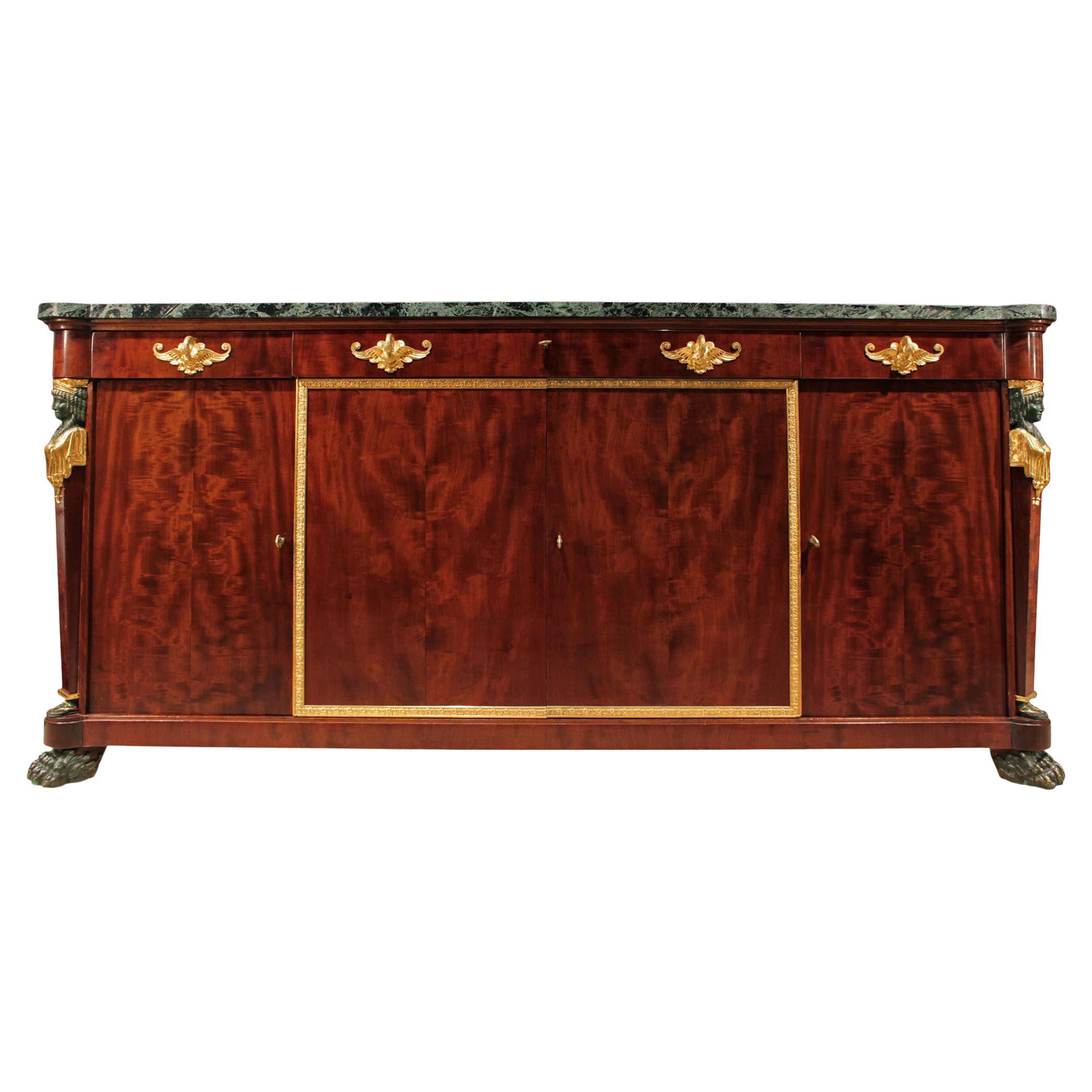
Elegant dresser of the neoclassical period (early 800') France.
Very nice in detail and construction technique, the top is very elegant slab of a fine red marble.
The wood used and much loved in the neoclassical period for the light shade, the sober appearance and the absence of grain is cherry.
The cabinet has a large door that opens like a book and goes to hide under the drawers, the latter can then be used, once opened, and still have the handles and metal studs original of the time.
On the sides there are two flat and tapered columns with at the top respectively a caryatid and zoomorphic feet in gilded bronze.
Very good general conditions, however, is necessary in order to bring the whole to its full splendor a conservative restoration.
Measures:
Length 121 cm
Depth 58 cm
Height 88 cm
Contact us for further clarifications or photographic details.
Services: it is possible for us to carry out any type of restoration (complete or conservative) on all the proposed objects.
We ship worldwide in maximum security.
The shipment is agreed privately.
Code 5074
(SD,F).
- Dimensions:Height: 34.65 in (88 cm)Width: 47.64 in (121 cm)Depth: 22.84 in (58 cm)
- Style:Neoclassical (Of the Period)
- Materials and Techniques:
- Place of Origin:
- Period:
- Date of Manufacture:1800
- Condition:
- Seller Location:Cesena, IT
- Reference Number:1stDibs: LU6294227486912
About the Seller
No Reviews Yet
Vetted Professional Seller
Every seller passes strict standards for authenticity and reliability
Established in 1990
1stDibs seller since 2022
- ShippingRetrieving quote...Shipping from: Cesena, Italy
- Return Policy
More From This Seller
View AllPair of Louis XVI Dresser Entirely Panelled in Various Essences and Original
Located in Cesena, FC
Pair of Louis XVI dressers (last years of 1700),
entirely panelled in various essences (walnut, walnut burl, maple and ebony).
Original in ...
Category
Antique 1770s Italian Dressers
Materials
Ebony, Maple, Walnut, Burl
Antique Italian Empire cabinet from the early 19th century
Located in Cesena, FC
Antique Italian Empire cabinet from the early 19th century
Small empire cabinet, particular cabinet from the empire era (circa 1840).
Italian, with entire column, ebonized and brass...
Category
Antique Mid-19th Century Italian Empire Sideboards
Materials
Brass
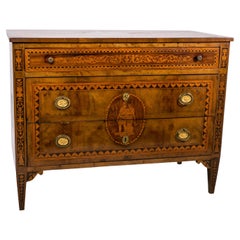
Louis XVI Lombard Dresser Richly Inlaid
Located in Cesena, FC
Dresser Louis XVI Lombard, the end of 1700.
The dresser is richly inlaid with figures and floral motifs of typically neoclassical taste, the handles and locks are original.
Good ge...
Category
Antique 1780s Italian Dressers
Materials
Wood
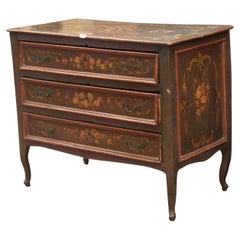
Completely Hand Painted 1700
s Italian Dresser of Great Beauty
Located in Cesena, FC
Fully painted dresser of great beauty.
Period: 1700
Italy
Measurements: L. cm 113 - D. cm 60 - H. cm 93
Contact us for further clarifications or photographic details.
Services: it...
Category
Antique 1720s Italian Dressers
Materials
Wood
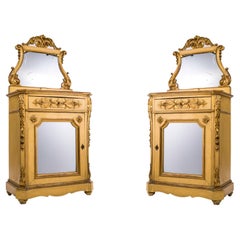
Pair of elegant lacquered cabinets from the mid-19th century
Located in Cesena, FC
Pair of elegant lacquered, gilded and carved cabinets.
In perfect condition, they have never undergone restorations.
Period: mid-1800s
Measurements: width 80 cm; depth 45 cm; cabinet...
Category
Antique Mid-19th Century Italian Credenzas
Materials
Mirror, Wood, Lacquer
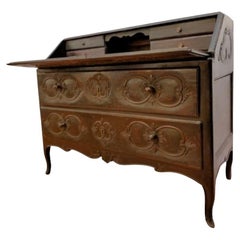
Original Louis XV Carved Sideboard with Writing Desk with Dark Patina Finish
Located in Cesena, FC
Original Louis XV carved sideboard with writing desk with dark patina finish.
Louis XV sideboard with writing desk with exquisite floral c...
Category
Antique Mid-18th Century Italian Sideboards
Materials
Walnut
You May Also Like
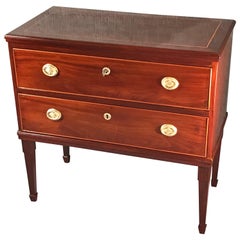
Neoclassical Dresser, Northern Germany 1800, Mahogany
Located in Belmont, MA
Neoclassical dresser, Northern Germany, 1800.
This elegant dresser has an exquisite mahogany veneer. It stands on four slender legs and has two spacious drawers. The top is additiona...
Category
Antique Early 1800s German Neoclassical Dressers
Materials
Mahogany
$4,080 Sale Price
20% Off
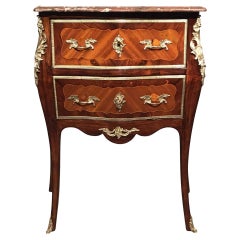
Baroque Style Dresser, France 19th century, Antique
Located in Belmont, MA
Baroque Style dresser, France 19th century
This small antique Baroque Style Dresser comes from France and dates back to the second half of the 19...
Category
Antique 1860s French Baroque Commodes and Chests of Drawers
Materials
Mahogany, Walnut
$4,000 Sale Price
20% Off
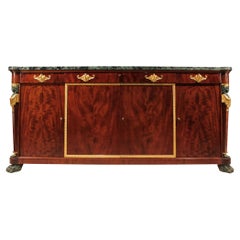
Italian 19th Century Neoclassical Style Mahogany Buffet
Located in West Palm Beach, FL
A magnificent Italian 19th century neoclassical st. mahogany, patinated bronze and ormolu buffet, possibly by French ébéniste Guingan...
Category
Antique 19th Century French Neoclassical Buffets
Materials
Marble, Ormolu
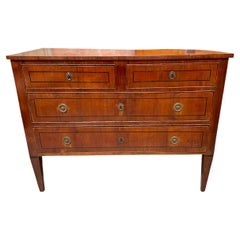
Italian Neo-Classical Chest of Drawers, Early 19th Century
Located in Pasadena, CA
This is a charming early 19th century Italian Neo-classical chest of drawers.
The chest's conformation is two short drawers over two long drawers raised on tall legs. It is veneered ...
Category
Antique Early 19th Century Italian Neoclassical Commodes and Chests of D...
Materials
Brass
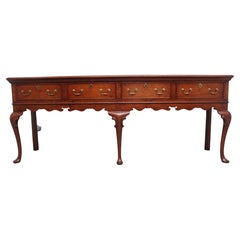
Cherrywood Dresser Base in the Queen Anne Style
Located in Martlesham, GB
A superb quality Mid-20th century cherry dresser base in the Queen Anne style, having a nice figured and moulded top above four drawers with brass swan neck handles, oval escutcheons...
Category
Vintage 1960s British Queen Anne Dressers
Materials
Cherry
$3,655 Sale Price
26% Off
18th Century Italian Neoclassical Wood Dresser Attributed to Francesco Bolgiè
By Francesco Bolgié
Located in IT
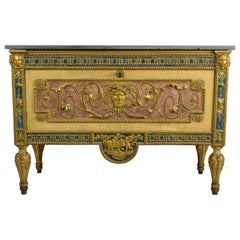
18th century Italian neoclassical carved, lacquered and gilded wood dresser attributed to Francesco Bolgiè (1752?-1834).
The fine and elegant commode is made of finely carved, lacquered and gilded wood. It presents several stylistic and material elements characteristic of the wooden works and of the furniture present in the Piedmont area, between the end of the 18th century and the beginning of the 19th century. The richness of the ornaments, the gold leaf, the iconographic program and the significant level of cabinet making that characterizes this furniture are testimony of a wealthy client and the valuable work of a sculptor at the service of noble and royal families. Stylistically can be attributed to the famous italian sculptor Francesco Bolgiè (1752-1834).
The front of the furniture and the two side are characterized by a complex decorative architecture. Two horizontal perimeter bands show gilded carved geometric patterns and palmettes on a blue lacquered backdrop. The low frame, in the centre and on the front, has a half-moon element inside which is finely carved a lion with two cupids and laurel branches. Near the corners, at the top, are carved a female faces, while at the bottom are some bees. The fretwork of the vertical bands draws strings that support a bunch of grapes with vine leaves. The side walls are lacquered in ochre yellow and, at the centre, a frame with acanthus leaves outlines a lacquered space in the tones of the ancient rose violaceous, with in the centre an ornate leaf with fine girali. On the four sides of this frame four large golden flowers harmonize the together.
The front, similar in composition, has a yellow ochre background, internal frame with palmettes and four flowers. The large internal space, lacquered in antique pink, shows in the center a woman’s fece with a composition of grapes and wheat ears; from the face depart fine phytomorphic girals with racemes, bunches of grapes and vine leaves. The nozzle of the original lock, placed on the front of the cabinet and on top, is in gilded bronze, chiselled with ribbon motif. The front panel opens downwards. The interior of the cabinet, entirely lacquered in red, has a shelf and therefore two compartments. The red color cinnabar deliberately recalls the characteristic Chinese lacquer, at the time much loved for the decorations to cineseria furniture. The special folding lock system, which allows the opening and closing of the front door, is the original one.
The commode rests on four conical wood legs witch are carved with acanthus leaves and small ramage, gilded and lacquered.
The top of the furniture is in grey marble bardiglio valdieri, lithotype that had great success in Piedmont, in the north of Italy, since the middle of the 18th century. On it were usually exposed bronzes, candlesticks, watches and sculptures.
The sculpted subjects refer to a precise iconographic programme.
The female head is identifiable in Ceres, Mother Terra, which in classical iconography is depicted with the head surrounded by a sert of wheat ears and a cluster of grapes. Ceres or Demeter in Greek, sister of Zeus, in Greek mythology is the goddess of fertility, the guardian of crops, protector of agriculture and wheat, constant nurse of youth and of the green earth, author of the cycle of seasons, life and death, protector of marriage and sacred laws.
The representation of Ceres, and its meaning, are linked to bees, symbol of virtue and chastity, allegory of Mother Earth, rebirth, mercy and justice. Just as the leaves of the vine and its fruits: in many cultures, from Greco-Roman to Christianity, the vine is a symbol of well-being, fruitfulness and blessing; it represents an abundant life and the joy that flows from it; it reflects the desire for fertility and beauty. It is also a sign of devotion to the fruits of the spirit and protection from evil. Fullness, wisdom, youth, maturation, prosperity are all images associated with the vine. Sacrifice, faith and good will are the qualities required for the vine to bear fruit.
The inverted bezel shows the iconographic image of Amor Vincit...
Category
Antique Late 18th Century Italian Neoclassical Dressers
Materials
Giltwood, Wood
More Ways To Browse
Red Marble Top
Marble Top Dresser
Red Marble Bronze
Red Dresser
Marble Top Antique Dresser
Marble Topped French Dresser
Antique Cherry Dresser
Antique Dressers With Marble Top
1800 Antique Dresser
French Neoclassical Dresser
Scandinavian Rosewood Bedroom Furniture
Walnut Mcm
Midcentury And Art Deco Dressers
Vintage Drexel
Oak Dresser Base
18th Century Oak Dresser
6 Drawer Dressers
Wood Carved Dresser