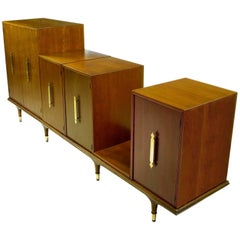
Edward Wormley for John Widdicomb Server
About the Item
- Creator:Edward Wormley (Designer),John Widdicomb (Maker)
- Dimensions:Height: 32 in (81.28 cm)Width: 68.5 in (173.99 cm)Depth: 21 in (53.34 cm)
- Style:Mid-Century Modern (Of the Period)
- Materials and Techniques:
- Place of Origin:
- Period:
- Date of Manufacture:1950s
- Condition:
- Seller Location:New London, CT
- Reference Number:1stDibs: LU126929415983

Edward Wormley
As the longtime director of design for the Dunbar furniture company, Edward Wormley was, along with such peers as George Nelson at Herman Miller Inc., and Florence Knoll of Knoll Inc., one of the leading forces in bringing modern design into American homes in the mid-20th century. Not an axiomatic modernist, Wormley deeply appreciated traditional design, and consequently his vintage seating, storage cabinets, bar carts and other work has an understated warmth and a timeless quality that sets it apart from other furnishings of the era.
Wormley was born in rural Illinois and as a teenager took correspondence courses from the New York School of Interior Design. He later attended the Art Institute of Chicago but ran out of money for tuition before he could graduate. Marshall Field hired Wormley in 1930 to design a line of reproduction 18th-century English furniture; the following year he was hired by the Indiana-based Dunbar, where he quickly distinguished himself. It was a good match.
Dunbar was an unusual firm: it did not use automated production systems; its pieces were mostly hand-constructed. For his part, Wormley did not use metal as a major component of furniture; he liked craft elements such as caned seatbacks, tambour drawers, or the woven-wood cabinet fronts seen on his Model 5666 sideboard of 1956. He designed two lines for Dunbar each year — one traditional, one modern — until 1944, by which time the contemporary pieces had become the clear best sellers.
Many of Wormley’s signature pieces — chairs, sofas, tables and more — are modern interpretations of traditional forms. His 1946 Riemerschmid Chair — an example is in the collection of the Museum of Modern Art — recapitulates a late 19th-century German design. The long, slender finials of his Model 5580 dining chairs are based on those of Louis XVI chairs; his Listen-to-Me Chaise (1948) has a gentle Rococo curve; the “Precedent” line that Wormley designed for Drexel Furniture in 1947 is a simplified, pared-down take on muscular Georgian furniture. But he could invent new forms, as his Magazine table of 1953, with its bent wood pockets, and his tiered Magazine Tree (1947), both show. And Wormley kept his eye on design currents, creating a series of tables with tops that incorporate tiles and roundels by the great modern ceramicists Otto and Gertrud Natzler.
As the vintage items on 1stDibs demonstrate, Edward Wormley conceived of a subdued sort of modernism, designing furniture that fits into any decorating scheme and does not shout for attention.
John Widdicomb
In the Widdicomb family, furniture ran in the blood. Furniture maker George Widdicomb emigrated from England to the United States in 1845, eventually setting up a cabinet shop in Syracuse, New York, before moving west to Grand Rapids, Michigan. There, he opened a shop with his four sons, including John Widdicomb, whose name would help carry the family legacy into the 20th century.
A wealth of pine and oak forests rendered Grand Rapids a logging center during the 1800s, and it eventually gained recognition for its furniture industry. The city became a destination for furniture makers who hailed from across the United States and beyond. The Widdicomb shop in Grand Rapids prospered, as the patriarch’s formal English training allowed him to produce pieces with superior craftsmanship compared to those of his competitors. Although the Civil War halted business and took the life of one of the Widdicomb brothers, the family’s survivors would start anew as Widdicomb Brothers and Richards, soon renamed the Widdicomb Furniture Company.
John Widdicomb, however, split from the family business in 1897 to create the John Widdicomb Company, where he would go on to focus on Louis XV- and French Provincial-style furnishings. Chairs made in these styles have distinct characteristics, such as floral motifs carved in the frames and gently angled backrests. John's company also remained a family affair: The founder’s son, Harry, assumed control of the company when his father died in 1910, while John's nephew Ralph Widdicombe — who retained the English spelling of his last name and joined the John Widdicomb Company at its start — designed every single piece of the offerings at his uncle's manufacturing outfit until he retired in 1951. Ralph was an internationally distinguished furniture designer whose modern mahogany bedroom suite won first prize at the Paris Exposition in 1900.
The original iteration of Widdicomb, which was helmed by John's older brother William while John ran his own brand, had shifted from making period revival styles of furniture, such as Georgian and Chippendale, to manufacturing modern pieces in the late 1920s. Admirers of mid-century modern furnishings likely recognize Widdicomb for the partnerships with iconic designers such as Frank Lloyd Wright, T.H. Robsjohn-Gibbings and Mario Buatta. In 1959, master woodworker George Nakashima created his Origins collection for Widdicomb when the firm merged with Mueller Furniture Corporation and was known, for around 10 years, as Widdicomb-Mueller. Origins, a revered Shaker-influenced group of nightstands, upholstered lounge chairs, dining-room tables and more, saw Nakashima working with woods like Carpathian elm and laurel in his Pennsylvania studio.
Eventually, the two Widdicomb companies would combine in 1970, operating under the name John Widdicomb Co.
In 2002, the business closed after more than a century of operations, and its assets were acquired by Stickley Furniture. Interestingly, it was not the first time Widdicomb and Stickley overlapped: In the final years of the 19th century, the companies opened a shared storehouse in London, while John Widdicomb and Albert Stickley would travel Europe together for the purposes of research.
Today, Stickley continues to produce John Widdicomb Company furniture, including French, Italian, English and Russian reproductions, as well as modern works from the first half of the 20th century.
Find vintage John Widdicomb bedroom furniture, tables, case pieces and more on 1stDibs.
You May Also Like
20th Century American Mid-Century Modern Sideboards
Walnut
20th Century American Mid-Century Modern Credenzas
Mahogany
20th Century North American Mid-Century Modern Credenzas
Brass
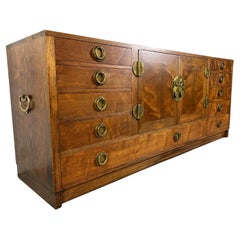
Mid-20th Century American Mid-Century Modern Sideboards
Mahogany
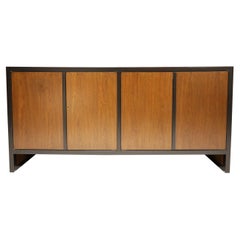
Mid-20th Century American Mid-Century Modern Sideboards
Walnut
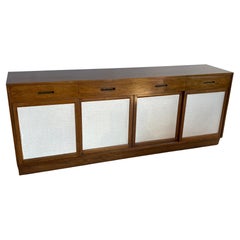
Vintage 1950s American Mid-Century Modern Sideboards
Elm
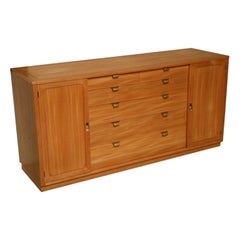
Vintage 1950s American Mid-Century Modern Credenzas
Mahogany, Birch
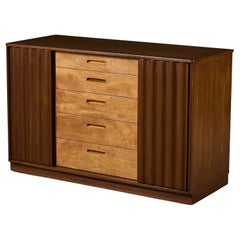
Mid-20th Century North American Mid-Century Modern Sideboards
Brass
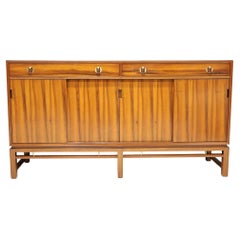
Mid-20th Century North American Mid-Century Modern Sideboards
Brass

Vintage 1940s American Mid-Century Modern Credenzas
Brass