Items Similar to Bespoke Burl Wooden Art Nouveau Display Glass Cabinet H. Pössenbacher Est. 1784
Want more images or videos?
Request additional images or videos from the seller
1 of 20
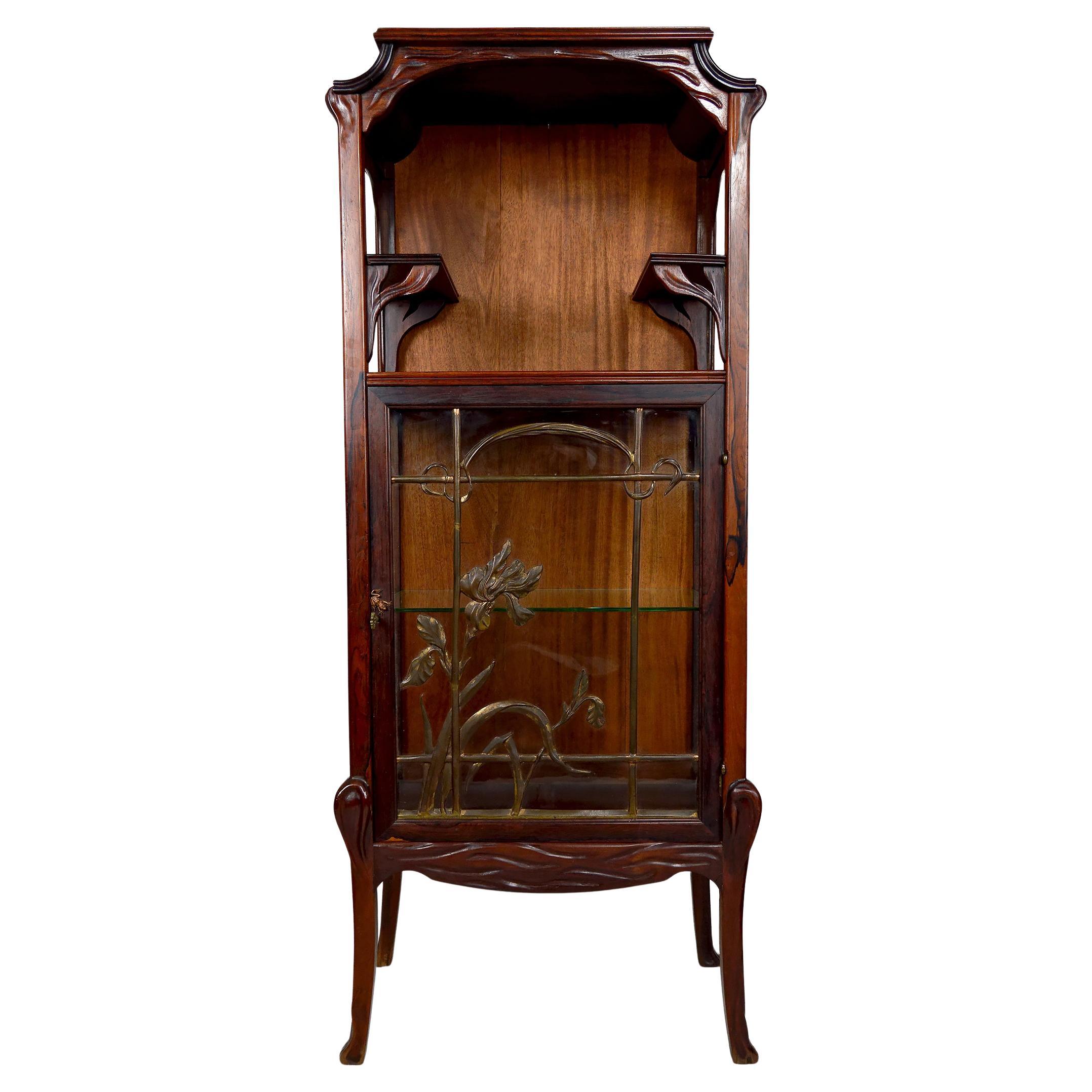
Bespoke Burl Wooden Art Nouveau Display Glass Cabinet H. Pössenbacher Est. 1784
$13,395.87
£9,947.19
€11,200
CA$18,403.92
A$20,008.77
CHF 10,608.67
MX$239,854.44
NOK 134,830.80
SEK 123,523.34
DKK 85,379.93
About the Item
A bespoke display cabinet, crafted by one of Munich's most distinguished cabinet makers, Heinrich Pössenbacher, during the early 20th century (specifically between 1908 and 1918).The piece of furniture, which is in remarkably pristine condition, was commissioned by a family residing in the Bogenhausen district of Munich. It was part of a suite that included a credenza, two side tables, and a substantial dining table accompanied by six chairs, which has already been sold.
The tables and chairs are currently located in an apartment in Schloss Schönbrunn in Vienna, and the substantial credenza is in a prestigious residence in Zehlendorf, Berlin.This exceptional piece, which remains available, consists of two components: an upper display cabinet and a base, both of which are notably substantial in weight.The cabinet is veneered with premium walnut burl wood, and features intricate Intarsia work with Jugendstil ornaments. The lower base and legs are elegantly framed by a wooden trim.
These pieces are considered to be among the most exquisite and meticulously crafted examples in existence.The exceptional condition of the furniture is attributed to its minimal usage since the early 1960s, when it was situated in a living room on a farmstead belonging to a family member of the original owners. The furniture was covered with blankets throughout this period. It was by chance that the owner revealed the existence of the drawings after a conversation, having previously neglected to mention them.Each piece of furniture has been accompanied by an artistic rendering, providing a visual representation of its intended appearance. The cabinet's drawing will be included in the portfolio, allowing the new owner the option of framing it according to their preferences.
Pössenbacher artistic cabinetmakers have a tradition through 5 generations!
The history of the Pössenbacher company can be traced back to its origins in the eighteenth century, when Matthaeus Pössenbacher, great-great-grandfather of the current proprietor, began manufacturing furniture for Architect François de Cuvilliés.
The company Pössenbacher was founded by Mathias Pössenbacher (son of Matthaeus and great-grandfather of Heinrich) in 1784.
The following is a list of notable members of this remarkable family:
Matthaeus Pössenbacher (documented in the 1770s), German cabinetmaker
Mathias Pössenbacher, German architect
Joseph Pössenbacher (1799-1873), German furniture manufacturer, court cabinetmaker
Anton Pössenbacher (1842-1920), German furniture manufacturer
Heinrich Pössenbacher (1877-1959), German furniture manufacturer
A substantial research project was conducted by contacting two experts from the Stadtmuseum München in order to ascertain the facts. It was found that the experts would have purchased all the pieces from this bespoke set if they had sufficient space in their museum.
Heinrich Anton Josef Pössenbacher (* 3 May 1877 in Munich; † 10 August 1959) was a leading German furniture manufacturer.
Early life
The son of court cabinetmaker and furniture maker Anton Pössenbacher, he studied at the Technical University of Munich before joining his father's business.
"During a stay in England, which had a lasting influence on Pössenbacher's furniture style, he met the architect John Archibald Campbell (1878-1947) and persuaded him to come to Munich as a designer.
in 1901. In 1902 the company moved to new premises on the corner of Brienner Strasse and Wittelsbacher Platz, which were "richly furnished by Campbell".
That same year, Heinrich Pössenbacher took over his father's luxury furniture factory, which he expanded in 1927 with the addition of a machine shop and a new workshop.
. Under his management, the Pössenbacher workshops carried out prestigious commissions, including furnishing the steamships Milwaukee (1928) and Europa (1929).
of the Hapag-Lloyd shipping company.
Contacts in the Rhineland led to the interior design of the Grand Hotel Petersberg near Königswinter (1914 and 1922).
- and, in 1920, his second marriage to Emilie Mülhens, a daughter of the hotel owner and Cologne entrepreneur Ferdinand Mülhens.
The economic difficulties of the period after the First World War led to the closure of the shop at Brienner Strasse 55 in 1925.
In the same year, Heinrich Pössenbacher took over his father's luxury furniture factory, which he expanded in 1927 by building a machine hall and a new workshop
. Under his management, the Pössenbacher workshops carried out prestigious commissions, including furnishings for the steamships Milwaukee (1928) and Europa (1929)
of the Hapag Lloyd shipping company.
Contacts made in the Rhineland led to the interior design of the Grandhotel Petersberg near Königswinter (1914 and 1922)
- and in 1920 to his second marriage to Emilie Mülhens, a daughter of the hotel owner and Cologne entrepreneur Ferdinand Mülhens.
The economic difficulties in the period after the First World War led to the closure of the salesrooms at Brienner Strasse 55 in 1925.
World Exhibition Paris 1937
The World Exhibition in Paris in 1937 is a pertinent point of reference. Heinrich Pössenbacher's sons, Otto (born 1907) and Fritz (born 1906), assumed responsibility for the management of the company in succession. Otto assumed responsibility for the commercial division, while Fritz took charge of artistic matters.In 1935, Heinrich Pössenbacher commissioned the construction of a country residence in Berg on Lake Starnberg, the design of which was inspired by his own personal vision.
The company survived the Second World War, and although parts of the factory and the entire timber warehouse were destroyed by bombs, everything was completely rebuilt.
However, the company's financial viability was impacted by the erosion of market share in the luxury furnishings sector, the emergence of mass production methods, and the proliferation of craft businesses. Consequently, Heinrich Pössenbacher and his sons Fritz and Otto made the decision to divest the complex at Jahnstraße 45 to Elektrotechnische Fabrik Alois Zettler GmbH in 1951.
Pössenbacher attended the Royal School of Arts and Crafts in Munich, where his tutors included H. Dyck and J. Knabl. Thereafter, he pursued a career as a carpenter and draughtsman in Vienna, Berlin, Cologne, Paris and London from 1860 to 1863. In 1866, he assumed control of his father's carpentry business for a sum of 10,000 guilders, and in 1873, he acquired a property spanning two acres, equipped with water power, from a master carpenter at Baumstraße 3 (subsequently Jahnstraße 45) in Munich. This property was expanded by Pössenbacher into a substantial furniture manufacturing facility.His enterprise emerged as a European leader in the production of luxury furniture during the 19th century. Notably, he furnished the royal flats of Linderhof, Herrenchiemsee and Neuschwanstein castles with furniture created according to the specifications of King Ludwig II, as well as his own designs.He also produced furnishings for the Munich Residence and Trausnitz Castle in my hometown Landshut (ex Capital of Bavaria from 1204 to 1253 ).
In 1886/87, he furnished a library hall in Bucharest Palace for King Charles I according to his own designs, and he created the restoration hall for the Reichstag building based on a design by Paul Wallot. For other clients, such as manufacturers, merchants and landowners, he usually supplied entire room furnishings for their townhouses and villas.
Anton Pössenbacher (born 6 October 1842 in Munich, Kingdom of Bavaria; died 4 July 1920 in Munich, Free State of Bavaria) was a leading Munich court cabinetmaker and manufacturer of court furniture in the historicist style.Anton Pössenbacher (born 6 October 1842 in Munich, Kingdom of Bavaria; died 4 July 1920 in Munich, Free State of Bavaria) was a leading Munich court cabinetmaker and manufacturer of court furniture in the historicist style.
Anton Pössenbacher's father, Joseph Pössenbacher (1799-1873), had a furniture workshop in Munich that supplied the Bavarian royal court.
The workshop had been founded in 1784 by his father, the architect Mathias Pössenbacher. Matthäus Pössenbacher (documented in the 1770s) made furniture for the Munich architect François de Cuvilliés.
Anton Pössenbacher was awarded the title of Royal Court Furniture Manufacturer and Councillor of Commerce. He collaborated with Gabriel von Seidl and his childhood friend Rudolf Seitz to revive the Renaissance style. His furniture factory was subsequently taken over by his son, Heinrich Pössenbacher.
DEUTSCH:
Heinrich Anton Josef Pössenbacher (* 3. Mai 1877 in München; † 10. August 1959) war ein führender deutscher Möbelfabrikant.
Leben
Der Sohn des Hofschreiners und Hofmöbelfabrikanten Anton Pössenbacher besuchte die Technische Hochschule München und trat dann in das Unternehmen seines Vaters ein.
„Bei einem Aufenthalt in England, der Pössenbachers Möbelstil nachhaltig beeinflusste, lernte er den Architekten John Archibald Campbell (1878–1947) kennen und bewegte ihn,
1901 als Entwerfer nach München zu kommen. 1902 erfolgte ein Umzug in neue, reich von Campbell ausgestattete Verkaufsräume an der Ecke Brienner Straße / Wittelsbacher Platz.“
Im selben Jahr übernahm Heinrich Pössenbacher von seinem Vater dessen Fabrik für Luxusmöbel, die er 1927 vergrößerte, indem er eine Maschinenhalle und eine neue Werkstätte
errichtete. Unter seiner Leitung führten die Pössenbacher Werkstätten repräsentative Aufträge aus, darunter Ausstattungen für die Dampfer Milwaukee (1928) und Europa (1929)
der Reederei Hapag Lloyd.
Im Rheinland geknüpfte Kontakte führten zur Ausführung von Innenausstattungen des Grandhotels Petersberg bei Königswinter (1914 und 1922)
– und 1920 zu seiner zweiten Ehe mit Emilie Mülhens, einer Tochter des Hotelbesitzers und Kölner Unternehmers Ferdinand Mülhens.
Die wirtschaftlichen Schwierigkeiten in der Zeit nach dem Ersten Weltkrieg führten 1925 zur Aufgabe der Verkaufsräume im Haus Brienner Straße 55.
Weltausstellung Paris 1937
In der Geschäftsleitung wurde Heinrich Pössenbacher sukzessive durch seine Söhne vertreten: Otto (* 1907) im kaufmännischen Bereich und Fritz (* 1906)
in künstlerischen Belangen. 1935 ließ sich Heinrich Pössenbacher ein stilvolles Landhaus in Berg am Starnberger See nach eigenen Plänen bauen.
Es waren nicht die direkten Zerstörungen des Zweiten Weltkriegs, die zum Ende des Traditionsunternehmens führten.
Obwohl Teile der Fabrikanlagen und das ganze Holzlager durch Bomben zerstört worden waren, wurde alles vollständig wiederaufgebaut.
Aber der Wegfall wichtiger Märkte im Bereich von Luxusausstattungen, die fortschreitende Serienfabrikation und die Vermehrung der Handwerksbetriebe ließ die Gewinne schmelzen,
so dass Heinrich Pössenbacher und seine beteiligten Söhne Fritz und Otto 1951 den Verkauf des Komplexes Jahnstraße 45 an die Elektrotechnische Fabrik Alois Zettler GmbH
beschlossen.
____________________________________________________________________________
Der Vater: Anton Pössenbacher (* 6. Oktober 1842 in München, Königreich Bayern; † 4. Juli 1920 in München, Freistaat Bayern) war ein führender Münchner Hofschreiner und Hofmöbelfabrikant im Stil des Historismus.
Anton Pössenbachers Vater Joseph Pössenbacher (1799–1873) hatte in München eine Möbelmanufaktur, die den bayrischen Königshof belieferte.
Die Werkstatt war von dessen Vater, dem Architekten Mathias Pössenbacher 1784 gegründet worden. Dessen Vater Matthaeus Pössenbacher (nachweisbar in den 1770er Jahren) stellte Möbel für den Münchner Architekten François de Cuvilliés her.
Pössenbacher besuchte die Königliche Kunstgewerbeschule München. Seine Lehrer waren u. a. H. Dyck und J. Knabl. Anschließend arbeitete er von 1860 bis 1863 in Wien,
Berlin, Köln, Paris und London als Schreiner und Zeichner. 1866 übernahm er die Schreiner-Gerechtsame seines Vaters um 10.000 Gulden und erwarb 1873
von einem Zimmermeister ein zwei Tagwerk großes Anwesen mit Wasserkraft in der Baumstraße 3 (später Jahnstraße 45) in München, welches er zu einer großen Möbelfabrik ausbaute.
Sein Unternehmen war im 19. Jahrhundert in der Fertigung von Luxusmöbeln europaweit führend. Insbesondere stattete er die königlichen Appartements der Schlösser Linderhof,
Herrenchiemsee und Neuschwanstein mit Möbeln aus, die nach den Wünschen König Ludwigs II., aber auch nach eigenen Zeichnungen schuf.
Auch für die Münchner Residenz und für die Burg Trausnitz fertigte er Einrichtungsgegenstände.
1886/87 möblierte er einen Bibliothekssaal im Bukarester Schloss für König Karl I. nach eigenen Entwürfen, den Restaurationssaal für das Reichstagsgebäude schuf er nach einem
Entwurf von Paul Wallot. Für weitere Auftraggeber wie Fabrikanten, Kaufleute und Gutsbesitzer lieferte er für deren Stadthäuser und Villen zumeist ganze Raumausstattungen.
Anton Pössenbacher erhielt den Titel eines Kgl. Hofmöbelfabrikanten und Kommerzienrates. Er setzte sich mit Gabriel von Seidl und dessen Jugendfreund Rudolf Seitz
für die Wiederbelebung des Renaissancestils ein.
Seine Möbelfabrik wurde von seinem Sohn Heinrich Pössenbacher übernommen.
- Attributed to:Moritz Ballin (Cabinetmaker)
- Dimensions:Height: 71.66 in (182 cm)Width: 67.33 in (171 cm)Depth: 23.23 in (59 cm)
- Style:Art Nouveau (Of the Period)
- Materials and Techniques:
- Place of Origin:
- Period:1910-1919
- Date of Manufacture:1908-1918
- Condition:
- Seller Location:Landshut, DE
- Reference Number:1stDibs: LU8587234300522
About the Seller
5.0
Vetted Professional Seller
Every seller passes strict standards for authenticity and reliability
1stDibs seller since 2023
22 sales on 1stDibs
Typical response time: 5 hours
- ShippingRetrieving quote...Shipping from: Bodenkirchen , Germany
- Return Policy
More From This Seller
View AllColli Torino (Est. 1850) Art Nouveau Italian Corner Cabinet Wardrobe Solid Oak
By Colli Torino
Located in Landshut, BY
This corner wardrobe was produced by Colli Torino established in 1850.
- solid oak with hand carved elements and beautiful brass fittings with its original key -
The company is we...
Category
Vintage 1910s Italian Art Nouveau Cupboards
Materials
Brass
Wardrobe by Colli Torino Est 1850 Art Nouveau Huge Italian Solid Oak Masterpiece
By Colli Torino
Located in Landshut, BY
This wardrobe was produced by Colli Torino established in 1850.
- solid oak with hand-carved ornaments - beautiful brass fittings - with its original keys -
height: 195cms ~ width: 245cms ~ depth: 60cms ~ weight: ca. 360-400 Kg (!)
-: please have a closer look - which hopefully will make my fascination with this masterpiece comprehensible.
What also makes this wardrobe quite special is the 2 doors on each side covering compartments with narrow shelving...
Category
Vintage 1910s Italian Art Nouveau Wardrobes and Armoires
Materials
Brass
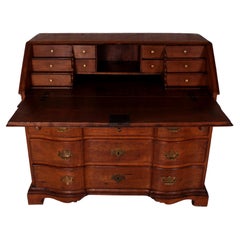
Viennese Baroque Secretary Slant Door Bureau ar 1860 Straight
Heavy Solid Oak
Located in Landshut, BY
This rather straight, very heavy solid oak Viennese baroque folding desk has been carefully restored to its original condition - no replacements! Even the 2 main keys are still there...
Category
Antique 1850s Austrian Biedermeier Desks
Materials
Brass, Iron
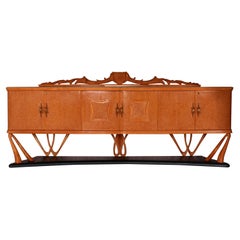
One of a Kind Italian Midcentury Sideboard with Bar Cabinet a. Vittorio Dassi
By Vittorio Dassi
Located in Landshut, BY
Italian 1950s
one of a kind
BAR / SIDEBOARD
attributed to Vittorio Dassi
birch root veneer - solid birch "feet" - stained glass top - mirrored bar compartment - carved upper orna...
Category
Vintage 1950s Italian Mid-Century Modern Sideboards
Materials
Stained Glass, Burl, Birch
Colli Torino
Est. 1850
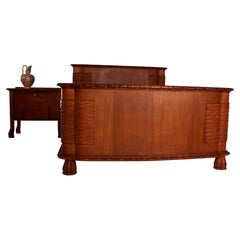
Italian Art Nouveau Bed
Nightstand Solid Oak carved
By Colli Torino
Located in Landshut, BY
This bed and night stand was produced by Colli Torino established in 1850.
- solid oak with hand-carved elements - mattress size is 120cm x 190cm -
The company is well known becau...
Category
Vintage 1910s Italian Art Nouveau Beds and Bed Frames
Materials
Oak
$3,444 Sale Price / set
31% Off
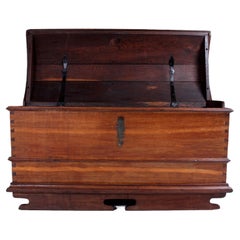
straight huge baroque oak dome top chest ar. 1750 very heavy dovetail joints
Located in Landshut, BY
""~!~** STRAIGHT **~!~**
Baroque round-lidded chest, also known as a dome top chest, solid oak, with heavy fittings, around 1750.
The chest is in a "refined for the home condition...
Category
Antique 1750s German Art Deco Blanket Chests
Materials
Wrought Iron
$1,951 Sale Price
32% Off
You May Also Like
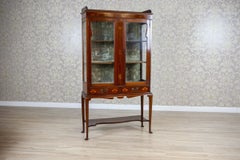
English Inlaid Mahogany Display Cabinet From the 19th Century
Located in Opole, PL
English Inlaid Mahogany Display Cabinet From the 19th Century
Step into timeless elegance with this exquisite antique display cabinet, a captivating ...
Category
Antique Early 19th Century English Art Nouveau Vitrines
Materials
Mahogany, Glass, Wood
$2,765 Sale Price
20% Off
20th Century Art Nouveau Display Cabinet/ Vitrine, Mahogany, AT ca. 1910
Located in Lichtenberg, AT
Beautiful Art Nouveau vitrine or display cabinet from the early 20th century in Austria. An absolute fantastic designed Art Nouveau vitrine elaborately made of mahogany around 1910 w...
Category
Early 20th Century Austrian Art Nouveau Vitrines
Materials
Brass

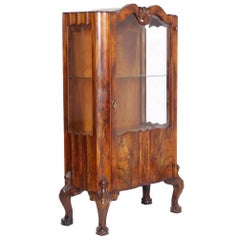
Late 1800 Venetian Baroque Walnut and Burl Walnut Vitrine Display Cabinet
Located in Vigonza, Padua
Elegant Venetian late 19th Century, walnut and burl walnut vitrine display cabinet
Measure in cm: H 170, W 100, D 46.
Category
Antique Late 19th Century Italian Baroque Revival Vitrines
Materials
Walnut, Burl
Victorian Burl Walnut Glass-Door Display Cabinet 19th Century English Bookcase
Located in High Point, NC
This stunning 19th-century Victorian burl walnut display cabinet features beautifully figured veneers, rounded corners, and two tall glass-panel doors that open to reveal shelving. T...
Category
Antique 19th Century English Victorian Bookcases
Materials
Wood

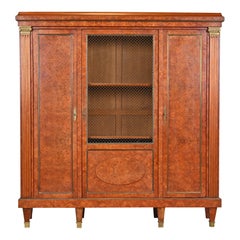
Antique French Empire Burl Wood Bibliotheque Bookcase Cabinet, Circa 1880s
By Louis Majorelle
Located in South Bend, IN
A beautiful antique French Empire knockdown bibliotheque bookcase cabinet
In the manner of Louis Majorelle
France, Circa 1880s
Gorgeous burl wood, with bronze mounts and trim.
Me...
Category
Antique Late 19th Century French Empire Bookcases
Materials
Bronze
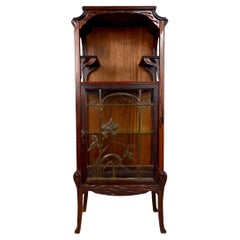
Art Nouveau Display Cabinet / Vitrine, Bronze and Carved Wood, France, 1900
s
By Émile Gallé, Atelier Majorelle, Louis Majorelle
Located in VÉZELAY, FR
Art Nouveau Display Cabinet, Bronze and Carved Wood with a Lacustrine Theme, France, circa 1900
We are pleased to present this exceptional Art Nouveau display cabinet, a rare and el...
Category
Antique Early 1900s French Art Nouveau Vitrines
Materials
Metal, Brass, Bronze
More Ways To Browse
Antique Bombs
Inlay Dining Table And Chairs
Burl Burl Wood Dining Room Set
Antique Dining Table And 6 Chairs Tables
Antique Dining Room Table 6 Chairs
19th Century Walnut Library Table
Wood Inlay 3 Leg Table
Antique Dining Room Table And Six Chairs
Used Glass Dining Table And 6 Chairs
Dining Table Wood Inlays Glass
Antique Dining Table And 10 Chairs
Antique Drawing Cabinet
Set Of 4 Library Chair
Royal Bavarian
Antique Walnut Table And 6 Chairs
Burl Wood Display Case
King Ludwig
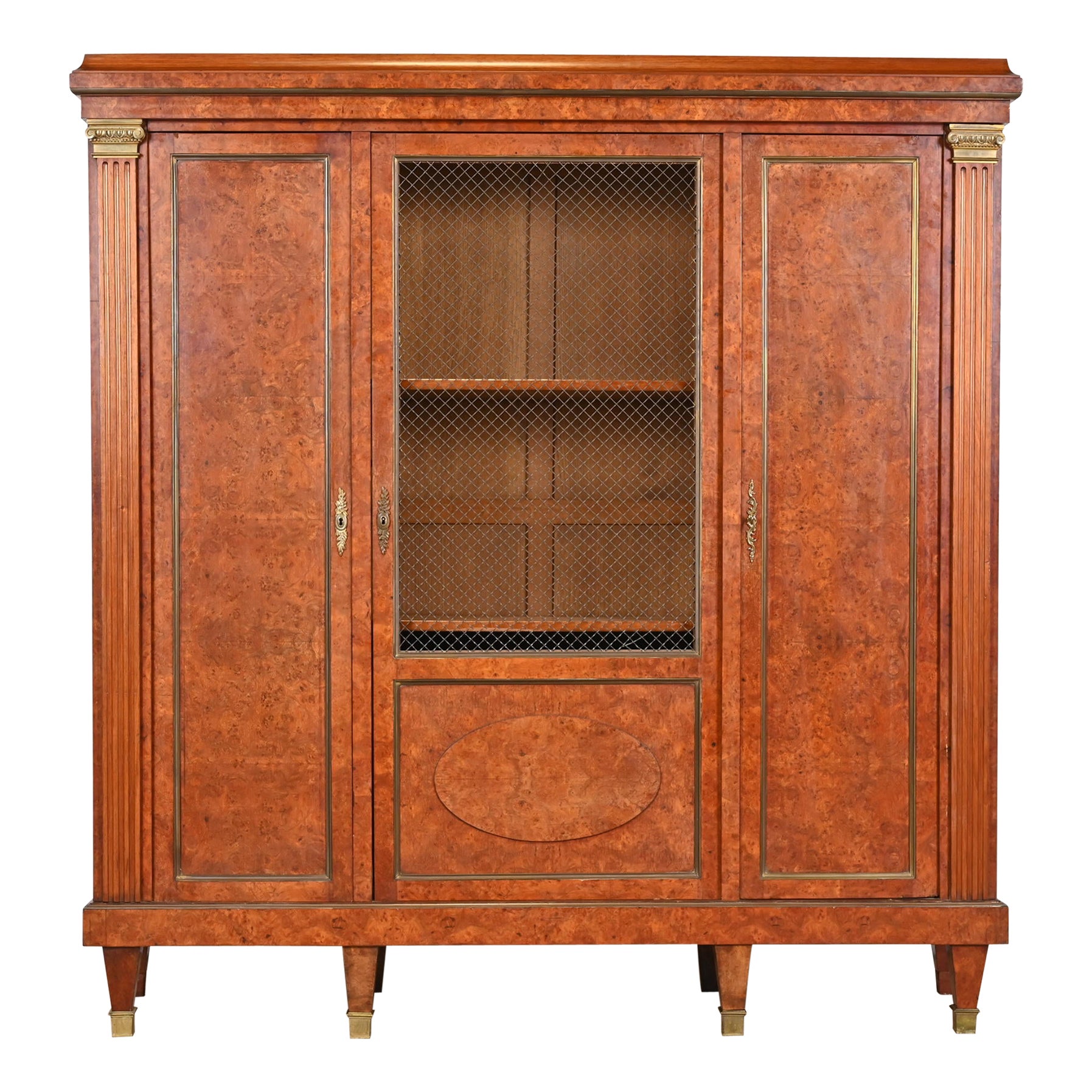
Walnut Burl Display Cabinet