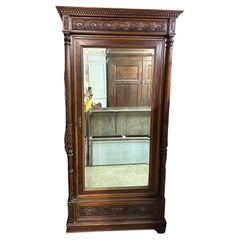
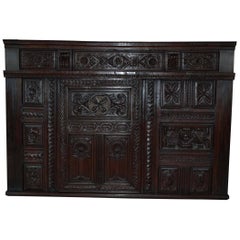
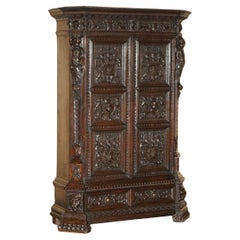
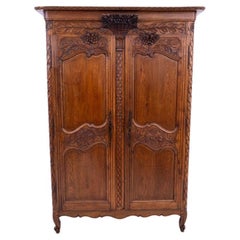
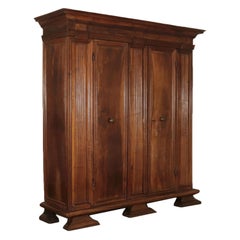
Renaissance Wardrobes and Armoires

RENAISSANCE STYLE

Spanning an era of cultural rebirth in Europe that harkened back to antiquity, the Renaissance was a time of change in design. From the late 1400s to the early 1600s, Rome, Venice and Florence emerged as artistic centers through the expansion of global trade and a humanist belief in the arts being central to society. Antique Renaissance furniture was ornately carved from sturdy woods like walnut, its details standing out against the tapestries and stained glass adorning the walls.

Renaissance chests, which were frequently commissioned for marriages, were often decorated with gilding or painted elements. Those that were known as cassoni were crafted in shapes based on classical sarcophagi. As opposed to the medieval era, when furniture was pared down to the necessities, a wide range of Renaissance chairs, tables and cabinets were created for the home, and the designs regularly referenced ancient Rome.

Large torchères of the Renaissance era that were used as floor lamps were inspired by classical candelabras, while marble surfaces evoked frescoes. The inlaid boxes being imported from the Middle East informed the intarsia technique, which involved varying hues of wood in mosaic-like patterns, such as those by architect Giuliano da Maiano in the Florence Cathedral.

Tapestry-woven cushion covers accented the variety of Renaissance seating — from conversation to study chairs — while bookcases for secular use reflected the migration of culture and knowledge from the church into the home. The aesthetics of the Italian Renaissance later spread to France through the publishing of work by renowned designers, including Hugues Sambin and Jacques Androuet du Cerceau. Centuries later, the 19th-century Renaissance Revival would see a return to this influential style.

Find a collection of antique Renaissance case pieces, decorative objects and other furniture on 1stDibs.

to
Height
to
Width
to
Depth
to
9
1
10
327
150
136
69
65
36
32
27
26
25
22
21
17
14
11
10
7
6
9
1
10
6
1
10
4
2
1
1
10
10
10
Style: Renaissance
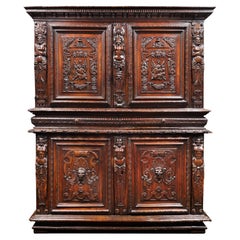
French Renaissance Armoire
Located in Saint-Ouen, FR
Original lock and key This piece of furniture shows no recess on its upper part. It opens with four folding-doors and two drawers within the belt. The key bears the date 1524 above cross motifs. Burgundy and Lyon regions subordinated themselves to architecture in a different manner than the other french schools. Rather than using particularly columns and pediments pieces of furniture from Lyon borrow architecture’s organization principles and rigorous designs. On the upper body a strong feeling of balance and symmetry appears with the folding doors reliefs. Swags of flowers and fruits held with knot cloth centered by a man seating on his arms. Here profiles, masks and chou de Bourgogne mingle with the structuring scrolls. The two lateral terms wear draperies and the goddess Diana in the center wears a belt of fruits similar to Hugue Sambin’s designs (Termes de Diane et de Venus, 1554, BNF). The two palm-leaves enriched drawers and the alternating scrolls belt balance the weight of the cornice with its alternatings consoles and tops. The lower body is also adorned by three terms with a feminine one in the center, all three are wearing fruits on their heads. The folding doors are centered upon a motif of cut cuirs by a mask in high relief. Wearing a feathered tiara...
Category

16th Century French Antique Renaissance Wardrobes and Armoires

Materials

Walnut

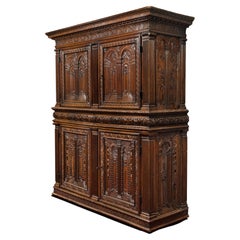
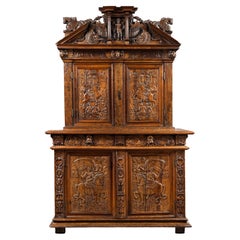
Important Renaissance Cabinet from Lyon France with a Decor of Perspectives
Located in Saint-Ouen, FR
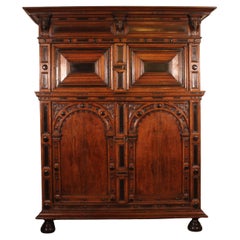
As soon as 1540 France's second Renaissance is in the making, intimately linked to the rediscovery of the Antique world. The development of the printing and engraving industry allows the spread of artworks and models in many cities and countries. The Italian influence can be perceived in every artistic field. While the French king entrust the most talented Italian artists with major projects such as Il Rosso or Primaticcio in Fontainebleau, French artists also travel to Italy to form themselves to this new style. In Italy they get acquainted with the work of Leo Battista Alberti the first to theorize perspective (De Pictura, 1435-36) and architecture (De re oedificatoria, 1541). Those two publications would have a revolutionary impact on arts. Furniture is marked by the work of the most famous Italian architects of the time as well as French architects. Indeed Philibert de l'Orme competes with Alberti and by the end of his life publishes several treaties including one devoted to a theory of architecture (1567). Unfortunately he would not live to complete the second volume. In this treaty he expresses his interest for mathematical norms applied to architecture, copied from the Antique. His journeys in Italy allowed him to accumulate the most sophisticated references. Jean Bullant, another architect of great talent also theorizes his practice. He establishes rules characterizing Greco-Roman art staying faithful to Vitruvius. Following this new inspiration the structure of furniture evolves. From then on appear columns, capitals, cornices, friezes and architraves. The ornamentation uses this inspiration as well with egg-and-dart, palm leaf and rose adorning the most beautiful pieces. In Lyon, crossroad where meet merchants from everywhere those new experiments are welcomed. Lyon florishing printing industry allows the spreading of models and treaties essential to the artist's work. Thus the first publication of Vitruvius' De Architectura in France would be printed in Lyon in 1532. Artists from Lyon rediscover and familiarize themselves with the Antique knowledge very early. They adopt those new ideas and use them in their own creations. Lyon cabinet-makers re interpret Antique architecture and Italian Renaissance palaces to give their pieces a pure and harmonious architectural structure. Grooved pilasters are particularly favored. They are topped by capitals of diverse orders always respecting the sequencing with simpler ones for the lower levels and the richest ones on the higher levels. As for the ornamentation, one of the great distinctiveness of Lyon workshops remains the architectural perspective illusions, drawing inspiration from Tuscany. True masterpiece of the Second French Renaissance this important cabinet illustrates Lyon workshops' taste for fine Italian architecture inspired by Antiquity. An architectural perspective of great quality is treated in symmetry on each panel. This two-bodied cabinet without recess stands on four rectangular feet. The base comprises a molding, a palm leaf frieze and is bordered by a braid. The lower body is divided by three grooved pilasters with Tuscan capitals framing two door-leaves. The two panels are encircled by a moudled frame with palm leaves. They are finely carved with a decor of fantasized architecture depicting an Italian Renaissance palace erected symmetrically on each side of a grooved pilaster. On the ground floor a door opens through a stilted arch while the stories are opened with mullioned windows, dormers and occuli. Two large pegged-boss cladded pillars support the entablature enriched by a palm leaf frieze upon which stands an arch whose coffered intrados is centred by a rose. Behind this arch a pyramid appears, standing in front of a second facade with a window topped by a broken curvilinear pediment under a cul-de-four with a shell. The checker flooring gives depth to the low-reliefs creating vanishing points structuring the panels and guiding the eye of the observer. A thin laurel braid highlights the belt of the cabinet where are located two drawers. Their facades are adorned by palm leaves in hoops. The upper body is encircled with palm leaves. The same ternary division as in the lower body appears. However, the pilasters are topped by Ionic capitals with volutes and egg-and-dart. The door-leaves are framed with flowers. On the panels the artist has designed another architectural decor. On the foreground open two arches on top of grooved pilasters with rectangular capitals adorned with palm leaves. The arches are enriched with braids and the coffered intrados bears a decor of roses. The spandrels also bear a flower decor. In the background another arcature hosts a fluted grooved column topped with double basket acanthus capital, characteristic of Corinthian order. The triangular pediment is interrupted by a choux bourguignon. A large cornice crowns the cabinet. It stands on pilasters and forms an entablature comprising a palm leaf frieze and an egg-and-dart, triglyph and palm leaf cornice. The cabinet's sides have also been carefully considered. The lower body's panels are enriched with an arch rising above a broken pediment portico hosting a twisted column. Flowers garnish the spandrels. An architectural facade completes the decor. The upper body's panels present two arches supported by a facade opened with dormers and mullioned windows as well as cartouches (one bears the inscription 1580 dating the cabinet) suggesting the interior of an Italian Renaissance palace, confirmed by the chandeliers. The flooring leads our gaze to a second arch with a broken curvilinear pediment where stands a flower vase. This arch opens onto a perspective of another facade along a road. Inside the cabinet, on the lower body door-leaves appear two designs. On the right door is depicted a Crucifixion. Saint Mary and Saint John flank the Christ on the cross. In the bottom part is inscribed « Dure uiator abis nihil haec spectacula curas / Pendenti cum sis unica cura Deo. / Tota suo moriente dolet natura Magistro. / Nil qui solus eras caussa dolenda doles. ». The signature [Christoff Swartz Monachiensis pinx[it] / Ioa[nnes] Sadeler sculp[it]] tells us it was made by Johan Sadeler I (1550-1600) after Christoph Schwartz (1548-1592). This engraving belongs to an ensemble depicting the Passion of Christ Johan Sadeler executed in 1589 after an altar piece painted by Christoph Schwartz for the private chapel of Renée of Loraine, wife of Duke William V of Bavaria. This altar piece made of nine copper panels has been destroyed during the 19th century. The Crucifixion panel once in the centre of the altar piece is the only one that survived and is today kept in Munich's Alte Pinakothek. On the left door appears Saint Francis receiving the stigmata. The inscription says : « Signastidomine Servum Tuum. Franciscum. Signis Redemptionis Nostrae ». This Renaissance cabinet with an architectural decor appearing as much in the structure faithful to Antique rules...
Category

16th Century European Antique Renaissance Wardrobes and Armoires

Materials

Walnut

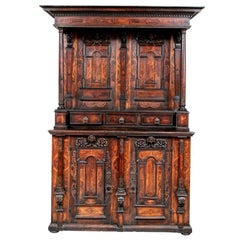
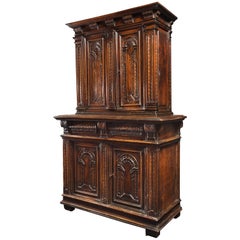
Notable circa 17th Century Carved Walnut Two-Tiered Cabinet in Renaissance Style
Located in Bridgeport, CT
A large and impressive 17th century European cabinet. Made in two parts, both with elaborate carved decoration and burled panels and details. The upper cabinet with heavy overhanging...
Category

17th Century European Antique Renaissance Wardrobes and Armoires

Materials

Wood

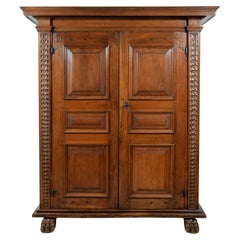
17th Century, Tuscany Solid Walnut Carved Wardrobe
Located in IT
17th Century, Tuscany Solid Walnut Carved Wardrobe This charming solid walnut wardrobe was crafted in Tuscany in the 17th century. The structure features two large front doors adorne...
Category

17th Century Italian Antique Renaissance Wardrobes and Armoires

Materials

Walnut

Renaissance Palace Wardrobe with Perspectival Views
Located in Saint-Ouen, FR
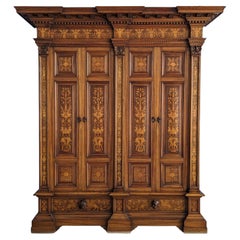
A rare carved walnut wardrobe opening with four door-leaves and two drawers in the lower part. The doors bear architectural views in low reliefs, fluted pilasters and Ionic capitals. Upper Body Two door-leaves with carved architectural perspectives open the wardrobe framed by three fluted pilasters with Ionic capitals. Each door-leaf depict two semi-circular arcades whose cornice and base shows a central vanishing point. Likewise the pavement’s lines act for the artisan as a way to create depth. The vaulting instead leads us to think the vanishing point has to be situated where the handle is, between the two complementaries reliefs. The elegant moulded belt hides an internal secret space, accessible through a moveable plank in the upper body. Lower Body Two door-leaves identical to those of the upper body framed by three fluted pilasters with Doric capitals. The base of the wardrobe opens with two large drawers. The sides also bear panels depicting architectural perspectives. The external pilasters share their Ionic capital with the facade’s pilasters. Thus we can observe on the wardrobe’s sides the capital’s lateral parts with the elegant volute specific to the Ionic order. This palace wardrobe is topped by an overlapping cornice standing on three consoles for the facade and two consoles on each sides. Placed right above the pilasters each console are adorned by fully expanded leaves. During the 15th century a major interest for architecture and perspective studies arises and influences patrons tastes. The work of great theorists such as Leon Battista Alberti...
Category

16th Century Italian Antique Renaissance Wardrobes and Armoires

Materials

Walnut

16th Century Cabinet with Knights Carving from Avignon Workshops France
Located in Saint-Ouen, FR
Collection Jean Thuile Around the mid-sixteenth century French furnishing evolves in its conception and ornamentation. The start of major archi...
Category

16th Century French Antique Renaissance Wardrobes and Armoires

Materials

Walnut

French Renaissance Cabinet with Perspectives
Located in Saint-Ouen, FR
This Renaissance Cabinet reveals the great mastery of the Lyon workshops which are at the origin of its realization. Sculptors and wood-carvers worked here in symbiosis to express an...
Category

16th Century French Antique Renaissance Wardrobes and Armoires

Materials

Walnut

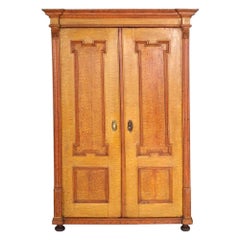
Antique Original Tirol Wien Wardrobe Cupboard Massive Wood Laquered Faux Wood
Located in Vigonza, Padua
Mid-18th century Renaissance wardrobe cupboard in massive wood laquered faux wood; with columns and hand-carved capitals. Wardrobe restored leaving the signs of aging in precious la...
Category

Mid-18th Century Austrian Antique Renaissance Wardrobes and Armoires

Materials

Wood

17th Century Oak And Ebony 4-door Sideboard - Netherlands
Located in Brussels, Brussels
Superb and rare four door oak and ebony sideboard from the early 17th century from the Netherlands. Exceptional Renaissance work composed of two doors at the bottom with arches deco...
Category

17th Century Dutch Antique Renaissance Wardrobes and Armoires

Materials

Oak

Renaissance Style Wardrobe
Located in Marseille, FR
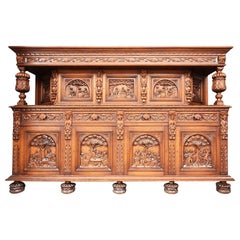
Exceptional richly carved Renaissance style wardrobe decorated with sketches with many characters depicting various rural scenes extraordinary size. ...
Category

20th Century French Renaissance Wardrobes and Armoires

Materials

Wood

Related Items
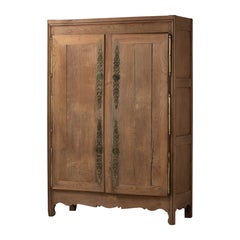
French Limed Oak Armoire
Located in Antwerp, BE
Limed oak two door armoire. Height 210 cm. Width 127 cm. Depth 64 cm.
Category

Late 20th Century French Renaissance Wardrobes and Armoires

Materials

Glass, Wood, Oak

French Limed Oak Armoire
$2,632
H 82.68 in W 50.01 in D 25.2 in
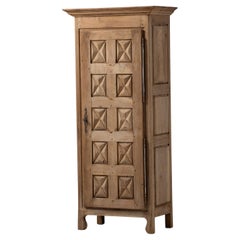
Louis XIII period walnut Wardrobe - 17th century - France
Located in Beuzevillette, FR
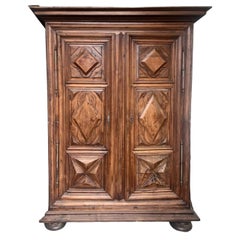
A very beautiful natural walnut armoire with two doors, featuring a wide diamond-point decoration. The cornice is straight. The armoire rests on curly feet. Louis XIII period - 17th...
Category

17th Century French Antique Renaissance Wardrobes and Armoires

Materials

Walnut

Armoire, Bleached Oak, France, circa 1940
Located in Kaštel Sućurac, Splitsko-dalmatinska županija
Armoire, Bleached Oak, France, circa 1940 Echoing the Sculptural Language of French Provincial Modernism Sculptural in stance and restrained in detail, this tall French cabinet fro...
Category

1940s French Vintage Renaissance Wardrobes and Armoires

Materials

Oak

Armoire, Bleached Oak, France, circa 1940
$4,500
H 68.51 in W 30.71 in D 18.12 in
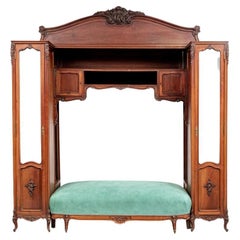
Late 19th-Early 20th C. Large Scale Walnut French Dressing Cabinet With Bench
Located in Bridgeport, CT
An incredible ensemble acting as its own complete sitting room. A large scale carved walnut cabinet in the Louis XV style with double beveled mirrored doors for the deep side compart...
Category

Early 20th Century Renaissance Wardrobes and Armoires

Materials

Brass

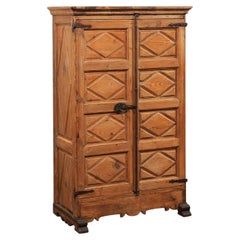
Rustic 19th C. Spanish Cabinet with Original Hardware
Located in Atlanta, GA
A Spanish carved-wood tall cabinet with two doors from the 19th century. This antique armoire from Spain features a molded cornice at top, with a case that houses a pair of four pane...
Category

19th Century Spanish Antique Renaissance Wardrobes and Armoires

Materials

Wood

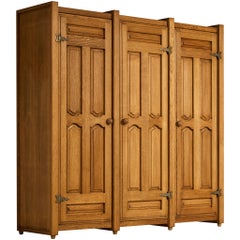
Guillerme Chambron Wardrobe in Solid Oak
Located in Waalwijk, NL
Guillerme & Chambron for Votre Maison, armoire or wardrobe, oak, brass, France, 1960s This charming wardrobe is a good example of excellent woodworking by virtue of the graphical de...
Category

1960s French Vintage Renaissance Wardrobes and Armoires

Materials

Brass

Guillerme 
Chambron Wardrobe in Solid Oak
Guillerme 
Chambron Wardrobe in Solid Oak
$6,400
H 70.87 in W 72.05 in D 21.26 in
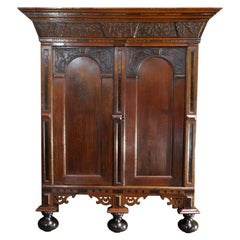
17th Century Dutch Renaissance Cabinet with Arched Doors
Located in Casteren, NL
Beautiful and rare Dutch Renaissance two-door cabinet. This cabinet stems from an era in Dutch history that is called "the golden age'. This cabinet has the typical arched panelled doors and is called a 'poortkast' or portal cabinet. It is made in the best quality solid oak. It stands on ebonized bun feet with an ajour cut skirt. The panelled doors have a hand-carved arched top. The top corniche has beautiful hand-carved elevated panels depicting cupids holding garlands. The whole cabinet is enriched with inlaid parts of ebony...
Category

Mid-17th Century Dutch Antique Renaissance Wardrobes and Armoires

Materials

Ebony, Mahogany, Oak

17th Century Dutch Renaissance Cabinet with Arched Doors
$13,894 Sale Price
20% Off
H 77.17 in W 67.72 in D 24.81 in
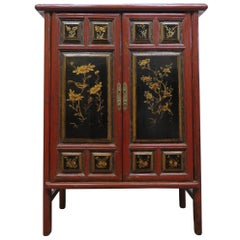
19th Century Chinese Tapered Cabinet
Located in New York, NY
19th century painted tapered Chinese cabinet. Having elaborate panels with gilt painting and raised moldings. Warm red lacquer adorned with black lacquer and gilt painting. Framing the panels recessed into the molding are remnants of crushed seashell used...
Category

1880s Chinese Antique Renaissance Wardrobes and Armoires

Materials

Cypress, Fir

19th Century Chinese Tapered Cabinet
$2,880 Sale Price
37% Off
H 59 in W 43 in D 19 in
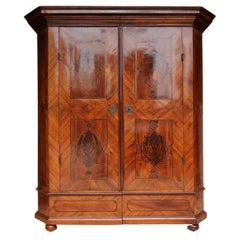
18th Century Maria Theresia Baroque Cabinet
Located in Dusseldorf, DE
A so-called Maria Theresa cabinet (furniture type named after the Austrian empress) or Baroque hall cabinet from the 18th century. On ball feet standing two-door coniferous corpus...
Category

18th Century German Antique Renaissance Wardrobes and Armoires

Materials

Walnut, Pine

18th Century Maria Theresia Baroque Cabinet
$7,851
H 82.29 in W 74.81 in D 17.72 in
French Armoire in Oak, Late 19th Century
Located in Kaštel Sućurac, Splitsko-dalmatinska županija
French Armoire in Oak and Brass, Late 19th Century Rooted in the provincial elegance of the Belle Époque This tall oak armoire, dating from the end of the 19th century, embodies the...
Category

Late 19th Century French Antique Renaissance Wardrobes and Armoires

Materials

Oak

French Armoire in Oak, Late 19th Century
$5,200
H 83.47 in W 57.49 in D 22.05 in
20th Century Single Italian Door Wardrobe in Solid Walnut with External Mirror
Located in Buggiano, IT
20th century Single Italian door wardrobe in solid walnut with external mirror, with internal drawer and clothes rail. The piece of furniture can be completely disassembled into 10 p...
Category

20th Century Italian Renaissance Wardrobes and Armoires

Materials

Walnut, Fir

20th Century Single Italian Door Wardrobe in Solid Walnut with External Mirror
$1,207 Sale Price
48% Off
H 90.16 in W 45.28 in D 22.05 in
17th Century French Renaissance Hand-Carved Front Section of a Built in Cabinet
Located in Casteren, NL
This beautiful carved Renaissance front section was a part of a built in cabinet. The carvings are typical for Bretagne area in France and it can be ...
Category

Mid-17th Century French Antique Renaissance Wardrobes and Armoires

Materials

Oak

17th Century French Renaissance Hand-Carved Front Section of a Built in Cabinet
$2,683 Sale Price
50% Off
H 48.43 in W 68.9 in D 4.34 in
Previously Available Items
IMPORTANT CARVED NEO RENAiSSANCE ARMORIAL COAT OF ARMS ANTIQUE WARDROBE ARMOIRE
Located in West Sussex, Pulborough
Royal House Antiques Royal House Antiques is delighted to offer for sale this very rare one of a kind, fully restored, Important Neo Renaissance Armoire Wardrobe hand carved in Fran...
Category

1840s French Antique Renaissance Wardrobes and Armoires

Materials

Chestnut, Oak

Antique wardrobe, France, circa 1880.
Located in Chorzów, PL
Antique wardrobe, France, circa 1880. Very good condition. Wood: oak dimensions: height 230 cm width 105 cm depth 55 cm
Category

1880s French Antique Renaissance Wardrobes and Armoires

Materials

Oak

Antique wardrobe, France, circa 1880.
H 90.56 in W 41.34 in D 21.66 in
French Neo Renaissance Wardrobe, 1900s
Located in Meulebeke, BE
This stunning antique wooden wardrobe with two doors and two drawers is a true masterpiece. Crafted with meticulous attention to detail, this ...
Category

Early 1900s French Antique Renaissance Wardrobes and Armoires

Materials

Wood, Oak

French Neo Renaissance Wardrobe, 1900s
H 83.47 in W 63 in D 25.6 in
Library from the 1920s, Western Europe.
Located in Chorzów, PL
A historic library from the early 20th century. Furniture in very good condition. Dimensions: height 193 cm width 262 cm depth 62 cm
Category

1920s Swiss Vintage Renaissance Wardrobes and Armoires

Materials

Walnut

Library from the 1920s, Western Europe.
H 75.99 in W 103.15 in D 24.41 in
Antique Neo-Renaissance Walnut Armoire with Inlays and Four Doors, Late 19th C.
Located in Traversetolo, IT
This stunning antique armoire is a true masterpiece of neo-Renaissance design, crafted in the late 19th century in Continental Europe, most likely in Austria or Germany. Its rich wal...
Category

Late 19th Century Austrian Antique Renaissance Wardrobes and Armoires

Materials

Walnut

1835 Blu Floral Painted Cabinet
Located in Vo , Veneto
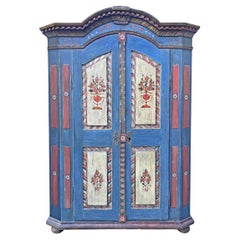
Blue Tyrolean wardrobe dated 1835 H.182 – L.122 (135 at the frames) – P.43 (50 at the frames) Tyrolean painted cabinet with two doors, painted throughout with a blue background, featuring four framed panels on the doors, with a cream background, depicting bunches of flowers in cups and ribbons. On shoulders and notches, four other panels, with a brick-red background, contain a small floral decoration. The upper cornice is characterized by serrations and is shaped like an arch, and with it the doors. A second line...
Category

1830s Austrian Antique Renaissance Wardrobes and Armoires

Materials

Fir

1835 Blu Floral Painted Cabinet
H 71.66 in W 48.04 in D 16.93 in
Circa 1830, Italian, Walnut Wood Wall Cabinet in the Renaissance Style
Located in Dallas, TX
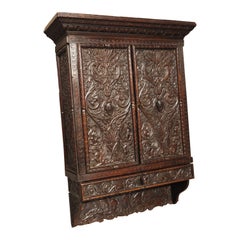
Hand-carved in Italy, circa 1830, this walnut wall cabinet has numerous Renaissance style motifs. The details are quite amazing, with all available space utilized. Even the edges of ...
Category

1830s Italian Antique Renaissance Wardrobes and Armoires

Materials

Wood, Walnut

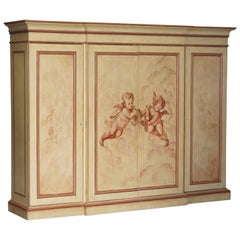
Huge Vintage French Antique Painted Breakfront Wardrobe Fully Dismountable
Located in West Sussex, Pulborough
We are delighted to offer this absolutely stunning, very large, quad bank breakfront wardrobe with antique French paint that can be fully dismantled This piece is rather impressiv...
Category

20th Century French Renaissance Wardrobes and Armoires

Materials

Oak

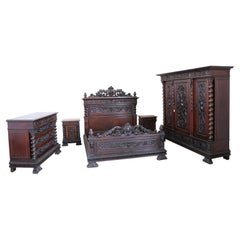
19th Century Italian Renaissance Style Carved Walnut Bedroom Set, Five Pieces
Located in Casale Monferrato, IT
Majestic complete bedroom set in perfect Renaissance style 1880s with five pieces: One large wardrobe Two nightstands One large chest of drawers One double bed Entirely made o...
Category

1880s Italian Antique Renaissance Wardrobes and Armoires

Materials

Walnut

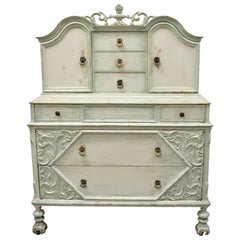
Depression Renaissance Bonnet Top Blue White Distress Painted Dresser Armoire
Located in Philadelphia, PA
Antique depression Renaissance bonnet top blue white distress painted dresser chest armoire. Item features rolling casters, urn carved pedim...
Category

Early 20th Century North American Renaissance Wardrobes and Armoires

Materials

Walnut

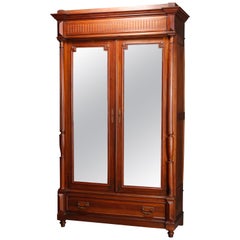
Antique French Renaissance Carved Walnut Double Door Armoire, 19th Century
Located in Big Flats, NY
Antique French Renaissance carved walnut double door Armoire with fluted frieze, surmounting beveled mirrors with flanking full turned columns, sin...
Category

19th Century French Antique Renaissance Wardrobes and Armoires

Materials

Mirror, Walnut

Walnut Wardrobe, Italy, 17th Century
Located in Milano, IT
Important antique wardrobe with three big double bracket feet. It has three cabled uprights and two doors with bronze knobs, made with one framed walnut board. The upper part is deco...
Category

17th Century Italian Antique Renaissance Wardrobes and Armoires

Materials

Walnut

Walnut Wardrobe, Italy, 17th Century
H 109.45 in W 103.94 in D 30.52 in

Renaissance wardrobes and armoires for sale on 1stDibs.

Find a broad range of unique Renaissance wardrobes and armoires for sale on 1stDibs. Many of these items were first offered in the 19th Century, but contemporary artisans have continued to produce works inspired by this style. If you’re looking to add vintage wardrobes and armoires created in this style to your space, the works available on 1stDibs include case pieces and storage cabinets and other home furnishings, frequently crafted with wood, walnut and other materials. If you’re shopping for used Renaissance wardrobes and armoires made in a specific country, there are Europe, France, and Italy pieces for sale on 1stDibs. It’s true that these talented designers have at times inspired knockoffs, but our experienced specialists have partnered with only top vetted sellers to offer authentic pieces that come with a buyer protection guarantee. Prices for wardrobes and armoires differ depending upon multiple factors, including designer, materials, construction methods, condition and provenance. On 1stDibs, the price for these items starts at $2,900 and tops out at $44,000 while the average work can sell for $20,000.

Still Thinking About These?

All Recently Viewed