Art Nouveau Furniture

ART NOUVEAU STYLE

In its sinuous lines and flamboyant curves inspired by the natural world, antique Art Nouveau furniture reflects a desire for freedom from the stuffy social and artistic strictures of the Victorian era. The Art Nouveau movement developed in the decorative arts in France and Britain in the early 1880s and quickly became a dominant aesthetic style in Western Europe and the United States.

ORIGINS OF ART NOUVEAU FURNITURE DESIGN

CHARACTERISTICS OF ART NOUVEAU FURNITURE DESIGN

  • Sinuous, organic and flowing lines
  • Forms that mimic flowers and plant life
  • Decorative inlays and ornate carvings of natural-world motifs such as insects and animals 
  • Use of hardwoods such as oak, mahogany and rosewood

ART NOUVEAU FURNITURE DESIGNERS TO KNOW

ANTIQUE ART NOUVEAU FURNITURE ON 1STDIBS

Art Nouveau — which spanned furniture, architecture, jewelry and graphic design — can be easily identified by its lush, flowing forms suggested by flowers and plants, as well as the lissome tendrils of sea life. Although Art Deco and Art Nouveau were both in the forefront of turn-of-the-20th-century design, they are very different styles — Art Deco is marked by bold, geometric shapes while Art Nouveau incorporates dreamlike, floral motifs. The latter’s signature motif is the "whiplash" curve — a deep, narrow, dynamic parabola that appears as an element in everything from chair arms to cabinetry and mirror frames.

The visual vocabulary of Art Nouveau was particularly influenced by the soft colors and abstract images of nature seen in Japanese art prints, which arrived in large numbers in the West after open trade was forced upon Japan in the 1860s. Impressionist artists were moved by the artistic tradition of Japanese woodblock printmaking, and Japonisme — a term used to describe the appetite for Japanese art and culture in Europe at the time — greatly informed Art Nouveau. 

The Art Nouveau style quickly reached a wide audience in Europe via advertising posters, book covers, illustrations and other work by such artists as Aubrey Beardsley, Henri de Toulouse-Lautrec and Alphonse Mucha. While all Art Nouveau designs share common formal elements, different countries and regions produced their own variants.

In Scotland, the architect Charles Rennie Mackintosh developed a singular, restrained look based on scale rather than ornament; a style best known from his narrow chairs with exceedingly tall backs, designed for Glasgow tea rooms. Meanwhile in France, Hector Guimard — whose iconic 1896 entry arches for the Paris Metro are still in use — and Louis Majorelle produced chairs, desks, bed frames and cabinets with sweeping lines and rich veneers. 

The Art Nouveau movement was known as Jugendstil ("Youth Style") in Germany, and in Austria the designers of the Vienna Secession group — notably Koloman Moser, Josef Hoffmann and Joseph Maria Olbrich — produced a relatively austere iteration of the Art Nouveau style, which mixed curving and geometric elements.

Art Nouveau revitalized all of the applied arts. Ceramists such as Ernest Chaplet and Edmond Lachenal created new forms covered in novel and rediscovered glazes that produced thick, foam-like finishes. Bold vases, bowls and lighting designs in acid-etched and marquetry cameo glass by Émile Gallé and the Daum Freres appeared in France, while in New York the glass workshop-cum-laboratory of Louis Comfort Tiffany — the core of what eventually became a multimedia decorative-arts manufactory called Tiffany Studios — brought out buoyant pieces in opalescent favrile glass. 

Jewelry design was revolutionized, as settings, for the first time, were emphasized as much as, or more than, gemstones. A favorite Art Nouveau jewelry motif was insects (think of Tiffany, in his famed Dragonflies glass lampshade).

Like a mayfly, Art Nouveau was short-lived. The sensuous, languorous style fell out of favor early in the 20th century, deemed perhaps too light and insubstantial for European tastes in the aftermath of World War I. But as the designs on 1stDibs demonstrate, Art Nouveau retains its power to fascinate and seduce.

There are ways to tastefully integrate a touch of Art Nouveau into even the most modern interior — browse an extraordinary collection of original antique Art Nouveau furniture on 1stDibs, which includes decorative objects, seating, tables, garden elements and more.

to
1,275
6,488
3,323
10,359
469
66
198,113
115,384
44,194
33,200
16,294
12,208
10,894
10,832
9,973
8,946
7,379
6,644
6,523
6,423
6,217
6,140
4,927
3,745
11
1,715
8,633
535
6,421
902
411
2,313
923
735
291
89
135
78
167
95
40
5,330
3,144
2,111
1,819
1,367
9,187
3,494
1,595
934
763
10,894
10,514
10,570
283
238
219
211
204
Style: Art Nouveau
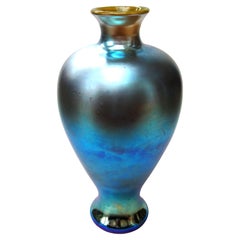
Steuben Blue Aurene Over Vibrant Uranium Yellow Vase 1925 - Frederick Carder
Located in Worcester Park, GB
Large Steuben Blue aurene baluster vase, in an amazing colourway - it is blue aurene cased over a very thick layer of Yellow -Green uranium glass giving the vase an ethereal glow -a...
Category

1920s American Vintage Art Nouveau Furniture

Materials

Art Glass

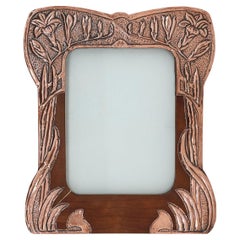
Art Nouveau embossed copper and wood Art Picture Frame, France ca. 1910
Located in Meulebeke, BE
France / 1910 / Art Picture Frame / wood, copper / Art Nouveau / Art Deco Beautiful picture frame, decorated with embossed lilies and artistic foliate designs. Handcrafted and hamme...
Category

Early 20th Century French Art Nouveau Furniture

Materials

Copper

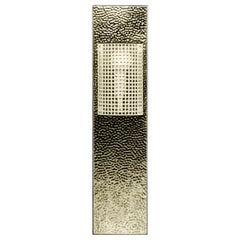
Josef Hoffmann Wiener Werkstätte Hammered Brass Wall Light Woka Lamps
Located in Vienna, AT
Hammered brass, optionally varnished or nickel-plated, all other finishes on request. Originally manufactured at the Wiener Werkstaette, now manufactured at the WOKA workshop in Vien...
Category

2010s Austrian Art Nouveau Furniture

Materials

Brass

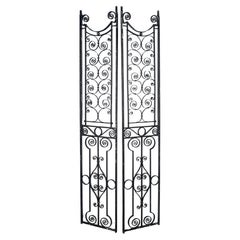
19th Century English Wrought Iron Garden Gate Grille Pair
Located in Winter Park, FL
A pair of 19th Century English wrought iron decorative panels with black painted patina. Good quality iron work. Some paint loss. These are salvaged grilles from an old hotel elevato...
Category

Early 20th Century French Art Nouveau Furniture

Materials

Wrought Iron

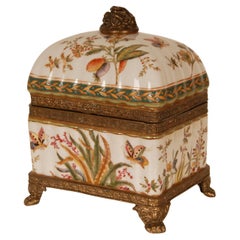
Vintage bronze mounted porcelain box hand painted butterflies and floral decor
Located in Wommelgem, VAN
Porcelain bronze mounted box, Art Nouveau style Made of hand-painted crackled, glazed high quality bronze mounted porcelain. Signed on the bottom. An all over polychrome floral deco...
Category

20th Century Japanese Art Nouveau Furniture

Materials

Porcelain

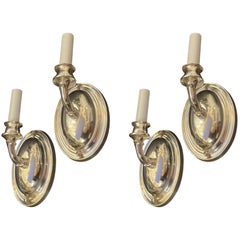
Wonderful Set 4 Two Pairs Vaughan Art Nouveau Single Arm Chrome Nickel Sconces
Located in Roslyn, NY
A Wonderful Set Of 4 / Two Pairs Of Art Nouveau Style Single Candelabra Arm Chrome / Nickel Wall Sconces In The Manner Of Vaughan
Category

20th Century Unknown Art Nouveau Furniture

Materials

Chrome, Nickel, Brass

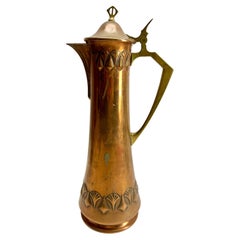
Art Nouveau Signed WMF Pitcher Brass and Copper with Handle and Organic Details
Located in Verviers, BE
Art Nouveau Signed WMF Pitcher Brass and Copper with Handle and Organic Details Hand-hammered out of one piece of copper. Brass handle with Organic style details With original Pati...
Category

1910s German Vintage Art Nouveau Furniture

Materials

Brass, Copper

Exclusive Danish early 20th century sculpture of large green glazed goblin
Located in Ebberup, DK
Original antique large unique sculpture of goblin made by Danish artist Anders Møller. Anders Møller resided on Funen and was born in 1890. He was a member of Danish artist group “Germinalen”, a part of the art and ceramic movement in Denmark at that time. The sculpture is estimated to be from the 1930s. This mythical, grotesque creature has exaggerated features and is possibly influenced by European Gothic or Art Nouveau aesthetics. The expression also has a resemblance to the work of earlier artist such as Niels Hansen Jacobsen...
Category

Early 20th Century Danish Art Nouveau Furniture

Materials

Ceramic, Clay, Stoneware

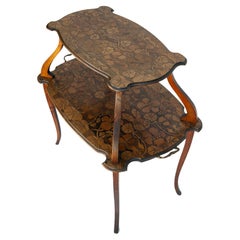
Art Nouveau Engraved Tea Table
Located in Malibu, CA
A rare and important French Art Nouveau tea table with two shapely shelves. Engraved with lily pads petals leaves. Decorative bronze handles. Completely hand crafted.
Category

Late 19th Century French Antique Art Nouveau Furniture

Materials

Hardwood

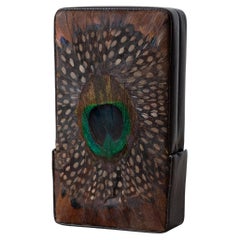
Peacock Feather Cigarette / Card Case
Located in Savannah, GA
A peacock feather cigerette case or card holder, mid-20th Century. 2 ¾ inches wide by 1 ¼ inches deep by 4 ½ inches tall
Category

Mid-20th Century Unknown Art Nouveau Furniture

Materials

Feathers

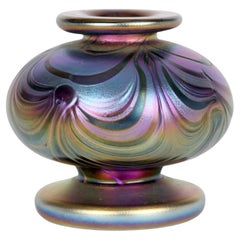
Loetz Attributed Peacock Feather Iridescent Miniature Art Glass Vase
Located in Bishop s Stortford, Hertfordshire
An exceptional quality Art Nouveau miniature iridescent glass vase, possibly Loetz and dating from the early 20th century. This heavily made amethyst glass vase is exquisitely decora...
Category

Early 1900s Austrian Antique Art Nouveau Furniture

Materials

Blown Glass

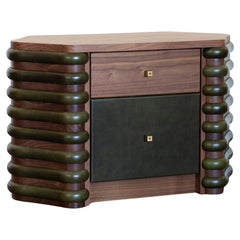
Roslin Leather wrapped and solid wood modern nightstand or side table
Located in Baltimore City, MD
The Roslin Nightstand Features both solid wood and laminate construction / low VOC acrylic finish / sustainably sourced leather wrapped drawer fronts and ribs / premium, full exten...
Category

2010s American Art Nouveau Furniture

Materials

Brass

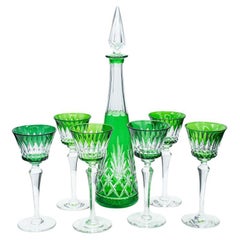
Set of 6 Green Overlay Baccarat Crystal glasses, 1 Decanter, Saint Louis
Located in Rijssen, NL
Luxury at its finest, set of 6 high-end glasses by Baccarat and 1 carafe by Saint Lois in green double-layered crystal with a beautiful carved decor. 1. Wine glasses Baccarat: H 7.6...
Category

1940s French Vintage Art Nouveau Furniture

Materials

Crystal

Mid century art nouveau inspired chest of drawers by SMF Bodafors
Located in Debenham, Suffolk
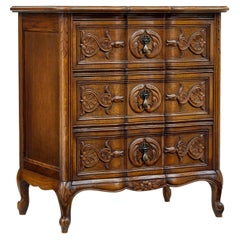
Mid century carved oak small chest of drawers by Bodafors circa 1960. 3 drawer chest of drawers of small proportions.  Single brass drop handles to the front. Carved and shaped dra...
Category

Mid-20th Century Swedish Art Nouveau Furniture

Materials

Oak

Antique Bronze Hirondelle Blessee Alfred Foretay Garniture Mantel Clock Urns
By Alfred Jean Foretay
Located in Dayton, OH
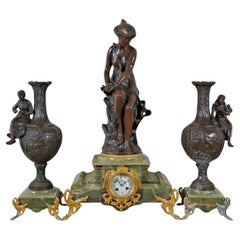
Antique three piece set garniture clock made of bronze with green marble bases and gilt feet. Mantel clock features the sculpture Hirondelle Blessee by Alfred Jean Foretay above a gilt framed, white porcelain clock...
Category

Early 20th Century Art Nouveau Furniture

Materials

Marble, Bronze

Josef Hoffmann Jugendstil Single Light Pendant for Wiener Werkstätte, Re-Edition
Located in Vienna, AT
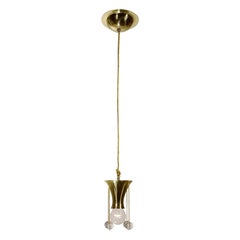
Hanging- lamp from the showrooms of the Wiener Werkstätte used by Hoffmann in several variations. Hammered originally. Works-number M115, pattern-book of the Wiener Werkstaette: WWMB...
Category

2010s Austrian Art Nouveau Furniture

Materials

Crystal, Brass

Adolf Loos Jugendstil Opaline Glass and Brass Pendant, Re Edition
Located in Vienna, AT
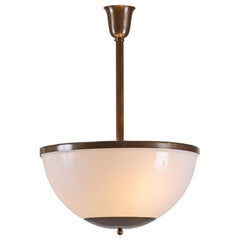
Ceiling light with opaline glass shade, different sizes, comes as well as a downlight Total drop custom made All components according to the UL regulations, with an additional char...
Category

2010s Austrian Art Nouveau Furniture

Materials

Brass

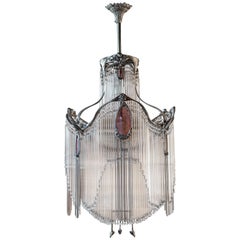
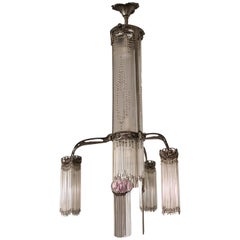
Art Nouveau Hector Guimard Chandelier with Nickel Finish
Located in Rebais, FR
Art Nouveau chandelier from Hector Guimard. Bronze with patinated nickel finish and purple glasses (lie de vin).
Category

21st Century and Contemporary French Art Nouveau Furniture

Materials

Bronze

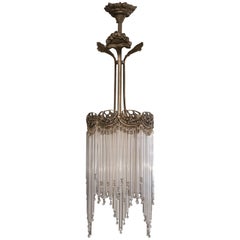
Art Nouveau Guimard Chandelier
Located in Rebais, FR
Art Nouveau Guimard chandelier with nickel finish.
Category

21st Century and Contemporary French Art Nouveau Furniture

Materials

Bronze

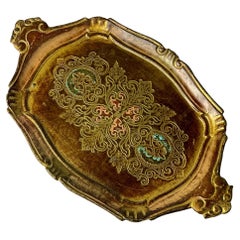
Vintage Small Wooden Florentine Gilt Tray, Italy 1950s
Located in Miklavž Pri Taboru, SI
Amazing Smal Italian Florentine tray. Manufactured in Florence, Italy. Hand-painted in gold and brown shades. Wooden tray is in a good condit...
Category

Mid-20th Century Italian Art Nouveau Furniture

Materials

Wood

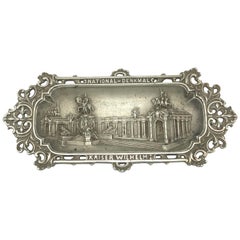
Emperor Wilhelm I. Metal Catchall Shows National Monument, Antique German, 1890s
Located in Nuernberg, DE
Beautiful metal tray or catchall to hold quills. Made of cast Iron, has some nice patina, but this is old-age. A beautiful piece for your desk or any room. It was made for the 100th ...
Category

1890s German Antique Art Nouveau Furniture

Materials

Iron

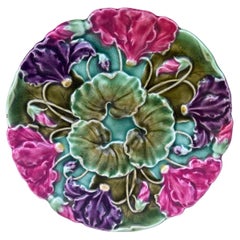
Majolica Cyclamens Plate Schultz Cilli, circa 1900
Located in Austin, TX
Lovely Majolica pink & purple cyclamens plate signed Schultz Cilli, circa 1900, Art Nouveau. Diameter / 6.7 inches.
Category

Early 1900s Antique Art Nouveau Furniture

Materials

Ceramic

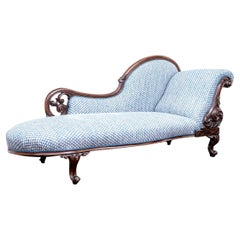
Fine Antique Upholstered Mahogany Reclamier
Located in Bridgeport, CT
An elegant and fine mahogany reclaimer upholstered in a blue and white woven fabric with geometric design accentuated with contrasting flue double welting. The reclaimer with beauti...
Category

19th Century Antique Art Nouveau Furniture

Materials

Fabric, Mahogany

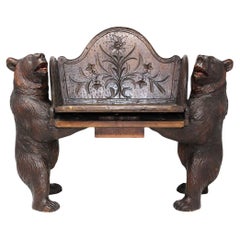
Antique Swiss Black Forest Carved Bear Musical Childs Chair
Located in Newark, England
Musically activated when sat upon From our Black Forrest collection, we are thrilled to offer this fine and rare Swiss Black Forest Bear carved musical child’s chair. The chair of b...
Category

Late 19th Century Swiss Antique Art Nouveau Furniture

Materials

Wood

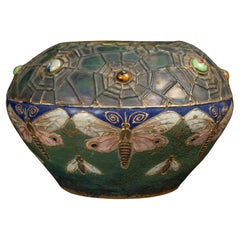
Art Nouveau Gres Bijou Butterfly Spiderweb Bowl-Shaped Vase by RStK Amphora
Located in Palm Beach, FL
Note: We highly recommend shipping through 1stDibs for its cost effectiveness, full insurance coverage, and reliable handling. While standard parcel services are an option, the defau...
Category

Early 1900s Austrian Antique Art Nouveau Furniture

Materials

Earthenware, Glass

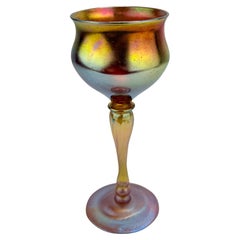
Louis Comfort Tiffany, Favrile Art Glass Goblet LCT Marked
Located in Atlanta, GA
This exquisite iridescent glass goblet measuring 7.5" h x 3.25" w, by Louis Comfort Tiffany (1848–1933), is a remarkable example of Favrile glass, the innovative hand-blown art glass...
Category

Early 20th Century American Art Nouveau Furniture

Materials

Art Glass

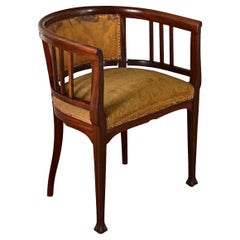
Art Nouveau Mahogany Armchair
Located in Baton Rouge, LA
An intriguing French Art Nouveau armchair–no doubt inspired by the design language of the Vienna Secession movement in the same time period–synthesizing clean, architectural influenc...
Category

20th Century French Art Nouveau Furniture

Materials

Textile, Mahogany

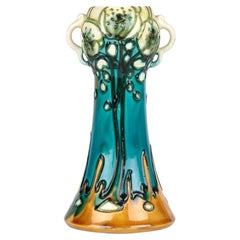
Minton Secessionist Art Pottery Tubelined Stylized Floral Vase No 41
Located in Bishop s Stortford, Hertfordshire
A very stylish Minton Secessionist Art Nouveau tube lined art pottery twin handled vase design pattern No 41, dating from around 1900. The pottery vase stands on a wide skirted ungla...
Category

Early 1900s English Antique Art Nouveau Furniture

Materials

Ceramic

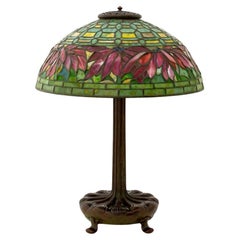
Tiffany Studios Poinsettia Table Lamp
Located in Astoria, NY
Tiffany Studios Poinsettia Three Light Table Lamp, leaded glass shade on patinated bronze "Library Small # 363" base, marked "TIFFANY STUDIOS NEW YORK 1998" to shade and "TIFFANY STU...
Category

Early 20th Century Art Nouveau Furniture

Materials

Bronze

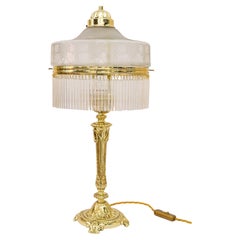
Floral Jugendstil Table Lamp with Glass Shade Vienna Around 1908
Located in Wien, AT
Floral jugendstil table lamp with glass shade vienna around 1908 Brass parts polished and stove enameled Original glass shade The glass sticks are replaced ( new ).
Category

Early 1900s Austrian Antique Art Nouveau Furniture

Materials

Brass

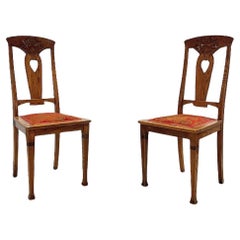
Pair of Swedish Art Nouveau Chairs in Oak, circa 1910
Located in Debrecen, HU
Crafted in Sweden around 1910, this charming pair represents the very essence of Scandinavian Art Nouveau at its peak. The elegant, flowing lines, the finely carved natural motifs an...
Category

1910s Vintage Art Nouveau Furniture

Materials

Oak

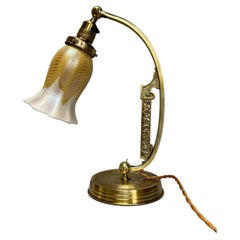
Quezal Art Nouveau Lamp
Located in NANTES, FR
Art nouveau lamp circa 1910. Brass and copper base. Iridescent glass tulip signed Quezal. In perfect condition and electrified. Total height: 38.5 cm Base diameter: 15.5 cm Width: 30 cm Quezal Art Glass Quezal Art Glass – The Journal of Antiques and Collectibles – April 2003 By Malcolm Mac Neil Some of the most beautiful and alluring art glass made in America during the early part of the 20th Century was made by the Quezal Art Glass and Decorating Company. Often in the shape of blossoming lilies with brilliant gold interiors and colorfully decorated with floral and other motifs inspired by nature, Quezal art glass ranks right alongside the iridescent glass of Louis Comfort Tiffany and Frederick Carder. Quezal artisans created an extensive range of decorative and useful items, including vases, compotes, finger bowls, open salts, candle holders, and shades for lighting fixtures, which are equivalent in terms of beauty and quality of craftsmanship to Tiffany’s Favrile and Carder’s Aurene glass. In recent years, glass collectors have discovered anew the special charms and appeal of Quezal art glass, and collector desirability for this lovely glassware has increased dramatically. The Quezal Art Glass and Decorating Company was incorporated a century ago, on March 27, 1902. It was founded by Martin Bach, Sr., Thomas Johnson, Nicholas Bach, Lena Scholtz, and Adolph Demuth. The factory was located on the corner of Fresh Pond Road and Metropolitan Avenue in Maspeth, Queens, New York. In October 1902, the trademark “Quezal” was successfully registered. By 1904, roughly fifty glassworkers were employed at the works. Martin Bach, Sr. was the president, proprietor, and guiding force behind this successful company. Born in 1862 in Alsace-Lorraine to German parents, he emigrated to the United States in 1891. Before his emigration, Bach worked in Saint-Louis, France, at the Saint-Louis Glass Factory. After Bach arrived in this country, he was hired by Louis C. Tiffany as the latter’s first batch-mixer or chemist at the newly established Tiffany Glass and Decorating Company, in Corona, Queens. After a period of about eight years, Bach left Tiffany and established his own glassworks. By this time, Bach had already started his small family. He and his German-born wife, Anne-Marie Geisser, whom he married in the fall of 1889, in Paris, France, had three children. Two daughters, Jennie and Louise, were born in France and a son, Martin, Jr., was born in Corona. Bach was assisted by Thomas Johnson, an English immigrant, and Maurice Kelly, a native of Corona, both of whom were gaffers or master glassblowers. Johnson and Kelly helped pave the way for Quezal’s early accomplishments and later recognition. Thomas Johnson, like Bach, was a founding member and also previously employed by Louis C. Tiffany. Johnson’s association with Quezal, however, was relatively short lived. Around 1907, Johnson left for Somerville, Massachusetts, where he became involved in making Kew Blas glass, under William S. Blake at the Union Glass Company. Maurice Kelly’s tenure with Quezal was also brief. Kelly worked at Quezal from January 1902 until July 1904, but by November 1904, he was making Favrile glass at Tiffany Furnaces, where he would happily remain until 1918. To this day, the belief still exists that there once existed a man named Quezal, who worked for Louis C. Tiffany, and it is after him that Quezal glass is named. In truth, however, the founders of the Quezal Art Glass and Decorating Company named the company and its products after one of the world’s most beautiful birds, the elusive and rare quetzal, which dwells in the treetops of the remote tropical forests of Central America. A rare company promotional brochure provides a vivid description of the quetzal: Of all the birds of the America’s, it is the most gorgeous. No more splendid sight is to be seen in all the world than a quezal, flying like a darting flame through the depths of a Central American forest. Its back is of a brilliant metallic green, so vivid it shines even in the twilight of the woods like a great emerald and its breast is a crimson so deep and bright that every motion of the wonderful creature is a flashing of rubies among the trees and giant creepers. It bears a true golden crown upon its head – a helmet of bright yellow and green, shaped just as the helmet of old Aztec kings were shaped. Its tail is composed of lacelike plumes, extending more than two and one-half feet beyond its body. The quezal was certainly an appropriate designation for the company’s resplendent glassware. One of the most prized characteristics of Quezal art glass is the shimmering and dazzling brilliance reflected in the iridescent surfaces on the interior as well as exterior of the glass. The radiant rainbow colors in metallic hues, including gold, purple, blue, green, and pink, to name only a few, were certainly inspired by the quetzal and its feathers. Not surprisingly, lustrous feathers, in shades of opal, gold, emerald, and blue, are among the most common decorative motifs encountered on Quezal glass. The enduring hallmark of Quezal art glass is its unique expression of the Art Nouveau style, based on organic shapes and naturalistic motifs coupled with technical perfection in the execution. Vases, compotes, drinking vessels, and shades for lighting fixtures were often fashioned to resemble flowers such as crocuses, tulips, calla lilies, casablanca lilies, and jack-in-the-pulpits. Variously colored inlaid threads of glass, pulled and twisted by hooks, simulate naturalistic floral and leaf patterns, lily pads, clover leafs, and vines. Opal, gold, and green colors prevail and the glass is generally opaque. Red is the rarest color of all. Compared with Tiffany’s Favrile glass, the crisp, vivid, and colorful decoration of Quezal art glass is distinctively precise, symmetrical, and restrained. Other Quezal wares recall shapes and styles favored in ancient Egypt, Persia, Greece, and Rome, as well as the Italian Renaissance and the Georgian period in England. This is especially true of classic-shaped vases and bowls of translucent amber glass, which have a single surface color such as iridescent gold or blue. Still, others were inspired by traditional Chinese and Japanese forms. The Gorham Manufacturing Company in Providence, Rhode Island, and the Alvin Silver Manufacturing Company in Sag Harbor, Long Island, purchased Quezal art glass, which they in turn embellished in their shops with silver overlay decoration in the fashionable Art Nouveau style and later resold. Gorham’s silver overlay designs mostly include stylized floral motifs. Alvin’s silver designs are wonderfully organic. One sumptuous design is of a group of sinuous iris blossoms with carefully articulated petals surrounded by attenuated meandering vines. Collectors should note that not all silver-deposit pieces are marked with a maker’s mark since the silversmith had to be quite careful not to damage the glass underneath. A rare 1907 retail catalog survives from Bailey, Banks, and Biddle Company, a luxury goods retailer in Philadelphia, which reveals original retail prices of Quezal art glass. A surprising revelation provided by this catalog is that Quezal art glass was nearly twice as expensive as comparable French imported glass made by such renowned firms as Gallé and Daum. Hock glasses, a stemmed glass used primarily for drinking German white wine, were sold by the dozen and retailed between $50 and $75. Fingerbowls were also sold by the dozen and retailed between $50 and $100. These high retail prices were nearly the same as those charged for Tiffany’s Favrile glass, and suggest Quezal art glass was also marketed towards the high-end or luxury market. Electricity was a brand new invention in the late 1800s and American glass manufacturers developed novel approaches for concealing the electric light bulb, which was rather harsh to the eye and perhaps unflattering to the domestic interior. Tiffany, Steuben, and Quezal responded to this need with the most extraordinary and beautiful art-glass shades, all of which were  hand-made and exquisitely fashioned. Many other companies also made art glass shades for table and floor lamps, electroliers, hallway fixtures, and wall sconces, but it was Quezal that excelled in this area and was the most prolific. Quezal art glass shades were available in an infinite variety of shapes, sizes, colors, and decorations. Some shades are formed and decorated as lilies while others are bell-shaped and have ribbed or textured decoration. Rims are usually plain but sometimes are notched or ruffled. Common motifs include feather or hooked feather, leaf and vine, applied flowers, drape, fishnet, King Tut, and spider webbing. The workmanship shown on most Quezal shades...
Category

1910s French Vintage Art Nouveau Furniture

Materials

Brass, Copper

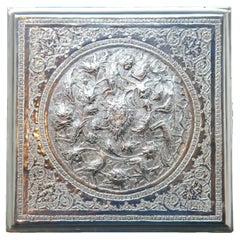
Art Nouveau Silver Plated Repousse Tobacco or Jewelry Box
Located in Verviers, BE
Art Nouveau silver plated repousse tobacco or jewelry box The top, front, sides and back are beautifully cast and feature panels with images of birds...
Category

1930s German Vintage Art Nouveau Furniture

Materials

Silver Plate

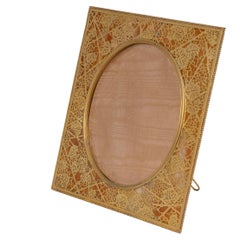
Tiffany Studios Large Grapevine Pattern Picture Frame, ca. 1905
Located in Petaluma, CA
This Large and beautiful picture frame is the the work of Tiffany Studios. This is the grapevine pattern with a gilt finish- The top border of the frame monogrammed (A.S.B.). Rich Ti...
Category

Early 1900s American Antique Art Nouveau Furniture

Materials

Bronze

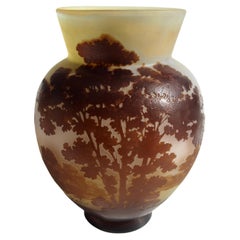
French Emile Galle Art Nouveau Cameo Glass Landscape Vase, circa 1910
By Louis Hestaux, Émile Gallé
Located in Worcester Park, GB
Impressive Art Nouveau Emile Galle Cameo landscape vase, 7 1/2 inches tall, in a variety browns and yellows with a hint of opal, signed in came...
Category

1910s French Vintage Art Nouveau Furniture

Materials

Art Glass

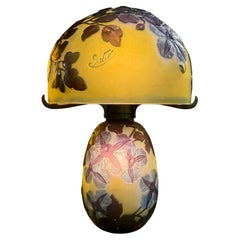
Émile Gallé Clematis Table Lamp, 1900
Located in CABA, AR
Exquisite Émile Gallé “Clematis” Table Lamp, ca. 1900 An extraordinary example of French Art Nouveau glass artistry, this Clematis table lamp by Émile ...
Category

1890s French Antique Art Nouveau Furniture

Materials

Glass

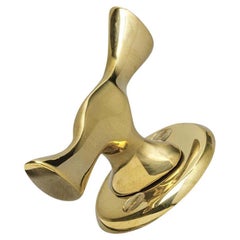
Polished Solid Brass Batlló Butterfly Rotary by Antoni Gaudi
Located in Barcelona, Barcelona
Polished Solid Brass Batlló butterfly Rotary by Antoni Gaudi Materials: Brass Dimensions: D 4 cm x W 3 cm x H 5 cm. Solid cast brass with polished finish. About it...
Category

21st Century and Contemporary Spanish Art Nouveau Furniture

Materials

Brass

Muller Brothers Art Nouveau/Art Deco Chandelier
Located in NANTES, FR
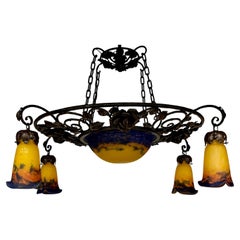
Muller Frères, chandelier with 4 tulips and central basin. The 5 glass paste pieces are signed. Wrought iron frame decorated with roses. In very good condition and electrified. Tota...
Category

1920s Vintage Art Nouveau Furniture

Materials

Wrought Iron

Original of the Time Marked "Wiener Werkstätte" Koloman Moser Bookcase / Cabinet
Located in Vienna, AT
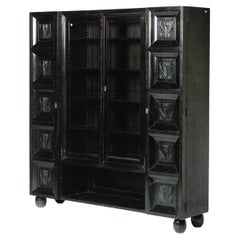
Very rare cabinet from the short period when the Wiener Werkstätte has had its own cabinet makers workshop in the Neustiftgasse in Vienna. Attributed to Koloman Moser or Emanuel Marg...
Category

Early 20th Century Austrian Art Nouveau Furniture

Materials

Oak

Jugendstil coffee table
Located in Banská Štiavnica, SK
Jugendstil iron coffee table in original vintage condition with signs of use.
Category

Early 1900s Slovak Antique Art Nouveau Furniture

Materials

Iron

Pink Swirl Wine Glasses - Set of 5
Located in Fairfield, CA
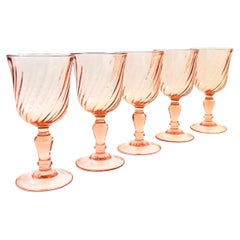
A set of 5 vintage wine glasses in a pale blush pink hue. Each glass has a lovely swirl design. Made in France by Luminarc.
Category

Late 20th Century French Art Nouveau Furniture

Materials

Glass

Set of six Art Nouveau style chairs with grape wood inlays
Located in Milano, IT
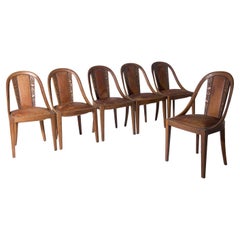
Set of Six Italian Liberty Style Chairs - Early 20th Century with Carved Grape Motifs and Original Leather Add a touch of timeless elegance and refined Italian craftsmanship to your ...
Category

1930s Italian Vintage Art Nouveau Furniture

Materials

Wood, Leather

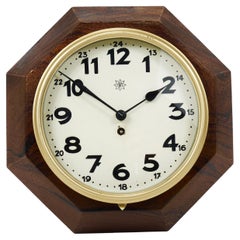
Adolf Loos Vienna Modernism Wall Clock by Junghans, Germany, 1920s
Located in Vienna, AT
A beautiful minimalist wall clock, dating back to around 1920, designed by Adolf Loos (1870–1933), manufactured by Junghans Germany. This clock stands out with its unmistakable octag...
Category

1910s Austrian Vintage Art Nouveau Furniture

Materials

Metal, Brass, Enamel, Sheet Metal

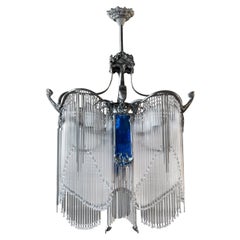
Art Nouveau Bronze Guimard Chandelier
Located in Rebais, FR
Art Nouveau Guimard chandelier with bronze nickel finish and dark blue glass.
Category

21st Century and Contemporary French Art Nouveau Furniture

Materials

Bronze

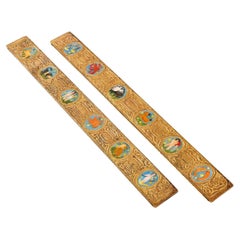
Tiffany Studios New York "Zodiac" Desk Blotter Ends
Located in New York, NY
A pair of gilt bronze “Zodiac” desk blotter ends by Tiffany Studios New York. The blotter ends each feature intricate pseudo-Celtic patterning interspersed with circular elements in ...
Category

Early 20th Century American Art Nouveau Furniture

Materials

Bronze, Enamel

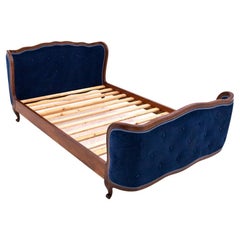
Antique bed, France, circa 1900.
Located in Chorzów, PL
Antique mirror from the turn of the 19th and 20th centuries, France. This piece of furniture is in very good condition, after professional renovation. The upholstered elements have ...
Category

Early 20th Century French Art Nouveau Furniture

Materials

Walnut

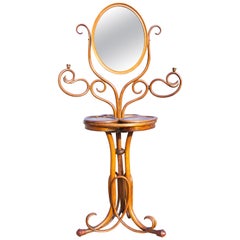
Art Nouveau Bentwood Shave Stand and Mirror
Located in Rochester, NY
Antique Art Nouveau shaving stand with swinging candleholders. Wonderful flowing lines. By Thonet of Austria, circa 1900.   
Category

Early 20th Century Austrian Art Nouveau Furniture

Materials

Mirror, Beech

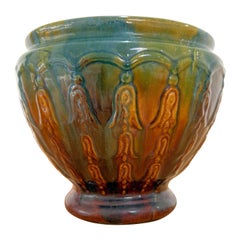
1920’s Majolica Brush McCoy Blended Glaze Jardiniere
Located in Charleston, SC
Antique Brush McCoy Green Brown Glaze Majolica Pottery A blended glaze jardiniere from McCoy. Glaze contains blue, green, brown and yellow. No chips or cracks, but some factory flaw...
Category

1920s American Vintage Art Nouveau Furniture

Materials

Majolica, Pottery

Art Nouveau "Mounted Amazon" bronze sculpture by Franz von Stuck
Located in Palm Beach, FL
FRANZ VON STUCK (German, 1863-1928) There is a tension between the Apollonian and Dionysian in Stuck’s work. Nietzsche’s contemporary and a kindred spirit, Stuck valiantly searched f...
Category

Early 1900s German Antique Art Nouveau Furniture

Materials

Bronze

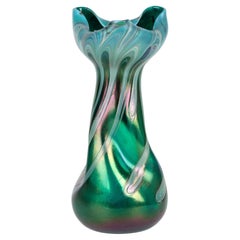
Josef Rindskopf Bohemian Pulled Feather Iridescent Art Glass Vase
Located in Bishop s Stortford, Hertfordshire
A large and impressive Boehmian Art Nouveau pulled feather iridescent art glass vase dating from around 1900. The tall hand-blown vase stands on a flat round base with a polished cen...
Category

Early 1900s Austrian Antique Art Nouveau Furniture

Materials

Blown Glass

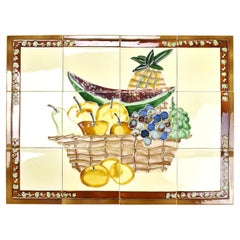
Vintage Set of 12 Art Nouveau Style Tube Lined Tiles Fruit Basket NOS
Located in Bad Säckingen, DE
A vintage set of 12 ceramic majolica wall tile depicting a still life of a fruit basket made in tube line technique dating to the 1950s by unknown manufacturer. The full set is in ne...
Category

1950s German Vintage Art Nouveau Furniture

Materials

Ceramic, Majolica

Art Nouveau Settee No. 2 in bent wood and cane by Thonet Brothers, Austria 1870s
Located in Beograd, RS
In this listing you will find the only Thonet Settee No. 2 available at the moment on the market! A true museum piece, this is one of the most beautiful Thonet pieces ever made. It i...
Category

1870s Austrian Antique Art Nouveau Furniture

Materials

Cane, Beech

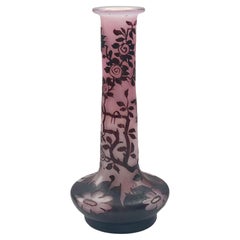
Very Rare De Vez Art Nouveau Cameo Glass Vase with Etched Floral Decor
By Devez
Located in Bochum, NRW
An attractive early 20th-century cameo glass vase acid cut and hand etched with birds, floral and foliage decor in a deep brown against a pink background, exhibiting excellent hand-f...
Category

Early 1900s French Antique Art Nouveau Furniture

Materials

Blown Glass

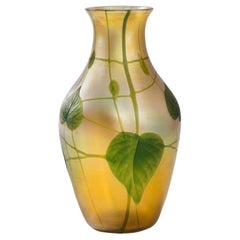
Tiffany Studios New York "Leaf Vine" Wheel-Carved Favrile Glass Vase
Located in New York, NY
A Tiffany Studios New York Art Nouveau wheel-carved Favrile glass “Leaf & Vine” vase by Louis Comfort Tiffany. Aptly named for its motif, the “Leaf & Vine” vase features a golden iri...
Category

Early 20th Century American Art Nouveau Furniture

Materials

Glass

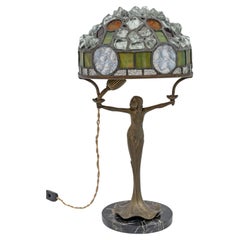
Art Nouveau French Table Lamp "Tiffany Style", 1930s
Located in Puglia, Puglia
A beautiful Tiffany style table lamp, French production from the 1930s, Art Nouveau period. The base is in cast brass and base in black marble, the lampshade in colored glass and cry...
Category

1930s French Vintage Art Nouveau Furniture

Materials

Brass

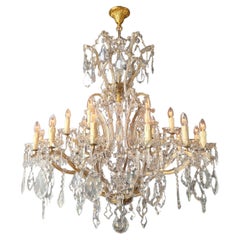
Big Maria Theresa Crystal Chandelier Antique Classic Clear Glass
Located in Berlin, DE
Old chandelier with love and professionally restored in Berlin. electrical wiring works in the US. Re-wired and ready to hang. not one missing. Cabling completely renewed. Crystal, h...
Category

1930s Italian Vintage Art Nouveau Furniture

Materials

Crystal, Brass

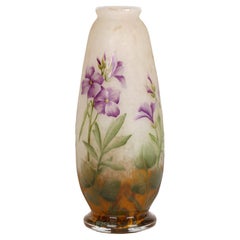
Daum Nancy French Art Nouveau Miniature Cameo Glass Vase with Violets
By Daum
Located in Bishop s Stortford, Hertfordshire
An exceptional French Art Nouveau Daum Frères Violets miniature cameo glass vase wheel cut with raised designs in colored enamels on an etched ground dating from around 1900. The tal...
Category

Early 1900s French Antique Art Nouveau Furniture

Materials

Blown Glass

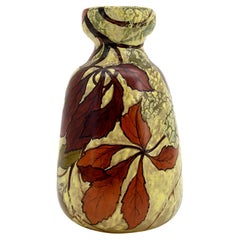
Legras French Art Nouveau Enameled Vase, Early 1900s
Located in Saint-Amans-des-Cots, FR
French Art Nouveau Vase by François-Théodore Legras, Early 1900s – Rare Enamelled Chestnut Leaf Décor A superb and exceptionally rare French Art Nouveau vase by François-Théodore Le...
Category

Early 1900s French Antique Art Nouveau Furniture

Materials

Art Glass

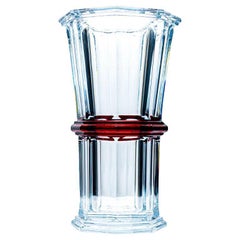
Large Baccarat Vase, Deep Red Crystal, France
Located in Rijssen, NL
Glorifying the effects of refracted light for 170 years, the iconic Harcourt line embodies not just stemware but a whole family of artefacts with a radiant destiny. Beautiful crystal...
Category

1990s French Art Nouveau Furniture

Materials

Crystal

Art Nouveau Hector Guimard Bronze Chandelier Re-Edition
Located in Rebais, FR
Bronze chandelier from an original Hector Guimard drawing. Nickel patinated finish.  
Category

21st Century and Contemporary French Art Nouveau Furniture

Materials

Bronze

Art Nouveau furniture for sale on 1stDibs.

Find a broad range of unique Art Nouveau furniture for sale on 1stDibs. Many of these items were first offered in the 21st Century and Contemporary, but contemporary artisans have continued to produce works inspired by this style. If you’re looking to add vintage furniture created in this style to your space, the works available on 1stDibs include decorative objects, serveware, ceramics, silver and glass, lighting and other home furnishings, frequently crafted with metal, glass and other materials. If you’re shopping for used Art Nouveau furniture made in a specific country, there are Europe, France, and Austria pieces for sale on 1stDibs. While there are many designers and brands associated with original furniture, popular names associated with this style include Georg Jensen, Woka Lamps, Johan Rohde, and Josef Hoffmann. It’s true that these talented designers have at times inspired knockoffs, but our experienced specialists have partnered with only top vetted sellers to offer authentic pieces that come with a buyer protection guarantee. Prices for furniture differ depending upon multiple factors, including designer, materials, construction methods, condition and provenance. On 1stDibs, the price for these items starts at $25 and tops out at $1,000,000 while the average work can sell for $2,122.

Still Thinking About These?

All Recently Viewed