Art Nouveau Furniture

ART NOUVEAU STYLE

In its sinuous lines and flamboyant curves inspired by the natural world, antique Art Nouveau furniture reflects a desire for freedom from the stuffy social and artistic strictures of the Victorian era. The Art Nouveau movement developed in the decorative arts in France and Britain in the early 1880s and quickly became a dominant aesthetic style in Western Europe and the United States.

ORIGINS OF ART NOUVEAU FURNITURE DESIGN

CHARACTERISTICS OF ART NOUVEAU FURNITURE DESIGN

  • Sinuous, organic and flowing lines
  • Forms that mimic flowers and plant life
  • Decorative inlays and ornate carvings of natural-world motifs such as insects and animals 
  • Use of hardwoods such as oak, mahogany and rosewood

ART NOUVEAU FURNITURE DESIGNERS TO KNOW

ANTIQUE ART NOUVEAU FURNITURE ON 1STDIBS

Art Nouveau — which spanned furniture, architecture, jewelry and graphic design — can be easily identified by its lush, flowing forms suggested by flowers and plants, as well as the lissome tendrils of sea life. Although Art Deco and Art Nouveau were both in the forefront of turn-of-the-20th-century design, they are very different styles — Art Deco is marked by bold, geometric shapes while Art Nouveau incorporates dreamlike, floral motifs. The latter’s signature motif is the "whiplash" curve — a deep, narrow, dynamic parabola that appears as an element in everything from chair arms to cabinetry and mirror frames.

The visual vocabulary of Art Nouveau was particularly influenced by the soft colors and abstract images of nature seen in Japanese art prints, which arrived in large numbers in the West after open trade was forced upon Japan in the 1860s. Impressionist artists were moved by the artistic tradition of Japanese woodblock printmaking, and Japonisme — a term used to describe the appetite for Japanese art and culture in Europe at the time — greatly informed Art Nouveau. 

The Art Nouveau style quickly reached a wide audience in Europe via advertising posters, book covers, illustrations and other work by such artists as Aubrey Beardsley, Henri de Toulouse-Lautrec and Alphonse Mucha. While all Art Nouveau designs share common formal elements, different countries and regions produced their own variants.

In Scotland, the architect Charles Rennie Mackintosh developed a singular, restrained look based on scale rather than ornament; a style best known from his narrow chairs with exceedingly tall backs, designed for Glasgow tea rooms. Meanwhile in France, Hector Guimard — whose iconic 1896 entry arches for the Paris Metro are still in use — and Louis Majorelle produced chairs, desks, bed frames and cabinets with sweeping lines and rich veneers. 

The Art Nouveau movement was known as Jugendstil ("Youth Style") in Germany, and in Austria the designers of the Vienna Secession group — notably Koloman Moser, Josef Hoffmann and Joseph Maria Olbrich — produced a relatively austere iteration of the Art Nouveau style, which mixed curving and geometric elements.

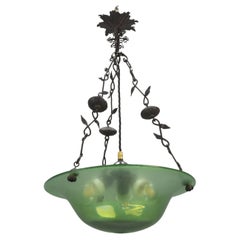
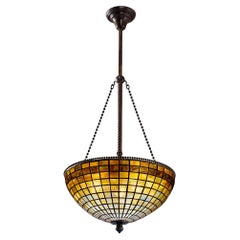
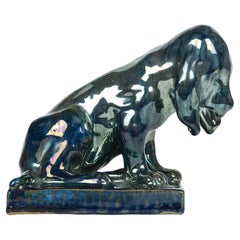
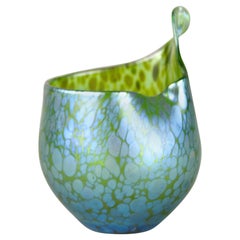
Art Nouveau revitalized all of the applied arts. Ceramists such as Ernest Chaplet and Edmond Lachenal created new forms covered in novel and rediscovered glazes that produced thick, foam-like finishes. Bold vases, bowls and lighting designs in acid-etched and marquetry cameo glass by Émile Gallé and the Daum Freres appeared in France, while in New York the glass workshop-cum-laboratory of Louis Comfort Tiffany — the core of what eventually became a multimedia decorative-arts manufactory called Tiffany Studios — brought out buoyant pieces in opalescent favrile glass. 

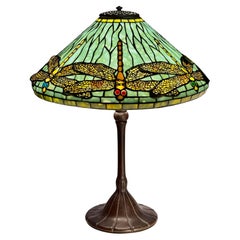
Jewelry design was revolutionized, as settings, for the first time, were emphasized as much as, or more than, gemstones. A favorite Art Nouveau jewelry motif was insects (think of Tiffany, in his famed Dragonflies glass lampshade).

Like a mayfly, Art Nouveau was short-lived. The sensuous, languorous style fell out of favor early in the 20th century, deemed perhaps too light and insubstantial for European tastes in the aftermath of World War I. But as the designs on 1stDibs demonstrate, Art Nouveau retains its power to fascinate and seduce.

There are ways to tastefully integrate a touch of Art Nouveau into even the most modern interior — browse an extraordinary collection of original antique Art Nouveau furniture on 1stDibs, which includes decorative objects, seating, tables, garden elements and more.

to
1,485
6,174
3,314
10,354
146
66
186,685
71,422
41,183
30,660
16,171
11,884
10,764
10,566
9,720
8,739
7,225
6,448
6,357
6,268
6,167
5,949
4,907
3,706
11
1,711
8,632
212
6,416
910
409
2,308
924
735
292
92
135
81
165
96
39
5,059
3,021
2,064
1,809
1,358
8,871
3,473
1,366
933
763
10,887
10,511
237
220
210
206
169
Style: Art Nouveau
Availability: In Stock Within 6 weeks
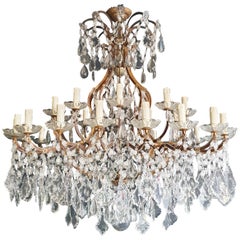
Huge Candelabrum Crystal Antique Chandelier Classic traditional Massive Wide
Located in Berlin, DE
Huge candelabrum crystal antique chandelier ceiling lustre Art Nouveau Measures: Total height 140 cm, height without chain 110 cm, diameter 110 cm. Weight (approximately): 35 kg. Number of lights: 30-light bulb sockets: E14 material: Brass, cut glass, crystal, New electricity! New cable! Restored and rewired. tested. Ready to hang. Total length variable. Old chandelier with love and professionally restored in Berlin. electrical wiring works in the US. Re-wired and ready to hang not one missing Cabling completely renewed. Crystal, hand-knotted The chandelier is sent in a specially made wooden box so that safe transport is guaranteed. So worldwide shipping is no problem. they will for everyone the chandelier is wired in such a way that it works worldwide without any modification. in USA the chandelier works. ready to connect. before shipping the chandelier will be cleaned. missing crystals added. just cleaned and complete. will be sent. You are buying from a specialty chandelier store. with years of experience and heart for chandeliers Huge Candelabrum Crystal Antique Chandelier Classic...
Category

Early 18th Century European Antique Art Nouveau Furniture

Materials

Crystal, Wire, Brass

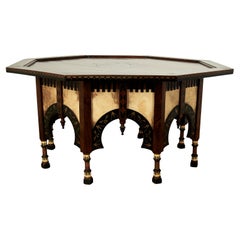
Antique Moorish Style Inlaid Italian Table in the Manner of Carlo Bugatti
Located in Palm Beach, FL
Impressive antique table crafted in walnut in the manner of Bugatti, with an octagon form top having a center medallion with geometric inlays on a base with moorish style arches deco...
Category

20th Century Italian Art Nouveau Furniture

Materials

Bone, Organic Material, Walnut

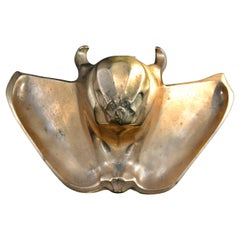
Jugenstile Bronze Fledermaus Inkwell
Located in Sharon, CT
Jugenstile cast bronze inkwell in the form of a bat (Fledermaus).
Category

Early 20th Century German Art Nouveau Furniture

Materials

Bronze

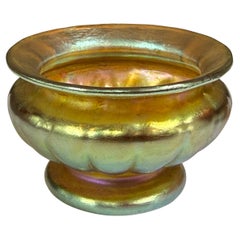
Tiffany Studios Favrile Ribbed Iridescent Art glass Footed Open Salt
Located in BROOKLYN, NY
Louis Comfort Tiffany,Golden iridescent, cauldron form with a ribbed base with polished pontil mark. Signed L.C.T on bottom rim. Tiffany Studios. 1907. 1.5" H. Price per item.
Category

Early 20th Century American Art Nouveau Furniture

Materials

Glass

Pair Antique American Stained Glass Gothic Art Nouveau Doors Windows Povey Bros
Located in Portland, OR
A rare & important pair of antique American Art Nouveau with Gothic frames stained glass doors/windows, by Povey Brothers, Portland Oregon, circa 1900. Over 6.5' in height. Povey Bro...
Category

Early 1900s American Antique Art Nouveau Furniture

Materials

Stained Glass

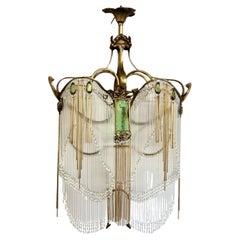
French Art Nouveau Old Bronze Guimard Chandelier
Located in Rebais, FR
Immerse yourself in the timeless elegance of Art Nouveau with this magnificent Guimard chandelier, a true masterpiece of refinement and poetry. Crafted from oxidized bronze with deli...
Category

21st Century and Contemporary French Art Nouveau Furniture

Materials

Bronze

Alphonse Cytère Rambervilliers French Iridescent Glazed Art Pottery Dog
Located in Bishop s Stortford, Hertfordshire
A stunning French Rambervilliers art pottery figure of a dog by renowned artist Jean-Baptiste Alphonse Cytère and dating from the early 20th century. Alphonse Cytère was a renowned...
Category

Early 20th Century French Art Nouveau Furniture

Materials

Ceramic

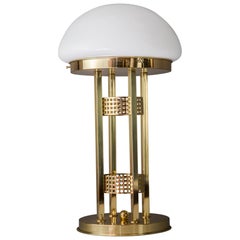
Table Lamp in the Style of Jugendstil
Located in Wien, AT
Table lamp in the style of Jugendstil This is a reproduction. Opal glass. Depending on the order quantity it can take up to 2 weeks to f...
Category

2010s Austrian Art Nouveau Furniture

Materials

Opal, Brass

Quezal Art Nouveau Lamp
Located in NANTES, FR
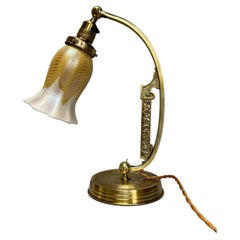
Art nouveau lamp circa 1910. Brass and copper base. Iridescent glass tulip signed Quezal. In perfect condition and electrified. Total height: 38.5 cm Base diameter: 15.5 cm Width: 30 cm Quezal Art Glass Quezal Art Glass – The Journal of Antiques and Collectibles – April 2003 By Malcolm Mac Neil Some of the most beautiful and alluring art glass made in America during the early part of the 20th Century was made by the Quezal Art Glass and Decorating Company. Often in the shape of blossoming lilies with brilliant gold interiors and colorfully decorated with floral and other motifs inspired by nature, Quezal art glass ranks right alongside the iridescent glass of Louis Comfort Tiffany and Frederick Carder. Quezal artisans created an extensive range of decorative and useful items, including vases, compotes, finger bowls, open salts, candle holders, and shades for lighting fixtures, which are equivalent in terms of beauty and quality of craftsmanship to Tiffany’s Favrile and Carder’s Aurene glass. In recent years, glass collectors have discovered anew the special charms and appeal of Quezal art glass, and collector desirability for this lovely glassware has increased dramatically. The Quezal Art Glass and Decorating Company was incorporated a century ago, on March 27, 1902. It was founded by Martin Bach, Sr., Thomas Johnson, Nicholas Bach, Lena Scholtz, and Adolph Demuth. The factory was located on the corner of Fresh Pond Road and Metropolitan Avenue in Maspeth, Queens, New York. In October 1902, the trademark “Quezal” was successfully registered. By 1904, roughly fifty glassworkers were employed at the works. Martin Bach, Sr. was the president, proprietor, and guiding force behind this successful company. Born in 1862 in Alsace-Lorraine to German parents, he emigrated to the United States in 1891. Before his emigration, Bach worked in Saint-Louis, France, at the Saint-Louis Glass Factory. After Bach arrived in this country, he was hired by Louis C. Tiffany as the latter’s first batch-mixer or chemist at the newly established Tiffany Glass and Decorating Company, in Corona, Queens. After a period of about eight years, Bach left Tiffany and established his own glassworks. By this time, Bach had already started his small family. He and his German-born wife, Anne-Marie Geisser, whom he married in the fall of 1889, in Paris, France, had three children. Two daughters, Jennie and Louise, were born in France and a son, Martin, Jr., was born in Corona. Bach was assisted by Thomas Johnson, an English immigrant, and Maurice Kelly, a native of Corona, both of whom were gaffers or master glassblowers. Johnson and Kelly helped pave the way for Quezal’s early accomplishments and later recognition. Thomas Johnson, like Bach, was a founding member and also previously employed by Louis C. Tiffany. Johnson’s association with Quezal, however, was relatively short lived. Around 1907, Johnson left for Somerville, Massachusetts, where he became involved in making Kew Blas glass, under William S. Blake at the Union Glass Company. Maurice Kelly’s tenure with Quezal was also brief. Kelly worked at Quezal from January 1902 until July 1904, but by November 1904, he was making Favrile glass at Tiffany Furnaces, where he would happily remain until 1918. To this day, the belief still exists that there once existed a man named Quezal, who worked for Louis C. Tiffany, and it is after him that Quezal glass is named. In truth, however, the founders of the Quezal Art Glass and Decorating Company named the company and its products after one of the world’s most beautiful birds, the elusive and rare quetzal, which dwells in the treetops of the remote tropical forests of Central America. A rare company promotional brochure provides a vivid description of the quetzal: Of all the birds of the America’s, it is the most gorgeous. No more splendid sight is to be seen in all the world than a quezal, flying like a darting flame through the depths of a Central American forest. Its back is of a brilliant metallic green, so vivid it shines even in the twilight of the woods like a great emerald and its breast is a crimson so deep and bright that every motion of the wonderful creature is a flashing of rubies among the trees and giant creepers. It bears a true golden crown upon its head – a helmet of bright yellow and green, shaped just as the helmet of old Aztec kings were shaped. Its tail is composed of lacelike plumes, extending more than two and one-half feet beyond its body. The quezal was certainly an appropriate designation for the company’s resplendent glassware. One of the most prized characteristics of Quezal art glass is the shimmering and dazzling brilliance reflected in the iridescent surfaces on the interior as well as exterior of the glass. The radiant rainbow colors in metallic hues, including gold, purple, blue, green, and pink, to name only a few, were certainly inspired by the quetzal and its feathers. Not surprisingly, lustrous feathers, in shades of opal, gold, emerald, and blue, are among the most common decorative motifs encountered on Quezal glass. The enduring hallmark of Quezal art glass is its unique expression of the Art Nouveau style, based on organic shapes and naturalistic motifs coupled with technical perfection in the execution. Vases, compotes, drinking vessels, and shades for lighting fixtures were often fashioned to resemble flowers such as crocuses, tulips, calla lilies, casablanca lilies, and jack-in-the-pulpits. Variously colored inlaid threads of glass, pulled and twisted by hooks, simulate naturalistic floral and leaf patterns, lily pads, clover leafs, and vines. Opal, gold, and green colors prevail and the glass is generally opaque. Red is the rarest color of all. Compared with Tiffany’s Favrile glass, the crisp, vivid, and colorful decoration of Quezal art glass is distinctively precise, symmetrical, and restrained. Other Quezal wares recall shapes and styles favored in ancient Egypt, Persia, Greece, and Rome, as well as the Italian Renaissance and the Georgian period in England. This is especially true of classic-shaped vases and bowls of translucent amber glass, which have a single surface color such as iridescent gold or blue. Still, others were inspired by traditional Chinese and Japanese forms. The Gorham Manufacturing Company in Providence, Rhode Island, and the Alvin Silver Manufacturing Company in Sag Harbor, Long Island, purchased Quezal art glass, which they in turn embellished in their shops with silver overlay decoration in the fashionable Art Nouveau style and later resold. Gorham’s silver overlay designs mostly include stylized floral motifs. Alvin’s silver designs are wonderfully organic. One sumptuous design is of a group of sinuous iris blossoms with carefully articulated petals surrounded by attenuated meandering vines. Collectors should note that not all silver-deposit pieces are marked with a maker’s mark since the silversmith had to be quite careful not to damage the glass underneath. A rare 1907 retail catalog survives from Bailey, Banks, and Biddle Company, a luxury goods retailer in Philadelphia, which reveals original retail prices of Quezal art glass. A surprising revelation provided by this catalog is that Quezal art glass was nearly twice as expensive as comparable French imported glass made by such renowned firms as Gallé and Daum. Hock glasses, a stemmed glass used primarily for drinking German white wine, were sold by the dozen and retailed between $50 and $75. Fingerbowls were also sold by the dozen and retailed between $50 and $100. These high retail prices were nearly the same as those charged for Tiffany’s Favrile glass, and suggest Quezal art glass was also marketed towards the high-end or luxury market. Electricity was a brand new invention in the late 1800s and American glass manufacturers developed novel approaches for concealing the electric light bulb, which was rather harsh to the eye and perhaps unflattering to the domestic interior. Tiffany, Steuben, and Quezal responded to this need with the most extraordinary and beautiful art-glass shades, all of which were  hand-made and exquisitely fashioned. Many other companies also made art glass shades for table and floor lamps, electroliers, hallway fixtures, and wall sconces, but it was Quezal that excelled in this area and was the most prolific. Quezal art glass shades were available in an infinite variety of shapes, sizes, colors, and decorations. Some shades are formed and decorated as lilies while others are bell-shaped and have ribbed or textured decoration. Rims are usually plain but sometimes are notched or ruffled. Common motifs include feather or hooked feather, leaf and vine, applied flowers, drape, fishnet, King Tut, and spider webbing. The workmanship shown on most Quezal shades...
Category

1910s French Vintage Art Nouveau Furniture

Materials

Brass, Copper

French Satin Glass Brass Flower Sconces Wall Lamps
Located in Amsterdam, NL
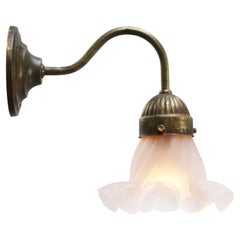
French wall lamp White satin glass. Brass wall piece and arm diameter brass wall mount: 10 cm / 3.94, 3 holes to secure Weight: 0.70 kg / 1.5 lb Multiple flower design glasses in ...
Category

Mid-20th Century French Art Nouveau Furniture

Materials

Brass

Style of Delphin Massier Majolica Jardinière Planter and Stand Number. 7825
Located in Verviers, BE
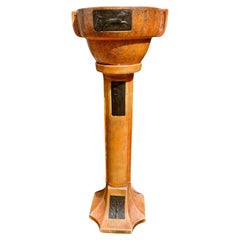
Art Nouveau Majolica jardinière, planter with stand This stylish piece is an early example by a renowned maker, showing the main inspirations of Art Nouveau, applying curved, design...
Category

1910s French Vintage Art Nouveau Furniture

Materials

Majolica

Tiffany Studios Dogwood Floral Stained Glass Table Lamp
Located in Dallas, TX
Tiffany Studios Art Glass and Bronze Dogwood Table Lamp Dogwood Band table lamp New York, USA, c. 1910 Leaded glass, Patinated bronze Height: 21.5 Inches X 16 Inches Diameter (55 × 4...
Category

Early 1900s American Antique Art Nouveau Furniture

Materials

Bronze

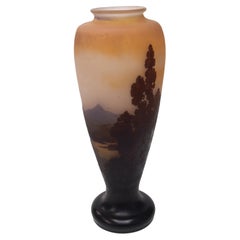
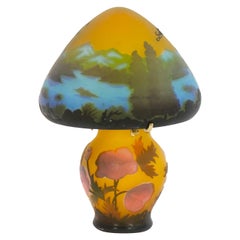
Large French Emile Galle Cameo Glass Blue Mountain and Lake Landscape Vase c1925
Located in Worcester Park, GB
Exceptional large Art Nouveau Emile Galle Cameo 'blue mountain' landscape vase. The tall vase is in browns and pale purple over peach -an very unusual colourway. It depicts finely de...
Category

1920s French Vintage Art Nouveau Furniture

Materials

Art Glass

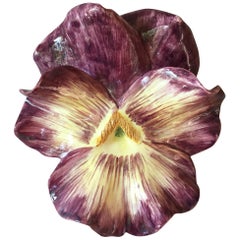
Large Majolica Purple Pansy Wall Pocket Massier, circa 1880
Located in Austin, TX
Oversize Majolica purple pansy wall pocket Massier, circa 1880.
Category

1880s French Antique Art Nouveau Furniture

Materials

Ceramic

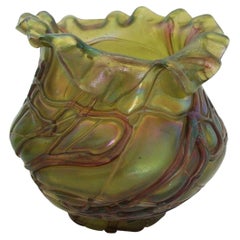
Loetz Attributed Peacock Feather Iridescent Miniature Art Glass Vase
Located in Bishop s Stortford, Hertfordshire
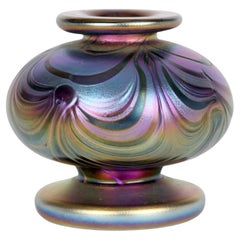
An exceptional quality Art Nouveau miniature iridescent glass vase, possibly Loetz and dating from the early 20th century. This heavily made amethyst glass vase is exquisitely decora...
Category

Early 1900s Austrian Antique Art Nouveau Furniture

Materials

Blown Glass

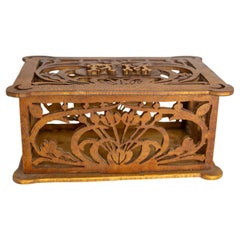
French Art Nouveau Wood Box Openwork Panels, circa 1900
Located in Labrit, Landes
Little wood box with openwork panels, made circa 1900 in the Art Nouveau period. A little piece of wood is missing on the back side. A. M. initial are on the top. Good antique condit...
Category

Early 20th Century French Art Nouveau Furniture

Materials

Wood

Art Nouveau Gentleman Portrait Metal Wine Decanter Bottle Stopper Cork, German
Located in Nuernberg, DE
A beautiful metal and cork bottle stopper. Some wear with a nice patina or plating lost, but this is old-age. Made of metal and cork. A beautiful nice Barware item or just a display item in your collections of antique bottle...
Category

Early 20th Century German Art Nouveau Furniture

Materials

Metal

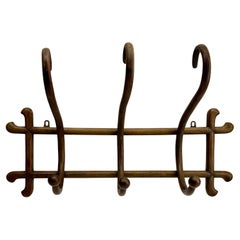
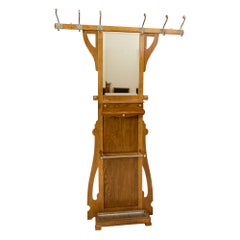
Art Nouveau Bentwood Wall Coat Rack Thonet Vienna, 1879-1887
Located in Verviers, BE
Art Nouveau bentwood wall coat rack to Thonet, Vienna, Viennese wall hanger Thonet was included in the production program of the company Gebrüder Thonet around the Year 1879. Origi...
Category

1880s Austrian Antique Art Nouveau Furniture

Materials

Bentwood

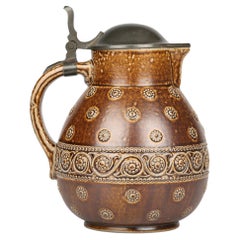
Paul Wynard Reinhold Merkelbach Jugendstihl Pewter Stoneware Stein
Located in Bishop s Stortford, Hertfordshire
A stylish jugendstil German Reinhold Merkelbach pewter mounted ceramic jug by Paul Wynard (1879-1956) and dating from around 1905. The large stoneware jug stands on a narrow flat rou...
Category

Early 1900s German Antique Art Nouveau Furniture

Materials

Pewter

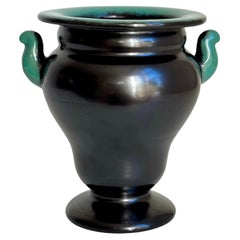
Art Nouveau Earthenware Vase, Upsala Ekeby, Sweden, 1940s
Located in Copenhagen, DK
Black art nouveau vase by Upsala Ekeby manufactured in the 1940s. Soft shaped ceramic vase with a mother of pearl like black shine, sea foam green flared top edge and small ear-like ...
Category

Mid-20th Century Swedish Art Nouveau Furniture

Materials

Ceramic, Earthenware, Pottery, Stoneware
French 1910s Art Nouveau Brass Table Desk Lamp
Located in Amsterdam, NL
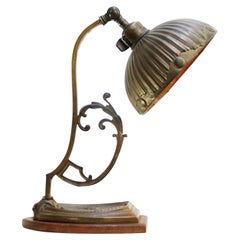
Art Nouveau Brass table desk lamp with brass shade and wooden base. ca. 1920 Natural aged with small cracks in edge shade 2,5 meter black cotton flex with plug and switch in bulb h...
Category

1910s French Vintage Art Nouveau Furniture

Materials

Brass

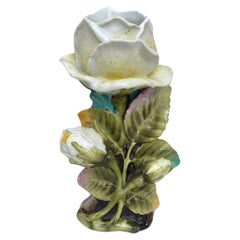
French Majolica White Rose Vase Circa 1900
Located in Austin, TX
French Majolica White Rose Vase Circa 1900. H / 6.5 inches.
Category

Early 1900s French Antique Art Nouveau Furniture

Materials

Ceramic, Faience, Majolica

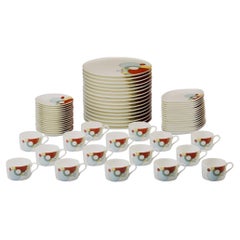
Frank Lloyd Wright Imperial Hotel Dinnerware, Tokyo — Designed c. 1922
Located in Chicago, IL
Frank Lloyd Wright Imperial Hotel Dinnerware, Tokyo — Designed c. 1922 Porcelain Set of 64 Noritake for the Frank Lloyd Wright Coll...
Category

1920s Japanese Vintage Art Nouveau Furniture

Materials

Porcelain

Hand Forged Bronze and Glass Cocktail Table
Located in Houston, TX
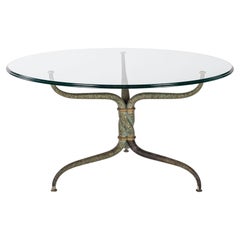
Early 20th Century Art Nouveau French cocktail table featuring a hand-forged bronze tripod base in the form of twisted vines and a glass top.
Category

Early 20th Century French Art Nouveau Furniture

Materials

Bronze

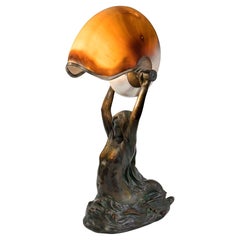
Tiffany Studios New York "Nautilus" Table Lamp With "Mermaid" Base
Located in New York, NY
In Tiffany Studios' exquisite "Nautilus" table lamp, a cast bronze mermaid emerges from a churning sea, holding a lighted nautilus shell aloft. This lamp, one of the few patented by Tiffany Studios, received its patent on May 2, 1899, and was featured in Siegfried Bing’s landmark Louis Comfort Tiffany exhibition at the Grafton Galleries. The mermaid base was sculpted by Louis Gudebrod, the only lamp base artist credited by Tiffany Studios. The nautilus shell motif, prominent in European decorative arts of the 17th century, originated from Dutch ships that transported the shells from the South China Sea, some 15,000 miles away. These shells showcased the Dutch Republic's global mercantile strength, and Dutch painters often featured them in still-life works—many of which are now in the Metropolitan Museum of Art’s collection. Inspired by this artistic tradition, Tiffany transformed the iridescent shell into a table lamp. The shell softened and modulated the light, similar to the effect of Tiffany's Favrile glass shades, creating a warm glow reminiscent of the gas lighting familiar to the era. Item #: L-21744 Artist: Tiffany Studios New York Country: United States Circa: 1899 Dimensions: 17.5" height, 4.75" width, 8" deep. Materials: Nautilus shell, Bronze Base Signed: GUDEBROD and Tiffany Studios New York Literature: Alastair Duncan, "Tiffany Lamps and Metalware", Woodbridge, Suffolk, 2007, pg. 86, fig. 336. Macklowe Gallery Curator's Notes: The shape of the exotic nautilus, found in the western Pacific, has long been the muse of architects, artists, and designers. One only has to look to Grecian columns, to spiral staircases, or to the nautilus cups of the sixteenth century for examples. Louis Comfort Tiffany's glass interpretation of the "Nautilus" shell design was first displayed at the Paris Exposition Universelle 1900, where he was displaying the best lamps that he had to offer. By bringing this intricate and difficult-to-make model to the World's Fair, Tiffany was showing the international design world just how well-made and beautiful a Tiffany Studios New York lamp...
Category

Late 19th Century American Antique Art Nouveau Furniture

Materials

Bronze

French glass frosted Glass Flush Mount Ceiling Lamp
Located in Amsterdam, NL
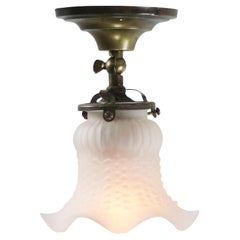
French glass flush mount / sconce. Metal bulb holder with brass glass holder. Frosted glass shade. Brass ceiling plate / wall plate : diameter 10 cm Weight: 0.57 kg / 1.3 lb Price...
Category

Mid-20th Century French Art Nouveau Furniture

Materials

Brass

Le Sacre Coeur Cathedral Souvenir Building Architectural Collectible France
Located in Nuernberg, DE
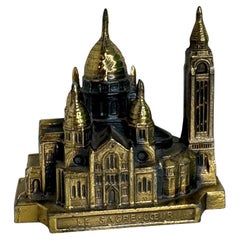
A decorative building sculpture as a souvenir. Some wear with a nice patina, but this is due to age. Made of metal. This item was purchased as a souvenir at a Grand Tour in Europe an...
Category

1950s German Vintage Art Nouveau Furniture

Materials

Metal

Pair of Art Nouveau Seahorse Vases by RStK Amphora
Located in Palm Beach, FL
Model #2064 Riessner, Stellmacher and Kessel (RSt&K), consistently marked pieces with the tradename “Amphora” by the late 1890s and became known by that name. The Amphora pottery fa...
Category

Early 1900s Austrian Antique Art Nouveau Furniture

Materials

Earthenware

Antique Bohemian Crystal Box with Engraved and Gilt Floral Motifs by Moser
Located in Bad Säckingen, DE
This stunning antique Bohemian crystal box is attributed to Ludwig Moser, the renowned glassmaker from Karlsbad, celebrated for his exquisite designs and unmatched craftsmanship. The...
Category

1880s Czech Antique Art Nouveau Furniture

Materials

Crystal

Loetz Witwe Glass Vase Decor "Creta Papillon" Iriscident, Bohemia, circa 1902
Located in Lichtenberg, AT
Beautiful small Loetz Witwe glass vase out of the famous workshops in Klostermuehle/ Bohemia from around 1902. The artfully formed vase with its...
Category

Early 20th Century Czech Art Nouveau Furniture

Materials

Blown Glass

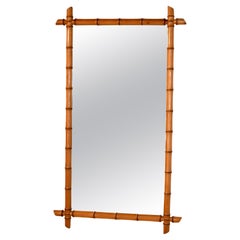
19th Century French Faux Bamboo Large Wall Mirror
Located in High Point, NC
19th century faux bamboo large wall mirror from France. The mirror frame is hand turned in the very popular faux bamboo style, which was indicative of the Art Nouveau period in Fran...
Category

19th Century French Antique Art Nouveau Furniture

Materials

Mirror, Cherry

Amber Crystal Antique Chandelier Ceiling Florentiner Lustre Art Nouveau
Located in Berlin, DE
Presenting our cherished old chandelier, lovingly and professionally restored in Berlin. Its electrical wiring is compatible with the US, having been re-wired and prepared for easy h...
Category

Late 18th Century Italian Antique Art Nouveau Furniture

Materials

Crystal, Brass, Wire

Art Nouveau desk by Matthias Feller manufactured by M. Ballin München ca. 1912
Located in Klosterneuburg, AT
Desk, Matthias Feller (design), M. Ballin München (manufacturer), ca. 1912 marked twice with "M. Ballin München"; bib.: "Innendekoration - mein Heim, mein Stolz", 1912, S. 200. tec...
Category

1910s Austrian Vintage Art Nouveau Furniture

Materials

Walnut

Art Nouveau Glass Vase by Loetz Witwe - Decor Medici Pink Iridescent, CZ, 1902
Located in Lichtenberg, AT
Outstanding Loetz Witwe glass vase in decor "Medici Pink" from the world famous workshops in Klostermuehle/ Bohemia around 1902. This highly iriscident vase is a perfect example of L...
Category

Early 20th Century Czech Art Nouveau Furniture

Materials

Blown Glass

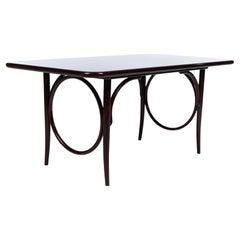
Cabaret Fledermaus Josef Hoffmann Table by Jacob Josef Kohn, 1905
Located in Vienna, AT
An extraordinary modern table from the early phase of Industrial Design. The bent-wood-industry has had enormous progress since Mid-19th Century and from 1900, they started a fruitfu...
Category

Early 1900s Austrian Antique Art Nouveau Furniture

Materials

Bentwood

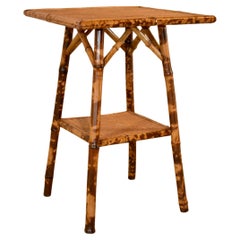
19th Century Bamboo Side Table
Located in High Point, NC
Late 19th century tortoise bamboo side table from France. The top and lower shelf are covered with rush, which has normal signs of wear for age and use. The top is supported on spl...
Category

19th Century French Antique Art Nouveau Furniture

Materials

Bamboo, Rush

Antique Art Nouveau Sterling Silver Tomato Server with Floral Repousse
Located in Philadelphia, PA
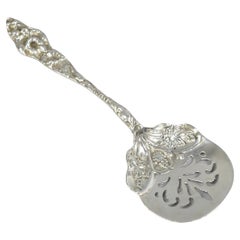
Antique Art Nouveau Sterling Silver Tomato Server with Floral Repousse. Circa Early 20th Century. Measurements: 1" H x 8.5" W x 2.75" D.
Category

Early 20th Century Unknown Art Nouveau Furniture

Materials

Sterling Silver

Art Nouveau Ormolu and Satin Glass Trinket Jewelry Box, France, circa 1900s
Located in Nuernberg, DE
A gorgeous glass trinket box with ormolu mounts. No restoration has been carried out on this charming little trinket box, which remains in very stabile and functioning condition, wea...
Category

Early 1900s French Antique Art Nouveau Furniture

Materials

Ormolu

Early 20th Cent Pug Dog Austrian Vienna Bronze Miniature Figure on Marble Base
Located in Nuernberg, DE
Classic early 1910s or older Vienna bronze figurine. This polychromed cold painted bronze is probably something you need if you’re a Vienna bronze collector. Found at an estate sale ...
Category

Early 20th Century Austrian Art Nouveau Furniture

Materials

Bronze

Minton Secessionist Art Pottery Tubelined Stylized Floral Vase No 41
Located in Bishop s Stortford, Hertfordshire
A very stylish Minton Secessionist Art Nouveau tube lined art pottery twin handled vase design pattern No 41, dating from around 1900. The pottery vase stands on a wide skirted ungla...
Category

Early 1900s English Antique Art Nouveau Furniture

Materials

Ceramic

Daum Nancy Bonbonnière "Cyclamens" circa 1898
By Daum
Located in Saint-Ouen, FR
Daum Nancy bonbonnière "Cyclamens" circa 1898 A "Cyclamens" multi-layered opalescent glass bonbonniere Acid-etched and enameled design of cyclamen flowers on a frosted pink and gree...
Category

1890s French Antique Art Nouveau Furniture

Materials

Art Glass

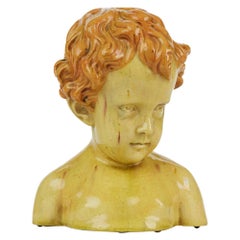
Glazed Pottery Bust of a Child Attributed to Jean Marie Camus, circa 1903
Located in Bishop s Stortford, Hertfordshire
A stunning antique continental, probably French, glazed art pottery bust of a child in the manner of renowned French sculptor Jean Marie Camus (1877-1...
Category

Early 20th Century French Art Nouveau Furniture

Materials

Pottery

Pair of Art Nouveau Lamps by Denbac, France, C1910
Located in Trensacq, FR
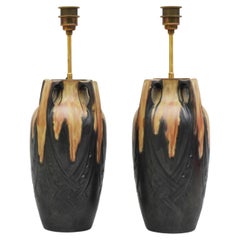
Art Nouveau lamps by Denbac France C1910 A pair of beautiful Art Nouveau lamps from Denbac, France c1910. Flamed sandstone urns shaped lamp bases with distinguishing drip glazed dec...
Category

Early 20th Century French Art Nouveau Furniture

Materials

Sandstone, Brass

Louis Comfort Tiffany Sea Green Opal Art Nouveau Favrile Wine Glass c1905
Located in Worcester Park, GB
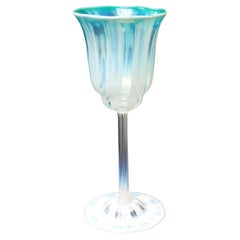
A very rare and important sea green pastel opal Louis Comfort Tiffany Favrile large wine glass. Beautifully signed 'L. C. T. Favrile' -just visible in the last two images -on the b...
Category

Early 1900s American Antique Art Nouveau Furniture

Materials

Art Glass

Lot of Five Silver Plated Metal Animal Motif Knife Rests Austria 20th Century
Located in Nuernberg, DE
A set of five silver plated figural flatware knife rests in the form of Animals, circa 1910s, European. Nice addition to every table or just for your collection. Tarnished and beauti...
Category

Early 20th Century Austrian Art Nouveau Furniture

Materials

Metal

Fratelli TOSO Rare Table Lamp / Night-Light, 1900
Located in Saint-Amans-des-Cots, FR
Table Lamp / Night-Light by Fratelli Toso, Venice, Italy, c. 1900. Rare in this size, this exquisite table lamp, or night-light, is a stunning example of Venetian craftsmanship by th...
Category

Early 1900s Italian Antique Art Nouveau Furniture

Materials

Bronze

Pair of Art Nouveau Style Table Lamps Pink Glass and Brass, France
Located in Rijssen, NL
This is a pair of  table lamps in the Art Nouveau style, likely from the early 20th century. The design features a brass or bronze base with a floral, lily-like motif. The lampshade...
Category

1970s French Vintage Art Nouveau Furniture

Materials

Opaline Glass

An Art Nouveau Bronze Bust Signed By Austrian Artist H. Muller Of A Young Woman
Located in Dublin, IE
A well-modelled bronze bust depicting a young woman wearing a traditional regional bonnet and layered dress, rendered with finely detailed textures throughout the fabric and headwear...
Category

Late 19th Century Austrian Antique Art Nouveau Furniture

Materials

Bronze

Moser Art Nouveau Glass Vase Purple Lavander Color and Gold 1920 Circa
Located in Milano, MI
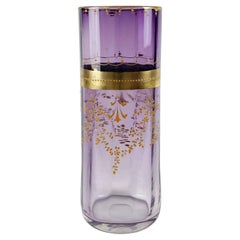
The handmade glass vase is a purple lavender amethyst color, an exceptionally wonderful color. The shape is slightly oval and faceted, the rim has a gilt strip decorated with rose co...
Category

Early 20th Century Czech Art Nouveau Furniture

Materials

Art Glass, Blown Glass

Pair MCM Dining Chairs Prague No.811 Designed by Josef Hoffmann, Drevounia 60s
Located in Lucija, SI
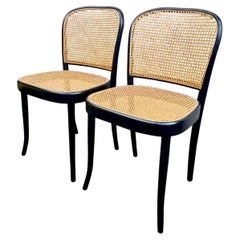
These Chairs were designed by Josef Hoffmann, model no. 811 and produced by Drevounia in '60s. Chairs are in mint condition They are made of black wooden fr...
Category

1920s Czech Vintage Art Nouveau Furniture

Materials

Cane, Bentwood

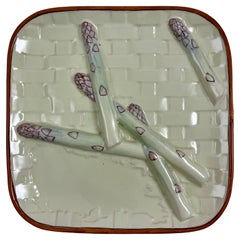
Émile Gallé St Clément Art Nouveau Trompe L oeil French Asparagus Plate, 1870
Located in Philadelphia, PA
From St. Clément, Luneville and designed by Émile Gallé, a Barbotine square shaped, trompe l’oeil asparagus plate, circa 1870. Five raised asparagus spears are strewn across a bei...
Category

Late 19th Century French Antique Art Nouveau Furniture

Materials

Earthenware

Emile GALLE French Art Nouveau Inlaid Side Table 1890
Located in San Francisco, CA
French Art Nouveau inlaid two tiered side table by Émile Gallé, Thistle Motif, France, circa 1885–1890. A rare, genuine and exquisite French Art Nouveau small table designed by Émil...
Category

Late 19th Century French Antique Art Nouveau Furniture

Materials

Fruitwood, Satinwood, Walnut

Large Gouda Art Nouveau Hand-Painted Bowl, Regina Enica, Holland, 1920s
Located in Frederiksberg C, DK
Large Hand-Painted Art Nouveau Bowl by Regina Gouda, Holland, 1920s Rare and striking hand-painted ceramic bowl from the Regina factory in Gouda, Netherlands, dating to the 1920s. T...
Category

1920s Dutch Vintage Art Nouveau Furniture

Materials

Ceramic, Stoneware

Set of 7 Miniature Wedgwood Lustre Bowls by Daisy Makeig-Jones
Located in Fort Lauderdale, FL
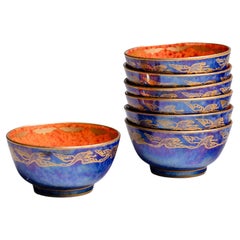
A set of 7 miniature blue and orange lustre bowl designed by Daisy Makeig-Jones for Wedgwood ca. 1920 and decorated with the 'Hummingbirds' pattern. Daisy Makeig-Jones’s lustreware ...
Category

1920s English Vintage Art Nouveau Furniture

Materials

Ceramic, Luster, Porcelain

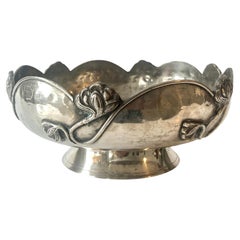
French Art Nouveau Silver Plate Bowl with with Floral Details
Located in Los Angeles, CA
Beautiful Silver plate Art Nouveau Decorative Bowl or Center piece. The curvaceous floral and vine details give the the classic art nouveau. A wonderful Vessel for a unique floral a...
Category

Early 20th Century French Art Nouveau Furniture

Materials

Silver Plate

Émile Gallé Clematis Table Lamp, 1900
Located in CABA, AR
Exquisite Émile Gallé “Clematis” Table Lamp, ca. 1900 An extraordinary example of French Art Nouveau glass artistry, this Clematis table lamp by Émile ...
Category

1890s French Antique Art Nouveau Furniture

Materials

Glass

Antique French Brass Glass Art Nouveau Chandelier
Located in New York, NY
Antique French Brass & Glass Chandelier, Art Nouveau Turn of the century. Spectacular Chandelier of solid brass, gilt bronze details, with molded and cut glass. Stunning chandelier...
Category

Early 1900s French Antique Art Nouveau Furniture

Materials

Brass, Bronze

Art Nouveau Mahogany Armchair
Located in Baton Rouge, LA
An intriguing French Art Nouveau armchair–no doubt inspired by the design language of the Vienna Secession movement in the same time period–synthesizing clean, architectural influenc...
Category

20th Century French Art Nouveau Furniture

Materials

Textile, Mahogany

Rare Pair of ART NOUVEAU Vases by WMF, Circa 1900
Located in TEYJAT, FR
Rare Pair of Art Nouveau Silver-Plated Vases by WMF (c.1900) A striking and rare pair of silver-plated Art Nouveau vases by WMF (Württe...
Category

Late 19th Century German Antique Art Nouveau Furniture

Materials

Metal, Silver Plate

Legras French Art Nouveau Enameled Vase, Early 1900s
Located in Saint-Amans-des-Cots, FR
French Art Nouveau Vase by François-Théodore Legras, Early 1900s – Rare Enamelled Chestnut Leaf Décor A superb and exceptionally rare French Art Nouveau vase by François-Théodore Le...
Category

Early 1900s French Antique Art Nouveau Furniture

Materials

Art Glass

Art Nouveau furniture for sale on 1stDibs.

Find a broad range of unique Art Nouveau furniture for sale on 1stDibs. Many of these items were first offered in the 21st Century and Contemporary, but contemporary artisans have continued to produce works inspired by this style. If you’re looking to add vintage furniture created in this style to your space, the works available on 1stDibs include decorative objects, serveware, ceramics, silver and glass, lighting and other home furnishings, frequently crafted with metal, glass and other materials. If you’re shopping for used Art Nouveau furniture made in a specific country, there are Europe, France, and Austria pieces for sale on 1stDibs. While there are many designers and brands associated with original furniture, popular names associated with this style include Georg Jensen, Woka Lamps, Johan Rohde, and Josef Hoffmann. It’s true that these talented designers have at times inspired knockoffs, but our experienced specialists have partnered with only top vetted sellers to offer authentic pieces that come with a buyer protection guarantee. Prices for furniture differ depending upon multiple factors, including designer, materials, construction methods, condition and provenance. On 1stDibs, the price for these items starts at $25 and tops out at $1,000,000 while the average work can sell for $2,122.

Still Thinking About These?

All Recently Viewed