Baroque Furniture

BAROQUE STYLE

The decadence of the Baroque style, in which ornate furnishings were layered against paneled walls, painted ceilings, stately chandeliers and, above all, gilding, expressed the power of the church and monarchy through design that celebrated excess. And its influence was omnipresent — antique Baroque furniture was created in the first design style that truly had a global impact.

Theatrical and lavish, Baroque was prevalent across Europe from the 17th to mid-18th century and spread around the world through colonialism, including in Asia, Africa and the Americas. While Baroque originated in Italy and achieved some of its most fantastic forms in the late-period Roman Baroque, it was adapted to meet the tastes and materials in each region. French Baroque furniture informed Louis XIV style and added drama to Versailles. In Spain, the Baroque movement influenced the elaborate Churrigueresque style in which architecture was dripping with ornamental details. In South German Baroque, furniture was made with bold geometric patterns.

Compared to Renaissance furniture, which was more subdued in its proportions, Baroque furniture was extravagant in all aspects, from its shape to its materials.

Allegorical and mythical figures were often sculpted in the wood, along with motifs like scrolling floral forms and acanthus leaves that gave the impression of tangles of dense foliage. Novel techniques and materials such as marquetry, gesso and lacquer — which were used with exotic woods and were employed by cabinetmakers such as André-Charles Boulle, Gerrit Jensen and James Moore — reflected the growth of international trade. Baroque furniture characteristics include a range of decorative elements — a single furnishing could feature everything from carved gilded wood to gilt bronze, lending chairs, mirrors, console tables and other pieces a sense of motion.

Find a collection of authentic antique Baroque tables, lighting, decorative objects and other furniture on 1stDibs.

to
407
1,228
1,150
2,281
123
13
57,474
28,823
4,025
3,050
2,452
2,417
1,189
884
731
601
412
345
311
267
262
152
149
53
1,188
536
557
136
130
168
141
13
5
22
15
13
23
36
40
25
25
1,518
627
406
377
302
5,839
2,417
788
625
433
2,417
2,357
2,388
42
32
26
22
18
Style: Baroque
Place of Origin: Italian
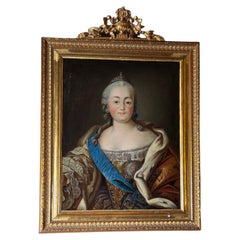
Rare Portrait of Elizabeth Petrovna of Russia (1709-1762) 18th Century Sign
Located in Madrid, ES
Rare Portrait of Elizabeth Petrovna of Russia (1709-1762) 18th Century Signature Signed by court painter Magnificent oil on canvas depicting Empress Elizabeth Petrovna (1709-1762),...
Category

18th Century Italian Antique Baroque Furniture

Materials

Paint

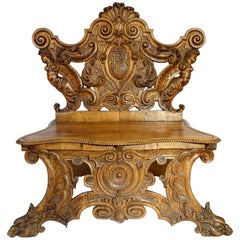
19th Century Antique Italian Carved Walnut Bench by Valentino Besarel Ca 1870
Located in Encinitas, CA
Magnificent walnut hand-carved bench attributed to master artist Valentino Besarel (b. July 29 1829, d. Dec 11 1902) of Venice, Italy. Renaissance Revival. High quality; soft, fi...
Category

Late 19th Century Italian Antique Baroque Furniture

Materials

Walnut

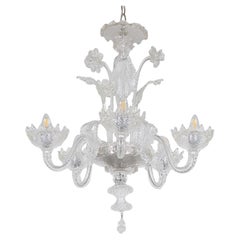
Vintage Baroque Style Quilted Cristallo Murano Chandelier
Located in Chicago, IL
This handcrafted Cristallo Murano chandelier has five undulating scroll arms and features a bulbous center column with sprouting natural details, stylized here with daffodils and lea...
Category

Mid-20th Century Italian Baroque Furniture

Materials

Blown Glass, Murano Glass

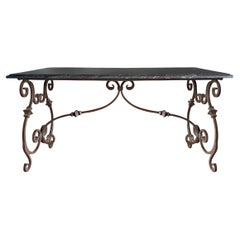
Italian Wrought Iron and Stone Top Table
Located in Chicago, IL
This late 20th-century Italian hand-wrought iron table is a sculptural beauty, marrying classical form with artisan craftsmanship. The iron base is hand-hammered and forged, showcasi...
Category

Late 20th Century Italian Baroque Furniture

Materials

Granite, Wrought Iron

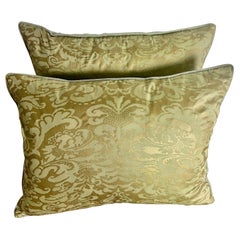
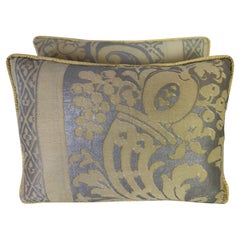
Pair of Fortuny Gold Soft Green Pillows
Located in Los Angeles, CA
Pair of custom pillows made with metallic gold & celadon colored Fortuny style fronts and celadon silk backs. Down filled inserts w/ hidden zippers for easy cleaning.
Category

21st Century and Contemporary Italian Baroque Furniture

Materials

Cotton, Silk

Pair of Fortuny Gold 
Soft Green Pillows
Pair of Fortuny Gold 
Soft Green Pillows
$476 Sale Price / set
20% Off
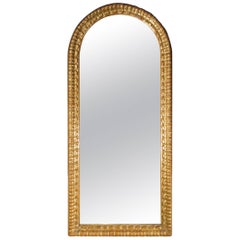
Early 19th Century Antique Italian Baroque Style Gold Gilt Oval Vertical Mirror
Located in Encinitas, CA
Early 19th Century Antique Italian Baroque Style Gold Gilt Oval Vertical Mirror. Lovely oval niche shape gold mirror with hand carved detail. "Bolo" gold leaf process. Original mer...
Category

19th Century Italian Antique Baroque Furniture

Materials

Giltwood

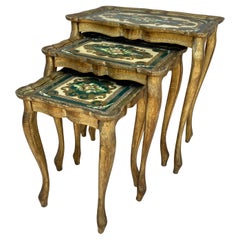
Italian Florentine Neoclassical Nesting Tables in Giltwood, 1960s, Set of 3
Located in Miami, FL
Vintage Italian Florentine neoclassical midcentury patinated nesting tables- set of three 1960s Lovely graphics ornate figural design scalloped trim. Original preowned unrestored...
Category

Mid-20th Century Italian Baroque Furniture

Materials

Walnut

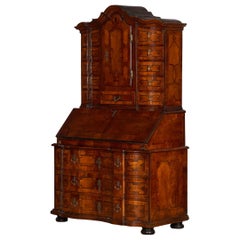
18th Century Baroque Bureau In Walnut With Inlays
Located in Kastrup, DK
A very beautiful Baroque bureau. Thick walnut veneer with inlays. Hidden "secret" locking system for the drawers in the upper section. Grate quality Ni...
Category

18th Century Italian Antique Baroque Furniture

Materials

Brass, Iron

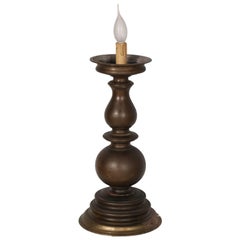
17th Century Bronze Candelabra or Candlestick, Heavy Baroque Table Lamp
Located in Vigonza, Padua
17th century heavy bronze candelabra or candlestick, baroque table lamp, signed with date. From the Della Torre family residence in Rezzonico-Lake Como- Italy Measures cm: H 60, Diam...
Category

17th Century Italian Antique Baroque Furniture

Materials

Bronze

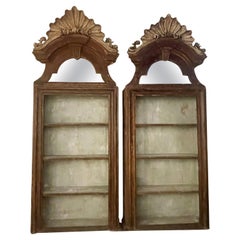
18th Century Italian Pair of Baroque Pinewood Libraries - Antique Book Cabinets
Located in West Palm Beach, FL
An early 18th Century, pair of antique Italian Baroque libraries or shelved cabinets made of hand crafted Pinewood with a weathered burgundy colored speckled patina, in good conditio...
Category

Early 18th Century Italian Antique Baroque Furniture

Materials

Mirror, Pine

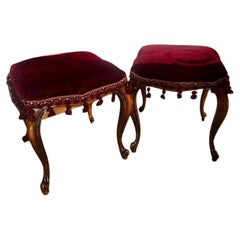
Antique Late 18th Century Pair of Italian Tabouret/ Stools
Located in Doha, QA
This beautiful elegant Antique Stools (Tabouret) are hand crafted and made out of walnut wood ca in 1790-1810. They have an extremely exquisite elegant curved legs and very comfortab...
Category

Late 18th Century Italian Antique Baroque Furniture

Materials

Velvet, Wood

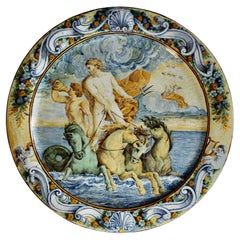
Italian Castelli Maiolica Istoriato Charger of Poseidon-Neptune
Located in Sharon, CT
A very large 18" diameter Castelli Maiolica Charger depicting Poseidon-Neptune. Circa 1740-1760.
Category

Mid-18th Century Italian Antique Baroque Furniture

Materials

Majolica

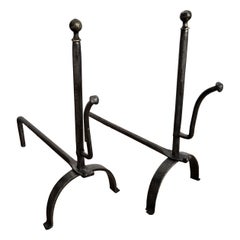
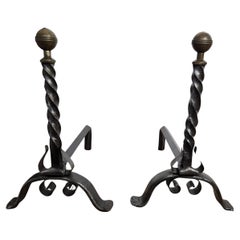
Pair of Antique Italian Wrought Iron Andirons Fireplace Log Holder
Located in Carimate, Como
Antique wrought iron Italian andirons log holder, having two beautiful classic shapes with the great handmade craftmanship typical for wrought-iron and the back pillars.
Category

Early 20th Century Italian Baroque Furniture

Materials

Brass, Wrought Iron

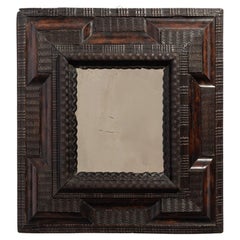
17th Century Italian Ebonised Ripple Framed Mirror
Located in London, GB
Wonderful 17th Century Italian ebonised Guilloché mirror with carved ripple moulding. Luigi XIV, Piedmont. The rectangular plate within a cushion frame of convex and carved ripple m...
Category

17th Century Italian Antique Baroque Furniture

Materials

Walnut

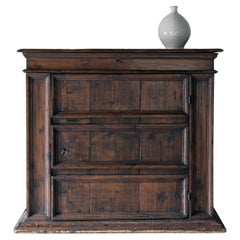
Sculptural 17th century ebonized Italian sideboard
Located in Jesteburg, DE
A sculptural 17th century Italian sideboard with a panelled central door flanked by pilasters and a large compartment with hinged door on the top. Tinted Pine wood, beautiful dark pa...
Category

17th Century Italian Antique Baroque Furniture

Materials

Softwood

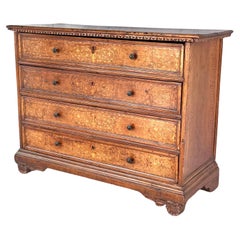
17th Century Italian Marquetry Inlaid Four Drawer Chest
Located in Bradenton, FL
An exquisite 17th century Italian walnut commode with four marquetry inlaid drawers showcasing spectacular and rich inlay work in walnut, made with different precious woods and carve...
Category

17th Century Italian Antique Baroque Furniture

Materials

Walnut

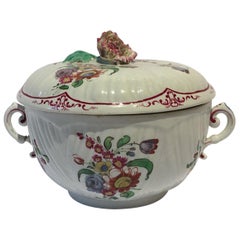
Italy 18th Century Richard Ginori Porcelain Covered Cup with Floral Drawings
Located in Brescia, IT
This fine and elegant covered cup in Baroque style, is a piece hand made by the well known Italian factory Richard Ginori in Doccia. The set is composed by two pieces: the cup and th...
Category

Mid-18th Century Italian Antique Baroque Furniture

Materials

Porcelain

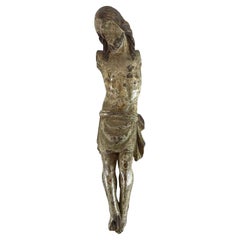
Christ on the Cross Italian Religious Sculpture Carved and Lacquered 18th Century
Located in Milano, MI
Italian religious sculpture depicting Christ on the Cross, hand carved and lacquered in light ivory, dating from the late 18th century, lacking the arms and with missing at the fee...
Category

18th Century and Earlier Italian Antique Baroque Furniture

Materials

Pine

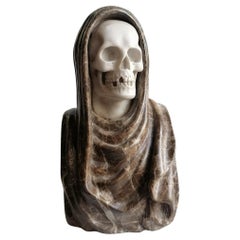
Memento or Vanitas carved on white Carrara and Emperador spain
Located in Tarquinia, IT
memento marble, vanitas marble, vanitas bust, ancient Roman, Roman art, classical art, Greek art, bust, white Carrara marble, emperador bust, classical sculpture, ancient sculpture, ...
Category

Early 2000s Italian Baroque Furniture

Materials

Carrara Marble

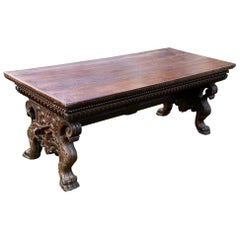
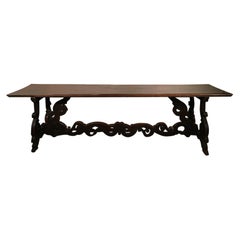
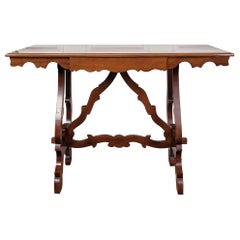
17th-Early 18th Century Tuscan Baroque Walnut Trestle Table
Located in Richmond, VA
Incredible 17th-early 18th century Italian Baroque walnut trestle table from Tuscany. Hand carved throughout, this table features massive paw feet, scrolled knees and carved apron. E...
Category

17th Century Italian Antique Baroque Furniture

Materials

Walnut

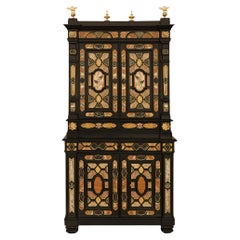
Ebonized Fruitwood, Marble, Semi Precious Stone, Giltwood and Ormolu Cabinet
Located in West Palm Beach, FL
A spectacular and most important Italian mid 19th century Baroque st. ebonized Fruitwood, Marble, Semi Precious Stone, Giltwood and Ormolu cabinet. This exceptional Pietra Dura inlai...
Category

19th Century Italian Antique Baroque Furniture

Materials

Marble, Ormolu

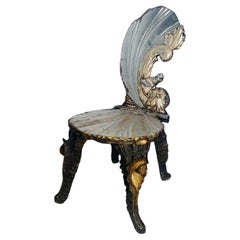
Venetian Grotto Chair, Late 18th or Early 19th Century Silvered Seahorse Back
Located in West Palm Beach, FL
A whimsical fantasy hand carved chair by the great Venetian craftsman of the era. This lovely piece features an unique seahorse carved back and scallop shell seat retaining much of i...
Category

Early 1800s Italian Antique Baroque Furniture

Materials

Silver Leaf

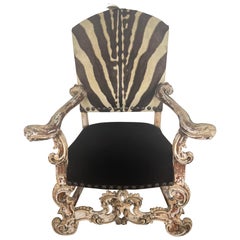
19th Century Italian Armchair with Zebra Upholstery
Located in Los Angeles, CA
An exceptional early 19th century Italian armchair, newly reupholstered to dramatic effect while preserving its soulful, timeworn character. The generously proportioned frame is rich...
Category

Early 19th Century Italian Antique Baroque Furniture

Materials

Animal Skin, Zebra Hide, Walnut

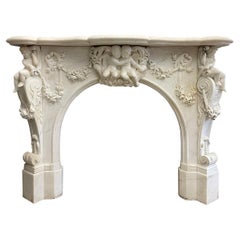
Antique Italian Statuary White Marble Baroque Style Fireplace Mantel
Located in London, GB
A large Baroque style mid 19th century Italian fireplace executed in Statuary white marble. Every element of this surround decadently carved from solid pieces of marble. The jambs with cantered console shaped brackets, scrolled acanthus, swags of floral drapery and a sculptured figural winged putto supported on large plinth...
Category

Mid-19th Century Italian Antique Baroque Furniture

Materials

Statuary Marble

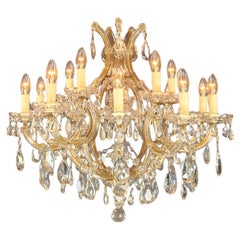
Maria Theresia Crystal Chandelier Antique Ceiling Lamp Luster Art Nouveau
Located in Berlin, DE
This magnificent Maria Theresa chandelier is a real highlight for any room. The frame is completely covered in glass and lavishly decorated with cut crystal drops in different shapes...
Category

18th Century Italian Antique Baroque Furniture

Materials

Crystal, Brass, Wire

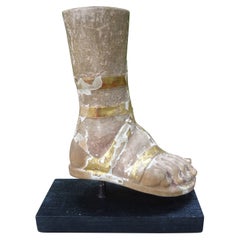
19th Century Italian Carved Wood Santo Foot
Located in Houston, TX
19th century Italian carved wood Santo foot. This stunning antique Italian carved wood Santo foot of an Archangel dressed as a Roman soldier. This beautifully carved and gilded sculp...
Category

19th Century Italian Antique Baroque Furniture

Materials

Wood

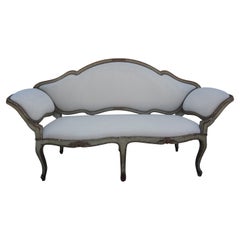
17th Century Venetian Painted and Parcel Gilt Gondola Sofa
Located in Houston, TX
17th century Venetian painted and parcel gilt gondola sofa. This gorgeous antique venetian sofa or canape has been newly upholstered in a plush w...
Category

17th Century Italian Antique Baroque Furniture

Materials

Mohair, Wood

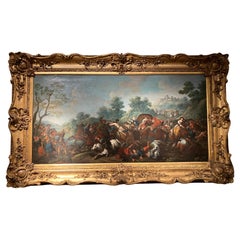
Italian 17th Century Baroque Battle Scene Oil on Canvas Painting Giltwood Frame
Located in Firenze, IT
This large Italian Baroque oil on canvas, dating from the late 17th century represents an exceptionally vivid battle scene with the unusual subject of a brigand ambush on a stagecoac...
Category

17th Century Italian Antique Baroque Furniture

Materials

Gold Leaf

1600s Tuscan Holy Water Font in Carrara Marble, Baroque Marble Basin
Located in Firenze, IT
An exceptional 17th-century Tuscan holy water font, finely carved from luminous Carrara marble, this Baroque marble basin exemplifies the craftsmanship and devotion of Italy’s sacred...
Category

17th Century Italian Antique Baroque Furniture

Materials

Carrara Marble

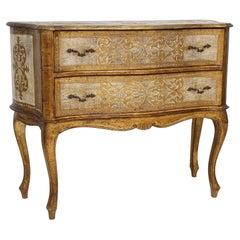
18th Century Style Venetian Serpentine Commode/ Chest Of Drawers, IT ca. 1940
Located in Lichtenberg, AT
Eyecatching 18th century style gilt Venetian serpentine commode/ chest of drawers from the era around 1940/50. An amazing looking commode/ chest of drawers which has been artfully cr...
Category

Mid-20th Century Italian Baroque Furniture

Materials

Wood, Giltwood

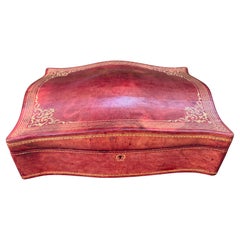
Large Italian Decorative Embossed Leather Box
Located in Houston, TX
Large Italian Decorative Embossed Leather Box. Offered is a shapely mid century Italian decorative leather box. This large scale leather box is a beautiful shade of red/orange with g...
Category

1960s Italian Vintage Baroque Furniture

Materials

Leather

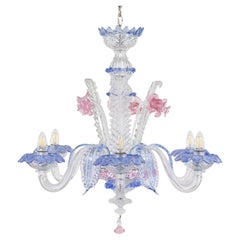
Vintage Baroque Style Pink and Blue Floral Murano Chandelier
Located in Chicago, IL
This exquisite Murano glass chandelier showcases a mastery of glass craftsmanship, made from clear cristallo glass with blue and pink adornments. Featuring a bulbous center column wi...
Category

Late 20th Century Italian Baroque Furniture

Materials

Murano Glass

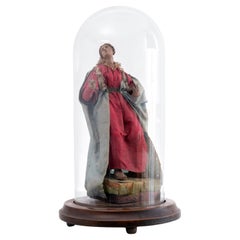
18th century Neapolitan Terracotta Santo Presepio Figure of Saint Anna
Located in Leesburg, VA
18th century Neapolitan Terracotta Santo Presepio Figure of Saint Anna Anonymous Naples, Italy; ca. 1760 Polychrome terracotta, wood, silk, gla...
Category

1760s Italian Antique Baroque Furniture

Materials

Terracotta, Silk, Glass, Wood

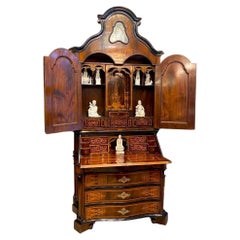
Extraordinary Italian Parquetry Bureau Cabinet Trumeaux Rome, 1740
Located in Rome, IT
Outstanding Italian 18' century walnut, parquetry bureau cabinet fruitwood inlaid with scrolling foliage, The upper section with a shaped carved cresting centered by a cartouche-sha...
Category

Early 18th Century Italian Antique Baroque Furniture

Materials

Wood, Walnut

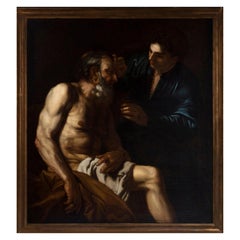
Important Italian School 17th Century "The Healing of Tobias".
Located in Madrid, ES
Italian school; second third of the 17th century. "The Healing of Tobias". Oil on canvas. Relined. very good condition Dimensions: 117.5 x 107 cm; 130 x 118 cm (frame). This canvas ...
Category

Early 17th Century Italian Antique Baroque Furniture

Materials

Paint

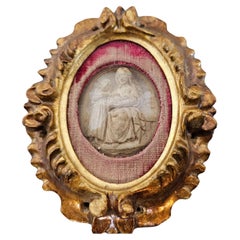
Antique Italian Religious Giltwood Reliquary Relief Carved Sculpture
Located in Forney, TX
A rare antique Italian giltwood framed reliquary. 18th/19th century, hand carved giltwood frame housing an exceptional relief carving, d...
Category

Early 19th Century Italian Antique Baroque Furniture

Materials

Bone, Giltwood

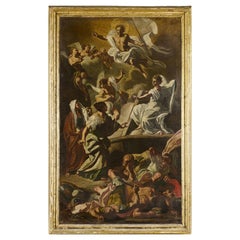
Attribution to Francesco Solimena "Resurrection of Christ" 18th Century
By Francesco Solimena
Located in Madrid, ES
Attribution to Francesco Solimena "Resurrection of Christ" 18th Century oil on canvas (129x77 cm.) framed good condition for the period Francesco Solimena, also called l'Abate C...
Category

Early 18th Century Italian Antique Baroque Furniture

Materials

Paint

Tiffany green and gold carved wood framed mirror
Located in Palermo, IT
Green and gold carved wood framed mirror The mirror has a carved wooden frame with a two-tone, dark green and gold finish. The carvings are visible throughout the frame, forming a ki...
Category

1930s Italian Vintage Baroque Furniture

Materials

Gold Leaf

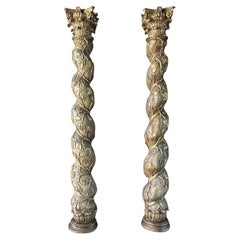
18th Century Italian Pair of Baroque Pinewood Columns - Antique Twisted Pillars
Located in West Palm Beach, FL
An antique pair of late 18th Century Italian Baroque columns, hand carved from solid, partly gilded Pinewood and finished in their original antique gold leaf, in good condition. Thes...
Category

Late 18th Century Italian Antique Baroque Furniture

Materials

Pine, Giltwood

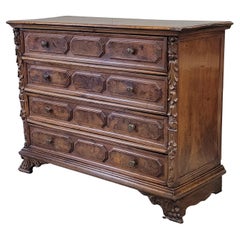
Antique 18th Century Italian (Bergamo, Lombardy) Burl Walnut Chest of Drawers
Located in Centennial, CO
A stunning, monumental baroque antique (1700s or earlier) Italian walnut chest of drawers from the Lombardy region of Italy, typical of the Bergamo cabinet-making tradition. Decorati...
Category

18th Century Italian Antique Baroque Furniture

Materials

Bronze

Pair of Antique Italian Turned Wrought Iron Andirons Fireplace Log Holder
Located in Carimate, Como
Antique wrought iron Italian andirons log holder, having two beautiful classic turned shapes with the great handmade craftmanship typical for wrought-iron and the back pillars.
Category

Early 20th Century Italian Baroque Furniture

Materials

Brass, Wrought Iron

pair of Venetian early 18th century Baroque Period Giltwood pedestals
Located in West Palm Beach, FL
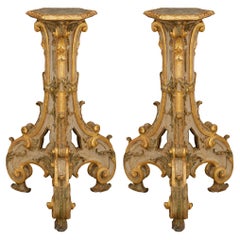
A most decorative pair of Venetian early 18th century Baroque Period patinated and Giltwood pedestals. This wonderful pair of Torchière pedestals are raised by elegant tripod designe...
Category

18th Century Italian Antique Baroque Furniture

Materials

Giltwood, Paint

Exceptional Italian 18 Century Carved Gilt-Wood Mirror Tuscany 1740
Located in Rome, IT
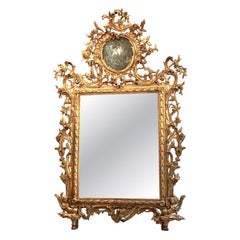
A very Fine Italian carved and giltwood mirror, Tuscany mid-18th century. Cresting above a cartouche shaped engraved mirror depicting an Architectural scene, above a rectangular ...
Category

18th Century Italian Antique Baroque Furniture

Materials

Wood

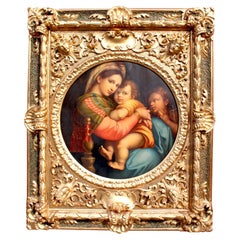
After Raffaello Sanzio 1483-1520 Raphael La Madonna della Seggiola Oil on Canvas
Located in Los Angeles, CA
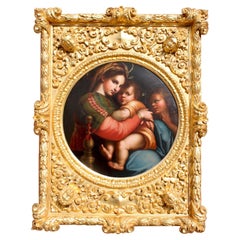
A Fine Italian 19th Century Oil Painting on Canvas "La Madonna della Seggiola" after Raphael (Raffaello Sanzio da Urbino 1483-1520). The circular painted canvas depicting a seated Madonna holding an infant Jesus Christ next to a child Saint John the Baptist, all within a massive carved gilt wood and gesso frame, which is identical to the frame on Raphael's original artwork. This painting is a 19th Century copy of Raphael's Madonna della Seggiola painted in 1514 and currently exhibited and part of the permanent collection at the Palazzo Pitti, Galleria Palatina, Florence, Italy. The bodies of the Virgin, Christ, and the boy Baptist fill the whole picture. The tender, natural looking embrace of the Mother and Child, and the harmonious grouping of the figures in the round, have made this one of Raphael's most popular Madonnas. The isolated chair leg is reminiscent of papal furniture, which has led to the assumption that Leo X himself commissioned the painting. A retailer's label reads " Fred K/ Keer's Sons - Framers and Fine Art Dealers - 917 Broad St. Newark, N.J." - Another label from the gilder reads "Carlo Bartolini - Doratore e Verniciatori - Via Maggio 1924 - Firenze". Circa: 1890-1900. Subject: Religious painting Canvas diameter: 28 inches (71.1 cm) Frame height: 54 inches (137.2 cm) Frame width: 42 1/2 inches (108 cm) Frame depth: 5 1/2 inches (14 cm) Raffaello Sanzio da Urbino (Italian, March 28 or April 6, 1483 - April 6, 1520), known as Raphael, was an Italian painter and architect of the High Renaissance. His work is admired for its clarity of form, ease of composition, and visual achievement of the Neoplatonic ideal of human grandeur. Together with Michelangelo and Leonardo da Vinci, he forms the traditional trinity of great masters of that period. Raphael was enormously productive, running an unusually large workshop and, despite his death at 37, leaving a large body of work. Many of his works are found in the Vatican Palace, where the frescoed Raphael Rooms were the central, and the largest, work of his career. The best known work is The School of Athens in the Vatican Stanza della Segnatura. After his early years in Rome much of his work was executed by his workshop from his drawings, with considerable loss of quality. He was extremely influential in his lifetime, though outside Rome his work was mostly known from his collaborative printmaking. After his death, the influence of his great rival Michelangelo was more widespread until the 18th and 19th centuries, when Raphael's more serene and harmonious qualities were again regarded as the highest models. His career falls naturally into three phases and three styles, first described by Giorgio Vasari: his early years in Umbria, then a period of about four years (1504–1508) absorbing the artistic traditions of Florence, followed by his last hectic and triumphant twelve years in Rome, working for two Popes and their close associates. Raphael was born in the small but artistically significant central Italian city of Urbino in the Marche region, where his father Giovanni Santi was court painter to the Duke. The reputation of the court had been established by Federico III da Montefeltro, a highly successful condottiere who had been created Duke of Urbino by the Pope - Urbino formed part of the Papal States - and who died the year before Raphael was born. The emphasis of Federico's court was rather more literary than artistic, but Giovanni Santi was a poet of sorts as well as a painter, and had written a rhymed chronicle of the life of Federico, and both wrote the texts and produced the decor for masque-like court entertainments. His poem to Federico shows him as keen to show awareness of the most advanced North Italian painters, and Early Netherlandish artists as well. In the very small court of Urbino he was probably more integrated into the central circle of the ruling family than most court painters. Federico was succeeded by his son Guidobaldo da Montefeltro, who married Elisabetta Gonzaga, daughter of the ruler of Mantua, the most brilliant of the smaller Italian courts for both music and the visual arts. Under them, the court continued as a centre for literary culture. Growing up in the circle of this small court gave Raphael the excellent manners and social skills stressed by Vasari. Court life in Urbino at just after this period was to become set as the model of the virtues of the Italian humanist court through Baldassare Castiglione's depiction of it in his classic work The Book of the Courtier, published in 1528. Castiglione moved to Urbino in 1504, when Raphael was no longer based there but frequently visited, and they became good friends. He became close to other regular visitors to the court: Pietro Bibbiena and Pietro Bembo, both later cardinals, were already becoming well known as writers, and would be in Rome during Raphael's period there. Raphael mixed easily in the highest circles throughout his life, one of the factors that tended to give a misleading impression of effortlessness to his career. He did not receive a full humanistic education however; it is unclear how easily he read Latin. Early Life and Works His mother Màgia died in 1491 when Raphael was eight, followed on August 1, 1494 by his father, who had already remarried. Raphael was thus orphaned at eleven; his formal guardian became his only paternal uncle Bartolomeo, a priest, who subsequently engaged in litigation with his stepmother. He probably continued to live with his stepmother when not staying as an apprentice with a master. He had already shown talent, according to Vasari, who says that Raphael had been "a great help to his father". A self-portrait drawing from his teenage years shows his precocity. His father's workshop continued and, probably together with his stepmother, Raphael evidently played a part in managing it from a very early age. In Urbino, he came into contact with the works of Paolo Uccello, previously the court painter (d. 1475), and Luca Signorelli, who until 1498 was based in nearby Città di Castello. According to Vasari, his father placed him in the workshop of the Umbrian master Pietro Perugino as an apprentice "despite the tears of his mother". The evidence of an apprenticeship comes only from Vasari and another source, and has been disputed—eight was very early for an apprenticeship to begin. An alternative theory is that he received at least some training from Timoteo Viti, who acted as court painter in Urbino from 1495.Most modern historians agree that Raphael at least worked as an assistant to Perugino from around 1500; the influence of Perugino on Raphael's early work is very clear: "probably no other pupil of genius has ever absorbed so much of his master's teaching as Raphael did", according to Wölfflin. Vasari wrote that it was impossible to distinguish between their hands at this period, but many modern art historians claim to do better and detect his hand in specific areas of works by Perugino or his workshop. Apart from stylistic closeness, their techniques are very similar as well, for example having paint applied thickly, using an oil varnish medium, in shadows and darker garments, but very thinly on flesh areas. An excess of resin in the varnish often causes cracking of areas of paint in the works of both masters. The Perugino workshop was active in both Perugia and Florence, perhaps maintaining two permanent branches. Raphael is described as a "master", that is to say fully trained, in December 1500. His first documented work was the Baronci altarpiece for the church of Saint Nicholas of Tolentino in Città di Castello, a town halfway between Perugia and Urbino. Evangelista da Pian di Meleto, who had worked for his father, was also named in the commission. It was commissioned in 1500 and finished in 1501; now only some cut sections and a preparatory drawing remain. In the following years he painted works for other churches there, including the Mond Crucifixion (about 1503) and the Brera Wedding of the Virgin (1504), and for Perugia, such as the Oddi Altarpiece. He very probably also visited Florence in this period. These are large works, some in fresco, where Raphael confidently marshals his compositions in the somewhat static style of Perugino. He also painted many small and exquisite cabinet paintings in these years, probably mostly for the connoisseurs in the Urbino court, like the Three Graces and St. Michael, and he began to paint Madonnas and portraits. In 1502 he went to Siena at the invitation of another pupil of Perugino, Pinturicchio, "being a friend of Raphael and knowing him to be a draughtsman of the highest quality" to help with the cartoons, and very likely the designs, for a fresco series in the Piccolomini Library in Siena Cathedral. He was evidently already much in demand even at this early stage in his career. Influence of Florence Raphael led a "nomadic" life, working in various centres in Northern Italy, but spent a good deal of time in Florence, perhaps from about 1504. Although there is traditional reference to a "Florentine period...
Category

Early 1900s Italian Antique Baroque Furniture

Materials

Canvas, Giltwood

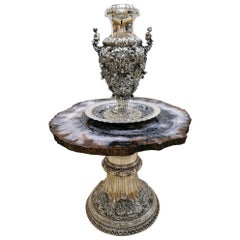
20th Century Italian Sterling Silver Table with Silver Vase and Matching Dish
Located in VALENZA, IT
Exceptional table with vase and plate in solid silver composed of: 20th century Italian silver table. Top is in brown Slab Fossil American Sequ...
Category

1970s Italian Vintage Baroque Furniture

Materials

Silver, Sterling Silver

1650 Italy Solid Baroque Walnut Dining Table or Console
Located in Brescia, IT
This magnificent dining table showcases the exquisite craftmanship in its remarekable and intricate details of the lyre-shaped legs. This large dining table or console was created i...
Category

Mid-17th Century Italian Antique Baroque Furniture

Materials

Walnut

Pair of Fortuny Textile Pillows
Located in Los Angeles, CA
These Fortuny pillows feature a striking and elegant design that draws on classical motifs with a sophisticated execution. The fabric showcases a cornucopia (horn of plenty) overflow...
Category

21st Century and Contemporary Italian Baroque Furniture

Materials

Cotton, Silk, Down

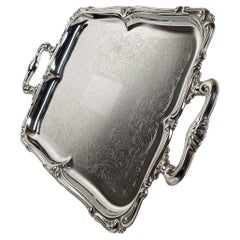
Italian Vintage Stainless Steel Tray in Baroque Style By Alessi 60s Medium size
Located in Roma, IT
We are pleased to offer for sale an Italian mid–20th-century tray—modern in spirit yet clearly inspired by the 18th century. Made in Italy between the 1960s and 1970s by the historic...
Category

Mid-20th Century Italian Baroque Furniture

Materials

Stainless Steel

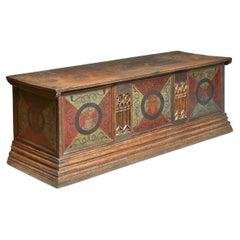
Italian Baroque Cassone
Located in Pasadena, CA
This is a beautiful example of an early Minimalist 17th century Italian Cassone that would integrate seamlessly into a Gothic inspired design. The cassone is in overall good conditio...
Category

17th Century Italian Antique Baroque Furniture

Materials

Walnut

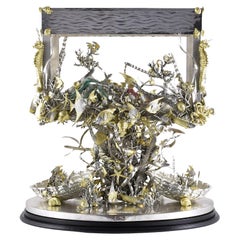
A monumental Italian part gilded sterling silver aquarium.
Located in London, GB
Unlike any piece that we have ever offered before, this monumental & heavy quality sterling silver aquarium is formed with an oval base mounted with two silver half-shells mounted with fish sea-foliage and crustaceans and fish, the central column and tank surround formed as a massive coral and foliate reef similarly adorned with part-gilded silver fish, crabs, lobsters, sea-snails, seahorses, octopus etc. With removable cuboid glass tank & two specimen-hard-stone and silver aquatic sculptures...
Category

Late 20th Century Italian Baroque Furniture

Materials

Sterling Silver

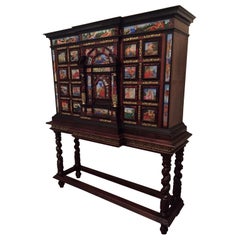
Original 18th Century Monumental Cabinet on Stand / Italian Bargueno / European
Located in Miami, FL
Important monumental cabinet on stand. The case of the cabinet is walnut, veneered with rich rib boned ebony and luxuriously decorated with turtle ...
Category

Late 18th Century Italian Antique Baroque Furniture

Materials

Walnut, Glass

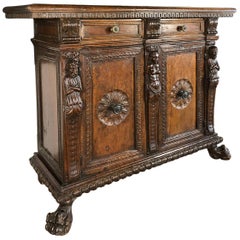
Italian 17th Century Walnut Credenza
Located in Troy, NY
Mid-size Italian credenza with a deep warm patina, the molded top with a dentil-decorated edge above two drawers with brass knobs, separated by decorative acanthus scrolls, two doors...
Category

17th Century Italian Antique Baroque Furniture

Materials

Walnut

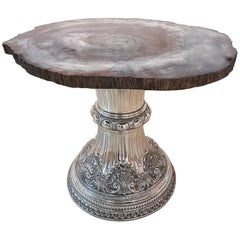
20th Century Italian Silver Table. Top is in brown Slab Fossil American Sequoia
Located in VALENZA, IT
The table base is in solid silver 925°°/°°° gr. 6.000 in Italian Baroque style bearing the typical embossed and chiseled shells, with three layers of leaves and ovules. The central s...
Category

1970s Italian Vintage Baroque Furniture

Materials

Silver

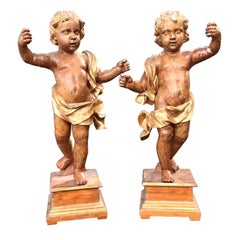
Large Pair Italian 18th Century Polychrome and Giltwood Cherub / Angels
Located in Bradenton, FL
Quite a stunning pair of Italian standing cherub or Angel carvings from the 18th century. Standing at almost 4 feet tall, the pair are quite large and realistic. Very impressive. Wit...
Category

18th Century Italian Antique Baroque Furniture

Materials

Giltwood

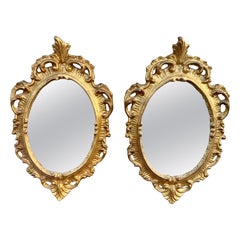
Italian Florentine Baroque Gold Giltwood Wall Mirrors, Pair
Located in Elkhart, IN
A stunning pair of Italian Florentine baroque rococo style wall mirrors Italy, Circa 1960s Gold gilt wood, with mirror. Measures: 7.25"W x 1.25"D x 12"H. Very good original vinta...
Category

1960s Italian Vintage Baroque Furniture

Materials

Mirror, Giltwood

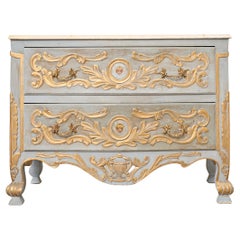
Baroque Style Venetian Lacquered Commode Chest of Drawers
Located in Rio Vista, CA
Stunning Italian commode or chest of drawers featuring dramatic baroque style giltwood carved finishes and Venetian painted cameo reliefs. The large case has exquisite craftsmanship ...
Category

20th Century Italian Baroque Furniture

Materials

Metal

Italian Walnut Baroque Style Lyre-Leg Trestle Refectory Desk Writing Table
Located in Carimate, Como
Italian Baroque style desk, or writing table with lyre shaped legs and joint with a central drawer. Finished on all four sides enabling it to be used against a wall as well as a cent...
Category

Late 20th Century Italian Baroque Furniture

Materials

Wood

After Raffaello Sanzio 1483-1520 Raphael La Madonna della Seggiola Oil on Canvas
Located in Los Angeles, CA
A Fine Italian 19th Century Oil Painting on Canvas "La Madonna della Seggiola" after Raphael (Raffaello Sanzio da Urbino 1483-1520). The circular painted canvas depicting a seated Madonna holding an infant Jesus Christ next to a child Saint John the Baptist, all within a massive carved two-tone gilt wood, gilt-patinated and gesso frame, which is identical to the frame on Raphael's original artwork. This painting is a 19th Century copy of Raphael's Madonna della Seggiola painted in 1514 and currently exhibited and part of the permanent collection at the Palazzo Pitti, Galleria Palatina, Florence, Italy. The bodies of the Virgin, Christ, and the boy Baptist fill the whole picture. The tender, natural looking embrace of the Mother and Child, and the harmonious grouping of the figures in the round, have made this one of Raphael's most popular Madonnas. The isolated chair leg is reminiscent of papal furniture, which has led to the assumption that Leo X himself commissioned the painting. Circa: 1890-1900. Subject: Religious painting Painting diameter: 28 inches (71.1 cm) Frame height: 55 1/8 inches (140 cm) Frame width: 46 inches (116.8 cm) Frame depth: 5 1/8 inches (13 cm) Raffaello Sanzio da Urbino (Italian, March 28 or April 6, 1483 - April 6, 1520), known as Raphael, was an Italian painter and architect of the High Renaissance. His work is admired for its clarity of form, ease of composition, and visual achievement of the Neoplatonic ideal of human grandeur. Together with Michelangelo and Leonardo da Vinci, he forms the traditional trinity of great masters of that period. Raphael was enormously productive, running an unusually large workshop and, despite his death at 37, leaving a large body of work. Many of his works are found in the Vatican Palace, where the frescoed Raphael Rooms were the central, and the largest, work of his career. The best known work is The School of Athens in the Vatican Stanza della Segnatura. After his early years in Rome much of his work was executed by his workshop from his drawings, with considerable loss of quality. He was extremely influential in his lifetime, though outside Rome his work was mostly known from his collaborative printmaking. After his death, the influence of his great rival Michelangelo was more widespread until the 18th and 19th centuries, when Raphael's more serene and harmonious qualities were again regarded as the highest models. His career falls naturally into three phases and three styles, first described by Giorgio Vasari: his early years in Umbria, then a period of about four years (1504–1508) absorbing the artistic traditions of Florence, followed by his last hectic and triumphant twelve years in Rome, working for two Popes and their close associates. Raphael was born in the small but artistically significant central Italian city of Urbino in the Marche region, where his father Giovanni Santi was court painter to the Duke. The reputation of the court had been established by Federico III da Montefeltro, a highly successful condottiere who had been created Duke of Urbino by the Pope - Urbino formed part of the Papal States - and who died the year before Raphael was born. The emphasis of Federico's court was rather more literary than artistic, but Giovanni Santi was a poet of sorts as well as a painter, and had written a rhymed chronicle of the life of Federico, and both wrote the texts and produced the decor for masque-like court entertainments. His poem to Federico shows him as keen to show awareness of the most advanced North Italian painters, and Early Netherlandish artists as well. In the very small court of Urbino he was probably more integrated into the central circle of the ruling family than most court painters. Federico was succeeded by his son Guidobaldo da Montefeltro, who married Elisabetta Gonzaga, daughter of the ruler of Mantua, the most brilliant of the smaller Italian courts for both music and the visual arts. Under them, the court continued as a centre for literary culture. Growing up in the circle of this small court gave Raphael the excellent manners and social skills stressed by Vasari. Court life in Urbino at just after this period was to become set as the model of the virtues of the Italian humanist court through Baldassare Castiglione's depiction of it in his classic work The Book of the Courtier, published in 1528. Castiglione moved to Urbino in 1504, when Raphael was no longer based there but frequently visited, and they became good friends. He became close to other regular visitors to the court: Pietro Bibbiena and Pietro Bembo, both later cardinals, were already becoming well known as writers, and would be in Rome during Raphael's period there. Raphael mixed easily in the highest circles throughout his life, one of the factors that tended to give a misleading impression of effortlessness to his career. He did not receive a full humanistic education however; it is unclear how easily he read Latin. Early Life and Works His mother Màgia died in 1491 when Raphael was eight, followed on August 1, 1494 by his father, who had already remarried. Raphael was thus orphaned at eleven; his formal guardian became his only paternal uncle Bartolomeo, a priest, who subsequently engaged in litigation with his stepmother. He probably continued to live with his stepmother when not staying as an apprentice with a master. He had already shown talent, according to Vasari, who says that Raphael had been "a great help to his father". A self-portrait drawing from his teenage years shows his precocity. His father's workshop continued and, probably together with his stepmother, Raphael evidently played a part in managing it from a very early age. In Urbino, he came into contact with the works of Paolo Uccello, previously the court painter (d. 1475), and Luca Signorelli, who until 1498 was based in nearby Città di Castello. According to Vasari, his father placed him in the workshop of the Umbrian master Pietro Perugino as an apprentice "despite the tears of his mother". The evidence of an apprenticeship comes only from Vasari and another source, and has been disputed—eight was very early for an apprenticeship to begin. An alternative theory is that he received at least some training from Timoteo Viti, who acted as court painter in Urbino from 1495.Most modern historians agree that Raphael at least worked as an assistant to Perugino from around 1500; the influence of Perugino on Raphael's early work is very clear: "probably no other pupil of genius has ever absorbed so much of his master's teaching as Raphael did", according to Wölfflin. Vasari wrote that it was impossible to distinguish between their hands at this period, but many modern art historians claim to do better and detect his hand in specific areas of works by Perugino or his workshop. Apart from stylistic closeness, their techniques are very similar as well, for example having paint applied thickly, using an oil varnish medium, in shadows and darker garments, but very thinly on flesh areas. An excess of resin in the varnish often causes cracking of areas of paint in the works of both masters. The Perugino workshop was active in both Perugia and Florence, perhaps maintaining two permanent branches. Raphael is described as a "master", that is to say fully trained, in December 1500. His first documented work was the Baronci altarpiece for the church of Saint Nicholas of Tolentino in Città di Castello, a town halfway between Perugia and Urbino. Evangelista da Pian di Meleto, who had worked for his father, was also named in the commission. It was commissioned in 1500 and finished in 1501; now only some cut sections and a preparatory drawing remain. In the following years he painted works for other churches there, including the Mond Crucifixion (about 1503) and the Brera Wedding of the Virgin (1504), and for Perugia, such as the Oddi Altarpiece. He very probably also visited Florence in this period. These are large works, some in fresco, where Raphael confidently marshals his compositions in the somewhat static style of Perugino. He also painted many small and exquisite cabinet paintings in these years, probably mostly for the connoisseurs in the Urbino court, like the Three Graces and St. Michael, and he began to paint Madonnas and portraits. In 1502 he went to Siena at the invitation of another pupil of Perugino, Pinturicchio, "being a friend of Raphael and knowing him to be a draughtsman of the highest quality" to help with the cartoons, and very likely the designs, for a fresco series in the Piccolomini Library in Siena Cathedral. He was evidently already much in demand even at this early stage in his career. Influence of Florence Raphael led a "nomadic" life, working in various centres in Northern Italy, but spent a good deal of time in Florence, perhaps from about 1504. Although there is traditional reference to a "Florentine period...
Category

Early 1900s Italian Antique Baroque Furniture

Materials

Canvas, Giltwood

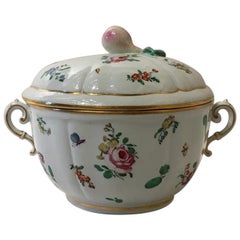
Italy Richard Ginori Mid-19th Century Porcelain Covered
Located in Brescia, IT
This beautiful covered cup was painted with grace and reproducing a variety of flowers, butterflies and natural elements very detailed. Golden profiles. A joyful to look at it, a pie...
Category

Mid-19th Century Italian Antique Baroque Furniture

Materials

Porcelain

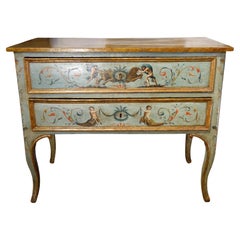
Unique Italian 18th Century Hand Painted Louis XV Commode Cassone Marchigiano
Located in Encinitas, CA
Unique Italian 18th century hand painted Louis XV "Cassettone" Marchigiano from the Center of Italy region of Marche Italy, circa 1740. Important, unique ...
Category

Early 18th Century Italian Antique Baroque Furniture

Materials

Gold Leaf

Baroque furniture for sale on 1stDibs.

Find a broad range of unique Baroque furniture for sale on 1stDibs. Many of these items were first offered in the 21st Century and Contemporary, but contemporary artisans have continued to produce works inspired by this style. If you’re looking to add vintage furniture created in this style to your space, the works available on 1stDibs include decorative objects, case pieces and storage cabinets, tables and other home furnishings, frequently crafted with wood, metal and other materials. If you’re shopping for used Baroque furniture made in a specific country, there are Europe, Italy, and France pieces for sale on 1stDibs. While there are many designers and brands associated with original furniture, popular names associated with this style include Europa Antiques, Modenese Gastone, Delft, and Meissen Porcelain. It’s true that these talented designers have at times inspired knockoffs, but our experienced specialists have partnered with only top vetted sellers to offer authentic pieces that come with a buyer protection guarantee. Prices for furniture differ depending upon multiple factors, including designer, materials, construction methods, condition and provenance. On 1stDibs, the price for these items starts at $18 and tops out at $737,181 while the average work can sell for $4,396.