Baroque Furniture

BAROQUE STYLE

The decadence of the Baroque style, in which ornate furnishings were layered against paneled walls, painted ceilings, stately chandeliers and, above all, gilding, expressed the power of the church and monarchy through design that celebrated excess. And its influence was omnipresent — antique Baroque furniture was created in the first design style that truly had a global impact.

Theatrical and lavish, Baroque was prevalent across Europe from the 17th to mid-18th century and spread around the world through colonialism, including in Asia, Africa and the Americas. While Baroque originated in Italy and achieved some of its most fantastic forms in the late-period Roman Baroque, it was adapted to meet the tastes and materials in each region. French Baroque furniture informed Louis XIV style and added drama to Versailles. In Spain, the Baroque movement influenced the elaborate Churrigueresque style in which architecture was dripping with ornamental details. In South German Baroque, furniture was made with bold geometric patterns.

Compared to Renaissance furniture, which was more subdued in its proportions, Baroque furniture was extravagant in all aspects, from its shape to its materials.

Allegorical and mythical figures were often sculpted in the wood, along with motifs like scrolling floral forms and acanthus leaves that gave the impression of tangles of dense foliage. Novel techniques and materials such as marquetry, gesso and lacquer — which were used with exotic woods and were employed by cabinetmakers such as André-Charles Boulle, Gerrit Jensen and James Moore — reflected the growth of international trade. Baroque furniture characteristics include a range of decorative elements — a single furnishing could feature everything from carved gilded wood to gilt bronze, lending chairs, mirrors, console tables and other pieces a sense of motion.

Find a collection of authentic antique Baroque tables, lighting, decorative objects and other furniture on 1stDibs.

to
918
3,282
3,002
6,105
237
46
197,955
115,158
44,137
33,206
16,430
12,226
10,890
10,816
9,959
8,954
7,337
6,644
6,511
6,388
6,212
6,163
4,897
3,732
2,992
1,548
1,565
283
490
488
307
61
25
81
48
40
71
67
66
55
38
3,785
1,945
1,023
701
612
5,777
2,410
774
616
428
6,388
6,291
6,331
46
45
32
27
26
Style: Baroque
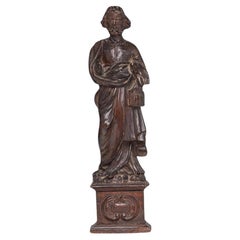
An antique 18th century Walnut European Santos - Saint figure on a plinth
Located in Leesburg, VA
An antique 18th century Walnut Figural Statue of Saint Peter on a plinth Anonymous Northern Europe, probably Belgium; first-half of the 18th century Walnut Approximate size: 17 (h) x 4.25 (w) x 4.25 (d) in. The present sculpture, perfectly suited for a curiosity cabinet or English-European country styled home, was likely realized for a church side chapel or choir stall niche. The serious look of the saint’s face...
Category

Early 18th Century Belgian Antique Baroque Furniture

Materials

Walnut

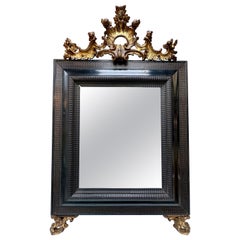
An Italian Late 19th Century Ebonized And Gold Gilt Mirror
Located in London, GB
An Italian 19th century mirror from and earlier 18th century style, with cushion moulding and Ripple design. Lightly distressed mirror pla...
Category

19th Century Italian Antique Baroque Furniture

Materials

Mirror

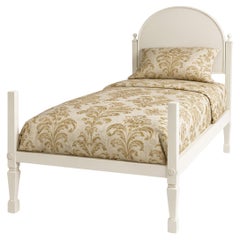
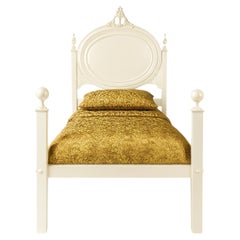
Baroque Style Off White Lacquer Walnut Bed, Late 19th Century
Located in Lisbon, PT
A Baroque style off white color refinished bed with headboard. Piece applications: exquisite covers or custom mattress for luxury bedroom (not included)
Category

Late 19th Century Portuguese Antique Baroque Furniture

Materials

Brass

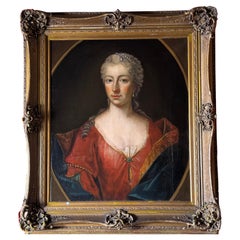
Portrait of a German Lady in Oil, Central European School, 18th Century
Located in Madrid, ES
Portrait of a German Lady in Oil, Central European School, 18th Century, in a 19th Century Gilt Frame Oil on canvas of remarkable quality depicting an 18th-century German noblewoma...
Category

18th Century German Antique Baroque Furniture

Materials

Paint

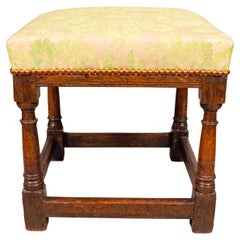
Louis XIII Oak Bench
Located in Essex, MA
Square with Fortuny upholstered seat. Turned legs with box stretcher.
Category

1690s European Antique Baroque Furniture

Materials

Fabric, Oak

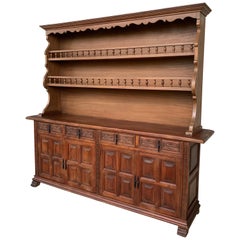
Early 20th Large Stepback Cupboard with Four Drawers and Doors
Located in Miami, FL
From Northern Spain, constructed of solid pine, the rectangular top with molded edge atop a conforming case housing four drawers over four doors, the doors paneled with solid walnut,...
Category

Early 20th Century Spanish Baroque Furniture

Materials

Iron

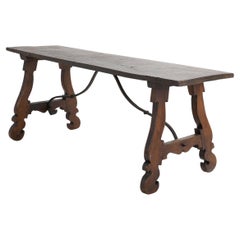
Baroque oak table, crafted in Italy in 1760
Located in Stahnsdorf, DE
Baroque oak Table, Italy 1760 This exceptional baroque table, crafted in Italy in 1760, represents the finest example of traditional craftsmanship....
Category

1760s Italian Antique Baroque Furniture

Materials

Oak

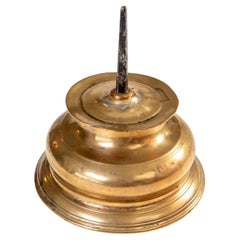
Brass Candlestick with Wrought Iron Spike. 18th Century Danish Baroque
Located in Kastrup, DK
Baroque brass candlestick for pillar candles. The body features a profiled brass base with a centrally mounted hand-forged wrought iron spike to secure the candle. Denmark, circa 17...
Category

Early 18th Century Danish Antique Baroque Furniture

Materials

Brass, Wrought Iron

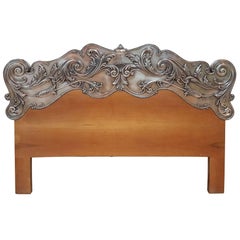
Baroque Style Off White Lacquer Bed, 19th Century
Located in Lisbon, PT
A Baroque style off white color varnish refinish bed. Piece applications: exquisite covers or custom mattress for luxury bedroom (not included)
Category

Late 19th Century Portuguese Antique Baroque Furniture

Materials

Brass

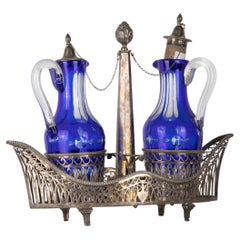
Silver Gondola Venice Cobalt Blue Silver Cruet, 19th Century
Located in Lisbon, PT
A Silver Cruet table Lombardo Veneto (Venice) set in finely pierced silver, decorated with caryatids form and fret patterns. Set consisting of oil cruet, salt, pepper, Venice gondol...
Category

19th Century Italian Antique Baroque Furniture

Materials

Crystal, Silver

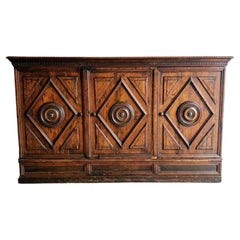
Early 18th Century Italian Baroque Period Carved Walnut Sideboard Credenza
Located in Forney, TX
A rare and exceptional Baroque period hand carved walnut sideboard (buffet - credenza) with beautifully aged patina. circa 1700 Hand-crafted in Italy, likely Florence or Bologna, in the early 18th century, possibly 17th century, featuring handsome rich antique walnut...
Category

Early 18th Century Italian Antique Baroque Furniture

Materials

Walnut

IMPORTANT ANTIQUE 19th Century PLASTER OF THE DIANA OF GABI FROM THE LOUVRE
Located in Madrid, ES
ANTIQUE 19TH CENTURY PLASTER OF THE DIANA OF GABI FROM THE LOUVRE Ancient plaster with identical measurements to the original Greek marble exhibited at the Louvre. Diana of Gabi, di...
Category

Early 19th Century Italian Antique Baroque Furniture

Materials

Plaster

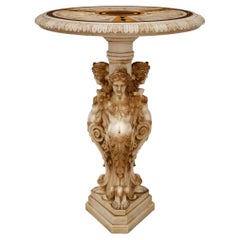
Italian 19th century Baroque st. Carrara, Sienna, Rosso Antico marble side table
Located in West Palm Beach, FL
A stunning and most decorative Italian 19th century Baroque st. Carrara, Sienna, Rosso Antico and Black Belgian marble side table. This intricately detailed carved marble table is ra...
Category

19th Century Italian Antique Baroque Furniture

Materials

Marble

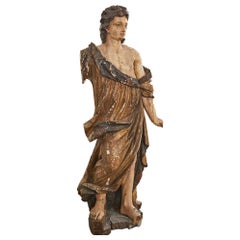
18th Century Italian Baroque Carved Santos Icon Sculpture
Located in Rio Vista, CA
Majestic 18th century Italian baroque polychrome Santos icon sculpture of a young man. The carved icon is depicted standing and wearing a flowing robe with graceful movement. He has ...
Category

18th Century Italian Antique Baroque Furniture

Materials

Wood

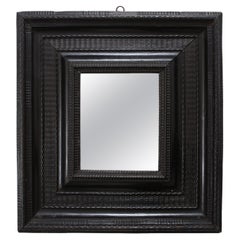
Italian Baroque Carved Ebonized Frame/Mirror
Located in New York, NY
An exceptional Northern Italian Baroque intricately carved ebonized frame, inset with old mercury glass. The frame with cove carved 'ripple' molding and its original forged iron hook...
Category

1680s Italian Antique Baroque Furniture

Materials

Mercury Glass, Ebony

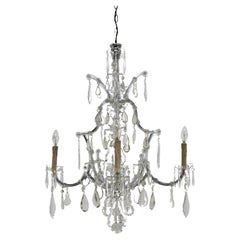
Maria Theresa Crystal Chandelier, Austria, 1900s, Restored
Located in Praha, CZ
Early 20th Century Maria Theresa style chandelier in perfect condition. Made in Austria, circa 1900 Carefully restored, disassembled, ...
Category

Early 20th Century Austrian Baroque Furniture

Materials

Crystal, Metal

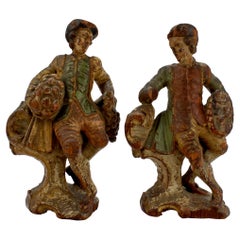
2 Baroque 18th Century Carved Polychrome Decorated Wooden Continental Figurines
Located in Philadelphia, PA
A pair of 18th century carved wooden figurines Likely Central European originating somewhere in Germany, Austria, Switzerland, or Northern Italy. Both figurines depict a gallant gentleman in period dress holding a basket replete with fruit or flowers. Each is mounted on an integral wooden base with a rocaille base. These figures are rare and are a fine addition to any period room...
Category

18th Century European Antique Baroque Furniture

Materials

Wood

20th Century Italian Sterling Silver Head Bed, baroque barocco revival
Located in VALENZA, IT
Rare Italian Silver bed headboard Italian barocco style. One sheet of sterling silver embossed and chiselled by hand with typical Italian Barocco swirls....
Category

1970s Italian Vintage Baroque Furniture

Materials

Silver

Rare 17th Century Venetian Painted and Parcel Gilt Lavandino
Located in Houston, TX
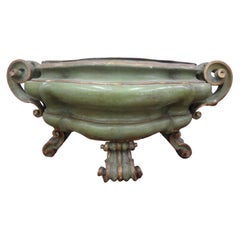
Rare 17th century Venetian Painted And Parcel Gilt Lavandino. A lavandino is a washbasin or washbowl which was used in a courtyard of a Venetian palazzo in the 17th and 18th centuri...
Category

17th Century Italian Antique Baroque Furniture

Materials

Copper

English 18th C. Spinet Case by Crang Hancock London Converted Writing Desk
Located in Vero Beach, FL
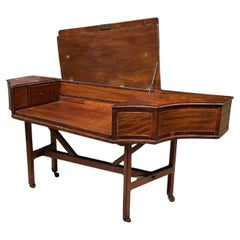
English 18th Century Spinet Case by Crang & Hancock London Converted Writing Desk This is a fine example of the English spinet in its most fully devel...
Category

18th Century English Antique Baroque Furniture

Materials

Mahogany, Tulipwood

Portuguese Silver Tea and Coffee Service 19th Century
Located in Madrid, ES
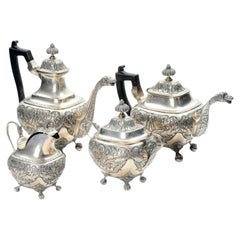
Portuguese silver tea and coffee service 19th Century composed of, teapot, coffee maker, milk jug and sugar bowl. Body profusely decorated with floral motifs. Handles in rosewood. Li...
Category

19th Century Portuguese Antique Baroque Furniture

Materials

Silver

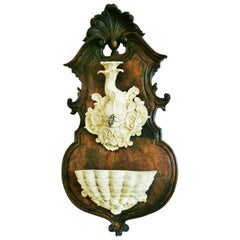
Wall Decorative Fountain Dolphin and Shell Sculpture on Carved Oak Panel
Located in Frankfurt am Main, DE
Wall fountain with dolphin and shell bowl sculpture made of cast composition with marble powder, Portugal, early 20th century. Dolphin with a bronze tap in ...
Category

Early 20th Century Portuguese Baroque Furniture

Materials

Composition

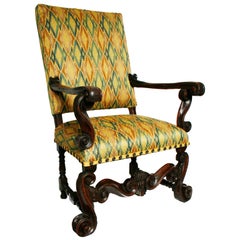
Italian Baroque Walnut Armchair by Andrea Fantoni, c1690
By Andrea Fantoni
Located in valatie, NY
This early Baroque chair is made from rich Italian walnut. The broad antique frame was carved by the Italian sculptor and wood carver Andrea Fantoni, see accompanying photo. The arms...
Category

Late 17th Century Italian Antique Baroque Furniture

Materials

Upholstery, Walnut

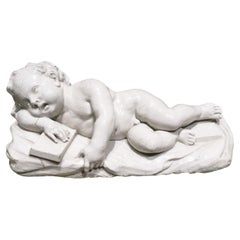
Italy Mid-18th Century Doccia Factory White Porcelain Sleeping Child Sculpture
Located in Brescia, IT
This refined and precious white porcelain sculpture is depicting the sleeping Infant Christ that became a very popular subject in Baroque art sice the 17th Century. The delicate and ...
Category

Mid-18th Century Italian Antique Baroque Furniture

Materials

Porcelain

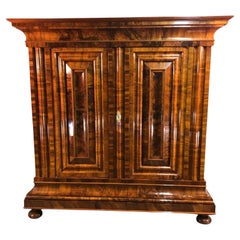
German Baroque Armoire "Frankfurter Wellenschrank", 1730, Walnut
Located in Belmont, MA
Frankfurter Wellenschrank, German Baroque Armoire 1730 Exquisite Frankfurter Wellenschrank made around 1730. The name Wellenschrank (meaning “wavy cabinet...
Category

1730s German Antique Baroque Furniture

Materials

Walnut

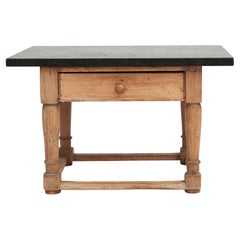
Antique Swedish Baroque Table With Black Jämtland Limestone Top
Located in Kastrup, DK
Swedish Baroque Table with Black Jämtland limestone Stone Top, c. 1750 This charming Baroque table originates from Sweden around the mid-18th century and is a fine example of rustic ...
Category

Mid-18th Century Swedish Antique Baroque Furniture

Materials

Stone

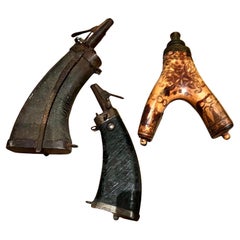
Antique Rare 17th century Three German Powder Flasks, Wood Leather Iron
Located in Doha, QA
A remarkable and authentic set of three 17th-century German powder flasks, exceptionally rare to find together. These flasks, essential accessories for musketeers and hunters of the ...
Category

17th Century German Antique Baroque Furniture

Materials

Iron

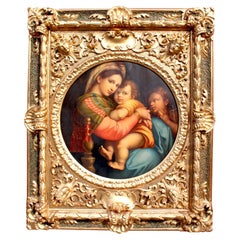
After Raffaello Sanzio 1483-1520 Raphael La Madonna della Seggiola Oil on Canvas
Located in Los Angeles, CA
A Fine Italian 19th Century Oil Painting on Canvas "La Madonna della Seggiola" after Raphael (Raffaello Sanzio da Urbino 1483-1520). The circular painted canvas depicting a seated Madonna holding an infant Jesus Christ next to a child Saint John the Baptist, all within a massive carved two-tone gilt wood, gilt-patinated and gesso frame, which is identical to the frame on Raphael's original artwork. This painting is a 19th Century copy of Raphael's Madonna della Seggiola painted in 1514 and currently exhibited and part of the permanent collection at the Palazzo Pitti, Galleria Palatina, Florence, Italy. The bodies of the Virgin, Christ, and the boy Baptist fill the whole picture. The tender, natural looking embrace of the Mother and Child, and the harmonious grouping of the figures in the round, have made this one of Raphael's most popular Madonnas. The isolated chair leg is reminiscent of papal furniture, which has led to the assumption that Leo X himself commissioned the painting. Circa: 1890-1900. Subject: Religious painting Painting diameter: 28 inches (71.1 cm) Frame height: 55 1/8 inches (140 cm) Frame width: 46 inches (116.8 cm) Frame depth: 5 1/8 inches (13 cm) Raffaello Sanzio da Urbino (Italian, March 28 or April 6, 1483 - April 6, 1520), known as Raphael, was an Italian painter and architect of the High Renaissance. His work is admired for its clarity of form, ease of composition, and visual achievement of the Neoplatonic ideal of human grandeur. Together with Michelangelo and Leonardo da Vinci, he forms the traditional trinity of great masters of that period. Raphael was enormously productive, running an unusually large workshop and, despite his death at 37, leaving a large body of work. Many of his works are found in the Vatican Palace, where the frescoed Raphael Rooms were the central, and the largest, work of his career. The best known work is The School of Athens in the Vatican Stanza della Segnatura. After his early years in Rome much of his work was executed by his workshop from his drawings, with considerable loss of quality. He was extremely influential in his lifetime, though outside Rome his work was mostly known from his collaborative printmaking. After his death, the influence of his great rival Michelangelo was more widespread until the 18th and 19th centuries, when Raphael's more serene and harmonious qualities were again regarded as the highest models. His career falls naturally into three phases and three styles, first described by Giorgio Vasari: his early years in Umbria, then a period of about four years (1504–1508) absorbing the artistic traditions of Florence, followed by his last hectic and triumphant twelve years in Rome, working for two Popes and their close associates. Raphael was born in the small but artistically significant central Italian city of Urbino in the Marche region, where his father Giovanni Santi was court painter to the Duke. The reputation of the court had been established by Federico III da Montefeltro, a highly successful condottiere who had been created Duke of Urbino by the Pope - Urbino formed part of the Papal States - and who died the year before Raphael was born. The emphasis of Federico's court was rather more literary than artistic, but Giovanni Santi was a poet of sorts as well as a painter, and had written a rhymed chronicle of the life of Federico, and both wrote the texts and produced the decor for masque-like court entertainments. His poem to Federico shows him as keen to show awareness of the most advanced North Italian painters, and Early Netherlandish artists as well. In the very small court of Urbino he was probably more integrated into the central circle of the ruling family than most court painters. Federico was succeeded by his son Guidobaldo da Montefeltro, who married Elisabetta Gonzaga, daughter of the ruler of Mantua, the most brilliant of the smaller Italian courts for both music and the visual arts. Under them, the court continued as a centre for literary culture. Growing up in the circle of this small court gave Raphael the excellent manners and social skills stressed by Vasari. Court life in Urbino at just after this period was to become set as the model of the virtues of the Italian humanist court through Baldassare Castiglione's depiction of it in his classic work The Book of the Courtier, published in 1528. Castiglione moved to Urbino in 1504, when Raphael was no longer based there but frequently visited, and they became good friends. He became close to other regular visitors to the court: Pietro Bibbiena and Pietro Bembo, both later cardinals, were already becoming well known as writers, and would be in Rome during Raphael's period there. Raphael mixed easily in the highest circles throughout his life, one of the factors that tended to give a misleading impression of effortlessness to his career. He did not receive a full humanistic education however; it is unclear how easily he read Latin. Early Life and Works His mother Màgia died in 1491 when Raphael was eight, followed on August 1, 1494 by his father, who had already remarried. Raphael was thus orphaned at eleven; his formal guardian became his only paternal uncle Bartolomeo, a priest, who subsequently engaged in litigation with his stepmother. He probably continued to live with his stepmother when not staying as an apprentice with a master. He had already shown talent, according to Vasari, who says that Raphael had been "a great help to his father". A self-portrait drawing from his teenage years shows his precocity. His father's workshop continued and, probably together with his stepmother, Raphael evidently played a part in managing it from a very early age. In Urbino, he came into contact with the works of Paolo Uccello, previously the court painter (d. 1475), and Luca Signorelli, who until 1498 was based in nearby Città di Castello. According to Vasari, his father placed him in the workshop of the Umbrian master Pietro Perugino as an apprentice "despite the tears of his mother". The evidence of an apprenticeship comes only from Vasari and another source, and has been disputed—eight was very early for an apprenticeship to begin. An alternative theory is that he received at least some training from Timoteo Viti, who acted as court painter in Urbino from 1495.Most modern historians agree that Raphael at least worked as an assistant to Perugino from around 1500; the influence of Perugino on Raphael's early work is very clear: "probably no other pupil of genius has ever absorbed so much of his master's teaching as Raphael did", according to Wölfflin. Vasari wrote that it was impossible to distinguish between their hands at this period, but many modern art historians claim to do better and detect his hand in specific areas of works by Perugino or his workshop. Apart from stylistic closeness, their techniques are very similar as well, for example having paint applied thickly, using an oil varnish medium, in shadows and darker garments, but very thinly on flesh areas. An excess of resin in the varnish often causes cracking of areas of paint in the works of both masters. The Perugino workshop was active in both Perugia and Florence, perhaps maintaining two permanent branches. Raphael is described as a "master", that is to say fully trained, in December 1500. His first documented work was the Baronci altarpiece for the church of Saint Nicholas of Tolentino in Città di Castello, a town halfway between Perugia and Urbino. Evangelista da Pian di Meleto, who had worked for his father, was also named in the commission. It was commissioned in 1500 and finished in 1501; now only some cut sections and a preparatory drawing remain. In the following years he painted works for other churches there, including the Mond Crucifixion (about 1503) and the Brera Wedding of the Virgin (1504), and for Perugia, such as the Oddi Altarpiece. He very probably also visited Florence in this period. These are large works, some in fresco, where Raphael confidently marshals his compositions in the somewhat static style of Perugino. He also painted many small and exquisite cabinet paintings in these years, probably mostly for the connoisseurs in the Urbino court, like the Three Graces and St. Michael, and he began to paint Madonnas and portraits. In 1502 he went to Siena at the invitation of another pupil of Perugino, Pinturicchio, "being a friend of Raphael and knowing him to be a draughtsman of the highest quality" to help with the cartoons, and very likely the designs, for a fresco series in the Piccolomini Library in Siena Cathedral. He was evidently already much in demand even at this early stage in his career. Influence of Florence Raphael led a "nomadic" life, working in various centres in Northern Italy, but spent a good deal of time in Florence, perhaps from about 1504. Although there is traditional reference to a "Florentine period...
Category

Early 1900s Italian Antique Baroque Furniture

Materials

Canvas, Giltwood

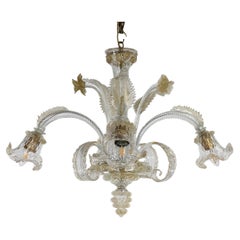
Vintage Baroque Style Floral Gold Infused Cristallo Murano Chandelier
Located in Chicago, IL
This spectacular gold-infused Cristallo Murano chandelier features four scroll arms with tri-lobed cups, elegantly styled with tiers of daffodils and leaves. The glasshouses on the i...
Category

Mid-20th Century Italian Baroque Furniture

Materials

Blown Glass, Murano Glass

18th Century French Baroque Carved Giltwood and Marble Console, circa 1790
Located in Vero Beach, FL
Antique 18th century French Baroque carved giltwood and marble console, circa 1790 This magnificent and elegant denim lapis...
Category

18th Century French Antique Baroque Furniture

Materials

Mahogany

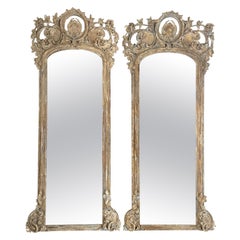
Pair of Monumental Italian Baroque Giltwood Mirrors-18th Century
Located in Los Angeles, CA
A rare and monumental pair of Italian Baroque pier mirrors, hand-carved in solid wood and retaining their original mirror plates and historic gilt surface. Architectural in scale and...
Category

Late 18th Century Italian Antique Baroque Furniture

Materials

Gold Leaf

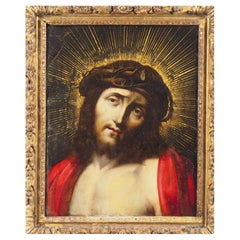
17th Century Flemish School after Le Correge, "Ecce Homo"
Located in Madrid, ES
17th-century Flemish School, after Le Correge, "Ecce Homo," oil on copper in a Louis XVI frame 51 x 41 cm (small parts missing), with collector's inscriptions on the back good condit...
Category

17th Century Dutch Antique Baroque Furniture

Materials

Paint

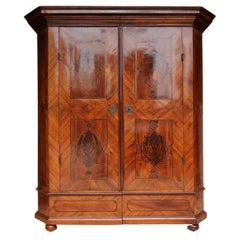
18th Century Maria Theresia Baroque Cabinet
Located in Dusseldorf, DE
A so-called Maria Theresa cabinet (furniture type named after the Austrian empress) or Baroque hall cabinet from the 18th century. On ball feet standing two-door coniferous corpus...
Category

18th Century German Antique Baroque Furniture

Materials

Walnut, Pine

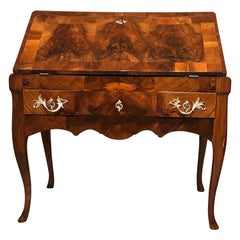
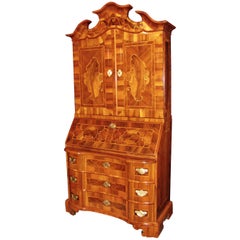
Baroque Secretary Desk, Switzerland 1750, Walnut
Located in Belmont, MA
Baroque secretary desk, Switzerland, 1750. This gorgeous baroque secretary desk stands out for its very pretty walnut veneer. The writing flap opens...
Category

1750s Swiss Antique Baroque Furniture

Materials

Walnut

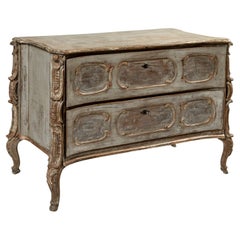
18th Century Baltic Greige Painted Concave Chest Of Drawers
Located in Westport, CT
A unique and elegant painted Baroque chest of drawers with a concave front adorned with minimal scrolled oval-shaped panels and flanked by decorative acanthus leave corners finish...
Category

Mid-18th Century German Antique Baroque Furniture

Materials

Oak

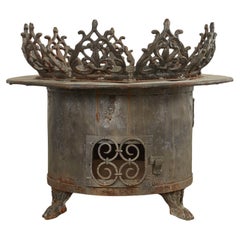
Baroque Style Wrought Iron Brazier Fire Pit or Chimnea
Located in Rio Vista, CA
Fantastic custom made wrought iron brazier fire pit or chimnea. The round pit features a decorative border on top of scrolled acanthus appearing l...
Category

20th Century American Baroque Furniture

Materials

Iron

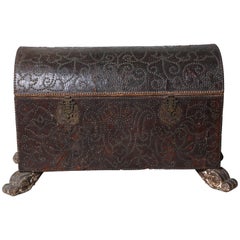
18th Century Spanish Studded Leather Chest
Located in Greenwich, CT
Very good Spanish 18th century studded leather chest, the domed lit with Arabesque design stud work, the front with two pierced brass clasps and ...
Category

Early 18th Century Spanish Antique Baroque Furniture

Materials

Brass

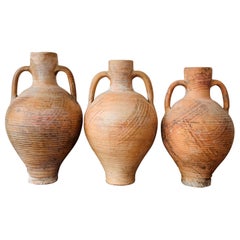
19th Century Set of Three Picher "Cantaro" from Calanda, Spain, Terracotta Vase
Located in Miami, FL
Pitcher ‘cantaros’ from Calanda, Aragon-Zaragoza area of Spain. A rare piece from a Private collection, circa 1890. Other examples can be seen in the Museo de Zaragoza. With gorgeous original patina, this jar features the characteristic charcoal-colored hand streaking typical of 18th and 19th century pottery from Calanda, as well as Classic sun symbols...
Category

Late 18th Century Spanish Antique Baroque Furniture

Materials

Terracotta

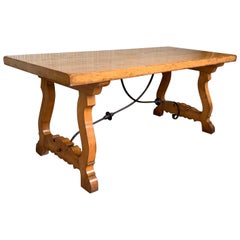
20th Century Spanish Cyprees Lyre Legs Trestle Dining Farm Table
Located in Miami, FL
A monumental 20th century Spanish trestle table, having a rectangular framed solid walnut inset board top, resting on hand carved, classical lyre legs joined by four beautifully iron...
Category

Early 1900s Spanish Antique Baroque Furniture

Materials

Iron

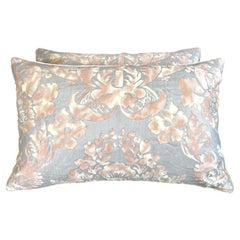
Pair of Authentic Vintage Fortuny Pillows
Located in Los Angeles, CA
A pair of exquisite Fortuny floral pillows, where each is a testament to the luxurious interplay of color and pattern, set against a mesmerizing silver background. These pillows shi...
Category

21st Century and Contemporary Italian Baroque Furniture

Materials

Cotton, Linen

Pair of Authentic Vintage Fortuny Pillows
$600 Sale Price / set
20% Off
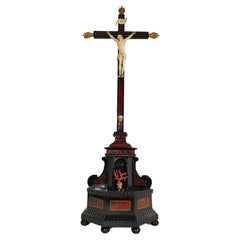
Large Cross with Christ from the 18th Century
Located in Madrid, ES
Large cross with christ from the 18th century. The cross is decorated with tortoise shell, ivory and ebony. The christ is sculpted in high quality ...
Category

18th Century Italian Antique Baroque Furniture

Materials

Wood

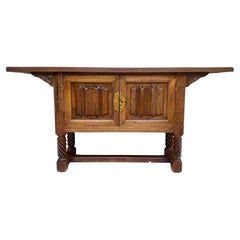
Sale Spanish Hand Carved Console Table with Two Doors
Located in Miami, FL
Very good quality carved Spanish console, circa 1940. Beautifully carved from walnut, with good color and patina. It features two carved panels ...
Category

Early 20th Century Spanish Baroque Furniture

Materials

Bronze

18th Century Baroque Cabinet with Secretaire, Germany, 1760
Located in Belmont, MA
18th century Baroque cabinet with secretaire, Germany, 1760, walnut veneer. Beautiful piece in excellent condition, professionally rest...
Category

1760s German Antique Baroque Furniture

Materials

Walnut

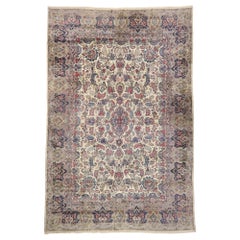
Antique Persian Floral Kerman Rug with Traditional Style
Located in Dallas, TX
74979 Antique Persian Kerman Rug, 11’09 x 17’08. Resplendent in grandeur, this antique Persian Kerman palace-size rug embodies the pinnacle of exclusivity and refinement. Woven by ma...
Category

Mid-20th Century Persian Baroque Furniture

Materials

Wool

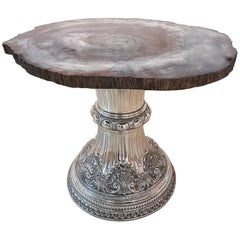
20th Century Italian Silver Table. Top is in brown Slab Fossil American Sequoia
Located in VALENZA, IT
The table base is in solid silver 925°°/°°° gr. 6.000 in Italian Baroque style bearing the typical embossed and chiseled shells, with three layers of leaves and ovules. The central s...
Category

1970s Italian Vintage Baroque Furniture

Materials

Silver

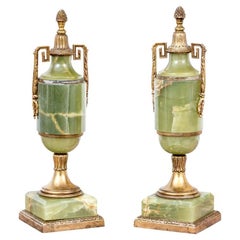
Antique Onyx And Gilt Bronze Urn Form Garnitures by Mutual Sunset Lamp Co.
Located in Bridgeport, CT
The Pair, early 20th Century, with deep green color Onyx having natural cream and brown inclusions with finely chased and detailed gilt bronze handles, lid with pine cone finial and ...
Category

Early 20th Century American Baroque Furniture

Materials

Onyx, Bronze

17th Century Portuguese Pair of Baroque Cherub Fragments - Antique Reliefs
Located in West Palm Beach, FL
An antique pair of Portuguese Baroque carved architectural wall fragments or reliefs depicting cherubs and scrolls from the 17th Century, original painted patina, in good condition. ...
Category

17th Century Portuguese Antique Baroque Furniture

Materials

Wood

17th C Style Italian LIRA Solid Walnut Refectory Table Framed Edge with options
Located in Encinitas, CA
The LIRA refectory table style is adapted from Italian Renaissance designs of the 15th to 19th Centuries. Handcrafted with aged Italian solid hardwoods & hand-forged iron elements an...
Category

2010s Italian Baroque Furniture

Materials

Iron

Baroque sculpture in polychrome and gilded wood of the Immaculate Virgin, Spain
Located in Madrid, ES
Baroque sculpture in polychrome and gilded wood of the Immaculate Virgin, Spain, 17th century Spectacular Spanish Baroque sculpture in carved, polychrome, and gilded wood, depicting...
Category

17th Century Spanish Antique Baroque Furniture

Materials

Silver

1930s Tuscan-Style Spanish Solid Walnut Buffet
Located in Split, Splitsko-dalmatinska županija
Spanish Revival Bleached Oak Buffet, 1930s "Simplicity is the ultimate sophistication." — Leonardo da Vinci Spain, 1930s Crafted from solid oak and gently bleached to reveal its natural warmth, this Spanish Revival buffet embodies the quiet grandeur of Iberian craftsmanship. The robust structure is softened by the timeworn patina, while the hand-carved, paneled doors showcase the depth and dimension characteristic of traditional Castilian woodworking. Aged iron latches and strap hinges add an authentic touch, evoking the old-world charm of Spanish haciendas. Rooted in Spanish Revival architecture, this buffet takes inspiration from the grand interiors of 17th-century Andalusian and Catalan homes, where dark, monolithic woodwork was an essential part of the aesthetic. The geometric relief carvings echo the intricate coffered ceilings and Moorish influences that shaped Spain’s design heritage, while the sturdy, functional form reflects the rustic simplicity of Spanish Colonial furnishings. - Hand-Carved Paneled Doors – A striking interplay of recessed geometric motifs, celebrating Castilian craftsmanship. - Bleached Walnut Finish – A contemporary touch that lightens the piece while preserving its historical integrity. - Hand-Forged Iron Hardware – Traditional Spanish-style latches and hinges, adding an artisanal flourish. - Four Upper Drawers & Three Spacious Cupboards – A perfect blend of form and function, offering ample storage. - Stepped Base & Framed Side Panels – Architectural details that reinforce the piece’s stately presence. Spanish Revival furniture...
Category

Early 20th Century Spanish Baroque Furniture

Materials

Iron

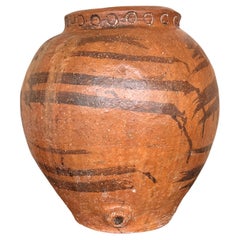
18th Century Handmade Terracotta Olive Jar, Vase with Two Handles, Spain
Located in Miami, FL
This is a terracotta olive jar from central Spain. It has a wonderful aged patina with chalky painted finish. It makes a great statement as a sculpture in a room on a pedestal, alone...
Category

16th Century Spanish Antique Baroque Furniture

Materials

Terracotta

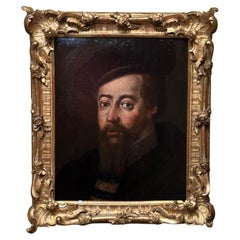
Portrait of Philip II, 17th-century Spanish school, with gilded Baroque Frame
Located in Madrid, ES
Portrait of Philip II, 17th-century Spanish school, with gilded Baroque frame Medium-sized oil on canvas (50 x 58 cm with frame) depicting Philip II of Spain, following the official...
Category

17th Century Spanish Antique Baroque Furniture

Materials

Paint

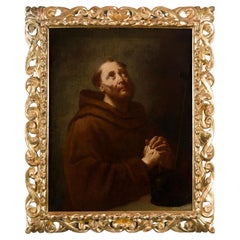
Domenico Fedeli, Maggiotto (Venice 1712-1794) Saint Francis Meditating
By Circle Domenico Maggiotto
Located in Madrid, ES
Domenico Fedeli, Maggiotto (Venice 1712-1794) Saint Francis Meditating before the Crucifix Oil on canvas 74.5 x 60 cm This work is presented in a substantial period frame. This pain...
Category

18th Century Italian Antique Baroque Furniture

Materials

Paint

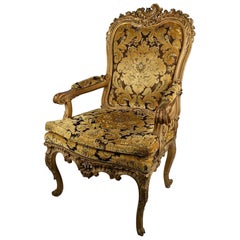
19th Century French Baroque Style Upholstered Armchair
Located in Marbella, ES
French Baroque style hand carved fruit wood armchair with typical neoclassical rock and plant decorations, gold leaf gilded and painted over in additi...
Category

Mid-19th Century French Antique Baroque Furniture

Materials

Gold Leaf

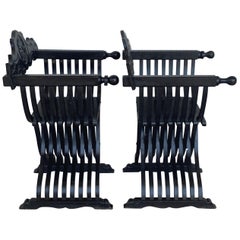
19th Century Pair of Carved Walnut Folding Scissors Savonarola Bench or Settle
Located in Miami, FL
19th century carved walnut folding scissors Savonarola bench or settee featuring a gentleman in the back. Typical of the Italian Renaissance with carved Florentine backs (no shows in the picture) . This pair created in the 19th century, most likely 1840s-1850s, are in perfect condition. The Savonarola chair is a type of folding chair with an X frame when viewed from the front or back. It was designed to fold so it was portable and used during campaigns or other outdoor pursuits. The title Savonarola comes from the name of Italian Renaissance Dominican friar, Girolamo Savonarola, who is renowned for his clash with tyrannical rulers and corrupt clergy. To fold this interestingly beautiful chair you must first remove the back rail which simply slides upward out of slots in the arms, then push the arms together to fold. This pair would make perfect hallway or entryway chairs...
Category

Mid-19th Century Italian Antique Baroque Furniture

Materials

Walnut

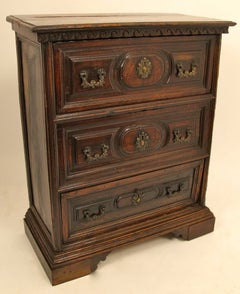
Italian Walnut Three-Drawer Chest
Located in San Francisco, CA
Walnut Renaissance three-drawer chest with raised panels on the drawer fronts and 17th century brass drawer pulls and escutheons. We believe this piece to be a modified prie dieu as ...
Category

17th Century Italian Antique Baroque Furniture

Materials

Brass

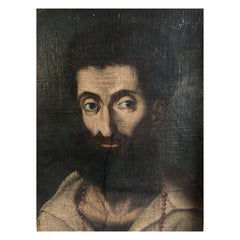
Portrait of a monk, Spanish school 18th century
Located in Valby, 84
captivating oil on canvas portrait of a monk, likely created in the 18th century by an artist of the Spanish school. The sitter is depicted with solemn intensity, his expressive fea...
Category

18th Century Spanish Antique Baroque Furniture

Materials

Canvas, Paint

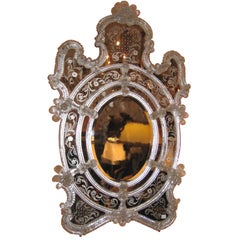
Venetian Oval Beveled Glass Mirror
Located in Montreal, QC
This type of mirror is becoming increasingly difficult to find, except in modern rather nasty imitations. This example has verre eglomise panels and Murano piping, boldly shaped and ...
Category

19th Century Italian Antique Baroque Furniture

Materials

Mirror, Murano Glass

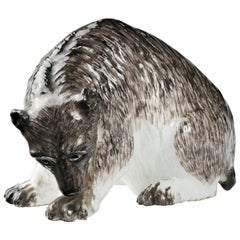
Meissen Porcelain Bear, Johann Gottlieb Kirchner, Johan Joachim Kaendler, 1735
Located in Milano, IT
Hard porcelain bear modeled and painted in gray-brown and black Manufacture of Meissen, by Johann Gottlieb Kirchner and Johan Joachim Kaendler, 1735 It...
Category

1730s German Antique Baroque Furniture

Materials

Porcelain

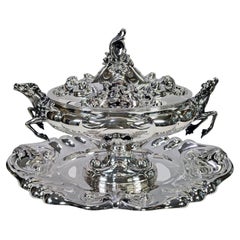
Italian oval tureen with tray in solid 800 silver baroque style
Located in VALENZA, IT
Gorgeous oval tureen with tray in solid 800 silver produced in Italy in the late 1960s. The body of the tureen is oval, shaped and embossed. An oval base has been soldered under the ...
Category

1960s Italian Vintage Baroque Furniture

Materials

Silver

Baroque furniture for sale on 1stDibs.

Find a broad range of unique Baroque furniture for sale on 1stDibs. Many of these items were first offered in the 21st Century and Contemporary, but contemporary artisans have continued to produce works inspired by this style. If you’re looking to add vintage furniture created in this style to your space, the works available on 1stDibs include decorative objects, case pieces and storage cabinets, tables and other home furnishings, frequently crafted with wood, metal and other materials. If you’re shopping for used Baroque furniture made in a specific country, there are Europe, Italy, and France pieces for sale on 1stDibs. While there are many designers and brands associated with original furniture, popular names associated with this style include Europa Antiques, Modenese Gastone, Delft, and Meissen Porcelain. It’s true that these talented designers have at times inspired knockoffs, but our experienced specialists have partnered with only top vetted sellers to offer authentic pieces that come with a buyer protection guarantee. Prices for furniture differ depending upon multiple factors, including designer, materials, construction methods, condition and provenance. On 1stDibs, the price for these items starts at $18 and tops out at $737,181 while the average work can sell for $4,396.

Still Thinking About These?

All Recently Viewed