Baroque Furniture

BAROQUE STYLE

The decadence of the Baroque style, in which ornate furnishings were layered against paneled walls, painted ceilings, stately chandeliers and, above all, gilding, expressed the power of the church and monarchy through design that celebrated excess. And its influence was omnipresent — antique Baroque furniture was created in the first design style that truly had a global impact.

Theatrical and lavish, Baroque was prevalent across Europe from the 17th to mid-18th century and spread around the world through colonialism, including in Asia, Africa and the Americas. While Baroque originated in Italy and achieved some of its most fantastic forms in the late-period Roman Baroque, it was adapted to meet the tastes and materials in each region. French Baroque furniture informed Louis XIV style and added drama to Versailles. In Spain, the Baroque movement influenced the elaborate Churrigueresque style in which architecture was dripping with ornamental details. In South German Baroque, furniture was made with bold geometric patterns.

Compared to Renaissance furniture, which was more subdued in its proportions, Baroque furniture was extravagant in all aspects, from its shape to its materials.

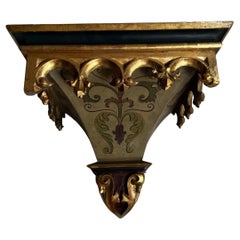
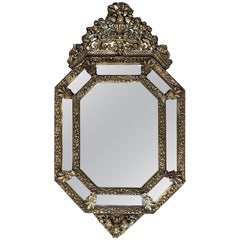
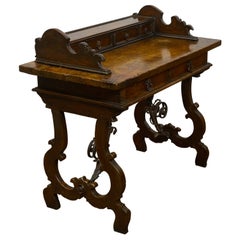
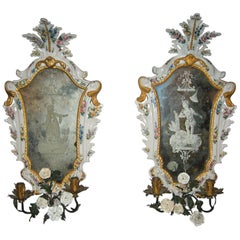
Allegorical and mythical figures were often sculpted in the wood, along with motifs like scrolling floral forms and acanthus leaves that gave the impression of tangles of dense foliage. Novel techniques and materials such as marquetry, gesso and lacquer — which were used with exotic woods and were employed by cabinetmakers such as André-Charles Boulle, Gerrit Jensen and James Moore — reflected the growth of international trade. Baroque furniture characteristics include a range of decorative elements — a single furnishing could feature everything from carved gilded wood to gilt bronze, lending chairs, mirrors, console tables and other pieces a sense of motion.

Find a collection of authentic antique Baroque tables, lighting, decorative objects and other furniture on 1stDibs.

to
245
856
674
1,559
12,594
5,515
4,488
3,276
3,159
3,133
3,063
1,790
1,720
1,559
1,191
906
443
322
280
165
104
3,007
1,583
283
492
488
306
62
25
81
49
40
70
67
66
55
38
997
514
290
198
163
1,427
537
283
178
98
1,559
1,559
1,559
23
9
7
5
5
Style: Baroque
Period: 19th Century
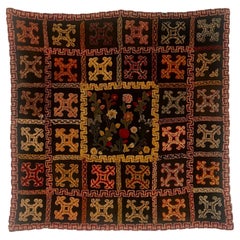
Antique french Royal Wedding Quilt
Located in Doha, QA
This rare and outstanding French antique Royal Quilt with flower design and each square consisting of four Fleur-de-lis originally was used for ceremonial Royal weddings at the Roman Catholic Churches. The borders of the Quilt represent the typical Greek key design and the middle part is various flowers and leaves, some of them close to tulips images, which at that time were symbol of love and loyalty. Weddings Quilts...
Category

Early 19th Century French Antique Baroque Furniture

Materials

Wool, Linen

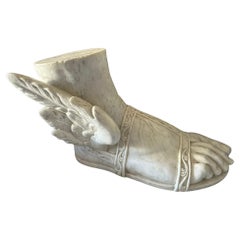
Masterpiece and Museum of Italian Feet of "Mercury" 19th Century
Located in Madrid, ES
Masterpiece and Museum Pair of Feet of "Mercury" 19th Century in Carrara marble 46 x 30 x 20cm good condition for the period The "feet of Mercury" (or, more precisely, the winged sa...
Category

19th Century Italian Antique Baroque Furniture

Materials

Marble

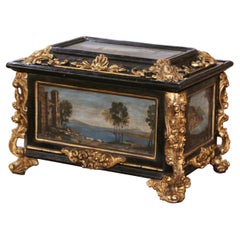
19th Century Italian Baroque Parcel Gilt and Hand Painted Table Box Casket
Located in Dallas, TX
Decorate a coffee table or a shelf with this elegant and colorful casket. Crafted in Italy circa 1880, the Venetian box stands on heavily carved feet decorated with gilt acanthus lea...
Category

Late 19th Century Italian Antique Baroque Furniture

Materials

Oak

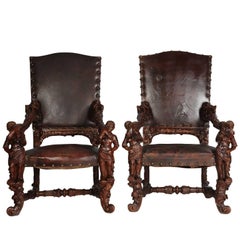
Pair of Palatial Venetian Walnut Carved Mid-19th Century Baroque Figural Thrones
By Valentino Besarel
Located in Los Angeles, CA
A very fine pair of palatial Venetian walnut carved mid-19th century Baroque figural throne armchairs, attributed to Valentino Panciera Besarel (Venice, 1829-1902) in the manner of Andrea Brustolon (1662-1732). The ornately carved thrones, each flanked with figures of standing males supporting a branch-carved armrests with vines. Raised on cabriolet scrolled legs. Provenance: The Castello di Giove in Umbria, Italy, circa 1870-1880. Height: 54 1/4 inches (137.8 cm.) Width: 37 1/4 inches (94.6 cm.) Depth: 32 inches (81.3 cm.) Andrea Brustolon (20 July 1662 – 25 October 1732) was an Italian sculptor in wood. He is known for his furnishings in the Baroque style and devotional sculptures. Biography He was trained in a vigorous local tradition of sculpture in his native Belluno, in the Venetian terraferma, and in the studio of the Genoese sculptor Filippo Parodi, who was carrying out commissions at Padua and at Venice (1677). He spent the years 1678-80 at Rome, where the High Baroque sculpture of Bernini and his contemporaries polished his style. Apart from that, the first phase of Brustolon's working career was spent in Venice, 1680–1685. Brustolon is documented at several Venetian churches where he executed decorative carving in such profusion that he must have quickly assembled a large studio of assistants. As with his contemporary in London, Grinling Gibbons almost all the high quality robust Baroque carving in Venice has been attributed to Brustolon at one time or another. In the Venetian Ghetto, at the Scola Levantina, Brustolon provided the woodwork for the synagogue on the piano nobile, where the carved, canopied bimah is supported on Solomonic columns, which Brustolon had seen in Bernini's baldacchino in the Basilica of St Peter's. His furniture included armchairs with figural sculptures that take the place of front legs and armrest supports, inspired by his experience of Bernini's Cathedra Petri. The gueridon, a tall stand for a candelabrum, offered Brustolon unhampered possibilities for variations of the idea of a caryatid or atlas: the familiar Baroque painted and ebonized figural gueridons, endlessly reproduced since the eighteenth century, found their models in Brustolon's work. His secular commissions from Pietro Venier, of the Venier di San Vio family (a suite of forty sculptural pieces that can be seen in the Sala di Brustolon of the Ca' Rezzonico, Venice), from the Pisani of Strà, and from the Correr di San Simeone families encourage the attribution to him of some extravagantly rich undocumented moveable furniture. Andrea Brustolon's elaborate carved furniture aspired towards the condition of sculpture, such as the Dutch bases for console tables which look like enlargements of the work of the two Van Vianens, Paulus and Adam, perhaps the greatest Dutch silversmiths of the period. These carved pieces display the baroque tendency to develop a form three-dimensionally in space. Brustolon's walnut, boxwood and ebony pieces transcend ordinary functional limitations of furniture; they are constructed of elaborately carved figures. The framework of Brustolon's chairs, side tables and gueridons were carved as gnarled tree branches, with further supports of putti and male figures carved in ebony. Backrests of the chairs, which were never touched in the rigidly upright posture that contemporary etiquette demanded, were carved with allegories of vanity, fire and music, etc. The most extravagant piece delivered for Pietro Venier was a large side table and vase-stand of box and ebony, designed as a single ensemble to display rare imported Japanese porcelain vases. The eclectic allegories include Hercules with the Hydra and Cerberus, males and reclining river-gods (see ref.). For the Correr, less extrovert chairs bear female nudes extended along the armrests. For the Pisani, he carved a suite of twelve chairs (now at the Palazzo Quirinale) with flowers, fruit, leaves and branches to symbolize the twelve months of the year. Work by Brustolon is at the Villa Pisani at Stra. In 1685 Brustolon returned to the house where he was born at Belluno, and from that time devoted himself mainly to tabernacles and devotional sculptures in walnut, boxwood or ivory. His polychromed ivory Corpus from a crucifix is in the Museo Civico di Belluno, which preserves some of Brustolon's preparatory drawings for frames to be carved with putti displaying emblems. A pair of boxwood sculptures, The Sacrifice of Abraham and Jacob Wrestling with the Angel...
Category

19th Century Italian Antique Baroque Furniture

Materials

Leather, Walnut

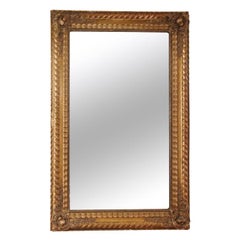
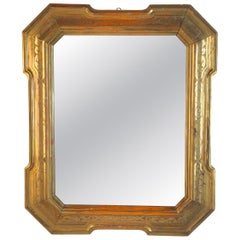
French Giltwood Mirror
Located in Sheffield, MA
19th Century rectangular French mirror with gesso gilt wood and undulating rope design. Original mirror. Use the mirror vertically or horizo...
Category

19th Century French Antique Baroque Furniture

Materials

Gold

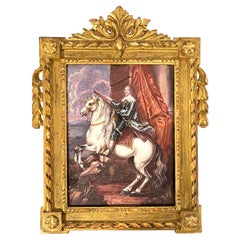
19th C Limoges Enamel of Thomas Francis, Prince of Carignano after van Dyck
By Anthony van Dyck
Located in West Palm Beach, FL
19th C Limoges Enamel of Thomas Francis, Prince of Carignano after van Dyck A exquisite large Limoges enamel of the portrait of Thomas Francis, Prince of Carignano by Anthony van Dyck, 1634. In a finely carved giltwood frame. Unsigned. The original work was created in 1634 painting by Anthony van Dyck, Known as one of the finest equestrian portraits, It depicts Thomas Francis, Prince of Carignano on a horse, as an allegory of his holding the reins of command even in difficult times. The prince is wearing the insignia and red sash of the Supreme Order of the Most Holy Annunciation, conferred on him in 1616 by his father Charles Emmanuel I, Duke of Savoy...
Category

19th Century French Antique Baroque Furniture

Materials

Enamel

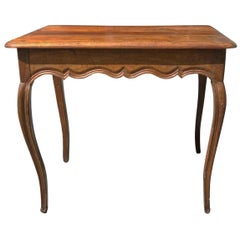
19th Century French Baroque Style Center Walnut Table, Antique Console Table
Located in West Palm Beach, FL
An early 19th Century Baroque style center, console table from Provence, in good condition. This antique Provencal table is hand crafted in so...
Category

Early 19th Century French Antique Baroque Furniture

Materials

Walnut

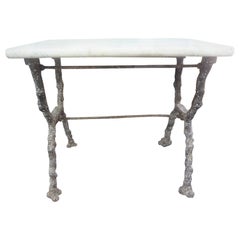
Rare 19th Century French Iron Garden Table With Marble Top By Arras
Located in Houston, TX
Rare 19th Century French Iron Garden Table With Marble Top By Arras. Stunning 19th century French iron garden table or bistro table which has been cast to look like tree branches wit...
Category

1880s French Antique Baroque Furniture

Materials

Marble, Iron

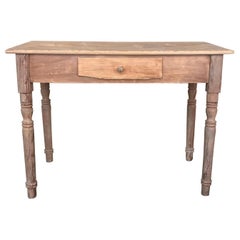
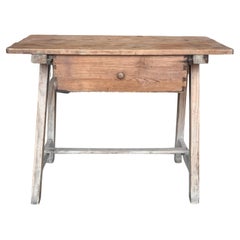
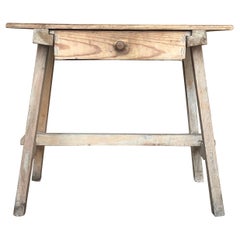
Spanish Baroque Bleached Side Table with Drawer
Located in Miami, FL
19th Century Spanish Baroque side or working table with drawer Height from the floor to the bottom drawer: 58cm
Category

Early 19th Century Spanish Antique Baroque Furniture

Materials

Walnut

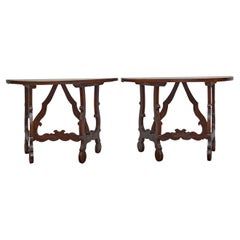
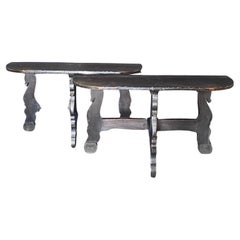
Pair of Italian Baroque Style Walnut Demi-Lune Console Tables, circa 1800
Located in Atlanta, GA
This expressive pair of Italian demi-lune console tables, crafted circa 1800, reflects the ornamental verve of the Baroque style with its bold silhouette and sculptural base. Fashion...
Category

Early 19th Century Italian Antique Baroque Furniture

Materials

Walnut

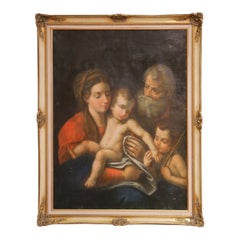
19th C. Italian Oil Painting of Holy Family with Saint John in Giltwood Frame
Located in Dallas, TX
A moving devotional work in the manner of 17th-century Italian Baroque painting, this 19th-century oil on canvas was created in Italy circa 1870 and depicts the Holy Family with the ...
Category

Late 19th Century Italian Antique Baroque Furniture

Materials

Giltwood

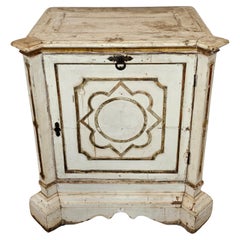
19th Century Italian Painted Single Door Cabinet
Located in Forney, TX
A rare, one-of-a-kind antique Italian painted marbleized parcel gilt cabinet with beautifully aged distressed patina. circa 1830 Hand-crafted in Italy in the mid-19th century, high-...
Category

Mid-19th Century Italian Antique Baroque Furniture

Materials

Wood, Pine, Giltwood

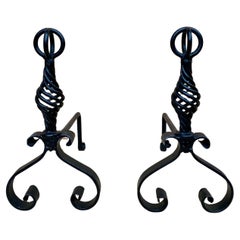
19th Century French Wrought Iron Andirons, Set of 2
Located in Miami, FL
Rare pair of small wrought iron fire dog andirons with decorative brass finials.
Category

Late 19th Century Spanish Antique Baroque Furniture

Materials

Iron

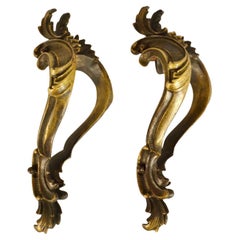
Double Pair of Italian Baroque Push Pull Bronze Door Handles
Located in London, GB
Two double Italian Baroque style push and pull bronze door handles with elaborate design and original patina. They are most likely made in the late 19th century but almost identical ...
Category

Late 19th Century Italian Antique Baroque Furniture

Materials

Bronze

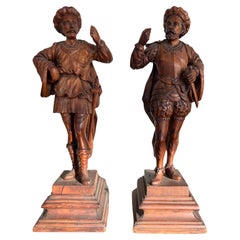
Pair, 19th Century Italian Renaissance Figural Spanish Soldiers or Landsknecht
Located in Atlanta, GA
Likely Italian, but possibly German origin - 19th century A pair of finely carved wood figures of Spanish Conquistadors or German Landsknecht. Each modeled in the Renaissance attire...
Category

19th Century Italian Antique Baroque Furniture

Materials

Walnut

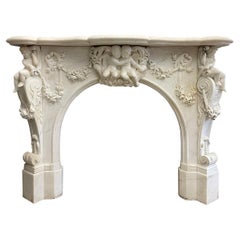
Antique Italian Statuary White Marble Baroque Style Fireplace Mantel
Located in London, GB
A large Baroque style mid 19th century Italian fireplace executed in Statuary white marble. Every element of this surround decadently carved from solid pieces of marble. The jambs with cantered console shaped brackets, scrolled acanthus, swags of floral drapery and a sculptured figural winged putto supported on large plinth...
Category

Mid-19th Century Italian Antique Baroque Furniture

Materials

Statuary Marble

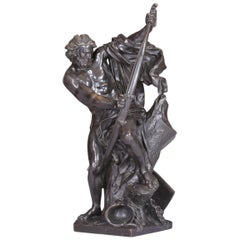
19th Century Antique French Bronze Sculpture Of Ulysses After Jacques Bousseau
Located in Dublin, IE
A magnificent 19th century bronze of Ulysses stringing his bow on square base. After Jacques Bousseau (1681-1740). Circa 1830 French Dimensions: H: 35 in / 89 cm W: 11 i...
Category

19th Century French Antique Baroque Furniture

Materials

Bronze

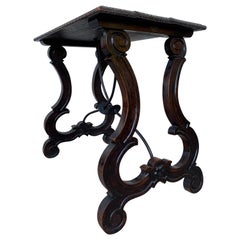
19th Century Spanish Side Table with Hand Carved Lyre Leg and Iron Stretcher
Located in Miami, FL
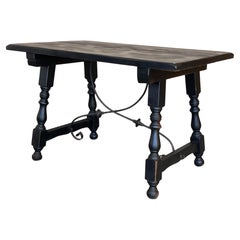
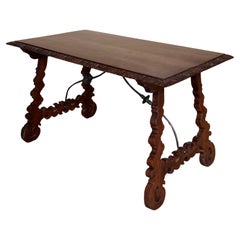
19th century Spanish side table with hand carved lyre leg and iron stretcher. Exquiste antique hand carved lyre-leg walnut wood Fratino trestle table with iron stretchers in Baroque style. Spain, 1880s. This gorgeous Fratino table features a rectangular top with beautifully carved foliate details over a trestle base. Two turned lyre-shaped legs are connected one to another with wrought iron stretchers. It has a nice color and aged patina. Recently restored Interesting to be used as side table, desk table or console table. Elegant to be placed behind a sofa or between two armchairs as it can be seen by all sides. This Baroque Spanish table...
Category

Late 19th Century Spanish Antique Baroque Furniture

Materials

Iron

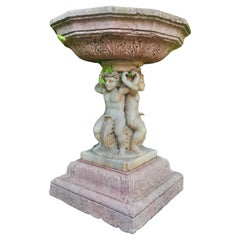
Centerpiece Fountain, Octagonal Basin in Rosso Verona Marble atop Later Pedestal
Located in Madrid, ES
Centerpiece fountain topped with an octagonal basin in Rosso Verona marble and Greco Thassos marble. The basin sourced from the garden of a Venetian villa. The basin is octagonal...
Category

19th Century Italian Antique Baroque Furniture

Materials

Marble

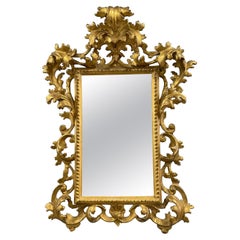
Gilt Wood Mirror, Germany 19th century
Located in Belmont, MA
Discover the Beauty of a Hand-Carved Gilt Wood Wall Mirror with Acanthus Leaf Decor which dates back to the mid 19th century and comes from Germany. Experience the allure of this e...
Category

Mid-19th Century German Antique Baroque Furniture

Materials

Giltwood

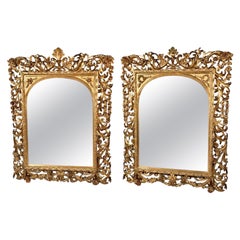
Near Pair of Florentine Baroque Giltwood Mirrors
Located in Montreal, QC
These Florentine mirrors are well-carved and gilt with scrolling acanthus and foliate motifs which create a lively background for the arched mirror plates. They are substantially, th...
Category

Late 19th Century Italian Antique Baroque Furniture

Materials

Mirror, Wood, Giltwood

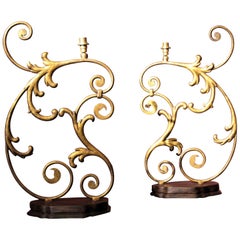
19th Century Italian Gilt Handwrought Iron Large Scale One Light Table Lamps
Located in Firenze, IT
This wonderful 19th Century Italian Renaissance style pair of large scale table lamps express the mastery of Florentine craftsmanship in the ancient art of working handwrought iron. ...
Category

Late 19th Century Italian Antique Baroque Furniture

Materials

Wrought Iron

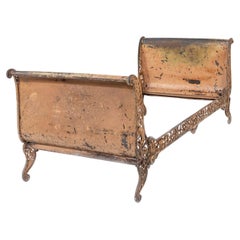
Industrial Chic Antique Single Bed in Wrought Iron
Located in Milano, IT
A rare antique, this bed belongs to the industrial chic period of the late 1800s, as can be seen from the workmanship, of fine French manufacture. It is a single bed, made entirely ...
Category

1890s French Antique Baroque Furniture

Materials

Wrought Iron

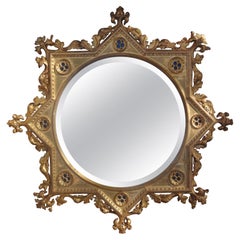
19th Century Italian Giltwood Beveled Mirror
Located in Houston, TX
19th century Italian giltwood mirror. This unusually shaped Italian Baroque style gilt wood beveled sunburst mirror has an almost gothic look to it. Perfect for an entrance hall abov...
Category

1850s Italian Antique Baroque Furniture

Materials

Giltwood, Mirror

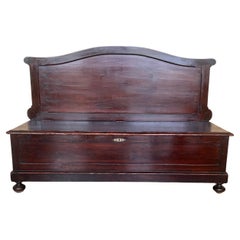
Italian Antique Walnut Wood Bench with Trunk
Located in Miami, FL
It's an old , nice and sturdy chest. It has a single internal space with one door to open it . The backrest is also comfortable so as not to lean against the wall: You can put a few ...
Category

Early 19th Century Spanish Antique Baroque Furniture

Materials

Walnut

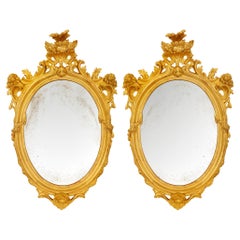
pair of Italian 19th century Baroque st. Giltwood mirrors
Located in West Palm Beach, FL
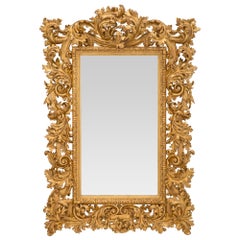
An elegant and high quality pair of Italian 19th century Baroque st. Giltwood mirrors. Each stunning oval mirror is centered at the bottom by a large pierced Giltwood palmette with f...
Category

19th Century Italian Antique Baroque Furniture

Materials

Mirror, Giltwood

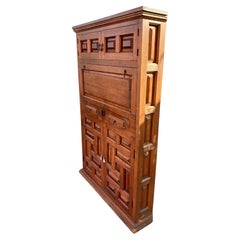
19th Century Spanish Baroque Corner Sideboard Storage Cabinet
Located in Fort Lauderdale, FL
On offer on this occasion is one of the most stunning cabinet you could hope to find. This is an ultra-rare opportunity to acquire what is, unequivocally, the best of the best, it b...
Category

Late 19th Century Spanish Antique Baroque Furniture

Materials

Wood

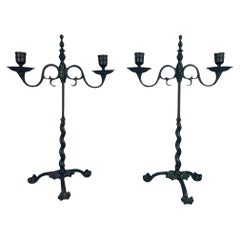
Pair of Baroque Bronze Candlesticks - 19th - Gothic Renaissance style
Located in Beuzevillette, FR
This interesting pair of bronze candlesticks combines the elegance of the Baroque with Gothic and Renaissance influences. The tripod base, finished with scrolls, is topped with a twi...
Category

19th Century European Antique Baroque Furniture

Materials

Bronze

Tiffany Sterling Silver Baby Cup in Rare Bird’s Nest Pattern
Located in New York, NY
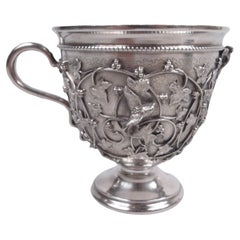
Rare Bird's Nest sterling silver baby cup. Made by Tiffany & Co. in New York, ca 1870. Ovoid bowl on stepped foot. Scroll handle with squiggle tail. Bowl has shaped pointille ornamen...
Category

Late 19th Century American Antique Baroque Furniture

Materials

Sterling Silver

Italian 19th Century Baroque St. Giltwood Mirror
Located in West Palm Beach, FL
An impressive Italian 19th century Baroque st. giltwood mirror. The mirror is framed within a fine straight mottled border with a fine foliate wrap around band. The outer solid wood ...
Category

19th Century Italian Antique Baroque Furniture

Materials

Mirror, Giltwood

Pair of Baroque Style Giltwood Dolphin Carvings on Lucite Bases, 19th century
Located in Atlanta, GA
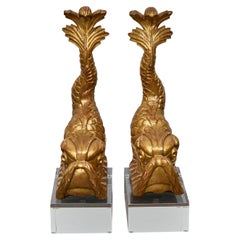
This striking pair of carved giltwood dolphin figures mounted on clear lucite bases likely began their life as decorative architectural elements—perhaps once adorning a piece of furn...
Category

19th Century French Antique Baroque Furniture

Materials

Lucite, Giltwood

19th Century Console Carved Table Renaissance with Beige Marble Top
Located in Miami, FL
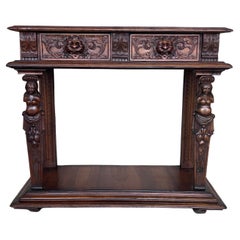
20th century console carved table Renaissance made of solid walnut wood It features carvings of mythological animals and plant motifs. Foot with turned rear columns and front colum...
Category

Late 19th Century Italian Antique Baroque Furniture

Materials

Walnut

Italian Baroque Style 19th Century Tole Hanging Lantern
Located in Sheffield, MA
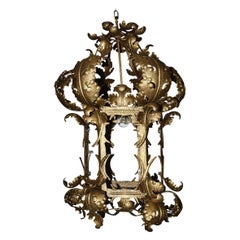
Newly restored large and impressive size antique Italian baroque style gold gilded tole single light hanging lantern. The majestic Italian styling and proportions, makes this a perfect and striking accent in any room, a living room, dining room, conservatory, to a grand foyer. The metal lantern has been newly rewired for the US. Search terms: antique French hanging lantern...
Category

19th Century Italian Antique Baroque Furniture

Materials

Iron

After Raffaello Sanzio 1483-1520 Raphael La Madonna della Seggiola Oil on Canvas
Located in Los Angeles, CA
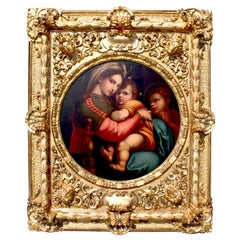
A fine Italian 19th century oil painting on canvas "La Madonna della Seggiola" after Raphael (Raffaello Sanzio da Urbino 1483-1520) The circular canvas depicting a seated Madonna holding an infant Jesus Christ next to a child Saint John the Baptist, all within a massive carved gilt wood and gesso frame (all high quality gilt is original) which is identical to the frame on Raphael's original artwork. This painting is a 19th Century copy of Raphael's Madonna della Seggiola painted in 1514 and currently exhibited and part of the permanent collection at the Palazzo Pitti, Galleria Palatina, Florence, Italy. The bodies of the Virgin, Christ, and the boy Baptist fill the whole picture. The tender, natural looking embrace of the Mother and Child, and the harmonious grouping of the figures in the round, have made this one of Raphael's most popular Madonnas. The isolated chair leg is reminiscent of papal furniture, which has led to the assumption that Leo X himself commissioned the painting, circa 1890-1900. Subject: Religious painting Measures: Canvas height: 29 1/4 inches (74.3 cm) Canvas width: 29 1/4 inches (74.3 cm) Painting diameter: 28 1/4 inches (71.8 cm) Frame height: 57 7/8 inches (147 cm) Frame width: 45 1/2 inches (115.6 cm) Frame depth: 5 1/8 inches (13 cm).   Raffaello Sanzio da Urbino (Italian, March 28 or April 6, 1483 - April 6, 1520), known as Raphael, was an Italian painter and architect of the High Renaissance. His work is admired for its clarity of form, ease of composition, and visual achievement of the Neoplatonic ideal of human grandeur. Together with Michelangelo and Leonardo da Vinci, he forms the traditional trinity of great masters of that period. Raphael was enormously productive, running an unusually large workshop and, despite his death at 37, leaving a large body of work. Many of his works are found in the Vatican Palace, where the frescoed Raphael Rooms were the central, and the largest, work of his career. The best known work is The School of Athens in the Vatican Stanza della Segnatura. After his early years in Rome much of his work was executed by his workshop from his drawings, with considerable loss of quality. He was extremely influential in his lifetime, though outside Rome his work was mostly known from his collaborative printmaking. After his death, the influence of his great rival Michelangelo was more widespread until the 18th and 19th centuries, when Raphael's more serene and harmonious qualities were again regarded as the highest models. His career falls naturally into three phases and three styles, first described by Giorgio Vasari: his early years in Umbria, then a period of about four years (1504–1508) absorbing the artistic traditions of Florence, followed by his last hectic and triumphant twelve years in Rome, working for two Popes and their close associates. Raphael was born in the small but artistically significant central Italian city of Urbino in the Marche region, where his father Giovanni Santi was court painter to the Duke. The reputation of the court had been established by Federico III da Montefeltro, a highly successful condottiere who had been created Duke of Urbino by the Pope - Urbino formed part of the Papal States - and who died the year before Raphael was born. The emphasis of Federico's court was rather more literary than artistic, but Giovanni Santi was a poet of sorts as well as a painter, and had written a rhymed chronicle of the life of Federico, and both wrote the texts and produced the decor for masque-like court entertainments. His poem to Federico shows him as keen to show awareness of the most advanced North Italian painters, and Early Netherlandish artists as well. In the very small court of Urbino he was probably more integrated into the central circle of the ruling family than most court painters. Federico was succeeded by his son Guidobaldo da Montefeltro, who married Elisabetta Gonzaga, daughter of the ruler of Mantua, the most brilliant of the smaller Italian courts for both music and the visual arts. Under them, the court continued as a centre for literary culture. Growing up in the circle of this small court gave Raphael the excellent manners and social skills stressed by Vasari. Court life in Urbino at just after this period was to become set as the model of the virtues of the Italian humanist court through Baldassare Castiglione's depiction of it in his classic work The Book of the Courtier, published in 1528. Castiglione moved to Urbino in 1504, when Raphael was no longer based there but frequently visited, and they became good friends. He became close to other regular visitors to the court: Pietro Bibbiena and Pietro Bembo, both later cardinals, were already becoming well known as writers, and would be in Rome during Raphael's period there. Raphael mixed easily in the highest circles throughout his life, one of the factors that tended to give a misleading impression of effortlessness to his career. He did not receive a full humanistic education however; it is unclear how easily he read Latin. Early Life and Works His mother Màgia died in 1491 when Raphael was eight, followed on August 1, 1494 by his father, who had already remarried. Raphael was thus orphaned at eleven; his formal guardian became his only paternal uncle Bartolomeo, a priest, who subsequently engaged in litigation with his stepmother. He probably continued to live with his stepmother when not staying as an apprentice with a master. He had already shown talent, according to Vasari, who says that Raphael had been "a great help to his father". A self-portrait drawing from his teenage years shows his precocity. His father's workshop continued and, probably together with his stepmother, Raphael evidently played a part in managing it from a very early age. In Urbino, he came into contact with the works of Paolo Uccello, previously the court painter (d. 1475), and Luca Signorelli, who until 1498 was based in nearby Città di Castello. According to Vasari, his father placed him in the workshop of the Umbrian master Pietro Perugino as an apprentice "despite the tears of his mother". The evidence of an apprenticeship comes only from Vasari and another source, and has been disputed—eight was very early for an apprenticeship to begin. An alternative theory is that he received at least some training from Timoteo Viti, who acted as court painter in Urbino from 1495.Most modern historians agree that Raphael at least worked as an assistant to Perugino from around 1500; the influence of Perugino on Raphael's early work is very clear: "probably no other pupil of genius has ever absorbed so much of his master's teaching as Raphael did", according to Wölfflin. Vasari wrote that it was impossible to distinguish between their hands at this period, but many modern art historians claim to do better and detect his hand in specific areas of works by Perugino or his workshop. Apart from stylistic closeness, their techniques are very similar as well, for example having paint applied thickly, using an oil varnish medium, in shadows and darker garments, but very thinly on flesh areas. An excess of resin in the varnish often causes cracking of areas of paint in the works of both masters. The Perugino workshop was active in both Perugia and Florence, perhaps maintaining two permanent branches. Raphael is described as a "master", that is to say fully trained, in December 1500. His first documented work was the Baronci altarpiece for the church of Saint Nicholas of Tolentino in Città di Castello, a town halfway between Perugia and Urbino. Evangelista da Pian di Meleto, who had worked for his father, was also named in the commission. It was commissioned in 1500 and finished in 1501; now only some cut sections and a preparatory drawing remain. In the following years he painted works for other churches there, including the Mond Crucifixion (about 1503) and the Brera Wedding of the Virgin (1504), and for Perugia, such as the Oddi Altarpiece. He very probably also visited Florence in this period. These are large works, some in fresco, where Raphael confidently marshals his compositions in the somewhat static style of Perugino. He also painted many small and exquisite cabinet paintings in these years, probably mostly for the connoisseurs in the Urbino court, like the Three Graces and St. Michael, and he began to paint Madonnas and portraits. In 1502 he went to Siena at the invitation of another pupil of Perugino, Pinturicchio, "being a friend of Raphael and knowing him to be a draughtsman of the highest quality" to help with the cartoons, and very likely the designs, for a fresco series in the Piccolomini Library in Siena Cathedral. He was evidently already much in demand even at this early stage in his career. Influence of Florence Raphael led a "nomadic" life, working in various centres in Northern Italy, but spent a good deal of time in Florence, perhaps from about 1504. Although there is traditional reference to a "Florentine period...
Category

19th Century Italian Antique Baroque Furniture

Materials

Gesso, Canvas, Wood

Late 19th Spanish Walnut Dining or Desk Fratino Table with Iron Stretcher
Located in Miami, FL
A Spanish Fratino dining table with hand made wrought-iron stretcher from the late 19th century. This Spanish wooden table features a sturdy recta...
Category

Late 19th Century Spanish Antique Baroque Furniture

Materials

Iron

Pair Of 19th Century Italian Gilt Wall Brackets
Located in Bradenton, FL
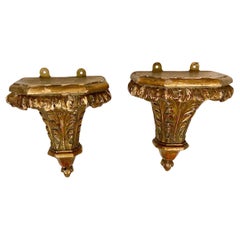
Pair of 19th century Italian gilt wall brackets. Brackets have beautifully carved and painted acanthus leaves topped with a flat shelf. Wonderful old patina. Brass hardware is affixe...
Category

19th Century Italian Antique Baroque Furniture

Materials

Wood

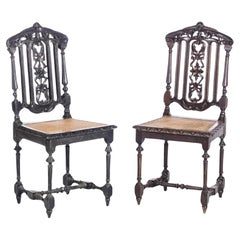
Pair of Romantic Chairs, 19th Century
Located in Madrid, ES
Pair of Romantic chairs 19th century In carved oak wood, hollow back, cane seats. Decorated with plant motifs. Signs of use. Dimensions.: 101 x 47 x 42 cm.
Category

19th Century Portuguese Antique Baroque Furniture

Materials

Wood

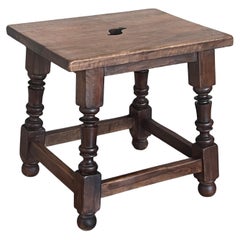
19th Century English Oak Joint Stool / Bench
Located in Miami, FL
19th century English oak joint stool / bench Jacobean style stool / bench Hand crafted English oak The oak shows some distress from the past 300+ years The images here show...
Category

1890s Spanish Antique Baroque Furniture

Materials

Oak

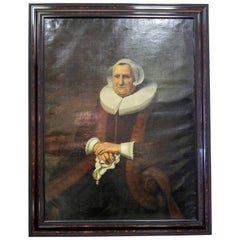
19th century Dutch Portrait Oil on Canvas
By Ferdinand Bol 1
Located in Savannah, GA
Early copy of Dutch painting. Oil on canvas in antique style wooden frame. “Elisabeth Bas (1571, in Kampen – 2 August 1649 in Amsterdam) was a figure in the Dutch Republic. She was the wife of Jochem Hendrickszoon Swartenhont, an admiral in the navy of the Dutch Republic and military hero. The portrait is now in the Rijksmuseum Amsterdam, where it is known as Elisabeth Bas and attributed to Ferdinand Bol...
Category

Early 19th Century Dutch Antique Baroque Furniture

Materials

Canvas, Wood

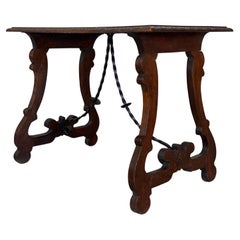
Side Table of Walnut with Carved Lyre Legs and Top, Spanish, 19th Century
Located in Miami, FL
Side table of walnut with carved lyre legs with carved edges in top. Beautiful iron stretcher, Spanish, 19th century.
Category

Late 19th Century Spanish Antique Baroque Furniture

Materials

Walnut

Antique Early 19th Century Venetian Hand Painted and Gold Gilded Console/Bracket
Located in Doha, QA
A fabulous early 19th centruy Italian Console, wall Bracket is an incredible example of venetian crafstmanship of that time. The top has a very good and spacious size. Gold gilded an...
Category

Early 19th Century Italian Antique Baroque Furniture

Materials

Gold

19th Century French Repousse Hexagonal Brass Relief Wall Mirror with Crest
Located in Miami, FL
19th century French repousse hexagonal brass relief wall mirror with crest An elegant Napoleon III period mirror made with central beveled glass and eight rectangular glasses joined between them by decorative brass repousse floral patterns. This ornamented mirror...
Category

Mid-19th Century French Antique Baroque Furniture

Materials

Brass

Italian 1800s Baroque Style Desk with Drawers, Lyre Base and Iron Stretcher
Located in Atlanta, GA
An Italian Baroque style walnut Desk/table from the early 19th century, with drawers, lyre shaped base and wrought-iron stretcher. Created in Italy during the early years of the 19th...
Category

Early 19th Century Italian Antique Baroque Furniture

Materials

Wrought Iron

19th Century Pair Italian White Porcelain Baroque Mirrors with Flowers
Located in Brescia, IT
Beautiful and fine pair of white Maiolica mirrors with elegant multi-color flowers drawings, in Baroque Style, handmade in Bassano by the well known Manufacturer Antonibon, coming fr...
Category

Early 19th Century Italian Antique Baroque Furniture

Materials

Iron

Pair of Antique Spanish Ebony Demilune Tables, Consoles or Side Tables
Located in Hopewell, NJ
An exceptional pair of 19th century Spanish Baroque demilune tables or consoles in ebony painted walnut wood with elaborated design and carved figural...
Category

19th Century Spanish Antique Baroque Furniture

Materials

Walnut

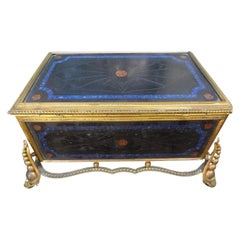
19th Century French Bronze Box with Semi Precious Stones
Located in Houston, TX
19th century French bronze box with semi precious stones. Lovely 19th century French Baroque style bronze box or jewel casket with semi...
Category

19th Century French Antique Baroque Furniture

Materials

Multi-gemstone, Bronze

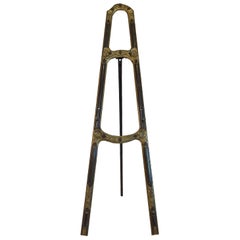
Continental Gilt and Mahogany Easel
Located in Essex, MA
Interesting continental hand-carved painting easel with gilt decoration. Lovely gilded carved- rosette decoration and graceful legs. small dowels adjust t hold different sizes of art...
Category

Early 19th Century French Antique Baroque Furniture

Materials

Wood

Spanish Baroque Bleached Side Table with Drawer
Located in Miami, FL
19th Century Spanish Baroque side or working table with drawer
Category

Early 19th Century Spanish Antique Baroque Furniture

Materials

Walnut

Large Giltwood Tray Mirror with Engraved and Eglomisé Decoration, Italy, 1890s
Located in Brescia, Brescia
A highly decorative and atmospheric large tray mirror dating to the late 19th century, crafted in Italy and conceived as a true statement piece. The mirror is set within an architect...
Category

Late 19th Century Antique Baroque Furniture

Materials

Enamel, Gold Leaf

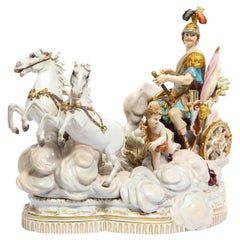
Meissen Grouping of Mars s War Chariot with War Putti for Catherine the Great
Located in New York, NY
A magnificent and quite large, Baroque style, Museum Quality, Antique Meissen Porcelain Grouping of Mars, the God of War, Chariot with his Putti Servant, originally designed by Johann Joachim Kändler in 1772-1773 for Czarina Katharina, better known as Catherine the Great. Mars, the Roman God of war, is seen wearing a Roman war attire on his white double horse-drawn chariot. While seated, Mars is seen holding the handle of his sword. On his head is a beautiful silver helmet...
Category

19th Century German Antique Baroque Furniture

Materials

Porcelain

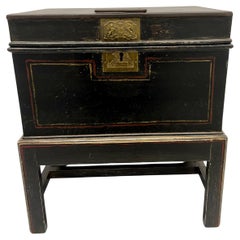
19th Century English Iron Strongbox On Stand by Thomas Milner Son Liverpool
By Thomas Milner
Located in Atlanta, GA
This 19th-century English iron strongbox, crafted by Thomas Milner & Son of Liverpool, is an exceptional example of secure storage from the Victorian era. Renowned for their high-qua...
Category

19th Century English Antique Baroque Furniture

Materials

Iron, Lead

Spanish Baroque Bleached Side Table with Drawer
Located in Miami, FL
19th Century Spanish Baroque side or working table with drawer
Category

Early 19th Century Spanish Antique Baroque Furniture

Materials

Walnut

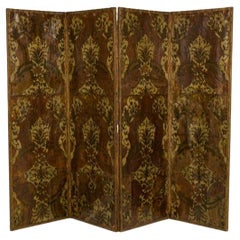
Antique Italian Tooled Leather Floral Design Four Panel Folding Screen
Located in Queens, NY
Italian (19th Century) four panel folding screen with brown and beige tooled leather panels featuring detailed floral designs, with brass nailhead trim and a black canvas-faced rever...
Category

19th Century Antique Baroque Furniture

Materials

Brass

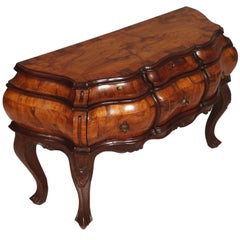
1890s Venetian Baroque Cabinet Chest of drawers console Handcarved Walnut Burl
Located in Vigonza, Padua
Important precious 19th century Venetian Baroque low dresser console, hand-carved walnut, and burl walnut inlaid All solid wood including bottom of the drawers and back Measure in ...
Category

Late 19th Century Italian Antique Baroque Furniture

Materials

Walnut, Burl

19th Century French Hand Carved Oak Settee or Park Bench
Located in Miami, FL
19th century French bench made from oak. The back is exquisitely hand carved with two differents motifs, surrounded by decorative carvings. The sides are made up of matching decorati...
Category

Early 19th Century French Antique Baroque Furniture

Materials

Oak

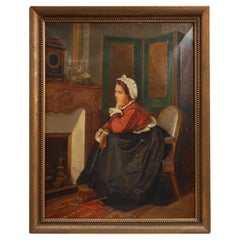
19th-Century French Baroque Interior Scene Painting
Located in Meulebeke, BE
France / 19th century / Painting / canvas and wood / Antique / Baroque A refined 19th-century French Baroque painting executed on canvas and presented in a richly molded wooden fr...
Category

19th Century French Antique Baroque Furniture

Materials

Canvas, Wood, Paint

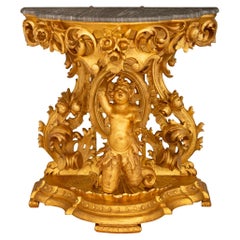
Italian 19th century Baroque st. Mecca, Giltwood, and Marble console
Located in West Palm Beach, FL
A most decorative and high quality Italian early 19th century Baroque st. Mecca, Giltwood, and Gris St. Anne marble console. This intricately carved console is raised on a scallop sh...
Category

19th Century Italian Antique Baroque Furniture

Materials

Marble

Side Table of Walnut with Carved Lyre Legs and Top, Spanish, 19th Century
Located in Miami, FL
Side table of walnut with carved lyre legs . The top is finely carved edges. Beautiful and original iron stretcher, Spanish, 19th century.
Category

Late 19th Century Spanish Antique Baroque Furniture

Materials

Walnut

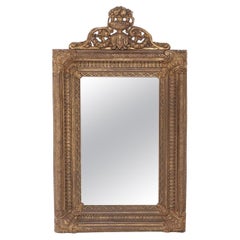
A Dutch style brass repouse mirror circa 1880. Top crest is removeable
Located in Philadelphia, PA
A Dutch style brass repouse mirror circa 1880. The top crest is removeable for a more simple design.
Category

1880s European Antique Baroque Furniture

Materials

Brass

London Mid-19th Century Vanity Kit Set Sterling Silver
Located in Brescia, IT
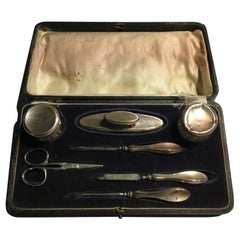
Not easy to find this original box, with this kit set composed of 8 pieces for nail manicure. A piece to collect or to add in a wunderkammer. In sterling silver, all marked. With ce...
Category

Mid-19th Century British Antique Baroque Furniture

Materials

Crystal, Sterling Silver

Baroque furniture for sale on 1stDibs.

Find a broad range of unique Baroque furniture for sale on 1stDibs. Many of these items were first offered in the 21st Century and Contemporary, but contemporary artisans have continued to produce works inspired by this style. If you’re looking to add vintage furniture created in this style to your space, the works available on 1stDibs include decorative objects, case pieces and storage cabinets, tables and other home furnishings, frequently crafted with wood, metal and other materials. If you’re shopping for used Baroque furniture made in a specific country, there are Europe, Italy, and France pieces for sale on 1stDibs. While there are many designers and brands associated with original furniture, popular names associated with this style include Europa Antiques, Modenese Gastone, Delft, and Meissen Porcelain. It’s true that these talented designers have at times inspired knockoffs, but our experienced specialists have partnered with only top vetted sellers to offer authentic pieces that come with a buyer protection guarantee. Prices for furniture differ depending upon multiple factors, including designer, materials, construction methods, condition and provenance. On 1stDibs, the price for these items starts at $18 and tops out at $737,181 while the average work can sell for $4,396.

Still Thinking About These?

All Recently Viewed