Empire Furniture

EMPIRE STYLE

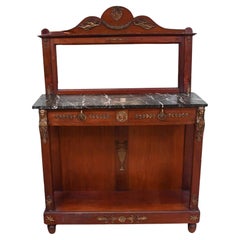
From 1804–15, Napoléon I reigned as the emperor of France, bringing the country into a new era of opulence after the fall of the monarchy and the tumultuous years of the French Revolution. He declared, “We must have very solid things, made to last 100 years.” Empire-style furniture followed suit, with imposing pieces constructed from mahogany and adorned with gilded ornaments. Expanding on the neoclassicism popularized in the previous century — such as in ​​Louis XVI style — Empire style borrowed from the great civilizations of antiquity, from Egypt to Greece and Rome, to connect this nascent empire to the power of the past.

Napoléon I believed the production of fine furniture would reflect the stature of the republic, with his official architects Charles Percier and Pierre-François-Léonard Fontaine leading the way with their work on his residences.

Luxurious materials, symmetrical shapes and bold colors characterize antique Empire-style bedroom furniture, armchairs, cabinets and other structures, with frequent motifs including mythological creatures, geometric designs, acanthus leaves, eagles, bees (the imperial emblem) and swans, a favorite of Empress Joséphine.

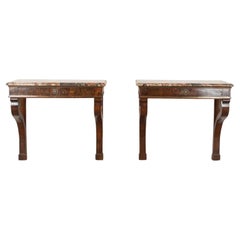
Flat surfaces, like marble tabletops, were accented with decadent details, such as the bronze furniture mounts made by sculptor Pierre-Philippe Thomire for the French palaces. Martin-Guillaume Biennais, who worked as the imperial goldsmith, crafted intricate luxury objects that mixed wood, fine metal, mother-of-pearl and ivory. Ormolu — or elaborate bronze gilding — was essential to French design in the 18th and 19th centuries as a cornerstone of the neoclassical and Empire styles.

The style became popular abroad, influencing the American Empire style. Stately pieces carved with sprigs of olives by cabinetmaker Pierre-Antoine Bellange were acquired by American President James Monroe for the White House in 1817.

Find a collection of antique Empire tables, lighting, seating and other furniture on 1stDibs.

to
29
422
2,705
2,071
421
1
7,689
7,451
4,366
4,324
3,608
1,938
1,801
1,014
1,003
999
948
662
644
639
563
506
399
6
304
111
1
44
13
20
5
5
3
1
4
1
12
1
241
202
143
109
107
371
273
47
42
23
422
422
422
3
2
1
1
1
Item Ships From: England
Style: Empire
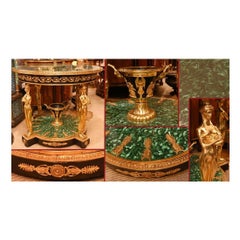
Empire Malachite Centre Table Gilt Pharaoh Legs
Located in Potters Bar, GB
Stunning French Empire table in gilt with malachite base and top Such a great look to this piece which reeks of style and elegance The look is very high Empire with all the classical...
Category

1980s Vintage Empire Furniture

Materials

Giltwood

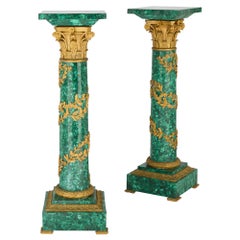
Pair of French Empire Style Malachite and Gilt Bronze Pedestals
Located in London, GB
Pair of French Empire style malachite and gilt bronze pedestals French, 20th Century Height 115cm, width 35cm, depth 35cm This pair of 20th century French pedestals is crafted fro...
Category

20th Century French Empire Furniture

Materials

Malachite, Ormolu

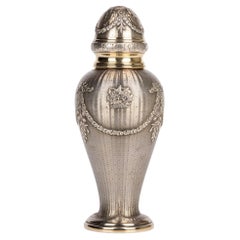
French Antique Silver Sugar Sifter with Floral Garlands
Located in Bishop s Stortford, Hertfordshire
A fine antique French silver sugar sifter decorated with floral garlands and dating from the early 19th century. The lightly made sugar sifter stands on a wide round foot with a gild...
Category

Early 19th Century French Antique Empire Furniture

Materials

Silver

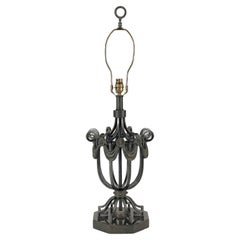
Empire-Style Wrought Iron and Marble Table Lamp by Maitland-Smith, 1980s
Located in Glasgow, GB
A sculptural Empire Revival table lamp by Maitland-Smith, crafted during the 1980s with the brand’s signature attention to materiality and classical detail. The design draws direct...
Category

1980s Philippine Vintage Empire Furniture

Materials

Marble, Bronze, Wrought Iron

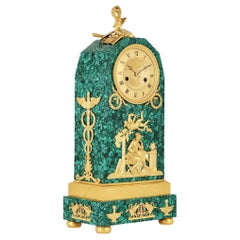
Empire Period Ormolu Mounted Malachite Allegorical Mantel Clock
Located in London, GB
Empire period ormolu mounted malachite allegorical mantel clock French, early 19th century Measures: Height 50m, width 21cm, depth 14cm This fine mantel clock is an excellent ex...
Category

Early 19th Century French Antique Empire Furniture

Materials

Malachite, Ormolu, Bronze

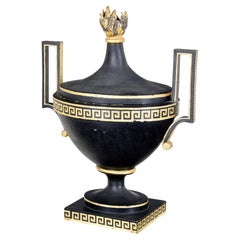
Early 19th Century empire toleware decorative urn
Located in Debenham, Suffolk
Early 19th century empire toleware decorative urn circa 1830. Rare decorative urn that would have been used for incense or pot pourri. Original black paint with very strong grecian ...
Category

Mid-19th Century Swedish Antique Empire Furniture

Materials

Metal

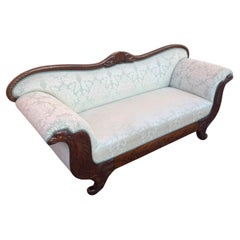
Antique 19th Century French Empire Flame Mahogany Sofa with Carved Details
Located in King s Lynn, GB
A superb example of antique French Empire craftsmanship, this early 19th-century carved flame mahogany sofa showcases the strong, symbolic design language of the period. The shaped b...
Category

Early 19th Century French Antique Empire Furniture

Materials

Fabric, Mahogany

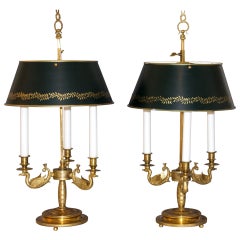
Pair of Bouillotte Lamps
Located in London, GB
Pair of bouillotte lamps in toleware and bronze, in the French Empire manner.
Category

Early 20th Century French Empire Furniture

Materials

Bronze

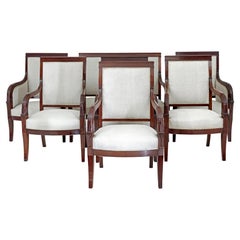
French 7 piece 19th century empire mahogany salon suite
Located in Debenham, Suffolk
7 piece 19th century french empire mahogany salon suite circa 1880. Rare 7-piece salon suite made in rich mahogany. Set comprises of a 2-seat sofa, 2 armchairs and 4 open armchairs....
Category

Late 19th Century French Antique Empire Furniture

Materials

Fabric, Mahogany

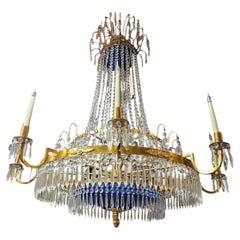
C20th Majestic Scandinavian Crystal Chandelier
Located in London, GB
A Magnificent Empire style chandelier Eight Branch Baltic Blue Scandinavian Fully Rewired
Category

20th Century Empire Furniture

Materials

Crystal

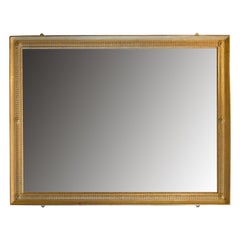
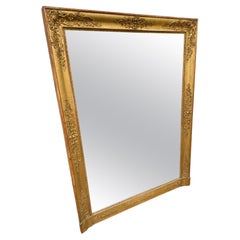
Napoleonic Empire Antique Giltwood Wall Mirror c1850s
Located in High Peak, GB
P0290 Outstanding 19th century Napoleonic Empire gilded wall mirror / over mantel mirror of versatile form, can be positioned either way, having replacement glass in moulded gold lea...
Category

19th Century French Antique Empire Furniture

Materials

Gold Leaf

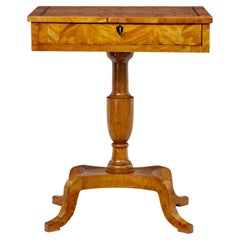
Swedish 19th century inlaid empire revival birch side table
Located in Debenham, Suffolk
19th century inlaid empire revival birch work table circa 1880. Rectangular top surface veneered in birch and decorated with a inlaid border. Single lockable drawer fitted with pine...
Category

Late 19th Century Swedish Antique Empire Furniture

Materials

Birch

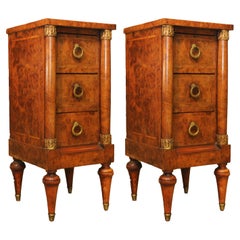
Exquisite Pair of French Empire Design Figured Walnut Three Drawer Nightstands
Located in Reading, Berkshire
A Pair of French Empire Design Figured Walnut Three Drawer Nightstand Chests With Mounted Gilt Provenance: From an Establishment on Belgrave Square London see images7 Known to be ...
Category

Early 20th Century French Empire Furniture

Materials

Brass

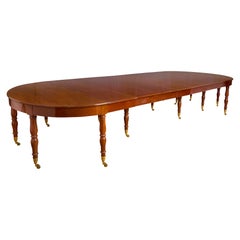
Large Empire Period Mahogany Extending Dining Table
Located in London, GB
Large Empire period mahogany extending dining table French, c. 1810 Fully open: Height 77cm, width 446cm, depth 178cm Shorter: Height 77cm, width 326cm, depth 178cm A striking repr...
Category

Early 19th Century French Antique Empire Furniture

Materials

Metal

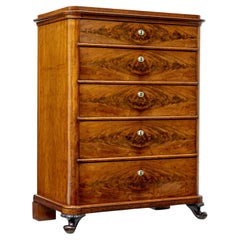
Swedish 19th century 5 drawer chest of drawers
Located in Debenham, Suffolk
Swedish 19th century 5 drawer chest of drawers circa 1870. Fine quality Scandinavian chest of drawers made in mahogany.  Stepped top with ...
Category

Late 19th Century Swedish Antique Empire Furniture

Materials

Mahogany, Pine

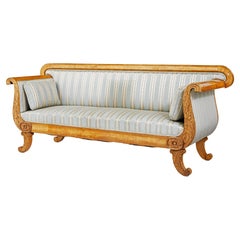
19th century Swedish carved birch sofa
Located in Debenham, Suffolk
19th century swedish carved birch sofa circa 1880. Elegant Swedish formal sofa which seats a comfortable 3.  Straight back with shaped birch border.  Roll top arms with carved acant...
Category

Late 19th Century Swedish Antique Empire Furniture

Materials

Fabric, Birch

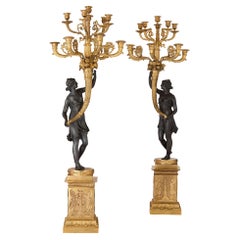
Pair of French Gilt Bronze and Patinated Bronze Candelabra
Located in London, GB
Pair of French gilt bronze and patinated bronze candelabra French, 20th Century Height 108cm, width 37cm, depth 32cm A magnificent pair of 20th-century Empire-style candelabra, the...
Category

20th Century French Empire Furniture

Materials

Bronze, Ormolu

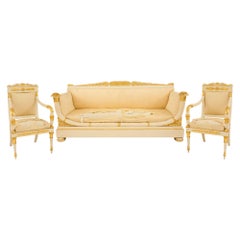
Empire Period Gilt and Painted Wood Three-Piece Salon Suite
Located in London, GB
Empire period gilt and painted wood three-piece salon suite French, c. 1820 Sofa: Height 101cm, width 213cm, depth 72cm Chairs: Height 101cm, width 61cm, depth 56cm This exquisite t...
Category

Early 19th Century French Antique Empire Furniture

Materials

Wood

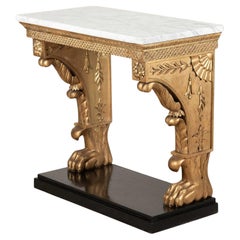
Early 19th Century Swedish Console Table
Located in Shipston-On-Stour, GB
 A stylish Early C19th Swedish console table, the original Carrara marble top above a giltwood base with carved acanthus and fish scale frieze, raised twin monopodium supports with c...
Category

1820s Swedish Antique Empire Furniture

Materials

Marble

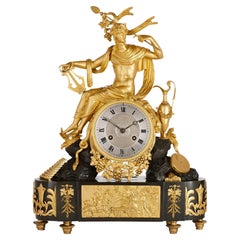
Antique French Empire Patinated and Gilt Bronze Mantel Clock
Located in London, GB
Antique French Empire patinated and gilt bronze mantel clock French, early 19th century Measures: Height 55cm, width 43cm, depth 13cm This fine Empire period mantel clock is wro...
Category

Early 19th Century French Antique Empire Furniture

Materials

Bronze, Ormolu

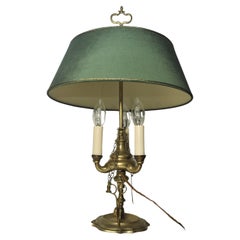
A Rare Brass Bouillotte Triple Branch Table Lamp With Height Adjustable Shade
Located in Reading, Berkshire
A Rare Brass Bouillotte Triple Branch Table Lamp With An Adjustable Height Shade. Complete with rare brass accessories such as a candle snuffer and candle wick cutter...
Category

19th Century British Antique Empire Furniture

Materials

Brass

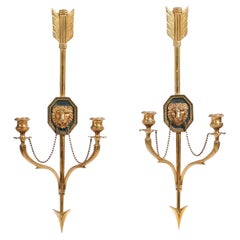
Fine Pair of Italian Ormolu Wall Lights or Appliques in the French Empire Style
Located in Benington, Herts
Fine Pair of Italian Gilt Bronze Wall Lights or Appliques in the French Empire Style Italian - Circa 1880 These lovely wall lights are conceived as notched arrows with lion mask pl...
Category

Late 19th Century Italian Antique Empire Furniture

Materials

Bronze, Ormolu

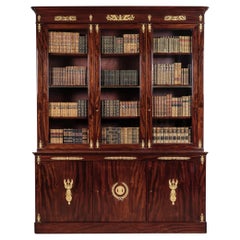
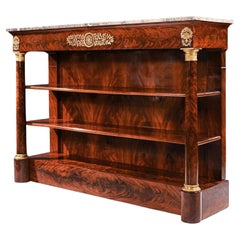
Gilt-Bronze Mounted Mahogany Empire Library Bookcase
Located in Brighton, West Sussex
A fine gilt bronze mounted mahogany Empire library bookcase.
Category

Early 19th Century French Antique Empire Furniture

Materials

Ormolu

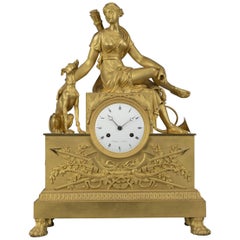
Empire Gilt-Bronze Clock Depicting Diana the Huntress. French, c 1820
Located in Brighton, West Sussex
A fine Empire Period gilt bronze clock depicting Diana the huntress. The dial signed 'Thomas a Paris'. The white enamel dial with Roman numerals and Breguet hands, the case sur...
Category

Early 19th Century French Antique Empire Furniture

Materials

Bronze

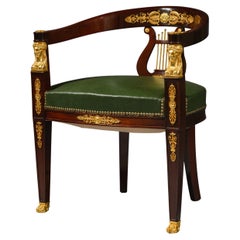
An Empire Style Mahogany Desk Chair, By Kahn, Paris
By Kahn
Located in Brighton, West Sussex
An Empire Style Gilt-Bronze Mounted Mahogany Desk Chair, By Kahn, Paris. Incised ‘L. KAHN’ to the back of the mounts. The bow-shaped top rail applied with a gilt-bronze anthemion m...
Category

19th Century French Antique Empire Furniture

Materials

Ormolu

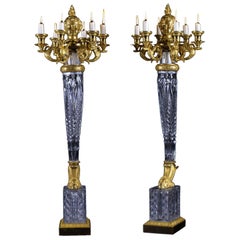
Pair of Empire Six-Light Candelabra Attributed to Escalier De Cristal circa 1819
Located in Brighton, West Sussex
A remarkable and highly important pair of Empire gilt-bronze and cut-crystal six-light candelabra attributed to Escalier De Cristal De Paris. French, circa 1819. This exceptional pair of candelabra can almost certainly be attributed to the workshops of l'Escalier de Cristal de Paris. They relate in particular to a dressing table and chair, now in the collection of the Louvre, which formed part of a toilette suite that was exhibited by L'Escalier de Cristal at the 1819 Paris exhibition of the Produits de l'industrie. The present candelabra may very likely have been made as part of this suite. In 'Baccarat: La Legende du Cristal', it states: "A l'Exposition des produits de l'industrie française de 1819, Mme Désarnaud présente une toilette, une cheminée, deux grands candélabres, deux tables, une grande pendule et plusieurs vases, en cristal et bronze...
Category

Early 19th Century French Antique Empire Furniture

Materials

Crystal, Bronze

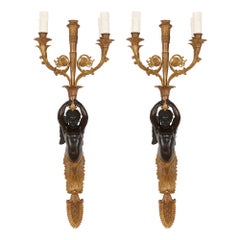
Two French Gilt and Patinated Bronze Sconces
Located in London, GB
These two sconces have been crafted in the Empire style, which was popularised by the French Emperor, Napoleon I. The Empire style is characterised by its grandeur and use of opulent...
Category

20th Century French Empire Furniture

Materials

Ormolu, Bronze

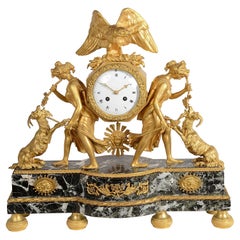
French Empire Style Mantel Clock, circa 1820
Located in Brighton, Sussex
A very impressive and stylish early 19th Century gilded ormolu and green marble mantle clock, having two classical maidens either side feeding Rams, an Eagle above the circular white...
Category

Early 19th Century French Antique Empire Furniture

Materials

Marble, Ormolu

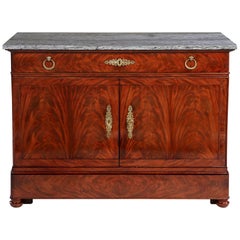
A 19th Century French Flame Mahogany Cabinet
Located in London, GB
France, circa 1840 A fine early 19th century flame mahogany cabinet with original ormolu mounts and handles, the original Saint Laurent Grey m...
Category

Mid-19th Century French Antique Empire Furniture

Materials

Mahogany

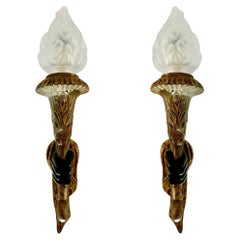
A Pair Of Very Large Gilt French Torchiere Hand Wall Lights
Located in London, GB
A pair of huge Giltwood carved torchiere wall lights with opaque glass flame shades. Converted for electric, finished very well with bronze mounted shade holders. The large torchiere...
Category

19th Century French Antique Empire Furniture

Materials

Giltwood

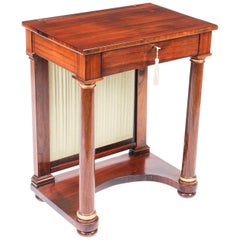
Antique English Empire Console Writing Side Table, 19th Century
Located in London, GB
This is a beautiful small antique English Empire Gonçalo Alves console with integral writing slide and pen drawer, circa 1820 in date. This dual purpose table has a drawer above a p...
Category

1820s English Antique Empire Furniture

Materials

Wood

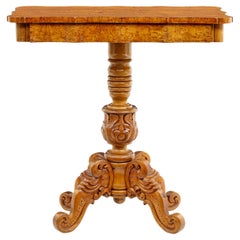
19th century Swedish birch root shaped occasional table
Located in Debenham, Suffolk
19th century Swedish burr birch shaped occasional table circa 1870. Fine quality table which is ideal for multiple uses around the home.  Scalloped shaped top which has been beautif...
Category

Late 19th Century Swedish Antique Empire Furniture

Materials

Birch

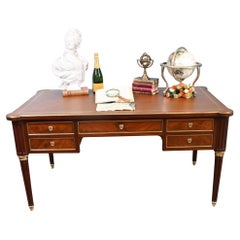
French Empire Bureau Plat Desk 1880 Directoire
Located in Potters Bar, GB
French Empire Bureau Plat desk circa 1880 in the Directoire manner Top quality mahogany with a finally tooled leather top Five drawers and round graduated legs are embellished with o...
Category

1880s Antique Empire Furniture

Materials

Wood

Grand French Empire Mahogany Gilt Bronze Mounted Console Table
Located in Benington, Herts
A Very Fine and Extremely Large Mahogany Empire Period Console Dessert With Finely Cast Gilt Bronze Mounts French Paris Circa 1815-25 The present piece of furniture is rather ...
Category

Early 19th Century French Antique Empire Furniture

Materials

Mahogany

19th Century Empire Column Cabinet from the North of Sweden
Located in Tetbury, Gloucestershire
19th Century Empire column cabinet from Northern Sweden. A useful piece of furniture for one of those difficult to fill spaces. With good storage and scraped to original paint. Late...
Category

19th Century Swedish Antique Empire Furniture

Materials

Wood

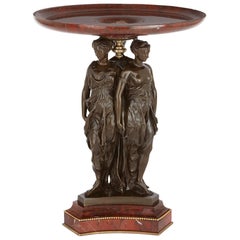
Empire Style Marble and Bronze Antique Centrepiece by Robbe
Located in London, GB
In an ornamental style, with rouge griotte marble and burnished bronze depicting the three Graces, signed 'A. ROBBE. Paris.' This stunning French centrepiece...
Category

Early 20th Century French Empire Furniture

Materials

Marble, Bronze

Large early 19th century empire style over mantle
Located in Budleigh Salterton, GB
Very decorative early 19th century empire style overmantle miror French circa 1840’ s with original backboards and mirror plate Height 157 cms or 62 inches Width 115.5 cms or ...
Category

1840s French Antique Empire Furniture

Materials

Giltwood

Mid 19th century birch root occasional table
Located in Debenham, Suffolk
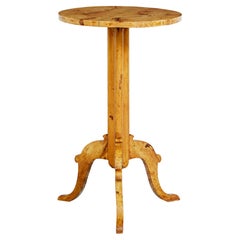
Mid 19th century birch root occasional table circa 1860. Good quality Swedish birch root table, solid burr birch circular top, standing on shaped stem and scrolled legs. Rich golde...
Category

Mid-19th Century Swedish Antique Empire Furniture

Materials

Birch

A Highly Important Empire Period Rosso Antico Chimneypiece with Portrait Reliefs
Located in London, GB
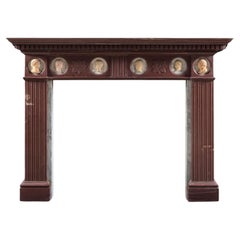
A Highly Important Empire Period Rosso Antico Chimneypiece Inset with Specimen Marble Portrait Reliefs of Roman Emperors The carved and veneered surround comprising a moulded shelf supported by a bold dentil cornice, above an inverted breakfront frieze carved with a central triglyph panel, flanked by a pair of rosettes carved in shallow relief, the frieze mounted with six carved hardstone profile portrait medallions of Roman Emperors, the stop-fluted jambs raised on moulded footblocks; in excellent condition with small restorations commensurate with age and use; the pale inclusions in the stone naturally formed. This spectacular neoclassical marble chimneypiece is carved from Rosso antico, the frieze inset with six portrait reliefs of Roman Emperors, each carved in marmo giallo on a bardiglio background, five variously incised: VESPASIANUS, TIBERIVS, OTHO, JULIUS CAESAR, TITUS. Rosso antico (marmor taenarium) is first recorded as being quarried in 1700 BC at Akra Tainaron (Cape Matapan), Greece.¹ The majority of this stone, however, was extracted throughout the Roman period, when it was one of the most coveted materials for carving due to its rich red colouring and association with highly prized Egyptian ‘Imperial’ Porphyry.² Rosso antico was chosen in antiquity for portrait busts, notably depicting Bacchic subjects such as Dionysus and satyrs due to its rich red wine colour which symbolised conviviality whilst conveying the education and cultivated taste of the owner.³ In the Renaissance, Rosso antico was also used for architectural detail on important buildings, such as the steps leading up to the choir in the medieval church of S. Prassede, and the large columns at the entrance to the Camera dell'Aurora.⁴ In 121 AD, G. Suetonius Tranquillus, secretary to Emperor Hadrian, wrote a biographical history of the first twelve emperors of Rome entitled De vita Caesarum (The Twelve Caesars). A Renaissance edition of Tranquillus’ work was published in 1470, followed by further reprints and translations into all the main European languages. Many of these were illustrated with prints of emperors taken from coins and statues, or imagined by the artist based on Tranquillus’ accounts. These interpretations were copied, in turn, by Renaissance designers for medals, Limoges enamels, and busts, as well as paintings such as the Eleven Caesars, a series of eleven half-length portraits of Roman emperors made by Titian in 1536–40 for Federico II, Duke of Mantua.⁵ These paintings were later given to King Charles I, before being passed in the Commonwealth to the Kings of Spain. Unfortunately, the series was destroyed in the catastrophic fire of 1734 at the Royal Alcazar of Madrid, and is now only known through copies and engravings.⁶ From the middle of the 17th century until the end of the 18th century, there was an insatiable demand for marble carvings, often sold as Roman or assembled from ancient fragments, thus perpetuating the reverence for antiquity that was the quintessence of the Grand Tour. Rosso antico was in extremely short supply, even after the ancient quarries at Skutari were rediscovered in 1830, and remained one of the most highly valued of all stones. Described in 1776 as ‘dark red; scarce and dear’, it was mostly used for small objects such as Grand Tour desk ornaments, inevitably using material re-cut from classical fragments, due to its rarity, as was the case with porphyry.⁷ The portrait roundels on this chimneypiece are typical of those produced in Rome and Florence in hardstones, semi-precious stones, gold, silver, bronze, and mother-of-pearl, which, being easily transportable, would be taken home from the Grand Tour to be mounted within wooden, gilded or brass frames, as fashion dictated.⁸ A group of gold portraits of Caesars, dating from around 1660, are in the Museo Nazionale del Bargello in Florence. Images of Roman emperors were not limited to Italy, England and France, however, as examples executed in Deshima for the Dutch East India Company (Verenigde Oost-Indische Compagnie) show. Medallions depicting Roman emperors, invariably made of black and gold Japanese hiramakie or takamakie lacquer on copper, were produced for the Dutch market at the end of the 18th century. Examples can be found in the Rijksmuseum, Amsterdam.⁹ There are two possible sources for the Imperial profiles on the chimneypiece: the engravings of The Twelve Caesars by Marcantonio Raimondi, or the Imperatorum Imagines by Hubert Golz.¹⁰ The portrait medallions also bear remarkable resemblance to a set of eighteen carved portrait reliefs of Roman Emperors, also of marmo giallo, almost certainly bought by David Ker (1742–1811) of Portavo, Co. Down, on his Grand Tour between 1792–4 in either Florence or Rome. Ker’s diary entry for 17th October 1793 is interesting as it reveals that he was offering his brother a choice of chimneypiece designs, which further supports a Roman origin for the offered example.¹¹ Indeed, fire surrounds incorporating antique fragments had been promoted from the late 1760s by Giovanni Battista Piranesi (1720–78), encouraged by Rome-trained architects including Robert Adam (d.1792). One such example, inset with mythological tablets carved from Rosso antico, was acquired by the 9th Earl of Exeter from Piranesi himself for Burghley House.¹² Another can be found at Islington House, Dorset.¹³ A third, inset with giallo antico and Rosso antico, follows Piranesi’s engraved design dated 1769 for a fire surround mounted with three marble portrait reliefs.¹⁴ It should be re-emphasised that Rosso antico was so precious that it was only ever used for small tablets or details rather than an entire chimneypiece, as with the offered example; likewise, while portrait reliefs are occasionally seen on the jambs of Italian surrounds, it is exceptionally rare to see the frieze mounted with a group, especially of this scale: the combination indicates an architectural commission by an extremely wealthy patron. The sophisticated lines of this chimneypiece epitomise the French Empire influence on the Italian states at the turn of the 18th century. This idiosyncratic ‘Roman’ taste is encapsulated by that of Napoleon, who identified with Rome’s Imperial past. Napoleon’s desire to establish a visual link between himself and Roman emperors is demonstrated by the portraits of his court painter, Jacques-Louis David, inspired by portraits of Emperor Augustus. This Imperial taste extended to architecture, furniture and porcelain, the latter two of which are combined in a group of magnificent ormolu-mounted guéridons commissioned in Sèvres between 1803–11, made to immortalise Napoleon’s reign.¹⁵ The second guéridon in the series, the Table des Grands Capitaines (Table of the Great Commanders of Antiquity), commissioned in 1806, is made almost entirely of hard-paste Sèvres porcelain. The top, painted in imitation of sardonyx, is centred by a portrait cameo of Alexander the Great, surrounded by twelve smaller heads of commanders and philosophers from antiquity: Pericles, Scipio Africanus, Pompey, Augustus, Septimus Severus, Constantine, Trajan, Caesar, Mithridates, Hannibal, Themistocles and Miltiades.¹⁶ Louis XVIII presented the table to the Prince Regent (later King George IV) in 1817 as a token of appreciation for Napoleon’s defeat two years earlier, and George IV treasured it so highly that it became part of the ceremonial backdrop for all his state portraits. The table remains in the Royal Collection.¹⁷ This chimneypiece remained, until recently, in the possession of a noble Dutch family, who acquired it from the owners of a bombed Knightsbridge house in the 1940s; unfortunately, its provenance prior to this has been lost. The use of Rosso antico on this scale, inset with these splendid Imperial profile medallions, appears unparalleled. 1. J. B. Grossman, 'Looking at Greek and Roman Sculpture in Stone' (Los Angeles, 2003). Grossman states that this material was ‘...quarried in three places during antiquity: on Cape Tainaron present day Matapan on the Peloponnese of Greece; on Crete; and at the site of Iasos in Asia Minor. 2. L. Lazzarini, ‘Rosso antico and other red marbles used in antiquity: a characterization study’, Marble, Art Historical and Scientific Perspectives on Ancient Sculpture’ (1990), 237–252. C. Gorgoni, L. Lazzarini, P. Pallante, ‘New archaeometric data on Rosso antico and other red marbles used in antiquity, ASMOSIA VI, Interdisciplinary Studies on Ancient Stone’ (2002), pp. 199–206. J. Deér, trans. G.A. Gilhoff, The Dynastic Porphyry Tombs of the Norman Period in Sicily (Cambridge, 1959), p. 144. R. Gnoli, Marmora Romana (Rome, 1988), pp. 187–191. 3. A notable example is a satyr from the Emperor Hadrian's villa at Tivoli, now in the Capitoline Museum, Rome. Another is the head of a satyr in the Minneapolis Institute of Arts, accession no. 2006.110. See T. Opper, Hadrian. Empire and Conflict (London, 2008), p. 165, fig. 149. 4. De Luca, Marmi antichi (Rome, 1998), p. 126. Faustino Corsi, Catalogo ragionato d’una collezione di pietre di decorazione (Rome, 1833), p. 93. 5. For related Limoges medallions, see set of ten circular Limoges enamel medallions depicting Roman emperors, en grisaille with gilding, from the workshop of Jacques I Laudin, sold Christie’s London, Fine Renaissance Bronzes and Works of Art, 19 December, 1977, lot 95. 6. See set of drawings sold Sotheby’s London, Of Royal and Noble Descent, 24 February, 2015, lot 184. 7. J. J. Ferber, Raspe’s Travels through Italy in the Years 1771–1772 (London, 1776), p. 218. 8. See Sotheby’s London, Pelham, the Public and the Private, 8 March 2016, lot 75: ‘A set of twelve mother-of-pearl cameos of Roman Emperors, Southern Italian, early 19th century’ 9. Oliver Impey, Christiaan J.A. Jörg, Cynthia Viallé, Japanese Export Lacquer 1580–1850 (Amsterdam, 2005) pp. 48–57, no. 56 & 57. 10. For a further reference, see the candlesticks by Jacques I Laudin in the Waters Art Gallery, illustrated in P. Verdier, Catalogue of the Painted Enamels of the Renaissance (Baltimore, 1967), p. 389, nos. 207 & 208. 11. John Ingamells, A Dictionary of British and Irish travellers in Italy 1701–1800 (London, 1997), pp. 572–3. 12. Oliver Impey, Four Centuries of Decorative Arts from Burghley House (Virginia, 1998), p. 53, fig. 23. 13. Country Life, 12 June, 1997, p. 162, figs. 9–11. 14. A. González-Palacios, Il Tempio del Gusto, Roma e il Regno delle due Sicilie, Vol. II (Milan, 1984), pp. 592–93, p. 260. 15. S. Grandjean, 'Napoleonic Tables...
Category

Early 19th Century English Antique Empire Furniture

Materials

Marble

Mid 19th century Swedish birch empire stool
Located in Debenham, Suffolk
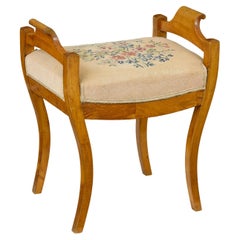
Mid 19th century birch empire stool circa 1850. Scandinavian empire period stool made in birch.  Shaped support handles which flow through to the 4 splayed legs.  Original floral ta...
Category

Mid-19th Century Swedish Antique Empire Furniture

Materials

Tapestry, Birch

French Empire Ormolu and Marble Mantel Clock of Cupid
Located in London, GB
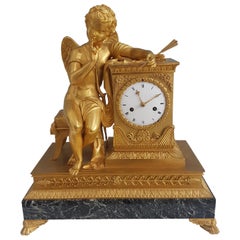
French Empire Ormolu and marble vert mantel clock of Cupid whispering. Wonderful original fire gilded mercury ormolu. The quality of the casting and chasing is superb, from the indiv...
Category

1810s French Antique Empire Furniture

Materials

Marble, Ormolu

French Empire Chiffonier Cabinet Mahogany Napoleon III 1890
Located in Potters Bar, GB
Antique French Empire mahogany open front chiffonier with a dark green and white veined marble top and mirrored back plate This server or sideboard dates to Napoleon III 1890 It has ...
Category

1890s Antique Empire Furniture

Materials

Mahogany

Pair of 19th Century Italian Console Tables
Located in Gloucestershire, GB
A fine pair of early 19th Century Italian Empire walnut console tables, Lombardy. With very good Breche d'Alep moulded rectangular tops above a single drawer with brass moulding supp...
Category

Early 19th Century Italian Antique Empire Furniture

Materials

Marble, Brass

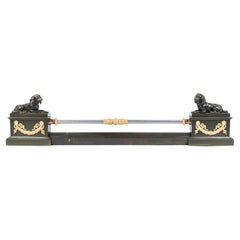
Empire style fireplace fender with dogs
Located in London, GB
An early 19th century French Empire style fireplace fender with dogs. Bronze, brass, steel, and gilded bronze decoration.
Category

Early 19th Century French Antique Empire Furniture

Materials

Brass, Bronze, Ormolu

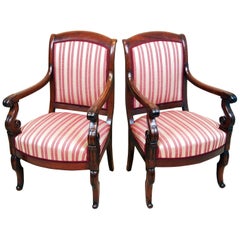
Pair of 19th Century French Empire Mahogany Library Chairs
Located in Bedfordshire, GB
An excellent quality pair of 19th century mahogany library armchairs, in the French empire taste, having swept back and moulded scrolling arms with C-scroll supports raised on elegant moulded sabre legs (A relative typical design in the early to mid-19th century these chairs are in the French Empire taste which was most popular at the time, with the added benefit of being much more sturdy and practical than the English Regency Chaise...
Category

Early 19th Century English Antique Empire Furniture

Materials

Mahogany

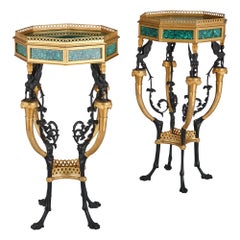
Pair of French Neoclassical Style Malachite and Gilt Bronze Side Tables
Located in London, GB
Pair of French neoclassical style malachite and gilt bronze side tables French, 20th century Dimensions: Height 85cm, diameter 50cm These striking octagonal guéridons are crafte...
Category

20th Century French Empire Furniture

Materials

Malachite, Ormolu

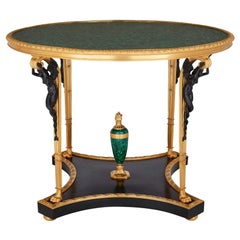
French Empire Style Ormolu Mounted Malachite Centre Table
Located in London, GB
French Empire style ormolu mounted malachite centre table French, 20th Century Height 77cm, diameter 100cm Wonderfully crafted from a selection of high quality materials, this Fren...
Category

20th Century French Empire Furniture

Materials

Malachite, Bronze, Ormolu

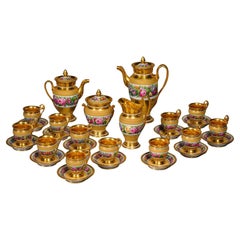
Fine Paris Porcelain Empire Coffee Service, Gilt-Decorated, Circa 1830
Located in Brighton, West Sussex
A Fine Paris Porcelain Empire Gilt-Decorated and Floral Painted Coffee Service. Comprising a coffee pot, hot-water pot, milk jug, sugar bowl...
Category

19th Century French Antique Empire Furniture

Materials

Porcelain

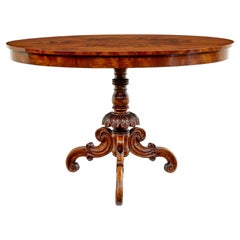
19th century oval hand carved side table
Located in Debenham, Suffolk
19th century oval hand carved center table circa 1870. Fine quality Swedish table showcasing matched flame mahogany veneers to the top surface.  Top raised on a turned and carved st...
Category

Late 19th Century Swedish Antique Empire Furniture

Materials

Mahogany

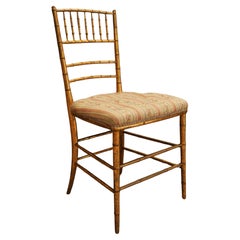
Chiavari Chair of Giltwood In A Faux Bamboo Style Striped Upholstered Seat
Located in Reading, Berkshire
A Giltwood Chiavari Chair In A Faux Bamboo Style Complete With Original Striped Upholstered Seat The Chiavarina was created in 1807 by a cabinetmaker from Chiavari on the northweste...
Category

Early 20th Century Italian Empire Furniture

Materials

Faux Bamboo, Upholstery, Giltwood

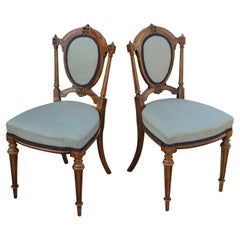
A Pair of Empire Walnut Salon Chairs, Each With Floral Carved Detailing
Located in Reading, Berkshire
A Pair of Empire Walnut Salon Chairs, Each With Carved Detailing Relief Tulip Motifs. Turned Reeded Legs, Pale Green Upholstery. Gorgeous set of chairs ideally su...
Category

19th Century English Antique Empire Furniture

Materials

Walnut

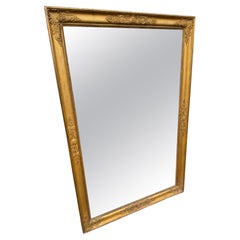
Wonderful 19th century gilded wall mirror , empire style
Located in Budleigh Salterton, GB
Very good quality 19th century gilded wall mirror in the empire style French circa 1840’s with original backboards and mirror plate Height It can hang landscape or portrait Heig...
Category

1840s French Antique Empire Furniture

Materials

Giltwood

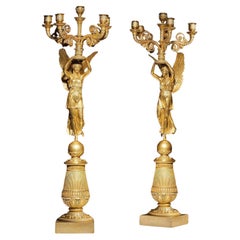
Exceptional Pair of French Late Empire Gilt-bronze Candelabra Attributed to Pier
Located in Benington, Herts
A pair of exceptionally elegant and important late Empire five-light figural candelabra ‘A la Victoire’ in gilt-bronze, attributed to Pierre-Philippe Thomire, after a design by Charles Percier. Imposing size at 81cm in height. French Paris c.1820 Superbly cast, in the Neo-Classical style, the five scrolling foliate candle branches enclosing central sconces issuing from a circular wreath supported by the winged figure of Victory (Nike), wearing diaphanous robes gathered by a sash above a long underskirt splaying out from above her ankles, with beautifully feathered wings flowing behind her as she looks straight ahead. Each figure standing on one foot, the other bent, resting on a plain sphere over a reeded palmette-cast baluster pedestal raised on square plinth. Wonderful colour and patina, pierced for electricity, old inventory label to the underside. We are delighted to have been able to acquire these important candelabra as rarely does one get the opportunity to purchase items by P P Thomire...
Category

1820s French Antique Empire Furniture

Materials

Bronze

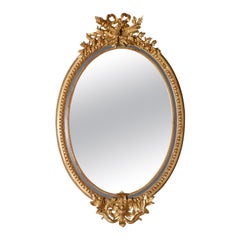
Large French Rococo Oval Gilt Wall Mirror
Located in Godshill, Isle of Wight
A large French Rococo oval gilt wall mirror The mirror has an exquisite gilt frame in the Rococo style, it is decorated with arrows and quiver, and many...
Category

Mid-19th Century Antique Empire Furniture

Materials

Giltwood

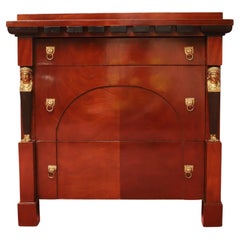
Beautiful Empire Style Chest of Drawers
Located in Crawley, GB
A 20th century Empire style chest of drawers with figural pilasters and three drawers made in different size. Don't hesitate to contac...
Category

20th Century British Empire Furniture

Materials

Brass

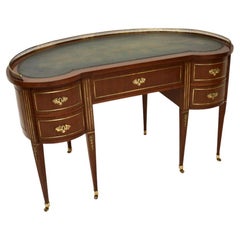
Antique Leather Top Austrian Empire Desk
Located in London, GB
A stunning and very rare antique leather top Austrian Empire desk, dating from around the 1830-1850 period. This has a beautiful and very useful design, the quality is outstanding. ...
Category

1830s Austrian Antique Empire Furniture

Materials

Brass

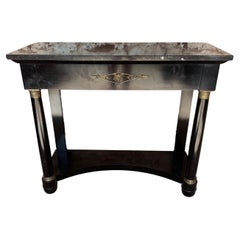
Early 20th century empire style ebonised console table
Located in Budleigh Salterton, GB
Very stylish early 20th century Empire style console table , came out of an apartment in Paris French circa 1920’s with original marble and ormolu mounts , having an ebonised finis...
Category

1920s French Vintage Empire Furniture

Materials

Sapele Wood

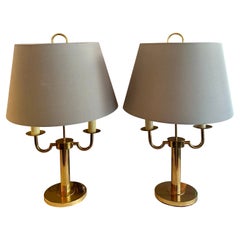
A Pair Of Gilt Brass French Bouliotte Style Candle Lamps
Located in London, GB
A pair of Mid 20th century Gilt Brass Bouliotte style table lamps with new grey fabric shades. The circular plinth base with reeded stem supporting two tall candle style arms. Circul...
Category

1950s French Vintage Empire Furniture

Materials

Brass

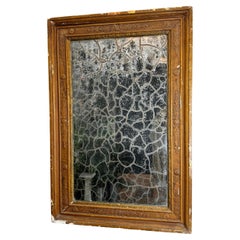
19th Century Silver Backed Crackle Foxed Giltwood Mirror
Located in Hastings, GB
Sometimes mirrors are all about the frames, this stunning French mirror is all about the almost other Worldly foxed mirror plate, it is truly spectacular, over more than 150 years the silver backed...
Category

Mid-19th Century French Antique Empire Furniture

Materials

Mirror, Wood

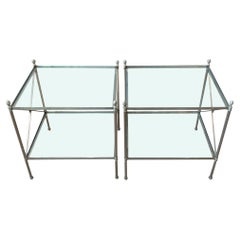
Pair of French Midcentury Steel and Clear Glass Side Tables, Empire Design
Located in London, GB
A good pair of steel and glass side tables, made in France in the 1960s. Made with an empire design, with pine cone finials and flower details. This pair of minimalist side tables ...
Category

1960s French Vintage Empire Furniture

Materials

Steel

Empire furniture for sale on 1stDibs.

Find a broad range of unique Empire furniture for sale on 1stDibs. Many of these items were first offered in the 21st Century and Contemporary, but contemporary artisans have continued to produce works inspired by this style. If you’re looking to add vintage furniture created in this style to your space, the works available on 1stDibs include lighting, decorative objects, tables and other home furnishings, frequently crafted with metal, wood and other materials. If you’re shopping for used Empire furniture made in a specific country, there are Europe, France, and Italy pieces for sale on 1stDibs. While there are many designers and brands associated with original furniture, popular names associated with this style include Modenese Gastone, Europa Antiques, Baker Furniture Company, and Gherardo Degli Albizzi. It’s true that these talented designers have at times inspired knockoffs, but our experienced specialists have partnered with only top vetted sellers to offer authentic pieces that come with a buyer protection guarantee. Prices for furniture differ depending upon multiple factors, including designer, materials, construction methods, condition and provenance. On 1stDibs, the price for these items starts at $56 and tops out at $955,603 while the average work can sell for $4,296.