Japonisme Furniture

JAPONISME STYLE

In the late 19th and early 20th century, France developed an enduring passion for Japanese aesthetics and craftsmanship. Not only did this interpretation of Japanese culture — which became known as Japonisme — infuse fresh energy into French art and design, but it also radically transformed how Europeans, and subsequently the world, would come to understand visual culture. 

Until 1853, Japan had been closely guarded against foreign visitors for over two centuries. However, American Commodore Matthew C. Perry sailed into Japan that year and initiated the first of its treaties with the United States and Europe, thereby opening its borders and giving the West its first-ever look at Japanese design. 

For the next few decades, taken with Japonisme, sophisticated collectors in Paris, New York and elsewhere gorged themselves on lacquered screens, celadon ceramics and netsuke ornaments, along with artworks depicting various aspects of Japanese life. The East Asian country’s influence on Europe, particularly France, contributed to one of the most creatively prosperous periods in history, leaving an imprint on the Impressionist, Art Nouveau and Art Deco movements, and inspiring artists like Edgar Degas, Mary Cassatt, Vincent van Gogh as well as luxury houses such as Louis Vuitton and Hermès. Japonisme emerged at the time when the ornate Renaissance Revival style was the most prominent mode of decorating in Europe, and Japanese aesthetics seemed strikingly modern and elegant in comparison. 

In addition to everyday practical objects from Japan, such as vases, tableware and decorative boxes, Japanese art, especially Japanese woodblock prints by masters of the ukiyo-e school, caught the eye of many artists — particularly those in the Art Nouveau poster community in 1880s Paris. The luscious organic colors associated with traditional Japanese design, motifs like cherry blossoms and carp and the vivid patterns found in woodblock prints, silks and more were adopted and appropriated by painters as well as ceramicists and those working in other fields of the decorative arts. Today, demand for Japanese lacquerware — furniture, trays, writing boxes, screens, incense burners — from the Edo period (1615–1868) and the late 19th century continues to be very strong among collectors.

Find a collection of antique Japonisme furniture and decorative objects on 1stDibs.

to
68
578
453
562
15
1
88,299
56,279
19,179
10,183
8,668
7,224
6,724
6,454
4,676
3,984
3,654
3,643
3,328
3,100
3,028
2,785
2,711
2,076
30
237
295
16
130
86
30
28
8
15
6
13
17
3
2
5
1
192
176
146
103
73
405
394
386
91
53
578
576
577
17
16
14
8
7
Item Ships From: USA
Style: Japonisme
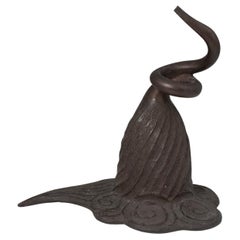
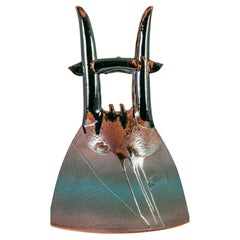
20th Century Abstract Iron Sculpture, Japan
Located in Point Richmond, CA
20th Century Hollow Abstract Iron Sculpture, Japan This heavy hollow iron sculpture by an unknown Japanese metalsmith is a knockout from every angle. It measure 9 inches high by 9 i...
Category

Mid-20th Century Japanese Japonisme Furniture

Materials

Iron

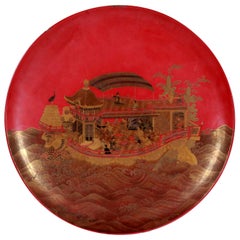
Large Japanese Lacquer Plate with Elaborate Maki-e Design by Kajikawa
Located in Atlanta, GA
A large circular plate with a short stem base in Vermillion lacquer color. The surface was decorated with a stunning maki-e picture that depicts a...
Category

19th Century Japanese Antique Japonisme Furniture

Materials

Lacquer

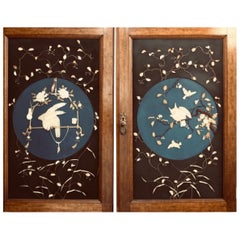
Japanese Meiji Period Pair of Shibayama Panels, Ca. 1868
Located in New York, NY
Japanese Pair of Shibayama Panels, Ca. 1900 ABOUT Both panels have immensely rich detail articulated in shell, mother-of-pearl, and bone along with ca...
Category

Early 20th Century Japanese Japonisme Furniture

Materials

Wood

Japanese Showa Period Porcelain Standing Old Man with Staff Scroll, Ca. 1960
Located in New York, NY
Japanese Showa Period Porcelain Standing Old Man Holding Staff & Scroll, Ca. 1960 MARKINGS Signed on bottom. DIMENSIONS: Height: 19 inches Width: 7.5 inches Depth: 7 inches
Category

1960s Japanese Vintage Japonisme Furniture

Materials

Porcelain

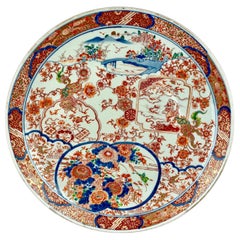
Imari Porcelain Charger-Japan, Meiji Period-18.25" Diameter
Located in West Palm Beach, FL
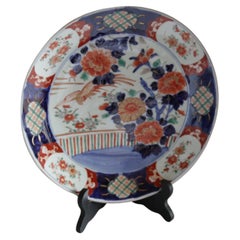
Large finely decorated Japanese Meiji period Imari porcelain charger. The decoration consists of shaped panels overlayed...
Category

1880s Japanese Antique Japonisme Furniture

Materials

Enamel

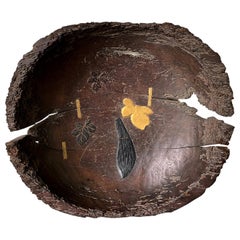
Antique Japanese Lacquered Wood Wabi-Sabi Bowl
Located in Atlanta, GA
What can we say about this bowl? Perhaps we can start by describing the unique Japanese aesthetic concept of "Wabi-Sabi". In contrast to the western concept of beauty that is centere...
Category

19th Century Japanese Antique Japonisme Furniture

Materials

Wood

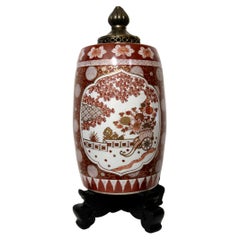
Imari Ovoid Japanese Design Vessel with Ebonized Base and Brass Finial
Located in Lomita, CA
A Japanese parcel gilt and brass mounted porcelain vessel with an ebonized wood base with a distinctive Imari motif of flowers, medallions and touches of gold. The stylized Imari pa...
Category

Mid-20th Century Japanese Japonisme Furniture

Materials

Ceramic

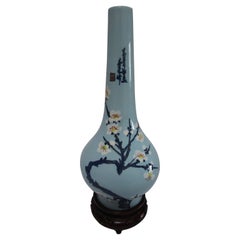
Turquoise Vintage Japanese Ceramic Bulbous Vase on Rosewood Stand
Located in Lomita, CA
This turquoise blue Japanese export vase with a rosewood base is as refreshing as a breath of spring. It This item is an inspired mid 20th century Japanese export blue vase, showca...
Category

Mid-20th Century Japanese Japonisme Furniture

Materials

Ceramic, Porcelain

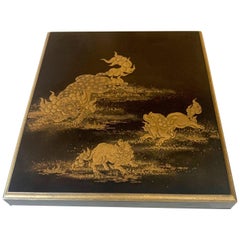
Japanese Lacquer Box with Fine Maki-e Decoration Meiji Period
Located in Atlanta, GA
A lacquered wood box with lid from Japan circa 19th century Meiji Period. The finely decorated box was used to store paper slips and small documents on the desk. It is overall finished with black lacquer (kuro) with sparse Mura-Nashiji effect outside and on the top surface of the lid, there are three Komainu, (sometimes known as Shishi or Japanese lions) frolicking and forming a circle in lively motion. Komainu are auspicious animals in Japanese cultures in both Shinto and Buddhism tradition. Originally from China, these animals symbolizes guardians to ward off evil spirits. Hiramaki-e was used in combination with carving and combing to render the lions with various surface textures. A gilt border with an slight angle was given to the lid and even the thin band is decorated with miniature floral scrolls. The interior of the box was finished in a dense nashiji. Underneath the lid, a cluster of peonies open lavishly by two gentle mounts. Takamaki-e (high relief) in both gold and silver were...
Category

Late 19th Century Japanese Antique Japonisme Furniture

Materials

Wood, Lacquer

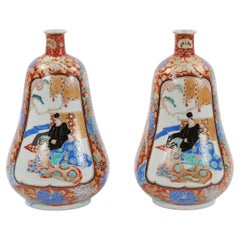
Pair Japanese Imari Gourd Shaped Porcelain Vases
Located in Tarry Town, NY
Experience the captivating charm of Japan with this pair of Imari gourd-shaped porcelain vases. These vases beautifully showcase the renowned Imari style, which has captured hearts a...
Category

19th Century Japanese Antique Japonisme Furniture

Materials

Gold

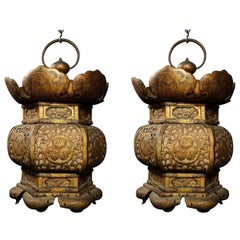
Pair of Large Antique Japanese Gilt Copper Lanterns
Located in New York, NY
A exquisite pair of large and unique antique Japanese octagonal form reticulated gilt copper lanterns. These large antique Japanese gilt copper lanter...
Category

20th Century Japonisme Furniture

Materials

Copper

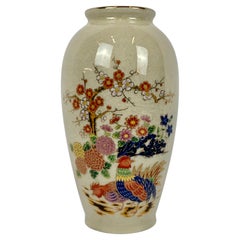
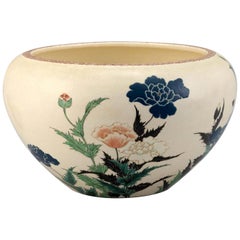
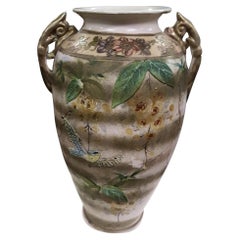
Vase with Delicate Hand Painted Floral Spray on Neutral Ground-Japan, early 20th
Located in West Palm Beach, FL
Japanese porcelain vase delicately hand painted on an craquelure oatmeal colored ground. The brightly colored design is of prunus blossoms, chrysanthemums and several roosters all ou...
Category

Early 1900s Japanese Antique Japonisme Furniture

Materials

Enamel

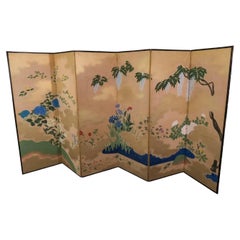
Japanese Meiji Period 6-Panel Screen w/ Blue Lacquered Flowers, Ca. 1900
Located in New York, NY
Japanese Meiji Period 6-Panel Screen w/ Blue Lacquered Flowers, Ca. 1900 Meiji Period (1868-1912) DIMENSIONS 145” long x 69.5” high
Category

Early 1900s Japanese Antique Japonisme Furniture

Materials

Wood

Pair of Vintage Japonesque Faux Lacquer Painted Glass
Located in Lomita, CA
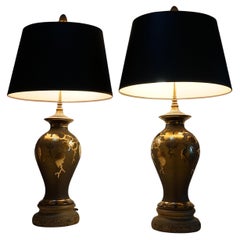
A pair of vintage Japonesque faux lacquer painted glass table lamps mid to third-quarter of the 20th Century and stunning. Of circular section and baluster form, with flared tops, st...
Category

Mid-20th Century American Japonisme Furniture

Materials

Gold Leaf

Small Japanese Articulate Crab Jizai Okimono Meiji Period Signed
Located in Atlanta, GA
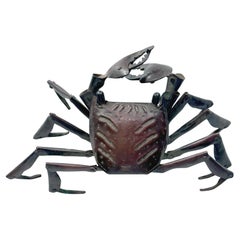
A small copper crab with articulated legs made by Myochin Hiroyoshi in the late Meiji Period circa 1890-1900s. One of the pair (the other one is listed separately LU945037876072, but...
Category

Early 20th Century Japanese Japonisme Furniture

Materials

Copper

17th Century Orange Blue White Japanese Arita Ware Charger Plate
Located in Lomita, CA
This Japanese Export porcelain charger is singular and speaks for itself in a beautiful palette of soft orange, blue and white. It is remimiscent of Imari, but the appraisers say it is from a 17th or 18th century kiln in Arita Japan. The colors are vibrant and clear, and there are no chips or other damage to this beautiful piece. Arita ware...
Category

Late 17th Century Japanese Antique Japonisme Furniture

Materials

Porcelain

Japanese Showa Period Karasu Tengu Mask, ca. 1920
Located in New York, NY
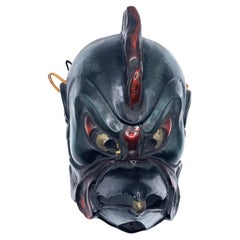
Japanese Showa Period Karasu Tengu Mask, ca. 1920 DIMENSIONS: Height: 12 inches Width: 8 inches Depth: 7 inches ABOUT A Japanese...
Category

1920s Japanese Vintage Japonisme Furniture

Materials

Wood

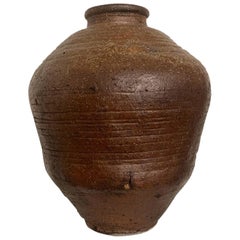
Large Japanese Antique Shigaraki Tsubo Jar
Located in Atlanta, GA
An antique Japanese stoneware storage jar, known as tsubo from Shigaraki kiln, circa 17th-18th century (early Edo possibly Momoyama period)....
Category

17th Century Japanese Antique Japonisme Furniture

Materials

Ceramic

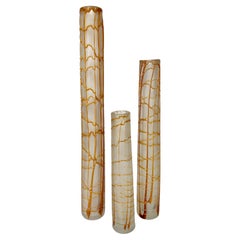
Modern Kintsugi Style Frosted Glass Vase, a Set of 3
Located in Plainview, NY
A trio of Modern Kintsugi-style skinny vases, each a unique embodiment of artistry and contemporary design. Crafted in three dimensions—tall, medium, and s...
Category

Late 20th Century Japonisme Furniture

Materials

Glass

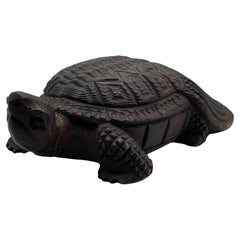
Japanese Large Hand-Carved Boxwood Okimono – “Mino-Kame” Turtle, Ca. 1900
Located in New York, NY
Japanese Large Hand-Carved Boxwood Okimono – “Mino-Kame” Turtle, Ca. 1900 DIMENSIONS: Height: 4 inches Length: 19 inches Wide : 5 inches ABOUT An exceptional example of Meiji-era c...
Category

Early 1900s Japanese Antique Japonisme Furniture

Materials

Wood

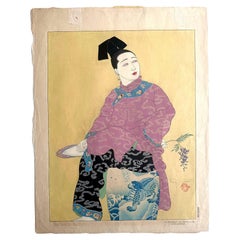
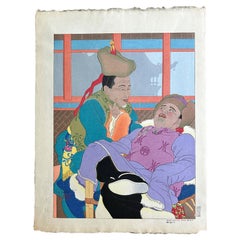
Rare First Edition Woodblock Print Le Tabouret de Porcelaine by Paul Jacoulet
Located in Atlanta, GA
A Japanese Woodblock print by Paul Jacoulet (French, 1896-1960) entitled Le Tabouret de Porcelaine, Mandchoukuo (The Porcelain Garden Seat, Manchuria). Created in 1936, this is a rar...
Category

1930s Japanese Vintage Japonisme Furniture

Materials

Paper

Rare Tiffany Sterling Silver Decanter Set in Historic Japanese Pattern
Located in New York, NY
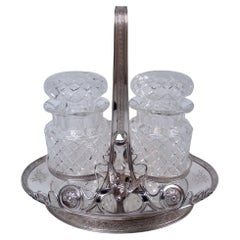
Japanese sterling silver decanter set. Made by Tiffany & Co. in New York. Oval bowl with tapering sides and rectilinear handle mounted to two rings. Sides have scrolled wire and pate...
Category

1870s American Antique Japonisme Furniture

Materials

Sterling Silver

Antique Japanese Ikebana Boat Form Flower Basket
Located in Norwood, NJ
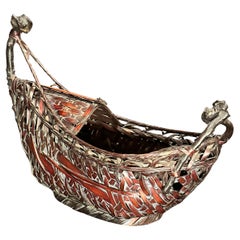
Antique Japanese woven boat shape (funagata) Ikebana flower basket, with lacquer,975 rattan, root and smoked bamboo. Fine quality weaving with wonderful patina.
Category

Early 20th Century Japanese Japonisme Furniture

Materials

Bamboo, Rattan

Early 20th Century Japanese Champleve Brass Vase
Located in Delray Beach, FL
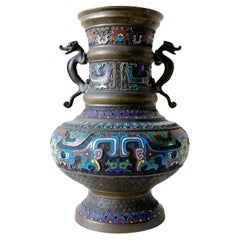
Exceptional early 20th century Japanese brass champleve. Features vibrant enameled decorative designs throughout the vase.
Category

Early 20th Century Japanese Japonisme Furniture

Materials

Brass, Enamel

First Edition Woodblock Print Coucher de Soleil à Menado Celebes Paul Jacoulet
Located in Atlanta, GA
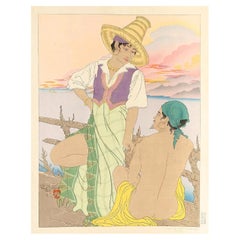
A Japanese Woodblock print by Paul Jacoulet (French, 1896-1960) entitled Coucher de Soleil à Menado, Celebes (Sunset in Menado, Celebes). Created in 1938, this is a first edition carved by Maeda and printed by Fujii and numbered 135/150 in Kanji verso. The print, a tongue-in-cheek subversive reinterpretation of the controversial 1863 painting Le Déjeuner sur l'herbe by Edouard Manet (1832-1883), is one of the most well-received prints by the artist. The work depicts a couple posed under the sunset in their traditional attires; except that this time, the male, with his back facing toward the viewer, is scantily clothed. The female, posed frontal, struck a more traditionally male pose...
Category

1930s Japanese Vintage Japonisme Furniture

Materials

Paper

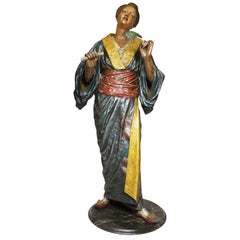
French 19th Century Polychromed Life-Size Figure of a Geisha, Charles Massé
Located in Los Angeles, CA
A fine French 19th century Polychromed Japonisme life-size cast-metal figure of a standing Geisha, cast after a model by Charles Massé (French, 1855-1913). The standing Japanese beau...
Category

19th Century French Antique Japonisme Furniture

Materials

Metal

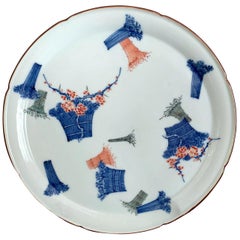
Japanese Antique Kakiemon Plate from Arita
Located in Atlanta, GA
A milky white dish with slight scalloped rim and decorated with cobalt blue iron red and green enamel over glaze, this delicate piece in Kakiemon Style was dated at least to the earl...
Category

Early 18th Century Japanese Antique Japonisme Furniture

Materials

Porcelain

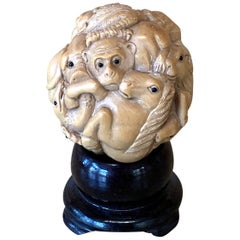
Finely Carved Japanese Okimono on Stand
Located in Atlanta, GA
An antique Okimono (Japanese means artsy display ornament object) displayed on a small custom wood stand from Meiji Period circa early 2oth century. T...
Category

Early 20th Century Japanese Japonisme Furniture

Materials

Wood

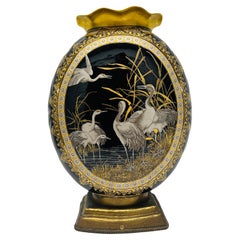
Exhibition Quality Coalport Porcelain "Crane" Japonesque Enamel Vase
Located in Atlanta, GA
Coalport Porcelain (English, 1795-1926 then part of the Wedgwood company), circa 1885. An Exhibition quality porcelain moon flask style vase featuring a cobalt ground and grouping of highly detailed enamel cranes to one side grazing around a pond with 24kt gold calla lilies in the background. The verso with a similar scene of two cranes likely a mating pair. Each side is surrounded by masterfully detailed sunflowers and furthermore by Rococo motifs and enameled scrollwork of polychrome enamel embellishments. Please note, unfortunately at one point this vase was made into a lamp and the base has been replaced with a gilt metal foot. Measuring: 19" h, 13.5" w, 7.5" d. Provenance: An important Cape Cod...
Category

Late 19th Century English Antique Japonisme Furniture

Materials

Enamel

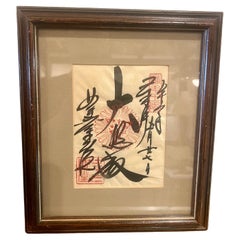
Koyoto Sanjusangendo Temple Stamp Goshuln Framed Antique
Located in San Diego, CA
Koyoto Sanjusangendo Temple Stamp Goshuln Framed Antique print original frame .
Category

20th Century Japanese Japonisme Furniture

Materials

Glass, Paper

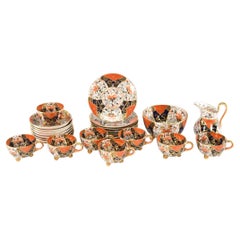
English 19thc. "Imari" Decorated Hand Painted Tea Dessert Service for 8-26 Pcs
Located in Great Barrington, MA
An amazing hand painted example of the influence of the Japonesque influence on English wares ca. 1890's. This is a complete set of 8 footed cups and saucers and 8 matching dessert p...
Category

1880s English Antique Japonisme Furniture

Materials

Porcelain

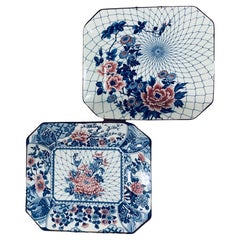
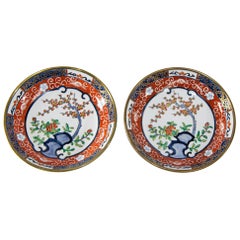
Pair of Japanese Hand Painted MCI Porcelain Wall Plates
Located in Guaynabo, PR
This is a pair of Japanese hand painted MCI Porcelain wall plates. They are octagonal shaped and painted in blue, red and pink colors in a white b...
Category

20th Century Japanese Japonisme Furniture

Materials

Porcelain

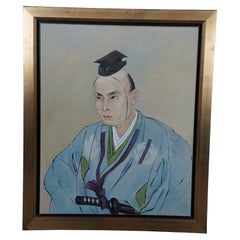
Samurai Takami Senseki Portrait After Watanabe Kazan Dutch Oil Painting Framed
Located in Dayton, OH
A reproduction portrait of Takami Senseki (1785–1858), a top-ranking samurai official of Koga domain, Shimosa province, who was posted in the capital of Edo (now Tokyo). It was paint...
Category

Late 20th Century Japonisme Furniture

Materials

Canvas, Paint

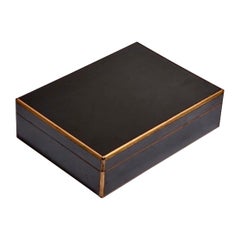
Japanese Calligraphy Box
Located in Pasadena, CA
This is a very elegant and simplistic Japanese lacquered calligraphy box that dates to the mid-20th century. The minimal refined designed box includes the brush and other required wr...
Category

Mid-20th Century Japanese Japonisme Furniture

Materials

Wood, Lacquer

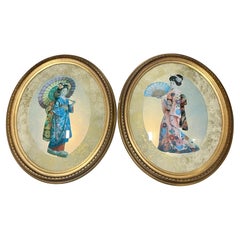
Pair of Geishas in Oval Convex Giltwood Frames
Located in Hanover, MA
Pair of Geisha Bijin lithographs, one with a parasol, the other holding a fan, in convex glass oval giltwood frames with gold paper mounting.
Category

1950s American Vintage Japonisme Furniture

Materials

Glass, Giltwood

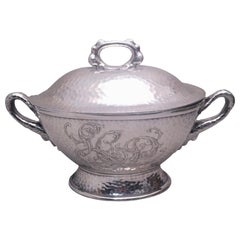
Tiffany Co Hand Hammered Sterling Silver Japanesque 1879 Tureen wth Handles
Located in New York, NY
An impressive 1879 decorative sterling silver tureen by the outstanding American maker Tiffany & Co. Designed beautifully in a blunt hand hammered and waved handles, standing on base...
Category

1870s American Antique Japonisme Furniture

Materials

Silver, Sterling Silver

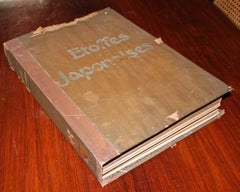
Etoffes Japonaises Tissues Et Brochees Complete Folio of Fabric Designs
Located in Sharon, CT
A portfolio consisting of eighty (80) 16"x12" loose chromolithographs of the most beautiful Japanese fabric designs. Published by the Librairie Centrale des Beaux-Arts, Paris 1905.
Category

Early 20th Century French Japonisme Furniture

Materials

Paper

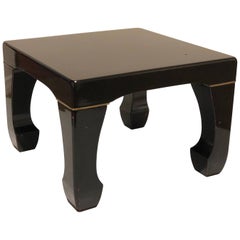
Mid-Century Modern Black Lacquer Low Japanese Stool with Gold Leaf Accents
Located in San Diego, CA
1950s solid black lacquer wood and gold leaf accents low stool/table, stamped made in Japan solid construction with a polished finish that shows natural wear age soft scratches, a co...
Category

20th Century Japanese Japonisme Furniture

Materials

Wood, Lacquer

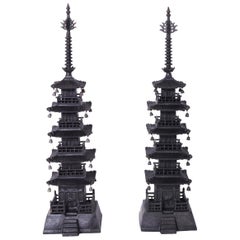
Pair of Antique Japanese Iron Pagodas
Located in Palm Beach, FL
Enchanting pair of Japanese pagodas crafted in iron with classic finials or sorin at the tops on five floors with hanging bells and an entrance at the bottom.
Category

Mid-20th Century Japanese Japonisme Furniture

Materials

Iron

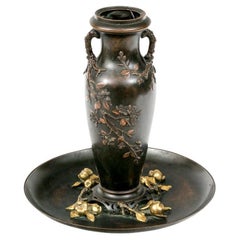
19th Century French Bronze Vase Mounted On A Dish In The Japanese Style
Located in Bridgeport, CT
19th century French bronze vase patinated and decorated with cherry blossoms along with branch form handles. The baluster form vase with a quad form pierced base surmounted on a roun...
Category

19th Century French Antique Japonisme Furniture

Materials

Bronze

Japanese Late Meiji Period Woven Bamboo Tea Ceremony Basket, Early 20th Century
Located in New York, NY
Japanese Late Meiji Period Woven Bamboo Tea Ceremony Basket, Early 20th Century PERIOD Meiji Period (1868-1912) DIMENSIONS Height: 11.5 INCHES Diameter: 5 inches ABOU...
Category

Early 20th Century Japanese Japonisme Furniture

Materials

Bamboo

Japanese Studio Ceramic Centerpiece Okumura Shozan Meiji Period
Located in Atlanta, GA
A beautifully crafted large ceramic bowl as a centerpiece by Okumura Shozan (1842-1905) in the Kyo-yaki (kyoto ware) style. A Classic ovoid form with flatly...
Category

Late 19th Century Japanese Antique Japonisme Furniture

Materials

Ceramic

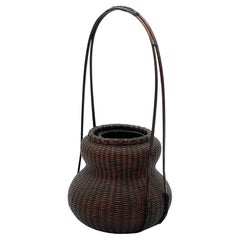
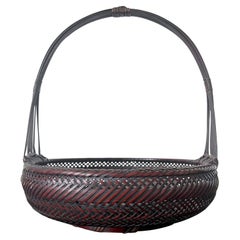
Japanese Woven Bamboo Ikebana Basket
Located in Atlanta, GA
A Japanese woven bamboo basket with handle from early 20th century, circa end of Meiji to Taisho period. The basket was constructed in the form o...
Category

Early 20th Century Japanese Japonisme Furniture

Materials

Bamboo

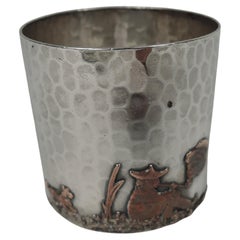
Gorham Japonesque Mixed Metal Hand Hammered Napkin Ring, 1882
Located in New York, NY
Japonesque mixed metal napkin ring. Made by Gorham in Providence in 1882. Hand-hammered sterling silver ring applied with cooper ornament: A man in pointy hat is seated on the ground...
Category

1880s American Antique Japonisme Furniture

Materials

Sterling Silver, Copper

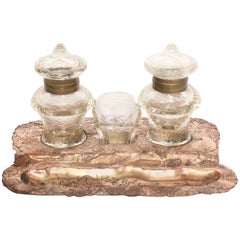
Japonais Revival Coppered Inkstand with Hand Carved Glass Ink Wells
Located in West Palm Beach, FL
Antique coppered Japonais Revival inkstand with two ink pots and a stamp holder. The border of the base is in relief and abounds with flowers and birds while the pen rest has a quain...
Category

1890s English Antique Japonisme Furniture

Materials

Brass, Copper

Japanese Contemporary Grand Pottery Sculpture, Ca. 1980
Located in New York, NY
Japanese Contemporary Grand Pottery Sculpture, Ca. 1980 ABOUT This absolutely unique late 20th Century pottery sculpture with bamboo-styled formed handles features a wonderful artis...
Category

1980s Japanese Vintage Japonisme Furniture

Materials

Pottery

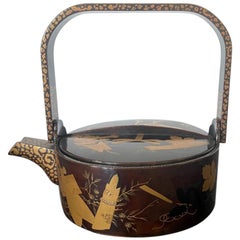
Japanese Lacquer Maki-e Sake Ewer Meiji Period
Located in Atlanta, GA
A Japanese lacquered wood sake ewer with maki-e design, circa late 19th century, Meiji period. The nicely decorated lacquerware is of a Classic sake ewer for...
Category

1890s Japanese Antique Japonisme Furniture

Materials

Lacquer

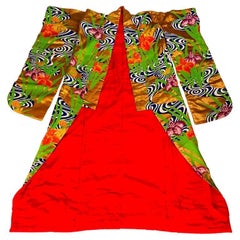
Embroidered Red and Green Japanese Silk Ceremonial Kimono, 1940 s
Located in Plainview, NY
An early 20th century exceptional Embroidered Japanese Ceremonial Kimono featuring marvelous handmade floral pattern in vivid colors including red, blue and green on gold. The interi...
Category

20th Century East Asian Japonisme Furniture

Materials

Brocade, Silk

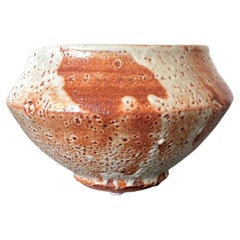
American Studio Ceramic Bowl in Shino Glaze by Warren MacKenzie
Located in Atlanta, GA
A studio made ceramic tea bowl (Chawan) with a slightly irregular form and exceptional surface glaze by American potter Warren Mackenzie (1924-2018). Reminiscent of a monk's begging bowl...
Category

Late 20th Century American Japonisme Furniture

Materials

Ceramic

Japanese Woodblock Print Une Histoire Tres Drole by Paul Jacoulet
Located in Atlanta, GA
A Japanese Woodblock print by Paul Jacoulet (French, 1896-1960) entitled Une Histoire Tres Drole, Mongols (A Very Funny Story, Mongols). Created in 1949, based on an earlier painting...
Category

1940s Japanese Vintage Japonisme Furniture

Materials

Paper

Japanese Moriage Vase
Located in Charleston, SC
Wilmington Nc estate sale find. An outstanding rare piece of hand thrown pottery. vase moriage decoration of swallows and flowers. There is a small loss...
Category

Mid-20th Century Japanese Japonisme Furniture

Materials

Ceramic, Paint

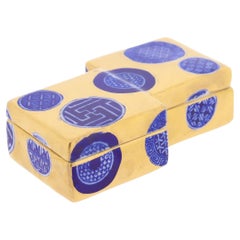
Gilt Japonisme Porcelain Dresser Box
Located in Philadelphia, PA
A fine 2-section Japonisme dresser box. In gilt porcelain. With cobalt blue and white geometric circle devices throughout. Simply a wonderful porcelain dresser box! Date: 20th Ce...
Category

20th Century Unknown Japonisme Furniture

Materials

Porcelain

Vintage Japanese Imari Porcelain Bowl Hand-Painted for Geary s Beverly Hill
Located in Moreno Valley, CA
Vintage Japanese Imari Porcelain 7.5" Bowl - Hand Decorated for Geary's Beverly Hills. Set of two Japanese Imari porcelain Bowls from the prestigious brand GEARYS BEVERLY HILLS, Vintage collectible large blue and white porcelain bowl. These beautiful Japanese bowls are hand painted. Perfect for display or using as catchall or vide poche. Vintage Japanese Porcelain...
Category

20th Century Hong Kong Japonisme Furniture

Materials

Ceramic, Porcelain

Gorham Berry Spoon in Aesthetic Japonesque Chrysanthemum Pattern
Located in New York, NY
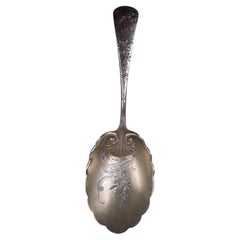
Chrysanthemum sterling silver berry spoon. Made by Gorham in Providence, ca 1885. Tapering stem. On recto, bright-cut flowerheads on butler-finished ground; verso plain. Scalloped bo...
Category

Late 19th Century American Antique Japonisme Furniture

Materials

Sterling Silver

Pair 19th Century Japanese Imari Porcelain Gilt-Bronze Torchere Candelabra
Located in Los Angeles, CA
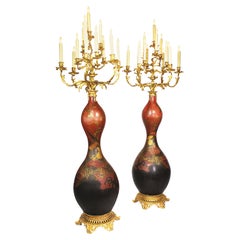
A fine Pair of 19th century Japanese Imari Porcelain and French Gilt-Bronze Mounted Thirteen-Light Celadon Torchere Candelabra. The bottle-shaped Japonisme vases with a Royal red background, decorated with parcel-gilt and black soaring eagles in the hunt within a forestall scene. Each Vase fitted and surmounted with a French 19th century Louis XV Style 13-Light scrolled candelabrum and all raised on a circular pierced gilt-bronze plinth. circa: 1880. Imari Porcelain (????) is the name for Japanese porcelain wares made in the town of Arita, in the former Hizen Province, northwestern Kyushu. They were exported to Europe extensively from the port of Imari, Saga, between the second half of the 17th century and the first half of the 18th century. The Japanese as well as Europeans called them Imari. In Japanese, these porcelains are also known as Arita-yaki (???). Imari or Arita porcelain has been continously produced up through the present day. Characteristics Though there are many types of Imari, Westerners' conception of Imari in the popular sense is associated only with a type of Imari produced and exported in large quantity in mid-17th century. This type is called Kinrande. Kinrande Imari is colored porcelain with cobalt blue underglaze and red and gold overglaze. The color combination was not seen in China at that time. Traditional Ming dynasty color porcelain used dominantly red and green, probably due to scarcity of gold in China, whereas gold was abundant in Japan in those days. The subject matter of Imari is diverse, ranging from foliage and flowers to people, scenery and abstractions. Some Imari design structures such as kraak style were adopted from China, but most designs were uniquely Japanese owing to the rich Japanese tradition of paintings and costume design. The porcelain has a gritty texture on the bases, where it is not covered by glaze. There is also blue and white Imari. Kakiemon style Imari is another type of Imari, but it tends to be categorized separately in Europe. History "Imari" was simply the trans-shipment port for Arita wares. It was the kilns at Arita which formed the heart of the Japanese porcelain industry. Arita's kilns were set up in the 17th century, when kaolin was discovered in 1616 by the immigrant Korean potter, Yi Sam-pyeong (1579–1655). (He may also be known by the name, "Kanage Sambei".) Yi Sam-Pyeong, along with his extended family of 180 persons, left Korea on the offer of a privileged position in Japan. This decision was made after the occurrence of certain Japanese invasions of Korea. After Yi Sam-Pyeong's discovery, his kilns began to produce revised Korean-style blue and white porcelains, known as "Shoki-Imari". In the mid-17th century there were also a lot of Chinese refugees in Northern Kyushu due to the turmoil on Chinese continent, and it is said one of them brought coloring technique to Arita. Thus Shoki-Imari developed into Ko-KutaniImari. Ko-Kutani was produced around 1650 for both export and domestic market. Blue and white porcelain continued to be produced and they are called Ai-Kutani. Ko-Kutani Imari for the export market usually adopted Chinese design structure such as kraak style, whereas Ai-Kutani for the domestic market were highly unique in design and are accordingly valued very much among collectors. Ko-Kutani style evolved into Kakiemon style Imari, which was produced for about 50 years around 1700. Imari achieved its technical and aesthetic peak in Kakiemon style, and it dominated European market. Blue and white Kakiemon is called Ai-Kakiemon. Kakiemon style transformed into Kinrande in the 18th century. Kinrande used blue underglaze and red and gold overglaze, and later some other colors. Imari began to be exported to Europe because the Chinese kilns at Ching-te-Chen were damaged in the political chaos and the new Qing dynasty government stopped trade in 1656–1684. Exports to Europe were made through the Dutch East India Company, but the designation "Imari Porcelain" in Europe connotes Arita wares of mostly Kinrande Imari. Export of Imari to Europe stopped in mid-18th century when China began export to Europe again, since Imari was not able to compete against China due to high labor cost. By that time, however, both Imari and Kakiemon style were already so popular among Europeans, Chinese export porcelain copied both Imari and Kakiemon style, which is called Chinese Imari. At the same time, European kilns, such as Meisen also tried to copy Imari and Kakiemon. Export of Imari surged again in late 19th century (Meiji era) when Japonism flourished in Europe. Thus in western world today, two kinds of Imari can...
Category

19th Century Japanese Antique Japonisme Furniture

Materials

Bronze, Ormolu

Memoirs of a Geisha A Portrait of the Film By Peggy Mulloy 2005 Hardcover Book
By David James
Located in Moreno Valley, CA
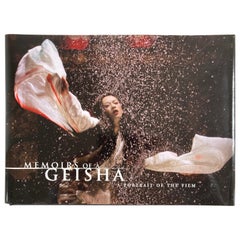
Memoirs of a Geisha A Portrait of the film by Peggy Mulloy · 2005 hardcover book. By David James (Photographs by), Peggy Mulloy (Text by), Rob Marshall (Introduction by), Arthur Gol...
Category

Late 20th Century Japanese Japonisme Furniture

Materials

Paper

Rare Large Vase with White Slip Inlay Makuzu Kozan Meiji Period
Located in Atlanta, GA
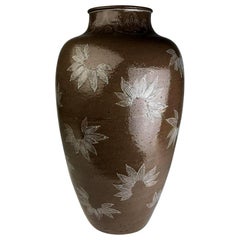
A impressively large and unusual stoneware vase in an urn shape from the studio of Japanese Potter Makuzu Kozan, also known as Miyagawa Kozan (1842–1916), one of the most established and collected ceramist from Meiji Period. Born as Miyagawa Toranosuke, Kozan established his pottery studio in Yokohama circa 1870s and later became one of the appointed artist to the Japanese Imperial household. His work was exhibited in many international fairs that the Meiji government participated at the turn of the century and won many grand prizes. This vase is dated to the end of Makuzu's life circa 1910-1916 based on similar work created around that time. After achieving domestic and international fame, Makuzu retired and handed the business to his son Hanzan in 1912. He dedicated his time to other selected projects that were more in tune with Japanese sensibility than export aesthetic. He made a group of stoneware pottery pieces inspired by Edo master like Ninsei and Kenzan as well as his own poetic creation. This piece is attributed to that period. Standing of an impressive size, this vase is more like an urn, made with stoneware instead of porcelain. It was coated with a brown iron glaze with a slight translucent quality. Underglaze whit slips were used to draw low relief decoration of bamboo leaves that sparsely scatter on the surface. Slightly more elaborate scrolling vines and autumn flowers circles under the mouth rim. Same white slip inlay was used to sign the vase under the base. The whole effect of the piece is unusual. With its dark glaze in contrast with the sparse white decoration that is more abstract and geometric than realistic, it appears almost modern with an Art Deco flavor. For stoneware urn and vase in the similar genre by Makuzu Kozan: see figure 113 on page 182 of "Sekai ni Aisa Reta ya Kimono" MIYAGAWA KOZAN MAKUZU...
Category

1910s Japanese Vintage Japonisme Furniture

Materials

Ceramic

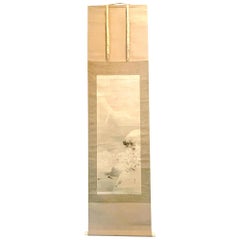
Japanese Ink and Wash Scroll Painting by Watanabe Seitei
Located in Atlanta, GA
Watanabe Seitei, also known as Watanabe Shotei (1851–1918), was born in late Edo period. He was one of the earliest Japanese artists who visited and be...
Category

Early 1900s Japanese Antique Japonisme Furniture

Materials

Brocade, Silk, Paper

Shreve Co, San Francisco Sterling Rim Japanese Satsuma Plate, Early 20th C.
Located in San Francisco, CA
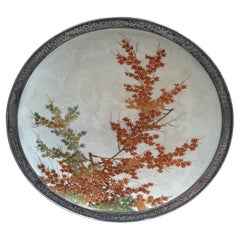
Shreve & Co, San Francisco Sterling Rim Japansese Satsuma Plate. Hand hammered, sterling silver rim. Early 20th century Finely painted and gilt autumnal...
Category

Early 20th Century Japanese Japonisme Furniture

Materials

Sterling Silver

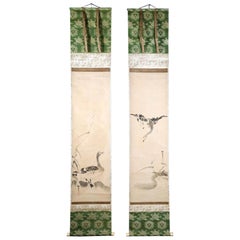
Pair of Japanese Ink Hanging Scrolls Kano Tanyu
By Kano Tan yu 1
Located in Atlanta, GA
A fine matching pair of hanging scrolls ink on paper mounted in green brocade borders circa Edo period (17-18th century). The Kano school painting depicts wild geese in the reeds by the margin of water, a popular subject borrowed from the Chinese tradition. Both painting were signed as Tanyu with a red seal of Morinobu, his birth name. The storage box is also present and was inscribed with the title Painting of Geese and Reeds and Kano Tanyu...
Category

Late 17th Century Japanese Antique Japonisme Furniture

Materials

Wood, Paper

Japonisme furniture for sale on 1stDibs.

Find a broad range of unique Japonisme furniture for sale on 1stDibs. Many of these items were first offered in the 21st Century and Contemporary, but contemporary artisans have continued to produce works inspired by this style. If you’re looking to add vintage furniture created in this style to your space, the works available on 1stDibs include decorative objects, asian art and furniture, serveware, ceramics, silver and glass and other home furnishings, frequently crafted with metal, ceramic and other materials. If you’re shopping for used Japonisme furniture made in a specific country, there are Asia, East Asia, and Japan pieces for sale on 1stDibs. While there are many designers and brands associated with original furniture, popular names associated with this style include Tiffany Co., Gökhan Eryaman, İsmail Dağlı, and Makuzu Kozan. It’s true that these talented designers have at times inspired knockoffs, but our experienced specialists have partnered with only top vetted sellers to offer authentic pieces that come with a buyer protection guarantee. Prices for furniture differ depending upon multiple factors, including designer, materials, construction methods, condition and provenance. On 1stDibs, the price for these items starts at $29 and tops out at $185,360 while the average work can sell for $2,527.

Still Thinking About These?

All Recently Viewed