Japonisme Furniture

JAPONISME STYLE

In the late 19th and early 20th century, France developed an enduring passion for Japanese aesthetics and craftsmanship. Not only did this interpretation of Japanese culture — which became known as Japonisme — infuse fresh energy into French art and design, but it also radically transformed how Europeans, and subsequently the world, would come to understand visual culture. 

Until 1853, Japan had been closely guarded against foreign visitors for over two centuries. However, American Commodore Matthew C. Perry sailed into Japan that year and initiated the first of its treaties with the United States and Europe, thereby opening its borders and giving the West its first-ever look at Japanese design. 

For the next few decades, taken with Japonisme, sophisticated collectors in Paris, New York and elsewhere gorged themselves on lacquered screens, celadon ceramics and netsuke ornaments, along with artworks depicting various aspects of Japanese life. The East Asian country’s influence on Europe, particularly France, contributed to one of the most creatively prosperous periods in history, leaving an imprint on the Impressionist, Art Nouveau and Art Deco movements, and inspiring artists like Edgar Degas, Mary Cassatt, Vincent van Gogh as well as luxury houses such as Louis Vuitton and Hermès. Japonisme emerged at the time when the ornate Renaissance Revival style was the most prominent mode of decorating in Europe, and Japanese aesthetics seemed strikingly modern and elegant in comparison. 

In addition to everyday practical objects from Japan, such as vases, tableware and decorative boxes, Japanese art, especially Japanese woodblock prints by masters of the ukiyo-e school, caught the eye of many artists — particularly those in the Art Nouveau poster community in 1880s Paris. The luscious organic colors associated with traditional Japanese design, motifs like cherry blossoms and carp and the vivid patterns found in woodblock prints, silks and more were adopted and appropriated by painters as well as ceramicists and those working in other fields of the decorative arts. Today, demand for Japanese lacquerware — furniture, trays, writing boxes, screens, incense burners — from the Edo period (1615–1868) and the late 19th century continues to be very strong among collectors.

Find a collection of antique Japonisme furniture and decorative objects on 1stDibs.

to
72
410
164
626
81
9
23,838
6,265
5,963
1,940
853
801
619
533
505
430
202
174
160
144
114
77
56
47
34
234
358
90
155
109
46
32
7
27
8
14
17
20
13
13
2
243
211
179
117
110
716
657
649
358
186
716
706
707
31
31
27
16
14
Style: Japonisme
Place of Origin: Asian
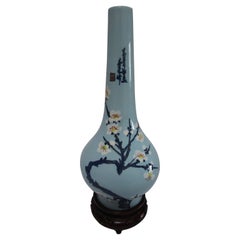
Turquoise Vintage Japanese Ceramic Bulbous Vase on Rosewood Stand
Located in Lomita, CA
This turquoise blue Japanese export vase with a rosewood base is as refreshing as a breath of spring. It This item is an inspired mid 20th century Japanese export blue vase, showca...
Category

Mid-20th Century Japanese Japonisme Furniture

Materials

Ceramic, Porcelain

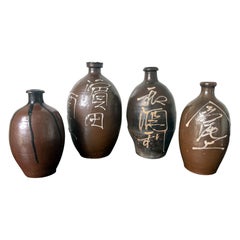
Collection of Four Japanese Tanba Tokkuri Sake Bottles
Located in Atlanta, GA
A set of four Japanese Ceramic Tokkuri Sake storage bottles circa early 20th century (Meiji to Taisho period). The bottles were made in Tanba (or Tamba) ...
Category

Early 20th Century Japanese Japonisme Furniture

Materials

Ceramic

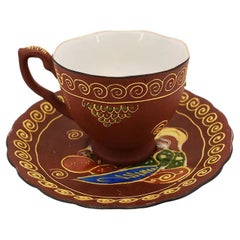
Moriage Figural Porcelain Teacup and Saucer in in Maroon and Gold, Japan
Located in Oklahoma City, OK
A fine porcelain teacup and saucer set. This pair would be fabulous if mixed in with a current collection, or on its own. On a maroon backg...
Category

20th Century Japanese Japonisme Furniture

Materials

Gold

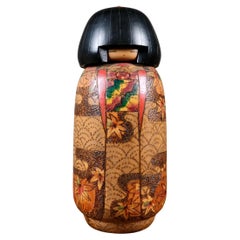
Large Maple Leaves Kokeshi by Inosuke Kobayashi, 1970s, Japan
Located in Lyon, FR
Kokeshi à feuilles d'érables, des années 1970, fabriquée par Inosuke Kobayashi, prix du Premier Ministre en 1979. Réputé pour son talent à reproduire avec précision l'art des tissus...
Category

1970s Japanese Vintage Japonisme Furniture

Materials

Wood, Paint

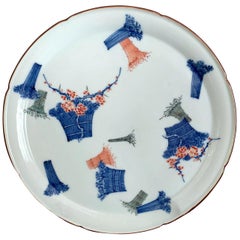
Japanese Antique Kakiemon Plate from Arita
Located in Atlanta, GA
A milky white dish with slight scalloped rim and decorated with cobalt blue iron red and green enamel over glaze, this delicate piece in Kakiemon Style was dated at least to the earl...
Category

Early 18th Century Japanese Antique Japonisme Furniture

Materials

Porcelain

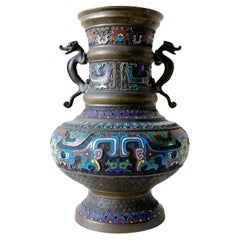
Early 20th Century Japanese Champleve Brass Vase
Located in Delray Beach, FL
Exceptional early 20th century Japanese brass champleve. Features vibrant enameled decorative designs throughout the vase.
Category

Early 20th Century Japanese Japonisme Furniture

Materials

Brass, Enamel

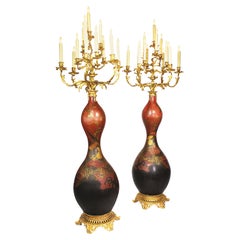
Pair 19th Century Japanese Imari Porcelain Gilt-Bronze Torchere Candelabra
Located in Los Angeles, CA
A fine Pair of 19th century Japanese Imari Porcelain and French Gilt-Bronze Mounted Thirteen-Light Celadon Torchere Candelabra. The bottle-shaped Japonisme vases with a Royal red background, decorated with parcel-gilt and black soaring eagles in the hunt within a forestall scene. Each Vase fitted and surmounted with a French 19th century Louis XV Style 13-Light scrolled candelabrum and all raised on a circular pierced gilt-bronze plinth. circa: 1880. Imari Porcelain (????) is the name for Japanese porcelain wares made in the town of Arita, in the former Hizen Province, northwestern Kyushu. They were exported to Europe extensively from the port of Imari, Saga, between the second half of the 17th century and the first half of the 18th century. The Japanese as well as Europeans called them Imari. In Japanese, these porcelains are also known as Arita-yaki (???). Imari or Arita porcelain has been continously produced up through the present day. Characteristics Though there are many types of Imari, Westerners' conception of Imari in the popular sense is associated only with a type of Imari produced and exported in large quantity in mid-17th century. This type is called Kinrande. Kinrande Imari is colored porcelain with cobalt blue underglaze and red and gold overglaze. The color combination was not seen in China at that time. Traditional Ming dynasty color porcelain used dominantly red and green, probably due to scarcity of gold in China, whereas gold was abundant in Japan in those days. The subject matter of Imari is diverse, ranging from foliage and flowers to people, scenery and abstractions. Some Imari design structures such as kraak style were adopted from China, but most designs were uniquely Japanese owing to the rich Japanese tradition of paintings and costume design. The porcelain has a gritty texture on the bases, where it is not covered by glaze. There is also blue and white Imari. Kakiemon style Imari is another type of Imari, but it tends to be categorized separately in Europe. History "Imari" was simply the trans-shipment port for Arita wares. It was the kilns at Arita which formed the heart of the Japanese porcelain industry. Arita's kilns were set up in the 17th century, when kaolin was discovered in 1616 by the immigrant Korean potter, Yi Sam-pyeong (1579–1655). (He may also be known by the name, "Kanage Sambei".) Yi Sam-Pyeong, along with his extended family of 180 persons, left Korea on the offer of a privileged position in Japan. This decision was made after the occurrence of certain Japanese invasions of Korea. After Yi Sam-Pyeong's discovery, his kilns began to produce revised Korean-style blue and white porcelains, known as "Shoki-Imari". In the mid-17th century there were also a lot of Chinese refugees in Northern Kyushu due to the turmoil on Chinese continent, and it is said one of them brought coloring technique to Arita. Thus Shoki-Imari developed into Ko-KutaniImari. Ko-Kutani was produced around 1650 for both export and domestic market. Blue and white porcelain continued to be produced and they are called Ai-Kutani. Ko-Kutani Imari for the export market usually adopted Chinese design structure such as kraak style, whereas Ai-Kutani for the domestic market were highly unique in design and are accordingly valued very much among collectors. Ko-Kutani style evolved into Kakiemon style Imari, which was produced for about 50 years around 1700. Imari achieved its technical and aesthetic peak in Kakiemon style, and it dominated European market. Blue and white Kakiemon is called Ai-Kakiemon. Kakiemon style transformed into Kinrande in the 18th century. Kinrande used blue underglaze and red and gold overglaze, and later some other colors. Imari began to be exported to Europe because the Chinese kilns at Ching-te-Chen were damaged in the political chaos and the new Qing dynasty government stopped trade in 1656–1684. Exports to Europe were made through the Dutch East India Company, but the designation "Imari Porcelain" in Europe connotes Arita wares of mostly Kinrande Imari. Export of Imari to Europe stopped in mid-18th century when China began export to Europe again, since Imari was not able to compete against China due to high labor cost. By that time, however, both Imari and Kakiemon style were already so popular among Europeans, Chinese export porcelain copied both Imari and Kakiemon style, which is called Chinese Imari. At the same time, European kilns, such as Meisen also tried to copy Imari and Kakiemon. Export of Imari surged again in late 19th century (Meiji era) when Japonism flourished in Europe. Thus in western world today, two kinds of Imari can...
Category

19th Century Japanese Antique Japonisme Furniture

Materials

Bronze, Ormolu

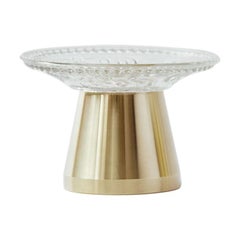
Candleholder 2 Ryosuke Harashima Contemporary Zen Japanese craft Mingei
Located in Shibuya-ku, Tokyo
Candleholder designed by Ryosuke Harashima. This work is made of Japanese antique glass plate and brass. Artist create new style candleholder by ...
Category

2010s Japanese Japonisme Furniture

Materials

Brass

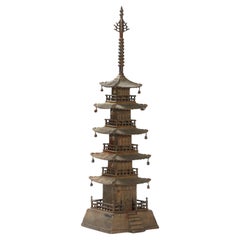
Gojunoto Japanese Metal Pagoda
Located in Vienna, AT
Five-story Japanese pagoda "Gojūnotō" made of painted patinated metal.
Category

Mid-20th Century Japanese Japonisme Furniture

Materials

Copper, Iron

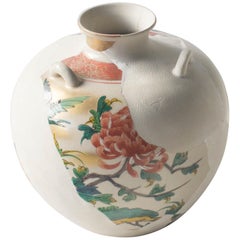
Reconstructed Ceramics #3 Contemporary Zen Japonism Style
Located in Shibuya-ku, Tokyo
This series of ceramics are unique work by Norihiko Terayama. He broke ceramic at first, and make it into a lot of fragment. He rasp some of fragmen...
Category

2010s Japanese Japonisme Furniture

Materials

Ceramic

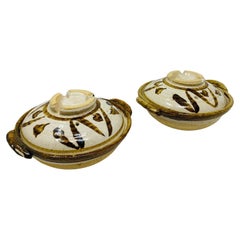
Set of 2 Vintage Studio Pottery Covered Dish Japan 1950s
Located in San Diego, CA
Beautiful set of 2 vintage studio pottery covered bowls. These handcrafted dishes feature vented lids and shoulder handles. A hand painted abstract design accents the natural beige ...
Category

1950s Japanese Vintage Japonisme Furniture

Materials

Ceramic

Imari Porcelain Flower Pot 19th Century
Located in Beuzevillette, FR
Beautiful porcelain planter decorated with imari. On this flowerpot, the background is blue, there are reserves in which appear a dragon and a bird surrounded by red flowers. The upp...
Category

Late 19th Century Japanese Antique Japonisme Furniture

Materials

Porcelain

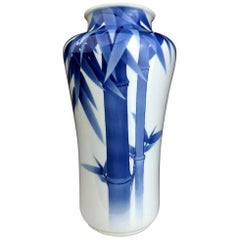
Japanese Porcelain Vase Makuzu Kozan Meiji Period
Located in Atlanta, GA
A striking blue and white vase from the studio of Japanese Potter Makuzu Kozan, also known as Miyagawa Kozan (1842–1916), one of the most established and collected ceramist from Meiji Period. Born as Miyagawa Toranosuke, Kozan established his pottery studio in Yokohama circa 1870s and later became one of the appointed artists to the Japanese Imperial household. His work was exhibited in many international fairs that the Meiji government participated at the turn of the century and won many grand prizes. Of a relatively large size, this vase is decorated with underglaze cobalt blue using the novel technique developed by Kozan called Fuki-e (the blow painting). As a result, the bamboos appear took on a three-dimensional quality as if appearing in a mist. Known as one of the most creative ceramists, circa 1887, Kozan started experimenting with new chemical colors from the West in the format of his porcelain glaze. New colors allowed him to create underglaze design that appeared bright, smooth and glossy. He even invented his own receipt of cobalt blue to achieve a much brighter yet softer shade, as evident on this vase. To create landscape that is realistic and dimensional, more common in the western paintings, he was inspired by the native Japanese ink painting technique developed around 1900 by Yokoyama Taikan...
Category

Early 1900s Japanese Antique Japonisme Furniture

Materials

Ceramic

Japanese Ceramic Bowl Makuzu Kozan Utusushi Kenzan
Located in Atlanta, GA
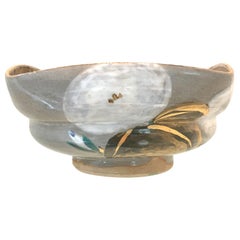
A rare ceramic bowl with overglaze paint decoration by Japanese imperial potter Makuzu Kozan ((1842–1916). Unlike the better-known works Kozan made for the expositions in the west and export to the foreign market, this piece exemplifies his work for the domestic market and the tea ceremony. The bowl was made in the so called "Utusushi" Ogata Kenzan (1663-1743), a celebrated Edo painter and ceramicist. Utusushi is loosely translated as "in the spirit of". It is not at all a simple imitation of a master, but a Japanese concept of embracing the spiritual essence of a master while the creator is free to mix in his or her own unique artistic interpretation and flavor. The bowl was made to hold fruits during the tea ceremony. It has a very distinguished form with a circular lower body morphing into a square upper portion that further opening with flared rim. The surface has a grey glaze onto which Asagao flowers (Japanese morning glory) on the vines were painted in a free and poetic style. White was used for the petals, green for the leaves with touches of gold highlight. Asagao, the symbol of the summer was rendered in the spirit of Ogata Kenzan, and interestingly the shape of the blossom echoes the unique form the bowl. It was likely reserved for the tea ceremony during the summer months. Under the base, Kozan was signed in black on a white porcelain plaque inlay. For two similar examples of Kozan's work Utusushi Kenzan, see Page 168-169 of the book: Sekai ni Aisa Reta ya Kimono Miyagawa Kozan Makuzu...
Category

Early 1900s Japanese Antique Japonisme Furniture

Materials

Ceramic

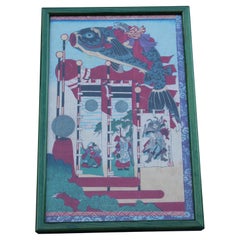
Print Toyohara Chikanobu Japan Woodcut 1880
Located in Palermo, Sicily
complete measurements with frame cm.52x40
Category

1880s Japanese Antique Japonisme Furniture

Materials

Paper

Print Toyohara Chikanobu Japan Woodcut 1880
Located in Palermo, Sicily
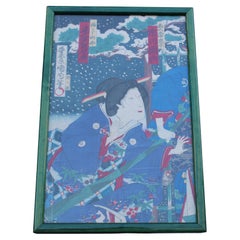
Print Toyohara Chikanobu Japan Woodcut 1880
Category

1880s Japanese Antique Japonisme Furniture

Materials

Paper

Frame Cushion Elliptical
Located in Bomonti, TR
Frame Cushion Elliptical is a seating pad characterized by a simple geometric form. It presents a comfortable experience by creating a pouf-like feeling for those who sit on it. Thi...
Category

2010s Turkish Japonisme Furniture

Materials

Polyester

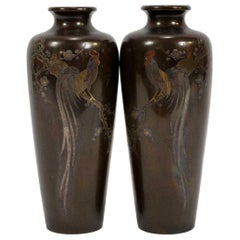
Pair of Japanese Bronze Vase with Metal Inlays by Mitsufune
Located in Atlanta, GA
A pair of elegant vases of solid oiled bronze from the Meiji era, Japan (1868-1912). In a Classic Meiping shape, the pair has a mirrored inlay with gold, silver and red enamel that d...
Category

Late 19th Century Japanese Antique Japonisme Furniture

Materials

Bronze

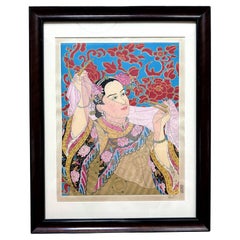
Framed Japanese Woodblock Print Les Perles by Paul Jacoulet
Located in Atlanta, GA
A Japanese Woodblock print by Paul Jacoulet (French, 1896-1960) entitled "Les Perles Mandchoukuo" (The Pearls, Manchuria). Published in 1950, this fine print is considered the most technically complex piece among all Jacoulet's work. Over 300 individual impressions of nearly 60 double-sided carved woodblocks were used to create this image. It depicts a Chinese lady in full traditional Qing Dynasty clothing...
Category

1950s Japanese Vintage Japonisme Furniture

Materials

Wood, Paper

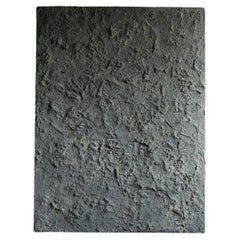
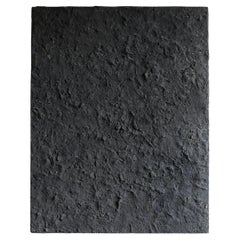
Tsumikasanattamono by Wataru Hatano
Located in Sammu-shi, Chiba
Japan / 2021s Size : W1200 D25 H1600 mm Kuroya Washi artist Hatano Wataru's masterpiece "Stacked Things" series. Japanese paper, soil, pigments, etc. are layered on top of each other to express the beauty of what has been accumulated over the years. [Wataru Hatano...
Category

2010s Japanese Japonisme Furniture

Materials

Sandstone

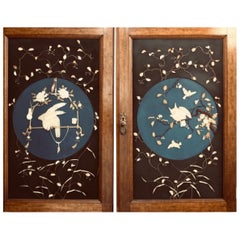
Japanese Meiji Period Pair of Shibayama Panels, Ca. 1868
Located in New York, NY
Japanese Pair of Shibayama Panels, Ca. 1900 ABOUT Both panels have immensely rich detail articulated in shell, mother-of-pearl, and bone along with ca...
Category

Early 20th Century Japanese Japonisme Furniture

Materials

Wood

Japanese Rinpa Style Lacquer Box Meiji Period
Located in Atlanta, GA
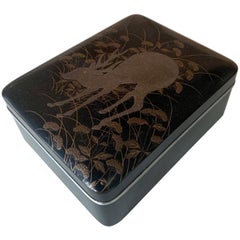
A black lacquer tebako (hand box) with maki-e decoration and silver trim, circa late 19th century, Meiji period. The surface of the lid features a Rinpa style maki-e paint depicting ...
Category

1890s Japanese Antique Japonisme Furniture

Materials

Wood, Lacquer

Pair of Cloisonné Bronze Vases, Japan, Circa 1900
Located in Saint-Ouen, FR
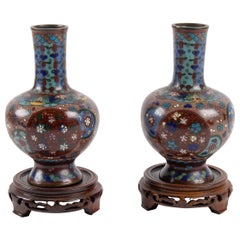
Pair of cloisonné bronze vases, Japan, circa 1900, accident on one, slight depression Measures: H 19cm, D 10cm.
Category

20th Century Japanese Japonisme Furniture

Materials

Bronze

Antique Japanese Lacquer And Giltwood Zushi Shrine
Located in Bradenton, FL
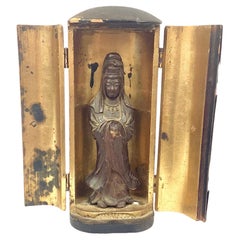
Antique Japanese Lacquer And Giltwood Zushi Shrine, or traveling altar, with hand-carved wooden standing Japanese figure. Intricately bronzed...
Category

19th Century Japanese Antique Japonisme Furniture

Materials

Giltwood, Lacquer

Japanese Two-Panel Phoenix Screen, Edo Period, Ca. 1850
Located in New York, NY
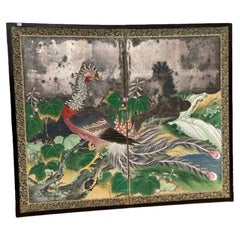
Japanese Two-Panel Phoenix Screen, Edo Period, Ca. 1850 Japanese Edo Period (1603-1868) DIMENSIONS Height: 24 inches Width: 28 inches
Category

1850s Japanese Antique Japonisme Furniture

Materials

Wood

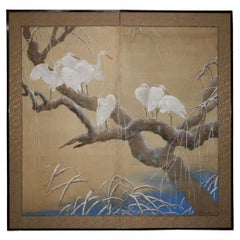
Japanese Two-Panel Screen with Snow Cranes on a Willow Tree, 19th C
Located in New York, NY
This great masterpiece is one of the most amazing screen paintings we have seen, each snow crane is painted with its own personality and attitude, using the finest pigments and Gofun...
Category

1860s Japanese Antique Japonisme Furniture

Materials

Brocade, Wood

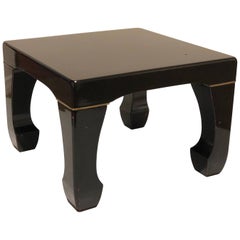
Mid-Century Modern Black Lacquer Low Japanese Stool with Gold Leaf Accents
Located in San Diego, CA
1950s solid black lacquer wood and gold leaf accents low stool/table, stamped made in Japan solid construction with a polished finish that shows natural wear age soft scratches, a co...
Category

20th Century Japanese Japonisme Furniture

Materials

Wood, Lacquer

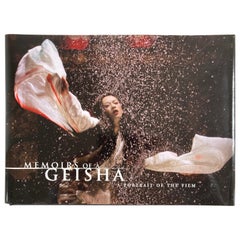
Memoirs of a Geisha A Portrait of the Film By Peggy Mulloy 2005 Hardcover Book
By David James
Located in Moreno Valley, CA
Memoirs of a Geisha A Portrait of the film by Peggy Mulloy · 2005 hardcover book. By David James (Photographs by), Peggy Mulloy (Text by), Rob Marshall (Introduction by), Arthur Gol...
Category

Late 20th Century Japanese Japonisme Furniture

Materials

Paper

Tsumikasanattamono by Wataru Hatano BK Small_B
Located in Sammu-shi, Chiba
Japan / 2021s Size : W900 D25 H1150 mm Kuroya Washi artist Hatano Wataru's masterpiece "Stacked Things" series. Japanese paper, soil, pigments, etc. are layered on top of each other to express the beauty of what has been accumulated over the years. [Wataru Hatano...
Category

2010s Japanese Japonisme Furniture

Materials

Sandstone

Shreve Co, San Francisco Sterling Rim Japanese Satsuma Plate, Early 20th C.
Located in San Francisco, CA
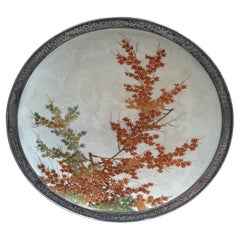
Shreve & Co, San Francisco Sterling Rim Japansese Satsuma Plate. Hand hammered, sterling silver rim. Early 20th century Finely painted and gilt autumnal...
Category

Early 20th Century Japanese Japonisme Furniture

Materials

Sterling Silver

Finely Carved Japanese Okimono on Stand
Located in Atlanta, GA
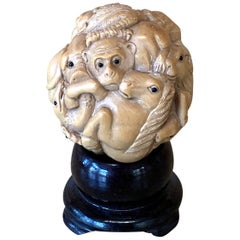
An antique Okimono (Japanese means artsy display ornament object) displayed on a small custom wood stand from Meiji Period circa early 2oth century. T...
Category

Early 20th Century Japanese Japonisme Furniture

Materials

Wood

Vintage Japanese Imari Porcelain Bowl Hand-Painted for Geary s Beverly Hill
Located in Moreno Valley, CA
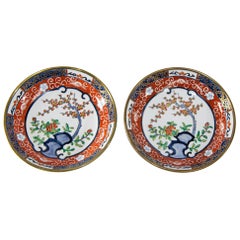
Vintage Japanese Imari Porcelain 7.5" Bowl - Hand Decorated for Geary's Beverly Hills. Set of two Japanese Imari porcelain Bowls from the prestigious brand GEARYS BEVERLY HILLS, Vintage collectible large blue and white porcelain bowl. These beautiful Japanese bowls are hand painted. Perfect for display or using as catchall or vide poche. Vintage Japanese Porcelain...
Category

20th Century Hong Kong Japonisme Furniture

Materials

Ceramic, Porcelain

Patinated Bronze Vase With A Lizard Carved In Relief In The Center
Located in Milano, IT
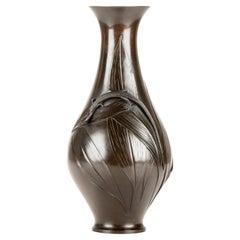
Patinated bronze vase, characterized by a refined naturalistic decoration with a lizard sculpted in relief in the center. The lizard is placed on leaves overlapping each other creati...
Category

Late 19th Century Japanese Antique Japonisme Furniture

Materials

Bronze

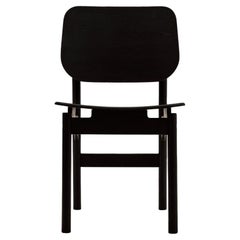
KITA LIVING Frame Chair Rectangular - Oak Black
Located in Bomonti, TR
Characterized by rectangular forms, Frame Chair is an expression of comfort and well-balanced geometry. The confident relationship between skeleton, seat and backrest figures its pre...
Category

2010s Asian Japonisme Furniture

Materials

Wood, Oak, Plywood

Vintage Japanese Decorative Porcelain Toyo Plate
By Toyo
Located in Moreno Valley, CA
Vintage Japanese decorative porcelain plate beautifully decorated with gorgeous colors and peony design typical of Toyo of Japan, circa 1950s. It is absolut...
Category

Early 20th Century Japanese Japonisme Furniture

Materials

Porcelain

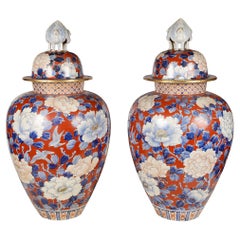
Large Pair 19th Century Japanese Fukagawa Lidded Vases
Located in Brighton, Sussex
A wonderful pair of large Japanese late 19th century Fukagawa Imari lidded vases. Each with three stylised mythical birds as finials to the lids, bold o...
Category

Late 19th Century Japanese Antique Japonisme Furniture

Materials

Porcelain

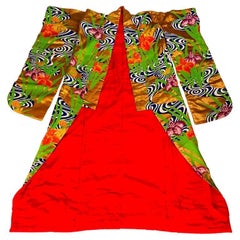
Embroidered Red and Green Japanese Silk Ceremonial Kimono, 1940 s
Located in Plainview, NY
An early 20th century exceptional Embroidered Japanese Ceremonial Kimono featuring marvelous handmade floral pattern in vivid colors including red, blue and green on gold. The interi...
Category

20th Century East Asian Japonisme Furniture

Materials

Brocade, Silk

Antique Japanese Ceramic Ko-Kutani Revival Footed Dish
Located in Atlanta, GA
A Japanese glazed ceramic footed dish made in the Ko-Kutani type of Edo period but likely during Kutani revival in the 19th century Meiji Period. The dish with delicate foliaged rim ...
Category

19th Century Japanese Antique Japonisme Furniture

Materials

Ceramic

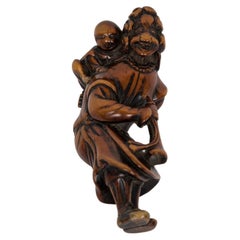
Boxwood netsuke representing a ducthman with child and a trumpet
Located in PARIS, FR
Wooden netsuke of a standing Dutchman figure with his mouth open, leaning forward. He is wearing a long curly wig, a ruff and a long coat tied at the waist. In his right hand, the ma...
Category

Late 18th Century Japanese Antique Japonisme Furniture

Materials

Boxwood

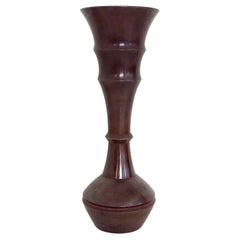
Yasumi Nakajima II Ikebana Bronze Vase, circa 1960, Japan.
Located in Brussels, BE
Yasumi Nakajima II (1906-1988) Ikebana vase, circa 1960, Japan. Trumpet form, Tomoe model, with nice patinated brown-red (seido) bronze. Signed underneath. Dimensions: 26 cm H, 9 ...
Category

1960s Japanese Vintage Japonisme Furniture

Materials

Bronze

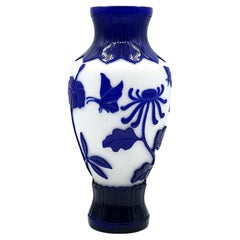
Chinese Peking Cut Blue White Cameo Glass Vase, Ca. ca. 1900-1920
Located in New York, NY
Chinese Peking Cut Blue & White Cameo Glass Vase, Ca. ca.1900-1920 DIMENSIONS: Height: 12.5 inches Diameter: 5.5 inches ABOUT CHINESE PEKING GLASS Peking cut blue ...
Category

1910s Japanese Vintage Japonisme Furniture

Materials

Glass

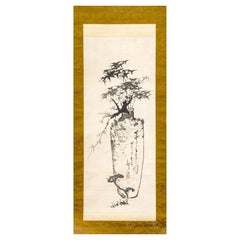
Antique Japanese Ink Hanging Scroll Hidaka Tetsuo with Wood Storage Box
Located in Atlanta, GA
A hanging ink (Sumi-e) silk scroll by Japanese Zen artist Hidaka Tetsuo (1791-1871). Well presented in brocade boarders and mounted on paperback, this scroll depicts "Three Noble Friends in Winter" in a poetic and novel way. One of the favorite subjects by Chinese painters, the three noble friends in winter consists of pine, bamboo and plum flowers. They were admired for their characters of strength in cold resistance to remain evergreen and even blossom in unfavorable condition. The artist, however, composited the subjects in a none-conventional way as Ikebana. Bamboo and flowering plum branches were presented in an oversized pot...
Category

19th Century Japanese Antique Japonisme Furniture

Materials

Brocade, Wood, Paper

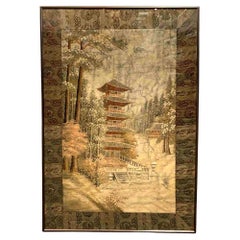
Framed Japanese Embroidery Textile Panel Pagoda Scenery
Located in Atlanta, GA
A Japanese silk embroidery landscape scenery panel depicting a Buddhist pagoda and a temple compound set in a forest with towering pines and...
Category

Early 20th Century Japanese Japonisme Furniture

Materials

Metal

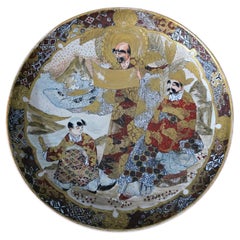
Excellent Satsuma Charger
Located in Swadlincote, GB
A super quality Satsuma bowl, in overall excellent condtion. Satsuma china, or Satsuma ware, originates from the Satsuma Province in southern Kyūshū, Jap...
Category

19th Century Japanese Antique Japonisme Furniture

Materials

Ceramic

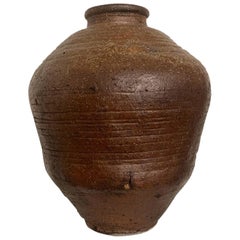
Large Japanese Antique Shigaraki Tsubo Jar
Located in Atlanta, GA
An antique Japanese stoneware storage jar, known as tsubo from Shigaraki kiln, circa 17th-18th century (early Edo possibly Momoyama period)....
Category

17th Century Japanese Antique Japonisme Furniture

Materials

Ceramic

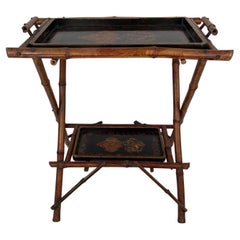
Japonisme bamboo side table
Located in S-HERTOGENBOSCH, NL
Bamboo side table in Japanese style with 2 trays. The trays, in 2 sizes, are decorated in Japanese lacquer, with flowers and births.
Category

Early 1900s Japanese Antique Japonisme Furniture

Materials

Bamboo, Lacquer

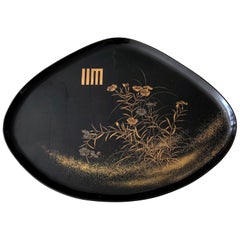
An Antique Japanese Lacquer Maki-e Tray
Located in Atlanta, GA
A fan shape black lacquer tray from Japan circa 1910-30s, late Meiji to early Showa era. Elaborated decorated with a bundle of yomogi blossom in a very fine Maki-e technique using both gold and silver powders. There is a Japanese symbol on the top left, which represents yomogiu, stemming from yomogi (蓬), a wild plant that belongs to the chrysanthemum family and widely grown in Japan. This name yomogui is from a scene in the Tale of Genji...
Category

Early 20th Century Japanese Japonisme Furniture

Materials

Lacquer

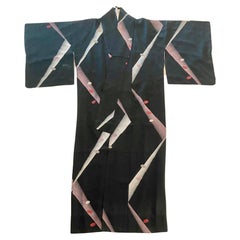
Vintage Japanese Silk Meisen Kimono with Geometrical Design
Located in Atlanta, GA
A vintage Japanese formal silk Kimono in an "ink green" color with striking geometrical design. The garment is hand-stitched Meisen kimono from a crepe l...
Category

Mid-20th Century Japanese Japonisme Furniture

Materials

Silk

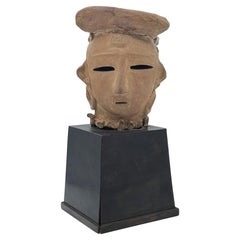
Japanese Tumulus Period Unglazed Terracotta Haniwa of a Woman’s Head, 3rd/4th C.
Located in New York, NY
Japanese Tumulus Period Unglazed Aged Terracotta Haniwa of a Woman’s Head, 3rd/4th Century Tumulus Period (AD 250-552) Haniwa means “circle o...
Category

15th Century and Earlier Japanese Antique Japonisme Furniture

Materials

Terracotta

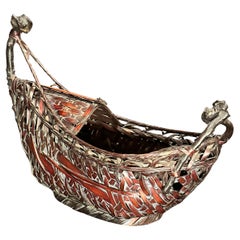
Antique Japanese Ikebana Boat Form Flower Basket
Located in Norwood, NJ
Antique Japanese woven boat shape (funagata) Ikebana flower basket, with lacquer,975 rattan, root and smoked bamboo. Fine quality weaving with wonderful patina.
Category

Early 20th Century Japanese Japonisme Furniture

Materials

Bamboo, Rattan

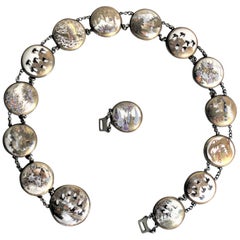
Antique Hand-Painted Japanese Porcelain Satsuma Silver Ladies Belt
Located in Hamilton, Ontario
This antique silver and porcelain belt was made in Japan in approximately 1900 in the period Satsuma style. The belt is a series of hand painted medallions set in silver portraying J...
Category

Early 20th Century Japanese Japonisme Furniture

Materials

Silver

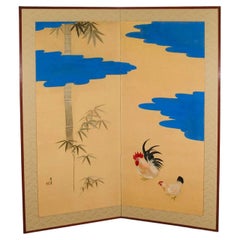
Japanese Meiji Two-Panel Embroidery Screen w/ Rooster and Chicken, Ca. 1890s
Located in New York, NY
Japanese Meiji Period Two-Panel Embroidery Screen with Rooster and Chicken, Ca. 1890s Meiji Period (1868-1912) – Ca. 1890/1910 Signed DIMENSIONS Width: 60 inches Heigh...
Category

1890s Japanese Antique Japonisme Furniture

Materials

Silk

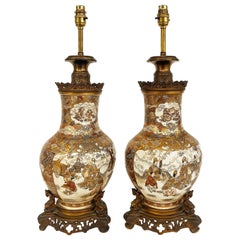
19th-Century Japanese Satsuma Vases Mounted as Lamps, Gilt Bronze Mounts, Pair
Located in Miami, FL
19th-Century Japanese Satsuma Vases Mounted as Lamps, Gilt Bronze Mounts, Pair Offered for sale is a rare and fine pair of 19th century Japanese Satsuma vases mounted as lamps. The...
Category

19th Century Japanese Antique Japonisme Furniture

Materials

Bronze

Japanese Cloisonné Covered Jar by Ando Jubei
Located in Atlanta, GA
Japanese cloisonné enamels are known as shippo-yaki and the mid-19th century saw the production of very high quality wares in the early centers Nagoya. One of the most renowned works...
Category

Early 20th Century Japanese Japonisme Furniture

Materials

Metal, Sterling Silver, Enamel

Japanese Yoshidaya Saiko Kutani Ceramic Dish
By Yoshidaya
Located in Atlanta, GA
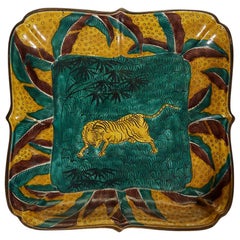
A Japanese Ao-Kutani stoneware dish with overglaze decoration in the shape of barbed quatrefoil shape from late Edo period, circa early mid-19th century. Around 1804, 100 years after Ko-Kutani (old-Kutani) ware disappeared abruptly after thriving from 1655-early 1700s, saiko-kutani (revived-kutani) was attempted by many kilns and several distinguished styles developed. Among them, Yoshidaya kiln attempted to revive the original style of Ko-Kutani known as Aote, which employed four dark colors: green, yellow, dark blue/black and aubergine to create bold and striking design. The Yoshidaya production was short-lived and lasted roughly from 1823-1831. This dish is likely dated from this period or shortly after. The overglaze design centered around a crouching tiger under a black bamboo grove in a deep green background, surrounded by luxuriant banana leaves in green and aubergine with black outlines. The base of a similar concentric barbed quatrefoil design is further decorated with black foliage outlines and marked with a square Fuku mark. For a Yoshidaya dish with identical shape but different landscape decoration, see lot 79 of sale 6547 Christie's London. Important Japanese and Chinese Art...
Category

19th Century Japanese Antique Japonisme Furniture

Materials

Ceramic

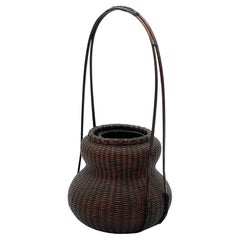
Japanese Late Meiji Period Woven Bamboo Tea Ceremony Basket, Early 20th Century
Located in New York, NY
Japanese Late Meiji Period Woven Bamboo Tea Ceremony Basket, Early 20th Century PERIOD Meiji Period (1868-1912) DIMENSIONS Height: 11.5 INCHES Diameter: 5 inches ABOU...
Category

Early 20th Century Japanese Japonisme Furniture

Materials

Bamboo

Antique Japanese Hanging Scroll Attributed to Iwasa Matabei
Located in Atlanta, GA
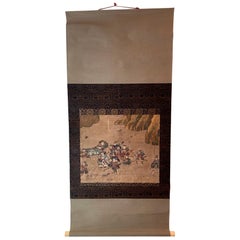
An antique ink and color on paper hanging scroll (kakejiku) with brocade border. It appears to be a fragment of a larger hand scroll depicting a procession of a lord with his entoura...
Category

Early 17th Century Japanese Antique Japonisme Furniture

Materials

Silk, Paper

Set of Five Ceramic Tea Cups by Otagaki Rengetsu
Located in Atlanta, GA
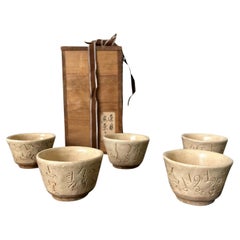
A set of five stoneware sencha tea cups by Otagaki Rengetsu (1791-1875). These miniature cups were simply molded in the classic form, glazed in off white and incised with cursive waka poems, a signature decorative style by the artist. Accompanies the cups is a wood storage box and paper slip label inscribed "Rengetsu sencha, tea cups" Purportedly purchased from Tessai-do Co. Ltd., Japan in 1991. Otagaki Rengetsu was a famous Buddhist nun in Edo period who is widely regarded to have been one of the greatest Japanese poets...
Category

Late 19th Century Japanese Antique Japonisme Furniture

Materials

Ceramic, Wood

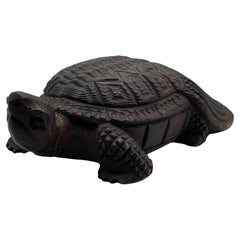
Japanese Large Hand-Carved Boxwood Okimono – “Mino-Kame” Turtle, Ca. 1900
Located in New York, NY
Japanese Large Hand-Carved Boxwood Okimono – “Mino-Kame” Turtle, Ca. 1900 DIMENSIONS: Height: 4 inches Length: 19 inches Wide : 5 inches ABOUT An exceptional example of Meiji-era c...
Category

Early 1900s Japanese Antique Japonisme Furniture

Materials

Wood

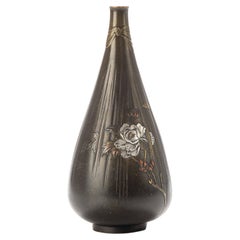
A Japanese drop-shaped bronze vase with peonies
Located in Milano, IT
Drop-shaped bronze vase, with peonies in relief, decorated to simulate a delicate and light fabric that ends with a bow near the top of the neck. Using mixed metals to create visual...
Category

Late 19th Century Japanese Antique Japonisme Furniture

Materials

Bronze

Japonisme furniture for sale on 1stDibs.

Find a broad range of unique Japonisme furniture for sale on 1stDibs. Many of these items were first offered in the 21st Century and Contemporary, but contemporary artisans have continued to produce works inspired by this style. If you’re looking to add vintage furniture created in this style to your space, the works available on 1stDibs include decorative objects, asian art and furniture, serveware, ceramics, silver and glass and other home furnishings, frequently crafted with metal, ceramic and other materials. If you’re shopping for used Japonisme furniture made in a specific country, there are Asia, East Asia, and Japan pieces for sale on 1stDibs. While there are many designers and brands associated with original furniture, popular names associated with this style include Tiffany Co., Gökhan Eryaman, İsmail Dağlı, and Makuzu Kozan. It’s true that these talented designers have at times inspired knockoffs, but our experienced specialists have partnered with only top vetted sellers to offer authentic pieces that come with a buyer protection guarantee. Prices for furniture differ depending upon multiple factors, including designer, materials, construction methods, condition and provenance. On 1stDibs, the price for these items starts at $29 and tops out at $185,360 while the average work can sell for $2,527.

Still Thinking About These?

All Recently Viewed