Japonisme Furniture

JAPONISME STYLE

In the late 19th and early 20th century, France developed an enduring passion for Japanese aesthetics and craftsmanship. Not only did this interpretation of Japanese culture — which became known as Japonisme — infuse fresh energy into French art and design, but it also radically transformed how Europeans, and subsequently the world, would come to understand visual culture. 

Until 1853, Japan had been closely guarded against foreign visitors for over two centuries. However, American Commodore Matthew C. Perry sailed into Japan that year and initiated the first of its treaties with the United States and Europe, thereby opening its borders and giving the West its first-ever look at Japanese design. 

For the next few decades, taken with Japonisme, sophisticated collectors in Paris, New York and elsewhere gorged themselves on lacquered screens, celadon ceramics and netsuke ornaments, along with artworks depicting various aspects of Japanese life. The East Asian country’s influence on Europe, particularly France, contributed to one of the most creatively prosperous periods in history, leaving an imprint on the Impressionist, Art Nouveau and Art Deco movements, and inspiring artists like Edgar Degas, Mary Cassatt, Vincent van Gogh as well as luxury houses such as Louis Vuitton and Hermès. Japonisme emerged at the time when the ornate Renaissance Revival style was the most prominent mode of decorating in Europe, and Japanese aesthetics seemed strikingly modern and elegant in comparison. 

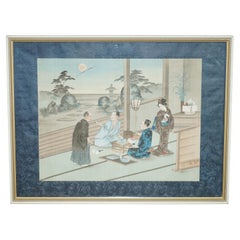
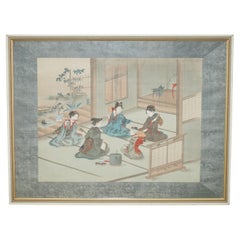
In addition to everyday practical objects from Japan, such as vases, tableware and decorative boxes, Japanese art, especially Japanese woodblock prints by masters of the ukiyo-e school, caught the eye of many artists — particularly those in the Art Nouveau poster community in 1880s Paris. The luscious organic colors associated with traditional Japanese design, motifs like cherry blossoms and carp and the vivid patterns found in woodblock prints, silks and more were adopted and appropriated by painters as well as ceramicists and those working in other fields of the decorative arts. Today, demand for Japanese lacquerware — furniture, trays, writing boxes, screens, incense burners — from the Edo period (1615–1868) and the late 19th century continues to be very strong among collectors.

Find a collection of antique Japonisme furniture and decorative objects on 1stDibs.

to
72
410
164
626
81
9
23,838
6,265
5,963
1,940
853
801
619
533
505
430
202
174
160
144
114
77
56
47
34
234
358
90
155
109
46
32
7
27
8
14
17
20
13
13
2
243
211
179
117
110
716
657
649
358
186
716
706
707
31
31
27
16
14
Style: Japonisme
Place of Origin: Asian
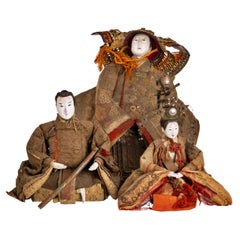
THREE FIGURES HINA MATSURI Japanese, Meiji period (1868-1912)
Located in Madrid, ES
THREE FIGURES HINA MATSURI Japanese, Meiji period (1868-1912) in painted plaster, eggshell, silk and other materials. Height: (largest) 50 cm good condit...
Category

19th Century Japanese Antique Japonisme Furniture

Materials

Silk, Plaster

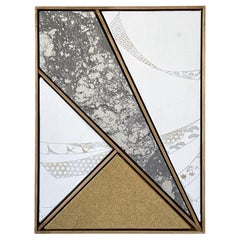
VIntage kimono textile art " Geometry ~ Marble ~" by ikasu Gold White Grey Japan
Located in Setagaya City, JP
This work is inspired by traditional Japanese nature motifs symbolism, and is framed in paulownia wood originally used for a kimono chest-of-drawers. It is elegantly framed with pau...
Category

1960s Japanese Vintage Japonisme Furniture

Materials

Silk, Wood

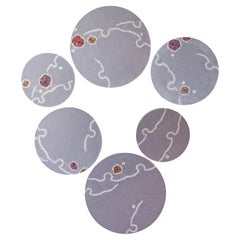
Vintage kimono textile art " Snowflake ~ New Beginnings ~" by ikasu Purple Japan
Located in Setagaya City, JP
Six canvases (Diameter approx. 30cm, 25cm, 20cm) use the fabric taken from antique kimono, its' various parts, to create one harmonious fluid image of a snowflake - a symbol of new b...
Category

1970s Japanese Vintage Japonisme Furniture

Materials

Canvas, Silk

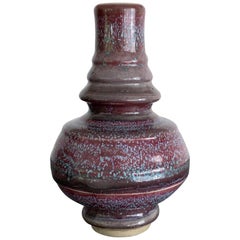
Asian Flambe Studio Pottery Vase
By Kyoto Pottery
Located in Atlanta, GA
A garlic bottle vase in an archaic Chinese form, but likely Japanese in origin. Several circumventing grooves however, suggest a more modern age. It was done in a brilliant purple glaze over a robin egg blue background glaze. The bubbling and bursting effects during the firing renders the surface an artistic spotting effect. The color pallet recalls the Classic Jun Yao...
Category

Late 19th Century Japanese Antique Japonisme Furniture

Materials

Ceramic

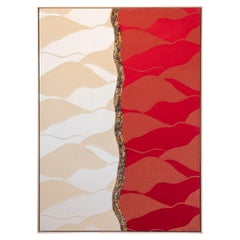
Vintage obi textile art "Under the Sun ~ Serendipity ~" by ikasu Red Beige Japan
Located in Setagaya City, JP
< This artwork creatively uses tree bark to evoke the imagery of woods and mountains during both the morning and nighttime on left and right. It is elegantly framed with paulownia wood, a tree closely connected to kimono culture, and is filled with storytelling and sense of luxury. By incorporating both the front and back sides of the same obi fabric woven in different colors, the play of light and shadow on the mountains is depicted through the contrasting appearances of these surfaces. The intention behind this piece is to convey the exquisite beauty of Japanese mountains and the lush forests that inhabit them. To achieve this, traditional elements of Japanese culture, such as obi textiles and craftsmanship involving wood, were used. The outer side and inner linings of the same obi, no longer suitable for clothing, along with bark material that would normally be discarded, have been repurposed to create this exceptional upcycle artwork. The fusion of Japanese natural materials – silk, paulownia wood, and pine bark for the central decoration – along with the so-called "Tozan" pattern, a unique Japanese natural design showing mountains from far-away point, captures the magnificent beauty of Japanese nature from various perspectives. The central bark decoration stands out as a distinctive feature of this work. Pine, oak, and other tree barks are interwoven among the mountains woven into the obi, creating a tangible and authentic natural atmosphere. << Period / Story The obi used in this piece was originally crafted during the late Showa period (1960-80ies). << Explanation and meaning of pattern and colors This upcycle artwork uses an obi with a tozan pattern woven in two colors. The design is inspired by a distant mountain range, a motif that has been used in paintings and crafts since ancient times. However, in this particular design, the mountains are depicted not as distant peaks but as graceful semicircles giving it a mild atmosphere. << Characteristics of the fabric This upcycled Fukuro-obi (two-side obi) showcases a festive color pattern of mountains intricately woven with gold threads against a beige front and red on the back. The way this obi interacts with light allows it to shift in expression, much like a mountain revealing different facets over time. It can transform from deep shades of color to the appearance of gold shimmering against bright hues, depending on the lighting and viewing angle. << About the frame Kiritansu - chest-of-drawers for kimono, is traditionally made from paulownia wood, a uniquely Japanese material closely tied to the world of kimonos. Paulownia wood is known as the lightest wood in Japan, prased for its natural luster, resistance to moisture, and resilience against cracking. Since ancient times, it has been used in crafting furniture, chests, and musical instruments. During the Edo period, it became customary to store cherished kimonos in paulownia chests...
Category

Late 20th Century Japanese Japonisme Furniture

Materials

Silk, Wood

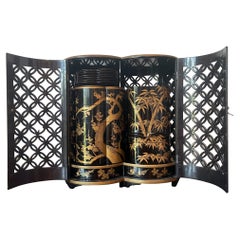
Japanese Maki-e Lacquer Portable Sagejubako Theme of Three Winter Friends
Located in Atlanta, GA
Sagejubako is a portable lunch or picnic set that became popular in the early Edo period when an additional meal was added between breakfast and dinner. It normally consists of a han...
Category

19th Century Japanese Antique Japonisme Furniture

Materials

Lacquer

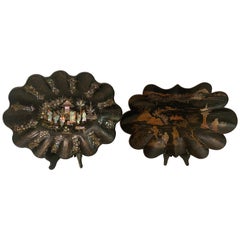
Two Japanese Mother of Pearl Wood Dishes
Located in Brea, CA
Two Japanese mother of pearl wood dishes, very beautiful pieces. Measures: Large one H 2” x L 13.5” x W 10”.
Category

Early 20th Century Japanese Japonisme Furniture

Materials

Lacquer

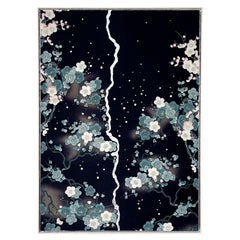
Antique kimono textile art " Plum Blossom Night ~ Resilience ~ " by ikasu Japan
Located in Setagaya City, JP
This artwork uses antique fabric from Taisho era (early 1920ies) kimono and paulownia wood taken from antique kiritansu - chest-of-drawers used initially to keep kimonos. It is el...
Category

1920s Japanese Vintage Japonisme Furniture

Materials

Silver Leaf

Pair of Large Japanese Carved Wood Temple Candleholders Edo Period
Located in Atlanta, GA
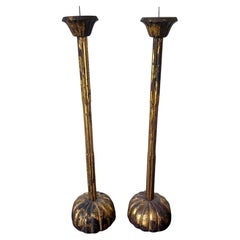
A tall pair of Japanese carved wood candle holders circa early 19th century (late Edo Period). The pair is carved in the typical form with a block base in the shape of stylized chrysanthemums and long fluted stem with changes in diameter that supports a grooved holder fitted with metal pricket. These types of oversized candle holders were traditionally used in Buddhist temples or Samurai's resident where they were placed on the altar table for worshiping. What is extraordinary of these candle stickers is that they feature a wonderfully conserved surface with lacquered gold leaf. The sparkling gold on the well weathered surface is visually striking. The professional conservation was performed in 2007 and as a result, the pieces display a wonderful aged Wabi-Sabi patina. The piece retains an original invoice from Far Eastern Antiques...
Category

Early 19th Century Japanese Antique Japonisme Furniture

Materials

Gold Leaf

Vintage obi textile art " Broken Vase ~ kintsugi ~" by ikasu Black Gold Japan
Located in Setagaya City, JP
< This textile artwork uses a vintage obi dated around 1980ies, with a feather motif, and arranges it so that it looks like a vase. Antique obi, just as it is a broken vase, is united back again with black obijime - a string used to tie up obi when it’s worn. Framed in kiritansu (antique chest) paulownia wood. It is elegantly framed with paulownia wood originally used for kimono chest-of-drawers, and is filled with storytelling and sense of luxury. I used pieces of kimono that could no longer be used as clothing and kiritansu chest-of-drawers that would normally be discarded to create the ultimate upcycled piece. << Explanation and meaning of pattern and colors Feathers hold various meanings and symbolism in Japanese traditional culture, often reflecting themes of spirituality, symbolism, and folklore. Here are some of the meanings associated with feathers in Japanese tradition: ・Divine Protection: Feathers are often seen as symbols of divine protection and spiritual guidance. Feathers, especially those from birds, are considered to be imbued with the protective energy, offering spiritual guardianship and safeguarding against negative forces. ・Connection to the Spirit World: Feathers are sometimes associated with the spirit world and the realm of the divine. In folklore and mythology, feathers are depicted as messengers between the earthly realm and the celestial realms. ・Symbol of Beauty and Elegance: Feathers are admired for their natural beauty, grace, and elegance. In traditional Japanese arts such as Noh theater, Kabuki, and dance performances like Kagura, actors and performers often use feathered costumes or accessories to enhance their appearance and convey a sense of refinement and sophistication. ・Sign of Good Luck and Prosperity: In Japanese folklore, certain birds like cranes and pheasants are considered symbols of good fortune, longevity, and prosperity. Feathers from these birds are often depicted in art and craftwork as auspicious symbols believed to bring blessings and positive energy to the bearer. < Kiritansu - chest-of-drawers for kimono, is traditionally made from paulownia wood, a uniquely Japanese material closely tied to the world of kimonos. Paulownia wood is known as the lightest wood in Japan, prased for its natural luster, resistance to moisture, and resilience against cracking. Since ancient times, it has been used in crafting furniture, chests, and musical instruments. During the Edo period, it became customary to store cherished kimonos in paulownia chests...
Category

1980s Japanese Vintage Japonisme Furniture

Materials

Silk, Wood

Japanese Bamboo Basket by Higashi Takesonosai
Located in Atlanta, GA
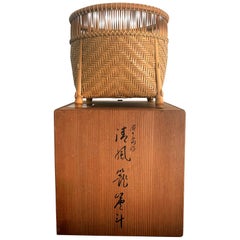
A handwoven bamboo basket by Japanese bamboo artist Higashi Takesonosai (1915-2003), in the form of a traditional rice container. It was woven with...
Category

20th Century Japanese Japonisme Furniture

Materials

Bamboo, Wood

Japanese Indigo Antique Boro Futon Cover or Wall Panel
Located in Alessandria, Piemonte
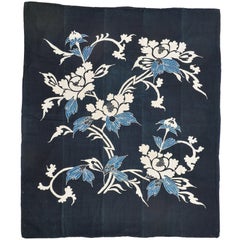
Rare perfect antique collection Japanese Indigo Boro Futon cover : also to use. The rare antique boros are now valued as pieces of art, therefore they are...
Category

Mid-20th Century Japanese Japonisme Furniture

Materials

Cotton

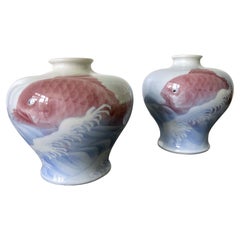
One of The Two Japanese Ceramic Vases Makuzu Kozan Meiji Period
Located in Atlanta, GA
Two small nearly identical ceramic vases by Japanese Meiji imperial potter Makuzu Kozan (1842-1916), circa 1890-1900s. The vases were made in the form of jarlet with swelled shoulder...
Category

Late 19th Century Japanese Antique Japonisme Furniture

Materials

Ceramic

VIntage kimono textile art " Geometry ~ Chrysanthemums ~" by ikasu White Japan
Located in Setagaya City, JP
< This work is inspired by traditional Japanese natural symbolism, and is framed in paulownia wood originally used for a kimono chest-of-drawers. It is elegantly framed with...
Category

1960s Japanese Vintage Japonisme Furniture

Materials

Silk, Wood

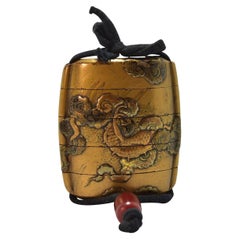
Japanese Inro with 4 Boxes in Gold Lacquer with Mat Kinji Background
Located in Marseille, FR
19th century Japanese inro with 4 boxes in gold lacquer with kinji mat background decorated in taka makiyé of gold of different tones. Lacquered wood siz...
Category

19th Century Japanese Antique Japonisme Furniture

Materials

Giltwood

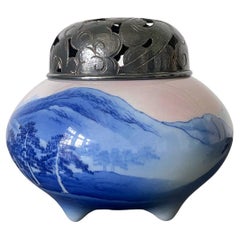
Japanese Glazed Ceramic and Silver Koro Incense Burner Makuzu Kozan
Located in Atlanta, GA
A tri-pod ceramic incense burner (koro) by Japanese Imperial potter Makuzu Kozan (1842-1916) circa late Meiji to the start of Taisho period (1890-1910s). A fine example of the artist's work belonging to the late part of his underglaze paint phase (started around 1887 until his death), the surface of the koro was painted in beautiful shades of blue to depict a continuous landscape not unlike a traditional ink and watercolor hand scroll. The rise and fall mountains recede and fade into the horizon and are dotted with groves of pines. The sky is painted with a beautiful subtle shade of pink, suggesting a time of sunrise or sunset. The koro is fitted with an ensuite reticulated sterling silver hoya (incense cover), pierced with swirling cloud and marked with "pure silver' in Kanji. The base is signed in underglaze blue "Makuzu Kozan Sei" within a double ring. The piece is beautifully potted in form and the decoration was done with expertise using the novel technique developed by Kozan called Fuki-e (the blow painting), in order to achieve the striking landscape known as "Mountain and Water" with sense of dimensions and gradient, the poetic effects normally conveyed only by sumi ink staining on paper. The piece comes with an unsigned tomobako (wood storage box) of a recent age. Also known as Miyagawa Kozan (1842–1916), Makuzu Kozan was one of the most established and collected ceramist from Meiji Period. Born as Miyagawa Toranosuke, Kozan established his pottery studio in Yokohama around 1870s and later became one of the appointed artists to the Japanese Imperial household. His work was exhibited in many international fairs that the Meiji government participated at the turn of the century and won many grand prizes. Being one of the most creative ceramists, Kozan started experimenting with new chemical colors from the West in the format of his porcelain glaze around 1880s. New colors allowed him to create underglaze designs that appeared bright, smooth and glossy. He even invented his own receipt of cobalt blue to achieve a much brighter yet softer shade, as evident on this vase. To create landscape that is realistic and dimensional, more common in the western paintings, he was inspired by the native Japanese ink painting technique developed around 1900 by Yokoyama...
Category

Early 1900s Japanese Antique Japonisme Furniture

Materials

Silver

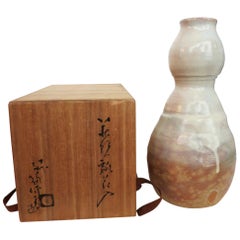
Hagi Ikebana Vase by Kyusetsu Miwa X Japanese Studio Pottery
By Kyusetsu Miwa X
Located in Atlanta, GA
A stoneware vase with white dripping glaze from Hagi by Kyusetsu Miwa X (1895-1981), Showa Period. The vase is in the shape of "Double Gourd" with a bulbous ...
Category

20th Century Japanese Japonisme Furniture

Materials

Ceramic

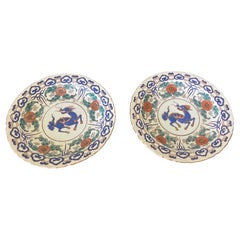
Pair Antique Japanese Artia Ceramic Cabinet Plates
Located in Atlanta, GA
A pair of Japanese decorative ceramic plates, made in Arita for export market circa 17-18th century. The cabinet-display dishes feature lotus-petal gilt rim and a lavish tricolor ene...
Category

18th Century Japanese Antique Japonisme Furniture

Materials

Ceramic

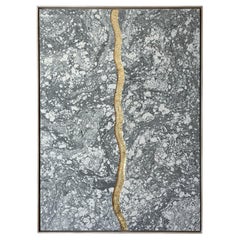
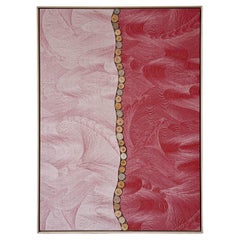
Vintage kimono textile art " Marble Story ~ Healing ~" by ikasu Grey Japan
Located in Setagaya City, JP
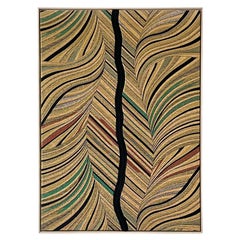
< This work uses a vintage kimono fabric with marble pattern, that makes it look like a real piece of marble. The line in the middle symbolizes “kintsugi” - concept of wabi-sabi, which values imperfection, impermanence, and the beauty of aging. It is elegantly framed with paulownia wood originally used for kimono chest-of-drawers, and is filled with storytelling and sense of luxury. I used pieces of kimono that could no longer be used as clothing and kiritansu chest-of-drawers that would normally be discarded to create the ultimate upcycled piece. << Explanation and meaning of pattern and colors Kintsugi (金継ぎ), which translates to "golden joinery" or "golden repair," is a traditional Japanese art form of repairing broken pottery with lacquer mixed with powdered gold, silver, or platinum. I used this tecnique here to "repair" antique kimono by transforming it into art work. Beyond its literal meaning of mending broken ceramics, kintsugi carries profound philosophical and cultural significance in Japanese tradition: ・Embracing Imperfection: Kintsugi celebrates imperfection and impermanence. Rather than disguising or concealing flaws, it highlights them, treating the breakage as part of the object's history. This philosophy encourages acceptance of imperfection as an essential aspect of life, beauty, and human experience. ・Wabi-Sabi Aesthetic: Kintsugi embodies the principles of wabi-sabi, an aesthetic worldview centered on the acceptance of transience and imperfection. Wabi-sabi values simplicity, authenticity, and the beauty of things that are imperfect, impermanent, and incomplete. Kintsugi exemplifies these principles by turning what might be considered flaws into features that enhance the object's beauty and character. ・Resilience and Transformation: The act of repairing broken things with precious metals symbolizes resilience and transformation. Instead of discarding or replacing the broken object, kintsugi honors its history and transforms it into something new and valuable. This reflects broader philosophical themes of overcoming adversity, finding beauty in imperfection, and embracing change. ・Honoring the Past: Kintsugi preserves and honors the history of the object. Rather than erasing or ignoring its past, it acknowledges and celebrates it. This aspect of kintsugi can be seen as a metaphor for honoring our own personal histories, including the challenges and setbacks we have faced, and recognizing how they have shaped us into who we are today. ・Spiritual and Philosophical Symbolism: Kintsugi has spiritual and philosophical implications, reflecting concepts such as the interconnectedness of all things, the cycle of life and death, and the pursuit of harmony and balance. The process of repairing broken objects with precious metals is seen as a metaphor for spiritual growth, enlightenment, and the journey towards wholeness. Overall, kintsugi represents not only a practical technique for repairing ceramics but also a profound philosophical and cultural perspective on life, beauty, and the human experience. It embodies values such as resilience, acceptance, and the transformative power of embracing imperfection. << Characteristics of the fabric This vintage textile is hand-painted with a traditional painting technique where the colors are added on wet surface, which creates an effect of marble. << About the frame Kiritansu - chest-of-drawers for kimono, is traditionally made from paulownia wood, a uniquely Japanese material closely tied to the world of kimonos. Paulownia wood is known as the lightest wood in Japan, prased for its natural luster, resistance to moisture, and resilience against cracking. Since ancient times, it has been used in crafting furniture, chests, and musical instruments. During the Edo period, it became customary to store cherished kimonos in paulownia chests...
Category

1960s Japanese Vintage Japonisme Furniture

Materials

Gold Leaf

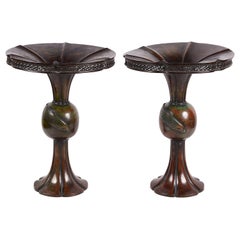
Pair of 19th Century Japanese Meiji Period Bronze Carp Vases
Located in Brighton, Sussex
A fine quality pair of Japanese Meiji period (1868-1912) green and red patinated bronze vases, each having pierced decoration, having wonderful raised carp swimming around the center...
Category

Late 19th Century Japanese Antique Japonisme Furniture

Materials

Bronze

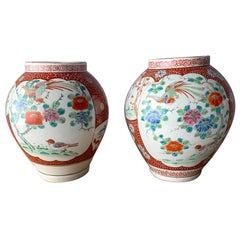
Near Pair of Antique Japanese Arita Export Ceramic Jars
Located in Atlanta, GA
A near pair Hizen pottery jars from Artia Japan, circa mid-19th century of the Meiji Era. Heavy stoneware construction with overglaze enamels that was inspired by Chinese WuCai from ...
Category

Mid-19th Century Japanese Antique Japonisme Furniture

Materials

Ceramic

Japanese Hanging Bamboo Ikebana Basket Signed
Located in Atlanta, GA
A Japanese bamboo Ikebana hanging basket circa 1920s-1940s, made with "sooted" bamboo (susutake in Japanese). This bamboo material was collected from traditional thatched-roof houses...
Category

Early 20th Century Japanese Japonisme Furniture

Materials

Bamboo

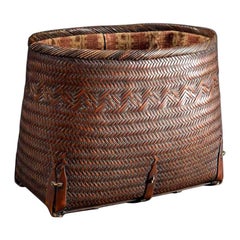
Early Japanese Hand Basket with Brocade Interior by Suzuki Gengensai
Located in Atlanta, GA
This small elegant woven bamboo basket was meant to be a hand-hold bag with its brocade interior (which appears original). It was made by Suzuki Gengensai (1891-1950) circa 1910-20s. Suzuki Gengensai was from Kansai region and active in Osaka. He studied bamboo art under Yamashita Kochikusai (1876-1947) and became an independent artist in 1913. He received his artist name Gengensai in 1914 and in 1923 he changed the characters to Gen, a slight written variation of the character. This basket was signed in the former way, which helps to date the piece to the early part of the artist's career circa 1914-1923. The basket is tightly woven in variation of twill plating that creates contrasting bands on the surface. The base was constructed with short bamboo stripes on the corners and side with ornamental knots. A closely related piece (Object Number: 2006.3.651) with slight different surface twill patterns is in the collection of Asian Art Museum San Francisco. Comparing the two, they show almost identical form as well as the base construction. Both also have brocade interior and most likely were woven during the same period. Another documented example can be found on page 180 in "Baskets Masterpieces of Japanese Bamboo Art...
Category

Early 20th Century Japanese Japonisme Furniture

Materials

Brocade, Bamboo

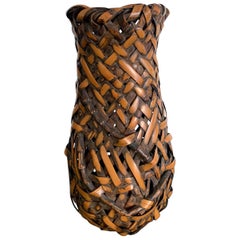
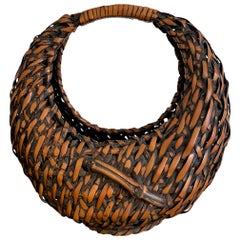
Japanese Bamboo Basket Ikebana
Located in Atlanta, GA
A Japanese woven bamboo basket in the shape of crescent with open top and a wrapped handle circa 1920s-1940s. The basket was woven with "sooted" bamboo (susutake in Japanese). This b...
Category

Early 20th Century Japanese Japonisme Furniture

Materials

Bamboo

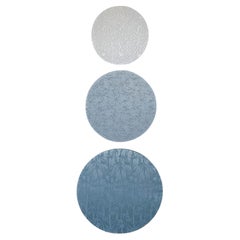
Vintage kimono textile art " Turquoise Forest ~ Strength ~ " by ikasu Blue Japan
Located in Setagaya City, JP
Fabrics featuring iconic Japanese plants like chrysanthemum, maple, and bamboo were gathered from various long underwear and kimono pieces to create a set of canvases (diameter 30, 25 and 20cm) showcasing exquisite gradations. The top canvas, in pristine white, originates from long under-kimono, while the middle and bottom canvases are skillfully upcycled from kimono fabrics. << Period / Story The long under-kimono and kimono fabrics used in these canvases were originally crafted and worn during the late Showa period (1960-80ies). << Explanation and meaning of pattern and colors The pattern on the top canvas features a chrysanthemum, an auspicious emblem symbolizing longevity. It is affectionately referred to as the "raccoon dog chrysanthemum" due to the large, overlapping petals resembling the fur of a muzina, a creature similar to a raccoon dog or badger. This motif is highly popular in various plant-inspired designs and frequently seen in Edo komon, katazome, and jimon textiles. The top canvas naga-juban under-kimono, being entirely white and devoid of any additional dyes, suggests its use as formal wear. Its pristine white hue accentuates the silk's luster when exposed to light and highlights the beauty of the woven patterns. The fabric used here is rinzu, a type of fabric thinner than crepe de chine, characterized by its soft, smooth texture and subtle sheen. This particular lintel distinguishes itself with the way its ground pattern emerges and also incorporates a woven chrysanthemum pattern. The central canvas showcases a maple tree, symbolizing longevity, which changes its colors with the seasons, bringing joy and happiness to people's lives. The bamboo featured on the lower canvas has been regarded as a symbol of good fortune since ancient times, given its straight and vigorous growth, along with the Chinese legend that a phoenix consumes its fruit. It embodies concepts such as "immortality," "longevity," and "strength" because it remains green even in winter. The hollow stem also signifies "innocence," suggesting that there are no hidden agendas. All three canvases are adorned with ground patterns that, when viewed from a distance, appear as modern works of art, yet upon closer inspection, they reveal a distinct Japanese ambiance. << Characteristics of the fabric All three canvases are made of fabrics with jimon. The unique and high level of Japanese weaving...
Category

1970s Japanese Vintage Japonisme Furniture

Materials

Canvas, Silk

Atique Japanese Rootwood Bamboo Ikebana Vase, XIX Century
Located in New York, NY
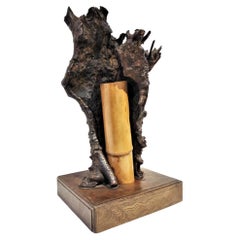
Atique Rootwood & Bamboo Ikebana Vase Japan, XIX Century DIMENSIONS Height: 19.25vinches Width: 10.13 inches Depth: 9.5 inches ABOUT This absolutely unique ikebana vase consists of...
Category

Late 19th Century Japanese Antique Japonisme Furniture

Materials

Bamboo, Wood

Vintage kimono textile art " Fern ~ Connection to Nature ~" by ikasu Black Japan
Located in Setagaya City, JP
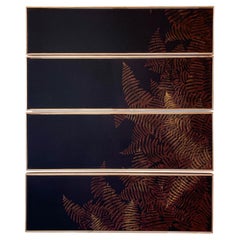
This work uses an antique tomesode (festive kind of kimono) with fern design to evoke feelings of tranquility, harmony, and appreciation for the beauty of the environment. Can be used both vertically and horizontally. It is elegantly framed with paulownia wood originally used for kimono chest-of-drawers, and is filled with storytelling and sense of luxury. I used pieces of kimono that could no longer be used as clothing and kiritansu chest-of-drawers that would normally be discarded to create the ultimate upcycled piece. << Explanation of colors and patterns In Japanese traditional culture, ferns, particularly the Japanese painted fern (Athyrium niponicum), hold several meanings and symbolisms: ・Elegance and Beauty: Ferns are admired for their graceful, delicate appearance and intricate leaf patterns. In Japanese aesthetics, they are appreciated for their natural beauty and are often used in gardens, landscapes, and floral arrangements to add a sense of refinement and elegance. ・Resilience and Perseverance: Ferns are known for their ability to thrive in diverse environments, including shady forests, rocky cliffs, and damp soil. Their resilience in the face of challenging conditions is seen as a symbol of endurance and perseverance. In Japanese culture, ferns may represent the ability to overcome adversity and flourish despite obstacles. ・Connection to Nature and Tranquility: Ferns are native to forested areas and are often associated with the natural world. In Japanese traditional culture, they symbolize a deep connection to nature and the importance of maintaining harmony with the environment. The lush green foliage of ferns evokes feelings of tranquility and peacefulness, making them popular motifs in Zen gardens and traditional landscape paintings. ・Purity and Simplicity: Ferns are emblematic of simplicity and purity in Japanese aesthetics. Their unassuming beauty and understated elegance reflect the principles of wabi-sabi, an aesthetic worldview that values imperfection, impermanence, and simplicity. Ferns may be used in tea ceremonies, Ikebana (flower arranging), and other traditional arts to evoke a sense of tranquility and appreciation for life's fleeting moments. Overall, ferns in Japanese traditional culture symbolize elegance, resilience, connection to nature, purity, and simplicity. Their presence in art, literature, and landscape design underscores their enduring significance as symbols of natural beauty and spiritual resonance. << Characteristics of the fabric This vintage textile is hand-painted with a traditional Japanese technique called "yuzen". << About the frame Kiritansu - chest-of-drawers for kimono, is traditionally made from paulownia wood, a uniquely Japanese material closely tied to the world of kimonos. Paulownia wood is known as the lightest wood in Japan, prased for its natural luster, resistance to moisture, and resilience against cracking. Since ancient times, it has been used in crafting furniture, chests, and musical instruments. During the Edo period, it became customary to store cherished kimonos in paulownia chests...
Category

1960s Japanese Vintage Japonisme Furniture

Materials

Silk, Wood

Vintage obi textile art " Camellia ~ Serendipity ~" by ikasu Blue Japan
Located in Setagaya City, JP
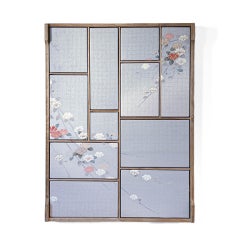
[Story behind the work] This work is inspired by traditional Japanese nature motifs symbolism, and is framed in paulownia wood originally used for a kimono chest-of-drawers. It is elegantly framed with paulownia wood originally used for kimono chest-of-drawers, and is filled with storytelling and sense of luxury. In this artwork, the aim was to capture the the auspicious symbol of camellia used in antique kimono. Traditional Japanese culture, represented by the kimono, and wood, an integral element of Japanese craftsmanship, were used to bring this vision to life. I used pieces of kimono that could no longer be used as clothing and kiritansu chest-of-drawers that would normally be discarded to create the ultimate upcycled piece. [Explanation and meaning of pattern and colors] This delicate piece features hand-drawn camellia motifs flowing gracefully on a softly brightened grayish background. Camellias, native to Japan, bloom from winter to early spring. As an evergreen tree with green leaves throughout the year, it symbolizes the anticipation of spring and is considered an auspicious plant. Due to its seasonal significance and auspicious meanings, camellias have been used as motifs symbolizing good fortune. Additionally, they were highly valued for their use in oil, cosmetics, and medicine, representing nobility. Believed to possess the power to ward off misfortune, camellias also carry the meaning of "protection from calamity" and have strong ties to traditional ceremonies. In this artwork, camellias are delicately depicted alongside flowing branches, subtly representing good fortune with their pale pink and white hues. "Sora-iro nezumi 空色鼠" refers to a light grayish color with a hint of blue, reminiscent of the slightly brightened sky on a lightly cloudy day. Popular during the late Edo period (19th cent.), it elegantly captures the slightly brighter sky pattern seen on lightly overcast days. Notably, the term "nezumi-iro" (mouse gray), popular during the late Edo period, was paired with brown tones, collectively known as "Forty-eight Teas and a Hundred Mice 四十八茶百鼠." Colors within the "nezumi" (gray) spectrum, particularly "sora-iro nezumi," were favored by young people for their cool and sophisticated appeal. [Characteristics of the fabric] The fabric features intricately woven patterns that reveal subtle gradations through dyeing, creating a grid pattern that transforms depending on the light conditions. Originally, this fabric was part of a formal kimono known as a "hōmongi 訪問着," featuring motifs along the hem, shoulders, and sleeves. These motifs have been carefully selected and combined to create a unified piece of artwork. [About the frame] Kiritansu - chest-of-drawers for kimono, is traditionally made from paulownia wood, a uniquely Japanese material closely tied to the world of kimonos. Paulownia wood is known as the lightest wood in Japan, prased for its natural luster, resistance to moisture, and resilience against cracking. Since ancient times, it has been used in crafting furniture, chests, and musical instruments. During the Edo period, it became customary to store cherished kimonos in paulownia chests...
Category

1960s Japanese Vintage Japonisme Furniture

Materials

Silk, Wood

A Large Satsuma Vase Depicting A Scene Of Daily Life
Located in Milano, IT
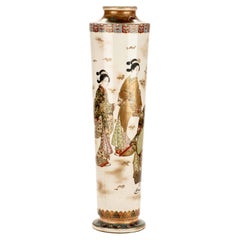
Large cylindrical Satsuma vase, decorated with polychrome enamels and pure gold, depicting a scene of daily life with three geishas and a samurai on a festive day. Signed ‘Seizan zō...
Category

Late 19th Century Japanese Antique Japonisme Furniture

Materials

Ceramic

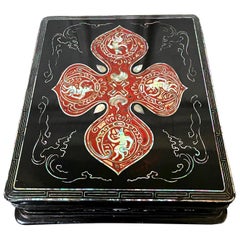
Unusual Japanese Lacquer Inkstone Box with MOP Inlays
Located in Atlanta, GA
A Japanese black lacquer box with mother of pearl inlays circa early 20th century, end of Meiji period. It was likely to be used to store inkstone or other scholarly items. The piece displays several interesting characteristics that appear puzzling initially. First, the form is not typical Japanese, but more Chinese and Korean, with its scalloped base. Second, the decoration of MOP inlays also suggests a Korean and Chinese affiliation, especially with the linear borders and the scrolling cloud patters on the sides of the box. These two observations suggest that the box may be from Ryukyu Island instead of Japanese mainland. Third, strikingly in the center of the cover, a bold quarterly floral pattern outlined with MOP was filled with a striking mottled red lacquer using tsugaru nuri...
Category

Early 20th Century Japanese Japonisme Furniture

Materials

Wood, Lacquer

Vintage kimono textile art " Sunset Timelapse ~ Ephemerality ~" ikasu Red Japan
Located in Setagaya City, JP
< The art piece uses two sides - front and reverse - of the same kimono, to show beautiful sea surrounding Japan, in hues and in late sunset, as a timelapse. The frame for this work is made of paulownia wood taken from antique Kiritansu - chest-of-drawers for kimono. I use antique kiritansu that can’t be used as furniture anymore to create basis and frames for my works. It adds them even more authentic atmosphere of traditional wabisabi spirit. Can you feel it? << Period / Story The kimono used in this piece was originally crafted during Showa period (around 1960ies). << Explanation and meaning of pattern and colors Sea waves, depicted in two color variations here, are a symbol of transience and Impermanence in Japanese culture. The ebb and flow of the tides, the ever-changing currents, and the relentless motion of the waves serve as reminders of the fleeting nature of life. This artwork featuring the sea convey themes of impermanence, reminding viewers to cherish the present moment and appreciate the beauty of life's fleeting moments. The theme of impermanence is strengthen by two colors of the sea - the lighter in early hues and the darker when the sun is just about to set in the sea. << About the frame This artwork frame is crafted from paulownia wood, a uniquely Japanese material closely tied to the world of kimonos, and it serves to convey the refined beauty of Japanese nature. Paulownia wood is known as the lightest wood in Japan, prased for its natural luster, resistance to moisture, and resilience against cracking. Since ancient times, it has been used in crafting furniture, chests, and musical instruments. Paulownia wood is closely linked to kimono culture. During the Edo period (17th cent.~), it became customary to store cherished kimonos in paulownia chests...
Category

1960s Japanese Vintage Japonisme Furniture

Materials

Silk, Wood

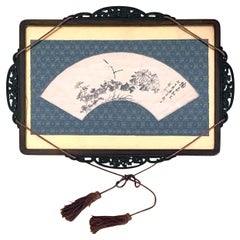
Framed Japanese Ink Painting Hidaka Tetsuo
Located in Atlanta, GA
An ink painting on the fan surface by Japanese Zen artist Hidaka Tetsuo (1791-1871), now framed in a traditional Japanese carved wood frame with silk fabric mat and decorative hangin...
Category

1850s Japanese Antique Japonisme Furniture

Materials

Wood, Paper

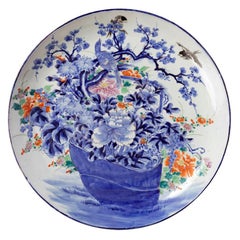
Large Flowery Japanese Porcelain Plate, 19th Century
Located in Saint-Ouen, FR
Large circular Japanese porcelain plate, painted with a basket filled of cherry branches, peonies, dahlias, daisies and three little birds. Blue, re...
Category

Mid-19th Century Japanese Antique Japonisme Furniture

Materials

Porcelain

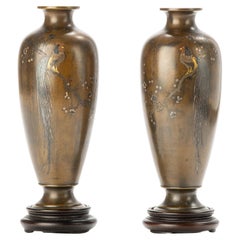
A pair of bronze vases with Onagadori roosters
Located in Milano, IT
Pair of bronze vases adorned with inlays, decorated with two Onagadori roosters, known for their elegant length of tail. The roosters are represented perched on a plum branch. Signe...
Category

Late 19th Century Japanese Antique Japonisme Furniture

Materials

Bronze

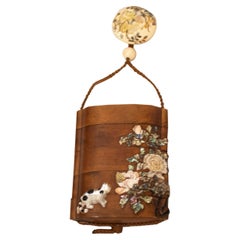
Meji s Period Inro Box. Japan, 19th Century.
Located in Madrid, ES
Inro is an ancient traditional Japanese box used to carry and store small items such as tobacco, money, paintbrushes, and other objects. The...
Category

19th Century Japanese Antique Japonisme Furniture

Materials

Wood, Lacquer

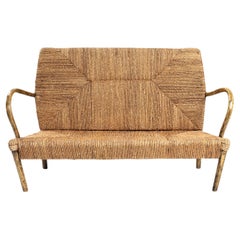
Japanese rope bamboo sofa , 1970s
Located in Zevenaar, NL
Beautiful unique low Japanese rope and bamboo sofa, sold at Conran shop in the 1980s, with the back even more beautiful then the front. Conran is a high end shop. About themselves t...
Category

1980s Japanese Vintage Japonisme Furniture

Materials

Steel

Japanese rope bamboo sofa , 1970s
$8,539 Sale Price
20% Off
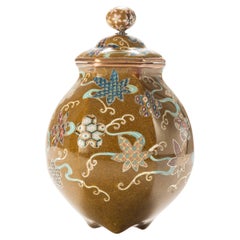
A Cloisonné hexagonal potiche
Located in Milano, IT
Cloisonné potiche with a hexagonal shape, embellished with delicate floral decorations on reserves held by silver threads with geometric motifs. The lid features a spherical socket. ...
Category

Late 19th Century Japanese Antique Japonisme Furniture

Materials

Metal

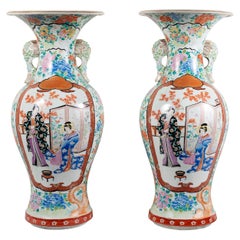
Pair of Japanese Kutani Porcelain Vase, circa 1880
Located in Brighton, Sussex
An impressive and very decorative pair of Meiji period (1868-1912) Japanese Kutani porcelain vases, each with wonderful exotic floral d...
Category

Late 19th Century Japanese Antique Japonisme Furniture

Materials

Porcelain

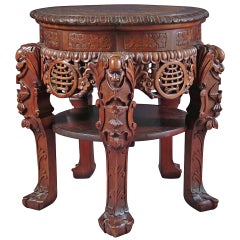
Japanese Rosewood Hand Carved Pedestal
Located in Tarzana, CA
Japanese rosewood hand carved pedestal. Japan, circa 1920 Measures: Height 24", width 19".
Category

Early 20th Century Japanese Japonisme Furniture

Materials

Rosewood

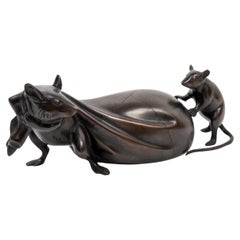
Japan mice treasure bag Meiji
Located in PARIS, FR
Japanese bronzewith brown patina representing two mice. One is pulling pulling a treasure bag. crouching down with its head turned to the left. While the other mouse is standing on i...
Category

Late 20th Century Japanese Japonisme Furniture

Materials

Bronze

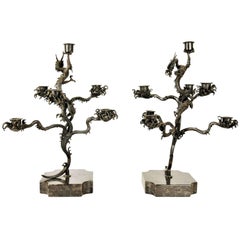
Pair of Japanese Patinated Bronze Candelabras, Meiji Period, ca. 1900
Located in New York, NY
This most unusual pair of original 18th century Japanese patinated bronze candelabras, uniquely designed as branches of mountain flowers entangled by a dragon, are mounted on the con...
Category

Late 19th Century Japanese Antique Japonisme Furniture

Materials

Bronze

Super Kutani Charger
Located in Swadlincote, GB
A superb Kutani charger, signed to the back, in overall excellent condition. Kutani porcelain, or Kutaniyaki, originates from the Kutani village in the...
Category

19th Century Japanese Antique Japonisme Furniture

Materials

Porcelain

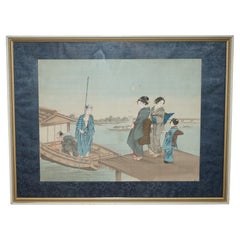
JAPANESE 1920 WOODBLOCK TRIPTYCH WATERCOLOUR PRiNT OF GEISHA GIRLS BOARING BOAT
Located in West Sussex, Pulborough
Royal House Antiques Royal House Antiques is delighted to offer for sale this stunning Antique Japanese Woodblock Triptych watercolour print of Ge...
Category

1920s Japanese Vintage Japonisme Furniture

Materials

Wood

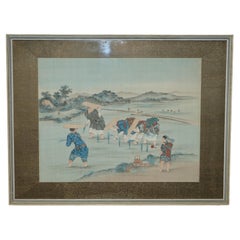
ANTIQUE JAPANESE CIR 1920 s WOODBLOCK TRIPTYCH WATERCOLOUR PRINT OF RICE PICKERS
Located in West Sussex, Pulborough
Royal House Antiques Royal House Antiques is delighted to offer for sale this stunning Antique Japanese Woodblock Triptych watercolour print of Ri...
Category

1920s Japanese Vintage Japonisme Furniture

Materials

Wood

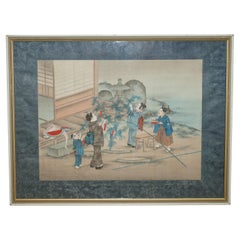
JAPANESE 1920 S WOODBLOCK TRIPTYCH WATERCOLOUR PRiNT OF GEISHA GIRLS GARDENING
Located in West Sussex, Pulborough
Royal House Antiques Royal House Antiques is delighted to offer for sale this stunning Antique Japanese Woodblock Triptych watercolour print of Ge...
Category

1920s Japanese Vintage Japonisme Furniture

Materials

Wood

JAPANESE CIR 1920 WOODBLOCK TRIPTYCH WATERCOLOUR PRINT OF GEISHA GIRL NOBLEs
Located in West Sussex, Pulborough
Royal House Antiques Royal House Antiques is delighted to offer for sale this stunning Antique Japanese Woodblock Triptych watercolour print of a ...
Category

1920s Japanese Vintage Japonisme Furniture

Materials

Wood

JAPANESE 1920 S WOODBLOCK TRIPTYCH WATERCOLOUR PRINT GEISHA GIRLS PLAYING MUSiC
Located in West Sussex, Pulborough
Royal House Antiques Royal House Antiques is delighted to offer for sale this stunning Antique Japanese Woodblock Triptych watercolour print of Ge...
Category

1920s Japanese Vintage Japonisme Furniture

Materials

Wood

Meiji Period Fukagawa Porcelain Lidded Vase
Located in Brighton, Sussex
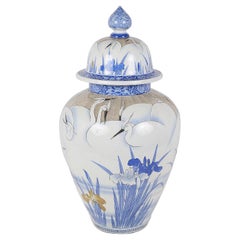
A fine quality hand painted Japanese Meiji period (1868-1912) Fukagawa porcelain lidded vase. Depicting exotic Cranes among Reeds and Lillys, boa...
Category

Late 19th Century Japanese Antique Japonisme Furniture

Materials

Porcelain

Pair of Japanese Meiji Period Bronze and Gilt Vases
By Zo Miyao 1
Located in Brighton, Sussex
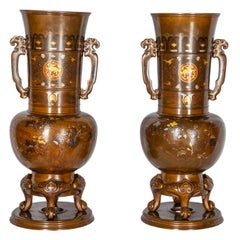
Pair of fine quality Japanese Meiji period (1868-1912) patinated bronze Miyao style gold and silver overlay two handled vases, each with twin handles, classical motif decoration with...
Category

Late 19th Century Japanese Antique Japonisme Furniture

Materials

Bronze

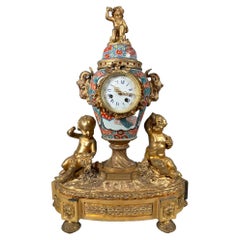
19th Century Japanese Imari French Bronze Mantel Clock
Located in Tarzana, CA
JAPANESE IMARI PORCELAIN AND ORMOLU MOUNTED MANTEL CLOCK, 19TH CENTURY urn shaped with three ormolu mounted cherubs with Roman Numeral and Arabic dial. Dimensions Height: 22" Width: ...
Category

19th Century Japanese Antique Japonisme Furniture

Materials

Bronze

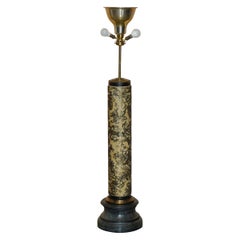
LARGE ANTIQUE JAPANESE FLOOR STANDING PRINTING SCROLL LAMP SOLID MARBLE BASe
Located in West Sussex, Pulborough
We are delighted to offer for sale this super rare and highly decorative, Japanese floor standing lamp which is an antique printing scroll fixed to a solid two piece marble base This is a very impressive lamp, I personally purchased this from Nice France of my antiques tour...
Category

Early 1900s Japanese Antique Japonisme Furniture

Materials

Marble

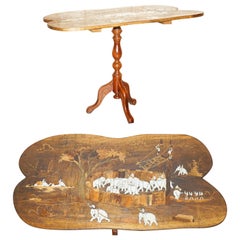
Large Antique Japanese Shibayama Inlaid Elephant Trainers Hardwood Coffee Table
Located in West Sussex, Pulborough
We are delighted to offer for sale this stunning Antique Japanese Shibayyama inlaid coffee table depicting Elephant trainers in a compound This table is sublime, absolutely exquisite from every angle, circa 1900-1920, hand made in Japan, the Elephants and trainers have an Indian look...
Category

Early 1900s Japanese Antique Japonisme Furniture

Materials

Hardwood

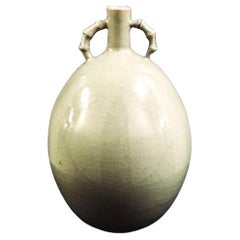
Japanese Emperor Shōwa Period Classic Oval-Shaped Vase, Ca. 1960
Located in New York, NY
Japanese Emperor Shōwa Period Classic Oval-Shaped Vase, Ca. 1960 Emperor Shōwa Period - from 1926 to 1989/1990) Featuring bamboo handles. Signed on the bottom. DIMENSIONS Height:...
Category

1960s Japanese Vintage Japonisme Furniture

Materials

Porcelain

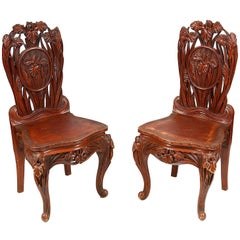
Pair of Oriental Chairs, 19th Century
Located in Brighton, Sussex
A very stylish pair of late 19th century Japanese side chairs, each with wonderful carved leaves and orchids to the backs and legs.
Category

Late 19th Century Japanese Antique Japonisme Furniture

Materials

Softwood

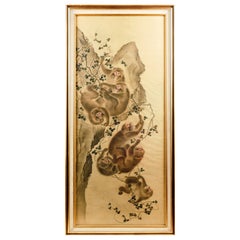
Fine Japanese Meiji Period Water Color on Silk of Monkeys
Located in Brighton, Sussex
A wonderful fine quality Japanese Meiji period (1868-1912) water color on silk of seven monkeys climbing and playing on a rock face with trailing foliage...
Category

Late 19th Century Japanese Antique Japonisme Furniture

Materials

Silk

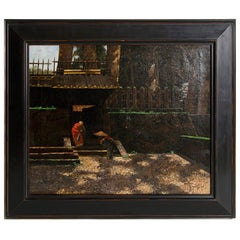
Late 19th Century Oil on Canvas of Japanese Figures by Francis Neydhart
By Francis Neydhart
Located in Dallas, TX
A realistic oil on canvas of a person with umbrella bowing to a monk standing on steps by artist Francis Neydhart, (1860-1948). Fronted by a sun-dappled street in front of a large bu...
Category

Late 19th Century Japanese Antique Japonisme Furniture

Materials

Canvas, Wood

Japonisme furniture for sale on 1stDibs.

Find a broad range of unique Japonisme furniture for sale on 1stDibs. Many of these items were first offered in the 21st Century and Contemporary, but contemporary artisans have continued to produce works inspired by this style. If you’re looking to add vintage furniture created in this style to your space, the works available on 1stDibs include decorative objects, asian art and furniture, serveware, ceramics, silver and glass and other home furnishings, frequently crafted with metal, ceramic and other materials. If you’re shopping for used Japonisme furniture made in a specific country, there are Asia, East Asia, and Japan pieces for sale on 1stDibs. While there are many designers and brands associated with original furniture, popular names associated with this style include Tiffany Co., Gökhan Eryaman, İsmail Dağlı, and Makuzu Kozan. It’s true that these talented designers have at times inspired knockoffs, but our experienced specialists have partnered with only top vetted sellers to offer authentic pieces that come with a buyer protection guarantee. Prices for furniture differ depending upon multiple factors, including designer, materials, construction methods, condition and provenance. On 1stDibs, the price for these items starts at $29 and tops out at $185,360 while the average work can sell for $2,527.

Still Thinking About These?

All Recently Viewed