Japonisme Furniture

JAPONISME STYLE

In the late 19th and early 20th century, France developed an enduring passion for Japanese aesthetics and craftsmanship. Not only did this interpretation of Japanese culture — which became known as Japonisme — infuse fresh energy into French art and design, but it also radically transformed how Europeans, and subsequently the world, would come to understand visual culture. 

Until 1853, Japan had been closely guarded against foreign visitors for over two centuries. However, American Commodore Matthew C. Perry sailed into Japan that year and initiated the first of its treaties with the United States and Europe, thereby opening its borders and giving the West its first-ever look at Japanese design. 

For the next few decades, taken with Japonisme, sophisticated collectors in Paris, New York and elsewhere gorged themselves on lacquered screens, celadon ceramics and netsuke ornaments, along with artworks depicting various aspects of Japanese life. The East Asian country’s influence on Europe, particularly France, contributed to one of the most creatively prosperous periods in history, leaving an imprint on the Impressionist, Art Nouveau and Art Deco movements, and inspiring artists like Edgar Degas, Mary Cassatt, Vincent van Gogh as well as luxury houses such as Louis Vuitton and Hermès. Japonisme emerged at the time when the ornate Renaissance Revival style was the most prominent mode of decorating in Europe, and Japanese aesthetics seemed strikingly modern and elegant in comparison. 

In addition to everyday practical objects from Japan, such as vases, tableware and decorative boxes, Japanese art, especially Japanese woodblock prints by masters of the ukiyo-e school, caught the eye of many artists — particularly those in the Art Nouveau poster community in 1880s Paris. The luscious organic colors associated with traditional Japanese design, motifs like cherry blossoms and carp and the vivid patterns found in woodblock prints, silks and more were adopted and appropriated by painters as well as ceramicists and those working in other fields of the decorative arts. Today, demand for Japanese lacquerware — furniture, trays, writing boxes, screens, incense burners — from the Edo period (1615–1868) and the late 19th century continues to be very strong among collectors.

Find a collection of antique Japonisme furniture and decorative objects on 1stDibs.

to
134
577
453
1,012
166
13
198,467
115,318
44,186
33,263
16,578
12,239
10,868
10,843
9,981
8,919
7,348
6,665
6,490
6,390
6,242
6,159
4,910
3,745
39
476
497
179
194
148
86
41
9
34
12
18
24
25
31
21
4
360
355
351
198
173
712
657
649
361
186
1,191
1,107
1,184
68
31
31
27
16
Style: Japonisme
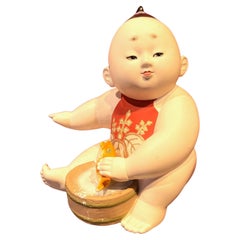
Japanese Art Deco Showa Period Hakata Ningyô of a Boy Holding a Fish, Ca. 1920
Located in New York, NY
Japanese Art Deco Showa Period Hakata Ningyô of a Boy Holding a Fish, Ca. 1920 Signed on the bottom. DIMENSIONS 8” high x 7.5” wide ...
Category

1920s Japanese Vintage Japonisme Furniture

Materials

Ceramic

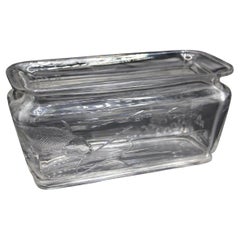
Baccarat fish-shaped planter from the Universal Exhibition, Paris, 1878
Located in Charmes, FR
Planter presented at the Universal Exhibition, Paris, 1878, along with several other works on this theme, an extremely rare piece. An identical model is held in the Baccarat Museum's...
Category

Late 19th Century French Antique Japonisme Furniture

Materials

Crystal

Mid 20th Century obi textile art " Moon phase II " by ikasu Silver Black Japan
Located in Setagaya City, JP
<< About this artwork This artwork has been upcycled from a stunning obi, which is adorned with calligraphy weaving saying "moon" and "moonlight". << Period /...
Category

1970s Japanese Vintage Japonisme Furniture

Materials

Silver Leaf

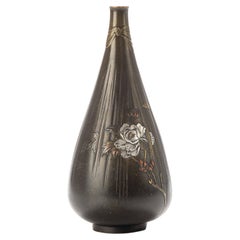
A Japanese drop-shaped bronze vase with peonies
Located in Milano, IT
Drop-shaped bronze vase, with peonies in relief, decorated to simulate a delicate and light fabric that ends with a bow near the top of the neck. Using mixed metals to create visual...
Category

Late 19th Century Japanese Antique Japonisme Furniture

Materials

Bronze

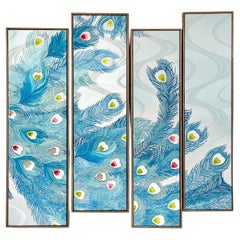
Antique kimono textile art " Peacock Feathers ~ Royalty ~" by ikasu Blue Japan
Located in Setagaya City, JP
This work uses an antique furisode (festive kind of kimono with long sleeves) with peacock feathers - a symbol of royalty and prosperity. Can be used both vertically and horizontall...
Category

Early 20th Century Japanese Japonisme Furniture

Materials

Gold Leaf, Silver Leaf

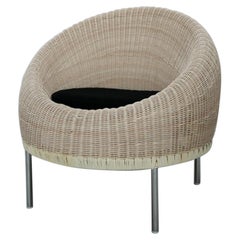
Rattan Lounge Chair by Isamu Kenmochi , 2022, Y・M・K-NAGAOKA
Located in Tokyo, Tokyo
This lounge chair was introduced by Isamu Kenmochi Design Laboratory in 1960. It was designed for installation at the Otone Country Club in Japan. It is a rare piece among Isamu Kenm...
Category

1960s Japanese Vintage Japonisme Furniture

Materials

Rattan

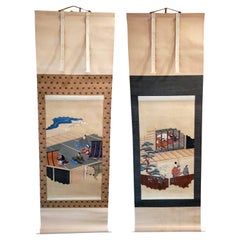
Two Antique Japanese Hanging Scroll Paintings
Located in Atlanta, GA
Two Japanese scroll painting depicts scenes from the Tale of Genji (Genji-E), from Edo period. These painting were purchased from Odewara Shoten in the...
Category

Early 19th Century Japanese Antique Japonisme Furniture

Materials

Brocade, Paper

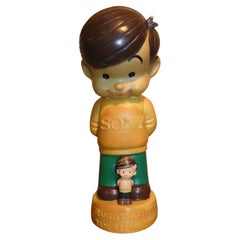
Achan or vintage Sony Boys, set of 2
Located in modena, Emilia-Romagna
Pair of "Atchan" aka Sony Boy. Figure introduced by Sony in 1956 as a mascot for the launch of the first transistor device, appearing in advertisements for the TR-55. The pair consis...
Category

Mid-20th Century Japanese Japonisme Furniture

Materials

Plastic

Large Japanese Woven Bamboo Morikago Basket by Maeda Chikubosai I
Located in Atlanta, GA
A large and impressive Japanese basket in the form of a morikago by Maeda Chikubosai I (1872-1950) circa first half of the 20th century. Chikubosai I was from the Kansai Region and active in Sakai, Osaka prefecture. He was instructed by Wada Waichisai I, (1851-1901). Morikago is a shallow open basket with handle. It was traditionally used to display fruits, sometimes flowers, during Sencha tea ceremony. In contrast to Chanoyu, Sencha ceremony uses loose green tea leaves instead of tea powder. The placement of loose fruits in the basket meant that the pattern of the bottom, which is often elaborate, was meant to be visible. This morikago was beautifully constructed with bent bamboo frame and twill plaits for the body. The bottom of the basket features a double diamond pattern achieved with a variation of plover plait. The bifurcated handles was bundle-plated with a rather free spirit approach. They show a poetic suggestion of movement, as if the bamboos were still swaying in the wind. The basket has a copper insert that fits perfectly and it is quite possibly the original. The basket is signed on the base "Chikubosai". The style of the signature shows that it was made by Maeda Chikubosai I. For another Morikago basket by Maeda Chikubosai I, see page 79 of "Masters of Bamboo" by Rinne. For the study of the signature of Chikubosai I "Baskets Master Pieces of Japanese Bamboo Art...
Category

Early 20th Century Japanese Japonisme Furniture

Materials

Copper

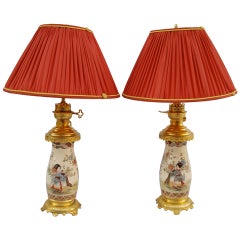
Satsuma earthenware vase with geishas, circa 1880
Located in Saint-Ouen, FR
Pair of slightly bulged Satsuma earthenware lamps with a gilt bronze mount. Beige background decoration with geishas surrounded with dahlias in outside scenes and flanked by a palm l...
Category

19th Century Japanese Antique Japonisme Furniture

Materials

Faience

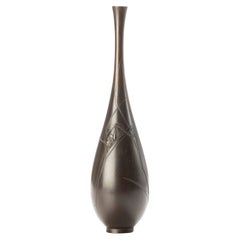
A Japanese patinated bronze vase depicting a cricket
Located in Milano, IT
A slender shape patinated bronze vase depicting a naturalistic scene of a cricket sitting on iris leaves. Signed Joun in relief within an oval reserve. Origin: Japan Period: Meiji ...
Category

Late 19th Century Japanese Antique Japonisme Furniture

Materials

Bronze

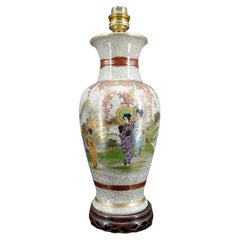
Satsuma porcelain lamp, Geishas and Cherry trees, Japan, Circa 1950
Located in VÉZELAY, FR
Satsuma porcelain lamp decorated with Geishas and Cherry trees. Japan, Circa 1950 Very good condition, new electricity. Beautiful cracked email Dimensions: Height:32cm Diameter:12cm
Category

1950s Japanese Vintage Japonisme Furniture

Materials

Metal

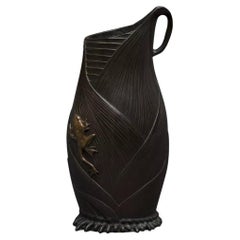
Bronze pitcher, Japan, chocolate-brown patina, frog in the round, 19th century
Located in NANTES, FR
This Japanese pitcher is notable for its naturalistic style. The bronze work is of very fine craftsmanship, featuring an attractive patina and delicate chiseling. A frog in the round...
Category

20th Century Japanese Japonisme Furniture

Materials

Bronze

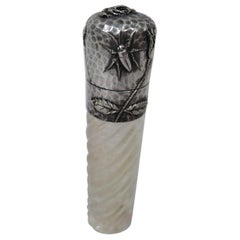
American Japonesque Applied Hand Hammered Sterling Silver Perfume
Located in New York, NY
American applied sterling silver perfume vial, ca 1880. Clear glass cylinder with twisted fluting. Sterling silver collar and hinged cover with tendril, f...
Category

Late 19th Century North American Antique Japonisme Furniture

Materials

Sterling Silver

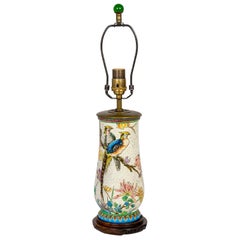
Crackle Glaze Ceramic Lamp w/ Painted Peacock Flower Scene
Located in San Francisco, CA
A French Japonisme piece from the early 20th century - this white, crackle glazed ceramic table lamp is incised and intricately hand painted with a colorful scene of peacocks, butter...
Category

Early 20th Century French Japonisme Furniture

Materials

Brass

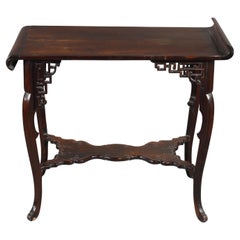
"Pagoda" table, Attributed to G. Viardot, France, Circa 1880
Located in PARIS, FR
Charming Japanese-inspired « pagoda » table in tinted and carved wood attributed to G. Viardot. The rectangular top rests on four slightly curved legs adorned with openwork and sculpted geometric interlacing, joined by an engraved stretcher with a stylized cutout. Gabriel Viardot career began as a wood carver and he produced small furniture, sculpturally carved with naturalistic motifs and animals. In the 1855 Universal Exhibition in Paris, his finely sculpted objects were well received. However, with the increasing importation of similarly produced Swiss and German articles, he found less opportunity for these and decided to innovate. G. Viardot succeeded to his father's business in 1861 installed rue Rambuteau in Paris. Around 1870 he turned to the idea of producing « Meubles genre Chinois et Japonais ». The taste in Europe for exotic furniture, incorporating sometimes authentic Chinese or Japanese objects...
Category

1880s French Antique Japonisme Furniture

Materials

Wood

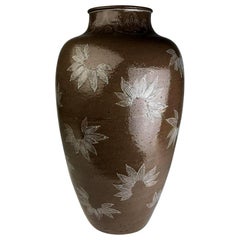
Rare Large Vase with White Slip Inlay Makuzu Kozan Meiji Period
Located in Atlanta, GA
A impressively large and unusual stoneware vase in an urn shape from the studio of Japanese Potter Makuzu Kozan, also known as Miyagawa Kozan (1842–1916), one of the most established and collected ceramist from Meiji Period. Born as Miyagawa Toranosuke, Kozan established his pottery studio in Yokohama circa 1870s and later became one of the appointed artist to the Japanese Imperial household. His work was exhibited in many international fairs that the Meiji government participated at the turn of the century and won many grand prizes. This vase is dated to the end of Makuzu's life circa 1910-1916 based on similar work created around that time. After achieving domestic and international fame, Makuzu retired and handed the business to his son Hanzan in 1912. He dedicated his time to other selected projects that were more in tune with Japanese sensibility than export aesthetic. He made a group of stoneware pottery pieces inspired by Edo master like Ninsei and Kenzan as well as his own poetic creation. This piece is attributed to that period. Standing of an impressive size, this vase is more like an urn, made with stoneware instead of porcelain. It was coated with a brown iron glaze with a slight translucent quality. Underglaze whit slips were used to draw low relief decoration of bamboo leaves that sparsely scatter on the surface. Slightly more elaborate scrolling vines and autumn flowers circles under the mouth rim. Same white slip inlay was used to sign the vase under the base. The whole effect of the piece is unusual. With its dark glaze in contrast with the sparse white decoration that is more abstract and geometric than realistic, it appears almost modern with an Art Deco flavor. For stoneware urn and vase in the similar genre by Makuzu Kozan: see figure 113 on page 182 of "Sekai ni Aisa Reta ya Kimono" MIYAGAWA KOZAN MAKUZU...
Category

1910s Japanese Vintage Japonisme Furniture

Materials

Ceramic

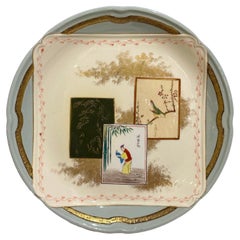
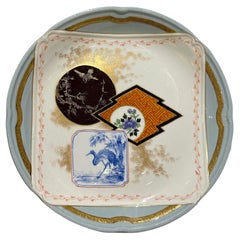
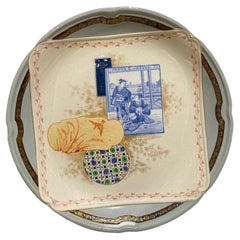
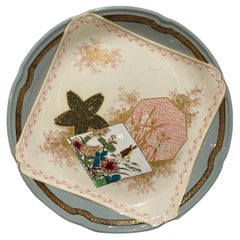
Dessert plate, Kioto service, Creil et Montereau, 1878 - 1884
Located in Paris, FR
A stunning dessert plate from the "Kioto" collection by the renowned Creil et Montereau manufacturer, dating back to 1878-1884. This fine earthenware piece, typical of the japonisme ...
Category

19th Century French Antique Japonisme Furniture

Materials

Ceramic

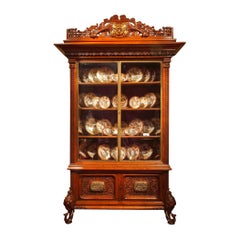
"Japonisme" Vitrine Attributed to A. Giroux, France, Circa 1880
Located in PARIS, FR
Rare aesthetic movement showcase, opening in its upper part by two beveled glass doors framed by brass moldings, in its lower part by two door panels in carved walnut decorated with blooming branches and gilded bronze ornaments representing dragons and birds. The sides are carved, like wicker woven. This showcase is topped by an important carved and gilded walnut cornice depicting a Fô Dog in its center, with a protective power, and rests on elephant head with overtuned trunk shaped feet. This type of elephant head with overtuned trunk shaped feet is a characteristic of the Maison Giroux, which can be found on many objects they produced. Aesthetic movement cabinet, signed Maison Alphonse Giroux...
Category

1880s French Antique Japonisme Furniture

Materials

Bronze

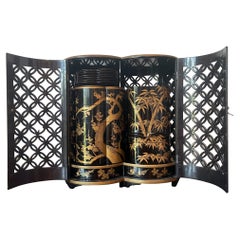
Japanese Maki-e Lacquer Portable Sagejubako Theme of Three Winter Friends
Located in Atlanta, GA
Sagejubako is a portable lunch or picnic set that became popular in the early Edo period when an additional meal was added between breakfast and dinner. It normally consists of a han...
Category

19th Century Japanese Antique Japonisme Furniture

Materials

Lacquer

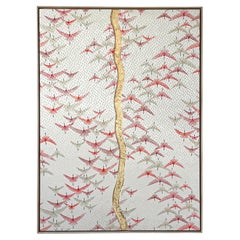
Vintage kimono textile art " Cranes ~ Kintsugi ~ " by ikasu White Red Gold Japan
Located in Setagaya City, JP
< The frame for this work is made of paulownia wood taken from antique Kiritansu - chest-of-drawers for kimono. I use antique kiritansu that can’t be used as furniture anymore to create basis and frames for my works. It adds them even more authentic atmosphere of traditional wabisabi spirit. Can you feel it? The piece uses the concept of "kintsugi" - it "unites" the pieces of antique kimono back together with golden leaf to give it a second wind as art work. << Period / Story The kimono used in this piece was originally crafted during the late Showa period (1960-80ies). << Explanation and meaning of pattern and colors The Japanese saying goes, "A crane lives a thousand years, a tortoise lives ten thousand years," making cranes a symbol of longevity. Cranes are also known for staying with the same partner for their entire lives, which is why they are often used at weddings and other celebrations to symbolize "marital bliss" and the desire for harmony between husband and wife. On this particular piece, cranes are flying through snow woven on the fabric, as if they are overcoming all the disasters to get to their beloved ones. The color scarlet, or deeply dyed red, used for the most of the cranes here, has long been associated with the meaning of "warding off evil." It is believed to possess the power to repel malevolent forces and invite good fortune. During the Heian period, scarlet was reserved for sacred buildings and ceremonial objects that held great significance. Ordinary people were prohibited from wearing scarlet-red kimonos, which made it a highly special color. << Characteristics of the fabric Cranes, going up and down, are generously decorated by kimpaku here. "Kimpaku" (金箔) refers to gold leaf/foil in Japanese. Gold leaf is a traditional material used in various aspects of Japanese culture, including art, crafts, and even in culinary applications. In traditional Japanese art, gold leaf is often applied to religious objects, sculptures, paintings, and lacquerware to create a luxurious and decorative effect. The use of gold leaf in art dates back centuries and is associated with a sense of wealth, prestige, and the divine. Traditional kimpaku technique is used here to make an accent decoration in the middle. << About the frame This artwork frame is crafted from paulownia wood, a uniquely Japanese material closely tied to the world of kimonos, and it serves to convey the refined beauty of Japanese nature. Paulownia wood is known as the lightest wood in Japan, prased for its natural luster, resistance to moisture, and resilience against cracking. Since ancient times, it has been used in crafting furniture, chests, and musical instruments. Paulownia wood is closely linked to kimono culture. During the Edo period, it became customary to store cherished kimonos in paulownia chests...
Category

Late 20th Century Japanese Japonisme Furniture

Materials

Gold Leaf

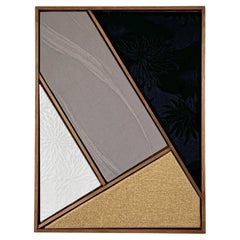
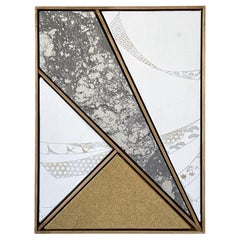
Vintage kimono textile art " Monochrome Geometry " by ikasu Gold Grey Japan
Located in Setagaya City, JP
This work is inspired by traditional Japanese nature colors symbolism, and is framed in paulownia wood originally used for a kimono chest-of-drawers. It is filled with storytelling ...
Category

1960s Japanese Vintage Japonisme Furniture

Materials

Silk, Wood

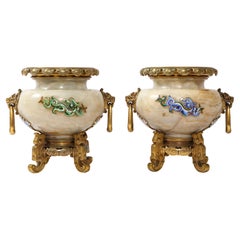
Eugène Cornu, Pair of French Japonisme/Chinoiserie Ormolu Mtd Enameled Onyx Urns
Located in New York, NY
A Rare and Quite Unusual Pair of Signed 19th Century French Japonisme/Chinoiserie/Orientalist Ormolu Mounted Champleve Enameled Onyx Urns by Eugène Cornu. Each is made from champlev...
Category

1880s French Antique Japonisme Furniture

Materials

Onyx, Bronze

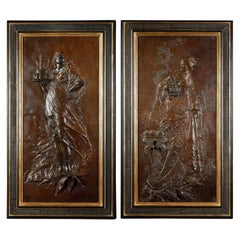
"the Japanese and the Oriental" Plaques, Attri. to L. Hottot, France, circa 1900
Located in PARIS, FR
Important pair of metal with double patina plaques representing an Oriental woman and a Japanese woman, both dressed in traditional outfits, during the tea ceremony. Each is presente...
Category

Early 1900s French Antique Japonisme Furniture

Materials

Metal

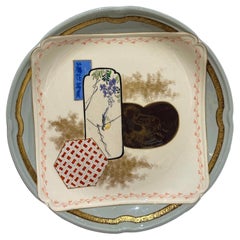
Dessert plate, Kioto service, Creil et Montereau, 1878 - 1884
Located in Paris, FR
A stunning dessert plate from the "Kioto" collection by the renowned Creil et Montereau manufacturer, dating back to 1878-1884. This fine earthenware piece, typical of the japonisme ...
Category

19th Century French Antique Japonisme Furniture

Materials

Ceramic

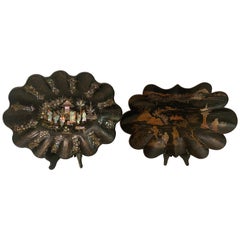
Two Japanese Mother of Pearl Wood Dishes
Located in Brea, CA
Two Japanese mother of pearl wood dishes, very beautiful pieces. Measures: Large one H 2” x L 13.5” x W 10”.
Category

Early 20th Century Japanese Japonisme Furniture

Materials

Lacquer

Asian Flambe Studio Pottery Vase
By Kyoto Pottery
Located in Atlanta, GA
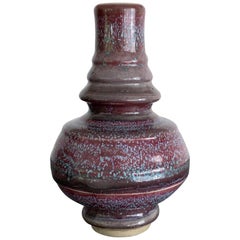
A garlic bottle vase in an archaic Chinese form, but likely Japanese in origin. Several circumventing grooves however, suggest a more modern age. It was done in a brilliant purple glaze over a robin egg blue background glaze. The bubbling and bursting effects during the firing renders the surface an artistic spotting effect. The color pallet recalls the Classic Jun Yao...
Category

Late 19th Century Japanese Antique Japonisme Furniture

Materials

Ceramic

Serving Dish Choisy-le-Roi for L Escalier de Cristal, 19th "Grands Oiseaux"
Located in Paris, FR
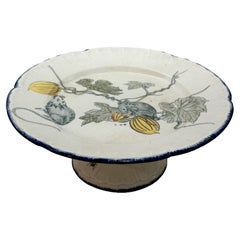
Introducing the "Grands Oiseaux" footed plate, an elegant piece hailing from the iconic Escalier de Cristal, the premier tableware store of the 19th century. This exquisite plate fe...
Category

Late 19th Century French Antique Japonisme Furniture

Materials

Ceramic

Japanese Glazed Ceramic and Silver Koro Incense Burner Makuzu Kozan
Located in Atlanta, GA
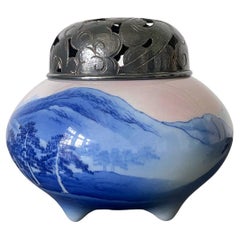
A tri-pod ceramic incense burner (koro) by Japanese Imperial potter Makuzu Kozan (1842-1916) circa late Meiji to the start of Taisho period (1890-1910s). A fine example of the artist's work belonging to the late part of his underglaze paint phase (started around 1887 until his death), the surface of the koro was painted in beautiful shades of blue to depict a continuous landscape not unlike a traditional ink and watercolor hand scroll. The rise and fall mountains recede and fade into the horizon and are dotted with groves of pines. The sky is painted with a beautiful subtle shade of pink, suggesting a time of sunrise or sunset. The koro is fitted with an ensuite reticulated sterling silver hoya (incense cover), pierced with swirling cloud and marked with "pure silver' in Kanji. The base is signed in underglaze blue "Makuzu Kozan Sei" within a double ring. The piece is beautifully potted in form and the decoration was done with expertise using the novel technique developed by Kozan called Fuki-e (the blow painting), in order to achieve the striking landscape known as "Mountain and Water" with sense of dimensions and gradient, the poetic effects normally conveyed only by sumi ink staining on paper. The piece comes with an unsigned tomobako (wood storage box) of a recent age. Also known as Miyagawa Kozan (1842–1916), Makuzu Kozan was one of the most established and collected ceramist from Meiji Period. Born as Miyagawa Toranosuke, Kozan established his pottery studio in Yokohama around 1870s and later became one of the appointed artists to the Japanese Imperial household. His work was exhibited in many international fairs that the Meiji government participated at the turn of the century and won many grand prizes. Being one of the most creative ceramists, Kozan started experimenting with new chemical colors from the West in the format of his porcelain glaze around 1880s. New colors allowed him to create underglaze designs that appeared bright, smooth and glossy. He even invented his own receipt of cobalt blue to achieve a much brighter yet softer shade, as evident on this vase. To create landscape that is realistic and dimensional, more common in the western paintings, he was inspired by the native Japanese ink painting technique developed around 1900 by Yokoyama...
Category

Early 1900s Japanese Antique Japonisme Furniture

Materials

Silver

Antique kimono textile art " Plum Blossom Night ~ Resilience ~ " by ikasu Japan
Located in Setagaya City, JP
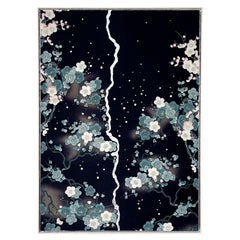
This artwork uses antique fabric from Taisho era (early 1920ies) kimono and paulownia wood taken from antique kiritansu - chest-of-drawers used initially to keep kimonos. It is el...
Category

1920s Japanese Vintage Japonisme Furniture

Materials

Silver Leaf

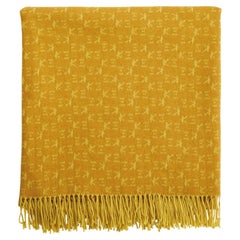
Throw Koko 40
Located in Cadorago, CO
The KOKO collection is composed of yarn-dyed jacquard throws with tone-on-tone fringes and a K三 monogram pattern. This throw is a rich gold colour with a sophisticated and elegant f...
Category

21st Century and Contemporary Italian Japonisme Furniture

Materials

Fabric

Throw Koko 40
Throw Koko 40
$664 / item
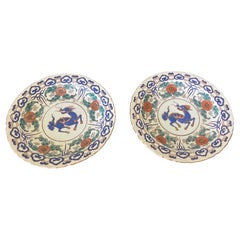
Pair Antique Japanese Artia Ceramic Cabinet Plates
Located in Atlanta, GA
A pair of Japanese decorative ceramic plates, made in Arita for export market circa 17-18th century. The cabinet-display dishes feature lotus-petal gilt rim and a lavish tricolor ene...
Category

18th Century Japanese Antique Japonisme Furniture

Materials

Ceramic

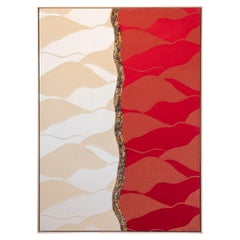
Vintage obi textile art "Under the Sun ~ Serendipity ~" by ikasu Red Beige Japan
Located in Setagaya City, JP
< This artwork creatively uses tree bark to evoke the imagery of woods and mountains during both the morning and nighttime on left and right. It is elegantly framed with paulownia wood, a tree closely connected to kimono culture, and is filled with storytelling and sense of luxury. By incorporating both the front and back sides of the same obi fabric woven in different colors, the play of light and shadow on the mountains is depicted through the contrasting appearances of these surfaces. The intention behind this piece is to convey the exquisite beauty of Japanese mountains and the lush forests that inhabit them. To achieve this, traditional elements of Japanese culture, such as obi textiles and craftsmanship involving wood, were used. The outer side and inner linings of the same obi, no longer suitable for clothing, along with bark material that would normally be discarded, have been repurposed to create this exceptional upcycle artwork. The fusion of Japanese natural materials – silk, paulownia wood, and pine bark for the central decoration – along with the so-called "Tozan" pattern, a unique Japanese natural design showing mountains from far-away point, captures the magnificent beauty of Japanese nature from various perspectives. The central bark decoration stands out as a distinctive feature of this work. Pine, oak, and other tree barks are interwoven among the mountains woven into the obi, creating a tangible and authentic natural atmosphere. << Period / Story The obi used in this piece was originally crafted during the late Showa period (1960-80ies). << Explanation and meaning of pattern and colors This upcycle artwork uses an obi with a tozan pattern woven in two colors. The design is inspired by a distant mountain range, a motif that has been used in paintings and crafts since ancient times. However, in this particular design, the mountains are depicted not as distant peaks but as graceful semicircles giving it a mild atmosphere. << Characteristics of the fabric This upcycled Fukuro-obi (two-side obi) showcases a festive color pattern of mountains intricately woven with gold threads against a beige front and red on the back. The way this obi interacts with light allows it to shift in expression, much like a mountain revealing different facets over time. It can transform from deep shades of color to the appearance of gold shimmering against bright hues, depending on the lighting and viewing angle. << About the frame Kiritansu - chest-of-drawers for kimono, is traditionally made from paulownia wood, a uniquely Japanese material closely tied to the world of kimonos. Paulownia wood is known as the lightest wood in Japan, prased for its natural luster, resistance to moisture, and resilience against cracking. Since ancient times, it has been used in crafting furniture, chests, and musical instruments. During the Edo period, it became customary to store cherished kimonos in paulownia chests...
Category

Late 20th Century Japanese Japonisme Furniture

Materials

Silk, Wood

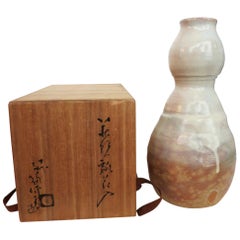
Hagi Ikebana Vase by Kyusetsu Miwa X Japanese Studio Pottery
By Kyusetsu Miwa X
Located in Atlanta, GA
A stoneware vase with white dripping glaze from Hagi by Kyusetsu Miwa X (1895-1981), Showa Period. The vase is in the shape of "Double Gourd" with a bulbous ...
Category

20th Century Japanese Japonisme Furniture

Materials

Ceramic

VIntage kimono textile art " Geometry ~ Chrysanthemums ~" by ikasu White Japan
Located in Setagaya City, JP
< This work is inspired by traditional Japanese natural symbolism, and is framed in paulownia wood originally used for a kimono chest-of-drawers. It is elegantly framed with...
Category

1960s Japanese Vintage Japonisme Furniture

Materials

Silk, Wood

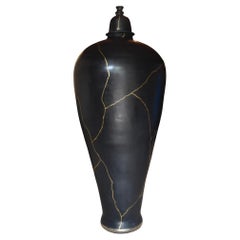
Floor vase kintsugi “Resilio”
Located in MEAUX, FR
This elegant earthenware jar, an impressive 148 cm high, is based on one of the most famous vase shapes in Chinese art: the Meiping. This simple yet voluptuous silhouette dates back ...
Category

2010s French Japonisme Furniture

Materials

Gold

Marie Black Coffee Table
Located in Cadorago, CO
Embellished with an extraordinary Japanese kintsugi golden inlay, this coffee table is a bold centrepiece for modern interiors. Entirely crafted from wood fibre with a matte-black la...
Category

21st Century and Contemporary Italian Japonisme Furniture

Materials

Wood

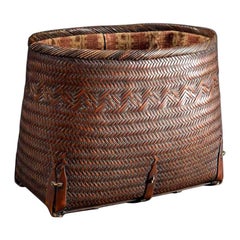
Early Japanese Hand Basket with Brocade Interior by Suzuki Gengensai
Located in Atlanta, GA
This small elegant woven bamboo basket was meant to be a hand-hold bag with its brocade interior (which appears original). It was made by Suzuki Gengensai (1891-1950) circa 1910-20s. Suzuki Gengensai was from Kansai region and active in Osaka. He studied bamboo art under Yamashita Kochikusai (1876-1947) and became an independent artist in 1913. He received his artist name Gengensai in 1914 and in 1923 he changed the characters to Gen, a slight written variation of the character. This basket was signed in the former way, which helps to date the piece to the early part of the artist's career circa 1914-1923. The basket is tightly woven in variation of twill plating that creates contrasting bands on the surface. The base was constructed with short bamboo stripes on the corners and side with ornamental knots. A closely related piece (Object Number: 2006.3.651) with slight different surface twill patterns is in the collection of Asian Art Museum San Francisco. Comparing the two, they show almost identical form as well as the base construction. Both also have brocade interior and most likely were woven during the same period. Another documented example can be found on page 180 in "Baskets Masterpieces of Japanese Bamboo Art...
Category

Early 20th Century Japanese Japonisme Furniture

Materials

Brocade, Bamboo

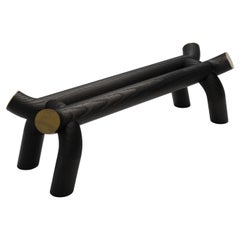
Torii: Japanese Style Bench
Located in Timisoara, RO
Inspired By The Grandeur Of Torii Gates, The Japanese Mythological Structure, The Torii Bench Mirrors Its Sibling Stool’s Bold Beam Structure And Culturally Significant Roof Silhouet...
Category

21st Century and Contemporary Unknown Japonisme Furniture

Materials

Wood

Dessert plate, Kioto service, Creil et Montereau, 1878 - 1884
Located in Paris, FR
A stunning dessert plate from the "Kioto" collection by the renowned Creil et Montereau manufacturer, dating back to 1878-1884. This fine earthenware piece, typical of the japonisme ...
Category

19th Century French Antique Japonisme Furniture

Materials

Ceramic

Dessert plate, Kioto service, Creil et Montereau, 1878 - 1884
Located in Paris, FR
A stunning dessert plate from the "Kioto" collection by the renowned Creil et Montereau manufacturer, dating back to 1878-1884. This fine earthenware piece, typical of the japonisme ...
Category

19th Century French Antique Japonisme Furniture

Materials

Ceramic

Dessert plate, Kioto service, Creil et Montereau, 1878 - 1884
Located in Paris, FR
A stunning dessert plate from the "Kioto" collection by the renowned Creil et Montereau manufacturer, dating back to 1878-1884. This fine earthenware piece, typical of the japonisme ...
Category

19th Century French Antique Japonisme Furniture

Materials

Ceramic

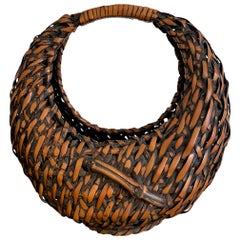
Japanese Bamboo Basket Ikebana
Located in Atlanta, GA
A Japanese woven bamboo basket in the shape of crescent with open top and a wrapped handle circa 1920s-1940s. The basket was woven with "sooted" bamboo (susutake in Japanese). This b...
Category

Early 20th Century Japanese Japonisme Furniture

Materials

Bamboo

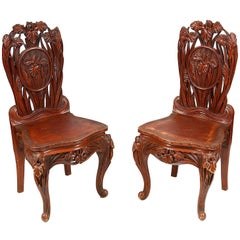
Pair of Oriental Chairs, 19th Century
Located in Brighton, Sussex
A very stylish pair of late 19th century Japanese side chairs, each with wonderful carved leaves and orchids to the backs and legs.
Category

Late 19th Century Japanese Antique Japonisme Furniture

Materials

Softwood

Vintage obi textile art " Broken Vase ~ kintsugi ~" by ikasu Black Gold Japan
Located in Setagaya City, JP
< This textile artwork uses a vintage obi dated around 1980ies, with a feather motif, and arranges it so that it looks like a vase. Antique obi, just as it is a broken vase, is united back again with black obijime - a string used to tie up obi when it’s worn. Framed in kiritansu (antique chest) paulownia wood. It is elegantly framed with paulownia wood originally used for kimono chest-of-drawers, and is filled with storytelling and sense of luxury. I used pieces of kimono that could no longer be used as clothing and kiritansu chest-of-drawers that would normally be discarded to create the ultimate upcycled piece. << Explanation and meaning of pattern and colors Feathers hold various meanings and symbolism in Japanese traditional culture, often reflecting themes of spirituality, symbolism, and folklore. Here are some of the meanings associated with feathers in Japanese tradition: ・Divine Protection: Feathers are often seen as symbols of divine protection and spiritual guidance. Feathers, especially those from birds, are considered to be imbued with the protective energy, offering spiritual guardianship and safeguarding against negative forces. ・Connection to the Spirit World: Feathers are sometimes associated with the spirit world and the realm of the divine. In folklore and mythology, feathers are depicted as messengers between the earthly realm and the celestial realms. ・Symbol of Beauty and Elegance: Feathers are admired for their natural beauty, grace, and elegance. In traditional Japanese arts such as Noh theater, Kabuki, and dance performances like Kagura, actors and performers often use feathered costumes or accessories to enhance their appearance and convey a sense of refinement and sophistication. ・Sign of Good Luck and Prosperity: In Japanese folklore, certain birds like cranes and pheasants are considered symbols of good fortune, longevity, and prosperity. Feathers from these birds are often depicted in art and craftwork as auspicious symbols believed to bring blessings and positive energy to the bearer. < Kiritansu - chest-of-drawers for kimono, is traditionally made from paulownia wood, a uniquely Japanese material closely tied to the world of kimonos. Paulownia wood is known as the lightest wood in Japan, prased for its natural luster, resistance to moisture, and resilience against cracking. Since ancient times, it has been used in crafting furniture, chests, and musical instruments. During the Edo period, it became customary to store cherished kimonos in paulownia chests...
Category

1980s Japanese Vintage Japonisme Furniture

Materials

Silk, Wood

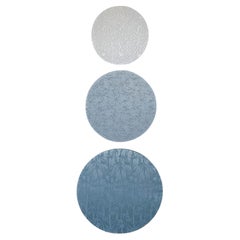
Vintage kimono textile art " Turquoise Forest ~ Strength ~ " by ikasu Blue Japan
Located in Setagaya City, JP
Fabrics featuring iconic Japanese plants like chrysanthemum, maple, and bamboo were gathered from various long underwear and kimono pieces to create a set of canvases (diameter 30, 25 and 20cm) showcasing exquisite gradations. The top canvas, in pristine white, originates from long under-kimono, while the middle and bottom canvases are skillfully upcycled from kimono fabrics. << Period / Story The long under-kimono and kimono fabrics used in these canvases were originally crafted and worn during the late Showa period (1960-80ies). << Explanation and meaning of pattern and colors The pattern on the top canvas features a chrysanthemum, an auspicious emblem symbolizing longevity. It is affectionately referred to as the "raccoon dog chrysanthemum" due to the large, overlapping petals resembling the fur of a muzina, a creature similar to a raccoon dog or badger. This motif is highly popular in various plant-inspired designs and frequently seen in Edo komon, katazome, and jimon textiles. The top canvas naga-juban under-kimono, being entirely white and devoid of any additional dyes, suggests its use as formal wear. Its pristine white hue accentuates the silk's luster when exposed to light and highlights the beauty of the woven patterns. The fabric used here is rinzu, a type of fabric thinner than crepe de chine, characterized by its soft, smooth texture and subtle sheen. This particular lintel distinguishes itself with the way its ground pattern emerges and also incorporates a woven chrysanthemum pattern. The central canvas showcases a maple tree, symbolizing longevity, which changes its colors with the seasons, bringing joy and happiness to people's lives. The bamboo featured on the lower canvas has been regarded as a symbol of good fortune since ancient times, given its straight and vigorous growth, along with the Chinese legend that a phoenix consumes its fruit. It embodies concepts such as "immortality," "longevity," and "strength" because it remains green even in winter. The hollow stem also signifies "innocence," suggesting that there are no hidden agendas. All three canvases are adorned with ground patterns that, when viewed from a distance, appear as modern works of art, yet upon closer inspection, they reveal a distinct Japanese ambiance. << Characteristics of the fabric All three canvases are made of fabrics with jimon. The unique and high level of Japanese weaving...
Category

1970s Japanese Vintage Japonisme Furniture

Materials

Canvas, Silk

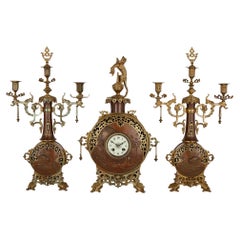
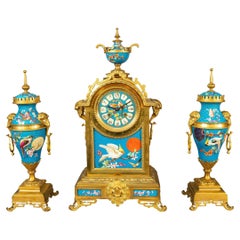
A Japonisme Gilt-Bronze and Brass Three-Piece Clock Set
Located in London, GB
A Japonisme gilt-bronze and brass three-piece clock set French, Late 19th Century Clock: height 52cm, width 31cm, depth 12cm Candelabra: height 55cm, width 32cm, depth 9cm Made in F...
Category

Late 19th Century French Antique Japonisme Furniture

Materials

Brass, Ormolu

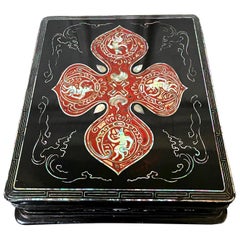
Unusual Japanese Lacquer Inkstone Box with MOP Inlays
Located in Atlanta, GA
A Japanese black lacquer box with mother of pearl inlays circa early 20th century, end of Meiji period. It was likely to be used to store inkstone or other scholarly items. The piece displays several interesting characteristics that appear puzzling initially. First, the form is not typical Japanese, but more Chinese and Korean, with its scalloped base. Second, the decoration of MOP inlays also suggests a Korean and Chinese affiliation, especially with the linear borders and the scrolling cloud patters on the sides of the box. These two observations suggest that the box may be from Ryukyu Island instead of Japanese mainland. Third, strikingly in the center of the cover, a bold quarterly floral pattern outlined with MOP was filled with a striking mottled red lacquer using tsugaru nuri...
Category

Early 20th Century Japanese Japonisme Furniture

Materials

Wood, Lacquer

French Antique Ormolu Mounted Porcelain Japonisme Style Garniture Set
Located in Tarzana, CA
A very fine antique 19th century French gilt bronze and hand painted porcelain 3-piece clock set in the Japonisme style. The clock finely decorated with porcelain plaques, painted in the Japanese style with Cherry blossom branches. The front plaque features a Sulphur-crested cockatoo with a red sun in the sky on the right. The clock’s rectangular body is crowned by an arched top which contains a circular porcelain dial. This dial features a painting of a pair of birds on a cherry branch at its center, encircled by black Roman Numerals within white cartouches. The shoulders of the clock are mounted with gilt bronze elephant...
Category

Late 19th Century French Antique Japonisme Furniture

Materials

Bronze, Ormolu

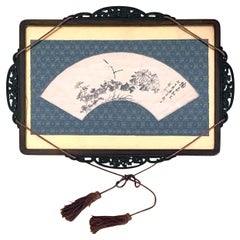
Framed Japanese Ink Painting Hidaka Tetsuo
Located in Atlanta, GA
An ink painting on the fan surface by Japanese Zen artist Hidaka Tetsuo (1791-1871), now framed in a traditional Japanese carved wood frame with silk fabric mat and decorative hangin...
Category

1850s Japanese Antique Japonisme Furniture

Materials

Wood, Paper

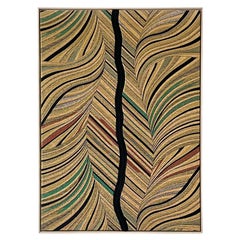
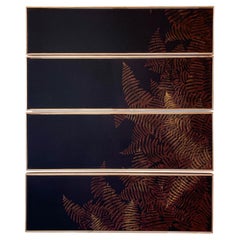
Vintage kimono textile art " Fern ~ Connection to Nature ~" by ikasu Black Japan
Located in Setagaya City, JP
This work uses an antique tomesode (festive kind of kimono) with fern design to evoke feelings of tranquility, harmony, and appreciation for the beauty of the environment. Can be used both vertically and horizontally. It is elegantly framed with paulownia wood originally used for kimono chest-of-drawers, and is filled with storytelling and sense of luxury. I used pieces of kimono that could no longer be used as clothing and kiritansu chest-of-drawers that would normally be discarded to create the ultimate upcycled piece. << Explanation of colors and patterns In Japanese traditional culture, ferns, particularly the Japanese painted fern (Athyrium niponicum), hold several meanings and symbolisms: ・Elegance and Beauty: Ferns are admired for their graceful, delicate appearance and intricate leaf patterns. In Japanese aesthetics, they are appreciated for their natural beauty and are often used in gardens, landscapes, and floral arrangements to add a sense of refinement and elegance. ・Resilience and Perseverance: Ferns are known for their ability to thrive in diverse environments, including shady forests, rocky cliffs, and damp soil. Their resilience in the face of challenging conditions is seen as a symbol of endurance and perseverance. In Japanese culture, ferns may represent the ability to overcome adversity and flourish despite obstacles. ・Connection to Nature and Tranquility: Ferns are native to forested areas and are often associated with the natural world. In Japanese traditional culture, they symbolize a deep connection to nature and the importance of maintaining harmony with the environment. The lush green foliage of ferns evokes feelings of tranquility and peacefulness, making them popular motifs in Zen gardens and traditional landscape paintings. ・Purity and Simplicity: Ferns are emblematic of simplicity and purity in Japanese aesthetics. Their unassuming beauty and understated elegance reflect the principles of wabi-sabi, an aesthetic worldview that values imperfection, impermanence, and simplicity. Ferns may be used in tea ceremonies, Ikebana (flower arranging), and other traditional arts to evoke a sense of tranquility and appreciation for life's fleeting moments. Overall, ferns in Japanese traditional culture symbolize elegance, resilience, connection to nature, purity, and simplicity. Their presence in art, literature, and landscape design underscores their enduring significance as symbols of natural beauty and spiritual resonance. << Characteristics of the fabric This vintage textile is hand-painted with a traditional Japanese technique called "yuzen". << About the frame Kiritansu - chest-of-drawers for kimono, is traditionally made from paulownia wood, a uniquely Japanese material closely tied to the world of kimonos. Paulownia wood is known as the lightest wood in Japan, prased for its natural luster, resistance to moisture, and resilience against cracking. Since ancient times, it has been used in crafting furniture, chests, and musical instruments. During the Edo period, it became customary to store cherished kimonos in paulownia chests...
Category

1960s Japanese Vintage Japonisme Furniture

Materials

Silk, Wood

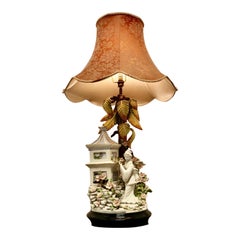
Large Figural Ceramic Table Lamp by D. Polo Uiato, Capodimonte Style
Located in Godshill, Isle of Wight
Large figural ceramic table lamp by D. Polo Uiato, Capodimonte style This is a large and rare piece lamp, the lamp is a colourful outdoor scene wi...
Category

Mid-20th Century Japonisme Furniture

Materials

Ceramic

VIntage kimono textile art " Geometry ~ Marble ~" by ikasu Gold White Grey Japan
Located in Setagaya City, JP
This work is inspired by traditional Japanese nature motifs symbolism, and is framed in paulownia wood originally used for a kimono chest-of-drawers. It is elegantly framed with pau...
Category

1960s Japanese Vintage Japonisme Furniture

Materials

Silk, Wood

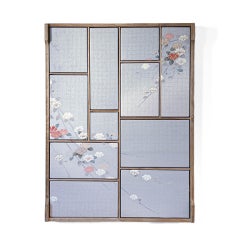
Vintage obi textile art " Camellia ~ Serendipity ~" by ikasu Blue Japan
Located in Setagaya City, JP
[Story behind the work] This work is inspired by traditional Japanese nature motifs symbolism, and is framed in paulownia wood originally used for a kimono chest-of-drawers. It is elegantly framed with paulownia wood originally used for kimono chest-of-drawers, and is filled with storytelling and sense of luxury. In this artwork, the aim was to capture the the auspicious symbol of camellia used in antique kimono. Traditional Japanese culture, represented by the kimono, and wood, an integral element of Japanese craftsmanship, were used to bring this vision to life. I used pieces of kimono that could no longer be used as clothing and kiritansu chest-of-drawers that would normally be discarded to create the ultimate upcycled piece. [Explanation and meaning of pattern and colors] This delicate piece features hand-drawn camellia motifs flowing gracefully on a softly brightened grayish background. Camellias, native to Japan, bloom from winter to early spring. As an evergreen tree with green leaves throughout the year, it symbolizes the anticipation of spring and is considered an auspicious plant. Due to its seasonal significance and auspicious meanings, camellias have been used as motifs symbolizing good fortune. Additionally, they were highly valued for their use in oil, cosmetics, and medicine, representing nobility. Believed to possess the power to ward off misfortune, camellias also carry the meaning of "protection from calamity" and have strong ties to traditional ceremonies. In this artwork, camellias are delicately depicted alongside flowing branches, subtly representing good fortune with their pale pink and white hues. "Sora-iro nezumi 空色鼠" refers to a light grayish color with a hint of blue, reminiscent of the slightly brightened sky on a lightly cloudy day. Popular during the late Edo period (19th cent.), it elegantly captures the slightly brighter sky pattern seen on lightly overcast days. Notably, the term "nezumi-iro" (mouse gray), popular during the late Edo period, was paired with brown tones, collectively known as "Forty-eight Teas and a Hundred Mice 四十八茶百鼠." Colors within the "nezumi" (gray) spectrum, particularly "sora-iro nezumi," were favored by young people for their cool and sophisticated appeal. [Characteristics of the fabric] The fabric features intricately woven patterns that reveal subtle gradations through dyeing, creating a grid pattern that transforms depending on the light conditions. Originally, this fabric was part of a formal kimono known as a "hōmongi 訪問着," featuring motifs along the hem, shoulders, and sleeves. These motifs have been carefully selected and combined to create a unified piece of artwork. [About the frame] Kiritansu - chest-of-drawers for kimono, is traditionally made from paulownia wood, a uniquely Japanese material closely tied to the world of kimonos. Paulownia wood is known as the lightest wood in Japan, prased for its natural luster, resistance to moisture, and resilience against cracking. Since ancient times, it has been used in crafting furniture, chests, and musical instruments. During the Edo period, it became customary to store cherished kimonos in paulownia chests...
Category

1960s Japanese Vintage Japonisme Furniture

Materials

Silk, Wood

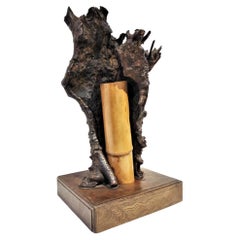
Atique Japanese Rootwood Bamboo Ikebana Vase, XIX Century
Located in New York, NY
Atique Rootwood & Bamboo Ikebana Vase Japan, XIX Century DIMENSIONS Height: 19.25vinches Width: 10.13 inches Depth: 9.5 inches ABOUT This absolutely unique ikebana vase consists of...
Category

Late 19th Century Japanese Antique Japonisme Furniture

Materials

Bamboo, Wood

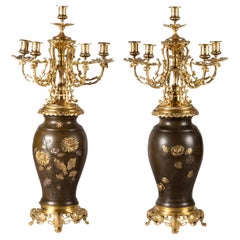
Pair Of Aesthetic/Japonism Style Candelabras - Meiji with Shakudo Decoration
Located in MOUGINS, FR
A beautiful and very large pair of Meiji period Japanese bronze vases with brown patina and caved design with applied gilt and silver bronze inserts representing birds and insects fl...
Category

Late 19th Century French Antique Japonisme Furniture

Materials

Bronze

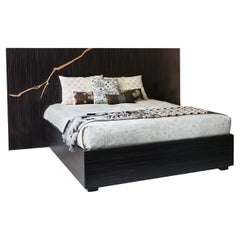
Jonathan Ebony Bed with Kintsugi
Located in Cadorago, CO
Distinguished by a remarkable, large headboard featuring a kintsugi, one of K3's signature motifs inspired by the Japanese art of preparing broken pottery, this bed is an iconic desi...
Category

21st Century and Contemporary Italian Japonisme Furniture

Materials

Wood

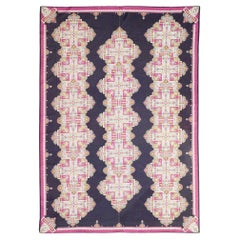
Late XIX century - Carpet needle point technique
Located in Milano, Lombardia
Carpet France, end of 19th century Needle point technique 212 x 293 cm
Category

1890s French Antique Japonisme Furniture

Materials

Wool

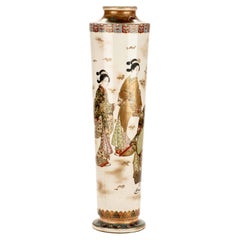
A Large Satsuma Vase Depicting A Scene Of Daily Life
Located in Milano, IT
Large cylindrical Satsuma vase, decorated with polychrome enamels and pure gold, depicting a scene of daily life with three geishas and a samurai on a festive day. Signed ‘Seizan zō...
Category

Late 19th Century Japanese Antique Japonisme Furniture

Materials

Ceramic

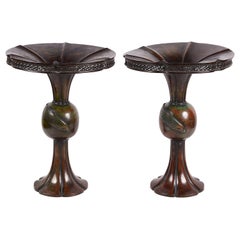
Pair of 19th Century Japanese Meiji Period Bronze Carp Vases
Located in Brighton, Sussex
A fine quality pair of Japanese Meiji period (1868-1912) green and red patinated bronze vases, each having pierced decoration, having wonderful raised carp swimming around the center...
Category

Late 19th Century Japanese Antique Japonisme Furniture

Materials

Bronze

Japonisme furniture for sale on 1stDibs.

Find a broad range of unique Japonisme furniture for sale on 1stDibs. Many of these items were first offered in the 21st Century and Contemporary, but contemporary artisans have continued to produce works inspired by this style. If you’re looking to add vintage furniture created in this style to your space, the works available on 1stDibs include decorative objects, asian art and furniture, serveware, ceramics, silver and glass and other home furnishings, frequently crafted with metal, ceramic and other materials. If you’re shopping for used Japonisme furniture made in a specific country, there are Asia, East Asia, and Japan pieces for sale on 1stDibs. While there are many designers and brands associated with original furniture, popular names associated with this style include Tiffany Co., Gökhan Eryaman, İsmail Dağlı, and Makuzu Kozan. It’s true that these talented designers have at times inspired knockoffs, but our experienced specialists have partnered with only top vetted sellers to offer authentic pieces that come with a buyer protection guarantee. Prices for furniture differ depending upon multiple factors, including designer, materials, construction methods, condition and provenance. On 1stDibs, the price for these items starts at $29 and tops out at $185,360 while the average work can sell for $2,527.

Still Thinking About These?

All Recently Viewed