Meiji Furniture

MEIJI STYLE

From 1868 to 1912, Emperor Mutsuhito oversaw an era of transformation in Japan. Formerly a country of feudalism and isolation, Japan entered an age of modernization influenced by newly established trade and exchange with the West. The Meiji period, or period of “enlightened rule,” also saw the global impact of the East Asian country’s culture. Japanese Meiji furniture was exhibited at expositions from Paris to San Francisco and created for export.

Prior to the Meiji era, furniture was mostly made by commission for the ruling class; now there were new domestic and international markets. European styles like Japonisme appropriated Japanese design while craftsmen in places like Wales and England employed japanning, a varnishing technique that approximated the appearance of lacquer for the surfaces of furnishings.

Meiji furniture made for Japanese homes and buildings constructed in Western styles resulted in taller tables, chairs, cabinets with large drawers and other features. The government invested in areas such as transportation and communication, and because people could freely choose occupations after the restrictions of feudalism, industries of various types were energized by expressive new ideas during those years. Art schools were formed and, for the first time, design was an area of study in the country, leading to the evolution of professional design as a career by the 1890s.

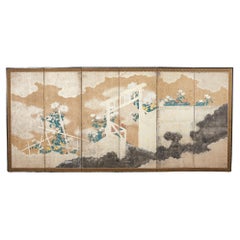
The work of Japanese designers was transmitted widely through lavishly illustrated pattern books that included designs for screens and lacquerware for the home. While screens today may be of use as decorative accents or partitions to ensure privacy in one’s space, Japanese screens were adorned with paintings and were featured in performing arts such as concerts, tea ceremonies and more. The color illustrations that characterize Meiji woodblock prints, a genre of Japanese art that grew out of 17th-century developments in printing and book publishing, depicted the sweeping changes that the era brought to East Asia.

Although it was a time of societal and cultural shifts, a bolstered interest in art and design elevated Japanese craft traditions. From colorful porcelain table lamps with silk shades and hardwood tables decorated with dark lacquer to cabinets featuring iron hardware and inlaid with mother-of-pearl, Meiji furniture showcased Japan’s artistic heritage to the world.

Find a collection of antique Japanese Meiji period case pieces and storage cabinets, decorative objects, wall decorations and more furniture on 1stDibs.

to
133
344
125
607
175,768
36,254
26,900
22,123
10,288
8,607
5,721
4,938
4,575
3,928
3,672
2,513
2,409
2,189
1,655
1,568
1,422
1,028
22
1,407
377
474
30
7
86
12
5
6
2
1
1
1
233
204
159
91
74
587
579
570
7
2
607
607
607
13
11
9
8
3
Style: Meiji
Period: 20th Century
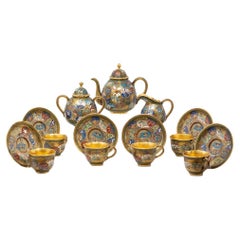
Japanese Meiji Period Cloisonne Enamel Tea Set
Located in Newark, England
Extensively Decorated with Traditional Japanese Images The Tea Set comprises of fifteen pieces including six cup and saucers, a lidded teapot, a lidded sugar pot and a milk jug. The...
Category

Early 20th Century Japanese Meiji Furniture

Materials

Metal, Enamel, Metallic Thread

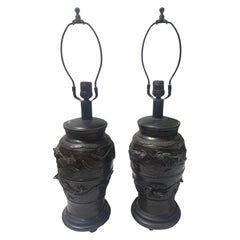
Pair of 19th Century Japanese Meiji Period Bronze Dragon Vase Table Lamps
Located in Studio City, CA
A pair of fabulous cylindrical forms Meiji Period (1868-1912) patinated bronze table lamps on carved wood bases with dragon, turtle, and mystical creatures motifs. Likely late 19th/Early 20th century. From a Los Angeles collection of fine Japanese vintage art...
Category

Early 20th Century Japanese Meiji Furniture

Materials

Bronze

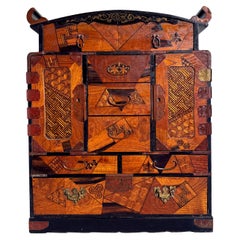
Japanese Marquetry Hanging or Table Cabinet, Meiji Period, c. 1900, Japan
Located in Austin, TX
A large and remarkable Japanese lacquer and marquetry decorated table or hanging cabinet, Meiji Period, circa 1900, Japan. The cabinet of square form surmounted by an arched top with upturned scroll ends. Eight drawers of various shapes and sizes adorn the exterior of the cabinet. Doors on either side open to reveal interiors fitted with cubby holes over a single drawer. The front of the cabinet is decorated with scattered geometric marquetry patterns of various design utilizing contrasting woods, including hardwood and burl, all in the yosegi zaiku technique. The sides and top of the cabinet of black lacquer with maki-e lacquer painted designs of flowers and grasses. The back of plain black lacquer with two hoops for hanging. The interior of the cabinet doors and the interior drawers decorated in the wakasa lacquer technique, with gold rhomboid accents against a polished black lacquer ground. Overall a striking accent piece and nice example of Japanese yosegi...
Category

Early 1900s Japanese Antique Meiji Furniture

Materials

Metal, Brass, Copper

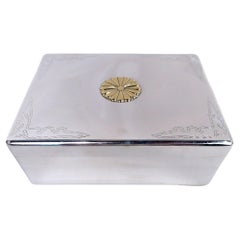
Japanese Modern Silver Box with Gilt Chrysanthemum
Located in New York, NY
Japanese Modern silver box, ca 1920. Rectangular with curved corners; corner bracket supports. Cover top has centrally applied gilt chrysanthemum flowerhead and engraved corner cloud...
Category

Early 20th Century Japanese Meiji Furniture

Materials

Silver

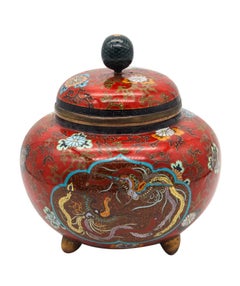
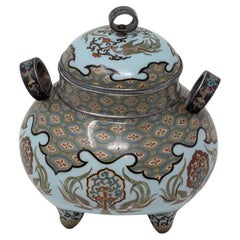
JAPAN IMPERIAL 1900 Meiji Period Tripode Koro Censer In Cloisonné Enamel With
Located in Miami, FL
Japanese tripod Koro from the Meiji Period (1868-1912). This is a rare and beautiful antique koro censer, created in the imperial Japan during the Meiji period (1868-1912), circa 1900. It was carefully crafted in solid bronze and copper with silver wires and embellished with applications of polychromatic Cloisonné enamels and aventurine. The designs depict organics and natural motifs such mythological animals and flowers. The Chrysanthemum Symbol In Imperial Japan, the chrysanthemum (Kiku) was a potent symbol of the imperial family and the emperor himself, representing longevity, royalty, and divine power. The 16-petaled chrysanthemum is the Imperial Seal and crest, found on passports, coins, and the Chrysanthemum Throne. This association dates back to the Kamakura period (1185–1333), particularly with Emperor Go-Toba's fondness for the flower, establishing its link to imperial authority and lineage. The connection between the chrysanthemum and the imperial family began when Emperor Go-Toba adopted it as a personal emblem, aligning it with the strength and refinement of the emperor's rule. During the Meiji Period, the 16-petaled chrysanthemum crest, solidifying the association with the imperial family, was established during this time. The Meiji Imperial Period This is an era of Japanese history that extended from October 23, 1868 to July 30, 1912.The Meiji era was the first half of the Empire of Japan, when the Japanese people moved from being an isolated feudal society at risk of colonization by Western powers to the new paradigm of a modern, industrialized nation state and emergent great power, influenced by Western scientific, technological, philosophical, political, legal, and aesthetic ideas. As a result of such wholesale adoption of radically different ideas, the changes to Japan were profound, and affected its social structure, internal politics, economy, military, and foreign relations. The period corresponded to the reign of Emperor Meiji. It was preceded by the Keiō era and was succeeded by the Taishō era, upon the accession of Emperor Taishō. Country: Imperial Japan. Period: Meiji, 1890-1910. Technique: Silver Wire Cloisonné over copper and bronze. Weight: 416.80 Grams, (0.417 Kg). Measurements:118 mm by 115 mm (4.65 x 4.52 Inches). Koro This term refers to a Japanese censer, incense burner, perfume burner or pastille burner is a vessel made for burning incense or perfume in some solid form. They vary greatly in size, form, and material of construction, and have been in use since ancient times throughout the world. They may consist of simple earthenware bowls or fire pots to intricately carved silver or gold vessels, small tabletop objects a few centimeters tall to as many as several meters high. Many designs use openwork to allow a flow of air. In many cultures, burning incense has spiritual and religious connotations, and this influences the design and decoration of the censer. Cloisonné This is an enameling technique in which the pattern is formed by wires soldered to the surface of the object to be decorated, which is usually made from copper, forming cells or cloisons, each of which holds a single colour of enamel paste which is then fired, and ground and polished. The champleve technique also uses an enameling technique, but the cells are formed by carving into the surface of the object, or in the casting. The cloisonne technique has been in use since the 12th century BC in the west, but the technique did not reach China until the 13th or 14th century. It became popular in China in the 18th century. Initially bronze or brass bodies were used, and in the 19th century copper, at which time the quality of the items produced began to decline. Chinese cloisonné is the best-known enamel cloisonné, though the Japanese produced large quantities from the mid-19th century, of very high technical quality. In the west the cloisonne technique was revived in the mid-19th century following imports from China, and its use continued in the Art Nouveau and Art Deco periods. Condition: Basically, is in great antique condition, near mint, with insignificant and minimal usage, in great condition. All parts are secured in the settings. This Japanese Meiji Koro...
Category

Early 1900s Japanese Antique Meiji Furniture

Materials

Silver, Bronze, Copper, Enamel

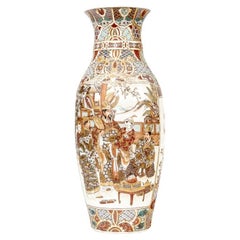
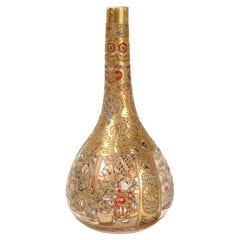
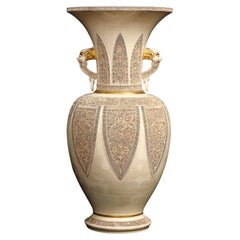
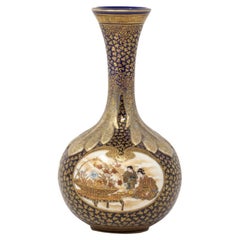
Tall Japanese Satsuma Style Glazed Porcelain Vase
Located in Bridgeport, CT
Ca. late 19th c. or later. With classic Aesthetic Movement motifs in different fragmented patterns in colors with gilt details, decorating the neck, shoulder, and base. With two figu...
Category

Early 20th Century Japanese Meiji Furniture

Materials

Porcelain

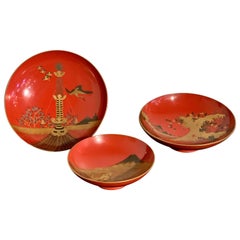
Japanese Lacquer Sake Cups, Set of 3, Meiji Period, Early 20th Century, Japan
Located in Austin, TX
A finely decorated set of 3 red lacquer sake cups, sakazuki, featuring views of Mt. Fuji, Meiji period, circa 1900, Japan. The lacquer sake cups, called sakazuki, of traditional p...
Category

Early 1900s Japanese Antique Meiji Furniture

Materials

Lacquer

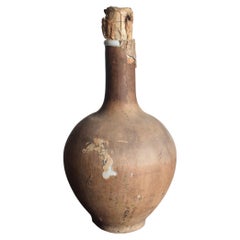
Japanese Antique Pottery Bottle 1860s-1900s/Flower Vase Wabisabi Jar Mingei
Located in Sammu-shi, Chiba
This is an old Japanese sake bottle. It is from the Meiji period (1860s-1900s). It is made of ceramic and covered with paper. It is slightly cracked and reinforced with paper. The pa...
Category

Early 20th Century Japanese Meiji Furniture

Materials

Pottery, Paper

Antique Japanese Satsuma Pottery Bud Vase
Located in Philadelphia, PA
A fine antique Japanese Satsuma pottery vase. In the form of a bud vase with a round base and narrow, tapered neck. Decorated throug...
Category

Early 20th Century Japanese Meiji Furniture

Materials

Pottery

Japanese Meiji Period Cloisonne Enamel Koro Tsukamoto Hikokichi
By Tsukamoto Hikokichi
Located in Newark, England
Silver Mounted From our Japanese collection, we are thrilled to offer this Japanese Cloisonne Enamel Koro by Tsukamoto Hikokichi. The Cloisonne Enamel Koro of exceptional quality sh...
Category

Early 20th Century Japanese Meiji Furniture

Materials

Metal, Enamel

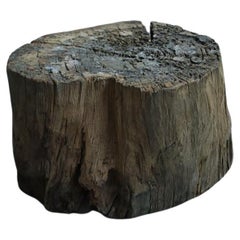
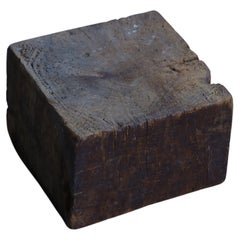
Wooden Low Table, Japanese Antique, Wabi-Sabi, Mingei
Located in Katori-Shi, 12
This is a wooden antique low table from the Meiji era. It was used as a working table for woodworkers of the time. It is made of high quality Japanese zelkova wood. The grain of zel...
Category

Early 20th Century Meiji Furniture

Materials

Wood

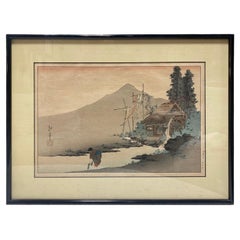
Koho Shoda Signed Japanese Meiji Woodblock Print A Watermill Affixed to a Shed
Located in Studio City, CA
A beautifully and serenely composed image by renowned Japanese artist/printmaker Shoda Koho (1871-1946). This work titled "A Watermill Affixed to a Shed" is from his Nishinomiya Yos...
Category

Early 20th Century Japanese Meiji Furniture

Materials

Paper

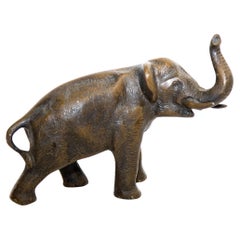
Oriental Cast Bronze Elephant Sculpture with Trunk Up
Located in Moreno Valley, CA
Beautiful Oriental Japanese Meiji period style bronze sculpture of a walking elephant with his trunk up. Well casted metal art, heavy, bronze elephant in a dark brown copper finish. Elephant figurine statue in a triumphant pose, will make an excellent display ornament. Created with the traditional technique of the lost-wax that allows a great precision and finesse in the details, this bronze sculpture charms is with its exquisite depiction of a trumpeting elephant. Heavy bronze presents striking detail and cool copper tones with a hint of natural bronze. Raising its trunk skywards, the elephant will grace any desk as a paperweight or display case. This is a delightful vintage elephant statue...
Category

Mid-20th Century Japanese Meiji Furniture

Materials

Bronze

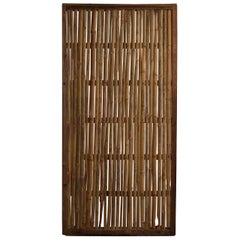
Japanese Antique Bamboo Sliding Door, Object Mingei Art Panel, Wabisabi Door(2)
Located in Katori-Shi, 12
This is an antique Japanese bamboo door. It is from the Meiji period (1860s-1900s). It is made mainly of cedar and bamboo. It has a simple design that conveys the charm of the mater...
Category

Early 20th Century Japanese Meiji Furniture

Materials

Bamboo, Wood

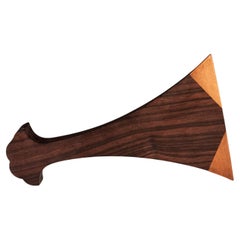
Early to Mid-20th Century Rosewood Biwa Plectrum, Japan
Located in Point Richmond, CA
Rosewood Plectrum for Biwa, Japan A beautiful rosewood plectrum used in plucking the strings of a chikuzen-biwa, which is a 4-5 string fretted lute used t...
Category

Mid-20th Century Japanese Meiji Furniture

Materials

Wood

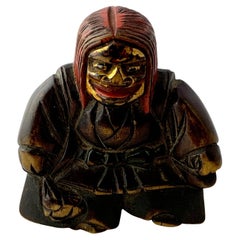
Netsuke of an Oni, a Demon in Japanese Folklore, Wood, Early 20th Century
Located in Point Richmond, CA
A Meiji period netsuke depicting a formidable figure of an oni (demon) with a golden face and red hair. Onis were thought to ward off evil spirits and were often depicted on netsuke ...
Category

Early 20th Century Japanese Meiji Furniture

Materials

Boxwood

Japanese Meiji Six Panel Screen Brushwood Gate with Chrysanthemums
Located in Rio Vista, CA
Gorgeous Japanese early 20th century Meiji period six-panel byobu screen featuring a brushwood gate and fence with flowering chrysanthemums. The large screen is crafted with ink and ...
Category

20th Century Japanese Meiji Furniture

Materials

Brass, Gold Leaf, Silver Leaf

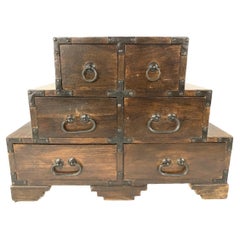
Diminutive Japanese Tansu Style Six Drawer Chest
Located in Bridgeport, CT
Heavy and solid wooden Tansu or apothecary style merchant box. The chest with riveted brackets, iron drop pull hardware and resting on bracket feet. Dime...
Category

20th Century Japanese Meiji Furniture

Materials

Metal, Brass

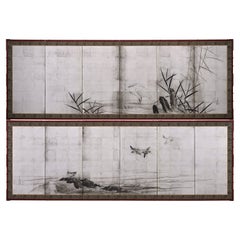
Japanese Silver Screen Pair, Meiji Period, Herons Plovers, Shijo School
Located in Kyoto, JP
Heron & Plovers Ink and silver leaf on paper Maekawa Bunrei (1837-1917) A pair of low six-panel Japanese screens by Maekawa Bunrei, a later master of the Kyoto based Shijo school of painting. On the right screen a solitary white heron stands motionless in a stream. On the left screen plovers play along a shoreline. The elegant forms are executed employing fluid, minimalistic ink brushstrokes. The soft brushstrokes and the sharp light of the silver leaf lend the scenes a sense of translucence. The sophisticated composition superbly exploits the long, horizontal pictorial surface of the pair of folding screens...
Category

Early 1900s Japanese Antique Meiji Furniture

Materials

Silver Leaf

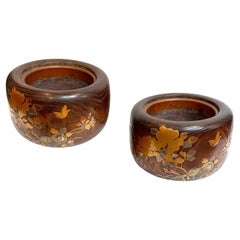
Pair of Japanese Abalone And Lacquer Inlaid Kiri Hibachis With Copper Inserts
Located in Point Richmond, CA
Pair of Japanese Abalone and Lacquer Inlaid Kiri Hibachis with copper inserts, Late Meiji period, early 20th century. Signed. The images of birds and...
Category

Early 20th Century Japanese Meiji Furniture

Materials

Wood, Lacquer, Shell

Wooden Flower Stand, Japanese Antique, Wabi-Sabi, Mingei
Located in Katori-Shi, 12
This is an antique wooden flower stand from the Meiji period. At the time, it was used as a workbench by craftsmen. There are small marks on it, probably from using a hammer. A clo...
Category

Early 20th Century Meiji Furniture

Materials

Wood

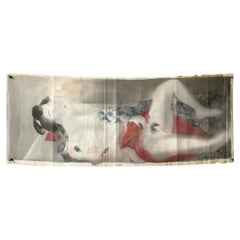
Early 20th century Japanese Shunga Painting Woman With Baby
Located in Chiba, JP
WOMAN WITH BABY A hand-drawn shunga (erotic art) on highly transparent silk. Early 20th century, Japan. Dimensions: 75.7 × 30 cm (29.8 × 11.8 in). Shows natural signs of aging and o...
Category

Early 20th Century Japanese Meiji Furniture

Materials

Silk

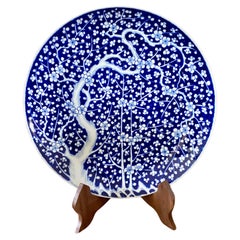
Large Arita Blue White Charger
Located in Pasadena, CA
This is a very large Arita blue & white charger hand-painted in the prunus pattern. The charger dates to the early or mid-20th century and is in overall ver...
Category

Mid-20th Century Japanese Meiji Furniture

Materials

Porcelain

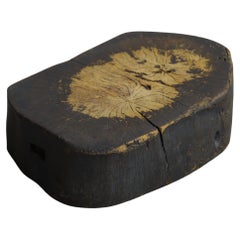
Wooden Low Table, Japanese Antique, Wabi-Sabi, Mingei
Located in Katori-Shi, 12
This is an antique wooden low table from the Meiji period. It was used as a workbench by craftsmen at the time. It is made of high-quality Japanese zelkova wood and finished with l...
Category

Early 20th Century Meiji Furniture

Materials

Wood

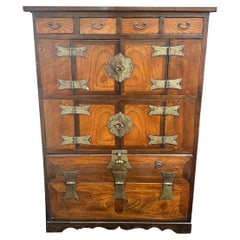
Early 20th Century Antique Korean Tansu Chest
Located in Pittsburgh, PA
This Early 20th-Century Korean Tansu Chest is a stunning example of traditional craftsmanship, featuring intricate hand-forged hardware and a beauti...
Category

Early 20th Century Korean Meiji Furniture

Materials

Metal

Antique 19th Century Japanese Satsuma High Quality Vase Satsuma Figural Scene
Located in Amsterdam, Noord Holland
Description: Fabulous small Japanese. Absolute top quality decoration a pottery. Marked at the base. Condition: Overall condition 1 perfect, 1 with restoration to rim. Size: 90 ...
Category

20th Century Japanese Meiji Furniture

Materials

Earthenware

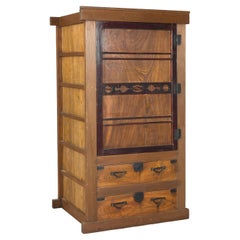
Meiji-era Mizuya Dansu, Circa 1900 – Japanese Kitchen Cabinet
Located in Yonkers, NY
A refined piece of Meiji-era craftsmanship, this antique Mizuya-dansu (kitchen chest) dates to circa 1900 and reflects the understated elegance of traditional Japanese interiors. Cra...
Category

Early 20th Century Japanese Meiji Furniture

Materials

Iron

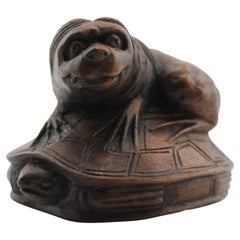
Old Wooden Netsuke Japanese Animal on Turtle Figure Meiji Period 19/20th Century
Located in Amsterdam, Noord Holland
Lovely and very detailed piece. Unsigned. Japan 19th or 20th century. Weight: 8 grams Provenance: Collected in the 1980’s. From the collection of Clemens Merkelbach van Enkhuizen...
Category

20th Century Japanese Meiji Furniture

Materials

Wood

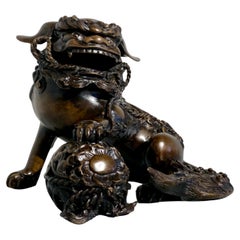
Japanse Bronze Shishi Foo Lion by Shuzan / Hideyama, Meiji period, Japan
Located in Austin, TX
A heavy and powerfully cast Japanese bronze model of a shishi or foo lion by Hideyama / Shuzan, Meiji Period, circa 1900, Japan. The dramatic lion, known as a shishi in Japan, is ca...
Category

Early 1900s Japanese Antique Meiji Furniture

Materials

Bronze

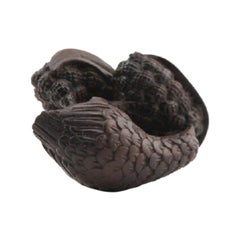
Old Wooden Netsuke Sculpture Japanese Quail Meiji Period, 19/20th Century
Located in Amsterdam, Noord Holland
Lovely and very detailed piece. Unsigned. Japan 19th or 20th century. Weight: 9 grams Provenance: Collected in the 1980’s. From the collection of Clemens Merkelbach van Enkhuizen...
Category

20th Century Japanese Meiji Furniture

Materials

Wood

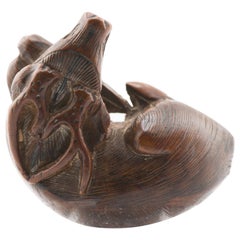
Old Wooden Netsuke Sculpture Japanese Cow Ox Meiji Period, 19/20th Century
Located in Amsterdam, Noord Holland
Lovely and very detailed piece. Unsigned. Japan 19th or 20th century. Weight: 9 grams Provenance: Collected in the 1980’s. From the collection of Clemens Merkelbach van Enkhuizen...
Category

20th Century Japanese Meiji Furniture

Materials

Wood

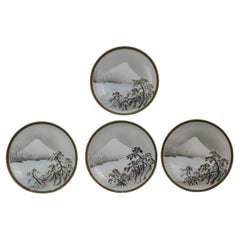
Dinner Set Antique Japanese Kutani Plate with Mount Fuji Japan Porcelain, 19/20C
Located in Amsterdam, Noord Holland
4 Fabulous Japanese plates Marked at the base with 3 character overglaze mark. Additional information: Material: Porcelain & Pottery Region of Origin: Japan Period: 19th century, 2...
Category

20th Century Japanese Meiji Furniture

Materials

Porcelain

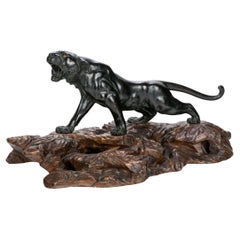
Exquisite Japanese Copper Tiger On Carved Wood Stand
Located in Bridgeport, CT
A very fine Japanese cast Copper Tiger in a rich deep brown patina in defensive pose with open snarling mouth and rampant tail. Details include yellow glass eye (one missing), fine S...
Category

20th Century Asian Meiji Furniture

Materials

Copper

Rare Japanese Meiji Satsuma Crackle Ware Vase w/ Carving by Tashiro Factory
Located in New York, NY
A Rare Japanese Meiji Period Satsuma Porcelain Double-Handled Crackled Ware Vase with Intaglio Carved Decoration and Gilt Adornment, Mark on Base: Tashiro Factory / Tashiro Giyōemon ...
Category

Early 1900s Japanese Antique Meiji Furniture

Materials

Porcelain

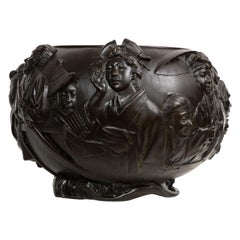
Meiji Japanese Bronze Jardinière Japanese People on a Boat, Genryusai Seiya Zo
Located in New York, NY
A masterpiece, rare, 19th Century Japanese bronze Jardinière/centerpiece of a group of Japanese travelers on a boat, signed on the bottom, Genryusai Seiya...
Category

Early 1900s Japanese Antique Meiji Furniture

Materials

Bronze

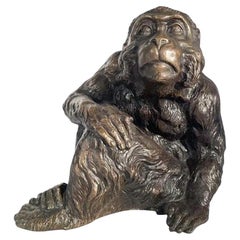
Japanese Meiji Okimono of a Seated Monkey in Cast Bronze
Located in Chapel Hill, NC
Large Japanese Meiji period cast bronze okimono of a seated monkey.
Category

Early 20th Century Japanese Meiji Furniture

Materials

Bronze

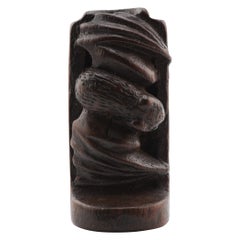
Old Wooden Netsuke Sculpture Japanese Bat Meiji Period, 19/20th Century
Located in Amsterdam, Noord Holland
Lovely and very detailed piece. Unsigned. Japan 19th or 20th century. Weight: 12 grams Provenance: Collected in the 1980’s. From the collection of Clemens Merkelbach van Enkhuize...
Category

20th Century Japanese Meiji Furniture

Materials

Wood

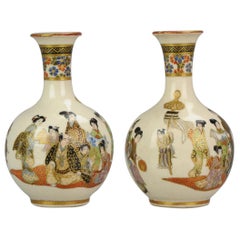
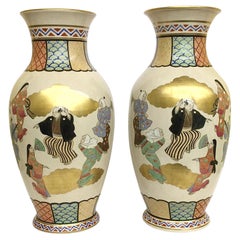
Large Matching Pair Satsuma Meiji Era Figural Vases Figures in Clouds Gold Leaf
Located in Ann Arbor, MI
LARGE Matching Pair Satsuma Meiji Era Figural vases figures in clouds gold leaf. Amazing multi color decoration. Vases display prominently from any decor...
Category

Early 1900s Japanese Antique Meiji Furniture

Materials

Pottery

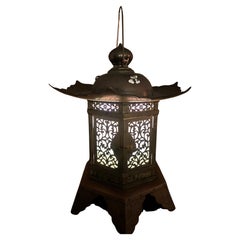
Japanese Vintage Electrified Shrine Lantern with exceptional Arabesque Details
Located in South Burlington, VT
Special Antique Interior Lighting Choice- One Of Kind. Japan, a lovely large vintage bronze and copper shrine Lantern with attractive Hoju jewel finial and handsome arabesque scroll...
Category

Mid-20th Century Japanese Meiji Furniture

Materials

Bronze, Copper

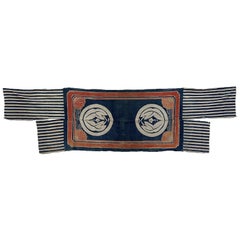
Japanese Horse Trapping, "Uma-No-Haragake", Tsutsugaki, Cotton, Meiji Period
Located in Point Richmond, CA
Japanese horse trapping, "Uma-No-Haragake", Tsutsugaki, cotton, Meiji period This type of haragake is called yuiage ("tied up"). The central portion covered the belly of the horse an...
Category

20th Century Japanese Meiji Furniture

Materials

Cotton

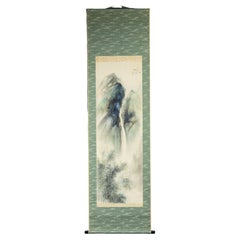
Scroll Kitsuda Eihô (1902 - 1974) Breaking of Dawn in the Mountains Japanese
Located in Amsterdam, Noord Holland
Kitsuda Eihô (1902 - 1974) Aanbreken van de dag in de bergen Rolschildering / scroll op zijde, houten rollers, in houten cassette. Herkomst: Oranda Jin. B 128 x 41.9 / 202 x 56.3 cm...
Category

Mid-20th Century Japanese Meiji Furniture

Materials

Silk

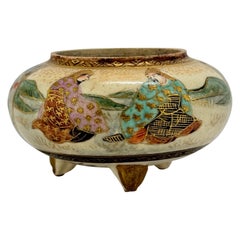
Miniature Japanese Satsuma Porcelain Samurai Motif Censor - Signed, Meiji Era
Located in Atlanta, GA
This finely crafted miniature Satsuma porcelain censer, dating to the Meiji Era, is a rare and exquisite example of Japanese ceramic artistry. Restin...
Category

Early 20th Century Japanese Meiji Furniture

Materials

Porcelain

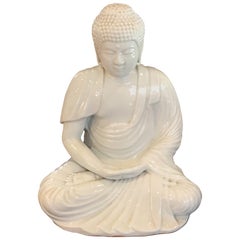
Antique Japanese Blanc de Chine Buddha
Located in Lambertville, NJ
A blanc de chine porcelain figure of the Buddha, Japanese, Kutani, circa 1900.
Category

Early 1900s Japanese Antique Meiji Furniture

Materials

Porcelain

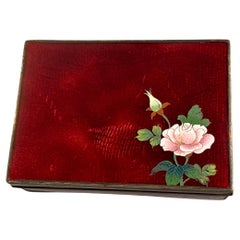
Japanese Red Ginbari Cloisonne Trinket Box, Meiji Period, circa 1900, Japan
Located in Austin, TX
A rich and elegant Japanese export red ginbari cloisonne trinket box, Meiji Period, circa 1900, Japan. The attractive Japanese cloisonne box features a striking textured red ginbari...
Category

Early 1900s Japanese Antique Meiji Furniture

Materials

Metal, Copper, Enamel, Foil

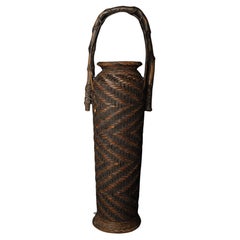
Early 20th century Large signed Bamboo Basket
Located in Fukuoka, JP
Fine Ikebana Bamboo Basket. Bamboo with natural patination. Age: early 20th century Good conditionwith some abrasions and patination. Size : 65.5/19/16cm ( 27.5/7.5/6.3inch ) ...
Category

Early 20th Century Japanese Meiji Furniture

Materials

Bamboo

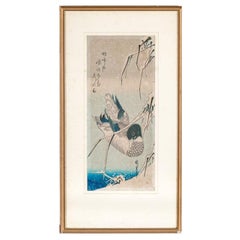
Ando Utagawa Hiroshige Japanese Woodblock Print Mallard Duck
Located in Bridgeport, CT
Woodblock print depicting a mallard duck beneath the reeds surmounted on paper.. Presented in a wood frame with fine beading, matted and glazed. Black calligraphy inscription upper l...
Category

Mid-20th Century Asian Meiji Furniture

Materials

Glass, Wood, Paper

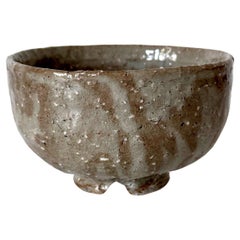
Japanese Glazed Mino Tea Bowl Chawan Showa Period Ex-Musuem
Located in Atlanta, GA
A Japanese glazed ceramic tea bowl (chawan) in Gohon style likely made in Showa period of 20th century. Supported by a short foot ring with a notch, the bowl was made from coarse cla...
Category

Early 20th Century Japanese Meiji Furniture

Materials

Ceramic

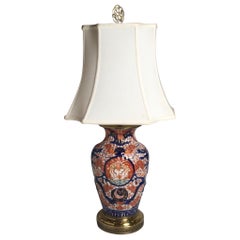
Antique Meiji Period Imari Porcelain Lamp
Located in Lambertville, NJ
Classic iron red and cobalt blue Imari Porcelain vase now as a lamp/ The circa 1900 Japanese vase, handprinted in the traditional colors, elec...
Category

Early 1900s Japanese Antique Meiji Furniture

Materials

Porcelain

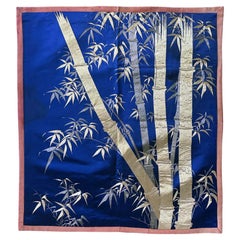
Japanese Embroidery Silk Bamboo Fukusa Meiji Period
Located in Atlanta, GA
A Japanese silk embroidery Fukusa panel circa 1890-1910s toward the end of Meiji Period. On the deep blue satin background, the artist showcases a clump of bamboos in a realistic sty...
Category

Early 20th Century Japanese Meiji Furniture

Materials

Silk

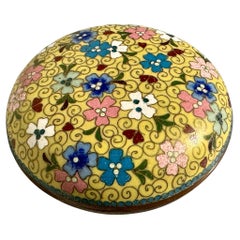
Small Japanese Meiji Period Cloisonne Round Box, circa 1910, Japan
Located in Austin, TX
A small and delightful Japanese yellow ground cloisonne round trinket or incense box, Meiji Period, circa 1910, Japan. The small box of squat, round shape, and may originally have b...
Category

1910s Japanese Vintage Meiji Furniture

Materials

Copper, Enamel

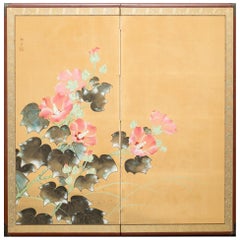
Japanese Two-Panel Screen, Hibiscus In Bloom
Located in Hudson, NY
Japanese Two Panel Screen: Hibiscus in Bloom, Meiji period (1868 - 1912) painting of hibiscus flowers reaching for the sun in full bloom. Mineral pigments on silk with a silk brocad...
Category

Early 1900s Japanese Antique Meiji Furniture

Materials

Silk, Wood, Paper

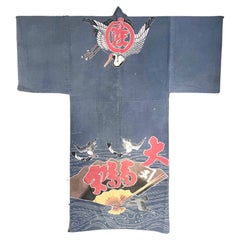
Japanese Fisherman Festival Kimono with Tsutsugaki Design
Located in Atlanta, GA
A Japanese festival Kimono robe circa late 19th to early 20th century (end of Meiji Period) for fishing ritual. Made in a cotton fabric, the kimono was elaborately decorated by Tsuts...
Category

Early 20th Century Japanese Meiji Furniture

Materials

Cotton, Linen

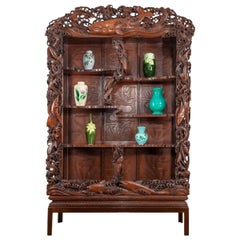
Superb Monumental Meiji Period Hard Wood Display Cabinet, by Noguchi of Yokaha
Located in Lymington, Hampshire
A superb monumental Meiji period hard wood display cabinet, by Noguchi of Yokahama, of rectangular form with three shelves which curl back under themselves like ripples to create an ...
Category

Early 1900s Japanese Antique Meiji Furniture

Materials

Hardwood

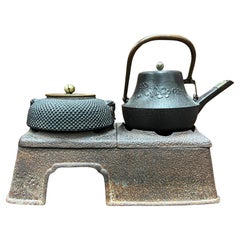
Antique Japanese Cast Iron Tetsubin Tea Pots on Cast Iron Hibachi Stand
Located in Sheridan, CO
Rare antique Tetsubin Japanese Cast Iron Tea Kettle set on Cast Iron hibachi Stand. This unique teapot/kettle is a Tetsubin, which is a teapot in Japa...
Category

Early 20th Century Japanese Meiji Furniture

Materials

Brass, Iron

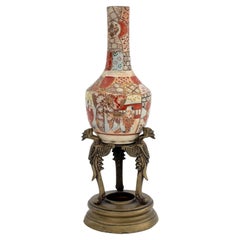
Japanese Satsuma Pottery Bottle Vase
Located in Astoria, NY
Japanese Satsuma Pottery Bottle Vase, with painted and gilt figural interior scenes mounted on brass griffin base. Overall: 12.25" H x 4.75" Diameter. Provenance: From the Collection...
Category

20th Century Japanese Meiji Furniture

Materials

Brass

Wooden Display Stand, Low Table, Japanese Antique, Wabi-Sabi, Mingei
Located in Katori-Shi, 12
This is a wooden antique low table from the Meiji era. It was used as a working table for woodworkers of the time. It is made of high quality Japanese cherry wood. It has a beautif...
Category

Early 20th Century Meiji Furniture

Materials

Wood

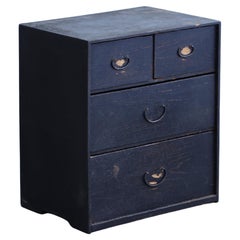
Japanese Antique Chests of Drawers , Wabi-Sabi
Located in Katori-Shi, 12
This antique Japanese chest of drawers dates back to the Meiji period. This chest is made from sturdy cedar wood with a lacquer finish, and the iron handles add industrial elegance....
Category

Early 20th Century Japanese Meiji Furniture

Materials

Wood

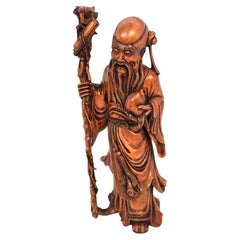
Japanese Okimono of Fukurokuju, the god of wealth and happiness, Meiji period
Located in Central England, GB
This exceptional Japanese Meiji period okimono depicts Fukurokuju, the lucky god of wealth and happiness. The figure is very finely carved from a single piece of dense tightly graine...
Category

Early 20th Century Japanese Meiji Furniture

Materials

Wood

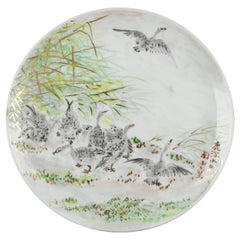
Perfect 20th-21st Century Japanese Porcelain Charger Birds Gooses in Landscape
Located in Amsterdam, Noord Holland
A very nicely decorated Japanese Porcelain plate, stunning colors. Marked at base. 17-12-19-1-16 Condition Overall condition perfect; size: 262 x 23mm Perio...
Category

20th Century Japanese Meiji Furniture

Materials

Earthenware

Japanese Antique Earthenware Satsuma Vase by Kinkozan Meiji Period
Located in Newark, England
FREE WORLDWIDE SHIPPING MEIJI PERIOD (1868-1912) From our Japanese Satsuma collection, we’re pleased to offer this Meiji period bottle-form Satsuma vase by Kinkozan. The vase is...
Category

Early 1900s Japanese Antique Meiji Furniture

Materials

Ceramic, Earthenware, Pottery

Meiji furniture for sale on 1stDibs.

Find a broad range of unique Meiji furniture for sale on 1stDibs. Many of these items were first offered in the 21st Century and Contemporary, but contemporary artisans have continued to produce works inspired by this style. If you’re looking to add vintage furniture created in this style to your space, the works available on 1stDibs include asian art and furniture, decorative objects, serveware, ceramics, silver and glass and other home furnishings, frequently crafted with metal, ceramic and other materials. If you’re shopping for used Meiji furniture made in a specific country, there are Asia, East Asia, and Japan pieces for sale on 1stDibs. While there are many designers and brands associated with original furniture, popular names associated with this style include Satsuma, Kinkozan, Ando Jubei, and Makuzu Kozan. It’s true that these talented designers have at times inspired knockoffs, but our experienced specialists have partnered with only top vetted sellers to offer authentic pieces that come with a buyer protection guarantee. Prices for furniture differ depending upon multiple factors, including designer, materials, construction methods, condition and provenance. On 1stDibs, the price for these items starts at $65 and tops out at $190,804 while the average work can sell for $2,112.

Still Thinking About These?

All Recently Viewed