Qing Furniture

QING STYLE

The last imperial dynasty from 1644 to 1912 was a time of change in China, beginning with the invasion by Manchurian forces that ended the Ming dynasty and established the Shunzhi Emperor. The expansion of exportation and trade that had bolstered the arts during the Ming era continued, as Qing dynasty furniture involved the same attention to craftsmanship with expert construction techniques in hardwood pieces that were assembled with mortise and tenon joints rather than nails or glue. Together, these eras comprise a golden age of Chinese furniture design.

Ming-style furniture is simple and elegant with clean lines. Chairs of the period and other Ming furniture made an impression on Scandinavian modernist Hans Wegner and his streamlined seating, for example. Whereas Qing-style furniture is elaborate, with an increasing influence from the West leading to lavish carving inspired by the European Baroque and Rococo styles. And while many of the forms that define examples of the latter are common within classical Chinese furniture, such as curving and folding chairs as well as large screens, Qing designs are laden with ornamentation. Frequently, the carved motifs and inlaid designs in mother-of-pearl were auspicious, such as peonies for wealth or dragons for luck. Bats were symbols of happiness in the design of Qing furniture, with one of the characters in the word for bat, bianfu, being a homophone for fu, or “fortune.”

While several types of wood were used in the construction of Qing beds, tables, storage pieces and seating, today’s collectors know that the most prized were the rare rosewoods zitan and huanghuali. They were both sourced from Hainan, China’s largest island, and are marked by a rich luster that occurs naturally, without the application of lacquer or other decorative materials. Many of the most popular woods were imported from southeast Asia, adding to their value. Red sandalwood was also sought after for its durability and connection with Chinese medicine, with some chairs being made for health benefits.

Find a collection of antique Qing tea tables, stools, benches, decorative objects and more furniture on 1stDibs.

to
625
2,040
846
3,250
20
5
198,261
115,258
44,174
33,237
16,611
12,238
10,881
10,823
9,992
8,953
7,351
6,661
6,498
6,392
6,225
6,160
4,911
3,744
636
1,649
965
25
647
95
40
73
7
26
4
4
12
5
1
7
1,281
1,230
966
541
529
3,212
3,091
3,034
76
65
3,275
3,274
3,274
2
1
1
1
1
Style: Qing
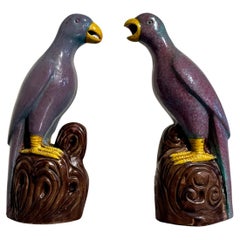
Pair Chinese Robins Egg Glazed Porcelain Parrots, Early 20th century, China
Located in Austin, TX
A striking pair of Chinese export porcelain models of parrots featuring a fantastic robins egg and lavender glaze, early 20th century, China. The parrots are portrayed standing upri...
Category

Early 20th Century Chinese Qing Furniture

Materials

Enamel

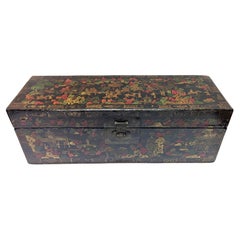
Antique Chinoisiere Lacquered Box
Located in New York, NY
Chinoiserie Lacquer Box. Beautifully hand painted Chinoiserie Box decorated with auspicious Chinese scenes. The box is constructed of wood having polychrome painting lacquered with...
Category

Early 20th Century Chinese Qing Furniture

Materials

Bronze

Antique Chinoisiere Lacquered Box
$1,800 Sale Price
25% Off
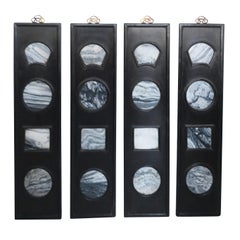
Chinese Stone Dali Panels
Located in Sherborne, GB
This is a set of four antique Chinese Dali stone panels which depict wonderful landscape images. The stone is set in an ebonized panel frame. They look wo...
Category

Early 1900s Chinese Antique Qing Furniture

Materials

Marble, Brass

Chinese Stone Dali Panels
$2,532 Sale Price / set
61% Off
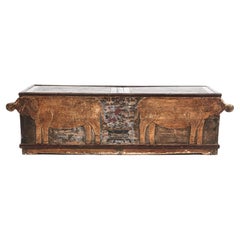
Storage Bench Decorated with Elephants
Located in Kastrup, DK
Artistic storage bench, naïve and charming in its design. Shape of elephants in amber lacquer between elephants, at the end decorated with vases and flow...
Category

Mid-19th Century Asian Antique Qing Furniture

Materials

Wood

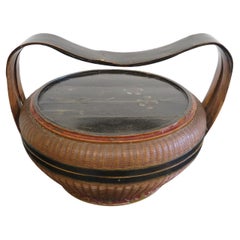
Antique Chinese Wedding Basket
Located in New York, NY
Antique Chinese wedding basket of woven rattan and bamboo. Called a wedding basket as gifts from the wedding are collected and offered i...
Category

1890s Chinese Antique Qing Furniture

Materials

Bamboo, Rattan

Antique Chinese Wedding Basket
$360 Sale Price
34% Off
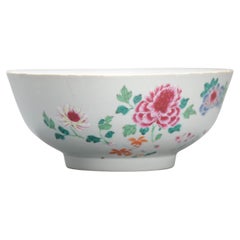
23.5CM Antique 1740-1750 Chinese Porcelain Bowl China Famille Rose Qianlong
Located in Amsterdam, Noord Holland
Sharing with you this very nice example of 18th century porcelain. Dating to around 1740-1750. Nicely decorated. 11-3-2025 Condition 6 lines, a chip and fritting to rim. Size: 2...
Category

18th Century Chinese Antique Qing Furniture

Materials

Porcelain

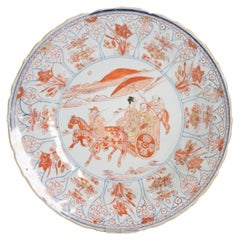
28CM Kangxi Blood and Milk Antique Chinese Porcelain Plate Figural Horse
Located in Amsterdam, Noord Holland
Sharing with you this lovely dish on footring, the sides modelled as pomegranate-shaped panels in low relief, lightly scalloped rim. Decorated in iron-red and gold on the glaze. Po...
Category

17th Century Chinese Antique Qing Furniture

Materials

Porcelain

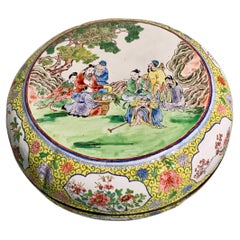
Chinese Canton Enamel Lobed Round Box, Qianlong Mark, Late Qing Dynasty, China
Located in Austin, TX
A well painted Chinese Canton enamel lobed round box and cover featuring the Eight Immortals, with a Qianlong mark to the underside, late Qing Dynasty, circa 1900, China The deligh...
Category

Early 1900s Chinese Antique Qing Furniture

Materials

Copper, Enamel

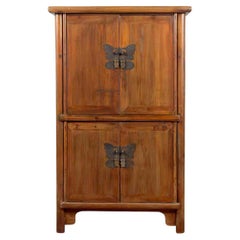
Large 19th Century Wooden Wedding Cabinet with Butterfly Hardware
Located in Yonkers, NY
A large wedding cabinet from the 19th century, with two pairs of double doors and large butterfly hardware. This armoire cabinet features two pairs of double doors, each fitted with ...
Category

19th Century Chinese Antique Qing Furniture

Materials

Brass

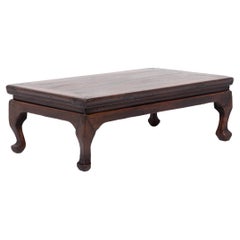
Chinese Low Kang Table, c. 1900
Located in Chicago, IL
During winter in the colder provinces of China, life revolved around the kang, a heated brick platform that household members would sit or recline upon. Placed on top of the kang, lo...
Category

Early 20th Century Chinese Qing Furniture

Materials

Elm

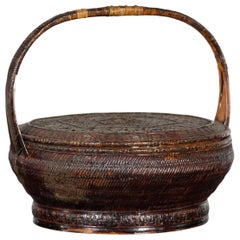
19th Century Qing Dynasty Handwoven Rattan and Bamboo Basket with Handle
Located in Yonkers, NY
A small Chinese Qing Dynasty period basket from the 19th century hand-woven with rattan on a bamboo armature. Created in China during the Qing Dynasty, this rustic basket features a ...
Category

19th Century Chinese Antique Qing Furniture

Materials

Bamboo, Rattan

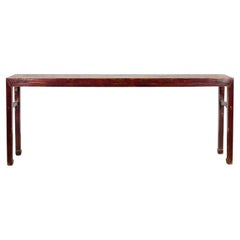
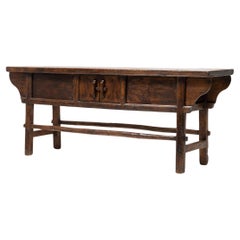
Qing Dynasty 19th Century Altar Console Table with Original Lacquer
Located in Yonkers, NY
A Chinese Qing Dynasty period wooden altar console table from the 19th century with original distressed lacquer, horse hoof legs and hump back side stretchers. Created in China during the Qing Dynasty period in the 19th century, this wooden altar console table features a long and narrow rectangular top with central board and very distressed patina, sitting above a simple apron. Boasting a nicely weathered appearance revealing its good age and use, the table is raised on four slender straight legs showcasing horse hoof extremities. The sides are strengthened thanks to small hump back stretchers. The ensemble presents a dark reddish brown lacquer with distressing present throughout the structure. With its clean lines, good proportions and great rustic character, this Chinese Qing Dynasty period lacquered wood altar console table...
Category

19th Century Chinese Antique Qing Furniture

Materials

Wood

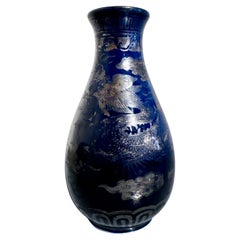
Chinese Cobalt Blue Gilt Decorated Dragon Vase, Late Qing Dynasty, c. 1900
Located in Austin, TX
An lovely Chinese cobalt glazed and gilt decorated porcelain pear shaped vase, yuhuchunping, late Qing Dynasty, circa 1900, China. The elegant vase of typical yuhuchunping (pear sha...
Category

Early 1900s Chinese Antique Qing Furniture

Materials

Porcelain

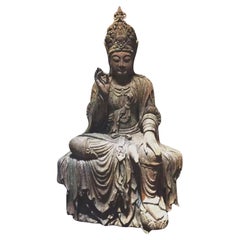
A Large Chinese Carved Wood Figure of Guanyin, Late Qing Dynasty
Located in ARMADALE, VIC
An impressive depiction of Guanyin, the Bodhisattva of compassion, whose name bears the meaning ‘One who hears the cries of the world.’ The rather androgynous figure is adorned with beaded jewellery and the princely regalia of a dhoti, draped across her body and spilling out over to partially obscure what she is resting upon. The goddess’ profile exhibits idealised features of Asian artistic convention; her face is soft and rounded, with full lips and relaxed eyes that provide a serene quality of youthfulness to the figure. Adhering to Chinese iconography of Guanyin, the figure is marked by an urna on her forehead, denoting her own enlightenment, as well as a diadem displaying Buddha Amitabha, the spiritual teacher of Guanyin. Seated in the Lalit asana pose, translated as ‘royal ease’, the figure exudes a fine example of the relaxed majesty typical in the characterisation of Guanyin. Whilst the figure’s left hand is placed restfully upon the left leg pendant, the right is raised in the gesture shuni mudra, the second finger held gently against the thumb. Otherwise known as the seal of patience, this gesture indicates the figure as one intended to bestow this virtue, along with compassion and understanding, upon the beholder. Notes on the item: Guanyin is the Chinese interpretation of Avalokiteshvara, the Indian Bodhisattva of compassion. The term “Bodhisattva” is derived from the Sanskrit “Bodhi”, meaning ‘awakening’ or ‘enlightenment’, combined with “Sattva”, meaning ‘spirit’ or ‘being’, referring to one on the path to achieving enlightenment. Bodhisattvas in Mayahana Buddhism are recognised as figures who have effectively achieved enlightenment yet relinquish their accension to nirvana in order to remain amongst mankind in the ultimate act of compassion to aid as spiritual guides. As such, the Bodhisattva inhabit a liminal space between samsara and nirvana; enlightened beings that maintain a relationship with humanity that buddhas cannot, as attaining Buddhahood necessitates the abandonment of all worldly attachments, including mankind. Guanyin’s very name, ‘One who hears the cries of the world’ highlights this role as a compassionate figure who acknowledges the suffering and strife of man. Along with Mahāsthāmaprāpta, a fellow bodhisattva, Guanyin serves as an attendant to Buddha Amitabha, with these three deities recognised as the Three Sages of Western Pure Land Buddhism, a sect of Mayahana Buddhism popular in East Asia. Avalokiteshvara is commonly posited to have been adopted from Indian Buddhism into China as Guanyin around 200-400 CE, however it was the Tang dynasty (618-907) which saw the popularisation of the deity. By the Ming (1358–1644) and Qing (1644–1911) dynasties, Guanyin held the position as the most popular female deity in China. The unique state of religion in China held no monolithic canon regarding Buddhism and saw the assimilation of several belief systems, primarily Daoism, Buddhism and Confucianism. Consequently, Guanyin became a deity to be revered beyond Buddhism alone, appointed as both an official imperial deity and Daoist deity in the 12th century. Guanyin may also be seen to fulfil the role of idealised femininity as prescribed by Confucianism, with the scarcity of female Chinese deities perhaps accounting for the gradual gender shift Guanyin underwent. The Indian Avalokiteshvara is unequivocally recognised as male, whilst the supposed gender of Guanyin remains contentious. Although there is a clear shift from the masculine Avalokiteshvara towards a more feminine representation, it is unclear if Guanyin is understood to be entirely feminine, to inhabit qualities of both genders or to be elevated beyond gender entirely, embodying neither. Depictions of Guanyin are highly androgynous, which some believe lends credence towards Guanyin symbolising the unity of dualistic forces as recognised in Daoism, displaying the anthropomorphism of yin and yang. Comparative Analysis: Market comparisons of similar Qing Dynasty polychrome figures of Guanyin include lot 767 (no.2) From Christies ‘Important Chinese Ceramics and Works of Art,’ New York, 25 March 2022, with the price realised USD 52,920 (Estimate USD 20,000 – USD 30,000). Christies also auctioned a comparable polychrome Guanyin...
Category

Late 19th Century Chinese Antique Qing Furniture

Materials

Hardwood

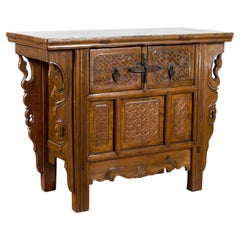
Provincial Chinese Dongbei Sideboard, c. 1900
Located in Chicago, IL
The warm tones and active grain of natural pine wood are the focus of this unusually articulated Dongbei sideboard. Made for a provincial home in northeastern China, this table was o...
Category

Early 20th Century Chinese Qing Furniture

Materials

Pine

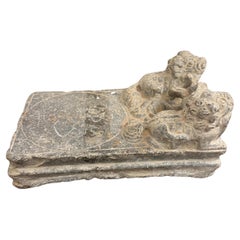
A Chinese Carved Inkstone, 18th Century
Located in ARMADALE, VIC
A Chinese Carved Inkstone, 18th Century Provenance: Private Australian Collection Acquired in 1980s. Dimensions: Height: 12.5cm. Width: 28.5cm. Depth: 17.5cm.
Category

18th Century Chinese Antique Qing Furniture

Materials

Stone

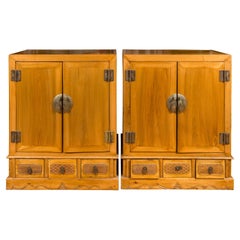
Pair of Qing Dynasty Carved Yumu Wood Cabinets with Doors and Drawers
Located in Yonkers, NY
A pair of Chinese Qing Dynasty period yumu wood cabinets from the 19th century, with double doors, drawers and carved motifs. This pair of Chinese Qing Dynasty yumu wood cabinets fro...
Category

19th Century Chinese Antique Qing Furniture

Materials

Bronze

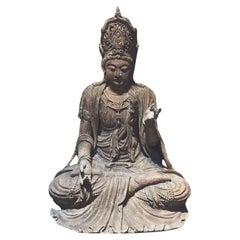
A Large Chinese Carved Wood Figure of Guanyin, Late Qing Dynasty
Located in ARMADALE, VIC
Description: A singular example of Guanyin. Deviating from the Bodhisattva’s conventional pose of ‘royal ease’, the figure is instead seated in the meditative padmasana, or ‘lotus position’, rendering this Guanyin something of a rarity. An Apana more typically associated with depictions of Buddhas, Guanyin assuming this pose immediately signifies this figure as one of particular spiritual reverence. Both feet are revealed crossed upon one another from beneath fabric which spills before her, her left palm turned upward with her hand resting upon her left knee and her right raised in a relaxed gesture. Adorned with a diadem housing a depiction of Amitabha Buddha, her own spiritual guide, she exudes an air of tranquil regality, further characterised by her numerous strings of beads and elaborately fastened dhoti, attire traditionally reserved for Indian princes. Though the figure’s dress is Indian her face is undoubtedly exemplifying artistic Chinese beauty standards. Her face is soft and rounded, full in both the lips and cheeks, with eyes that restfully peer down, as though she is watching over the worries of mankind with compassion. Notes on the item: Guanyin is the Chinese interpretation of Avalokiteshvara, the Indian Bodhisattva of compassion. The term “Bodhisattva” is derived from the Sanskrit “Bodhi”, meaning ‘awakening’ or ‘enlightenment’, combined with “Sattva”, meaning ‘spirit’ or ‘being’, referring to one on the path to achieving enlightenment. Bodhisattvas in Mayahana Buddhism are recognised as figures who have effectively achieved enlightenment yet relinquish their accension to nirvana in order to remain amongst mankind in the ultimate act of compassion to aid as spiritual guides. As such, the Bodhisattva inhabit a liminal space between samsara and nirvana; enlightened beings that maintain a relationship with humanity that buddhas cannot, as attaining Buddhahood necessitates the abandonment of all worldly attachments, including mankind. Guanyin’s very name, ‘One who hears the cries of the world’ highlights this role as a compassionate figure who acknowledges the suffering and strife of man. Along with Mahāsthāmaprāpta, a fellow bodhisattva, Guanyin serves as an attendant to Buddha Amitabha, with these three deities recognised as the Three Sages of Western Pure Land Buddhism, a sect of Mayahana Buddhism popular in East Asia. Avalokiteshvara is commonly posited to have been adopted from Indian Buddhism into China as Guanyin around 200-400 CE, however it was the Tang dynasty (618-907) which saw the popularisation of the deity. By the Ming (1358–1644) and Qing (1644–1911) dynasties, Guanyin held the position as the most popular female deity in China. The unique state of religion in China held no monolithic canon regarding Buddhism and saw the assimilation of several belief systems, primarily Daoism, Buddhism and Confucianism. Consequently, Guanyin became a deity to be revered beyond Buddhism alone, appointed as both an official imperial deity and Daoist deity in the 12th century. Guanyin may also be seen to fulfil the role of idealised femininity as prescribed by Confucianism, with the scarcity of female Chinese deities perhaps accounting for the gradual gender shift Guanyin underwent. The Indian Avalokiteshvara is unequivocally recognised as male, whilst the supposed gender of Guanyin remains contentious. Although there is a clear shift from the masculine Avalokiteshvara towards a more feminine representation, it is unclear if Guanyin is understood to be entirely feminine, to inhabit qualities of both genders or to be elevated beyond gender entirely, embodying neither. Depictions of Guanyin are highly androgynous, which some believe lends credence towards Guanyin symbolising the unity of dualistic forces as recognised in Daoism, displaying the anthropomorphism of yin and yang. Comparative Analysis: Market comparisons of similar Qing Dynasty polychrome figures of Guanyin include lot 767 (no.2) From Christies ‘Important Chinese Ceramics and Works of Art,’ New York, 25 March 2022, with the price realised USD 52,920 (Estimate USD 20,000 – USD 30,000). Christies also auctioned a comparable polychrome Guanyin...
Category

Late 19th Century Chinese Antique Qing Furniture

Materials

Hardwood

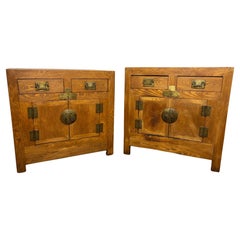
Pair of Antique 20th Century Chests
Located in Peabody, MA
A pair of chests in elm wood with hand wrought brass hardware. These were imported to the United States many decades ago and stripped of their original cinnabar paint to highlight th...
Category

Early 20th Century Chinese Qing Furniture

Materials

Elm

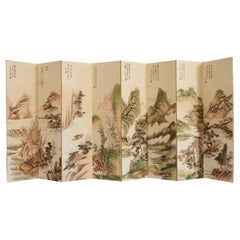
Chinese Eight Panel Folding Table Screen Landscapes Poems
Located in Rio Vista, CA
Fascinating Chinese Qing style 20th century eight panel folding table screen. The panels each features an idyllic landscape scene with a Chinese poem and artist seal. The reverse sid...
Category

20th Century Chinese Qing Furniture

Materials

Silk, Paper

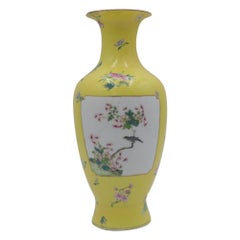
Qing Dynasty Rare Chinese Famille Rose Porcelain Vase Yellow Ground Enamel Panel
Located in Brea, CA
Qing Dynasty an antique rare early 20th century Chinese porcelain vase as a Chinese Famille Rose lamp with incised yellow ground decorated wi...
Category

Early 20th Century Chinese Qing Furniture

Materials

Porcelain

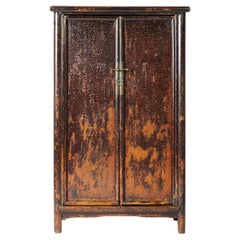
Chinese Crackled Lacquer Tapered Cabinet, c. 1750
Located in Chicago, IL
The essence of traditional Chinese furniture is fully expressed in the simplicity and graceful presence of this 18th century two-door cabinet. Crafted of southern elmwood with tradit...
Category

Mid-18th Century Chinese Antique Qing Furniture

Materials

Brass

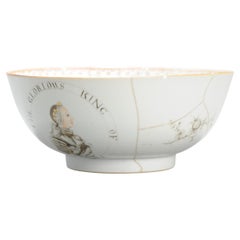
Chinese Porcelain Bowl King Frederic the Great China Encre de Chine Grisaille
Located in Amsterdam, Noord Holland
This needs to be in a Museum A very nice example of 18th c export porcelain grisaille around 1758. A very rare bowl. We have not been able to find a second one in any literature of ...
Category

18th Century Chinese Antique Qing Furniture

Materials

Porcelain

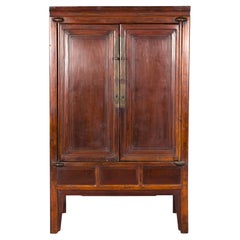
Elm Brown Lacquer Cabinet with Bronze Hardware and Shelves, Late Qing Dynasty
Located in Yonkers, NY
A late Qing Dynasty elm wood cabinet with brown lacquer and bronze hardware. This antique Chinese cabinet, crafted from elm wood during the late Qing dynasty (circa late 19th to earl...
Category

Early 20th Century Chinese Qing Furniture

Materials

Bronze

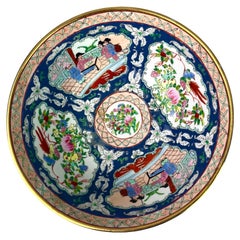
Large enameled porcelain bowl famille rose palace scene - China - Qing
Located in Beuzevillette, FR
Large enameled porcelain bowl with cloisonné decoration in the famille rose style of palace scenes. Very pretty and decorative. Apocryphal Qianlong mark on the underside. Qianlong is an 18th century Chinese emperor. He is the sixth emperor of the Qing dynasty. In addition to his own artistic practice, Qianlong combined his passion for art collecting...
Category

Early 20th Century Chinese Qing Furniture

Materials

Porcelain

Large Chinese Carved Nephrite Jade Double Buddha s Hand Vase, Late Qing Dynasty
Located in Austin, TX
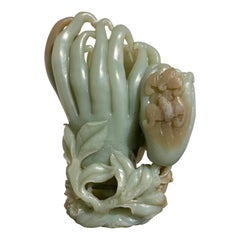
A large and graceful carved nephrite jade conjoined double vase in the form of a pair of Buddha's hands fruit (finger citron), late Qing Dynasty, circa 1900, China. The large and heavy vase carved from a single piece of celadon nephrite jade, with areas of lighter brown "sugar" skin. The vase ingeniously carved as a pair of Buddha's hand fruit, also known as finger citron, rising from a gnarled, leafy branch. The smaller Buddha's hand with a pair of bats. The Buddha's hands fruit with elegant and naturalistic curved "fingers". The "fingers wonderfully shaped and reticulated. The body of the fruit with simple stippling, in imitation of the textured surface of the real fruit. The interior of each fruit well hollowed and able to hold water. Buddha's hands fruit are auspicious in Chinese culture. Their name in Chinese "Fo Shou" is a homophone for "Happiness and Longevity. They are often placed as offerings on Buddhist altars...
Category

Early 1900s Chinese Antique Qing Furniture

Materials

Jade

Pair of Qing Wooden Demilune Tables with Porcelain Inlaid on the Surface, China
Located in North Miami, FL
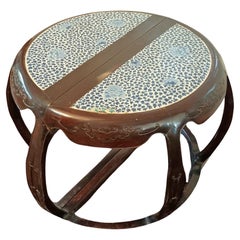
Pair of late 19th century Qing wooden circular demilune center tables with porcelain inlaid on the surface, China By: unknown Material: wood, porcelain, ceramic, paint, enamel, lacq...
Category

Late 19th Century Chinese Antique Qing Furniture

Materials

Enamel

Set of 10 Antique 18th c Qianlong Chinese Porcelain Immortal Statues China
Located in Amsterdam, Noord Holland
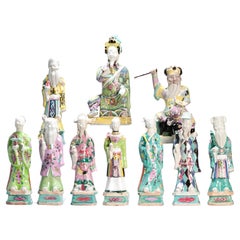
Very interesting and beautiful statue of Immortals Period: Qianlong Country of origin: China The Eight Immortals representing He Xiangu, Cao Goujiu, Li Ti...
Category

18th Century Chinese Antique Qing Furniture

Materials

Porcelain

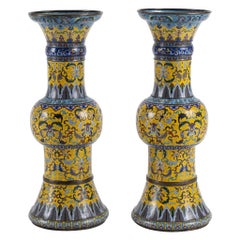
Pair Gu Cloisonné Vases
Located in Houston, TX
Pair of Imperial yellow Gu form cloisonné vases.
Category

Early 20th Century Chinese Qing Furniture

Materials

Bronze

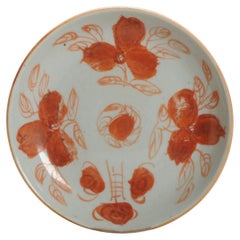
Antique Chinese Porcelain Kitchen Plate Qing, China, 19th Century
Located in Amsterdam, Noord Holland
Sharing with you this lovely plate Additional information: Material: Porcelain & Pottery Region of Origin: China Period: 19th century Emperor: Guangxu (1875-1908) China Dynasty Peri...
Category

19th Century Chinese Antique Qing Furniture

Materials

Porcelain

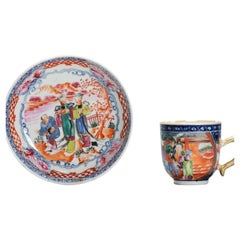
Antique 1740-1750 Chinese Porcelain Tea Set China Figural Rose Qianlong Period
Located in Amsterdam, Noord Holland
Sharing with you this very nice example of 18th century Mandarin ware. Dating to around 1740-1750. Absolutely top quality scene Very richly decorated. 11-3-2025 Condition Rimfrit...
Category

18th Century Chinese Antique Qing Furniture

Materials

Porcelain

Late 19th Century Large Carved Cabinet from Dong Yang, Zhejiang, China
Located in Singapore, SG
A late 19th century large carved cabinet from Dong Yang city, Zhejiang province, China. This cabinet is a distinct design of cabinets from this region, who are famed for their wood c...
Category

Late 19th Century Chinese Antique Qing Furniture

Materials

Elm, Pine

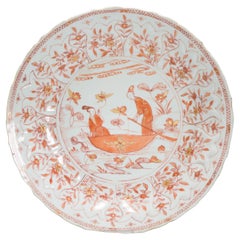
28.2 CM Kangxi Blood and Milk Antique Chinese Porcelain Plate Lizas on Boat
Located in Amsterdam, Noord Holland
Sharing with you this lovely dish on footring, the sides modelled as pomegranate-shaped panels in low relief, lightly scalloped rim. Decorated in iron-red and gold on the glaze. In...
Category

17th Century Chinese Antique Qing Furniture

Materials

Porcelain

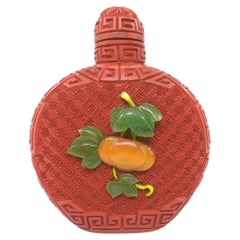
Fine Antique Chinese Carved Cinnabar Applied Gemstones Snuff Bottle R.O.C. 20c
Located in Richmond, CA
This cinnabar snuff bottle from the Republic of China period is a masterful blend of intricate craftsmanship and symbolic artistry. The bottle, i...
Category

Early 20th Century Chinese Qing Furniture

Materials

Jade

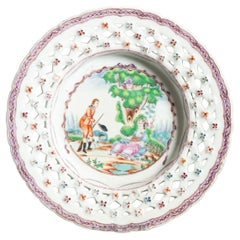
Antique 1750-1770 Chinese Porcelain Mandarin Rose China Qianlong Period
Located in Amsterdam, Noord Holland
Description Sharing with you this very nice example of 18th century Mandarin ware. Dating to around 1750-1770. Rare love pastoral scene Devilswork border Absolutely top quality scen...
Category

18th Century Chinese Antique Qing Furniture

Materials

Porcelain

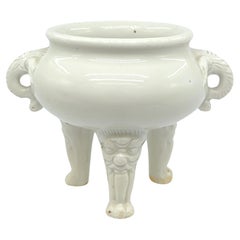
Antique Chinese Blanc de Chine Porcelain Tripod Censer Monster Paw Feet Kangxi
Located in Richmond, CA
This 18th-century Kangxi period blanc de chine Chinese porcelain tripod censer is an exemplar of refined craftsmanship and intricate detailing, hallmarks of the Kangxi era. The cense...
Category

Early 18th Century Chinese Antique Qing Furniture

Materials

Porcelain

Chinese Lacquered Snack Box, c. 1820
Located in Chicago, IL
This simple lacquered container was once used as a 19th-century snack box, presented as a gift during holidays and special occasions. To the delight of the r...
Category

Mid-19th Century Chinese Antique Qing Furniture

Materials

Wood, Lacquer

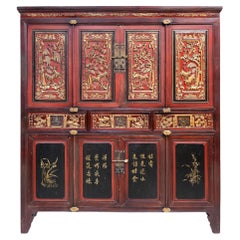
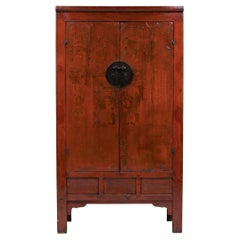
Chinese Red Lacquer Scholars Cabinet, circa 1850
Located in Chicago, IL
With its commanding scale and simple silhouette, this tall Qing-dynasty cabinet offered the perfect canvas for elaborate decoration. Crafted in the mid-19th century, the cabinet has ...
Category

Mid-19th Century Chinese Antique Qing Furniture

Materials

Elm

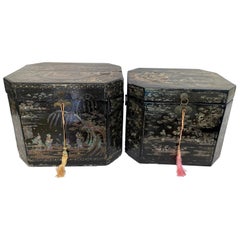
Antique Unique Large Two of Shell Inlaid Black Lacquer Chinese Book Boxes
Located in Brea, CA
Antique unique Qing dynasty very large 20” pair of shell inlaid black lacquer big Chinese book boxes with bail handles two sides, with keys, each with hinged lid reversing to a mothe...
Category

Late 18th Century Chinese Antique Qing Furniture

Materials

Lacquer

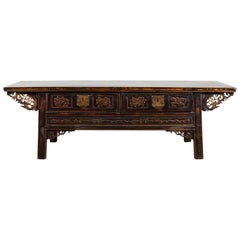
Chinese Qing Dynasty 19th Century Black Lacquer Coffee Table with Two Drawers
Located in Yonkers, NY
A Chinese Qing Dynasty antique black lacquer coffee table from the 19th century, with two drawers, dragon-carved spandrels and raised motifs. Created in China during the Qing Dynasty, this coffee table features a rectangular top with central board, sitting above two drawers carved with floral motifs and fitted with brass hardware. The table is raised on four straight slightly splaying legs connected to the top's underside thanks to dragon-carved spandrels. Boasting a dark patina, this 19th century Chinese Qing Dynasty coffee table...
Category

19th Century Chinese Antique Qing Furniture

Materials

Brass

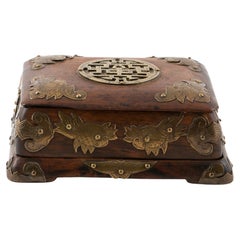
Chinese Qing Period Huanghuali Wood and Bronze Box
Located in Kastrup, DK
Chinese Huanghuali wood box decorated with bronze mountings and motifs of bats, fish and moths. The top features a classic Chinese medallion mounted to the centre of the lid. In un...
Category

Late 19th Century Chinese Antique Qing Furniture

Materials

Bronze

Qing Dynasty Painting of a Royalty Related Couple with Dragon Motifs
Located in Yonkers, NY
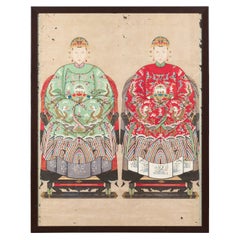
A Chinese late Qing Dynasty period framed painting from the early 20th century of a royalty related couple with dragon motifs painted on a linen canvas. Created in China during the late Qing Dynasty in the early years of the 20th century, this custom framed painting depicts a couple wearing either a red (a symbol of luck in China) or green robe. The depiction of dragons relates them to the Imperial family, but having four claws and not five as codified, the couple is likely part of the royal family, not the Imperial couple themselves. Accented with typical motifs such as bats, flaming pearls and rain-filled clouds, the robes are filled with symbols. Wearing ornate headdresses, the couple is sitting on elegant chairs. Set inside custom made frames, the paintings show great signs of age. While the entire piece measures 40.5"W x 1"D x 53"H, the painting itself is 36.5"W x 49". With its vivid colors and interesting subject, this Chinese Qing Dynasty painting...
Category

Early 20th Century Chinese Qing Furniture

Materials

Fabric, Plexiglass

Late Qing Dynasty Opium Mat Coffee Table with Inset Rattan Top
Located in Yonkers, NY
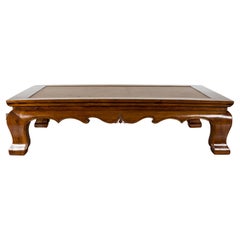
A Chinese late Qing Dynasty period opium mat coffee table from the early 20th century, with woven rattan inset top, carved apron and scrolling legs. Elevate your living space with a ...
Category

Early 20th Century Chinese Qing Furniture

Materials

Rattan, Wood

Pair of Chinese Guardian Lion Dogs, c. 1850
Located in Chicago, IL
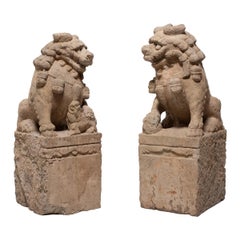
This pair of monumental Fu-Lions, also known as shizi, once would have flanked the entrance to a Qing-dynasty home in China’s Shanxi province. One has a pearl under its foot, and the...
Category

Mid-19th Century Chinese Antique Qing Furniture

Materials

Limestone

Qing Dynasty Chinese Red Lacquer Box
Located in Brea, CA
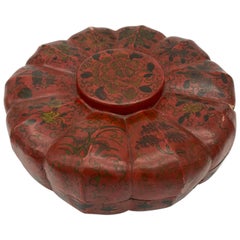
Chinese red lacquer box from Qing dynasty. Includes nine-pieces. Before in excellent condition. But when I take pictures, accidentally fell t...
Category

Early 17th Century Chinese Antique Qing Furniture

Materials

Lacquer

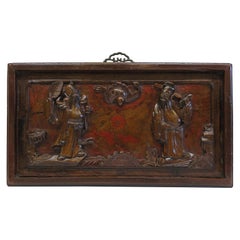
Chinese Carved Panel Board
Located in New York, NY
19th century auspicious carved panel story board. Chinese carved wooden panel of one solid piece of carved wood set in a wooden frame. A C...
Category

19th Century Chinese Antique Qing Furniture

Materials

Wood

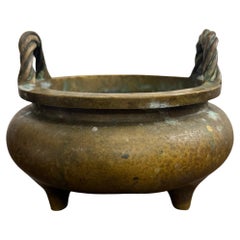
A Chinese Bronze Tripod Censer with Mark, 19th Century
Located in ARMADALE, VIC
A Chinese Bronze Tripod Censer with Mark, 19th Century With twisted handles. Provenance: Private Australian Collection. Dimensions: Height: 14cm. Diameter: 19cm.
Category

19th Century Chinese Antique Qing Furniture

Materials

Bronze

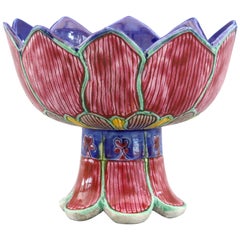
Chinese Unusual Porcelain Pedestal Lotus Flower Bowl
Located in Bishop s Stortford, Hertfordshire
A very unusual antique Chinese porcelain pedestal lotus flower shaped bowl hand painted in bold solid colors believed to date from the early 20th century or possibly earlier. The lot...
Category

Early 20th Century Chinese Qing Furniture

Materials

Porcelain

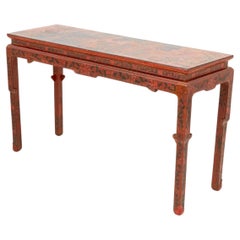
Chinese Red Lacquered Altar Table
Located in Astoria, NY
Chinese Red Lacquered Carved Hardwood Altar Table, with floral and bird motif top. 30.5" H x 52" W x 16.5" D. Provenance: From a New York City Collection.
Category

20th Century Chinese Qing Furniture

Materials

Hardwood, Lacquer

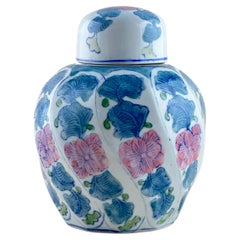
Vintage Chinese Famille Rose Pastel Toned Ginger Jar
Located in Glasgow, GB
A vintage doucai ginger jar, handcrafted in China during the 1980s. Shaped in a unique decagonal form, it features ten individual panels that smoothly twist upwards, creating a har...
Category

Late 20th Century Chinese Qing Furniture

Materials

Enamel

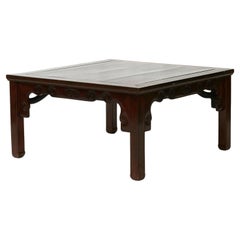
Qing Dynasty Coffee Table
Located in Kastrup, DK
A Chinese Qing Dynasty period elm wood coffee table with square top. The table has a natural age-related patina. From Jiangsu province, Qing period, 1...
Category

Mid-19th Century Chinese Antique Qing Furniture

Materials

Elm

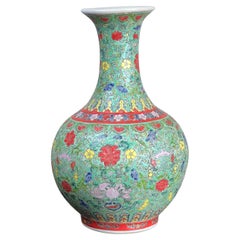
Antique Qing Dynasty Famille Rose Chinese Porcelain Vase with Qianlong Marking
Located in Westfield, MA
This antique Qing Dynasty famille rose porcelain vase represents the elegance and artistry of Chinese decorative traditions. The form features a rounded body that rises gracefully in...
Category

19th Century Chinese Antique Qing Furniture

Materials

Porcelain

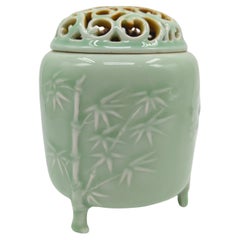
Fine Chinese Celadon Glaze Relief Carved Covered Censer on Tripod Feet mid-20c
Located in Richmond, CA
This exceptional covered censer is a testament to the art of Chinese ceramics, executed with remarkable skill and attention to detail. The piece is enveloped in a refined celadon gla...
Category

Mid-20th Century Chinese Qing Furniture

Materials

Porcelain

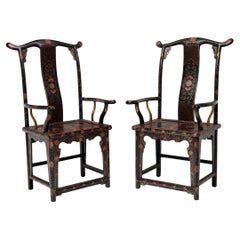
Pair of Chinese Golden Blossom Yokeback Chairs
Located in Chicago, IL
Lavishly decorated from head to toe, these statement armchairs from the early 20th century demonstrate the opulence of Qing-dynasty painted furniture. Crafted with mortise-and-tenon ...
Category

Early 20th Century Chinese Qing Furniture

Materials

Wood

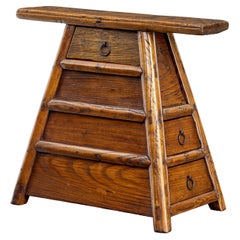
Small 19th century elm decorative table top chest
Located in Debenham, Suffolk
Small 19th century eastern elm table top chest circa 1890. Superb quality Chinese pyramid shaped alter table chest made from elm.  Show frame structure with a single shallow drawer ...
Category

Late 19th Century Chinese Antique Qing Furniture

Materials

Elm

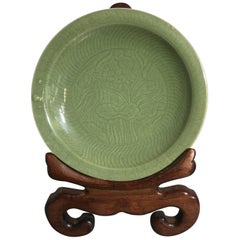
Chinese Celadon Glazed Lotus Charger, Qing Dynasty, 18th Century
Located in Austin, TX
A sublime Chinese celadon glazed shallow dish or charger, Qing Dynasty, mid 18th century, China. Beautifully glazed, with a carved decoration of a group of lotus, leaves, stalks and blossoms. The interior wall with radiating S-shaped lines, a motif that is repeated on the wide rim of the dish. The back undecorated. Glazed all-over with an even bright celadon glaze, with some attractive areas of crackle. Ex. Butterfield's, San Francisco. Plate stand for display...
Category

Mid-18th Century Chinese Antique Qing Furniture

Materials

Porcelain

Chinese Qing Dynasty 19th Century Altar Coffer with Carved Geometric Motifs
Located in Yonkers, NY
A Chinese Qing Dynasty period carved altar coffer from the 19th century, with two drawers and geometric motifs. Created in China during the Qing Dynasty, this altar coffer features a...
Category

19th Century Chinese Antique Qing Furniture

Materials

Wood

Chinese Famille Rose Four Flowers Plate, c. 1900
Located in Chicago, IL
Painted with overglaze enamels in the famille rose style, this small porcelain dish has a colorful design of four flowers representing the seasons. Rendered in shades of pink, green ...
Category

Early 20th Century Chinese Qing Furniture

Materials

Porcelain

A Large Pair of Chinese Famille Rose Decorated Gilt Foo Dog Handle Vases
Located in New York, NY
A Large Pair of Chinese Famille Rose Decorated Gilt Foo Dog Handle Vases. Each vase features finely painted scenes on cartouches. The decoration showcases figures engaged in daily ...
Category

1880s Chinese Antique Qing Furniture

Materials

Porcelain

Petite Chinese Blue White Lotus Dish, c. 1900
Located in Chicago, IL
An everyday example of Chinese blue-and-white ceramics, this petite footed dish from the late 19th century charms with expressive sweeps of cobalt blue atop a blue-grey field. The lo...
Category

Late 19th Century Chinese Antique Qing Furniture

Materials

Porcelain

Qing furniture for sale on 1stDibs.

Find a broad range of unique Qing furniture for sale on 1stDibs. Many of these items were first offered in the 21st Century and Contemporary, but contemporary artisans have continued to produce works inspired by this style. If you’re looking to add vintage furniture created in this style to your space, the works available on 1stDibs include asian art and furniture, decorative objects, tables and other home furnishings, frequently crafted with wood, ceramic and other materials. If you’re shopping for used Qing furniture made in a specific country, there are Asia, East Asia, and China pieces for sale on 1stDibs. While there are many designers and brands associated with original furniture, popular names associated with this style include Wang Hing Co., Satsuma, Copeland Spode, and Cornelis Pronk. It’s true that these talented designers have at times inspired knockoffs, but our experienced specialists have partnered with only top vetted sellers to offer authentic pieces that come with a buyer protection guarantee. Prices for furniture differ depending upon multiple factors, including designer, materials, construction methods, condition and provenance. On 1stDibs, the price for these items starts at $38 and tops out at $188,800 while the average work can sell for $2,474.

Still Thinking About These?

All Recently Viewed