Items Similar to 19th Century English Satinwood and Coromandel Folio Stand by Jackson
Graham

Want more images or videos?
Request additional images or videos from the seller
1 of 10
19th Century English Satinwood and Coromandel Folio Stand by Jackson
Graham
$52,851.59
£38,500
€45,039.39
CA$72,395.79
A$78,979.88
CHF 41,889.32
MX$951,529.51
NOK 531,656.87
SEK 486,746.29
DKK 336,376.85
About the Item
A Coromandel and Satinwood Folio Stand
Firmly attributed to Jackson
Graham
Constructed from richly figured coromandel and banded with satinwood and New Zealand honeysuckle, the folio stand with two hinged and adjustable pierced rests, each with geometric roundels within rectilinear tracery, supported on solid tiers with turned faux-fluted pilasters and ebonised oblate bun feet, raised on concealed brass casters. The angled rests adjust by means of an internal pulley system, activated by tasselled cords and discreet brass catches.
English, circa 1875
Dimensions: H: 53 in / 135 cm W: 35.5 in / 90 cm D: 19.5 in / 50 cm
A fine example of technical ingenuity and luxurious craftsmanship, this stand reflects the signature materials and constructional perfection associated with Jackson
Graham.
Jackson
Graham
The firm of Jackson
Graham was established in 1836 by Thomas Jackson and Peter Graham at 37 Oxford Street, London. Over the next fifty years, they produced furniture of exceptional quality and represented Britain at many of the international exhibitions of the nineteenth century.
Their clientele included Queen Victoria, Napoleon III, the Grand Khedive of Cairo, and the royal palace in Siam. The firm became renowned for its refined marquetry, the use of Wedgwood plaques, ivory inlay, rare timbers, and finely cast bronze mounts.
They collaborated with many of the leading designers of the period, including Owen Jones, Bruce Talbert, Alfred Lorimer, and Eugene Prignot. By the mid-1850s, the firm employed 250 workers; by 1875, that number had risen to 600.
Celebrated exhibitors at the Great Exhibitions, they were frequent prize winners. At the Paris International Exhibition of 1878, the jury remarked: "the workmanship is so perfect that even with the aid of a magnifying glass scarcely the slightest imperfection is to be found."
In 1885, the company was absorbed by Collinson
Lock.
- Attributed to:Jackson Graham (Cabinetmaker)
- Dimensions:Height: 53 in (134.62 cm)Width: 35.5 in (90.17 cm)Depth: 20 in (50.8 cm)
- Style:Aesthetic Movement (Of the Period)
- Materials and Techniques:
- Place of Origin:
- Period:
- Date of Manufacture:circa 1875
- Condition:Wear consistent with age and use.
- Seller Location:London, GB
- Reference Number:Seller: 103181stDibs: LU954746996642
About the Seller
5.0
Recognized Seller
These prestigious sellers are industry leaders and represent the highest echelon for item quality and design.
Established in 1964
1stDibs seller since 2012
54 sales on 1stDibs
Typical response time: <1 hour
Associations
The British Antique Dealers
AssociationLAPADA - The Association of Arts
Antiques Dealers
- ShippingRetrieving quote...Shipping from: London, United Kingdom
- Return Policy
More From This Seller
View All19th Century Coromandel and Inlaid Table Attributed to Jackson
Graham
By Jackson
Graham
Located in London, GB
A magnificent library table
Attributed to Jackson & Graham
Of free standing rectangular form, constructed in coromandel, with inlays in thuya, ebony, boxwood, and honeysuckle; the fluted legs rising from square brass castor-shod feet; the frieze housing two lockable drawers fitted with rare ‘tamper proof’ Chubb locks and having quadrant moulded cedar lined interiors; the platform having a central panel of beautifully chosen matched coromandel veneers, with an outer guard border of a running pattern of stylised anthemions; the ebony edges having a thumb nail moulding,
circa 1865
The firm of Jackson & Graham established in 1836 by Thomas Jackson and Peter Graham at 37 Oxford Street London, and for the next fifty years produced predominately high quality furniture and represented Britain at many of the international exhibitions. Their clients included Queen Victoria, Napoleon III, the Grand Khedive of Cairo and the royal palace in Siam. They were particularly noted for their fine marquetry work, the use of Wedgwood plaques, rare woods, and fine casting of bronze mounts. They engaged the leading designers of the period, inter alia, Owen Jones, Bruce Talbert, Alfred Lorimer and Eugene Prignot. In the mid-1850s the workforce was recorded as 250, and by 1875, the company was employing 600 workers. They were feted exhibitors at many of the Great Exhibitions of the 19th century, and frequent prize winners. At the Paris International Exhibition of 1878, the furniture jury noted of them ‘ the workmanship is so perfect that even with the aid of a magnifying glass scarcely the slightest imperfection is to be found’. In 1885 the company was absorbed by Collinson and Lock, who continued their standard of excellence.
Charles Chubb was apprenticed as a blacksmith before starting business as a ships’ ironmonger in Winchester. Jeremiah soon joined the business, and by 1818 the brothers had branched out into lockmaking, founding the famous Chubb Company.
The business really got started when Jeremiah Chubb patented his new ‘detector lock’ in 1818. The lock was constructed so that if someone tried to pick it or open it with the wrong key it became inoperable. To make the lock work again the owner had to use a special key supplied with the lock. The aim of the detector lock was to prevent burglaries, and to warn the owner that someone had tried to break into their property.
The lock soon became popular, and sales of the Chubbs’ products increased even more when they won a government competition to design a lock that could only be opened using its own key. After the invention of the detector lock, the Chubbs decided to move to Wolverhampton, which already had an established lock making industry. By 1838 they were making 28,000 locks a year at their Wolverhampton factory. Another product was added to the Chubb range in 1835 when a patent was taken out for a burglar resistant safe, and in 1837 the Chubb safe...
Category
Antique 19th Century English Tables
Materials
Brass
English Satinwood and Marquetry Centre Table by James Plucknett of Warwick
Located in London, GB
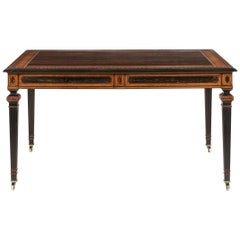
A fine Marquetry centre table by James Plucknett of Warwick
Of rectangular bow ended form, constructed in satinwood, and inlaid with specimen wood marquetry work on the platform; rising from toupie feet, the four finely carved caryatid female supports have a conjoined stylised 'X' form stretcher with a dished bowl at the centre; the apron housing a series of foliate carved entablatures, and the platform extensively inlaid with neoclassical designs of trophies, and floral arabesques. Bearing a label underneath the platform with the makers' name,
circa 1890.
James Plucknett, having had various partners in his company, operated as a sole trader from 1886-1905, the year of his death. He advertised his work as 'manufacturers of rich carved furniture', trading as 'James Plucknett & Co Art Furniture Manufacturers'. His commissions included The Royal Pavilion for the Royal Warwick...
Category
Antique 19th Century English Victorian Center Tables
Materials
Wood, Satinwood
19th Century Marquetry Writing Table in the manner of Holland
Sons
Located in London, GB
A good writing table in the Manner of Holland & Sons
Constructed in mahogany, with specimen wood inlays, and gilt bronze mounts; of rectangular form, with bowed ends, rising from ri...
Category
Antique 19th Century British Victorian Desks and Writing Tables
Materials
Ormolu, Bronze
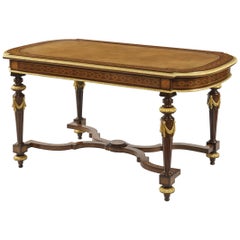
Antique End Support Table Attributed to Gillows of Lancaster
By Gillows of Lancaster
London
Located in London, GB
A fine end support table firmly attributed to Gillows of Lancaster.
Constructed in a well figured Goncalo Alves, rising from winged lions claw feet supporting the base platforms; ...
Category
Antique Early 19th Century British George IV End Tables
Materials
Wood
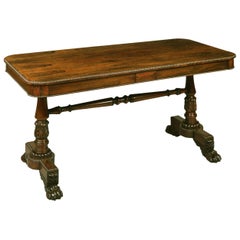
An Unusual Marquetry Top Table Attributed to Jackson
Graham
By Jackson
Graham
Located in London, GB
An Unusual Marquetry Top Table
Attributed to Jackson & Graham
Likely Designed by Bruce James Talbert (1838-1881)
The circular top inlaid with a p...
Category
Antique 19th Century English Side Tables
Materials
Wood, Mahogany, Amboyna
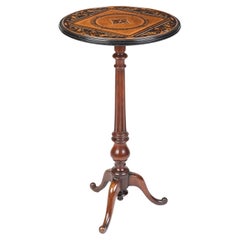
French 19th Century Mechanical Table ‘à la Bourgogne’ in the manner of Oeben
By Jean-François Oeben
Located in London, GB
An Ingenious Mechanical Table 'à la Bourgogne'
In the manner of Oeben
Constructed in kingwood, tulipwood, amaranth, and specimen woods, with finely cast gilt bronze mounts, the tabl...
Category
Antique Late 19th Century French Louis XV Tables
Materials
Ormolu
You May Also Like
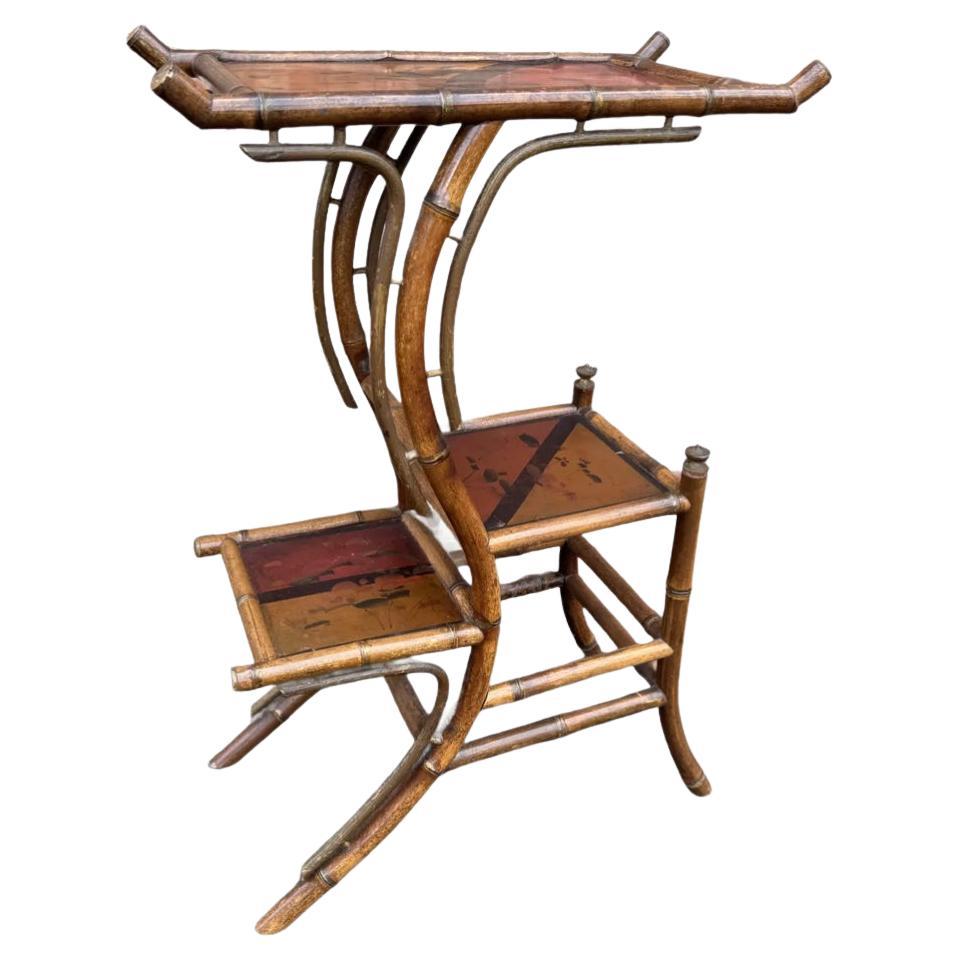
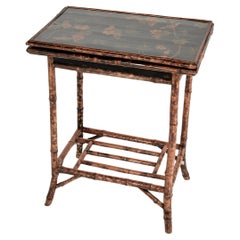
Antique English Bamboo and Lacquer Foldout Table or Stand
Located in Palm Beach, FL
Charming 19th Century English table handcrafted in burnt bamboo with lacquer panels on the top and the foldout top hand decorated in fauna and flora. The base has a lower tier with C...
Category
Antique Late 19th Century English Victorian Side Tables
Materials
Bamboo, Lacquer
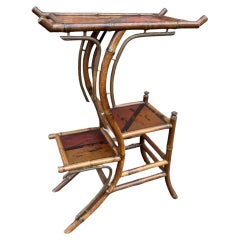
19th Century English Bamboo Side Table /Plant Stand
Located in Nashville, TN
A wonderful 19th Century english bamboo plant stand/ side table. In addition to being a plant stand, it is also a side table featuring hand painted Chinoiserie designs and tight join...
Category
Antique 1880s English Tables
Materials
Bamboo
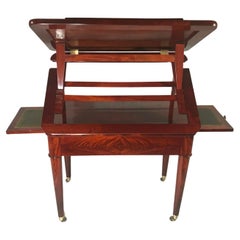
French antique Architect
s Table, Directoire Period 1780-1800
Located in Belmont, MA
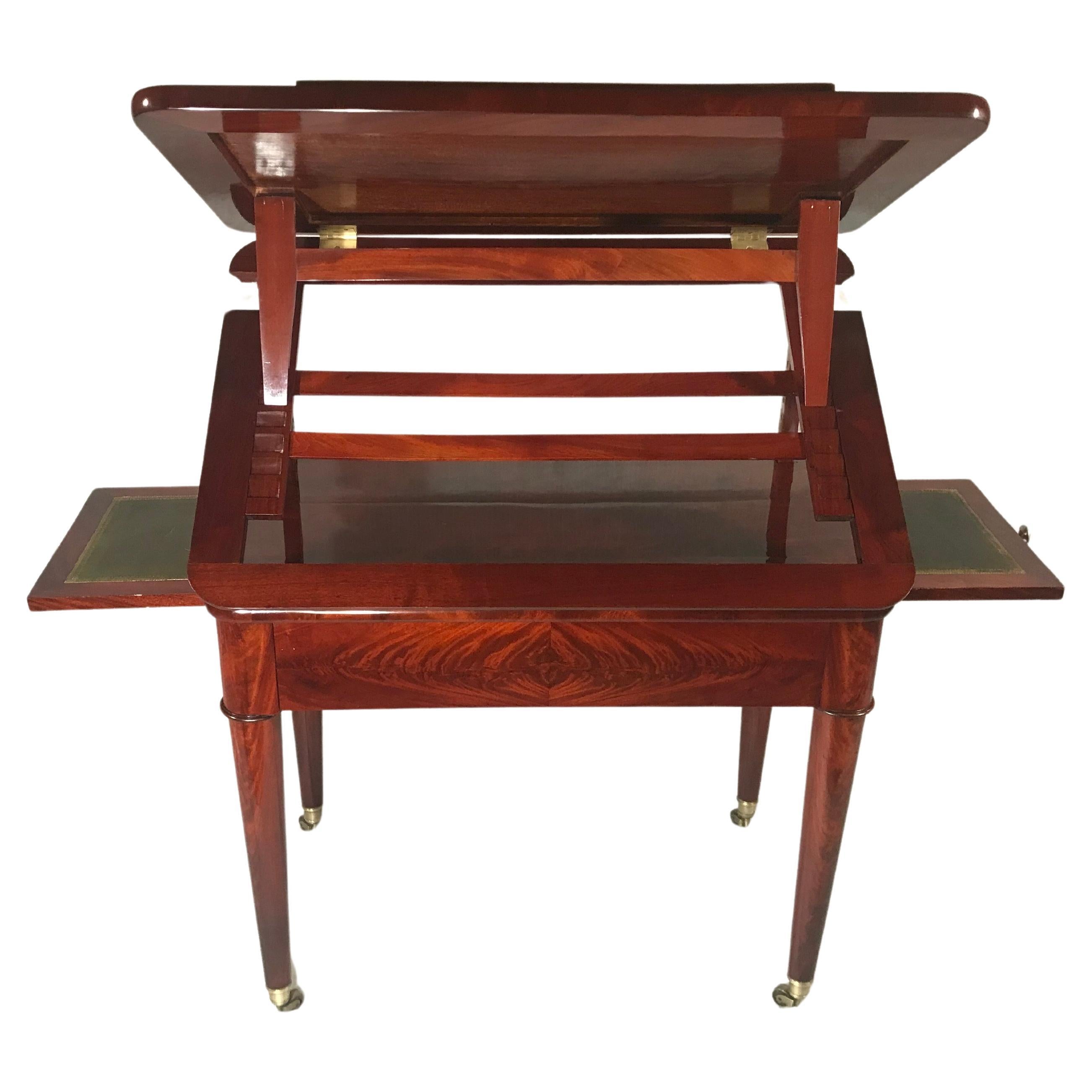
Explore a stunning late eighteenth-century Directoire Period architect’s desk crafted from figured mahogany. This exquisite piece features an adjustable green leather-lined writing surface with a hidden double rising system. Flanked by a pair of convenient pull-out slides and one long drawer, the desk opens to reveal an additional writing surface and sliding pen tray. Elevated on round tapering legs, this architect's table, also known as "table à la Tronchin...
Category
Antique 1790s French Directoire Tables
Materials
Mahogany
$12,000 Sale Price
20% Off
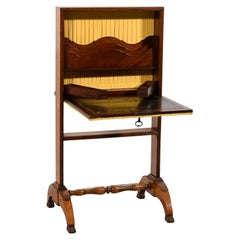
19th Century, French Wood Travel Desk
Located in IT
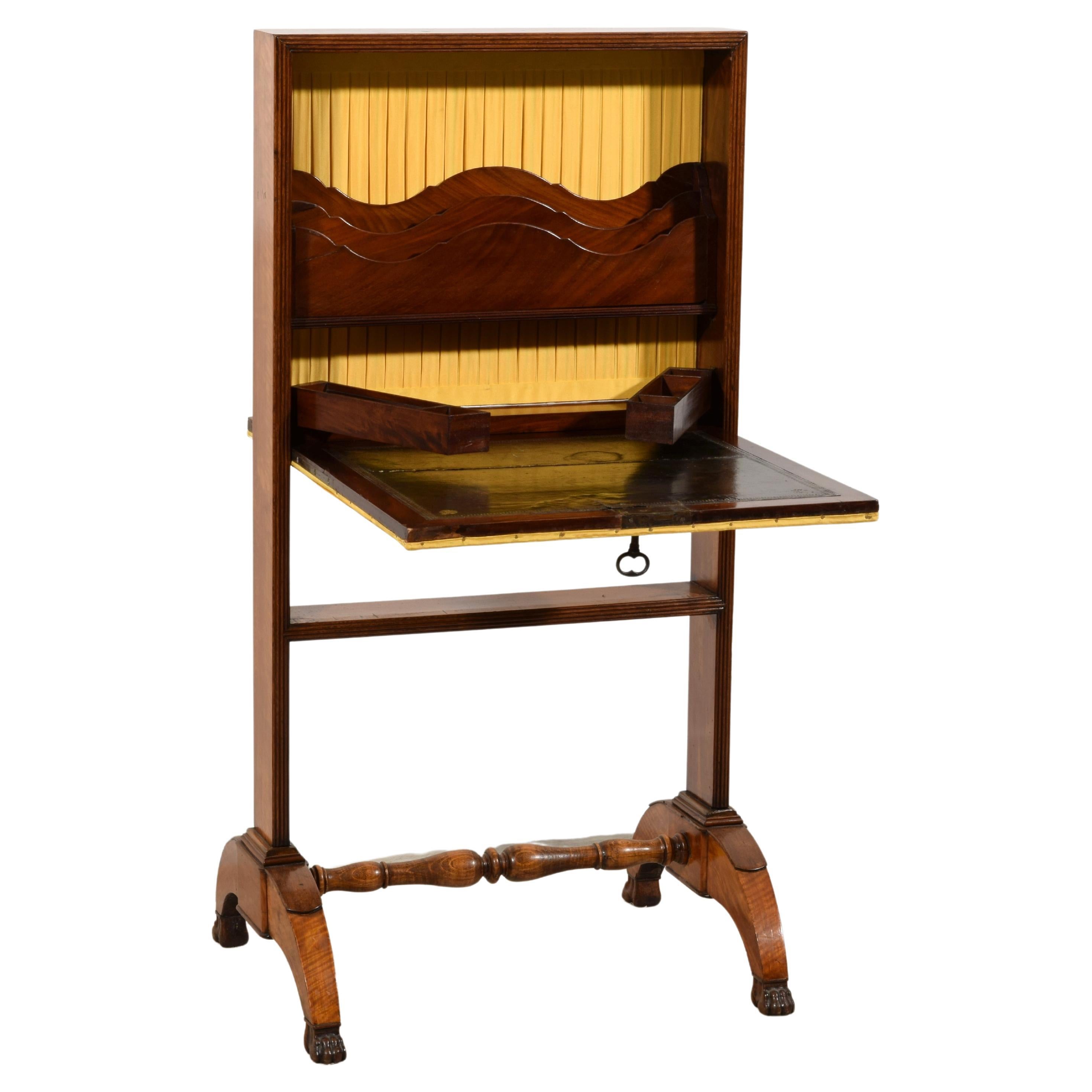
19th Century, French Wood Travel Desk
Measures: cm H 103 x W 52 x closed D 9. Open D 59 cm
This particular travel desk was made in France, in the earl...
Category
Antique Early 19th Century French Empire Desks and Writing Tables
Materials
Wood
Mahogany
Satinwood 19th Century Two Tier Table
Located in Bedfordshire, GB
A Very Fine Quality Late 19th Century Mahogany And Satinwood Oval Two Tier Etagere, Dumb Waiter, Or Occasional Table, Having Removable Glass Tray With Wavy Galleried Edge To Top, Rai...
Category
Antique Late 19th Century English Edwardian End Tables
Materials
Mahogany, Satinwood
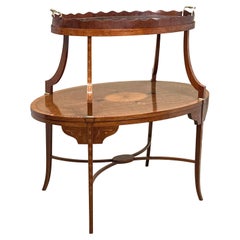
19th Century Sheraton Revival Satinwood Serving Table
Located in Martlesham, GB
19th Century Sheraton Revival satinwood serving / drinks table, having a nice figured top with a gallery with a hinged drop down side, supported on slender lyre-shaped supports unite...
Category
Antique 1830s British Sheraton Serving Tables
Materials
Satinwood