1 of 4

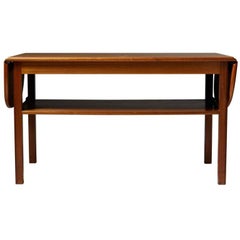
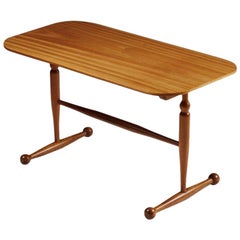
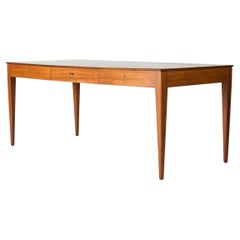
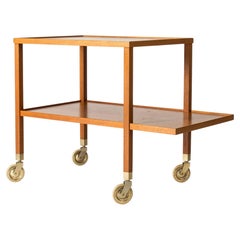
Josef Frank library table, Sweden, 1950s

$7,500List Price

You May Also Like

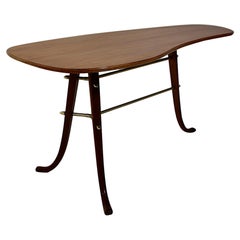
Modernist Cherry Brass Side Table Coffee Table Josef Frank, 1950s, Sweden
By Josef Frank
Located in Vienna, AT
Modernist Mid-Century Modern vintage side table or coffee table from cherry wood and brass attributed to Josef Frank for Svenskt Tenn 1950s Sweden. An absolutely stunning coffee tab...
Category

Mid-20th Century Swedish Mid-Century Modern Console Tables

Materials

Brass

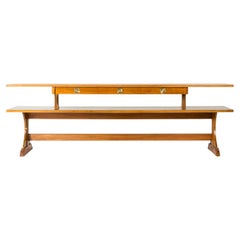
Midcentury Modern Library Table/Sideboard by Josef Frank, Svenskt Tenn, 1950s
By Svenskt Tenn, Josef Frank
Located in Stockholm, SE
Striking library table or sideboard by Josef Frank, model 2226. Crafted from mahogany with brass drawer handles.
Category

Vintage 1950s Swedish Scandinavian Modern Side Tables

Materials

Mahogany

Midcentury Coffee Table by Josef Frank, Svenskt Tenn, Sweden, 1950s
By Svenskt Tenn, Josef Frank
Located in Stockholm, SE
Small coffee or side table by Josef Frank, made from mahogany with a rounded corner tabletop. Light design with elegantly sculpted legs.
Category

Vintage 1950s Swedish Scandinavian Modern Coffee and Cocktail Tables

Materials

Mahogany

Occasional Table Designed by Josef Frank for Svenskt Tenn, Sweden, 1950s
By Josef Frank
Located in Stockholm, SE
Occasional table designed by Josef Frank for Svenskt Tenn, Sweden, 1950s. Mahogany. Measurements: H: 60 cm/ 23 1/2'' Length when extened: 104 cm/ 3' 5'' D: 54 cm/ 21 1/2''   Jose...
Category

Vintage 1950s Swedish Scandinavian Modern Side Tables

Materials

Mahogany

Occasional Table Designed by Josef Frank for Svenskt Tenn, Sweden, 1950s
By Josef Frank
Located in Stockholm, SE
Occasional table designed by Josef Frank for Svenskt Tenn, Sweden. 1950s. Mahogany. H: 45 cm L: 80 cm D: 40 cm Josef Frank was a true European, he was also a pioneer of what would become classic 20th century Swedish design and the “Scandinavian Design Style”. Austrian- born Frank started his design career as an architect after having trained at the Technische Hochschule in Vienna between 1903 and 1910. After his training he went on to teach at Kunstgewerbeschule (The Viennese School of Arts and crafts) where he developed and espoused the new school of modernist thinking towards Architecture and Design that was coming to fruition in Vienna at the time. He also went on to lead the Vienna Werkbund throughout the 1920s. This was a truly progressive group of Architects and Designers who set about improving the daily lives of Austrian people through modernist design and architecture in partnership with Arts and Crafts ideals and construction. Frank’s leadership of the Werkbund had already cemented his place at the forefront of European design. Frank’s time in Vienna was typified by his design for the “Die Wohnung” exhibition of the Deutscher Werkbund in Stuttgart, 1927 where he exhibited along side his contemporaries at the forefront of design, such as the likes of Le Corbusier and Walter Gropius. Here he showed a specially designed pair of flat-roofed reinforced concrete houses in what is now seen as a typical modernist style. What separated Frank’s house from the other 32 houses of the exhibition was the interior and furniture inside the building. It was described as “Neo-Classical” and filled with an eclectic mix of period pieces, modern design and pieces designed by Frank himself that seemed to cross the two worlds. This was a complete opposite direction to that which his fellow Architects were travelling in with their pared back and angular aesthetics. Frank said of his own work: “The house is not a work of art, simply a place where one lives,” and by this reasoning Frank rejected the regimental mechanisation of the living space that his contemporaries believed in, instead he set about creating congenial and spontaneous interiors. Frank’s practice saw him placing the bright colours and the soft forms of nature back into the furnishings and interiors that he thought modernism sorely mist. Frank, along with Oskar Walch set up Haus und Garten in Vienna in 1925. This was Frank’s first commercial foray into furniture and home furnishings and the company went on to become the most influential furnishing house in Vienna with a riotous depth of colour and interesting shapes becoming the trademark of their design. However this success was to come to an end with rise of Nazism in Vienna in the early 1930’s. Frank was Jewish, and he and his wife Anna decided they would leave Vienna for her motherland: Sweden, in 1933. Frank continued to design for Haus and Garten, visiting Vienna occasionally and designing the pieces that would continue to be the company’s best...
Category

Vintage 1950s Swedish Scandinavian Modern Tables

Materials

Mahogany

Midcentury Desk by Josef Frank, Svenskt Tenn, Sweden, 1950s
By Svenskt Tenn, Josef Frank
Located in Stockholm, SE
Beautiful desk by Josef Frank, made from mahogany with a smooth look. Clean lines and subtly rounded forms, a timeless piece. There are some dents in the table top that have been pr...
Category

Vintage 1950s Swedish Scandinavian Modern Desks and Writing Tables

Materials

Mahogany

Midcentury Bar Trolley by Josef Frank, Svenskt Tenn, Sweden, 1950s
By Svenskt Tenn, Josef Frank
Located in Stockholm, SE
Mahogany serving trolley by Josef Frank. Simplistic to the core with a clean silhouette and great proportions.
Category

Vintage 1950s Swedish Scandinavian Modern Carts and Bar Carts

Materials

Mahogany

Marble and Mahogany Side Table by Josef Frank for Svenskt Tenn, Sweden, 1950s
By Josef Frank, Svenskt Tenn
Located in Stockholm, SE
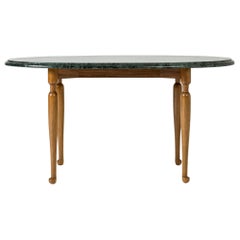
Beautiful side table by Josef Frank, with an oval green marble table top on a slender mahogany base. Deep green marble, lovely sculpted legs and feet.
Category

Vintage 1950s Swedish Scandinavian Modern Side Tables

Materials

Marble

Josef Frank, Serving Cart, Bamboo, Rattan, Metal, Sweden, 1950s
By Josef Frank
Located in High Point, NC
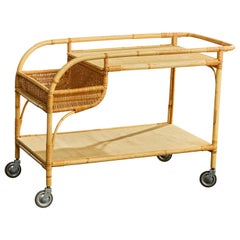
A bamboo, rattan, raffia and metal serving cart or bar cart, model 892, designed by Josef Frank and produced by Larsson Korgmakare for Svenskt Tenn, Sweden, c. 1950s. Minor staining...
Category

Vintage 1950s Swedish Mid-Century Modern Carts and Bar Carts

Materials

Bamboo, Rattan

Bedside Table Model 914 Designed by Josef Frank for Svenskt Tenn, Sweden, 1950s
By Josef Frank
Located in Stockholm, SE
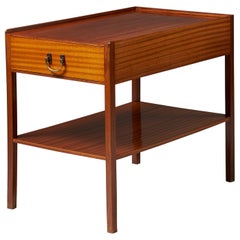
Bedside table model 914 designed by Josef Frank for Svenskt Tenn, Sweden, 1950s. Mahogany veneer and brass handle. Josef Frank’s elegant bedside table model 914 with sophisticated brass handles is one of Svenskt Tenn’s timeless classics. It works very well combined with modern or antique pieces. The overall simplicity of form and use of luxurious wood are characteristic of Josef Frank. L: 65 cm W: 40 cm H: 55 cm Josef Frank was a true European, he was also a pioneer of what would become classic 20th century Swedish design and the “Scandinavian Design Style”. Austrian- born Frank started his design career as an architect after having trained at the Technische Hochschule in Vienna between 1903 and 1910. After his training he went on to teach at Kunstgewerbeschule (The Viennese School of Arts and crafts) where he developed and espoused the new school of modernist thinking towards Architecture and Design that was coming to fruition in Vienna at the time. He also went on to lead the Vienna Werkbund throughout the 1920s. This was a truly progressive group of Architects and Designers who set about improving the daily lives of Austrian people through modernist design and architecture in partnership with Arts and Crafts ideals and construction. Frank’s leadership of the Werkbund had already cemented his place at the forefront of European design. Frank’s time in Vienna was typified by his design for the “Die Wohnung” exhibition of the Deutscher Werkbund in Stuttgart, 1927 where he exhibited along side his contemporaries at the forefront of design, such as the likes of Le Corbusier and Walter Gropius. Here he showed a specially designed pair of flat-roofed reinforced concrete houses in what is now seen as a typical modernist style. What separated Frank’s house from the other 32 houses of the exhibition was the interior and furniture inside the building. It was described as “Neo-Classical” and filled with an eclectic mix of period pieces, modern design and pieces designed by Frank himself that seemed to cross the two worlds. This was a complete opposite direction to that which his fellow Architects were travelling in with their pared back and angular aesthetics. Frank said of his own work: “The house is not a work of art, simply a place where one lives,” and by this reasoning Frank rejected the regimental mechanisation of the living space that his contemporaries believed in, instead he set about creating congenial and spontaneous interiors. Frank’s practice saw him placing the bright colours and the soft forms of nature back into the furnishings and interiors that he thought modernism sorely mist. Frank, along with Oskar Walch set up Haus und Garten in Vienna in 1925. This was Frank’s first commercial foray into furniture and home furnishings and the company went on to become the most influential furnishing house in Vienna with a riotous depth of colour and interesting shapes becoming the trademark of their design. However this success was to come to an end with rise of Nazism in Vienna in the early 1930’s. Frank was Jewish, and he and his wife Anna decided they would leave Vienna for her motherland: Sweden, in 1933. Frank continued to design for Haus and Garten, visiting Vienna occasionally and designing the pieces that would continue to be the company’s best...
Category

Vintage 1950s Swedish Mid-Century Modern Side Tables

Materials

Brass