Items Similar to 19th Century French Secretaire Flap "Billet Doux", Also Called "Portfolio"
Want more images or videos?
Request additional images or videos from the seller
1 of 21
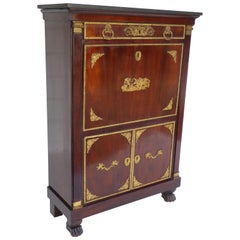
19th Century French Secretaire Flap "Billet Doux", Also Called "Portfolio"
$4,089.34
$5,111.6720% Off
£3,065.34
£3,831.6820% Off
€3,440
€4,30020% Off
CA$5,653.39
CA$7,066.7420% Off
A$6,154.35
A$7,692.9420% Off
CHF 3,285.35
CHF 4,106.6820% Off
MX$74,297.15
MX$92,871.4420% Off
NOK 41,309.15
NOK 51,636.4420% Off
SEK 38,394.14
SEK 47,992.6720% Off
DKK 26,205.65
DKK 32,757.0620% Off
About the Item
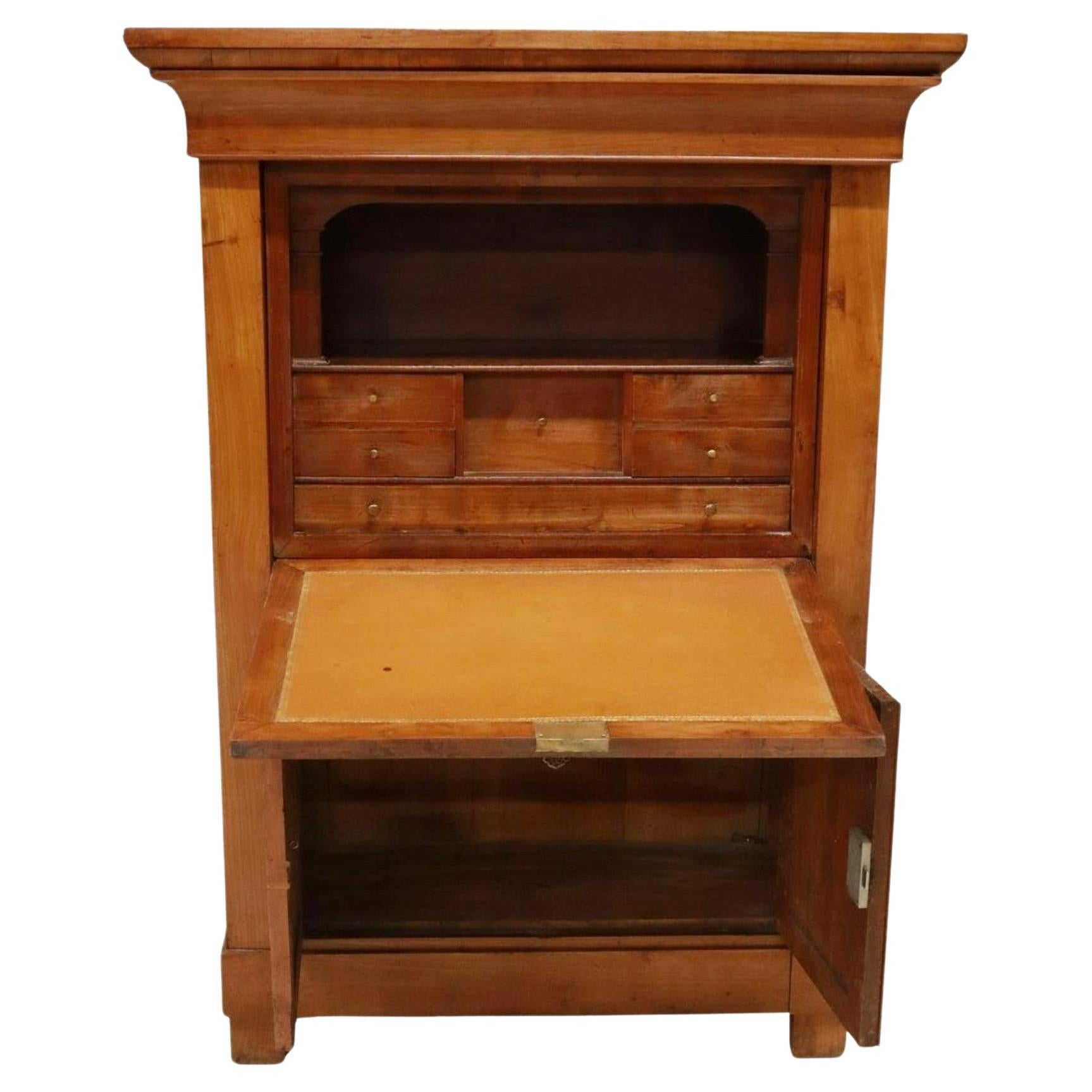
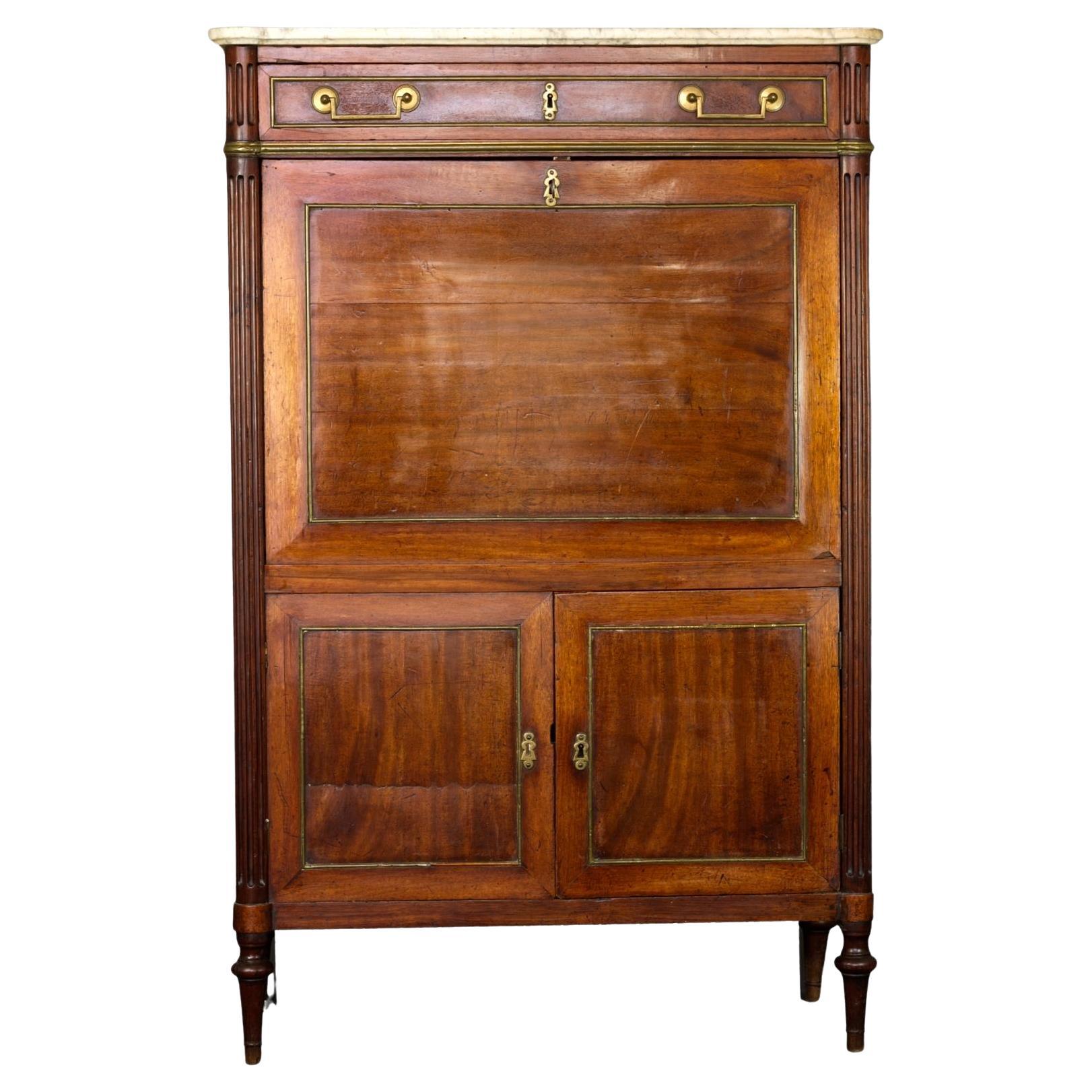
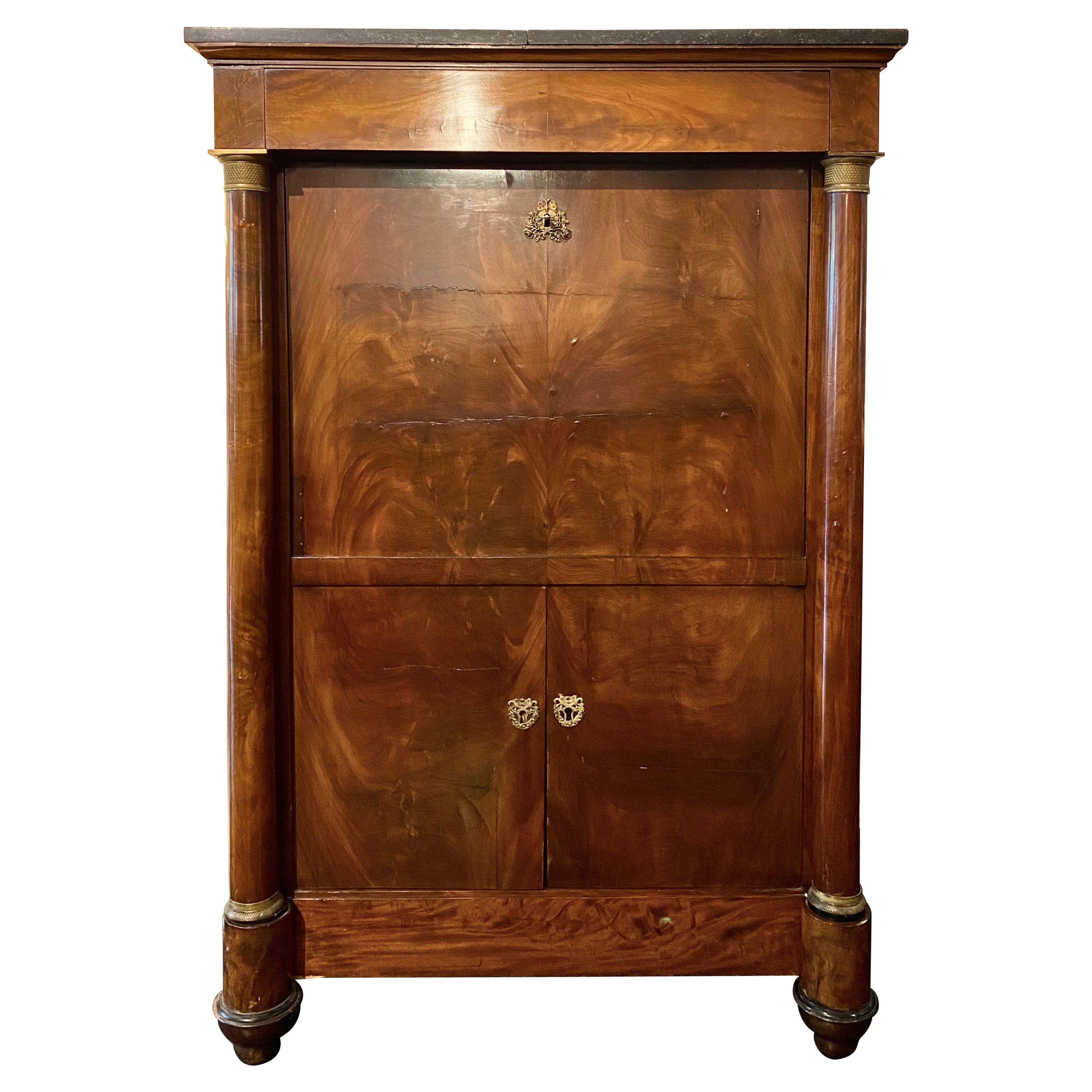
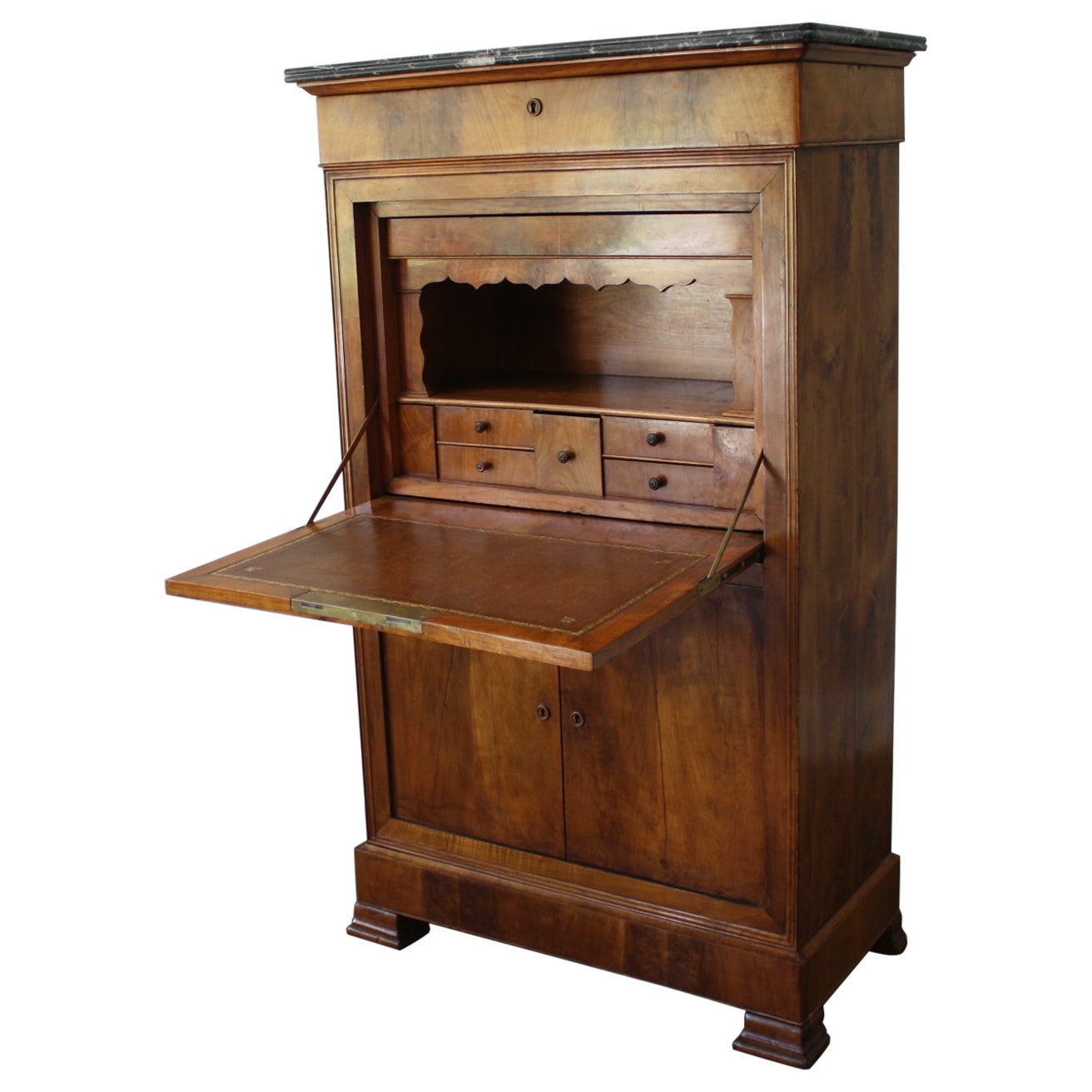
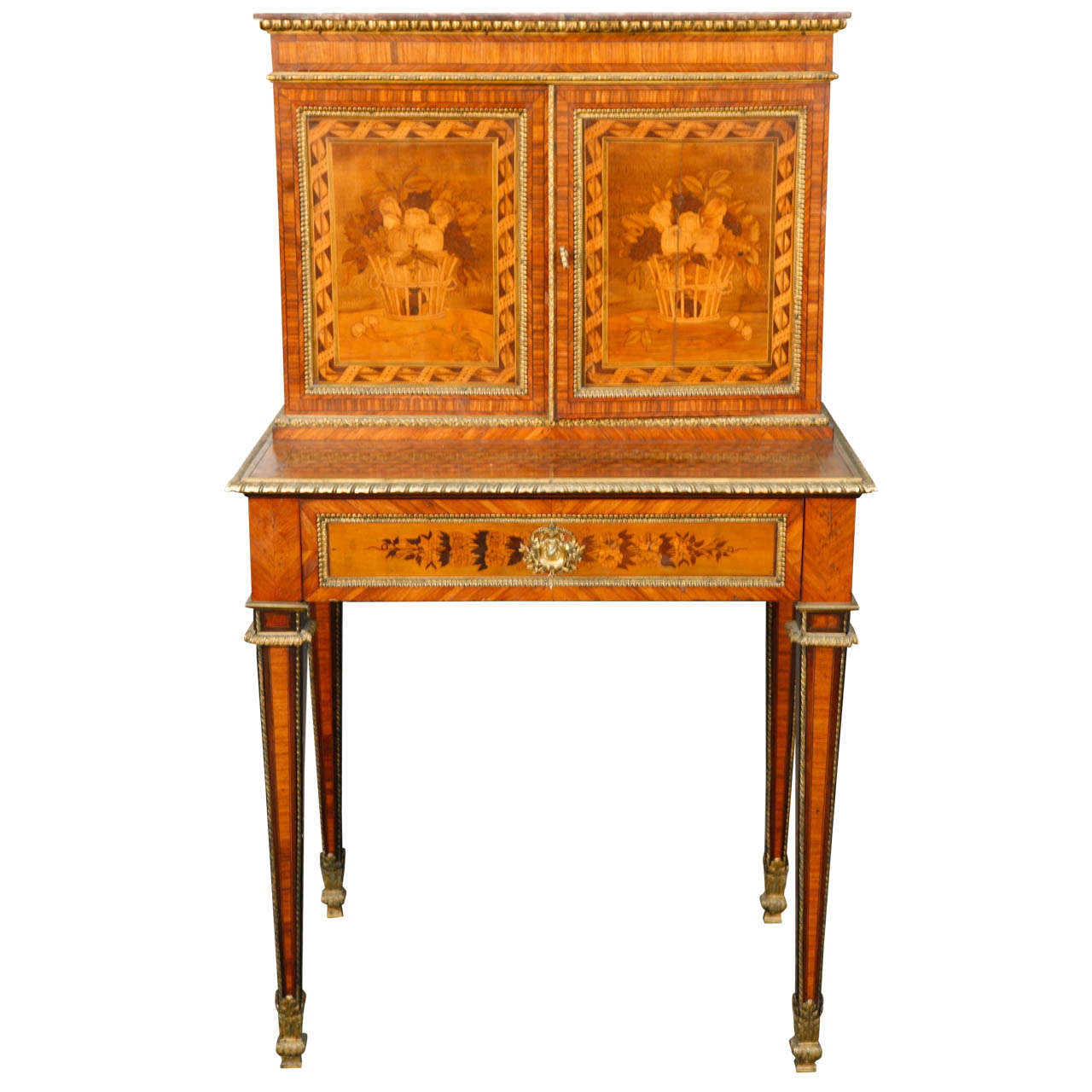
Secretaire flap "Billet douce", also called "portfolio"
Veneer of Amboyna burl, rosewood and blackened sticks, resting on two pilasters carried by two fluted pads connected by a turned and fluted spacer.
It opens with a flap, Interior in lemontree presenting, in addition to a tablet sheathed in leather, mail lockers and a pen tray with its original glass tank. The upper part reveals a secret compartment operated by a concealed pusher.
Louis Philippe Period
Circa 1840
Measures: 118 × 58 × 16 cm closed
118 × 58 × 45 cm open
This kind of furniture which appeared at the beginning of the 19th century derives from the fireplace screen to which, under Louis XVI, a writing desk was sometimes added. Here, if there is no longer any question of a fireplace, we keep the spirit of an elegant light piece of furniture, space-saving, in which some mail accessories can be placed, with its inkwell and sand box, pens and paper. Nothing more than to write a word, a "love letter" at most, and no literary work, which the piece of furniture would not resist. Let's dare to "gender" this piece of furniture: in the spirit of the times, it is the quintessence of refined femininity. Luxu-ry furniture, by its destination, it is also by the quality of its manufacture.
- Dimensions:Height: 46.46 in (118 cm)Width: 22.84 in (58 cm)Depth: 17.72 in (45 cm)
- Style:Louis Philippe (Of the Period)
- Materials and Techniques:Wood,Parquetry
- Place of Origin:
- Period:
- Date of Manufacture:circa 1840
- Condition:Wear consistent with age and use.
- Seller Location:Saint-Ouen, FR
- Reference Number:1stDibs: LU2612331478682
About the Seller
4.8
Gold Seller
Premium sellers maintaining a 4.3+ rating and 24-hour response times
1stDibs seller since 2017
72 sales on 1stDibs
Typical response time: 9 hours
- ShippingRetrieving quote...Shipping from: Saint-Ouen, France
- Return Policy
More From This Seller
View AllA 19th Century French Envelope Card Table by Sormani Paris, circa 1880
By Sormani
Located in Saint-Ouen, FR
A fine 19th Century French ormolu-mounted envelope card table by Sormani Paris.
The revolving fold out top enclosing a gilt tooled baize lined interior above a frieze drawer ;
The r...
Category
Antique 1870s French Louis XV Card Tables and Tea Tables
Materials
Ormolu
19th Century French Napoléon III Occasional Marquetry Table
Located in Saint-Ouen, FR
19th Century French Napoléon III Occasional Marquetry Table
A very fine and elegant kidney shaped side / occasional table,
Raised by four delicately scrolled cabriole legs the kidn...
Category
Antique 1890s French Napoleon III Tables
Materials
Ormolu
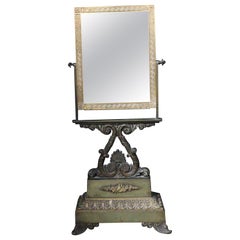
French 19th Century Restauration Psyche Coiffeuse Mirror
Located in Saint-Ouen, FR
A French 19th Century Restauration Psyche Coiffeuse mirror
Patinated and gilt bronze rectangular Psyche Coiffeuse Mirror
designed with Greek frieze, palmettes, oves, strings of p...
Category
Antique 1820s French Restauration Table Mirrors
Materials
Bronze
$2,092 Sale Price
20% Off
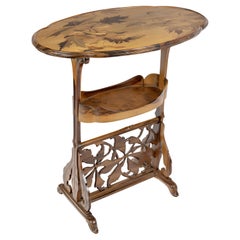
Émile Gallé (1846-1904) An Art Nouveau occasional marquetery table circa 1900
By Émile Gallé
Located in Saint-Ouen, FR
Émile Gallé (1846-1904)
An Art Nouveau occasional marquetery table circa 1900
Walnut and marquetry occasional table
The shaped oval top inlaid with marquetry veneer decoration depic...
Category
Antique 1890s French Art Nouveau Tables
Materials
Wood
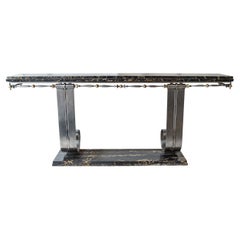
Large Wrought-Iron Art Deco Console, attributed to Raymond Subes, circa 1930
By Raymond Subes
Located in Saint-Ouen, FR
Large Wrought-Iron Art Deco Console, attributed to R.Subes, circa 1930
Impressive and elegant French Mid-Century 1930 modernist / late Art Deco wrought-iron console
Attributed to R...
Category
Antique 1880s French Art Deco Architectural Elements
Materials
Griotte Marble
$52,500 Sale Price
30% Off
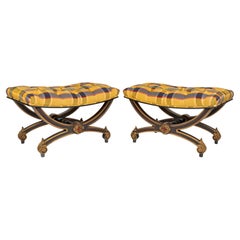
A French Napoleon III Pair of Louis XVI Style Curule Stools, circa 1900
By Maison Jansen
Located in Saint-Ouen, FR
A French 19th Century Pair of Large Rectangular Curule Stools
Partially gilt, blackened and red lacquered wood, carved decoration with acanthus leaves and rosaces.
The 4 feet linked by a stretcher.
Louis XVI Style
Napoléon III Period
Circa 1900
Used tartan chintz upholstery
Attributed to Maison Jansen
Jansen, the French Luxury
Opulence, refinement, audacity of style marriages… so many words agree with Maison Jansen. Through this name, a whole era sounds like a reminder of a certain French chic…
Some names evoke immutable images, atmospheres... Like Jansen, for example. Let’s close our eyes… The 1960s and 1970s are at their peak. France is doing well. It is a country of full employment where everything seems possible. Within the international Jet Set, a carefree crowd of movie stars, public figures, literary idols and crowned heads, we love the Maison Jansen, its taste for styles struck with a good quality exuberance, and its brilliant side.
It all began in 1880, when the Dutchman Jean Henri Jansen founded the eponymous house in Paris. Jansen is part of the continuity of these world-famous furniture manufacturers and companies that operated under the Second Empire and at the time of the Universal Exhibitions, as the ‘Escalier de Cristal’ teaches.
At that time, the Union Centrale des Beaux-Arts appliqués à l'Industrie and the Société du musée des Arts Décoratifs merged to form the Union Centrale des Arts Décoratifs.
Supported by both gallery owners, collectors and manufacturers, this
organization gives the «la» to the whole profession, and in the prevailing politico-ideological slump (France was defeated by Prussia in 1871 and Napoleon III is in exile), the ‘Union Centrale des Art Décoratifs’ focuses production on the celebration of past styles. While this nostalgia evokes memories of an era that we imagine more stable, an innovative exoticism will be all the rage: the reign of Turkish style and Japonisme.
The Jansen house masterfully rushed into the «exotic» trend, but quickly
developed a style derived from the ornamental splendor of the eighteenth, then a little later, so-called «imperial» styles mainly intended for royal families. After the First World War, J.H Jansen was joined by the cartoonist Albert Cazes, by Stéphane Boudin and by Pierre Delbée, who successively directed the house when it disappeared in 1929. At the end of the Kennedy era, Boudin completely redecorated the White House, at the request of the First Lady, Jackie, who had fallen in love with his work after discovering it at Malmaison.
In 1971, Jansen joined forces with Leleu-Deshays and continued its quest for excellence. From 1969 to 1979, the dandy decorator Serge Robin took the reins of the house, granting it an eclectic and luxurious style: he revisited the great eras of French art, from the Renaissance to Louis XVI, by modernizing them with more contemporary pieces in Plexiglas or wrought iron. His recom-posed and sophisticated style met with resounding success. When Jackie Kennedy, who became the wife of the great Greek shipowner Aristotle Onassis, moved to France, the young architect married Louis XVI-style furniture to modernist designs from the 1950s.
When the Shah of Iran decided to celebrate the 250th anniversary of the Persian Empire in 1971, Serge Robin and his teams turned to the grandiose and ephemeral setting of Persepolis. A hundred semi-trailers then left the workshops on Rue Saint-Sabin to reach Teheran. At the same time, Princess Soraya of Iran commissioned her a sumptuous palace for Avenue Montaigne, the princes Faisal bin Fahd of Arabia and Mubarak Al-Sabah, and the Agnelli snatched it.
On the French side, he puts his talent at the service of Brigitte Bardot, for whom he completely revamped the Madrague and the Lannes boulevard.
Serge Robin embodies all the audacity of the name Jansen with the most im-probable weddings. With him, Plexiglas tables, Japanese chairs from the 50s, gold thread curtains, zebra sofas and leather Louis XVI style chests of drawers decorated the most fashionable apartments of the «seventies».
All the best stories have an end. At the dawn of the 1990s, weakened by the changes of a society plagued by concern, the disappearance or the remoteness of noble families, and the increasing scarcity of bourgeois residences, the Jansen house lost its aging clientele. The brand is missing the turn of modernity, and cannot adapt to changes in society, changing tastes, and the importance of design.
In 1989, it was closed. Jansen has not disappeared from the landscape: the house’s creations are still present on the market and in the French auction houses, but also in the United States, where they are very appreciated. Transparent Plexiglas tables, leather and metal armchairs, zebra sofas, exotic cabinets...
Category
Antique 1890s French Napoleon III Stools
Materials
Wood
You May Also Like
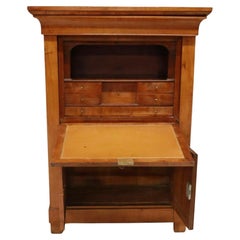
19th C. French Empire Style Louis Philippe Period Secretaire Abattant
Located in Forney, TX
A Louis Philippe period (1830–1848) fruitwood secretaire abattant fall front desk.
Born in France in the mid-19th century, hand-crafted of rich solid fruitwood with warm wood tones, subtle grain detail, and nicely aged mellow patina over the whole. Finished in French Empire taste, having a molded cornice, concealed ogee frieze drawer with dovetail joinery, over fall front panel, opening to reveal original fitted interior gallery, with inset gilt tooled leather writing surface, large open shelf cubby, six drawers of various size, above double-door cabinet with brass shield escutcheon that opens to provide generous storage space, and an additional lower drawer for valuables hidden in the base molding, rising on square feet.
Dimensions: (approx)
56.75" High 41" Wide, 17.5" Deep
History/Back Story:
Louis Philippe furniture had the same types and forms as the earlier French Restoration style, but with less decoration; comfort was the primary consideration.
During the turbulent French Revolution and following Napoleon rule, Louis Philippe (1773-1850) remained in exile for 21 years until the Bourbon Restoration, when he became the King of the French from 1830 to 1848.
For the first time, the developing upper class–not the monarchy–influenced the progression of this style’s characteristics.
However, King Louis Philippe’s personality still inspired many aspects. His casual nature reflected this style’s informal, comfortable build. Much of the style was taken from the personality of the King himself. Unlike his Bourbon predecessors, he wore business dress...
Category
Antique Mid-19th Century French Louis Philippe Secretaires
Materials
Leather, Fruitwood
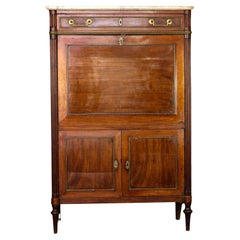
French Louis XVI Secretaire Abattant / Secretary desk, circa 1800
Located in Lucenec, SK
The secrétaire à abbatant or fall front desk is nearly identical to the desk 5th President James Monroe brought back from France in 1797. These desks are ...
Category
Antique Early 19th Century French Louis XVI Desks
Materials
Brass
$4,822 Sale Price
30% Off
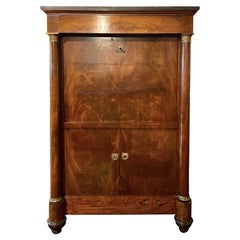
French Secretaire à Abattant, First Empire Period
Located in Montreal, Quebec
French first Empire period Secretaire à Abattant, also known as a drop-front secretary, fall front or cantilevered desk. Under the dark grey marble top is a secret, entablature drawe...
Category
Antique Early 19th Century French Empire Secretaires
Materials
Marble, Bronze
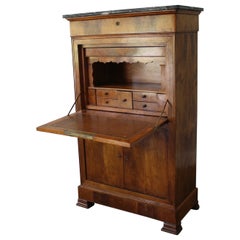
French 19th Century Secretaire
Located in Stockbridge, GA
This Louis-Philippe Secretaire Desk is made of blond flamed mahogany with a Sainte-Anne marble top with a lot of drawers.
Category
Antique Mid-19th Century French Louis Philippe Secretaires
Materials
Marble
19th Century French Empire Escritoire
Located in Chelmsford, Essex
For sale is a fine quality, 18th century Louis XV Escritoire. The Escritoire has a drawer at the top with ornate mounts, above a fall front opening...
Category
Antique Early 19th Century French Empire Desks
Materials
Mahogany
19th Century French Writing Desk Secretary
Located in Los Angeles, CA
Very fine late 19th century French writing desk secretary with dore bronze mountings and Marble. It is made of a variety of woods - f...
Category
Antique 19th Century French Secretaires
Materials
Marble, Bronze

More Ways To Browse
Flap Table
Antique Writing Desk With Secret Compartments
Flap Desk
Louis Philippe Writing Desk
Writing Desk Flaps
Billet Doux
Mail Tray
Antique Drawing Desk
Antique Oak Partners Desk
Antique Pine Table With Drawers
Art Deco Veneer Desk
Early American Writing Desk
English Library Desk
Francois Linke Bureau
French Cherry Wood Desk
French Partners Desk
Herman Miller Action Office
Mid Century Rosewood Mahogany Desk