Items Similar to 19th Century Inlaid Writing Table
Want more images or videos?
Request additional images or videos from the seller
1 of 20
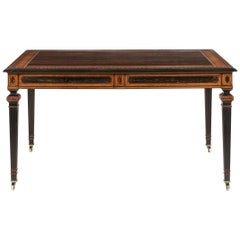
19th Century Inlaid Writing Table
$3,372.90
£2,450
€2,870.56
CA$4,651.21
A$4,924.42
CHF 2,664.96
MX$58,855.88
NOK 33,218.34
SEK 30,376.99
DKK 21,439.36
About the Item
Fine 19th Century Inlaid Writing Table
Item Code: S27-1076
A beautifully crafted late 19th-century writing table in fiddleback mahogany, attributed to the renowned London cabinetmakers Edwards
Roberts. Finely inlaid throughout, the table stands on elegant tapered legs with original brass castors and displays exceptional decorative detail, including marquetry swags, urns, and an exquisitely inlaid central medallion. The distinctive fiddleback figuring enhances the richness and depth of the mahogany, perfectly complementing the refined inlay work typical of the firm’s celebrated craftsmanship.
The top is fitted with a rich burgundy gilt-tooled leather writing surface, framed by an intricate border of foliate inlay. Refined in its proportions, the table offers an ideal working height and a generously sized writing area while maintaining a light and graceful presence.
A superb example of late Victorian artistry and quality, perfect for a sophisticated study, drawing room, or elegant interior setting.
Key Features:
* Fine 19th-century writing table in fiddleback mahogany
* Attributed to Edwards
Roberts
* Beautiful marquetry inlay with swags, urns, and central medallion
* Burgundy gilt-tooled leather writing surface
* Elegant tapered legs with original brass castors
* Excellent colour, figuring, and condition
Dimensions:
* Width: 107 cm
* Depth: 66 cm
* Height: 76 cm
- Attributed to:Edwards Roberts (Cabinetmaker)
- Dimensions:Height: 29.93 in (76 cm)Width: 42.13 in (107 cm)Depth: 25.99 in (66 cm)
- Materials and Techniques:
- Place of Origin:
- Period:
- Date of Manufacture:1890
- Condition:
- Seller Location:Chelmsford, GB
- Reference Number:Seller: S27-10761stDibs: LU2494347683942
About the Seller
5.0
Vetted Professional Seller
Every seller passes strict standards for authenticity and reliability
Established in 1960
1stDibs seller since 2017
261 sales on 1stDibs
Typical response time: 14 hours
- ShippingRetrieving quote...Shipping from: Chelmsford, United Kingdom
- Return Policy
More From This Seller
View AllVictorian Rosewood Inlaid Writing Table
Located in Chelmsford, Essex
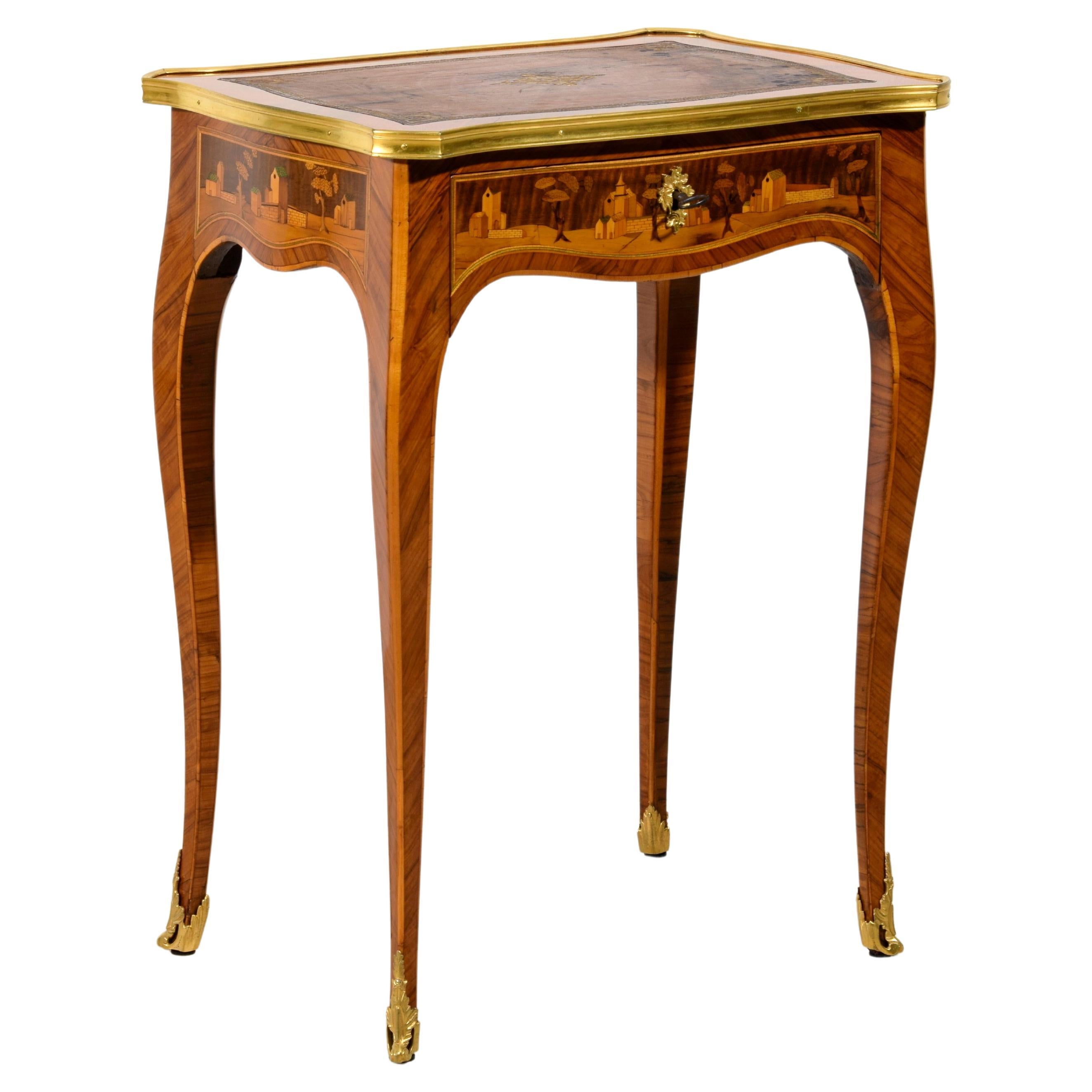
For sale is a good quality Victorian rosewood inlaid ladies writing table, having a hand dyed leather hide writing surface, above a single drawer with ornate original brass handle, s...
Category
Antique 19th Century English Desks
Materials
Rosewood

19th Century Dutch Marquetry Card Table
Located in Chelmsford, Essex
For sale is a good quality 19th century Dutch marquetry card table, profusely inlaid throughout, the top swivels and folds over to reveal a green playing surface along with further i...
Category
Antique 19th Century Dutch Card Tables and Tea Tables
Materials
Walnut
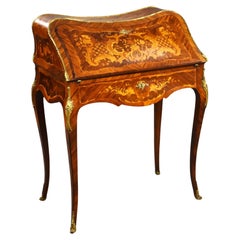
19th Century French Bureau De Dame
Located in Chelmsford, Essex
For sale is a good quality 19th century French gilt metal mounted marquetry bombé bureau de dame, in the Louis XV style. The fall front opening to a fitted interior and a writing sur...
Category
Antique 19th Century French Desks and Writing Tables
Materials
Rosewood
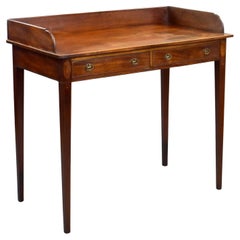
Edwardian Mahogany Inlaid Hall Table
Located in Chelmsford, Essex
An Edwardian Inlaid Mahogany Hall Table
Item Code: LC1399
Description
A refined Edwardian mahogany hall table, English, dating to the early 20th century. The table is of elegant prop...
Category
Early 20th Century English Console Tables
Materials
Mahogany
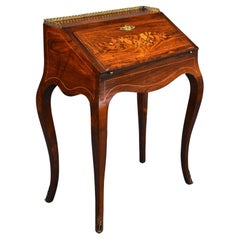
19th Century French Rosewood Bureau De Dame
Located in Chelmsford, Essex
For sale is a good quality French rosewood Bureau De Dame. The top of the bureau has a nice brass gallery above a fall front, decoratively inlaid with marquetry, opening to reveal a ...
Category
Antique 19th Century French Desks and Writing Tables
Materials
Rosewood
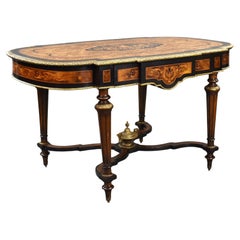
19th Century Marquetry Centre Table
Located in Chelmsford, Essex
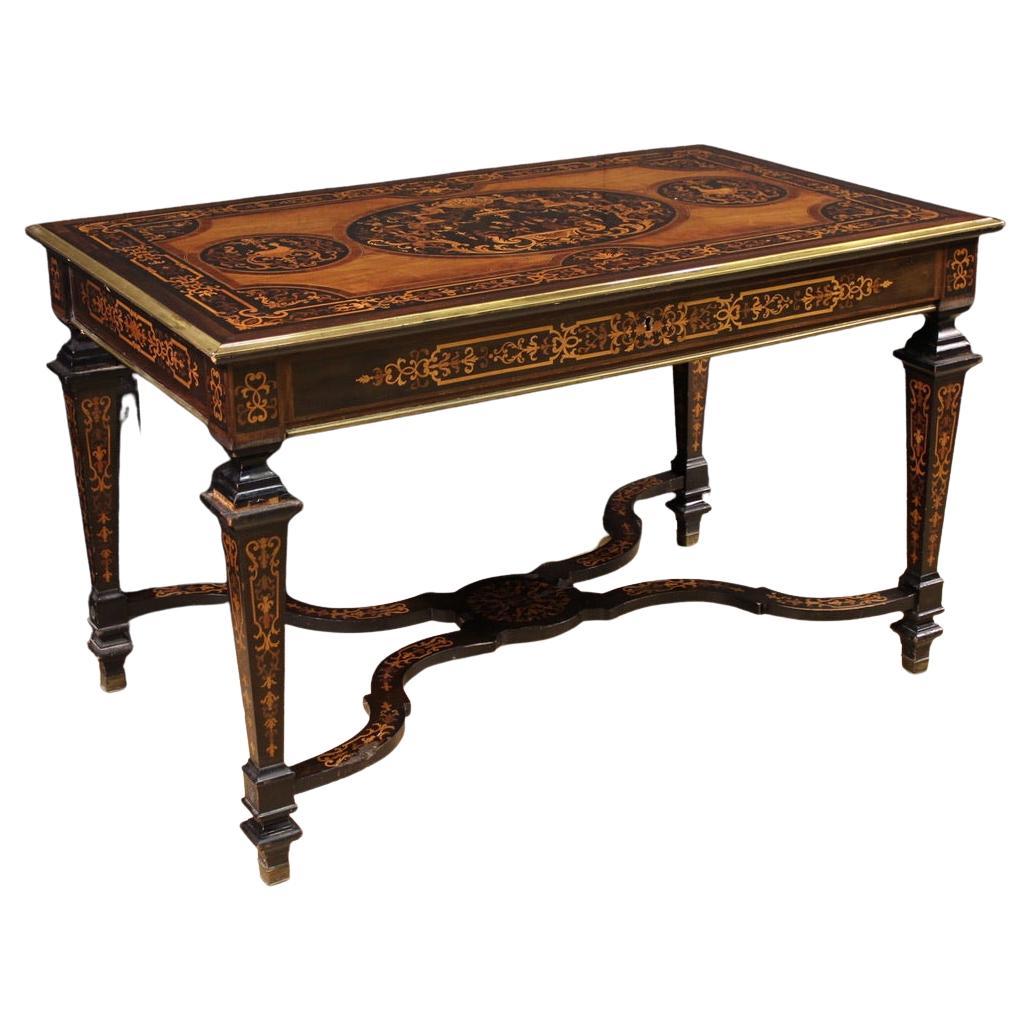
For sale is a good quality 19th century marquetry centre table, having ormolu mounts throughout, the shaped top with concentric radiating inlaid top with moulded edge and a frieze dr...
Category
Antique 19th Century Center Tables
Materials
Walnut
You May Also Like
19th Century, France Inlaid Wood Centre Table
Located in IT
19th Century, France inlaid wood centre table
This elegant centre table in inlaid wood was made in France in the early 19th century.
The rectangular top has shaped and wavy side...
Category
Antique Early 19th Century French Restauration Center Tables
Materials
Bronze
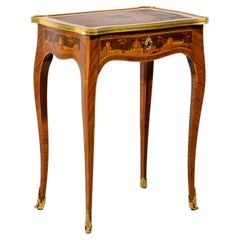
Italian Parquetry Inlaid Writing Table Desk, 18th Century
Located in San Francisco, CA
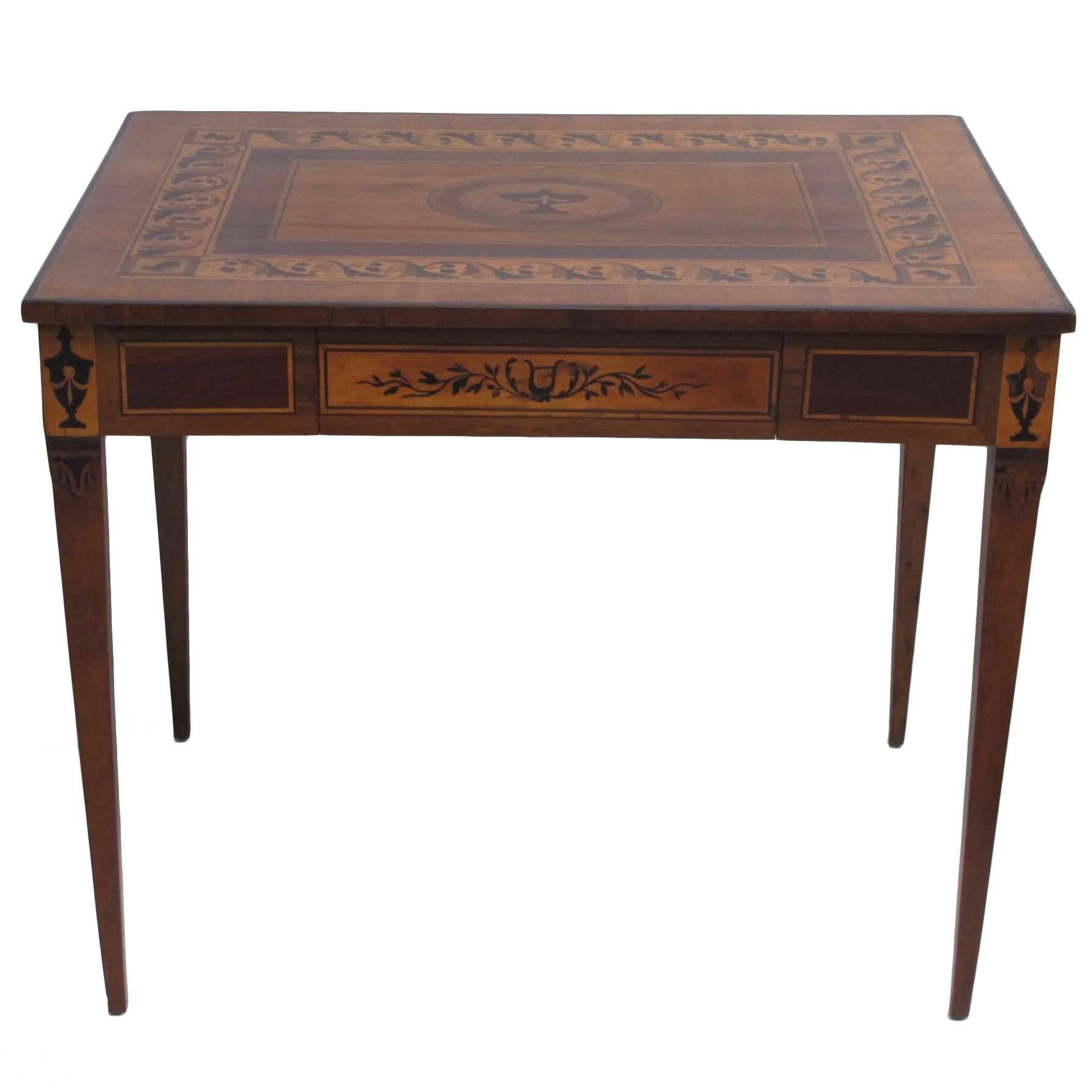
An exceptional parquetry inlaid writing table with Neoclassical designs, inlay with satinwood, black walnut, and fruitwood. Having a single center drawer, and supported on tapering l...
Category
Antique Late 18th Century Italian Neoclassical Desks and Writing Tables
Materials
Fruitwood, Satinwood, Walnut

20th Century Inlaid Wood French Writing Table, 1920
Located in Vicoforte, Piedmont
Early 20th-century French table. Richly inlaid furniture with walnut, palisander, maple, ebonized wood, rosewood and fruitwood. Desk finished for the center features a generously siz...
Category
Vintage 1920s French Desks and Writing Tables
Materials
Wood
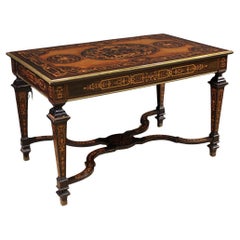
Antique Edwardian Inlaid Writing Table / Desk
Located in London, GB
A beautiful and quite unusual antique Edwardian leather top writing table. This was made in England, it dates from around 1890-1900.
This is very well made and is a useful size, the...
Category
Antique 1890s British Edwardian Desks and Writing Tables
Materials
Leather, Wood
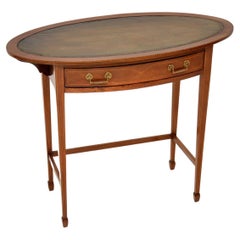
19th Century mahogany inlaid writing desk
Located in Martlesham, GB
A superb quality 19th Century mahogany inlaid writing desk, the super structure comprising of three mahogany lined drawers either side with the original turned brass knob handles and...
Category
Antique 1890s British Desks and Writing Tables
Materials
Mahogany
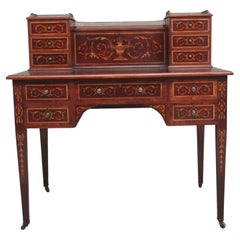
19th Century Coromandel and Inlaid Table Attributed to Jackson
Graham
By Jackson
Graham
Located in London, GB
A magnificent library table
Attributed to Jackson & Graham
Of free standing rectangular form, constructed in coromandel, with inlays in thuya, ebony, boxwood, and honeysuckle; the fluted legs rising from square brass castor-shod feet; the frieze housing two lockable drawers fitted with rare ‘tamper proof’ Chubb locks and having quadrant moulded cedar lined interiors; the platform having a central panel of beautifully chosen matched coromandel veneers, with an outer guard border of a running pattern of stylised anthemions; the ebony edges having a thumb nail moulding,
circa 1865
The firm of Jackson & Graham established in 1836 by Thomas Jackson and Peter Graham at 37 Oxford Street London, and for the next fifty years produced predominately high quality furniture and represented Britain at many of the international exhibitions. Their clients included Queen Victoria, Napoleon III, the Grand Khedive of Cairo and the royal palace in Siam. They were particularly noted for their fine marquetry work, the use of Wedgwood plaques, rare woods, and fine casting of bronze mounts. They engaged the leading designers of the period, inter alia, Owen Jones, Bruce Talbert, Alfred Lorimer and Eugene Prignot. In the mid-1850s the workforce was recorded as 250, and by 1875, the company was employing 600 workers. They were feted exhibitors at many of the Great Exhibitions of the 19th century, and frequent prize winners. At the Paris International Exhibition of 1878, the furniture jury noted of them ‘ the workmanship is so perfect that even with the aid of a magnifying glass scarcely the slightest imperfection is to be found’. In 1885 the company was absorbed by Collinson and Lock, who continued their standard of excellence.
Charles Chubb was apprenticed as a blacksmith before starting business as a ships’ ironmonger in Winchester. Jeremiah soon joined the business, and by 1818 the brothers had branched out into lockmaking, founding the famous Chubb Company.
The business really got started when Jeremiah Chubb patented his new ‘detector lock’ in 1818. The lock was constructed so that if someone tried to pick it or open it with the wrong key it became inoperable. To make the lock work again the owner had to use a special key supplied with the lock. The aim of the detector lock was to prevent burglaries, and to warn the owner that someone had tried to break into their property.
The lock soon became popular, and sales of the Chubbs’ products increased even more when they won a government competition to design a lock that could only be opened using its own key. After the invention of the detector lock, the Chubbs decided to move to Wolverhampton, which already had an established lock making industry. By 1838 they were making 28,000 locks a year at their Wolverhampton factory. Another product was added to the Chubb range in 1835 when a patent was taken out for a burglar resistant safe, and in 1837 the Chubb safe...
Category
Antique 19th Century English Tables
Materials
Brass