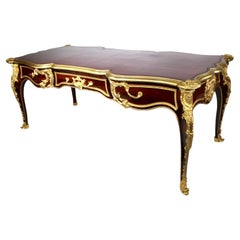
Items Similar to Fine Antique French Ormolu Bureau Plat Desk After Linke 19th Century
Want more images or videos?
Request additional images or videos from the seller
1 of 21
Fine Antique French Ormolu Bureau Plat Desk After Linke 19th Century
$4,384.46
£3,150
€3,707.33
CA$6,017.45
A$6,357.97
CHF 3,419.85
MX$76,126.44
NOK 42,846.66
SEK 39,241.33
DKK 27,683.46
About the Item
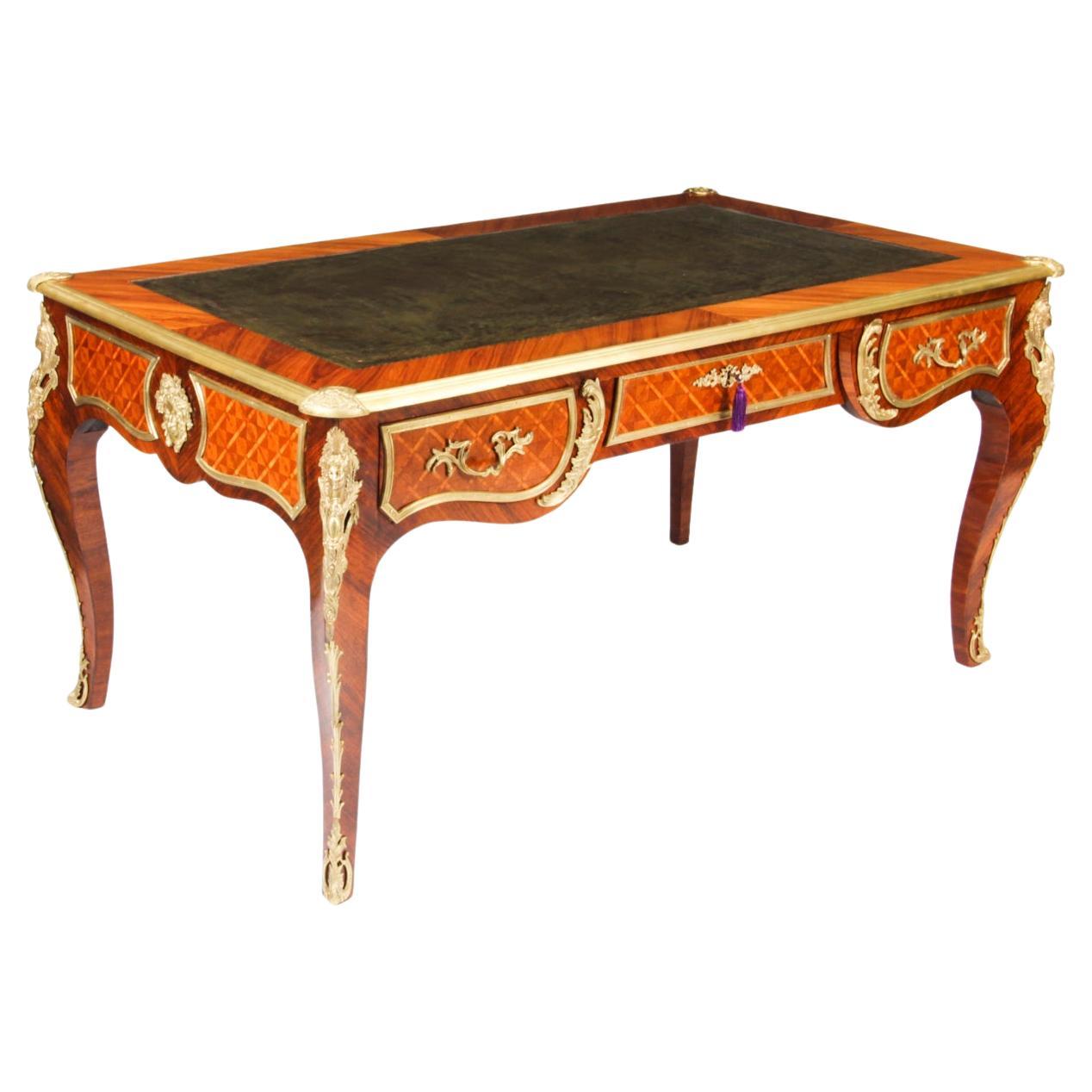
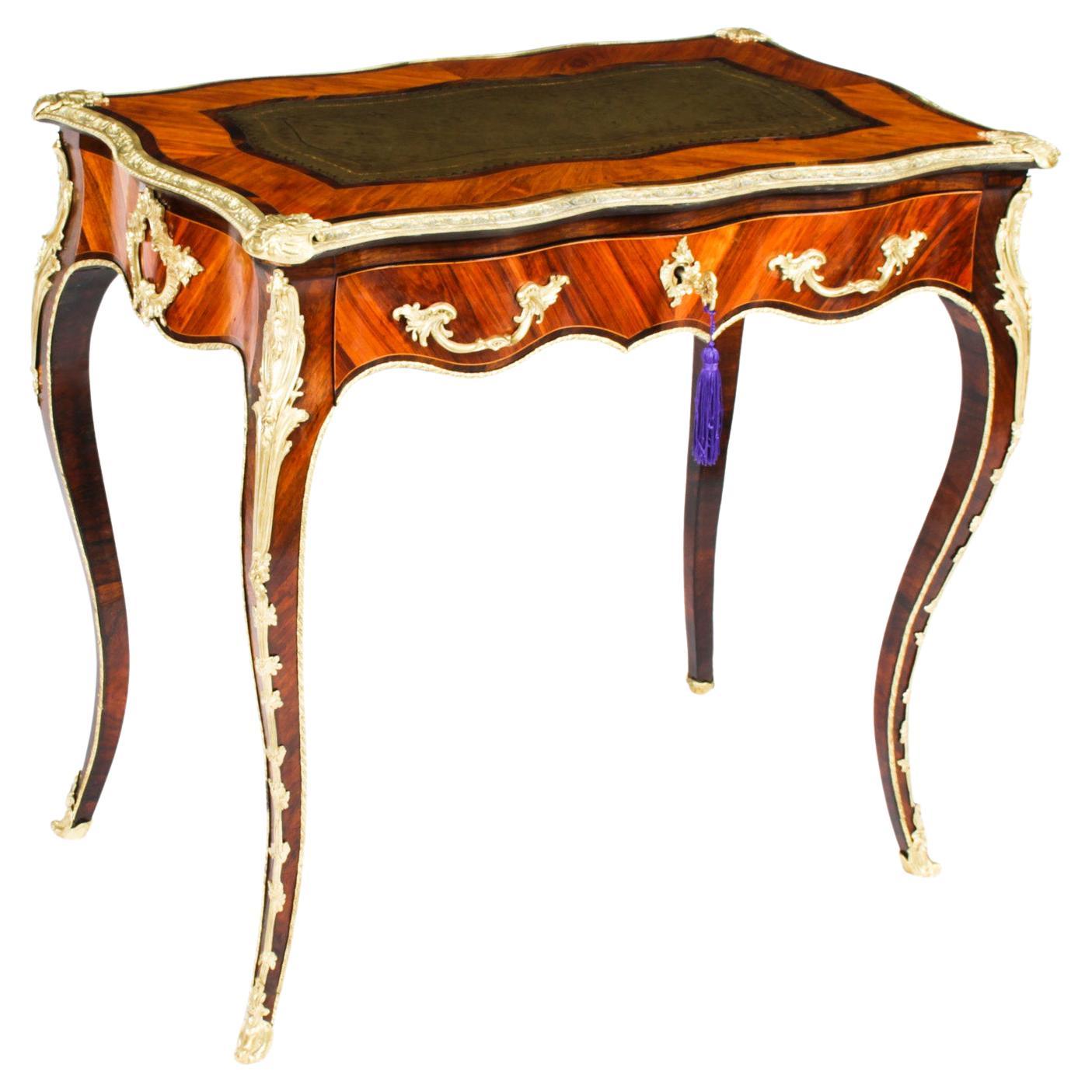
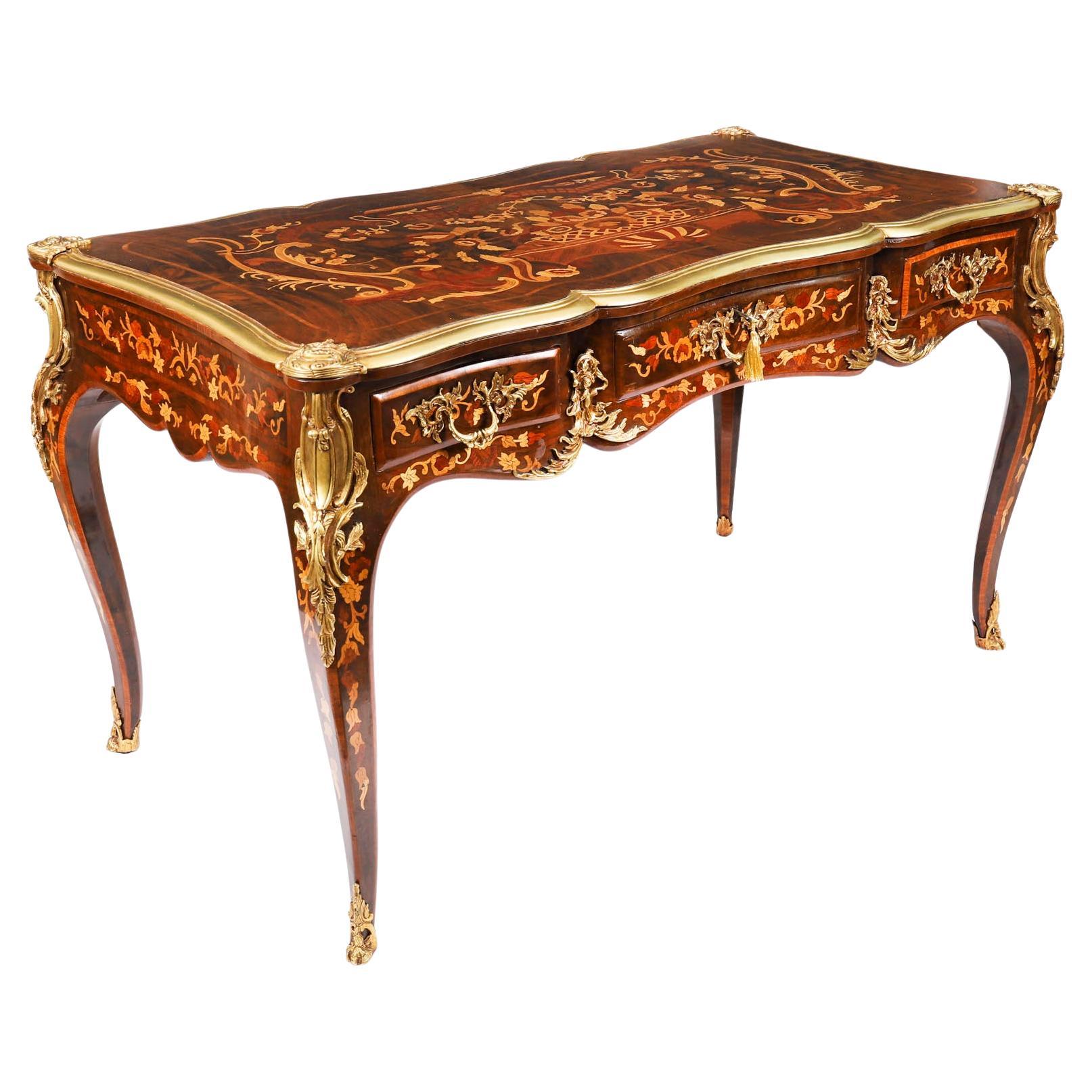
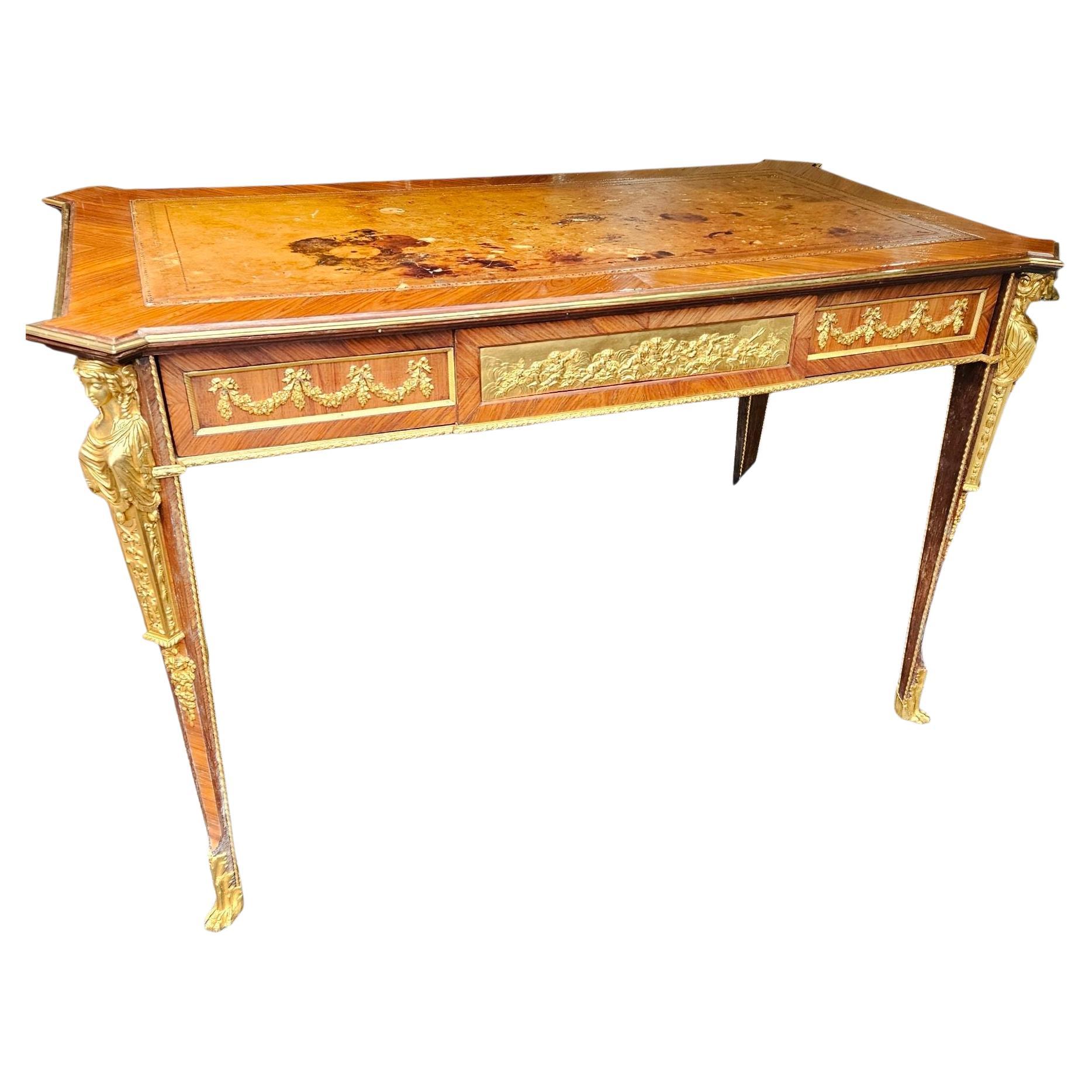
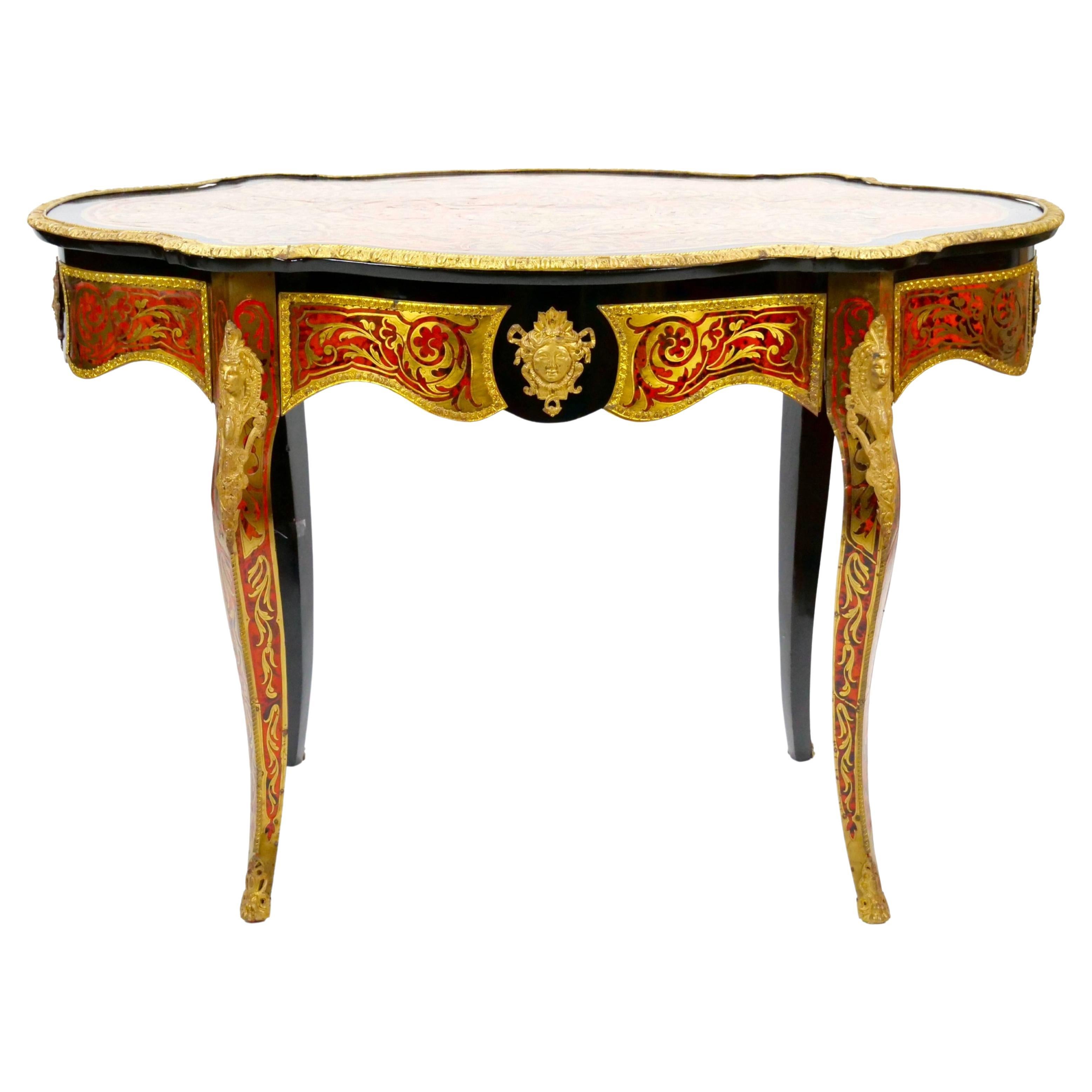
A fine antique French wood, porcelain and ormolu mounted bureau plat, in the manner of Linke, Circa 1860 in date.
The shaped ormolu mounted serpentine top is fitted with a gold toold green leather inset writing surface, above an undulating frieze inset with a floral ormolu centred cartouche and framed Sevres panels. The front features a centre drawer surmounted by dragon espagnolettes apex corners.
The table is raised on cabriole legs terminating in shell-capped scrolled sabots.
This is a truly fine quality piece which is sure to get noticed wherever it is placed.
Condition:
In excellent condition, please see photos for confirmation.
Dimensions in cm:
Height 77 cm x Width 69 cm x Depth 47 cm
Dimensions in inches:
Height 2 foot, 6 inches x Width 2 foot, 3 inches x Depth 1 foot, 6 inches
FRANÇOIS LINKE (1855–1946)
François Linke, the most important French ébéniste of his time. Born in Bohemia in 1855, Linke moved to Paris in 1881 where he established his now-famous workshop and showroom. Linke's superior work spread quickly through France and he soon eclipsed even the finest furniture houses of Paris. Today, Linke is counted among the most important furniture makers of the late 19th and early 20th centuries, and his work is dearly coveted by collectors. Linke is celebrated for designing highly innovative furnishings by infusing the Rococo style with the Art Nouveau trends of Paris and this Louis XV style desk exemplifies his highly original style.
Ormolu - (from French 'or moulu', signifying ground or pounded gold) is an 18th-century English term for applying finely ground, high-carat gold in a mercury amalgam to an object of bronze.The mercury is driven off in a kiln leaving behind a gold-coloured veneer known as 'gilt bronze'.
The manufacture of true ormolu employs a process known as mercury-gilding or fire-gilding, in which a solution of nitrate of mercury is applied to a piece of copper, brass, or bronze, followed by the application of an amalgam of gold and mercury. The item was then exposed to extreme heat until the mercury burned off and the gold remained, adhered to the metal object.
Sevres Porcelain
traces its roots in France to early craftsmen who had small manufacturing operations in such places as Lille, Rouen. St. Cloud, and most notably Chantilly. It is from Chantilly that a cadre of workers migrated to the Chateau de Vincennes near Paris to form a larger porcelain manufactory in 1738.
French King Louis XV, perhaps inspired by his rumoured relationship with mistress Madame de Pompadour, took an intense interest in porcelain and moved the operation in 1756 to even larger quarters in the Paris suburb of Sevres. Sevres was also conveniently near the home of Madame de Pompadour and the King's own Palace at Versailles.
From the outset the king's clear aim was to produce Sevres Porcelain that surpassed the established Saxony works of Meissen and Dresden. Though the French lacked an ample supply of kaolin, a required ingredient for hard-paste porcelain (pate dure), their soft-paste porcelain (pate tendre) was fired at a lower temperature and was thus compatible with a wider variety of colours and glazes that in many cases were also richer and more vivid. Unglazed white Sevres Porcelain "biscuit" figurines were also a great success. However, soft-paste Sevres Porcelain was more easily broken. Therefore, early pieces of Sevres Porcelain that remain intact have become rare indeed.
The Sevres Porcelain manufactory always seemed to be in dire financial straits despite the incredibly fine works it produced. In fact, the king's insistence that only the finest items be created may have contributed to the difficulties. Only a limited number of European nobility could afford the extravagant prices demanded for such works. King Louis XV and eventually his heir, the ill-fated Louis XVI, were obliged to invest heavily in the enterprise. Ultimately, the Sevres Porcelain Factory produced items under the name of "Royal" and thus the well-known Sevres mark was born. King Louis XV even mandated laws that severely restricted other porcelain production in France so as to retain a near monopoly for his Sevres Porcelain. The king even willingly became chief salesman for the finest of his products, hosting an annual New Year's Day showing for French nobility in his private quarters at Versailles. He eagerly circulated among potential buyers, pitching the merits of ownership and policing the occasional light-fingered guest.
Sevres Porcelain may have indeed given the makers of Meissen and Dresden a run for their money by the end of the 18th Century but for the French Revolution. By 1800, the Sevres Porcelain Works were practically out of business due to the economic devastation of the new French Republic.
About the time when Napoleon Bonaparte named himself Emperor of France (1804), a new director was named for the Sevres Porcelain Manufactory. Alexandre Brongniart, highly educated in many fields, resurrected Sevres Porcelain. Soft-paste porcelain was eliminated altogether thanks to the earlier discovery of kaolin near Limoges. For four decades until his death, Brongniart presided over monumental progress for Sevres Porcelain, catering not only to Napoleon himself, but at last to include the more financially profitable mid-priced market in the emerging middle class.
Our reference: A4812
- Similar to:François Linke (Cabinetmaker)
- Dimensions:Height: 30.32 in (77 cm)Width: 27.17 in (69 cm)Depth: 18.51 in (47 cm)
- Materials and Techniques:
- Place of Origin:
- Period:
- Date of Manufacture:circa 1860
- Condition:
- Seller Location:London, GB
- Reference Number:Seller: A48121stDibs: LU950647733072
About the Seller
5.0
Platinum Seller
Premium sellers with a 4.7+ rating and 24-hour response times
Established in 1983
1stDibs seller since 2012
1,456 sales on 1stDibs
Typical response time: <1 hour
Associations
LAPADA - The Association of Arts
Antiques Dealers
- ShippingRetrieving quote...Shipping from: London, United Kingdom
- Return Policy
More From This Seller
View AllAntique Louis Revival Ormolu Mounted Bureau Plat Desk 19th Century
Located in London, GB
This is a gorgeous antique French Louis Revival gilt bronze mounted amaranth bureau plat, Circa 1860 in date.
The shaped top has a decorative gilt ...
Category
Antique 1860s French Desks and Writing Tables
Materials
Ormolu
Antique Petite French Ormolu Mounted Bureau Plat 19th Century
Located in London, GB
This is an fine and beautiful petite French Louis XV Revival goncalo alves and ormolu mounted bureau plat, circa 1850 in date.
This fantastic bureau plat features an ornate serpentin...
Category
Antique 1850s French Louis XVI Desks and Writing Tables
Materials
Wood
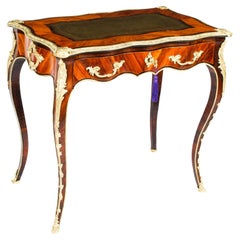
Vintage French Ormolu Mounted Marquetry Bureau Plat Desk 20th Century
Located in London, GB
This is a gorgeous vintage French Louis Revival walnut, ormolu mounted, marquetry bureau plat, dating from the second half of the 20th Century.
The shaped rectangular top has a deco...
Category
Late 20th Century French Desks and Writing Tables
Materials
Ormolu
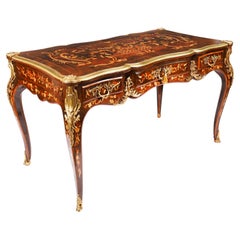
Antique French Ormolu Mounted Marquetry Bureau Plat 19th Century
Located in London, GB
This is a fabulous French antique ormolu mounted bureau plat which features fine quality floral marquetry and which dates from around 1860.
This beautiful piece of furniture has been made with artistic marquetry requiring the highest level of craftsmanship. The surface of the table top of this antique ormolu mounted bureau plat features very intricate floral marquetry decoration. Using a number of different and exotic veneers which include walnut, goncalo alves, satinwood, burr walnut, and purpleheart, the level of detail present here can only be described as extraordinary. The central panel is worthy of particular attention, it being inlaid with a representation of an urn on a flower filled satinwood background together with a decorative border of foliage which has been rendered in mahogany and burr walnut.
As you can see from the images provided the imposing table top is completed with a highly decorative ormolu border which adds an additional level of elegance to this antique bureau plat...
Category
Antique 1860s French Desks and Writing Tables
Materials
Ormolu
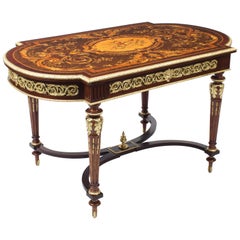
Antique French Ormolu Mounted Bijouterie Display Table 19th Century
Located in London, GB
This is a beautiful antique French ormolu mounted Louis Revival bijouterie table, circa 1860 in date.
The shaped top fitted with glass and the frieze with glass panels, the whole w...
Category
Antique 19th Century French Side Tables
Materials
Ormolu
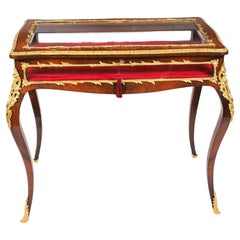
Antique French Empire Revival Ormolu Mounted Desk, 19th Century
Located in London, GB
This is an exquisite French Empire Revival pedestal desk, circa 1880 in date.
This desk has been beautifully crafted from flame mahogany. The top has a striking gold tooled black leather inset writing surface which has a decorative geometric inlaid satinwood and ebony border around it.
It features beautifully cast gilded Ormolu mounts including angels, pharaonic herms above paw feet and swan escutcheons. It is further enhanced with male masks wearing nemes headress's on the sides, making it an incredibly imposing and impressive item of furniture.
The desk features seven drawers for maximum storage, it is freestanding with a beautifully panelled back and comes complete with the original working locks and keys.
This desk will soon become the centrepiece of your furniture collection, there is no mistaking the sophisticated quality and design and it is certain to enhance the style and elegance of any living area, bedroom, or reception.
THE BOTANICAL NAME FOR THE MAHOGANY THAT THIS ITEM IS MADE OF IS SWIETENIA MACROPHYLLA AND THIS TYPE OF MAHOGANY IS NOT SUBJECT TO CITES REGULATION AND DOES NOT CONTAIN ANY RESTRICTED MATERIALS.
Condition:
In excellent condition having been beautifully cleaned, French polished, waxed and releathered in our workshops, please see photos for confirmation.
Dimensions in cm:
Height 76 x width 150 x depth 80
Dimensions in inches:
Height 29.9 x width 59.1 x depth 31.5
Empire style,
is an early 19th century design movement in architecture, furniture, other decorative arts, and the visual arts followed in Europe and America until circa 1830.
The style originated in and takes its name from the rule of Napoleon I in the First French Empire, where it was intended to idealize Napoleon's leadership and the French state. The style corresponds to the Biedermeier style in the German-speaking lands, Federal style in the United States and to the Regency style in Britain. The previous style was called Louis XVI style, in France.
The Empire style was based on aspects of the Roman Empire. It is the second phase of neoclassicism which is also called "Directoire", after a government system.
Furniture typically had symbols and ornaments borrowed from the glorious ancient Greek and Roman empires.
The furniture was made from heavy woods such as mahogany and ebony, imported from the colonies, with dark finishes often with decorative bronze mounts. Marble tops were popular as were Egyptian motifs like sphinxes, griffins, urns and eagles and the Napoleonic symbols, the eagle, the bee, the initials "I" and a large "N."
Gilded bronze (ormolu) details displayed a high level of craftsmanship.
Flame mahogany
Thomas Sheraton - 18th century furniture designer, once characterized mahogany as "best suited to furniture where strength is demanded as well as a wood that works...
Category
Antique 1880s French Empire Revival Desks and Writing Tables
Materials
Ormolu
You May Also Like
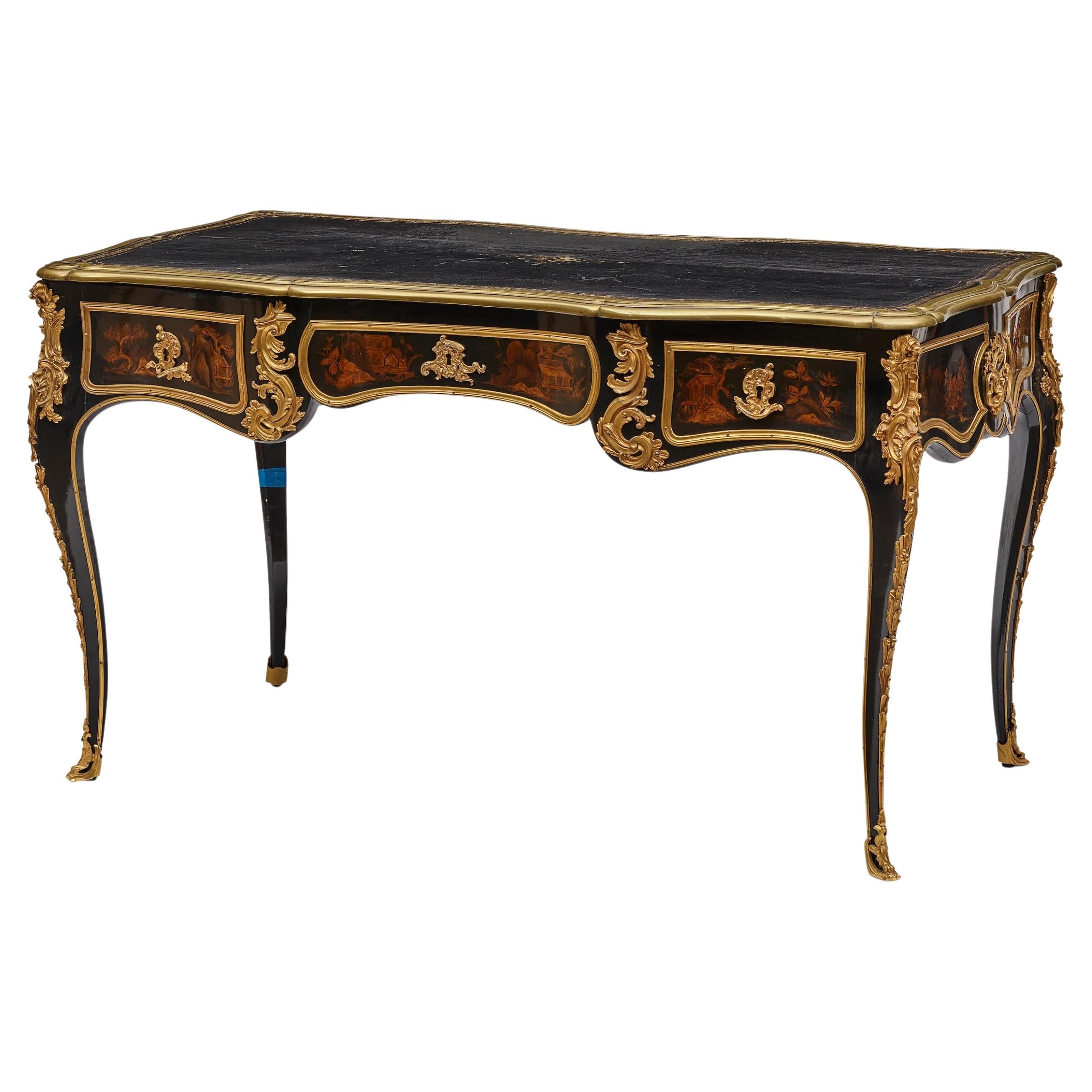
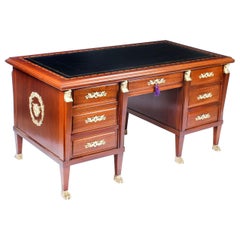
French Ormolu And Lacquer Chinoiserie Bureau Plat Desk, 19c
Located in Cypress, CA
Exceptional Louis xv style ormolu mounted Chinoiserie lacquered bureau plat ,with leather inset. Late 19 c / Early 20th
This fabulous desk is one of the best we have ever purchased, ...
Category
Antique Late 19th Century French Louis XV Desks and Writing Tables
Materials
Ormolu
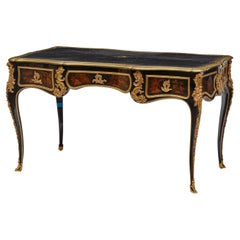
C19th French Ormolu Mounted Louis XV1 Style Writing Desk
By Paul Somani
Located in London, GB
Louis XV1 Style French Writing Desk
In the Manner of Francois Linke
Finished on Both sides so could also serve as a Centre Table
Decorated in lovely gilt Bronze Mounts
We have left ...
Category
Antique Late 19th Century French Louis XVI Desks and Writing Tables
Materials
Kingwood
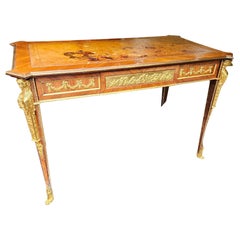
Antique French Continental Bronze Ormolu Mounted Boulle Style Desk/Center Table
By André-Charles Boulle
Located in Tarry Town, NY
This magnificent 19th-century French Continental Boulle Desk / Center Table is a masterpiece of luxurious craftsmanship and timeless European elegance. Featuring an ebonized wood fin...
Category
Antique Late 19th Century French Louis XVI Center Tables
Materials
Bronze
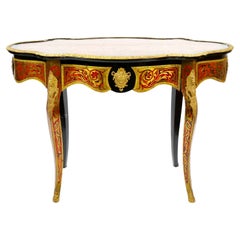
19th Century French Louis XV Style Ormolu Mounted Writing Desk
Located in London, GB
19th century French Louis XV style ormolu mounted writing desk
French, Late 19th Century
Height 100cm, width 121cm, depth 66cm
Crafted in the late 19th century, this writing desk i...
Category
Antique Late 19th Century French Louis XV Desks and Writing Tables
Materials
Ormolu
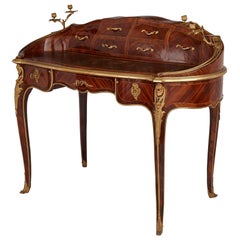
Antique French Ormolu Mounted Escritoire Writing Desk
Located in London, GB
A stunning antique French writing table, also known as an escritoire. This dates from around the 1930’s.
It is has a very beautiful and useful design, with a very elegant form. Ther...
Category
Vintage 1930s French Louis XVI Desks and Writing Tables
Materials
Ormolu
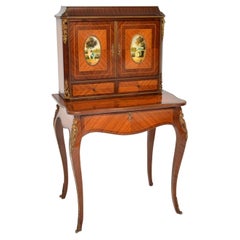
French 19th C.Louis XV Style Ormolu Mounted Bureau-Plat Desk Attr. Paul Sormani
By Paul Sormani
Located in Los Angeles, CA
A Very Fine and Large French 19th Century Louis XV Style Ormolu Mounted Tulipwood Three-Drawer Bureau Plat - After a model by Joseph Baumhauer (died 1772) - Attributed to Paul Sormani (French-Italian 1817-1877). The serpentine shaped rectangular top enclosing a gilt tooled burgundy leather writing surface (worn) within a molded border above a long central drawer flanked by two drawers, with scrolled ormolu drawer-pulls, ormolu floral encadrements and acanthus corners co-raised on elegant cabriolet legs. (Unsigned - Unmarked). Circa: Paris, 1880.
Paul Sormani (1817-1877): Born in Venice, Paul Sormani set up in Paris in the middle of the 19th century. He specialized in creating furniture and works of art and was known for his high quality reproductions of Louis XV and XVI furniture...
Category
Antique 19th Century French Louis XV Desks and Writing Tables
Materials
Bronze, Ormolu