Want more images or videos?
Request additional images or videos from the seller
1 of 12

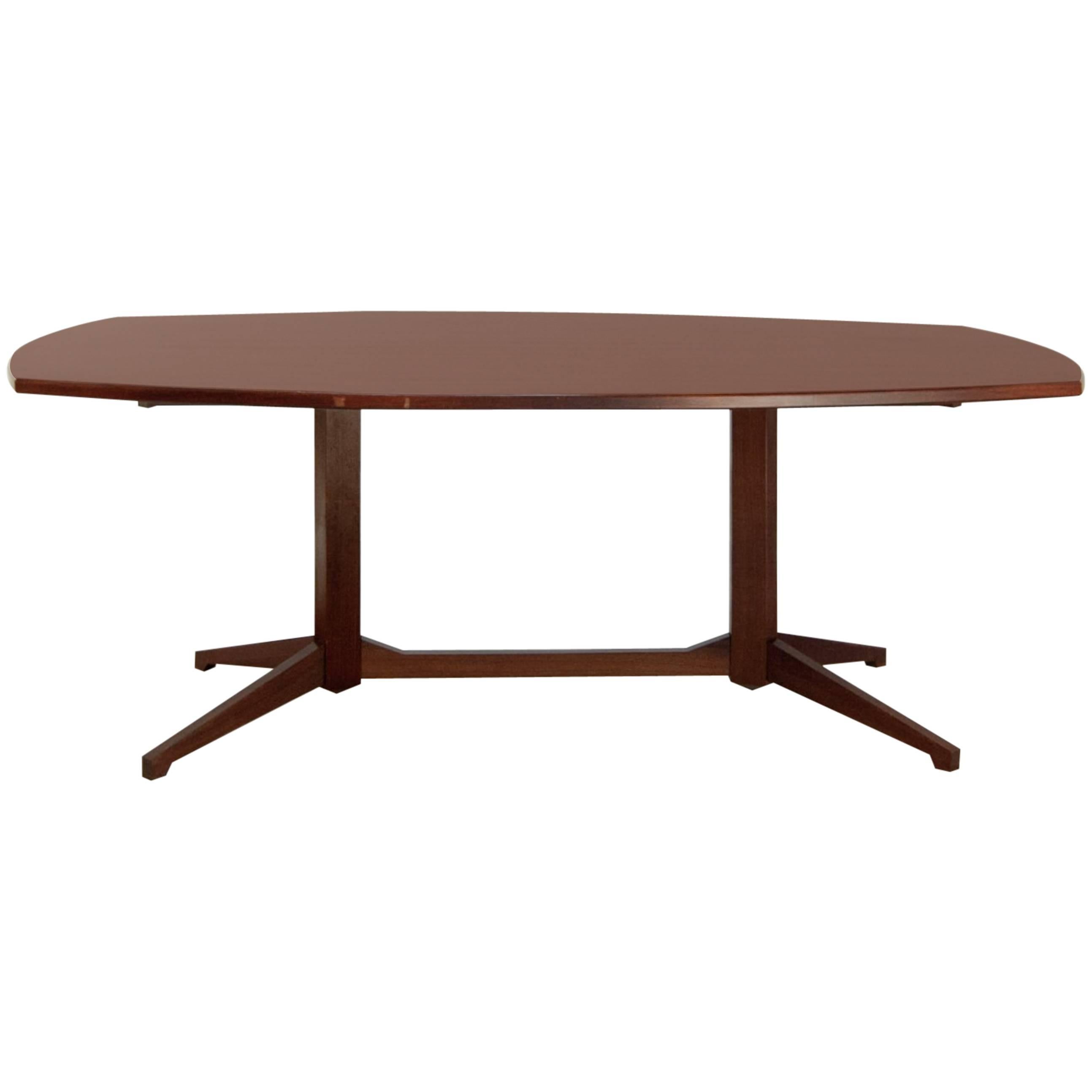
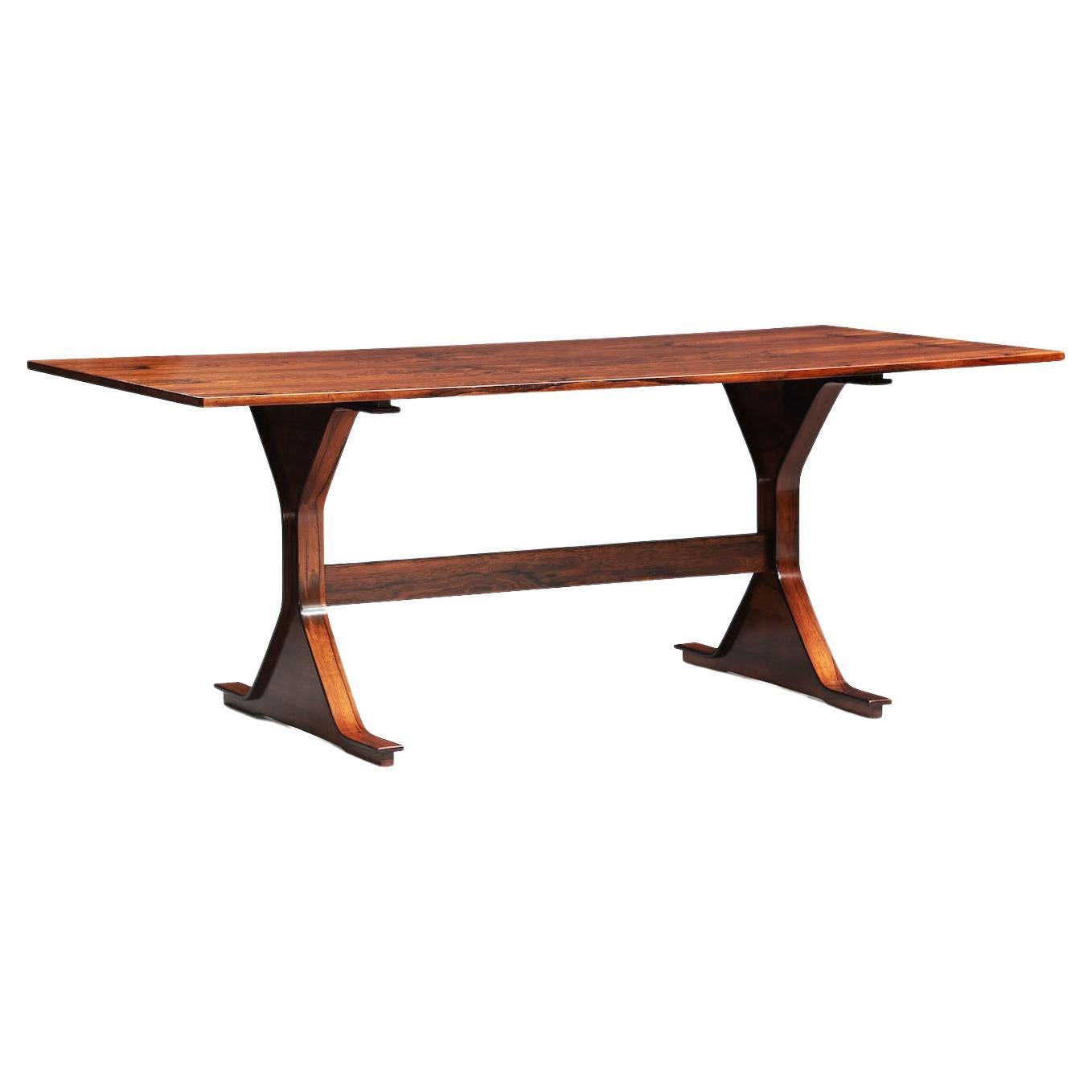
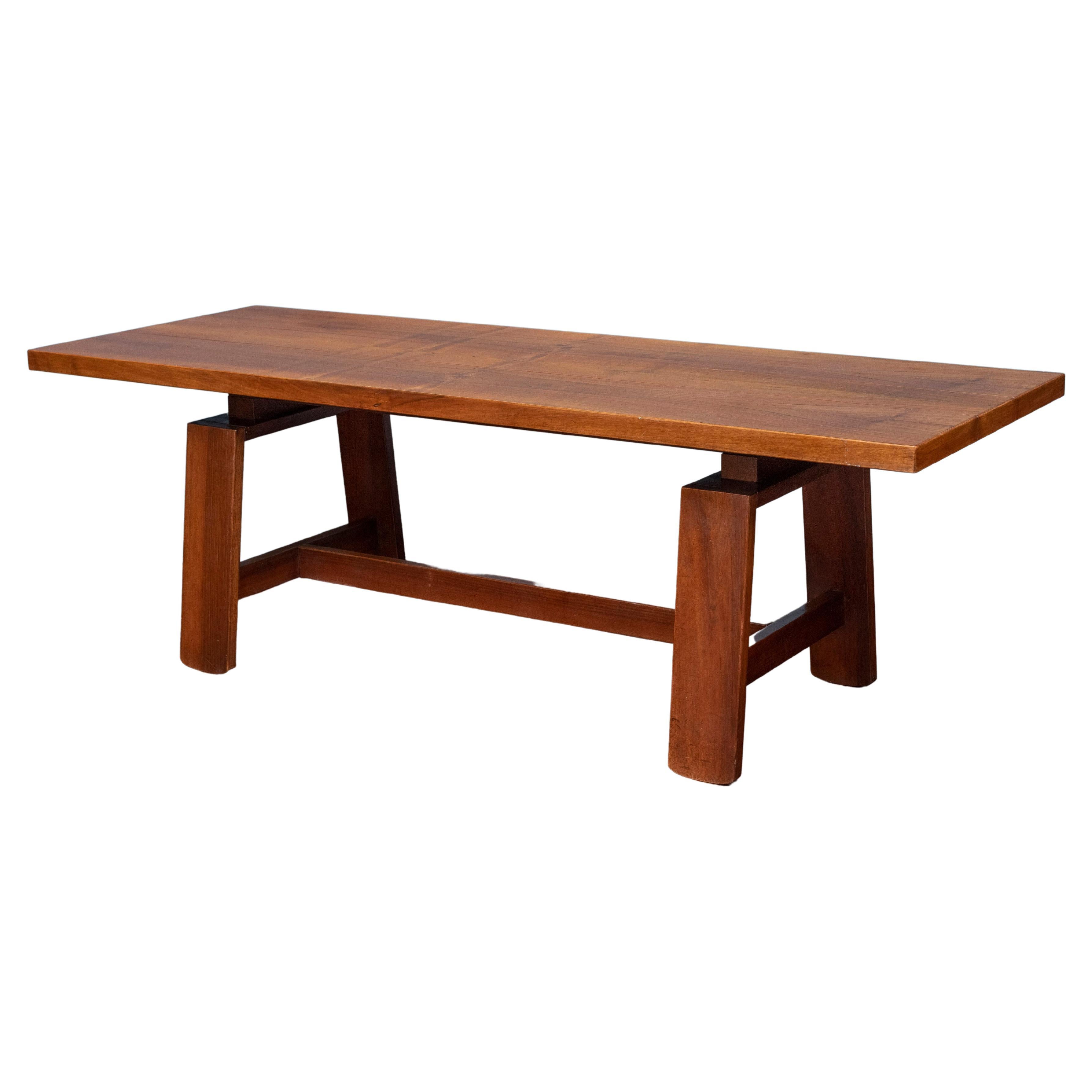
Gianfranco Frattini Rosewood Model 522 Dining Table for Bernini, Italy

$8,188.78
£6,108.30
€6,900
CA$11,397.55
A$12,227.53
CHF 6,558.60
MX$147,217.83
NOK 82,678.81
SEK 75,391.61
DKK 52,583.25

About the Item

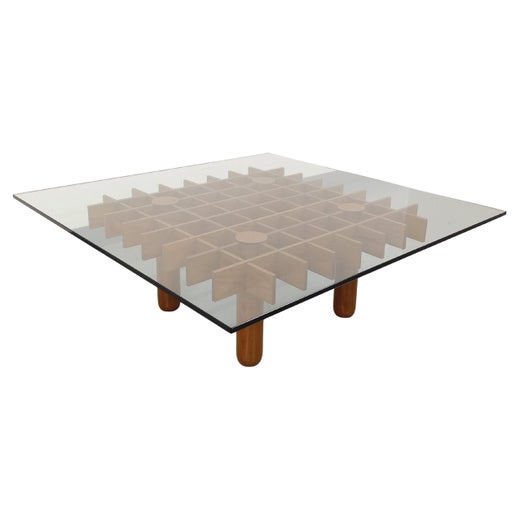
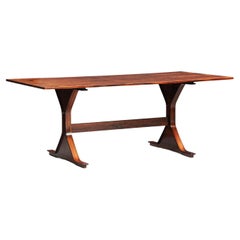
Designed by Gianfranco Frattini for Bernini in the 1960s, this Model 522 dining table in solid rosewood exemplifies the sculptural precision and material luxury that define the golden era of Italian Modern design. The table’s distinctive Y-shaped trestle bases, joined by a horizontal stretcher, showcase Frattini’s architectural discipline — a perfect balance of proportion, structure and visual lightness. The rosewood grain displays extraordinary depth and variation, hand-finished to reveal a warm, natural lustre that radiates elegance from every angle. Generous in scale yet refined in silhouette, the table comfortably seats six to eight. Built by Bernini’s master craftsmen, its seamless joinery and refined geometry attest to the maker’s unparalleled technical skill. We also have a matching set of four Frattini chairs available separately, upholstered and finished in the same Palo Santo — ideal for collectors seeking a complete, original ensemble. Examples crafted in rosewood of this quality are increasingly scarce, as the use of this fine tropical hardwood is now restricted, making the table both a functional centrepiece and a significant investment in Italian design history.
  • Creator:
  • Dimensions:
    Height: 28.75 in (73 cm)Width: 74.81 in (190 cm)Depth: 37.41 in (95 cm)
  • Style:
    Mid-Century Modern (Of the Period)
  • Materials and Techniques:
  • Place of Origin:
  • Period:
  • Date of Manufacture:
    1960
  • Condition:
    Wear consistent with age and use.
  • Seller Location:
    Sofia, BG
  • Reference Number:
    1stDibs: LU10677247495792

More From This Seller

View All
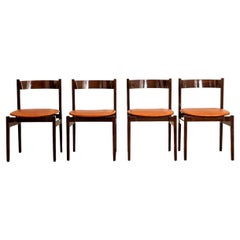
Set of Four Gianfranco Frattini Model 101 Dining Chairs in Rosewood and Leather
By Gianfranco Frattini, Cassina
Located in Sofia, BG
Designed by Gianfranco Frattini and manufactured by Cassina in the 1960s, this set of four Model 101 dining chairs exemplifies the sculptural precision and material sophistication th...
Category

Mid-20th Century Italian Mid-Century Modern Dining Room Chairs

Materials

Rosewood

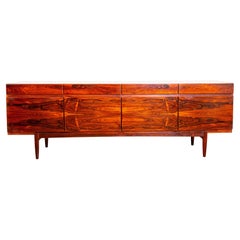
Ib Kofod-Larsen Rosewood Sideboard, Model FA-66 for Faarup Møbelfabrik, Denmark
By Ib Kofod-Larsen
Located in Sofia, BG
This rare early Model FA-66 sideboard by Ib Kofod-Larsen for Faarup Møbelfabrik, crafted in Denmark in the 1960s, is a collector-grade example of Scandinavian Modern design, celebrat...
Category

Mid-20th Century Danish Scandinavian Modern Sideboards

Materials

Rosewood

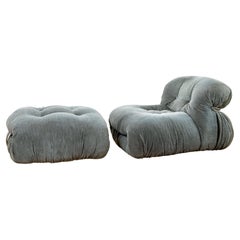
Afra Tobia Scarpa “Soriana” Armchair with Footstool for Cassina, Italy
By Afra Tobia Scarpa, Cassina
Located in Sofia, BG
Designed by Afra (1937–2011) and Tobia Scarpa (b. 1935) for Cassina in the 1970s, the Soriana series is a defining icon of Italian post-war design — awarded the Compasso d’Oro in 197...
Category

Mid-20th Century Italian Mid-Century Modern Armchairs

Materials

Velvet

Florian Schulz Adjustable Brass Arch Floor Lamp, Germany
By Florian Schulz
Located in Sofia, BG
This large floor-to-ceiling brass arch lamp by Florian Schulz, produced in Germany circa 1970s, is one of the designer’s most impressive architectural lighting concepts — elegant, mi...
Category

Mid-20th Century German Mid-Century Modern Floor Lamps

Materials

Brass

You May Also Like

Franco Albini Mahogany mid-centry Italian Table Model TL-22 produced by Poggi
By Franco Albini
Located in Barcelona, ES
Franco Albini & Franca Helg. Dining table model no. TL22. Manufactured by Poggi, Italy, 1958. Mahogany. Measurements: 180.3 cm x 104.1 cm x 73 H cm. 70.98 in x 40.98 in x 28.74 in. Literature: Giuliana Gramigna, Repertorio 1950/1980, Milan, 1985, p. 123. Franco Albini, was born in 1905 and died in 1977. He spent his childhood and part of his youth in Robbiate in Brianza, where he was born. Albini, as an adolescent moved with his family to Milan. Here he enrolled in the Faculty of Architecture of the Polytechnic and graduated in 1929. He started his professional activity in the studio of Gio Ponti and Emilio Lancia, with whom he collaborated for three years. At the 1929 International Exhibition in Barcelona (where Gio Ponti curated the Italian pavilion and Mies van der Rohe realized that of Germany) and in Paris where, as Franca Helg recounted, he had the opportunity to visit the studio by Le Corbusier. In those three years, the works he carried out are admittedly of the twentieth century imprint. It is the meeting with Edoardo Persico that marked a clear turning point towards rationalism and the approach to the group of editors of "Casabella". The partly ironic and partly very harsh comments of the Neapolitan critic to a series of drawings, made by Albini for the design of some office furniture, caused him a great disturbance. “I spent days of real anguish - Albini recalls - I had to answer all the questions. I also had a fever, a large and long fever. " The meted provoked Albini to openen a professional studio in via Panizza with Renato Camus and Giancarlo Palanti. The group of architects began to deal with public housing by participating in the competition for the Baracca district in San Siro in 1932 and then building the IFACP neighborhoods: Fabio Filzi (1936/38), Gabriele D'Annunzio and Ettore Ponti (1939). During this period, Albini also worked on his first villa (Pestarini), which Giuseppe Pagano, architect and critic of the time, presented as follows: “This coherence, which the superficial rhetoric of fashionable jugglers calls intransigence, and which is instead the basis of understood between the fantasy of art and the reality of the craft, in Franco Albini, it is so rooted that it transforms theory into a moral attitude ". But it is above all in the context of the exhibitions that the Milanese master experienced his compromise between that "rigor and poetic fantasy" of which Pagano speaks, coining the elements that became a recurring theme in his . The opening in 1933 of the new Triennale headquarters in Milan, in the Palazzo dell'Arte, was an important opportunity to express the strong innovative character of rationalist thinking, a gym in which to freely experiment with new materials and new solutions, but above all a "method". "Cultivated as a communication laboratory, the art of setting up was for the rationalists of the first generation what the perspective had been for the architects of humanism: the field open to a hypothesis of space that needed profound reflections before landing the concreteness of the construction site ". Together with Giancarlo Palanti, Albini on the occasion of the V Triennale di Milano set up the steel structure house (with R. Camus, G. Mazzoleni, G. Minoletti and with the coordination of G. Pagano), for which he also designed the 'furniture. At the following Triennale of 1936, Persico dided, together with a group of young designers gathered by Pagano in the previous edition of 1933, Franco Albini took care of the preparations of the home exhibition. The setting up of Stanza per un uomo, at that same Triennale, allows us to understand the acute and ironic approach of Albini, as a man and as a designer: "Celebrating the beauty of mechanics was the imperative to which, for example, the surprising displays by Franco Albini who managed, in the subtle way of a refined and rarefied style, to sublimate their practical content in the metaphysics of daring still lifes: flying objects which marked in the void refined frames and metal intricacies the nodes of a fantastic cartography where industry finally became art free from purpose ". That same year Albini and Romano designed the exhibition of the Ancient Italian Goldsmithery: vertical uprights, simple linear rods, designed the space. A theme, of the "flagpole", seemed to be the center of the evolution of production and the creative process. The concept is reworked over time, with the technique of decomposition and recomposition typical of Albinian design: in the preparation of the Scipione Exhibition and contemporary drawings (1941) the tapered flagpoles, on which the paintings and display cases were hung, are supported by a grid of steel cables; in the Vanzetti stand (1942) they take the V-shape; in the Olivetti shop in Paris (1956) the polished mahogany uprights support the shelves for the display of typewriters and calculators. The flagpole is found, however, also in other areas. In the apartments he designed, it is used as a pivot on which the paintings can be suspended and rotated to allow different points of view, but at the same time as an element capable of dividing the spaces. The Veliero bookcase...
Category

Mid-20th Century Italian Mid-Century Modern Dining Room Tables

Materials

Mahogany

Dining Table Gianfranco Frattini for Bernini
By Bernini, Gianfranco Frattini
Located in Matosinhos, 13
522 model rectangular dining table in Palo Santo, designed by Gianfranco Frattini for Bernini. A timeless table with an iconic design, perfectly crafted in a very noble wood.
Category

Mid-20th Century Italian Mid-Century Modern Dining Room Tables

Materials

Hardwood

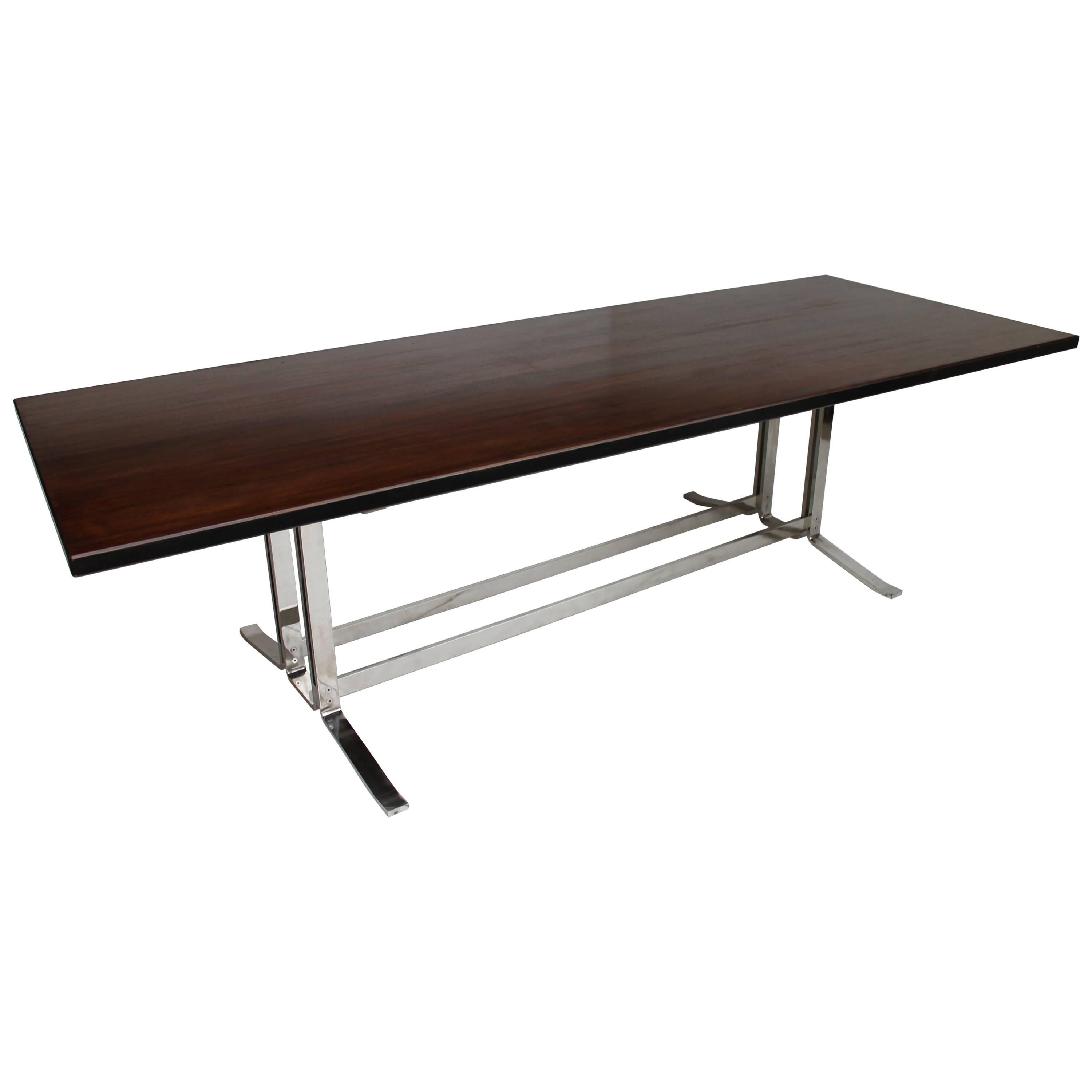
Mid-Century Italian Formanova rosewood Table by Gianni Moscatelli, circa 1965
By Gianni Moscatelli, Formanova
Located in Sacile, PN
Dinner or Conference table designed by Gianni Moscatelli for Formanova, dated circa 1965. Big dimension, chromed metal structure and veneer rosewood top. Formanova born from the cr...
Category

Vintage 1960s Italian Mid-Century Modern Conference Tables

Materials

Metal

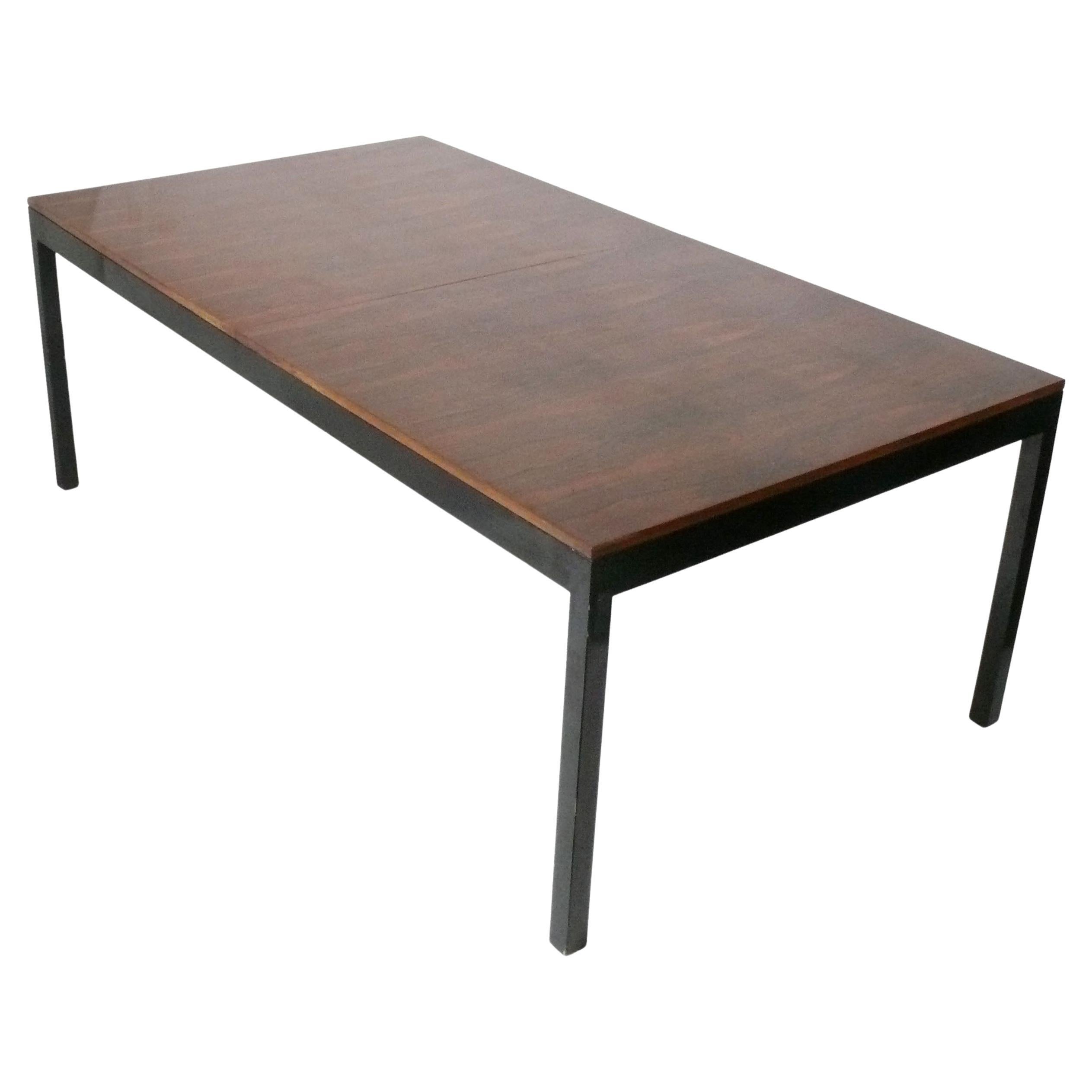
Large Scale Rosewood Dining Table attributed to Milo Baughman
By Milo Baughman
Located in Atlanta, GA
Large Scale Rosewood Dining Table, attributed to Milo Baughman, unsigned, American, circa 1960s. It measures 80" length normally, and with both of it's 18" leaves installed, it expan...
Category

Vintage 1960s American Mid-Century Modern Dining Room Tables

Materials

Wood, Rosewood

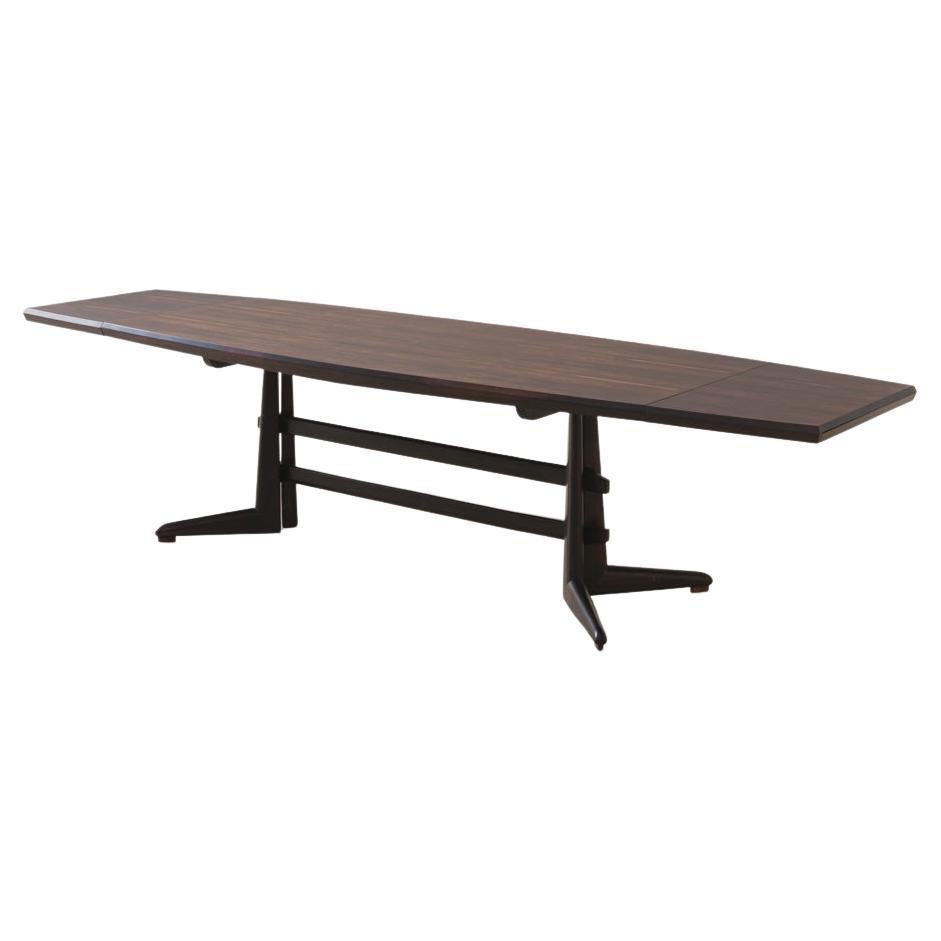
Rosewood Dining Table by Jean Gillon, Italma, 1960s, Brazilian Midcentury
By Italma, Jean Gillon
Located in New York, NY
This fantastic dining table was designed in the 1960s by Jean Gillon (1919-2007), a Romanian-born architect, artist, and designer who landed in Brazil in 1956. The piece has a solid Rosewood structure, with a veneered top and extensions that comfortably accommodate six to ten seats. Gillon created an extensive and varied production of furniture, drawings, paintings, sculptures, tapestries, costumes, and scenarios for theater. In 1961, he opened his own company to manufacture furniture, Cidam, a company that came to be called WoodArt. In addition to this brand, other Brazilian furniture...
Category

Vintage 1960s Brazilian Mid-Century Modern Dining Room Tables

Materials

Rosewood

Silvio Coppola Dining Table for Bernini, Italy
By Silvio Coppola
Located in San Francisco, CA
Silvio Coppola design walnut dining table for Bernini, Italy. Post modern table with interesting architectural bases on rounded splayed legs. Made with book matched walnut veneer on ...
Category

Vintage 1970s Italian Mid-Century Modern Dining Room Tables

Materials

Walnut