Items Similar to Antique French Burr Walnut Parquetry Card Backgammon Table 19th Century
Want more images or videos?
Request additional images or videos from the seller
1 of 19
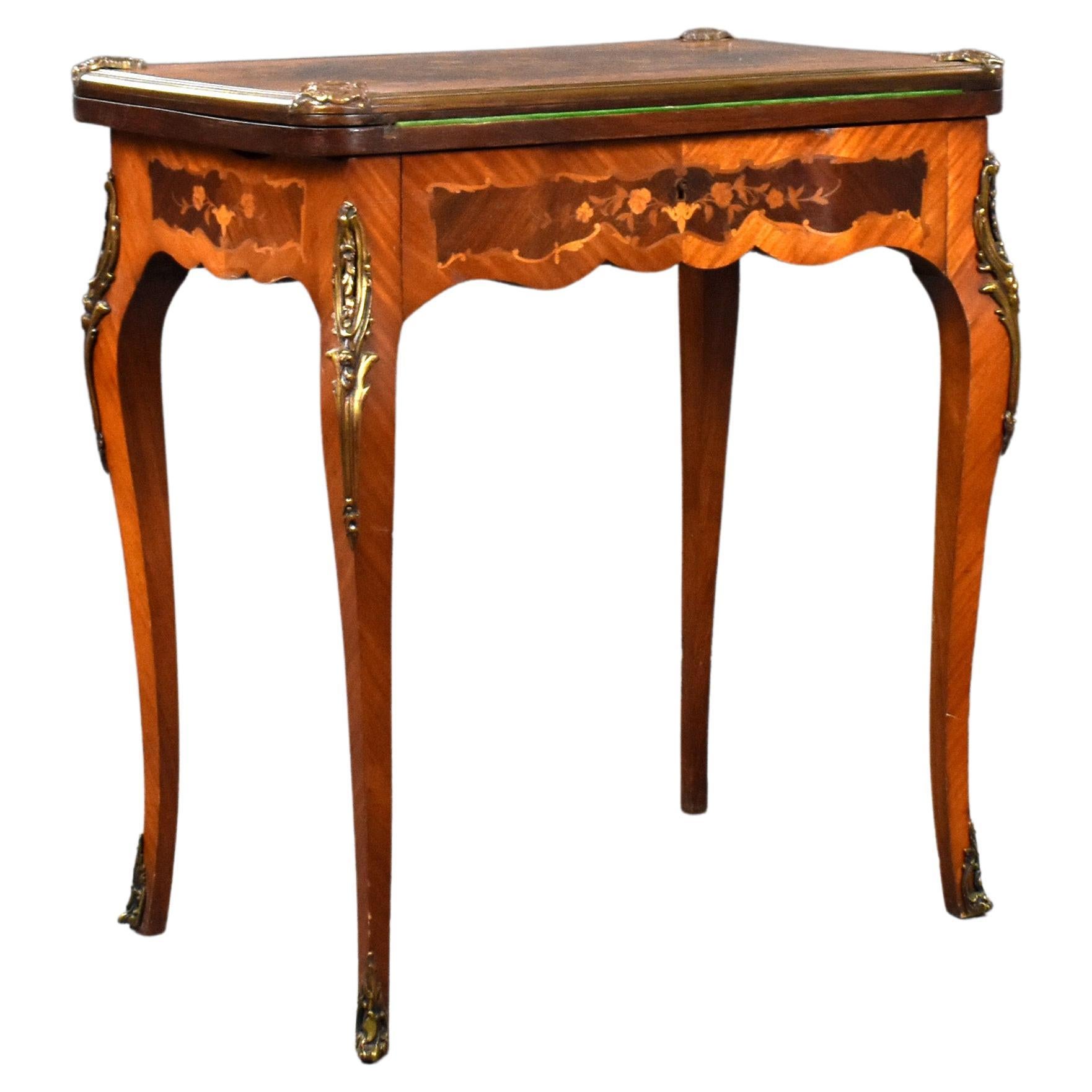
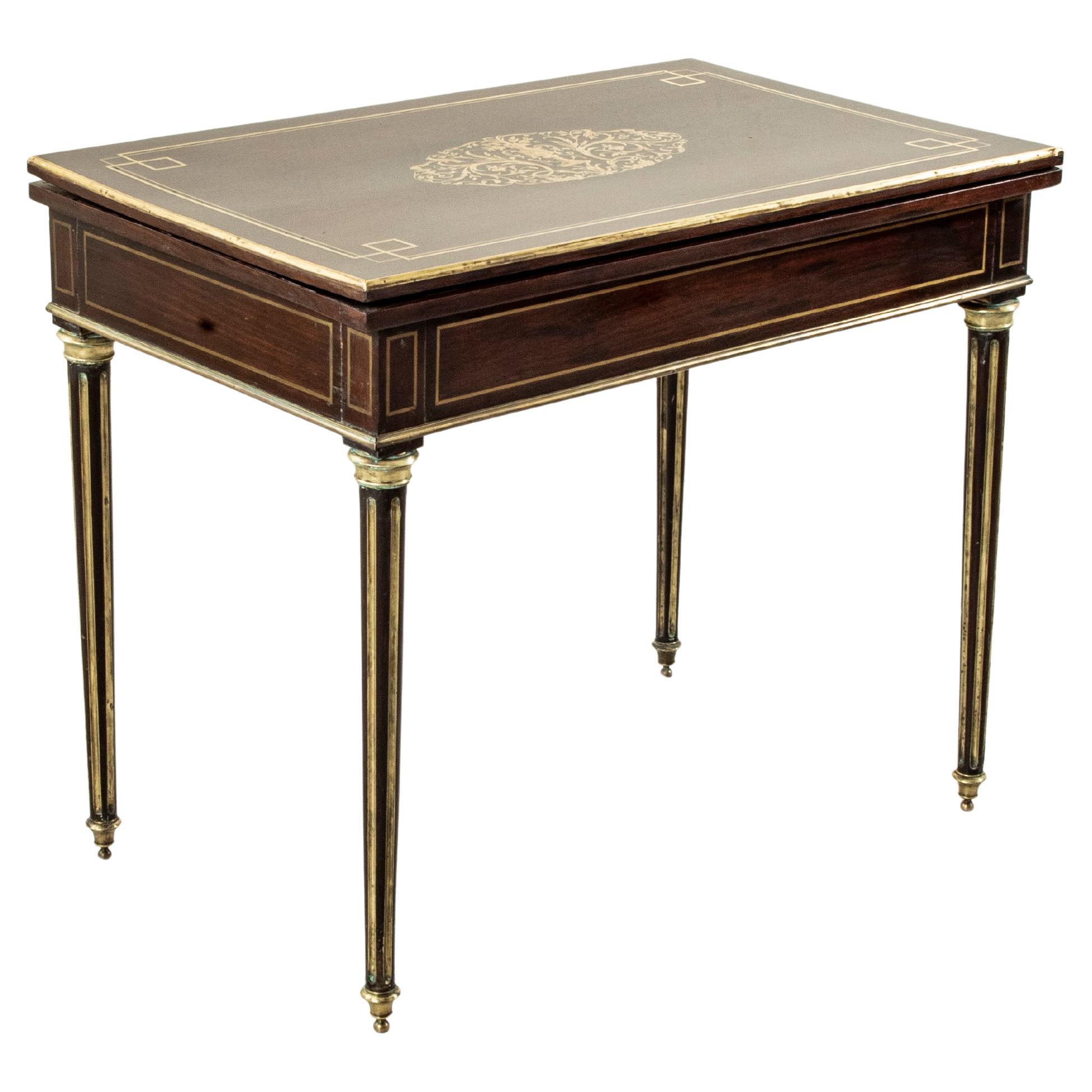
Antique French Burr Walnut Parquetry Card Backgammon Table 19th Century
$2,534.51
£1,850
€2,167.81
CA$3,503
A$3,724.41
CHF 2,014.05
MX$44,302.96
NOK 25,228.80
SEK 23,041.40
DKK 16,194.27
About the Item
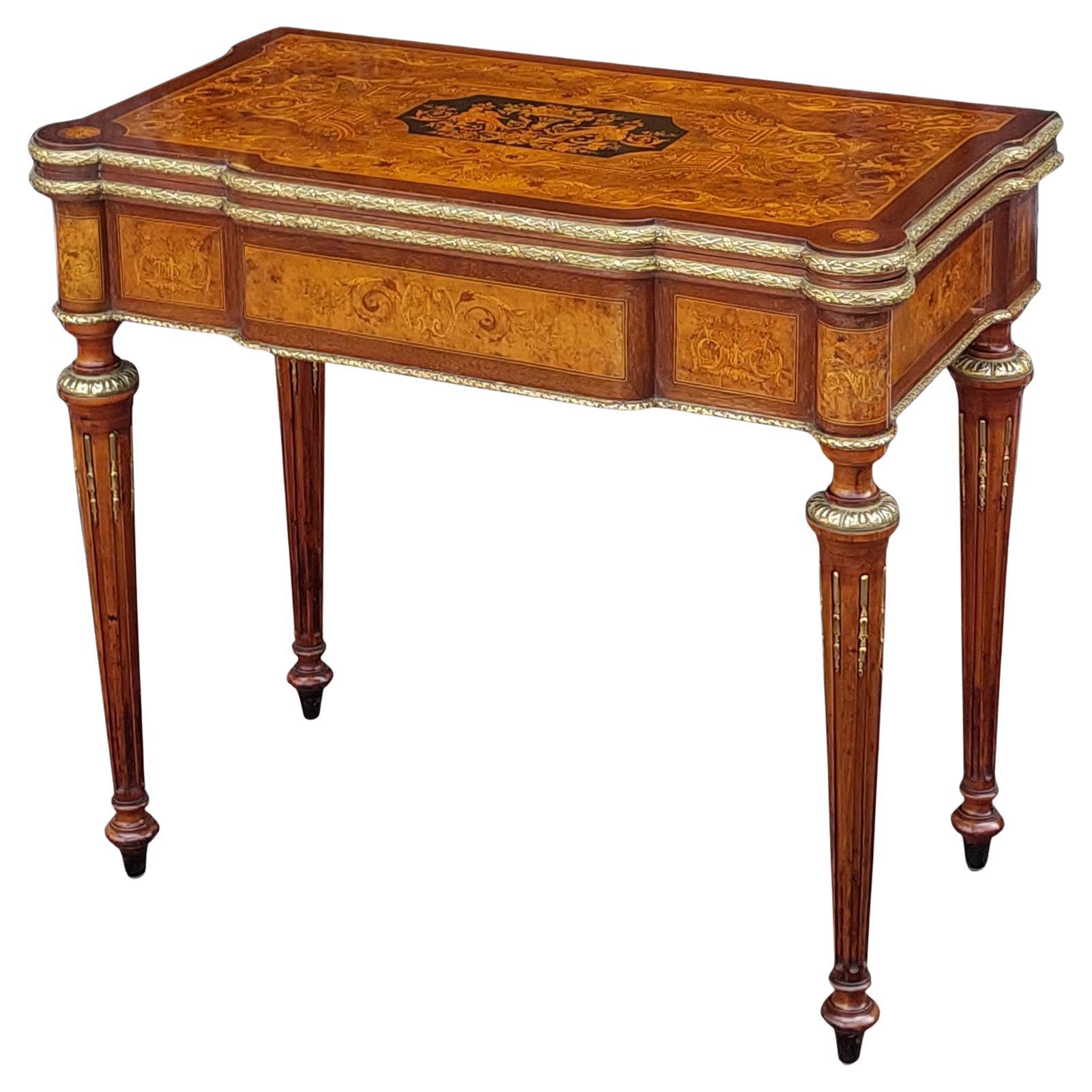
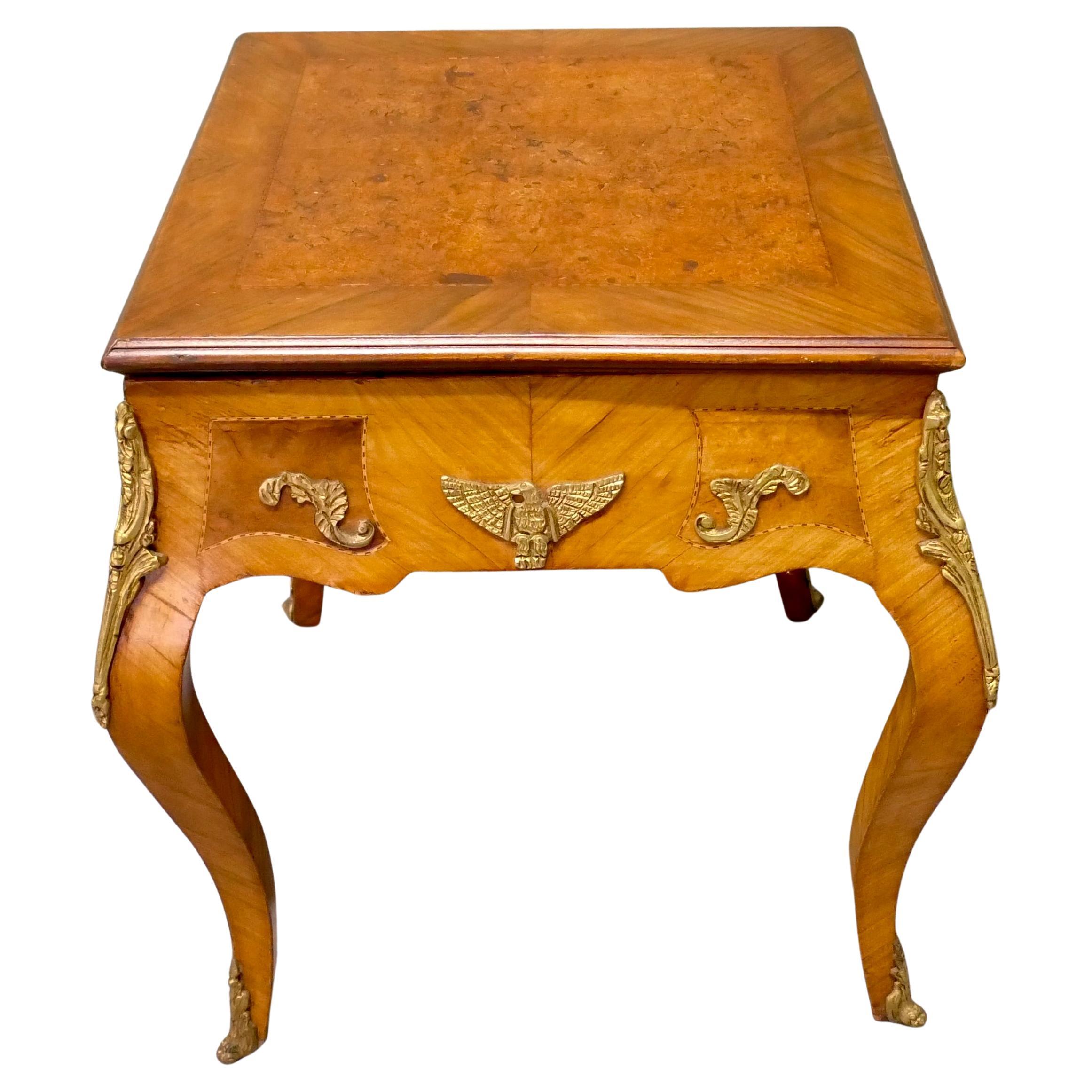
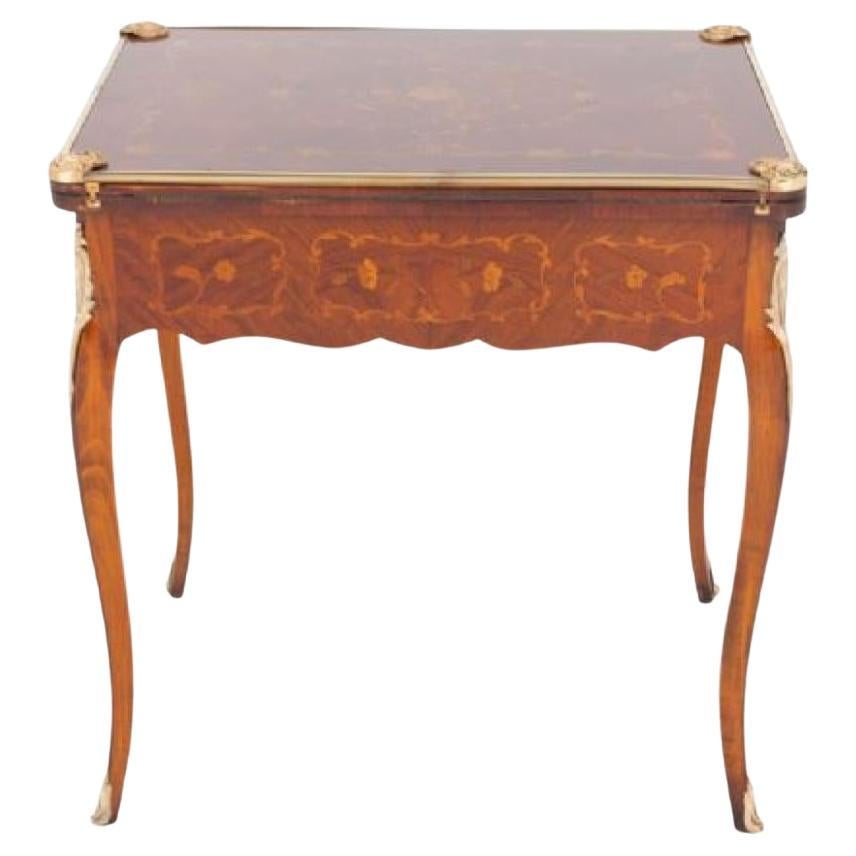
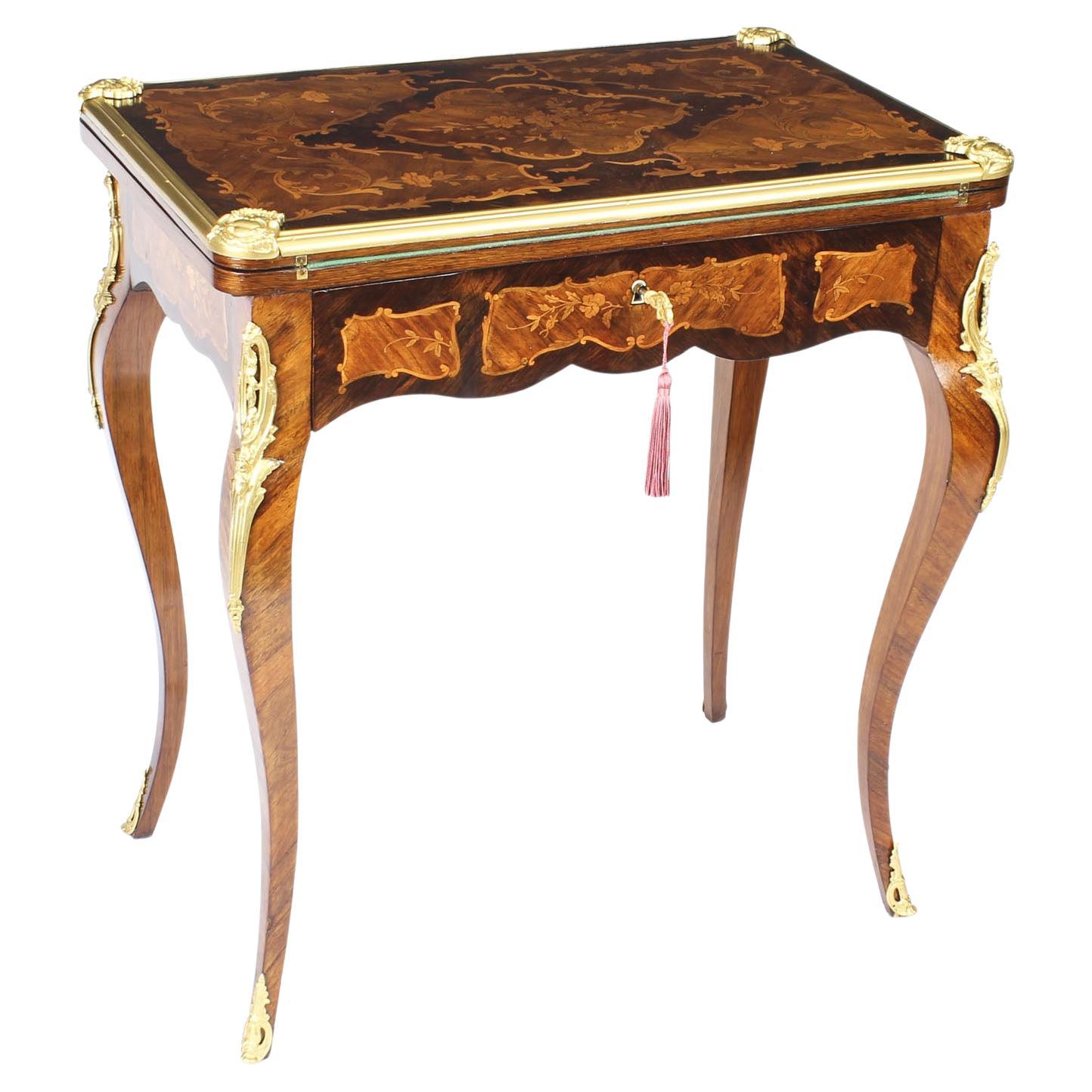
A truly fabulous antique French parquetry turnover top games table, circa 1880 in date.
The top with ormolu banded edge, the parquetry decoration exhibits a stunning array of exotic woods.
The attractive ormolu mounts only enhance the overall appearance of this superb piece of French craftsmanship. The table is raised on cabriole legs with ormolu mounts and feet.
The top opens to reveal a baize lined interior for playing cards, you then swivel the top to reveal the backgammon table.
Condition:
In excellent condition having been beautifully cleaned, polished and waxed in our workshops, please see photos for confirmation.
Dimensions in cm:
Height 78 cm x Width 82 cm x Depth 59 cm
Dimensions in inches:
Height 2 foot, 7 inches x Width 2 foot, 8 inches x Depth 1 foot, 11 inches
Parquetry -
is a geometric mosaic of wood pieces used for decorative effect. The two main uses of parquetry are as veneer patterns on furniture and block patterns for flooring. Parquetry patterns are entirely geometrical and angular—squares, triangles, lozenges.
The word derives from the Old French parchet , literally meaning "a small enclosed space". Large diagonal squares known as parquet de Versailles were introduced in 1684 as parquet de menuiserie to replace the marble flooring that required constant washing, which tended to rot the joists beneath the floors.
Such parquets en lozange were noted by the Swedish architect Daniel Cronström at Versailles and at the Grand Trianon in 1693. Timber contrasting in color and grain, such as oak, walnut, cherry, lime, pine, maple etc. are sometimes employed; and in the more expensive kinds the tropical hardwoods are also used.
Ormolu - (from French 'or moulu', signifying ground or pounded gold) is an 18th-century English term for applying finely ground, high-carat gold in a mercury amalgam to an object of bronze.The mercury is driven off in a kiln leaving behind a gold-coloured veneer known as 'gilt bronze'.
The manufacture of true ormolu employs a process known as mercury-gilding or fire-gilding, in which a solution of nitrate of mercury is applied to a piece of copper, brass, or bronze, followed by the application of an amalgam of gold and mercury. The item was then exposed to extreme heat until the mercury burned off and the gold remained, adhered to the metal object.
After around 1830 because legislation had outlawed the use of mercury other techniques were used instead. Electroplating is the most common modern technique. Ormolu techniques are essentially the same as those used on silver, to produce silver-gilt..
Our reference: A3623
About the Seller
5.0
Platinum Seller
Premium sellers with a 4.7+ rating and 24-hour response times
Established in 1983
1stDibs seller since 2012
1,455 sales on 1stDibs
Typical response time: <1 hour
Associations
LAPADA - The Association of Arts
Antiques Dealers
- ShippingRetrieving quote...Shipping from: London, United Kingdom
- Return Policy
More From This Seller
View AllAntique French Burr Walnut Marquetry Card/Writing/Dressing Table 19th Century
Located in London, GB
This is a rare late 19th century antique French ormolu mounted metamorphic burr walnut and floral marquetry card table, writing table and dressing table.
The shaped burr walnut to...
Category
Antique 1890s Tables
Materials
Walnut
Antique Victorian Mahogany
Inlaid Card Games Table 19th Century
Located in London, GB
This is a fabulous antique Victorian mahogany, satinwood and marquetry games table in the manner of Edwards & Roberts, circa 1860 in date.
It is made of beautiful flame mahogany and satinwood with elegant satinwood inlaid and penwork floral and foliate decoration of ribbons, bellfowers and garlands..
The shaped hinged top opens to reveal a fabulous green baize lined gaming interior for playing cards, above a frieze fitted with a drawer and decorated by a beautiful classical urn. The table is raised on elegant square tapering legs terminating in spade feet.
It is an elegant piece which will enhance a special room in your home.
THE BOTANICAL NAME FOR THE MAHOGANY THAT THIS ITEM IS MADE OF IS SWIETENIA MACROPHYLLA AND THIS TYPE OF MAHOGANY IS NOT SUBJECT TO CITES REGULATION AND DOES NOT CONTAIN ANY RESTRICTED MATERIALS.
Condition:
In excellent condition having been beautifully cleaned and polished in our workshops, please see photos for confirmation.
Dimensions in cm:
Height 74 x Width 89 x Depth 48
Dimensions in inches:
Height 2 foot, 5 inches x Width 2 foot, 11 inches x Depth 1 foot, 7 inches
Marquetry
is decorative artistry where pieces of material (such as wood, pewter or brass silver) of different colours are inserted into surface wood veneer to form intricate patterns such as scrolls or flowers.
The technique of veneered marquetry had its inspiration in 16th century Florence. Marquetry elaborated upon Florentine techniques of inlaying solid marble slabs with designs formed of fitted marbles, jaspers and semi-precious stones. This work, called opere di commessi, has medieval parallels in Central Italian "Cosmati"-work of inlaid marble floors, altars and columns. The technique is known in English as pietra dura, for the "hardstones" used: onyx, jasper, cornelian, lapis lazuli and colored marbles. In Florence, the Chapel of the Medici at San Lorenzo is completely covered in a colored marble facing using this demanding jig-sawn technique.
Techniques of wood marquetry were developed in Antwerp and other Flemish centers of luxury cabinet-making during the early 16th century. The craft was imported full-blown to France after the mid-seventeenth century, to create furniture of unprecedented luxury being made at the royal manufactory of the Gobelins, charged with providing furnishings to decorate Versailles and the other royal residences of Louis XIV. Early masters of French marquetry were the Fleming Pierre Golle and his son-in-law, André-Charles Boulle, who founded a dynasty of royal and Parisian cabinet-makers (ébénistes) and gave his name to a technique of marquetry employing brass with pewter in arabesque or intricately foliate designs.
Edwards & Roberts
The firm Edwards & Roberts was one of the best English antique furniture cabinet makers of the second half of the eighteenth century. The company was founded in 1845 and by 1854 was trading as ‘Edwards & Roberts’, 21 Wardour Street, Antique and Modern Cabinet...
Category
Antique 1860s English Victorian Card Tables and Tea Tables
Materials
Mahogany, Satinwood
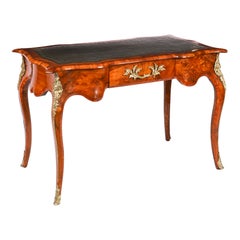
Antique French Burr Walnut Writing Table Desk Bureau Plat c.1870 114x65cm
Located in London, GB
A gorgeous antique French ormolu mounted burr walnut library table, circa 1870 in date.
Featuring king wood banding, the shaped top with an inset gold tooled green leather writing s...
Category
Antique 1870s Desks and Writing Tables
Materials
Ormolu
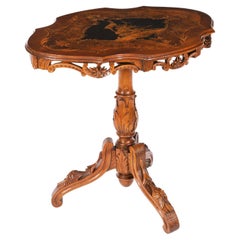
Antique Swiss Walnut Marquetry Occasional Table 19th Century
Located in London, GB
This is a superb antique 19th Century Swiss carved walnut and marquetry inlaid centre table, Circa 1870 in date.
It has a striking shaped top which is centred by a cartouche decorat...
Category
Antique Late 19th Century Swiss Side Tables
Materials
Walnut
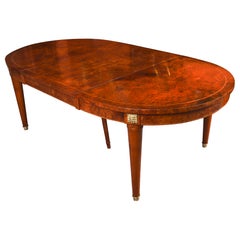
Vintage 7ft French Empire Revival Burr Walnut Dining Table 20th Century
Located in London, GB
An impressive Vintage French Empire Revival burr walnut dining table, dating from the mid 20th Century.
The circular burr-walnut top features satin wood cross-banding and the veneer...
Category
Mid-20th Century Empire Revival Dining Room Tables
Materials
Walnut
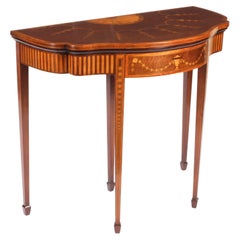
Antique Mahogany and Satinwood Inlaid Serpentine Card Console Table 19th Century
Located in London, GB
This is a superb antique mahogany serpentine fold-over card table, circa 1880 in date.
This splendid card table is made of the finest quality mahogany and features a hinged foldover shaped top with a demi-lune motif of fanned satinwood & green stained hare-wood surrounded by radial spurs of bell-flowers between swagged bands, bordered with satinwood cross-banding outlined with stringing.
The frieze inlaid with fluting and having a bow front drawer to the centre adorned with swagged bell-flower chains, with further pendant garlands leading down the square tapering legs on spade feet.
The quality and attention to detail throughout are second to none.
THE BOTANICAL NAME FOR THE MAHOGANY THAT THIS CARD TABLE IS MADE OF IS SWIETENIA MACROPHYLLA AND THIS TYPE OF MAHOGANY IS NOT SUBJECT TO CITES REGULATION.
Condition:
In excellent condition having been beautifully cleaned, polished and waxed in our workshops and the baize relined, please see photos for confirmation.
Dimensions in cm:
Height 78 x Width 92 x Depth 47
Dimensions in inches:
Height 2 foot, 7 inches x Width 3 foot x Depth 1 foot, 6 inches
Satinwood
is a hard and durable wood with a satinlike sheen, much used in cabinetmaking, especially in marquetry. It comes from two tropical trees of the family Rutaceae (rue family). East Indian or Ceylon satinwood is the yellowish or dark-brown heartwood of Chloroxylon swietenia.
The lustrous, fine-grained, usually figured wood is used for furniture, cabinetwork, veneers, and backs of brushes. West Indian satinwood, sometimes called yellow wood, is considered superior. It is the golden yellow, lustrous, even-grained wood found in the Florida Keys...
Category
Antique 1880s Card Tables and Tea Tables
Materials
Mahogany, Satinwood
You May Also Like
Late 19thC Burr Walnut Card Table
Located in Altrincham, GB
Late 19thC Burr Walnut Card Table - in Louis XVI taste, amaranth and marquetry inlaid and raised on tapered stop fluted legs all with ormalu decorations - 34"w x 18.5"d x 30.5"h (34 ...
Category
Antique 1880s French Louis XVI Card Tables and Tea Tables
Materials
Ormolu
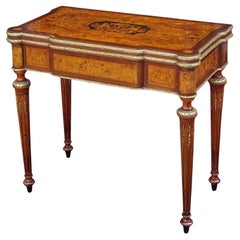
French Empire Style Burr Walnut and Ormolu Games Table, Chess and Backgammon
Located in Godshill, Isle of Wight
French Empire Style Burr Walnut and Ormolu Games Table, Chess and Backgammon
This is a charming piece, the table stands on bombe style cabriole legs and has ormolu decoration in the...
Category
Antique 19th Century Empire Game Tables
Materials
Walnut
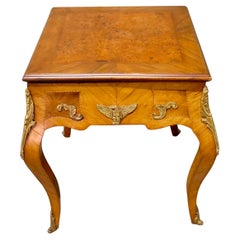
Antique French Games Table Backgammon Inlay Card 1880
Located in Potters Bar, GB
French mahogany games table in the Empire manner
This games table stands upon cabriole legs with metal toes and mounts
Circa 1880
Bought from a dealer on Marche Biron at Paris antiqu...
Category
Antique 1880s French Provincial Game Tables
Materials
Mahogany
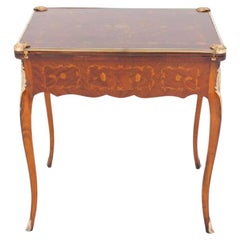
19th Century English Victorian Walnut
Marquetry Card Table
Vanity
Located in Chelmsford, Essex
For sale is a fine quality Victorian card table, also fitted with a vanity. The card table is beautifully inlaid and is decorated with ormolu mounts. This piece is in good condition ...
Category
Antique Mid-19th Century English Victorian Card Tables and Tea Tables
Materials
Walnut
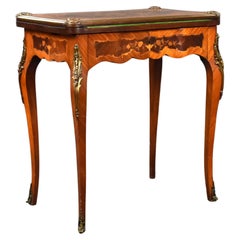
19th Century French Napoleon III Period Mahogany Game Table, Backgammon, Cards
Located in Fayetteville, AR
This mid nineteenth century French Napoleon III period mahogany game table features bronze inlaid trim inset on all sides and on the top. A central bronze inlaid urn with intricately...
Category
Antique Mid-19th Century French Napoleon III Game Tables
Materials
Bronze
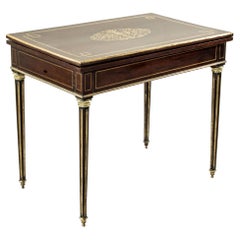
Victorian Gillows Burr Walnut Card Table English
By Gillows of Lancaster
London
Located in Staffordshire, GB
A superb quality Gillows Walnut Card Table with fabulous Burr veneers and fine Gilt Bronze mounts the back legs pull out to reveal a Mahogany lined drawer which acts as a support to ...
Category
Antique 19th Century English Late Victorian Card Tables and Tea Tables
Materials
Walnut
More Ways To Browse
Carl Aubock Hooks
Carved Dressing Table
Carved Wood Panels
Deco Marble Desk
Dragon Scroll
Flame Urn
German Carved Table
Glass Bowl Pedestal
Henredon Table Walnut
High Back Wrought Iron Chair
Home Altar
Iron Bell
J C Gray
Kimono Obi
Large French Tapestry
Maitland Smith 1980s
Marquetry Bureau
Mexican Mid Century Painting