Items Similar to Pair of Neo-Greek Gueridons Attr. to L.C Sevin
F. Barbedienne, France, c. 1880
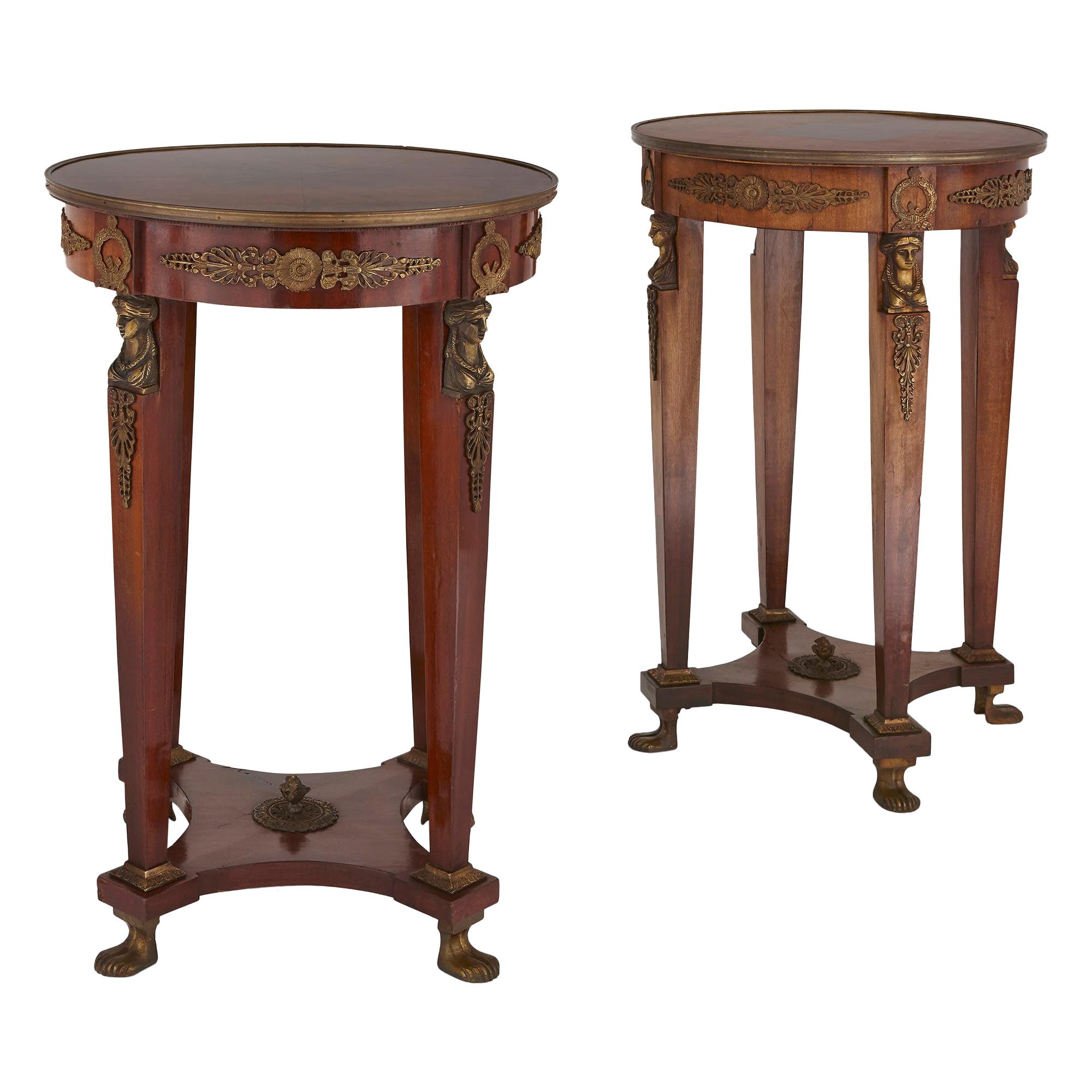
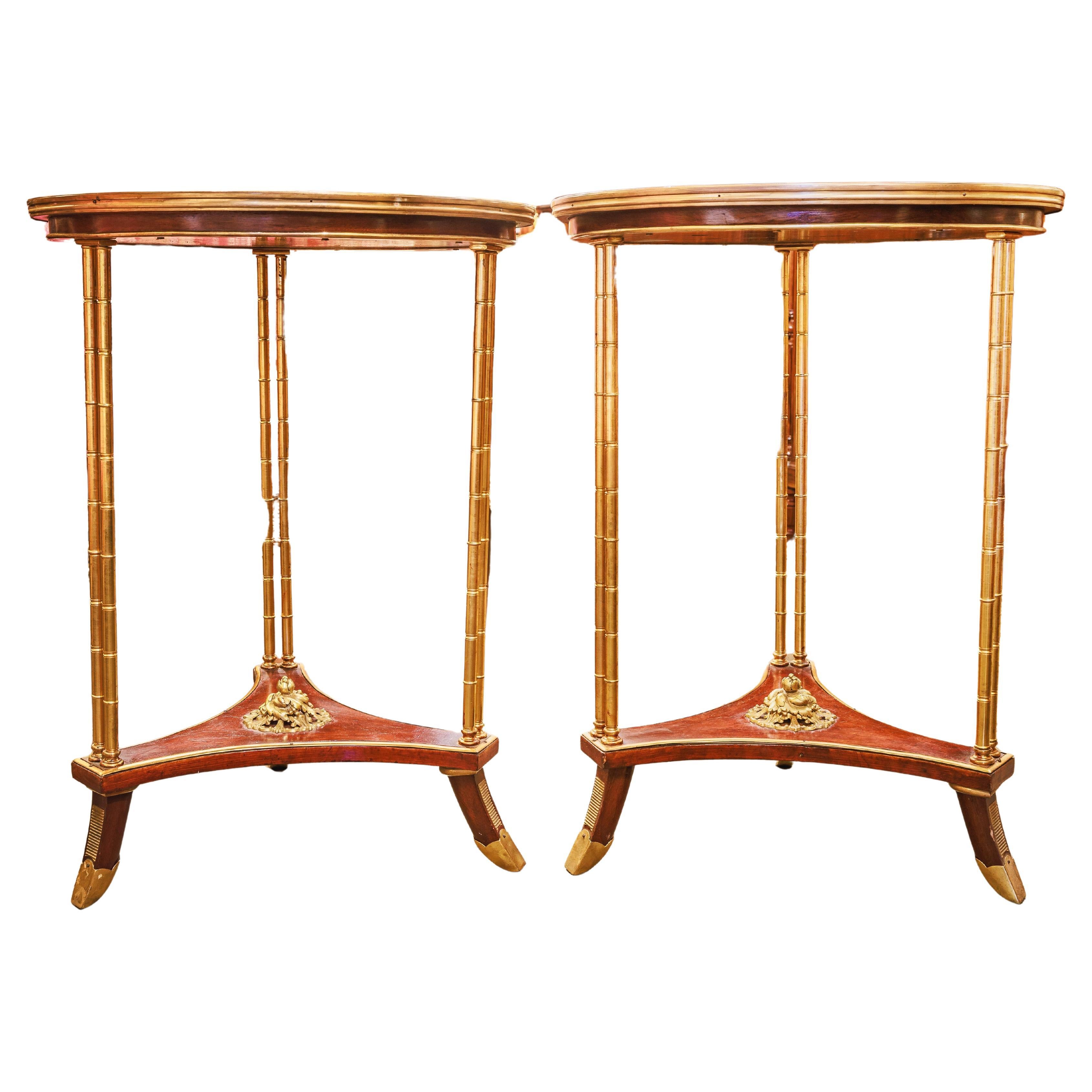
Want more images or videos?
Request additional images or videos from the seller
1 of 8
Pair of Neo-Greek Gueridons Attr. to L.C Sevin
F. Barbedienne, France, c. 1880
$46,062.73
£34,388.96
€38,500
CA$63,454.73
A$69,621.93
CHF 36,673.49
MX$828,226.32
NOK 469,782.99
SEK 428,976.01
DKK 293,384.69
About the Item
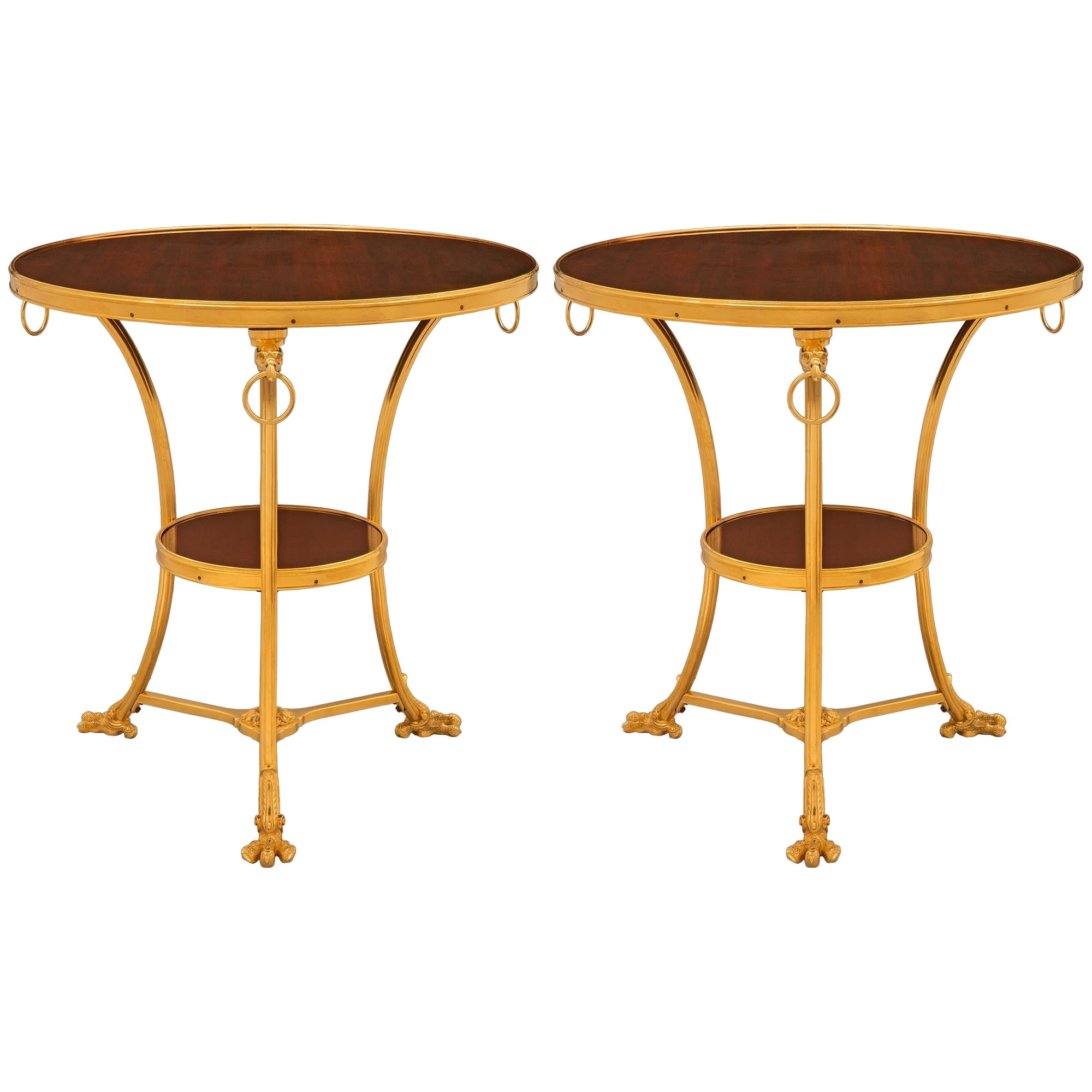
Pair of patinated and gilded bronze high guéridon attributed to L.C Sevin and F. Barbedienne, with for each of them, three paw feet joined by X shaped stretchers. Round red griotte marble top mounted with a bronze rim, adorned with ove and pearl motifs.
A similar model has been exposed at the 1889 Paris Universal Exhibition.
Born in 1821 and dead in Paris in 1888, Louis-Constant Sévin was apprenticed to the Parisian sculptor Marneuf. In 1839, he joined the sculptor-modelors Phénix and Joyau, as designer, and designed silver-smith’s objects for famous firms like Denière, Froment-Meurice, Morel and Duponchel. During the Revolution in 1848, C. Sévin joined Morel in London, as workshop manager and designed pieces that Morel exhibited in 1851. Back in France in 1851, C. Sévin went to Limoges and designed models for the porcelain factories of Jouhanneaud and Dubois of which many pieces were exhibited at the Universal Exhibition in 1855. From this date on, he worked for Ferdinand Barbedienne as sculptor-ornemanist until the end of his life. Sévin’s works are considerable, he designed furniture bronzes for the “hôtel de La Païva”. At the London Exhibition in 1862, he was awarded a medal “pour l’excellence artistique des meubles qu’il a dessinés et qui sont exposés par Barbedienne”: for the artistic excellence of the furniture he designed and which is exhibited by F. Barbedienne. He won a second class medal at the Union centrale des Arts décoratifs Exhibition in 1863 and was awarded a gold medal as “cooperator”. F. Barbedienne said that posterity would remember Sévin’s compositions. The most extraordinary object designed by C. Sévin for F. Barbedienne, was a Renaissance style gilded bronze monumental clock, four meters high, for which C. Sévin won a gold medal as well as was awarded the Legion of Honor at the Universal Exhibition in 1878. His triumph was still valid at the 1889 Universal Exhibition.
Born in 1810, Ferdinand Barbedienne started one of the most famous 19th century artistic bronze casting companies. He died in 1892. In addition to his personal production, he worked for famous artists such as Clésinger, Carrière-Belleuse and Guillemin. Barbedienne’s production was always highly esteemed and he was, himself admired by contemporary art critics who compared him during the 1878 Universal Exhibition to a “prince of industry and the king of bronze-casting”. He was there awarded the “Grand Prix” as well as 28 cooperator medals. His glory did not decline with the passage of the time for at the Universal Exhibition of 1889 the critics thanked Barbedienne for the example he set for other bronze-casters by the perfection of his bronzes.
- Attributed to:Ferdinand Barbedienne (Maker)Louis-Constant Sevin (Sculptor)
- Dimensions:Height: 31.5 in (80 cm)Diameter: 19.69 in (50 cm)
- Style:Greek Revival (In the Style Of)
- Materials and Techniques:
- Place of Origin:
- Period:
- Date of Manufacture:Circa 1880
- Condition:Wear consistent with age and use.
- Seller Location:PARIS, FR
- Reference Number:Seller: ref. 1280/0 and 1281/01stDibs: LU3860336486532
About the Seller
4.9
Gold Seller
Premium sellers maintaining a 4.3+ rating and 24-hour response times
Established in 1997
1stDibs seller since 2018
91 sales on 1stDibs
Typical response time: 3 hours
Associations
International Confederation of Art and Antique Dealers
Associations
- ShippingRetrieving quote...Shipping from: PARIS, France
- Return Policy
More From This Seller
View AllPair of Neo-Greek Pedestals, attributed to G.Servant, France, Circa 1880
By Georges Emile Henri Servant
Located in PARIS, FR
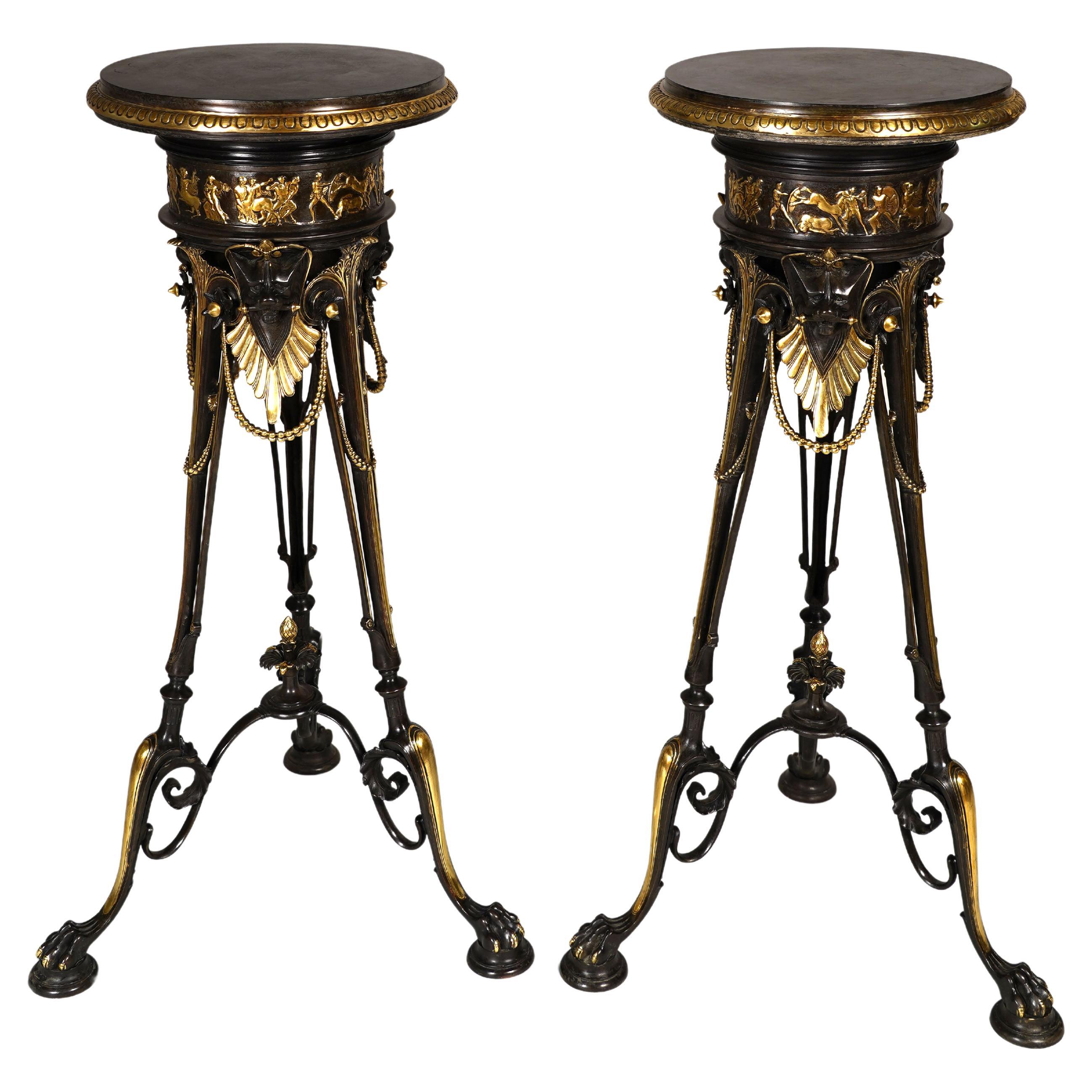
Pair of patinated and gilded bronze turntable pedestals with for each of them, three paw feet, headed by stylized lion muzzles, ornated with beaded chains and joined by a fine foliate stretcher. The belt is adorned by a banded frieze cast in low-relief representing an ancient scene : “The Battle of the Lapithes and the Centaurs”.
These pedestals can be associated with the "Vases de Bacchus", presented by G. Servant at the 1867 Exposition Universelle, on which the similar ornamentation is applied.
(Reproduced in « Merveilles de l'Exposition Universelle de 1867 », Jules Mesnard, p°167)
Biography :
Georges Emile Henri Servant...
Category
Antique 1880s French Greek Revival Pedestals
Materials
Bronze
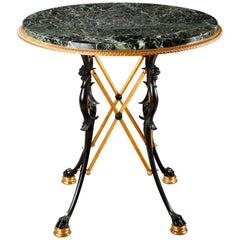
Neo-Greek Gueridon Attributed to F. Barbedienne, France, Circa 1880
By Ferdinand Barbedienne, Louis-Constant Sevin
Located in PARIS, FR
A similar model was exposed at the 1889 Paris Universal Exhibition ( see picture attached)
Patinated and gilded bronze gueridon with four paw feet joined by X-shaped stems, attributed to Sévin and Barbedienne. Round green marble top mounted with a bronze rim adorned with oves and pearls motif.
Born in 1821 and dead in Paris in 1888, Louis-Constant Sévin was apprenticed to the parisian sculptor Marneuf. In 1839, he joined the sculptor-modelors Phénix and Joyau, as designer, and designed silver-smith’s objects for famous firms like Denière, Froment-Meurice, Morel and Duponchel. During the Revolution in 1848, C. Sévin joined Morel in London, as workshop manager and designed pieces that Morel exhibited in 1851. Back in France in 1851, C. Sévin went to Limoges and designed models for the porcelain factories of Jouhanneaud and Dubois of which many pieces were exhibited at the Universal Exhibition in 1855. From this date on, he worked for Ferdinand Barbedienne as sculptor-ornemanist until the end of his life. Sévin’s works are considerable, he designed furniture bronzes for the « hôtel de La Païva ». At the London Exhibition in 1862, he was awarded a medal « pour l’excellence artistique des meubles qu’il a dessinés et qui sont exposés par Barbedienne » : for the artistic excellence of the furniture he designed and which is exhibited by F. Barbedienne. He won a second class medal at the Union centrale des Arts décoratifs Exhibition in 1863 and was awarded a gold medal as « cooperator ». F. Barbedienne said that posterity would remember Sévin’s compositions. The most extraordinary object designed by C. Sévin for F. Barbedienne, was a Renaissance style gilded bronze monumental clock...
Category
Antique 1880s French Greek Revival Center Tables
Materials
Marble, Bronze
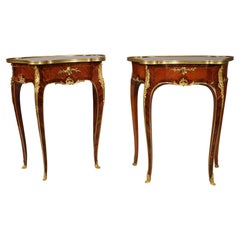
Pair of Tables attr. to J.-E. Zwiener, France, circa 1885
By Joseph-Emmanuel Zwiener
Located in PARIS, FR
Charming Louis XV style tables forming a pair, in a scalloped shape, opening with a drawer on the belt and made in wood veneer. Their tray surrounded by a bronze mold is decorated wi...
Category
Antique 1880s French Louis XV Tables
Materials
Bronze
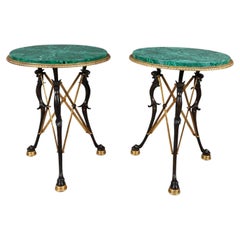
Pair of Neo-Pompeian Gueridons Malachite top , by H. Picard, France, c. 1865
By Henri Picard
Located in PARIS, FR
A similar model was exhibited at the 1889 Paris Universal Exhibition.
Rare pair of round table made of patinated and gilded bronze with a top veneered with malachite and circled with bronze mounts adorned with ovum and beads. They stands on three patinated bronze feet with lion heads and paws, linked with gilded bronze X braces.
Related Works:
The feet of these gueridons adopt a sleek design and are adorned with claws and lion heads. Inspired by a well-known model in the Barbedienne Company production and it has been reused many times by his workshop. These gueridons shows how the Barbedienne Company offered a range of furniture from the designs of its decorator Louis-Constant Sévin. He designed this model of gueridon few time after he joined the Barbedienne Company in 1855 and this model can be seen on different interior decorations of the Second Empire.
A tripod gueridon with feet like these ones can be seen on a picture showing the cold room of the Pompeiian house built for Prince Napoleon. (see picture attached, photograph by Laplanche J et Cie, between 1860-1866, Musée Carnavalet, Paris, PH15305). Most of the Ancient style furniture was made by Charles Rossigneux (1818-1908) but this gueridon shows that the Barbedienne Company took also part to this work.
Biography:
Henri Picard was established in Paris, 6 rue Jarente from 1831 to 1839 and then 10 rue de la Perle from 1840 to 1864. He worked on the Emperor Napoleon III’s apartments gilding at the Louvre Palace. His production was in a rich and fine style, like a Japanese style inkwell, or his Pompeian style dining table centerpieces...
Category
Antique Mid-19th Century French Greek Revival Gueridon
Materials
Malachite, Bronze
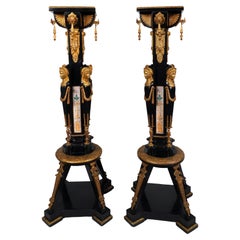
Pair of Neo-Greek Pedestals. C.G. Diehl
J.Brandely, France, circa 1867
By Lebeuf Milliet
Cie Creil Montereau, Charles-Guillaume Diehl, Jean Brandely
Located in PARIS, FR
Exceptional pair of neo-Greek style pedestals, made in blackened pearwood, gilded galvanic bronze and glazed earthenware. The sheath-shaped shaft is decorated with rectangular plates...
Category
Antique 1860s French Greek Revival Pedestals
Materials
Bronze
Neo-Greek Guéridon by E. Picault, France, 1863
By Émile Louis Picault
Located in PARIS, FR
Signed E. Picault, Expo des Bx arts, 1863
The wax model of this medallion was exposed under number 2524 at the French Artists Salon of Paris in 1863.
A large Greek style guéridon ma...
Category
Antique 1860s French Greek Revival Gueridon
Materials
Bronze
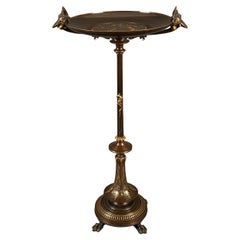
You May Also Like
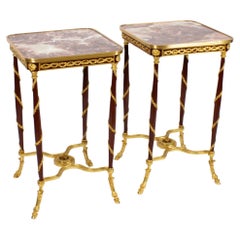
Vintage Pair of French Louis Revival Ormolu Mounted Tables 20th Century
Located in London, GB
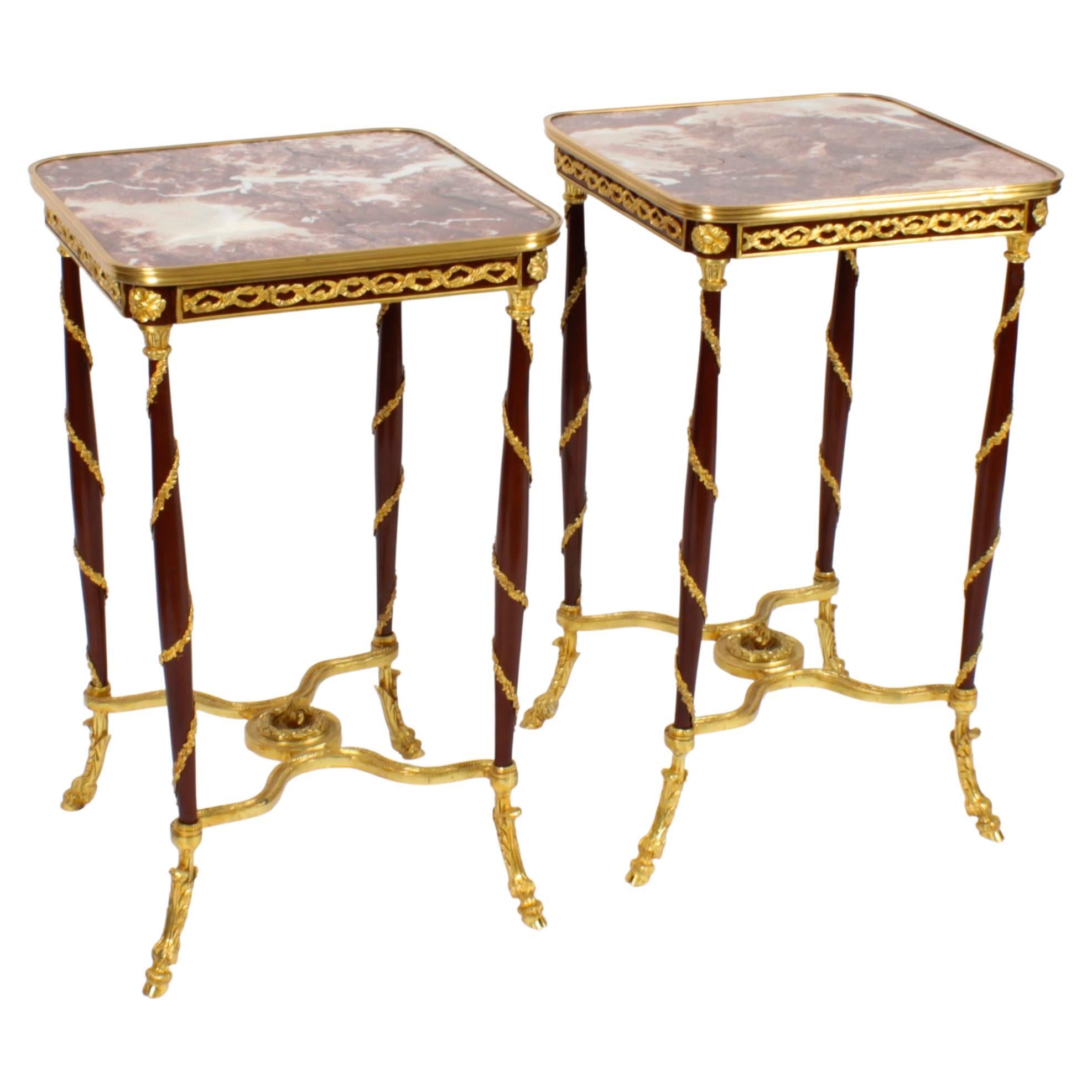
This is a beautiful pair of vintage French Louis Revival ormolu mounted side tables, mid-20th century in date.
The square shaped "rosso levanto" marble tops are framed with decora...
Category
Vintage 1950s French Tables
Materials
Marble, Ormolu
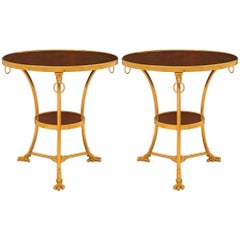
Pair of French 19th Century Neoclassical St. Ormolu and Mahogany Gueridon Tables
Located in West Palm Beach, FL
An exquisite pair of French 19th century Neo-Classical st. ormolu and Mahogany gueridon side tables. Each table is raised by exceptional and most unique claw feet with a fine foliate...
Category
Antique 19th Century French Neoclassical Gueridon
Materials
Ormolu
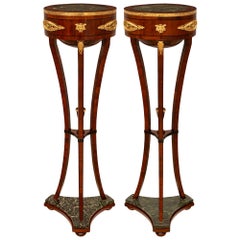
Pair Of Baltic 19th c. Neo-Classical St. Ormolu, Mahogany, And Marble Pedestals
Located in West Palm Beach, FL
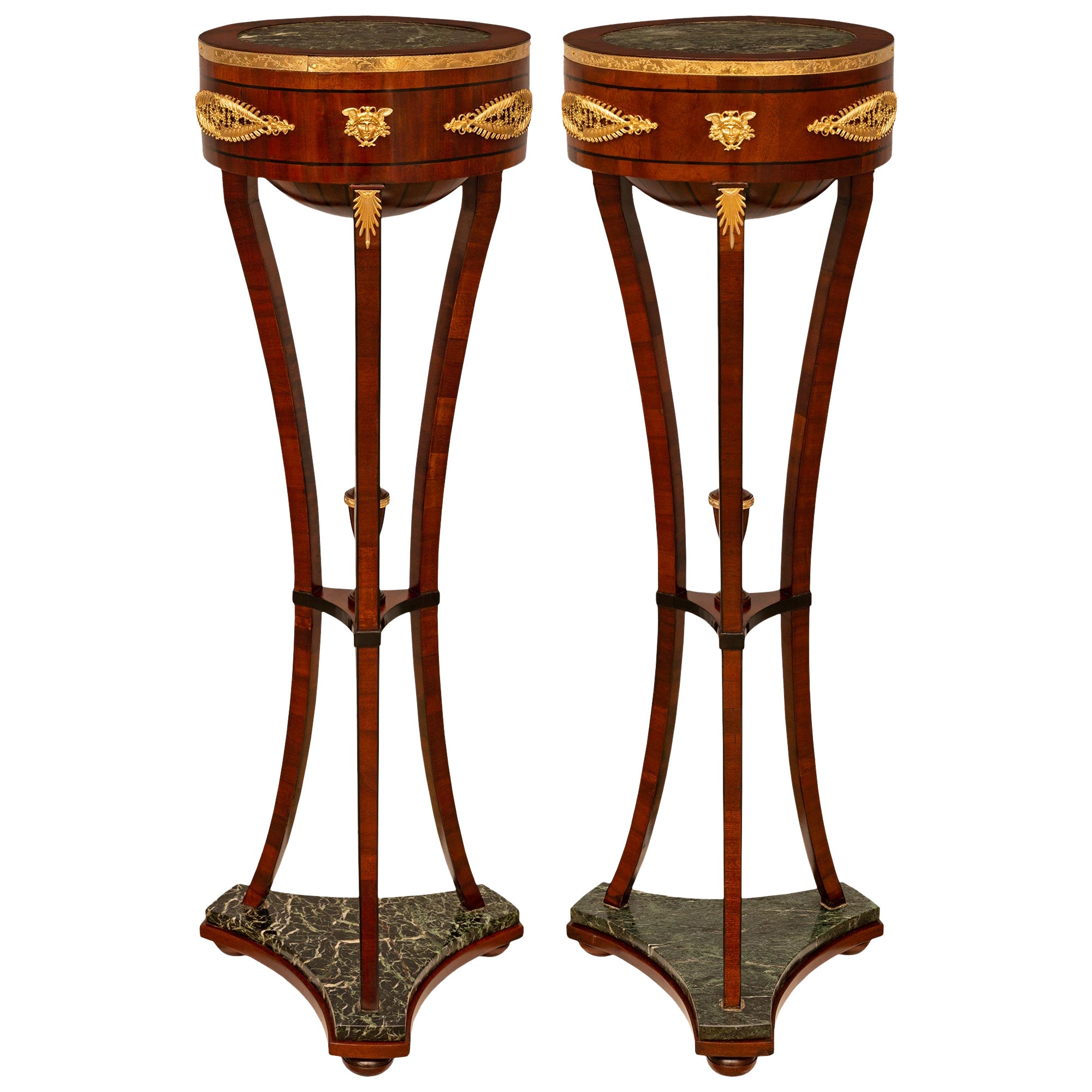
A stunning pair of Baltic 19th century Neo-Classical st. Ormolu, Mahogany, and Vert de Patricia marble pedestals. Each beautiful pedestal is supported by a triangular Vert de Patrici...
Category
Antique 19th Century Baltic Neoclassical Tables
Materials
Marble, Ormolu
Two Neoclassical Style Wooden Guéridons with Gilt Bronze Mounts
Located in London, GB
These wonderful guéridons are designed in the Empire style—named as such because it flourished in the period when Napoleon I was Emperor of France. The style employed Imperial Roman ...
Category
20th Century French Empire Gueridon
Materials
Ormolu, Bronze
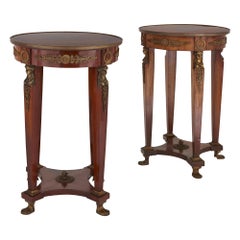
A pair of 19th c Continental mahogany and gilt bronze mounted gueridon tables
Located in Dallas, TX
A fine pair of late 19th century French Louis XVI mahogany and gilt bronze gueridon tables . Marble tops
Category
Antique Late 19th Century French Louis XVI Gueridon
Materials
Bronze
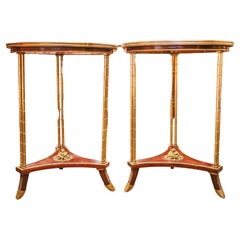
Pair of Neoclassical Style Round Side Tables, Manner of Adam Weisweiler
By Adam Weisweiler
Located in London, GB
Pair of neoclassical style round side tables, manner of Adam Weisweiler
French, 19th century
Measures: Height 76 cm, diameter 37.5 cm
These exquis...
Category
Antique 19th Century French Neoclassical Gueridon
Materials
Marble, Bronze, Ormolu
More Ways To Browse
Red Griotte Marble
Alcohol Poster
Antique Butlers Tray
Antique Cherub Painting
Antique Deed
Antique Knight Armor
Antique Leather Stamps
Antique Medical Prints
Antique Mongolian Furniture
Antique Side Table Chest
Antique Sterling Mirror
Antique Tapestry Fragments
Antique Turned Leg Side Tables
Antique Wood Hungarian
Asian 18 Century
Bronze Mounted Chinese Porcelain
Brown Jordan Chairs Vintage
Chinese Glazed Terracotta