Items Similar to Japanese Antique Large Exhibition Table 1860s-1920s / Low Table Wabi-Sabi
Want more images or videos?
Request additional images or videos from the seller
1 of 18
Japanese Antique Large Exhibition Table 1860s-1920s / Low Table Wabi-Sabi
$4,500
£3,415.73
€3,916.99
CA$6,351.72
A$6,817.98
CHF 3,630.23
MX$80,751.35
NOK 45,876.14
SEK 41,897.71
DKK 29,261.67
About the Item
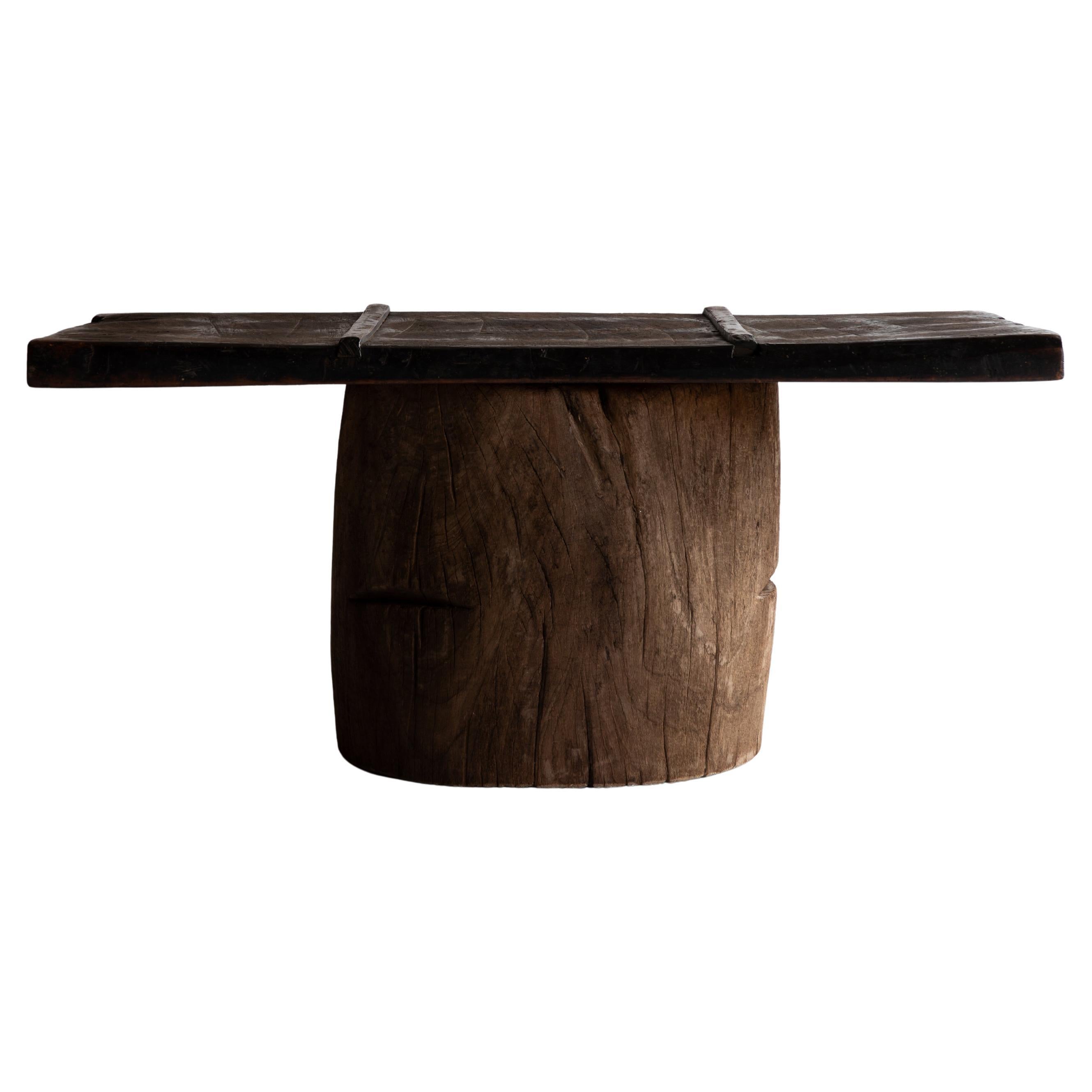
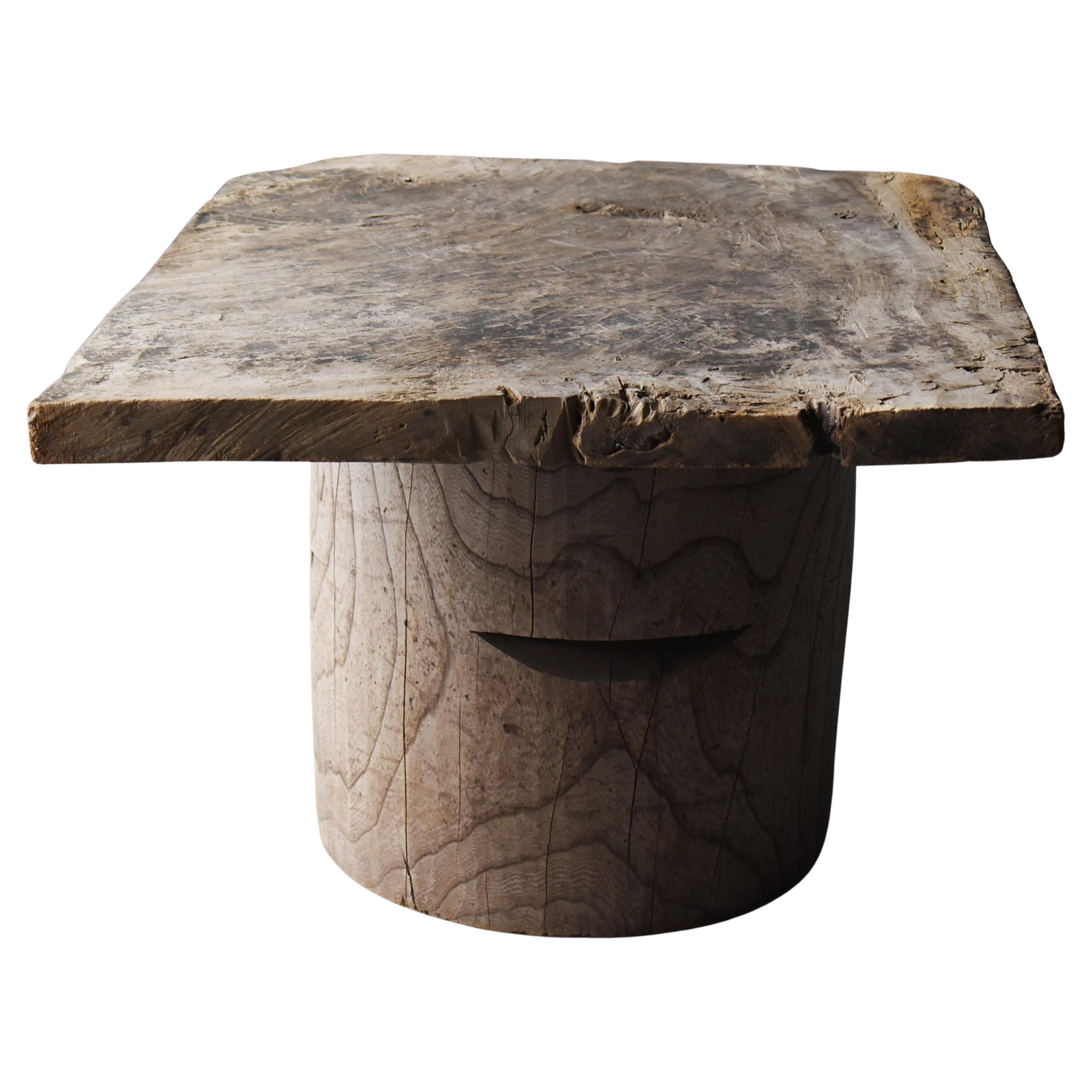
This is a large antique Japanese display table. A substantial sliding door from the Meiji period (1860s–1920s) has been repurposed as the tabletop and set atop a raw tree stump, preserving its primitive character. The structure is remarkably simple yet powerful, transcending the conventional category of furniture to assert a sculptural presence that defines the atmosphere of an entire space.
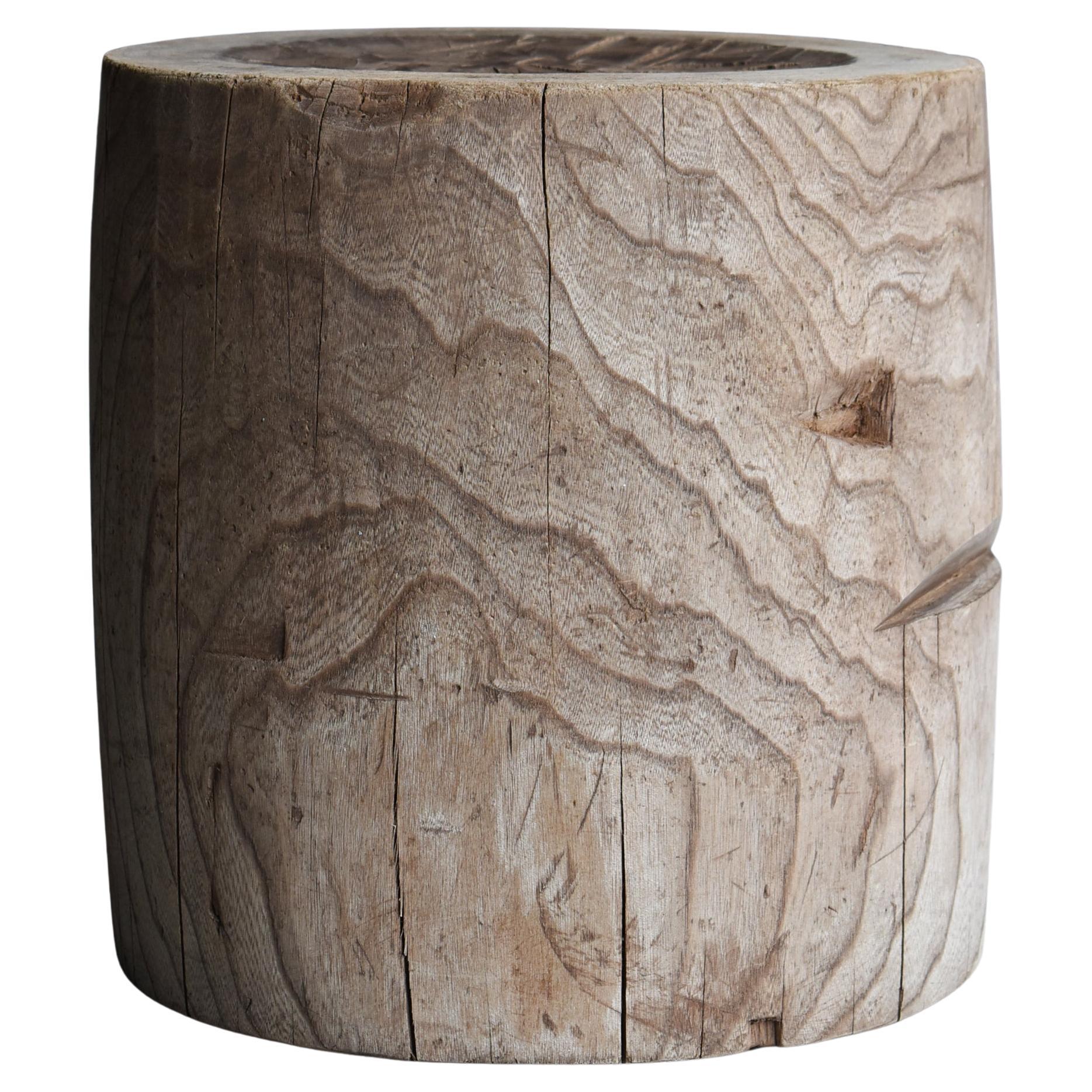
The sliding door used as the tabletop is an architectural element that once supported everyday life in Japan. Its surface is clad in sheet metal (totan), which, after many decades, has developed a subdued luster unique to aged metal. Numerous nail marks and slight distortions remain visible, lending the industrial material an unexpectedly organic expression. In contrast, the base is formed from a massive tree stump, believed to be walnut wood. With minimal carving or shaping, the stump conveys the original vitality and volume of the tree itself, providing a quiet yet overwhelming sense of stability.
The unforced combination of wood and metal—two fundamentally different materials—creates a distinctive tension rarely seen in contemporary design. Artificial and natural, architectural and primitive, function and form all coexist in careful balance. Whether used as a display table or simply placed in a space as an art piece, it conveys a strong conceptual presence.
If the table is intended for practical use, such as a dining table, additional stability can be achieved by securing the sliding door to the stump with appropriate hardware. The fact that the piece allows room for such adaptation depending on its intended use is itself one of its appealing qualities.
Throughout the table, the spirit of wabi-sabi—the acceptance of time, wear, and imperfection as beauty—quietly resides. Integrating this piece into a contemporary interior will bring a sense of calm depth, far removed from excessive ornamentation. The item will be carefully and safely shipped from Japan.
Weight: sliding door 31 kg; tree stump approximately 40 kg
- Similar to:Axel Vervoordt (Designer)
- Dimensions:Height: 14.38 in (36.5 cm)Width: 70.48 in (179 cm)Depth: 42.52 in (108 cm)
- Style:Primitive (In the Style Of)
- Materials and Techniques:
- Place of Origin:
- Period:
- Date of Manufacture:1860s-1920s
- Condition:Wear consistent with age and use.
- Seller Location:Chōsei District Nagara, JP
- Reference Number:1stDibs: LU10403248423702
About the Seller
4.8
Platinum Seller
Premium sellers with a 4.7+ rating and 24-hour response times
Established in 2017
1stDibs seller since 2025
73 sales on 1stDibs
Typical response time: 3 hours
- ShippingRetrieving quote...Shipping from: Chōsei District Nagara, Japan
- Return Policy
More From This Seller
View AllJapanese Antique Massive Low Table 1860s-1920s / Sofa Table Side Table Wabi Sabi
By Axel Vervoordt
Located in Chōsei District Nagara, JP
This is an old, oversized Japanese low table in a primitive style.
It is a one-of-a-kind piece composed of wood materials that were originally used during the Meiji period (1860s–192...
Category
Early 20th Century Japanese Primitive Sofa Tables
Materials
Wood
Japanese Antique Wabi-Sabi Low Table Edo period 1800s-1860s / Side Table
Located in Chōsei District Nagara, JP
This is an old Japanese low table, crafted during the Edo period (1800s–1860s). It is a rare piece of furniture that has survived through the centuries to the present day. Made of su...
Category
Antique Mid-19th Century Japanese Edo Side Tables
Materials
Cedar
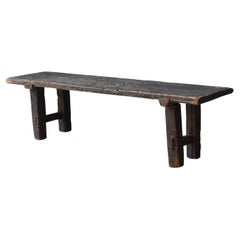
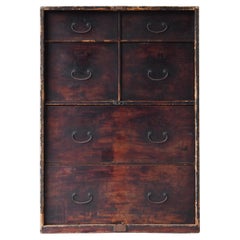
Japanese Antique Large Drawer 1860s-1920s / Tansu Sideboard Wabi Sabi
Located in Chōsei District Nagara, JP
This is a Japanese made drawer storage.
It was made between the Meiji and Taisho periods (1860s-1920s), and is a piece of furniture with a long history that still has a strong presen...
Category
Early 20th Century Japanese Meiji Commodes and Chests of Drawers
Materials
Wood
$1,440 Sale Price
42% Off
Japanese Antique Primitive Coffee Table 1860s-1900s / Side Table Wabi Sabi
By Axel Vervoordt
Located in Chōsei District Nagara, JP
This is an old Japanese side table in a primitive style, dating back to the Meiji period (1860s–1900s).
Originally used in a farmhouse, the piece still exudes a commanding presence e...
Category
Early 20th Century Japanese Primitive Coffee and Cocktail Tables
Materials
Wood
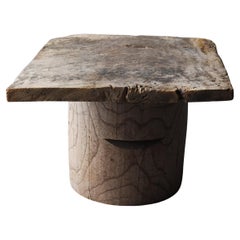
Japanese Antique Primitive Coffee Table 1860s-1920s / Side Table Wabisabi
Located in Chōsei District Nagara, JP
This is an old Japanese primitive-style coffee table. Completely free of excessive ornamentation, its presence is defined solely by material and form. From the moment it is placed in...
Category
Early 20th Century Japanese Primitive Side Tables
Materials
Wood
Japanese Antique Small Drawer 1860s-1920s / Nightstand Tansu Wabi Sabi
Located in Chōsei District Nagara, JP
This is a small drawer storage made in Japan.
The furniture was made between the Meiji and Taisho periods (1860s-1920s) and is made of cedar wood.
Iron is used for the handles, and t...
Category
Early 20th Century Japanese Meiji Commodes and Chests of Drawers
Materials
Iron
$560 Sale Price
37% Off
You May Also Like
Japanese Antique Low Table 1860s-1920s / Sofa Table Wabi Sabi
By Axel Vervoordt
Located in Sammu-shi, Chiba
This sculptural low table is composed of two antique Japanese utilitarian objects, created during the late Meiji to early Taishō period, approximately (1868 to 1920).
The tabletop i...
Category
Early 20th Century Japanese Meiji Sofa Tables
Materials
Wood, Cedar
Japanese Low Table, Wabi-sabi, 1920s, Japan
Located in Tokyo, Tokyo
The antique low table, that was crafted from old Japanese wood.
The top panel has been roughly shaved and showcases various marks and scratches that tell a story of its history.
It...
Category
Early 20th Century Japanese Sofa Tables
Materials
Wood
Japanese Antique Large Low Table / Sofa Table Center Table / Wabi-Sabi Primitive
By Axel Vervoordt
Located in Iwate-gun Shizukuishi-cho, Iwate Prefecture
This is a large low table made from old Japanese wood.
The tabletop is a very large, heavy board, and over the years, its surface has developed a natural, primitive texture. While i...
Category
Early 20th Century Japanese Primitive Center Tables
Materials
Hardwood, Cedar
Japanese Antique Large Center Table / Sofa Table Low Table / Wabi-Sabi Primitive
By Axel Vervoordt
Located in Iwate-gun Shizukuishi-cho, Iwate Prefecture
This is a large center table crafted from aged Japanese wood.
The tabletop is an extremely large, heavy board, and its years of use have given it a natural, primitive texture. It is ...
Category
Early 20th Century Japanese Primitive Center Tables
Materials
Hardwood, Cedar
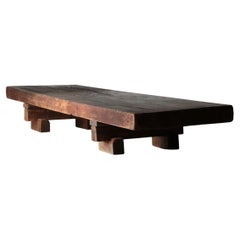
1800s - 1860s Edo Japanese antique chestnut low coffee table wabi sabi primitive
Located in 常陸大宮市, JP
New finds from Kura (traditional style warehouse) in Yamagata pref., Tohoku area, Japan.
This antique low writing desk is a product of 1800s - 1860s (late Edo era), estimate from the style and conditions.
Made of thick, sturdy single solid chestnut wood boards. Can be used as coffee table, display table etc.
Yamagata pref. is known to rich woodcraft cultures. The most known products are bold but elaborate, premium Tansu furnitures...
Category
Antique Late 19th Century Japanese Edo Coffee and Cocktail Tables
Materials
Wood, Chestnut
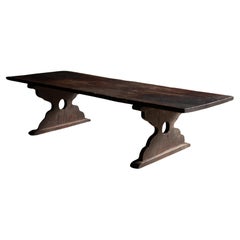
Japanese Antique Rustic Coffee Table 1860s-1900s / Wabi Sabi
Located in Sammu-shi, Chiba
Very old Rustic style coffee table made in Japan.
The furniture is from the Meiji period (1860s-1900s).
It is carved from a large zelkova tree.
The annual rings and grain of the zel...
Category
Early 20th Century Japanese Rustic Coffee and Cocktail Tables
Materials
Wood