Items Similar to Antique Japanese wooden coffee table with a tasteful ink-wash pattern/Meiji
Want more images or videos?
Request additional images or videos from the seller
1 of 21
Antique Japanese wooden coffee table with a tasteful ink-wash pattern/Meiji
$1,000
£747.47
€862.47
CA$1,399.90
A$1,479.12
CHF 795.59
MX$17,710.06
NOK 9,967.85
SEK 9,129.10
DKK 6,440.28
About the Item
Long a beloved part of Japanese culture, the "fuzukue" (writing desk) originated as a piece of furniture for writing, literally meaning "a desk for writing," and has accompanied quiet desk-based pursuits such as calligraphy, writing letters, and reading. Unlike Western desks, Japanese writing desks are low-profile and designed for use while sitting on the floor, making them a natural outgrowth of tatami culture. Their history dates back to before the Edo period, when they developed alongside the stationery boxes and inkstone boxes used by monks and scholars. From the Edo period onward, they became widely used in the lives of ordinary people.
This wooden writing desk is believed to have been made between the Meiji and early Showa periods and is likely made of beech (Japanese oak). Beech is a representative Japanese hardwood, known for its dense, strong yet warm grain, and is used for a wide range of purposes, from everyday items to furniture. This desk is another tool that has long been used in everyday life, and its simple, linear leg structure and rustic appearance, made with only the bare minimum of materials, suggest its quiet presence as a part of the lives of ordinary people at the time.
The underside of the tabletop and legs appear blackened by smoke; this is the result of smoke from the hearth and soot from candles seeping in over time, naturally altering the wood's surface. Rather than being intentionally painted, the piece is imprinted with the "color of time" accumulated over the course of everyday life, evoking the deep flavor unique to antique Japanese furniture. This natural sooting exudes an alluring charm that not only evokes age, but also seems to capture the temperature and atmosphere of life at the time.
The most distinctive feature of this desk is the unique black pattern that appears on the tabletop. At first glance, the bold, flowing pattern resembles that of a rare wood like black persimmon, but is actually a sumi-e (ink wash) painting created by dripping ink onto the beech tabletop and utilizing the resulting bleeding. This is no coincidence; judging by the flow of the brushstrokes, the shades of ink, and the use of space, it appears to have been applied playfully by someone with some knowledge of ink painting. The bold black brushstrokes blend naturally with the wood grain, creating a one-of-a-kind appearance, as if part of the ink painting were inhabiting the tabletop.
I have handled many desks, but this is the first time I have seen such an original piece, where the wood grain has been "added" with ink, making it an extremely rare piece. The ink is deeply absorbed into the wood, so a light wipe with water will not remove it, making it safe for use. The tabletop is in excellent condition overall, with no significant warping or distortion, and no missing or repaired parts.
This desk is a great low table for your living room, and also works well as a display stand for vases and other objects. It blends seamlessly into modern interiors while still emanating a strong presence. The composition with the ink flowing down the center is particularly beautiful, adding a sense of tranquility and a deep, lingering impression to any space. This is a truly fascinating piece that combines Japanese lifestyle culture with artistic playfulness.
Dimensions: W88.7cm x D34.5cm x H26.5cm
Weight: 5kg
Product Number: TA129
[Our Social Role]
--------------------------------------------------------------------------------------------------------
We are a specialized team dealing in antiques and vintage items, comprised of stores based on three distinct brands. While focusing on Japanese items, we also offer a carefully curated selection of attractive goods from around the world—each evoking the culture and history of its country of origin.
Unlike the traditional Japanese antique furniture and art that have been appreciated overseas until now, we shine a light on the tools and furniture that were used for many years in ordinary Japanese homes and farmhouses. These objects have gained a unique charm over time, their beauty deepened by the history accumulated through daily life. In today’s world, however, many of these precious items are discarded during home demolitions. We are committed to reassessing their value and passing them on to future generations.
Drawing from our extensive experience—having seen tens of thousands of items through direct purchases, markets, and auction houses—we carefully select and present only the most captivating pieces. This is something made possible only through the years of knowledge and expertise we have cultivated.
Rather than focusing on the widely known facets of Japanese art and culture, we highlight the subtle beauty born from the everyday life of common people. It is this rediscovered beauty, steeped in history, that we strive to share with the world.
About the Seller
5.0
Platinum Seller
Premium sellers with a 4.7+ rating and 24-hour response times
Established in 2015
1stDibs seller since 2020
1,719 sales on 1stDibs
Typical response time: 6 hours
- ShippingRetrieving quote...Shipping from: senzoku, Japan
- Return Policy
More From This Seller
View AllJapanese antique wooden small low table/1868-1920/coffee table
Located in Sammu-shi, Chiba
This is an antique wooden low table that was used in rural areas and shops in Japan.
In Japanese, this is called "fu-zukue."
Farmers used it to study, and shops used it to keep track...
Category
Antique Late 19th Century Japanese Meiji Tables
Materials
Wood
Japanese old wooden low table/wabisabi coffee table/1868-1920
Located in Sammu-shi, Chiba
This piece is a Japanese wooden low table crafted during the
Meiji to Taisho period (1868–1920).
It is made from tochi (Japanese horse chestnut) wood, a material valued for its su...
Category
Early 20th Century Japanese Meiji Sofa Tables
Materials
Wood
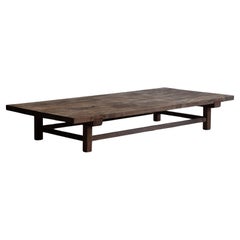
Japanese antique wabi-sabi black coffee low table / 1850-1912 / small table
Located in Sammu-shi, Chiba
This wooden low table, known as a "fuzukue" (writing desk), was made in Japan between the late Edo and Meiji periods (19th century). Crafted from cedar, its light and soft grain full...
Category
Antique Late 19th Century Japanese Edo Furniture
Materials
Cedar
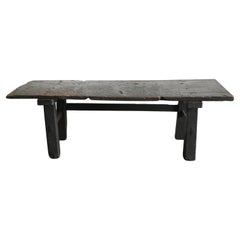
Japanese antique wooden low table/1868-1920/Wabi-sabi coffee table
Located in Sammu-shi, Chiba
This item is a stately Wabisabi wooden low table with a wooden box from the end of the Edo period to the Meiji period (1800-1912) in Japan as the table base, combined with an old oak...
Category
Antique Late 19th Century Japanese Meiji Sofa Tables
Materials
Oak
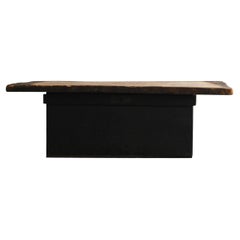
Japanese antique wooden sofa table/Late 19th century/Wabi-sabi low table
Located in Sammu-shi, Chiba
This is a board and a wooden box that were used in Japan from the Meiji period to the early Showa period.
These two can be combined to make a low table.
The tabletop is made of eithe...
Category
Antique Late 19th Century Japanese Meiji Sofa Tables
Materials
Cedar
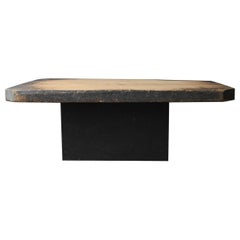
Antique Japanese Wooden Table / 1868-1920 / Wabi-Sabi Table
Located in Sammu-shi, Chiba
This Japanese antique wooden table was crafted between the Meiji and Taishō periods (1868–1920) and is made from solid pine wood.
While originally conceived as a functional piece fo...
Category
Antique Late 19th Century Japanese Meiji Tables
Materials
Wood
You May Also Like
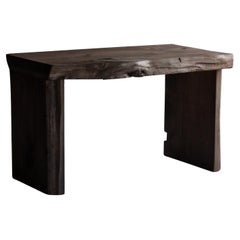
Japanese Antique Side Table, Late Meiji Era
1868–1912
, Wabi Sabi
Located in Hitachiomiya-shi, 08
This antique side table was crafted in the Late Meiji Era (1868–1912).
The top is made from solid zelkova (keyaki) wood, paired with legs crafted from cedar. The surface has develope...
Category
Early 20th Century Japanese Meiji Side Tables
Materials
Cedar
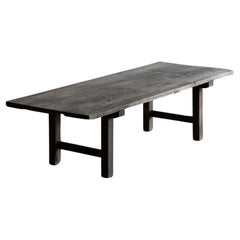
Japanese Antique Wabi-Sabi Low Table Edo period 1800s-1860s / Side Table
Located in Chōsei District Nagara, JP
This is an old Japanese low table, crafted during the Edo period (1800s–1860s). It is a rare piece of furniture that has survived through the centuries to the present day. Made of su...
Category
Antique Mid-19th Century Japanese Edo Side Tables
Materials
Cedar
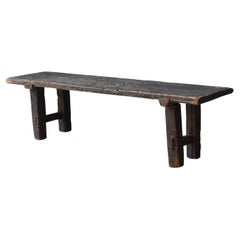
Japanese Antique Center Table / Sofa Table Coffee Table / Wabi-sabi Primitive
Located in Iwate-gun Shizukuishi-cho, Iwate Prefecture
This table is an original piece made from old Japanese wood.
The tabletop is a heavy, strong board that was used as a workbench for many years. Its rough appearance is marked by saw...
Category
Early 20th Century Japanese Primitive Center Tables
Materials
Hardwood
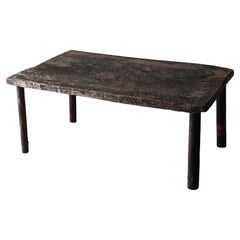
Japanese Antique Low Table / Sofa Table Coffee Table / 1868-1912s Wabi-Sabi
Located in Iwate-gun Shizukuishi-cho, Iwate Prefecture
This is a low table that combines old Japanese trees.
The detailed tree species of the upper board is unknown, but it is considered to be katsura wood, and the color has become dark...
Category
Antique Late 19th Century Japanese Meiji Sofa Tables
Materials
Wood, Cedar
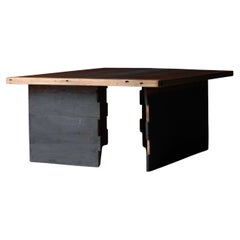
$1,200 Sale Price
20% Off
Japanese Antique Wood Low Table , Primitive Low Table , Wabi Sabi
Located in Katori-Shi, 12
This is an antique low table from the Taisho period.
The table top is made of five pieces of Shurizakura wood with beautiful grain, and its rich expression captivates the viewer. In...
Category
Early 20th Century Japanese Taisho Antiquities
Materials
Wood
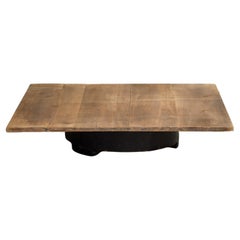
Japanese Antique Large Low Table / Sofa Table Center Table / Wabi-Sabi Primitive
By Axel Vervoordt
Located in Iwate-gun Shizukuishi-cho, Iwate Prefecture
This is a large low table made from old Japanese wood.
The tabletop is a very large, heavy board, and over the years, its surface has developed a natural, primitive texture. While i...
Category
Early 20th Century Japanese Primitive Center Tables
Materials
Hardwood, Cedar