Items Similar to Small Cafe 6116 Steel Table Round by Atelier Ruben Van Megen
Want more images or videos?
Request additional images or videos from the seller
1 of 5
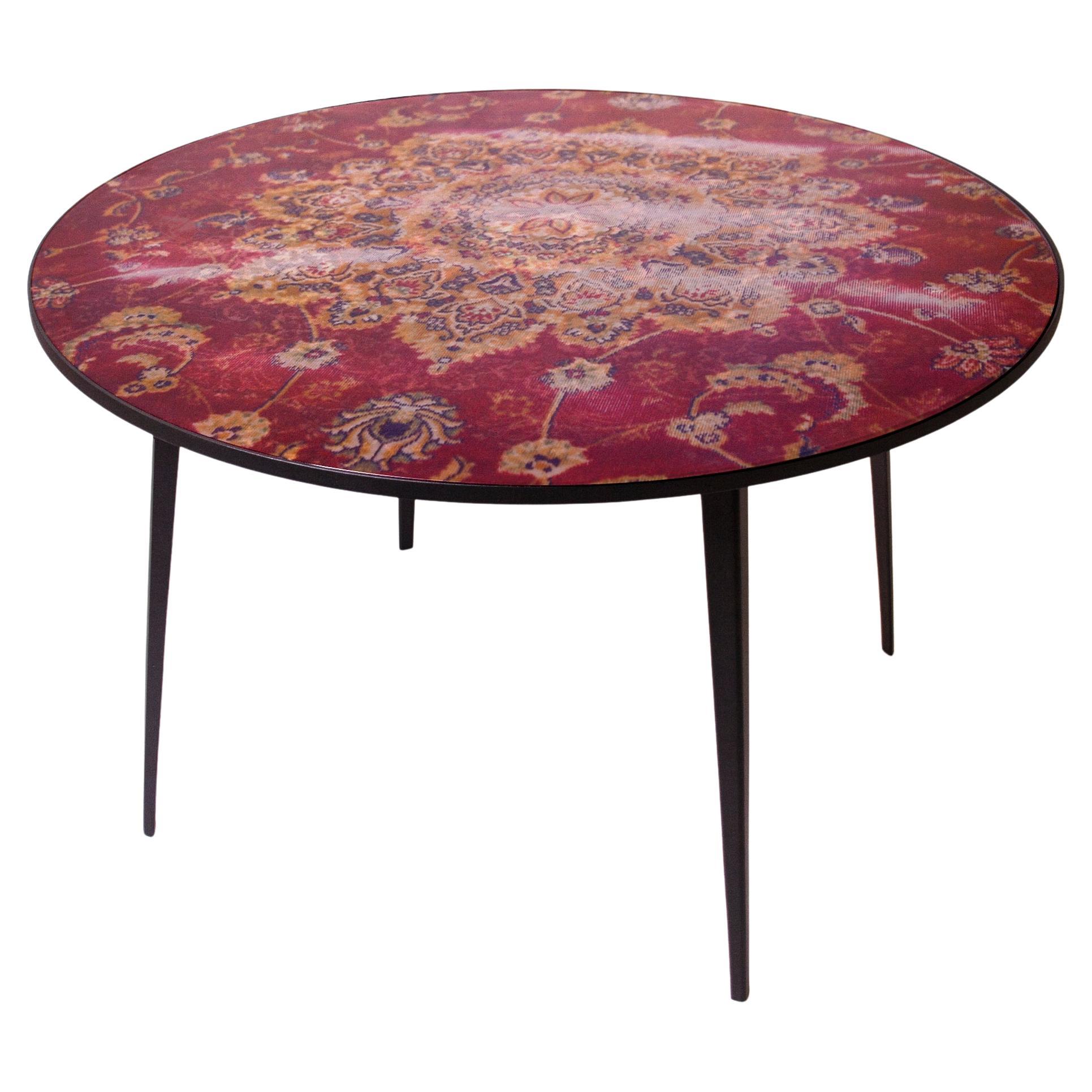
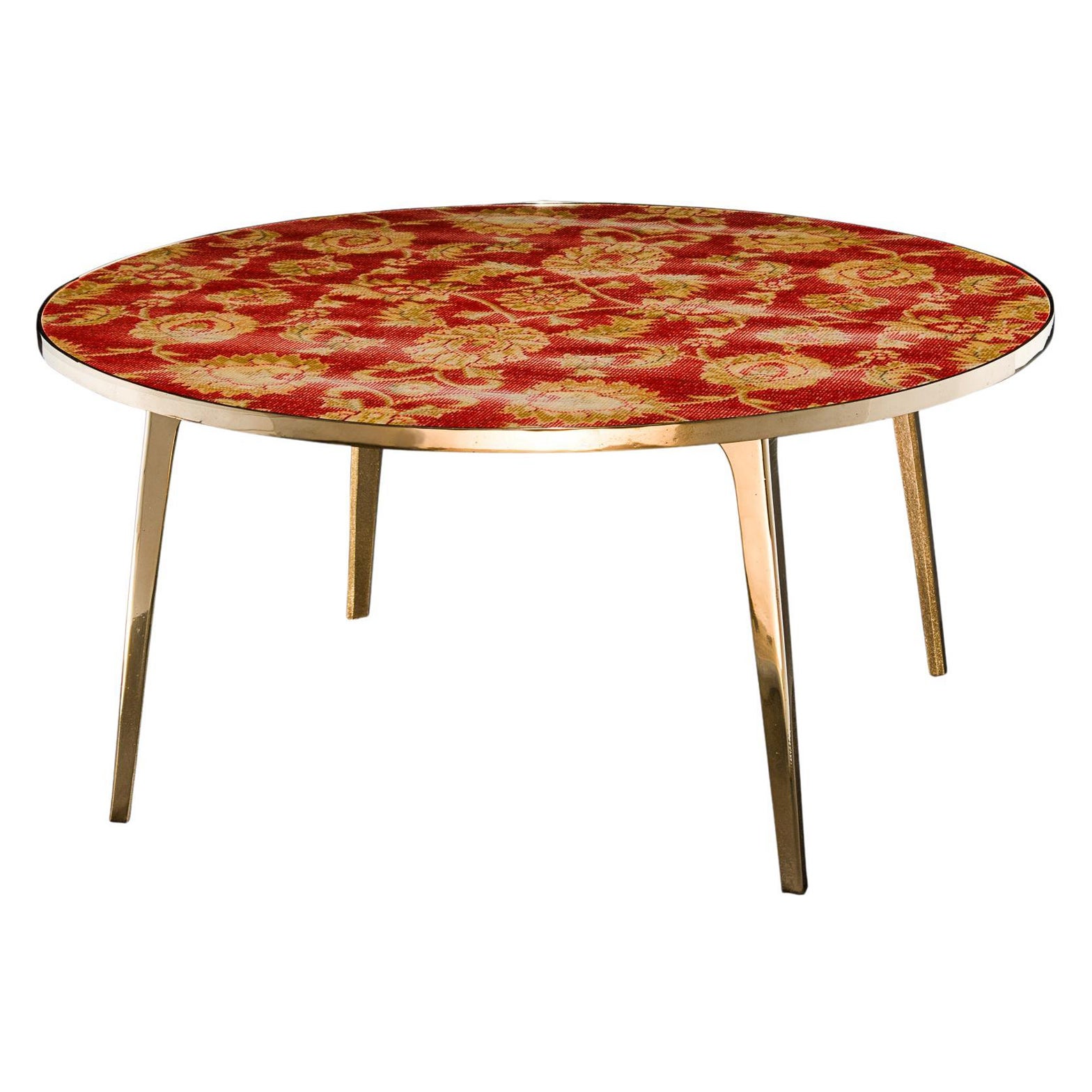
Small Cafe 6116 Steel Table Round by Atelier Ruben Van Megen
$9,872.30per item
£7,373.58per item
€8,250per item
CA$13,600.90per item
A$14,822.59per item
CHF 7,849.20per item
MX$178,034.88per item
NOK 99,372.59per item
SEK 91,363.32per item
DKK 62,850.72per item
Quantity
About the Item
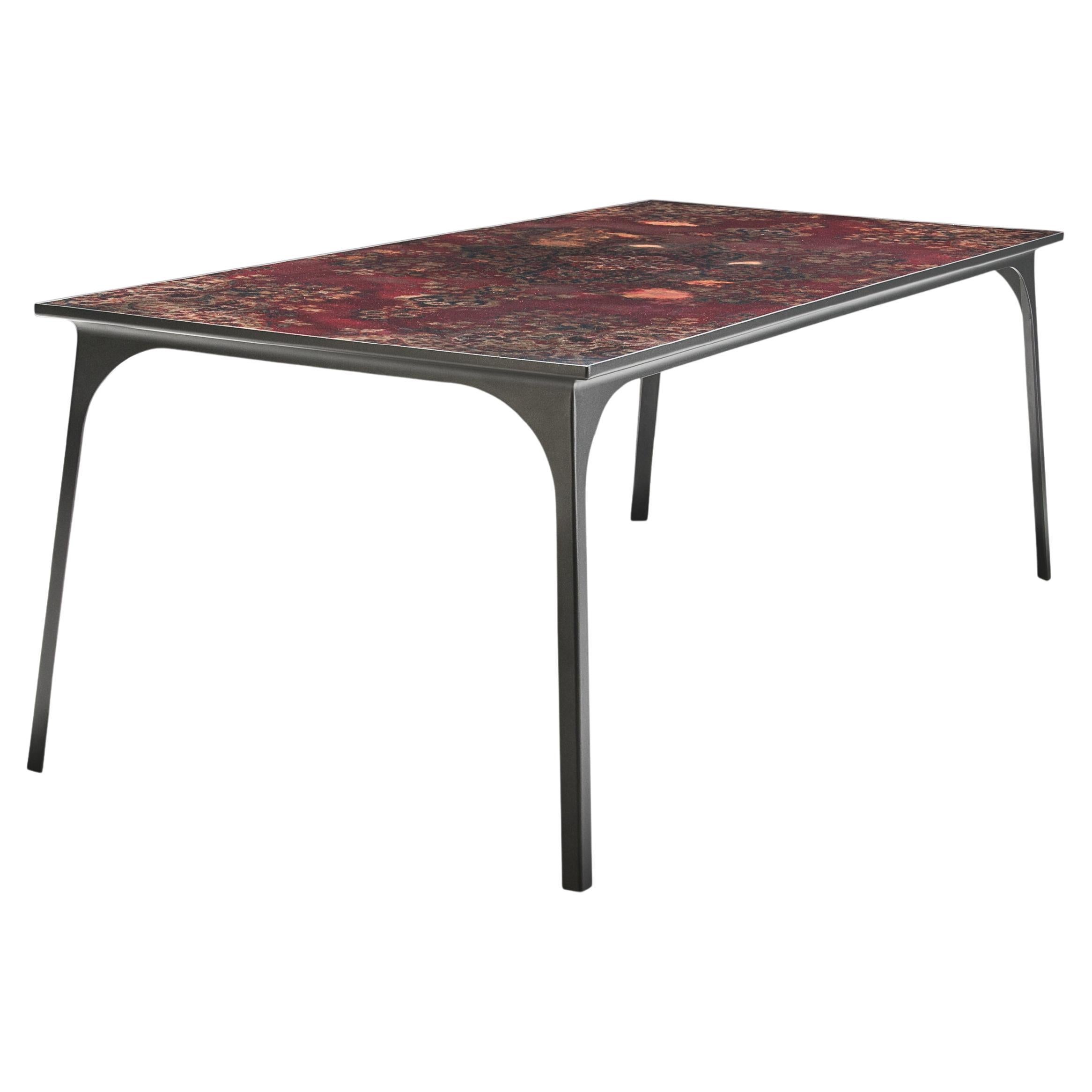
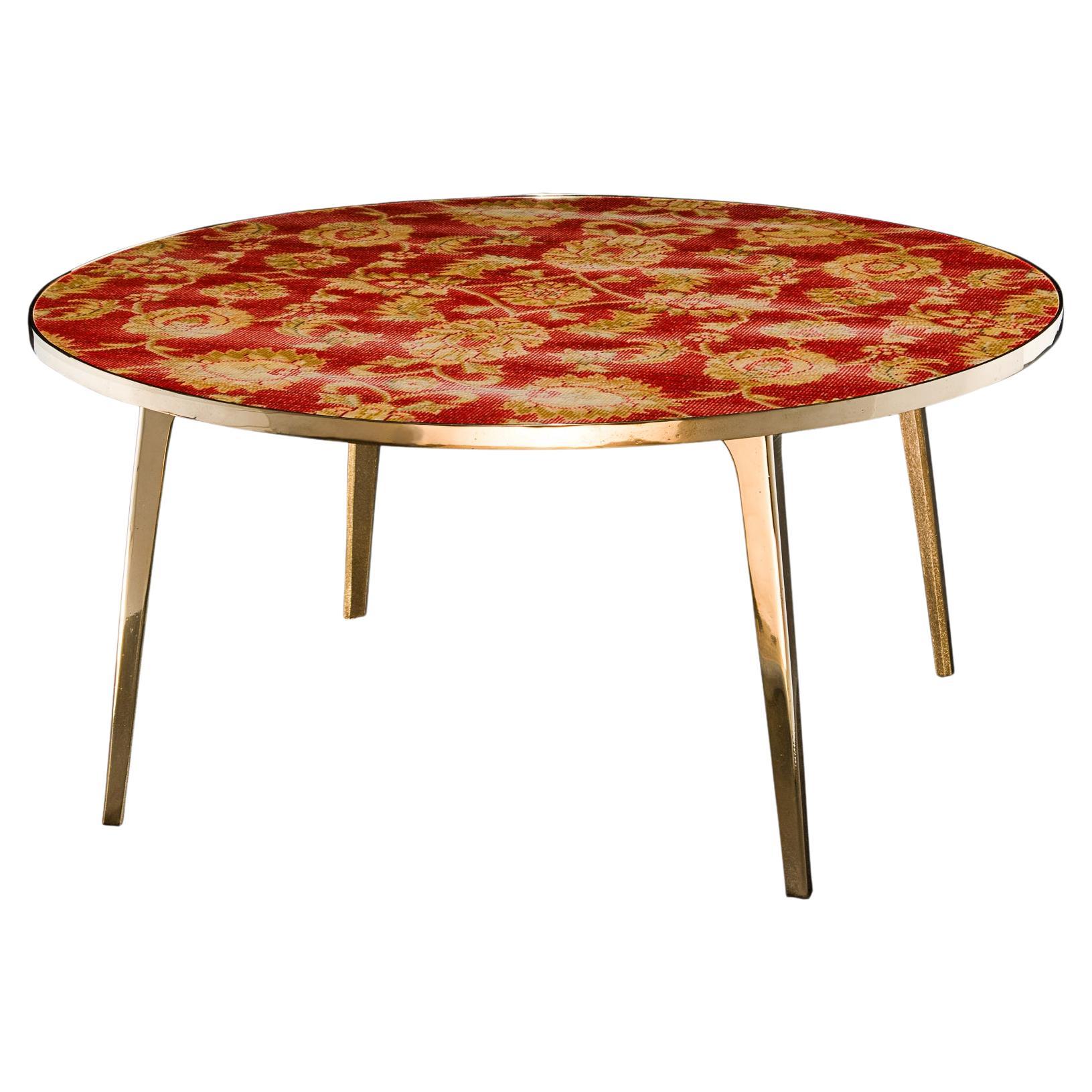
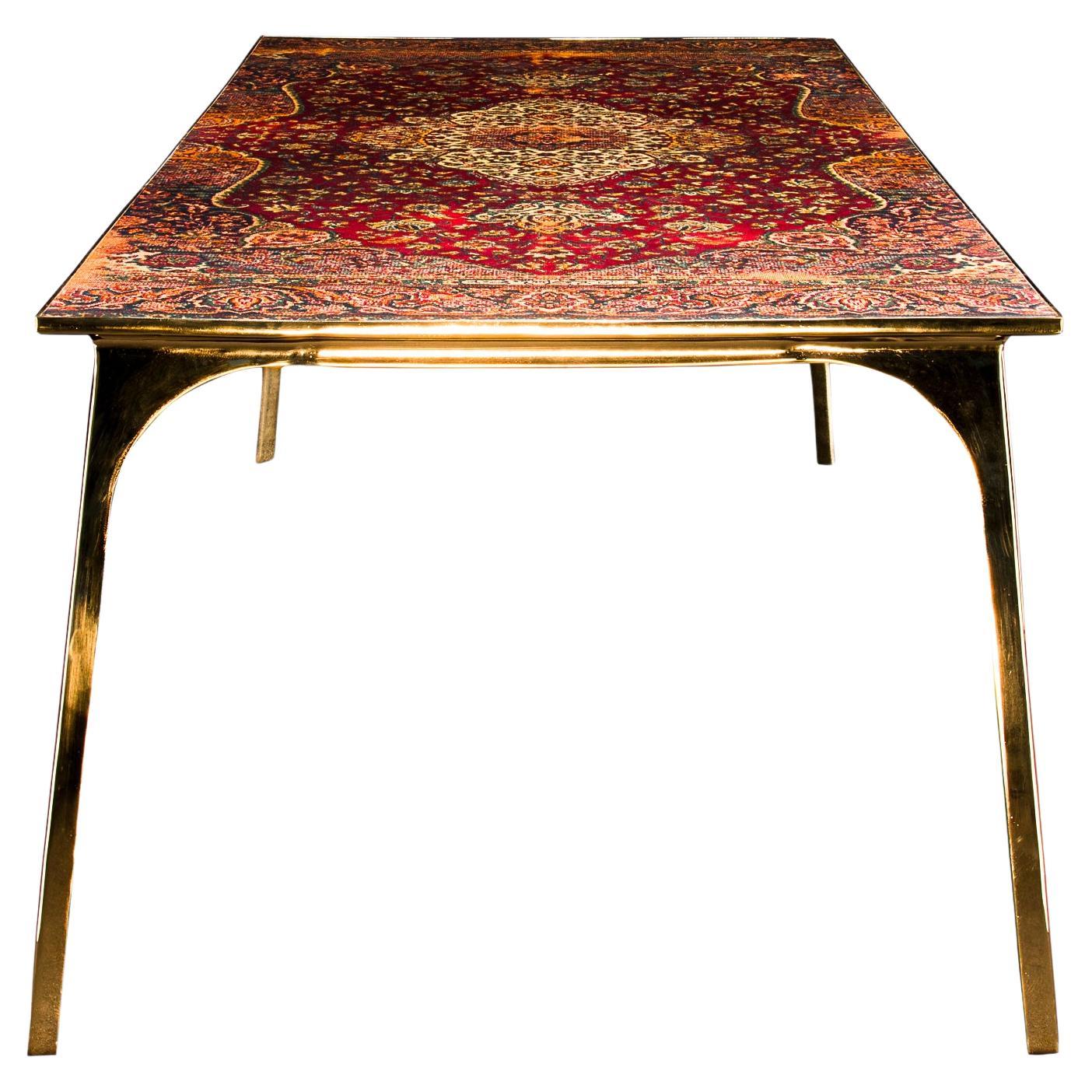
Small Cafe 6116 Steel Table Round by Atelier Ruben Van Megen
Dimensions: D 90 x H 42 cm
Materials: Persian carpet, resin, steel.
Ruben van Megen (1984) graduated from the Design Academy in Eindhoven in 2012, with the focus ‘public space’. Before that, he studied in Rotterdam, at het HMC College. His passion for design and fascination for developing new materials are a guarantee for high profile and unique work. Hence, starting his own design studio, Atelier Ruben van Megen, was self evident. In 2015, the first furniture collection “Uno” was born. In 2016, the second furniture collection, Café 6116, followed. Acknowledgment of the ‘Atelier Ruben van Megen-style’ became reality when the dining table from the Café 6116 was rewarded with a Red Dot Award; one of the most prestigious international labels for high quality design. The design has also won an A’ Design Award and Talente Award. Café 6116 is unique because it is inspired by re-use of materials and precious memories of the former owners. On top of that: the contemporary series is just stunningly executed. In 2018, Atelier Ruben van Megen launched the chairs ‘Antimacassar III’ and ‘The Cord Connection’ and in 2020, ‘Sandcastles’ followed; a range of designs made out of sand. The work of Atelier Ruben van Megen is often international presented. For example, during the Salone del Mobile in Milano, New York Design Week (NYCxDesign), the London Design Festival and Dutch Design Week. The pieces are included in the collections of several international galleries and are regularly displayed in various museums. The designs are carefully produced in our own workshop, only the best materials are used. For specialized techniques, we collaborate with companies in our own region. Occasionally, we lecture about designing, entrepreneurship, and international business in the creative branch.
- Dimensions:Height: 16.54 in (42 cm)Diameter: 35.44 in (90 cm)
- Style:Post-Modern (Of the Period)
- Materials and Techniques:Resin,Steel
- Place of Origin:Netherlands
- Period:2010-
- Date of Manufacture:2024
- Production Type:New Custom(One of a Kind)
- Estimated Production Time:15-16 weeks
- Condition:
- Seller Location:Geneve, CH
- Reference Number:1stDibs: LU1219242459322

Galerie Philia
Galerie Philia is an international contemporary sculptural design and art gallery representing emerging and established designers and artists. The gallery is the brainchild of two brothers who share a lifetime passion for art, literature and philosophy. Their distinct academic background sets them apart from their peers, as it sees them following a rhizomatic and transcultural approach in the way they select works. This involves combining elements from multiple cultures in what becomes a network of harmoniously interconnected roots, ultimately revealing the beauty of each unique creation. The gallery’s non-hierarchical curation sits apart from the ephemerality of trends and focuses instead on the true aesthetic quality of the piece – alluring and timeless. Unlike others, Galerie Philia does not focus on a single style – whether minimalist, organic or raw – but rather embraces heterogeneity. The Galerie Philia takes pride in discovering new talents, providing them with multiple international platforms to showcase their latest creations. As well as propelling the newest generation of 21st century collectible design, Galerie Philia also works with internationally known design artists. Galerie Philia has a strong international presence, with galleries in Geneva, New York and Singapore. In addition to their permanent spaces, the gallery organizes temporary group exhibitions and artists residencies in first-class locations around the world.
Made to order creations can be done: please contact us for any request.
About the Seller
5.0
Recognized Seller
These prestigious sellers are industry leaders and represent the highest echelon for item quality and design.
Diamond Seller
Premium sellers with a 4.7+ rating and 24-hour response times
Established in 2015
1stDibs seller since 2015
5,162 sales on 1stDibs
Typical response time: <1 hour
- ShippingRetrieving quote...Shipping from: Rennes, France
- Return Policy
More From This Seller
View AllCafe 6116 Steel Table Round by Atelier Ruben Van Megen
Located in Geneve, CH
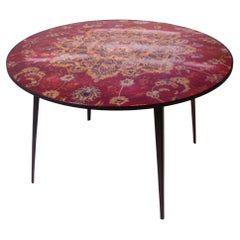
Cafe 6116 Steel Table Round by Atelier Ruben Van Megen
Dimensions: D 125 x H 76 cm
Materials: Persian carpet, resin, steel.
Ruben van Megen (1984) graduated from the Design Academy...
Category
2010s Dutch Post-Modern Tables
Materials
Steel
$14,479 / item
Cafe 6116 Steel Table by Atelier Ruben Van Megen
Located in Geneve, CH
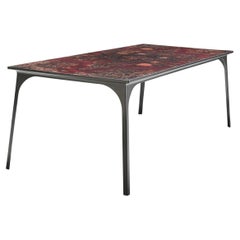
Cafe 6116 Steel Table by Atelier Ruben Van Megen
Dimensions: W 220 x D 97 x H 76 cm
Materials: Persian carpet, resin, steel.
Ruben van Megen (1984) graduated from the Design Academ...
Category
2010s Dutch Post-Modern Tables
Materials
Steel
$16,453 / item
Cafe 6116 Bronze Table Round by Atelier Ruben Van Megen
Located in Geneve, CH
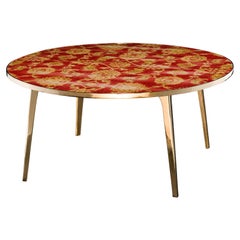
Cafe 6116 Bronze Table Round by Atelier Ruben Van Megen
Dimensions: D 135 x H 76 cm
Materials: Persian carpet, resin, bronze.
Ruben van Megen (1984) graduated from the Design Acade...
Category
2010s Dutch Post-Modern Tables
Materials
Bronze
$25,667 / item
Cafe 6116 Bronze Table by Atelier Ruben Van Megen
Located in Geneve, CH
Cafe 6116 Bronze Table by Atelier Ruben Van Megen
Dimensions: W 220 x D 97 x H 76 cm
Materials: Persian carpet, resin, bronze.
Ruben van Megen (1984) graduated from the Design Acad...
Category
2010s Dutch Post-Modern Tables
Materials
Bronze

$33,565 / item
Small Cafe 6116 Bronze Table Round by Atelier Ruben Van Megen
Located in Geneve, CH
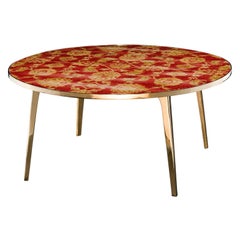
Small Cafe 6116 Bronze Table Round by Atelier Ruben Van Megen
Dimensions: D 90 x H 42 cm
Materials: Persian carpet, resin, bronze.
Ruben van Megen (1984) graduated from the Design ...
Category
2010s Dutch Post-Modern Tables
Materials
Bronze
Carlina Round Dining Table by Oscar Tusquets
Located in Geneve, CH
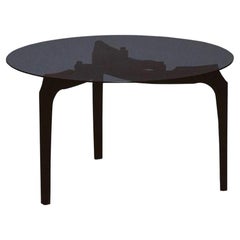
Carlina Round Dining Table by Oscar Tusquets
Dimensions: Ø 120 x H 74 cm.
Materials: Solid ash timber and tempered smoked glass.
Solid ash timber structure, stained black. 1 cm thick tempered smoked glass top.
Gaulino Family
Distinctive elements of the Gaulino chair run through this set of tables, combining clean, industrial processes with elegant, artisanal materials.
Oscar Tusquets describes himself as an architect by training, a designer by adaptation, a painter by vocation, and a writer through the desire to make friends. Graduating from Barcelona’s Escuela Técnica Superior de Arquitectura in 1965, Tusquets became a member of Studi Per. Together, they founded BD in 1972, and he set about designing furniture and objects, soon recognised by the Spanish National Design Award. The Gaulino Family was born in 1987, the first member of which was a chair, with a commission from an industry specialising in the production of baby cribs. This was Tusquets’ first chair in wood, and is a comfortable, beautiful solution that respects the nobility of the material. On completing production, he named the chair after the two men who
inspired it: Antoni Gaudí and Carlo Mollino. The Gualino come to be an icon of Spanish design, now accompanied by a family of tables in a number of sizes and finishes.
BD Barcelona
In 1972, a group of young architects and designers from Barcelona started BD. Our aim was to produce and market furniture...
Category
2010s Spanish Modern Dining Room Tables
Materials
Smoked Glass, Ash
$7,215 / item
You May Also Like
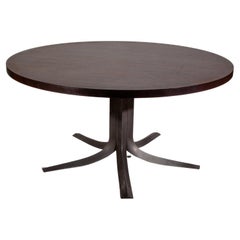
Round Wengé Top Table Designed by Jules Wabbes, Belgium, 1960s.
By Jules Wabbes, Bulo
Located in Antwerp, BE
A impressing and exclusive round dining table, conference table designed by Jules Wabbes for Bulo in 1966, Belgium. The round top is made of wengé , the stand is composed of five raw...
Category
Vintage 1960s Belgian Mid-Century Modern Tables
Materials
Bronze
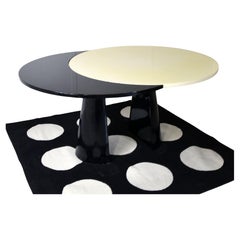
Round extendable table1980s
By Poliform
Located in bari, IT
Round table in white lacquered wood with extendable moon-shaped extension in black lacquered wood Italian production early 1980s
When you purchase vintage design products on our web...
Category
Vintage 1980s Italian Mid-Century Modern Tables
Materials
Metal
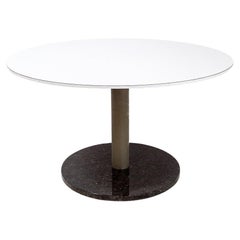
Round dining table By Alfred Hendrickx for Belform - Circa 1960
By Alfred Hendrickx
Located in Linkebeek, BE
Round dining table By Alfred Hendrickx for Belform - Circa 1960
Belgium design - Vintage
Measures : Ø 120cm H69cm
Material : white laminated wooden top - Granite
Wear consistent wi...
Category
Mid-20th Century Belgian Mid-Century Modern Dining Room Tables
Materials
Granite, Metal
Round Dining Table by Maria Pergay, France, 1970s
By Maria Pergay
Located in Waasmunster, BE
Very exclusive round dining table by Maria Pergay, France, 1970s.
Category
Vintage 1970s French Mid-Century Modern Dining Room Tables
Materials
Metal
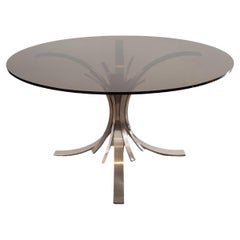
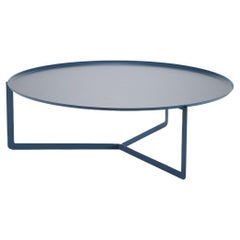
Table in Metal "Round" D95
Located in Saint-Ouen, FR
Table in metal "Round" D95
"Round" is the elegante collection of coffee and side tables with three bases.
Five sizes, from the smallest (D40) to the biggest (D120) for decorati...
Category
21st Century and Contemporary European Modern Coffee and Cocktail Tables
Materials
Metal
$1,914 / item
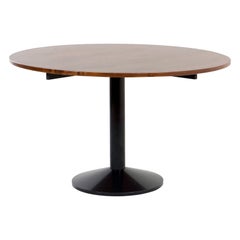
Franco Albini TL30 Round Table in Metal and Wood by Poggi 1950s
By Franco Albini, Poggi
Located in Cascina, Pisa
TL30 table with a round top in wood and a base in black lacquered metal, designed by Franco Albini and produced by Poggi in the 1950s.
After spending his childhood and part of his youth in Robbiate in Brianza, where he was born in 1905, Franco Albini moved with his family to Milan. Here he enrolled in the Faculty of Architecture of the Polytechnic and graduated in 1929. He starts his professional activity in the studio of Gio Ponti and Emilio Lancia, with whom he collaborates for three years. He probably had his first international contacts here
In those three years, the works carried out are admittedly of a twentieth-century imprint. It was the meeting with Edoardo Persico that marked a clear turning point towards rationalism and the rapprochement with the group of editors of “Casabella”.
The new phase that that meeting provoked starts with the opening of the first professional studio in via Panizza with Renato Camus and Giancarlo Palanti. The group of architects began to deal with public housing by participating in the competition for the Baracca neighborhood in San Siro in 1932 and then creating the Ifacp neighborhoods: Fabio Filzi (1936/38), Gabriele D’Annunzio and Ettore Ponti (1939).
Also in those years Albini worked on his first villa Pestarini.
But it is above all in the context of the exhibitions that the Milanese master experiments his compromise between that “rigor and poetic fantasy” coining the elements that will be a recurring theme in all the declinations of his work – architecture, interiors, design pieces . The opening in 1933 of the new headquarters of the Triennale in Milan, in the Palazzo dell’Arte, becomes an important opportunity to express the strong innovative character of rationalist thought, a gym in which to freely experiment with new materials and new solutions, but above all a “method”.
Together with Giancarlo Palanti, Albini on the occasion of the V Triennale di Milano sets up the steel structure house, for which he also designs the ‘furniture. At the subsequent Triennale of 1936, marked by the untimely death of Persico, together with a group of young designers gathered by Pagano in the previous edition of 1933, Franco Albini takes care of the preparation of the exhibition of the house, in which the furniture of three types of accommodation. The staging of Stanza per un uomo, at that same Triennale, allows us to understand the acute and ironic approach that is part of Albini, as a man and as a designer: the theme addressed is that of the existenzminimum and the reference of the project is to the fascist myth of the athletic and sporty man, but it is also a way to reflect on low-cost housing, the reduction of surfaces to a minimum and respect for the way of living.
In that same year Albini and Romano designed the Ancient Italian Goldsmith’s Exhibition: vertical uprights, simple linear rods, design the space. A theme, that of the “flagpole”, which seems to be the center of the evolution of his production and creative process. The concept is reworked over time, with the technique of decomposition and recomposition typical of Albinian planning: in the setting up of the Scipio Exhibition and of contemporary drawings (1941) the tapered flagpoles, on which the paintings and display cases are hung, are supported by a grid of steel cables; in the Vanzetti stand (1942) they take on the V shape; in the Olivetti store in Paris (1956) the uprights in polished mahogany support the shelves for displaying typewriters and calculators. The reflection on this theme arises from the desire to interpret the architectural space, to read it through the use of a grid, to introduce the third dimension, the vertical one, while maintaining a sense of lightness and transparency.
The flagpole is found, however, also in areas other than the exhibition ones. In the apartments he designed, it is used as a pivot on which the paintings can be suspended and rotated to allow different points of view, but at the same time as an element capable of dividing spaces. The Veliero bookcase...
Category
Vintage 1950s Italian Mid-Century Modern Tables
Materials
Metal
Read More
Galerie Philia Unveils Limited-Edition Designs at Giampiero Tagliaferri’s New L.A. Studio
For the exhibition “Materia Perpetua,” the gallery asked an international group of makers — including Tagliaferri — to explore the possibilities of a surprisingly versatile material: onyx.
Galerie Philia Doesn’t Just Discover Fresh Design Talent — It Grows It
With an impressive slate of international exhibitions, the Geneva-based gallery raises the profiles of emerging designers.
More Ways To Browse
French 19th Century Bistro Table
Green Robe
Gustave Dore
Italian Painted Wall Plates
Japanese Movie Poster
Le Mans Original Vintage Poster
Majolica Wall Pocket
Memphis Modern Dining Set
Mexican Wood Frame
Midcentury Modern Silver Rings
Monkey Japan
Oriental Plate
Oro Zecchino
Oval Porcelain Plaque
Owl On Branch
Paris Street Scene Oil On Canvas Signed
Peruvian Antiques
Pith Paper