Want more images or videos?
Request additional images or videos from the seller
1 of 12

Gaetano Borsani for Atelier di Varedo Vanity Set with Stool in Walnut Burl

$7,200per set
£5,493.80per set
€6,249.60per set
CA$10,111.13per set
A$11,065.42per set
CHF 5,847.10per set
MX$132,073.08per set
NOK 74,616.31per set
SEK 68,242.69per set
DKK 46,681.30per set

About the Item

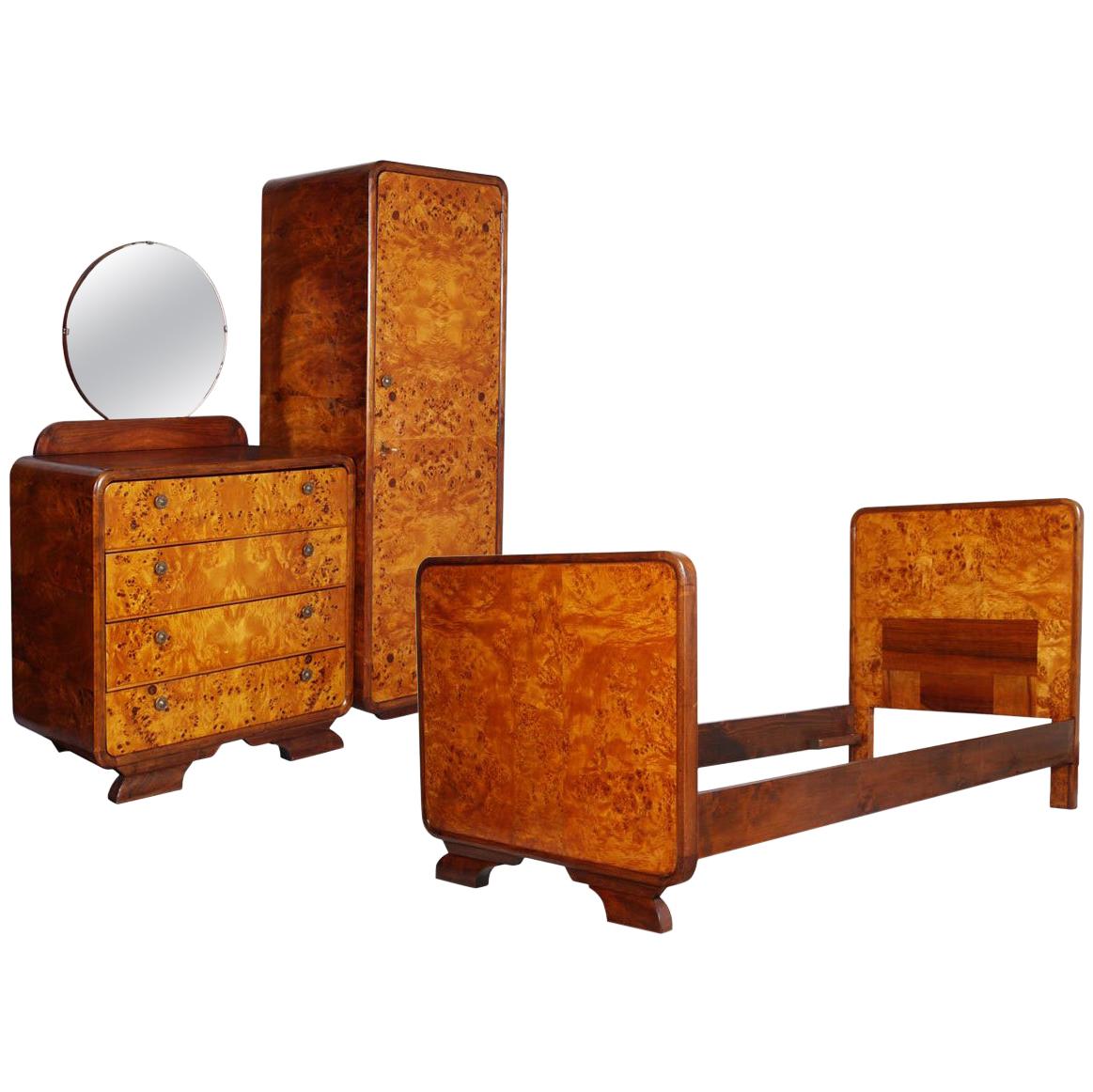
Gaetano Borsani for Atelier di Varedo - Gaetano Borsani, vanity and stool, walnut burl, brass, mirrored glass, linoleum, Milan, Italy, 1930 An exceptional vanity with matching stool designed by Gaetano Borsani, founder of the Atelier di Varedo, the workshop where his son Osvaldo Borsani’s artistic path would begin to take shape. This piece exemplifies geometric purity and material sophistication of 1930s Italian design, with walnut burl playing a central role. At the time, this richly figured wood was considered a luxury material, often found in the interiors of affluent Italian homes. The walnut burl here has been expertly bookmatched, a technique that creates a kaleidoscopic effect across the surface. The mirrored grain patterns appear almost organic in form: symmetrical, fluid, and deeply sensual. Its overall structure gives off a slightly monumental presence; a composition of clean, rectilinear forms that communicate solidity and restraint. It is essentially a large, block-like volume broken into three vertical sections: a dominant central body, which is subtly framed and slightly recessed, flanked by two narrower side compartments. The base is a low plinth with boxy feet that ground the piece visually, lifting it slightly from the floor but maintaining its sense of weight. The handles and round door knobs in brass are commanding accents that contrast elegantly with the organic fluidity of the walnut burl. The handles consist of stacked brass cylinders mounted horizontally. This juxtaposition of elaborate surface and strict geometry reflects a distinctly 1930s Italian ethos: a commitment to refinement with an embrace of the modern and the natural. Biography In the shifting design landscape of early 20th-century Lombardy, one small workshop rapidly rose to prominence: Atelier di Varedo, founded in 1923 (also known as Atelier Borsani Varedo). This family-run enterprise would, in the span of just over a decade, become a touchstone of the Italian modern movement – bridging craftsmanship, innovation, and artistic vision. The roots of the Borsani family ran deep in the world of furniture-making. Maria Galimberti and Gaetano Borsani both descended from families who had been working wood and crafting interiors since the early 1800s. It was this generational knowledge – this embedded culture of artigianato – that Gaetano built upon when, shortly after World War I, he struck out to form his own studio. By the mid-1920s, his workshop employed around twenty workers, a modest but serious operation focused initially on producing period furniture, still very much in line with postwar bourgeois tastes. But the Borsani workshop would not remain tied to the past. Quite the opposite. The firm had begun to pivot toward more modernist idioms. Pieces would take cues from the expressive geometry and stylized forms of Art Deco, and increasingly, from the sinuous, ornamental elegance of German Jugendstil. On the other, there’s an underlying solidity, almost sculptural, that gestures toward Novecento aesthetics, with even traces of Futurist abstraction in the bold contours and crafted dynamism of certain works. This wasn’t just a surface-level stylistic update; it was a philosophical shift in how furniture could be conceived, produced, and lived with. The workshop's internal library, filled with cutting-edge European design journals, speaks volumes about their appetite for international influence. Central to this transformation was Gino Maggioni, a young architect brought into the fold as what we might now call the company’s creative director. Gaetano Borsani entrusted him with the aesthetic reins of the business, and Maggioni – wide-eyed and ambitious – did not disappoint. Maggioni's intellectual trajectory was shaped in part by his presence at one of the 20th century’s most iconic architectural gatherings: the first Congrès International d’Architecture Moderne (CIAM) in 1928 at the Château de la Sarraz. There, he encountered the likes of Le Corbusier, Gerrit Rietveld, Alberto Sartoris, and Pierre Chareau – names synonymous with European modernism. This experience would prove formative, not just for Maggioni personally, but for the direction of Atelier di Varedo. Under his stewardship, the company rebranded – at least partially – to reflect his authorship. It became Atelier di Varedo – diretto dall’architetto Gino Maggioni, Mobili d’arte G. e Gaetano Borsani Varedo. That label, verbose as it may seem, marks a fascinating moment in Italian design history: the co-signature of the artisan and the architect, of making and thinking. This was not simply furniture production – it was an atelier in the fullest sense of the word. By the early 1930s, Maggioni’s tenure had ended, and the company shifted its name once again: Atelier di Varedo, Gaetano Borsani Varedo (Milano), coinciding with the moment when Osvaldo Borsani began to take a more active role in shaping the future of his father’s enterprise.
  • Creator:
    Gaetano Borsani (Designer)
  • Dimensions:
    Height: 74.41 in (189 cm)Width: 67.72 in (172 cm)Depth: 16.54 in (42 cm)
  • Sold As:
    Set of 2
  • Style:
    Art Deco (Of the Period)
  • Materials and Techniques:
  • Place of Origin:
  • Period:
  • Date of Manufacture:
    1930s
  • Condition:
    Wear consistent with age and use. Every item Morentz offers is checked by our team of 30 craftspeople in our in-house workshop. Special restoration or reupholstery requests can be done. Check ‘About the item’ or ask our design specialists for detailed information on the condition.
  • Seller Location:
    Waalwijk, NL
  • Reference Number:
    Seller: 50117155 + 501171511stDibs: LU933146542862

More From This Seller

View All
Gaetano Borsani for Atelier di Varedo Nightstands in Walnut Burl and Brass
By Gaetano Borsani, Atelier Borsani Varedo
Located in Waalwijk, NL
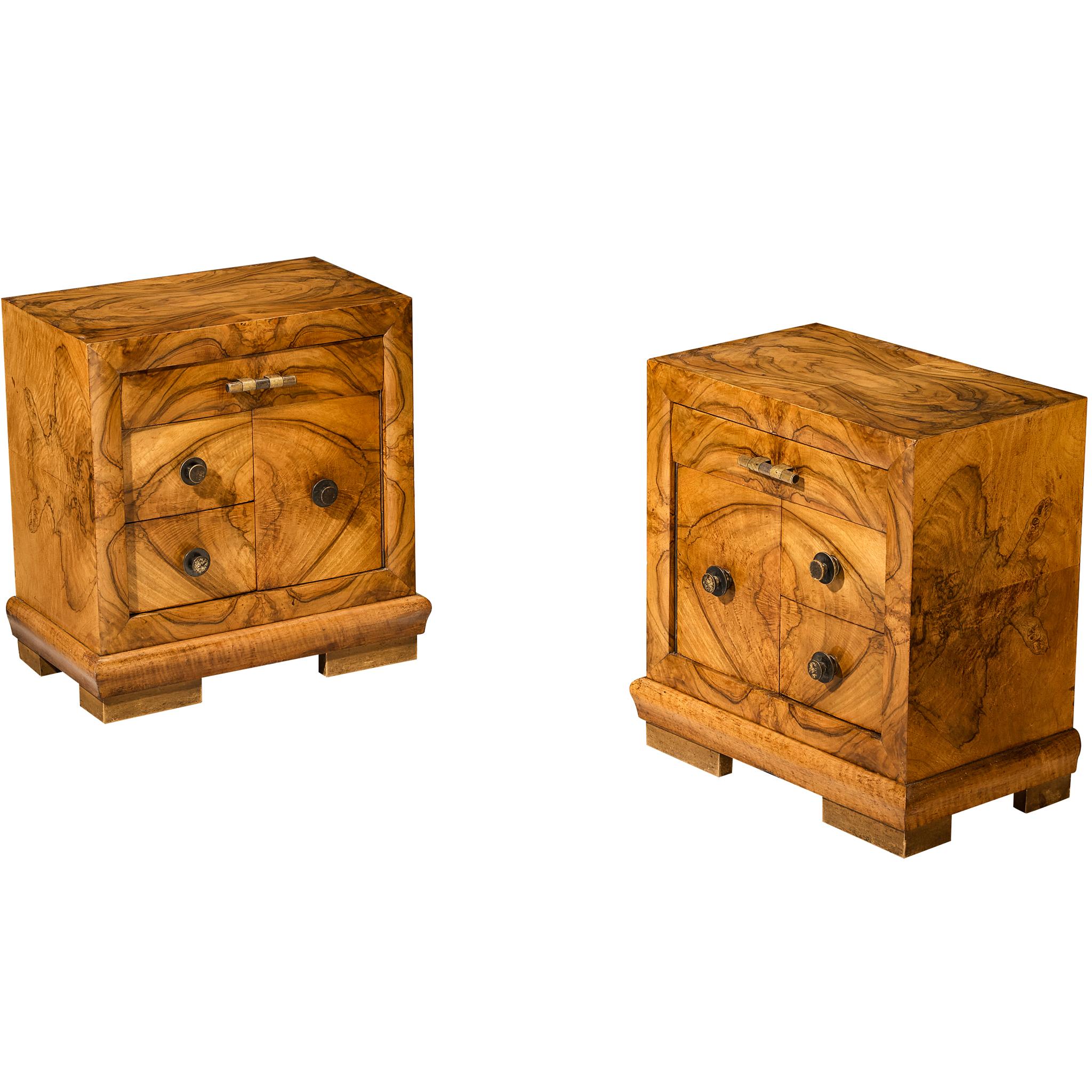
Gaetano Borsani for Atelier di Varedo - Gaetano Borsani, pair of nightstands, walnut burl, brass, linoleum, Milan, Italy, 1930 Exceptional nightstands designed by Gaetano Borsani, ...
Category

Vintage 1930s Italian Art Deco Bedroom Furniture

Materials

Brass

Ernesto Valabrega for Vittorio Valabrega Vanity Table and Seat in Oak
By Vittorio Valabrega
Located in Waalwijk, NL
Ernesto Valabrega for Vittorio Valabrega, vanity table and stool, oak, fabric, Italy, 1930s This refined vanity and stool, designed by Ernesto Valabrega for Vittorio Valabrega in t...
Category

Vintage 1930s Italian Art Deco Desks and Writing Tables

Materials

Fabric, Oak

Gaetano Borsani for Atelier di Varedo Bedroom Set in Walnut Burl and Brass
By Gaetano Borsani, Atelier Borsani Varedo
Located in Waalwijk, NL
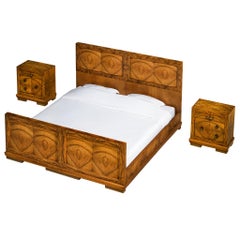
Gaetano Borsani for Atelier di Varedo - Gaetano Borsani, bedroom set with double bed and pair of nightstands, walnut burl, brass, linoleum, Milan, Italy, 1930 Exceptional bedroom s...
Category

Vintage 1930s Italian Art Deco Bedroom Furniture

Materials

Brass

Osvaldo Borsani for ABV Arredamenti Borsani-Varedo Sideboard in Chestnut
Located in Waalwijk, NL
Osvaldo Borsani for Arredamenti Borsani Varedo, sideboard, chestnut, brass, Italy, first half of the 1930s An early and refined design by Italian visionary Osvaldo Borsani, this ra...
Category

Vintage 1930s Italian Art Deco Sideboards

Materials

Chestnut

Paolo Buffa for Galdino Maspero Writing Desk in Walnut
By Paolo Buffa
Located in Waalwijk, NL
Paolo Buffa for Galdino Maspero, writing desk, walnut, Italy, late 1930s/early 1940s This writing desk, designed by Paolo Buffa and meticulously crafted by Galdino Maspero in the la...
Category

Vintage 1930s Italian Art Deco Desks and Writing Tables

Materials

Walnut

Fontana Arte Free-Standing Writing Desk in Walnut Burl and Brass
By Fontana Arte
Located in Waalwijk, NL
Fontana Arte, desk, walnut burl veneer, walnut veneer, brass, Italy, circa 1935 Fontana Arte, one of Italy’s most prestigious design firms, known for its pioneering contributions t...
Category

Vintage 1930s Italian Art Deco Desks and Writing Tables

Materials

Brass

You May Also Like

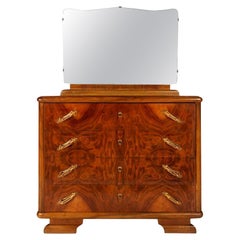
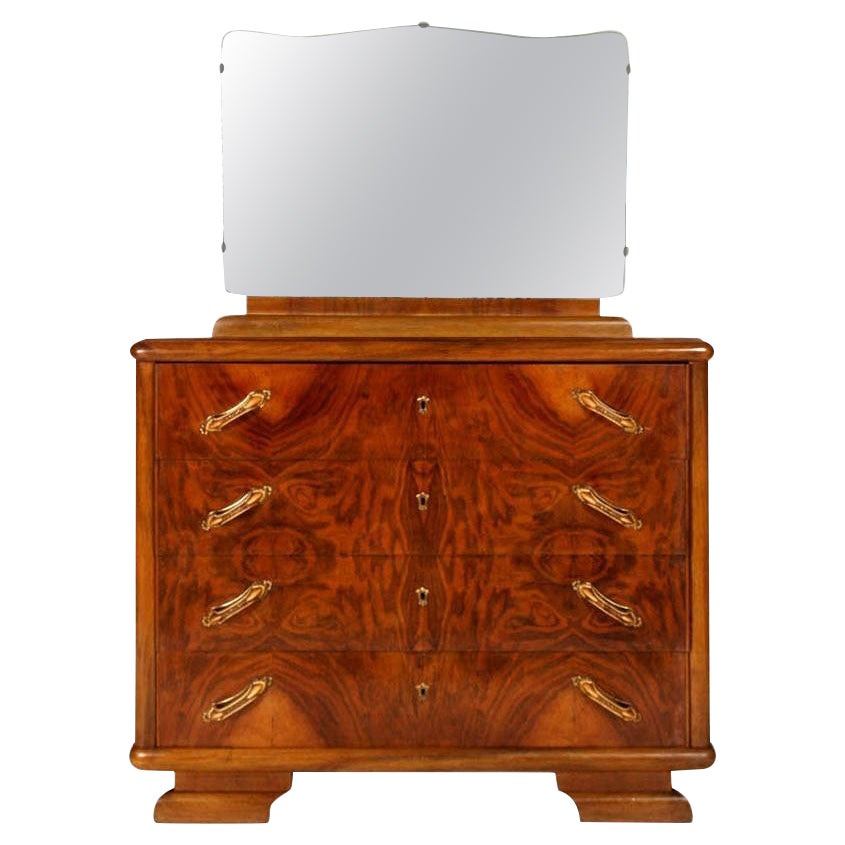
Art Deco Commode in Burl Walnut attributed Osvaldo Borsani , Atelier Di Varedo
By Atelier Borsani Varedo, Osvaldo Borsani
Located in Vigonza, Padua
Majestic and elegant chest of drawers attributed Osvaldo Borsani designer, produced in the Varedo Atelier , original in every part, with bakelite handles, 1930s Art Deco chest of drawers, commode , in burl walnut with mirror, polished to wax. Excellent condition. Measures cm: D 53, W 120, H 100. mirror cm: W 90 H 75. About Osvaldo Borsani Osvaldo Borsani (born 1911, Varedo, Italy–died 1985, Milano, Italy) was an Italian designer and architect, born into a family of furniture makers with along and well established artisanal tradition. His father, Gaetano Borsani, owned his own furniture shop, the Atelier di Varedo, where the 16-year-old Osvaldo received his first training. At that time, the designer of the atelier was the architect Gino Maggioni, who brought with him influences of the early 20th century Jugendstil movement from Vienna and who instilled in the young Borsani an appreciation for the arts and crafts and furniture making. Osvaldo Borsani first studied fine arts at Accademia di Belle Arti di Brera in Milan, graduating in 1931, and then pursued studies in architecture at Politecnico di Milano, where he graduated in 1936. In 1933, two years before graduating as an architect, Borsani designed the Casa Minima project for the V Triennale di Milano (Milan Triennial), along with architects Cairoli and Varisco. This project earned him a silver medal for its Rationalist code and geometries, and he received positive reviews from the critic Edoardo Persico of Casabella magazine. Villa Borsani And Other Prominent Architectural Work In 1937, Osvaldo Borsani designed Villa Presenti in Forte dei Marmi, a sea town in Tuscany where the Italian aristocracy and industrial elite would build their houses, a project that displayed the same rationalistic rigor displayed in Casa Minima, but softened by the use of mediterranean finishes and materials. Villa Borsani designed by Osvaldo Borsani. Varedo, Italy Villa Borsani. Varedo, Italy In 1943, Osvaldo designed and built his own house, the Villa Borsani, in Varedo, which, despite being conceptualized under strict Rationalist principles, incorporated objects and art of younger artists that communicate a freer approach to the human expression. The Villa Borsani project involved artists such as Adriano Spilimbergo, Fausto Melotti, Lucio Fontana (who made the ceramic fireplace and the ceramic Madonna), and Agenore Fabbri (who made the bronze statue in the staircase). To this day, Villa Borsani has been preserved with most of its original furniture and it remains with Osvaldo Borsani’s family along with the extensive archives of his work. Osvaldo Borsani As a Successful Product and Furniture Designer After Villa Borsani, Osvaldo continued to develop many projects for the Milanese bourgeoisie, frequently with many of the same artists whom he employed for his villa. A particularly strong relationship was the one that Osvaldo developed with artist Lucio Fontana, a close friend since the time of the Accademia de Belle Arti di Brera, and whom Borsani assigned to make a large metal balcony for the Tecno company in 1956. Osvaldo Borsani’s design work, just as his larger architectural projects, which he also considered design work, very often incorporated elements created by other artists and designers such as: Roberto Crippa, Arnaldo and Giò Pomodoro, Agenore Fabbri, Fausto Melotti, Andrea Cascella...
Category

Vintage 1920s Italian Art Deco Commodes and Chests of Drawers

Materials

Mirror, Walnut, Burl

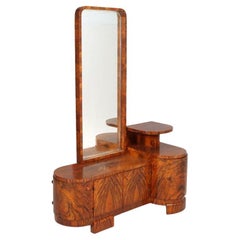
Art Deco Vanity , Sculptural Entrance Cabinet, by Osvaldo Borsani , Burl Walnut
By Osvaldo Borsani
Located in Vigonza, Padua
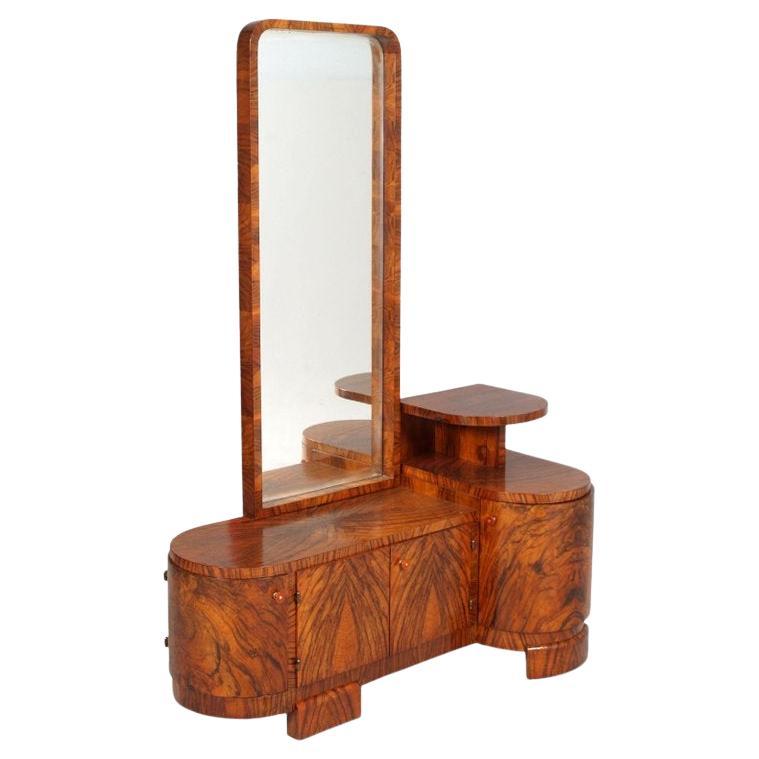
1930s Art Deco Italian sculptural entry cabinet, Vanity or Dressing Table by Osvaldo Borsani in burl walnut, wax polished. The cabinet can be sold separately from the mirror Excellen...
Category

Mid-20th Century Italian Art Deco Vanities

Materials

Walnut

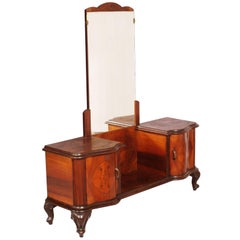
1940s, Italy, Chippendale Walnut Mirrored Dressing Table and Burl Walnut Veneer
By Cantu
Located in Vigonza, Padua
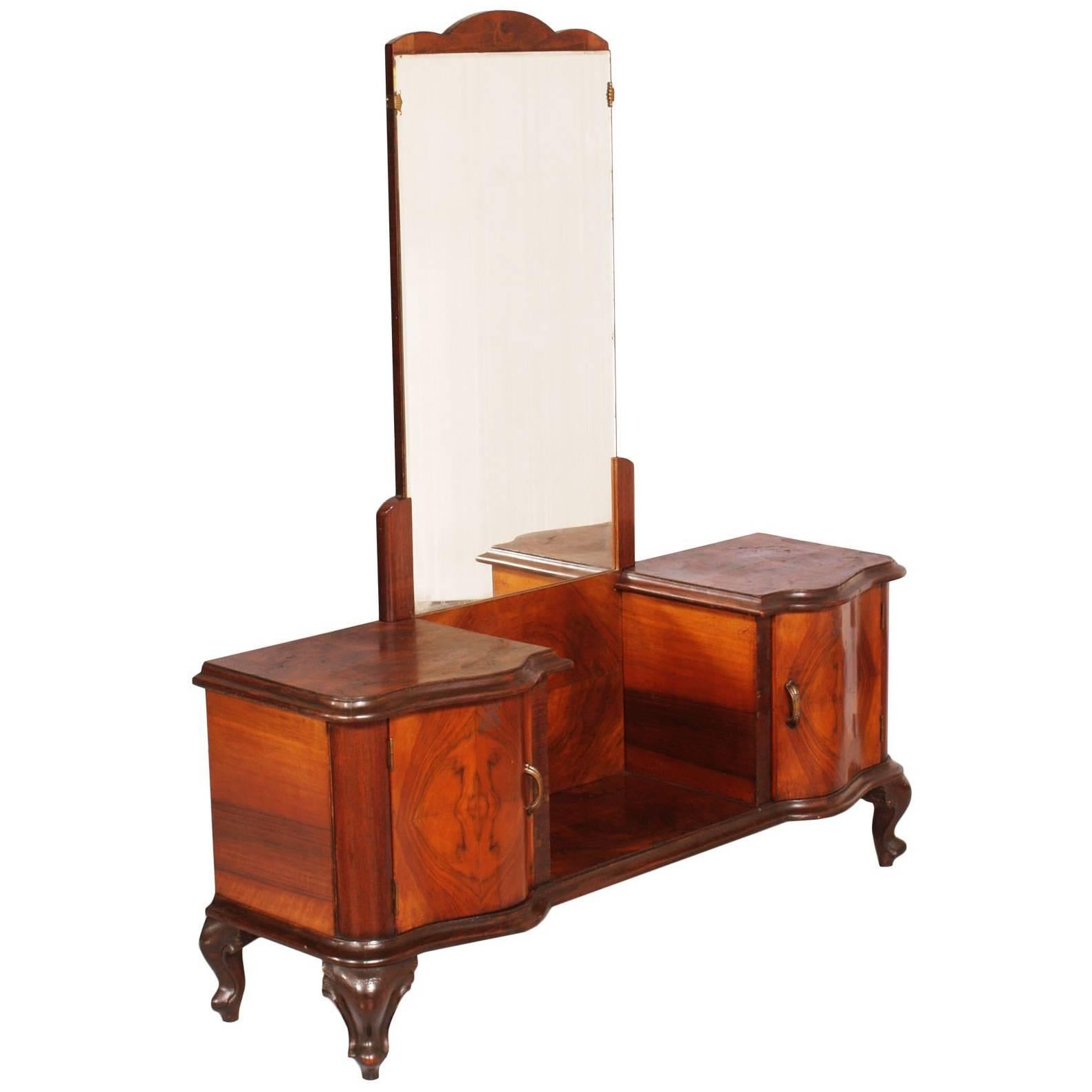
1940s, Italy, Chippendale walnut mirrored Dressing table and burl walnut veneer with biselled mirror Cabinet and polished with shellac and wa...
Category

Vintage 1920s Italian Baroque Revival Vanities

Materials

Mirror, Walnut, Burl

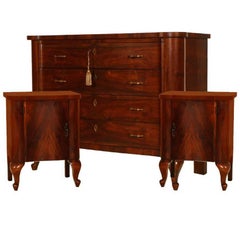
1920s Art Deco Commode Nightstands, in Burl Walnut , by Gaetano Borsani
Located in Vigonza, Padua
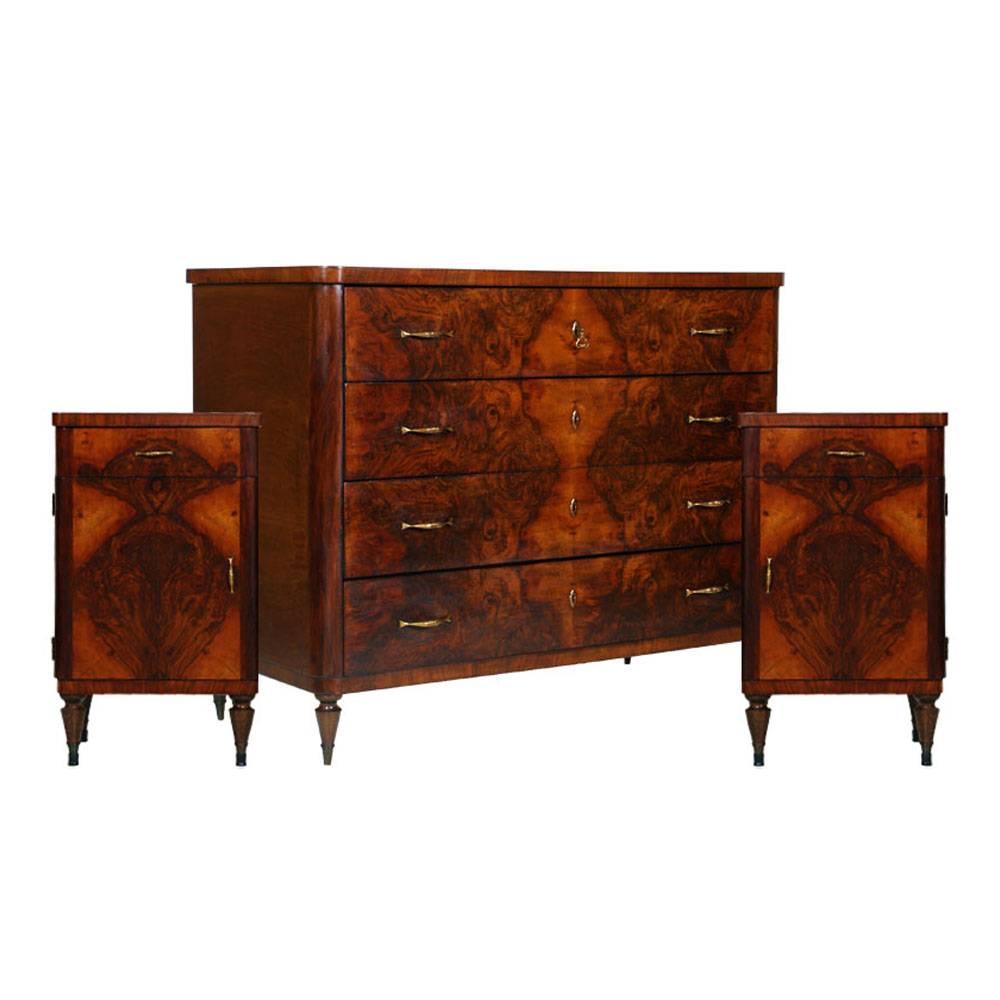
Italian 1920s elegant Art Deco Commode with pair of nightstands in burl walnut Two nightstands with commode by Gaetano Borsani , in burl walnut , with golden brass handle and foot. ...
Category

Vintage 1930s Italian Art Deco Commodes and Chests of Drawers

Materials

Walnut, Burl

Art Deco Bedroom Set Osvaldo Borsani manner, Birch and Walnut Burl Period, 1930s
By Osvaldo Borsani
Located in Vigonza, Padua
Code FR89 Art Decò bedroom set Osvaldo Borsani manner -Atelier di Varedo- Beautiful single room Art Deco birch burl and massive walnut. Dresser-w...
Category

Vintage 1930s Italian Art Deco Bedroom Sets

Materials

Walnut

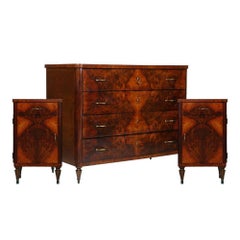
Art Deco Dresser and Nightstands, Walnut and Burl Walnut Gaetano Borsani style
By Gaetano Borsani, Gino Maggioni
Located in Vigonza, Padua
Set of 3 ( Chest of drawers & two nightstands) Art Deco in walnut and burl walnut . Shaped top, four wide two-handed drawers each, front wings with baroque reclining curl end. Couple nightstands in walnut and walnut maple, elegant line of baroque recall. Shaped top, with a pointed handle, large inner compartment in mahogany folder. Wavy front feet. Restored and wax polished Dresser measures cm: H 97, W 127, D 55 Bedside tables measures cm: H 60, W 45, D 35. About Gino Maggioni Gaetano Borsani, owned his own furniture shop, the Atelier di Varedo, where the 16-year-old Osvaldo received his first training. At that time, the designer of the atelier was the architect Gino Maggioni, who brought with him influences of the early 20th century Jugendstil movement from Vienna and who instilled in the young Borsani an appreciation for the arts and crafts and furniture making. Luigi Maggioni, known as Gino (San Giorgio su Legnano, 5 May 1898 – Diano Marina, 14 December 1955), was an Italian architect, known for having made an important contribution to the development of the interior architecture and furnishing sector. Gino Maggioni's work has been offered at auction multiple times, with important realized prices We can sell the Dresser and bedside tables...
Category

Vintage 1930s Italian Art Deco Commodes and Chests of Drawers

Materials

Walnut, Burl