Mid-20th Century Contemporary Art

to
63
364
132
505
Height
to
Width
to
289
55
13
7
5
3
1
32
21
1,814
2,751
29
937
1
5
24
13
67
191
303
217
179
252
162
94
89
81
251
198
179
80
54
505
505
505
10
9
9
7
7
Period: Mid-20th Century
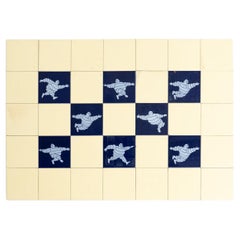
Rare Large Set of Vintage Michelin Man Tiles, circa 1960
Located in Barcelona, ES
Dive into a nostalgic journey with this rare and unique large set of Michelin Man tiles, crafted by an unknown manufacturer in Spain circa 1960. The set comprises the complete series...
Category

Spanish Mid-Century Modern Vintage Mid-20th Century Contemporary Art

Materials

Ceramic

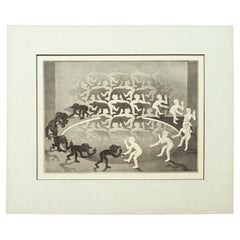
The Encounter, 1944 Lithograph by Maurits Cornelis Escher
Located in Point Richmond, CA
The Encounter, 1944 Maurits Cornelis Escher (Dutch, 1898-1972) Print size: 13.5 by 18.5 inches (34.2 by 47 cm) Frame size: 23.25 x 27.5 inches (59 by 70 cm) From the catalogue raison...
Category

Dutch Modern Mid-20th Century Contemporary Art

Materials

Paper

Sister Mary Corita Kent Signed Limited Edition Large Abstract Serigraph Print
Located in Studio City, CA
Known as God's own Pop artist, Sister Mary Corita Kent went straight from high school into Catholic convent life in 1936. While serving her order and teaching art at Immaculate Heart...
Category

American Mid-Century Modern Mid-20th Century Contemporary Art

Materials

Paper

"Face and Sunset" Limited Edition Serigraph by Peter Max 1972
Located in San Diego, CA
-Limited edition "Face and Sunset" serigraph -Colors are very vibrant and bright -Hand signed "Max" in pencil in lower right hand corner, numbered 21 of 100 in lower left -Professio...
Category

American Expressionist Mid-20th Century Contemporary Art

Materials

Wood

Brutalist Contrasting Black and Silver Wall Sculpture, 1960s Designed in Belgium
Located in Antwerp, BE
A 1960s setting of a Brutalist Wall Sculpture in metal and aluminum, made by a Belgium Unknown Artist. The quarter-circle design allows for many pattern opti...
Category

Belgian Mid-Century Modern Vintage Mid-20th Century Contemporary Art

Materials

Aluminum, Iron

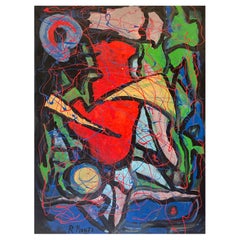
Mid-Century Modern Large Scale Signed Abstract Oil on Canvas Painting / Art
Located in Kennesaw, GA
I love this painting! This is a large scale mid-century signed modern oil on canvas painting. It is signed “Monti”. The strong coloration includes black, blue, green and red.
Category

American Mid-Century Modern Mid-20th Century Contemporary Art

Materials

Canvas, Paint

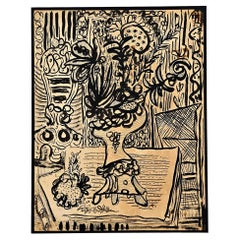
RENE PORTOCARRERO 1952 Art Jarron Con Flores Ink And Gouache Ink On Paper
By René Portocarrero
Located in Miami, FL
Jarron Con Flores, ink on paper by Rene Portocarrero (1912-1985). This wonderful drawing made by Rene Portocarrero, is one of the few that survive from his artistic period of the 1...
Category

French Mid-Century Modern Vintage Mid-20th Century Contemporary Art

Materials

Paper

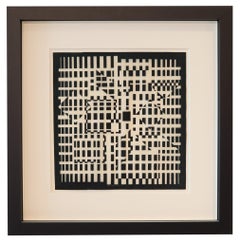
VICTOR VASARELY Paris 1960 Geometric Composition Ink on Rice Paper COA
Located in Miami, FL
Geometric composition in rice paper by Victor Vasarely (1906-1997). This is a fantastic geometric composition created in Paris France by the op-art artist Victor Vasarely. The piece of art has been realized in black ink on paper. Great piece of art with gorgeous provenance and professionally framed with UV glass. Victor Vasarely He is considered the father of the Op Art, artist and was born on April 9th, 1908 in Pécs, Hungary. Internationally recognized as one of the most important artists of the 20th century, his innovations in color and optical illusion have had a strong influence on many modern artists. Spanning most of his career, our collection of his prints and sculptures explores his forays into some of his most famous works such as the plastic alphabet and other iconic periods. In 1925, Vasarely was accepted into the University of Budapest’s School of Medicine where he attended for 2 years. Deciding that he wanted to take his life in a different direction, he enrolled in the Poldini-Volkman Academy of Painting in 1927. Though a medical education might have seemed superfluous compared to his new career in art, the time that Vasarely spent in medical school gave him a strong basis in scientific method and objectivity. This basis continued to manifest in his unique style of art. After the artist's first one-man show in 1930, at the Kovacs Akos Gallery in Budapest, Vasarely moved to Paris. For the next thirteen years, he devoted himself to graphic studies. His lifelong fascination with linear patterning led him to draw figurative and abstract patterned subjects, such as his series of harlequins, checkers, tigers, and of course the Vasarely zebras...
Category

French Mid-Century Modern Vintage Mid-20th Century Contemporary Art

Materials

Paper

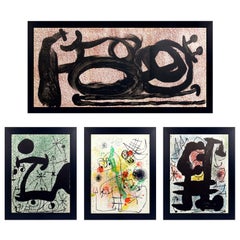
Joan Miró Lithographs
Located in Atlanta, GA
Selection of Joan Miro color lithographs, France, circa 1960s. We purchased a group of these color lithographs from the estate of a couple t...
Category

French Mid-Century Modern Vintage Mid-20th Century Contemporary Art

Materials

Glass, Wood, Paper

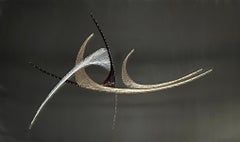
Woven Precious Metal Wire Wall Hanging Modern Sculpture
Located in Norwood, NJ
Unique woven wire wall hanging sculpture using stainless steel and precious metals. Designed and executed by artist Raoul Lametz
Category

American Mid-Century Modern Mid-20th Century Contemporary Art

Materials

Gold, Silver, Copper, Steel, Wire

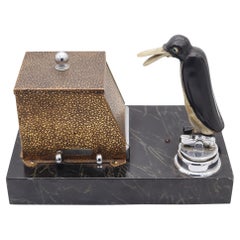
RONSON 1930 Pik A Cig Magic Penguin Lighter Cigarette Dispenser Desk Box
Located in Miami, FL
Art deco magic penguin mechanical dispenser box designed by Ronson. A beautiful, exceedingly rare and very decorative mechanical dispenser desk box, created in the city of Newark, N...
Category

American Art Deco Vintage Mid-20th Century Contemporary Art

Materials

Brass, Steel

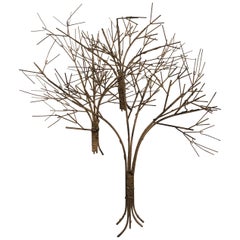
Vintage Metal Tree Wall Art Sculpture Mid-Century Modern
Located in West Palm Beach, FL
Vintage metal tree wall art, three trees. Comes ready to hang.    
Category

American Mid-Century Modern Vintage Mid-20th Century Contemporary Art

Materials

Metal

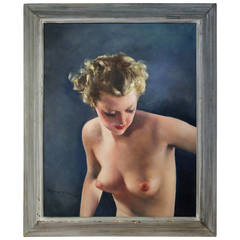
Pal Fried Nude Portrait Oil on Canvas
Located in San Diego, CA
Nude portrait oil on canvas by Hungarian/American artist Pal Fried. Excellent overall condition in period frame with a light vertical scratch line running along the lower middle as s...
Category

American Art Deco Mid-20th Century Contemporary Art

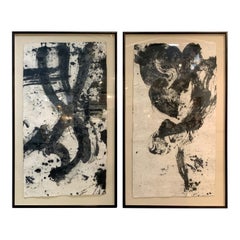
Pair Large Framed Japanese Calligraphy "Dragon" "Tiger", Mid 20th Century
Located in Austin, TX
A large and powerful pair of Japanese calligraphic works, mid 20th century, Japan. One reading "Dragon", the other reading "Tiger". Ink on handmade paper, framed. The brush strok...
Category

Japanese Expressionist Mid-20th Century Contemporary Art

Materials

Paper

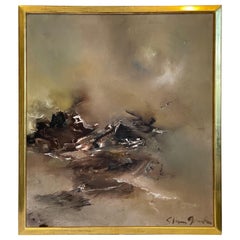
Mid Century Contemporary Abstract Painting
Located in W Allenhurst, NJ
Mid Century Moody, Stormy Abstract Painting in a fabulous gilt frame. Some see mountains, others see an ocean. Great color, composition and movement. Signed by artist. Curbside to NY...
Category

Mid-Century Modern Mid-20th Century Contemporary Art

Materials

Canvas, Giltwood, Paint

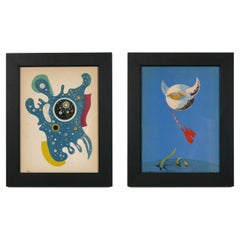
Surrealist Lithographs by Wassily Kandinsky and Andre Masson, circa 1938
Located in Atlanta, GA
Selection of Surrealist Lithographs, by Wassily Kandinsky and Andre Masson for the limited edition 1938 portfolio Verve and printed by the famed French printer Mourlot. The one seen ...
Category

French Art Deco Vintage Mid-20th Century Contemporary Art

Materials

Glass, Wood, Paper

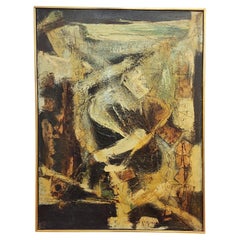
John David Rigsby Abstract Mixed Media on Canvas, American 1960
Located in Hudson, NY
A handsome and sophisticated mixed media on canvas by American artist John Rigsby. Found in a original state of preservation. His works are few and far between. The following biography was submitted by John David Rigsby, Jr., son of the artist. The author is Lisa Rigsby Peterson, daughter of the artist, and owner of the copyright of the biography. John David Rigsby was born on October 10, 1934, the seventh child of an Alabama Depression-era sharecropper's son. He and his family moved frequently, from one one-room structure to another, often with no running water, no plumbing, no heat but the stove. His father was killed in a car accident when Rigsby was just 9 years old. Life for the remaining eight family members proved tumultuous and difficult -- food wasn't plentiful, nor money. The family moved from place to place, following work -- Rigsby attended 30 different schools before graduating from high school. Despite living in poverty, Rigsby demonstrated academic and artistic aptitude at a young age. Two oil paintings on covers ripped off of old books that he painted when he was eight years old show the promise of an imaginative and gifted eye. Rigsby was drafted by the U.S. Army in 1953. As he later wrote, "When basic training at Fort Jackson, South Carolina, was over, I was told to go out and find a job. Jasper Johns was painting visual aids for the 28th Regimental Headquarters. He suggested the Band Training Unit." Rigsby played the clarinet in that unit, and after 2 years of service, he enrolled at the University of Alabama on the G.I. Bill to study art. After just two years, he left school and followed his mentor (and one of the greatest and longest-lasting influences on his art), Japanese artist and U of A art instructor Tatsu Heima, to New York City. Heima introduced him to Isamu Noguchi and suggested that Rigsby work as Noguchi's assistant. Instead, Rigsby chose a job as a guard at the Metropolitan Museum of Art, since "the notion of seeing all of that art appealed more to me than the boring task of studio assistant." The opportunity was a rich one for Rigsby. He had a chance to study the masters, and cited Rembrandt with his simplicity and elegance as another of the most important influences on his work. In the years between 1957 and 1963, when Rigsby eventually earned his BFA in sculpture, the artist traveled back and forth between New York and Tuscaloosa, alternating study with forays into the fertile New York art scene. Rigsby exhibited some of his early sculpture work in 1958 at a small New York gallery, which was also exhibiting the work of Willem and Elaine de Kooning and Theodore Stamos. Shortly thereafter, searching for an educational venue closer to New York City, Rigsby visited New Haven, Connecticut, and spent an afternoon speaking with Josef Albers at Yale. Albers agreed to accept Rigsby into the Yale program on the condition that he take freshman drawing all over again. A brilliant opportunity, but, in Rigsby's words, "When it was time to register, I was hitchhiking back to Alabama, looking for food and shelter." Rigsby had his first one-man show at the University of Alabama in 1959. A visiting critic from New York, J.F. Goosen, reviewed the show and wrote "here is a talent which produces art because that is the thing for a gifted person to do. In his effortless ease of conception and execution, he has already achieved a goal that eludes many artists for a lifetime." Finally, in 1963, Rigsby received his degree in sculpture, dissolved a short-lived marriage, visited his family, packed up his car and headed permanently for New York. That year, his work was included in a group show at the Delgado Museum in New Orleans - which led to a one-man exhibit at the Delgado in 1964. During 1964, Rigsby took drawing classes at Columbia University, and worked at the General Post Office at night. He met his future wife, Linda Palmieri, and married. In 1965, his daughter Lisa was born, followed in 1966 by the birth of his son, John David Jr. In 1966, Rigsby had a successful one-man show at the Pietrantonio Gallery in New York. Shortly thereafter, he and the family moved to Tunis, Tunisia at the suggestion of a colleague, who urged him to "come paint by the light of Klee." Rigsby worked for the United States Information Agency as a teacher, and he spent the next year and a half painting over ninety paintings inspired by the smells, light, and Phoenician and Roman art surrounding him. He also executed a number of character and landscape drawings, capturing the Tunisian way of life. During his time in Tunisia, Rigsby's work was shown there in two major exhibits. Upon the family's return to the U.S. in 1968, Rigsby once again exhibited at the Pietrantonio Gallery. Later that year, Rigsby enrolled in Southern Connecticut State College's Urban Studies program, earning a master's degree in 1970. During his time at SCSU, Rigsby worked as the city of Bridgeport's Curator of Exhibits, driving a mobile art gallery from schools to neighborhood fairs and housing projects. After completing his degree, Rigsby had an exhibit at the Telfair Museum in Savannah, Georgia. This exhibit caught the attention of a member of the search committee looking to hire an artist for a newly-developed program in neighboring South Carolina. In 1970, Rigsby was selected as the first Artist-in-Residence in the state of South Carolina for the National Endowment for the Arts Artists in Schools program. His work with the newly-integrated students at Beaufort (SC) High School over the term of his residency precluded substantial work on his own art. He did, however, set up a studio in downtown Beaufort, and was able to create a modest number of paintings, which were included in exhibits at the Columbia Museum in South Carolina in 1971 and Yale University in 1973. At the end of his residency in 1974, Rigsby was named the National Visual Arts Coordinator of the Artists in Schools program for the NEA, a post he held for two years. In this position, Rigsby traveled the country, reviewing grant applications, meeting with state leaders in government, education and the arts to promote program concepts and explore local opportunities. The message he repeated over and over again echoed that of one of the other major influences on Rigsby as an artist - Ruth Asawa Lanier, whose words taught him that all of the work that the artist does is the artist's work, not simply the paintings he creates. In his capacity as National Coordinator, as well as many times in the future, Rigsby stressed that artists function in the same way as any other person in society, and deserved the same respect and place for their work as did all other professions. After two years traveling the country, Rigsby was ready for a change, saying "for the first time in my adult life, there was not a body of paintings to show for the years put into my work." In 1976, a summer retreat to the mountain community of Central City, Colorado, led to a permanent relocation. Eventually settling in the small town of Evergreen, Rigsby followed his own advice about artists becoming actively involved in their communities, and he established the Evergreen Visual Arts Center. The Center provided working space for artists, classes for adults and children, and, most importantly, a place for Rigsby to create his own work. Buoyed by the opportunity to concentrate once again on his art, and inspired by his new surroundings, Rigsby entered an extremely prolific period in his career. In 1977, he organized a traveling exhibition of his paintings, which showed at the Kimball Arts Center in Utah, the Kennedy Center in Washington, D.C., and the Arvada Center in Colorado. 1978 brought more exhibits, notably in Aspen and Denver, as Rigsby's work continued. He took an extended trip to visit his mentor, Tatsu Heima, in Japan, where he climbed Mt. Fuji, followed by travels to Tehran, Delhi, and several European countries. He chronicled his impressions from his travels in a small collection of paintings upon his return to the U.S. - the beginning of a practice which would continue through the rest of his life. In 1979, Rigsby's marriage failed, and at the same time he lost the lease to his Evergreen studio to redevelopment plans. In response to the personal chaos around him, Rigsby began a series of what he called "hard-nosed process paintings," the watercolor paintings of dots which marked his work from this period. The paintings gained him an NEA Individual Artist grant in 1980, as well as a Yaddo fellowship in 1981. The polka dot paintings were followed by a series of cupcake-like images, again examining space and color. During the early 1980s, Rigsby lived in a suite of old dentists' offices in a rundown part of Denver, with a studio in an area that reminded him of the Bowery in New York. In 1984, Rigsby founded the Progreso Gallery in the building where he lived, using the space both to show his own work and also to mount shows of the work of many Colorado artists. The gallery also served as a focal point for Denver's local arts community, hosting weekly discussion groups and classes. In 1984, Rigsby traveled to the Baja Peninsula and then in 1985 to Yugoslavia. After each sojourn, Rigsby returned to create vibrant and explosive paintings based on his experiences, showing them at his Progreso gallery and another alternative gallery in Denver, the Edge Gallery. The economic recession of the mid-eighties hit the art market and Rigsby hard, however, and although he continued to create new works of art, major exhibitions were difficult to come by. In 1987, Rigsby decided to leave Denver and spent six months in Barcelona, Spain. It was an electrifying trip for him. Rigsby wrote of that time: "The streets alone are a visual feast, and the additions of museums from Saarinen, Picasso and Miro to 12th century icons produced artistic indigestion. My paintings are always about the way things look and feel. Barcelona was a time machine extending those sensory and emotional concerns back to the Middle Ages. I felt the need to reduce my work to essential elements of color, scale, drawing and format. The [resulting] color studies speak eloquently for themselves, and in doing so, redefine all of the work I've done in the past 35 years of painting." Rigsby completed over a hundred paintings while in Barcelona - color studies, street portraits of the characters he encountered on a daily basis, and a number of dark landscape paintings. He found time to run with the bulls in Pamplona, and began writing stories about his adventures that were later published. Upon his return to Denver in 1988, Rigsby continued to explore the alter egos of the color studies - he concentrated on a series of dark paintings, all prominently featuring back. He commented about these black paintings that he " decided it was time to explore the perception of the eye and physical space as defined by low -light conditions…I find these paintings elegant, joyous and light-filled, with no feeling of heaviness at all." In mid-1988, Rigsby moved permanently to Houston, Texas, where he would spend the last five years of his life. Once in Houston, Rigsby made a discovery that would serve as the inspiration and material for some of the last works of his career. In 1989, he discovered a salvage yard filled with scrap rubber, and he began working on black rubber sculptures, as well as paintings with rubber elements incorporated. He made strong connections in the Houston alternative arts scene, and became a regular contributor and art critic for a local weekly newspaper, The Public News. From 1989 through 1992, he exhibited his sculptures and paintings at Houston's Brent Gallery, Fountainhead Gallery, and Blaffer Gallery. He also produced an installation of his rubber sculptures on the roof of the Diverse Works Gallery in Houston. 1992 also marked Rigsby's return to Denver when he exhibited his sculptures at the Payton-Rule Gallery in Denver, leading to an Absolut Rigsby commission by Carillon Importers. The 1990s were a tremendous struggle for Rigsby, with financial crises compounded by physical trauma (he accidentally sawed off the top joint of the index finger of his left hand while working in his studio). Although his work was being shown, it wasn't selling, and the tremendous financial pressure he felt weighed heavily upon him. He spent an increasing proportion of his time going to flea markets and garage sales, rehabilitating and repairing the things he bought there, and then re-selling them simply to raise enough money to keep a roof over his head. He had little time to paint or sculpt, the things in life that had always, no matter what the circumstances, brought him joy. Rigsby's final works were a series of intricate paintings and drawings on used books that he purchased at the flea market. Most of these drawings, which he referred to as sculptural form drawings, were executed on page after page of science texts, music books, and a Korean bible and fill hundreds of pages. Additionally, Rigsby created an exquisite book he titled 28 de los Angeles, in which his twenty-eight simple and elegant drawings of angels resonated with the influence of Rembrandt he had so admired in his early days. In a sense, Rigsby's final works, art created on used books which were the only materials he could afford, brought his work and life full circle from his childhood days. Rigsby's life, though begun and ended in adversity, was nonetheless illuminated and enriched by the irresistible impulse he had to create art and beauty. John David Rigsby was killed in a one-car accident in Colorado in August, 1993. Biography from the Archives of askART Following is a review by Michael Paglia of the artist's July 2004 retrospective at the Denver Museum of Contemporary Art. It was submitted by John Rigsby, Jr., son of the artist. There's a magnificent retrospective at Denver's Museum of Contemporary Art devoted to the work of the late John David Rigsby, who was a major powerhouse in Colorado's art scene. "Dots, Blobs and Angels" surveys more than forty years' worth of the remarkable artist's paintings and sculptures. The year 1993 was strange, and by that I mean terrible. Many of the city's galleries closed because of bad economic times, and then the artists started dying. In a matter of a few months, Denver lost three significant artists: Rigsby, experimental photographer Wes Kennedy...
Category

American Mid-Century Modern Vintage Mid-20th Century Contemporary Art

Materials

Canvas, Paint

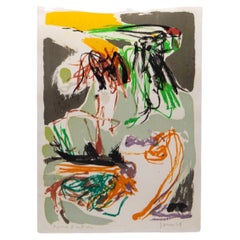
20th Century Oil on Paper by George Kokines titled Center Seating
Located in Winnetka, IL
An original oil on paper by American abstract painter George Kokines (b. 1930–2012), titled Center Seating. Created in 1962, this work reflects Kokines’s early engagement with Abstra...
Category

American Modern Vintage Mid-20th Century Contemporary Art

Materials

Paper

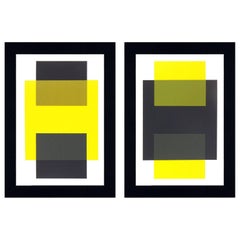
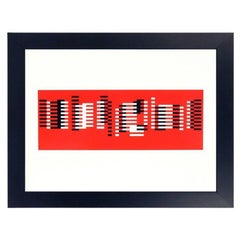
Josef Albers Abstract Lithographs from Interaction of Color
Located in Atlanta, GA
Josef Albers abstract lithographs from folder XI-1, interaction of color, circa 1960s. updated
Category

American Mid-Century Modern Vintage Mid-20th Century Contemporary Art

Materials

Glass, Wood, Paper

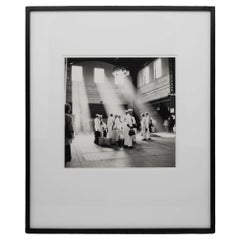
Framed Street Photograph by Vivian Maier Editioned with Provenance
Located in Atlanta, GA
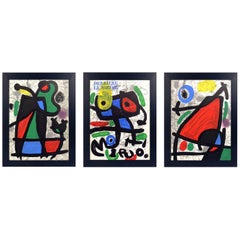
A framed black and white street photograph by Vivian Maier (American, 1926-2009), "Untitled, June 25, 1961". This is a gelatin silver print printed in 201...
Category

American Modern Vintage Mid-20th Century Contemporary Art

Materials

Wood, Paper

"Abstract Composition" by Louis Schanker
Located in Wiscasset, ME
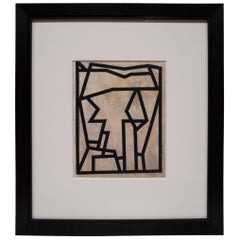
Tempura on heavy paper, signed and dated 1945 lower left. The piece measures 23" x 30" including the frame and presents very well overall. Provenance: Willard Gallery, NYC Bradbu...
Category

American Mid-Century Modern Vintage Mid-20th Century Contemporary Art

Materials

Paint

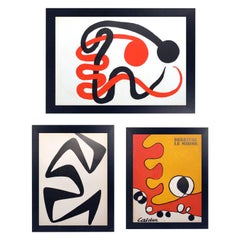
Selection of Alexander Calder Lithographs
Located in Atlanta, GA
Selection of Alexander Calder color lithographs, France, circa 1960s. We purchased a group of these color lithographs from the estate of a couple that lived in France from 1951-1983. These are most likely from the limited edition folio “Derriere le Miroir”, published by the legendary Galerie Maeght. Please see our other 1stdibs listings for more Alexander Calder and Joan Miro lithographs from...
Category

French Mid-Century Modern Vintage Mid-20th Century Contemporary Art

Materials

Glass, Paper, Wood

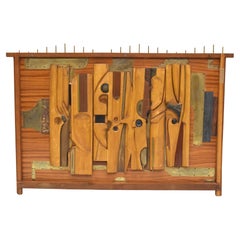
Mid-Century Brutalist Wood Wall Art
Located in Los Angeles, CA
French wall hanging, mid-century, Brutalist. Constructed of wood.
Category

French Brutalist Mid-20th Century Contemporary Art

Materials

Wood

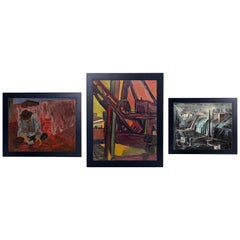
Selection of Three WPA Era Paintings
Located in Atlanta, GA
Group of Three WPA Era Paintings, American, circa 1930s-1950s. From left to right, they are: 1) Brick mason oil painting, American, circa 1930s. It ...
Category

American Art Deco Vintage Mid-20th Century Contemporary Art

Materials

Canvas, Wood

Selection of Three WPA Era Paintings
$550 Sale Price / item
83% Off
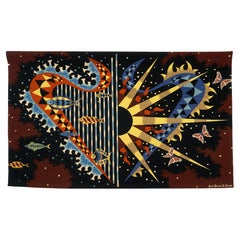
Horizon Marine Tapestry by Jean Picart Le Doux, Signed, Great Condition
Located in Kansas City, MO
Large Jean Picart Le Doux "Horizon Marin" tapestry handwoven at Atelier Pinton in Aubusson France. Signed. Limited edition. Virtually no signs of wear. ...
Category

French Mid-Century Modern Vintage Mid-20th Century Contemporary Art

Materials

Wool

Lithograph by Josef Albers from Formulation and Articulation
Located in Atlanta, GA
Josef Albers abstract lithograph from formulation and articulation, published by Harry N. Abrams Inc., New York, and Ives Sillman Inc., New Haven, circa 1972. This work is from portf...
Category

American Mid-Century Modern Vintage Mid-20th Century Contemporary Art

Materials

Glass, Wood, Paper

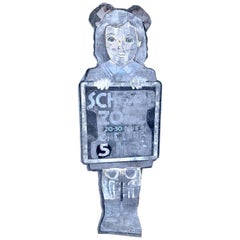
Life-Sized 1950s Metal School Girl Speed Limit Sign
Located in Los Angeles, CA
Stunning metal sign of a school girl letting you know the speed limit in the school zone. 48" tall. Double sided. Great coloring, with grey, light blues an...
Category

American Vintage Mid-20th Century Contemporary Art

Materials

Steel

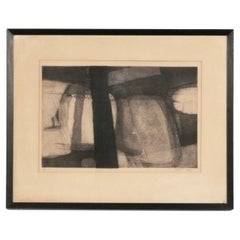
Abstract Expressionist Lithograph by Martha Zelt
Located in Atlanta, GA
Abstract expressionist lithograph by Martha Zelt, American, circa 1950s. An outstanding black and white abstract expressionist lithograph by w...
Category

American Mid-Century Modern Vintage Mid-20th Century Contemporary Art

Materials

Glass, Wood, Paper

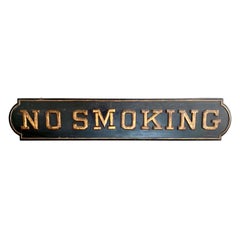
Monumental 1930s Wood No Smoking Sign from New York City
Located in Los Angeles, CA
Monumental hand carved wood sign from the 1930s. Made by H.H. Upham & Co. Interestingly, this company owned a huge sign manufacturing business in the ...
Category

American Vintage Mid-20th Century Contemporary Art

Materials

Wood

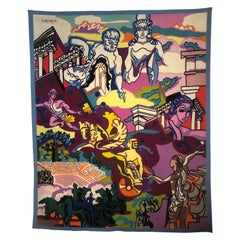
French Artist Charles Lapicque Tapestry Limited Edition 1/2 "Pelops", 1964
Located in Paris, France
Exceptional limited edition 1/2 tapestry "Pelops" with certificate from a private collection, 1964. Ateliers Pinton brothers in Felletin, under the supervision of Pierre Baudouin 2ex + 1EA Editor Aram Iynedjian. The tapestry will be sold with its certificate of authenticity from the gallery. From the 15th century, the name of Pinton was associated with the Aubusson tapestry. Since then, over the generations, the Pinton family has largely contributed to the development of this fabulous cultural heritage until the creation in the 19th century, of the Felletin factory, in the department of Creuse. Even today, in these workshops, the craftsmen execute the same correct gestures with the same attention to detail and thus extend the chain of the history of the tapestry of tradition but also contemporary. The hand of specialists, the eye of designers and dyers and the taste of the most demanding clientele find their meaning in the fabric of the carpets. The excellence of French know-how, a living heritage society and custodian of Aubusson's cultural heritage, has always collaborated with great artists. The works of Charles Le Brun, Charles Lapicque, Pablo Picasso, Jean-Michel Othoniel, and many other big names in the world of painting, architecture, design, fell into the looms and know-how ancestral of this unique Creuse creator. Editor Aram Iynedjian Aram Iynedjian, Lausanne gallery owner and editor of tapestries from Braque, Estève and Lapicque, the latter meets Pierre Baudouin, the most famous of the cardboard painters of the time. The one who translated the works of Le Corbusier, Calder or Picasso into tapestry then collaborates with Charles Lapicque and they will develop a work of great richness. Lapicque came to realize these two summits which are "Pélops" and "Diane et Actéon". I realize that you should never try to describe a work of art Let’s look at it. Let us admire the science of composition, linear purity, technical perfection, the beauty of color, the truth of the drama. Let us see, if we can, the implacable presence of genius. "We will now understand that after having based a painting on the love of tapestry, it was relatively easy, and very tempting, to build a tapestry faithful to my painting," explained the artist in the exhibition catalog. of the Galerie Verrière in 1970. It was not until 1961 that he began to produce cardboards both for the tapestry of the Lisse in Aubusson, but also at the Mobilier National, with the help of Pierre Baudouin Charles Lapicque (1898-1988) Born in 1898 in Theizé (Rhône) in a family practicing both the arts and the sciences, Charles Lapicque is no exception to the rule: gifted for music and drawing, he graduated from the École Centrale in 1921, works as engineer until 1928 before integrating in 1931 a laboratory at the Faculty of Sciences of Paris, where he carried out research on the perception of colors, crowned by the title of Doctor of Physical Sciences in 1938. He thus studies the reactions of the eye in front of an intense light source, at the origin of the formation of starry images which he will use in his works, and defines a theory of the staggering of colors in space which overturns the rules of the Renaissance: "I had shown that the Classic rule, that of Vinci, advocating placing the blues in the distance, the reds, oranges and yellows in the foreground, is a nonsense; it makes more sense, more favorable to do the opposite. "(In Red and blue in the arts, 1936) It was around 1920 that Charles Lapicque began to paint in Brittany where he spent every summer since his childhood, first on the motif and then in a workshop that his stepfather Jean Perrin, Nobel Prize in Physics, had him build in 1927 ; he then definitively adopted the work of memory, in accordance with the art of music which he deeply loved and the Bergsonian philosophy of knowledge: "It is up to us to give reality an appearance that it has no itself, a form, a figure (...). " His youthful production immediately reveals a great originality, oscillating between figuration and abstraction which sometimes intertwine: alongside synthetic paintings by their simplified drawing and their flat colors, he designs an Homage to Palestrina (1925), composed of a grid derived from Cubism, entirely abstract, relayed by a Christ with Thorns (1939), according to a principle that he will develop after 1939, in line with his optical discoveries. In fact, during the war years, an almost abstract period began, that of the tight blue framework, applied to backgrounds ranging from yellow to red and revealing a more or less identifiable world (Jeanne d'Arc crossing the Loire, 1940; Rencontres series, 1940-1945). Exhibited in 1929 by the gallery owner Jeanne Bucher, Lapicque abandoned his scientific career in 1943 to devote himself entirely to painting. He continued his work which resulted in 1946-1953 in white-frame structures; their much softer lines lead him to the system of either black or white interlacing which encloses areas of pure color, most often in solid color. With The Battle of Waterloo in 1949, Lapicque still uses optics - zooming in on a given area - to depict spaces with multiple perspectives and decomposed times. This new interest in the liveliness of color developed in the following period, which can be described as flamboyant or Baroque (1954-1963): illustrated in particular by the series of Breton lagoons and twilight or nocturnal views of Venice in the light. Stars, which the artist himself describes as “daring sweets”, it begins with the Raoul Dufy Prize of the Venice Biennale, awarded in 1953 to the artist who took the opportunity to give free rein to his passion for the Serenissima until July 1956. Another point in common with his elder brother is the expression of movement. Begun in 1949 in The Battle of Waterloo then in 1952 with Dimanche aux regates, it became an obsession from 1964, in the exploration of new themes, such as the different shots of tennis players captured on the fly (1965), the mythological scenes and sea storms. These dizzying years precede the artist's last period: as he comes of age, he discovers serenity, revealed by a painting now with acrylic paint, much more peaceful from 1974, which even borders on a childish naivety at the end. of his life. All of his work includes an astonishing diversity of themes, also nourished by his travels (Rome in 1957, Greece in 1964, Holland in 1974 ...), with a predilection for the sea, rocks, sailboats, music, tennis, horses, wild beasts, but also for history and mythology, as evidenced by knights, kings and ancient gods. It also deploys, in total creative freedom, a wide variety of styles and orientations. Having been one of the pioneers of non-figurative art, thus paving the way for artists like Manessier, Bazaine, Vieira da Silva, De Staël, etc. Owners of the new non-figurative Paris School of the Postwar period, Charles Lapicque then returned to figuration, in a "new interpretation" of appearance, even if he continued to rub shoulders with abstraction at times. "Drawing runs after color and color after drawing. " Heir to the Fauves, Charles Lapicque plays like them on pure colors, whose dissonances, associated with a totally free design and an overloaded composition in a multiple space, make him a precursor of the New Figuration in all its forms: the Narrative Figuration born in France in the early 1960s, represented in particular by Gérard Fromanger, Erró, Bernard Rancillac and Gérard Guyomard; Free Figuration born in the early 1980s, marked by Robert Combas, Hervé and Richard Di Rosa, Louis Jammes and François Boisrond, and which, in turn, influenced the American Bad Painting of a Jean-Michel Basquiat or a Keith Haring, deliberately neglected and Expressionist; Lapicque's “Classic subjects” were able to feed Cultivated Painting, which also appeared in the early 1980s with Jean-Michel Alberola, Patrice Giorda and Gérard Garouste...
Category

European Mid-20th Century Contemporary Art

Materials

Wool

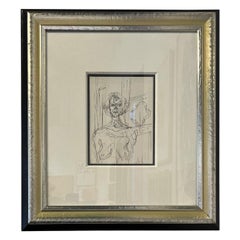
Alberto Giacometti Framed Black and White Limited Lithograph "Annette", 1964
Located in Studio City, CA
A wonderful sketched lithograph by famed Swiss artists/sculptor Alberto Giacometti. The lithograph was printed in Paris by Mourlot Freres in 1964 and was issued in an edition of ...
Category

French Mid-Century Modern Vintage Mid-20th Century Contemporary Art

Materials

Paper

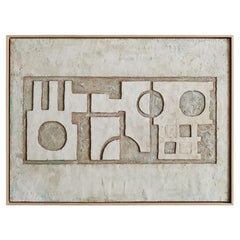
Abstract Modern Painting by Alessandro Bonato, 1960s
Located in Chicago, IL
An acrylic painting on wood by Italian artist Alessandro Bonato, 1960s. This richly textured painting features hues of off-white, taupe, and soft aqua in an abstract geometric design...
Category

Italian Modern Vintage Mid-20th Century Contemporary Art

Materials

Acrylic, Wood

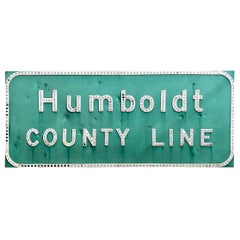
Humboldt California Freeway Sign
Located in Los Angeles, CA
Humboldt County Line freeway sign from Northern California. Made in 1965. Great piece of Marijuana history as well as transportation Americana. 7 feet wid...
Category

American Vintage Mid-20th Century Contemporary Art

Materials

Steel

Postmodern Van Teal Orlando Acosta Wall Hanging
Located in W Allenhurst, NJ
Superb acrylic wall hanging by Van Teal. Artist Orlando Acosta captures the 70s & 80s with great subject and movement. 3D affect with raised hood.
Category

Post-Modern Mid-20th Century Contemporary Art

Materials

Acrylic

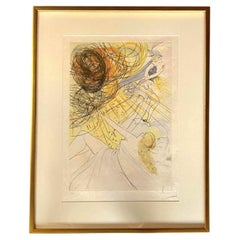
Salvador Dalí "Mercurius" Signed Lithograph
Located in Los Angeles, CA
Salvador Dali (Spanish, 1904-1989) "Mercurius" litograph, numbered 12/75, watercolor detailing, signed in pencil lower right; in brushed brass frame. Dimensions: Sheet: 27" H x 19" W...
Category

Vintage Mid-20th Century Contemporary Art

Materials

Glass, Wood, Paint, Paper

Asger Jorn, Untitled Lithograph, 1968, Signed, Artist’s Proof (Épreuve d’artiste
Located in Kastrup, DK
Lithograph, Untitled Signed Jorn 68. The lithograph was printed in an edition of 150 copies. This example is inscribed Épreuve d’artiste at the lower left (artist’s proof) and is the...
Category

Danish Modern Mid-20th Century Contemporary Art

Materials

Glass, Wood, Paper

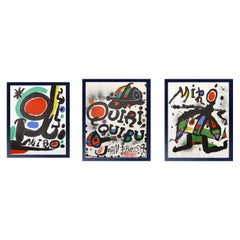
Joan Miró Lithographs
Located in Atlanta, GA
Selection of Joan Miro color lithographs, France, circa 1960s. We purchased a group of these color lithographs from the estate of a couple that lived in France from 1951-1983. These ...
Category

French Mid-Century Modern Vintage Mid-20th Century Contemporary Art

Materials

Glass, Wood, Paper

JORGE FICK ABSTRACT Painting Series - Motel Suitcase 6034
Located in Hawthorne, CA
MOTEL SUITCASE SERIES 6034 by JORGE FICK Born in 1932 and passing in 2004 in the vibrant artistic community of Santa Fe, New Mexico, this artist was a prominent figure in the world of high color abstraction. His unique approach to abstract expressionism was deeply influenced by the teachings and mentorship of renowned artists Franz Kline, Jack Tworkov, Phillip Guston, and Joseph Fiore...
Category

American Mid-Century Modern Mid-20th Century Contemporary Art

Materials

Acrylic, Paper

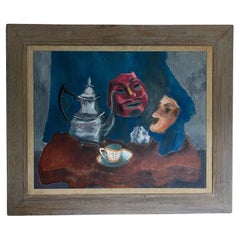
Surreal Tablescape Virginia Wylie modern Abstract mid century East Hamptons
By James Wylie
Located in Bridgehampton, NY
Surreal table scape by Virginia Todd Wylie (1918-1999) Showed in local and NYC art galleries and museums - Parrish Art, Guild Hall, Art Institute Chicago...
Category

American Mid-Century Modern Mid-20th Century Contemporary Art

Materials

Paint

Selection of Large Joan Miro Lithographs
Located in Atlanta, GA
Selection of Joan Miro large color lithographs, France, circa 1960s. We purchased a group of these color lithographs from the estate of a couple that l...
Category

French Mid-Century Modern Vintage Mid-20th Century Contemporary Art

Materials

Glass, Wood, Paper

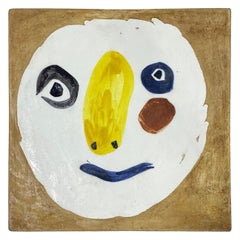
Pablo Picasso Signed Madoura Ceramic Tile Plaque Tête Polychrome Ramié 455
Located in Studio City, CA
A wonderful, original hand painted ceramic tile plaque by famed artist Pablo Picasso titled "Tete Polychrome". The work features an abstract face w...
Category

French Mid-Century Modern Vintage Mid-20th Century Contemporary Art

Materials

Ceramic, Earthenware, Pottery

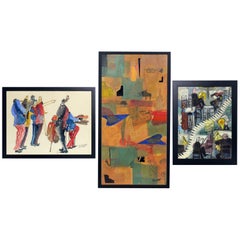
Selection of Mid-Century Jazz Themed Paintings
Located in Atlanta, GA
Selection of Mid-Century jazz themed paintings, American, circa 1930s-1970s. From left to right, they are: 1) New Orleans jazz watercolor by Leo Meirsdorff...
Category

American Mid-Century Modern Vintage Mid-20th Century Contemporary Art

Materials

Canvas, Paper

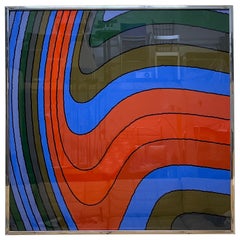
Henry Pearson Large Scale Pop Art Lithograph 196/200, 1960s
Located in Miami, FL
Large scale Pop Art lithograph with chrome and glass frame by Henry Pearson. Signed on bottom right and sealed on bottom left. #196/200.
Category

American Mid-Century Modern Mid-20th Century Contemporary Art

Materials

Metal

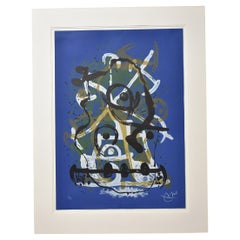
Jean Miro Spanish Abstract Lithograph Chevauchee Bleu Brun Signed 55/75, 1969
Located in Toledo, OH
Jean Miro signed and numbered 55/75 lithograph titled Chevauchee Bleu Brun. Blue field with green, black and white designs. Very nice condition. Print is flo...
Category

Spanish Modern Vintage Mid-20th Century Contemporary Art

Materials

Paper

Italian Abstract Expressionist Painting by Ugo Sterpini, Signed and Dated 1958
Located in Stamford, CT
Ugo Sterpini (Italian, 1927-2000)''La Lotta Sulla Duna" (The Battle On The Dune). Mixed media on canvas, signed and dated ''58'' lower right, signed, titl...
Category

Italian Mid-Century Modern Mid-20th Century Contemporary Art

Materials

Canvas

Light Prism by Alberto Biasi, limited edition, 1967
Located in Ozzano Dell emilia, IT
Light Prism by Alberto Biasi, a kinetic sculpture with moving prisms that decompose and reflect light, produced in a limited edition of 50 pieces by Centro Duchamp in San Lazzaro di ...
Category

Italian Kinetic Vintage Mid-20th Century Contemporary Art

Materials

Mirror, Acrylic, Plexiglass, Wood

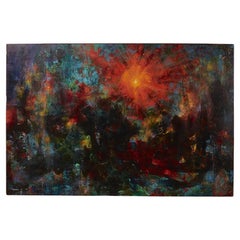
Large Scale Mid-Century Modern Signed Abstract Seascape Oil on Canvas
Located in Kennesaw, GA
This is an incredible large scale Mid-Century Modern signed abstract oil on canvas depicting a seascape. The coloration is so vibrant and will add depth to any design project. It is ...
Category

American Mid-Century Modern Mid-20th Century Contemporary Art

Materials

Canvas, Paint

Vintage Paul Jenkins Lithograph
Located in Brooklyn, NY
Vintage Paul Jenkins off-set lithograph: Published by Art in America, circa early 1970s Very good vintage condition; contains fold-line as issued Measures: 11 x 14 inches. Printed ...
Category

Mid-Century Modern Vintage Mid-20th Century Contemporary Art

Materials

Paper

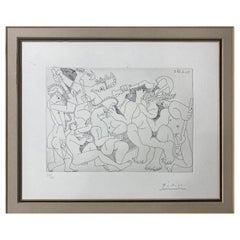
Pablo Picasso Signed Limited Edition Etching Jeux de Gladiateurs Series 347:168
Located in Studio City, CA
An engaging work titled "Jeux de Gladiateurs" by famed Spanish artist Pablo Picasso. The etching was created in 1968. It is hand signed in pencil by Picasso and numbered 33/50, lowe...
Category

French Mid-Century Modern Vintage Mid-20th Century Contemporary Art

Materials

Paper

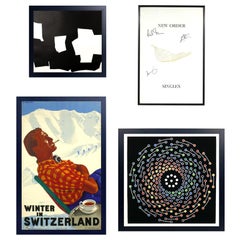
Selection of Color Modern Lithographs and Silkscreens
Located in Atlanta, GA
Selection of color modern lithographs and silkscreens, circa 1930s-2000s. They have been framed in clean lined black lacquer gallery frames under UV resistant glass. They are: Top row, left to right: 1) Black and white abstract lithograph by Eduardo Chillida, circa 1960s. It measures: 21.25" H x 23.25" W. 2) Color silkscreen New Order "Singles" poster, signed by three members of the band, circa 2005. It measures: 30.25" H x 20.25" W. Bottom row, left to right: 3) Switzerland Ski Travel Color Silkscreen Poster, circa 1930s. It measures: 43" H x 27.75" W. 4) Abstract color lithograph, entitled "Spectral" by John...
Category

French Mid-Century Modern Vintage Mid-20th Century Contemporary Art

Materials

Glass, Wood, Paper

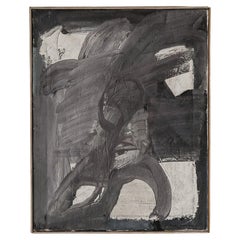
Swedish Abstract Oil Canvas Painting by Bertil Berntsson, Sweden 1960s
Located in Stockholm, SE
Beautiful Swedish abstract oil on canvas artwork with a pine wooden frame by Bertil Berntsson from the 1962. In good vintage condition with patina from aging. Signed and dated lowe...
Category

Swedish Scandinavian Modern Vintage Mid-20th Century Contemporary Art

Materials

Pine, Canvas

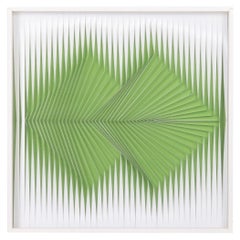
Politipo M by Alberto Biasi, limited edition, 1968
Located in Ozzano Dell emilia, IT
Politipo M by Alberto Biasi is an optical variable panel. Edition of 50 created at Centro Duchamp. Label on the back by Archivio Alberto Biasi. Materials: Pvc stripes on painted w...
Category

Italian Kinetic Vintage Mid-20th Century Contemporary Art

Materials

Wood

Jungle Large 40" x 60" Original by Leonardo Nierman, 1964, Signed Dated
Located in Los Angeles, CA
Discover an exceptional 40" x 60" oil on masonite by the renowned Mexican artist Leonardo Nierman (1932 to 2023). Titled 'Jungle,' this striking original painting exemplifies Nierman...
Category

Mexican Organic Modern Vintage Mid-20th Century Contemporary Art

Materials

Paint, Masonite

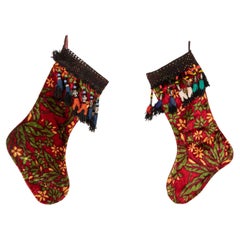
Double Sided Christmas Stockings Made from Vintage Uzbek Velvet Fragments
Located in Istanbul, TR
These Christmas Stockings were made from mid 20th C. Uzbek Velvet Fragments. Please note these were made from vintage Uzbek Velvet fragments.
Category

Uzbek Mid-20th Century Contemporary Art

Materials

Silk

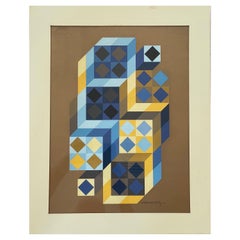
Signed Limited Edition Op Art Serigraph "Tridim-Gordes" by Victor Vasarely
Located in San Diego, CA
Signed limited edition Op Art serigraph entitled "Tridim-Gordes" by Hungarian artist Victor Vasarely, circa 1972. The piece is hand signed in pencil by the artist (lower right) and i...
Category

Austrian Modern Mid-20th Century Contemporary Art

Materials

Paper

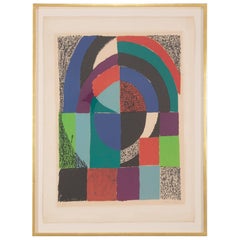
"Cathedrale, 1971" Lithograph in Colors by Sonia Delaunay
Located in Stamford, CT
"Cathedrale, 1971" lithograph in colors on wove paper by Ukrainian born French artist Sonia Delaunay, (1885-1979). Signed in pencil lower right edge; numbered in pencil lower left. E...
Category

French Mid-Century Modern Mid-20th Century Contemporary Art

Materials

Paper

Bernard Langlais Wood Collage over Painted Canvas "Plan with Blue"
Located in West Palm Beach, FL
Wood assemblage and oil on canvas "Plan with Blue" With letterpress signature at lower center left:Bernard Langlais signed again on verso Executed between 1961-1963 Very impressive i...
Category

North American Vintage Mid-20th Century Contemporary Art

Materials

Wood

Sven Lukin: Silkscreen #1
Located in Los Angeles, CA
Sven Lukin: Silkscreen #1 Released by Pace Gallery in NY 1969 Limited Edition
Category

American Mid-Century Modern Vintage Mid-20th Century Contemporary Art

Materials

Paper

1940s Mid-Century Oil Painting by Hermann Urban Mid Century Frame, Germany
By Hermann Urbann
Located in Andernach, DE
Unique mid century oil painting by the German well known artist Hermann Urban, around 1940-1948. ''Academic Art / Realism''. The artist Urban lived from 1866 – 1946. Bad Aibling, Ge...
Category

German Mid-Century Modern Mid-20th Century Contemporary Art

Materials

Canvas, Pine

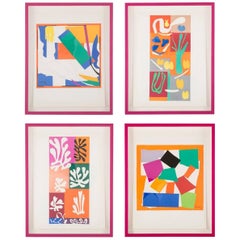
Four Vintage Lithographs after Henri Matisse.
Located in Stamford, CT
Four lithographs by Henri Matisse framed using acid free materials in handmade frames. Priced per frame.
Category

French Modern Vintage Mid-20th Century Contemporary Art

Materials

Paper

Still Thinking About These?

All Recently Viewed