Items Similar to 19th Century, Irish Marine Botany Specimens Made for the Niagara Falls Museum
Want more images or videos?
Request additional images or videos from the seller
1 of 6
19th Century, Irish Marine Botany Specimens Made for the Niagara Falls Museum
$3,250per set
$4,500per set27% Off
£2,479.06per set
£3,432.54per set27% Off
€2,824.40per set
€3,910.71per set27% Off
CA$4,567.90per set
CA$6,324.79per set27% Off
A$4,983.46per set
A$6,900.18per set27% Off
CHF 2,638.71per set
CHF 3,653.60per set27% Off
MX$59,716.08per set
MX$82,683.80per set27% Off
NOK 33,605.48per set
NOK 46,530.67per set27% Off
SEK 30,729.72per set
SEK 42,548.84per set27% Off
DKK 21,089.37per set
DKK 29,200.66per set27% Off
About the Item
19th century Irish Marine Botany Specimens made for Thomas Barnett of the Niagara Falls Museum. Seaweed samples were collected off the West Coast of Ireland in 1871 by Mrs. Maria J.W. Kirkwood and presented to Thomas Barnett Esquire, proprietor of the Niagara Falls Museum. These come as two separately framed pieces with hand embroidered lettering surrounded by seaweed and a poem written by Victoria Hall.
Free shipping within the United States and Canada.
The Niagara Falls Museum was a museum most notable for being the oldest Canadian museum (1827), as well as for having housed the mummy of Ramesses I for 140 years before its return to Egypt in 2003. It was founded by Thomas Barnett of Birmingham, England and underwent a few vocational changes in its history.
More on Thomas Barnett and the Niagara Falls Museum.
Thomas Barnett was born on December the 4th, 1799 near Birmingham, England. He moved to Canada in the early 1820s and opened the Niagara Falls Museum in 1827 at the base of the Canadian Horseshoe Falls. Barnett had a passion for collecting oddities. He retrofitted a former brewery house to exhibit his private collection. Although Barnett was aware of the collection patterns of his North American contemporaries, his own approach bore an uncanny similarity to the British tradition, such as the Ashmolean Museum in Oxford, the first traditional museum in Britain.
The Niagara Falls Museum had humble beginnings. In 1827, the first museum contained Thomas Barnett's own cabinet of taxidermic curiosities. Although the details were not documented, the collection was likely composed of a number of mounted animals of local origin, combined with a smattering of Native American artifacts. Barnett's collection however rapidly grew. Prior to 1844, an account of the museum's contents stated that there were over 5000 items, including bipeds, quadrupeds, birds, fish, insects, reptiles, shells, minerals, and Native American curiosities. Through the first fifty years of its existence, the Niagara Falls Museum continued to acquire similar artifacts through the diligent efforts of the Barnett family and their associates.
In 1854, Sydney Barnett (son of Thomas Barnett) made the first of his three trips to Egypt (two by himself and one with Dr. J. Douglas of Montreal) and purchased four mummies as well as a host of other Egyptian antiquities. In 1857, mastodon remains were discovered in St. Thomas, Ontario and later placed in the museum. In 1859 an inventory of the museum's contents included, in addition to the previously mentioned artifacts, an egg collection, ancient and modern coins, Japanese and Chinese relics. In 1873, the Barnetts purchased the remains of a large whale, the 40-ft magnificent humpback whale skeleton. Barnett and his son Sydney, who assisted with the Museum, were both accomplished taxidermists, preparing specimens for the museum as well as traded and sold to other institutions. Sydney Barnett, an army Colonel, was also a poet, writer, and inventor. With the growing popular fascination with the "Wild West," Sydney Barnett began organizing a Wild West Show and Grand Buffalo Hunt in 1872. He originally contacted "Buffalo Bill" Cody to feature lasso men and gathered over 100 Pottawatomie Indians for a large buffalo hunt. Problems arose when the US Government would not allow the Indians off the reservation. The show was then changed to feature General Custer's scout "Wild Bill" Hickock as master of ceremonies, assisted by local Woodland Indians of the Tuscarora and Cayuga Nations.
Following the transfer of ownership in 1878 to the Davis family, after an acrimonious decades-long rivalry with Buffalo's Saul Davis, the museum nevertheless survived. In 1882, the Niagara Parks Commission was formed to convert the front to the present Queen Victoria Park. This forced the museum to be relocated. In 1888, no suitable location could be found in Canada so it was relocated to Niagara Falls, New York. The Davis family established an Art Gallery in the museum in 1891. During the early years of their proprietorship, five more Egyptian mummies were purchased, along with the entire collection from the celebrated Wood's Museum of Chicago. While acquiring a few new exhibits, others were lost or disposed of over time. There were documented exchanges also, of artifacts and specimens between the Niagara Falls Museum and P.T. Barnum.
In 1892, the museum's living display came to an end because of complaints from area residents about the noises and the odors. A number of artifacts displayed in Buffalo at the Pan American Exposition of 1901 had been acquired by the Niagara Falls Museum. A giant Sequoia tree that was reportedly felled on the Eel River, Humboldt County, California, on February 14, 1893, was a highlight in the Forestry Building at the exposition. Its circumference was seventy-seven feet, making it one of the largest trees ever cut down in the world. Also given to the museum was a shell and coral collection gathered by Louis Agassiz of Harvard University. The exposition contained a wealth of artifacts, and although only the above artifacts have been documented there may be items in the museum's Eskimo, Oriental and South Sea Island display originating from the exposition.
Thomas Barnett, died in 1890 in Niagara Falls, Canada, founder of Canada's oldest museum, is considered Canada's first "Museum Man." The museum collection was owned by the Sherman family until May 1999 when the entire collection was purchased by private collector, William Jamieson of Toronto, whose hope was to revive the tradition Thomas Barnett started.
- Dimensions:Height: 27.5 in (69.85 cm)Width: 33.5 in (85.09 cm)Depth: 0.75 in (1.91 cm)
- Sold As:Set of 2
- Period:
- Date of Manufacture:1871
- Condition:There is some water damage on the bottom and a hole in the top of frame for hanging. Please see pictures.
- Seller Location:Hamilton, CA
- Reference Number:1stDibs: LU135522531942
About the Seller
5.0
Gold Seller
Premium sellers maintaining a 4.3+ rating and 24-hour response times
Established in 2010
1stDibs seller since 2015
1,362 sales on 1stDibs
Typical response time: 3 hours
- ShippingRetrieving quote...Shipping from: Hamilton, Canada
- Return Policy
More From This Seller
View AllAntique Salvaged Carved Wooden Architectural Wall Brackets, Corbels or Shelves
Located in Hamilton, Ontario
This matched pair of antique hand-carved walnut wall brackets were salvaged from an early Victorian house in Montreal, Canada. The brackets are unsigned, but presumed to have originated from Canada in approximately 1850 in the period Victorian style. The brackets are solid walnut in their composition and have ornate decorative carvings. These wall corbels...
Category
Antique Mid-19th Century Canadian Early Victorian Architectural Elements
Materials
Walnut
19th Century English Victorian Canterbury Stand Sheet Music Rack Brass Castors
Located in Hamilton, Ontario
Beautiful Victorian hand crafted wood and veneer Canterbury rack to hold sheet music or magazines with one drawer and brass wheels.
Category
Antique Late 19th Century English Early Victorian Magazine Racks and Stands
Materials
Brass
$1,240 Sale Price
20% Off
Antique Hand-Carved
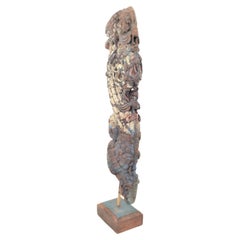
Painted Wooden Mounted Architectural or Nautical Fragment
Located in Hamilton, Ontario
This antique hand-carved and polychrome painted architectural or nautical fragment shows no sign of where is may have originated from, but is quite early dating between approximately...
Category
Antique Early 17th Century Unknown Baroque Architectural Elements
Materials
Oak
Mid-Century Modern String
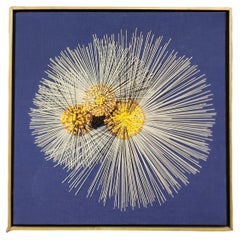
Wool on Burlap Framed Stylized Floral Wall Sculpture
Located in Hamilton, Ontario
This artisan made framed wall sculpture is unsigned, but presumed to have originated from Canada and date to approximately 1970 and done in a Mid-Century Modern style. The sculpture ...
Category
Mid-20th Century Canadian Mid-Century Modern Wall-mounted Sculptures
Materials
Wool, Burlap, String, Pine
Pair of James Fergus Kyle Paintings
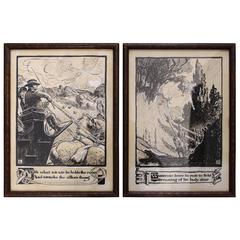
By James Fergus Kyle
Located in Hamilton, Ontario
Pair of James Fergus Kyle (1876-1941) paintings by Canadian cartoonist and illustrator.
Size
Without frame: 11" high x 8" wide
With frame: 12" high x 9" wide.
Category
Early 20th Century Canadian Paintings
$995 / set
Antique Hand-Carved
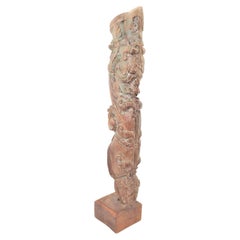
Painted Wooden Mounted Architectural or Nautical Fragment
Located in Hamilton, Ontario
This antique hand-carved and polychrome painted architectural or nautical fragment shows no sign of where is may have originated from, but is quite early dating between approximately...
Category
Antique Early 17th Century Unknown Baroque Architectural Elements
Materials
Oak
You May Also Like
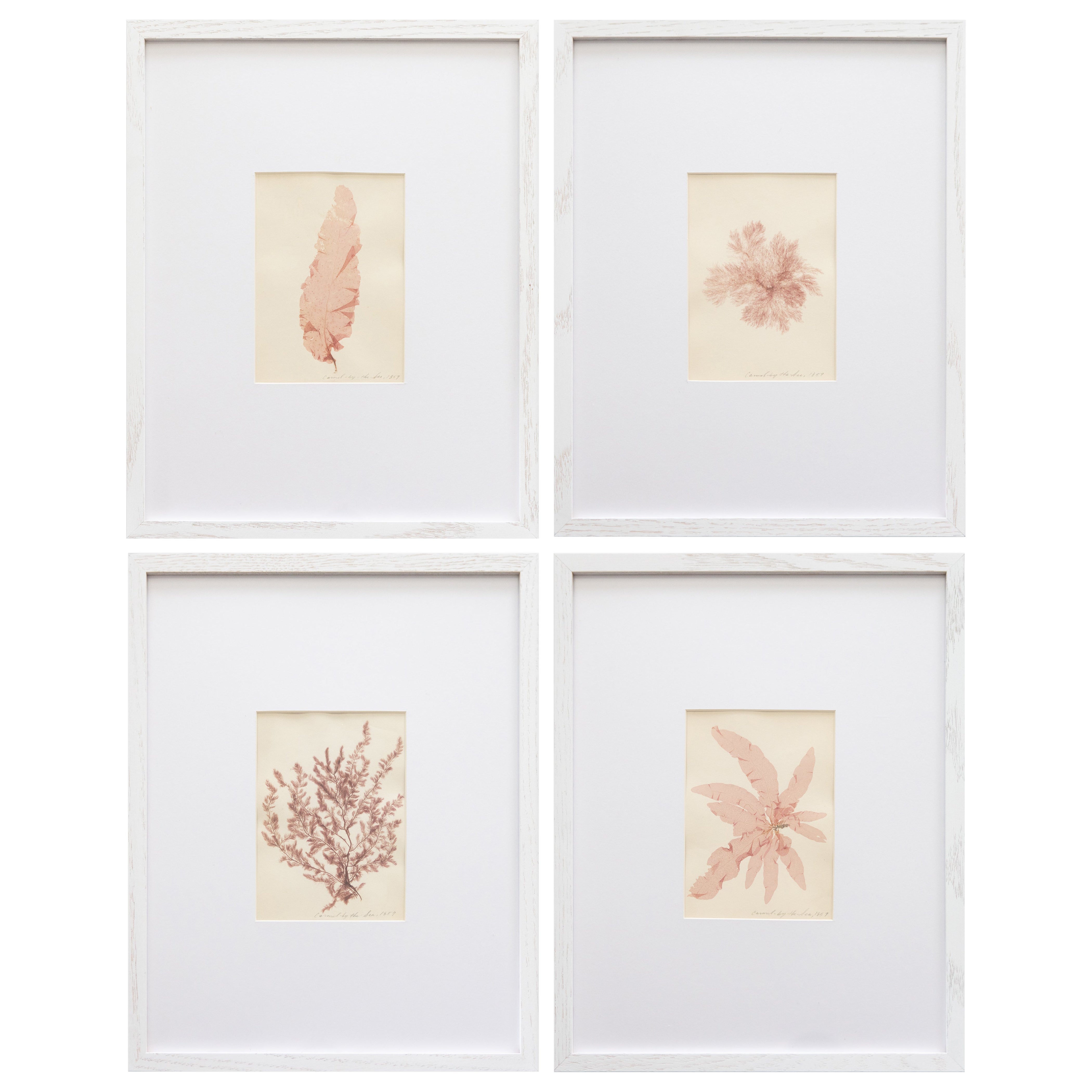
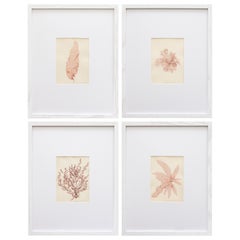
19th Century Rare Antique Pressed Seaweed Specimens, 1859 - set of four
Located in Pearland, TX
An exceptionally rare and well-preserved set of antique 19th century pressed seaweed herbarium specimens, sourced from Carmel-by-the-Sea, 1859. Seaweed collecting first became popula...
Category
Antique Mid-19th Century American Decorative Art
Materials
Oak, Paper
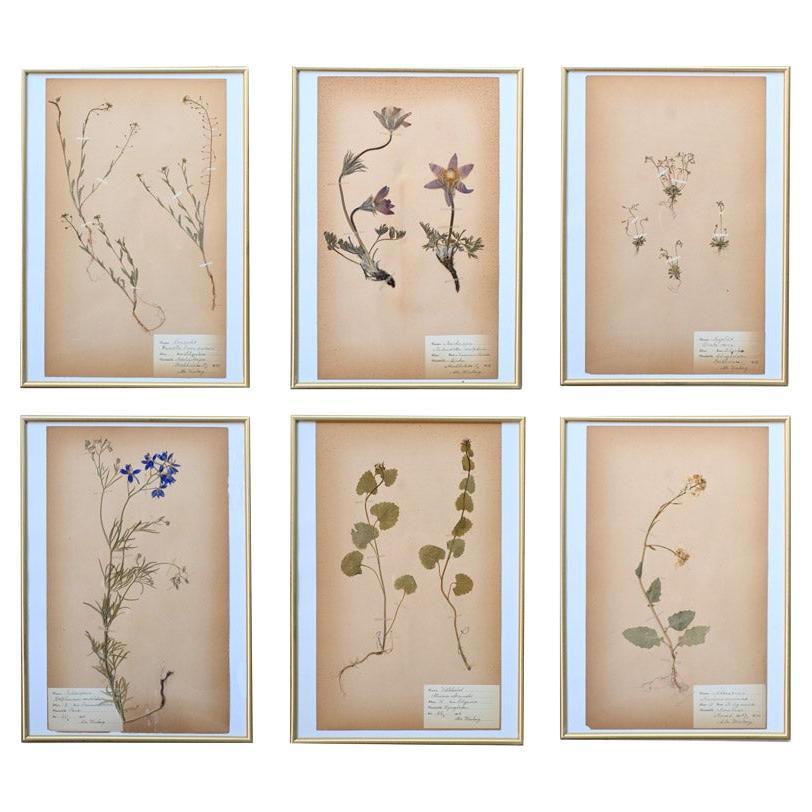
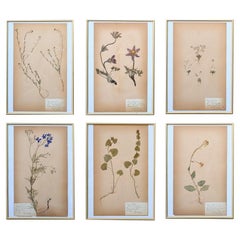
Six early 20th Century pressed botanic samples signed and dated 1906
Located in London, GB
Six early 20th Century pressed botanic samples signed and dated 1906
Dimensions in inches: H 17” x W 12” x D 0.7”
Age: 1908
Origin: EU
Condition: Fair
Overview
Six early 20th Century...
Category
Antique 19th Century French Victorian Decorative Art
Materials
Natural Fiber
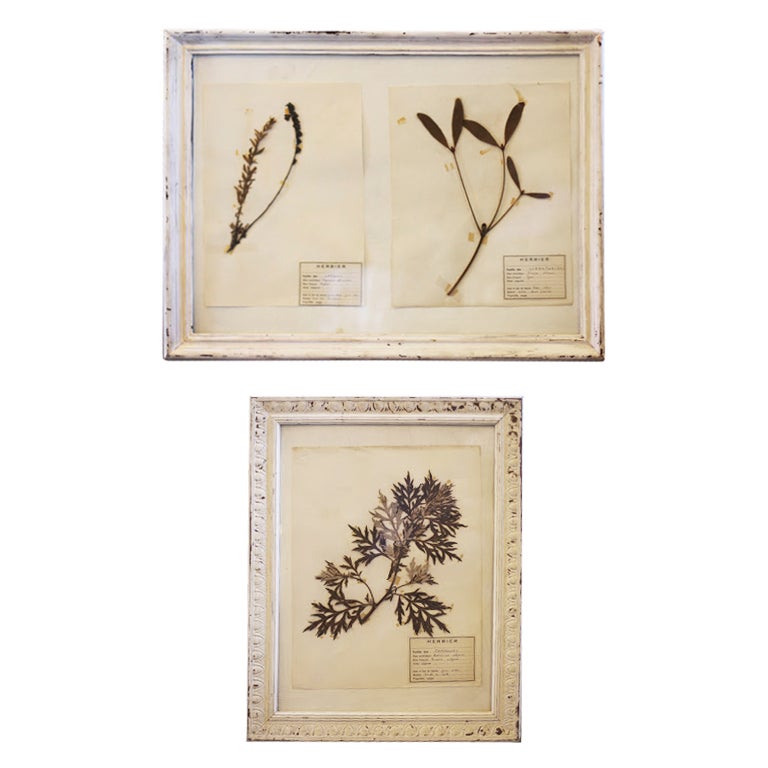
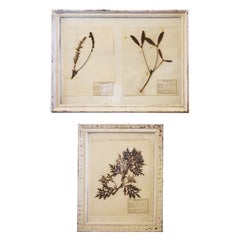
Mounted Flower Botanical - Herbiers
Located in Napa, CA
Dried and pressed botanical specimens were collected and presented by French students as an educational exercise. Measurements vary. (Price...
Category
Vintage 1960s French Decorative Art
Materials
Wood, Glass
$375 / item
Set of
15
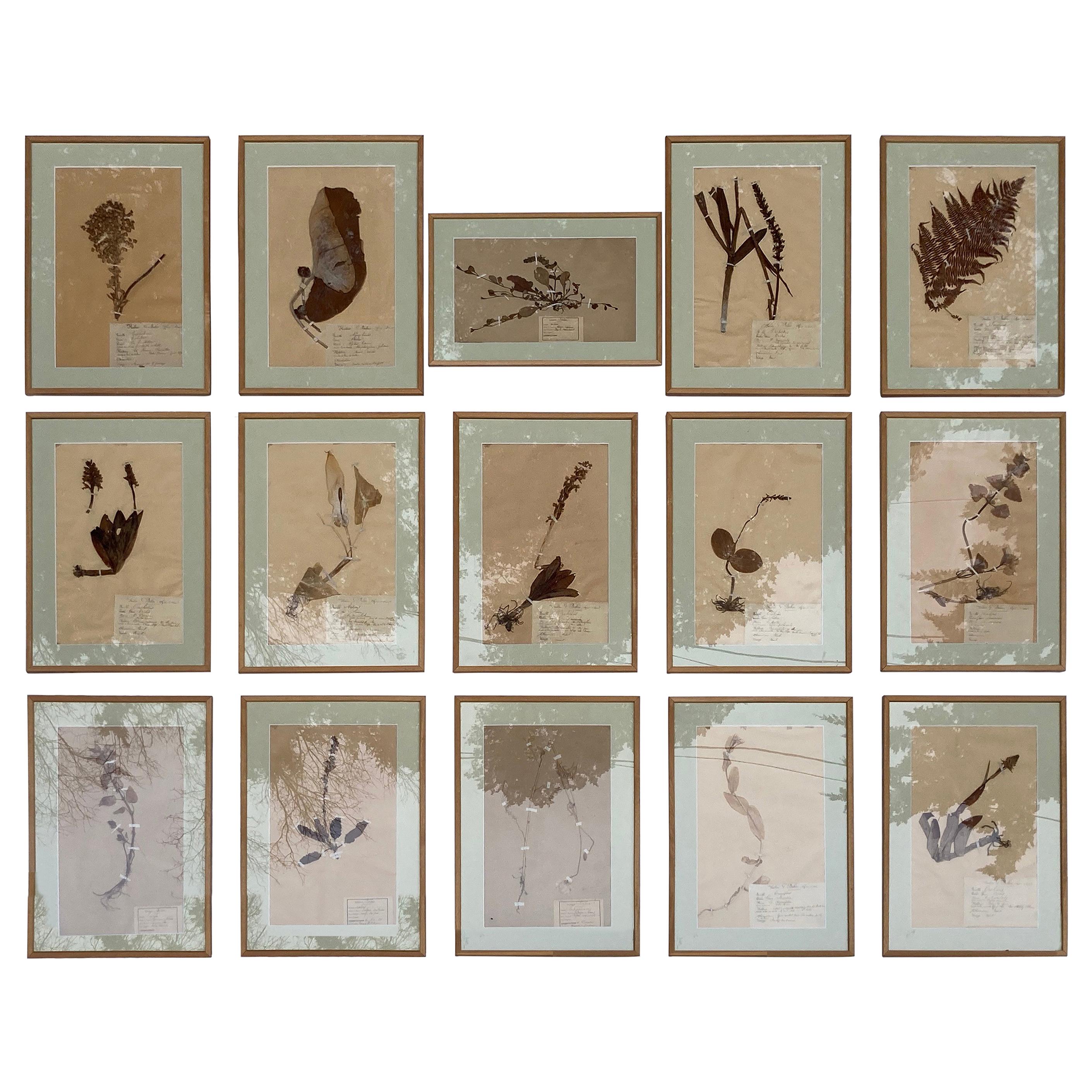
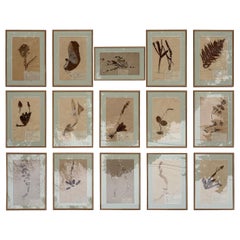
19th Century Framed Botanical Specimens
Located in East Hampton, NY
19th century French dried plant specimens... signed by G. Babou, dated, and meticulously catalogued including location in France.... a wonderful set of 15.
Category
Antique 1890s Decorative Art
Materials
Paper
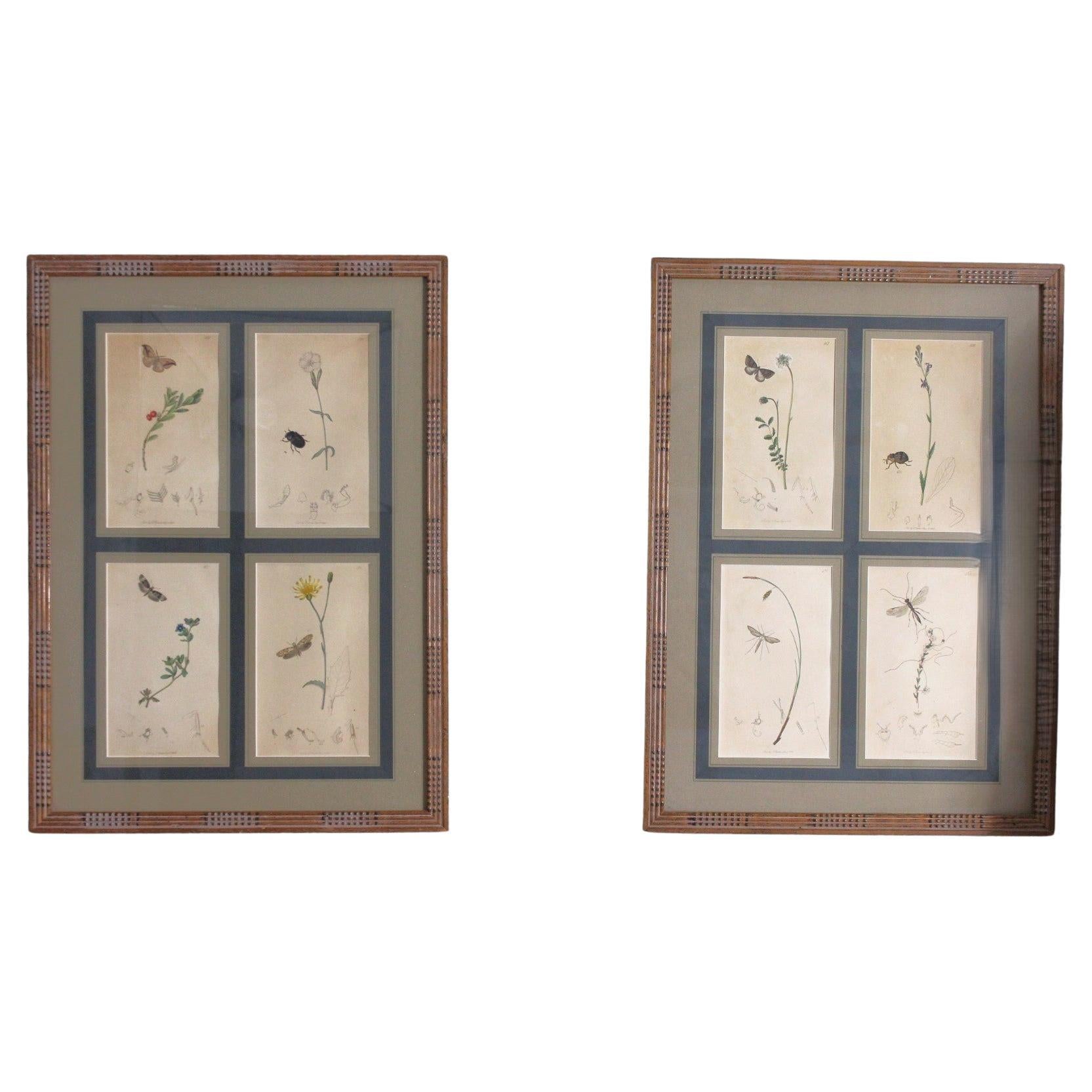
19th Century Botanical Engravings of flowers and insects
Located in Seaford, GB
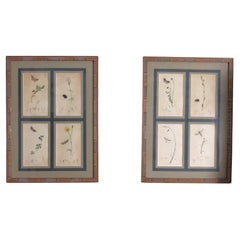
Pair of 19th-century British plant botanicals Engravings with Insects – John Curtis (1791-1862)
Sold as a pair - Please let us know your choice on your purchase order:
1 - Dandeli...
Category
Antique 19th Century English Victorian Prints
Materials
Paper
$2,018 Sale Price / set
20% Off
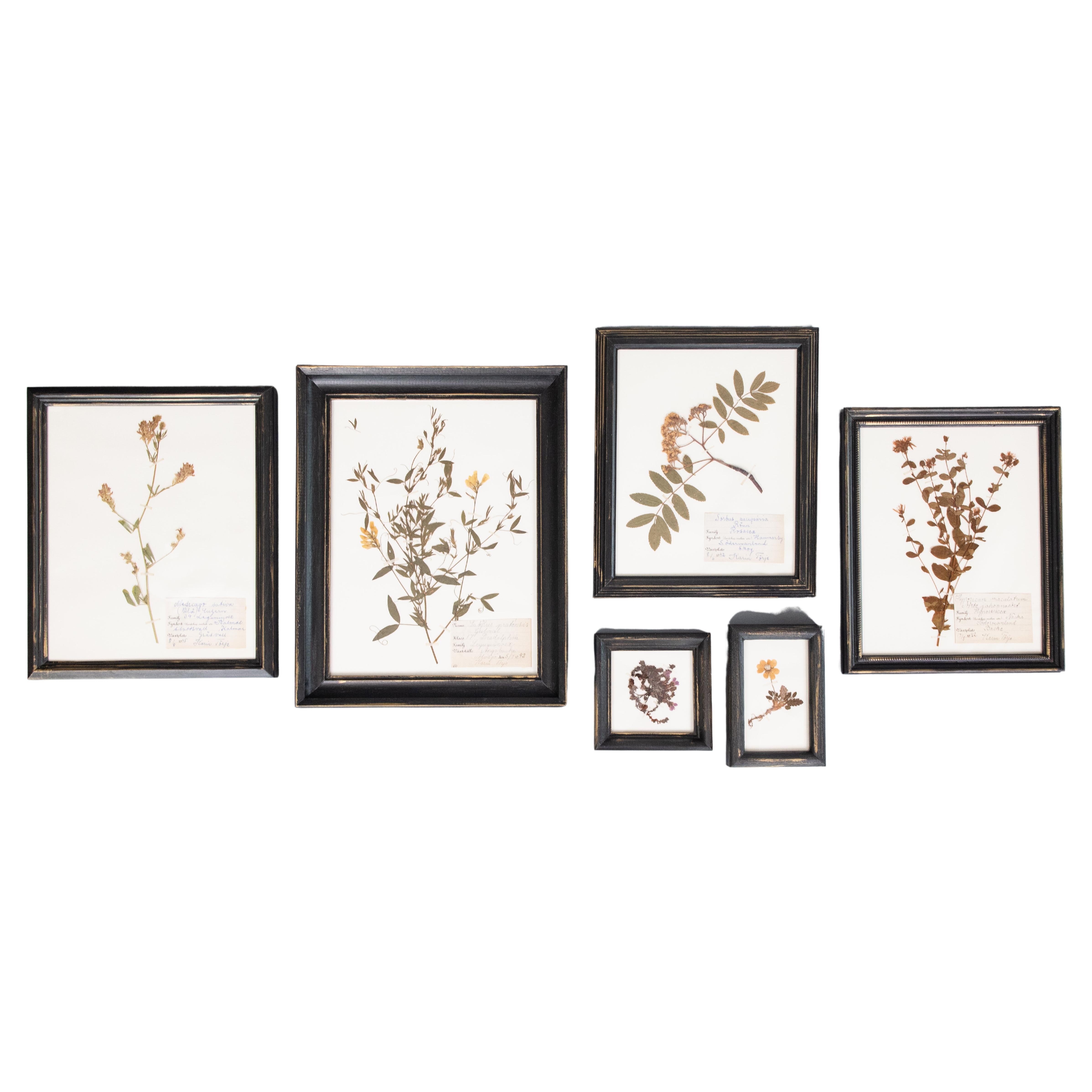
Custom Framed Antique Swedish Herbarium Botanical Specimens, Circa 1940
s - Set
Located in Pearland, TX
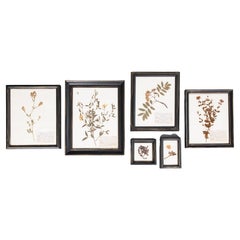
Beautiful gallery of custom framed antique Swedish herbarium floral specimens, collected between 1942-45. Handwritten names in lovely Swedish script. Presented in vintage black frame...
Category
Early 20th Century Swedish Other Decorative Art
Materials
Wood, Paper
More Ways To Browse
China Coin
Chinese Coins
Antique Chinese Coins
Antique Oddities
Egyptian Mummy
Antique Egg Collection
Buffalo Bill Cody
Seashell Wall Decorations
18th Century Portuguese Tiles
C Jere Wall Art
French Wall Murals
Japanese Wall Fabric
Majolica Wall Plaque
Pietra Dura Wall Art
Russian Icons Gold
Tile Mosaic Wall Art
Wall Art Medallions
Agate Wall Art