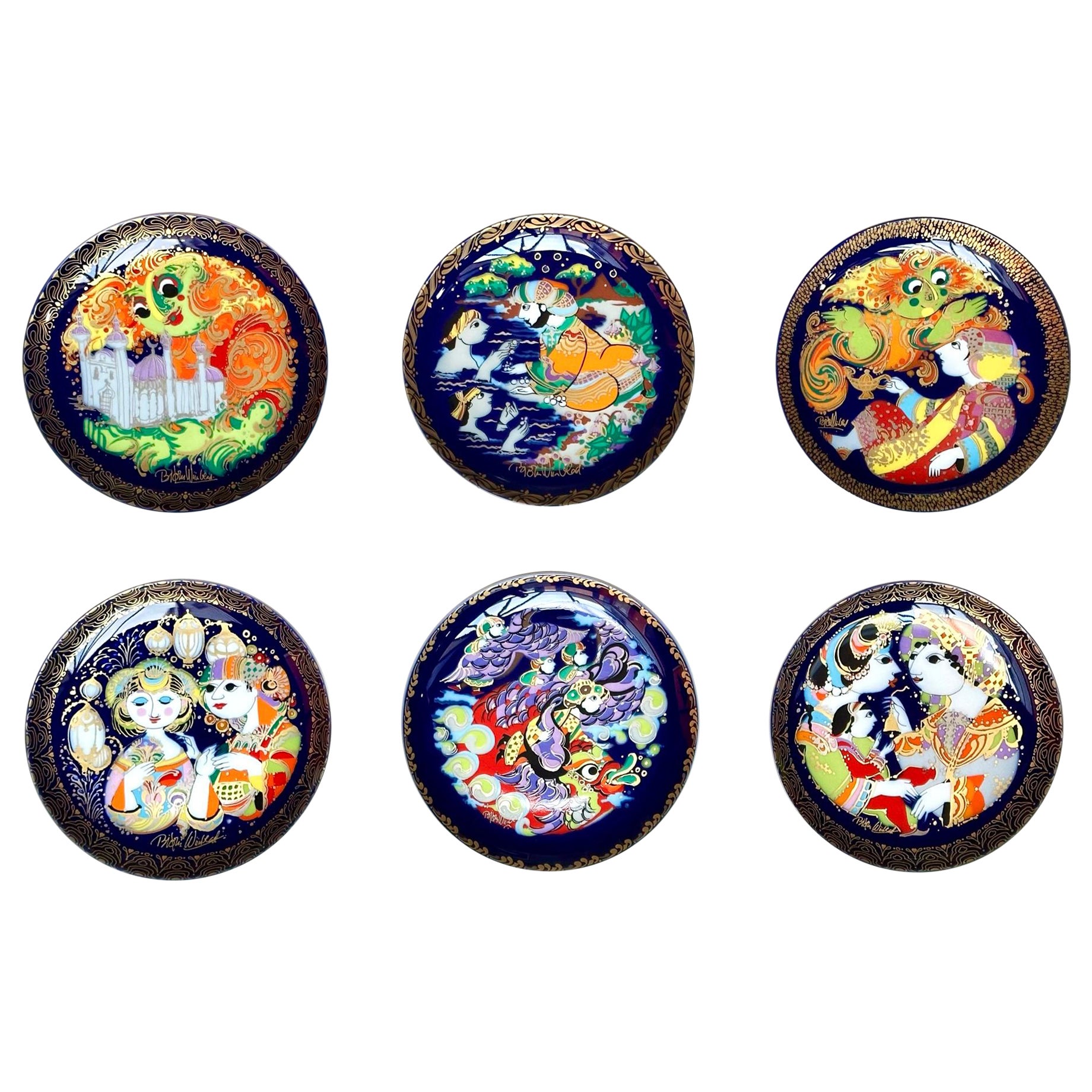
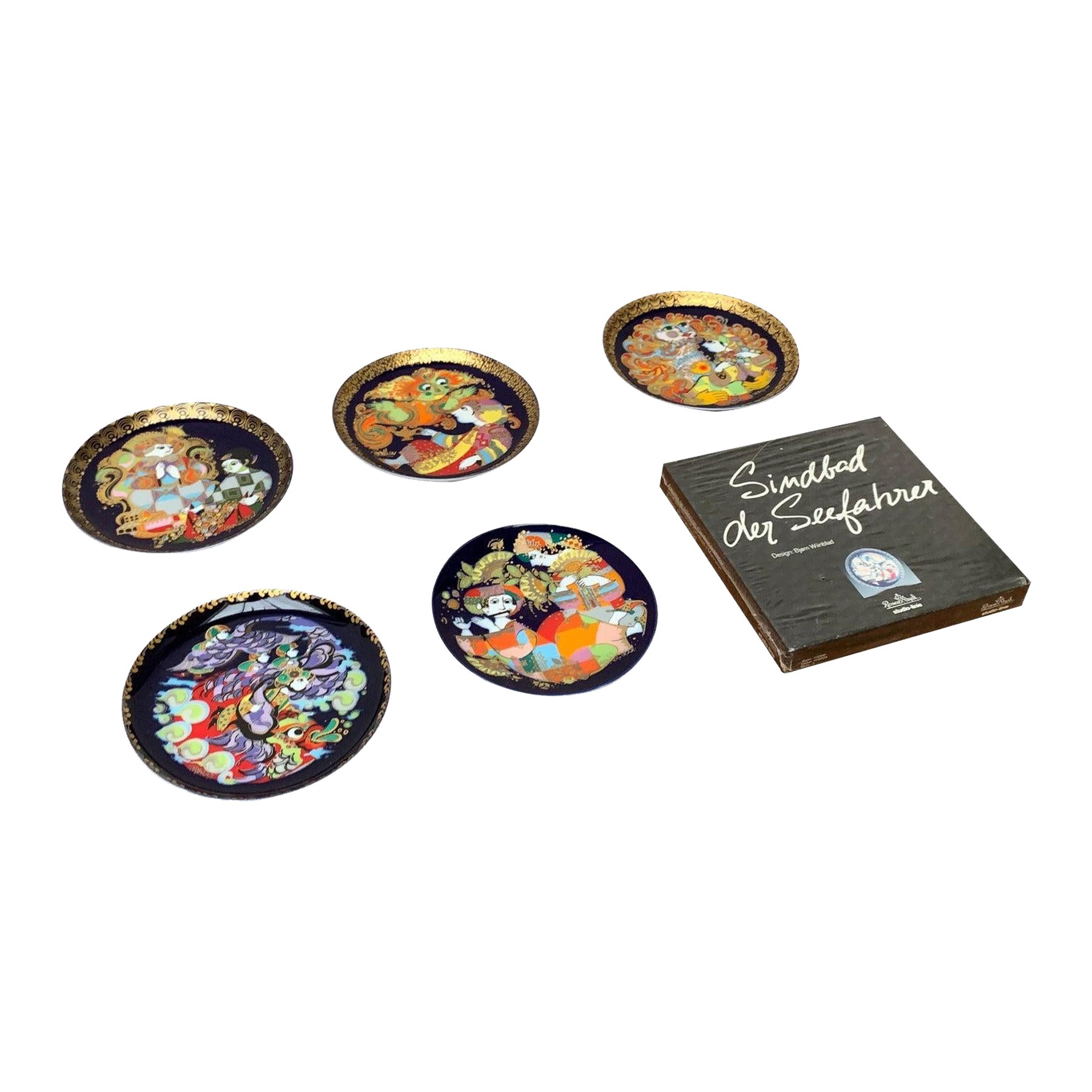
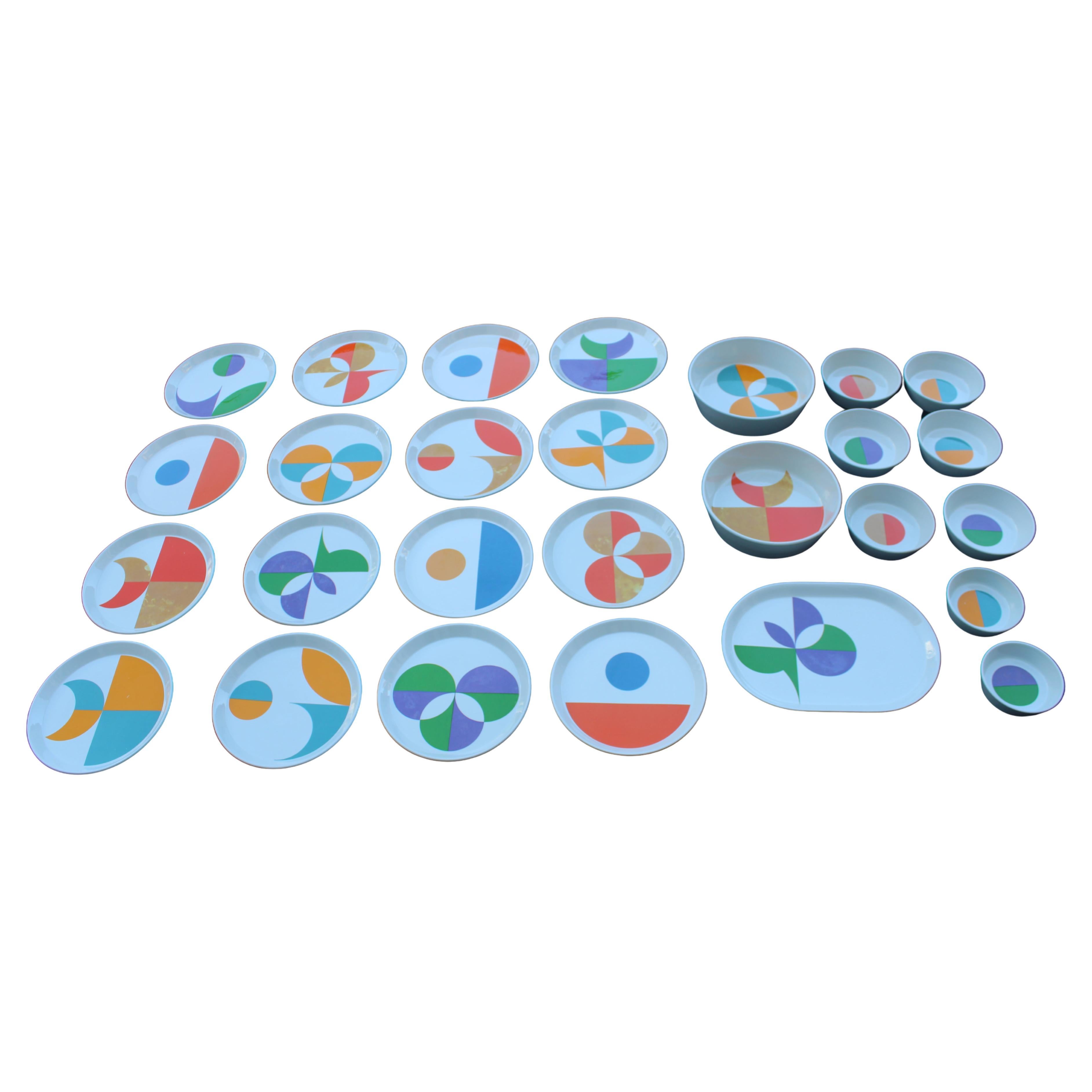
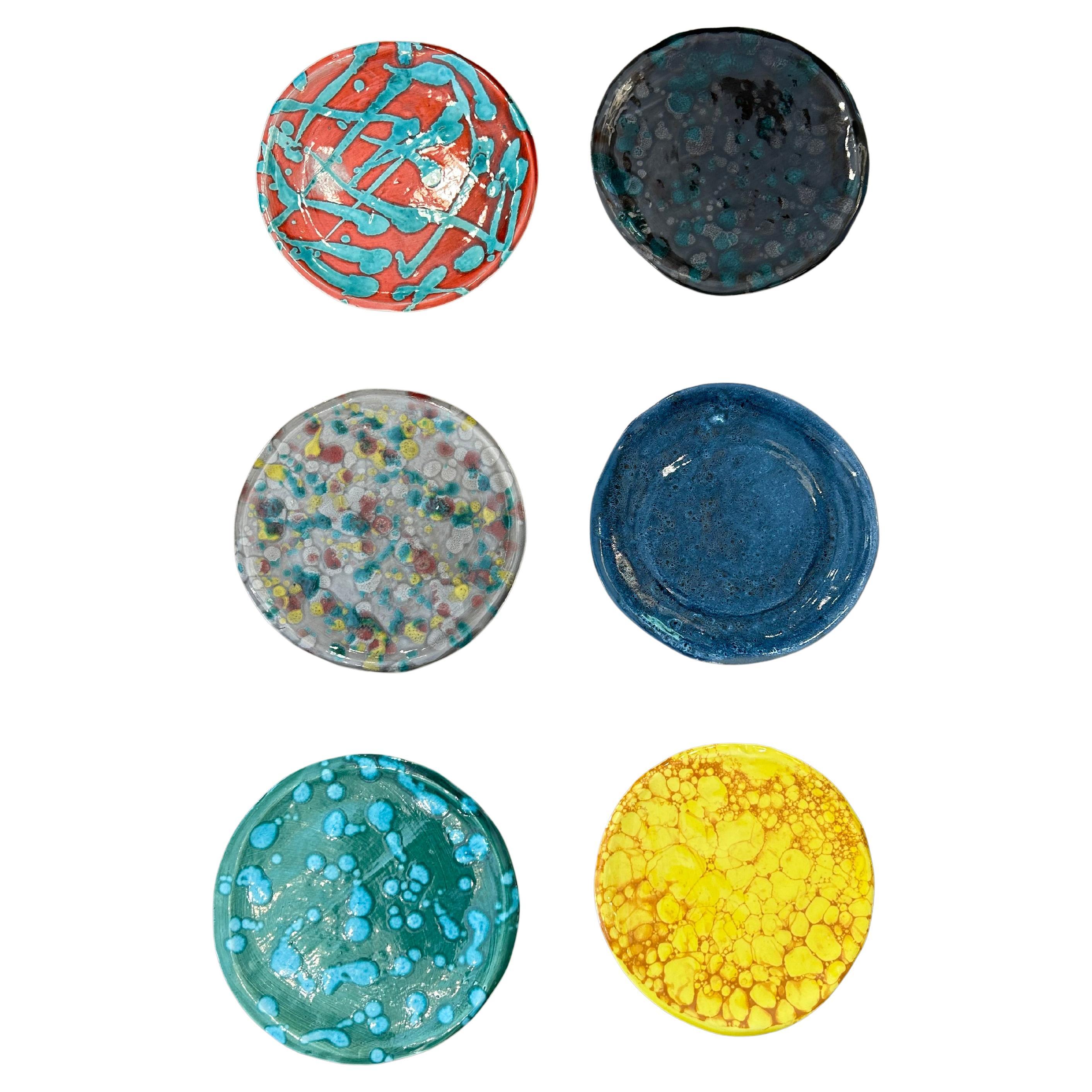
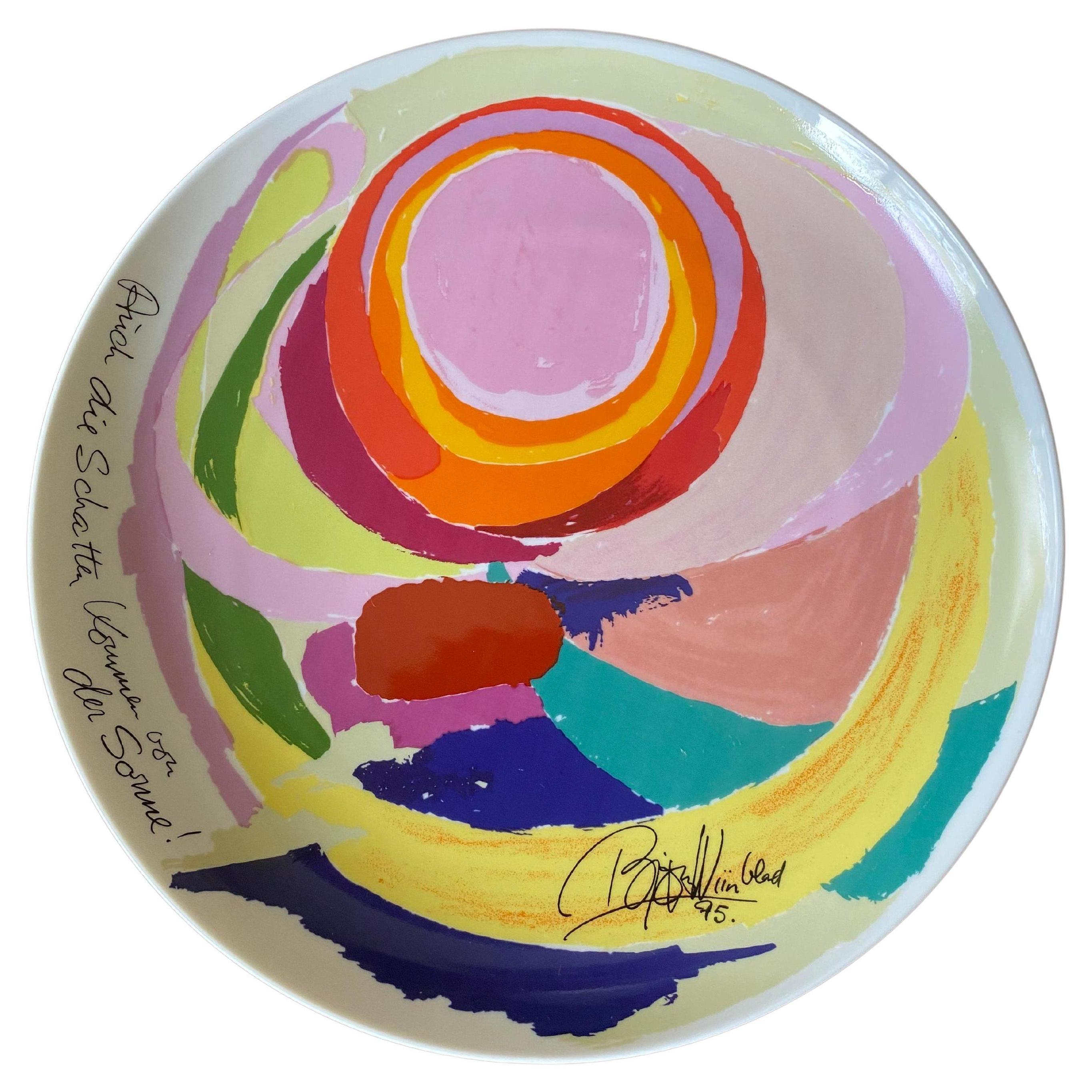
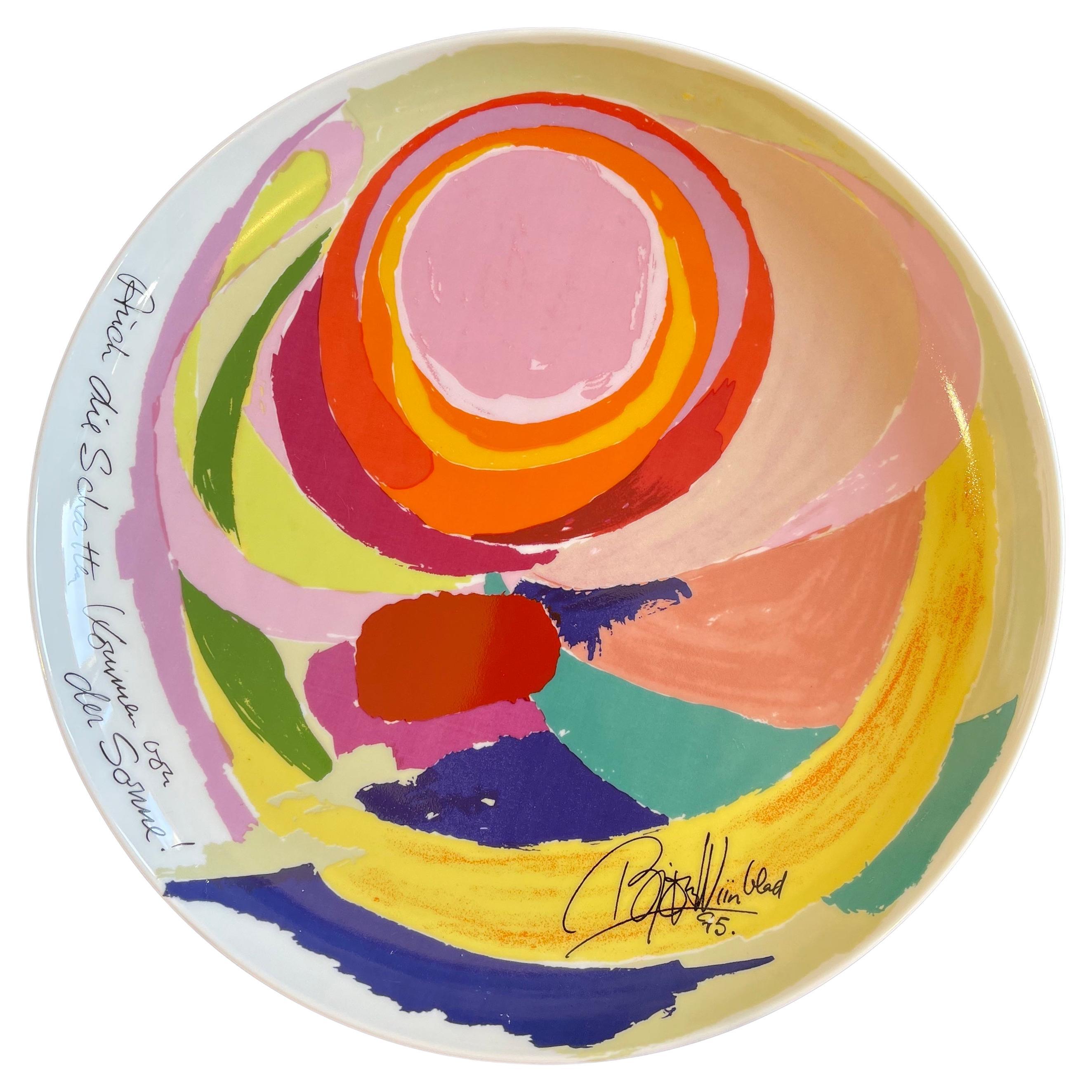
5 Artists Plates Collection Limited Edition by Rosenthal, Emilio Pucci, Wiinblad
About the Item
- Creator:
- Dimensions:Height: 1.26 in (3.2 cm)Diameter: 10.24 in (26 cm)
- Sold As:Set of 5
- Style:Mid-Century Modern (Of the Period)
- Materials and Techniques:
- Place of Origin:
- Period:
- Date of Manufacture:1970s to 1980s
- Condition:All plates are unused and in very good condition, if not immaculate. All plates come in their original packaging. All the packaging shows clear signs of age inside and out. The actual boxes might have different signs of use than in the imagery.
- Seller Location:Andernach, DE
- Reference Number:1stDibs: LU8556248207172
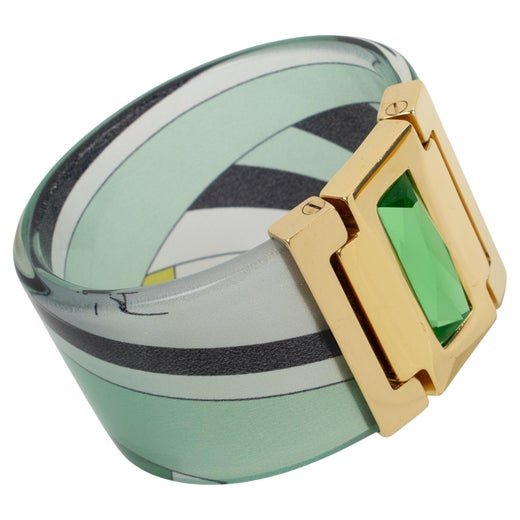
Emilio Pucci
By the mid-1960s, the international fashion press, enamored of his dazzling scarves and slithery dresses in sensuous psychedelic silk jersey, had dubbed Florentine designer Emilio Pucci the Prince of Prints. Less well known is that, starting in the early 1950s, Pucci applied his colorful, abstract patterns to static angular mediums such as ceramics, floors and furniture, imbuing them with movement, not to mention glamour. He was the first fashion designer to enter the lifestyle market, founding the successful brand that exists today.
Born in 1914 to one of Italy’s oldest noble families, Emilio Pucci, Marchese Pucci di Barsento, was a member of the postwar international jet set, hopping from beach to mountain to city. His fashion career began unexpectedly in 1947, when he created a revolutionary stretch ski outfit that was photographed on the Swiss slopes for Harper’s Bazaar.
Eschewing a life of aristocratic glamour, the self-taught Pucci opened a boutique on Capri dedicated to simple resort clothing (think capri pants) that evoked the Mediterranean’s undulating waves and refreshingly bright colors. At the time, luxury fashion was as constricted as a Dior cocktail dress, but the Swinging Sixties were on the horizon. Signed with what Vogue International editor Suzy Menkes calls a “handwritten ‘Emilio’ flourish” — a concept, she points out, as novel as that of designer ready-to-wear — his designs were soon seen on celebrities like Jackie Kennedy and Marilyn Monroe.
From the airline uniforms he created for Braniff in the 1960s to the emblem he crafted for the Apollo XV space mission in 1971, Pucci’s designs were visionary. In spite of his traditional roots (or because of them), the Prince of Prints was forward thinking and outward looking. Pucci put his signature flourish on patterns that were flexible — first for fashion, then for furnishings and objects. Whether on fabric or foam, shelves or sails, as he first explained some 70 years ago, the ornamental designs work in “continuous motion.” Venturing into nontraditional design partnerships, he laid the groundwork for a future brand, a classic legacy that his daughter Laudomia Pucci continues today.
Find vintage Emilio Pucci evening dresses, scarves, skirts and other clothing and accessories on 1stDibs.
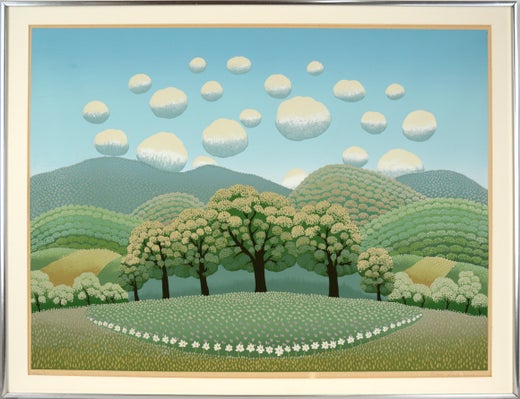
Ivan Rabuzin
Ivan Rabuzin was a Croatian naive painter and one of the most eminent lyric painters of the 20th century in Croatia. For many years he worked as a carpenter, until he began painting in his 35th year. He had a characteristic pastel palette with mild, pleasing, bright colors, which made his artwork quiet and peaceful. There are always nature and rural motives especially from Croatian Zagorje and we can usually see landscapes with hills, puffy clouds and sun, oversized colorful flowers, small villages, forests, fields etc. Rabuzin’s artwork is characterized by perfect organisation of space, and stylisation of forms and gentle gradation of nuances and most important – circles. For him a circle is a basic form in nature, which he transformed into a hill, a flower, a cloud, a tree crown and the sun. He usually made gradation or whole forms with points or circles arranged in strict rhythmic strings. Perspectives and proportions are adapted to the meaning represented in the painter’s consciousness. Oversized flowers, characteristic for his artwork, are a symbol of life, infinity, birth and youth, and universal harmony and paradise.
- ShippingRetrieving quote...Shipping from: Andernach, Germany
- Return Policy
More From This Seller
View AllMid-20th Century German Mid-Century Modern Decorative Art
Porcelain
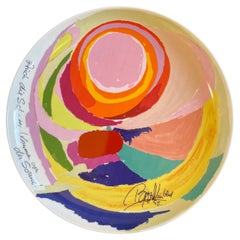
Late 20th Century German Mid-Century Modern Decorative Art
Crystal
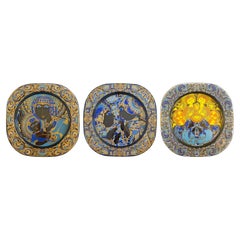
Mid-20th Century German Mid-Century Modern Decorative Art
Porcelain
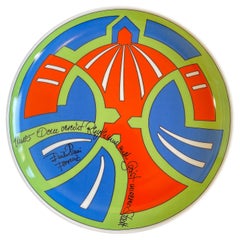
Late 20th Century German Mid-Century Modern Decorative Art
Porcelain
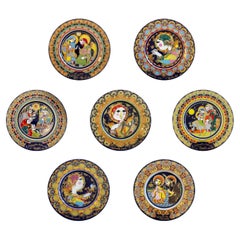
Mid-20th Century German Mid-Century Modern Decorative Art
Porcelain
Vintage 1970s German Mid-Century Modern Decorative Art
Ceramic
You May Also Like
Vintage 1970s German Decorative Art
Porcelain
20th Century German Decorative Art
Ceramic
Vintage 1960s Italian Mid-Century Modern Decorative Art
Ceramic
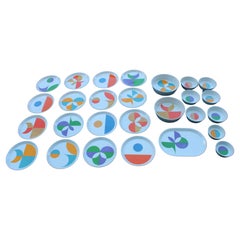
21st Century and Contemporary Italian Aesthetic Movement Ceramics
Ceramic
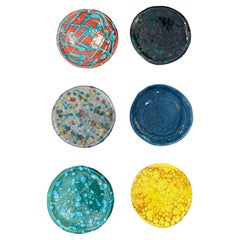
Vintage 1970s German Mid-Century Modern Shelves and Wall Cabinets
Porcelain
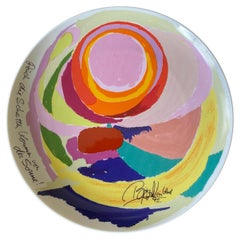
Vintage 1970s Argentine Modern Prints
Glass, Wood, Paper
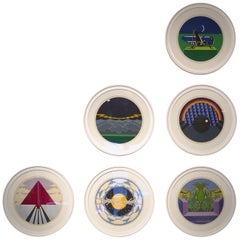
Read More
How Fashion Icon Emilio Pucci Became the Prince of Psychedelic Prints
The Italian design icon set the course for creating a comprehensive lifestyle brand.
The Best Ways to Dress for Your Astrological Sign
Makeup and astrology expert Linda Mason dispenses fashion advice for every zodiac sign. Does your wardrobe match your horoscope?