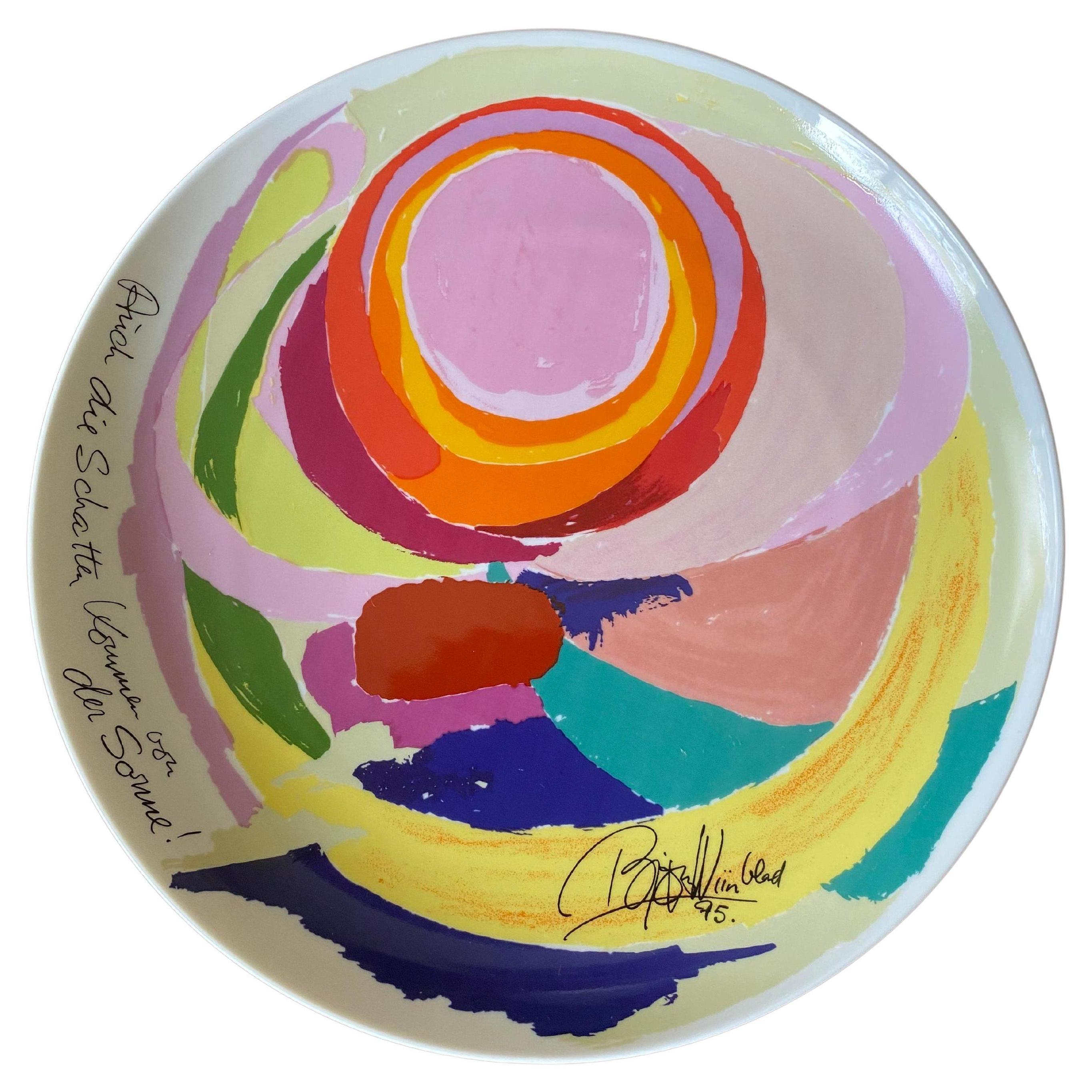
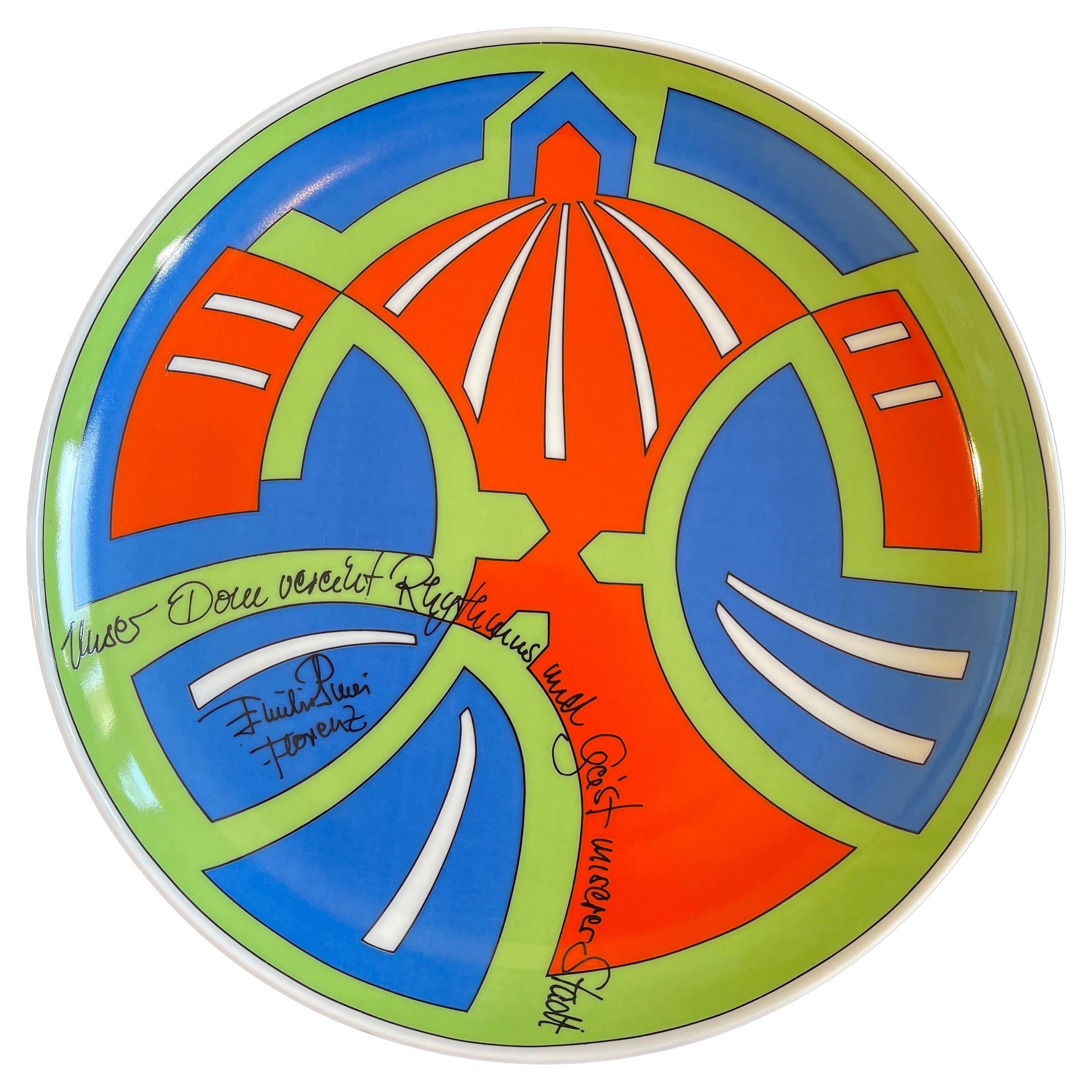
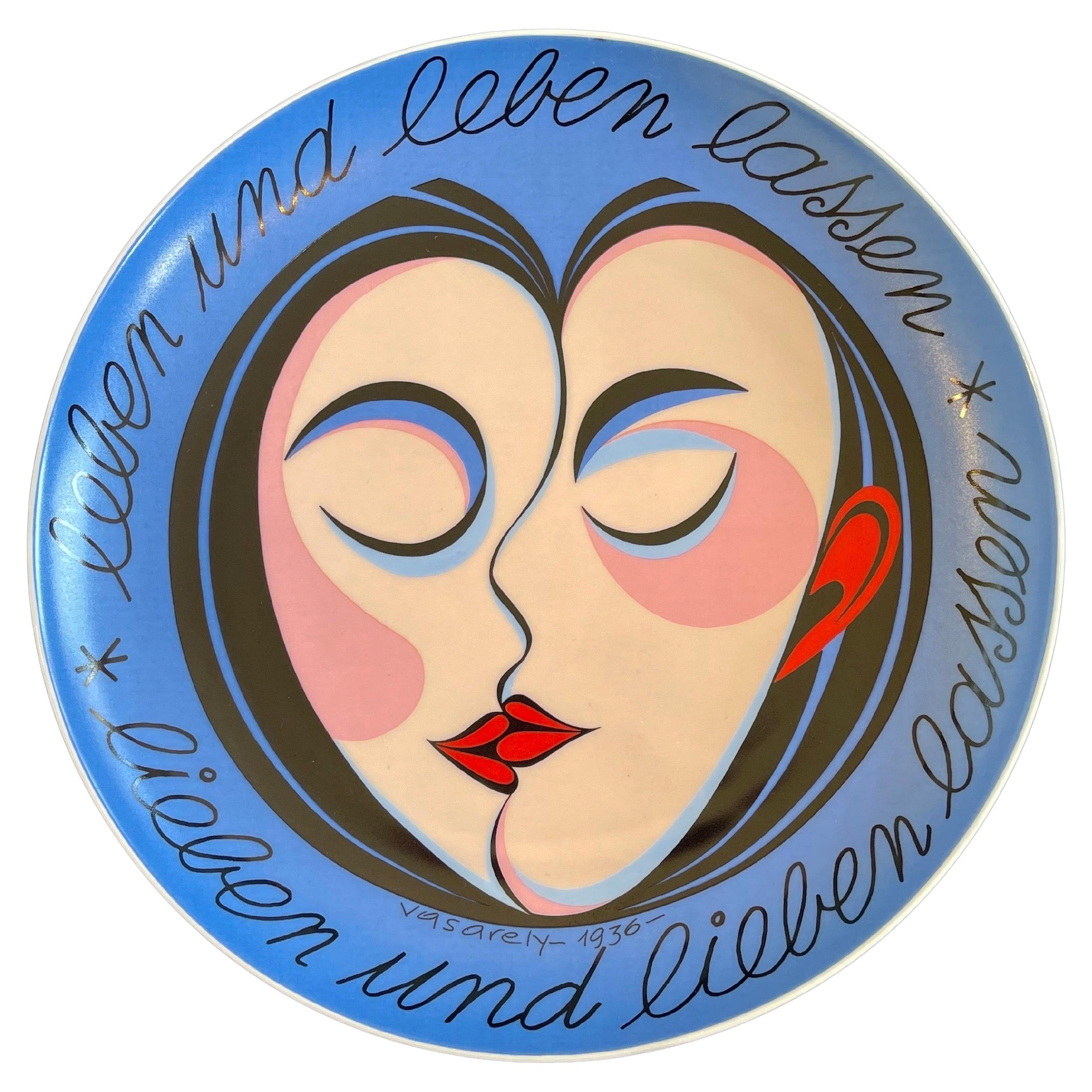
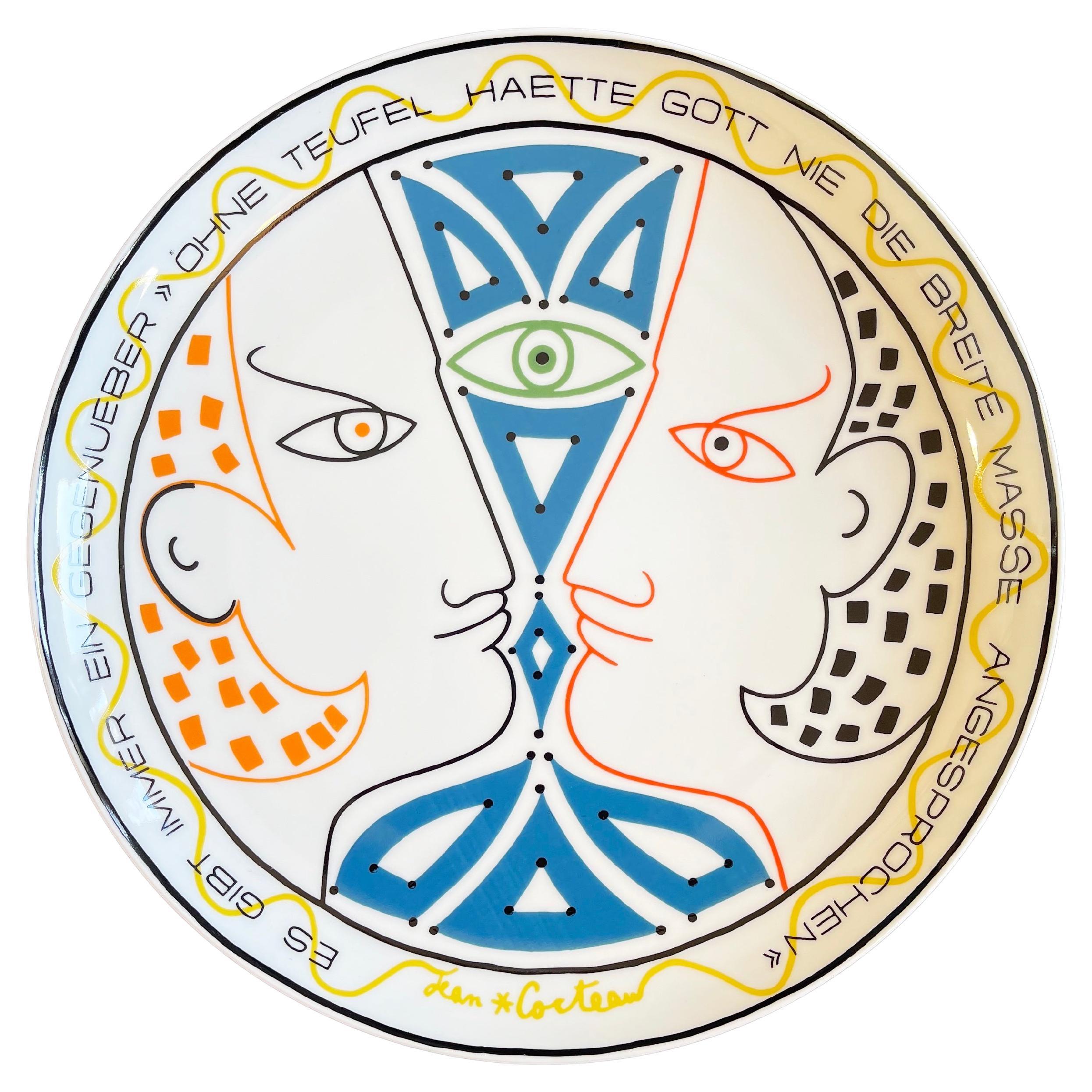
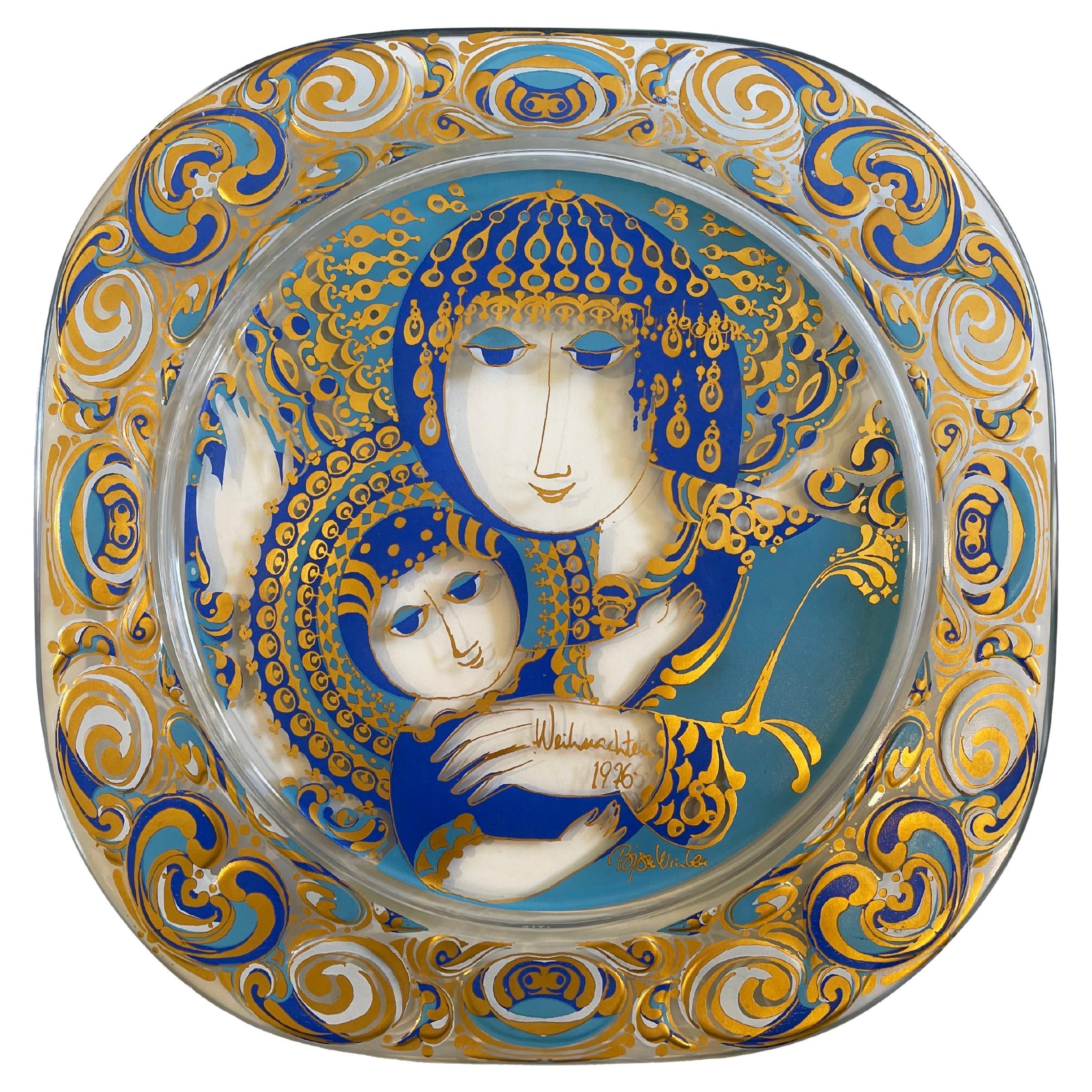
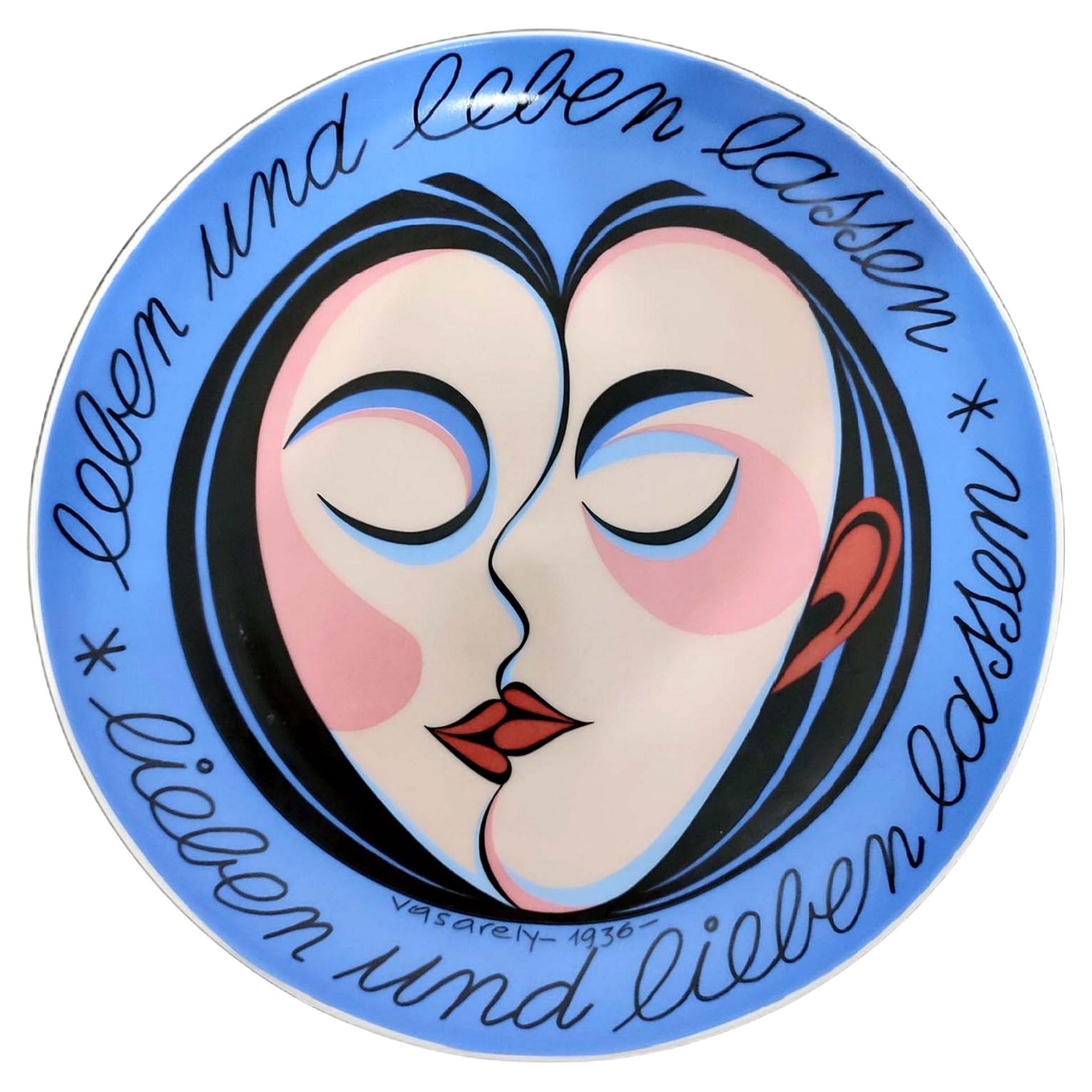
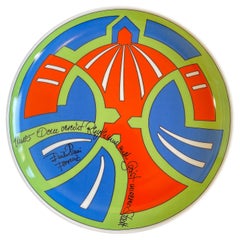
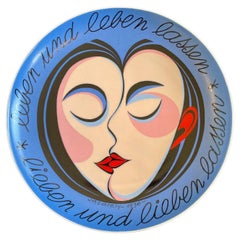
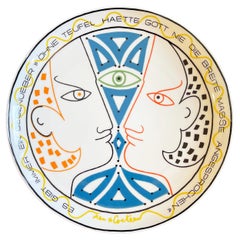
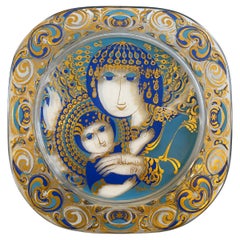
9 Artist Plates Collection Limited Edition by Rosenthal, Morandini, Pucci, Knef
About the Item
- Creator:Jean Cocteau (Artist),Bjorn Wiinblad (Artist),Marcello Morandini (Artist),Emilio Pucci (Artist),Victor Vasarely (Artist)
- Dimensions:Height: 1.26 in (3.2 cm)Diameter: 10.24 in (26 cm)
- Sold As:Set of 9
- Style:Mid-Century Modern (Of the Period)
- Materials and Techniques:
- Place of Origin:
- Period:
- Date of Manufacture:1970s to 1980s
- Condition:All plates are unused and in very good condition, if not immaculate. All plates come in their original packaging. All the packaging shows clear signs of age inside and out from age and storage. Additional imaging available on request.
- Seller Location:Andernach, DE
- Reference Number:1stDibs: LU8556248379452
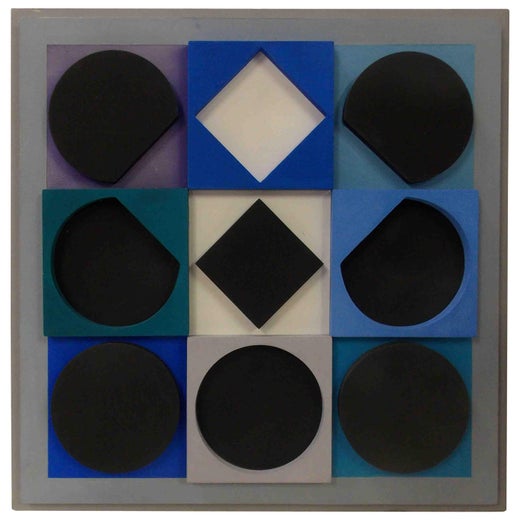
Victor Vasarely
Widely considered the grandfather of Op art, the French-Hungarian painter Victor Vasarely (1906–97) created eye-popping geometric abstractions that play with the viewer’s perception of depth, perspective and motion. A classic example is the 1937 Zebra, which consists of undulating black and white stripes that suggest the form of the titular animal through optical trickery. The work is often credited as the earliest Op art painting.
Such illusions were more than pleasing tricks for Vasarely, who insisted that “pure form and pure color can signify the world.” He wanted to “democratize” art by producing works in large editions at reasonable prices that were understandable across national and cultural boundaries. In the 1960s, he developed an alphabet plastique, or fine art alphabet, consisting of elementary visual building blocks that could be used in endless combinations to create original compositions. By employing this universal visual vocabulary and stripping away topical references, he sought to create what he called a “Planetary Folklore.”
Embodying Vasarely’s singular belief that art should serve a social function, accessible to all, these innovations may perhaps be his greatest contribution to 20th-century art.
Find a collection of Victor Vasarely prints, paintings, sculptures and other art on 1stDibs.
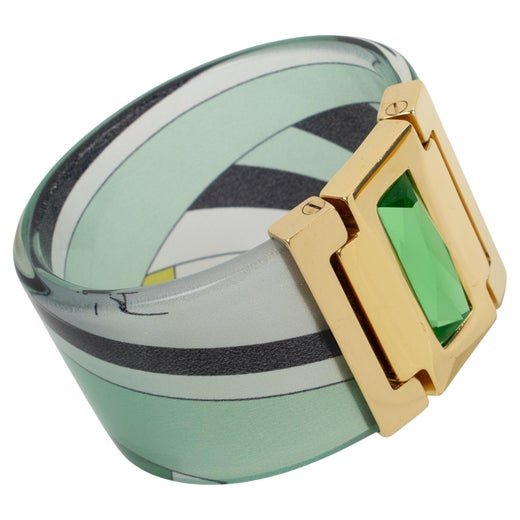
Emilio Pucci
By the mid-1960s, the international fashion press, enamored of his dazzling scarves and slithery dresses in sensuous psychedelic silk jersey, had dubbed Florentine designer Emilio Pucci the Prince of Prints. Less well known is that, starting in the early 1950s, Pucci applied his colorful, abstract patterns to static angular mediums such as ceramics, floors and furniture, imbuing them with movement, not to mention glamour. He was the first fashion designer to enter the lifestyle market, founding the successful brand that exists today.
Born in 1914 to one of Italy’s oldest noble families, Emilio Pucci, Marchese Pucci di Barsento, was a member of the postwar international jet set, hopping from beach to mountain to city. His fashion career began unexpectedly in 1947, when he created a revolutionary stretch ski outfit that was photographed on the Swiss slopes for Harper’s Bazaar.
Eschewing a life of aristocratic glamour, the self-taught Pucci opened a boutique on Capri dedicated to simple resort clothing (think capri pants) that evoked the Mediterranean’s undulating waves and refreshingly bright colors. At the time, luxury fashion was as constricted as a Dior cocktail dress, but the Swinging Sixties were on the horizon. Signed with what Vogue International editor Suzy Menkes calls a “handwritten ‘Emilio’ flourish” — a concept, she points out, as novel as that of designer ready-to-wear — his designs were soon seen on celebrities like Jackie Kennedy and Marilyn Monroe.
From the airline uniforms he created for Braniff in the 1960s to the emblem he crafted for the Apollo XV space mission in 1971, Pucci’s designs were visionary. In spite of his traditional roots (or because of them), the Prince of Prints was forward thinking and outward looking. Pucci put his signature flourish on patterns that were flexible — first for fashion, then for furnishings and objects. Whether on fabric or foam, shelves or sails, as he first explained some 70 years ago, the ornamental designs work in “continuous motion.” Venturing into nontraditional design partnerships, he laid the groundwork for a future brand, a classic legacy that his daughter Laudomia Pucci continues today.
Find vintage Emilio Pucci evening dresses, scarves, skirts and other clothing and accessories on 1stDibs.
- ShippingRetrieving quote...Shipping from: Andernach, Germany
- Return Policy
More From This Seller
View AllMid-20th Century German Mid-Century Modern Decorative Art
Porcelain
Mid-20th Century German Mid-Century Modern Decorative Art
Porcelain
Mid-20th Century German Mid-Century Modern Decorative Art
Porcelain
Mid-20th Century German Mid-Century Modern Decorative Art
Crystal
Mid-20th Century German Mid-Century Modern Decorative Art
Porcelain
Mid-20th Century German Mid-Century Modern Decorative Art
Porcelain
You May Also Like
Vintage 1970s German Mid-Century Modern Shelves and Wall Cabinets
Porcelain
Vintage 1970s German Decorative Art
Porcelain
Late 20th Century American Expressionist Decorative Art
Porcelain
Mid-20th Century German Expressionist Decorative Art
Porcelain
Vintage 1970s German Decorative Art
Porcelain
Vintage 1970s German Mid-Century Modern Shelves and Wall Cabinets
Porcelain
Read More
Get to Know the Artists Who Led the Op Art Movement
In the 1960s and '70s, the hypnotic creations of Op artists went mainstream and influenced the look of pop culture.
How Fashion Icon Emilio Pucci Became the Prince of Psychedelic Prints
The Italian design icon set the course for creating a comprehensive lifestyle brand.