Items Similar to California Studio Mosaic Navajo Sand Painting Yei Dancers Rainbow 1960 Guardians
Video Loading
Want more images or videos?
Request additional images or videos from the seller
1 of 19
California Studio Mosaic Navajo Sand Painting Yei Dancers Rainbow 1960 Guardians
$2,100
$2,80025% Off
£1,591.36
£2,121.8125% Off
€1,833.85
€2,445.1425% Off
CA$2,969.98
CA$3,959.9725% Off
A$3,193.96
A$4,258.6225% Off
CHF 1,707.82
CHF 2,277.0925% Off
MX$38,518.30
MX$51,357.7325% Off
NOK 21,596.54
NOK 28,795.3825% Off
SEK 19,677.23
SEK 26,236.3025% Off
DKK 13,702.95
DKK 18,270.6125% Off
About the Item
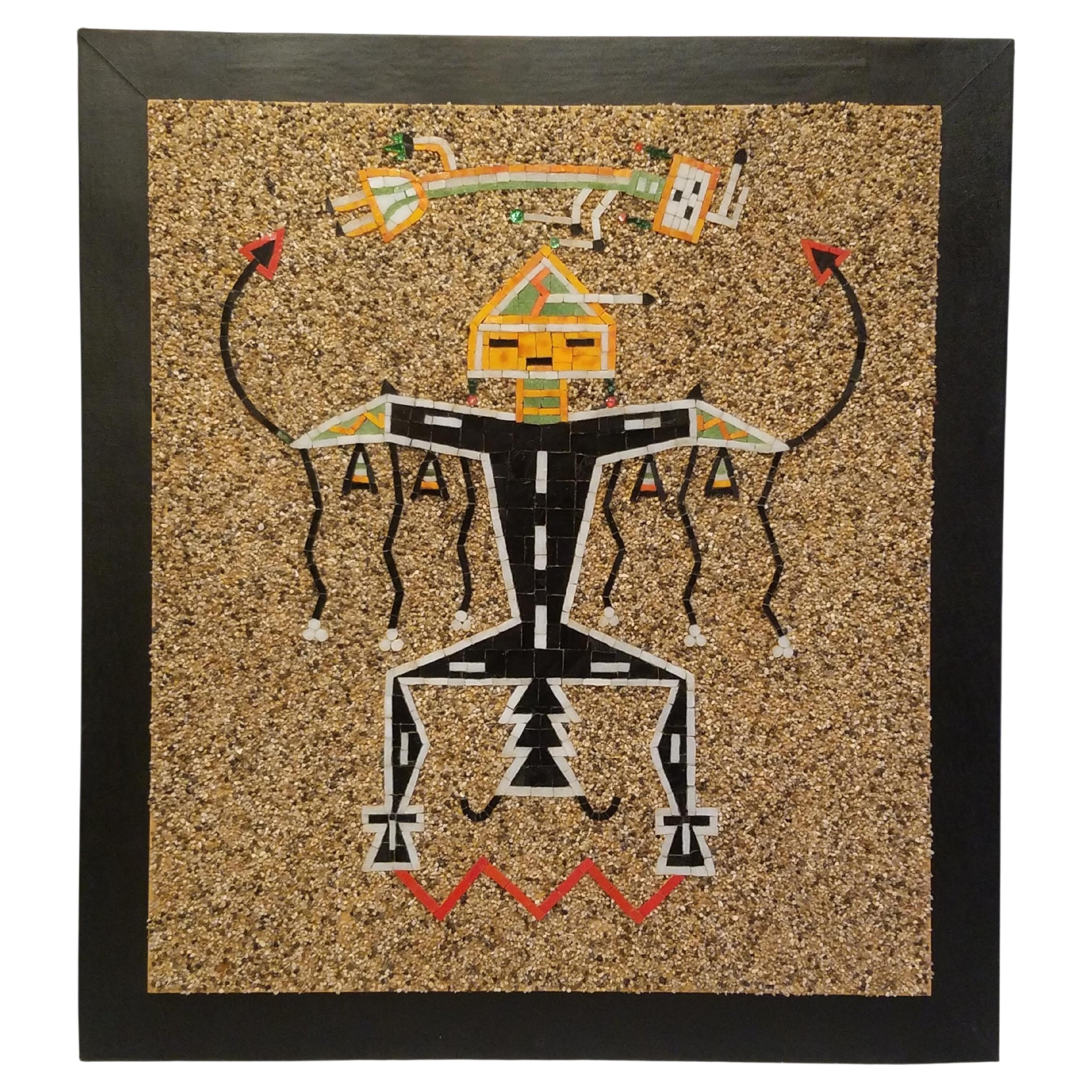
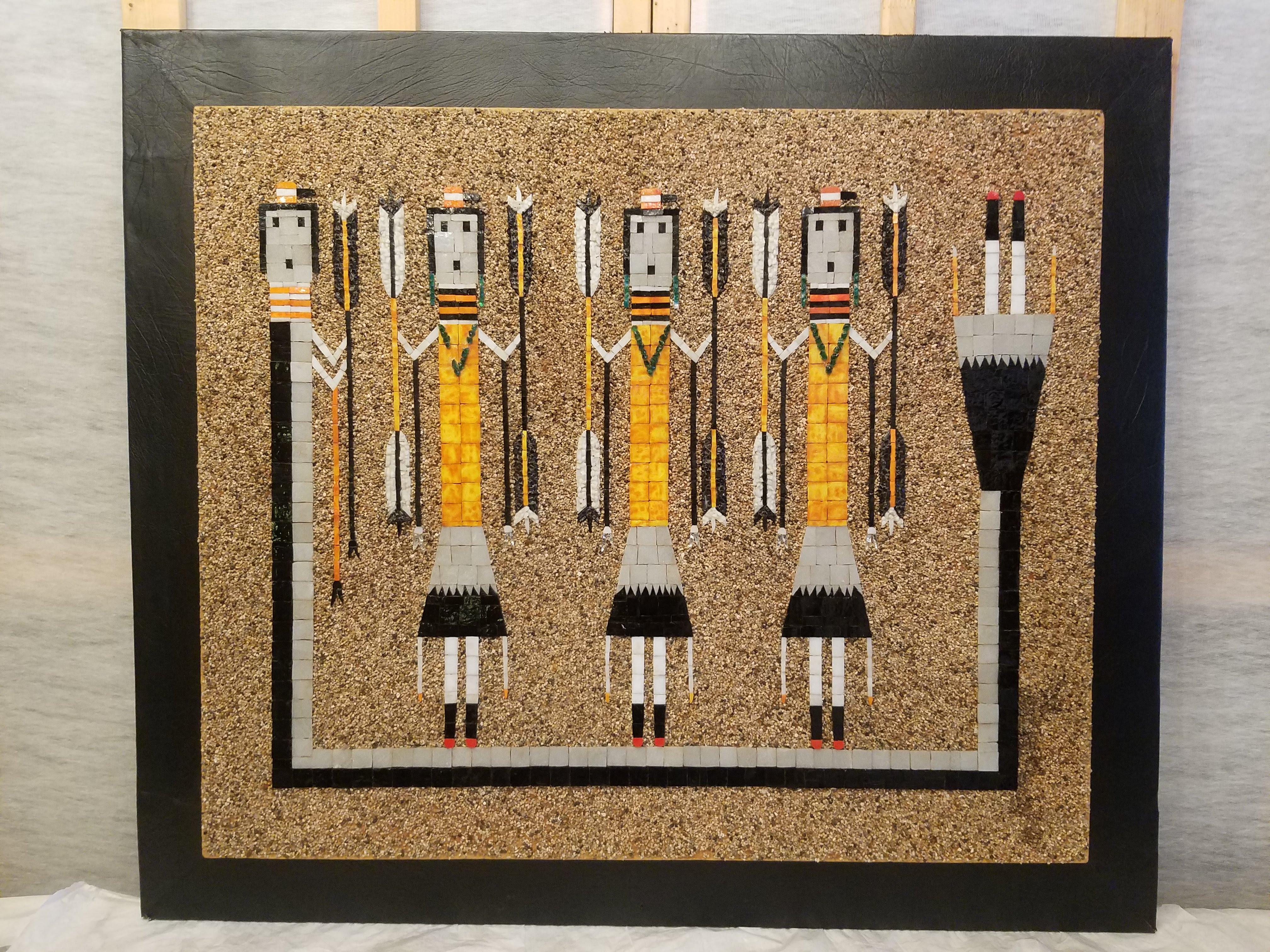
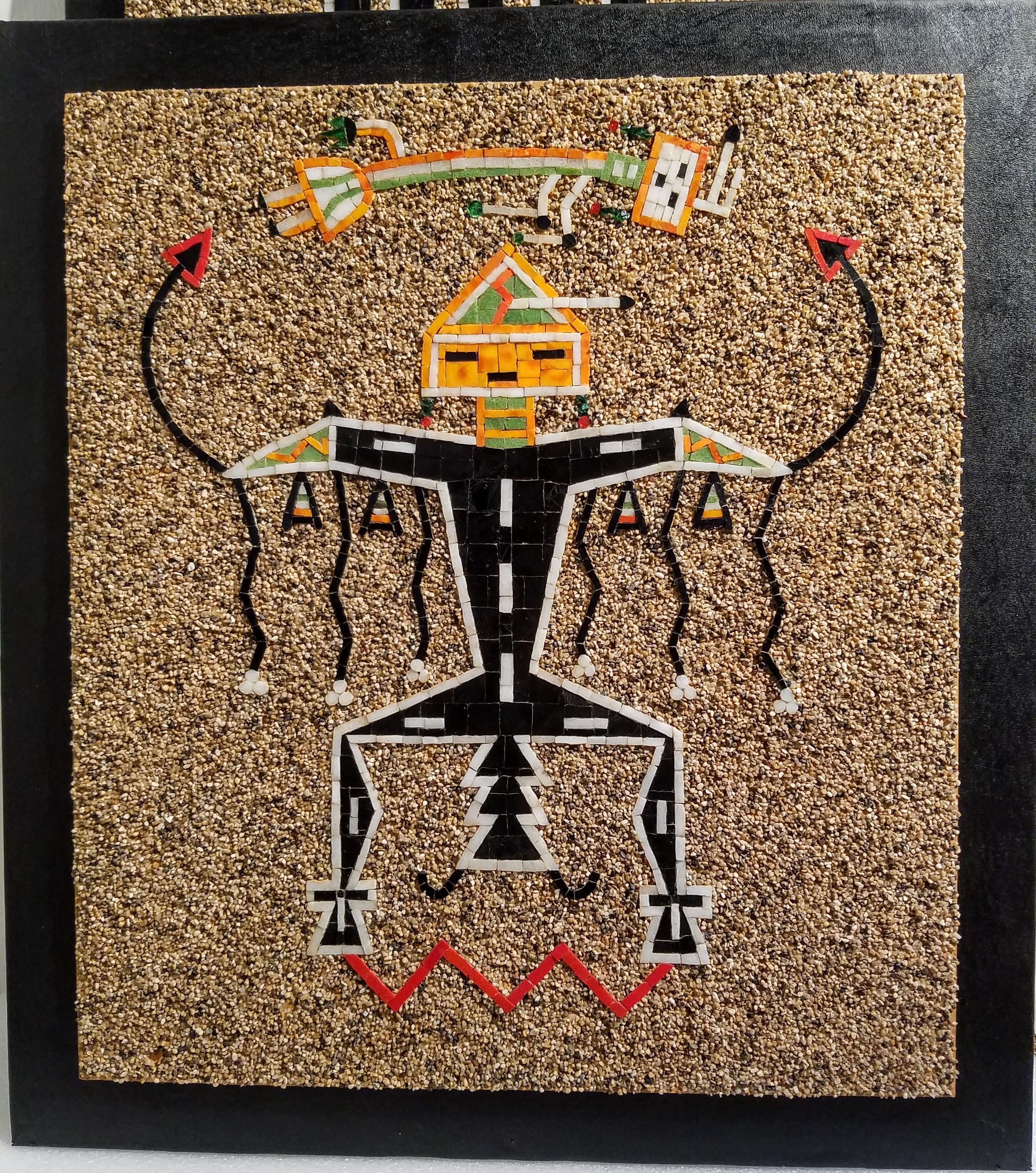
A Navajo sand painting mosaic art wall panel of the Navajo mythological Yei Dancers Rainbow Guardians created in the 1960s in a non traditional format from a studio in Tehachapi. California.
The artist has created a boldly colored image isolated on a sand covered panel.
The panel is mounted on a black vinyl covered flat frame.
The artist is I. D. Henny of Tehachapi, CA.
The artwork is in good condition with minor wear consistent with age.
- Creator:I. D. Henny (Artist)
- Dimensions:Height: 36 in (91.44 cm)Width: 41.75 in (106.05 cm)Depth: 1 in (2.54 cm)
- Style:Mid-Century Modern (Of the Period)
- Materials and Techniques:
- Place of Origin:
- Period:
- Date of Manufacture:circa 1965
- Condition:Wear consistent with age and use. The green necklace on the left hand dancer is missing four green glass beads. The middle dancer is missing one green glass bead on the end of the right earring. The right dancer is missing one green glass bead in the necklace.
- Seller Location:Camden, ME
- Reference Number:Seller: APP 7061stDibs: LU898418101592
About the Seller
5.0
Gold Seller
Premium sellers maintaining a 4.3+ rating and 24-hour response times
Established in 1984
1stDibs seller since 2010
243 sales on 1stDibs
Typical response time: <1 hour
- ShippingRetrieving quote...Shipping from: Camden, ME
- Return Policy
More From This Seller
View AllCalifornia Studio Navajo Sand Painting Mosaic Art Panel of Thunderbird, 1960s
By I. D. Henny
Located in Camden, ME
A Navajo sand painting mosaic art wall panel of the Navajo mythological Father Sky or Thunderbird created in the 1960s in a non traditional format...
Category
Mid-20th Century American Mid-Century Modern Decorative Art
Materials
Ceramic
$1,800 Sale Price
25% Off
Los Castillo E.Alvarado Arquitectura Mosaic with Montezuma Mexico, 1959
By Los Castillo, Alvarado
Located in Camden, ME
An E. Alvarado 1959 mosaic wall panel commissioned at the Taxco showroom of Los Castillo Plateros depicting the 1467 reconstruction of the temple of Huitzilopochtii after its damage ...
Category
Mid-20th Century Mexican Mid-Century Modern Decorative Art
Materials
Amethyst, Carnelian, Lapis Lazuli, Malachite, Multi-gemstone, Opal, Tour...
$5,625 Sale Price
25% Off
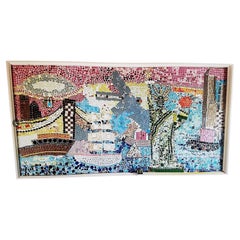
Mosaic Panel of the Bicentennial in New York Harbor, 1978
Located in Camden, ME
A large mosaic panel artwork representing the bicentennial celebration in New York harbor on the evening of July 4, 1976.
A memorable evening throughout the United States and partic...
Category
Vintage 1970s American Mid-Century Modern Outsider and Self Taught Art
Materials
Ceramic
$6,750 Sale Price
70% Off
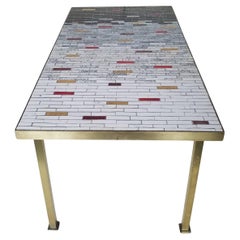
Hand Crafted Mosaic Tile Brass Framed Coffee Table York City Studio, c. 1950
By Clay Mosaics
Ceramics Inc. NY
Located in Camden, ME
An early 1950's custom designed coffee table created at the Clay Mosaics & Ceramics, Inc. studio which was located at 432 East 82nd Street in New York.
The gradual change of the col...
Category
Vintage 1950s American Mid-Century Modern Coffee and Cocktail Tables
Materials
Brass
$2,700 Sale Price
41% Off
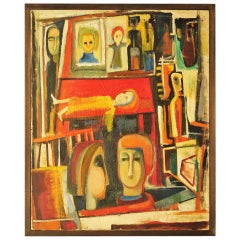
Outsider Art, Figurative Painting 60s
Located in Camden, ME
A compelling painting by a midcentury outsider artist. This graphically bold painting utilizing bright colors and a potent figurative composition engages contemplation. Unsigned.
...
Category
Vintage 1960s Unknown Post-Modern Paintings
Materials
Paint
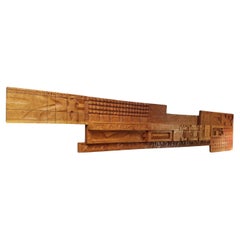
Leroy Setziol Early Masterwork-1963 16 Foot Sculpture Wood Relief Artwork
By Leroy Setziol
Located in Camden, ME
This monumental wood sculpture by Leroy Setziol (1915–2005) is a rare and significant early commission, created in 1963 for the National Bank of Portland, Oregon. Measuring an impressive 191" x 31" x 7", the piece marks a pivotal moment in Setziol’s career as he transitioned into large-scale architectural work—integrating fine art with the built environment in a way that would define his legacy.
Carved in his signature style of deeply incised geometric forms and rhythmic abstraction, the panel reflects Setziol’s exploration of nature, spirituality, and cultural symbolism. Commissioned during a period of progressive architectural development in the Pacific Northwest, the work exemplifies the region’s modernist ethos—where art and architecture were conceived in harmony.
Setziol would go on to complete numerous public commissions, collaborating with leading architects such as Pietro Belluschi and becoming one of the most influential wood sculptors of the 20th century. Early, large-scale works like this are exceptionally rare on the market and offer a unique opportunity to own a foundational piece of Pacific Northwest modernism.
This sculpture is not only a stunning example of Setziol’s craft—it is a historical artifact from a turning point in American architectural and design history.
The following is taken from the Portland Art Museum's profile of Leroy Setziol for their exhibit in 2015-16 celebrating the 100th year anniversary of his birth
"Leroy Setziol" Sept 5, 2015 – Oct 30, 2016
"A composer in wood, Leroy Setziol created lyrical sculpture that honors the beauty of a material strongly identified with the Northwest. The black walnut, teak, fir, and other woods he employed enhanced his complex gridded compositions, bringing them to life. A self-taught, intuitive worker, Setziol visualized his complex carvings using the grid as an armature to frame imaginative shapes. Throughout his career, his sculpture ranged from intimate works to large-scale public commissions. The largest work on display is an elegant, teak, two-panel wall relief from 1991. Twenty-three works are on view, including free-standing sculpture, totems, and a variety of wall reliefs.
Setziol’s sculpture gained greater recognition with Portland’s architectural community in 1964 when he was invited by Northwest Regionalist architect John Storrs to carve a series of large-scale relief panels for Salishan Lodge in Gleneden Beach...
Category
Mid-20th Century American Mid-Century Modern Wall-mounted Sculptures
Materials
Fir
You May Also Like
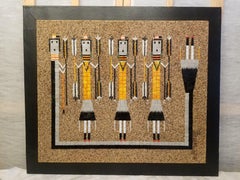
Mid-Century Navajo-Style Yei Dancers Mosaic Panel by I. Henry, California 1960s
Located in Camden, ME
This substantial mid-century mosaic panel depicts a procession of Navajo-style Yei figures—often referred to as Yei Dancers or Rainbow Guardians—executed in mixed media including cer...
Category
1960s Modern Mixed Media
Materials
Glass, Wood, Plywood, Mosaic
Navajo-Style Thunderbird Sand Painting Mosaic Panel, Mixed Media, 1960s CA.
Located in Camden, ME
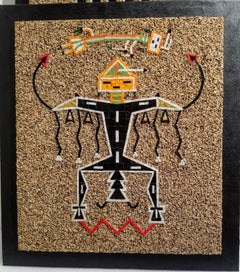
This powerful mid-century mosaic panel presents a Navajo-style Thunderbird figure rendered in richly textured mixed media, combining ceramic tile, colored glass, and sand. The compos...
Category
1960s Assemblage Mixed Media
Materials
Ceramic, Glass, Wood, Plywood, Glitter, Mosaic
Yei Navajo Figural Double-Sided Flat Weave Wall Hanging, 1930 Round Heads
Located in Basingstoke, Hampshire
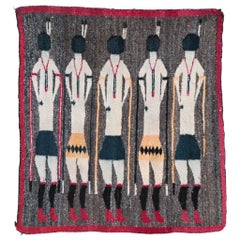
A Yei Navajo Figural double-sided flat woven wall hanging - circa 1930. Displaying five standing figures on an deep speckled grey ground, framed by a red border.
The Yei iconography is related to Navajo religious sandpaintings. Navajo religion has a reverence for nature and is based on maintaining a balance in the universe. It was believed that there was a sense of harmony needed to maintain a healthy life. Should an individual do something to upset this balance, then it was believed that an illness might befall them. Much like in the modern-day, a medicine man was hired to help regain this harmony. The remedy involved a combination of chanting, herbal medicines and a sandpainting ritual. Various coloured sands were sprinkled on the ground until they formed a specific Yei (holy person), based on the god he was trying to summon. When the sandpainting was completed, it was sanctified by spreading corn pollen over it.
Once the sacred sandpainting had served its purpose, it was erased. To save it or reproduce its imagery was dangerous and could bring serious grief to anyone who retained the image.
During the 1890s, the Navajos phased out blanket weaving in favour of rugs. There was strong demand from the vast migration of settlers, building homes by the thousands, who needed something to cover their floors. The first Navajo rug depicting holy people...
Category
Early 20th Century American Tapestries
Materials
Fabric
Richard Hohenberg Mosaic
By Richard Hohenberg
Located in Brooklyn, NY
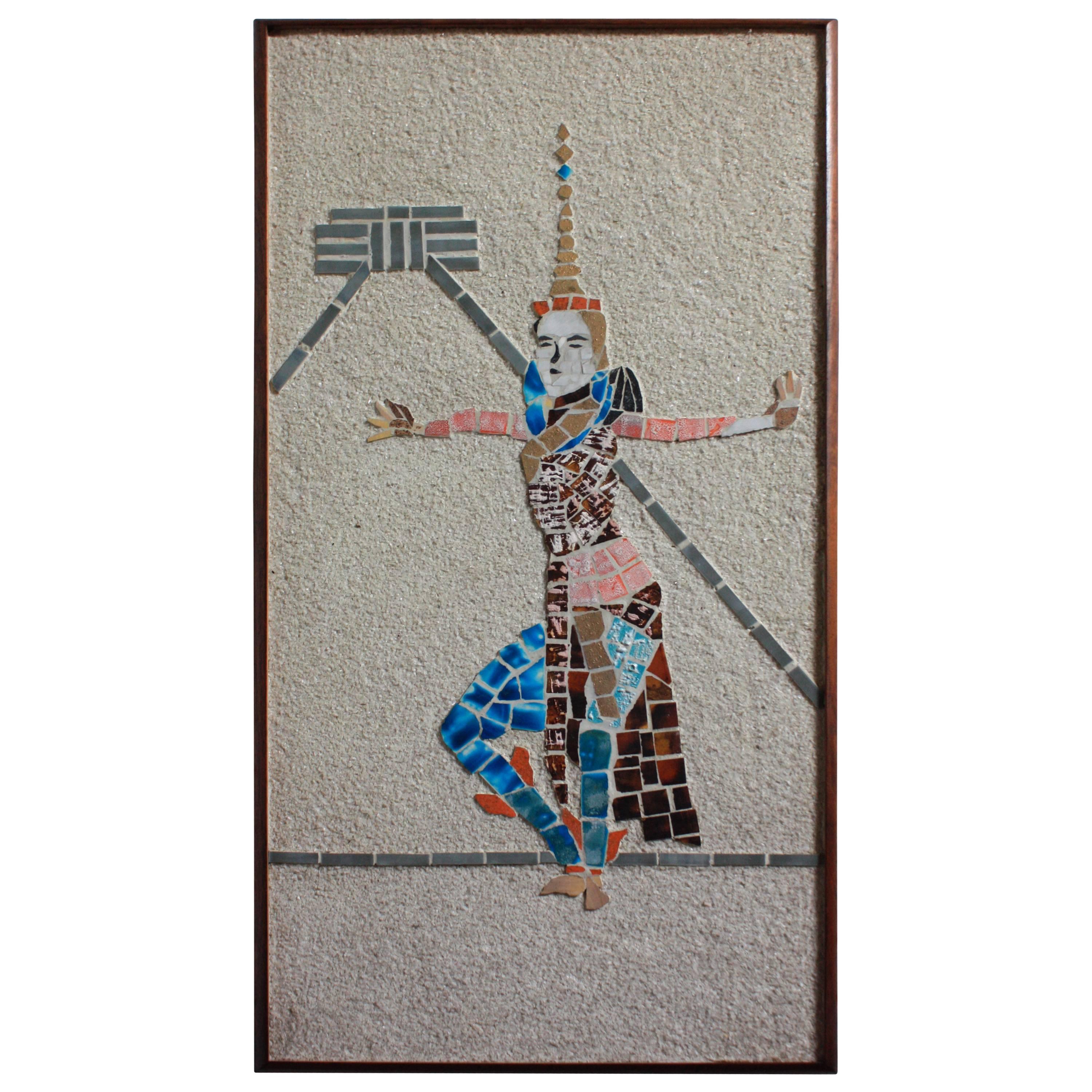
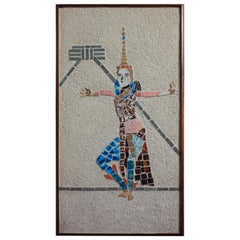
This Hohenberg Mosaic depicts a classical Thai dancer and is comprised of glass and ceramic tiles against a crystalline incrustation. The frame is solid walnut and the piece is stencil signed on the reverse 'Hohenberg Original.'
Category
Vintage 1950s American Mid-Century Modern Wall-mounted Sculptures
Materials
Ceramic, Glass, Walnut
$2,900
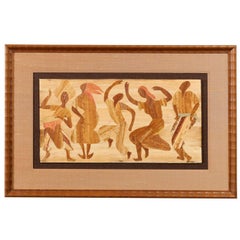
Exceptional Folk Art Dance Scene Executed in Wood Inlay
Located in Atlanta, GA
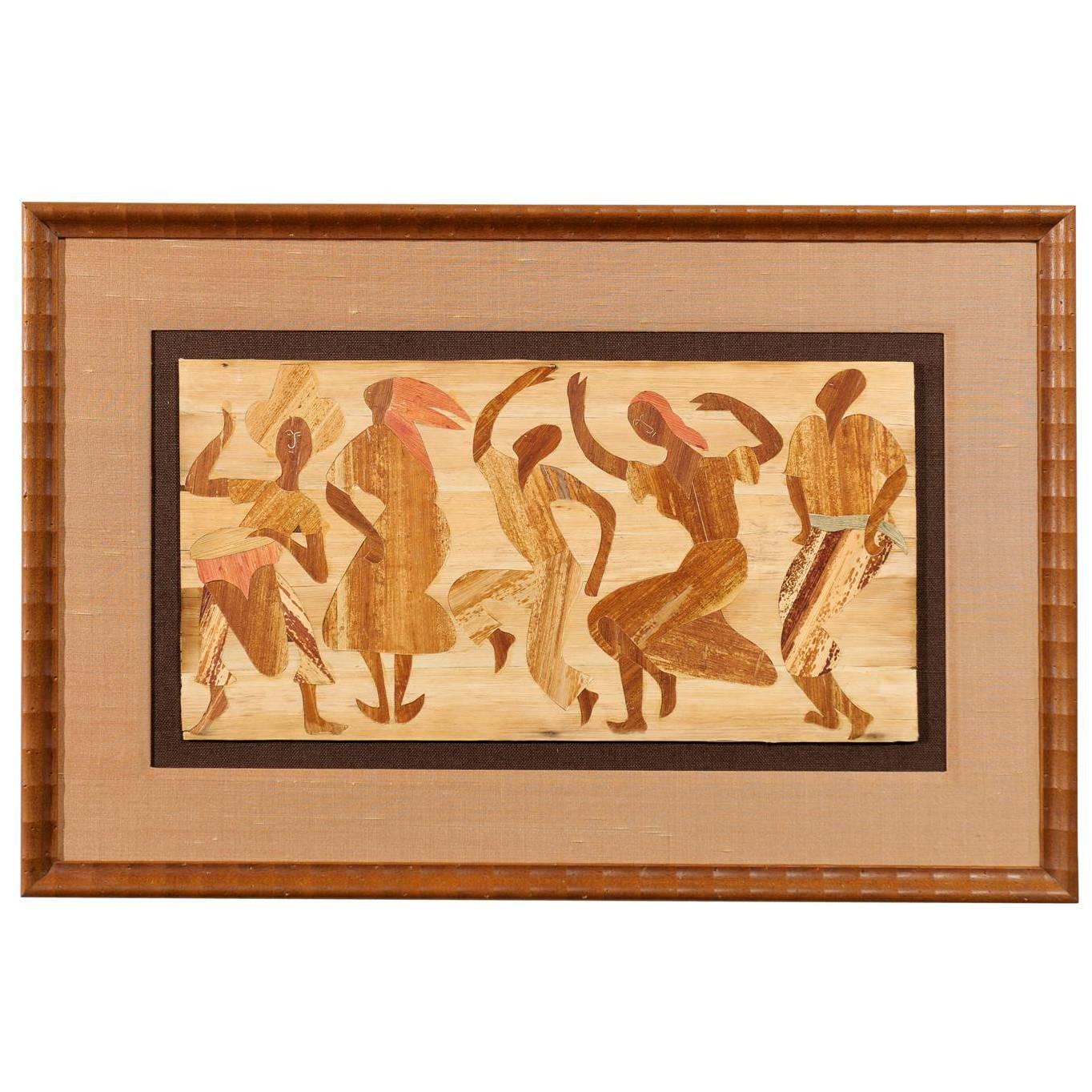
A stunning piece of vintage Folk Art. A joyous "Dance Scene" executed on a solid piece of wood veneer. The character components are articulated with vary...
Category
Vintage 1970s Unknown Mid-Century Modern Decorative Art
Materials
Wood
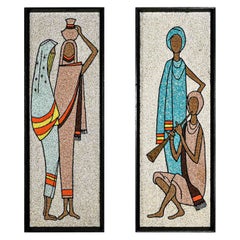
1960s Mid-Century Modern Framed Gravel Wall Art Figural Mosaics a Pair
Located in Topeka, KS
Wonderful vintage Mid-Century Modern framed gravel art figural mosaics, a pair. Beautiful condition, keeping in mind that these are vintage and not new so w...
Category
Mid-20th Century Unknown Mid-Century Modern Decorative Art
Materials
Stone
More Ways To Browse
Stone Dancer
Rainbow Art Glass
Navajo Sand Painting
Limoges Plaques
Maurice Francois
Mosaic Tile Antique
Pietra Dura Plaque
Putti Plaque
Rosenthal Wall Plates
Scandinavian Ceramic Wall Plaques
Wall Art Lion
1950s Wall Plaque
Blue Portuguese Tile
Collector Art Plates
Decorative Wall Fans
Folk Art Ottoman
Italian Painted Plaque
Mother Of Pearl Wall Panels