Items Similar to Deco Lake Shore by Betty Woodman Museum Silk Textile
Video Loading
Want more images or videos?
Request additional images or videos from the seller
1 of 16
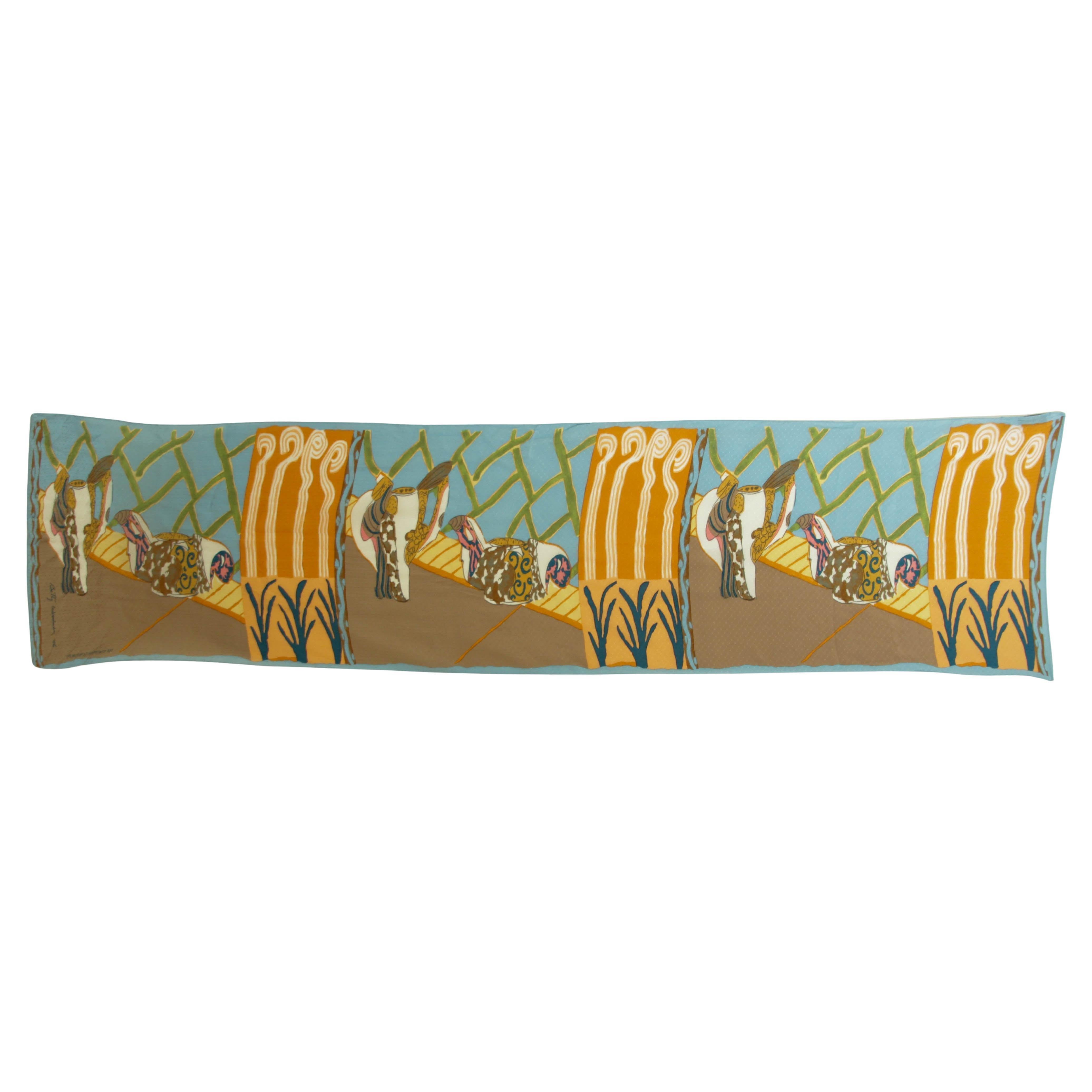
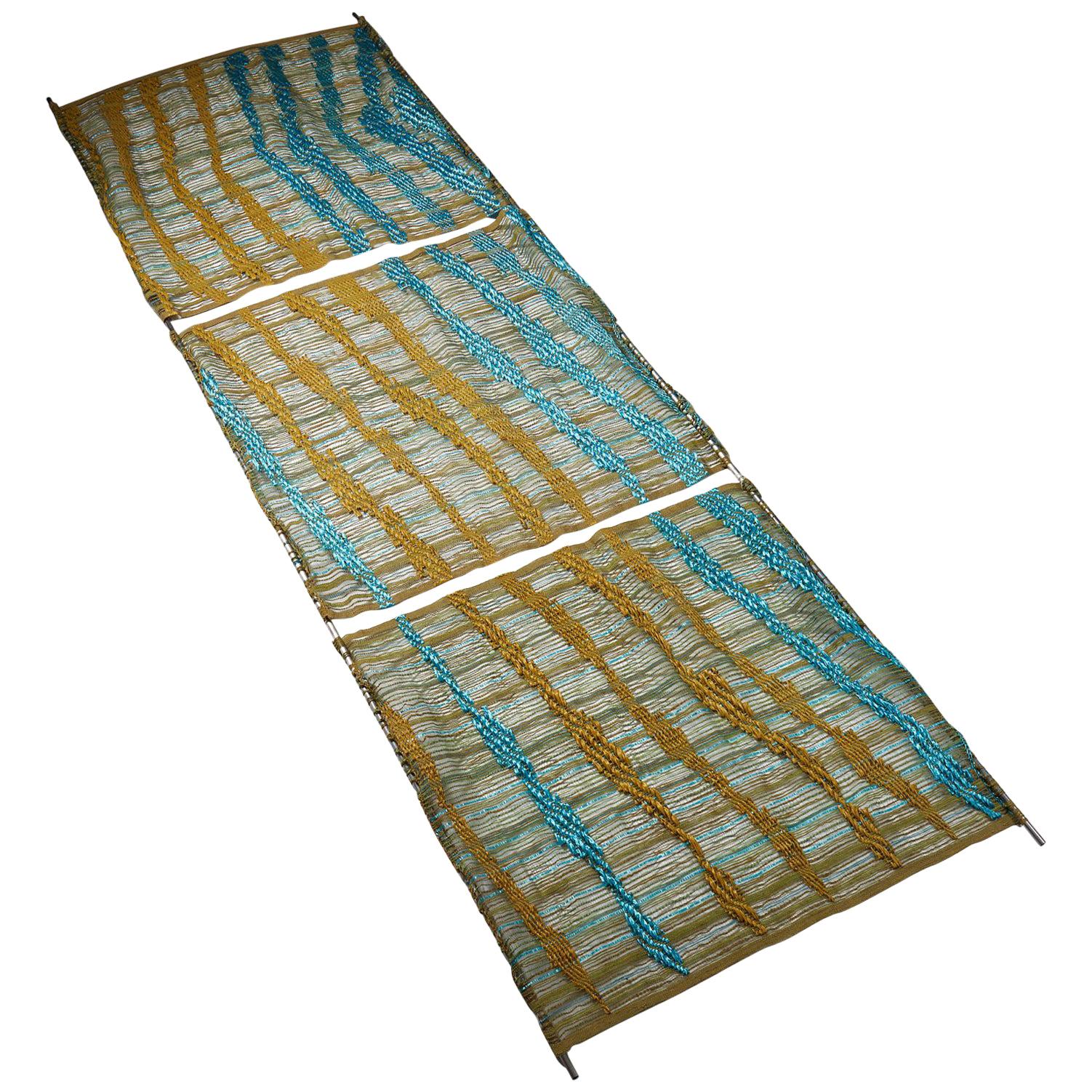
Deco Lake Shore by Betty Woodman Museum Silk Textile
$245
£186.51
€213.22
CA$344.72
A$377.07
CHF 198.54
MX$4,501.77
NOK 2,530.36
SEK 2,314.67
DKK 1,592.51
About the Item
Betty Woodman (American, 1930–2018). Silk chiffon textile with hand rolled edges.
After the "Deco Lake Shore," 2002.
The Metropolitan Museum of Art, New York, © Betty Woodman textile silk long textile.
«Betty Woodman, the ceramicist and sculptor who died at age 87, waited a long time for her first U.S. retrospective.
The moment finally came in 2006 when The Met opened The Art of Betty Woodman with around 70 works of art.
The Museum was an ideal venue, one critic wrote in the New York Times, and "a first for the Met, a collector of pots from all ages that has until now never given a solo retrospective to a living maker of them.
" Woodman even made five works on the occasion of the exhibition: a set of urns made to present flowers in the Museum's Great Hall.»
Made by the Metropolitan Museum of Art for the opening of the exhibition.
Dimension: 15.5 x 67.5 inches.
- Creator:Edith Woodman Burroughs (Artist)
- Dimensions:Height: 67.5 in (171.45 cm)Width: 15.5 in (39.37 cm)Depth: 0.05 in (1.27 mm)
- Style:Rustic (In the Style Of)
- Materials and Techniques:
- Place of Origin:
- Period:
- Date of Manufacture:2006
- Condition:good.
- Seller Location:Moreno Valley, CA
- Reference Number:Seller: BW3251stDibs: LU906843911892
About the Seller
5.0
Platinum Seller
Premium sellers with a 4.7+ rating and 24-hour response times
1stDibs seller since 2011
3,220 sales on 1stDibs
Typical response time: 1 hour
- ShippingRetrieving quote...Shipping from: Moreno Valley, CA
- Return Policy
More From This Seller
View AllFranciscan Fabrics San Francisco Hand Block Print Textile Fabric 1970s
Located in Moreno Valley, CA
Franciscan Fabrics Linen Collectable 1970-1979 Time Period Manufactured Interiors Fabric.
Franciscan Fabrics San Francisco hand block print upholstery fabric.
Such a beautiful rich &...
Category
Late 20th Century American Mid-Century Modern Textiles
Materials
Textile
African Yoruba Diviner
s Beaded Wall Hanging Panel Sash 1950
Located in Moreno Valley, CA
African Yoruba Diviner's Beaded Wall Hanging Panel Sash 1950.
This extraordinary beaded wall hanging is a stunning example of Yoruba craftsmanship, d...
Category
Mid-20th Century Nigerian Folk Art Tapestries
Materials
Textile, Beads

African Yoruba Diviner
s Red Beaded Panel Sash 1950
Located in Moreno Valley, CA
African Yoruba Diviner's Red Beaded Wall Hanging Panel Sash 1950.
This extraordinary beaded wall hanging is a stunning example of Yoruba craftsmanshi...
Category
Mid-20th Century Nigerian Folk Art Tapestries
Materials
Textile, Beads
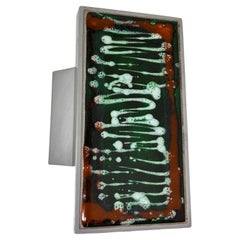
Belgian Tile Faced Entry Door Pull Handle by Artist Juliette Belarti 1960s
By Juliette Belarti
Located in Moreno Valley, CA
Architectural door pull by Belgian ceramic tile artist Juliette Belarti.
Vintage midcentury Belgian tile faced entry door pull handle.
Great abstract in green, white snd orange colo...
Category
Mid-20th Century Belgian Mid-Century Modern Architectural Elements
Materials
Ceramic
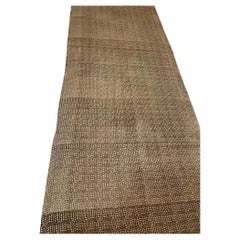
African Batik Cloth Natural Hand-woven Hand-Printed Cotton Fabric Ghana 10 Yards
Located in Moreno Valley, CA
African Batik Cloth Natural Hand-woven Hand-Printed Cotton Fabric Ghana 10 yards.
Colors are organic earth tone beige and light brown in geometric design.
Non waxed fabric circa 1950s.
Hand made in Ghana Africa.
Museum Quality Original Long Piece.
380 inches, (30 ft 10 yards Long) x 46 inches Inches Wide( 4ft).
Could be use to make pillows or upholstery.
History of Batik in Africa:
Batik, a traditional fabric art technique, has a rich history in Ghana, West Africa. The practice of batik involves using wax to create intricate patterns on fabric, which is then dyed to achieve the desired design. While batik has its origins in Asia, particularly in Indonesia, it has been embraced and adapted by various African countries, including Ghana.
In Ghana, batik-making can be traced back to the mid-20th century when it gained popularity as a form of traditional textile art. The craft was introduced by artists and artisans who were inspired by the vibrant and expressive nature of batik. These early practitioners experimented with different designs, colors, and patterns, infusing local themes and motifs into their creations.
Over time, batik became an important part of Ghanaian culture and identity. It is not only used for clothing but also for various decorative and functional items such as wall hangings, tablecloths, and accessories. The art form often reflects the rich cultural heritage of Ghana, incorporating symbols, proverbs, and traditional stories into the designs.
Ghanaian batik artists often employ a combination of traditional and contemporary elements, creating a unique fusion of styles. The process of making batik involves applying hot wax to the fabric using various tools to create the desired patterns. The wax acts as a resist, preventing dye from penetrating the waxed areas. After dyeing, the wax is removed, revealing the intricate designs on the fabric.
Today, batik-making in Ghana continues to thrive as both a traditional craft and a form of artistic expression. Many artisans and designers draw inspiration from Ghana's diverse cultural landscape, incorporating elements from different regions and ethnic groups into their batik creations. The art form has also gained international recognition, with Ghanaian batik products being sought after both locally and abroad.
In summary, the history of batik in Ghana is a testament to the creativity and adaptability of artists who have embraced and transformed this traditional technique into a vibrant and culturally significant art form within the country.
HISTORY OF BATIK
In the mid-nineteenth century, the Belanda Hitam, or "Black Dutchmen," are said to have introduced batik to West Africa after serving as indentured soldiers for the Dutch in Indonesia. Returning from their conscriptions with trunks of fine Javanese batik, the opulent patterns captured the imagination of their friends and relatives. However, textile history is complex, and only a handful of recruits returned to West Africa with batik due to delayed payments.
Batik, with roots traced to Egyptian mummies, is a tradition found globally, from Southeast Asia to Japan and India. Europeans, particularly the Dutch, played a significant role in industrializing batik from the seventeenth century onward.
In West Africa, Dutch Scholar Ineke van Kessel suggests that batik arrived from India over trans-Saharan routes. Local populations, like the Yoruba in Nigeria, incorporated wax printing into their textiles. European traders brought wax and non-wax fabrics to West Africa in the seventeenth century, targeting a population ready for their consumption. European designers adapted prints for the African market...
Category
Mid-20th Century Ghanaian Folk Art Textiles
Materials
Cotton
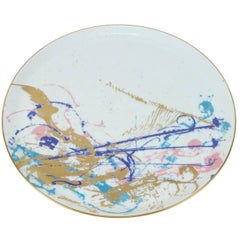
Concerto after Arman, Limited Edition, Plate Number 30 for Rosenthal
By Theodore Haviland, Limoges, Arman
Located in Moreno Valley, CA
"Concerto d'apres Arman, Edition Limitee, Assiette No 30." signed and numbered in back. Concerto after Arman, Limited Edition, Plate Number 30
Porcelain platter for Haviland Limoges,...
Category
Late 20th Century French Modern Contemporary Art
Materials
Porcelain
You May Also Like
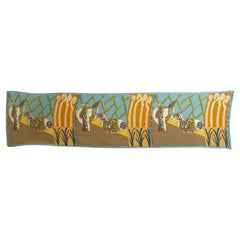
Deco Lake Shore by Betty Woodman Museum Silk Scarf
Located in Moreno Valley, CA
Betty Woodman (American, 1930–2018).
Silk Chiffon with hand rolled edges.
After the "Deco Lake Shore," 2002.
The Metropolitan Museum of Art, New York, © Betty Woodman textile silk ...
Category
Early 2000s American Scarves
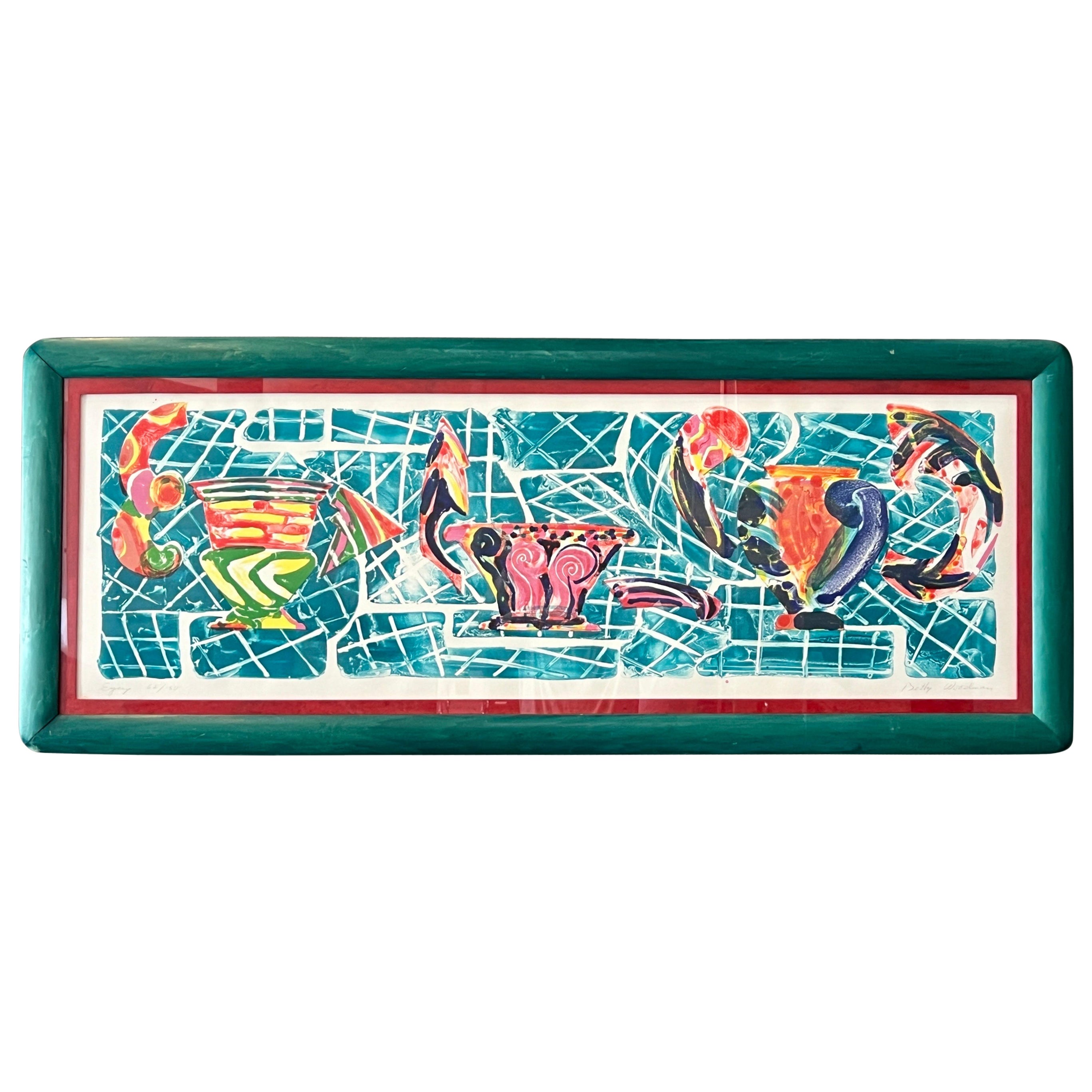
Betty Woodman "Eyup" Print
By Betty Woodman
Located in Dallas, TX
Betty Woodman "Eyup" print signed and numbered 62 / 150 in original frame. Measurements posted are frame size.
Category
Vintage 1980s Prints
Materials
Paper

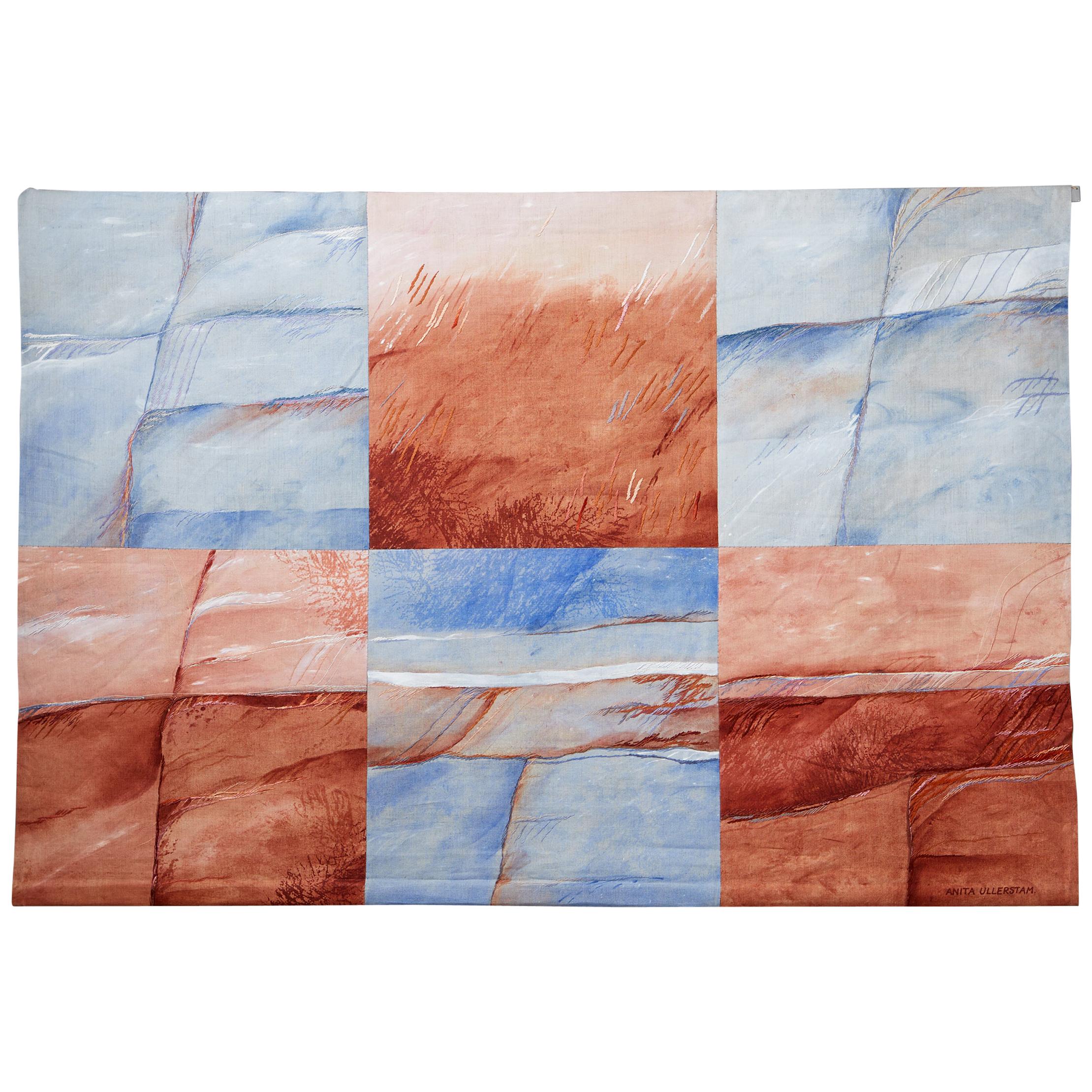
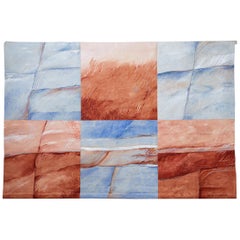
Polychrome Wall Hanging ‘Fragment’ Designed by Anita Ullerstam, Sweden, 1991
Located in Stockholm, SE
Wall hanging ‘Fragment’ designed by Anita Ullerstam,
Sweden, 1991.
Six pieces of fabric sewn together, polychrome printed and embroidered.
Dime...
Category
1990s Swedish Mid-Century Modern Tapestries
Materials
Textile
Ann
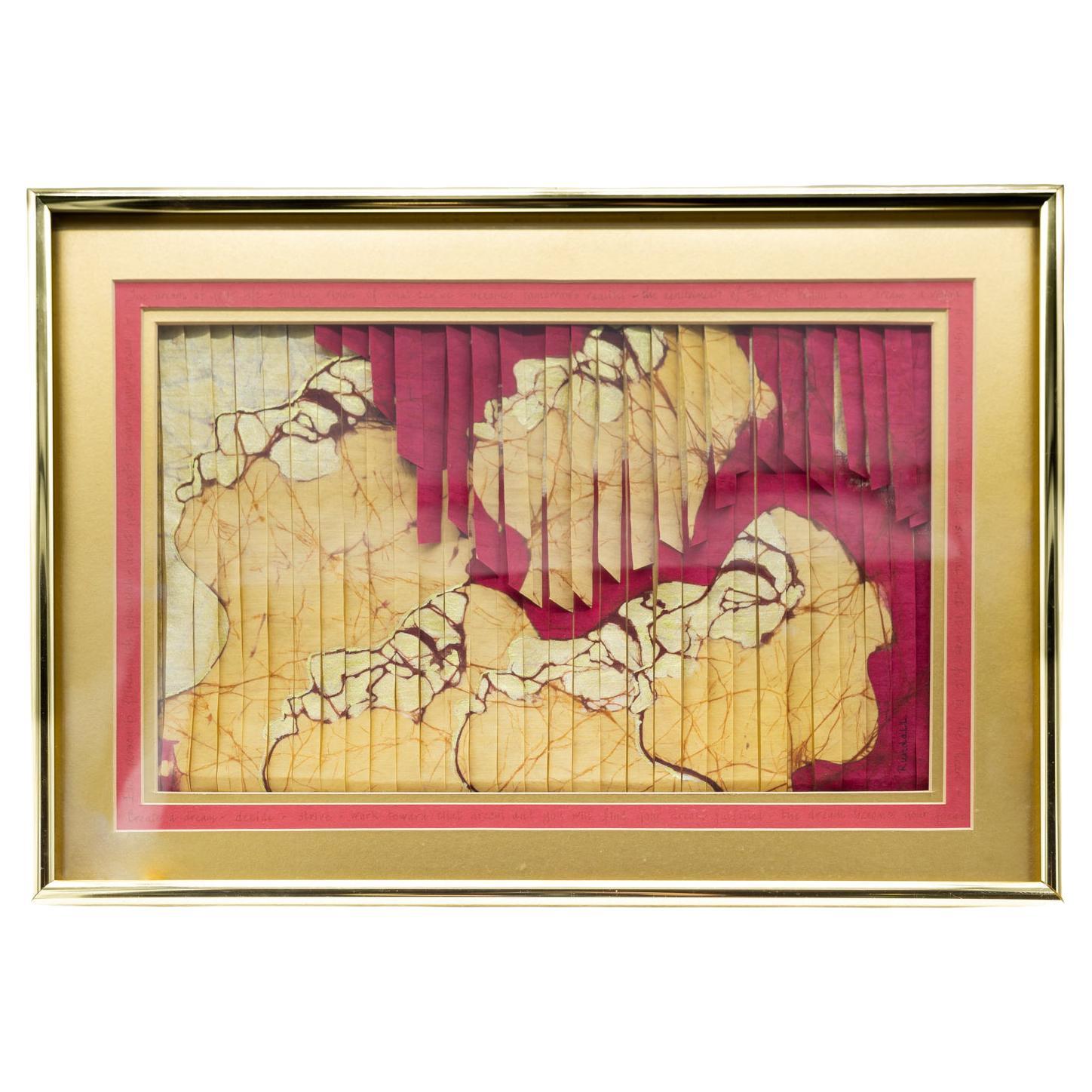
Dick Rundall Mid Century Batik Textile Art
Located in Franklin Park, IL
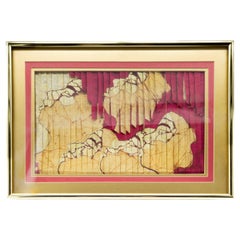
Ann & Dick Rundall mid century batik textile art
This piece measures: wide 20.25 x 1.75 deep x 14.5 inches high
Excellent vintage condition
We take our photos in a controlle...
Category
Vintage 1970s American Mid-Century Modern Decorative Art
Materials
Metal
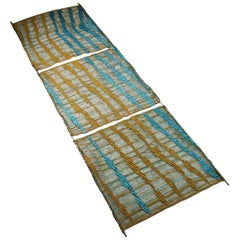
Tapestry by Bodil Bödtker Naess, Wool and Nylon, Contemporary, Denmark, 1980s
By Bodil Bödtker-Naess
Located in Stockholm, SE
Tapestry by Bodil Bödtker Naess,
Denmark, 1980s.
Wool and nylon cord.
Measurements:
H: 100 cm/ 39 ½”
L: 279 cm/ 9' 2”.
Category
Vintage 1980s Swedish Scandinavian Modern Tapestries
Materials
Wool, Nylon
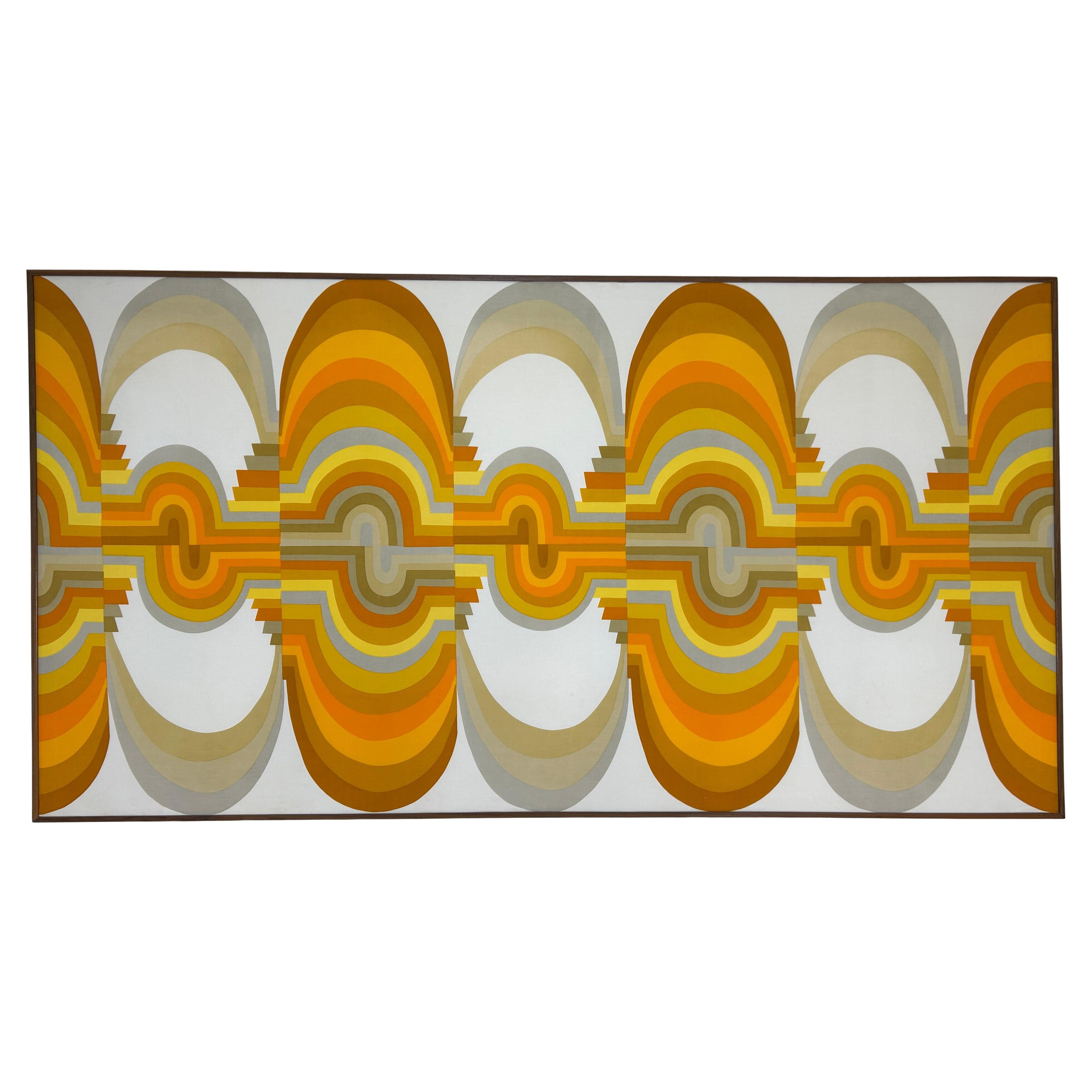
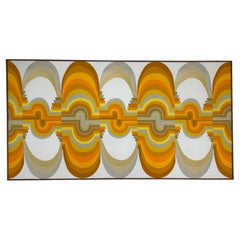
1971 Wall Decoration Knoll Fabric Omahar Francisca Reichardt
By Francisca Reichardt
Located in South Charleston, WV
Fabric produced in 1971 by Francisca Reichardt and known as Omahar". 91.75 x 48.75 and 1" deep. Mounted about 9 years ago with a walnut frame. This provides an explosion of color and...
Category
Vintage 1970s American Mid-Century Modern Tapestries
Materials
Fabric
More Ways To Browse
Edith Brown
Used Furniture In Arkansas
Used Furniture Tucson
Venetian Plaster Art
Verner Panton Wall Panel
Vic Gentils
Vintage Anatomical Human Internal Organs
Vintage Butlins Posters
Vintage Chinoiserie Silk Needlepoint
Vintage Metal Radiator Cover
Vintage Ornamental Brass Plate By Hans Przyrembel
Vintage Sexton Metal Wall Plaques
Vivienne Galowitz
Wall Plaque Knight
Walt Disney Animation Cel
Walter Firle
Wesley Simpson
Witco Wall Art