Want more images or videos?
Request additional images or videos from the seller
1 of 19
Japanese Antique Large Door Abstract Art 1860s-1900s / Wall Decoration Wabi Sabi
Price:$1,500
$1,800List Price
About the Item
- Dimensions:Height: 67.33 in (171 cm)Width: 43.9 in (111.5 cm)Depth: 2.56 in (6.5 cm)
- Style:Meiji (Of the Period)
- Materials and Techniques:
- Place of Origin:
- Period:
- Date of Manufacture:1860s-1900s
- Condition:Wear consistent with age and use.
- Seller Location:Chōsei District Nagara, JP
- Reference Number:1stDibs: LU10403244875982
About the Seller
4.8
Platinum Seller
Premium sellers with a 4.7+ rating and 24-hour response times
Established in 2017
1stDibs seller since 2025
69 sales on 1stDibs
Typical response time: 2 hours
Authenticity Guarantee
In the unlikely event there’s an issue with an item’s authenticity, contact us within 1 year for a full refund. DetailsMoney-Back Guarantee
If your item is not as described, is damaged in transit, or does not arrive, contact us within 7 days for a full refund. Details24-Hour Cancellation
You have a 24-hour grace period in which to reconsider your purchase, with no questions asked.Vetted Professional Sellers
Our world-class sellers must adhere to strict standards for service and quality, maintaining the integrity of our listings.Price-Match Guarantee
If you find that a seller listed the same item for a lower price elsewhere, we’ll match it.Trusted Global Delivery
Our best-in-class carrier network provides specialized shipping options worldwide, including custom delivery.You May Also Like
Japanese Antique Door "Wall Decoration" 1860s-1900s / Abstract Art Wabi Sabi
Located in Sammu-shi, Chiba
This was a very old Japanese warehouse (kura) window sliding door.
It was made during the Meiji period (1860s-1900s).
The frame is made of cedar wood and the lattice is bamboo.
It w...
Category
Early 20th Century Japanese Meiji Decorative Art
Materials
Bamboo, Cedar
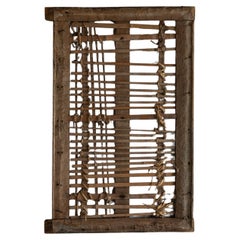
$600
H 25.99 in W 17.33 in D 1.97 in
Japanese Antique Huge Door " Wall Decoration " 1860s-1900s / Wabi Sabi"
Located in Sammu-shi, Chiba
Japanese Antique Huge Door " Wall Decoration " 1860s-1900s / Wabi Sabi
This extraordinary large sliding door was once used in an old warehouse in Japan.
Dating back to the Meiji per...
Category
Early 20th Century Japanese Meiji Decorative Art
Materials
Iron
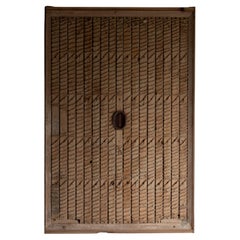
$3,500
H 72.84 in W 48.04 in D 2.56 in
Japanese Antique Wall Hanging Tree Bump 1860s-1900s / Object Mingei Wabi Sabi
Located in Sammu-shi, Chiba
This is a very old Japanese tree mass.
It is designed to be hung on a wall.
It has a strong presence and is very beautiful.
It could be an accent in a modern space.
This is a very...
Category
Antique 19th Century Japanese Taisho Decorative Art
Materials
Wood
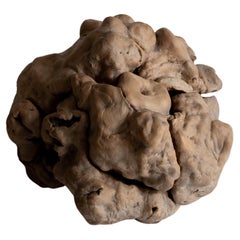
$780
H 9.06 in W 14.18 in D 16.93 in
Japanese Antique Wooden Board 1860s-1900s / Abstract Art Wabisabi
Located in Sammu-shi, Chiba
This Japanese antique wooden workboard was crafted during the Meiji period
1860s to 1900s
and is made from solid cedar wood.
Originally, this board functioned as a practical work su...
Category
Early 20th Century Japanese Meiji Decorative Art
Materials
Cedar
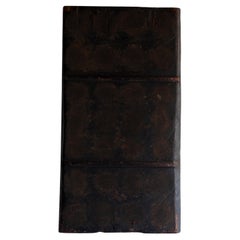
$1,788
H 24.02 in W 44.1 in D 2.56 in
Japanese Antique Wooden Board / Wall Decoration Abstract Art / Wabi-Sabi
Located in Iwate-gun Shizukuishi-cho, Iwate Prefecture
This is an old Japanese workboard.
It was called "Mochiita" and was used as a workbench for kneading flour.
It seems to be around the Meiji period.
The board is thought to be pine...
Category
Antique Late 19th Century Japanese Meiji Decorative Art
Materials
Wood
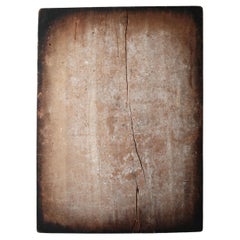
$1,200
H 37.41 in W 27.56 in D 2.56 in
Japanese Antique Earthen Wall Base / Wall Decoration / 1868-1912s Wabi-sabi
Located in Iwate-gun Shizukuishi-cho, Iwate Prefecture
This wall decoration is the base of the earthen wall of an old Japanese house.
In Japan, it's called "komai."
It was originally part of the earthen wall of a house built around the ...
Category
Antique Late 19th Century Japanese Meiji Decorative Art
Materials
Straw, Rope, Wood
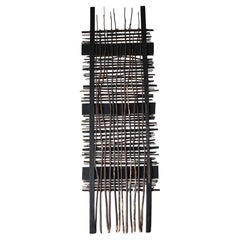
$2,500
H 94.1 in W 33.08 in D 3.15 in
Japanese Antique Huge Paper Boro / Wall Decoration / 1868-1912s / Wabi-sabi
Located in Iwate-gun Shizukuishi-cho, Iwate Prefecture
This is a huge piece of old Japanese paper, it is thought that they were laid on the floors of old Japanese houses or used for sericulture.
To increase the paper's strength, several...
Category
Antique Late 19th Century Japanese Meiji Decorative Art
Materials
Paper
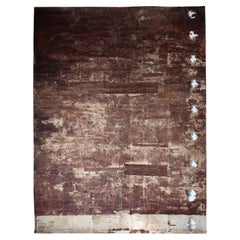
$3,000
H 141.74 in W 106.3 in D 0.12 in
Japanese Antique Rag "BORO" 1800s-1860s / Abstract Art Wabi Sabi
Located in Sammu-shi, Chiba
This is an exceptional example of a Japanese *BORO* textile, dating from the late Edo period (1800s–1860s). Carefully preserved over generations, it embodies both the resourcefulness...
Category
Antique Mid-19th Century Japanese Edo Tapestries
Materials
Fabric
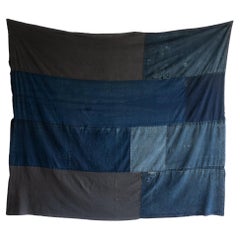
$1,650
H 60.63 in W 52.76 in D 0.12 in
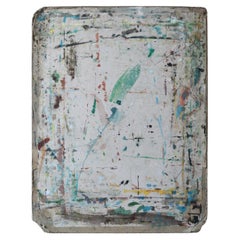
Japanese Old Artist
s Drawing Board / Abstract Art Wall Decoration / Late 1900s
Located in Iwate-gun Shizukuishi-cho, Iwate Prefecture
This is a drawing board used by a Japanese painter.
It is made by gluing together pieces of cardboard, and it is thought that the artist repeatedly painted on it.
The colorful water...
Category
Late 20th Century Japanese Other Decorative Art
Materials
Paper, Paint
$500
H 25.79 in W 20.08 in D 0.4 in
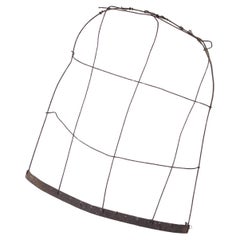
Japanese Old Iron Frame Of Winnow / Wall Decoration / Wabi-sabi Mingei
Located in Iwate-gun Shizukuishi-cho, Iwate Prefecture
This is an old Japanese winnowing basket's iron frame.
Winnowing basket is a single-mouthed or round-plate-shaped folk utensils used for sorting, transporting, and drying grains.
I...
Category
Mid-20th Century Japanese Showa Decorative Art
Materials
Iron
$400
H 21.66 in W 19.69 in D 7.09 in
More From This Seller
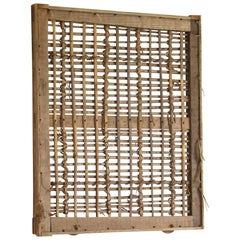
View AllJapanese Antique Small Door Wall Decoration 1860s-1900s / Abstract Art Wabi Sabi
Located in Chōsei District Nagara, JP
This is an old small window frame made in Japan. It was originally used as a traditional Japanese mud wall fixture. It dates back to the Meiji period (1860s-1900s) and has been in us...
Category
Early 20th Century Japanese Meiji Decorative Art
Materials
Bamboo, Cedar
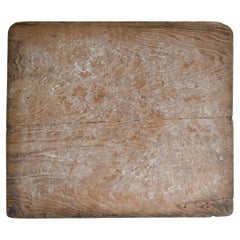
Japanese Antique Wabi-Sabi Wood Board 1860s-1900s / Wall Decoration
Located in Chōsei District Nagara, JP
This is an old Japanese wooden board called “Mochiita” (rice cake board).
It was used during the Meiji period (1860s-1900s) and is made of pine wood with a rich texture.
As the name ...
Category
Early 20th Century Japanese Meiji Decorative Art
Materials
Pine
$720 Sale Price
44% Off
Japanese Antique Wabi-Sabi Wooden board "Wall Decoration" 1860s-1900s
Located in Chōsei District Nagara, JP
This is an old Japanese wooden workboard
Crafted during the Meiji period (1860s–1900s), it is made from a single slab of keyaki (zelkova wood), a material now extremely rare. The imp...
Category
Early 20th Century Japanese Meiji Decorative Art
Materials
Wood
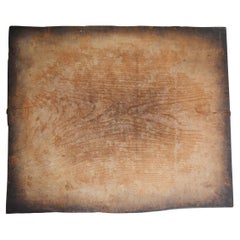
Japanese Antique Huge Sliding Door or Wall Decoration 1860s-1900s / Wabi Sabi
By Axel Vervoordt
Located in Chōsei District Nagara, JP
This is an old, large Japanese sliding door.
It was crafted during the Meiji period (1860s–1900s) and was likely used in traditional houses or storehouses of the time. The material i...
Category
Early 20th Century Japanese Meiji Antiquities
Materials
Iron
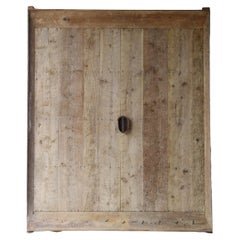
Japanese Antique Sliding Door with Galvanized Steel 1860s-1900s / Wabi Sabi
Located in Chōsei District Nagara, JP
This is an old Japanese sliding door with galvanized metal cladding, crafted during the Meiji period (1860s–1900s).
A rare surviving example, this piece showcases the ingenuity and a...
Category
Early 20th Century Japanese Meiji Doors and Gates
Materials
Steel
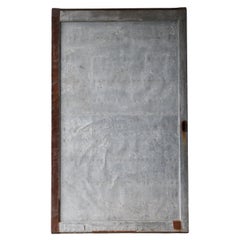
Japanese Antique Large Tansu 1860s-1900s / Sideboard Cabinet Wabi Sabi
Located in Chōsei District Nagara, JP
This is a very old Japanese tansu chest, crafted in the Meiji period (1860s–1900s). It is made from sugi (cedar) wood, and its modest, unassuming presence is part of its charm. The a...
Category
Early 20th Century Japanese Meiji Cabinets
Materials
Cedar
Still Thinking About These?
All Recently ViewedMore Ways To Browse
Ark Pediment
Avante Studios
Barbara Delong
Becky Davis Botanicals
Blessing Jung
Bob Click
Carol Simkin
Carole Stribling
Ceiling Medallion Plaster
Chelsea House Framed
Christian Dior Fashion Sketches
Christian Dior Sketches
Coromandel Wall Screens
Dale Clark
Dali 3 Nudes
Dali Dantes Inferno
Della Robbia Wall Plaque
Desimone Tile