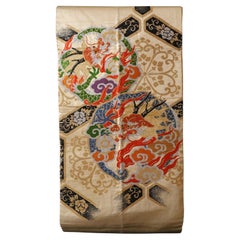
Items Similar to Japanese Silk Obi Kimono Belt /Table runner 1970s Gold Two Cranes
Want more images or videos?
Request additional images or videos from the seller
1 of 10
Japanese Silk Obi Kimono Belt /Table runner 1970s Gold Two Cranes
$405.40
$506.7520% Off
£297.11
£371.3820% Off
€336
€42020% Off
CA$556.44
CA$695.5520% Off
A$587.97
A$734.9620% Off
CHF 316.21
CHF 395.2620% Off
MX$7,039.06
MX$8,798.8320% Off
NOK 3,961.77
NOK 4,952.2120% Off
SEK 3,628.40
SEK 4,535.5020% Off
DKK 2,559.72
DKK 3,199.6520% Off
About the Item
This is a Fukuro Obi made in Japan around 1970s.
It is made with Gold Silk (Kinshi) and it is in good condition.
Two cranes walking or flying together is the ultimate symbol of longevity. Since cranes fly in the clear blue sky above the dusty earth, they are also considered symbols of cleanliness and purity
Obi is a belt of varying size and shape worn with both traditional Japanese clothing like Kimono.Obi are categorised by their design, formality, material, and use, and can be made of a number of types of fabric, with heavy brocade weaves worn for formal occasions, and some lightweight silk obi worn for informal occasions.
Fukuro obi are slightly less formal than maru obi, despite being functionally the most formal variety of obi worn today. Fukuro obi are made from either a single double-width length of fabric with a seam down one edge, or from two lengths of fabric sewn together down each edge for fukuro obi made from two lengths of fabric, the fabric used for the backside may be cheaper and appear to be more plain.
Fukuro obi are roughly 30 centimetres (12 in) wide and 360 centimetres (11.8 ft) to 450 centimetres (14.8 ft) long. (Wikipedia)
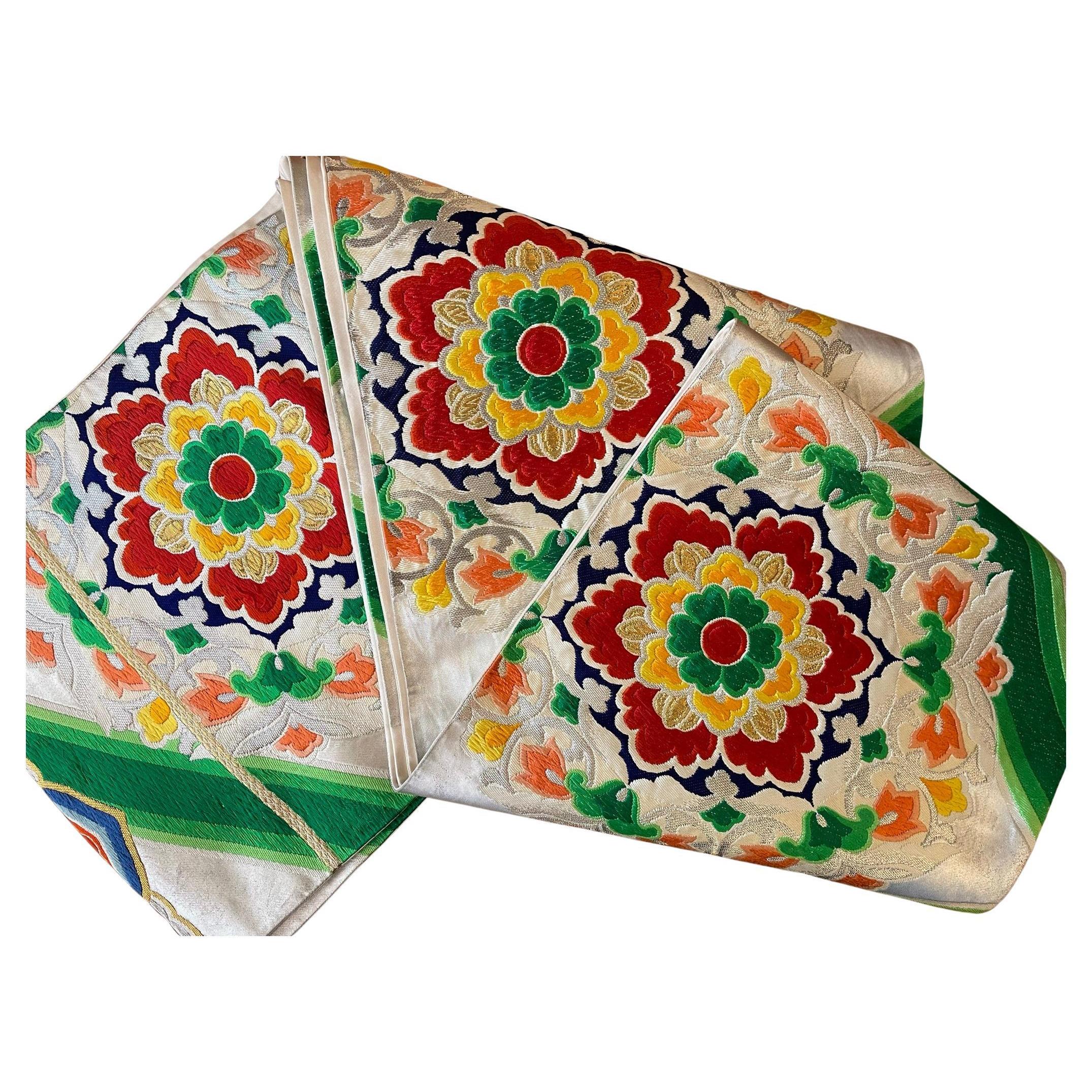
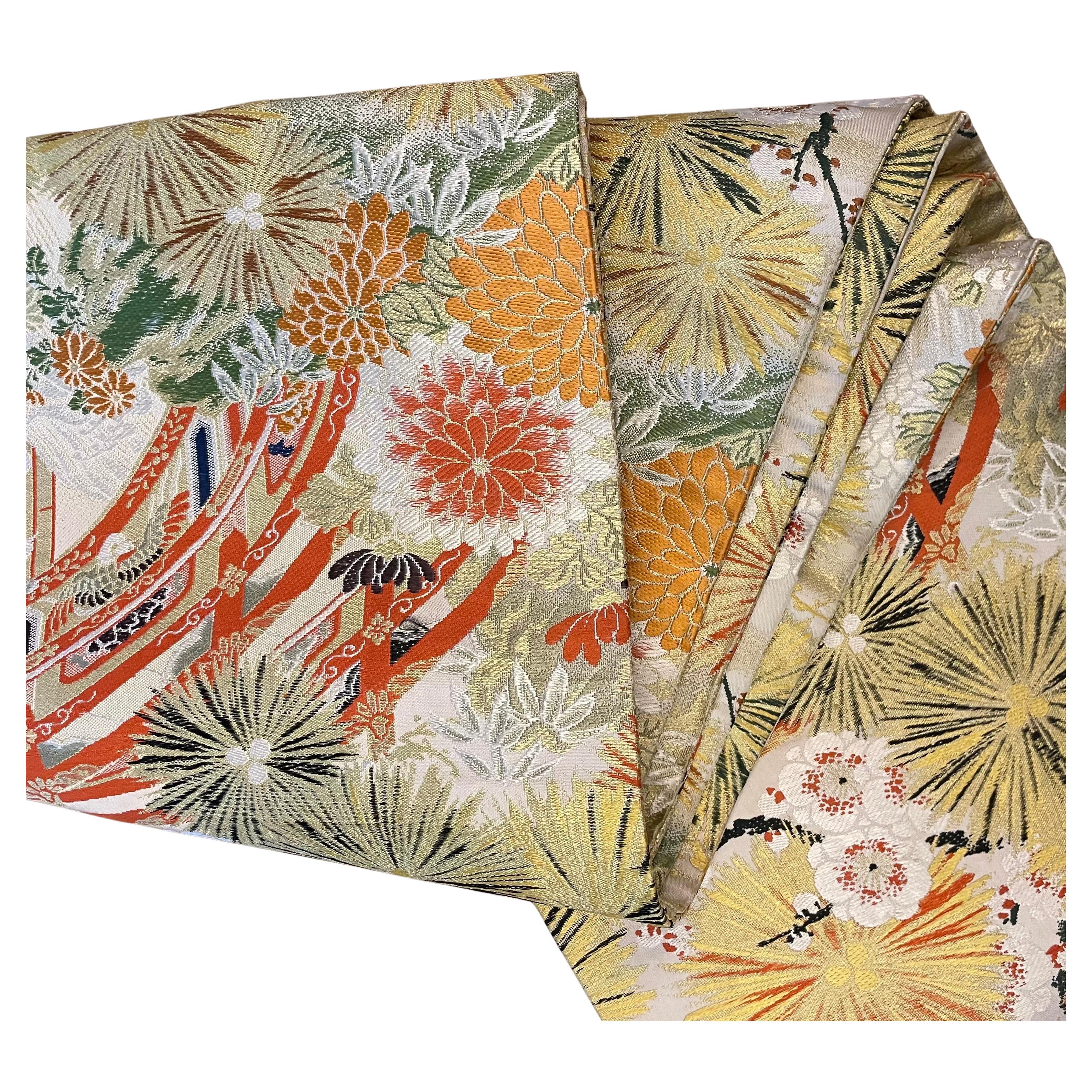
Dimensions: this obi is 4m8cm (408cm) long and 30cm wide. On the front, it's all gold with motifs and in the middle, there is a part which has only gold fabric with no motif. On the back it's all white with no motifs.
- Dimensions:Height: 160.64 in (408 cm)Width: 11.82 in (30 cm)Depth: 0.4 in (1 cm)
- Style:Showa (Of the Period)
- Materials and Techniques:
- Place of Origin:
- Period:
- Date of Manufacture:1970
- Condition:There might be some little stains or some threads fraying.
- Seller Location:Paris, FR
- Reference Number:1stDibs: LU6325233680882
About the Seller
5.0
Vetted Professional Seller
Every seller passes strict standards for authenticity and reliability
1stDibs seller since 2022
54 sales on 1stDibs
Typical response time: Several days
- ShippingRetrieving quote...Shipping from: Paris, France
- Return Policy
More From This Seller
View AllAntique Silk Japanese Kimono Belt, 1970s
Located in Paris, FR
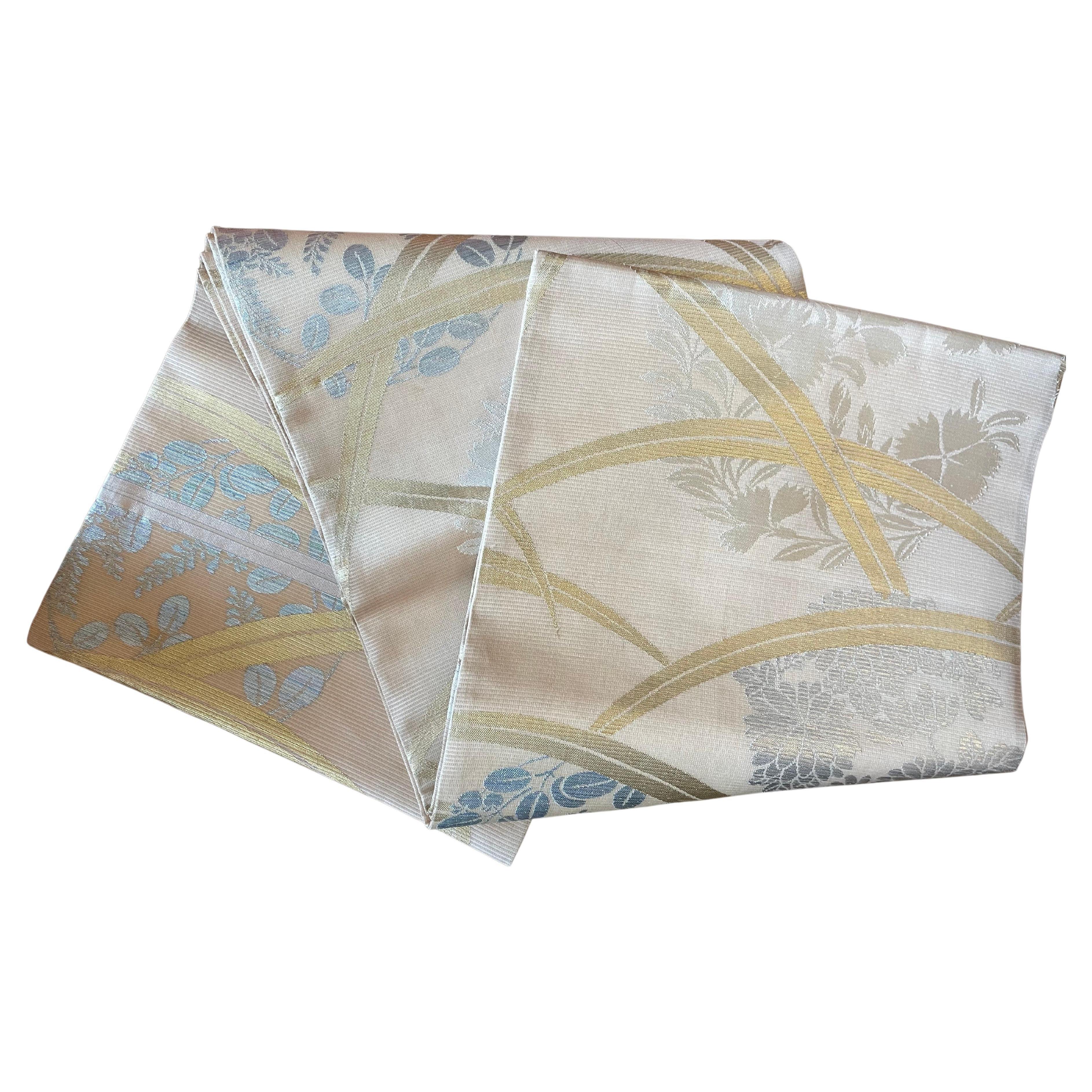
This is a Hitoe Obi made in Japan around 1970s.
Obi is a belt of varying size and shape worn with both traditional Japanese clothing like Kimono....
Category
Late 20th Century Japanese Showa Antiquities
Materials
Silk
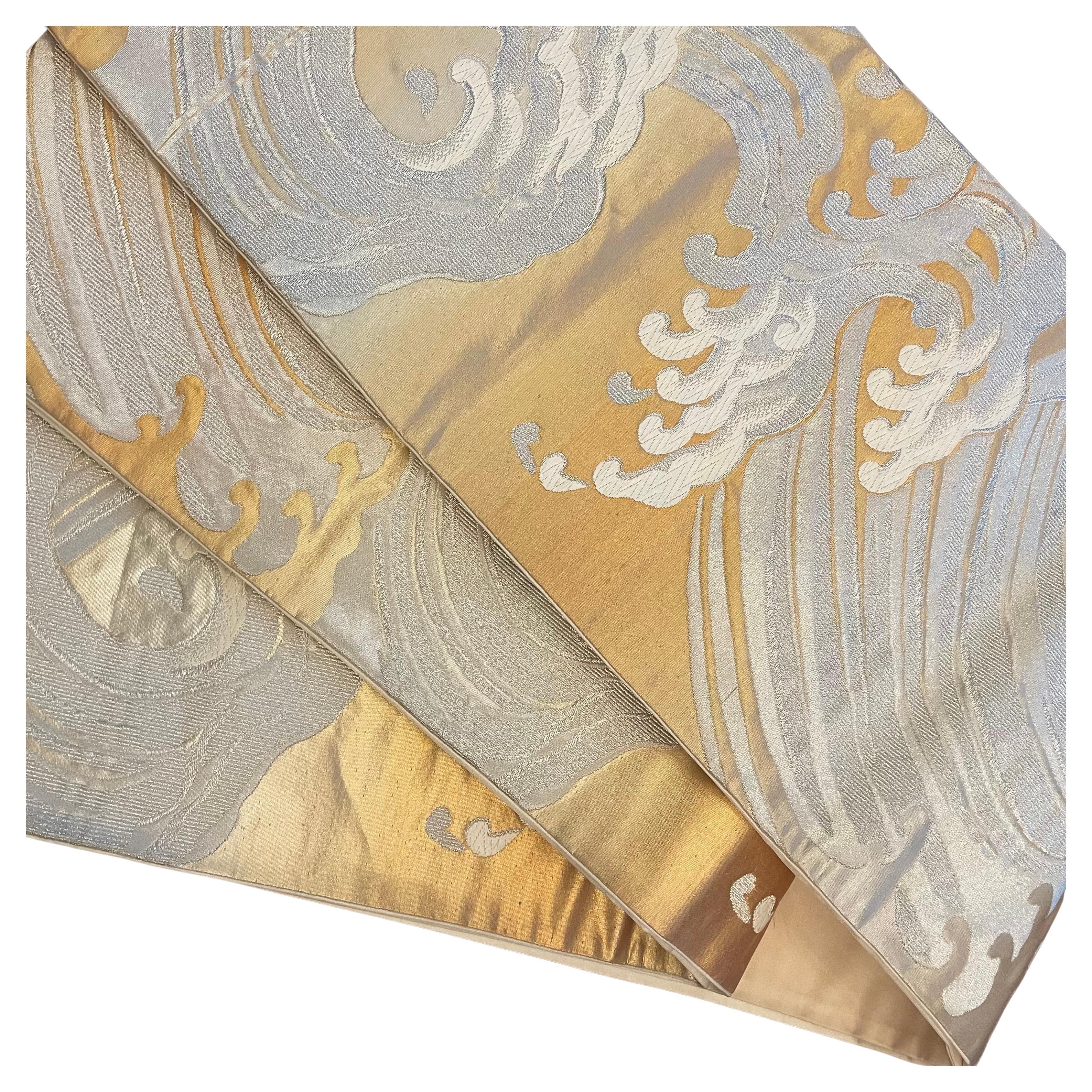
Japanese Vintage Kimono Silk Belt Obi Waves Gold and Silver 1960s
By Japanese Studio
Located in Paris, FR
This is an silk Obi (Kimono belt) made in Japan around 1960s.
Obi is a belt of varying size and shape worn with both traditional Japanese clothing like Kimono.Obi are categorised b...
Category
Vintage 1960s Japanese Showa Antiquities
Materials
Silk
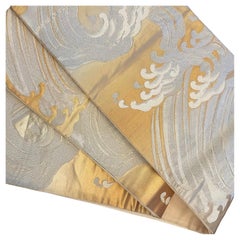
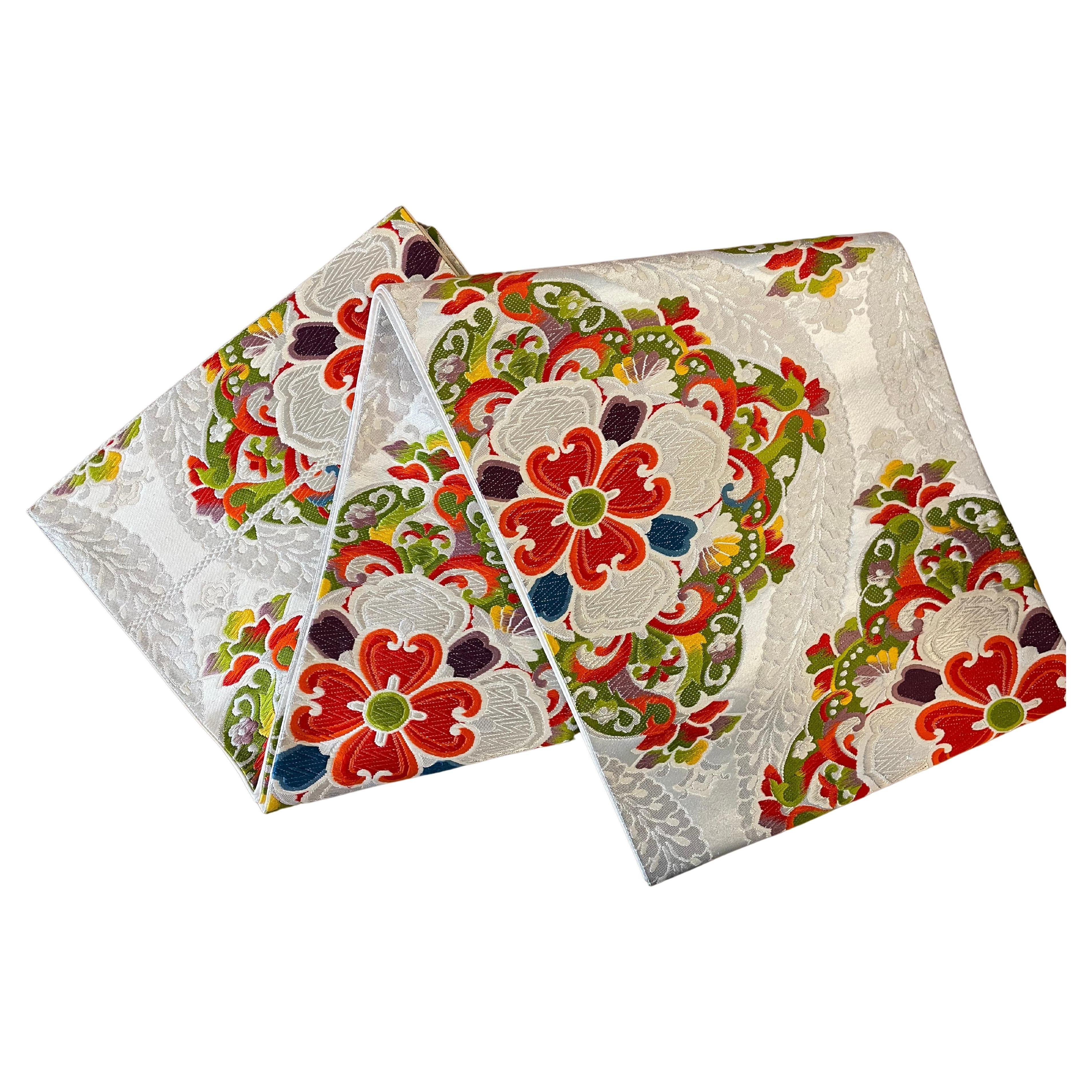
Japanese Silk Kimono Belt Fukuro-Obi 1970s /Table Runner
Located in Paris, FR
This is a Fukuro Obi made in Japan around 1970s.
It is made with Silk and it is in good condition.
Obi is a belt of varying size and shape worn with both traditional Japanese clothing like Kimono.Obi are categorised by their design, formality, material, and use, and can be made of a number of types of fabric, with heavy brocade weaves worn for formal occasions, and some lightweight silk obi worn for informal occasions.
Fukuro obi are slightly less formal than maru obi...
Category
Late 20th Century Japanese Showa Antiquities
Materials
Silk
$325 Sale Price
25% Off
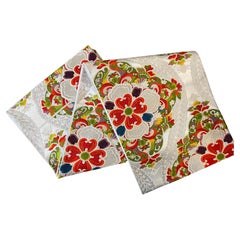
Japanese Antique Silk Kimono Belt, 1960s
Located in Paris, FR
This is a Fukuro Obi made in Japan around 1960s.
It is made with Silk and it is in good condition.
Obi is a belt of varying size and shape worn with both traditional Japanese clothing like Kimono.Obi are categorised by their design, formality, material, and use, and can be made of a number of types of fabric, with heavy brocade weaves worn for formal occasions, and some lightweight silk obi worn for informal occasions.
Fukuro obi are slightly less formal than maru obi...
Category
Late 20th Century Japanese Showa Antiquities
Materials
Silk
$366 Sale Price
20% Off
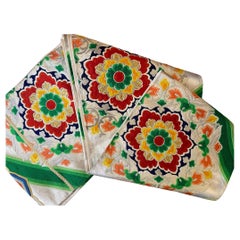
Japanese Vintage Kimono Silk Belt Gold flowers Maru-obi 1920s
By Japanese Studio
Located in Paris, FR
This is a Maru Obi made in Japan around 1920s.
Obi is a belt of varying size and shape worn with both traditional Japanese clothing like Kimono.Obi are categorised by their design,...
Category
Vintage 1920s Japanese Taisho Antiquities
Materials
Silk
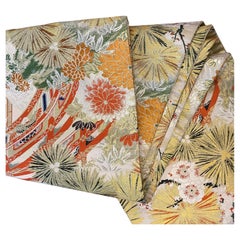
Japanese Vintage Kimono Silk Belt Flowers Orange-gold 1960s
By Japanese Studio
Located in Paris, FR
This is an Obi (Silk Kimono Belt) made in Japan around 1960s.
Obi is a belt of varying size and shape worn with both traditional Japanese clothing like Kimono.Obi are categorised b...
Category
Vintage 1960s Japanese Showa Antiquities
Materials
Silk
You May Also Like
Silk Tissues Embroidered in Gold Tinsel, Pair
Located in Alessandria, Piemonte
B/1828 - Elegant pair of embroidered tissues to be used placed on a piece of furniture: You must admire closely, they are special, with silk, velvet and gold tinsel.
On request I ca...
Category
21st Century and Contemporary French Other Pillows and Throws
Materials
Silk
$347 Sale Price / set
20% Off
Japanese Signed Stamped Hand Drawn Silk Obi Sash Belt with Crow, Mid-1900
Located in Studio City, CA
A wonderful handmade vintage silk Obi sash/ belt featuring a rather unique hand-drawn scene with a crow and trees.
Signed and stamped by the artist...
Category
Mid-20th Century Japanese Showa Textiles
Materials
Silk
Antique Japanese Brocade Monk
s Robe Kesa Meiji Period
Located in Atlanta, GA
A Japanese Kesa (Monk's Vestment) made from thirteen columns of patchworks of shimmering woven brocades. The elaborate motifs feature repetitive elaborat...
Category
Antique Late 19th Century Japanese Meiji Textiles
Materials
Brocade, Silk
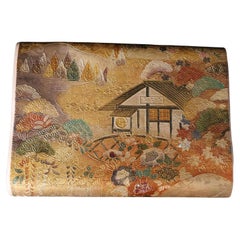
Japanese Obi with Landscape and Pavilion Motif – wall decoration, table runner
Located in Fukuoka, JP
A stunning Japanese obi textile from the Shōwa period, masterfully woven from silk with exquisite raden (mother-of-pearl inlay) detailing. This formal maru obi features a rich and in...
Category
20th Century Japanese Showa Textiles
Materials
Silk
Japanese Buddhist Monk Priest 7 Column Silk Brocade Kesa Ceremonial Temple Robe
Located in Studio City, CA
A wonderful, beautifully ornamented and somewhat rare fully intact Japanese Buddhist monk/ priest's Kesa ceremonial silk robe featuring various colorful birds in flight.
Kesa (which came from the Chinese word "kasaya") robes have been handmade/handstitched by monks/priests as an act of devotion as ceremonial robes for centuries in various Asian cultures (Japanese, Chinese, Korean, Vietnamese, Indian, etc.). The kesa is a rectangular garment designed to be worn over the left shoulder (see example image). The robes are made (often in a patchwork column pattern ranging from five, seven, nine or more pannels) specifically for fully ordained Buddhist monks, priests and nuns and are made from donations of exquisite textiles from wealthy patrons of Japanese Buddhist temples. The robes were used in daily ceremonies, temple gatherings, and private meditation.
Antique Kesa robes...
Category
Mid-20th Century Japanese Showa Textiles
Materials
Textile, Brocade, Silk
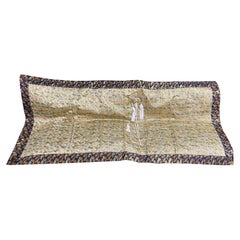
Japanese Maru Obi with Gold Embroidered Dragons – Silk Brocade, Taisho to Showa
Located in Fukuoka, JP
A magnificent example of Japanese textile artistry, this vintage maru obi dates from the Taisho to early Showa period (circa 1920–1950). Woven in luxurious silk, it features a richly detailed brocade design with mythological dragons encircled by flames and stylized clouds—symbols of strength, protection, and imperial authority in Japanese culture.
The opulent gold and beige ground is accented with bold tones of red, green, black, and purple, showcasing intricate weaving techniques and vibrant color contrasts. Hexagonal panels with floral motifs in gold and black add structure and visual rhythm to the piece. Measuring 341 cm in length and 32 cm in width, this maru obi was traditionally worn for formal kimono occasions and would have wrapped fully around the waist.
Today, it makes a powerful statement as a display piece—whether mounted as wall art or draped as a textile sculpture—highlighting the beauty and craftsmanship of early 20th-century Japanese weaving...
Category
20th Century Japanese Showa Textiles
Materials
Cotton, Silk