Items Similar to Los Castillo E.Alvarado Arquitectura Mosaic with Montezuma Mexico, 1959
Video Loading
Want more images or videos?
Request additional images or videos from the seller
1 of 12
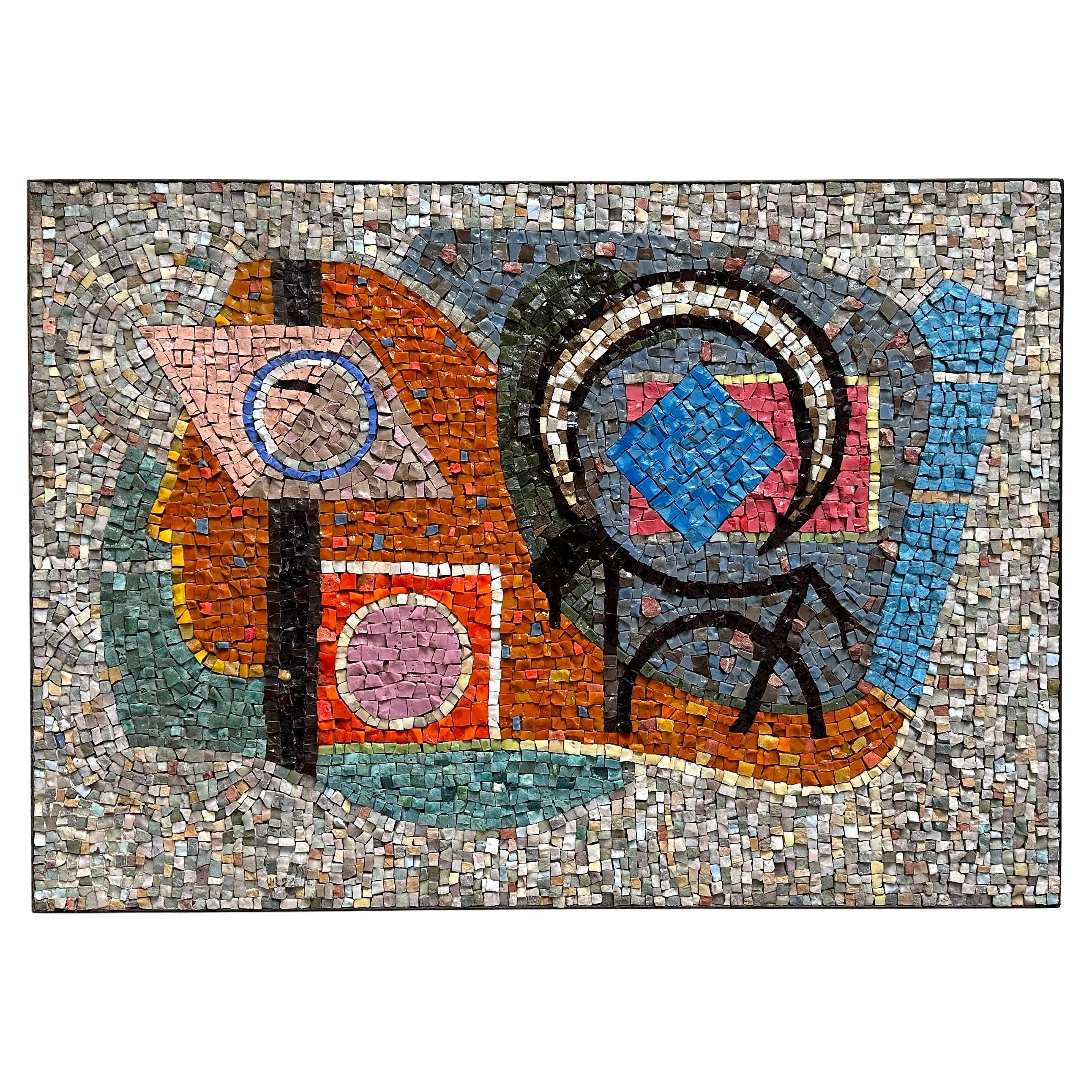
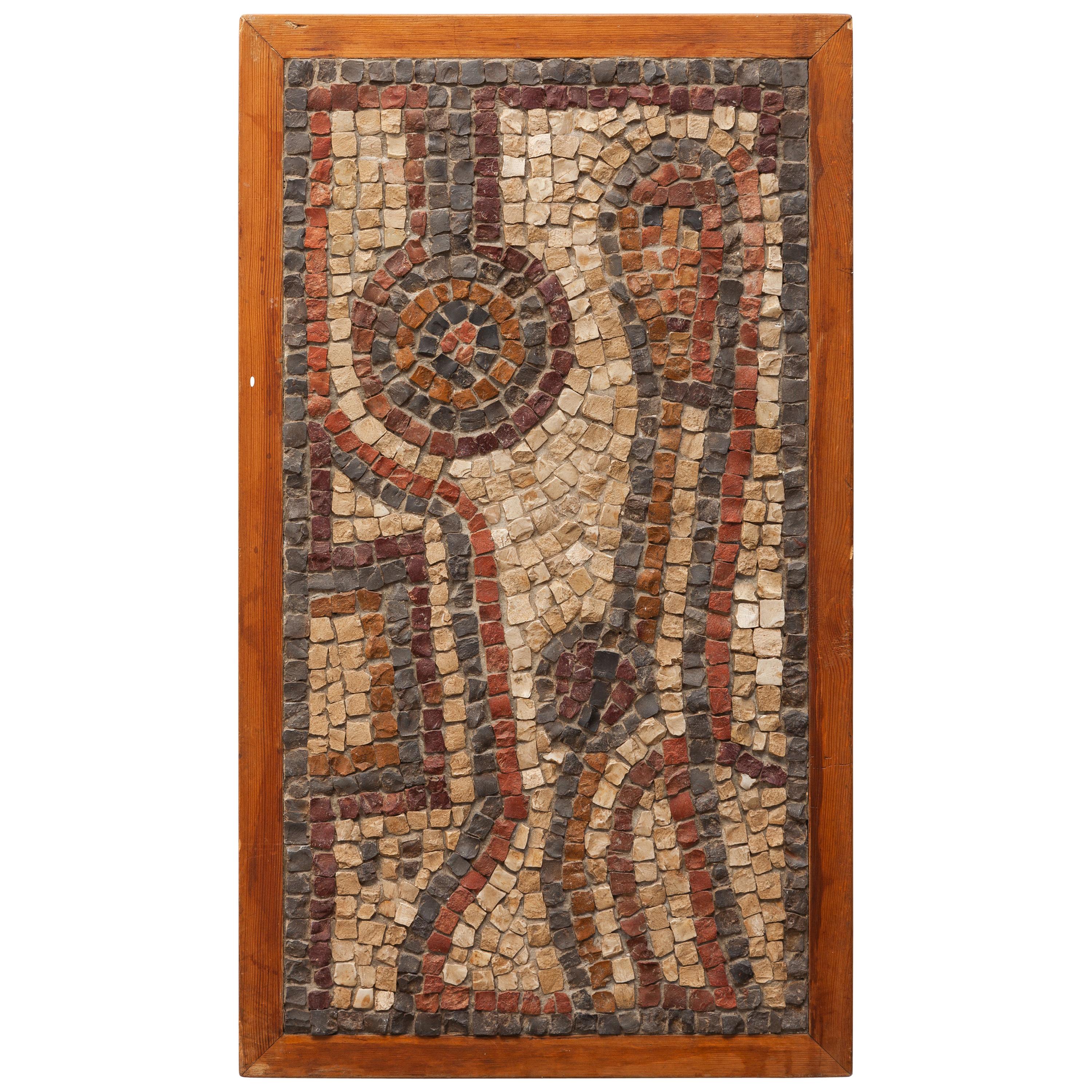
Los Castillo E.Alvarado Arquitectura Mosaic with Montezuma Mexico, 1959
$5,625
$7,50025% Off
£4,248.38
£5,664.5025% Off
€4,907.54
€6,543.3825% Off
CA$7,924.82
CA$10,566.4325% Off
A$8,487.49
A$11,316.6525% Off
CHF 4,562.82
CHF 6,083.7525% Off
MX$103,085.52
MX$137,447.3625% Off
NOK 57,653.40
NOK 76,871.2025% Off
SEK 52,785.98
SEK 70,381.3025% Off
DKK 36,668.26
DKK 48,891.0225% Off
About the Item
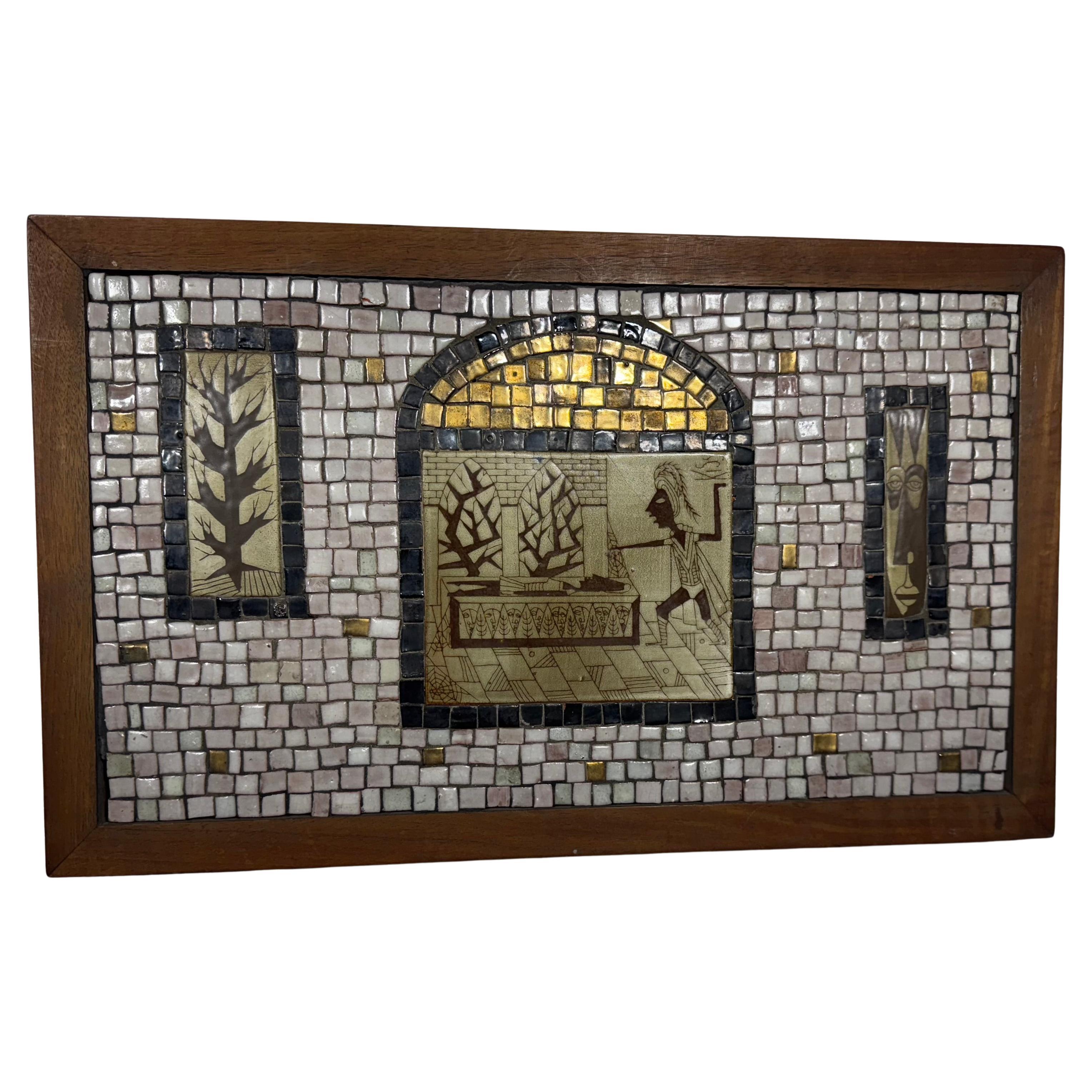
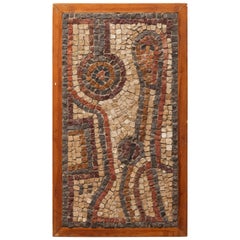
An E. Alvarado 1959 mosaic wall panel commissioned at the Taxco showroom of Los Castillo Plateros depicting the 1467 reconstruction of the temple of Huitzilopochtii after its damage from an earthquake overseen by Montezuma.
E. Alvarado’s work reflects a deep reverence for Mexico’s indigenous history, blending traditional iconography with the modernist aesthetic of the mid-20th century. This panel was created in 1959, during a period of renewed interest in Mexico’s pre-Hispanic roots and national identity, contributing to the reconstruction efforts that sought to honor and preserve historic architecture. The intricate mosaic construction, with its vivid hues and detailed craftsmanship, exemplifies Los Castillo’s mastery and dedication to cultural storytelling through art.
The piece exudes historical gravity and artistic brilliance, making it a significant collectible for historians, art enthusiasts, or collectors of Mexican modernist art.
It is a stunning testament to Mexico’s enduring legacy and artistic innovation.
The mosaic is composed of hand shaped pieces of turquoise, amethyst, obsidian, sea green opal, tourmaline, lapis lazuli, limestone and other stones set into a thick plaster backing.
The Alvarado mosaic studio was located on the second floor of the Los Castillo Plateros showroom in Taxco, Mexico.
The original owners met with E. Alvarado at his workshop and chose this scene from the many offered. They returned to Boston and received a drawing and a small bag of various semi-precious stones that were samples of what the mosaic would be made from. A couple of weeks later they received a photographic update on the progress of the mosaic with the final artwork shipped to them a month after their meeting with Sr. Alvarado.
The cost of the mosaic with its shipment in 1960 was twelve hundred dollars the equivalent of almost thirteen thousand dollars today.
Below are excerpts from the final letter to the original owners informing them of the impending shipment to their home in Boston and reviewing the historical event illustrated by their mosaic.
"The description of the "ARQUITECTURA" mosaic is:
Fifty two years before Cortéz arrived in what is now México City there was an earth quake which partly destroyed the Main Temple of the Aztecs dedicated to Huitzilopochtli (God of War).
The Emperor Montezuma, who is represented in the low right hand corner of the plaque had it reconstructed.
The reconstruction required hundreds of men, but since this mosaic is an allegory, the artist, E. Alvarado, tries to carry the message by using a few men to sculpture the Idol, a man is cracking the stone, another man is carrying up the stairway of the Pyramid, another man is making a dugout to embark into one of the many channels and lagoons that existed in the Valley of México in the sixteenth century. The lake and channels are represented by the Sea Green Opal, the artist has emphasized this point, in view that the water transportation was the preferred way to travel.
To wash this mosaic kindly use
a hard bristle brush using any kind of detergent, scrub it entirely and then wash it until the plaque is free
from detergent.
This operation should be done once every 6 months.
clean it ordinarily just brush it."
The mosaic is in fine vintage condition as pictured.
E. Alvarado was a talented mosaic artist associated with Los Castillo, a renowned Mexican workshop celebrated primarily for its silverwork and decorative arts. While detailed biographical information on E. Alvarado is limited, it’s known that Los Castillo collaborated with various skilled artisans, including mosaic artists, during the mid-20th century, often working on culturally significant projects that emphasized Mexican history, architecture, and indigenous motifs.
Alvarado contributed to the workshop’s legacy by creating intricate mosaic panels that reflected Mexico’s rich cultural and historical themes, such as the reconstruction of ancient landmarks like the Main Pyramid in Mexico City. His work is characterized by vibrant colors, detailed iconography, and a clear reverence for traditional Mexican artistic motifs. The mosaic from 1959 exemplifies his craftsmanship and dedication to preserving Mexican heritage through art.
While specific biographical details remain scarce, his association with Los Castillo and his work on this significant panel position him among the talented artisans shaping Mexico’s artistic revival in the mid-20th century. His contributions continue to be appreciated by collectors and historians for their craftsmanship and cultural significance.
- Creator:Los Castillo (Retailer),Alvarado (Artist)
- Dimensions:Height: 31 in (78.74 cm)Width: 40.5 in (102.87 cm)Depth: 2 in (5.08 cm)
- Style:Mid-Century Modern (Of the Period)
- Materials and Techniques:Amethyst,Brass,Carnelian,Celadon,Lapis Lazuli,Limestone,Malachite,Multi-gemstone,Opal,Plaster,Rose Quartz,Tourmaline,Hand-Crafted,Mosaic
- Place of Origin:
- Period:
- Date of Manufacture:1959
- Condition:Wear consistent with age and use.
- Seller Location:Camden, ME
- Reference Number:1stDibs: LU898444151612
About the Seller
5.0
Gold Seller
Premium sellers maintaining a 4.3+ rating and 24-hour response times
Established in 1984
1stDibs seller since 2010
243 sales on 1stDibs
Typical response time: <1 hour
- ShippingRetrieving quote...Shipping from: Camden, ME
- Return Policy
More From This Seller
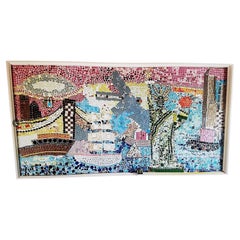
View AllMosaic Panel of the Bicentennial in New York Harbor, 1978
Located in Camden, ME
A large mosaic panel artwork representing the bicentennial celebration in New York harbor on the evening of July 4, 1976.
A memorable evening throughout the United States and partic...
Category
Vintage 1970s American Mid-Century Modern Outsider and Self Taught Art
Materials
Ceramic
$6,750 Sale Price
70% Off
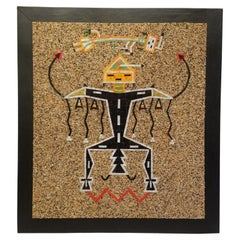
California Studio Navajo Sand Painting Mosaic Art Panel of Thunderbird, 1960s
By I. D. Henny
Located in Camden, ME
A Navajo sand painting mosaic art wall panel of the Navajo mythological Father Sky or Thunderbird created in the 1960s in a non traditional format...
Category
Mid-20th Century American Mid-Century Modern Decorative Art
Materials
Ceramic
$1,800 Sale Price
25% Off
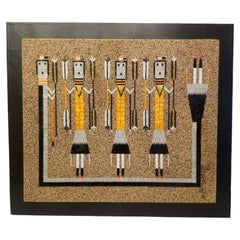
California Studio Mosaic Navajo Sand Painting Yei Dancers Rainbow 1960 Guardians
By I. D. Henny
Located in Camden, ME
A Navajo sand painting mosaic art wall panel of the Navajo mythological Yei Dancers Rainbow Guardians created in the 1960s in a non traditional fo...
Category
Vintage 1960s American Mid-Century Modern Decorative Art
Materials
Stone
$2,100 Sale Price
25% Off
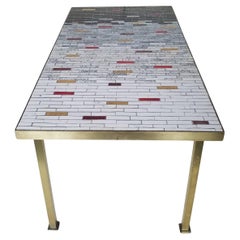
Hand Crafted Mosaic Tile Brass Framed Coffee Table York City Studio, c. 1950
By Clay Mosaics
Ceramics Inc. NY
Located in Camden, ME
An early 1950's custom designed coffee table created at the Clay Mosaics & Ceramics, Inc. studio which was located at 432 East 82nd Street in New York.
The gradual change of the col...
Category
Vintage 1950s American Mid-Century Modern Coffee and Cocktail Tables
Materials
Brass
$2,700 Sale Price
41% Off
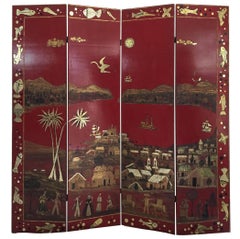
Salvador Corona Folding 4 Panel Floor Screen of Patzcuaro, Acapulco circa 1938
By Salvador Corona
Located in Camden, ME
Salvador Corona painted four-panel wooden floor screen created in his studio in Mexico circa 1938.
This rare hand crafted multi medium room divider was the property of the daughter of one of Mexico's wealthiest families of the period, who married the head of an international railroad supply company in their Warren McArthur furnished apartment on Park Avenue.
The custom designed Warren McArthur furniture was a gift of the Pullman Company.
In the early 1950s she opened a shop in Boothbay, Maine and later on upper Lexington Avenue specializing in the crafts of Mexico.
This may have been a wedding present to her from the artist, her family or a close friend.
The screen shows a the harbor of 19th Century Acapulco with the major buildings with gold leaf tiled roofs, Spanish galleons in the bay, a whale spouting in the distance, birds, and silver leafed palm trees .
The harbor scene is bordered in gilt painted cord. Within which are appliquéd cutout medallions of various local fish and air bubbles covered in tinfoil ,a new material in the 30s. The tinfoil is finely etched in a variety of intricate patterns. Some of the appliqués are glazed in gold.
The reverse side of the screen is an ivory white back ground with vignettes from the Maximilian era of Mexico.
The screen is in good condition with wear consistent with its age.
Salvador Corona was born on his family's ranch Hacienda Mideras in the Mexican state of Chihuahua. Corona’s family moved to Mexico City in 1903 when he was 8. He attended the New English College in Mexico and then crossed into a career in bull fighting entering the ring for the first time in 1913. In 1919 in Guadalajara he was gored and turned to painting.
He was given his first painting lessons by fellow bullfighter Jose Jimenez.
Corona’s painting career spanned many decades and diverse formats including murals, furniture and decorative household items.
In 1939, the Mexican government invited him to exhibit a set of painted furniture at it's booth at the World’s Fair in New York City. There, it was presented to President Franklin D. Roosevelt as a gift. Corona’s work attracted many famous patrons, including the Duchess of Windsor, Gary Cooper and writer Clare Booth Luce.
Salvador Corona’s work featured many Spanish Colonial vignettes, and he became an authority on Spanish and French costumes of the 1800s, which are frequently depicted in his paintings. His favorite subjects often included Mexican Colonial criollos and Purepecha (Tarascan) Indians. Birds and other animals feature prominently in his work.
His traditional self-developed folk art style images depicted pastoral colorful scenes of Maximilian era Mexico painted on white backgrounds.
His work can be divided into three categories: a vice-regal era with European and Creole noblemen mixed with Indians; stylized landscapes of Patscuaro, Acapulco or the Canal of Santa Anita; and his iconographic Mexican Virgins...
Category
Vintage 1930s Mexican Rancho Monterey Screens and Room Dividers
Materials
Foil, Gold Leaf
$18,750 Sale Price
55% Off
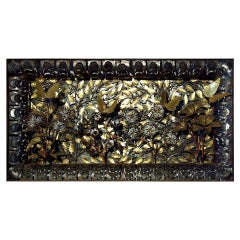
Brutalist Torch Cut Wall Piece Style of Silas Seandel c.1980
By Silas Seandel
Located in Camden, ME
Complex overlays of brass, iron and copper make this Butterfly garden an interesting execution of metal surfaces. Presented in a heavy wooden frame with a secondary pierced iron arab...
Category
Late 20th Century American Mid-Century Modern Wall-mounted Sculptures
Materials
Brass, Copper, Steel
You May Also Like
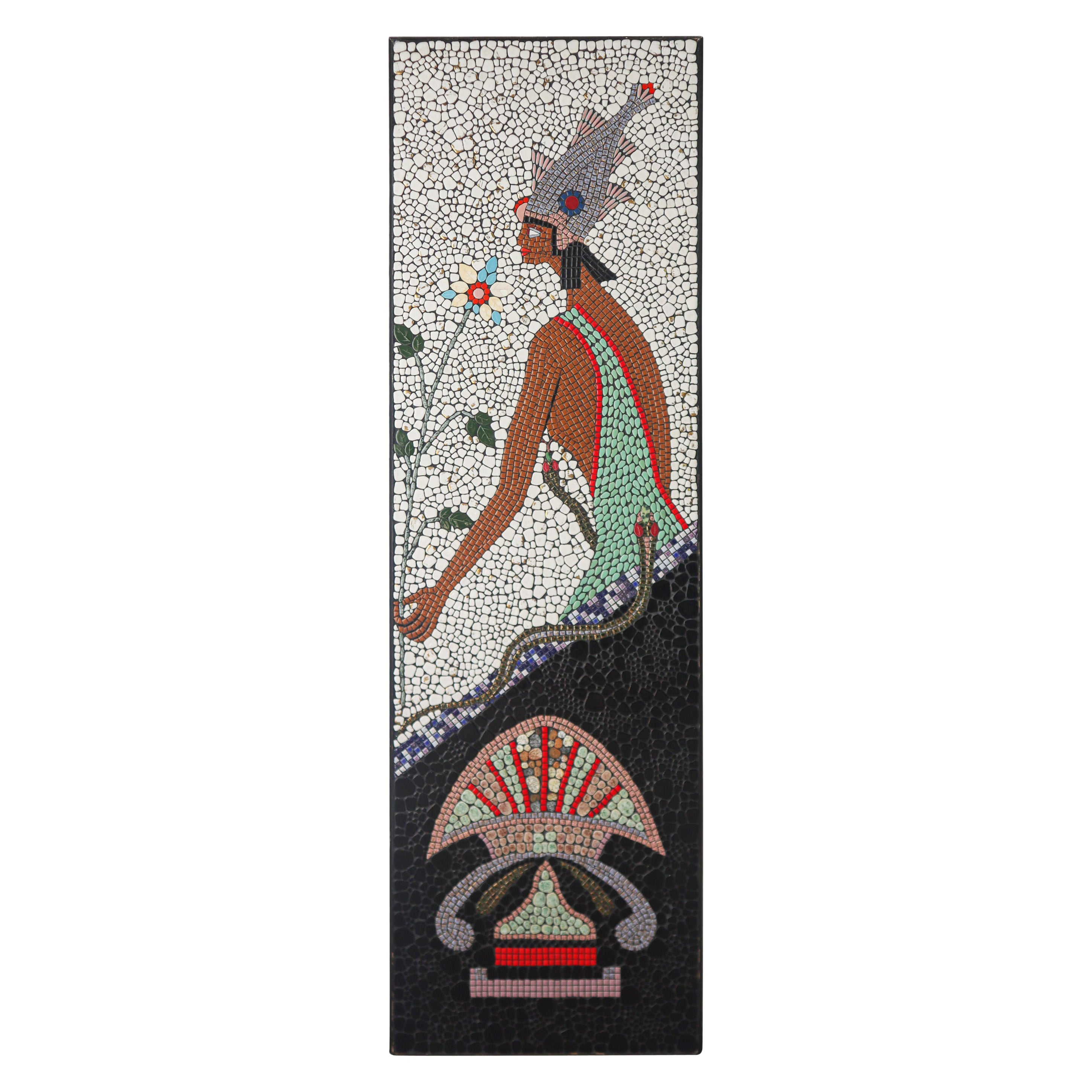
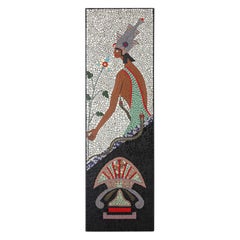
Mid-Century Egyptian Goddess Mosaic
Located in Las Vegas, NV
Unique mid-century mosaic depicting and Egyptian Goddess, possibly Hatmehyt, the Egyptian Goddess of Fish.
The mosaic stands 6.5ft tall and is constructed out of rounded pebble l...
Category
Mid-20th Century Mid-Century Modern Decorative Art
Materials
Stone
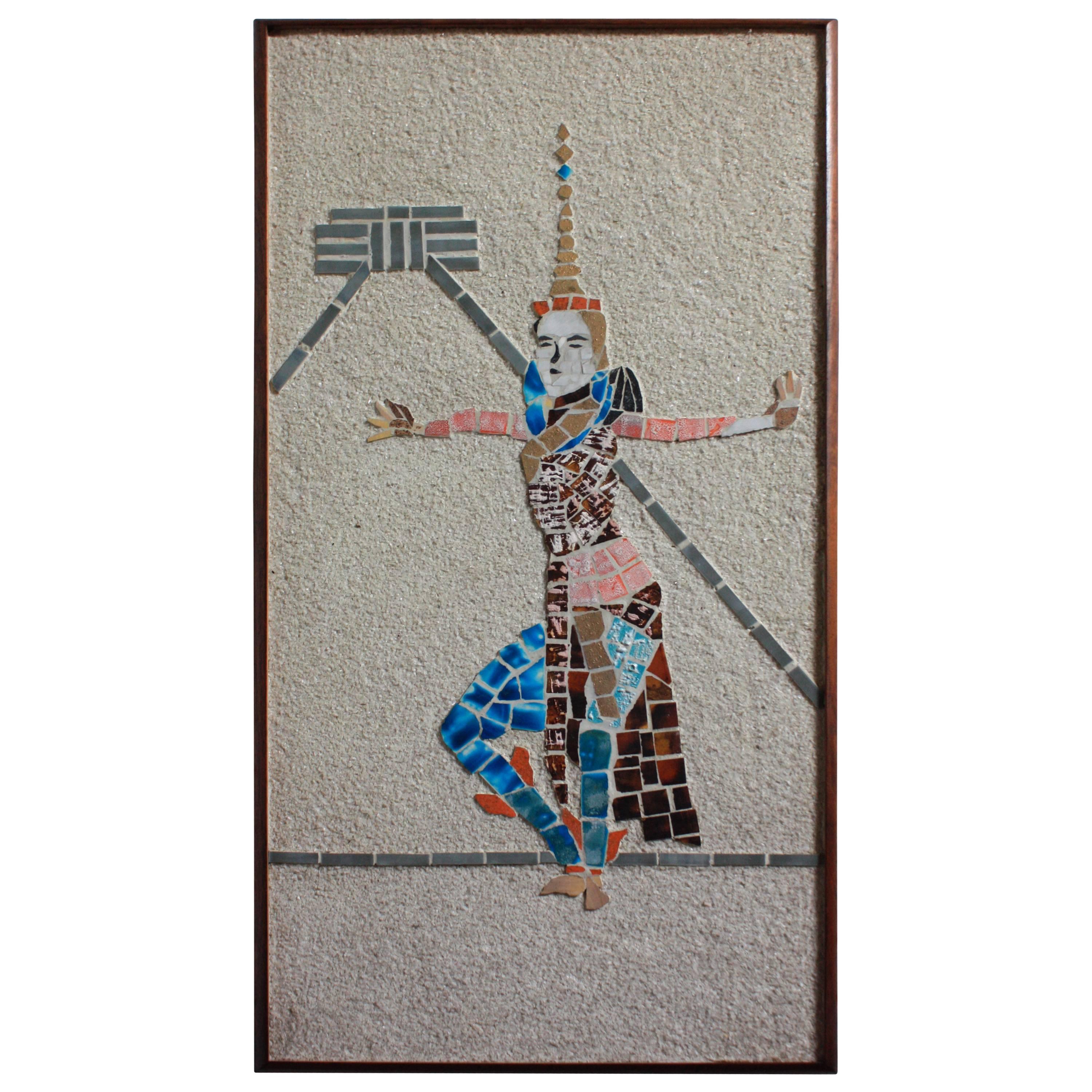
Richard Hohenberg Mosaic
By Richard Hohenberg
Located in Brooklyn, NY
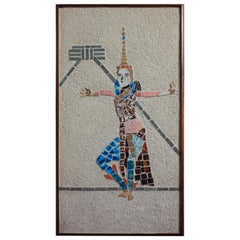
This Hohenberg Mosaic depicts a classical Thai dancer and is comprised of glass and ceramic tiles against a crystalline incrustation. The frame is solid walnut and the piece is stencil signed on the reverse 'Hohenberg Original.'
Category
Vintage 1950s American Mid-Century Modern Wall-mounted Sculptures
Materials
Ceramic, Glass, Walnut
$2,900
Genaro Alvarez Wall Mosaic
By Genaro Alvarez
Located in Mexico City, CDMX
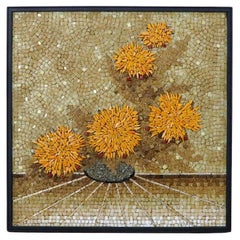
Circa 1950. We offer this Stunning Wall Mosaic designed by Genaro Alvarez and handmade by striking mosaics. Signed by "Genaro" and stamped with the original made in México.
Genaro Alvarez was known for his modernist mosaic creations in the late 1950's and early 1960's. The Genaro Alvarez Studio was located in Mexico City, where he created mosaic furniture...
Category
Vintage 1950s Mexican Mid-Century Modern Decorative Art
Materials
Stone
David Holleman 1960
s Mosaic Wall Art... Classic Modernist
By David Holleman
Located in Buffalo, NY
David Holleman mosaic wall art, circa early 1960s. It measures 22" wide and has animal motifs and abstracted figures./ faces . Some of the tile work...
Category
Vintage 1960s American Mid-Century Modern Wall-mounted Sculptures
Materials
Ceramic

Molten Glass Mosaic Panel, Maximilien Herzele, France 1965
By Maximilien Herzele
Located in St Ouen, FR
Molten glass mosaic on cement with its original steel frame.
Signed on the edge and on reverse.
This colourful achievement is a sketch for a decoration project of a school in Nanter...
Category
Vintage 1960s French Mid-Century Modern Decorative Art
Materials
Glass
Marble Fine Mosaic Art, Belgium, 1960s
Located in Antwerp, BE
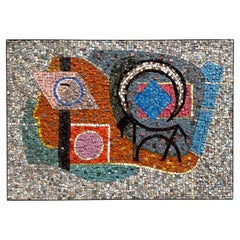
Mid-Century Modern mosaic tableau wall piece. Abstract design of a figure in mosaic marble, shades of browns and greys.
Sturdy wooden frame.
Category
Vintage 1960s Belgian Mid-Century Modern Wall-mounted Sculptures
Materials
Marble
More Ways To Browse
Amethyst Mexican
Rose Castillo
Los Castillo Mosaic
Vintage Ornamental Brass Plate By Hans Przyrembel
Vintage Sexton Metal Wall Plaques
Vivienne Galowitz
Wall Plaque Knight
Walt Disney Animation Cel
Walter Firle
Wesley Simpson
Witco Wall Art
19 Century American Portraits
1930s Vintage Circus Posters
1930s Circus Poster
A Keany
A M Pattison
Adrian Pearsall Wall Art
Albright Knox Exhibition Poster