Want more images or videos?
Request additional images or videos from the seller
1 of 10

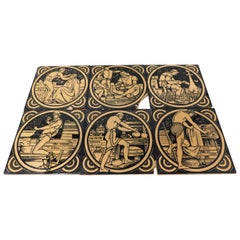
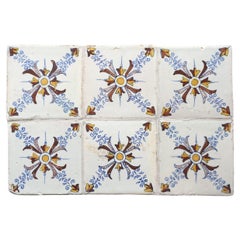
Set of 6 Antique Barrowclough Sanders Tiles

$2,980.67
£2,175
€2,557.57
CA$4,133.90
A$4,450.51
CHF 2,383.34
MX$53,627.11
NOK 30,071.11
SEK 27,519.92
DKK 19,111.18

About the Item

A set of six early 19th century tiles decorated Barrowclough Sanders on a Minton tile. In Neoclassical style, each 5 inch tile showcases classically dressed figures, musicians, and warriors hand painted in tonal blue with ochre coloured ornaments within a pastel green border. An image from Cesare Ripa's Iconologia can be seen in a central roundel, while the other comprise of sanguigno per l'aria, riforma, castigo, premio, allegrezza and desiderio verso Iddio. Iconologia (1593) by Cesare Ripa is a book that marks the modern revival of interest in the world of symbols and images which writers turned into a new language, with only 5 editions ever published. The book includes the widest number of images, offering a moral code, taken in the visual arts. These tiles have remained in good quality condition displaying their images of morality for over years, now ready to be displayed in its new home for many more. Barrowclough Sanders Barrowclough Sanders was a well known stained glass company based in Lancaster, England. Founded by Allen Barrowclough and Joseph Newbold Sanders, Barrowclough and Sanders’ work can be found in various churches across the country, including St Paul's Church, Scotforth, where the west end stained glass depicts the Works of Mercy, dating to circa 1897. Roman Catholic Church of St Saviour displays a stained-glass window at the east end of the southern clerestorey. The Barrowclough and Saunders also made the Arnside Peace Window Memorial, which was unveiled on July 10, 1921. These tiles are thought to be the designs of this talented company on a Minton tile. Minton Co Thomas Minton opened the first Minton Co factory in the 1790s, becoming one of the most popular pottery and porcelain manufacturers of the 19th century. Based in Stoke-On-Trent, Minton was at the centre of British pottery, specialising in earthenware, bone china and Parian porcelain. In 1845, Thomas Minton’s son, Herbert, partnered with Michael Daintry Hollins to establish the tile-making arm of the business. Today, Minton and Hollins tiles are highly sought after thanks to their beautiful patterns and unique history.
  • Creator:
    Minton (Maker)
  • Dimensions:
    Height: 4.73 in (12 cm)Width: 4.73 in (12 cm)Depth: 0.4 in (1 cm)
  • Style:
    Neoclassical (In the Style Of)
  • Materials and Techniques:
    Clay,Glazed
  • Place of Origin:
  • Period:
  • Date of Manufacture:
    1910
  • Condition:
    Good structural condition. Surface wear and light scratches. Chips to edges.
  • Seller Location:
    Wormelow, GB
  • Reference Number:
    Seller: 9360521stDibs: LU2096342165022

More From This Seller

View All
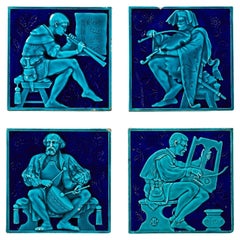
Set of 4 Minton Tiles Attributed to Edward Hammond
By Minton
Located in Wormelow, Herefordshire
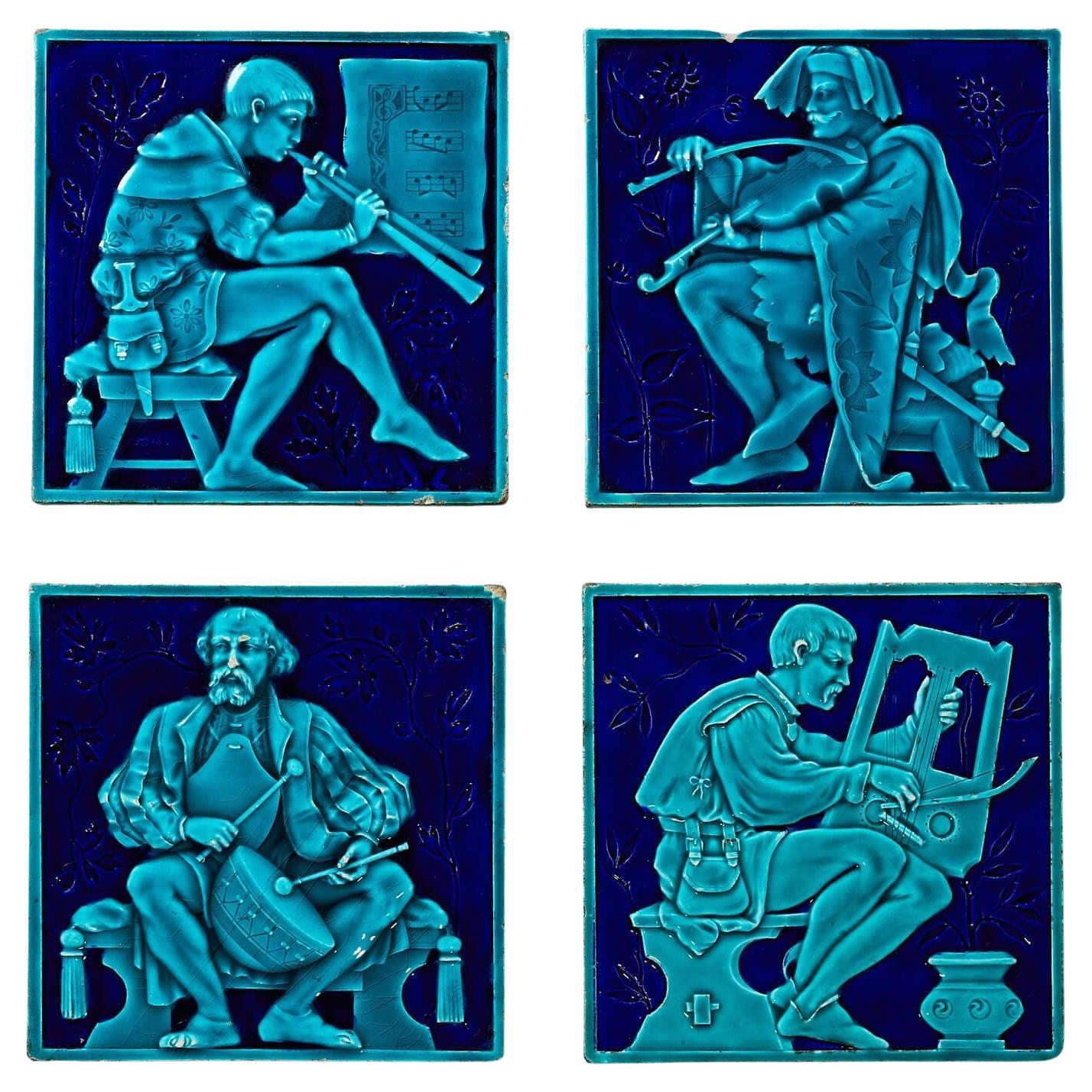
A set of four 19th Century Mintons tile attributed to the artist Edward Hammond. Modelled in relief, each 8-inch tile is decorated with a different musician in medieval dress picked...
Category

Antique Late 19th Century English Medieval Flooring

Materials

Clay

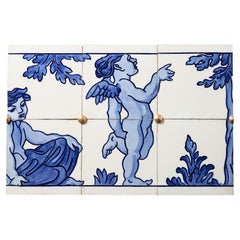
Minton Hollins 19th Century Renaissance Style Tiled Frieze
By Minton
Located in Wormelow, Herefordshire
A set of 6 antique dust-pressed ceramic tiles by Minton Hollins (stamped) creating a decorative blue and white glazed frieze panel. Together, the tiles depicts a renaissance style sc...
Category

Antique Late 19th Century English Neoclassical Mounted Objects

Materials

Clay

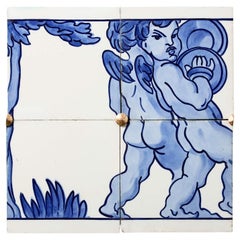
Minton Hollins Antique Neoclassical Style Tiled Frieze Panel
By Minton
Located in Wormelow, Herefordshire
A set of 4 antique dust-pressed ceramic tiles by Minton Hollins (stamped) creating a decorative blue and white glazed frieze panel depicting a pair of neoclassical style winged cheru...
Category

Antique Late 19th Century Dutch Neoclassical Mounted Objects

Materials

Ceramic

Collection of Nine Antique Delft Tiles
Located in Wormelow, Herefordshire
A collection of nine 5-inch antique Delft tiles depicting Dutch scenes with windmills, maidens and soldiers, all of which are in expressive blue colourin...
Category

Antique Late 18th Century Dutch Jacobean Architectural Elements

Materials

Clay

Set of 18th Century Transfer Printed Liverpool Delft Tiles
Located in Wormelow, Herefordshire
A set of three mid-18th century Delft style tiles by Sadler & Green of Liverpool dating from circa 1765. Ex. private British collection, these decorative antique tiles are each tra...
Category

Antique Mid-18th Century English Georgian Mounted Objects

Materials

Clay

Set of 9 Minton Co Encaustic Floor Tiles
By Minton
Located in Wormelow, Herefordshire
A set of 9 reclaimed Minton encaustic floor tiles ideal for a period cottage or townhouse. The set comprises of nine 6-inch by 6-inch tiles in Pugin style with a repeating white and ...
Category

Antique Mid-19th Century English Victorian Architectural Elements

Materials

Clay

You May Also Like

Set of Six Antique 19th Century Hand Painted Minton Earthenware Ceramic Tiles
By Minton
Located in Hamilton, Ontario
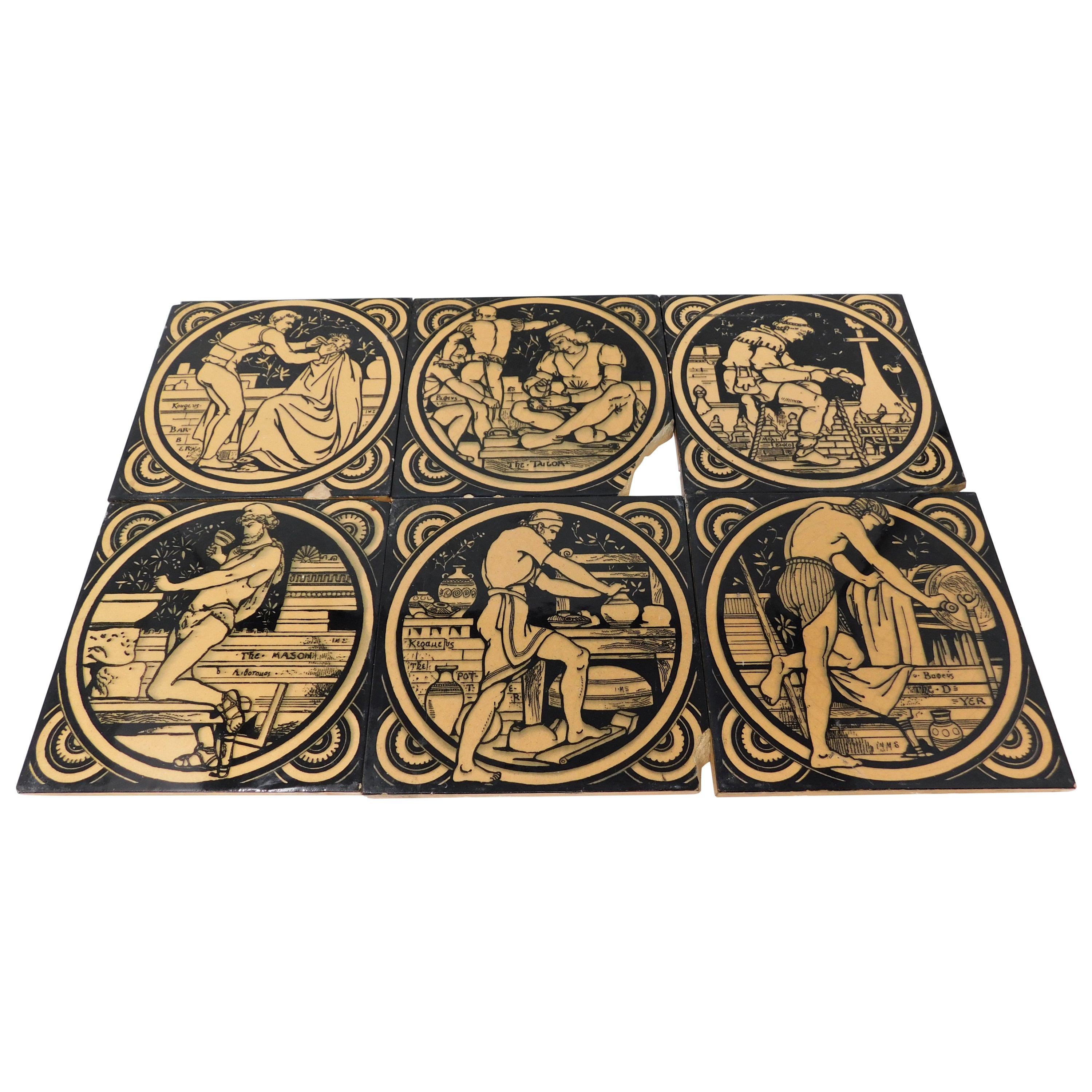
A set of six (one bonus tile thrown in of a double but in bad condition) Victorian hand painted Minton China Works in Stoke-upon-Trent, England, English tiles designed by John Moyr Smith...
Category

Antique Late 19th Century English Victorian Ceramics

Materials

Ceramic, Earthenware

Ancient Maiolica Tiles, Ambrogette, Rampini Manufactory, Pavia, 1693-1704
By Siro Antonio Africa
Located in Milano, IT
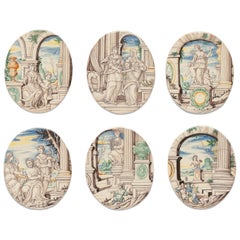
Six maiolica “ambrogette” (tiles) Rampini manufactory, painter probably Siro Antonio Africa Pavia, 1693-1704 a) 6.88 x 5.51 in (17.5 x 14 cm); 0.55 lb (252 g) b) 7.08 x 5.70 in (18 x 14.5 cm); 0.51 lb (233 g) c) 6.88 x 5.70 in (17.5 x 14.5 cm); 0.54 lb (245 g) d) 6.81 x 5.51 in (17.3 x 14 cm); 0.50 lb (230 g) e) 6.88 x 5.51 in (17.5 x 14 cm); 0.50 lb (229 g) f) 7.08 x 5.70 in (18 x 14.5 cm); 0.51 lb (233 g) State of conservation: intact. These six ”maiolica fina” small “ambrogette” belong to a family of ceramic works considered among the finest produced between the 17th and 18th centuries. For a long time, this type of maiolica was attributed to the Venetian village of Angarano, but later it was definitively attributed to the pottery factories in Pavia. A fundamental study ascribed this production specifically to Pavia through an analysis of Lombard collections and a comparison with archaeological remains found near the two main manufacturing sites in the city. (E. Pelizzoni - M. Forni - S. Nepoti, La maiolica di Pavia tra Seicento e Settecento, Milano 1997). The six small oval tiles have rounded edges and are decorated with a historiated motif. They were created using high-fired polychrome technique, with a predominance of cool tones and a dominance of gray and blue, interspersed with manganese, citrine yellow, orange-yellow, and green. The six small “ambrogette” are characterized by the same stylistic features, with a similar decorative design. The first tile (a) depicts a female figure, holding a stiletto and sitting near a pedestal supporting a relief-decorated baluster vase. Behind her, a child is holding a chalice, while through the arches of a portico, a glimpse of a mountainous landscape can be seen in the background. The female figure could possibly be Lucretia, an example of virtue in ancient Roman culture. In the second “ambrogetta” b), the Biblical episode of Judith and Holofernes is depicted through canonical iconography: the decapitated body of Holofernes lies on the bed in the background, while the protagonist, Judith, is seen placing his head into a sack held by a maidservant. Through an archway a shining slice of the moon gives the perception of nighttime. Surprisingly, within the narrative, there is the presence of a basin in the shape of a large shell, closely resembling the products of Pavia's factories. The third small plaque (c) depicts a female figure standing on a plinth and framed by an architectural arch with a vast mountainous landscape in the background. The woman, with her breasts exposed, is accompanied by two children: one approaching her as if wanting to be picked up, and the other seated with an apple in his hand. The protagonist lends herself to different interpretations: perhaps she represents Rea Silvia with the two twin founders of Rome, or perhaps she is an allegory for the Pietà, a common theme depicted on maiolica. In the fourth tile (d), three characters are depicted near a column. The main figure is an old man with a sad expression, holding a cup, while a woman, wearing a turban on her head, also holds a cup in her right hand and a pitcher in her left. A second woman with her hair bound holds another pitcher behind the old man: at his feet a traveller's bag can be seen, along with some apples and a slice of cheese on a rectangular base. It is likely the sad Biblical episode of Lot and his daughters...
Category

Antique Early 1700s Italian Baroque Ceramics

Materials

Maiolica

Set Four Dutch Manganese Biblical Pottery Tiles, 18th Century
Located in Bishop s Stortford, Hertfordshire
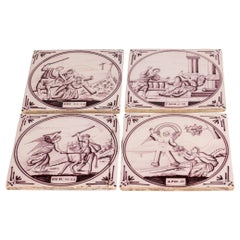
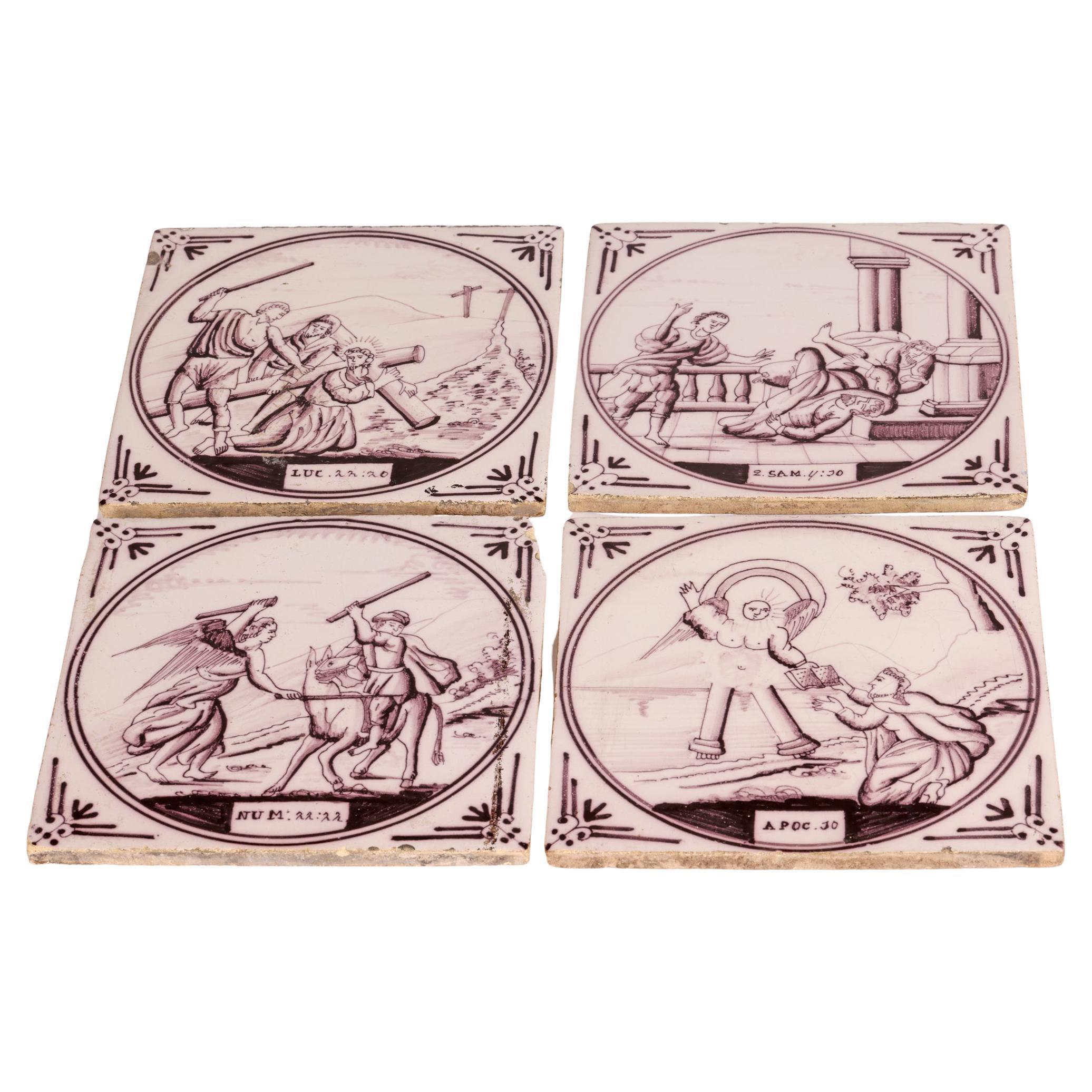
A wonderful set of four antique Dutch ‘Delft’ style manganese tiles hand decorated with biblical scenes probably originating from Rotterdam and dating f...
Category

Antique 18th Century Dutch Arts and Crafts Ceramics

Materials

Ceramic

Set of Four Antique 19th Century European Hand Painted Tiles in Wooden Frame
Located in New Orleans, LA
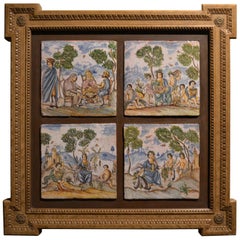
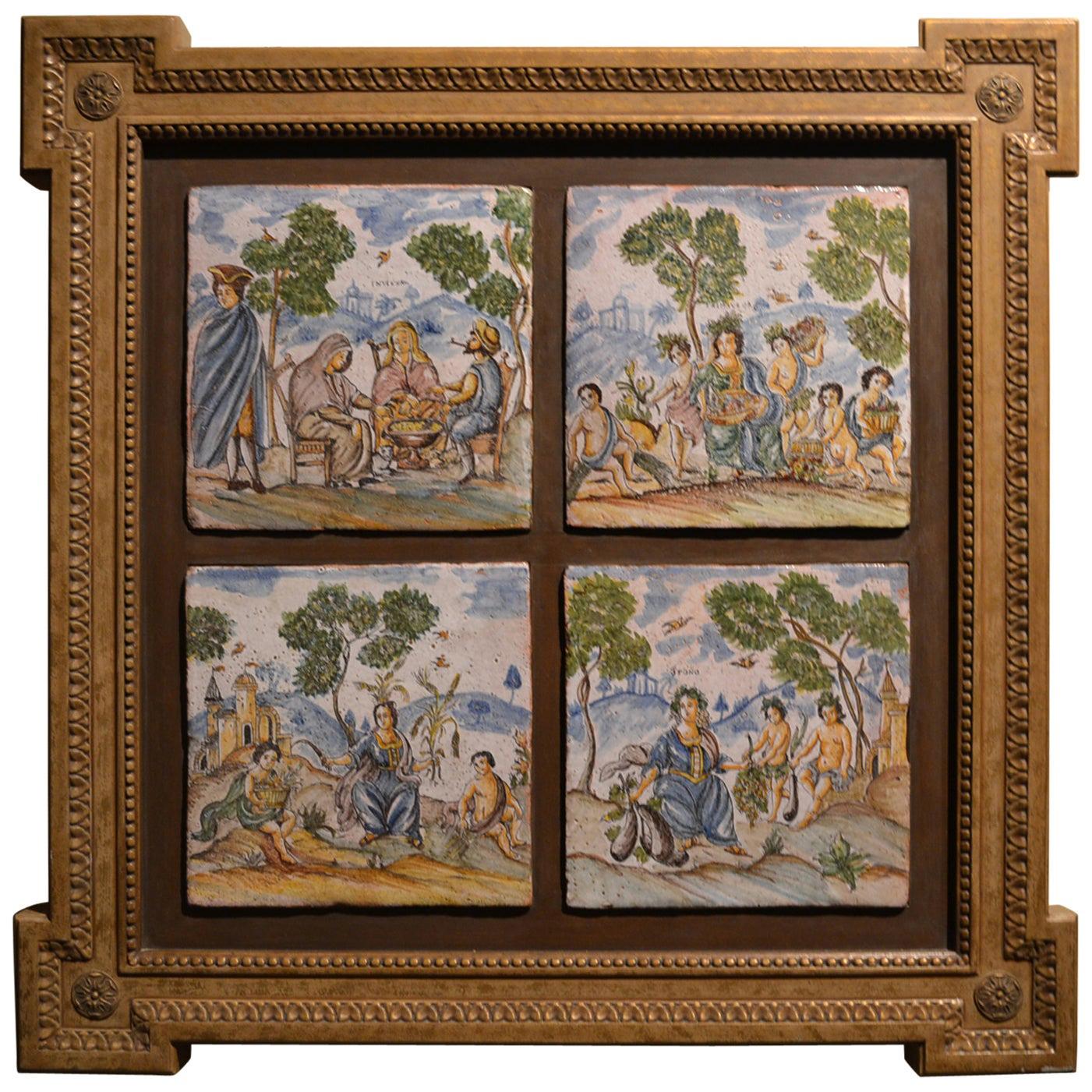
Set of four antique 19th century European hand painted porcelain tiles in wooden frame.
Category

Antique 19th Century European Decorative Art

Materials

Porcelain

Set of 6 Old Dutch Hand Painted Delft Tiles by Royal Tichelaar Makkum, c. 1880
By Royal Tichelaar Makkum
Located in Kenilworth, IL
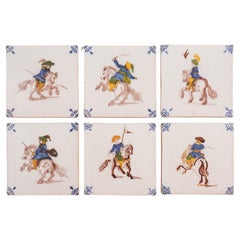
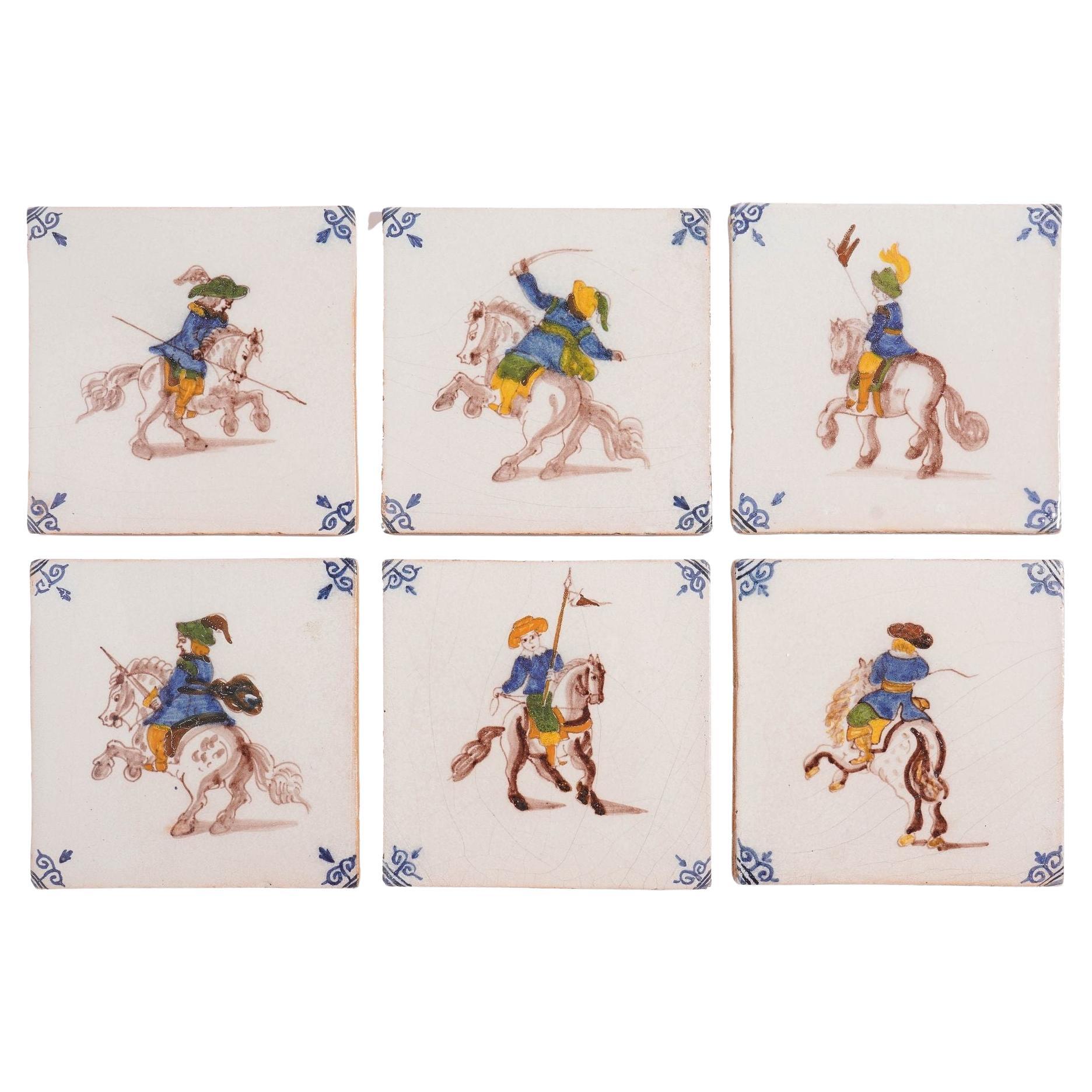
Set of six old Dutch hand painted ceramic tiles attributed to Royal Tichelaar Makkum featuring scenes of equestrian cavaliers. Netherlands, late 1800's. Dimensions: 5-1/4" Square x ...
Category

Antique Late 19th Century Dutch Architectural Elements

Materials

Faience

Set of 6 Polychrome Dutch Delft Tiles with Ornamental Design
Located in AMSTERDAM, NH
A set of 6 polychrome Dutch Delft tiles with ornamental design. Made in Haarlem, The Netherlands. Circa 1625 - 1650. A panel of six colourful o...
Category

Antique Early 17th Century Dutch Delft and Faience

Materials

Ceramic