Baroque Decorative Art
to
44
105
84
187
2
1
Height
to
Width
to
1,463
947
345
338
307
239
194
190
116
93
92
68
63
54
45
35
31
28
96
48
43
3
17
10
13
5
3
2
91
38
37
36
34
184
72
21
21
18
190
189
189
7
4
3
2
2
Style: Baroque
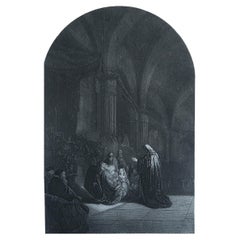
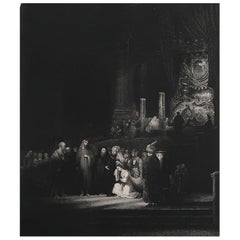
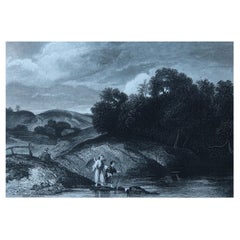
Antique Print After Rembrandt, The Presentation In The Temple, C.1850
Located in St Annes, Lancashire
Wonderful image after Rembrandt
Fine Steel engraving.
Published by Blackie & Sons London. C.1850
Unframed.
Category
1850s English Antique Baroque Decorative Art
Materials
Paper
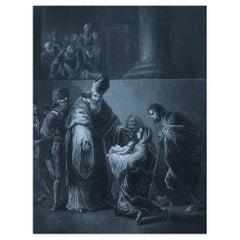
Antique Print After Rembrandt, the Presentation in the Temple, C.1850
Located in St Annes, Lancashire
Wonderful image after Rembrandt
Fine steel engraving. With a highly decorative border.
Published C.1850
Unframed.
Category
1850s English Antique Baroque Decorative Art
Materials
Paper
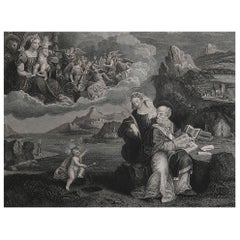
Original Antique Print of The Vision of St Augustine After Garofalo. C.1840
Located in St Annes, Lancashire
Wonderful image after Garofalo
Fine Steel engraving.
Published by Jones C.1840
Unframed.
Category
1840s English Antique Baroque Decorative Art
Materials
Paper
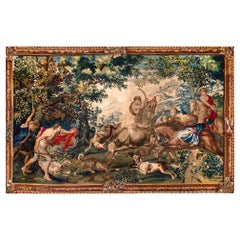
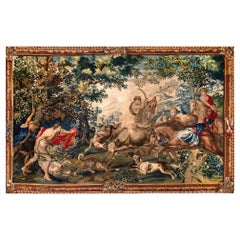
Magnificent Flemish Historical Tapestry the Bull Hunting, 17th Century
Located in Rome, IT
outstanding tapestry in wool and silk, Bruxelles, second half of the 17th century.
Depicting a detailed scene of The Bull Hunting. On the background of the landscape the Monument of ...
Category
17th Century Belgian Antique Baroque Decorative Art
Materials
Tapestry
Large
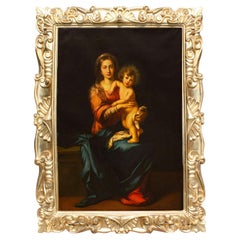
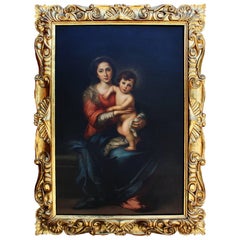
Impressive Oil on Canvas "Madonna
Child" After Murillo - V. Bianchini
Located in Los Angeles, CA
A Large and Impressive Early 20th Century Oil on Canvas "Madonna and Child" After Bartolomé Esteban Murillo (Spanish, 1618-1682) depicting a seated Virgin Mary with a baby Jesus Chri...
Category
1910s Italian Vintage Baroque Decorative Art
Materials
Canvas, Giltwood
Period Rectangular Giltwood Italian Salvator Rosa Style Frame
Located in Roma, IT
Salvator Rosa last 17th century giltwood frame.
Internal measurements cm 24 x 32.5
Pure example of Italian Salvator Rosa gild wood frame of 17th century.
"Salvator Rosa" is the famo...
Category
Late 17th Century Italian Antique Baroque Decorative Art
Materials
Wood
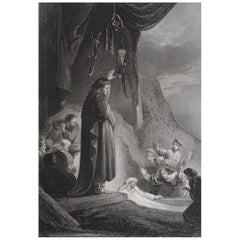
Original Antique Print After Rembrandt, the Raising of Lazarus, Dated 1842
Located in St Annes, Lancashire
Wonderful image after Rembrandt
Fine Steel engraving.
Published by Fisher, London, Dated 1842
Unframed.
Category
1840s English Antique Baroque Decorative Art
Materials
Paper
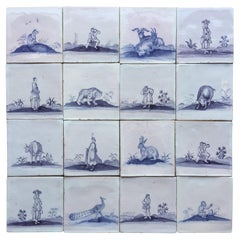
Set of 16 Blue and White Delft Tiles with Animals and Figures, 18th Century
Located in AMSTERDAM, NH
Germany
Ansbach
18th century
A set of 16 blue and white, with manganese tint, tiles with decorations of animals and figures.
Very fine painting and much detail in the animals and fi...
Category
Mid-18th Century German Antique Baroque Decorative Art
Materials
Ceramic, Faience, Majolica
Antique Print After Rembrandt, the Woman Taken in Adultery, C.1850
Located in St Annes, Lancashire
Wonderful image after Rembrandt
Fine Steel engraving.
Published by Jones & Co., London. C.1850
Unframed.
Category
1850s English Antique Baroque Decorative Art
Materials
Paper
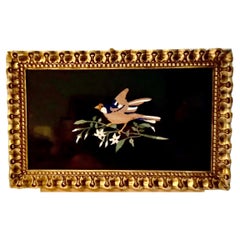
Vintage Italian Grand Tour Style Pietra Dura Mosaic Plaque, Framed 2
Located in Bradenton, FL
A beautiful Italian grand Tour Style Pietra Dura mosaic on marble Plaque with gilt framing. Picture is a bird on branch with leaves and flowers.
Category
Early 20th Century Italian Baroque Decorative Art
Materials
Marble
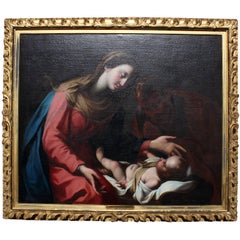
Italian 18th Century Oil on Canvas "Madonna and Child" after Giovanni Lanfranco
By Giovanni Lanfranco
Located in Los Angeles, CA
A very fine Italian 18th century oil on canvas "Madonna and Child" after Giovanni Lanfranco (Italian, 1582-1647). The young Virgin Mary attending to...
Category
18th Century Italian Antique Baroque Decorative Art
Materials
Canvas, Giltwood
$19,850 Sale Price
39% Off
Attributed to Giorgio Lucchesi, Oil on Canvas "Madonna
Child" After Murillo
Located in Los Angeles, CA
Attributed to Giorgio Lucchesi (1855-1941) A large and impressive early 20th century oil on canvas "Madonna and Child" after Bartolomé Esteban Murillo...
Category
1910s Italian Vintage Baroque Decorative Art
Materials
Canvas, Giltwood
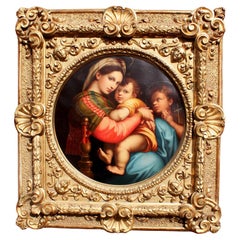
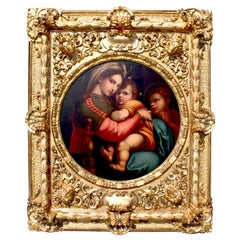
After Raffaello Sanzio 1483-1520 Raphael La Madonna Della Seggiola Oil on Canvas
Located in Los Angeles, CA
A fine Italian 19th century oil painting on canvas "La Madonna della Seggiola" after Raphael (Raffaello Sanzio da Urbino 1483-1520). The circular painted canvas depicting a seated Ma...
Category
Late 19th Century Italian Antique Baroque Decorative Art
Materials
Canvas, Giltwood
$18,950 Sale Price
42% Off
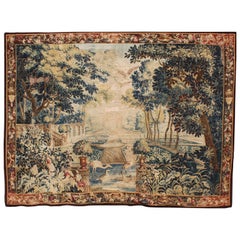
Magnificent Flemish Historical Tapestry the Bull Hunting, 17th Century
Located in Rome, IT
outstanding tapestry in wool and silk, Bruxelles, second half of the 17th century.
Depicting a detailed scene of The Bull Hunting. On the background of the landscape the Monument of ...
Category
17th Century Belgian Antique Baroque Decorative Art
Materials
Tapestry
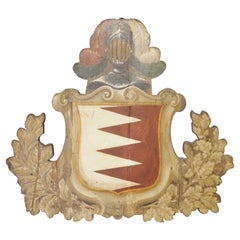
Large Painted Antique Tuscan Cartouche Panel, 18th Century
Located in Dallas, TX
This large cartouche panel was carved from wood and hand-painted with a central coat of arms in Italy during the 1700’s. Inspired by a 16th century Fr...
Category
18th Century Italian Antique Baroque Decorative Art
Materials
Wood
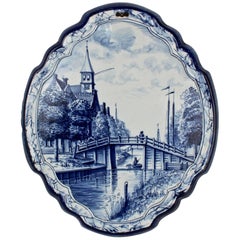
Antique Blue and White Dutch Delft Pottery Wall Plaque with Canal Scene
Located in Philadelphia, PA
A good, signed, antique Dutch delft wall plaque with shaped edge in lozenge form.
It depicts an early canal scene with bridge (and town in the bac...
Category
19th Century Dutch Antique Baroque Decorative Art
Materials
Pottery
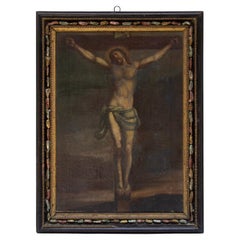
17th Century Italian Painting of the Crucifixion of Christ in Original Frame
By Interi
Located in Dublin, Dalkey
17th century Italian painting of the crucifixion of Christ on canvas in its original wood frame and adorned with naturally formed baroque...
Category
17th Century Italian Antique Baroque Decorative Art
Materials
Wood, Paint
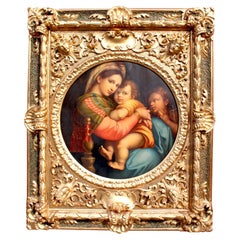
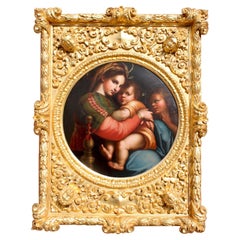
After Raffaello Sanzio 1483-1520 Raphael La Madonna della Seggiola Oil on Canvas
Located in Los Angeles, CA
A Fine Italian 19th Century Oil Painting on Canvas "La Madonna della Seggiola" after Raphael (Raffaello Sanzio da Urbino 1483-1520). The circular painted canvas depicting a seated Madonna holding an infant Jesus Christ next to a child Saint John the Baptist, all within a massive carved gilt wood and gesso frame, which is identical to the frame on Raphael's original artwork. This painting is a 19th Century copy of Raphael's Madonna della Seggiola painted in 1514 and currently exhibited and part of the permanent collection at the Palazzo Pitti, Galleria Palatina, Florence, Italy. The bodies of the Virgin, Christ, and the boy Baptist fill the whole picture. The tender, natural looking embrace of the Mother and Child, and the harmonious grouping of the figures in the round, have made this one of Raphael's most popular Madonnas. The isolated chair leg is reminiscent of papal furniture, which has led to the assumption that Leo X himself commissioned the painting. A retailer's label reads " Fred K/ Keer's Sons - Framers and Fine Art Dealers - 917 Broad St. Newark, N.J." - Another label from the gilder reads "Carlo Bartolini - Doratore e Verniciatori - Via Maggio 1924 - Firenze". Circa: 1890-1900.
Subject: Religious painting
Canvas diameter: 28 inches (71.1 cm)
Frame height: 54 inches (137.2 cm)
Frame width: 42 1/2 inches (108 cm)
Frame depth: 5 1/2 inches (14 cm)
Raffaello Sanzio da Urbino (Italian, March 28 or April 6, 1483 - April 6, 1520), known as Raphael, was an Italian painter and architect of the High Renaissance. His work is admired for its clarity of form, ease of composition, and visual achievement of the Neoplatonic ideal of human grandeur. Together with Michelangelo and Leonardo da Vinci, he forms the traditional trinity of great masters of that period.
Raphael was enormously productive, running an unusually large workshop and, despite his death at 37, leaving a large body of work. Many of his works are found in the Vatican Palace, where the frescoed Raphael Rooms were the central, and the largest, work of his career. The best known work is The School of Athens in the Vatican Stanza della Segnatura. After his early years in Rome much of his work was executed by his workshop from his drawings, with considerable loss of quality. He was extremely influential in his lifetime, though outside Rome his work was mostly known from his collaborative printmaking.
After his death, the influence of his great rival Michelangelo was more widespread until the 18th and 19th centuries, when Raphael's more serene and harmonious qualities were again regarded as the highest models. His career falls naturally into three phases and three styles, first described by Giorgio Vasari: his early years in Umbria, then a period of about four years (1504–1508) absorbing the artistic traditions of Florence, followed by his last hectic and triumphant twelve years in Rome, working for two Popes and their close associates.
Raphael was born in the small but artistically significant central Italian city of Urbino in the Marche region, where his father Giovanni Santi was court painter to the Duke. The reputation of the court had been established by Federico III da Montefeltro, a highly successful condottiere who had been created Duke of Urbino by the Pope - Urbino formed part of the Papal States - and who died the year before Raphael was born. The emphasis of Federico's court was rather more literary than artistic, but Giovanni Santi was a poet of sorts as well as a painter, and had written a rhymed chronicle of the life of Federico, and both wrote the texts and produced the decor for masque-like court entertainments. His poem to Federico shows him as keen to show awareness of the most advanced North Italian painters, and Early Netherlandish artists as well. In the very small court of Urbino he was probably more integrated into the central circle of the ruling family than most court painters.
Federico was succeeded by his son Guidobaldo da Montefeltro, who married Elisabetta Gonzaga, daughter of the ruler of Mantua, the most brilliant of the smaller Italian courts for both music and the visual arts. Under them, the court continued as a centre for literary culture. Growing up in the circle of this small court gave Raphael the excellent manners and social skills stressed by Vasari. Court life in Urbino at just after this period was to become set as the model of the virtues of the Italian humanist court through Baldassare Castiglione's depiction of it in his classic work The Book of the Courtier, published in 1528. Castiglione moved to Urbino in 1504, when Raphael was no longer based there but frequently visited, and they became good friends. He became close to other regular visitors to the court: Pietro Bibbiena and Pietro Bembo, both later cardinals, were already becoming well known as writers, and would be in Rome during Raphael's period there. Raphael mixed easily in the highest circles throughout his life, one of the factors that tended to give a misleading impression of effortlessness to his career. He did not receive a full humanistic education however; it is unclear how easily he read Latin.
Early Life and Works
His mother Màgia died in 1491 when Raphael was eight, followed on August 1, 1494 by his father, who had already remarried. Raphael was thus orphaned at eleven; his formal guardian became his only paternal uncle Bartolomeo, a priest, who subsequently engaged in litigation with his stepmother. He probably continued to live with his stepmother when not staying as an apprentice with a master. He had already shown talent, according to Vasari, who says that Raphael had been "a great help to his father". A self-portrait drawing from his teenage years shows his precocity. His father's workshop continued and, probably together with his stepmother, Raphael evidently played a part in managing it from a very early age. In Urbino, he came into contact with the works of Paolo Uccello, previously the court painter (d. 1475), and Luca Signorelli, who until 1498 was based in nearby Città di Castello.
According to Vasari, his father placed him in the workshop of the Umbrian master Pietro Perugino as an apprentice "despite the tears of his mother". The evidence of an apprenticeship comes only from Vasari and another source, and has been disputed—eight was very early for an apprenticeship to begin. An alternative theory is that he received at least some training from Timoteo Viti, who acted as court painter in Urbino from 1495.Most modern historians agree that Raphael at least worked as an assistant to Perugino from around 1500; the influence of Perugino on Raphael's early work is very clear: "probably no other pupil of genius has ever absorbed so much of his master's teaching as Raphael did", according to Wölfflin. Vasari wrote that it was impossible to distinguish between their hands at this period, but many modern art historians claim to do better and detect his hand in specific areas of works by Perugino or his workshop. Apart from stylistic closeness, their techniques are very similar as well, for example having paint applied thickly, using an oil varnish medium, in shadows and darker garments, but very thinly on flesh areas. An excess of resin in the varnish often causes cracking of areas of paint in the works of both masters. The Perugino workshop was active in both Perugia and Florence, perhaps maintaining two permanent branches. Raphael is described as a "master", that is to say fully trained, in December 1500.
His first documented work was the Baronci altarpiece for the church of Saint Nicholas of Tolentino in Città di Castello, a town halfway between Perugia and Urbino. Evangelista da Pian di Meleto, who had worked for his father, was also named in the commission. It was commissioned in 1500 and finished in 1501; now only some cut sections and a preparatory drawing remain. In the following years he painted works for other churches there, including the Mond Crucifixion (about 1503) and the Brera Wedding of the Virgin (1504), and for Perugia, such as the Oddi Altarpiece. He very probably also visited Florence in this period. These are large works, some in fresco, where Raphael confidently marshals his compositions in the somewhat static style of Perugino. He also painted many small and exquisite cabinet paintings in these years, probably mostly for the connoisseurs in the Urbino court, like the Three Graces and St. Michael, and he began to paint Madonnas and portraits. In 1502 he went to Siena at the invitation of another pupil of Perugino, Pinturicchio, "being a friend of Raphael and knowing him to be a draughtsman of the highest quality" to help with the cartoons, and very likely the designs, for a fresco series in the Piccolomini Library in Siena Cathedral. He was evidently already much in demand even at this early stage in his career.
Influence of Florence
Raphael led a "nomadic" life, working in various centres in Northern Italy, but spent a good deal of time in Florence, perhaps from about 1504. Although there is traditional reference to a "Florentine period...
Category
Early 1900s Italian Antique Baroque Decorative Art
Materials
Canvas, Giltwood
$19,850 Sale Price
39% Off
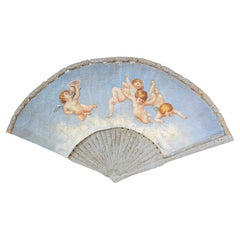
Large 19th Century French Decorative Fan with Chubby Angels on Blue Sky
Located in Atlanta, GA
This stunning 19th-century French decorative fan is a testament to exquisite craftsmanship and artistic elegance. The fan leaf is meticulously hand-painted on vellum or silk, featuri...
Category
19th Century French Antique Baroque Decorative Art
Materials
Bone, Silk, Paint
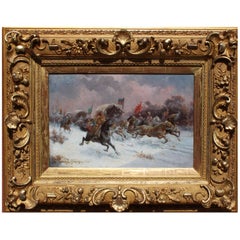
Adolf Constantin Baumgartner Stoiloff Oil on Board Cossacks Warriors on Horsback
By Adolf Constantin Baumgartner-Stoiloff
Located in Los Angeles, CA
Adolf Constantin Baumgartner Stoiloff (Austrian/Russian, 1850-1924) a fine oil on board "Charging Cossack Warriors on Horseback" within an ornate giltwood frame, circa 1890
Born in 1850 in Linz (Austria) Stoiloff died in Vienna in 1924. According to a research of Russian literature, he studied in the 1880s at St. Petersburg Imperial Academy of Fine Arts. He was very well known for his Russian horse...
Category
Late 19th Century Russian Antique Baroque Decorative Art
Materials
Gesso, Canvas, Giltwood, Paint
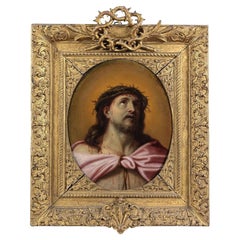
Italian 17th Century Oil on Canvas Head of Christ Crowned with Thorns, Mignard
By (circle of) Pierre Mignard
Located in Los Angeles, CA
A very fine Italian 17th century oval oil on canvas "Head of Christ Crowned with Thorns" Circle of Pierre Mignard (French, 1612-1695) within...
Category
17th Century French Antique Baroque Decorative Art
Materials
Canvas, Giltwood
$44,850 Sale Price
30% Off
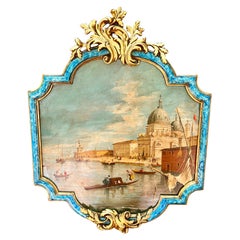
Venetian Canal Scene Set in Marbleized and Giltwood Frame
Located in Nashville, TN
Oil on board Venetian Canal Scene looking towards the mouth of The Grand Canal with Della Salute to one side .
Typical in the Grand Tour style of 18th ,19th and 20th centuries ..
Category
Mid-20th Century Italian Baroque Decorative Art
Materials
Wood
$1,600 Sale Price
27% Off
Large Flemish 17th-18th Century Baroque Pictorial Tapestry "the Royal Garden"
Located in Los Angeles, CA
A large Flemish 17th-18th century baroque pictorial tapestry "The Royal Garden". The large tapestry depicting an allegorical park-scene of R...
Category
18th Century French Antique Baroque Decorative Art
Materials
Wool, Silk
$29,850 Sale Price
37% Off
Grand Baroque Composition Made in Naples in the Mid-17th Century
Located in Budapest, HU
Grand Baroque composition made in Naples in the mid-17th century intended for the private chapel of a noble Neapolitan family. In the early nineteenth century on the finely executed ...
Category
Mid-17th Century Italian Antique Baroque Decorative Art
Materials
Wood
$19,019 Sale Price
42% Off
After Raffaello Sanzio 1483-1520 Raphael La Madonna della Seggiola Oil on Canvas
Located in Los Angeles, CA
A Fine Italian 19th Century Oil Painting on Canvas "La Madonna della Seggiola" after Raphael (Raffaello Sanzio da Urbino 1483-1520). The circular painted canvas depicting a seated Madonna holding an infant Jesus Christ next to a child Saint John the Baptist, all within a massive carved two-tone gilt wood, gilt-patinated and gesso frame, which is identical to the frame on Raphael's original artwork. This painting is a 19th Century copy of Raphael's Madonna della Seggiola painted in 1514 and currently exhibited and part of the permanent collection at the Palazzo Pitti, Galleria Palatina, Florence, Italy. The bodies of the Virgin, Christ, and the boy Baptist fill the whole picture. The tender, natural looking embrace of the Mother and Child, and the harmonious grouping of the figures in the round, have made this one of Raphael's most popular Madonnas. The isolated chair leg is reminiscent of papal furniture, which has led to the assumption that Leo X himself commissioned the painting. Circa: 1890-1900.
Subject: Religious painting
Painting diameter: 28 inches (71.1 cm)
Frame height: 55 1/8 inches (140 cm)
Frame width: 46 inches (116.8 cm)
Frame depth: 5 1/8 inches (13 cm)
Raffaello Sanzio da Urbino (Italian, March 28 or April 6, 1483 - April 6, 1520), known as Raphael, was an Italian painter and architect of the High Renaissance. His work is admired for its clarity of form, ease of composition, and visual achievement of the Neoplatonic ideal of human grandeur. Together with Michelangelo and Leonardo da Vinci, he forms the traditional trinity of great masters of that period.
Raphael was enormously productive, running an unusually large workshop and, despite his death at 37, leaving a large body of work. Many of his works are found in the Vatican Palace, where the frescoed Raphael Rooms were the central, and the largest, work of his career. The best known work is The School of Athens in the Vatican Stanza della Segnatura. After his early years in Rome much of his work was executed by his workshop from his drawings, with considerable loss of quality. He was extremely influential in his lifetime, though outside Rome his work was mostly known from his collaborative printmaking.
After his death, the influence of his great rival Michelangelo was more widespread until the 18th and 19th centuries, when Raphael's more serene and harmonious qualities were again regarded as the highest models. His career falls naturally into three phases and three styles, first described by Giorgio Vasari: his early years in Umbria, then a period of about four years (1504–1508) absorbing the artistic traditions of Florence, followed by his last hectic and triumphant twelve years in Rome, working for two Popes and their close associates.
Raphael was born in the small but artistically significant central Italian city of Urbino in the Marche region, where his father Giovanni Santi was court painter to the Duke. The reputation of the court had been established by Federico III da Montefeltro, a highly successful condottiere who had been created Duke of Urbino by the Pope - Urbino formed part of the Papal States - and who died the year before Raphael was born. The emphasis of Federico's court was rather more literary than artistic, but Giovanni Santi was a poet of sorts as well as a painter, and had written a rhymed chronicle of the life of Federico, and both wrote the texts and produced the decor for masque-like court entertainments. His poem to Federico shows him as keen to show awareness of the most advanced North Italian painters, and Early Netherlandish artists as well. In the very small court of Urbino he was probably more integrated into the central circle of the ruling family than most court painters.
Federico was succeeded by his son Guidobaldo da Montefeltro, who married Elisabetta Gonzaga, daughter of the ruler of Mantua, the most brilliant of the smaller Italian courts for both music and the visual arts. Under them, the court continued as a centre for literary culture. Growing up in the circle of this small court gave Raphael the excellent manners and social skills stressed by Vasari. Court life in Urbino at just after this period was to become set as the model of the virtues of the Italian humanist court through Baldassare Castiglione's depiction of it in his classic work The Book of the Courtier, published in 1528. Castiglione moved to Urbino in 1504, when Raphael was no longer based there but frequently visited, and they became good friends. He became close to other regular visitors to the court: Pietro Bibbiena and Pietro Bembo, both later cardinals, were already becoming well known as writers, and would be in Rome during Raphael's period there. Raphael mixed easily in the highest circles throughout his life, one of the factors that tended to give a misleading impression of effortlessness to his career. He did not receive a full humanistic education however; it is unclear how easily he read Latin.
Early Life and Works
His mother Màgia died in 1491 when Raphael was eight, followed on August 1, 1494 by his father, who had already remarried. Raphael was thus orphaned at eleven; his formal guardian became his only paternal uncle Bartolomeo, a priest, who subsequently engaged in litigation with his stepmother. He probably continued to live with his stepmother when not staying as an apprentice with a master. He had already shown talent, according to Vasari, who says that Raphael had been "a great help to his father". A self-portrait drawing from his teenage years shows his precocity. His father's workshop continued and, probably together with his stepmother, Raphael evidently played a part in managing it from a very early age. In Urbino, he came into contact with the works of Paolo Uccello, previously the court painter (d. 1475), and Luca Signorelli, who until 1498 was based in nearby Città di Castello.
According to Vasari, his father placed him in the workshop of the Umbrian master Pietro Perugino as an apprentice "despite the tears of his mother". The evidence of an apprenticeship comes only from Vasari and another source, and has been disputed—eight was very early for an apprenticeship to begin. An alternative theory is that he received at least some training from Timoteo Viti, who acted as court painter in Urbino from 1495.Most modern historians agree that Raphael at least worked as an assistant to Perugino from around 1500; the influence of Perugino on Raphael's early work is very clear: "probably no other pupil of genius has ever absorbed so much of his master's teaching as Raphael did", according to Wölfflin. Vasari wrote that it was impossible to distinguish between their hands at this period, but many modern art historians claim to do better and detect his hand in specific areas of works by Perugino or his workshop. Apart from stylistic closeness, their techniques are very similar as well, for example having paint applied thickly, using an oil varnish medium, in shadows and darker garments, but very thinly on flesh areas. An excess of resin in the varnish often causes cracking of areas of paint in the works of both masters. The Perugino workshop was active in both Perugia and Florence, perhaps maintaining two permanent branches. Raphael is described as a "master", that is to say fully trained, in December 1500.
His first documented work was the Baronci altarpiece for the church of Saint Nicholas of Tolentino in Città di Castello, a town halfway between Perugia and Urbino. Evangelista da Pian di Meleto, who had worked for his father, was also named in the commission. It was commissioned in 1500 and finished in 1501; now only some cut sections and a preparatory drawing remain. In the following years he painted works for other churches there, including the Mond Crucifixion (about 1503) and the Brera Wedding of the Virgin (1504), and for Perugia, such as the Oddi Altarpiece. He very probably also visited Florence in this period. These are large works, some in fresco, where Raphael confidently marshals his compositions in the somewhat static style of Perugino. He also painted many small and exquisite cabinet paintings in these years, probably mostly for the connoisseurs in the Urbino court, like the Three Graces and St. Michael, and he began to paint Madonnas and portraits. In 1502 he went to Siena at the invitation of another pupil of Perugino, Pinturicchio, "being a friend of Raphael and knowing him to be a draughtsman of the highest quality" to help with the cartoons, and very likely the designs, for a fresco series in the Piccolomini Library in Siena Cathedral. He was evidently already much in demand even at this early stage in his career.
Influence of Florence
Raphael led a "nomadic" life, working in various centres in Northern Italy, but spent a good deal of time in Florence, perhaps from about 1504. Although there is traditional reference to a "Florentine period...
Category
Early 1900s Italian Antique Baroque Decorative Art
Materials
Canvas, Giltwood
$19,880 Sale Price
20% Off
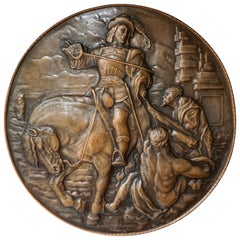
Very Large Copper Wall Plate Depiction Saint Martin on Horse in Relief
Located in Antwerp, BE
A very large hamered copper wall plate depiction Saint Martin on horse in relief.
Signed A Louis.
Early 20th century.
Measures: Diameter 75 cm.
Category
Mid-20th Century European Baroque Decorative Art
Materials
Copper
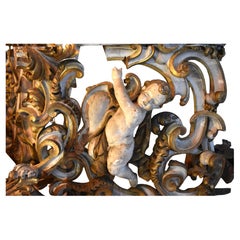
17th - 18th Century Portuguese Baroque Pine Wall Relief - Antique Décor Panel
Located in West Palm Beach, FL
An antique Portuguese wall relief or sopra porte made of Pinewood, in good condition. The Baroque wall panel was hand carved and is richly ornate wi...
Category
Late 17th Century Portuguese Antique Baroque Decorative Art
Materials
Pine, Giltwood
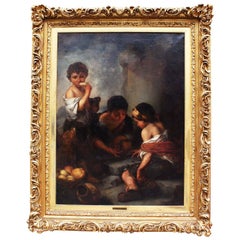
Large Oil on Canvas "Beggar Boys Playing Dice" After Bartolomé Esteban Murrillo
Located in Los Angeles, CA
A fine and large 19th century oil on canvas after Bartolomé Esteban Murrillo's (Spanish, 1617-1682) "Beggar Boys Playing Dice" (The original work by Murillo was painted in 1675). The impressive artwork depicts two young boys playing dice while another eats a piece of fruit as his dog watches on., within an ornate gildwood and gesso frame bearing a label from the faming company Bigelow & Jordan. The original work by Murillo is currently at the Alte Pinakothek Museum in Munich, Germany. The present work is signed: L. Rüber. Circa: Munich, Late 19th Century.
Bartolomé Esteban Murillo (born late December 1617, baptized January 1, 1618 – April 3, 1682) was a Spanish Baroque painter. Although he is best known for his religious works, Murillo also produced a considerable number of paintings of contemporary women and children. These lively, realist portraits of flower girls, street urchins, and beggars constitute an extensive and appealing record of the everyday life of his times.
Murillo was born to Gaspar Esteban and María Pérez Murillo. He may have been born in Seville or in Pilas, a smaller Andalusian town. It is clear that he was baptized in Seville in 1618, the youngest son in a family of fourteen. His father was a barber and surgeon. His parents died when Murillo was still very young, and the artist was largely brought up by his aunt and uncle.
Murillo began his art studies under Juan del Castillo in Seville. There he became familiar with Flemish painting and the "Treatise on Sacred Images" of Molanus (Ian van der Meulen or Molano). The great commercial importance of Seville at the time ensured that he was subject to influences from other regions. His first works were influenced by Zurbarán, Jusepe de Ribera and Alonzo Cano, and he shared their strongly realist approach. As his painting developed, his more important works evolved towards the polished style that suited the bourgeois and aristocratic tastes of the time, demonstrated especially in his Roman Catholic religious works.
In 1642, at the age of 26, he moved to Madrid, where he most likely became familiar with the work of Velázquez, and would have seen the work of Venetian and Flemish masters in the royal collections; the rich colors and softly modeled forms of his subsequent work suggest these influences. In 1645 he returned to Seville and married Beatriz Cabrera y Villalobos, with whom he eventually had eleven children.
In that year, he painted eleven canvases for the convent of St. Francisco el Grande in Seville. These works depicting the miracles of Franciscan saints vary between the Zurbaránesque tenebrism of the Ecstasy of St Francis and a softly luminous style (as in Death of St Clare...
Category
Late 19th Century German Antique Baroque Decorative Art
Materials
Gesso, Canvas, Wood
$14,850 Sale Price
40% Off
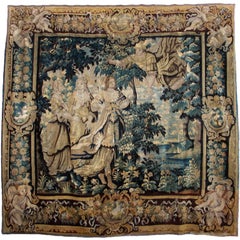
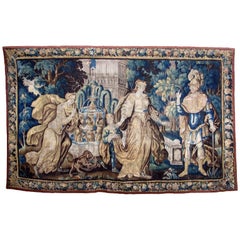
Franco-Flemish 18th Century Figural Tapestry Allegorical to "Triumph
Love"
Located in Los Angeles, CA
A very fine baroque Franco-Flemish 18th century figural tapestry allegorical to triumph and love, depicting three maidens within a verdure backgro...
Category
18th Century Belgian Antique Baroque Decorative Art
Materials
Wool
$38,450 Sale Price
48% Off
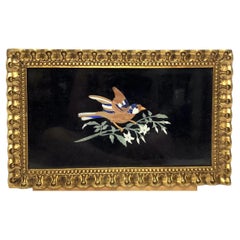
Vintage Italian Grand Tour Style Pietra Dura Mosaic Plaque, Framed 1
Located in Bradenton, FL
A Beautiful Italian grand tour style pietra dura mosaic on marble plaque with gilt framing. Picture is a bird on branch with leaves and flowers.
Category
Early 20th Century Italian Baroque Decorative Art
Materials
Marble
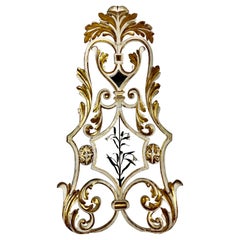
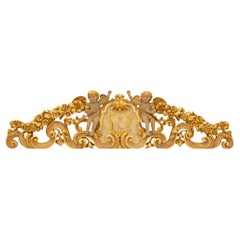
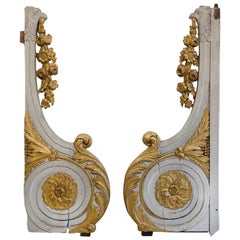
19th C. Italian Painted
Parcel Gilt Architectural Piece
Located in Los Angeles, CA
19th C. carved painted & parcel gilt architectural element. The piece is painted in antique white with 22K gold leaf details throughout. There is also a metal stem of flowers in the ...
Category
19th Century Italian Antique Baroque Decorative Art
Materials
Gold Leaf
$1,200 Sale Price
57% Off
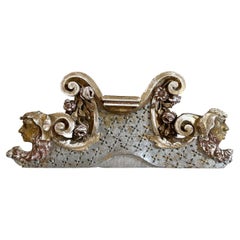
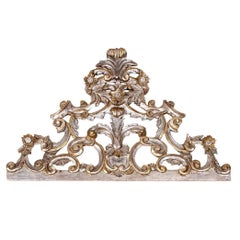
Hand-Carved Silver Giltwood Decorative Sculpture
Located in Sheffield, MA
Silver and gold gilt decorative sculpture pediment with scroll work, sunflowers and leaves. Could be used over a mirror, bed as corona or door having the right width or above headboa...
Category
20th Century Italian Baroque Decorative Art
Materials
Vermeil, Silver
$2,320 Sale Price
20% Off
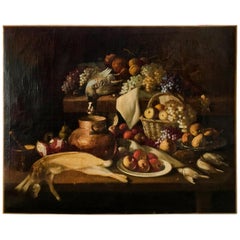
17th Century Large Dutch Painting Still Life with Fruit and Game, Oil on Canvas
Located in Vero Beach, FL
This large, old master still life painting is a perfectly balanced composition of fruit and game birds. In the foreground a rabbit is stretched out. A copper kettle and a basket are ...
Category
17th Century Dutch Antique Baroque Decorative Art
Materials
Canvas, Paint
Porcelain Wall Art in Baroque style by Alt Meissen, Germany 1950s
Located in Meulebeke, BE
Germany / 1950 / Wall art / Alt Meissen / porcelain / Baroque / Rococo
This exquisite mid-century porcelain wall plaque, produced in Germany in the 1950s by Alt Meissen, beautifull...
Category
1950s German Vintage Baroque Decorative Art
Materials
Porcelain, Wood
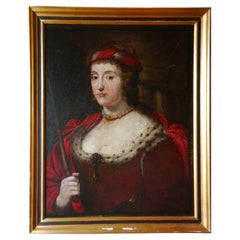
17 - 18 cent. Painting Maria Stuart Queen of Scots British Oil on canvas
Located in Malmö, SE
Antique framed British (or French?) painting of Mary, Queen of Scots (1542 -1587 AD ).
Wearing Crown and purpur Mantle, holding a Scepter.Unsigned.Presumably dates to late 1600 - e...
Category
17th Century English Antique Baroque Decorative Art
Materials
Gold, Bronze
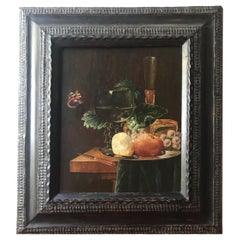
19th Century Still Life Painting After Pieter Claesz Dutch
Located in Vero Beach, FL
19th century still life painting after Pieter Claesz (1597-1660) Dutch.
This outstanding 19th century oil painting on copper shows an amazing intuitiv...
Category
Late 19th Century Dutch Antique Baroque Decorative Art
Materials
Copper
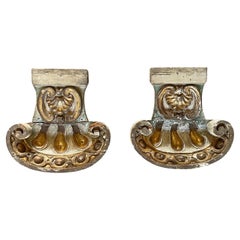
17th - 18th Century Portuguese Pair of Antique Baroque Pine Wall Reliefs, Panels
Located in West Palm Beach, FL
An antique pair of Portuguese Baroque hand carved architectural wall reliefs, enhanced by richly ornate detailed scrolls, in good condition. Original painted patina with partial gilt...
Category
Late 17th Century Portuguese Antique Baroque Decorative Art
Materials
Pine
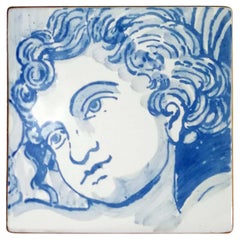
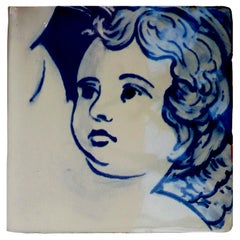
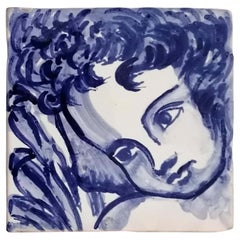
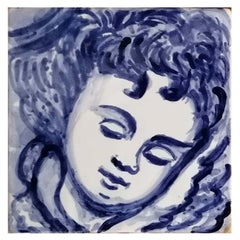
Cobalt Blue Hand-Painted Baroque Cherub or Angel Portuguese Ceramic Tile Azulejo
Located in Coimbra, PT
Gorgeous blue hand painted Baroque cherub or angel 18th century style Portuguese ceramic tile/azulejo
The tile painted in cobalt blue over white in typical 18th century Portugal set ...
Category
Late 20th Century Portuguese Baroque Decorative Art
Materials
Delft, Faience, Terracotta
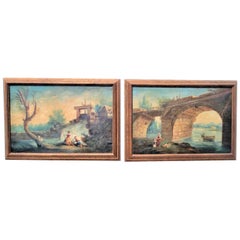
Pair of Rococo Style Landscapes After Francois Boucher Oils on Canvas
Located in Nashville, TN
Early to Mid-19th century. Very colorful.
The Bridge
The Mill
Craquelure throughout as visible in photos.
Later frames.
Later frames (mid-20th century), typical wear
Sight of ca...
Category
Early 19th Century Italian Antique Baroque Decorative Art
Materials
Canvas
$4,400 Sale Price / set
20% Off
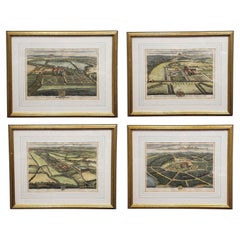
J. Kip and L. Knyff 18th Century Hand Colored Engravings, Set of 4
By Johannes Kip
Located in North Palm Beach, FL
Set of four antique hand-colored engravings. "Britannia Illustrata," the publication in which these prints originally appeared, was one of the most important topographical works of t...
Category
Mid-18th Century English Antique Baroque Decorative Art
Materials
Paper
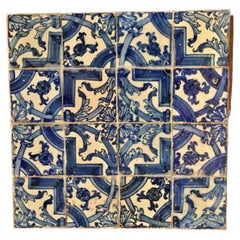
17th Century Portuguese Tile Panel
Located in Madrid, ES
Largest collection of Portuguese tiles in the world
17th Century Portuguese Tile Panel
Restored
56cm x 56cm
14cm x 14cm tiles
With certificate of authenticity and export issued by ...
Category
17th Century Portuguese Antique Baroque Decorative Art
Materials
Porcelain
After Raffaello Sanzio 1483-1520 Raphael La Madonna della Seggiola Oil on Canvas
Located in Los Angeles, CA
A fine Italian 19th century oil painting on canvas "La Madonna della Seggiola" after Raphael (Raffaello Sanzio da Urbino 1483-1520) The circular canvas depicting a seated Madonna holding an infant Jesus Christ next to a child Saint John the Baptist, all within a massive carved gilt wood and gesso frame (all high quality gilt is original) which is identical to the frame on Raphael's original artwork. This painting is a 19th Century copy of Raphael's Madonna della Seggiola painted in 1514 and currently exhibited and part of the permanent collection at the Palazzo Pitti, Galleria Palatina, Florence, Italy. The bodies of the Virgin, Christ, and the boy Baptist fill the whole picture. The tender, natural looking embrace of the Mother and Child, and the harmonious grouping of the figures in the round, have made this one of Raphael's most popular Madonnas. The isolated chair leg is reminiscent of papal furniture, which has led to the assumption that Leo X himself commissioned the painting, circa 1890-1900.
Subject: Religious painting
Measures: Canvas height: 29 1/4 inches (74.3 cm)
Canvas width: 29 1/4 inches (74.3 cm)
Painting diameter: 28 1/4 inches (71.8 cm)
Frame height: 57 7/8 inches (147 cm)
Frame width: 45 1/2 inches (115.6 cm)
Frame depth: 5 1/8 inches (13 cm).
Raffaello Sanzio da Urbino (Italian, March 28 or April 6, 1483 - April 6, 1520), known as Raphael, was an Italian painter and architect of the High Renaissance. His work is admired for its clarity of form, ease of composition, and visual achievement of the Neoplatonic ideal of human grandeur. Together with Michelangelo and Leonardo da Vinci, he forms the traditional trinity of great masters of that period.
Raphael was enormously productive, running an unusually large workshop and, despite his death at 37, leaving a large body of work. Many of his works are found in the Vatican Palace, where the frescoed Raphael Rooms were the central, and the largest, work of his career. The best known work is The School of Athens in the Vatican Stanza della Segnatura. After his early years in Rome much of his work was executed by his workshop from his drawings, with considerable loss of quality. He was extremely influential in his lifetime, though outside Rome his work was mostly known from his collaborative printmaking.
After his death, the influence of his great rival Michelangelo was more widespread until the 18th and 19th centuries, when Raphael's more serene and harmonious qualities were again regarded as the highest models. His career falls naturally into three phases and three styles, first described by Giorgio Vasari: his early years in Umbria, then a period of about four years (1504–1508) absorbing the artistic traditions of Florence, followed by his last hectic and triumphant twelve years in Rome, working for two Popes and their close associates.
Raphael was born in the small but artistically significant central Italian city of Urbino in the Marche region, where his father Giovanni Santi was court painter to the Duke. The reputation of the court had been established by Federico III da Montefeltro, a highly successful condottiere who had been created Duke of Urbino by the Pope - Urbino formed part of the Papal States - and who died the year before Raphael was born. The emphasis of Federico's court was rather more literary than artistic, but Giovanni Santi was a poet of sorts as well as a painter, and had written a rhymed chronicle of the life of Federico, and both wrote the texts and produced the decor for masque-like court entertainments. His poem to Federico shows him as keen to show awareness of the most advanced North Italian painters, and Early Netherlandish artists as well. In the very small court of Urbino he was probably more integrated into the central circle of the ruling family than most court painters.
Federico was succeeded by his son Guidobaldo da Montefeltro, who married Elisabetta Gonzaga, daughter of the ruler of Mantua, the most brilliant of the smaller Italian courts for both music and the visual arts. Under them, the court continued as a centre for literary culture. Growing up in the circle of this small court gave Raphael the excellent manners and social skills stressed by Vasari. Court life in Urbino at just after this period was to become set as the model of the virtues of the Italian humanist court through Baldassare Castiglione's depiction of it in his classic work The Book of the Courtier, published in 1528. Castiglione moved to Urbino in 1504, when Raphael was no longer based there but frequently visited, and they became good friends. He became close to other regular visitors to the court: Pietro Bibbiena and Pietro Bembo, both later cardinals, were already becoming well known as writers, and would be in Rome during Raphael's period there. Raphael mixed easily in the highest circles throughout his life, one of the factors that tended to give a misleading impression of effortlessness to his career. He did not receive a full humanistic education however; it is unclear how easily he read Latin.
Early Life and Works
His mother Màgia died in 1491 when Raphael was eight, followed on August 1, 1494 by his father, who had already remarried. Raphael was thus orphaned at eleven; his formal guardian became his only paternal uncle Bartolomeo, a priest, who subsequently engaged in litigation with his stepmother. He probably continued to live with his stepmother when not staying as an apprentice with a master. He had already shown talent, according to Vasari, who says that Raphael had been "a great help to his father". A self-portrait drawing from his teenage years shows his precocity. His father's workshop continued and, probably together with his stepmother, Raphael evidently played a part in managing it from a very early age. In Urbino, he came into contact with the works of Paolo Uccello, previously the court painter (d. 1475), and Luca Signorelli, who until 1498 was based in nearby Città di Castello.
According to Vasari, his father placed him in the workshop of the Umbrian master Pietro Perugino as an apprentice "despite the tears of his mother". The evidence of an apprenticeship comes only from Vasari and another source, and has been disputed—eight was very early for an apprenticeship to begin. An alternative theory is that he received at least some training from Timoteo Viti, who acted as court painter in Urbino from 1495.Most modern historians agree that Raphael at least worked as an assistant to Perugino from around 1500; the influence of Perugino on Raphael's early work is very clear: "probably no other pupil of genius has ever absorbed so much of his master's teaching as Raphael did", according to Wölfflin. Vasari wrote that it was impossible to distinguish between their hands at this period, but many modern art historians claim to do better and detect his hand in specific areas of works by Perugino or his workshop. Apart from stylistic closeness, their techniques are very similar as well, for example having paint applied thickly, using an oil varnish medium, in shadows and darker garments, but very thinly on flesh areas. An excess of resin in the varnish often causes cracking of areas of paint in the works of both masters. The Perugino workshop was active in both Perugia and Florence, perhaps maintaining two permanent branches. Raphael is described as a "master", that is to say fully trained, in December 1500.
His first documented work was the Baronci altarpiece for the church of Saint Nicholas of Tolentino in Città di Castello, a town halfway between Perugia and Urbino. Evangelista da Pian di Meleto, who had worked for his father, was also named in the commission. It was commissioned in 1500 and finished in 1501; now only some cut sections and a preparatory drawing remain. In the following years he painted works for other churches there, including the Mond Crucifixion (about 1503) and the Brera Wedding of the Virgin (1504), and for Perugia, such as the Oddi Altarpiece. He very probably also visited Florence in this period. These are large works, some in fresco, where Raphael confidently marshals his compositions in the somewhat static style of Perugino. He also painted many small and exquisite cabinet paintings in these years, probably mostly for the connoisseurs in the Urbino court, like the Three Graces and St. Michael, and he began to paint Madonnas and portraits. In 1502 he went to Siena at the invitation of another pupil of Perugino, Pinturicchio, "being a friend of Raphael and knowing him to be a draughtsman of the highest quality" to help with the cartoons, and very likely the designs, for a fresco series in the Piccolomini Library in Siena Cathedral. He was evidently already much in demand even at this early stage in his career.
Influence of Florence
Raphael led a "nomadic" life, working in various centres in Northern Italy, but spent a good deal of time in Florence, perhaps from about 1504. Although there is traditional reference to a "Florentine period...
Category
19th Century Italian Antique Baroque Decorative Art
Materials
Gesso, Canvas, Wood
$19,850 Sale Price
42% Off
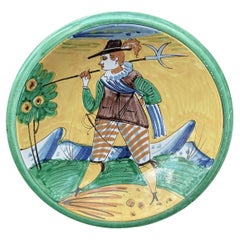
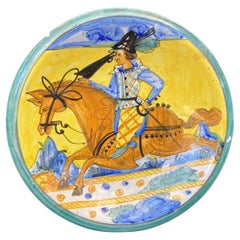
Vintage Italian Montelupo Maiolica Pottery Charger
Located in Bradenton, FL
This beautiful maiolica pottery charger is from Montelupo, Italy and is boldly decorated with a soldier walking, carrying a tool of the day. Vividly painted in yellow, green, and blu...
Category
Mid-20th Century Italian Baroque Decorative Art
Materials
Pottery
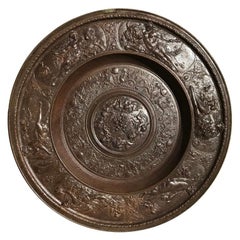
19th Century German Berlin Cast Iron Charger with Signs of the Zodiac
Located in Stamford, CT
19th century German, likely Berlin Iron Works, cast iron charger with mythological figures of goddesses, putti, various animals and fish in relief. T...
Category
Early 19th Century German Antique Baroque Decorative Art
Materials
Iron
Flemish 17th-18th Century Baroque Historical Tapestry Fragment "A Royal Family"
Located in Los Angeles, CA
A fine and large Flemish 17th-18th century Baroque figural historical tapestry fragment. The large tapestry depicting an allegorical Royal family scene of a warrior meeting his new b...
Category
18th Century Belgian Antique Baroque Decorative Art
Materials
Wool, Silk
$38,000 Sale Price
20% Off
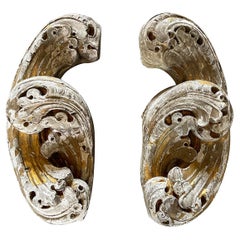
18th Century French Pair of Gilt Baroque Fragments - Antique Wall Panels
Located in West Palm Beach, FL
An antique pair of stunning French Baroque painted and partial – gilt carved architectural elements or wall panels, in good condition. These wall décor ornaments are very ornate and ...
Category
Early 18th Century French Antique Baroque Decorative Art
Materials
Wood, Giltwood
17th C. Rare Alms Dish Bowl Luxury Vide Poche Center Tray Decorative Object
Located in West Hollywood, CA
17th C. Rare Alms Dish Bowl Luxury Vide Poche Center Tray Decorative Object .German Baroque . A real period collector’s item Circa 1600’s Alms collecting German Baroque dish with inc...
Category
17th Century German Antique Baroque Decorative Art
Materials
Metal
$6,080 Sale Price
20% Off
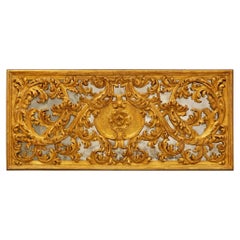
Italian 18th century Baroque Period Mecca wall decor/mirror
Located in West Palm Beach, FL
A wonderful and most unique Italian 18th century Baroque Period Mecca wall decor/mirror. This most decorative and rare carved Giltwood wall panel is set within an elegant mottled fra...
Category
18th Century Italian Antique Baroque Decorative Art
Materials
Mirror, Giltwood
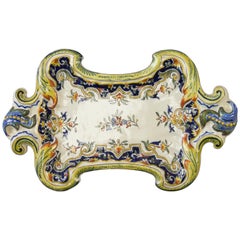
French Rouen Faience Hand Painted Decorative Wall Plate
By Rouen
Located in Barntrup, DE
French Rouen faience decorative wall plate, hand painted with blue, green and yellow decors.
Dimensions: Length 32 cm / 12.59 in, height 22 cm / 8.66 in,...
Category
Mid-20th Century French Baroque Decorative Art
Materials
Ceramic, Faience
Musical Automaton Picture Clock by Xavier Tharin, c. 1860
Located in Madrid, ES
Musical automaton picture clock by Xavier Tharin, c. 1860
Paris, hand-colored lithographed scene depicting a Mediterranean harbor scene with abbey, ...
Category
19th Century French Antique Baroque Decorative Art
Materials
Paint
Vintage Italian Montelupo Maiolica Pottery Charger
Located in Bradenton, FL
This beautiful 11.5 pottery charger is from Montelupo, Italy and is boldly decorated with a soldier on horseback. Vividly painted in yellow, green, and blue. Condition is very good, ...
Category
Mid-20th Century Italian Baroque Decorative Art
Materials
Pottery
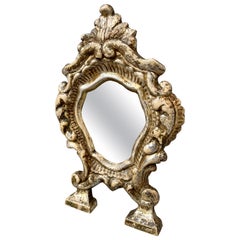
Small Italian 18th Century Baroque Silvered Wall Mirror
Located in Haddonfield, NJ
An 18th century Italian Venetian-style wall mirror with original silvered patina.
Category
Mid-18th Century Italian Antique Baroque Decorative Art
Materials
Gesso, Giltwood, Wood
$660 Sale Price
62% Off
Blue Hand Painted Baroque Cherub or Angel Portuguese Ceramic Tile or Azulejo
Located in Coimbra, PT
Gorgeous blue hand painted Baroque cherub or angel 18th century style Portuguese ceramic tile/azulejo
The tile painted in cobalt blue over white in typ...
Category
Late 20th Century Portuguese Baroque Decorative Art
Materials
Delft, Faience, Terracotta
Blue Hand Painted Baroque Cherub or Angel Portuguese Ceramic Tile or Azulejo
Located in Coimbra, PT
Gorgeous blue hand painted Baroque cherub or angel 18th century style Portuguese ceramic tile or azulejo
This tile painted in blue over white in typical 18th century Portugal set the...
Category
Late 20th Century Portuguese Baroque Decorative Art
Materials
Delft, Faience, Terracotta
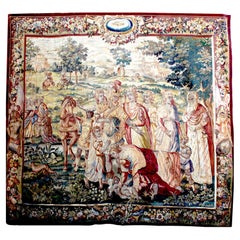
Large Flemish 17th-18th Century Baroque Figural Tapestry "A Royal Courtship"
Located in Los Angeles, CA
A fine and large flemish 17th-18th century Baroque figural tapestry "A Royal Courtship" depicting an allegorical courting scene of a young princess meeting her prince at the watchful eye of a mesmerized queen standing behind her. A young girl supports the princess' dress train...
Category
Early 1700s Belgian Antique Baroque Decorative Art
Materials
Wool
$49,850 Sale Price
47% Off
Blue Hand Painted Baroque Cherub or Angel Portuguese Ceramic Tile or Azulejo
Located in Coimbra, PT
Gorgeous blue hand painted Baroque cherub or angel 18th century style Portuguese ceramic tile/azulejo
The tile painted in cobalt blue over white in typical 18th century Portugal set ...
Category
Late 20th Century Portuguese Baroque Decorative Art
Materials
Delft, Faience, Terracotta
Rare Pair of Flemish 18th Century "Verre Églomisé" Reverse Glass Paintings
Located in Los Angeles, CA
A rare pair of Flemish 18th century "Verre Églomisé" Reverse Glass Paintings, each depicting riverfront scenes with figures, fishermen castles, co...
Category
18th Century Finnish Antique Baroque Decorative Art
Materials
Glass, Giltwood, Paint
$8,450 Sale Price / set
55% Off
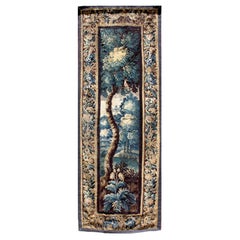
Flemish 18th-19th Century Verdure Landscape Tapestry Panel Centered with a Tree
Located in Los Angeles, CA
A fine flemish 18th-19th century Verdure landscape tapestry, the wool and silk tapestry centered by a scene of a tall tree within a forest background and a foliage border. Circa: 180...
Category
Early 19th Century Belgian Antique Baroque Decorative Art
Materials
Wool, Silk
$6,895 Sale Price
30% Off
Antique Print After Rembrandt, Tobit and the Angel, C.1850
Located in St Annes, Lancashire
Wonderful image after Rembrandt
Fine Steel engraving.
Published by Jones & Co., London. C.1850
Unframed.
Category
1850s English Antique Baroque Decorative Art
Materials
Paper
17th - 18th Century Portuguese Pair of Antique Baroque Pinewood Wall Reliefs
Located in West Palm Beach, FL
An antique pair of Portuguese Baroque hand carved Pinewood architectural wall reliefs with richly ornate detailed scrolls, Acanthus leaves and masks, in good condition. Original pain...
Category
Late 17th Century Portuguese Antique Baroque Decorative Art
Materials
Pine
Baroque decorative art for sale on 1stDibs.
Find a broad range of unique Baroque decorative art for sale on 1stDibs. Many of these items were first offered in the 21st Century and Contemporary, but contemporary artisans have continued to produce works inspired by this style. If you’re looking to add vintage decorative art created in this style to your space, the works available on 1stDibs include wall decorations, more furniture and collectibles, decorative objects and other home furnishings, frequently crafted with wood, fabric and other materials. If you’re shopping for used Baroque decorative art made in a specific country, there are Europe, Italy, and United Kingdom pieces for sale on 1stDibs. While there are many designers and brands associated with original decorative art, popular names associated with this style include Europa Antiques, Rembrandt van Rijn, Interi, and Basilius Besler. It’s true that these talented designers have at times inspired knockoffs, but our experienced specialists have partnered with only top vetted sellers to offer authentic pieces that come with a buyer protection guarantee. Prices for decorative art differ depending upon multiple factors, including designer, materials, construction methods, condition and provenance. On 1stDibs, the price for these items starts at $30 and tops out at $154,947 while the average work can sell for $2,774.
Still Thinking About These?
All Recently ViewedMore Ways To Browse
Dr No Chairs
Drawers Lions Feet
Drexel Heritage Glass Cabinet
Drexel Modern Line
Duck Audubon
Duckworth Ruth
Dunbar Tambour
Dust Pan
Dutch Tea Cabinet
Dutch Walnut Burl Cabinet
E F Caldwell Clocks
E Fremiet
Edgar Brandt Attributed
Edo Period Cabinet
Egyptian Brass Tray
Elephant Mahout
Emile Nestor Joseph Carlier
Empire Furniture Company Antique