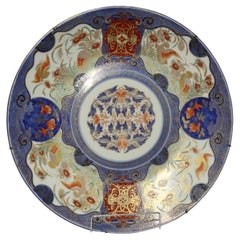
Meiji Decorative Art

MEIJI STYLE

From 1868 to 1912, Emperor Mutsuhito oversaw an era of transformation in Japan. Formerly a country of feudalism and isolation, Japan entered an age of modernization influenced by newly established trade and exchange with the West. The Meiji period, or period of “enlightened rule,” also saw the global impact of the East Asian country’s culture. Japanese Meiji furniture was exhibited at expositions from Paris to San Francisco and created for export.

Prior to the Meiji era, furniture was mostly made by commission for the ruling class; now there were new domestic and international markets. European styles like Japonisme appropriated Japanese design while craftsmen in places like Wales and England employed japanning, a varnishing technique that approximated the appearance of lacquer for the surfaces of furnishings.

Meiji furniture made for Japanese homes and buildings constructed in Western styles resulted in taller tables, chairs, cabinets with large drawers and other features. The government invested in areas such as transportation and communication, and because people could freely choose occupations after the restrictions of feudalism, industries of various types were energized by expressive new ideas during those years. Art schools were formed and, for the first time, design was an area of study in the country, leading to the evolution of professional design as a career by the 1890s.

The work of Japanese designers was transmitted widely through lavishly illustrated pattern books that included designs for screens and lacquerware for the home. While screens today may be of use as decorative accents or partitions to ensure privacy in one’s space, Japanese screens were adorned with paintings and were featured in performing arts such as concerts, tea ceremonies and more. The color illustrations that characterize Meiji woodblock prints, a genre of Japanese art that grew out of 17th-century developments in printing and book publishing, depicted the sweeping changes that the era brought to East Asia.

Although it was a time of societal and cultural shifts, a bolstered interest in art and design elevated Japanese craft traditions. From colorful porcelain table lamps with silk shades and hardwood tables decorated with dark lacquer to cabinets featuring iron hardware and inlaid with mother-of-pearl, Meiji furniture showcased Japan’s artistic heritage to the world.

Find a collection of antique Japanese Meiji period case pieces and storage cabinets, decorative objects, wall decorations and more furniture on 1stDibs.

to
3
8
2
23
18
Height
to
Width
to
1,468
953
348
342
305
237
192
187
115
96
94
68
63
53
45
33
32
28
14
9
18
8
1
1
1
19
19
17
14
11
41
41
41
41
41
41
Style: Meiji
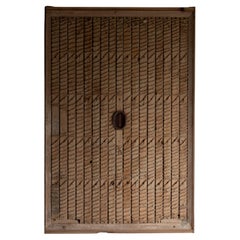
Japanese Antique Huge Door " Wall Decoration " 1860s-1900s / Wabi Sabi"
Located in Sammu-shi, Chiba
Japanese Antique Huge Door " Wall Decoration " 1860s-1900s / Wabi Sabi This extraordinary large sliding door was once used in an old warehouse in Japan. Dating back to the Meiji per...
Category

Early 20th Century Japanese Meiji Decorative Art

Materials

Iron

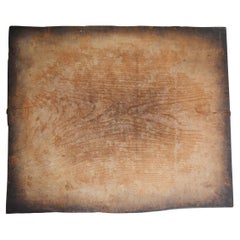
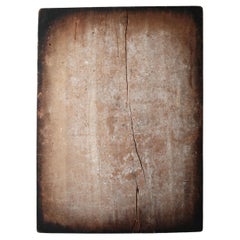
Japanese Antique Wabi-Sabi Wooden board "Wall Decoration" 1860s-1900s
Located in Chōsei District Nagara, JP
This is an old Japanese wooden workboard Crafted during the Meiji period (1860s–1900s), it is made from a single slab of keyaki (zelkova wood), a material now extremely rare. The imp...
Category

Early 20th Century Japanese Meiji Decorative Art

Materials

Wood

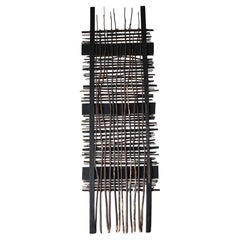
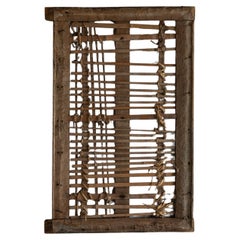
Japanese Antique Earthen Wall Base / Wall Decoration / 1868-1912s Wabi-sabi
Located in Iwate-gun Shizukuishi-cho, Iwate Prefecture
This wall decoration is the base of the earthen wall of an old Japanese house. In Japan, it's called "komai." It was originally part of the earthen wall of a house built around the ...
Category

Late 19th Century Japanese Antique Meiji Decorative Art

Materials

Straw, Rope, Wood

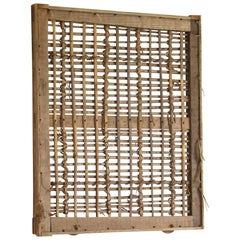
Japanese Antique Small Door Wall Decoration 1860s-1900s / Abstract Art Wabi Sabi
Located in Chōsei District Nagara, JP
This is an old small window frame made in Japan. It was originally used as a traditional Japanese mud wall fixture. It dates back to the Meiji period (1860s-1900s) and has been in us...
Category

Early 20th Century Japanese Meiji Decorative Art

Materials

Bamboo, Cedar

Old Arched Bamboo Wall Art Object / Japan, Early 20th Century/MINGEI
Located in Sammu-shi, Chiba
This is a large bamboo frame believed to have been made in Japan between the Meiji period and the early Showa period. Its original purpose is unclear, but the narrow holes and struct...
Category

Early 20th Century Japanese Meiji Decorative Art

Materials

Bamboo, Wood

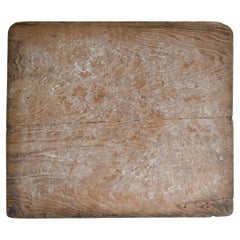
Japanese Antique Wooden Board / Wall Decoration Abstract Art / Wabi-Sabi
Located in Iwate-gun Shizukuishi-cho, Iwate Prefecture
This is an old Japanese workboard. It was called "Mochiita" and was used as a workbench for kneading flour. It seems to be around the Meiji period. The board is thought to be pine...
Category

Late 19th Century Japanese Antique Meiji Decorative Art

Materials

Wood

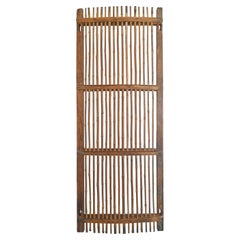
Japanese Antique Door "Wall Decoration" 1860s-1900s / Abstract Art Wabi Sabi
Located in Sammu-shi, Chiba
This was a very old Japanese warehouse (kura) window sliding door. It was made during the Meiji period (1860s-1900s). The frame is made of cedar wood and the lattice is bamboo. It w...
Category

Early 20th Century Japanese Meiji Decorative Art

Materials

Bamboo, Cedar

Japanese Antique Wabi-Sabi Wood Board 1860s-1900s / Wall Decoration
Located in Chōsei District Nagara, JP
This is an old Japanese wooden board called “Mochiita” (rice cake board). It was used during the Meiji period (1860s-1900s) and is made of pine wood with a rich texture. As the name ...
Category

Early 20th Century Japanese Meiji Decorative Art

Materials

Pine

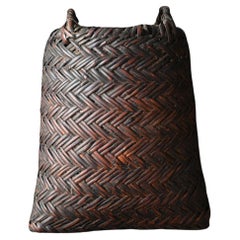
Japanese antique bamboo woven basket/wall hanging vase/1868-1920/Mingei
Located in Sammu-shi, Chiba
This is a woven bamboo basket made in Japan from the Meiji to Taisho periods (1868-1920). I don't know if the baskets actually used by farmers were repurposed as flower vases, or if ...
Category

Early 20th Century Japanese Meiji Decorative Art

Materials

Bamboo

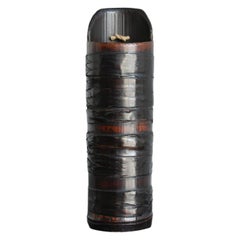
Antique Vase Made of Japanese Bamboo and Bark /Wall-Mounted Flower Vase
Located in Sammu-shi, Chiba
If you want something special, we recommend purchasing items selected by Brood. We sell carefully selected old Japanese items. I've seen tens of thousands of items so far. Based on that experience, only selected items are posted here. We are able to do this because of our long experience. There may be items on the 1stdibs site that look and feel the same, but the items selected by Brood are unique. This is an old Japanese vase...
Category

Late 19th Century Japanese Antique Meiji Decorative Art

Materials

Bamboo

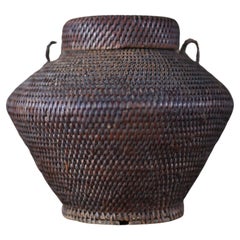
Japanese Old Vase with Lid / Late 19th Century
Located in Sammu-shi, Chiba
This is a woven bamboo basket made in Japan during the Meiji to Taisho eras (1868-1920). It is a vase that imitates the shape. It was hung on t...
Category

Late 19th Century Japanese Antique Meiji Decorative Art

Materials

Bamboo

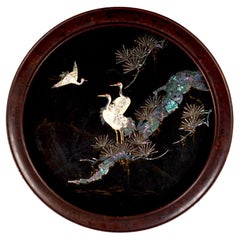
19th Century Japanese Shibayama Lacquered Inlay Charger, Meiji Period
Located in London, GB
19th Century Shibayama Lacquered Inlay Charger, Meiji Period, Japan A decorative 19th Century Japanese charger beautifully depicting herons and pi...
Category

Late 19th Century Japanese Antique Meiji Decorative Art

Materials

Bone, Mother-of-Pearl, Lacquer

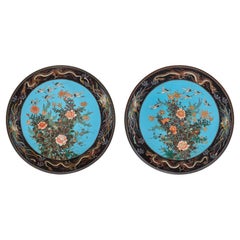
A Pair of Monumental Meiji Period Japanese Cloisonné Enamel Chargers Plates
Located in Queens, NY
A Pair of Monumental Meiji Period Japanese Cloisonné Enamel Chargers Attributed to the Hayashi Kodenji Studio, late 19th century, Japan Diameter: 30 i...
Category

19th Century Japanese Antique Meiji Decorative Art

Materials

Enamel

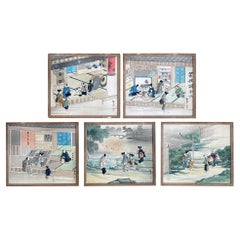
Rare Five Japanese Signed Oshi-E Textile Art Panels Meiji Period
Located in Atlanta, GA
On offer is a set of five Japanese textile art panels called Oshi-E circa Meiji Period (1868-1912). This unusual set of panels depict various aspects of daily life in Edo time with beautiful details. Some of these panels are snapshots of the buzzling commercial activities at the marketplace, providing insight into the signages, architecture, costumes and how people interacted within a historical and pictorial context. Other panels depict daily leisure activities such as lounging in the park or visiting friends. The realistic rendering and attention to details are not short of "photographic" quality. From the signage of the shops to the motions and attires of the individual characters, from the hairstyle, small ornaments, down to the facial expression, were all recorded in great details. Each panel was signed with the artist's name Yukihana in Kanji with a red seal. These panels are unframed and await your custom touch (framing with inner gilt spacer and mat costs about 250-500 depending on the material chosen, see a framed example in the last picture of a single framed panel we have for sale). We offer them for sale individually, but it will be great for a collector to consider the whole set so that they can stay together. The Oshi-E (also known as kiritori zaiku) is a type of ornamental textile art dated back to the Muromachi period (1392-1573). It started among the elite aristocratic women in Kyoto before spreading wider in the Japanese society. Throughout Edo and Meiji period, Oshi-E were sometimes used to make offerings to the altars in the temple and in the late 19th century, it was exported to the west along with the other embroidery textile art. Oshi-E was made by using silk wadding to create a relief design. Various silk fabric swaps and sometimes wires and tassels, often recycled from older kimonos...
Category

1890s Japanese Antique Meiji Decorative Art

Materials

Silk, Giltwood

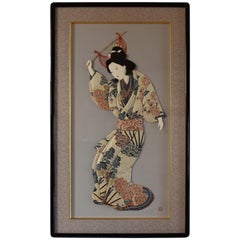
Japanese Contemporary Brocade Silk Handcrafted Framed Oshie Decorative Art
Located in Takarazuka, JP
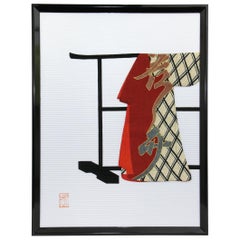
Exquisite Japanese contemporary framed oshie wall decorative art piece, recreating a famous painting from Meiji period featuring a Japanese dancer holding a net with cherry blossom ...
Category

21st Century and Contemporary Japanese Meiji Decorative Art

Materials

Brocade, Silk

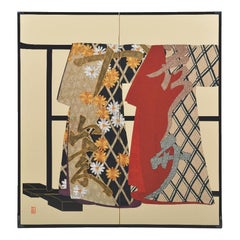
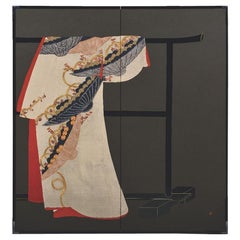
Japanese Contemporary Red Black Silk Folding Screen, 2
Located in Takarazuka, JP
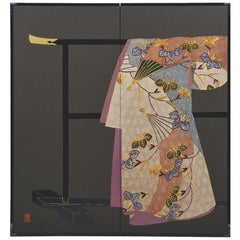
Outstanding Japanese contemporary two panel "byobu" or folding screen featuring genryoku style handcrafted raised pure silk kimono in black, red and gold on textured black background...
Category

21st Century and Contemporary Japanese Meiji Decorative Art

Materials

Gold

Japanese Contemporary Black Gold Silk Brocade Two-Panel Folding Screen
Located in Takarazuka, JP
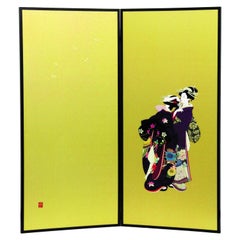
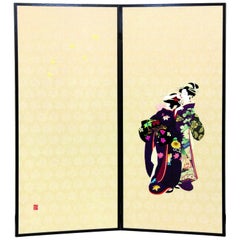
Exceptional Japanese contemporary two-panel "byobu" or folding screen featuring two graceful ladies dressed in elegant formal traditional Japanese kimonos. This folding screen is ins...
Category

21st Century and Contemporary Japanese Meiji Decorative Art

Materials

Gold

Japanese Contemporary Gold Leaf Brown Framed Porcelain Panel by Master Artist, 3
Located in Takarazuka, JP
Exquisite museum quality Japanese contemporary framed porcelain panel art work consisting of three pieces intricately hand-painted showcasing a wintry ...
Category

21st Century and Contemporary Japanese Meiji Decorative Art

Materials

Gold Leaf

Antique Japanese Meiji Period Painted Wood Sign with a Samurai, 19th Century
Located in Yonkers, NY
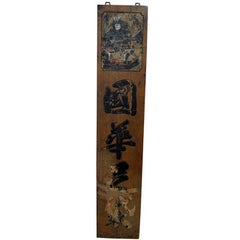
A Japanese carved and painted wooden sign with a Samurai from the Meiji Period, 19th century. This 19th century sign with a samurai was made in wood and painted in Japan during the Meiji period. The narrow rectangular panel features a painted frame with a character depicted in the upper section, showcasing a seated samurai wearing his armour. The section below is adorned with four lightly carved and back painted calligraphies. This tall panel can be hinged thanks to two square buckles on the top. Made during the 19th century, this antique Meiji period painted wood sign...
Category

19th Century Japanese Antique Meiji Decorative Art

Materials

Wood

Japanese Contemporary Framed Blue Purple Gray Silk Brocade Decorative Art
Located in Takarazuka, JP
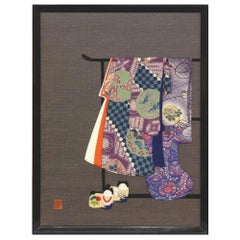
Japanese contemporary framed three-dimensional decorative art piece in Japanese traditional silk and brocade in soft green, blue and purple on a deep gray background, recreating an 1...
Category

21st Century and Contemporary Japanese Meiji Decorative Art

Materials

Brocade, Silk

Japanese Contemporary Orange Black Silk Brocade Two-Panel Folding Screen, 3
Located in Takarazuka, JP
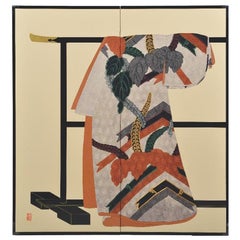
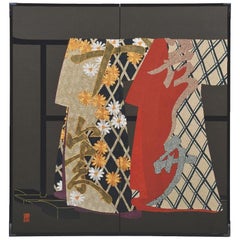
Extraordinary Japanese contemporary two panel "byobu" or folding screen featuring genryoku style handcrafted raised silk and brocade kimono in black, orange and gold on textured crea...
Category

21st Century and Contemporary Japanese Meiji Decorative Art

Materials

Gold

19th Century Japanese Iron and Mixed Metal Wall Panel
Located in North Miami, FL
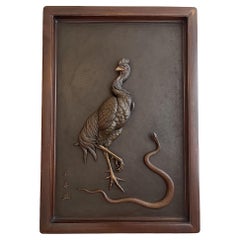
A rare Meiji period 1868-1912 iron and mixed metal panel by a highly important early Meiji period artist. The ironwork panel housed within its original hardwood frame depicts the charming subject of a roaster fighting with snake, this particular early Meiji period panel demonstrates all the skills of a leading Mito school metalworker more used to making tsuba and sword fittings for the shogunate and now adapting his unique skills to satisfy the emerging western market, the naive charm and inspiration for this study is probably from an earlier Japanese or even Chinese painting, artists with such breathtaking metalworking skills as this artist could simply replace an artists paintbrush...
Category

19th Century Japanese Antique Meiji Decorative Art

Materials

Metal, Brass, Bronze, Iron

Gilt and Patinated Bronze Plaque, Japan, circa 1900
Located in Buenos Aires, Buenos Aires
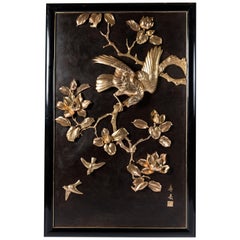
Gilt and patinated bronze plaque. Japan, circa 1900.
Category

Early 1900s Japanese Antique Meiji Decorative Art

Materials

Bronze

Japanese Contemporary Purple Black Silk Brocade Oshie Wall Decorative Art
Located in Takarazuka, JP
Extraordinary contemporary Japanese centuries-old traditional extremely detailed handcrafted decorative art form using high quality silk and brocade fabrics, known as oshie (literall...
Category

21st Century and Contemporary Japanese Meiji Decorative Art

Materials

Brocade, Silk

Japanese Contemporary Framed Brocade Silk Handcrafted Oshie Decorative Art, 2
Located in Takarazuka, JP
Extraordinary unique Japanese Contemporary large framed and signed traditional Oshie decorative art piece in black and cream, known as oshie (literally, “pressed pictures”) that goes back to the Edo Period (1603-1868). It is said this art form was born of the reluctance of ladies of the court and elite aristrocratic women to discard the magnificent silk kimonos and brocaded obi they had donned for a lifetime. The solution was to recycle these opulent fabrics into stunning works of art. The creator of this signed piece prides herself in using the best antique and vintage kimono and obi fabrics...
Category

21st Century and Contemporary Japanese Meiji Decorative Art

Materials

Brocade, Silk

Contemporary Japanese Red Black Gilded Silk Folding Screen
Located in Takarazuka, JP
Extraordinary Japanese contemporary two panel "byobu" or folding screen featuring genryoku style handcrafted raised pure silk kimono in black, red and gold on textured black backgrou...
Category

21st Century and Contemporary Japanese Meiji Decorative Art

Materials

Silk, Brocade

Japanese Contemporary Framed Green Red Black Gold Decorative Art
Located in Takarazuka, JP
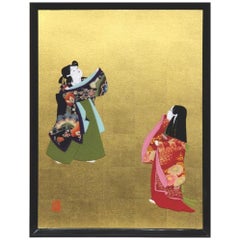
Exquisite Japanese contemporary framed three-dimensional decorative art piece in Japanese silk kimono fabric in vivid red, green and black on gold leaf Japanese paper, recreating a s...
Category

21st Century and Contemporary Japanese Meiji Decorative Art

Materials

Gold Leaf

Japanese Contemporary Silk Red Black Cream Hand-Crafted Two Panel Folding Screen
Located in Takarazuka, JP
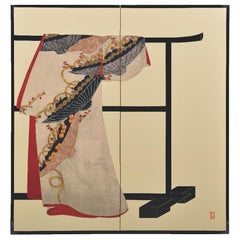
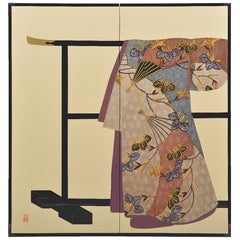
Exceptional Japanese contemporary two panel "byobu" or folding screen featuring genryoku style handcrafted silk raised kimono Japanese decorative art in crimson red, cream and gold o...
Category

21st Century and Contemporary Japanese Meiji Decorative Art

Materials

Gold

Japanese Contemporary Red White Gold Brocade Hand-Crafted Wall Decorative Art
Located in Takarazuka, JP
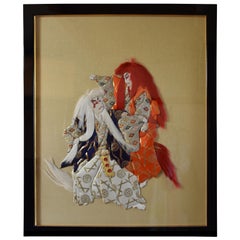
Exquisite Japanese contemporary hand-crafted oshie wall decorative art piece in stunning red, white, orange and gold depicting a dramatic scene from Renjishi, one of the most popular...
Category

21st Century and Contemporary Japanese Meiji Decorative Art

Materials

Brocade, Silk

Japanese Contemporary Orange Black Cream Silk Two-Panel Folding Screen, 4
Located in Takarazuka, JP
Extraordinary Japanese contemporary two panel "byobu" or folding screen featuring genryoku style handcrafted silk raised kimono Japanese decorative art in Purple, blue, black and ora...
Category

21st Century and Contemporary Japanese Meiji Decorative Art

Materials

Gold

Japanese Contemporary Silk Brown Black Cream Two-Panel Folding Screen, 3
Located in Takarazuka, JP
Extraordinary contemporary Japanese two-panel "byobu" or folding screen showcasing genryoku style handcrafted raised embroidered silk brocade kimono Japanese decorative art in autumn...
Category

21st Century and Contemporary Japanese Meiji Decorative Art

Materials

Gold

Japanese Traditional Brocade Silk Two-Panel Folding Screen
Located in Takarazuka, JP
Japanese contemporary two-panel "byobu" or folding screen featuring two graceful ladies dressed in elegant formal traditional Japanese kimonos. This folding screen is inspired by Jap...
Category

21st Century and Contemporary Japanese Meiji Decorative Art

Materials

Brocade, Silk

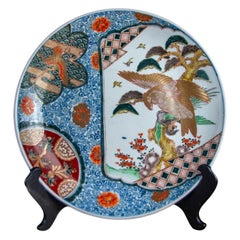
Imperial Imari Charger with Large Gilded Eagle and Gilded Flying Crane
Located in Banner Elk, NC
Imperial Imari 14.25" charger with large gilded eagle and gilded flying crane, Japanese, Meiji period, circa 1870.
Category

1870s Japanese Antique Meiji Decorative Art

Materials

Porcelain

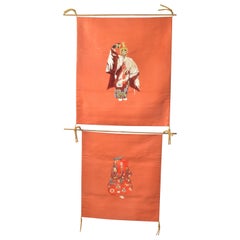
Pair of Japanese Vintage Gilded Embroidered Silk Wall Decorative Art, circa 1935
Located in Takarazuka, JP
Exquisite pair of Japanese vintage (circa 1935) hand-crafted extremely intricately embroidered silk fabric used in the presentation of ceremonial gifts on special occasions called fu...
Category

1930s Japanese Vintage Meiji Decorative Art

Materials

Silk

Japanese Contemporary Red Black Cream Folding Screen Silk Brocade Kimono Art, 3
Located in Takarazuka, JP
Exceptional Japanese contemporary two panel "byobu" or folding screen featuring genryoku style handcrafted silk raised kimono Japanese decorative art in crimson red, black and gold o...
Category

21st Century and Contemporary Japanese Meiji Decorative Art

Materials

Gold

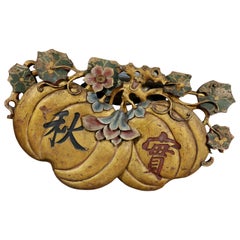
Large Japanese Carved and Polychromed Wood Panel of Gourds and Lotus
Located in Essex, MA
Depicting two large melons with calligraphy surmounted with lotus and flower and dragonfly. Painted in golds, reds, blues and green. Estate of John Volk, Pa...
Category

1850s Japanese Antique Meiji Decorative Art

Materials

Other

Japanese Contemporary Framed Red Black Silk Brocade Oshie Decorative Art
Located in Takarazuka, JP
A sophisticated technique is used to transform highest quality kimono fabrics into exquisite antique pieces of kimono fabric to recreate a Genryoku kosode kimono . Tagasode is the wa...
Category

21st Century and Contemporary Japanese Meiji Decorative Art

Materials

Silk, Brocade

Japanese Contemporary silk brocade Traditional Oshie Handcrafted Decorative Art
Located in Takarazuka, JP
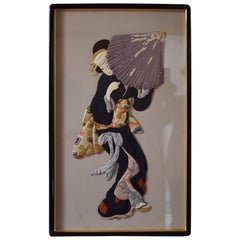
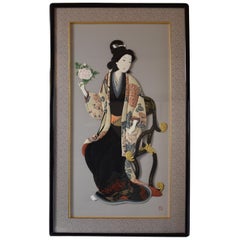
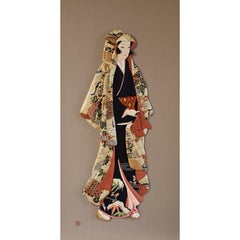
Extraordinary hand crafted Japanese contemporary traditional oshie wall decorative art piece with a stunning three-dimensional effect. This is a centuries-old traditional Japanese handcrafted wall decorative art form using high quality silk and brocade fabrics, known as oshie (literally, “pressed pictures”) that goes back to the Edo period (1603-1868). It is said this art form was born of the reluctance of ladies of the court to discard the magnificent silk kimonos and brocaded obi they had donned for a lifetime. The solution was to recycle these opulent fabrics into stunning works of art. Oshie resembles a carefully crafted very intricate jigsaw puzzle comprising numerous intricate pieces of kimono fabric padded with slightly differing thicknesses of cotton and painstakingly glued and ironed individually. All those tiny pieces are then glued one by one on a custom-made board making sure each piece lands on the exact right place making sure that the right pieces overlap the lower pieces to create an undulating three-dimesional picture. Highly detailed oshie pieces contain hundreds of small pieces that are expertly aligned to recreate even the minutest details of the the painting In the final process. Facial features are painted in miniature-like exactitude. The end product is an awe-inspiring piece with a surprising three-dimensional effect. This magnificent piece depicts a fascinating scene of a lady of privilege wearing an exquisitely brocaded headdress and overcoat to protect herself from the cold. Each dainty step she takes exposes the folds of her multi-layered kimono in a scene reminiscent of the ladies of the ancient imperial court of Japan. The creator of this signed piece has prided herself in using exquisite antique and vintage kimono and obi...
Category

21st Century and Contemporary Japanese Meiji Decorative Art

Materials

Brocade, Silk

Set of Ten Antique Calligraphy Woodblock Panels
Located in Palm Beach, FL
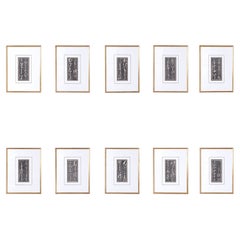
Rare and remarkable set of ten 19th century Japanese calligraphy prints on paper executed in a woodblock technique and presented under glass in a gi...
Category

Late 19th Century Japanese Antique Meiji Decorative Art

Materials

Paper

Kanban, Japanese Shop Sign, Meiji Period, 1868-1912
Located in Camden, ME
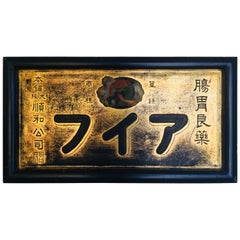
This 19th century Japanese Pharmacy sign advertises a popular stomach medicine, Aifu from the Juwa Co. in Osaka. The hand-painted registered trademark of the world looking through bi...
Category

19th Century Japanese Antique Meiji Decorative Art

Materials

Lacquer

A Large Japanese Meiji Period Porcelain Charger, Circa 1890
Located in Central England, GB
A Superb Large Japanese Meiji Period Porcelain Charger, Circa 1890 This large scale Japanese porcelain charger is finely hand-painted in rich c...
Category

19th Century Japanese Antique Meiji Decorative Art

Materials

Porcelain

Meiji decorative art for sale on 1stDibs.

Find a broad range of unique Meiji decorative art for sale on 1stDibs. Many of these items were first offered in the 21st Century and Contemporary, but contemporary artisans have continued to produce works inspired by this style. If you’re looking to add vintage decorative art created in this style to your space, the works available on 1stDibs include wall decorations, asian art and furniture and other home furnishings, frequently crafted with wood, metal and other materials. If you’re shopping for used Meiji decorative art made in a specific country, there are Asia, East Asia, and Japan pieces for sale on 1stDibs. It’s true that these talented designers have at times inspired knockoffs, but our experienced specialists have partnered with only top vetted sellers to offer authentic pieces that come with a buyer protection guarantee. Prices for decorative art differ depending upon multiple factors, including designer, materials, construction methods, condition and provenance. On 1stDibs, the price for these items starts at $700 and tops out at $95,000 while the average work can sell for $3,177.

Still Thinking About These?

All Recently Viewed