Gilt Decorative Art

to
80
205
94
282
28
2
Height
to
Width
to
28
18
17
13
13
13
12
9
9
6
5
3
2
2
1
1
69
120
93
30
31
27
9
10
3
1
5
2
5
2
3
3
2
244
90
90
75
54
243
79
75
28
27
312
297
312
9
7
4
4
3
Technique: Gilt
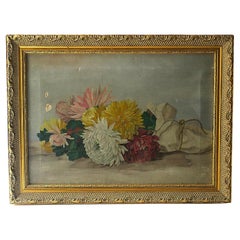
Colorful Still Life Flowers Painting Artwork
Located in New York, NY
A beautiful, colorful, soft, still life painting of a bouquet of spider mum flowers, circa late-19th century to early 20th century. Painting artwork, hand-painted in oil paint, depic...
Category

Late 19th Century Unknown Antique Gilt Decorative Art

Materials

Canvas, Wood, Paint

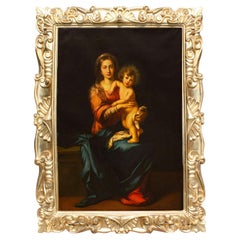
Large Impressive Oil on Canvas "Madonna Child" After Murillo - V. Bianchini
Located in Los Angeles, CA
A Large and Impressive Early 20th Century Oil on Canvas "Madonna and Child" After Bartolomé Esteban Murillo (Spanish, 1618-1682) depicting a seated Virgin Mary with a baby Jesus Chri...
Category

1910s Italian Baroque Vintage Gilt Decorative Art

Materials

Canvas, Giltwood

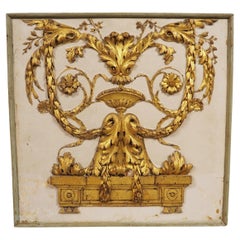
Small and Delicately Carved and Lacquered Giltwood Panel from France, 19th C.
Located in Dallas, TX
More information coming soon… Dating to the 1800s, this small French panel has delicate carvings that have been lacquered with gilding. The gilded elements form a wonderful foliate...
Category

19th Century French Antique Gilt Decorative Art

Materials

Wood, Giltwood, Lacquer

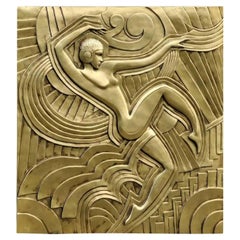
Art Deco Folies Bergeres Large Hanging Wall Plaque, French
Located in Devon, England
This is a super rare opportunity to acquire one of these beautifully reduced versions of the facade bas-relief of the Folies-Bergeres cabaret by Maurice Picaud aka Pico (1900-1977). ...
Category

Early 2000s French Art Deco Gilt Decorative Art

Materials

Plaster

Period Rectangular Giltwood Italian Salvator Rosa Style Frame
Located in Roma, IT
Salvator Rosa last 17th century giltwood frame. Internal measurements cm 24 x 32.5 Pure example of Italian Salvator Rosa gild wood frame of 17th century. "Salvator Rosa" is the famo...
Category

Late 17th Century Italian Baroque Antique Gilt Decorative Art

Materials

Wood

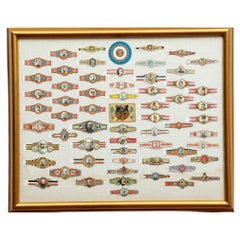
Fine Collection of Custom Framed Vintage Cigar Labels
Located in Bridgeport, CT
A collection of various multi-colored and gilt cigar bands all with portrait heads. Including- Franz Joseph I, and other rulers. Along with a serrated round label with a bust in prof...
Category

20th Century Hollywood Regency Gilt Decorative Art

Materials

Linen, Glass, Wood, Paper

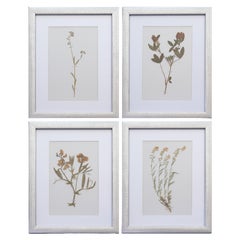
Custom Framed Antique Swedish Herbariums, Set of 4
Located in Pearland, TX
Beautiful custom framed antique Swedish herbarium floral specimens, collected circa 1911. Handwritten names in lovely Latin script. Specimens include zigzag clover, milkwort, and mor...
Category

1910s Swedish Vintage Gilt Decorative Art

Materials

Wood, Giltwood, Paper

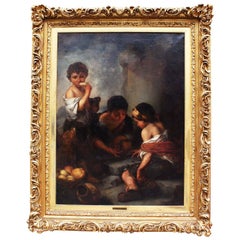
Large Oil on Canvas "Beggar Boys Playing Dice" After Bartolomé Esteban Murrillo
Located in Los Angeles, CA
A fine and large 19th century oil on canvas after Bartolomé Esteban Murrillo's (Spanish, 1617-1682) "Beggar Boys Playing Dice" (The original work by Murillo was painted in 1675). The impressive artwork depicts two young boys playing dice while another eats a piece of fruit as his dog watches on., within an ornate gildwood and gesso frame bearing a label from the faming company Bigelow & Jordan. The original work by Murillo is currently at the Alte Pinakothek Museum in Munich, Germany. The present work is signed: L. Rüber. Circa: Munich, Late 19th Century. Bartolomé Esteban Murillo (born late December 1617, baptized January 1, 1618 – April 3, 1682) was a Spanish Baroque painter. Although he is best known for his religious works, Murillo also produced a considerable number of paintings of contemporary women and children. These lively, realist portraits of flower girls, street urchins, and beggars constitute an extensive and appealing record of the everyday life of his times. Murillo was born to Gaspar Esteban and María Pérez Murillo. He may have been born in Seville or in Pilas, a smaller Andalusian town. It is clear that he was baptized in Seville in 1618, the youngest son in a family of fourteen. His father was a barber and surgeon. His parents died when Murillo was still very young, and the artist was largely brought up by his aunt and uncle. Murillo began his art studies under Juan del Castillo in Seville. There he became familiar with Flemish painting and the "Treatise on Sacred Images" of Molanus (Ian van der Meulen or Molano). The great commercial importance of Seville at the time ensured that he was subject to influences from other regions. His first works were influenced by Zurbarán, Jusepe de Ribera and Alonzo Cano, and he shared their strongly realist approach. As his painting developed, his more important works evolved towards the polished style that suited the bourgeois and aristocratic tastes of the time, demonstrated especially in his Roman Catholic religious works. In 1642, at the age of 26, he moved to Madrid, where he most likely became familiar with the work of Velázquez, and would have seen the work of Venetian and Flemish masters in the royal collections; the rich colors and softly modeled forms of his subsequent work suggest these influences. In 1645 he returned to Seville and married Beatriz Cabrera y Villalobos, with whom he eventually had eleven children. In that year, he painted eleven canvases for the convent of St. Francisco el Grande in Seville. These works depicting the miracles of Franciscan saints vary between the Zurbaránesque tenebrism of the Ecstasy of St Francis and a softly luminous style (as in Death of St Clare...
Category

Late 19th Century German Baroque Antique Gilt Decorative Art

Materials

Gesso, Canvas, Wood

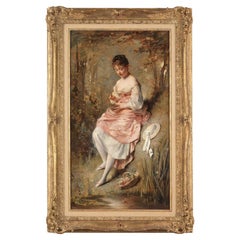
Charles Joshua Chaplin French, 1825-1891 Girl with Bird s Nest Oil on Canvas
By Charles Joshua Chaplin
Located in Los Angeles, CA
Charles Joshua Chaplin (French, 1825-1891) 'The Bird's Nest' A very fine and charming Rococo revival style oil on canvas depicting a young girl, dressed in 18th century costume and r...
Category

19th Century French Rococo Revival Antique Gilt Decorative Art

Materials

Canvas, Giltwood

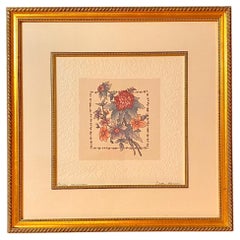
Brooke Morrison Lithographic Watercolor Print Garden Memories Titled And Signed
Located in New Orleans, LA
A Brooke Morrison watercolor, “Garden Memories” is in her signature style. The bouquet of flowers in the center has a surround of delicate flowers and greenery. It is beautifully pri...
Category

1980s American Romantic Vintage Gilt Decorative Art

Materials

Glass, Giltwood, Paper

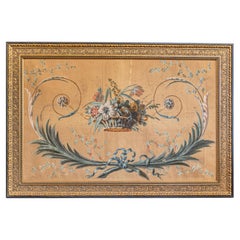
French Directoire Period Floral Painted Panel in Gilded Frame, circa 1790
Located in Atlanta, GA
A French Directoire period framed painted panel from the late 18th century, with floral motifs. Born in France during the later years of the 18th century, this exquisite decorative p...
Category

Late 18th Century French Directoire Antique Gilt Decorative Art

Materials

Wood, Paint

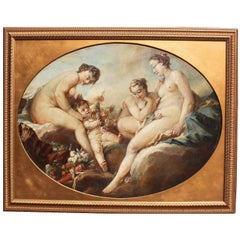
French 19th Century Oil on Canvas "Venus Disarming Cupid" after François Boucher
Located in Los Angeles, CA
A large French 19th century oil on canvas laid on board painting in the manner of François Boucher (French, 1703-1770). The oval framed canvas depicting a version of Boucher's "Venus...
Category

Late 19th Century French Romantic Antique Gilt Decorative Art

Materials

Canvas, Wood, Plywood

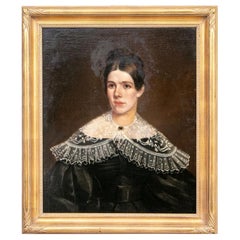
19th C. Oil on Panel, Portrait of a Lady with Lace Collar
Located in Bridgeport, CT
Unsigned. Ca. mid-19th c. portrait of a lovely seated lady wearing a black dress with a fine broad lace collar, a sign of her high status in socie...
Category

19th Century Victorian Antique Gilt Decorative Art

Materials

Canvas, Wood

19th Century French Framed Cameo Collection with Gilt Accents
Located in Atlanta, GA
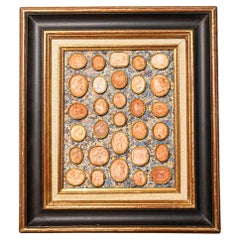
This exquisite 19th-century French framed collection of cameos presents a stunning display of classical artistry. The composition features an array of intricately detailed terracotta...
Category

19th Century French Neoclassical Antique Gilt Decorative Art

Materials

Metal

Antique Chinese Imperial Emperor Ancestral Painting on Silk
Located in Miami, FL
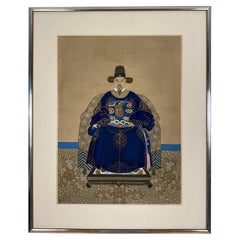
Imperial Majesty: 19th-Century Ming Dynasty Emperor Silk Painting This exquisite silk painting, dating back to the 19th century, depicts a majestic Ming Dynasty emperor in all his regalia. Hand-painted with meticulous detail and presented in a beautiful frame, this artwork showcases the rich tradition of Chinese silk painting. The vibrant colors and intricate brushwork capture the emperor's imperial stature and the grandeur of the Ming Dynasty. The painting's subject matter and artistic style make it a captivating addition to any collection. Dimensions: Framed measurements: 24 3/4" W x 31" H x 1 1/4" D Condition: Very good antique condition. This Antique Chinese Imperial Emperor Ancestral Painting...
Category

19th Century Chinese Ming Antique Gilt Decorative Art

Materials

Silk, Wood, Paint

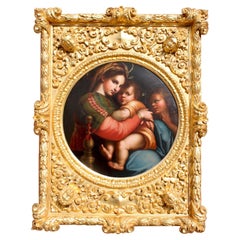
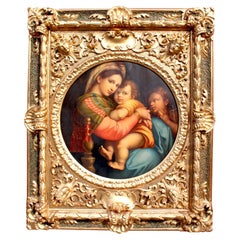
After Raffaello Sanzio 1483-1520 Raphael La Madonna della Seggiola Oil on Canvas
Located in Los Angeles, CA
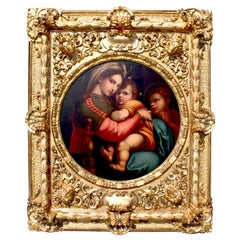
A fine Italian 19th century oil painting on canvas "La Madonna della Seggiola" after Raphael (Raffaello Sanzio da Urbino 1483-1520) The circular canvas depicting a seated Madonna holding an infant Jesus Christ next to a child Saint John the Baptist, all within a massive carved gilt wood and gesso frame (all high quality gilt is original) which is identical to the frame on Raphael's original artwork. This painting is a 19th Century copy of Raphael's Madonna della Seggiola painted in 1514 and currently exhibited and part of the permanent collection at the Palazzo Pitti, Galleria Palatina, Florence, Italy. The bodies of the Virgin, Christ, and the boy Baptist fill the whole picture. The tender, natural looking embrace of the Mother and Child, and the harmonious grouping of the figures in the round, have made this one of Raphael's most popular Madonnas. The isolated chair leg is reminiscent of papal furniture, which has led to the assumption that Leo X himself commissioned the painting, circa 1890-1900. Subject: Religious painting Measures: Canvas height: 29 1/4 inches (74.3 cm) Canvas width: 29 1/4 inches (74.3 cm) Painting diameter: 28 1/4 inches (71.8 cm) Frame height: 57 7/8 inches (147 cm) Frame width: 45 1/2 inches (115.6 cm) Frame depth: 5 1/8 inches (13 cm).   Raffaello Sanzio da Urbino (Italian, March 28 or April 6, 1483 - April 6, 1520), known as Raphael, was an Italian painter and architect of the High Renaissance. His work is admired for its clarity of form, ease of composition, and visual achievement of the Neoplatonic ideal of human grandeur. Together with Michelangelo and Leonardo da Vinci, he forms the traditional trinity of great masters of that period. Raphael was enormously productive, running an unusually large workshop and, despite his death at 37, leaving a large body of work. Many of his works are found in the Vatican Palace, where the frescoed Raphael Rooms were the central, and the largest, work of his career. The best known work is The School of Athens in the Vatican Stanza della Segnatura. After his early years in Rome much of his work was executed by his workshop from his drawings, with considerable loss of quality. He was extremely influential in his lifetime, though outside Rome his work was mostly known from his collaborative printmaking. After his death, the influence of his great rival Michelangelo was more widespread until the 18th and 19th centuries, when Raphael's more serene and harmonious qualities were again regarded as the highest models. His career falls naturally into three phases and three styles, first described by Giorgio Vasari: his early years in Umbria, then a period of about four years (1504–1508) absorbing the artistic traditions of Florence, followed by his last hectic and triumphant twelve years in Rome, working for two Popes and their close associates. Raphael was born in the small but artistically significant central Italian city of Urbino in the Marche region, where his father Giovanni Santi was court painter to the Duke. The reputation of the court had been established by Federico III da Montefeltro, a highly successful condottiere who had been created Duke of Urbino by the Pope - Urbino formed part of the Papal States - and who died the year before Raphael was born. The emphasis of Federico's court was rather more literary than artistic, but Giovanni Santi was a poet of sorts as well as a painter, and had written a rhymed chronicle of the life of Federico, and both wrote the texts and produced the decor for masque-like court entertainments. His poem to Federico shows him as keen to show awareness of the most advanced North Italian painters, and Early Netherlandish artists as well. In the very small court of Urbino he was probably more integrated into the central circle of the ruling family than most court painters. Federico was succeeded by his son Guidobaldo da Montefeltro, who married Elisabetta Gonzaga, daughter of the ruler of Mantua, the most brilliant of the smaller Italian courts for both music and the visual arts. Under them, the court continued as a centre for literary culture. Growing up in the circle of this small court gave Raphael the excellent manners and social skills stressed by Vasari. Court life in Urbino at just after this period was to become set as the model of the virtues of the Italian humanist court through Baldassare Castiglione's depiction of it in his classic work The Book of the Courtier, published in 1528. Castiglione moved to Urbino in 1504, when Raphael was no longer based there but frequently visited, and they became good friends. He became close to other regular visitors to the court: Pietro Bibbiena and Pietro Bembo, both later cardinals, were already becoming well known as writers, and would be in Rome during Raphael's period there. Raphael mixed easily in the highest circles throughout his life, one of the factors that tended to give a misleading impression of effortlessness to his career. He did not receive a full humanistic education however; it is unclear how easily he read Latin. Early Life and Works His mother Màgia died in 1491 when Raphael was eight, followed on August 1, 1494 by his father, who had already remarried. Raphael was thus orphaned at eleven; his formal guardian became his only paternal uncle Bartolomeo, a priest, who subsequently engaged in litigation with his stepmother. He probably continued to live with his stepmother when not staying as an apprentice with a master. He had already shown talent, according to Vasari, who says that Raphael had been "a great help to his father". A self-portrait drawing from his teenage years shows his precocity. His father's workshop continued and, probably together with his stepmother, Raphael evidently played a part in managing it from a very early age. In Urbino, he came into contact with the works of Paolo Uccello, previously the court painter (d. 1475), and Luca Signorelli, who until 1498 was based in nearby Città di Castello. According to Vasari, his father placed him in the workshop of the Umbrian master Pietro Perugino as an apprentice "despite the tears of his mother". The evidence of an apprenticeship comes only from Vasari and another source, and has been disputed—eight was very early for an apprenticeship to begin. An alternative theory is that he received at least some training from Timoteo Viti, who acted as court painter in Urbino from 1495.Most modern historians agree that Raphael at least worked as an assistant to Perugino from around 1500; the influence of Perugino on Raphael's early work is very clear: "probably no other pupil of genius has ever absorbed so much of his master's teaching as Raphael did", according to Wölfflin. Vasari wrote that it was impossible to distinguish between their hands at this period, but many modern art historians claim to do better and detect his hand in specific areas of works by Perugino or his workshop. Apart from stylistic closeness, their techniques are very similar as well, for example having paint applied thickly, using an oil varnish medium, in shadows and darker garments, but very thinly on flesh areas. An excess of resin in the varnish often causes cracking of areas of paint in the works of both masters. The Perugino workshop was active in both Perugia and Florence, perhaps maintaining two permanent branches. Raphael is described as a "master", that is to say fully trained, in December 1500. His first documented work was the Baronci altarpiece for the church of Saint Nicholas of Tolentino in Città di Castello, a town halfway between Perugia and Urbino. Evangelista da Pian di Meleto, who had worked for his father, was also named in the commission. It was commissioned in 1500 and finished in 1501; now only some cut sections and a preparatory drawing remain. In the following years he painted works for other churches there, including the Mond Crucifixion (about 1503) and the Brera Wedding of the Virgin (1504), and for Perugia, such as the Oddi Altarpiece. He very probably also visited Florence in this period. These are large works, some in fresco, where Raphael confidently marshals his compositions in the somewhat static style of Perugino. He also painted many small and exquisite cabinet paintings in these years, probably mostly for the connoisseurs in the Urbino court, like the Three Graces and St. Michael, and he began to paint Madonnas and portraits. In 1502 he went to Siena at the invitation of another pupil of Perugino, Pinturicchio, "being a friend of Raphael and knowing him to be a draughtsman of the highest quality" to help with the cartoons, and very likely the designs, for a fresco series in the Piccolomini Library in Siena Cathedral. He was evidently already much in demand even at this early stage in his career. Influence of Florence Raphael led a "nomadic" life, working in various centres in Northern Italy, but spent a good deal of time in Florence, perhaps from about 1504. Although there is traditional reference to a "Florentine period...
Category

19th Century Italian Baroque Antique Gilt Decorative Art

Materials

Gesso, Canvas, Wood

Pair French 18th-19th Century Chinoiserie Circle of Jean B. Pillement
By Jean-Baptiste Pillement
Located in Los Angeles, CA
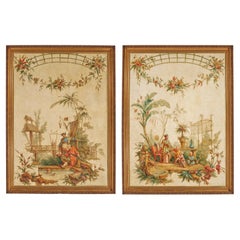
A fine pair of French 18th-19th century whimsical rococo style chinoiserie oil on canvas, circle of Jean-Baptiste Pillement. (French, 1728-1808). One oil painting depicting an outdoor patio scene of a standing young mother, holding a fan, with her three young children playing with a horse-toy, a parrot and a cat, all surrounded by flowers, plants, trees, planters and flanked by a dragon fountain...
Category

Late 18th Century French Chinoiserie Antique Gilt Decorative Art

Materials

Canvas, Giltwood

Art Deco Large And Impressive Hand Crafted Bathing Ladies Wall Plaque
Located in Devon, England
This is a super rare opportunity to acquire one of these beautifully reduced versions of 'bathing ladies' the original being located in the famous Paris ''HOTEL des Collectionneur. T...
Category

21st Century and Contemporary French Art Deco Gilt Decorative Art

Materials

Plaster

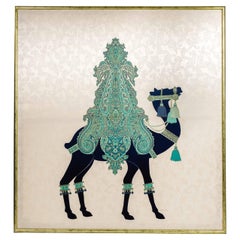
Painting of a Stylized Oriental Camel By Fabbriziani and Calandra Italy 1970s
Located in Salzburg, AT
Painting of a stylized oriental camel by Fabbriziani and Calandra from the 1970-ies Italy. On satin in a kind of silkscreen in limited edition, wooden frame gilded. The black camel i...
Category

1970s Italian Mid-Century Modern Vintage Gilt Decorative Art

Materials

Silk, Wood

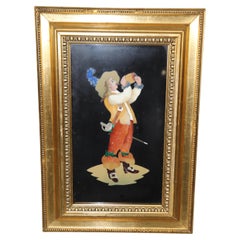
Antique Italian Pietra Dura Marble Inlay Plaque of Spaniard
Located in Swedesboro, NJ
Dimensions - (Frame) H: 16 1/2 in W: 11 1/2 in D: 1 in (Plaque) H: 12 1/4 in W: 7 1/4 in This exquisite Antique Italian Early 20th Century Pietra Dura Inlaid Marble Plaque is a stu...
Category

20th Century Italian Grand Tour Gilt Decorative Art

Materials

Lapis Lazuli, Malachite, Marble

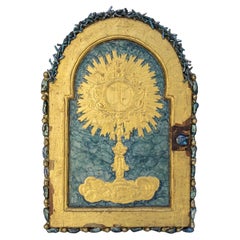
18th Century Italian Gilt Tabernacle Door with Turquoise Baroque Pearls
Located in Dublin, Dalkey
18th century Italian gold gilded tabernacle door adorned with naturally forming baroque pearls. This door once belonged on a tabernacle which housed the eucharist in a church. In the...
Category

18th Century Italian Rococo Antique Gilt Decorative Art

Materials

Gold Leaf

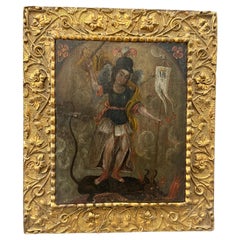
17th Century Spanish Colonial Cusco School Painting
Located in Middleburg, VA
A rare and evocative example of Spanish Colonial art from the Cusco School, this 17th-century oil on wood panel captures the iconic biblical scene of Sain...
Category

17th Century Peruvian Antique Gilt Decorative Art

Materials

Wood, Paint, Giltwood

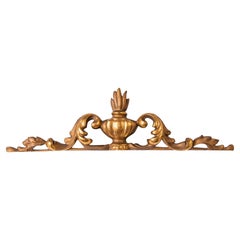
Gilt Wooden Frame Frieze
Located in Alessandria, Piemonte
Elegant antique gilt wooden frame frieze. Perfect, it can be placed anywhere: on a mirror, on an internal door, on the frame of a particular painting. ref. nr. O/2548.
Category

Early 19th Century Italian Aubusson Antique Gilt Decorative Art

Materials

Fruitwood

Gilt Wooden Frame Frieze
$477 Sale Price
20% Off
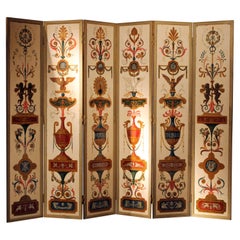
19th Century Italian Painted Wood Empire Folding Screen in Gilt Bronze Frame
Located in Firenze, IT
This one-of-a-kind antique Italian Empire Period folding screen is a masterpiece of early 19th-century craftsmanship, dating most likely from 1801 during the Republic of Lucca. Pain...
Category

Early 19th Century Italian Empire Antique Gilt Decorative Art

Materials

Bronze, Ormolu

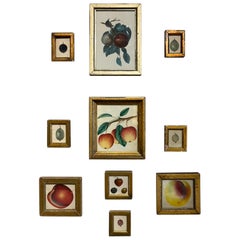
19th Century Hand Colored Fruit Botanicals In Gilt Wood Frames, Group of 10
Located in Stamford, CT
19th century American framed still life depictions of fruit, set of 10. Group of 10 small framed still life depictions of fruit, to include: watercolor theorem depicting apples on a...
Category

Early 19th Century American Regency Antique Gilt Decorative Art

Materials

Giltwood, Paper

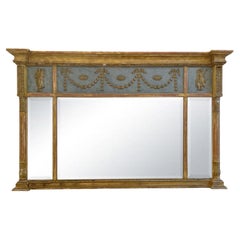
18th - 19th Century Swedish Gustavian Antique Gilded Pine Wall Glass Mirror
Located in West Palm Beach, FL
A late 18th Century, antique Swedish Gustavian rectangular wall mirror with its original mirrored glass and blue color paint, made of hand crafted gilded Pinewood, in good condition....
Category

Late 18th Century Swedish Gustavian Antique Gilt Decorative Art

Materials

Mirror, Pine, Giltwood

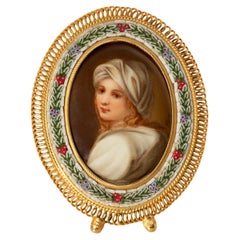
Antique Italian Micro Mosaic Miniature Portrait Painting Porcelain Guido Reni
Located in Portland, OR
A good antique Italian Grand Tour miniature hand-painted portrait on a porcelain plaque of Beatrice Cenci after the original by Guido Reni (1575-1642), the painting in a gilt brass micro mosaic frame...
Category

1890s Italian Grand Tour Antique Gilt Decorative Art

Materials

Brass

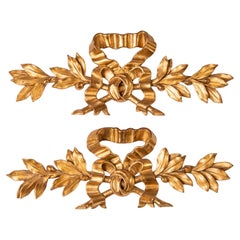
Gilt Antique Friezes from France
Located in Alessandria, Piemonte
Pair of antique golden friezes with olive branches. They are from the French Empire period and are perfect. ref. O/7147.
Category

Early 19th Century French Empire Antique Gilt Decorative Art

Materials

Fruitwood

Gilt Antique Friezes from France
$1,431 Sale Price / set
20% Off
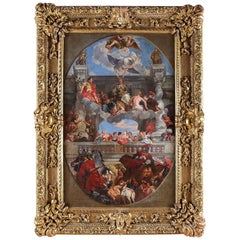
18th-19th Century Oil on Canvas "The Triumph of Venice" After Paolo Veronese
By Paolo Veronese
Located in Los Angeles, CA
A very fine and Large Italian 18th-19th century oval-shaped oil on canvas titled "The Triumph of Venice" After the original work by Paolo Veronese (Venice, 1528-1588). The original of this painting hangs in the Palazzo Ducale, Venice. The 'Ricci' coloration suggests a late 17th-early 18th century date. In 1715 Charles de la Fosse advised Ricci to paint only "Veroneses and no more Riccis", Venice, circa 1800. Measures: Height: 45 1/4 inches (115 cm). Width: 29 inches (73.7 cm). Frame height: 58 1/4 inches (147.9 cm). Frame width: 43 1/4 inches (109.9 cm). Frame depth: 5 1/4 (13.3 cm). Provenance: Royal Academy of Scotland. Paolo Veronese (Born 1528, Verona, Republic of Venice - died April 9, 1588, Venice) was an Italian painter of the Renaissance in Venice, famous for paintings such as The Wedding at...
Category

Early 1800s Italian Renaissance Antique Gilt Decorative Art

Materials

Wood, Gesso, Canvas

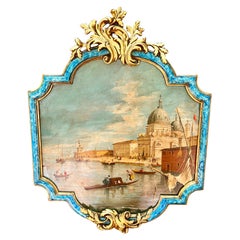
Venetian Canal Scene Set in Marbleized and Giltwood Frame
Located in Nashville, TN
Oil on board Venetian Canal Scene looking towards the mouth of The Grand Canal with Della Salute to one side . Typical in the Grand Tour style of 18th ,19th and 20th centuries ..
Category

Mid-20th Century Italian Baroque Gilt Decorative Art

Materials

Wood

After Raffaello Sanzio 1483-1520 Raphael La Madonna della Seggiola Oil on Canvas
Located in Los Angeles, CA
A Fine Italian 19th Century Oil Painting on Canvas "La Madonna della Seggiola" after Raphael (Raffaello Sanzio da Urbino 1483-1520). The circular painted canvas depicting a seated Madonna holding an infant Jesus Christ next to a child Saint John the Baptist, all within a massive carved gilt wood and gesso frame, which is identical to the frame on Raphael's original artwork. This painting is a 19th Century copy of Raphael's Madonna della Seggiola painted in 1514 and currently exhibited and part of the permanent collection at the Palazzo Pitti, Galleria Palatina, Florence, Italy. The bodies of the Virgin, Christ, and the boy Baptist fill the whole picture. The tender, natural looking embrace of the Mother and Child, and the harmonious grouping of the figures in the round, have made this one of Raphael's most popular Madonnas. The isolated chair leg is reminiscent of papal furniture, which has led to the assumption that Leo X himself commissioned the painting. A retailer's label reads " Fred K/ Keer's Sons - Framers and Fine Art Dealers - 917 Broad St. Newark, N.J." - Another label from the gilder reads "Carlo Bartolini - Doratore e Verniciatori - Via Maggio 1924 - Firenze". Circa: 1890-1900. Subject: Religious painting Canvas diameter: 28 inches (71.1 cm) Frame height: 54 inches (137.2 cm) Frame width: 42 1/2 inches (108 cm) Frame depth: 5 1/2 inches (14 cm) Raffaello Sanzio da Urbino (Italian, March 28 or April 6, 1483 - April 6, 1520), known as Raphael, was an Italian painter and architect of the High Renaissance. His work is admired for its clarity of form, ease of composition, and visual achievement of the Neoplatonic ideal of human grandeur. Together with Michelangelo and Leonardo da Vinci, he forms the traditional trinity of great masters of that period. Raphael was enormously productive, running an unusually large workshop and, despite his death at 37, leaving a large body of work. Many of his works are found in the Vatican Palace, where the frescoed Raphael Rooms were the central, and the largest, work of his career. The best known work is The School of Athens in the Vatican Stanza della Segnatura. After his early years in Rome much of his work was executed by his workshop from his drawings, with considerable loss of quality. He was extremely influential in his lifetime, though outside Rome his work was mostly known from his collaborative printmaking. After his death, the influence of his great rival Michelangelo was more widespread until the 18th and 19th centuries, when Raphael's more serene and harmonious qualities were again regarded as the highest models. His career falls naturally into three phases and three styles, first described by Giorgio Vasari: his early years in Umbria, then a period of about four years (1504–1508) absorbing the artistic traditions of Florence, followed by his last hectic and triumphant twelve years in Rome, working for two Popes and their close associates. Raphael was born in the small but artistically significant central Italian city of Urbino in the Marche region, where his father Giovanni Santi was court painter to the Duke. The reputation of the court had been established by Federico III da Montefeltro, a highly successful condottiere who had been created Duke of Urbino by the Pope - Urbino formed part of the Papal States - and who died the year before Raphael was born. The emphasis of Federico's court was rather more literary than artistic, but Giovanni Santi was a poet of sorts as well as a painter, and had written a rhymed chronicle of the life of Federico, and both wrote the texts and produced the decor for masque-like court entertainments. His poem to Federico shows him as keen to show awareness of the most advanced North Italian painters, and Early Netherlandish artists as well. In the very small court of Urbino he was probably more integrated into the central circle of the ruling family than most court painters. Federico was succeeded by his son Guidobaldo da Montefeltro, who married Elisabetta Gonzaga, daughter of the ruler of Mantua, the most brilliant of the smaller Italian courts for both music and the visual arts. Under them, the court continued as a centre for literary culture. Growing up in the circle of this small court gave Raphael the excellent manners and social skills stressed by Vasari. Court life in Urbino at just after this period was to become set as the model of the virtues of the Italian humanist court through Baldassare Castiglione's depiction of it in his classic work The Book of the Courtier, published in 1528. Castiglione moved to Urbino in 1504, when Raphael was no longer based there but frequently visited, and they became good friends. He became close to other regular visitors to the court: Pietro Bibbiena and Pietro Bembo, both later cardinals, were already becoming well known as writers, and would be in Rome during Raphael's period there. Raphael mixed easily in the highest circles throughout his life, one of the factors that tended to give a misleading impression of effortlessness to his career. He did not receive a full humanistic education however; it is unclear how easily he read Latin. Early Life and Works His mother Màgia died in 1491 when Raphael was eight, followed on August 1, 1494 by his father, who had already remarried. Raphael was thus orphaned at eleven; his formal guardian became his only paternal uncle Bartolomeo, a priest, who subsequently engaged in litigation with his stepmother. He probably continued to live with his stepmother when not staying as an apprentice with a master. He had already shown talent, according to Vasari, who says that Raphael had been "a great help to his father". A self-portrait drawing from his teenage years shows his precocity. His father's workshop continued and, probably together with his stepmother, Raphael evidently played a part in managing it from a very early age. In Urbino, he came into contact with the works of Paolo Uccello, previously the court painter (d. 1475), and Luca Signorelli, who until 1498 was based in nearby Città di Castello. According to Vasari, his father placed him in the workshop of the Umbrian master Pietro Perugino as an apprentice "despite the tears of his mother". The evidence of an apprenticeship comes only from Vasari and another source, and has been disputed—eight was very early for an apprenticeship to begin. An alternative theory is that he received at least some training from Timoteo Viti, who acted as court painter in Urbino from 1495.Most modern historians agree that Raphael at least worked as an assistant to Perugino from around 1500; the influence of Perugino on Raphael's early work is very clear: "probably no other pupil of genius has ever absorbed so much of his master's teaching as Raphael did", according to Wölfflin. Vasari wrote that it was impossible to distinguish between their hands at this period, but many modern art historians claim to do better and detect his hand in specific areas of works by Perugino or his workshop. Apart from stylistic closeness, their techniques are very similar as well, for example having paint applied thickly, using an oil varnish medium, in shadows and darker garments, but very thinly on flesh areas. An excess of resin in the varnish often causes cracking of areas of paint in the works of both masters. The Perugino workshop was active in both Perugia and Florence, perhaps maintaining two permanent branches. Raphael is described as a "master", that is to say fully trained, in December 1500. His first documented work was the Baronci altarpiece for the church of Saint Nicholas of Tolentino in Città di Castello, a town halfway between Perugia and Urbino. Evangelista da Pian di Meleto, who had worked for his father, was also named in the commission. It was commissioned in 1500 and finished in 1501; now only some cut sections and a preparatory drawing remain. In the following years he painted works for other churches there, including the Mond Crucifixion (about 1503) and the Brera Wedding of the Virgin (1504), and for Perugia, such as the Oddi Altarpiece. He very probably also visited Florence in this period. These are large works, some in fresco, where Raphael confidently marshals his compositions in the somewhat static style of Perugino. He also painted many small and exquisite cabinet paintings in these years, probably mostly for the connoisseurs in the Urbino court, like the Three Graces and St. Michael, and he began to paint Madonnas and portraits. In 1502 he went to Siena at the invitation of another pupil of Perugino, Pinturicchio, "being a friend of Raphael and knowing him to be a draughtsman of the highest quality" to help with the cartoons, and very likely the designs, for a fresco series in the Piccolomini Library in Siena Cathedral. He was evidently already much in demand even at this early stage in his career. Influence of Florence Raphael led a "nomadic" life, working in various centres in Northern Italy, but spent a good deal of time in Florence, perhaps from about 1504. Although there is traditional reference to a "Florentine period...
Category

Early 1900s Italian Baroque Antique Gilt Decorative Art

Materials

Canvas, Giltwood

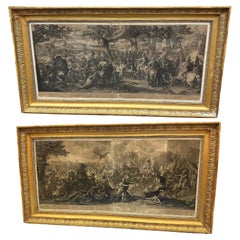
Pair of 17th Century Giltwood Framed Engraving of the Battle Scenes of Alexander
By Charles Le Brun, Gérard Audran
Located in Dallas, TX
An exquisite pair of 18th century giltwood framed engravings of battle scenes from ancient Greece of Alexander the Great at the Battle of Erie against Porus. French engraver Gérard A...
Category

17th Century French Antique Gilt Decorative Art

Materials

Giltwood, Paper

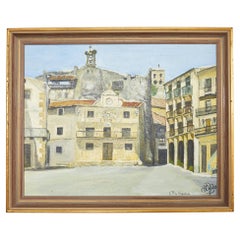
Midcentury Modern Italian Impressionist Town Square
Located in Rio Vista, CA
Untitled mid-century modern Italian impressionist oil on board painting of a village or town square landscape. The painting features beautifully detailed b...
Category

20th Century Italian Mid-Century Modern Gilt Decorative Art

Materials

Wood

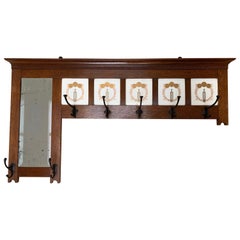
circa 1910 Arts Crafts Oak Wall Coat Rack, Beveled Mirror Hand Painted Tiles
Located in Lisse, NL
Large size, great shape and excellent condition antique coat rack. If you are looking for a stylish and practical coat rack in the Arts & Crafts style then this period piece could be perfect for you. It is truly stylish, entirely original and, as you can see in our images, it is in very good condition. This quality antique is handcrafted from solid oak and it comes with the inlaid, hand painted and glazed tiles. These tiles are extra special, because on top of the glazing are unique, gilt and stylized flower motifs. This luxurious and colorful coat rack also comes with all the original and aesthetically beautiful hooks...
Category

Early 20th Century European Arts and Crafts Gilt Decorative Art

Materials

Majolica, Mirror, Oak

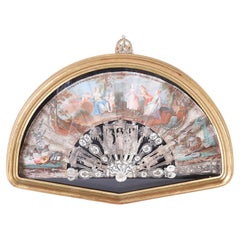
Antique Italian Painted Hand Fan in a Glass Case
Located in Palm Beach, FL
Impressive 19th century Italian hand fan, remarkably preserved with silvered metal sticks and guards depicting ancient gods, palm trees and classical emblemes. The paper leaves are h...
Category

Mid-19th Century Italian Rococo Revival Antique Gilt Decorative Art

Materials

Metal

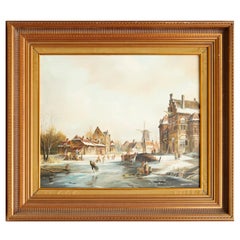
Large Framed 20th Century Dutch School Winter Scene, John Haanstra, Oil on Board
Located in Morristown, NJ
John Haanstra (Dutch, b. 1940), signed and dated 1985 on lower right. A charming oil painting, showing a winter landscape. Skaters are enjoying seasonal fun on a frozen canal while others go about their daily activities. A typical Dutch windmill can be seen in the background. Typical Dutch style housing can be seen in the foreground. The sky seems to be laden with more snow, creating the sense of more winter fun...
Category

1980s Dutch Modern Vintage Gilt Decorative Art

Materials

Wood, Paint

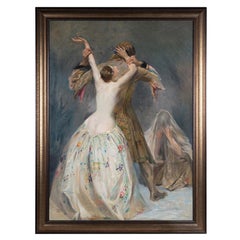
Hamilton Hamilton Oil on Canvas "Othello and Desdemona"
Located in Los Angeles, CA
Hamilton Hamilton (American, 1847-1928) A large and impressive oil on canvas "Othello and Desdemona" after the William Shakespeare's play "Othe...
Category

1920s American Art Nouveau Vintage Gilt Decorative Art

Materials

Canvas, Giltwood

After Raffaello Sanzio 1483-1520 Raphael La Madonna della Seggiola Oil on Canvas
Located in Los Angeles, CA
A Fine Italian 19th Century Oil Painting on Canvas "La Madonna della Seggiola" after Raphael (Raffaello Sanzio da Urbino 1483-1520). The circular painted canvas depicting a seated Madonna holding an infant Jesus Christ next to a child Saint John the Baptist, all within a massive carved two-tone gilt wood, gilt-patinated and gesso frame, which is identical to the frame on Raphael's original artwork. This painting is a 19th Century copy of Raphael's Madonna della Seggiola painted in 1514 and currently exhibited and part of the permanent collection at the Palazzo Pitti, Galleria Palatina, Florence, Italy. The bodies of the Virgin, Christ, and the boy Baptist fill the whole picture. The tender, natural looking embrace of the Mother and Child, and the harmonious grouping of the figures in the round, have made this one of Raphael's most popular Madonnas. The isolated chair leg is reminiscent of papal furniture, which has led to the assumption that Leo X himself commissioned the painting. Circa: 1890-1900. Subject: Religious painting Painting diameter: 28 inches (71.1 cm) Frame height: 55 1/8 inches (140 cm) Frame width: 46 inches (116.8 cm) Frame depth: 5 1/8 inches (13 cm) Raffaello Sanzio da Urbino (Italian, March 28 or April 6, 1483 - April 6, 1520), known as Raphael, was an Italian painter and architect of the High Renaissance. His work is admired for its clarity of form, ease of composition, and visual achievement of the Neoplatonic ideal of human grandeur. Together with Michelangelo and Leonardo da Vinci, he forms the traditional trinity of great masters of that period. Raphael was enormously productive, running an unusually large workshop and, despite his death at 37, leaving a large body of work. Many of his works are found in the Vatican Palace, where the frescoed Raphael Rooms were the central, and the largest, work of his career. The best known work is The School of Athens in the Vatican Stanza della Segnatura. After his early years in Rome much of his work was executed by his workshop from his drawings, with considerable loss of quality. He was extremely influential in his lifetime, though outside Rome his work was mostly known from his collaborative printmaking. After his death, the influence of his great rival Michelangelo was more widespread until the 18th and 19th centuries, when Raphael's more serene and harmonious qualities were again regarded as the highest models. His career falls naturally into three phases and three styles, first described by Giorgio Vasari: his early years in Umbria, then a period of about four years (1504–1508) absorbing the artistic traditions of Florence, followed by his last hectic and triumphant twelve years in Rome, working for two Popes and their close associates. Raphael was born in the small but artistically significant central Italian city of Urbino in the Marche region, where his father Giovanni Santi was court painter to the Duke. The reputation of the court had been established by Federico III da Montefeltro, a highly successful condottiere who had been created Duke of Urbino by the Pope - Urbino formed part of the Papal States - and who died the year before Raphael was born. The emphasis of Federico's court was rather more literary than artistic, but Giovanni Santi was a poet of sorts as well as a painter, and had written a rhymed chronicle of the life of Federico, and both wrote the texts and produced the decor for masque-like court entertainments. His poem to Federico shows him as keen to show awareness of the most advanced North Italian painters, and Early Netherlandish artists as well. In the very small court of Urbino he was probably more integrated into the central circle of the ruling family than most court painters. Federico was succeeded by his son Guidobaldo da Montefeltro, who married Elisabetta Gonzaga, daughter of the ruler of Mantua, the most brilliant of the smaller Italian courts for both music and the visual arts. Under them, the court continued as a centre for literary culture. Growing up in the circle of this small court gave Raphael the excellent manners and social skills stressed by Vasari. Court life in Urbino at just after this period was to become set as the model of the virtues of the Italian humanist court through Baldassare Castiglione's depiction of it in his classic work The Book of the Courtier, published in 1528. Castiglione moved to Urbino in 1504, when Raphael was no longer based there but frequently visited, and they became good friends. He became close to other regular visitors to the court: Pietro Bibbiena and Pietro Bembo, both later cardinals, were already becoming well known as writers, and would be in Rome during Raphael's period there. Raphael mixed easily in the highest circles throughout his life, one of the factors that tended to give a misleading impression of effortlessness to his career. He did not receive a full humanistic education however; it is unclear how easily he read Latin. Early Life and Works His mother Màgia died in 1491 when Raphael was eight, followed on August 1, 1494 by his father, who had already remarried. Raphael was thus orphaned at eleven; his formal guardian became his only paternal uncle Bartolomeo, a priest, who subsequently engaged in litigation with his stepmother. He probably continued to live with his stepmother when not staying as an apprentice with a master. He had already shown talent, according to Vasari, who says that Raphael had been "a great help to his father". A self-portrait drawing from his teenage years shows his precocity. His father's workshop continued and, probably together with his stepmother, Raphael evidently played a part in managing it from a very early age. In Urbino, he came into contact with the works of Paolo Uccello, previously the court painter (d. 1475), and Luca Signorelli, who until 1498 was based in nearby Città di Castello. According to Vasari, his father placed him in the workshop of the Umbrian master Pietro Perugino as an apprentice "despite the tears of his mother". The evidence of an apprenticeship comes only from Vasari and another source, and has been disputed—eight was very early for an apprenticeship to begin. An alternative theory is that he received at least some training from Timoteo Viti, who acted as court painter in Urbino from 1495.Most modern historians agree that Raphael at least worked as an assistant to Perugino from around 1500; the influence of Perugino on Raphael's early work is very clear: "probably no other pupil of genius has ever absorbed so much of his master's teaching as Raphael did", according to Wölfflin. Vasari wrote that it was impossible to distinguish between their hands at this period, but many modern art historians claim to do better and detect his hand in specific areas of works by Perugino or his workshop. Apart from stylistic closeness, their techniques are very similar as well, for example having paint applied thickly, using an oil varnish medium, in shadows and darker garments, but very thinly on flesh areas. An excess of resin in the varnish often causes cracking of areas of paint in the works of both masters. The Perugino workshop was active in both Perugia and Florence, perhaps maintaining two permanent branches. Raphael is described as a "master", that is to say fully trained, in December 1500. His first documented work was the Baronci altarpiece for the church of Saint Nicholas of Tolentino in Città di Castello, a town halfway between Perugia and Urbino. Evangelista da Pian di Meleto, who had worked for his father, was also named in the commission. It was commissioned in 1500 and finished in 1501; now only some cut sections and a preparatory drawing remain. In the following years he painted works for other churches there, including the Mond Crucifixion (about 1503) and the Brera Wedding of the Virgin (1504), and for Perugia, such as the Oddi Altarpiece. He very probably also visited Florence in this period. These are large works, some in fresco, where Raphael confidently marshals his compositions in the somewhat static style of Perugino. He also painted many small and exquisite cabinet paintings in these years, probably mostly for the connoisseurs in the Urbino court, like the Three Graces and St. Michael, and he began to paint Madonnas and portraits. In 1502 he went to Siena at the invitation of another pupil of Perugino, Pinturicchio, "being a friend of Raphael and knowing him to be a draughtsman of the highest quality" to help with the cartoons, and very likely the designs, for a fresco series in the Piccolomini Library in Siena Cathedral. He was evidently already much in demand even at this early stage in his career. Influence of Florence Raphael led a "nomadic" life, working in various centres in Northern Italy, but spent a good deal of time in Florence, perhaps from about 1504. Although there is traditional reference to a "Florentine period...
Category

Early 1900s Italian Baroque Antique Gilt Decorative Art

Materials

Canvas, Giltwood

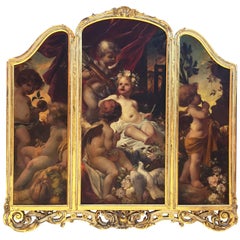
German 19th Century Oil on Canvas Triptych of Cherubs by Ferdinand Wagner II
Located in Los Angeles, CA
Ferdinand Wagner II (German, 1847-1927) A very fine and charming triptych group of three oil on canvas laid on board titled "An Allegory to Spring" each panel depicting different playful and joyous scenes of putti and a cherubs reminiscent of spring, love and peace. The center panel depicting a seated putto, crowned with flowers, a standing putto behind him holding a sack of arrows and a seated cherub facing him next to a watchful peace dove on top resting of a flower bouquet. The left panel depicting a seated putto next to a standing putto with a freshly harvested apple. The right side panel depicting a standing cherub holding a fig branches with leaves. All three-in-one panels within individually carved giltwood frames. All panels signed at the lower left: Ferd. Wagner, circa 1890. Ferdinand Wagner II (German, 1847-1927) was the son of Passau Ferdinand Wagner Senior, a teacher at a vocational art school who began training him professionally at a young age. After traveling to Italy in 1867-1868, he continued with his art studies at The Munich Academy of Arts led by Peter Von Cornelius and Julius Schnorr...
Category

Late 19th Century German Rococo Revival Antique Gilt Decorative Art

Materials

Canvas, Wood

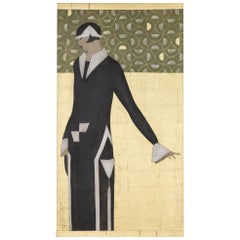
Painted Canvas, Art Deco Woman, Contemporary Work
Located in Saint-Ouen, FR
Painted canvas figuring a side view Art Deco woman. She wears a long black dress with white collar, sleeves and ornamentation. She wears ...
Category

21st Century and Contemporary European Gilt Decorative Art

Materials

Linen

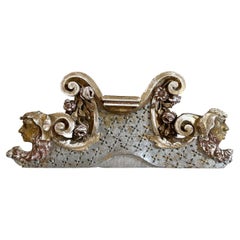
17th - 18th Century Portuguese Baroque Pine Wall Relief - Antique Décor Panel
Located in West Palm Beach, FL
An antique Portuguese wall relief or sopra porte made of Pinewood, in good condition. The Baroque wall panel was hand carved and is richly ornate wi...
Category

Late 17th Century Portuguese Baroque Antique Gilt Decorative Art

Materials

Pine, Giltwood

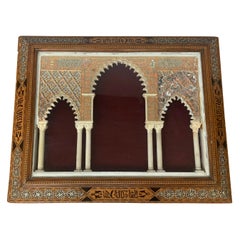
Miniature Mudejar Archway w Inlaid Frame, Inspired by the Alhambra, Spain c.1900
Located in Lisse, NL
This beautifully handcrafted wall piece pays tribute to the splendor of Andalusian architecture, echoing the intricate arches and decorative flourishes of the Alhambra in Granada. Made in early 20th-century Spain, it captures the spirit of Islamic Revival style with striking detail and artisan precision. At its center are three classic horseshoe arches, richly adorned with arabesques and supported by slender columns topped with finely worked capitals. A palette of soft reds, blues, and golds brings depth and warmth, further elevated by a rich burgundy velvet background. Surrounding the scene is a remarkable inlaid wooden frame, featuring delicate geometric patterns and flowing Arabic calligraphy — hallmarks of Neo-Mudejar design. This is not only a decorative object but a conversation piece, a rare combination of cultural history, architectural beauty, and fine craftsmanship. There are signs of restorations and some chipping to the plasterwork, mostly along the edges, but nothing that takes away from the overall beauty or structural integrity of the piece. Whether you're a lover of Islamic art, architectural miniatures, or simply looking for something rich in history and charm to add to your space, this piece brings timeless character and a story with it. A rare find with true soul. The large frame may have some minor losses and but this antique art work...
Category

Early 20th Century Spanish Moorish Gilt Decorative Art

Materials

Alabaster

Framed Multicolored Butterflies with 18th Century Italian Fragments
Located in Dublin, Dalkey
Framed 'Panacea Prola,' 'Perrhybris Pamela,' and 'Doxocopa Laurentia' butterflies with coordinating 18th century Italian fragments. The butterflies all share beautiful color and patt...
Category

18th Century Italian Rococo Antique Gilt Decorative Art

Materials

Gold Leaf

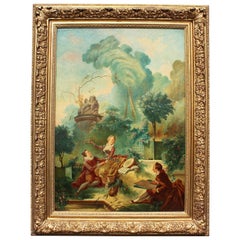
After Fragonard French 19th Century Oil on Canvas Progress of Love-Lover Crowned
Located in Los Angeles, CA
A large French 19th century oil on canvas (laid down on a masonite) "Les progrès de l'amour dans le cœur d'une jeune fille" The Progress of Love: The Lover Crowned, after Jean-Honoré...
Category

19th Century French Rococo Antique Gilt Decorative Art

Materials

Masonite, Gesso, Canvas, Giltwood

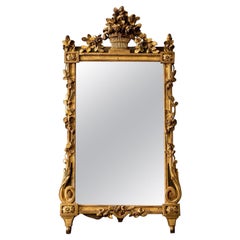
18th Century French Gilded Pinewood Wall Glass Mirror - Antique Wall Décor
Located in West Palm Beach, FL
An antique rectangular mirror inscribed in a Pinewwood frame, gilded, the pediment formed by an openwork flower basket spilling sinuous gar...
Category

Late 18th Century French Empire Antique Gilt Decorative Art

Materials

Mirror, Giltwood, Pine

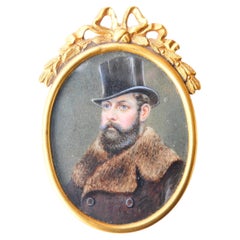
Antique Miniature Portrait of a Man Tempera Painting
Located in Malmö, SE
European Tempera hand-painting of a Man, not signed. Gilt Bronze Frame with original Glass cover. The frame is sealed. To be hanged. Sized: frame 8.2 cm x 5.6 cm x 6 mm deep / paint...
Category

1880s European Arts and Crafts Antique Gilt Decorative Art

Materials

Gold, Bronze

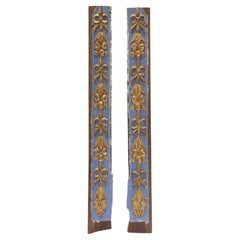
Pair of Italian Friezes 18th Century Blue Painted Gilwood Wall Decorative Panels
Located in Milano, MI
Pair of 1700s Italian Wall Decorative Panels, a pair of blue laquer vertical frieze dating back to late 18th century, with a stunning  hand-carved gilded relief  candelabra decoratio...
Category

18th Century and Earlier Italian Renaissance Antique Gilt Decorative Art

Materials

Gold Leaf

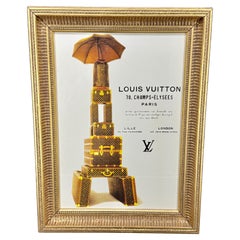
Louis Vuitton Eiffel Tower Trunks Monogram Art Print in Gold Frame
Located in Haddonfield, NJ
Louis Vuitton Print from Paris, France framed in a vintage European gold leaf frame. Artwork features the iconic Louis Vuitton suitcases artistically formed in the shape of the Eiffe...
Category

Mid-20th Century French Empire Gilt Decorative Art

Materials

Wood, Giltwood, Paper

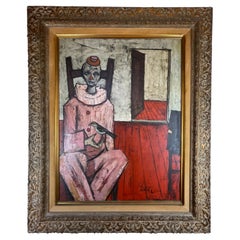
Charles Levier Painting "Clown Avec Un Oiseau"
Located in Miami, FL
A Captivating Vision: "Clown Avec Un Oiseau" by Charles Levier. This striking oil on canvas painting, titled "Clown Avec Un Oiseau" (Clown with a Bird) in French, is a captivating...
Category

Mid-20th Century American Mid-Century Modern Gilt Decorative Art

Materials

Paint, Wood

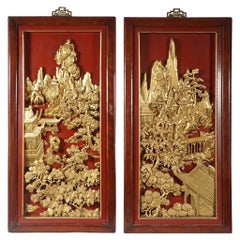
Four Chinese Carved, Lacquered and Gilded Panels
Located in Hudson, NY
These elaborate and deeply carved panels are mid-20th century. The carving is very detailed and on a rather deep heavy wooden panel. All the raised areas are richly detailed and gild...
Category

Mid-20th Century Chinese Gilt Decorative Art

Materials

Wood

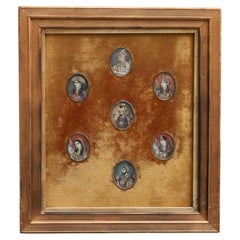
19th century Indian Seven Mughal Rulers Miniature Paintings
Located in Malmö, SE
Indian 19th century group of fine seven oval hand - painted miniature portraits of revered Mughal rulers and their royal wives. All individually set in narrow likely gilt Silver fram...
Category

1880s Indian Other Antique Gilt Decorative Art

Materials

Gold, Silver

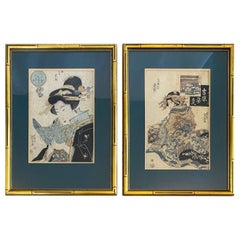
Pair of 19th Century Antique Japanese Woodblocks Prints Attrib. to Keisai Eisen
Located in Miami, FL
A fine pair of antique Japanese Woodblock Prints attributed to Keisai Eisen (1790-1848), original and presented in gilded bamboo wood frames. About the a...
Category

19th Century Japanese Antique Gilt Decorative Art

Materials

Paper, Wood

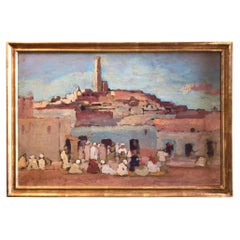
Orientalist Painting Wall Art Arab Market Scene Dutch G. Huijsser Antique Frame
Located in West Hollywood, CA
Orientalist Painting Wall Art Arab Market Scene Dutch G. Huijsser Antique Frame. Very nice oil on cardboard by Gerard Huijsser, Dutch painter, depicting a gathering of people in a or...
Category

Early 20th Century Dutch Gilt Decorative Art

Materials

Wood, Giltwood

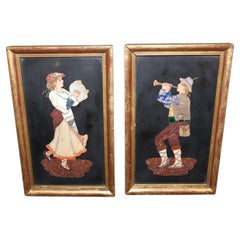
Pair of Antique Pietra Dura Marble Inlay Figural Plaques With Malachite
Located in Swedesboro, NJ
Dimensions: Height: 9 1/4 in Width: 5 3/4 in Depth: 3/4 in This vintage pair of Pietra Dura framed plaques is bound to bring a sense of sophisticat...
Category

Early 20th Century Italian Neoclassical Gilt Decorative Art

Materials

Lapis Lazuli, Malachite, Marble

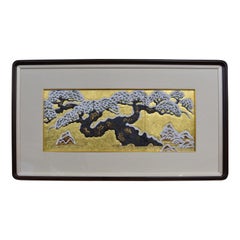
Japanese Contemporary Gold Leaf Brown Framed Porcelain Panel by Master Artist, 3
Located in Takarazuka, JP
Exquisite museum quality Japanese contemporary framed porcelain panel art work consisting of three pieces intricately hand-painted showcasing a wintry ...
Category

21st Century and Contemporary Japanese Meiji Gilt Decorative Art

Materials

Gold Leaf

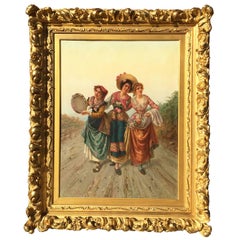
Pietro Gabrini Large Oil on Canvas "Three Singing Italian Beauties on The Road"
Located in Los Angeles, CA
Pietro Gabrini (Italian, 1856-1926) a very fine and large oil on canvas "Three Singing Italian Beauties on The Road" depicting three cheerful Village young maidens walking through a ...
Category

Late 19th Century Italian Baroque Revival Antique Gilt Decorative Art

Materials

Canvas, Wood

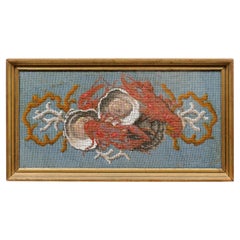
Gilt Framed 19th Century Needlepoint with Coral Seashells
Located in Atlanta, GA
Gilt Framed 19th Century Needlepoint with Coral & Seashells, Blue Ground
Category

19th Century Antique Gilt Decorative Art

Materials

Wood

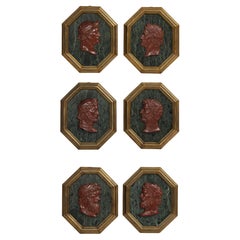
Set of 6 Italian Grand Tour Caesar Plaques w/ Porphyry Cameo in Bronze Frames
Located in New York, NY
A Large Set of Six Italian Grand Tour Doré Bronze-Mounted Plaques of The Roman Ceasars with Porphyry Cameo and Green Marble backs. The set consists of six octagonal plaques, each fr...
Category

1870s Italian Grand Tour Antique Gilt Decorative Art

Materials

Marble, Porphyry, Ormolu

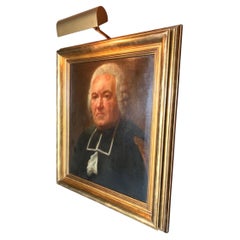
18th C. Portrait of a Lawyer Circle of Jacques Aved French School Oil on Canvas
Located in West Hollywood, CA
18th C. Portrait of a Lawyer Circle of Jacques Aved French School Oil on Canvas . Circle of Jacques-Andre-Joseph-Camelot Aved Portrait of a lawyer 1702-1766 French school mid-18th c...
Category

18th Century French Antique Gilt Decorative Art

Materials

Canvas, Wood, Paint

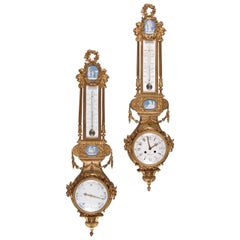
French Gilt Bronze and Blue and White Jasperware Clock and Barometer Set
By Carcany Robin
Located in London, GB
A fine quality clock and barometer set by Carcany and Robin, after models on exhibition in the Louvre Museum, Paris. In the Louis XVI manner, of banjo form, the cases being in cr...
Category

19th Century French Louis XVI Antique Gilt Decorative Art

Materials

Bronze