Items Similar to Very Rare 18th Century Micromosaic Depicting a Goldfinch Bird
Want more images or videos?
Request additional images or videos from the seller
1 of 14
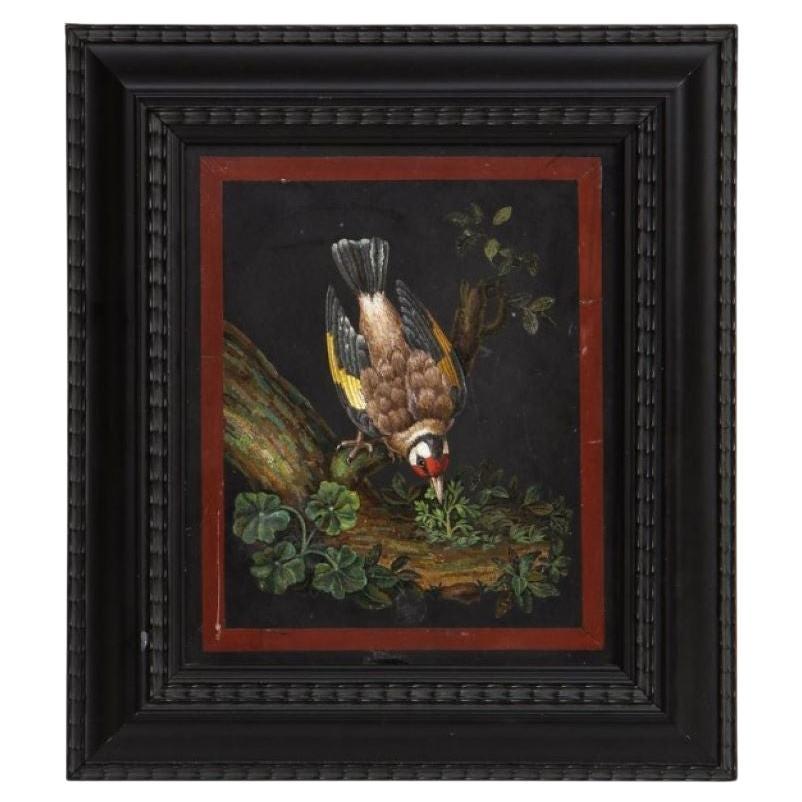
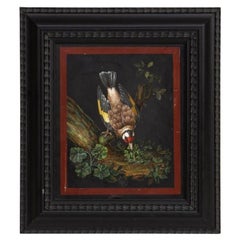
Very Rare 18th Century Micromosaic Depicting a Goldfinch Bird
$65,000
£49,092.37
€56,709.31
CA$91,575.75
A$98,077.66
CHF 52,725.87
MX$1,191,210.44
NOK 666,217.07
SEK 609,971.27
DKK 423,722.17
About the Item
Very rare 18th century micromosaic depicting a goldfinch bird.
Measurements:
Without frame approximately 5.5 in x 6.5 inches
With frame approximately 8.44 x 9.63 inches.
- Dimensions:Height: 6.5 in (16.51 cm)Width: 5.5 in (13.97 cm)Depth: 0.75 in (1.91 cm)
- Materials and Techniques:Stone,Mosaic
- Place of Origin:
- Period:
- Date of Manufacture:1750s
- Condition:
- Seller Location:New York, NY
- Reference Number:1stDibs: LU5747224419212
About the Seller
No Reviews Yet
Vetted Professional Seller
Every seller passes strict standards for authenticity and reliability
1stDibs seller since 2021
7 sales on 1stDibs
- ShippingRetrieving quote...Shipping from: New York, NY
- Return Policy
More From This Seller
View AllMicromosaic Depicting A Pastoral Scene
Located in New York, NY
Important Micromosaic depicting a Pastoral Scene with woman, Man and Sheep
Circa 1850's, Italy
Dimensions:
Micromosaic without Frame: approxim...
Category
Antique 19th Century Italian Decorative Art
Materials
Stone
Pietra Dura Depicting a Woman Feeding Chickens
Located in New York, NY
Pietra Dura Depicting a woman feeding chickens
circa 1850s Italy
Dimensions:
With frame: approximately 11.75 x 9.38 inches
Micromosaic without frame: approximately 9 x 6.75 i...
Category
Antique 19th Century Italian Decorative Art
Materials
Stone
Louis XV Gold
Lacquer Snuff Box
Located in New York, NY
Louis XV gold & lacquer snuff box
Circa Paris, France 1760/1761
With the Charge and Decharge Marks of Eloy Brichard 1756 - 1762
Circular Gold-lined bo...
Category
Antique Mid-18th Century French Snuff Boxes and Tobacco Boxes
Materials
Gold

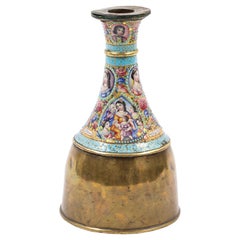
Large Qajar and Enamelled Ghalian Section with Brass Hookah Base
Located in New York, NY
Large qajar and enamelled ghalian section with brass Hookah Base
circa 1900, Persia
The gold waisted body decorated with European scenes and portrait...
Category
Antique 19th Century Persian Tobacco Accessories
Materials
Gold, Brass
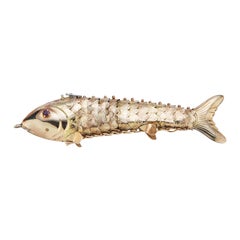
Gold-Plated Fish Pendant
Desk Object
By Jean Schlumberger
Located in New York, NY
Gold-plated fish pendant & desk object, with moving fish scale mechanism consisting of 1 round cut ruby for the fish eye
Measurements: 4.25" long
St...
Category
Vintage 1980s Unknown Animal Sculptures
Materials
Stainless Steel
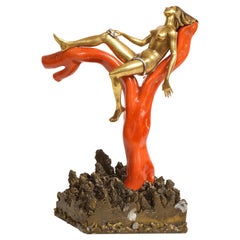
Romolo Grassi Gold Coral Resting Lady Object
Located in New York, NY
Gold & coral resting lady object by Romolo Grassi
The lady is 18k yellow gold on one very fine solid coral.
Accented with diamonds and mounted on quartz
Gold gram weight: 766.7 gr...
Category
Vintage 1960s Italian Abstract Sculptures
Materials
Coral, Gold
You May Also Like
Very Rare 18th Century Micro Mosaic Depicting a Goldfinch Bird
Located in New York, NY
Very rare 18th century Micro Mosaic Depicting a Goldfinch Bird.
Measurements:
Without frame approximately 5.5 in x 6.5 inches
With frame approximately 8.44 x 9.63 inches.
Category
Antique 18th Century Italian Frames
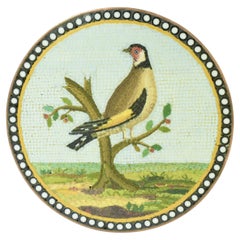
18th Century Micromosaic of a Goldfinch, c. 1790, attributed to G. Raffaelli
Located in Aspen, CO
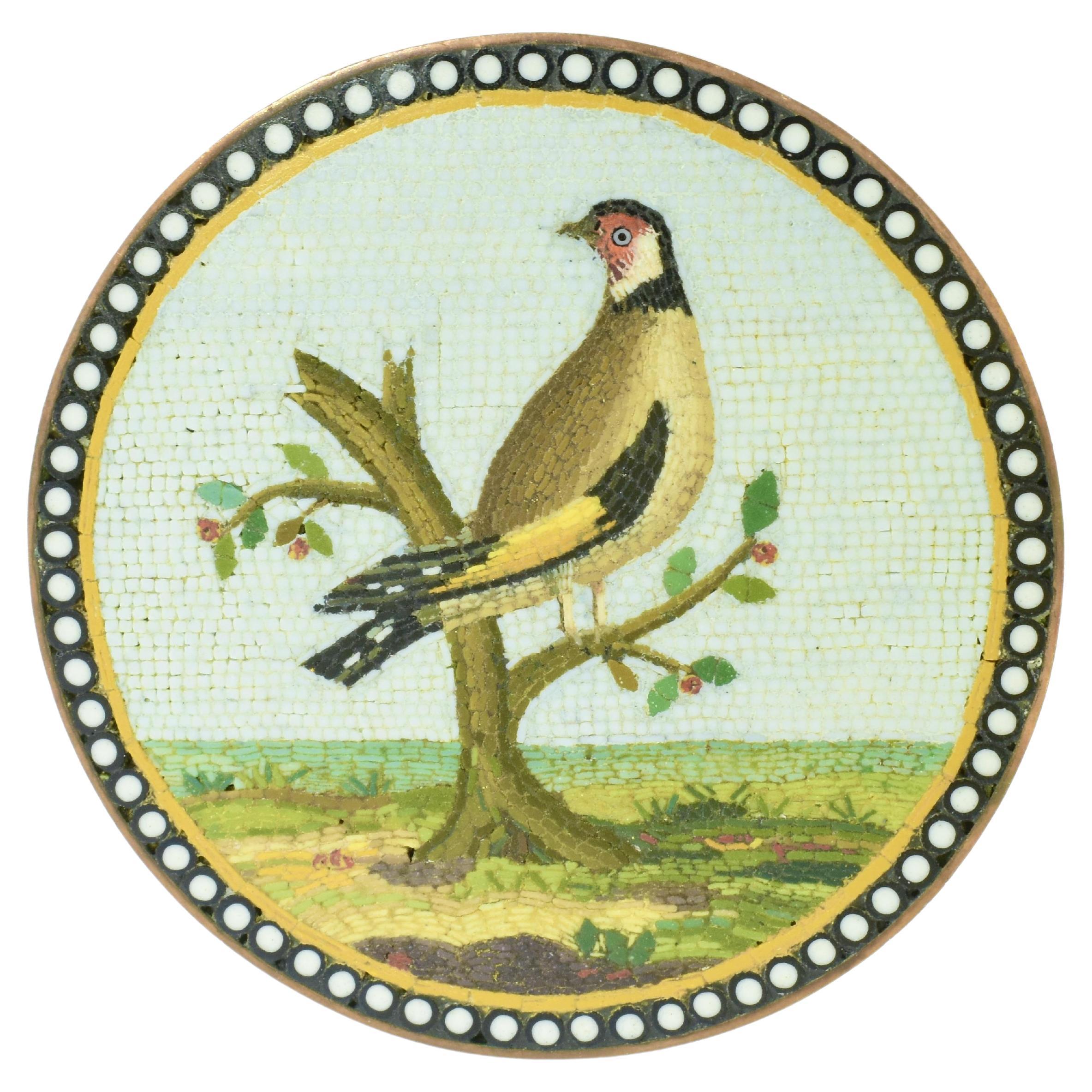
18th Century micromosaic plaque of a Goldfinch, Rome, c. 1785, attributed to Giacomo Raffaelli (1753-1836). A micromosaic plaque of a goldfinch, looking left, perched on a red flowering tree branch, two inches in diameter. The ground line is parallel and low. The foreground is of different colors of grass and fallen berries and leaves. The background is a light blue with parallel lines of square tesserae. The goldfinch has both square and oblong tesserae as does the foreground. The border of a decorative pattern in white in black circles and further with a rim of yellow oblong tesserae create a colorful frame for this well executed micromosaic which is backed with copper.
There is a pinstem and "c" clasp (this type of clasp is seen both in the 18th and 19th centuries), both are not gold. This assembly could have been put on at the time of purchase or slightly later so the plaque could be worn as a brooch.
We have dated this piece as being at the end of the 18th century and attributed to Giacomo Raffaelli. This micromosaic has all of the established 18th century characteristics of micromosaics executed by Giacomo Raffaelli: 1. Each tesserae possesses one color. 2. The tesserae are either oblong or square. 3. The background is parallel horizontal rows of square tesserae, and 4. The addition of an identical border or millefiori around the edge. See page 32 of "The Gilbert Collection Micromosaics by Jeanette H. Gabriel. Philip Wilson Publishers.
Giacomo Raffaelli (1753-1836) is one the most important artists of micromosaics, his signed pieces are almost nowhere to be found - unless in museums and important collections of the world. We know of nine that exist in the world. Two in the Hermitage, two in the renowned Gilbert Collection, one in the British Museum, three held by different companies in the trade, and one held by Pierre/Famille ( for sale on this platform). Raffaelli was considered the finest mosaicist in Rome. Indeed, when Napoleon I wanted to sponsor a mosaic version of The Last Supper, in roughly 1810, he chose Raffaelli, this too added much to his fame.
A very similar plaque, also attributed to Raffaelli, can be seen in the above referenced book on page 56. This plaque is part of The Gilbert Collection. The permanent collection is on view at the Victoria & Albert Museum in London.
Raffaelli is known for his very realistic depictions of birds - especially the Goldfinch. While his naturalism is among the finest of mosaicists at this time, Raffaelli chose to display his extraordinary talent featuring the goldfinch in many of his works.
Raffaelli was probably aware of the significance of the goldfinch to the Catholic Church. Afterall, it is one of the most poignant stories in the Passion of Christ. On the road to Golgotha, Christ was forced to carry the cross upon which he would be crucified. He was also made to wear a brutal crown of thorns. It was said that a simple Goldfinch, having alighted on the Savior's shoulder, flew to his head and plucked a thorn that had been making Christ bleed; whereupon this blood was transferred to the finch, which to this day, still wears it. This is but one example as to how mosaics permitted the Church to teach important lessons or parables. Why was this not done by traditional art forms such as paintings? Why was this done instead by mosaics?
From its initial conception at approximately 319 AD, the Church sought to locate St. Peter's Basilica at the site of the apostle's martyrdom. On its face such a decision would seem rational, if not appropriate.
St. Peter however was executed in a marshy area on a side of the Tiber in the already quite humid city of Rome. Housed in the early St. Peters with its exposure for so many centuries of very high humidity most of the Basilica's artwork was beyond the help of the rudimentary preservation and restoration of the period. By about 1750 to which the "new" St. Peters dates it had therefore lost many oil and watercolor paintings as well as wood, bone, and tortoise sculptures, frames and other artifacts.
What could the Church do? Enter the "new" age of Roman micromosaics in which tiny pieces of colored stone or glass when set with grout would prove to be impervious to the debilitating effects of humidity.
By the early 1700's the Church would begin the process of establishing a school of instruction in mosaics. It would sponsor research and experimentation in developing especially glass tesserae and would encourage students to select damaged oils, paintings or watercolors as appropriate subjects for duplicative efforts in micromosaics.
Gifted instructors and successful students both frequently had their work promulgated by the Church. And it was from this pool of recently praised practitioners that fame, and special commissions paralleled each other.
By about 1780 one mosaicist in particular separated himself from most all the others. Giacomo Raffaelli became one of the most feted mosaicists in all of Rome. Indeed when Napoleon I wanted to sponsor a mosaic version of the Last Supper in roughly 1810 he chose Raffaelli. This selection itself added to the already high reputation of Raffaelli.
This micromosaic is in very good condition and probably executed by one of the greatest of mosaicists of all time, and done on a work of art symbolically significant to the early Catholic Church.
We have one of the largest collections of micromosaics offered for sale. If our reader is searching for a particular motif, we would be happy to list it here for your consideration. From very large wall hangings...
Category
Antique 1790s Italian Georgian Brooches
Giacomo Raffaelli signed
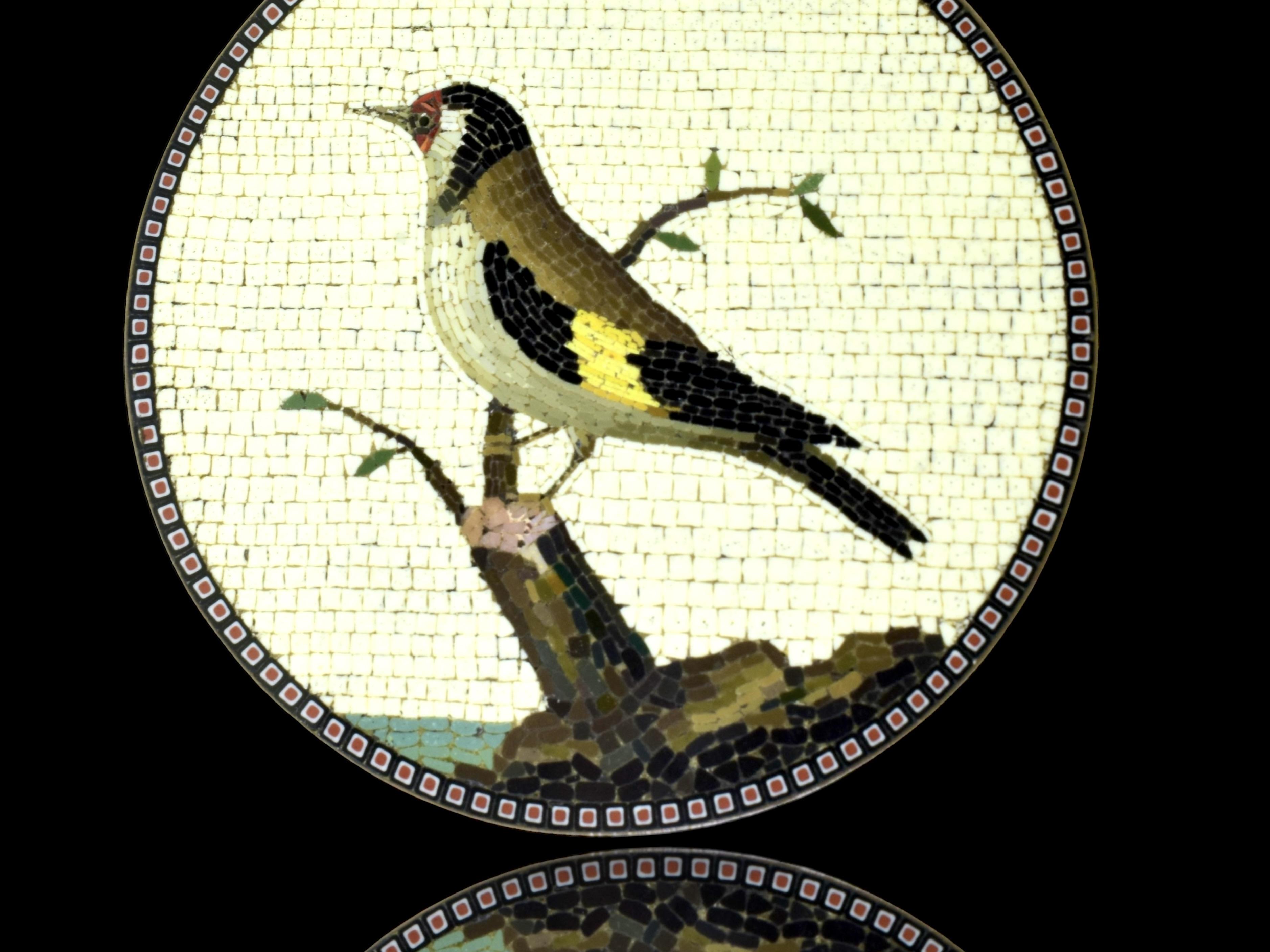
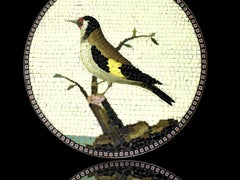
dated 1784, Rare Micromosaic Plaque of the Goldfinch
Located in Aspen, CO
Very rare 18th century micromosaic plaque of the Goldfinch. This circular plaque is 3 inches in diameter, the micromosaic is set in copper. On the verso, the piece is signed in cursi...
Category
Antique 1780s Italian George III Brooches
$19,160 Sale Price
20% Off
Free Shipping
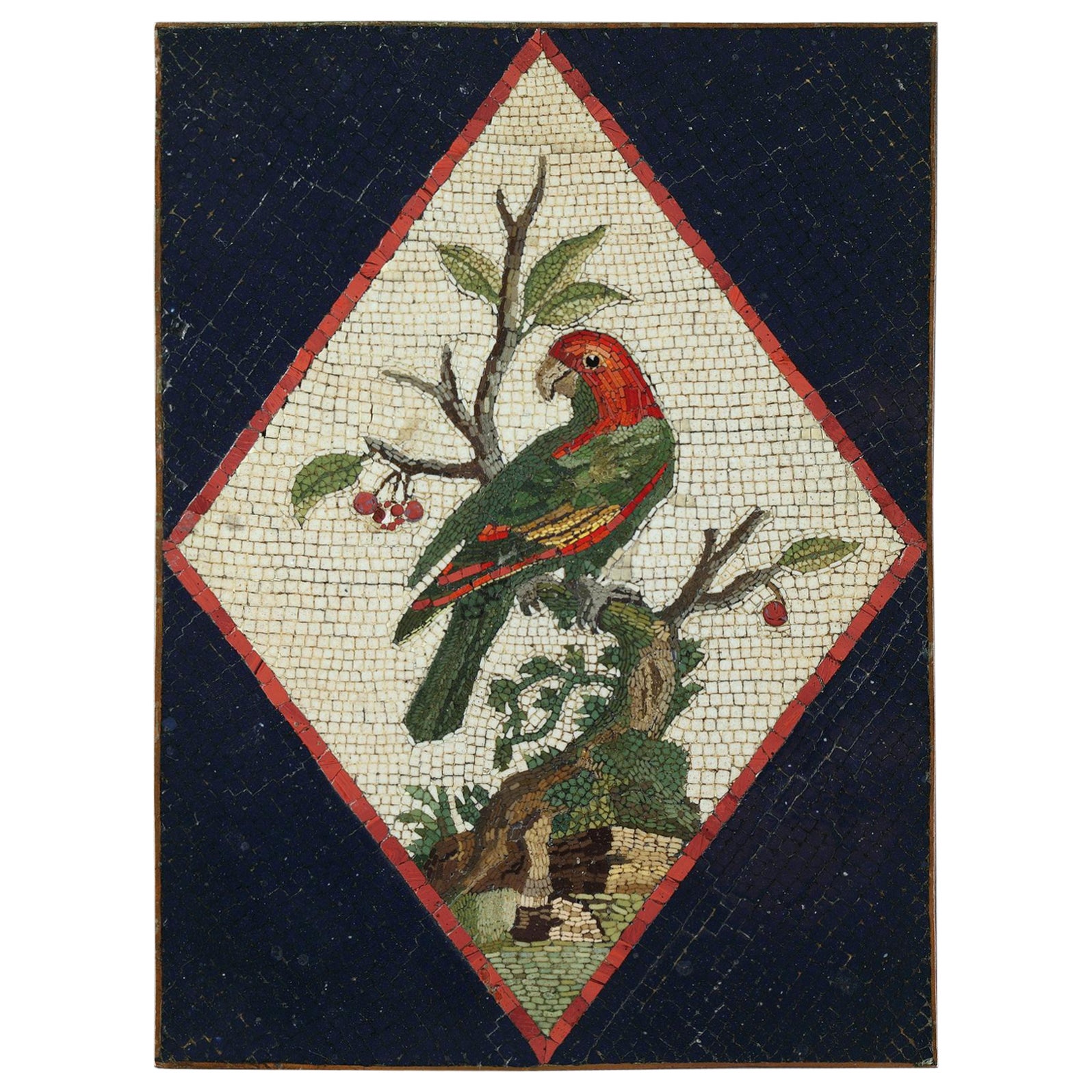
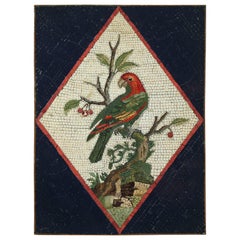
Late 18th Century Micromosaic with Parrot on a branch. From a Model by G.Raffael
By Giacomo Raffaelli
Located in Paris, FR
Large micro-mosaic plate representing a parrot on a branch. From a model by Giacomo Raffaelli. The quality and shape of the shards of this micromosai...
Category
Antique 1790s Italian Classical Roman Models and Miniatures
Materials
Art Glass, Cut Glass
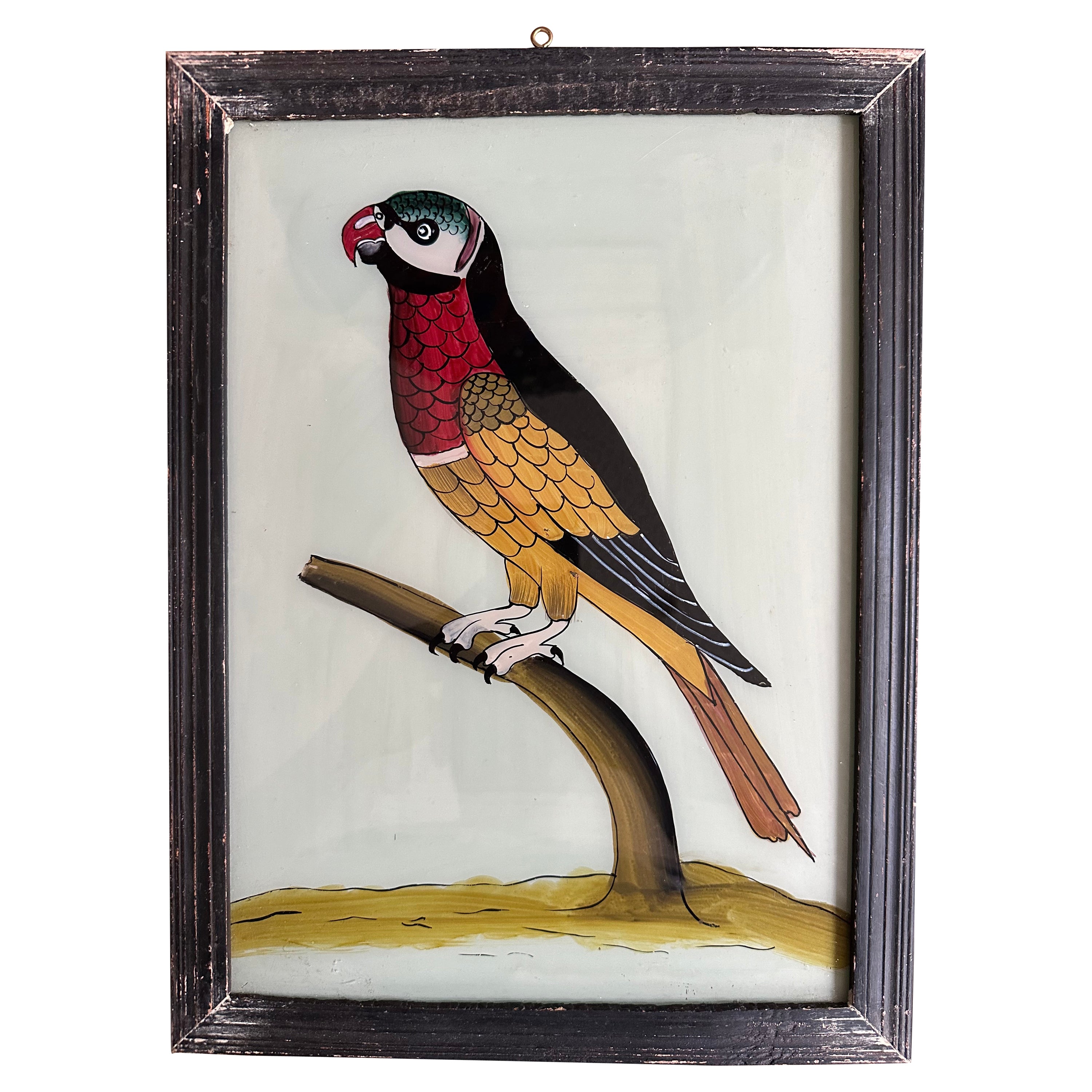
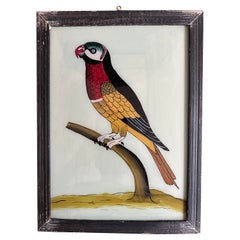
"19th-Century Parrot Portrait: Vibrant Exotic Bird Art"
Located in Southall, GB
This vibrant 19th-century parrot portrait captures the striking beauty and vivid colors of one of nature’s most exotic birds. The artist’s meticulous attention to detail showcases th...
Category
Antique 19th Century English Paintings and Screens
Materials
Glass
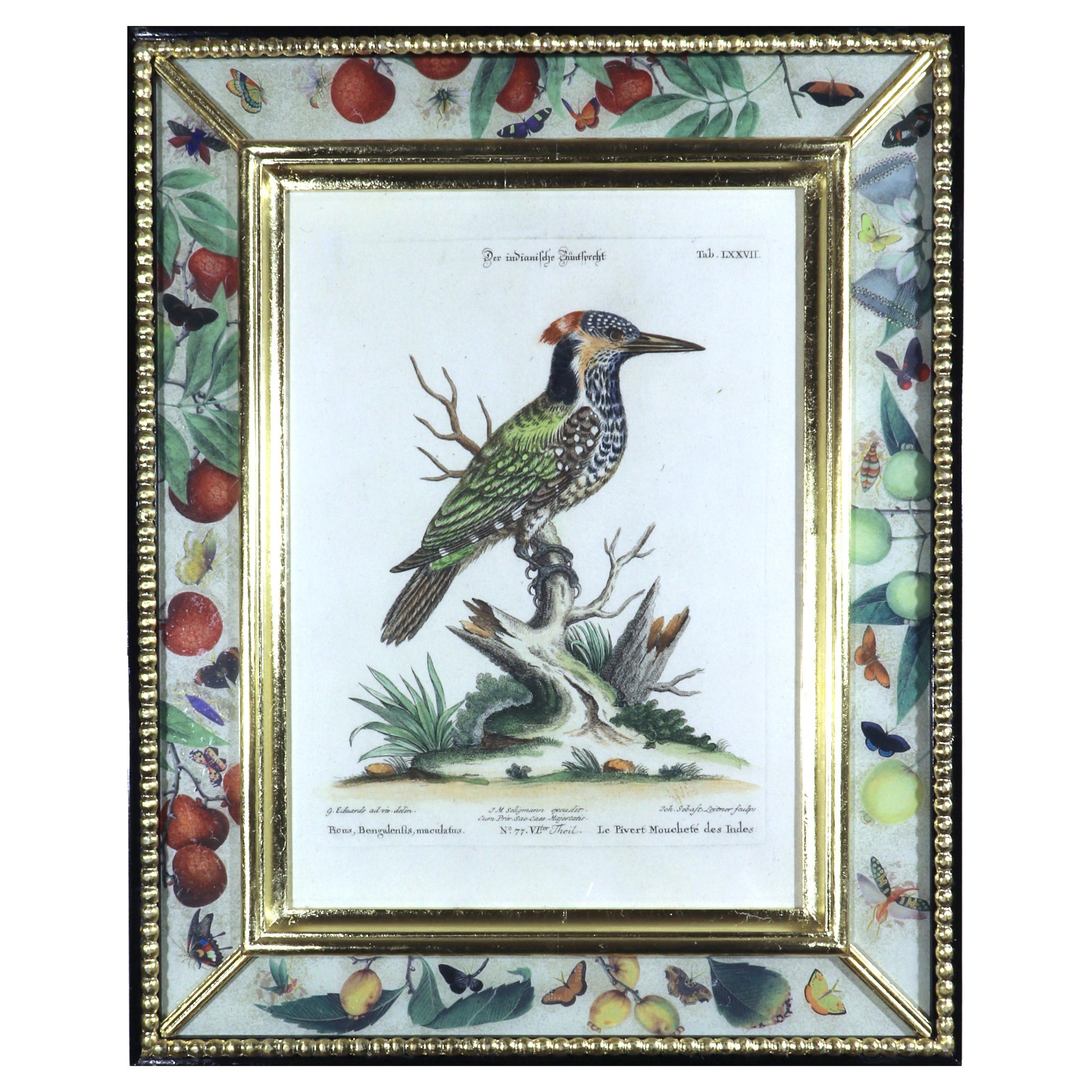
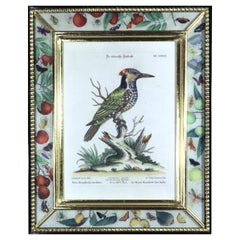
Johann Seligmann Bird Print of Le Pivert Mouchese des Indes, Tab LXXVII
By Johann Michael Seligmann
Located in Downingtown, PA
Johann Seligmann Bird Print,
Le Pivert Mouchese des Indes,
Tab LXXVII,
Circa 1770
The Johann Seligmann engravings of Le Pivert Mouchese des IndesTax LXXXVII is mounted in a decoupa...
Category
Antique 1770s German Georgian Prints
Materials
Paper
More Ways To Browse
Italian Micromosaics
Mosaic Bird Wall Art
Dutch Wall Plates
Framed Flags
Frederick Simpson Coburn
Italian Pietra Dura Plaques
Morbelli Porcelain Wall Plate
Picasso Tile
Pressed Flowers Art
Tiger Wall Art
Vintage Wall Calendars
Art Deco Decorative Plaque
Mother Of Pearl Fan
Pressed Botanicals
Renaissance Art Pairings
Reproduction Oil Painting
Seashell Wall Decorations
18th Century Portuguese Tiles