Items Similar to 18th century of circle Richard Wilson pastoral Landscape
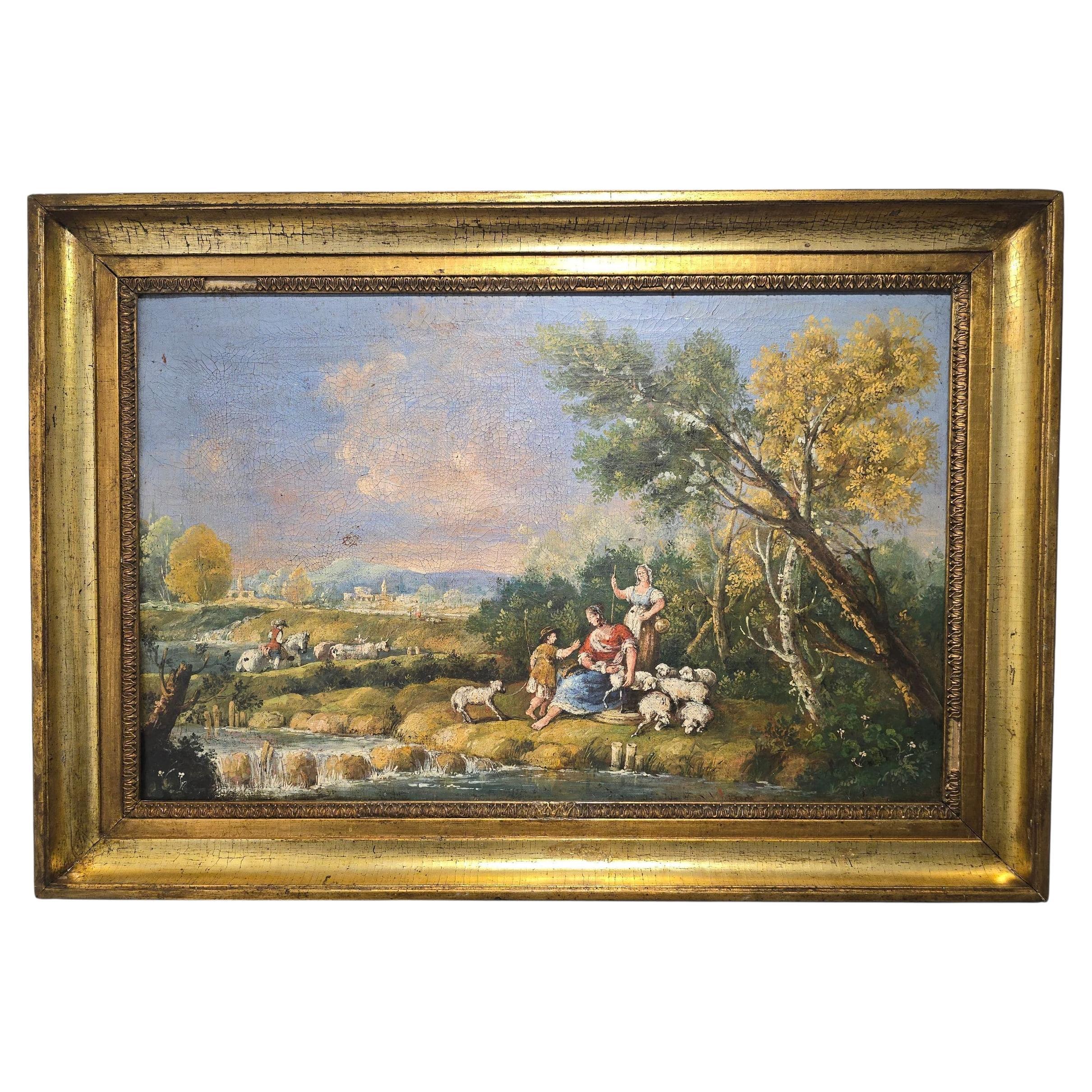
Want more images or videos?
Request additional images or videos from the seller
1 of 14
18th century of circle Richard Wilson pastoral Landscape
$4,105.78
£3,010
€3,496.22
CA$5,656.74
A$6,169.47
CHF 3,268.17
MX$73,963.17
NOK 41,621.94
SEK 38,060.17
DKK 26,120.15
About the Item
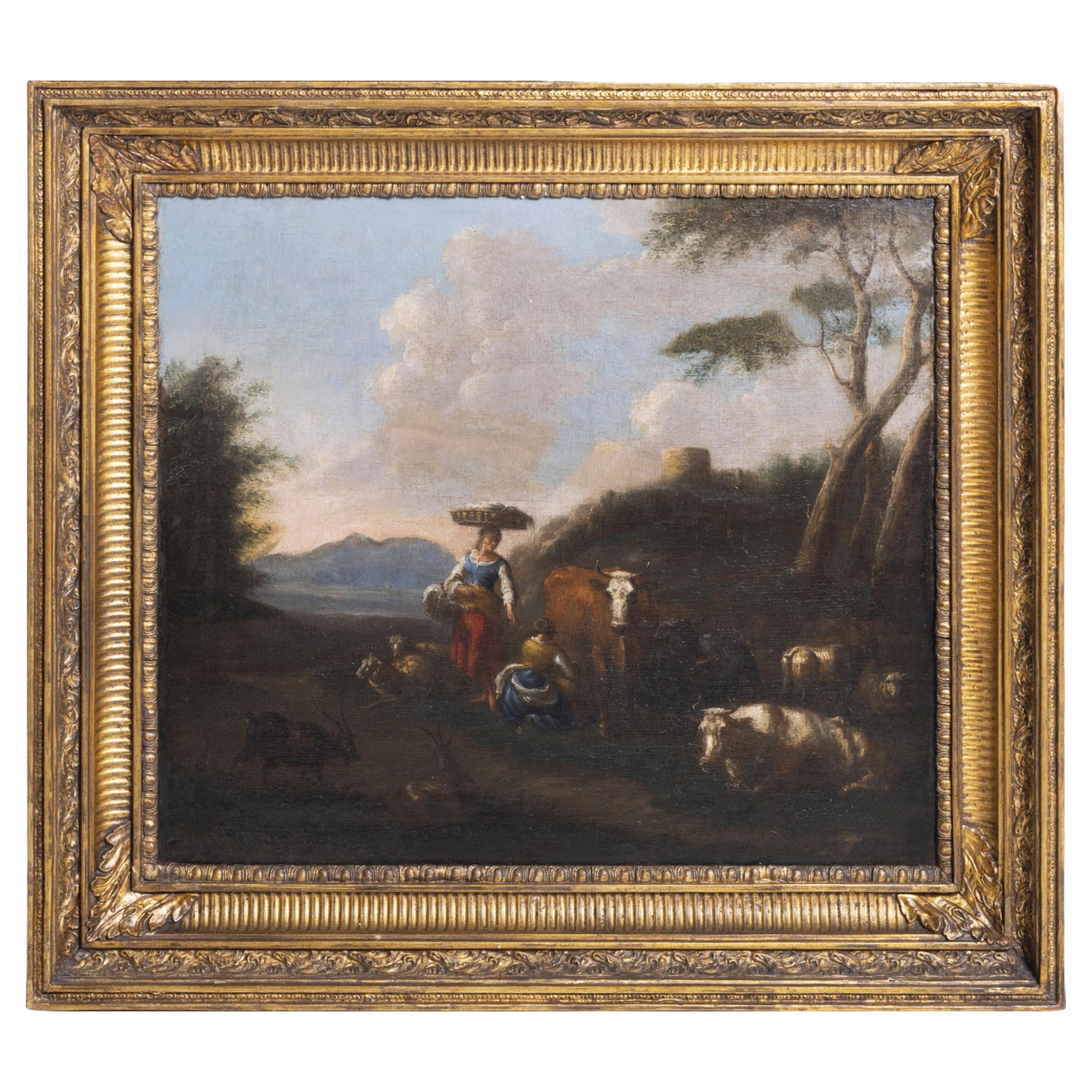
18th-Century Richard Wilson Landscape – A Masterpiece of British Old Master Art
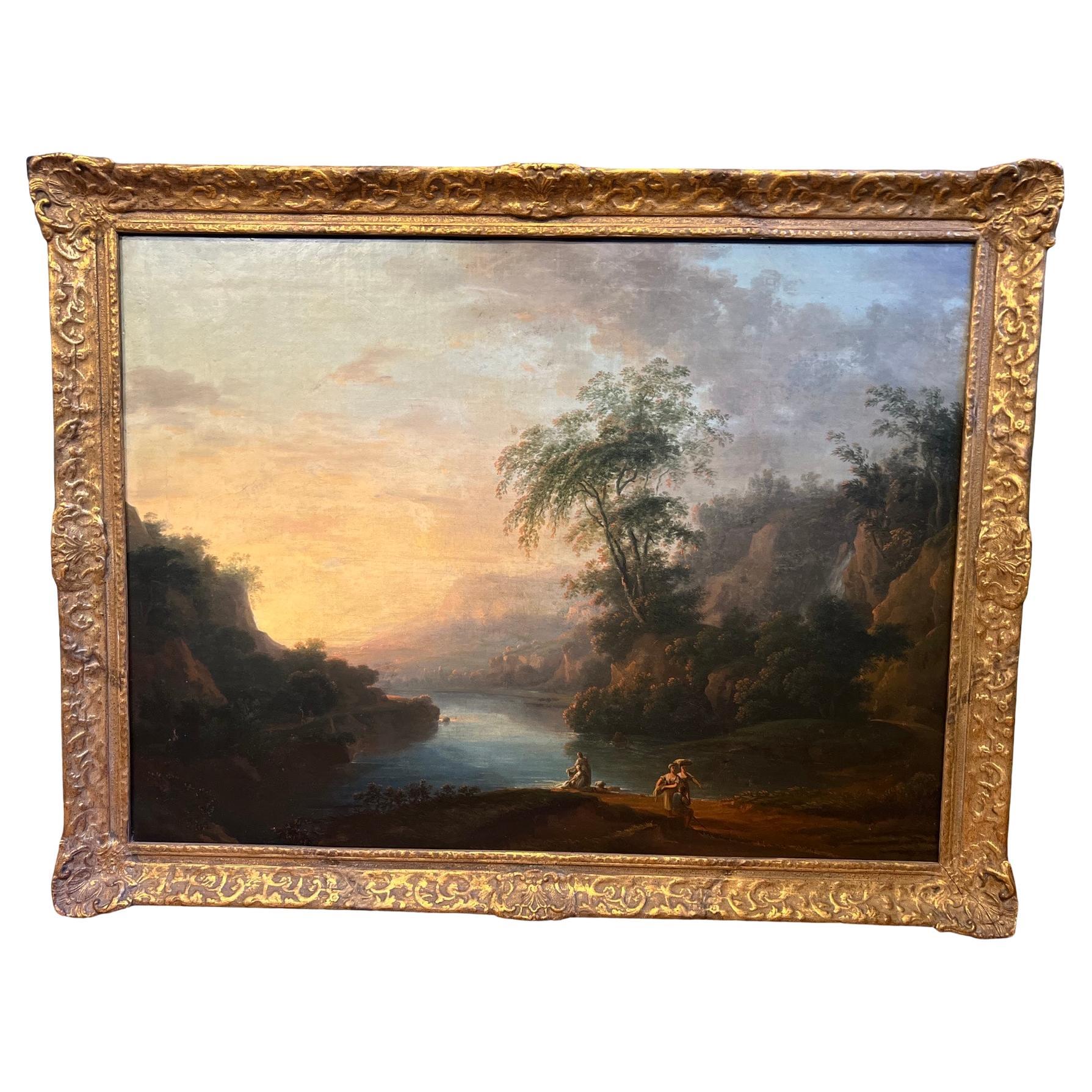
This 18th-century Richard Wilson landscape, attributed to the circle of Thomas Jones, is a stunning pastoral landscape oil painting that embodies the charm of Georgian-era countryside artwork. As a fine example of British old master landscape art, this piece showcases the elegance and natural beauty of the English countryside, making it a perfect addition to any collection of antique rural landscape art.
A Romantic Countryside Painting with Timeless Appeal
The composition of this romantic countryside painting is thoughtfully balanced, featuring lush greenery, rolling hills, and a tranquil sky. The English countryside oil painting from the 1700s captures the peaceful coexistence of nature and human presence, emphasising the idyllic beauty of rural life during the Georgian era.
Key Elements in the Richard Wilson School of Painting:
Shepherd and Sheep in a Pastoral Scene
A shepherd tending to his flock is positioned in the foreground, dressed in traditional rural attire, overseeing his grazing sheep.
This antique pastoral scene with a shepherd and sheep symbolises the simplicity and harmony of country life.
Classical Ruins on a Hilltop
A partially ruined villa or ancient temple sits atop a grassy hill, hinting at the passage of time and the historical depth of the landscape.
The blending of ruins and nature reflects a Georgian pastoral scenery aesthetic, which was popular among British old master landscape artists.
A Flowing Waterfall and Natural Beauty
A gentle waterfall cascades over rocky terrain, adding a dynamic element to the stillness of the painting.
The soft golden light of the sky suggests an early morning sunrise or a warm evening glow, further enhancing the serene and timeless atmosphere.
This original Thomas Jones-style artwork for sale is a prime example of the Thomas Jones school of painting, known for its rich textures, attention to natural detail, and delicate play of light and shadow.
A Highly Collectible English Oil Painting for Art Enthusiasts
For serious collectors looking to purchase antique British landscapes, this 18th-century oil painting for sale presents a rare opportunity to own a historically significant masterpiece. The circle of Thomas Jones painting style, with its subtle realism and poetic representation of nature, has long been admired in fine art collections and galleries.
Reasons to Invest in This Collectible Thomas Jones-Inspired Artwork:
Authenticity
Historical Value: As a British old master landscape, this painting captures the heritage of 18th-century British art.
Timeless Appeal: The classic rural oil painting aesthetic ensures it remains a sought-after piece for collectors and investors.
Perfect for Interior Decor
Exhibitions: Whether displayed in a Sussex fine art gallery or in a private collection, this vintage countryside wall art enhances any space with its elegance and history.
Condition
Restoration Details
This antique rural landscape art has been recently cleaned and restored, with the canvas relined to preserve the original colours and delicate brushwork. The painting retains its authentic patina, ensuring it remains a high-value collectable piece for generations to come.
To the left, atop a small hill, stands a partially ruined classical structure, possibly a temple or villa, hinting at the passage of time and the transient nature of human endeavours. The ruins are overgrown with foliage, blending harmoniously with the surrounding landscape. The overall mood of the painting is one of tranquillity and nostalgia, capturing the idyllic beauty of the countryside and the romanticized ruins of a bygone era. The attention to detail in the natural elements, combined with the warm, earthy tones typical of the period, creates a timeless and evocative scene.
- Similar to:Richard Wilson R.A. (Artist)
- Dimensions:Height: 23.23 in (59 cm)Width: 21.66 in (55 cm)Depth: 1.97 in (5 cm)
- Style:Georgian (Of the Period)
- Materials and Techniques:
- Place of Origin:
- Period:
- Date of Manufacture:1790
- Condition:Refinished. Wear consistent with age and use.
- Seller Location:Seaford, GB
- Reference Number:1stDibs: LU10376244964762
About the Seller
No Reviews Yet
Vetted Professional Seller
Every seller passes strict standards for authenticity and reliability
Established in 2021
1stDibs seller since 2025
Typical response time: 1 hour
- ShippingRetrieving quote...Shipping from: Seaford, United Kingdom
- Return Policy
More From This Seller
View AllManner of Claude Lorrain Merchants on the banks of the river po
By (after) Claude Lorrain (Claude Gellée)
Located in Seaford, GB
Italianate landscape, Manner of Claude Lorrain
Very good Quality oil on relined canvas in the Manner of Claude Lorrain, cargo ships on the banks of the river Po Italy.
📜 Provenance – Italianate Landscape after Claude Lorrain, England or Italy, circa late 18th–early 19th century
This finely executed oil on canvas is an accomplished historic copy after Claude Lorrain’s celebrated Italianate river landscapes, specifically related to his Landscape with Merchants (c. 1630s), held at the National Gallery of Art, Washington, D.C. The composition also bears a close resemblance to the 1769 engraving by Boydell and James Mason, after a painting once in the distinguished collection of Robert Trevor, 4th Baron Trevor, later 1st Viscount Hampden.
The scene features cargo ships along the tranquil banks of the River Po, enveloped in the soft, atmospheric light for which Claude Lorrain (1600–1682) is universally revered. Executed in the idiom of the Grand Tour period, the painting exemplifies the classical Arcadian themes sought by aristocratic collectors travelling through Italy in the 18th and early 19th centuries.
This work is a particularly elegant example of the period's taste for Claudean compositions, balancing architectural elements with expansive vistas and golden, diffused light. The canvas has been professionally relined and restored, housed in a contemporary frame that complements the work’s scale and palette. Minor craquelure and darkening to areas of the blue and green pigments remain consistent with age, enhancing its historic charm.
Ideal for integration into neoclassical, traditional, or transitional interiors, this work represents an opportunity to acquire a piece of decorative art with a strong visual lineage and academic relevance — a testament to Lorrain’s enduring influence across centuries of landscape painting.
Very similar to the Landscape with Merchants in the National Gallery of Art, Washington, D.C.
Our version could be after the engraving by Boydell and James Mason on 1st January 1769.
Interestingly, the source painting for the painting was once in the collection of Robert Trevor, 4th Baron Trevor (from 1764), and subsequently (from 1776) 1st Viscount Hampden.
18th-Century Italian Landscape in the Manner of Claude Lorrain
This exquisite 18th-century Italian Landscape in the manner of Claude Lorrain captures the essence of Italian Baroque landscape painting, showcasing the serene beauty and harmony of the classical countryside. Drawing inspiration from the Golden Age landscape painting, it reflects the elegance and detail characteristic of Claude Lorrain-style artwork, featuring sweeping vistas, balanced compositions, and an idealised landscape scene that exudes timeless charm.
A Classical Italian Countryside Painting...
Category
Antique 18th Century British Baroque Paintings
Materials
Canvas
$4,910 Sale Price
20% Off
Manner of Claude Lorrain The Goat heard in Arcadian Landscape
By Claude Lorrain
Located in Seaford, GB
An Exquisite Italianate Arcadian Landscape Oil Painting
This late 18th-century Italianate classical landscape oil painting beautifull...
Category
Antique Late 18th Century European Baroque Paintings
Materials
Canvas, Paint
Dutch 19th century Landscape Painting
By Andreas Schelfhout
Located in Seaford, GB
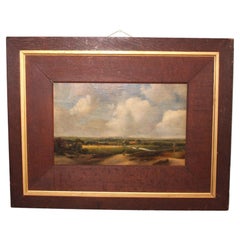
This charming oil-on-paper painting captures a serene landscape near Haarlem, evocative of Andreas Schelfhout's masterful Dutch Romantic style. The work features a quintessentially D...
Category
Antique Late 19th Century Dutch Late Victorian Paintings
Materials
Paint, Paper
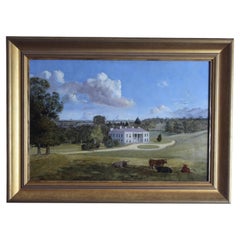
English School 19th Century Country House Landscape Oil Painting
Located in Seaford, GB
19th-century painting of Warlies House, Essex
This captivating mid-19th-century oil on panel painting exemplifies the idyllic charm of pastoral landscapes from the period, featuring...
Category
Antique 1870s English Victorian Paintings
Materials
Paint
$2,127 Sale Price
20% Off
Early 19th century horse painting
By Dean Wolstenholme
Located in Seaford, GB
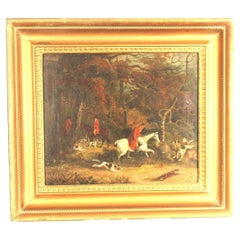
A Timeless Depiction of the English Fox Hunt
The early 19th-century fox hunting scene, attributed to Dean Wolstenholme Elder, is a stunning representation of the aristocratic traditi...
Category
Antique 1810s English Regency Paintings
Materials
Canvas
Early 19th century Capriccio Brazil School Painting
Located in Seaford, GB
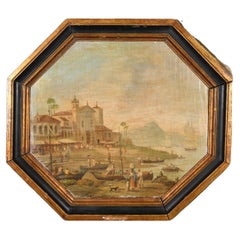
Rare Early 19th century Capriccio view of Rio de Janeiro Painting
Probably painted circa 1810 by one of Jean-Baptiste Debret, Italian Students.
Painted on Sailcloth.
Historical Context of Early 19th Century Portuguese Colonial Brazil
1.1 Transition from Colony to Empire
During the early 19th century, Brazil underwent a seismic shift in its political status. Originally a colony under the Portuguese Empire, the arrival of the Portuguese Royal Court in Rio de Janeiro in 1808 rapidly elevated the city’s cultural and political importance. By 1815, Brazil was declared a kingdom united with Portugal, setting the stage for the emergence of the Empire of Brazil in 1822. This period of transformation—often termed the transitional period from colony to empire—fueled a wave of artistic production in cities like Rio de Janeiro.
1.2 European Artistic Influence in Brazil
With the French Artistic Mission in Rio (initiated in 1816) and the presence of various Portuguese and European artists, Brazilian art of the early 1800s began to reflect diverse influences, from neoclassical painting to the early rumblings of romanticism. Painters such as Jean-Baptiste Debret, and Nicolas-Antoine Taunay, and local luminaries like Manuel de Araújo Porto-Alegre contributed to the fine arts tradition in Brazil. Their works featured scenes of local life, portraits of Brazilian society, and imaginative vistas—sometimes referred to as “capriccios,” in which real elements were combined with artistic liberties to create an idealized panorama.
1.3 Rio de Janeiro as Cultural and Political Hub
Rio de Janeiro, often called the Imperial capital after Brazil’s independence, was home to foundational institutions like the Imperial Academy of Fine Arts (Academia Imperial de Belas Artes). Later evolving into the Escola de Belas Artes (School of Fine Arts in Rio), these academies nurtured the talents of emerging painters, who found patronage under the Royal Court and, subsequently, the Imperial Court. The city’s significance was further enhanced by the construction of significant buildings, the modernization of infrastructure, and the mingling of European courtly customs with the traditions of local inhabitants.
. Description of the Octagonal Oil on Canvas: A Capriccio View of Rio de Janeiro
2.1 Composition and Layout
The most striking characteristic of this 19th-century Brazilian art piece is its octagonal shape, a relatively unusual format that draws the viewer’s gaze toward its centre. The composition showcases Rio de Janeiro’s shoreline in the early 1800s, brimming with merchant ships and smaller boats anchored near the shore. On the sand, there is a bustling crowd of local people—men and women carrying food and goods on their heads, loading and unloading boats, and engaging in everyday commerce. The backdrop of soaring mountains suggests Rio’s iconic topography, embodying the landscape that famously defines the city.
2.2 Architectural and Religious Landmarks
On the left side, one can discern the silhouette of a church believed to be Santa Lucia, a significant religious structure in the heart of early 19th-century Rio. This element provides viewers with a tangible reference point, linking the scene to an actual location. However, because this painting is labelled as a “capriccio,” the artist might have taken creative liberties by rearranging or amplifying certain features of the city. The melding of real and idealized elements is characteristic of these imaginative vistas.
2.3 Evoking Daily Life in Colonial Rio
One of the painting’s greatest appeals lies in its portrayal of daily life during the colonial era. Men and women from various backgrounds populate the scene. Some appear to be carrying goods on their heads, a common practice in Brazil that has persisted through different centuries. Others appear to be haggling or trading near small vessels, revealing the commercial pulse of an active port city. This focus on local people, combined with the grandeur of merchant ships, captures the tension and synergy between the every day and the extraordinary—a hallmark of Brazilian colonial painting that balances the grand narratives of empire with the rhythms of ordinary life.
2.4 An Amalgamation of Neoclassical and Romantic Influences
Although academic art in early 19th century Brazil was highly influenced by neoclassicism, the onset of romanticism can be spotted in the emotional portrayal of the sky, the lively palette, and the dramatic emphasis on nature’s beauty (the mountains, in particular). This duality reflects the fine arts tradition in Brazil during the transitional phase when artists were embracing multiple styles. As part of the School of Rio or the Rio de Janeiro school, painters often integrated academic techniques learned from European masters with emerging local subjects and influences.
3. Institutions and Artistic Movements
3.1 Imperial Academy of Fine Arts
Originally known as the Royal School of Sciences, Arts, and Crafts, the Imperial Academy of Fine Arts in Rio de Janeiro was instrumental in shaping 19th-century Brazilian art. Influential artists and teachers from Portugal, France, and other European nations congregated at the Academy, imparting their expertise to native students. As the monarchy consolidated power, the Academy enjoyed royal patronage, leading to the creation of Imperial Academy-style works that combined European academic rigour with Brazilian-themed subject matter.
3.2 Impact of the French Artistic Mission
The French Artistic Mission, which arrived in 1816, played a pivotal role in introducing advanced European artistic techniques, thereby elevating the overall quality of painting in Brazil. Artists like Jean-Baptiste Debret not only documented Brazilian society but also spearheaded the development of a local visual identity that aligned with both academicism and the national context of a blossoming empire. Debret, alongside others such as Nicolas-Antoine Taunay, mentored Brazilian artists, sowing the seeds of what would become the Brazilian academic art movement.
3.3 Religious, Historical, and Landscape Paintings
In addition to everyday scenes and historical compositions, religious iconography remained crucial throughout Portuguese colonial and imperial Brazil. Churches were omnipresent in cityscapes like Rio de Janeiro. Many colonial-era Brazilian portraits...
Category
Antique Early 19th Century Brazilian Spanish Colonial Paintings
Materials
Canvas
$2,946 Sale Price
20% Off
You May Also Like
18th Century Oil on Canvas Italian Bucolic Landscape Painting, 1770
Located in Vicoforte, Piedmont
Venetian school of the second half of the 18th century. Oil painting on canvas depicting an Arcadian landscape of pastoral genre. This type of pictorial representation established it...
Category
Antique 1770s Italian Paintings
Materials
Canvas
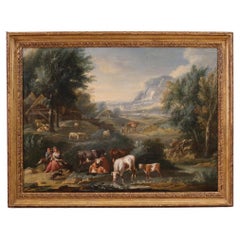
Antique 19th Century Oil On Panel Pastoral Setting, Martin Verstappen 1773-1852
Located in Royal Tunbridge Wells, Kent
An exceptional 19th-century depiction of a pastoral setting by the hand of Martin Verstappen. The foreground features a mother with her two children, nestled amidst lush tall grass. ...
Category
Antique 19th Century European Other Paintings
Materials
Giltwood, Paint
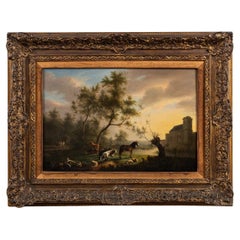
Pair of Jean Pillement Landscape Paintings, Signed and Dated 1794
Located in Lisboa, PT
Pair of Jean Pillement (French, 1728–1808) Landscape Paintings, Signed and Dated 1794 — Oil on Canvas
Dimensions:
With frame: 32.5 × 28 cm (12.8 × 11 in)
Canvas (sight): 17.5 × 12.5...
Category
Antique Late 18th Century European Paintings
Materials
Canvas
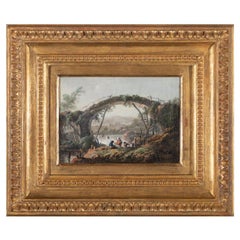
18th Century, Old Master European Landscape Painting Italian School
Located in Atlanta, GA
Italian School, 18th century.
A masterful example of 18th-century Italian School artistry, this Old Master landscape painting captures the sublime beauty of an idealized European co...
Category
Antique 18th Century Italian Baroque Paintings
Materials
Canvas, Giltwood, Paint
$6,000 Sale Price
20% Off
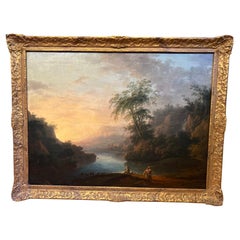
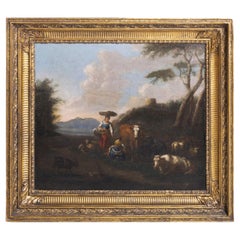
BRITISH SCHOOL "Landscape with Figures and Animals" 19th Century
Located in Madrid, ES
BRITISH SCHOOL
"Landscape with Figures and Animals" 19th Century
Oil on canvas
Recovered.
Dim.: 50 x 58 cm
good conditions
Category
Antique 19th Century English Baroque Paintings
Materials
Paint
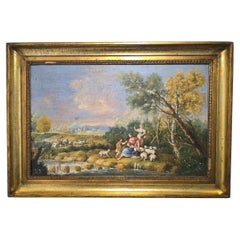
18th-Century Italian Oil on Canvas – Pastoral Scene
Located in Madrid, ES
18th-Century Italian Oil on Canvas – Pastoral Scene
Elegant Italian oil on canvas depicting a pastoral scene, painted in the 18th century. The composition captures an idyllic rural ...
Category
Antique 1760s Paintings
Materials
Fruitwood
More Ways To Browse
Georgian Key
Porthole Table
Portrait Portugal
Red Imari
Retro Red And Chrome Table And Chairs
Reverse Painted Glass Panel
Roman Bronze Table
Russel Wright American Modern
Russell Woodard Spun Fiberglass Table
Russian Doll
Screen By Piero Fornasetti
Scully And Scully
Shell Table Base
Signed Crystal Bowl
Silver Gondola
Six Panel Byobu
Stone Pagoda
Streamline 1930s