Items Similar to 18th century, Pair of Italian painting with Pastoral Scenes, Londonio school
Want more images or videos?
Request additional images or videos from the seller
1 of 20
18th century, Pair of Italian painting with Pastoral Scenes, Londonio school
$41,216.27
£30,802.98
€34,500
CA$56,859.91
A$62,279.23
CHF 32,790.02
MX$743,281.89
NOK 417,879.42
SEK 382,004.78
DKK 262,963.94
About the Item
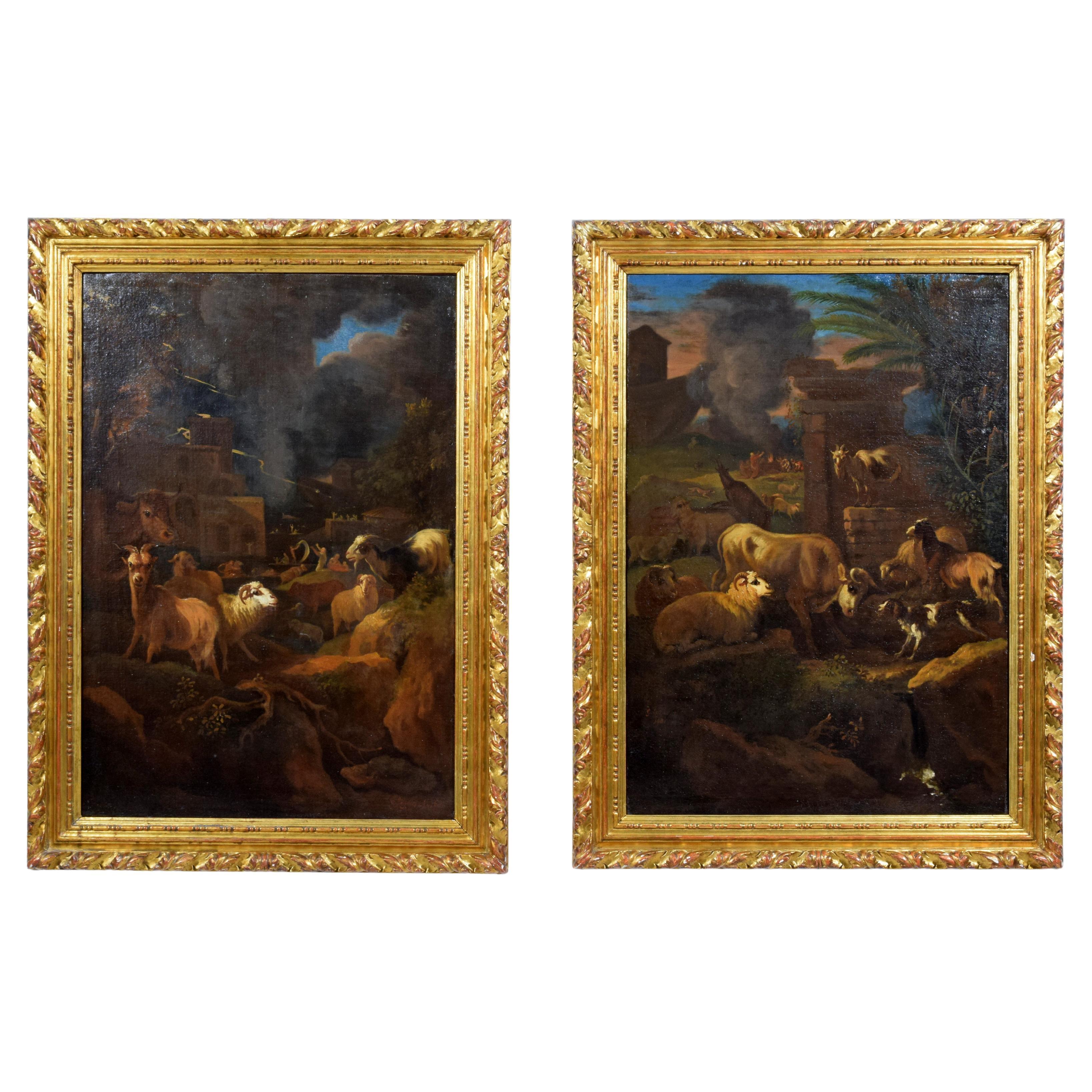
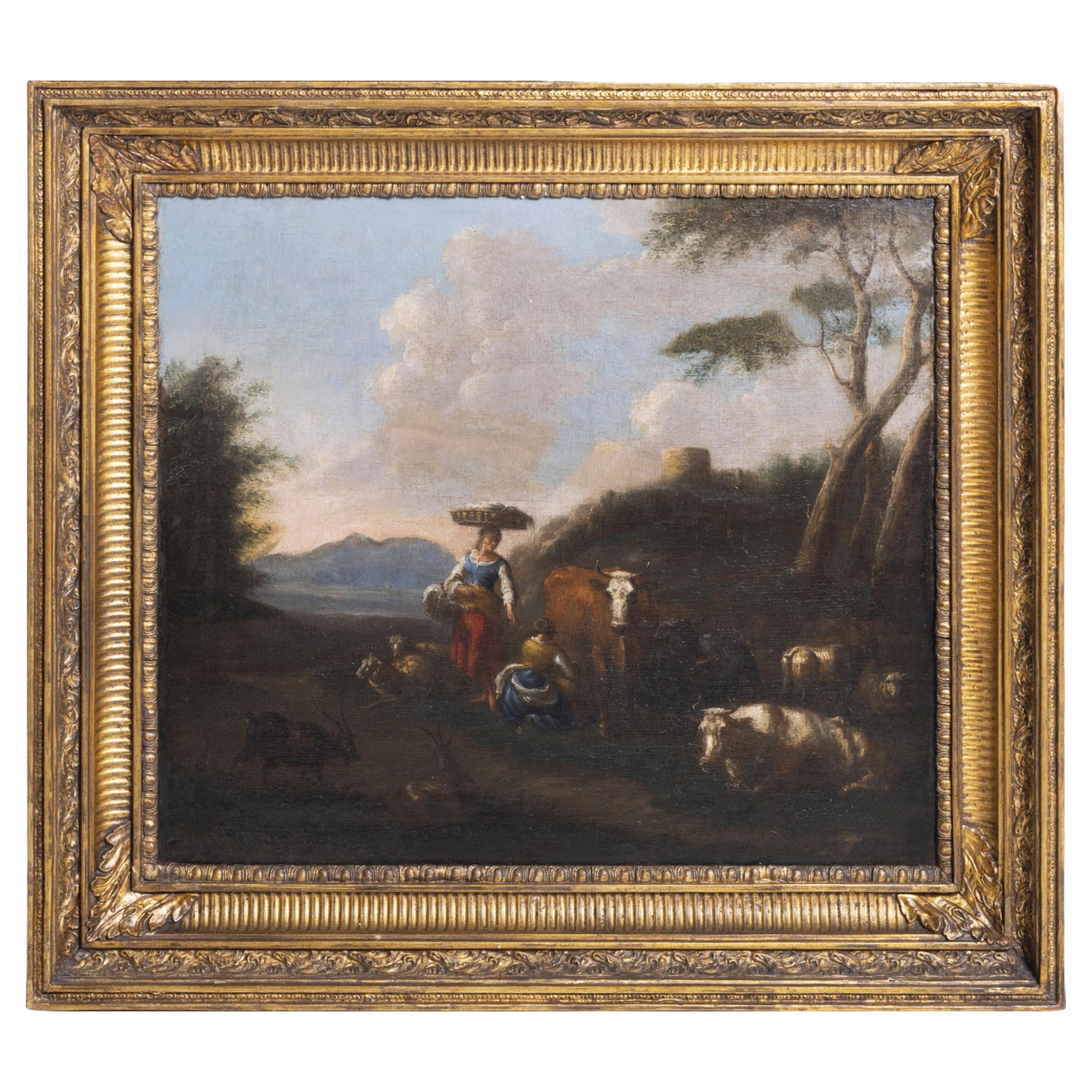
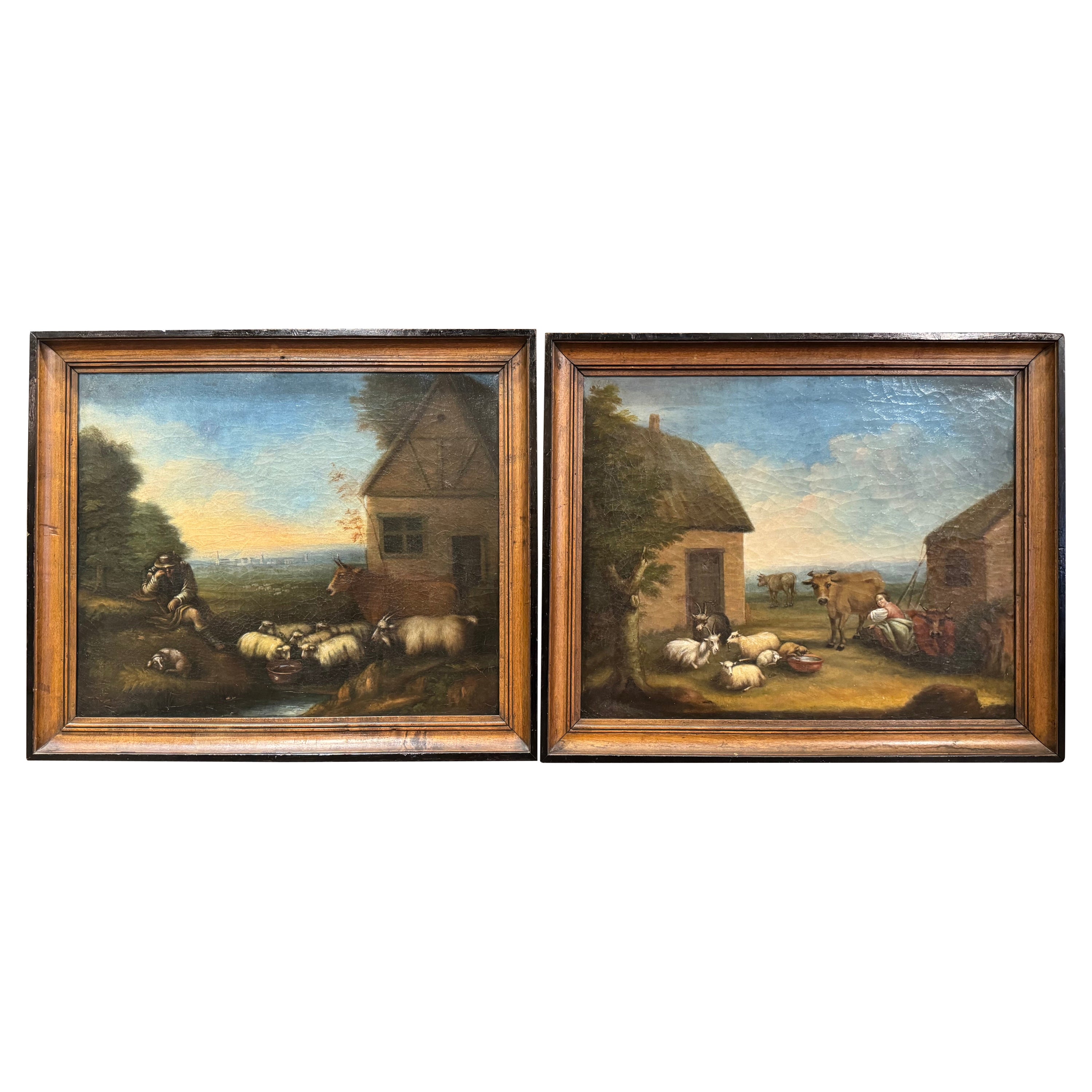
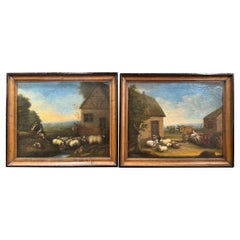
Pair of large paintings depicting pastoral scenes, Londonio school, second half of the 18th century
Frame: W 157 x H 130 x D 9 cm; canvas: 139 x 110 cm
This pair of large-scale paintings, presented in antique gilded wooden frames with mouldings and corner carvings, depicts 18th-century pastoral scenes typical of the Lombard tradition (Italy) and close to the manner of the Londonio family and their followers, recalling the Bergamo area. The compositions are lively, rich in figures, set outdoors and placed within rural landscapes.
In the painting on the left, the foreground features a group of shepherds and young shepherdesses arranged in a way that guides the viewer’s gaze toward the centre of the scene. A seated woman holds a lamb on her lap and appears to be interacting with two young girls who approach her affectionately. To the left, another young woman stands holding a wicker basket filled with straw and two chicks. Her balanced pose and simple yet well-kept attire contribute to the everyday character of the scene.
On the right, a young shepherd with a staff resting across his shoulders oversees a varied flock of sheep and goats. The animals, rendered with naturalistic accuracy, are one of the most characteristic elements of the Londonio tradition: expressive, vivid, and carefully portrayed in their postures and in the depiction of their fur. Alongside the sheep appear a donkey and other animals, further enriching the narrative. The background reveals a soft, rolling landscape crossed by a fence and dominated by a distant village, with houses and a church standing out against a cloudy sky. Warm tones and diffused light create a serene, bucolic atmosphere suggestive of a peaceful working day among fields and pastures.
The second painting, presented here on the right, features an equally elaborate and lively scene built through a collective narrative of human and animal figures. In the foreground on the left, an elderly shepherd sits on the ground, surrounded by his sheep; his relaxed posture, serene face, and the presence of a small dog by his side infuse the scene with a sense of domestic intimacy. At the centre stands a younger man beside a horse carrying a gourd water flask, a wine barrel, and—attached to the saddle—several baskets containing two small lambs. His gesture, with an outstretched arm pointing into the distance, introduces narrative dynamism and leads the viewer’s eye toward the background. Next to him, on the right, a woman adds a familiar and almost affectionate tone to the pastoral scene. Other figures appear behind her, forming a compact, industrious group. The horse and the various sheep and goats, painted with evident naturalistic attention, again confirm the stylistic influence of the Londonio school, known for its detailed and lively depictions of farm animals. The background presents a wide hilly landscape with a small village perched on a rise. A woodland area with lush green trees adds depth, while the bright sky streaked with light clouds harmonizes the entire composition.
The atmosphere of these paintings reflects the simple everyday life of a rural community absorbed in its work, captured in moments of pause or transition. The overall effect conveys a sense of familial harmony, typical of Lombard rustic scenes, where the relationship between people, animals, and landscape is depicted with tenderness and narrative engagement.
The figures are reinterpreted in a personal way and gathered into an original composition, drawing inspiration from various engravings by Francesco Londonio, to which they clearly relate through formal and thematic affinities.
The Londonio family holds a significant place in the artistic history of Lombardy, in the north of Italy, in the 18th century. Its most renowned member is Francesco Londonio (1723–1783), a Milanese painter and engraver, though the family also included other artists who contributed to the creation of a true school devoted to pastoral painting. The Londonio workshop in Milan became a training ground for several artists: not an institutional school, but a creative environment where style, subjects, and ways of depicting the rural world were handed down.
The term Londonio school refers to a group of painters, mostly Lombard, active between the second half of the 18th century and the early 19th century, who drew inspiration from Francesco Londonio’s pastoral scenes, his affectionate naturalism in the depiction of animals, the intimate, everyday compositions, warm colours and soft light, and above all his celebrated engravings, true iconographic matrices used as models.
Many of these artists cannot always be precisely identified, but belong to a broad productive stream: works destined for villas, country houses, and bourgeois residences seeking elegant, reassuring rural subjects.
Francesco Londonio was born in Milan in 1723. Tradition cites an early training with Ferdinando Porta, a late-Baroque Milanese painter, and later with Benigno Bossi, whose influence brought him closer to engraving. Painting and printmaking remained central throughout his production. Londonio became famous for a genre highly prized at the time: rustic painting. His works portray scenes of shepherds, farmers, flocks of sheep and goats, domestic animals, rustic interiors, and rural landscapes.
His style combines elements of Lombard naturalism with influences from Antonio Allegri known as Correggio, Ceruti, Philip Peter Roos, Van Laer and Domenico Brandi, whom he encountered during his travels to Cremona, Rome, and Naples; all fused with a sentimental and idyllic tone that made his works popular among the nobility, the bourgeoisie, and the ecclesiastical world. Admirers included Archbishop Pozzobelli, Cardinal Vitaliano Borromeo, and Cardinal Angelo Maria Durini.
In addition to his paintings, Londonio produced numerous etchings—often on the same pastoral subjects—which helped spread his fame beyond Lombardy and are today considered central to the 18th-century Italian engraving tradition. He spent most of his life in Milan, where he continued to paint, engrave, and teach. He died in 1783, leaving a vast corpus of paintings and prints.
Londonio is regarded as one of the foremost interpreters of Lombard pastoral painting in the 18th century.
The author of this pair of works belongs to this tradition, drawing upon Londonio’s iconographic models and reinterpreting them freely. The ability to rework these schemes without losing their original matrix reveals not only a thorough understanding of Londonio’s pictorial language but also a desire to update it through freer and more personal solutions.
In this sense, the two paintings under examination stand as significant testimony to the success of the Londonio school in the late 18th century and beyond, showing how his legacy continued to influence artists and patrons sensitive to rural atmospheres, the gentle naturalism of the figures, and the carefully constructed spatial arrangements.
The lively colour palette and balanced composition make these large-format works highly decorative and particularly pleasant. They may be displayed above consoles or chests of drawers, or hung side by side on the wall of a living room, study, entrance hall, or corridor, enhancing the charm and dynamism of the décor.
We apologize for any translation errors from Italian. Please contact us to request the expertise in Italian.
- Dimensions:Height: 51.19 in (130 cm)Width: 61.82 in (157 cm)Depth: 3.55 in (9 cm)
- Style:Baroque (Of the Period)
- Materials and Techniques:
- Place of Origin:
- Period:
- Date of Manufacture:second-half of 18th Century
- Condition:Wear consistent with age and use.
- Seller Location:IT
- Reference Number:1stDibs: LU4405247962572
About the Seller
5.0
Vetted Professional Seller
Every seller passes strict standards for authenticity and reliability
Established in 1980
1stDibs seller since 2019
56 sales on 1stDibs
Typical response time: <1 hour
- ShippingRetrieving quote...Shipping from: Italy
- Return Policy
More From This Seller
View All1681, Pair of Paintings signed Grechetto da Leone as Govaert G. VAN DER LEEUW
Located in IT
1681, Pair of Paintings signed Grechetto da Leone as Govaert G. VAN DER LEEUW
Oil on Canvas
Dimensions: cm W 91 x H 123 x D 6; canvas: cm W 72 x H 103.5
This pair of fine paintings,...
Category
Antique 1680s Italian Baroque Paintings
Materials
Canvas
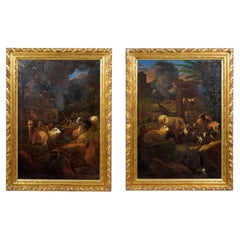
17th Century, Italian Painting by Pier Francesco Cittadini, Jacob and his Family
Located in IT
Pier Francesco Cittadini (Milan, 1616-Bologna, 1681)
"Jacob and his family go to Egypt"
Oil on canvas, cm 109 x 190 (canvas only)
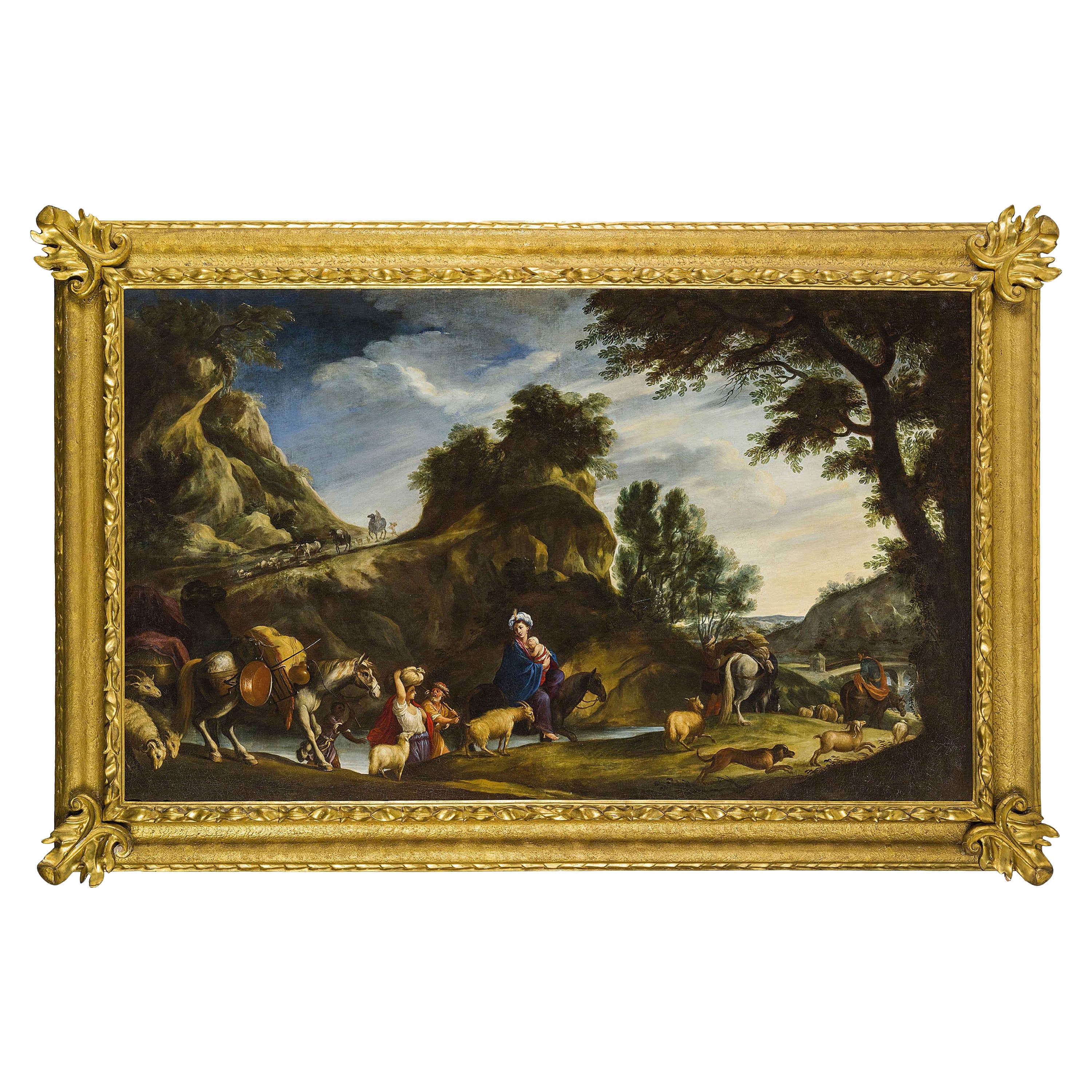
The valuable painting, made in oil on canvas, depicts Jacob and his family go to Egypt and we believe it can be, given the high quality painting, autograph work of Italian Pier Francesco Cittadini (Italy Milan, 1616 - Bologna, 1681) made after 1647. The work, in excellent condition is accompanied by a coeval frame in wood finely carved and golden.
The scene depicted, which was confused with the Flight to Egypt in the past years, is instead identified with the biblical episode of Jacob’s journey. In the foreground, reading the painting from left to right, we see a caravan composed of animals, including donkeys, dromedaries, goats, dogs and horses and people, women, men and slaves, who carry on their journey along the banks of a river, following a path that to the right, would seem to lead to the through of a bridge. In addition to the watercourse is described an environment characterized by large rocks and impervious come far to cover the entire verticality of the canvas. On the left, in the distance, we see the tail of the caravan that runs along the steep path. Large trees enliven and harmonize the environment, as well as white and grey clouds characterize the predominantly clear sky and illuminated on the right by sunlight.
The story is told in the Bible, Book of Genesis, 30, 25, passage in which is described the flight of Jacob from Haran after the contrasts with Laban, father of his wife Rachel. Jacob is the third great patriarch of the Bible. From his descendants originate the twelve generations of the people of Israel. He is the son of Isaac and Rebekah, who led him to flee from the wrath of Esau to Haran to seek refuge from his brother, Laban. At his uncle’s house Jacob met his daughter Rachel. As soon as he saw his cousin, Jacob was taken. Jacob will stay seven years in the service of Laban to marry his beloved Rachel. But Laban, with a deception, will give him in marriage first Lia, the least beautiful eldest daughter, and only after another seven years the splendid Rachel. From his first wife he will have several children, while Rachel will give birth to the beloved son, Joseph, who will become viceroy of Egypt.
After years of service, Jacob asked to be paid with every dark-coloured garment among the sheep and every spotted and dotted garment among the goats. Laban accepted and sent away from his sons all the leaders of that kind. So Jacob took fresh branches of poplar, almond and plane tree, and flayed them, and put them in the troughs. The optical suggestion induced the goats and the sheep to conceive and give birth to dark, striped and dotted garments. He also ensured that all the strongest and healthiest leaders of the flock of Laban would drink near the barked branches, thus assuring a genetic superiority to his part of the flock. His flocks grew numerous and strong and he became richer than his relative, arousing envy. It was clear that Laban would not respect him much longer. At the suggestion of the Lord, Jacob decided to return to Canaan. Trying to avoid any possible dispute, he left with his family while Laban was absent for shearing sheep. But when, three days later, his uncle returned home, he became angry, feeling offended because Jacob had gone secretly and had not allowed him to greet his daughters and grandchildren. In addition, his teraphim, statuettes, or idols, which depicted the family deities, had disappeared. After 7 days of pursuit, Laban and his men reached Jacob’s group on Mount Gilead, in the mountainous region west of the Euphrates River, where his uncle and grandson had a stormy conversation. The younger man was outraged at being accused of stealing idols and told Labano to rummage through his family’s tents at will. Neither of them could know or even imagine that it was Rachel who took the idols and hid them in the saddle of the camel. During the search, she sat down firmly on the saddle, apologizing for not being able to get up, «because I usually have what happens to women» (Gen 31:35). So the loot wasn’t discovered.
The author of this work was inspired by the composition of an engraving by Stefano Della Bella (1610-1664) of circa 1647. The engraving by Stefano della Bella bears the title "Iacob sur ses vieux jours quitte sans fascherie pour voir son filz Ioseph, sa terre et sa patrie" and is signed on the bottom left "Stef. of the Beautiful In. et fe." while on the right it is declared "Cum privil. Regis", that is with license of the king.
Stefano Della Bella (Italy - Florence, May 18, 1610-Florence, July 12, 1664) was born in a family of painters, sculptors and goldsmiths and was left early orphan of his father sculptor, he dedicated himself first to the art of goldsmith at the school of Giovanni Benedetto Castiglione and Gasparo Mola, then turning his attention to drawing and engraving. He soon began drawing figures and copying the etchings of Jacques Callot, which inspired his early works. Under the protection of the Medici, in particular of Don Lorenzo, cadet son of Grand Duke Ferdinand I, Della Bella has the opportunity to make study trips to Rome, where he stayed from 1633-1636; In Rome he met French engravers and publishers of prints such as Israël Henriet and François Langlois, who influenced his decision to move to Paris in 1639, four years after the death of Callot. In Paris he soon reached, thanks to the engravings commissioned by Cardinal Richelieu, the success also worldly; he frequented courtiers, theatre artists and writers, while refusing too oppressive honors. In 1646-1647 he continued his travels in the Netherlands to Amsterdam, Antwerp and Dordrecht. He returned to Florence in 1650 and resumed working under the protection of the Medici court, working for his patrons. In 1656 he became a member of the Academy of Apatists.
The painting object of this study is reasonably attributable to Pier Francesco Cittadini, or Pierfrancesco Cittadini, called the Milanese or the Franceschino (Italy - Milan, 1616-Bologna, 1681) as some exemplary stylistic comparisons proposed to follow can prove.
Pier Francesco Cittadini was an Italian baroque painter, mainly active in Bologna.
His artistic training first took place with the painter Daniele Crespi...
Category
Antique Mid-17th Century European Baroque Paintings
Materials
Canvas, Giltwood
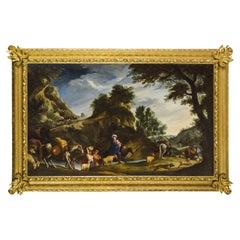
18th Century, Italian Pair of Oil on Canvas Paintings by Francesco Simonini
By SIMONINI
Located in IT
Francesco Simonini (Parma, 16 June 1686 - Parma, 1766)
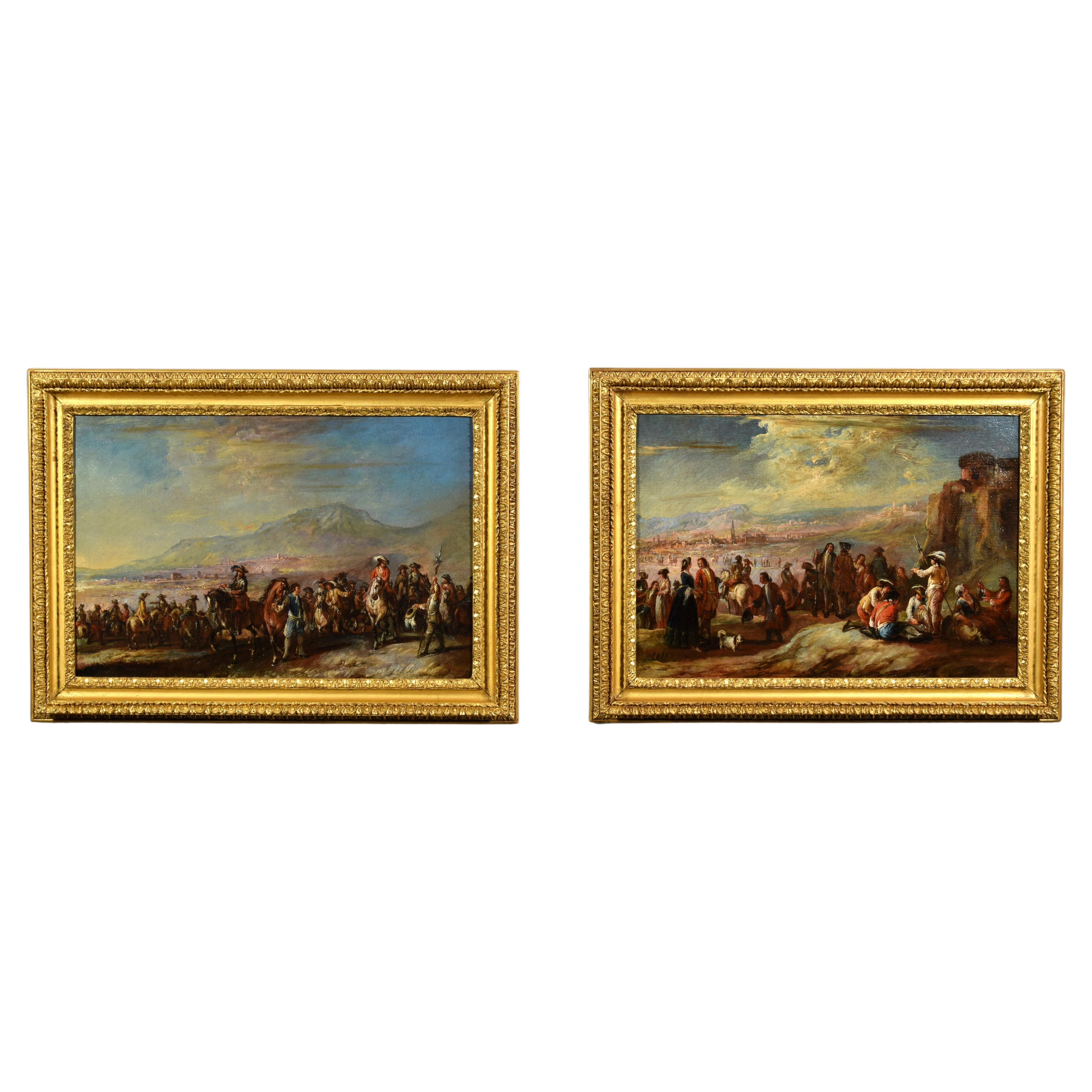
“The rest of the soldiers” and “The march of soldiers”
oil on canvas
cm 40 x 58 and 40 x 60 ; frame: h 52,5 x W 70,5 x D 6 an...
Category
Antique Early 18th Century Italian Baroque Paintings
Materials
Canvas
$27,955 Sale Price
35% Off
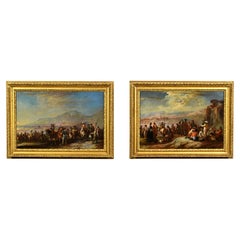
18th Century, Pair of Italian Still Life Painting, attr. to Francesco Lavagna
By Francesco Lavagna
Located in IT
Francesco Lavagna (Italy, Naples 1684-1724)
Pair of paintings depicting Still Life composition of flowers and watermelon and garden in the background
The paintings, beautifully mad...
Category
Antique Early 18th Century Italian Baroque Paintings
Materials
Canvas
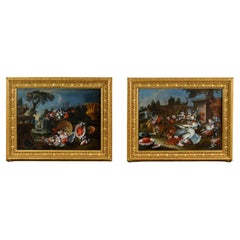
18Th Century, Pair of Italian Allegory Paintings By Vittorio Amedeo Rapous
By Vittorio Amedeo Rapous
Located in IT
18Th Century, Pair of Italian Allegorical Paintings By Vittorio Amedeo Rapous
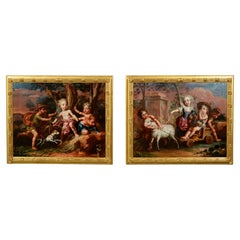
Pair of paintings depicting the Allegory of Spring with putti and the Allegory of Autumn with putti, Vi...
Category
Antique Late 18th Century Italian Rococo Paintings
Materials
Canvas
$36,318 Sale Price
20% Off
17th Century, Italian painting Allegory of the Spring Follower of Jacopo Bassano
By Jacopo Bassano
Located in IT
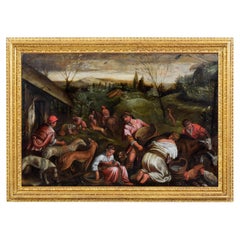
Follower of Jacopo Da Ponte, called Jacopo Bassano (Bassano del Grappa, circa 1510 - Bassano del Grappa, 13 February 1592), 17th century
Allegory of the Spring
Measures: With frame: ...
Category
Antique Late 17th Century Italian Baroque Paintings
Materials
Canvas
You May Also Like
BRITISH SCHOOL "Landscape with Figures and Animals" 19th Century
Located in Madrid, ES
BRITISH SCHOOL
"Landscape with Figures and Animals" 19th Century
Oil on canvas
Recovered.
Dim.: 50 x 58 cm
good conditions
Category
Antique 19th Century English Baroque Paintings
Materials
Paint
Pair of 19th Century French Pastoral Oil on Board Paintings in Gilt Frames
Located in Dallas, TX
Decorate a study or office with this elegant pair of antique paintings. Created in France circa 1880 and painted on board, both colorful art ...
Category
Antique Late 19th Century French Paintings
Materials
Giltwood
Pair of 19th Century French Signed Pastoral Paintings in Blackened Frames
Located in Dallas, TX
Decorate an office or study with this elegant pair of antique paintings. Crafted in France circa 1870, the hand painted artworks on canvas are set inside the original blackened woode...
Category
Antique Mid-19th Century French Paintings
Materials
Canvas
18th Century Oil on Canvas Italian Bucolic Landscape Painting, 1770
Located in Vicoforte, Piedmont
Venetian school of the second half of the 18th century. Oil painting on canvas depicting an Arcadian landscape of pastoral genre. This type of pictorial representation established it...
Category
Antique 1770s Italian Paintings
Materials
Canvas
18th-Century Italian Oil on Canvas – Pastoral Scene
Located in Madrid, ES
18th-Century Italian Oil on Canvas – Pastoral Scene
Elegant Italian oil on canvas depicting a pastoral scene, painted in the 18th century. The composition captures an idyllic rural ...
Category
Antique 1760s Paintings
Materials
Fruitwood
17th Century Live Nature Pair of Paintings Oil on Canvas Flemish School
Located in Milan, IT
Flemish School, 17th century
Live nature couple with animals
Measures: Oil on canvas, cm 25 x 35 - With frame cm 37 x 48
The pair of canvases in question depicts two excited...
Category
Antique 17th Century Paintings
Materials
Canvas