Items Similar to 19th Century French Pair of Napoleon III Hand-painted Porcelain Plaques
Video Loading
Want more images or videos?
Request additional images or videos from the seller
1 of 12
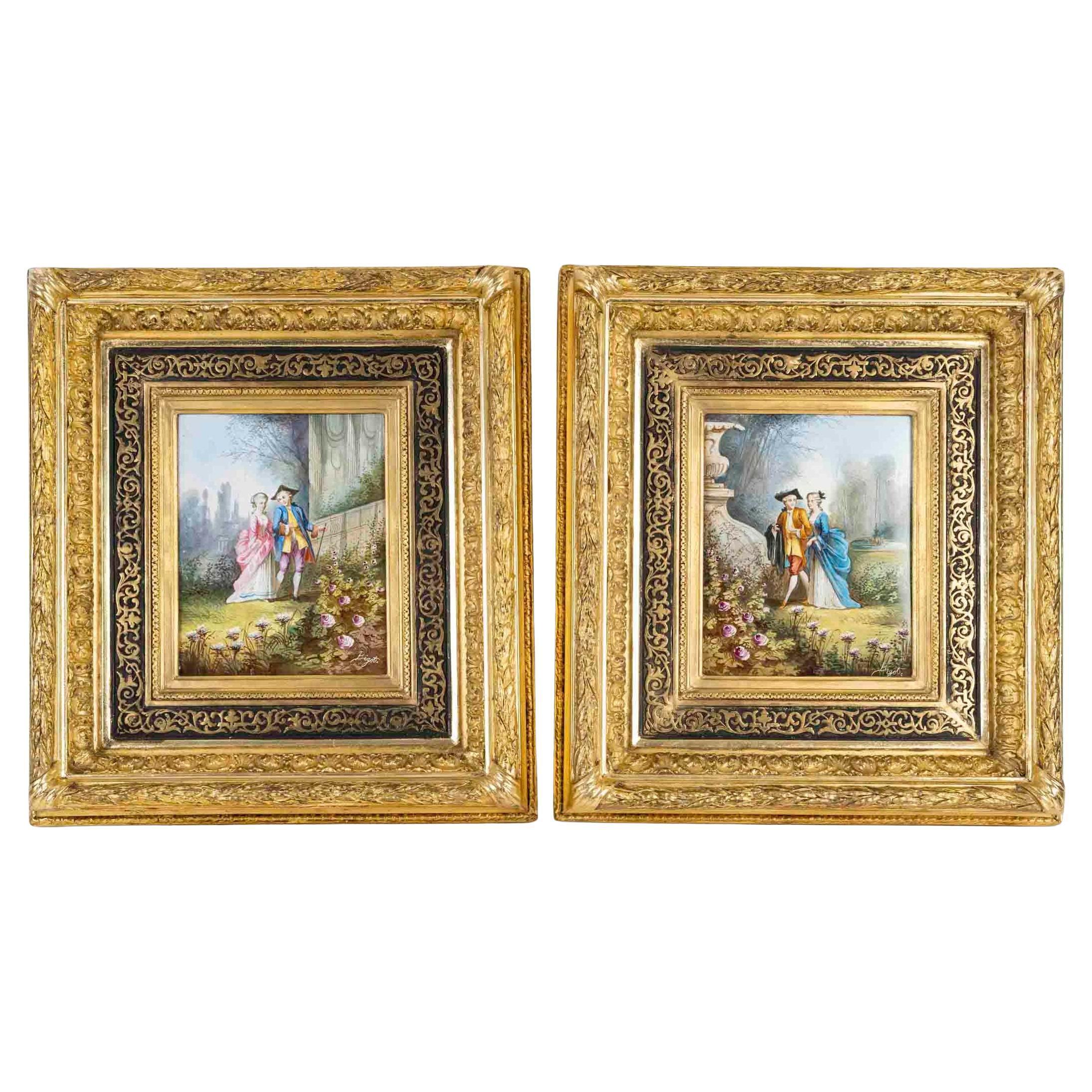
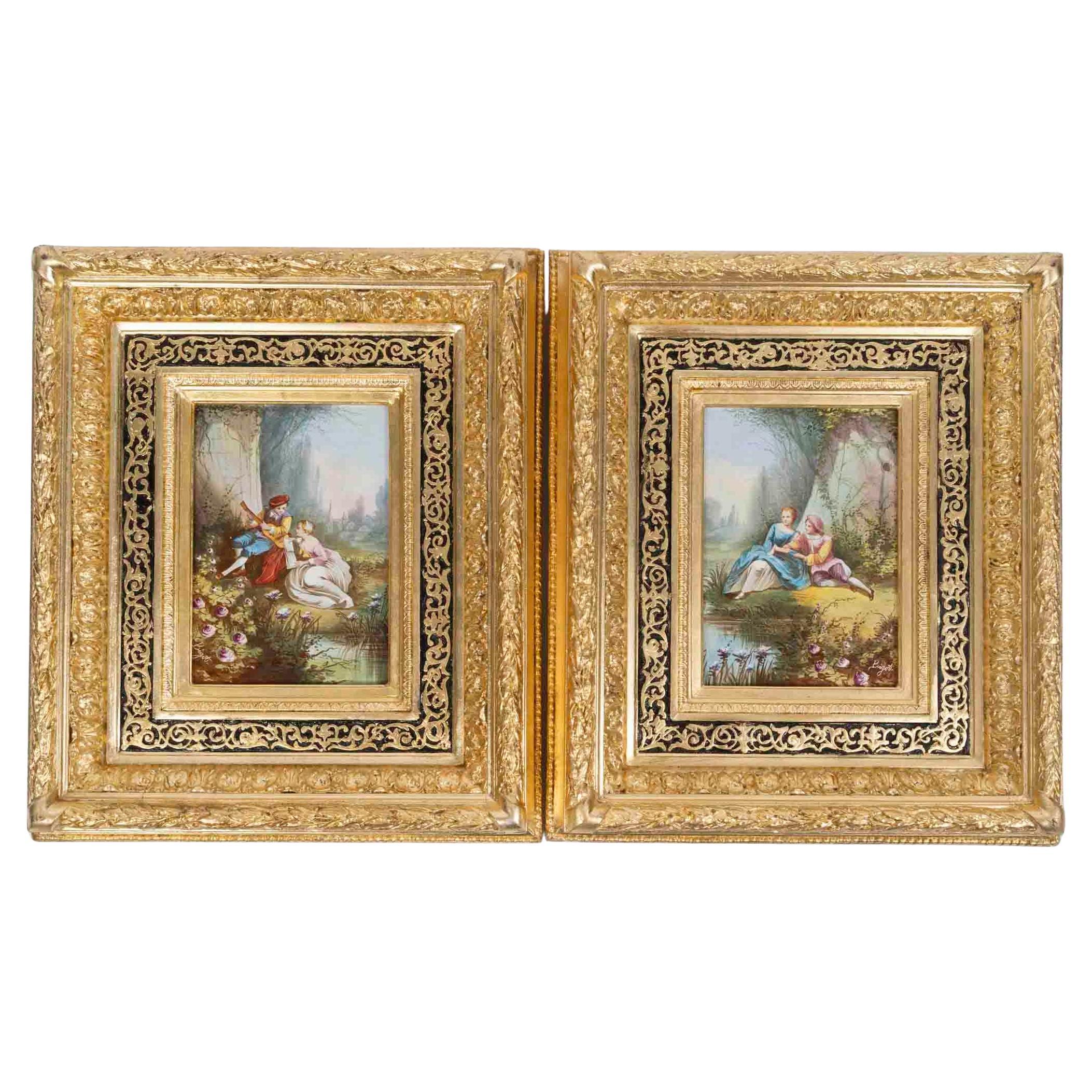
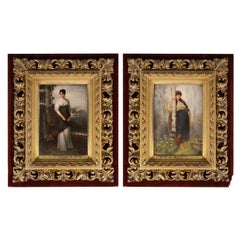
19th Century French Pair of Napoleon III Hand-painted Porcelain Plaques
$2,178.86
$3,352.0935% Off
£1,629.42
£2,506.8035% Off
€1,820
€2,80035% Off
CA$3,002.36
CA$4,619.0135% Off
A$3,275.49
A$5,039.2235% Off
CHF 1,734.35
CHF 2,668.2435% Off
MX$39,249.73
MX$60,384.2035% Off
NOK 22,087.95
NOK 33,981.4735% Off
SEK 20,197.79
SEK 31,073.5335% Off
DKK 13,861.46
DKK 21,325.3235% Off
About the Item
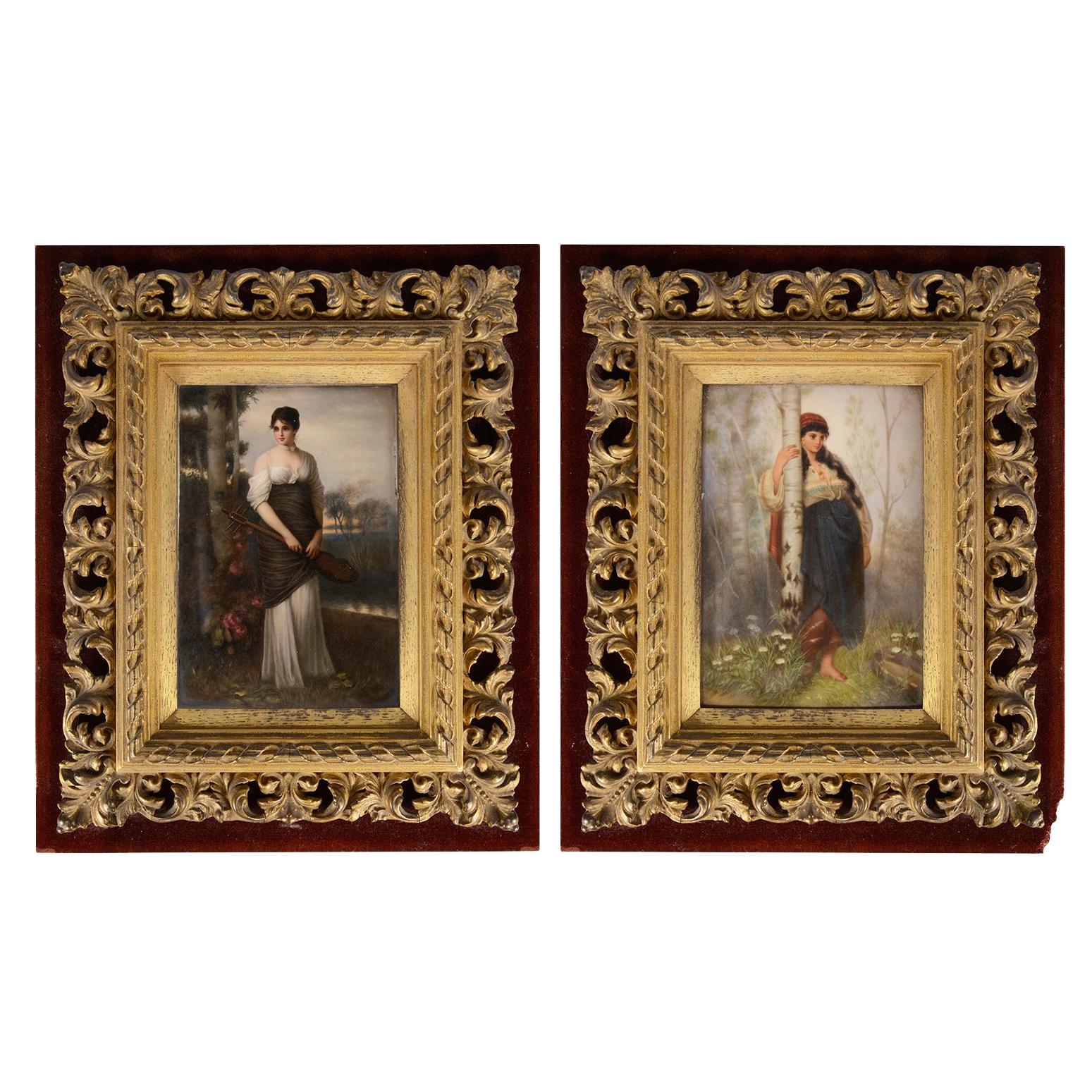
A French 19th century hand painted porcelain pair of plaques in pendant
Full-length portraits of young women in period costumes in the woods
Both signed lower left Bourgeot
Napoléon III Period
Circa 1900
With their original gilded wooden frames
H 43 cm L 35,5 cm
Plaque dimensions: H 30 cm, L 24,5 cm.
Georges Bourgeot, born in Paris on October 25, 1876, where he died on July 25, 1955, is a French glass painter and ceramist.
Student of Eugène Grasset, Georges Bourgeot exhibited at the Salon des Artistes Français, at the Société nationale des Beaux-Arts and at the Artistes Décorateurs and obtained in 1906 the Grand prix de Milan then in 1907 that of London and in 1909, the Grand prix de Copenhague.
Gold Medal and Grand Prize of Turin (1911) then of Barcelona (1923), he became in 1925 a member of the admission jury of the Grand Prix.
His works were acquired by the State. He is buried in the communal cemetery of Montreuil.
- Similar to:Manufacture Nationale de Sèvres (Manufacturer)
- Dimensions:Height: 18.9 in (48 cm)Width: 16.15 in (41 cm)Depth: 1.97 in (5 cm)
- Style:Napoleon III (Of the Period)
- Materials and Techniques:
- Place of Origin:
- Period:
- Date of Manufacture:circa 1900
- Condition:Wear consistent with age and use.
- Seller Location:Saint-Ouen, FR
- Reference Number:1stDibs: LU2612345652852
About the Seller
4.8
Gold Seller
Premium sellers maintaining a 4.3+ rating and 24-hour response times
1stDibs seller since 2017
73 sales on 1stDibs
Typical response time: 9 hours
- ShippingRetrieving quote...Shipping from: Saint-Ouen, France
- Return Policy
More From This Seller
View AllHortense Richard (1858-1940) “Marguerite of Faust” Painting on Porcelain, c.1890
Located in Saint-Ouen, FR
A Universal Exhibition Painting on Plaque after the painter James Bertrand
Hand-painted Polychromed Painting on Porcelain Plaque
Representing The Marguerite of Faust
Signed Lower Left
Titled on the reverse:
“Marguerite Folle d’Après James Bertrand, Exposition Universelle 1889”
After the painting by James Bertrand "The Marguerite of Faust"
In its original frame
Circa 1890
Faust and Marguerite
Faust is tired of his old life and wants to kill himself. In a final burst of bitter anger, he invokes the devil. The devil appears in the guise of Mephistopheles and offers him a pact: he will grant him what he desires most in the world in exchange for his servitude. Faust asks him for youth and his help in seducing Marguerite. When he achieves his goal, bound by his contract with the devil, Faust abandons the latter who is waiting for her child. Filled with remorse, he returns to her, but kills Valentin, Marguerite's brother who tries to stop him, during a duel. He then tries to save the life of Marguerite who is imprisoned for infanticide, but he fails. Like this multifaceted character, the vocal treat-ment chosen by Gounod is differentiated: sometimes very lyrical with touching flights, sometimes very cold and repetitive to evoke her detachment from the world of men.
Marguerite is young and naive. She lets herself be seduced by the charming and mysterious character of Faust and thus causes her own downfall as well as that of her family (her brother and her child will die).
Hortense Richard (1858-1940)
Marie Sophie Hortense Jeanne Schrenk was born in Charonne in 1858, the natural daughter of Louise Christine Frederika Schrenk and an unnamed father. Her mother, a German born in Stuttgart, officially recognized her in August 1879. A few days later, Hortense married his fellow painter Désiré Alfred Magne...
Category
Antique 1890s French Napoleon III Paintings
Materials
Porcelain, Wood
Théodore Deck (1823-1891), Courtly Love, Rare Pair of Faience Figures , c.1860
By Theodore Deck
Located in Saint-Ouen, FR
Théodore Deck (1823-1891)
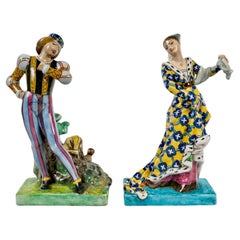
Courtly Love
Polychrome enamelled earthenware
Pair of subjects representing two lovers in the Middle Ages
Each signed below with the stamp “Th.Deck”
Extr...
Category
Antique 1860s French Renaissance Revival Decorative Art
Materials
Faience
$15,084 Sale Price / set
30% Off
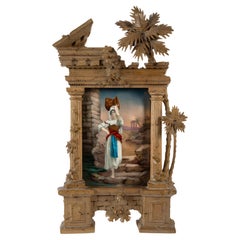
"Porteuse d’Eau" A 19th Century French Orientalist Enamel Plaque
Located in Saint-Ouen, FR
La Porteuse d’Eau (The Water Carrier),
A late 19th or early 20thC French Art Nouveau enameled copper plaque
Orientalist hand-painted polychromed enamel of a young female water carri...
Category
Antique 1890s French Art Nouveau Decorative Art
Materials
Enamel
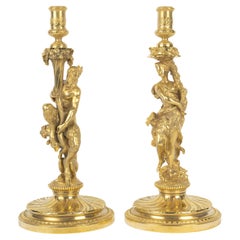
Pair of French 19th Century Regence Style Ormolu Candlesticks
Located in Saint-Ouen, FR
Pair of French 19th Century Regence Style Candlesticks
In chased and gilded bronze, the shaft of one depicting a faun riding a fantastic animal, the other one a woman with cupid, re...
Category
Antique 1880s French Régence Candlesticks
Materials
Ormolu
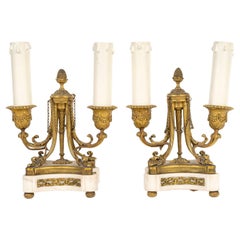
A French 19th Century Pair of Louis XVI Style Candelabras, circa 1870
By Emmanuel-Alfred Beurdeley
Located in Saint-Ouen, FR
A French XIXth Century Pair of Louis XVI Style Candelabras
Two candelabras in bronze very finely chiseled and gilded with two fluted branches, the twisted barrel from which escapes...
Category
Antique 1870s French Louis XVI Candelabras
Materials
Marble, Ormolu
$1,436 Sale Price
55% Off
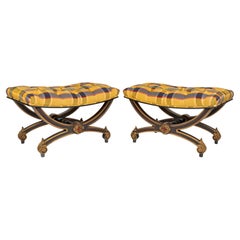
A French Napoleon III Pair of Louis XVI Style Curule Stools, circa 1900
By Maison Jansen
Located in Saint-Ouen, FR
A French 19th Century Pair of Large Rectangular Curule Stools
Partially gilt, blackened and red lacquered wood, carved decoration with acanthus leaves and rosaces.
The 4 feet linked by a stretcher.
Louis XVI Style
Napoléon III Period
Circa 1900
Used tartan chintz upholstery
Attributed to Maison Jansen
Jansen, the French Luxury
Opulence, refinement, audacity of style marriages… so many words agree with Maison Jansen. Through this name, a whole era sounds like a reminder of a certain French chic…
Some names evoke immutable images, atmospheres... Like Jansen, for example. Let’s close our eyes… The 1960s and 1970s are at their peak. France is doing well. It is a country of full employment where everything seems possible. Within the international Jet Set, a carefree crowd of movie stars, public figures, literary idols and crowned heads, we love the Maison Jansen, its taste for styles struck with a good quality exuberance, and its brilliant side.
It all began in 1880, when the Dutchman Jean Henri Jansen founded the eponymous house in Paris. Jansen is part of the continuity of these world-famous furniture manufacturers and companies that operated under the Second Empire and at the time of the Universal Exhibitions, as the ‘Escalier de Cristal’ teaches.
At that time, the Union Centrale des Beaux-Arts appliqués à l'Industrie and the Société du musée des Arts Décoratifs merged to form the Union Centrale des Arts Décoratifs.
Supported by both gallery owners, collectors and manufacturers, this
organization gives the «la» to the whole profession, and in the prevailing politico-ideological slump (France was defeated by Prussia in 1871 and Napoleon III is in exile), the ‘Union Centrale des Art Décoratifs’ focuses production on the celebration of past styles. While this nostalgia evokes memories of an era that we imagine more stable, an innovative exoticism will be all the rage: the reign of Turkish style and Japonisme.
The Jansen house masterfully rushed into the «exotic» trend, but quickly
developed a style derived from the ornamental splendor of the eighteenth, then a little later, so-called «imperial» styles mainly intended for royal families. After the First World War, J.H Jansen was joined by the cartoonist Albert Cazes, by Stéphane Boudin and by Pierre Delbée, who successively directed the house when it disappeared in 1929. At the end of the Kennedy era, Boudin completely redecorated the White House, at the request of the First Lady, Jackie, who had fallen in love with his work after discovering it at Malmaison.
In 1971, Jansen joined forces with Leleu-Deshays and continued its quest for excellence. From 1969 to 1979, the dandy decorator Serge Robin took the reins of the house, granting it an eclectic and luxurious style: he revisited the great eras of French art, from the Renaissance to Louis XVI, by modernizing them with more contemporary pieces in Plexiglas or wrought iron. His recom-posed and sophisticated style met with resounding success. When Jackie Kennedy, who became the wife of the great Greek shipowner Aristotle Onassis, moved to France, the young architect married Louis XVI-style furniture to modernist designs from the 1950s.
When the Shah of Iran decided to celebrate the 250th anniversary of the Persian Empire in 1971, Serge Robin and his teams turned to the grandiose and ephemeral setting of Persepolis. A hundred semi-trailers then left the workshops on Rue Saint-Sabin to reach Teheran. At the same time, Princess Soraya of Iran commissioned her a sumptuous palace for Avenue Montaigne, the princes Faisal bin Fahd of Arabia and Mubarak Al-Sabah, and the Agnelli snatched it.
On the French side, he puts his talent at the service of Brigitte Bardot, for whom he completely revamped the Madrague and the Lannes boulevard.
Serge Robin embodies all the audacity of the name Jansen with the most im-probable weddings. With him, Plexiglas tables, Japanese chairs from the 50s, gold thread curtains, zebra sofas and leather Louis XVI style chests of drawers decorated the most fashionable apartments of the «seventies».
All the best stories have an end. At the dawn of the 1990s, weakened by the changes of a society plagued by concern, the disappearance or the remoteness of noble families, and the increasing scarcity of bourgeois residences, the Jansen house lost its aging clientele. The brand is missing the turn of modernity, and cannot adapt to changes in society, changing tastes, and the importance of design.
In 1989, it was closed. Jansen has not disappeared from the landscape: the house’s creations are still present on the market and in the French auction houses, but also in the United States, where they are very appreciated. Transparent Plexiglas tables, leather and metal armchairs, zebra sofas, exotic cabinets...
Category
Antique 1890s French Napoleon III Stools
Materials
Wood
You May Also Like
Pair of Paintings, Painting on Porcelain, 19th Century, Napoleon III Period.
Located in Saint-Ouen, FR
Pair of paintings, painting on porcelain, 19th century, Napoleon III period.
Pair of paintings, 19th century, Napoleon III period, painting on porcelain, gilt stucco frame.
Frame: H...
Category
Antique 19th Century French Napoleon III Paintings
Materials
Porcelain, Stucco
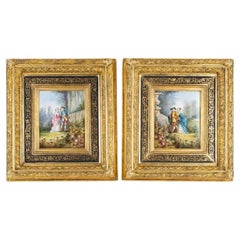
Pair of Paintings on Porcelain, Period Frame, Napoleon III Period, 19th Century.
Located in Saint-Ouen, FR
Pair of 19th-century paintings on porcelain, Napoleon III period, attractive gilded wooden frame.
H: 51 cm, W: 43.5 cm, D: 9.5 cm
Category
Antique 19th Century French Napoleon III Paintings
Materials
Porcelain, Wood
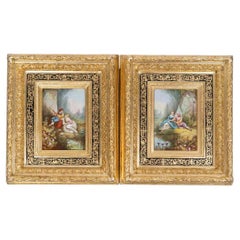
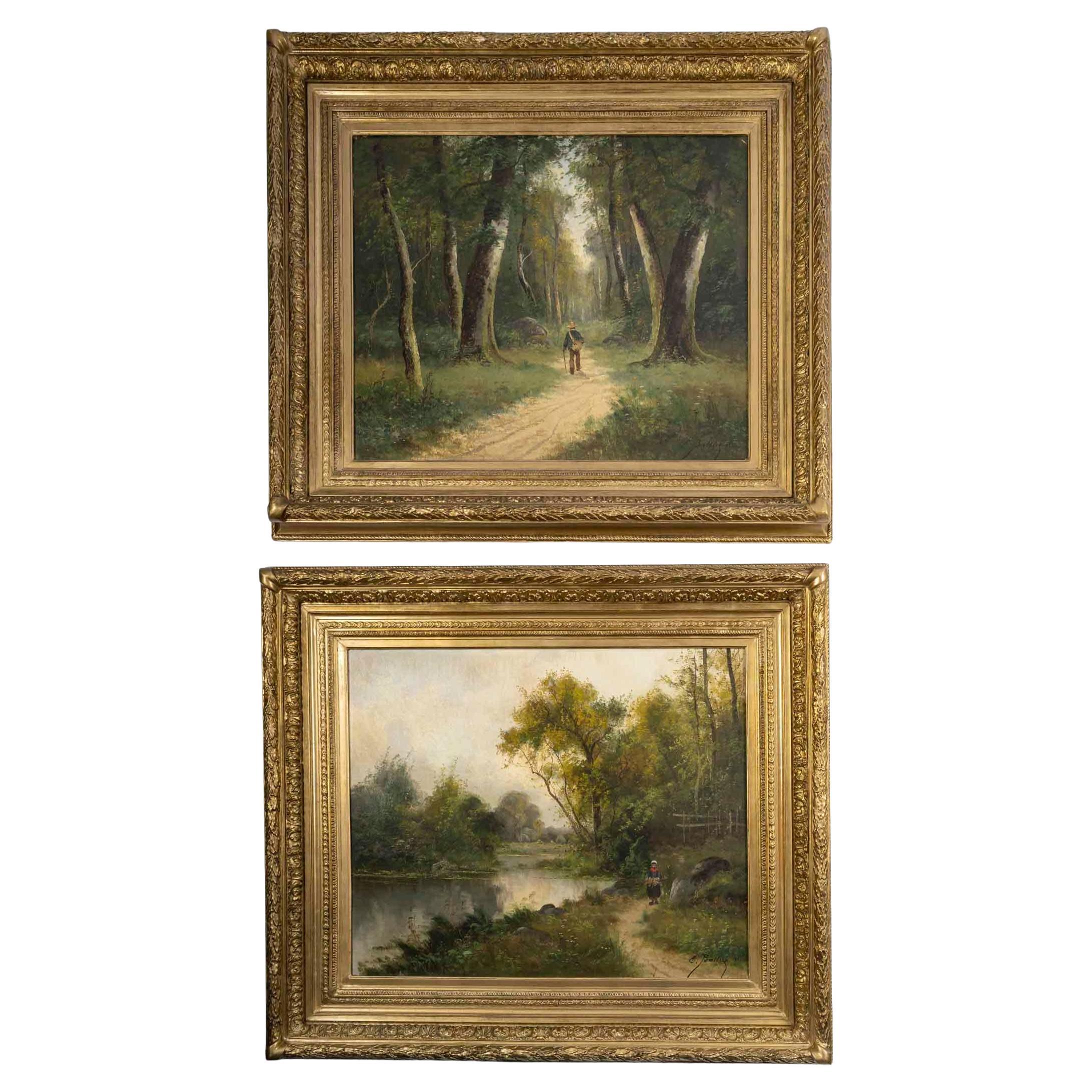
Pair of 19th Century Paintings, Signed Emile Ballue (1820-1886).
Located in Saint-Ouen, FR
Pair of 19th century paintings, signed Emile Ballue (1820-1886).
Pair of paintings, representing forest landscapes by Emile Ballue (1820-1886), signed, with their original wood and ...
Category
Antique 19th Century French Napoleon III Paintings
Materials
Wood
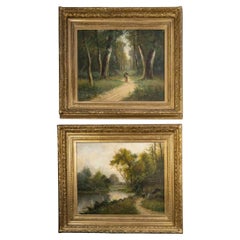
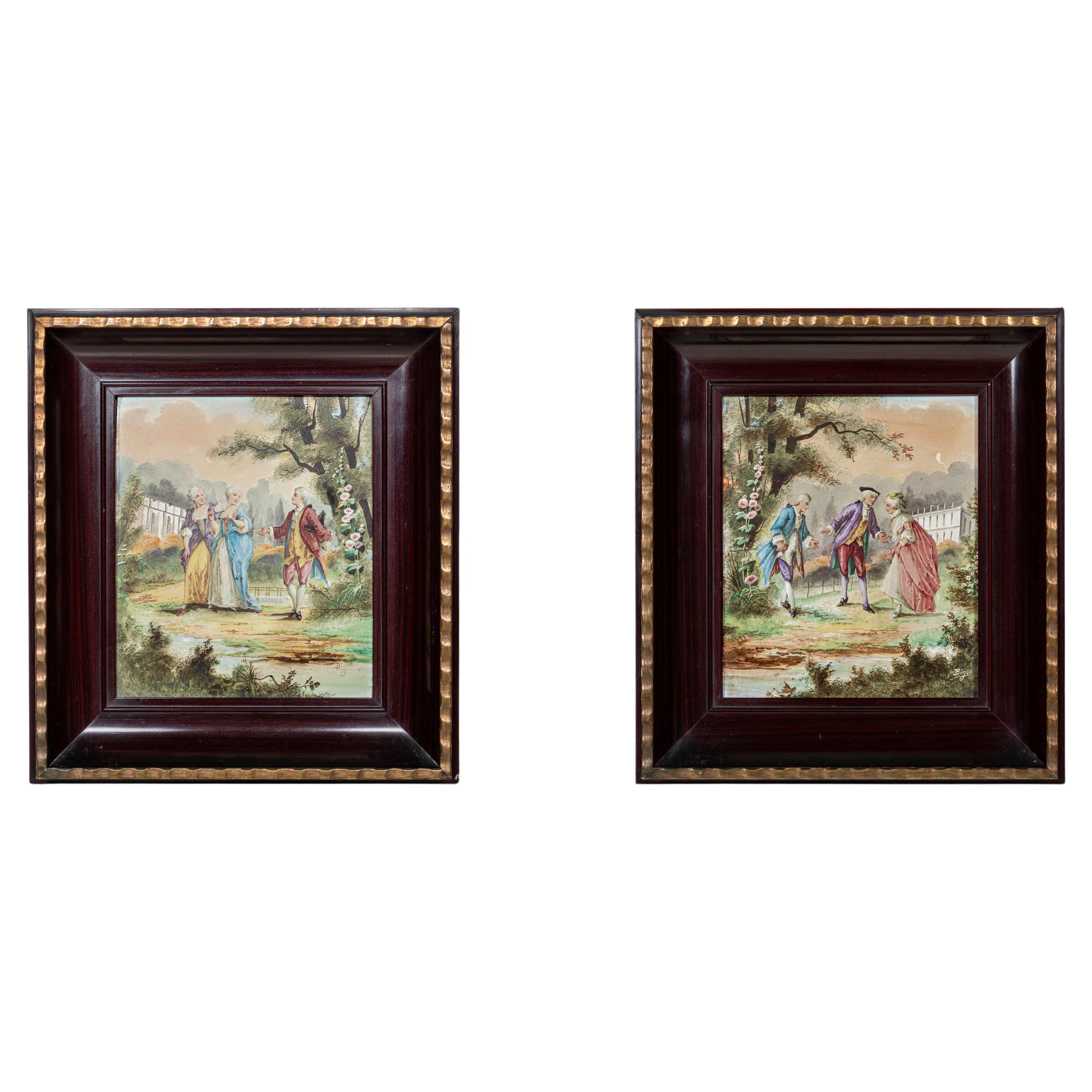
Pair of painted porcelain plaques signed Bigot, France, late 19th century.
Located in Buenos Aires, Buenos Aires
Pair of painted porcelain plaques signed Bigot, France, late 19th century.
Dimensions with frame: 46 cm height, 41 cm width, 6 cm depth.
Category
Antique Late 19th Century French Napoleon III Decorative Art
Materials
Porcelain, Wood
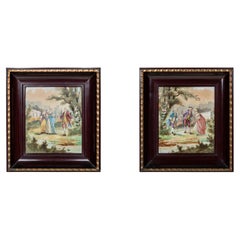
Pair 19th Century KPM Porcelain Plaques
By KPM Porcelain
Located in Brighton, Sussex
A fine quality pair of 19th Century Austrian, KPM porcelain plaques, each depicting pretty young maidens under a tree, mounted in carved scrolling gilt wood frames, set on a velvet b...
Category
Antique 19th Century Austrian Romantic Porcelain
Materials
Porcelain
$9,274 / set
Pair 19th Century Derby Porcelain Plaques by William Corden
By Derby
Located in Basildon, GB
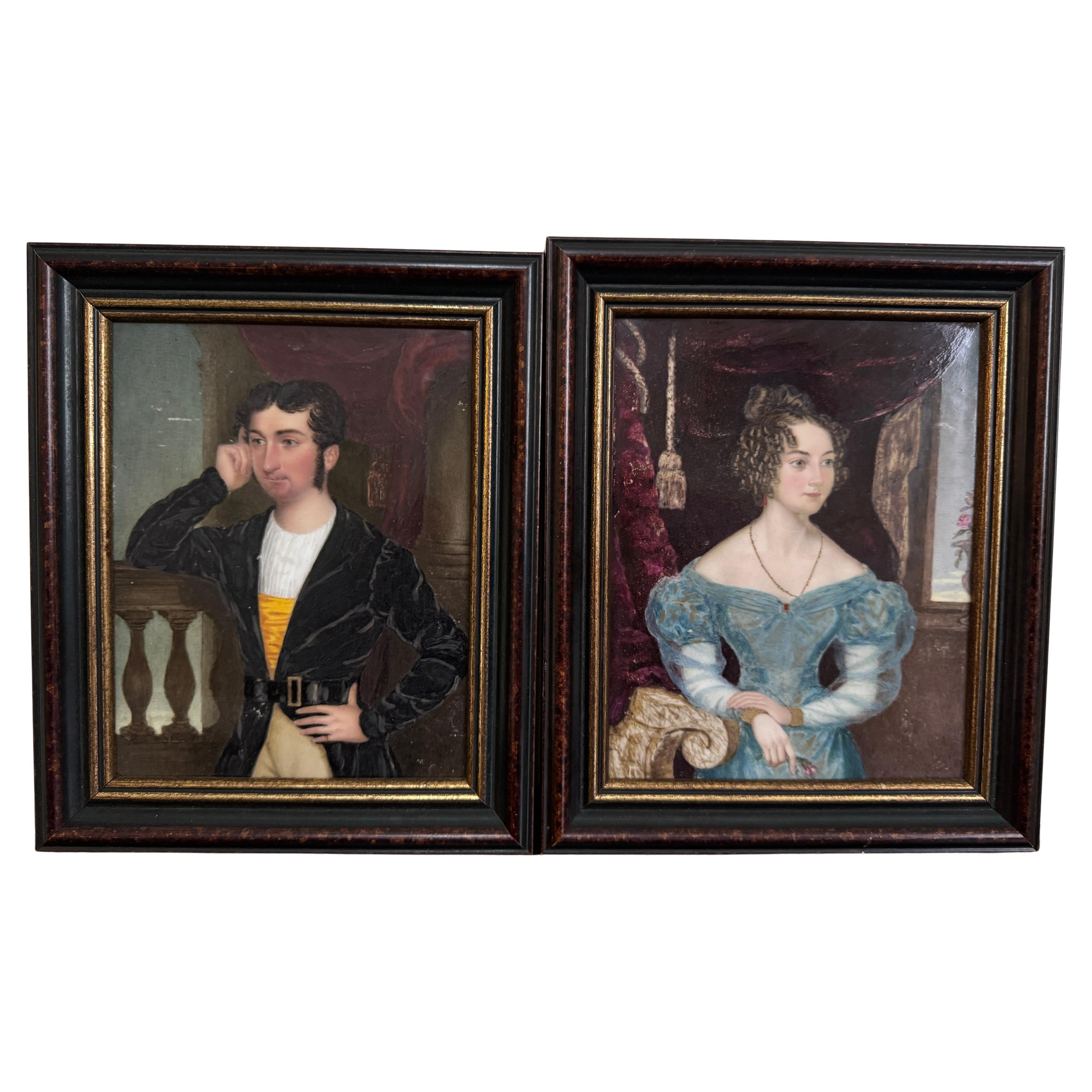
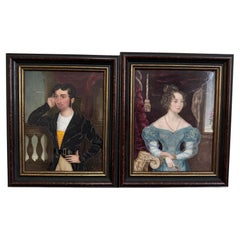
Pair 19th Century Derby Porcelain Plaques with portraits by William Corden (1797 - 1867), both signed and dated (1828) on the reverse. The identity of the sitters has not yet been es...
Category
Antique Early 19th Century British George IV Paintings
Materials
Porcelain, Paint
More Ways To Browse
Antique Portrait Pendant
Norfolk Furniture
Nude Youth
Ormolu Wall Mounts
Pear Bronze
Pink Art Victorian
Poplar Burl
Pottery Flask
Pyrex Glass Vintage
Qing Dynasty Screen
Ralph Lauren Cabinet
Red Chinoiserie Cabinets And Chests Of Drawers
Red Lacquer Carving
Regency Bedside Tables
Rem Koolhaas
Reverse Glass Antique Paintings
Robert Ogden
San Polo Venezia