Items Similar to 19th-century Scotland Edinburgh Horse Fair Painting
Want more images or videos?
Request additional images or videos from the seller
1 of 21
19th-century Scotland Edinburgh Horse Fair Painting
$8,188.93
$10,236.1720% Off
£6,000
£7,50020% Off
€6,991.62
€8,739.5320% Off
CA$11,297.04
CA$14,121.3120% Off
A$12,373.77
A$15,467.2120% Off
CHF 6,514.79
CHF 8,143.4920% Off
MX$147,676.78
MX$184,595.9820% Off
NOK 83,025.15
NOK 103,781.4320% Off
SEK 75,897.50
SEK 94,871.8720% Off
DKK 52,246.22
DKK 65,307.7720% Off
About the Item
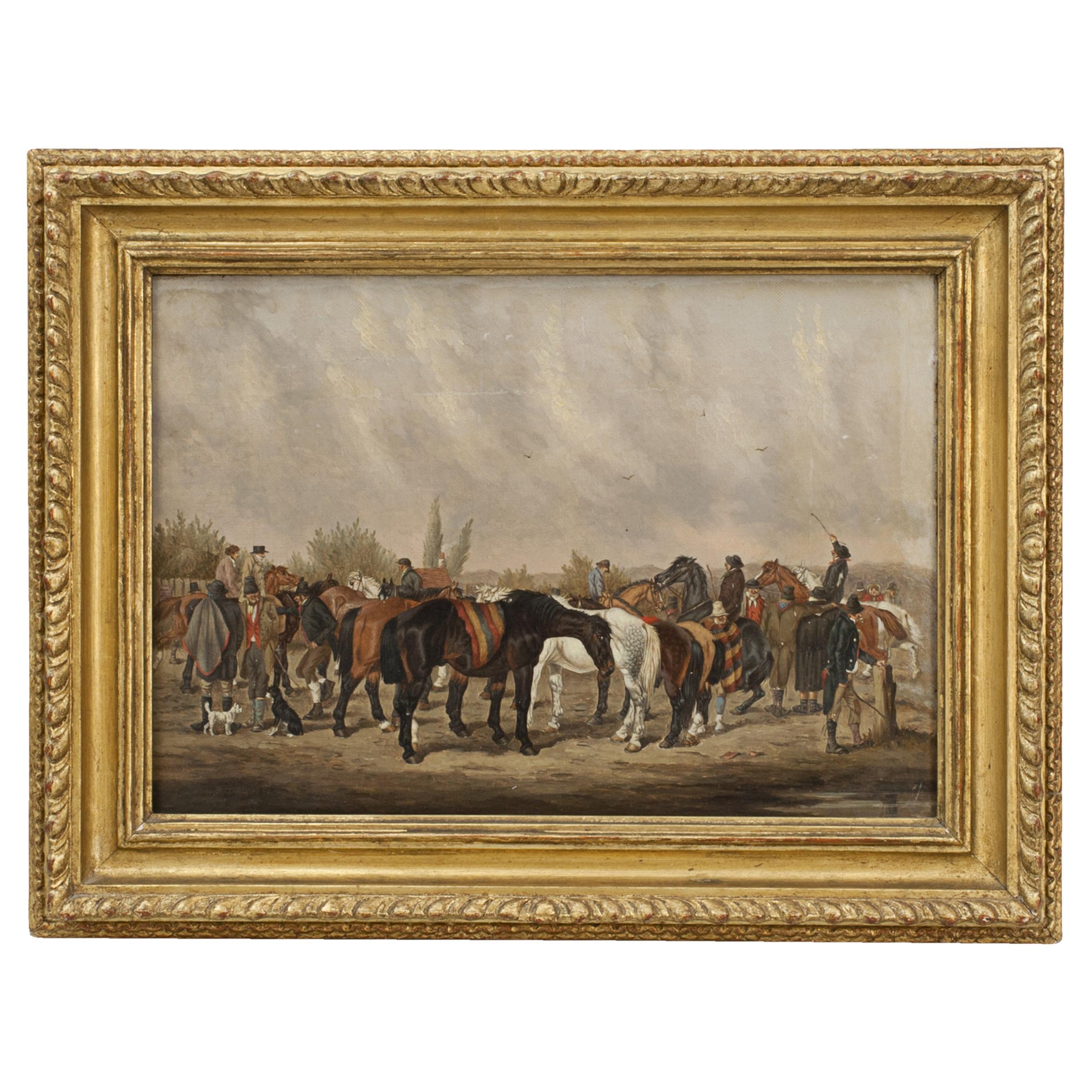
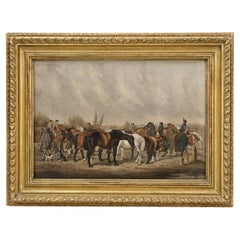
A rare 19th-century painting of the Horsefair at the Grassmarket, Edinburgh, Scotland
Follower of Rosa Bonheur, oil on canvas
indistinctive collector wax seals verso.
19th-Century Horse Fair in Grassmarket, Edinburgh, Scotland: A Historical, Economic, and Artistic Legacy
The 19th-century horse fair in the Grassmarket of Edinburgh, Scotland, stands as a remarkable testament to a bygone era when horses were the lifeblood of urban commerce and social gatherings. This traditional Edinburgh horse fair not only served as a crucial hub for trade and economic exchange but also became an enduring symbol of Scottish cultural heritage. The event’s legacy lives on in art, local traditions, and even in the memorabilia sought after by collectors today. Below is an in-depth exploration of this historic event presented as an ordered list that covers every facet of its significance.
A Follower of Rosa Bonheur and Rosa Bonheur on Scottish Art:
The 19th-century horse fair at Grassmarket has long inspired artists, much like the celebrated French painter Rosa Bonheur, known for her lifelike depictions of horses. As a follower of Rosa Bonheur, Scottish artists captured the bustling energy and realism of the event, evoking the spirit of a 19th-century Scottish fair.
One notable painting, inspired by Bonheur’s techniques, began its tour in February 1856 and traveled from Liverpool to Manchester and Birmingham before reaching Edinburgh. This journey culminated at the ALEXANDER HILL GALLERY, where the painting was admired for its detailed portrayal of horses, dogs, people, and even the Queen’s Guards mingling with the crowd.
Artistic Composition and Technique:
Composition:
The central focus of the painting is a lively crowd of people and horses that draws the viewer’s eye to the heart of the scene. The background, featuring Edinburgh Castle and traditional houses, creates depth and frames the bustling marketplace perfectly.
Use of Color:
Dominated by earth tones, the painting conveys a natural and realistic feel, while vibrant pops of red in clothing and rooftops provide contrast and balance. This artistic choice reflects the authentic vibrancy of the historic horse fair.
Brushwork:
Detailed brushwork brings the horses and people to life, showcasing the artist’s meticulous attention to realism. In contrast, the more atmospheric and impressionistic treatment of the sky and castle effectively separates the background from the busy foreground.
Perspective and Depth:
Skillful use of perspective is evident, as houses and the castle recede into the background, enhancing the overall sense of space. The arrangement of figures creates a dynamic representation of crowd dynamics, characteristic of a traditional Edinburgh horse fair.
Economic Significance: The Role of the 19th-Century Edinburgh Horse Fair A Hub of Trade and Commerce:
Marketplace Dynamics:
In 19th-century Edinburgh, horses were indispensable for transportation and labour, making them a major commodity in the bustling Grassmarket. This historic horse market was strategically located beneath the shadow of Edinburgh Castle, which provided a dramatic backdrop and an ideal setting for commerce.
Local and Regional Trade:
Farmers, traders, and buyers converged on the fair to buy and sell horses prized for their strength, speed, and utility. The event was instrumental in fueling local commerce and stimulating broader economic activities in the city.
Economic Impact on Local Communities:
Diverse Equestrian Breeds:
The fair showcased horses of various breeds, each meeting the different needs of the era. This diversity underpinned the fair’s role as a dynamic marketplace where innovation and tradition merged.
A Model for Economic Interaction:
The lively exchange of goods and spirited negotiations among participants made the event a prototype for economic exchange.
- Similar to:Rosa Bonheur (Artist)
- Dimensions:Height: 25.6 in (65 cm)Width: 31.5 in (80 cm)Depth: 2.37 in (6 cm)
- Style:High Victorian (Of the Period)
- Materials and Techniques:
- Place of Origin:
- Period:
- Date of Manufacture:1870
- Condition:Repaired: small repair near castle, also a small dent with a little paint loss. Wear consistent with age and use. Minor losses.
- Seller Location:Seaford, GB
- Reference Number:1stDibs: LU10376244300032
About the Seller
No Reviews Yet
Vetted Professional Seller
Every seller passes strict standards for authenticity and reliability
Established in 2021
1stDibs seller since 2025
Typical response time: 1 hour
- ShippingRetrieving quote...Shipping from: Seaford, United Kingdom
- Return Policy
More From This Seller
View AllEarly 19th century horse painting
By Dean Wolstenholme
Located in Seaford, GB
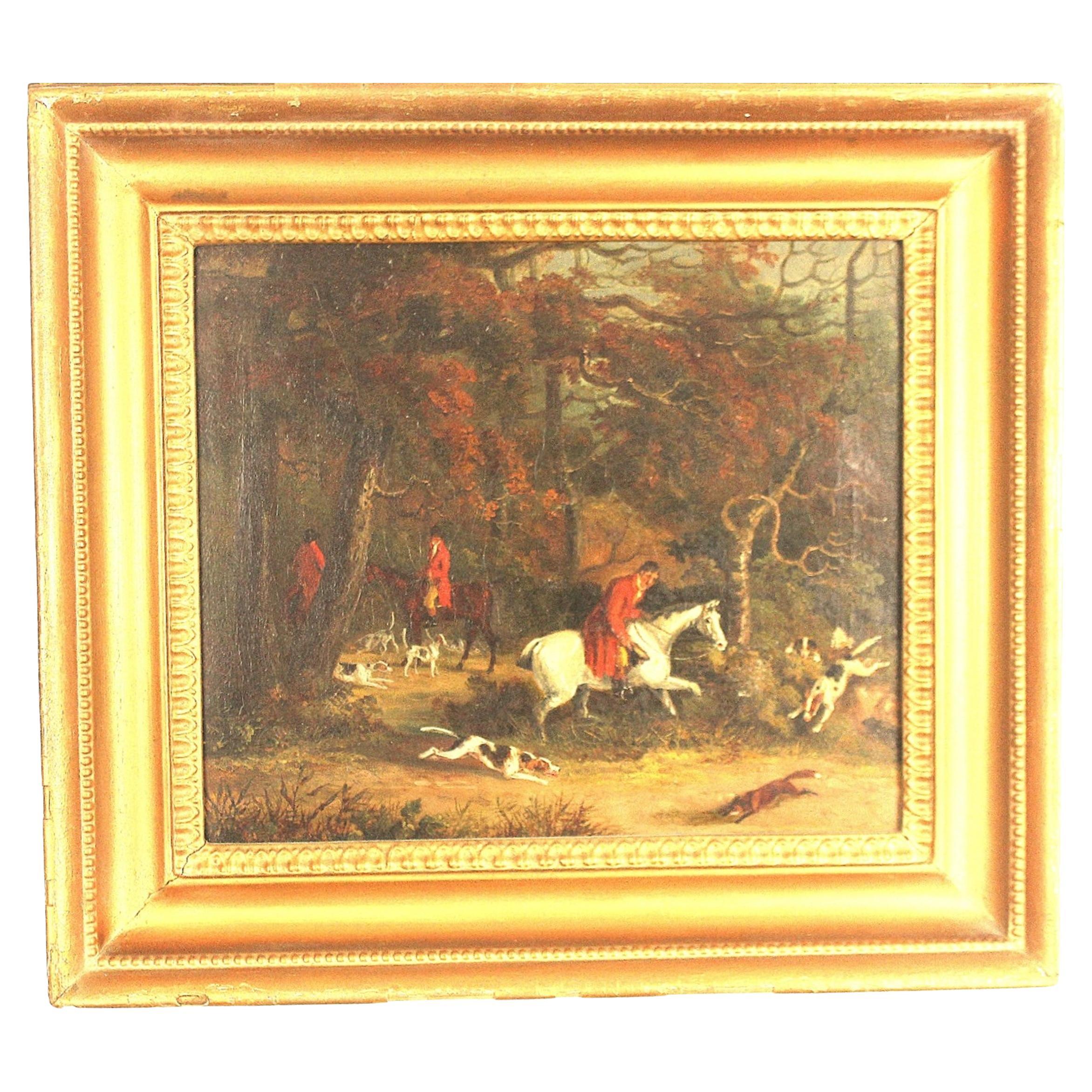
A Timeless Depiction of the English Fox Hunt
The early 19th-century fox hunting scene, attributed to Dean Wolstenholme Elder, is a stunning representation of the aristocratic traditi...
Category
Antique 1810s English Regency Paintings
Materials
Canvas
Early 19th century Capriccio Brazil School Painting
Located in Seaford, GB
Rare Early 19th century Capriccio view of Rio de Janeiro Painting
Probably painted circa 1810 by one of Jean-Baptiste Debret, Italian Students.
Painted on Sailcloth.
Historical Context of Early 19th Century Portuguese Colonial Brazil
1.1 Transition from Colony to Empire
During the early 19th century, Brazil underwent a seismic shift in its political status. Originally a colony under the Portuguese Empire, the arrival of the Portuguese Royal Court in Rio de Janeiro in 1808 rapidly elevated the city’s cultural and political importance. By 1815, Brazil was declared a kingdom united with Portugal, setting the stage for the emergence of the Empire of Brazil in 1822. This period of transformation—often termed the transitional period from colony to empire—fueled a wave of artistic production in cities like Rio de Janeiro.
1.2 European Artistic Influence in Brazil
With the French Artistic Mission in Rio (initiated in 1816) and the presence of various Portuguese and European artists, Brazilian art of the early 1800s began to reflect diverse influences, from neoclassical painting to the early rumblings of romanticism. Painters such as Jean-Baptiste Debret, and Nicolas-Antoine Taunay, and local luminaries like Manuel de Araújo Porto-Alegre contributed to the fine arts tradition in Brazil. Their works featured scenes of local life, portraits of Brazilian society, and imaginative vistas—sometimes referred to as “capriccios,” in which real elements were combined with artistic liberties to create an idealized panorama.
1.3 Rio de Janeiro as Cultural and Political Hub
Rio de Janeiro, often called the Imperial capital after Brazil’s independence, was home to foundational institutions like the Imperial Academy of Fine Arts (Academia Imperial de Belas Artes). Later evolving into the Escola de Belas Artes (School of Fine Arts in Rio), these academies nurtured the talents of emerging painters, who found patronage under the Royal Court and, subsequently, the Imperial Court. The city’s significance was further enhanced by the construction of significant buildings, the modernization of infrastructure, and the mingling of European courtly customs with the traditions of local inhabitants.
. Description of the Octagonal Oil on Canvas: A Capriccio View of Rio de Janeiro
2.1 Composition and Layout
The most striking characteristic of this 19th-century Brazilian art piece is its octagonal shape, a relatively unusual format that draws the viewer’s gaze toward its centre. The composition showcases Rio de Janeiro’s shoreline in the early 1800s, brimming with merchant ships and smaller boats anchored near the shore. On the sand, there is a bustling crowd of local people—men and women carrying food and goods on their heads, loading and unloading boats, and engaging in everyday commerce. The backdrop of soaring mountains suggests Rio’s iconic topography, embodying the landscape that famously defines the city.
2.2 Architectural and Religious Landmarks
On the left side, one can discern the silhouette of a church believed to be Santa Lucia, a significant religious structure in the heart of early 19th-century Rio. This element provides viewers with a tangible reference point, linking the scene to an actual location. However, because this painting is labelled as a “capriccio,” the artist might have taken creative liberties by rearranging or amplifying certain features of the city. The melding of real and idealized elements is characteristic of these imaginative vistas.
2.3 Evoking Daily Life in Colonial Rio
One of the painting’s greatest appeals lies in its portrayal of daily life during the colonial era. Men and women from various backgrounds populate the scene. Some appear to be carrying goods on their heads, a common practice in Brazil that has persisted through different centuries. Others appear to be haggling or trading near small vessels, revealing the commercial pulse of an active port city. This focus on local people, combined with the grandeur of merchant ships, captures the tension and synergy between the every day and the extraordinary—a hallmark of Brazilian colonial painting that balances the grand narratives of empire with the rhythms of ordinary life.
2.4 An Amalgamation of Neoclassical and Romantic Influences
Although academic art in early 19th century Brazil was highly influenced by neoclassicism, the onset of romanticism can be spotted in the emotional portrayal of the sky, the lively palette, and the dramatic emphasis on nature’s beauty (the mountains, in particular). This duality reflects the fine arts tradition in Brazil during the transitional phase when artists were embracing multiple styles. As part of the School of Rio or the Rio de Janeiro school, painters often integrated academic techniques learned from European masters with emerging local subjects and influences.
3. Institutions and Artistic Movements
3.1 Imperial Academy of Fine Arts
Originally known as the Royal School of Sciences, Arts, and Crafts, the Imperial Academy of Fine Arts in Rio de Janeiro was instrumental in shaping 19th-century Brazilian art. Influential artists and teachers from Portugal, France, and other European nations congregated at the Academy, imparting their expertise to native students. As the monarchy consolidated power, the Academy enjoyed royal patronage, leading to the creation of Imperial Academy-style works that combined European academic rigour with Brazilian-themed subject matter.
3.2 Impact of the French Artistic Mission
The French Artistic Mission, which arrived in 1816, played a pivotal role in introducing advanced European artistic techniques, thereby elevating the overall quality of painting in Brazil. Artists like Jean-Baptiste Debret not only documented Brazilian society but also spearheaded the development of a local visual identity that aligned with both academicism and the national context of a blossoming empire. Debret, alongside others such as Nicolas-Antoine Taunay, mentored Brazilian artists, sowing the seeds of what would become the Brazilian academic art movement.
3.3 Religious, Historical, and Landscape Paintings
In addition to everyday scenes and historical compositions, religious iconography remained crucial throughout Portuguese colonial and imperial Brazil. Churches were omnipresent in cityscapes like Rio de Janeiro. Many colonial-era Brazilian portraits...
Category
Antique Early 19th Century Brazilian Spanish Colonial Paintings
Materials
Canvas
$2,948 Sale Price
20% Off
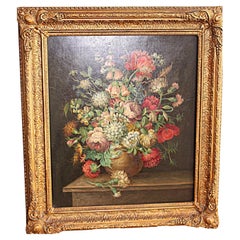
Exquisite 19th Century English Still Life of wild flowers– Oil on Wood Panel
Located in Seaford, GB
A captivating and finely executed 19th-century English still life painting, rendered in oil on wood panel, depicting an abundant bouquet of mixed flowers in a terracotta urn. This hi...
Category
Antique 19th Century English High Victorian Paintings
Materials
Paint
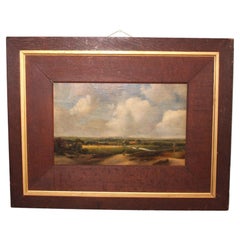
Dutch 19th century Landscape Painting
By Andreas Schelfhout
Located in Seaford, GB
This charming oil-on-paper painting captures a serene landscape near Haarlem, evocative of Andreas Schelfhout's masterful Dutch Romantic style. The work features a quintessentially D...
Category
Antique Late 19th Century Dutch Late Victorian Paintings
Materials
Paint, Paper
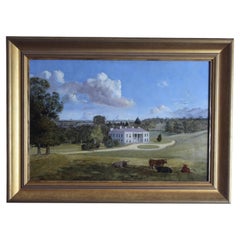
English School 19th Century Country House Landscape Oil Painting
Located in Seaford, GB
19th-century painting of Warlies House, Essex
This captivating mid-19th-century oil on panel painting exemplifies the idyllic charm of pastoral landscapes from the period, featuring...
Category
Antique 1870s English Victorian Paintings
Materials
Paint
$2,129 Sale Price
20% Off
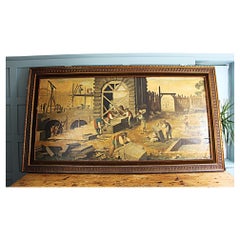
After J.R. Lucotte – Stonemasons at Work oil on paper
Located in Seaford, GB
After J.R. Lucotte – Stonemasons at Work
Medium: Oil on paper
Dimensions: 178 cm x 210 cm
Date: 20th Century
Attribution: After Jacques-Raymond Lucotte (1733–1804)
This strikingly l...
Category
20th Century French George III Drawings
Materials
Lead
$3,930 Sale Price
20% Off
You May Also Like
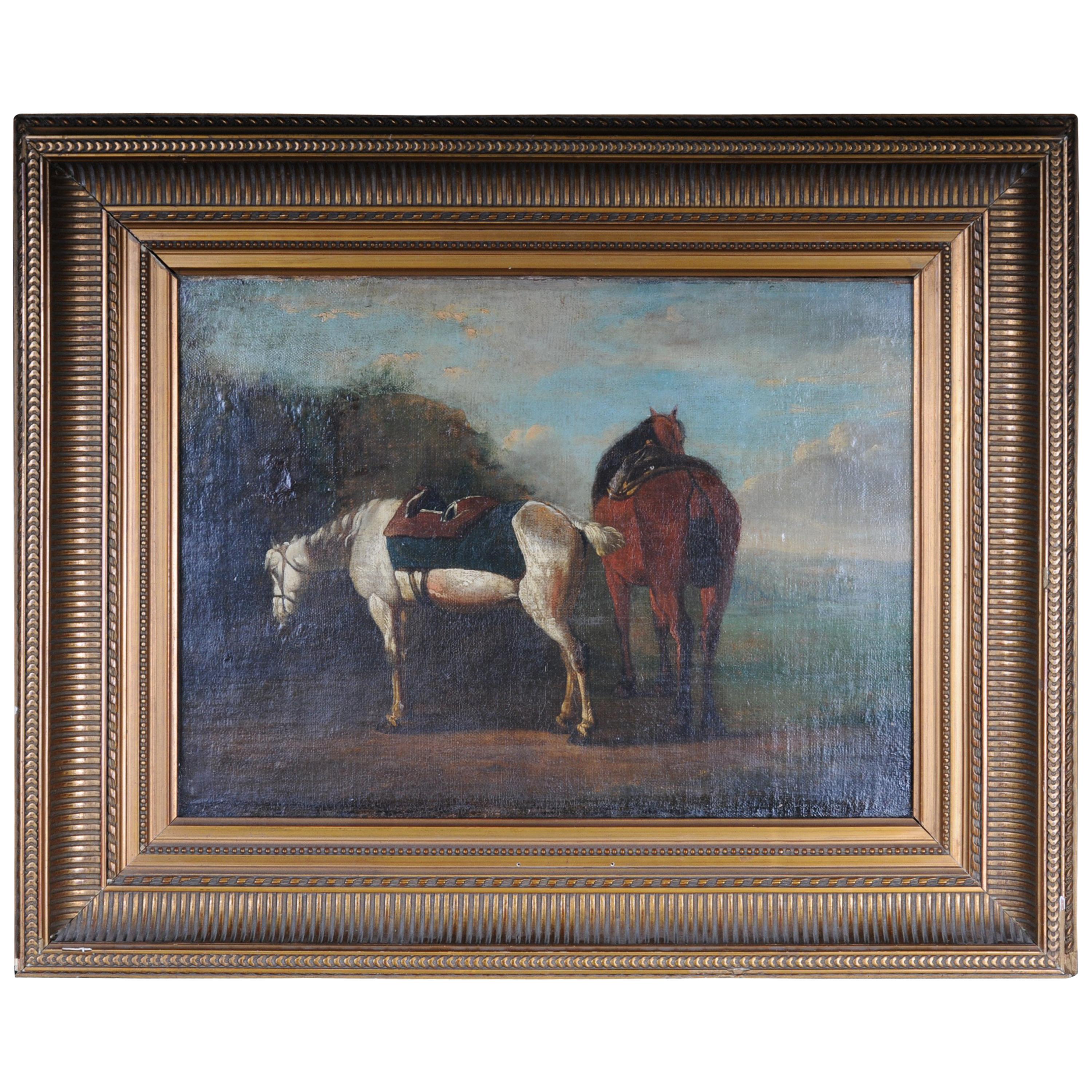
Old Oil Painting Illustration 2 Horses on the Landscape
Located in Berlin, DE
(S - 206)
Oil of canvas
Old painting circa 20th century.
Fine quality.
Category
20th Century Paintings
Materials
Wood
19th Century Oil On Canvas Equestrian Painting
Located in Dublin 8, IE
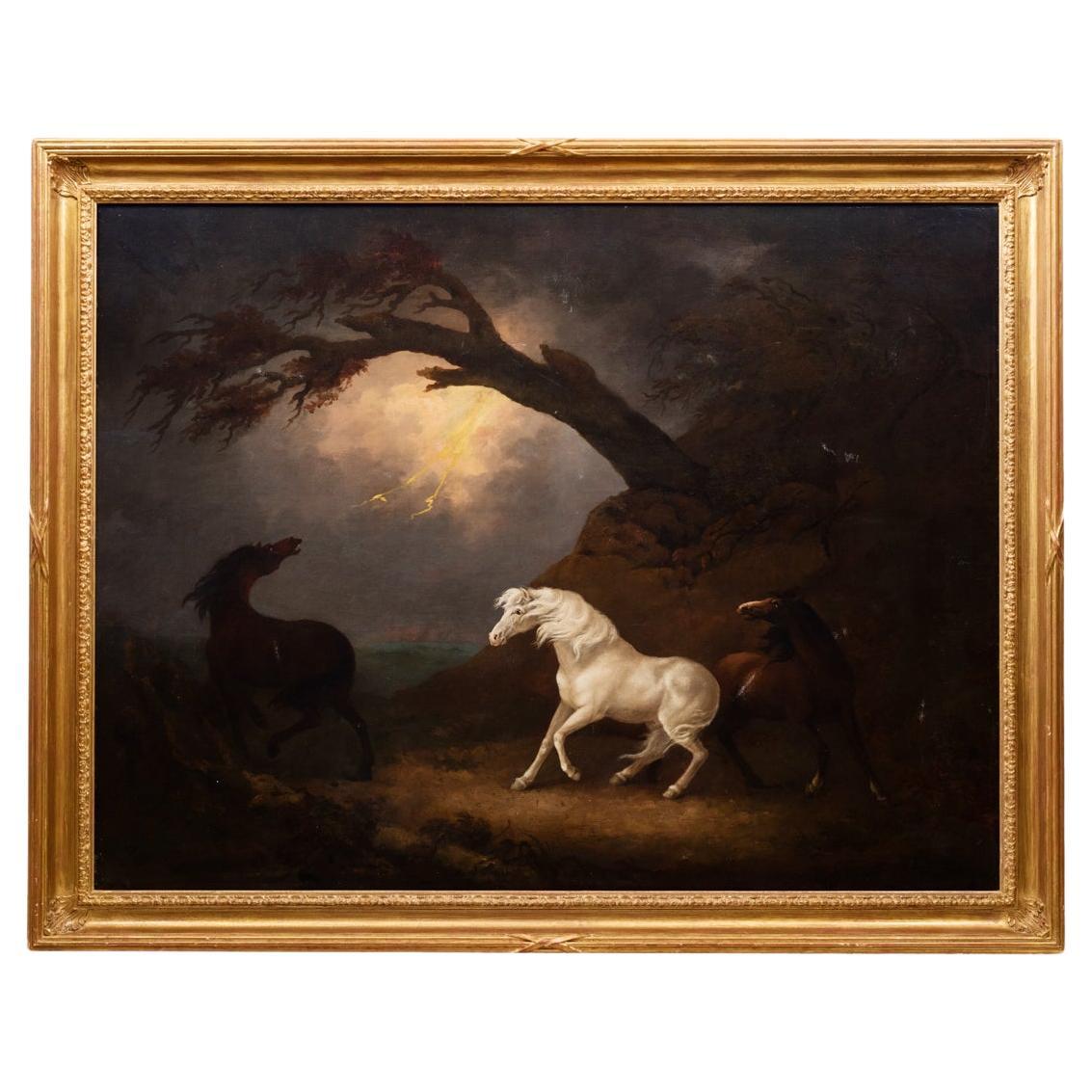
19th Century oil on canvas painting, depicting an atmospheric scene of three horses to foreground with a thunderstorm in the background. Dramatic tension is created by the play of light and shadow and is heightened by the bolt of lightning...
Category
Antique 19th Century European Paintings
Materials
Canvas, Paint
English 19th Century Oil Painting
Located in Stockbridge, GA
English 19th century oil painting.
Category
Antique Late 19th Century English Paintings
Materials
Wood
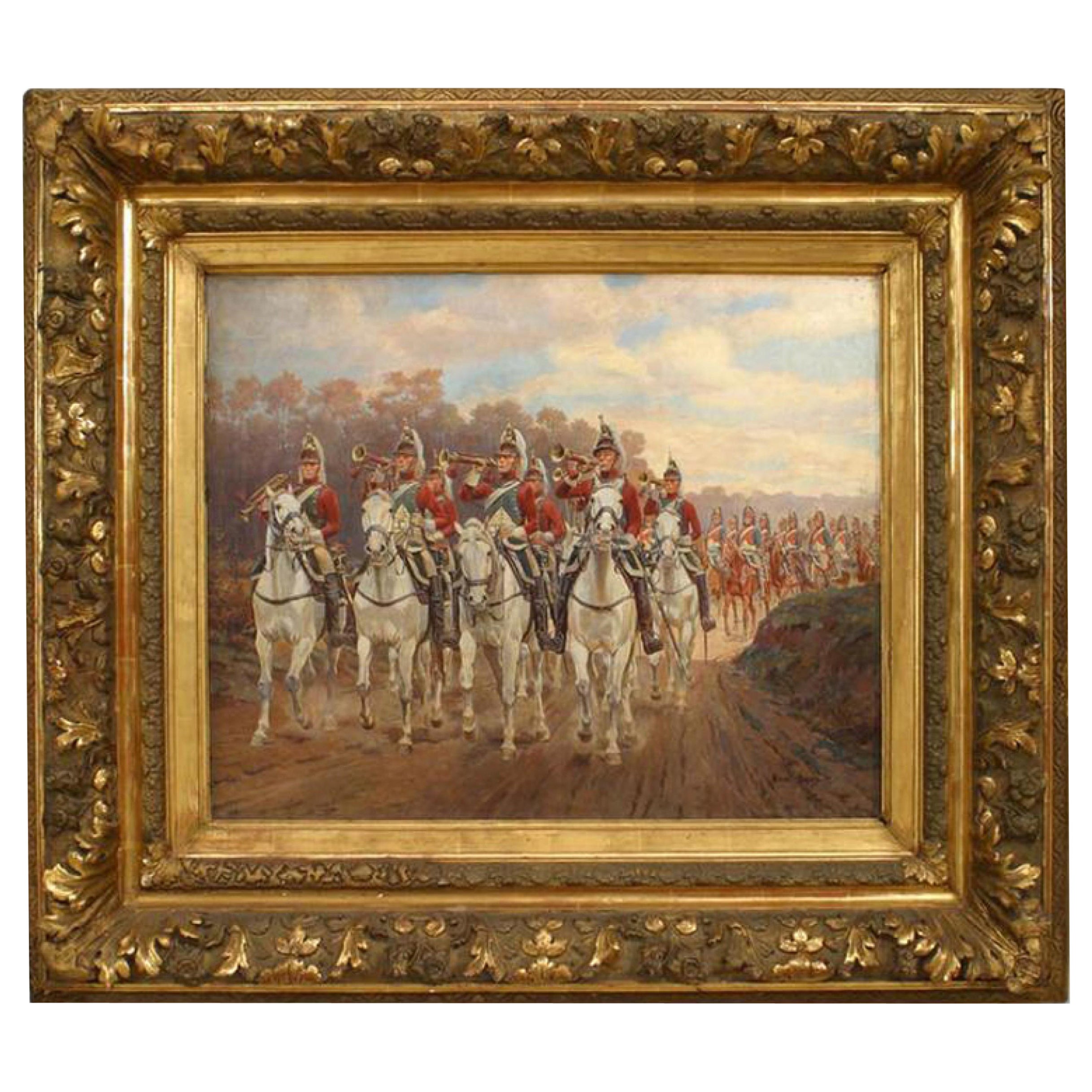
French Victorian Horse Regimen Painting
By Breaad
Located in Queens, NY
French Victorian (19th Cent) oil painting of French regiment on horseback (signed BAIRD) in gilt frame
Category
Antique 19th Century French Victorian Paintings
Materials
Paint
Equestrian Oil Painting Of A Horse Fair
Located in Oxfordshire, GB
Oil Painting, At The Horse Fair By William Henry M Turner.
This painting is rich in detail and captures the atmosphere and social interactions typical of a traditional horse market d...
Category
Antique 19th Century British Sporting Art Paintings
Materials
Canvas, Paint
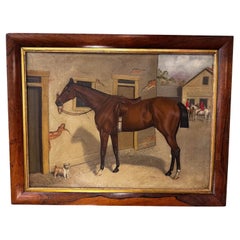
Oil of Horse on Canvas
Located in Nashville, TN
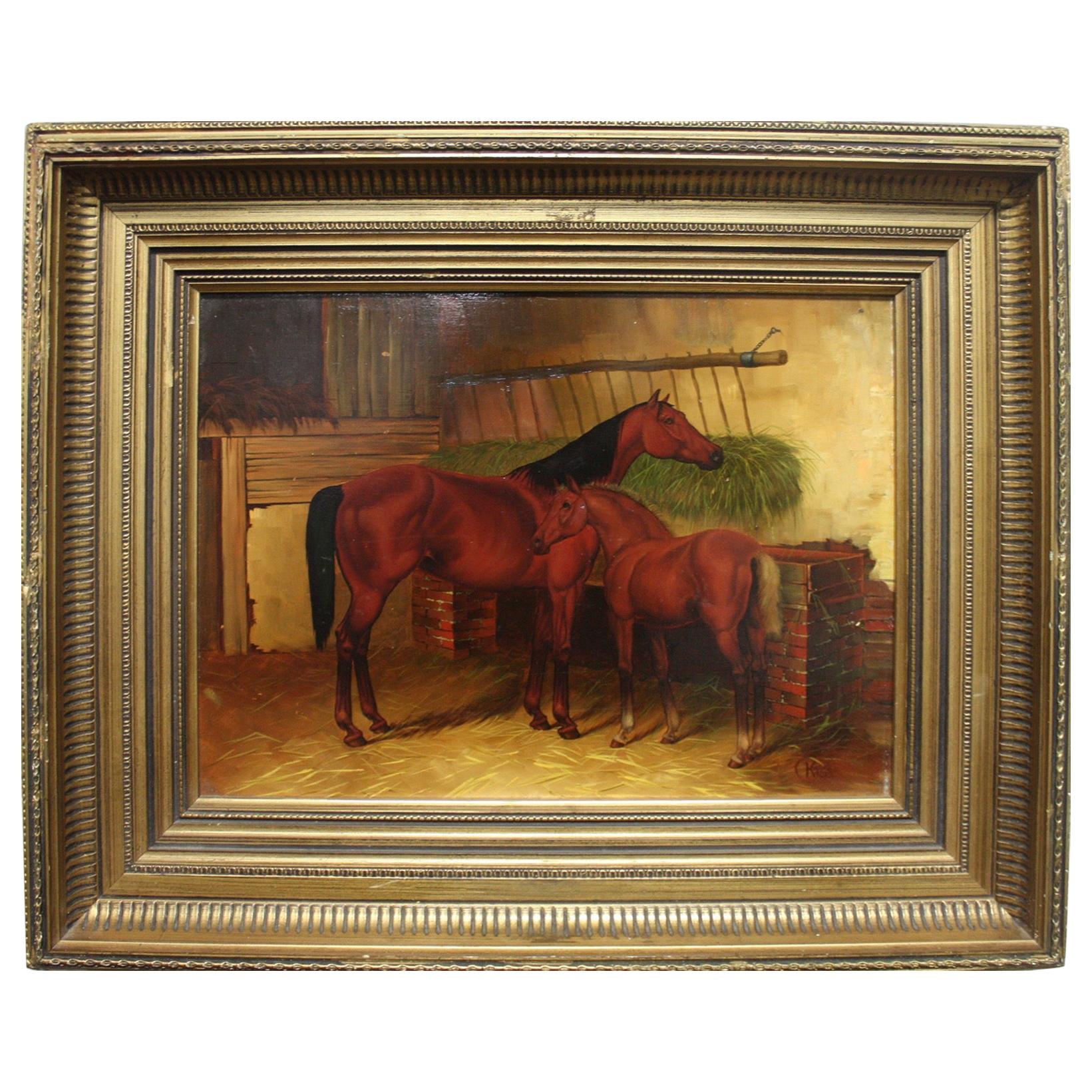
This painting features a classic horse and dog pairing! A chestnut horse stands guard over a small long-haired dog. In the background, two men in red coats sit on horses and speak wi...
Category
Antique 19th Century English Paintings
Materials
Canvas, Wood
$5,275
More Ways To Browse
Rosa Bonheur Painting
Altar Set
Antique Desk Types
Antique Grenade
Antique Metal Containers
Antique Pewter Dish
Antique Portuguese Chest Of Drawers
Antique Stepping Stones
Apothecary Chests And Drawers
Argento 800
Arne Wahl Iversen For Vinde Mobelfabrik
Art Deco Counter
Art Nouveau Sterling Silver Photo Frame
Bank Table
Bird In The Hand Compact
Black Chinese Chests
Block Front Chest
Blue Bohemian Crystal