Paintings

to
2,766
12,956
6,512
17,897
1,518
965
Height
to
Width
to
9,169
8,527
8,258
6,507
2,900
9,757
2,886
1,549
20,380
20,267
20,341
Paintings For Sale
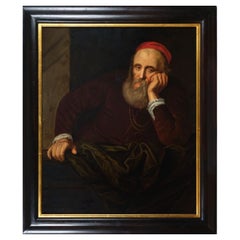
Antwerp School, 17th Century "Portrait of Archimedes"
Located in Madrid, ES
Antwerp School, 17th Century "Portrait of Archimedes" Oil on canvas, coated 97 x 79 cm, framed 116 x 99 cm good condition
Category

17th Century Belgian Baroque Antique Paintings

Materials

Paint

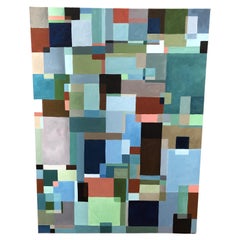
Bold Astract Painting with Overlapping Rectangles and Squares
Located in Hopewell, NJ
Striking large abstract painting with multiple layers of rectangles that overlap and blend in a textural melodic interplay. Colors are muted and earthy with brown, navy, black, celad...
Category

21st Century and Contemporary American Modern Paintings

Materials

Canvas

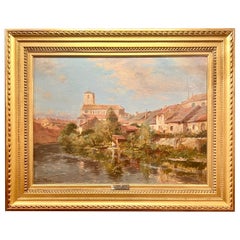
Antique Oil on Canvas by French Master Painter Edmond Petitjean
Located in New Orleans, LA
Antique Oil on Canvas by French Master Painter Edmond Petitjean. Signed lower right.
Category

Late 19th Century French Antique Paintings

Materials

Canvas

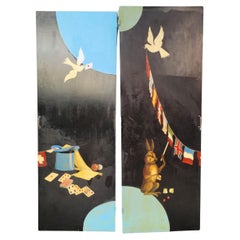
Pair of painted panels Magic by Aldo Franceschini for French Magician Max Diff
By Aldo Mondino
Located in Valladolid, ES
Exceptional pair of painted panels, which were used as doors and belonged to the renowned French magician Max Diff, are the work of painter Aldo Franceschini and dated around 1970. A...
Category

1970s French Mid-Century Modern Vintage Paintings

Materials

Wood, Paint

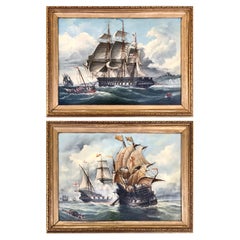
Pair of 19th Century English Marine Scene Paintings
Located in Wiscasset, ME
Oil on academy board, one signed W. Sheridan. W. Sheridan was an English artist active in the 19th century. Each painting measures 22" x 29.5" including the frame. The pair togethe...
Category

19th Century English Victorian Antique Paintings

Materials

Paint

Thorvald Hagedorn-Olsen. Oil on board. Modernist Danish landscape
Located in København, Copenhagen
Thorvald Hagedorn-Olsen, Danish artist. Oil on artist's board. Modernist Danish landscape with grazing cattle and a fjord. Signed and dated '47. In excellent condition. Image size: ...
Category

1940s Danish Scandinavian Modern Vintage Paintings

Materials

Other

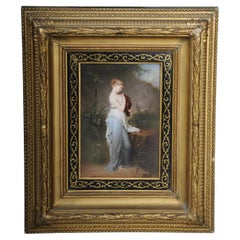
RARE KPM Berlin porcelain plaque depicting Psyche holding a Urn, R. Beyschlag
Located in Berlin, DE
RARE KPM Berlin porcelain plaque depicting Psyche holding a Urn, after R. Beyschlag A large KPM painted porcelain plaque depicting a Psyche holding a Lekythos/Urn. The lush and ove...
Category

1880s German Antique Paintings

Materials

Porcelain, Wood

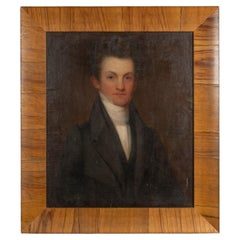
19th Century Antique Portrait of Virginia Gentleman, Oil on Canvas, Framed
Located in San Francisco, CA
Antique oil on canvas portrait of an unknown 19th Century Virginian Gentleman, beautifully framed to retain its sense of time and place. Rich brush strok...
Category

Late 19th Century American American Classical Antique Paintings

Materials

Canvas, Wood

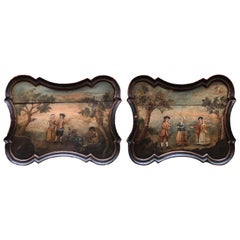
Pair Of Scandinavian Rococo Folk Art Wooden Paintings
Located in Haddonfield, NJ
Pair of early Swedish Rococo Folk Art wooden paintings or table tops.
Category

Mid-18th Century Scandinavian Folk Art Antique Paintings

Materials

Wood

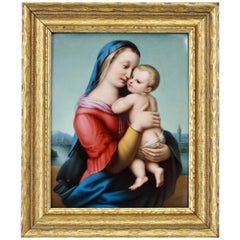
Berlin KPM Porcelain Plaque Last Quarter of the 19th Century after Raphael
Located in West Palm Beach, FL
A Berlin KPM Porcelain Plaque Last quarter of the 19th century After Raphael, depicting Madonna and child with a river and city in the distance, signe...
Category

19th Century Antique Paintings

Materials

Porcelain

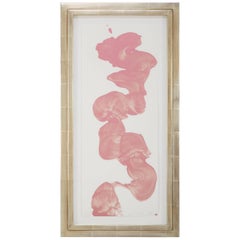
Iridescent Oil Paint and Wax on Paper by James Nares
By James Nares
Located in Stamford, CT
Unique oil paint and wax on paper by James Nares ( British, b. 1953 ). Untitled. circa 2008. Archivally framed in a 12-karat white gold frame.
Category

Early 2000s English Modern Paintings

Materials

Paper

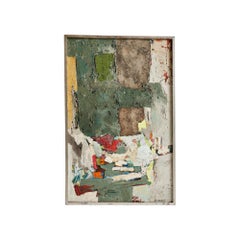
Abstract Painting by Bernice Price
Located in Sagaponack, NY
Abstract Painting
Category

20th Century American Paintings

Materials

Acrylic

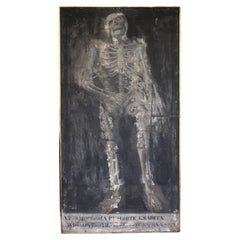
Early 19th Century Italian School Memento Mori Oil on Canvas Welcome Death
Located in Lowestoft, GB
A almost life size depiction of a human skeleton holding a length of chain, with a banner at the base. We believe the piece to be Italian from the language used within the banner, ...
Category

19th Century Italian Antique Paintings

Materials

Canvas

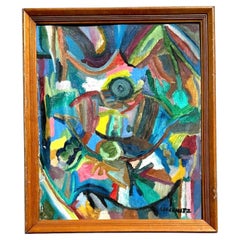
Vintage Original Signed Multicolor Abstract Painting
Located in West Palm Beach, FL
A fabulous vintage Boho Original oil painting on board. A chic Abstract composition in bright, clear colors. Signed by the artist. Acquired from a Palm Beach estate.
Category

Mid-20th Century North American Mid-Century Modern Paintings

Materials

Wood, Masonite, Paint

18th Century Spanish Colonial School, Cuzco, Angel
Located in Bradenton, FL
18th century Spanish Colonial School, Cuzco: Angel, oil on tin. Framed, in good condition. Rich colors of red, blue and white. Inscribed in upp...
Category

18th Century Spanish Spanish Colonial Antique Paintings

Materials

Tin

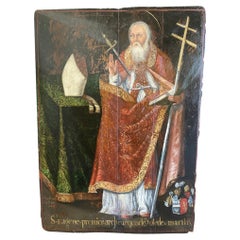
17th Century Oil on Board Painting
Located in Round Top, TX
A very beautiful early 17th century oil on board painting of Saint Eugene - The Archbishop Of Toledo, Spain. Wonderful brushwork and intricate detail....
Category

Early 17th Century French Antique Paintings

Materials

Wood

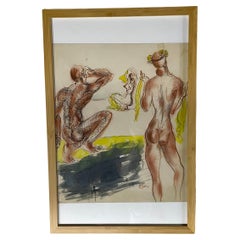
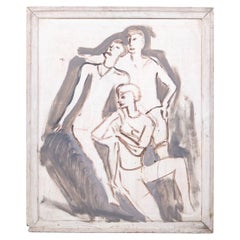
Nicolaus Koni Nude Original Work On Paper
Located in Delray Beach, FL
Elegant hand work on paper probably pastel or watercolour by the Artist Depicting nude of Two female and a male, nicely done , professionally framed in new bamboo wood frame . R...
Category

20th Century Paintings

Materials

Bamboo, Glass, Paper

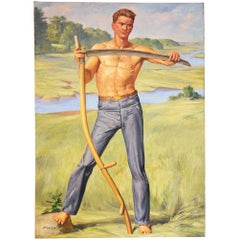
"Farmer with Scythe, " Depiction of American Worker by U.S. Capitol Muralist
Located in Philadelphia, PA
Drenched with sun and full of optimism, this depiction of a shirtless farm worker, with scythe in hand, is a high-spirited paean to the American laborer, at a time when the Works Progress Administration and other institutions were commissioning murals that celebrated industry, agriculture and commerce. Here, the worker is lean and strong, and his face shows signs of sunburn from his hours in the open. The painter was Allyn Cox, son of the famous muralist Kenyon Cox...
Category

1930s American Art Deco Vintage Paintings

Materials

Paint

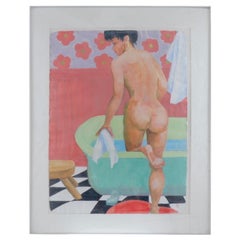
Original Signed Watercolor of a Female Nude
Located in Bradenton, FL
An original signed pencil and watercolor of a nude figure entering a bathtub, circa 1960. Depicted in the pop art style with bold colors and patterns of the period including gaudy pi...
Category

Mid-20th Century American Paintings

Materials

Metal

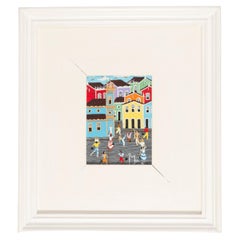
Small Oil Painting, White Wood Frame, The City, Ray Bai, 1995
Located in 05-080 Hornowek, PL
Small oil painting, the city on it. Signed Ray Bai 1995. Hand painted in Denmark. In the set of white wood frame. Very nice small decoration for ...
Category

1990s Danish Bauhaus Paintings

Materials

Wood, Paint

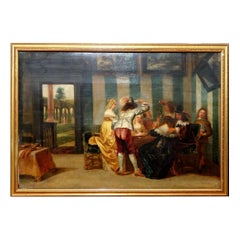
Antique Pieter Jacobsz Codde Oil Painting on Board, Dutch 17th c.
Located in Norton, MA
Oil on board painting by Pieter Jacobsz Codde, 1599 to 1678, a Dutch artist. The artwork represents an interior genre scene, a company drinking and playing cards. The artist's monogr...
Category

1970s Dutch Dutch Colonial Vintage Paintings

Materials

Paper

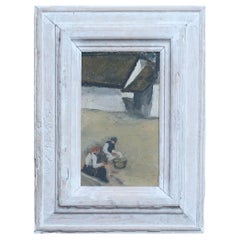
Rustic Figures in a Farmyard, in the Manner of Jack Kampmann, C.1950.
By Jack Kampmann
Located in St Annes, Lancashire
Charming painting of 2 female farm labourers Unsigned. In the style of Jack Kampmann Oil on board. Possibly Faroe Islands Presented in an antique whi...
Category

1950s Faeroese Folk Art Vintage Paintings

Materials

Paint

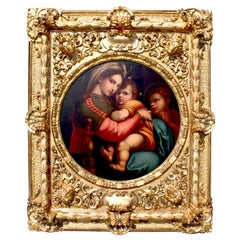
After Raffaello Sanzio 1483-1520 Raphael La Madonna della Seggiola Oil on Canvas
Located in Los Angeles, CA
A fine Italian 19th century oil painting on canvas "La Madonna della Seggiola" after Raphael (Raffaello Sanzio da Urbino 1483-1520) The circular canvas depicting a seated Madonna holding an infant Jesus Christ next to a child Saint John the Baptist, all within a massive carved gilt wood and gesso frame (all high quality gilt is original) which is identical to the frame on Raphael's original artwork. This painting is a 19th Century copy of Raphael's Madonna della Seggiola painted in 1514 and currently exhibited and part of the permanent collection at the Palazzo Pitti, Galleria Palatina, Florence, Italy. The bodies of the Virgin, Christ, and the boy Baptist fill the whole picture. The tender, natural looking embrace of the Mother and Child, and the harmonious grouping of the figures in the round, have made this one of Raphael's most popular Madonnas. The isolated chair leg is reminiscent of papal furniture, which has led to the assumption that Leo X himself commissioned the painting, circa 1890-1900. Subject: Religious painting Measures: Canvas height: 29 1/4 inches (74.3 cm) Canvas width: 29 1/4 inches (74.3 cm) Painting diameter: 28 1/4 inches (71.8 cm) Frame height: 57 7/8 inches (147 cm) Frame width: 45 1/2 inches (115.6 cm) Frame depth: 5 1/8 inches (13 cm).   Raffaello Sanzio da Urbino (Italian, March 28 or April 6, 1483 - April 6, 1520), known as Raphael, was an Italian painter and architect of the High Renaissance. His work is admired for its clarity of form, ease of composition, and visual achievement of the Neoplatonic ideal of human grandeur. Together with Michelangelo and Leonardo da Vinci, he forms the traditional trinity of great masters of that period. Raphael was enormously productive, running an unusually large workshop and, despite his death at 37, leaving a large body of work. Many of his works are found in the Vatican Palace, where the frescoed Raphael Rooms were the central, and the largest, work of his career. The best known work is The School of Athens in the Vatican Stanza della Segnatura. After his early years in Rome much of his work was executed by his workshop from his drawings, with considerable loss of quality. He was extremely influential in his lifetime, though outside Rome his work was mostly known from his collaborative printmaking. After his death, the influence of his great rival Michelangelo was more widespread until the 18th and 19th centuries, when Raphael's more serene and harmonious qualities were again regarded as the highest models. His career falls naturally into three phases and three styles, first described by Giorgio Vasari: his early years in Umbria, then a period of about four years (1504–1508) absorbing the artistic traditions of Florence, followed by his last hectic and triumphant twelve years in Rome, working for two Popes and their close associates. Raphael was born in the small but artistically significant central Italian city of Urbino in the Marche region, where his father Giovanni Santi was court painter to the Duke. The reputation of the court had been established by Federico III da Montefeltro, a highly successful condottiere who had been created Duke of Urbino by the Pope - Urbino formed part of the Papal States - and who died the year before Raphael was born. The emphasis of Federico's court was rather more literary than artistic, but Giovanni Santi was a poet of sorts as well as a painter, and had written a rhymed chronicle of the life of Federico, and both wrote the texts and produced the decor for masque-like court entertainments. His poem to Federico shows him as keen to show awareness of the most advanced North Italian painters, and Early Netherlandish artists as well. In the very small court of Urbino he was probably more integrated into the central circle of the ruling family than most court painters. Federico was succeeded by his son Guidobaldo da Montefeltro, who married Elisabetta Gonzaga, daughter of the ruler of Mantua, the most brilliant of the smaller Italian courts for both music and the visual arts. Under them, the court continued as a centre for literary culture. Growing up in the circle of this small court gave Raphael the excellent manners and social skills stressed by Vasari. Court life in Urbino at just after this period was to become set as the model of the virtues of the Italian humanist court through Baldassare Castiglione's depiction of it in his classic work The Book of the Courtier, published in 1528. Castiglione moved to Urbino in 1504, when Raphael was no longer based there but frequently visited, and they became good friends. He became close to other regular visitors to the court: Pietro Bibbiena and Pietro Bembo, both later cardinals, were already becoming well known as writers, and would be in Rome during Raphael's period there. Raphael mixed easily in the highest circles throughout his life, one of the factors that tended to give a misleading impression of effortlessness to his career. He did not receive a full humanistic education however; it is unclear how easily he read Latin. Early Life and Works His mother Màgia died in 1491 when Raphael was eight, followed on August 1, 1494 by his father, who had already remarried. Raphael was thus orphaned at eleven; his formal guardian became his only paternal uncle Bartolomeo, a priest, who subsequently engaged in litigation with his stepmother. He probably continued to live with his stepmother when not staying as an apprentice with a master. He had already shown talent, according to Vasari, who says that Raphael had been "a great help to his father". A self-portrait drawing from his teenage years shows his precocity. His father's workshop continued and, probably together with his stepmother, Raphael evidently played a part in managing it from a very early age. In Urbino, he came into contact with the works of Paolo Uccello, previously the court painter (d. 1475), and Luca Signorelli, who until 1498 was based in nearby Città di Castello. According to Vasari, his father placed him in the workshop of the Umbrian master Pietro Perugino as an apprentice "despite the tears of his mother". The evidence of an apprenticeship comes only from Vasari and another source, and has been disputed—eight was very early for an apprenticeship to begin. An alternative theory is that he received at least some training from Timoteo Viti, who acted as court painter in Urbino from 1495.Most modern historians agree that Raphael at least worked as an assistant to Perugino from around 1500; the influence of Perugino on Raphael's early work is very clear: "probably no other pupil of genius has ever absorbed so much of his master's teaching as Raphael did", according to Wölfflin. Vasari wrote that it was impossible to distinguish between their hands at this period, but many modern art historians claim to do better and detect his hand in specific areas of works by Perugino or his workshop. Apart from stylistic closeness, their techniques are very similar as well, for example having paint applied thickly, using an oil varnish medium, in shadows and darker garments, but very thinly on flesh areas. An excess of resin in the varnish often causes cracking of areas of paint in the works of both masters. The Perugino workshop was active in both Perugia and Florence, perhaps maintaining two permanent branches. Raphael is described as a "master", that is to say fully trained, in December 1500. His first documented work was the Baronci altarpiece for the church of Saint Nicholas of Tolentino in Città di Castello, a town halfway between Perugia and Urbino. Evangelista da Pian di Meleto, who had worked for his father, was also named in the commission. It was commissioned in 1500 and finished in 1501; now only some cut sections and a preparatory drawing remain. In the following years he painted works for other churches there, including the Mond Crucifixion (about 1503) and the Brera Wedding of the Virgin (1504), and for Perugia, such as the Oddi Altarpiece. He very probably also visited Florence in this period. These are large works, some in fresco, where Raphael confidently marshals his compositions in the somewhat static style of Perugino. He also painted many small and exquisite cabinet paintings in these years, probably mostly for the connoisseurs in the Urbino court, like the Three Graces and St. Michael, and he began to paint Madonnas and portraits. In 1502 he went to Siena at the invitation of another pupil of Perugino, Pinturicchio, "being a friend of Raphael and knowing him to be a draughtsman of the highest quality" to help with the cartoons, and very likely the designs, for a fresco series in the Piccolomini Library in Siena Cathedral. He was evidently already much in demand even at this early stage in his career. Influence of Florence Raphael led a "nomadic" life, working in various centres in Northern Italy, but spent a good deal of time in Florence, perhaps from about 1504. Although there is traditional reference to a "Florentine period...
Category

19th Century Italian Baroque Antique Paintings

Materials

Gesso, Canvas, Wood

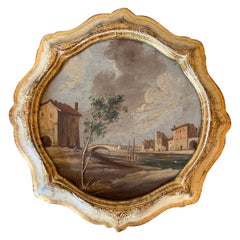
Vintage Italian Capriccio Framed Oil on Canvas Painting of Landscape With Ruins
Located in Elkhart, IN
A gorgeous Grand Tour style framed oil painting of an Italian Capriccio landscape with ruins Italy, Mid-20th Century Oil on canvas, gilt frame Measures: 9.5"W x 1"D x 9.5"H. Exce...
Category

Mid-20th Century Italian Grand Tour Paintings

Materials

Canvas, Giltwood, Paint

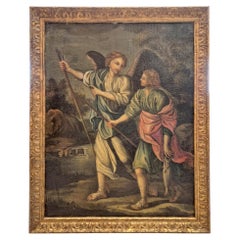
17th Century Oil-on-Canvas "The Archangel Raphael with Tobit"
Located in NICE, FR
The Archangel Raphael and Tobias, 17th-Century School Oil on canvas This 17th-century painting depicts one of the most renowned episodes from the Book of Tobit: the young Tobias, ac...
Category

Mid-17th Century Italian Baroque Antique Paintings

Materials

Canvas

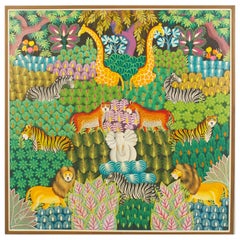
Haitian Jungle Scene Acrylic Painting
Located in Queens, NY
Haitian acrylic painting depicting a jungle scene with wild animals among plants
Category

20th Century African Tribal Paintings

Materials

Acrylic

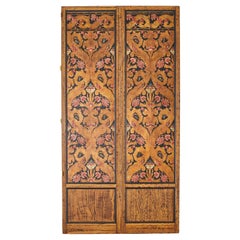
Pair of Art Nouveau Embossed Painted Leather Panel Screens
Located in Rio Vista, CA
Extraordinary pair of massive art nouveau leather inset panel screens featuring flora and fauna embossed and painted designs. The leather panels ar...
Category

20th Century American Art Nouveau Paintings

Materials

Leather, Wood

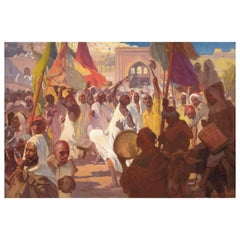
Very Fine and Large Orientalist Oil on Canvas Titled "Ashura Rituals, Tangier"
By Gordon B. Coutts 1
Located in Los Angeles, CA
Gordon B. Coutts (Scottish/American, 1868-1937) A very fine and large orientalist oil on canvas titled "Ashura Rituals, Tangier" (Arabic: عاشوراء‎ ʻĀshūrā’ - Urdu: عاشورا‎ - Persian: عاشورا‎ - Turkish: Aşure Günü). Signed and inscribed: 'Gordon Coutts/TANGIER' (lower right), circa 1920. Provenance: The Fisher Art Museum, University of Southern California. Gordon Coutts led a peripatetic career, born in Aberdeen, Scotland, he then studied and travelled to Glasgow, London, Paris and Rome before settling in Melbourne, Australia in 1891. In 1896 he moved to Sydney, where he taught at the Art Society of New South Wales, before returning back to Europe in 1899. With the climate of northern Europe detrimental to Coutts' poor health, he moved with his wife, Alice Grey, to the United States where he became a frequent exhibitor at the Bohemian Club in San Francisco. In 1920 he travelled to Tangiers, Morocco where, dressed as an Arab, he passed from tribe to tribe observing the lifestyle, customs and practices of the the village people and Bedouins. The present work depicts the celebration of Ashura. The day of Ashura is commemorated by Shi'ite Muslims; "A day of pain, pilgrimage and pageantry, it is one of the holiest in their religion. The word Ashura means 10, and refers to the tenth day of Muharram, the first month of the Islamic calendar. This is a period of mourning and cleansing, which marks the martyrdom of Hussein, grandson of the Prophet Muhammad...
Category

Early 20th Century Moroccan Other Paintings

Materials

Canvas

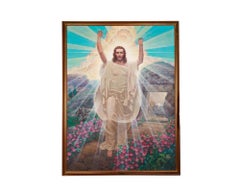
Ralph Pallen Coleman (American 1892-1968) A Monumental Painting of Jesus Christ
Located in Long Island City, NY
Ralph Pallen Coleman (American 1892-1968) A Monumental Painting of "The Resurrection of Jesus Christ", circa 1940.   Measuring 102" high x 77" wide (framed), this massive oil on canv...
Category

19th Century North American Antique Paintings

Materials

Canvas, Paint

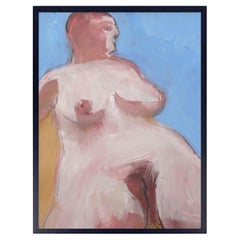
Ezio Martinelli Figural Painting 33.25" x 25.5" Mid Century Modern Art
Located in Atlanta, GA
Mid century figural study painting on paper by Ezio Martinelli (American, 1913-1980). It has been professionally framed in a clean lined black lacquer wood gallery frame under UV res...
Category

1960s American Mid-Century Modern Vintage Paintings

Materials

Wood, Paper, Plexiglass

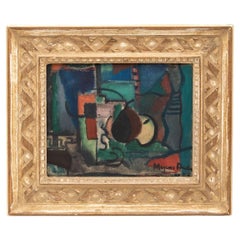
Mogens Andersen – Nature Morte
Located in Kastrup, DK
An atmospheric still life. Painted in 1951 during Mogens Andersen’s stay in France. The central fruits — a pear and an apple — appear both as classic still life motifs and can also be interpreted as symbols of the masculine and feminine. Presented in a beautifully carved wooden frame in a khaki-grey color. Signed Mogens Andersen. About the Artist Mogens Andersen (1916–2003) was one of Denmark’s key...
Category

Mid-20th Century Danish Modern Paintings

Materials

Canvas, Wood

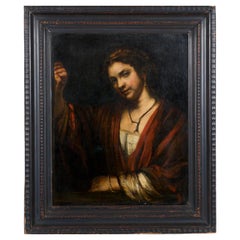
Old Master Painting, 16/17th C
Located in Aalsgaarde, DK
Fantastic old master painting of a women, 16/17th century With frame: H. 107 W. 90 D. 10 cm H. 42.1 W. 35.4 D. 3.9 in Without frame: H. 80 W....
Category

16th Century Antique Paintings

Materials

Wood, Paint

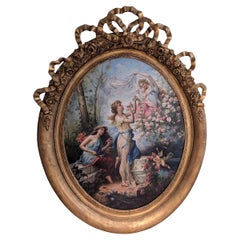
Fabulous Large original oil painting of maidens by Hans Zatzka 1859-1945
Located in Long Island City, NY
Large original painting of maidens by Hans Zatzka A Fabulous And All Original Oil Painting On Canvas By Hans Zatska.(Austrian1859-1945) In untouched condition this painting is top q...
Category

Late 19th Century Austrian Antique Paintings

Materials

Canvas, Giltwood, Paint

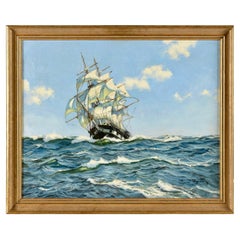
"The Privateer Ship America on the High Seas" by James Brereton
Located in Wiscasset, ME
Oil on canvas, signed lower right. Dimensions listed include the frame. Featuring the Privateer ship "America" under full sail. Title and dated on the reverse. The dimensions liste...
Category

1980s English Victorian Vintage Paintings

Materials

Paint

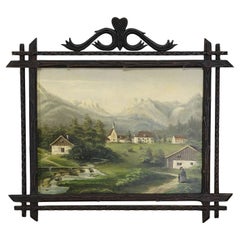
19th Century Alpine Landscape Oil Painting with Tyrolian Mountain Village
Located in Berghuelen, DE
19th Century Alpine Landscape Oil Painting with Tyrolian Mountain Village The antique oil painting captures the charm of an Alpine landscape, featuring a picturesque Tyrolean mounta...
Category

Late 19th Century German Biedermeier Antique Paintings

Materials

Canvas, Wood

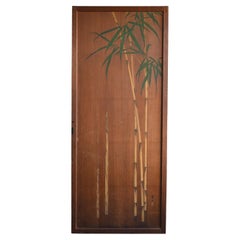
Wooden door with old Japanese bamboo painting/Wall hanging painting/Wooden door
Located in Sammu-shi, Chiba
This is a one-panel wooden door made in Japan around the 20th century. The material used is presumed to be Japanese cypress or Japanese cedar, and the delicately straight grain of th...
Category

20th Century Japanese Taisho Paintings

Materials

Cedar

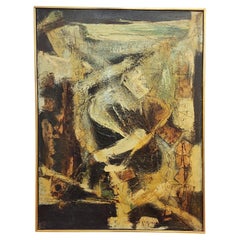
John David Rigsby Abstract Mixed Media on Canvas, American 1960
Located in Hudson, NY
A handsome and sophisticated mixed media on canvas by American artist John Rigsby. Found in a original state of preservation. His works are few and far between. The following biography was submitted by John David Rigsby, Jr., son of the artist. The author is Lisa Rigsby Peterson, daughter of the artist, and owner of the copyright of the biography. John David Rigsby was born on October 10, 1934, the seventh child of an Alabama Depression-era sharecropper's son. He and his family moved frequently, from one one-room structure to another, often with no running water, no plumbing, no heat but the stove. His father was killed in a car accident when Rigsby was just 9 years old. Life for the remaining eight family members proved tumultuous and difficult -- food wasn't plentiful, nor money. The family moved from place to place, following work -- Rigsby attended 30 different schools before graduating from high school. Despite living in poverty, Rigsby demonstrated academic and artistic aptitude at a young age. Two oil paintings on covers ripped off of old books that he painted when he was eight years old show the promise of an imaginative and gifted eye. Rigsby was drafted by the U.S. Army in 1953. As he later wrote, "When basic training at Fort Jackson, South Carolina, was over, I was told to go out and find a job. Jasper Johns was painting visual aids for the 28th Regimental Headquarters. He suggested the Band Training Unit." Rigsby played the clarinet in that unit, and after 2 years of service, he enrolled at the University of Alabama on the G.I. Bill to study art. After just two years, he left school and followed his mentor (and one of the greatest and longest-lasting influences on his art), Japanese artist and U of A art instructor Tatsu Heima, to New York City. Heima introduced him to Isamu Noguchi and suggested that Rigsby work as Noguchi's assistant. Instead, Rigsby chose a job as a guard at the Metropolitan Museum of Art, since "the notion of seeing all of that art appealed more to me than the boring task of studio assistant." The opportunity was a rich one for Rigsby. He had a chance to study the masters, and cited Rembrandt with his simplicity and elegance as another of the most important influences on his work. In the years between 1957 and 1963, when Rigsby eventually earned his BFA in sculpture, the artist traveled back and forth between New York and Tuscaloosa, alternating study with forays into the fertile New York art scene. Rigsby exhibited some of his early sculpture work in 1958 at a small New York gallery, which was also exhibiting the work of Willem and Elaine de Kooning and Theodore Stamos. Shortly thereafter, searching for an educational venue closer to New York City, Rigsby visited New Haven, Connecticut, and spent an afternoon speaking with Josef Albers at Yale. Albers agreed to accept Rigsby into the Yale program on the condition that he take freshman drawing all over again. A brilliant opportunity, but, in Rigsby's words, "When it was time to register, I was hitchhiking back to Alabama, looking for food and shelter." Rigsby had his first one-man show at the University of Alabama in 1959. A visiting critic from New York, J.F. Goosen, reviewed the show and wrote "here is a talent which produces art because that is the thing for a gifted person to do. In his effortless ease of conception and execution, he has already achieved a goal that eludes many artists for a lifetime." Finally, in 1963, Rigsby received his degree in sculpture, dissolved a short-lived marriage, visited his family, packed up his car and headed permanently for New York. That year, his work was included in a group show at the Delgado Museum in New Orleans - which led to a one-man exhibit at the Delgado in 1964. During 1964, Rigsby took drawing classes at Columbia University, and worked at the General Post Office at night. He met his future wife, Linda Palmieri, and married. In 1965, his daughter Lisa was born, followed in 1966 by the birth of his son, John David Jr. In 1966, Rigsby had a successful one-man show at the Pietrantonio Gallery in New York. Shortly thereafter, he and the family moved to Tunis, Tunisia at the suggestion of a colleague, who urged him to "come paint by the light of Klee." Rigsby worked for the United States Information Agency as a teacher, and he spent the next year and a half painting over ninety paintings inspired by the smells, light, and Phoenician and Roman art surrounding him. He also executed a number of character and landscape drawings, capturing the Tunisian way of life. During his time in Tunisia, Rigsby's work was shown there in two major exhibits. Upon the family's return to the U.S. in 1968, Rigsby once again exhibited at the Pietrantonio Gallery. Later that year, Rigsby enrolled in Southern Connecticut State College's Urban Studies program, earning a master's degree in 1970. During his time at SCSU, Rigsby worked as the city of Bridgeport's Curator of Exhibits, driving a mobile art gallery from schools to neighborhood fairs and housing projects. After completing his degree, Rigsby had an exhibit at the Telfair Museum in Savannah, Georgia. This exhibit caught the attention of a member of the search committee looking to hire an artist for a newly-developed program in neighboring South Carolina. In 1970, Rigsby was selected as the first Artist-in-Residence in the state of South Carolina for the National Endowment for the Arts Artists in Schools program. His work with the newly-integrated students at Beaufort (SC) High School over the term of his residency precluded substantial work on his own art. He did, however, set up a studio in downtown Beaufort, and was able to create a modest number of paintings, which were included in exhibits at the Columbia Museum in South Carolina in 1971 and Yale University in 1973. At the end of his residency in 1974, Rigsby was named the National Visual Arts Coordinator of the Artists in Schools program for the NEA, a post he held for two years. In this position, Rigsby traveled the country, reviewing grant applications, meeting with state leaders in government, education and the arts to promote program concepts and explore local opportunities. The message he repeated over and over again echoed that of one of the other major influences on Rigsby as an artist - Ruth Asawa Lanier, whose words taught him that all of the work that the artist does is the artist's work, not simply the paintings he creates. In his capacity as National Coordinator, as well as many times in the future, Rigsby stressed that artists function in the same way as any other person in society, and deserved the same respect and place for their work as did all other professions. After two years traveling the country, Rigsby was ready for a change, saying "for the first time in my adult life, there was not a body of paintings to show for the years put into my work." In 1976, a summer retreat to the mountain community of Central City, Colorado, led to a permanent relocation. Eventually settling in the small town of Evergreen, Rigsby followed his own advice about artists becoming actively involved in their communities, and he established the Evergreen Visual Arts Center. The Center provided working space for artists, classes for adults and children, and, most importantly, a place for Rigsby to create his own work. Buoyed by the opportunity to concentrate once again on his art, and inspired by his new surroundings, Rigsby entered an extremely prolific period in his career. In 1977, he organized a traveling exhibition of his paintings, which showed at the Kimball Arts Center in Utah, the Kennedy Center in Washington, D.C., and the Arvada Center in Colorado. 1978 brought more exhibits, notably in Aspen and Denver, as Rigsby's work continued. He took an extended trip to visit his mentor, Tatsu Heima, in Japan, where he climbed Mt. Fuji, followed by travels to Tehran, Delhi, and several European countries. He chronicled his impressions from his travels in a small collection of paintings upon his return to the U.S. - the beginning of a practice which would continue through the rest of his life. In 1979, Rigsby's marriage failed, and at the same time he lost the lease to his Evergreen studio to redevelopment plans. In response to the personal chaos around him, Rigsby began a series of what he called "hard-nosed process paintings," the watercolor paintings of dots which marked his work from this period. The paintings gained him an NEA Individual Artist grant in 1980, as well as a Yaddo fellowship in 1981. The polka dot paintings were followed by a series of cupcake-like images, again examining space and color. During the early 1980s, Rigsby lived in a suite of old dentists' offices in a rundown part of Denver, with a studio in an area that reminded him of the Bowery in New York. In 1984, Rigsby founded the Progreso Gallery in the building where he lived, using the space both to show his own work and also to mount shows of the work of many Colorado artists. The gallery also served as a focal point for Denver's local arts community, hosting weekly discussion groups and classes. In 1984, Rigsby traveled to the Baja Peninsula and then in 1985 to Yugoslavia. After each sojourn, Rigsby returned to create vibrant and explosive paintings based on his experiences, showing them at his Progreso gallery and another alternative gallery in Denver, the Edge Gallery. The economic recession of the mid-eighties hit the art market and Rigsby hard, however, and although he continued to create new works of art, major exhibitions were difficult to come by. In 1987, Rigsby decided to leave Denver and spent six months in Barcelona, Spain. It was an electrifying trip for him. Rigsby wrote of that time: "The streets alone are a visual feast, and the additions of museums from Saarinen, Picasso and Miro to 12th century icons produced artistic indigestion. My paintings are always about the way things look and feel. Barcelona was a time machine extending those sensory and emotional concerns back to the Middle Ages. I felt the need to reduce my work to essential elements of color, scale, drawing and format. The [resulting] color studies speak eloquently for themselves, and in doing so, redefine all of the work I've done in the past 35 years of painting." Rigsby completed over a hundred paintings while in Barcelona - color studies, street portraits of the characters he encountered on a daily basis, and a number of dark landscape paintings. He found time to run with the bulls in Pamplona, and began writing stories about his adventures that were later published. Upon his return to Denver in 1988, Rigsby continued to explore the alter egos of the color studies - he concentrated on a series of dark paintings, all prominently featuring back. He commented about these black paintings that he " decided it was time to explore the perception of the eye and physical space as defined by low -light conditions…I find these paintings elegant, joyous and light-filled, with no feeling of heaviness at all." In mid-1988, Rigsby moved permanently to Houston, Texas, where he would spend the last five years of his life. Once in Houston, Rigsby made a discovery that would serve as the inspiration and material for some of the last works of his career. In 1989, he discovered a salvage yard filled with scrap rubber, and he began working on black rubber sculptures, as well as paintings with rubber elements incorporated. He made strong connections in the Houston alternative arts scene, and became a regular contributor and art critic for a local weekly newspaper, The Public News. From 1989 through 1992, he exhibited his sculptures and paintings at Houston's Brent Gallery, Fountainhead Gallery, and Blaffer Gallery. He also produced an installation of his rubber sculptures on the roof of the Diverse Works Gallery in Houston. 1992 also marked Rigsby's return to Denver when he exhibited his sculptures at the Payton-Rule Gallery in Denver, leading to an Absolut Rigsby commission by Carillon Importers. The 1990s were a tremendous struggle for Rigsby, with financial crises compounded by physical trauma (he accidentally sawed off the top joint of the index finger of his left hand while working in his studio). Although his work was being shown, it wasn't selling, and the tremendous financial pressure he felt weighed heavily upon him. He spent an increasing proportion of his time going to flea markets and garage sales, rehabilitating and repairing the things he bought there, and then re-selling them simply to raise enough money to keep a roof over his head. He had little time to paint or sculpt, the things in life that had always, no matter what the circumstances, brought him joy. Rigsby's final works were a series of intricate paintings and drawings on used books that he purchased at the flea market. Most of these drawings, which he referred to as sculptural form drawings, were executed on page after page of science texts, music books, and a Korean bible and fill hundreds of pages. Additionally, Rigsby created an exquisite book he titled 28 de los Angeles, in which his twenty-eight simple and elegant drawings of angels resonated with the influence of Rembrandt he had so admired in his early days. In a sense, Rigsby's final works, art created on used books which were the only materials he could afford, brought his work and life full circle from his childhood days. Rigsby's life, though begun and ended in adversity, was nonetheless illuminated and enriched by the irresistible impulse he had to create art and beauty. John David Rigsby was killed in a one-car accident in Colorado in August, 1993. Biography from the Archives of askART Following is a review by Michael Paglia of the artist's July 2004 retrospective at the Denver Museum of Contemporary Art. It was submitted by John Rigsby, Jr., son of the artist. There's a magnificent retrospective at Denver's Museum of Contemporary Art devoted to the work of the late John David Rigsby, who was a major powerhouse in Colorado's art scene. "Dots, Blobs and Angels" surveys more than forty years' worth of the remarkable artist's paintings and sculptures. The year 1993 was strange, and by that I mean terrible. Many of the city's galleries closed because of bad economic times, and then the artists started dying. In a matter of a few months, Denver lost three significant artists: Rigsby, experimental photographer Wes Kennedy...
Category

1960s American Mid-Century Modern Vintage Paintings

Materials

Canvas, Paint

Whimsical Oil on Board of European Town Signed Spinola
Located in Tarrytown, NY
Whimsical small oil on board painting of a European town. Signed Spinola. Out of. Southampton, NY estate.
Category

1960s Vintage Paintings

Materials

Paint

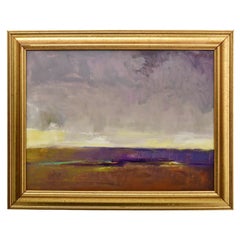
"Clearing Up" Original Painting by Ira Barkoff
Located in Wiscasset, ME
Oil on canvas signed in the upper right. Measurements listed include the frame. The canvas measures 30" x 40". It is in excellent condition and ready to hang. Born in 1934 in B...
Category

21st Century and Contemporary American Modern Paintings

Materials

Canvas, Paint

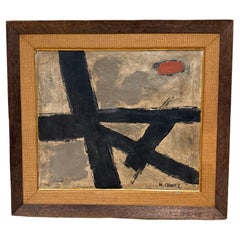
Late 20th Century Abstract Expressionism Modern Art Painting signed
By (after) Mark Rothko
Located in Chula Vista, CA
For your consideration, an abstract expressionism modern art painting signed M Chavez. Geometric art abstract expressionism painting. Oil on canvas board. In the style of Mark Rothko...
Category

Late 20th Century Mexican Expressionist Paintings

Materials

Canvas, Acrylic

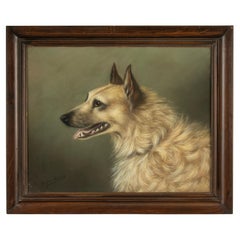
Antique Painting of a Shepherd Dog - Portrait - by Zélia Klerx, Chalk on Paper
Located in Casteren, Noord-Brabant
Beautiful antique drawing dog portrait of a shepherd-like dog, chalk on paper. The drawing is very nicely executed, the head, dog's fur, the colors. The colors are well preserved wit...
Category

1890s Belgian Belle Époque Antique Paintings

Materials

Glass, Oak, Paper

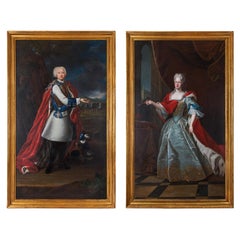
Pair of French 18th Century École Française Oil on Canvas Portraits
Located in West Palm Beach, FL
An extraordinary and monumental pair of 18th century École Française Oil on Canvas portraits of Marie-Josèphe of Habsbourg of Austria (1699-1757), wife of Frederick Augustus II of Saxony, Elector of Saxony, and of their son Frederick IV of Saxony (1722-1763), bearing the Imperial and Royal Order...
Category

18th Century French Antique Paintings

Materials

Canvas, Giltwood

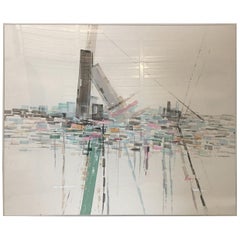
Large Scale Modernist Abstract Watercolor in Acrylic Frame by Rodolfo circa 1986
Located in Danville, CA
Beautiful watercolor abstract cityscape by Rodolfo, 1986. The work is beautifully framed in a white edged acrylic box-frame. Measures 48 x 40 x 2" deep.
Category

1980s American Modern Vintage Paintings

Materials

Paint, Paper

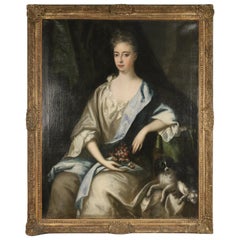
18th Century French Giltwood Framed Oil Painting Portrait of a Woman
Located in Queens, NY
French (18th century) oil painting portrait of a woman holding grapes sitting next to a dog in a rectangular carved giltwood frame.
Category

Mid-18th Century French Empire Antique Paintings

Materials

Giltwood, Paint

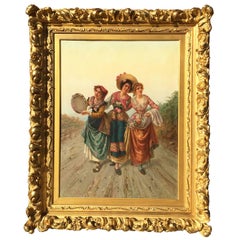
Pietro Gabrini Large Oil on Canvas "Three Singing Italian Beauties on The Road"
Located in Los Angeles, CA
Pietro Gabrini (Italian, 1856-1926) a very fine and large oil on canvas "Three Singing Italian Beauties on The Road" depicting three cheerful Village young maidens walking through a ...
Category

Late 19th Century Italian Baroque Revival Antique Paintings

Materials

Canvas, Wood

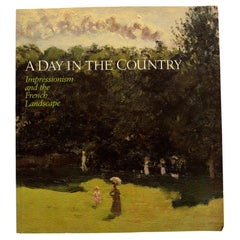
Day in the Country Impression and French Landscape, Exhibition Catalog, 1st Ed
Located in valatie, NY
Day in the Country: Impression and French Landscape Los Angeles County Museum of Art, Art Institute of Chicago, and Reunion Des Musees Nationaux (France). Published by Los Angeles County Museum of Art, 1984. 1st Ed softcover exhibition catalog. 375 pp. Numerous b/w and color plates. Issued in conjunction with a 1984-1985 exhibition series of impressionistic art by 17 artists. With a variety of texts by Richard Brettel, Scott Schaefer, Sylvie Gache-Patin, and Francoise Heilbrun. The artists are: Frederic...
Category

1980s American Vintage Paintings

Materials

Paper

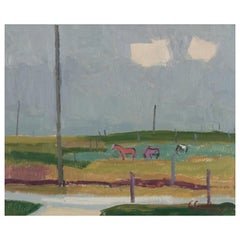
Gotthard Sandberg, Swedish artist. Oil on board. Modernist landscape
Located in København, Copenhagen
Gotthard Sandberg (1890-1961), Swedish artist. Oil on board. Modernist landscape with horses in a meadow. Titled "Sommar" (Summer). Signed and dated 1960. In perfect condition. Visi...
Category

1960s Swedish Modern Vintage Paintings

Materials

Other

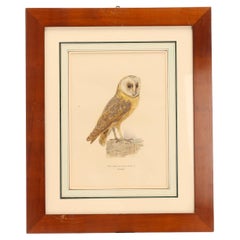
A watercolor finished print depicting a Barn Owl, Sweden 1880.
Located in Milan, IT
A watercolor finished print, depicting a Barn Owl( Tyto Alba Guttata), signed Bror Hallberg, based on the drawing of the three Finnish brothers Magnus, Wilhelm e Ferdinand von Wright...
Category

Late 19th Century Swedish Antique Paintings

Materials

Wood

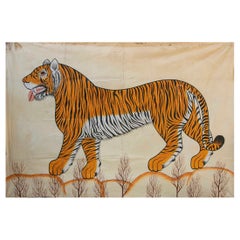
1970s Jaime Parlade Designer Hand Painting "Tiger" Oil on Canvas
Located in Marbella, ES
1970s Jaime Parlade designer hand painting "Tiger" oil on canvas.
Category

Late 20th Century Indian Paintings

Materials

Canvas

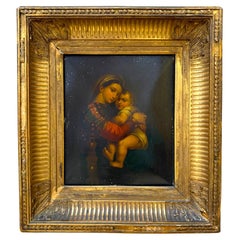
Madonna and Child, oil on Metal in a Gilt Frame, After Raphael, 19th Century
Located in NICE, FR
This 19th century painting depicts the Madonna and Child, inspired by the celebrated works of Raphael. The Virgin tenderly embraces the Child, echoing the warmth and harmony that def...
Category

Late 19th Century Italian Renaissance Antique Paintings

Materials

Metal

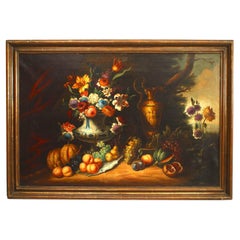
Vase and Fruit Still Life
Located in Queens, NY
Gilt framed oil painting of a still life of a vase and pitcher with fruit and flowers.
Category

19th Century Unknown Victorian Antique Paintings

Materials

Paint

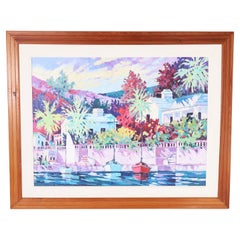
Painting on Canvas of a Tropical Scene
Located in Palm Beach, FL
Acrylic painting on canvas of a tropical scene with palm trees, houses, and boats executed with bold strokes and vivid colors, signed Hawk and presented...
Category

20th Century American Mid-Century Modern Paintings

Materials

Acrylic

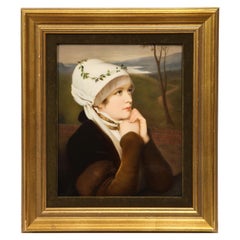
Large Antique KPM Hand Painted Plaque of Young Beauty Symbolizing Victory
Located in New York, NY
A large antique 19th century Belle Époque style KPM hand painted plaque of a young German woman wearing a bay laurel wreath, impressed KPM and scepter...
Category

1870s German Belle Époque Antique Paintings

Materials

Porcelain

Early 19th Century French Portrait of Commander in Legion of Honor
Located in Scottsdale, AZ
Early 19th Century French Portrait of Commander in Legion of Honor By Alexandre Bailly (1764-1835) Beautiful painting purchased in France. Age appropriate wear, see detailed photos ...
Category

Early 19th Century French Neoclassical Antique Paintings

Materials

Wood, Paint

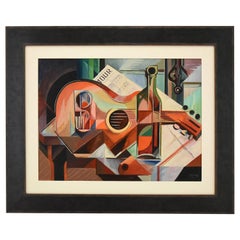
Cubist Oil Painting Still Life with Guitar Serge Magnin
Located in Antwerp, BE
Colorful Post-Cubist oil painting still life with guitar By Serge Magnin, born in France, 1934. Framed. Size of the frame: H 67 cm x L 81 cm x W 2 c...
Category

Mid-20th Century French Mid-Century Modern Paintings

Materials

Paint

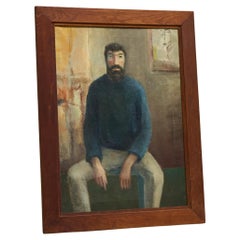
Portrait of a Sitting Man Oil and Tempera Paint on Canvas Belgium 1964
Located in Meer, VAN
Sitting Man Oil and Tempera Paint on Canvas Belgium 1964. A large and very well painted portrait of a sitting man framed in solid oak - dated 1964. Beautiful pose and very well cra...
Category

Mid-20th Century European Mid-Century Modern Paintings

Materials

Canvas, Oak, Paint

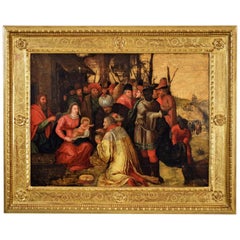
Frans Franken III 16th Century Oil on Wood, Adoration of the Magi, Painting
Located in IT
Frans Franken III and aid, Adoration of the Magi Good condition The oil painting on wood, with a gold background, depicts an Adoration of the Magi. The Magi are dressed in sumptuous silk and brocade dresses; they wear precious hats and jewelery. The richness of their garments is in contrast with the humility of the Holy Family and of the other characters who, around curious, observe the scene. The hut is simple, made of wood and straw: above it shines the Comet, symbol of the divine event. In the distance, a group of wayfarers walk along a path that is lost on the horizon, blending into the gold of the bottom. The representation proposes a traditional iconography, in which the painter inserts some details that he lends himself to symbolic interpretations. Among these is the appearance of the Magi, who from the XIVth century differs iconographically: the wise astronomers represent the homage to Jesus of the then known parts of the world, namely Africa, Asia and Europe. To the right of the Magi, in the foreground, sits a monkey, considered a demonic creature and a symbol of lies and sin. It is depicted on the sidelines, as a defeat, next to a fragment of a classical column: ruin alludes to the end of paganism, of the old world that collapses with the advent of the new one, marked by the birth of Christ and liberation from the Original Sin. On the ruins he climbs the ivy, symbol of the immortality of the soul. The work is attributable to the workshop of the Flemish painter Frans Francken III...
Category

16th Century Belgian Renaissance Antique Paintings

Materials

Paint

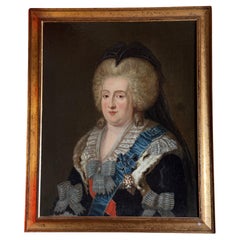
European School, 18th Century " German Princess "
Located in Madrid, ES
Portrait of a German Princess with a Sash and Insignia of a Knightly Order European School, 18th Century " German Princess " Large-format oil on canvas depicting a German princess,...
Category

18th Century Polish Baroque Antique Paintings

Materials

Paint

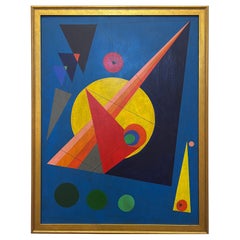
Large 1945 John Sennhouser Abstract Oil Painting On Canvas, Framed and Signed
Located in Miami, FL
Large 1945 John Sennhouser Abstract Oil Painting On Canvas, Framed and Signed Offered for sale is a large 1945 John Sennhouser ((Swiss-American 1907-1978) abstract oil painting on ...
Category

Mid-20th Century American Mid-Century Modern Paintings

Materials

Giltwood, Paint, Canvas

Eugène de Sala, Double-Sided Oil on Panel, Paris 1920s, Picasso-Inspired
Located in Kastrup, DK
Eugène de Sala (1899–1987) Double-sided oil on panel by Danish-French modernist Eugène de Sala, unsigned. Likely painted in Paris during the 1920s. The front features a Picasso-inspi...
Category

Early 20th Century Danish Modern Paintings

Materials

Wood

Antique and Vintage Paintings for Sale on 1stDibs

When paired with the perfect frame, the right antique and vintage paintings and other wall decorations can either subtly showcase your personality or steal the show altogether. 

The earliest paintings were created on the walls of caves, proving even our ancient ancestors knew that striking artwork is meant to be on display. Cave paintings on an Indonesian island are reportedly older than the earliest cave art in Spain and France, and the figurative paintings back then were produced with inorganic pigments like iron oxide.

Later, the people of Ancient Greece — who learned about art from the Egyptians before them — conceived panel paintings of wax and tempera that were collected and publicly displayed. In the centuries that followed, artists would be commissioned to create large-scale wall murals and frescoed ceilings in sprawling European palaces and in the homes of the aristocracy.

Today, 1stDibs makes it easy for you to celebrate this rich history in your own home. Our collection of paintings includes Art Deco paintings, baroque art and a broad range of other categories. Search by material, period or other attributes to find the right fit — browse an array of 19th century landscape paintings in giltwood frames or abstract oil paintings and portraits made during the 1950s and ‘60s.

An understated contemporary work can complement your space’s color palette without drawing the focus away from the other pivotal design choices you’ve made over the years. Roy Lichtenstein’s Pop art, on the other hand, demands attention with its array of vibrant hues and subjects inspired by popular culture. 

Whether you aim to create a gallery in your home or build a single, stunning focal point, you can find what you’re looking for in an extensive inventory of paintings on 1stDibs.