Items Similar to Antique Painting Grape and Melon Eaters After Bartolome
Murillo 18th Century

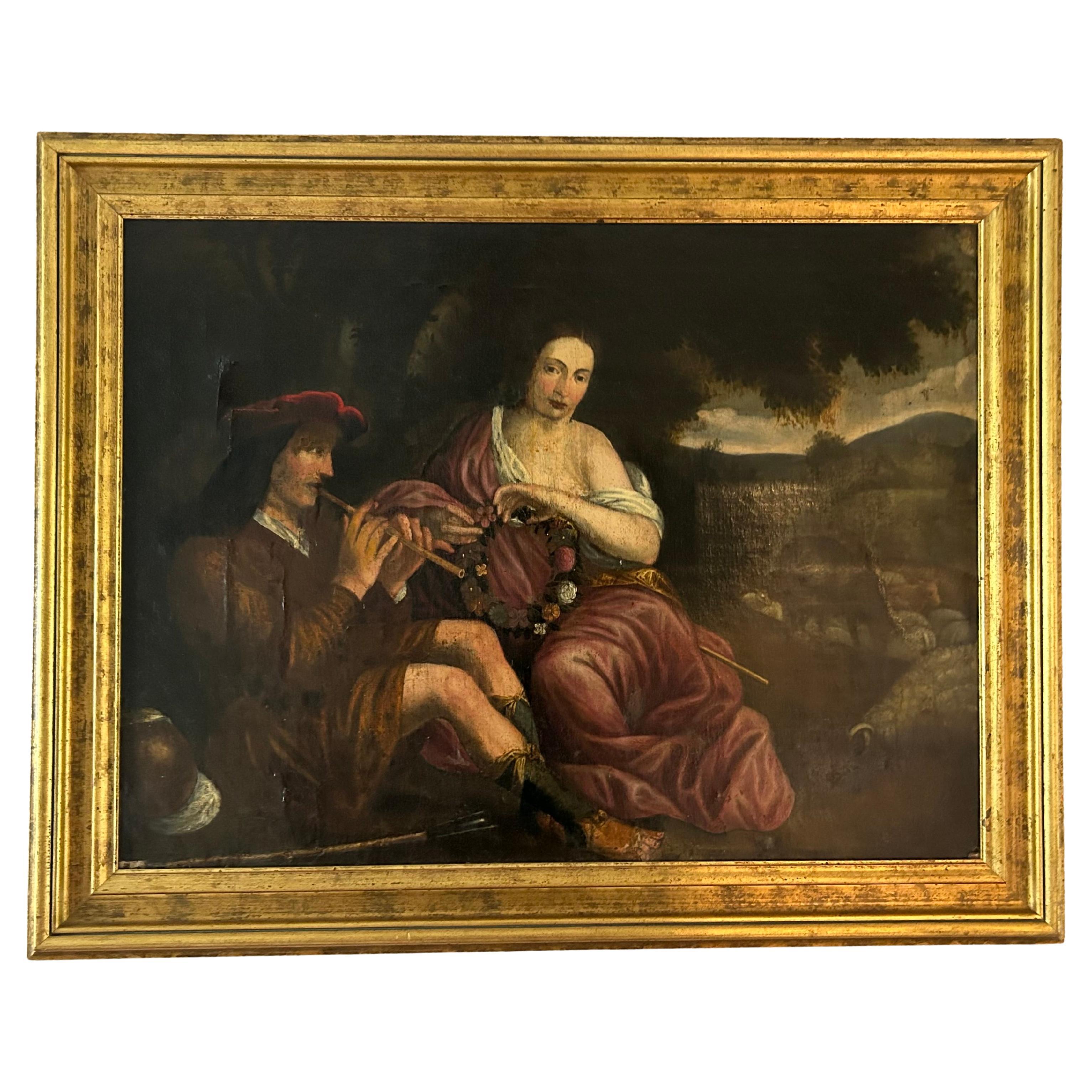
Want more images or videos?
Request additional images or videos from the seller
1 of 14
Antique Painting Grape and Melon Eaters After Bartolome
Murillo 18th Century
$4,475.80
£3,250
€3,801.59
CA$6,122.67
A$6,663.34
CHF 3,532.23
MX$80,165.13
NOK 44,800.06
SEK 40,988.91
DKK 28,400.73
About the Item
This is a delightful antique Spanish oil on canvas painting after Bartolome' Esteban Murillo, depicting two peasant boys eating grapes and melon, Circa 1780 in date.
It features a dog staring at two seated boys while they eat fruit with a basket of fruit in the foreground. This lively realist portrait of street urchins constitutes an appealing record of everyday life at that time.
This superbly accomplished painting is executed in the style of Murillo's later works where he continued to evolve to the very end. In the last decade of his life, Murillo took Rubens's lesson even closer to heart, during this period his brushwork became looser and more visible than ever before, sometimes even to the point that the canvases appear unfinished.
Murillo also reduced his palette to the more sober hues of mauve, grey, brown, and carmine, making his late style more refined than in any previous period.
His style of painting the street children of his native Seville was unprecedented. He employed great naturalism, employing a sombre palette and strong chiaroscuro, contrasting lights and darks, and very little background detail. They are caught, like a photographic snapshot, playing or eating, but are very rarely aware of an onlooker.
This magnificent painting is housed in its original gilded frame surmounted by a pierced cresting rail of scrolling foliage.
It is beautifully executed and as such would make a lovely addition to your collection.
Condition:
In really excellent condition the painting and frame having been beautifully cleaned, please see photos for confirmation.
Dimensions in cm:
Height 73 cm x Width 61 cm - Painting
Height 95 cm x Width 72 cm x Depth 6 cm - Frame
Dimensions in inches:
Height 2 foot, 5 inches x Width 2 foot - Painting
Height 3 feet, 1 inch x Width 2 foot, 4 inches x Depth 2 inches - Frame
Bartolomé Esteban Murillo
Bartolomé Esteban Murillo, (baptized January 1, 1618, Sevilla, Spain—died April 3, 1682, Sevilla), the most popular Baroque religious painter of 17th-century Spain, noted for his idealized, sometimes precious manner. Among his chief patrons were the religious orders, especially the Franciscans, and the confraternities in Sevilla (Seville) and Andalusia.
Among Murillo’s earliest works is the Virgin of the Rosary (c. 1642). In the vestigial style of his artistically conservative Sevillian master, Juan del Castillo, this early work combines 16th-century Italian Mannerism and Flemish realism. The 11 paintings that originally hung in the small cloister of San Francisco in Sevilla—e.g., the Ecstasy of St. Diego of Alcalá (1646)—are executed in the more contemporary naturalistic style of the Sevillian school, established by Diego Velázquez and continued by Francisco de Zurbarán. That series is characterized by realism and tenebrism (contrasting light and shade) and use of commonplace models, with an emphasis on genre or scenes of everyday life.
In the 1650s a striking transformation of style occurred, usually attributed to a visit to Madrid, where Murillo undoubtedly met Velázquez and studied the works of Titian, Peter Paul Rubens, and Anthony van Dyck in the royal collections. The softly modeled forms, rich colours, and broad brushwork of the 1652 Immaculate Conception reflect direct visual contact with the art of the 16th-century Venetians and the Flemish Baroque painters. The St. Leandro and St. Isidoro (1655) are even further removed from the simple naturalism of his earlier Franciscan saints. These seated figures, more than life size, are in the grand manner of Baroque portraiture, which had become fashionable at the Spanish court.
The Vision of St. Anthony (1656), one of Murillo’s most celebrated pictures, is an early example of his so-called “vaporous” style, which was derived from Venetian painting. In 1660 Murillo was one of the founders and first president of the Academy of Painting in Sevilla. During the two following decades he executed several important commissions, generally representing dramatized genre on a grand scale. From 1678 onward Murillo worked on another series of paintings, for the Hospicio de Venerables Sacerdotes in Sevilla, which included the celebrated Soult Immaculate Conception (1678), which was removed to France by Nicolas-Jean de Dieu Soult during the Napoleonic period.
Although Murillo’s subjects were often religious, he also produced many genre paintings of ordinary contemporary life. He depicted the street children of Seville in Grape and Melon Eaters (c. 1645) and glimpses of the aristocracy from the street in Two Women at a Window (c. 1655/1660). Murillo’s late style is exemplified by his unfinished works for the Capuchin church at Cádiz and The Heavenly and Earthly Trinities (c. 1675–82; popularly called the “Holy Family”). The often mystical significance of his subjects is countered by the idealized reality of his figures based on familiar human archetypes, with natural gestures and tender, devout expressions, creating an effect of intimate rather than exalted religious sentiment.
Murillo had many pupils and innumerable followers. His paintings were copied and imitated throughout Spain and its empire. He was the first Spanish painter to achieve widespread European fame, and until the 19th century he was the only Spanish artist whose works were extensively known outside the Hispanic world.
Our reference: A2853a
- Similar to:Bartolomé Esteban Murillo (Painter)
- Dimensions:Height: 37.41 in (95 cm)Width: 28.35 in (72 cm)Depth: 2.37 in (6 cm)
- Style:Baroque (In the Style Of)
- Materials and Techniques:
- Place of Origin:
- Period:
- Date of Manufacture:circa 1780
- Condition:
- Seller Location:London, GB
- Reference Number:Seller: A2853a1stDibs: LU950643079162
About the Seller
5.0
Platinum Seller
Premium sellers with a 4.7+ rating and 24-hour response times
Established in 1983
1stDibs seller since 2012
1,444 sales on 1stDibs
Typical response time: <1 hour
Associations
LAPADA - The Association of Arts
Antiques Dealers
- ShippingRetrieving quote...Shipping from: London, United Kingdom
- Return Policy
More From This Seller
View AllAntique Oil on Canvas Painting by Francesco Bergamini 19th Century
By Francesco Bergamini 1
Located in London, GB
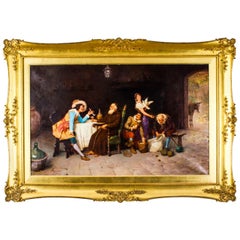
This is a truly splendid antique oil on canvas painting featuring a period interior scene by Francesco Bergamini (1851-1900) Italian, signed and dated 1894.
This beautiful oil pai...
Category
Antique 1890s Italian Paintings
Materials
Canvas, Giltwood
Antique Oil Painting "The Toast" after Francesco Brunnery 19th Century
Located in London, GB
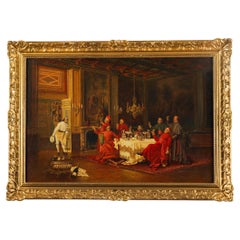
This is a magnificent antique Italian oil on canvas painting of a group of Cardinals in the style of Francesco Brunnery, (Italian 1845-1929), circa 1890 in date.
This beautiful pain...
Category
Antique Late 19th Century Italian Paintings
Materials
Canvas
Antique Oil on Canvas Painting "Party Picnicking" After Watteau 18th Century
By Jean-Antoine Watteau
Located in London, GB
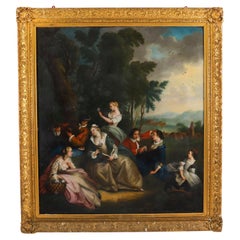
This is a large delightful antique oil on canvas painting after Watteau, depicting a "Party Picnicking", Circa 1780 in date.
The painting depicts a group of people relaxing in the c...
Category
Antique Late 18th Century Paintings
Materials
Canvas
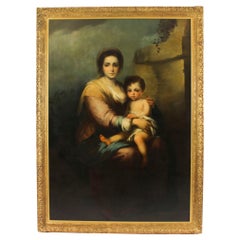
Antique Painting Our Lady of The Rosary After Bartolomé Murillo 19th Century
By Bartolomé Esteban Murillo
Located in London, GB
A large Spanish oil on canvas of Our Lady of The Rosary after Bartolomé Esteban Murillo, early 19th century in date.
It features the Virgin Mary holding baby Jesus in her arms, she...
Category
Antique Early 1800s Spanish Paintings
Materials
Canvas
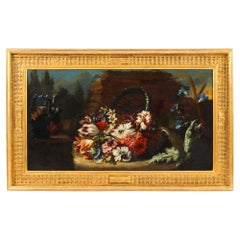
Antique Dutch School Floral Still Life Oil Painting Framed Late 18th Century
Located in London, GB
This is a magnificent antique Dutch School floral still life oil on canvas painting with a stunning gilt gesso frame, late 18th century in date.
This splendid painting is rectangular in shape and features brightly illuminated pastel-tinted roses and bi-coloured Carnations and Honeysuckle arranged against a ruined wall with trees in the background.
Great attention has been paid to individual elements in the bouquet. Indeed each petal has been painted with diligent conscientious precision.
It is housed in its magnificent original giltwood frame.
Add this splendid antique Dutch painting to a very special wall in your home.
Provenance:
Property of Archibald Stirling of Keir
Condition:
In excellent condition the painting and frame having been beautifully cleaned in our workshops, please see photos for confirmation.
Dimensions in cm:
Height 55 x width 88 x depth 5 - frame
Height 39 x width 72 - canvas
Dimensions in inches:
Height 1 foot, 10 inches x width 2 foot, 11 inches x depth 2 inches - frame
Height 1 foot, 3 inches x width 2 foot, 4 inches - canvas
Archibald Hugh Stirling,
Laird of Keir (born 18 September 1941) is a Scottish theatrical producer, a former officer in the Scots Guards,and Laird of the Keir estate at Lecropt in the Stirling council area in Scotland.
A still life is a work of art depicting mostly inanimate subject matter, typically commonplace objects which may be either natural food, flowers, dead animals...
Category
Antique 1790s Dutch Paintings
Materials
Canvas, Giltwood
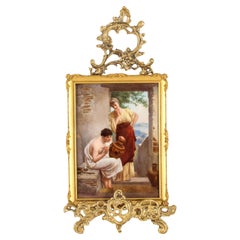
Antique Berlin KPM Plaque
KUNST BRINGT GUNST On Stand 19th Century
Located in London, GB
This is an absolutely stunning and finely painted KPM Berlin Plaque after Paul Thumann's (1834-1908) 'Kunst Bringt Gunst' (meaning 'Art wins heart'), sign...
Category
Antique 1880s Paintings
Materials
Bronze
You May Also Like
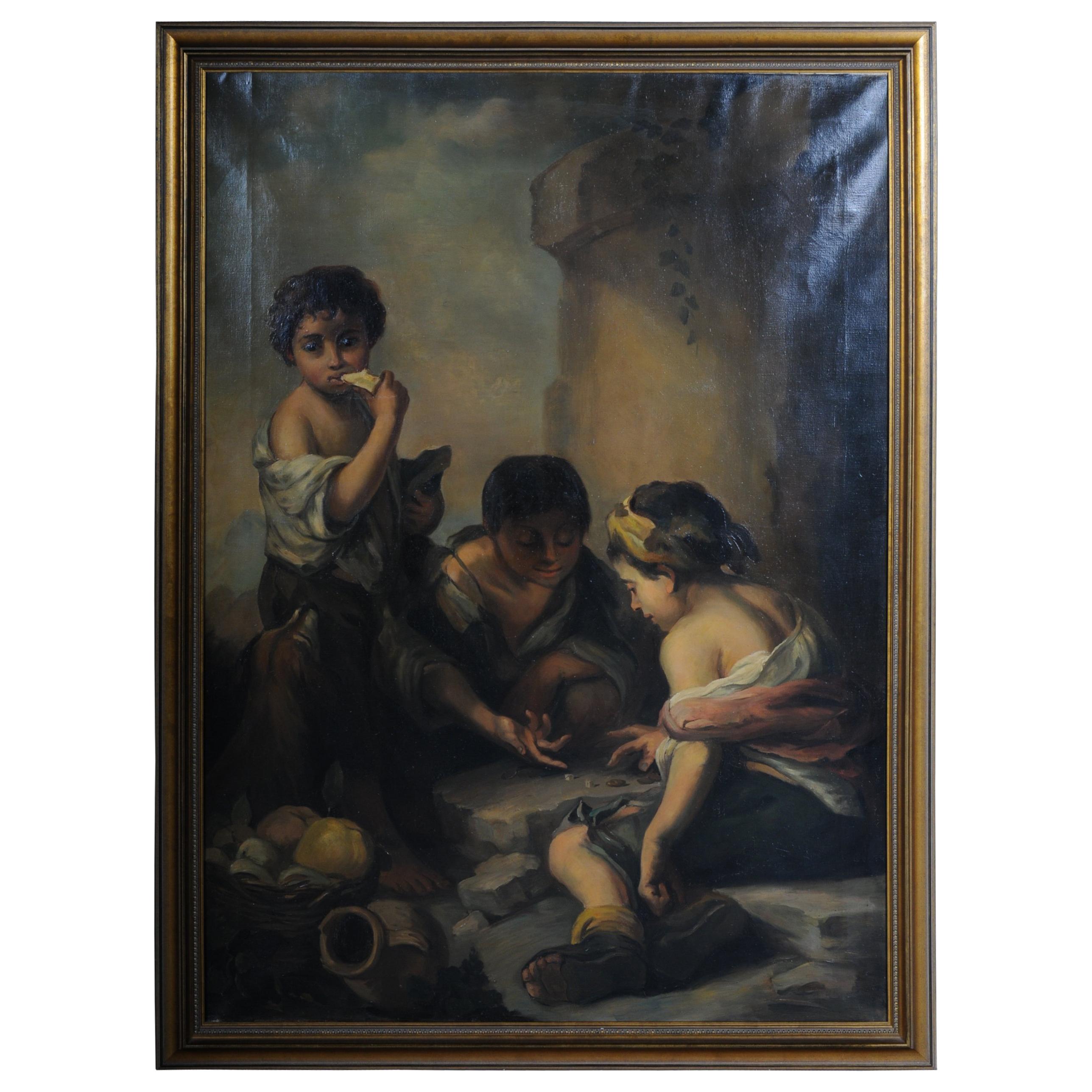
Great Painting Grapes and Melon Eaters After Esteban Murillo Oil of Canvas
By Bartolomé Esteban Murillo
Located in Berlin, DE
The picture shows two about ten-year-old street boys eating fruit. The environment is not further defined. With obvious pleasure, the left street boy is eating a grape while the righ...
Category
20th Century European Paintings
Materials
Canvas
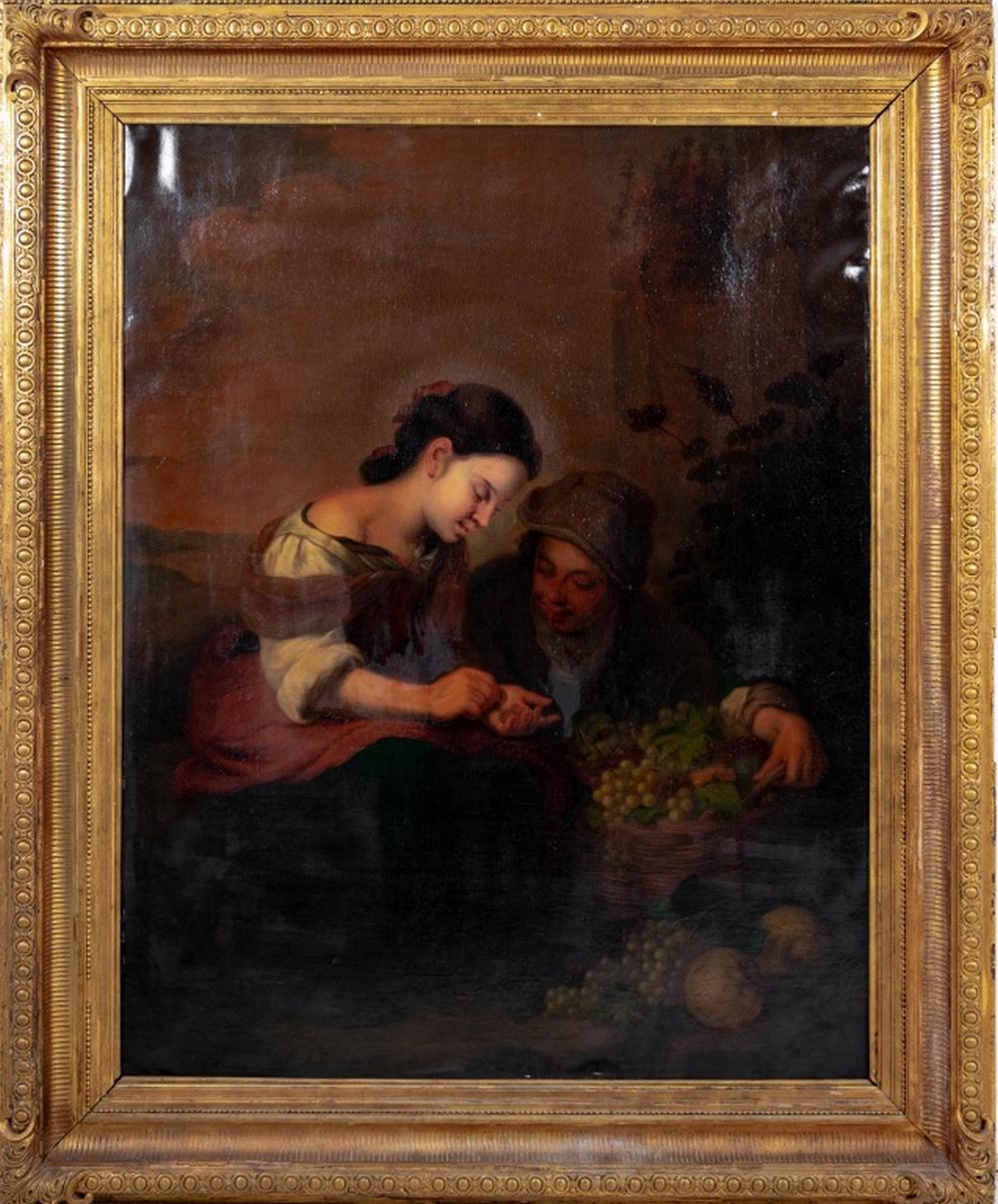
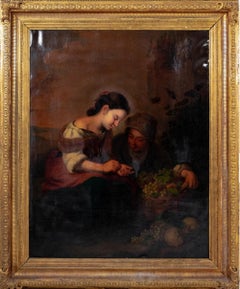
After Bartolome Murillo "Little Fruitseller" Oil
By (After) Bartolomé Esteban Murillo
Located in Astoria, NY
After Bartolome Esteban Murillo (Spanish, 1618-1682), "The Little Fruitseller", Oil on Canvas, 19th century, apparently unsigned, depicting young girl and boy counting money over var...
Category
19th Century Old Masters Figurative Paintings
Materials
Oil
$1,800 Sale Price
35% Off
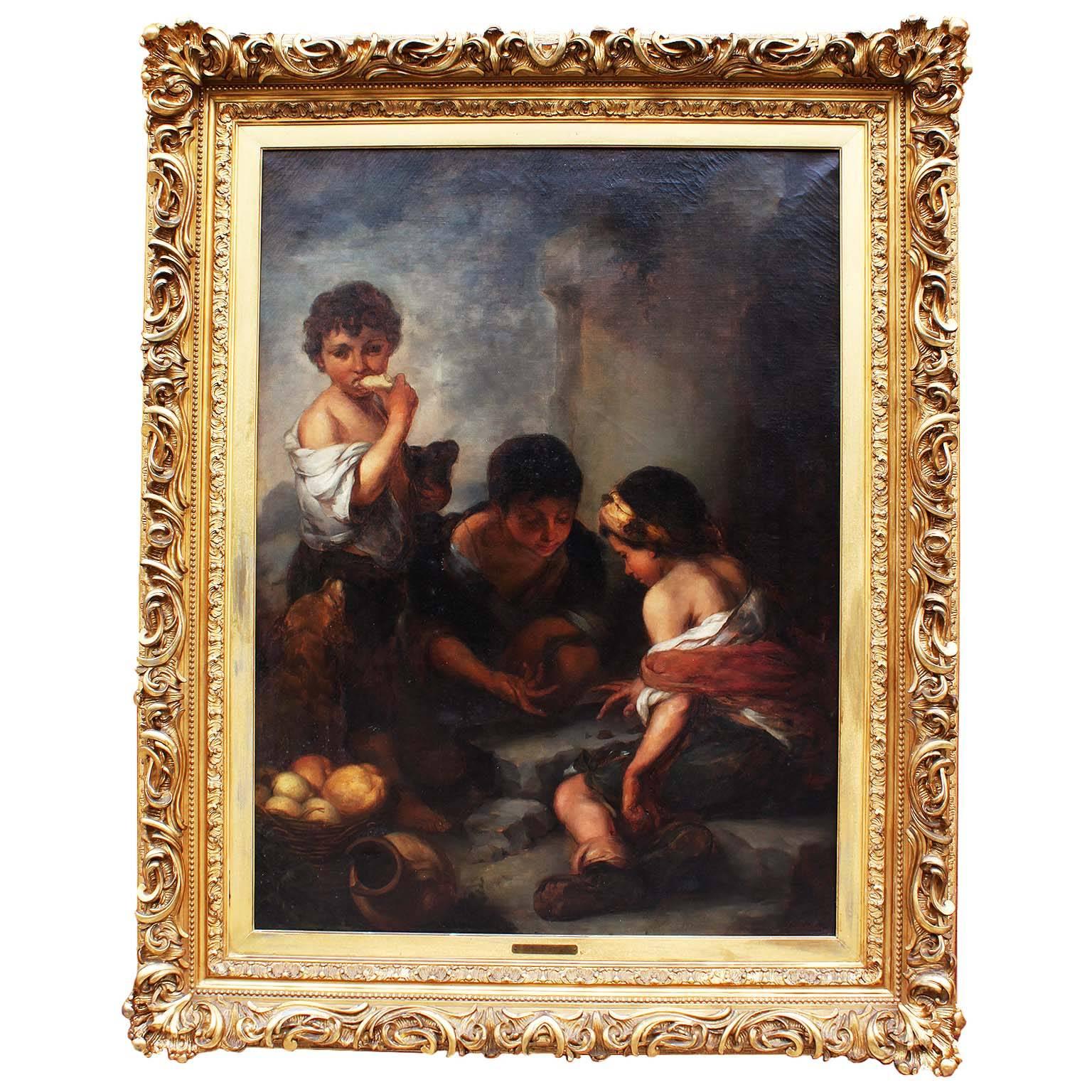
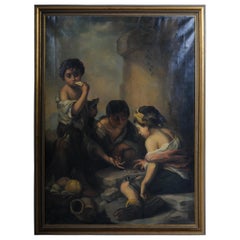
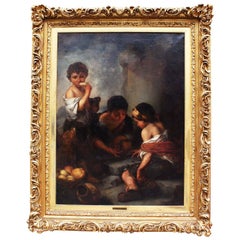
Large Oil on Canvas "Beggar Boys Playing Dice" After Bartolomé Esteban Murrillo
By Bartolomé Esteban Murillo
Located in Los Angeles, CA
A fine and large 19th century oil on canvas after Bartolomé Esteban Murrillo's (Spanish, 1617-1682) "Beggar Boys Playing Dice" (The original work by Murillo was painted in 1675). The impressive artwork depicts two young boys playing dice while another eats a piece of fruit as his dog watches on., within an ornate gildwood and gesso frame bearing a label from the faming company Bigelow & Jordan. The original work by Murillo is currently at the Alte Pinakothek Museum in Munich, Germany. The present work is signed: L. Rüber. Circa: Munich, Late 19th Century.
Bartolomé Esteban Murillo (born late December 1617, baptized January 1, 1618 – April 3, 1682) was a Spanish Baroque painter. Although he is best known for his religious works, Murillo also produced a considerable number of paintings of contemporary women and children. These lively, realist portraits of flower girls, street urchins, and beggars constitute an extensive and appealing record of the everyday life of his times.
Murillo was born to Gaspar Esteban and María Pérez Murillo. He may have been born in Seville or in Pilas, a smaller Andalusian town. It is clear that he was baptized in Seville in 1618, the youngest son in a family of fourteen. His father was a barber and surgeon. His parents died when Murillo was still very young, and the artist was largely brought up by his aunt and uncle.
Murillo began his art studies under Juan del Castillo in Seville. There he became familiar with Flemish painting and the "Treatise on Sacred Images" of Molanus (Ian van der Meulen or Molano). The great commercial importance of Seville at the time ensured that he was subject to influences from other regions. His first works were influenced by Zurbarán, Jusepe de Ribera and Alonzo Cano, and he shared their strongly realist approach. As his painting developed, his more important works evolved towards the polished style that suited the bourgeois and aristocratic tastes of the time, demonstrated especially in his Roman Catholic religious works.
In 1642, at the age of 26, he moved to Madrid, where he most likely became familiar with the work of Velázquez, and would have seen the work of Venetian and Flemish masters in the royal collections; the rich colors and softly modeled forms of his subsequent work suggest these influences. In 1645 he returned to Seville and married Beatriz Cabrera y Villalobos, with whom he eventually had eleven children.
In that year, he painted eleven canvases for the convent of St. Francisco el Grande in Seville. These works depicting the miracles of Franciscan saints vary between the Zurbaránesque tenebrism of the Ecstasy of St Francis and a softly luminous style (as in Death of St Clare...
Category
Antique Late 19th Century German Baroque Paintings
Materials
Gesso, Canvas, Wood
$14,850 Sale Price
40% Off
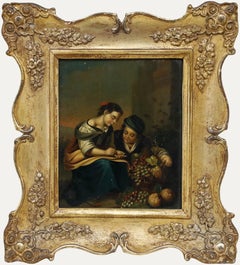
After Bartolome Esteban Murillo (1618-1682) - Oil, The Little Fruit Seller
Located in Corsham, GB
A fine copy after Bartolomé Esteban Murillo's (1618-1682) *The Little Fruit Seller*, which is held in the Alte Pinakothek in Munich. Murillo frequently painted the poverty he saw in ...
Category
19th Century Figurative Paintings
Materials
Oil
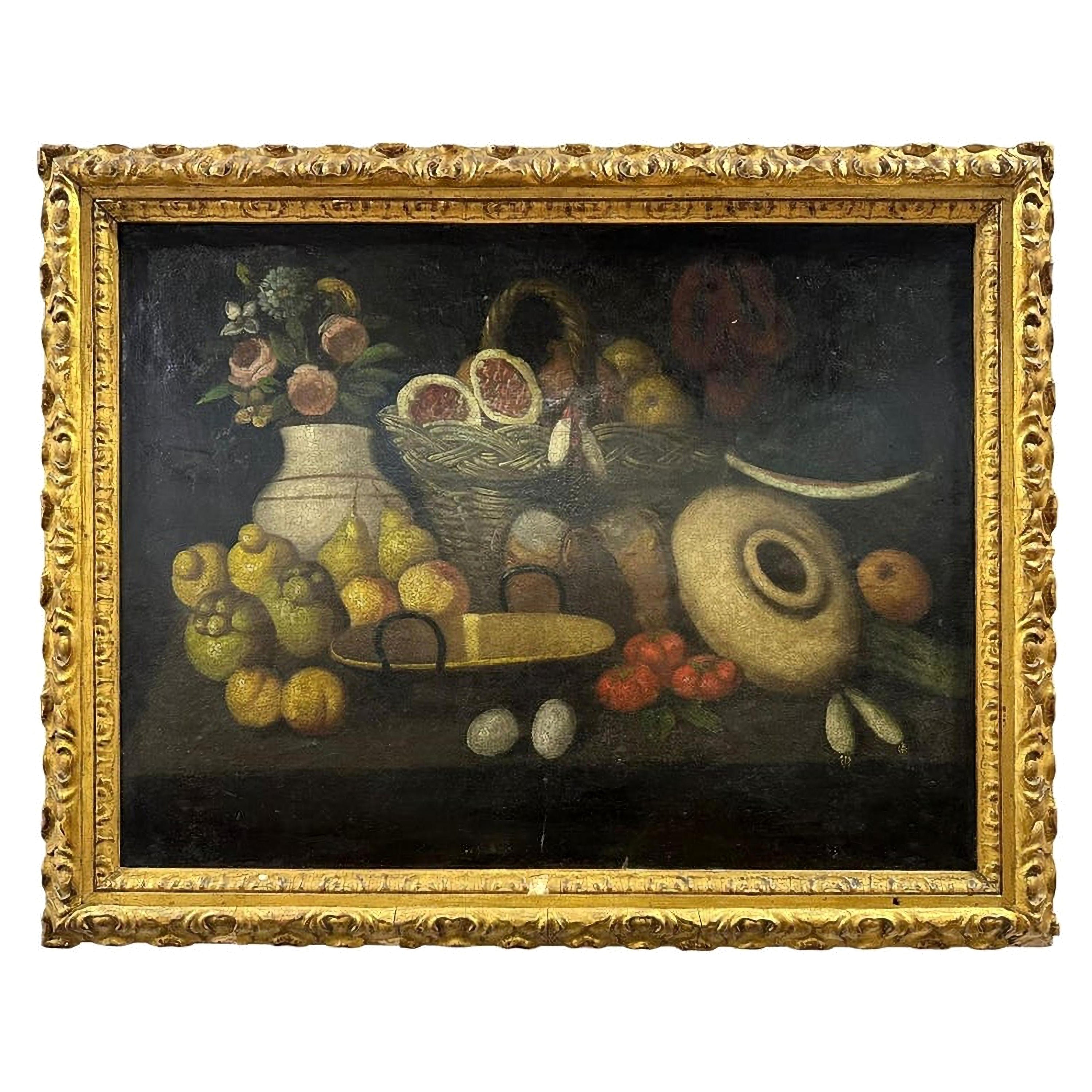
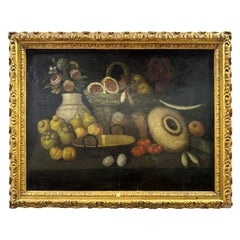
Spanish School STILL NATURES " Bodegones " 17th Century
Located in Madrid, ES
Spanish School STILL NATURES " Bodegones " 17th Century
Oil on canvas,
spanish school
Screen cleaning performed
Dim.: 60 x 80 cm
good conditions
Category
Antique 17th Century Spanish Baroque Paintings
Materials
Paint
Monumental 18th Century Painting, Oil on Canvas, Italian School
Located in Toronto, CA
This is a monumental and spectacular 18th century, or possibly early 19th, oil on canvas of the Italian school. The canvas depicts a shepherd serenading a maiden in a wooded glen. B...
Category
Antique 18th Century Italian Baroque Paintings
Materials
Canvas

More Ways To Browse
5 Foot Painting
Architecture Wall Brackets
Bell Denmark
Brass Leopard
Capiz Table
Carved Deer Head
Carved Dragon Table
Carved Wood Ram
Castaing Madeleine
Ceramic Snail
Ceramic Totem By Ettore Sottsass
Chinese Coffee Table With Stools
Chinese Lion Dog
Chinese Porcelain Rooster
Chinese Prunus
Cloisonne Tree
Davis Cabinet Company Vintage Furniture
Erno Goldfinger