Items Similar to Decorative Oil on Canvas Painting of the City of Marbella
Want more images or videos?
Request additional images or videos from the seller
1 of 19
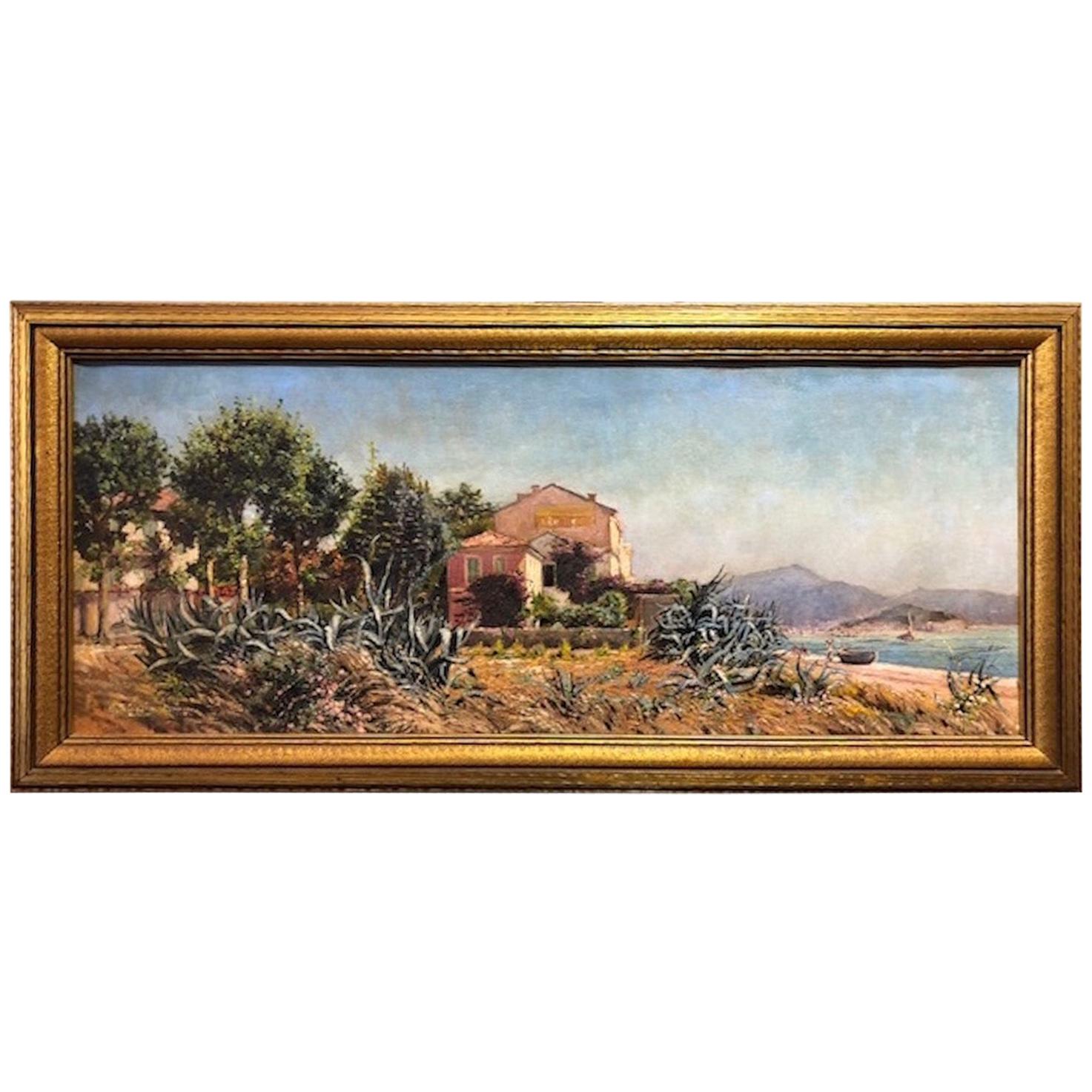
Decorative Oil on Canvas Painting of the City of Marbella
$1,439.95
£1,067.09
€1,200
CA$1,967.99
A$2,142.32
CHF 1,137.14
MX$25,776.67
NOK 14,409.14
SEK 13,202.84
DKK 9,140.76
About the Item
Decorative Oil on Canvas Painting of the City of Marbella
Measurements with frame: 56x73x3cm
About the Seller
5.0
Platinum Seller
Premium sellers with a 4.7+ rating and 24-hour response times
Established in 1996
1stDibs seller since 2017
726 sales on 1stDibs
Typical response time: <1 hour
- ShippingRetrieving quote...Shipping from: Marbella, Spain
- Return Policy
More From This Seller
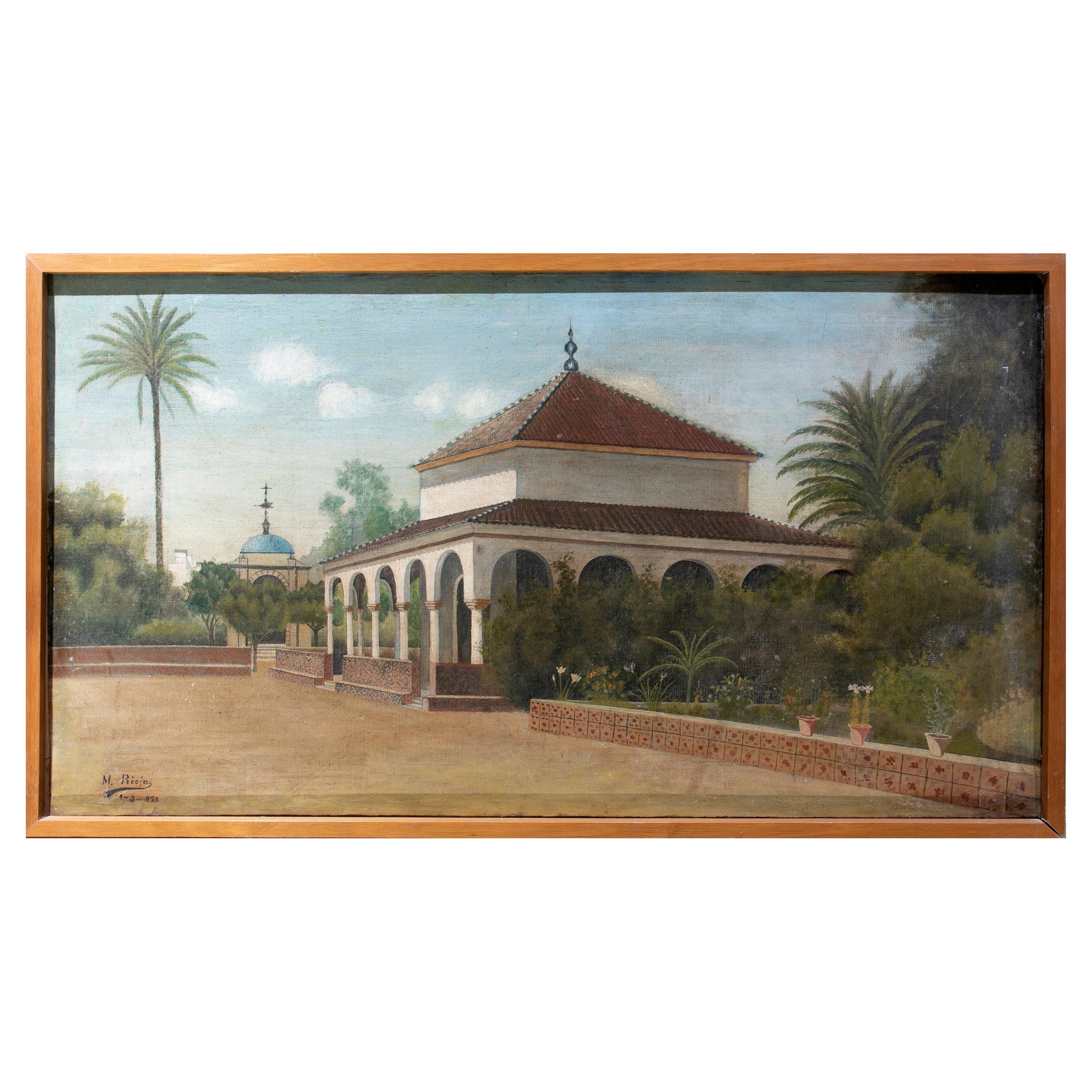
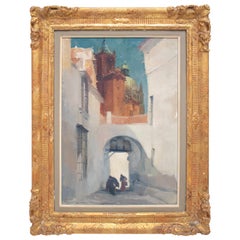
View All1920s Framed Painting of Spanish Architecture, Granada, Signed M. Rioja
Located in Marbella, ES
1920s Framed painting of Spanish Architecture, Granada, Signed M. Rioja.
Category
Early 20th Century Spanish Paintings
Materials
Canvas, Wood
19th Century Oil on Canvas Painting Attributed to Eugenio Lucas Villamamil
Located in Marbella, ES
Antique 19th century oil on canvas people painting attributed to Eugenio Lucas Villamamil, with acanthus and foliate gilt wood and gesso frame
Dimensi...
Category
Antique 19th Century Spanish Paintings
Materials
Canvas
Charles Swyncop Oil on Canvas Painting of an Andalusian Town
Located in Marbella, ES
Charles Swyncop oil on canvas painting of an Andalusian Town.
An early 20th century Belgian artist, pupil to Alfred Bastien, who regularly visited Sp...
Category
Mid-20th Century Belgian Paintings
Materials
Canvas
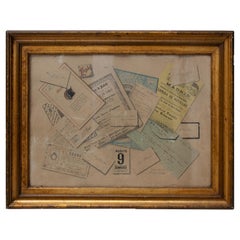
Spanish Framed Hand-Painted Painting Known as "Mesa Revuelta"
Located in Marbella, ES
Spanish framed hand-painted painting known as "Mesa Revuelta"
Measurements with frame: 65 x 82 x 3cm.
Category
Vintage 1910s Spanish Paintings
Materials
Paper
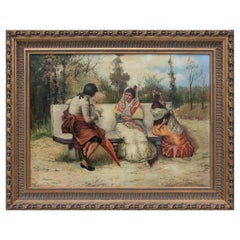
Spanish Painting in Oil on Canvas of Andalusian Characters
Located in Marbella, ES
Spanish Painting in Oil on Canvas of Andalusian characters
Measurements with frame: 80x100x6cm.
Category
Late 20th Century European Paintings
Materials
Canvas
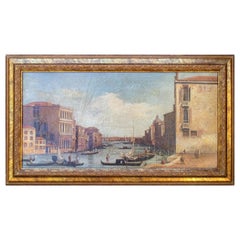
1990s Italian Venetian Framed Oil on Canvas Painting with Craquelure
Located in Marbella, ES
1990s Italian Venetian framed oil on canvas painting with craquelure.
Category
Late 20th Century Italian Paintings
Materials
Canvas
You May Also Like
Painting Attributed to Jose Arpa
By Jose Arpa
Located in Houston, TX
Jose Arpa (1858-1952), known as “The Colorist Painter” of figures and landscapes was born in Carmona, Spain. His works demonstrate the brilliant legacy of a Spanish painter who loved...
Category
Antique Early 1900s Spanish Other Paintings
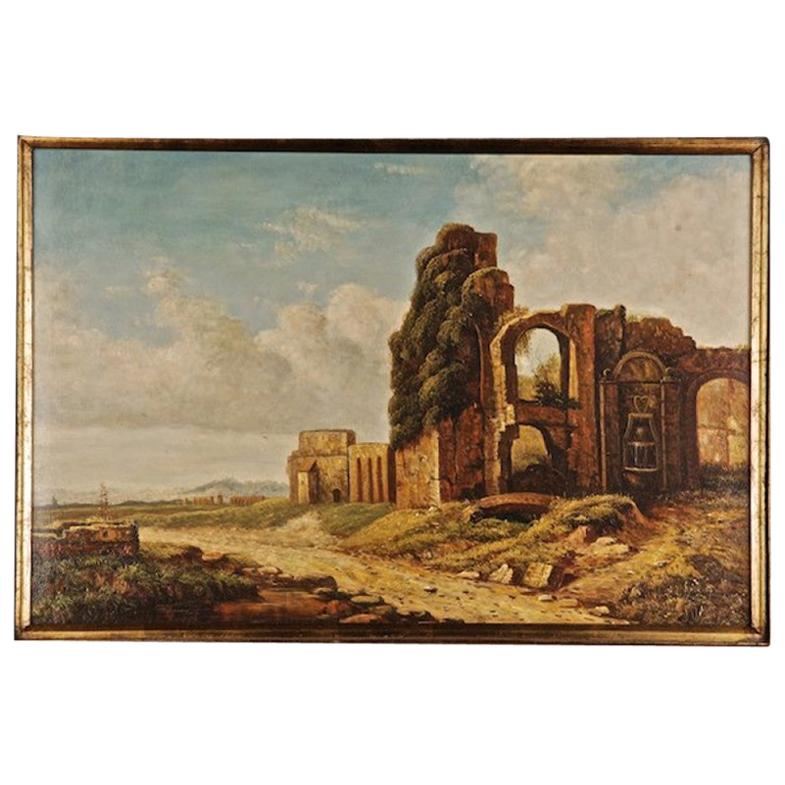
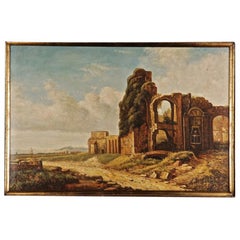
20th Century Oil Painting, Before the Fonatana the Porta Fulba
Located in Berlin, DE
Motiv: Before the Fontana the Porta Fulba, 1839
Extensively composed and stylistically finely worked out, impressionistic landscape with broad brushstroke, which through the differe...
Category
20th Century Paintings
Materials
Canvas
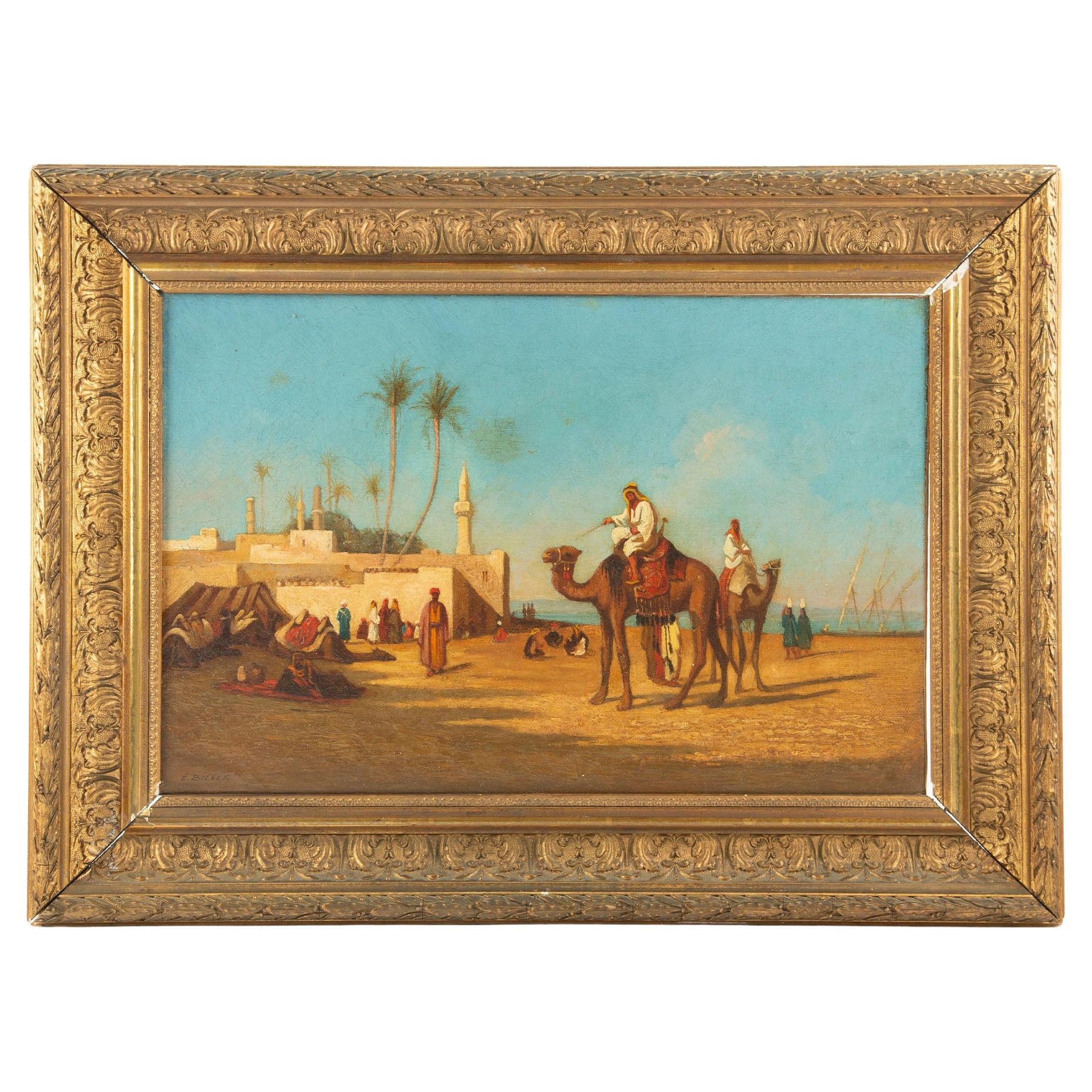
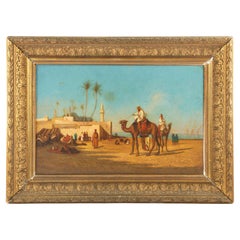
19th Century Oil on Canvas of a Seaside Signed E. Billet
Located in New York, NY
19th Century Orientalist Oil on Canvas by Étienne Billet (1821–1888), depicting a lively coastal village scene with figures, camels, palm trees, whitewashed architecture, and a mosqu...
Category
Antique 19th Century Paintings
Materials
Canvas, Wood
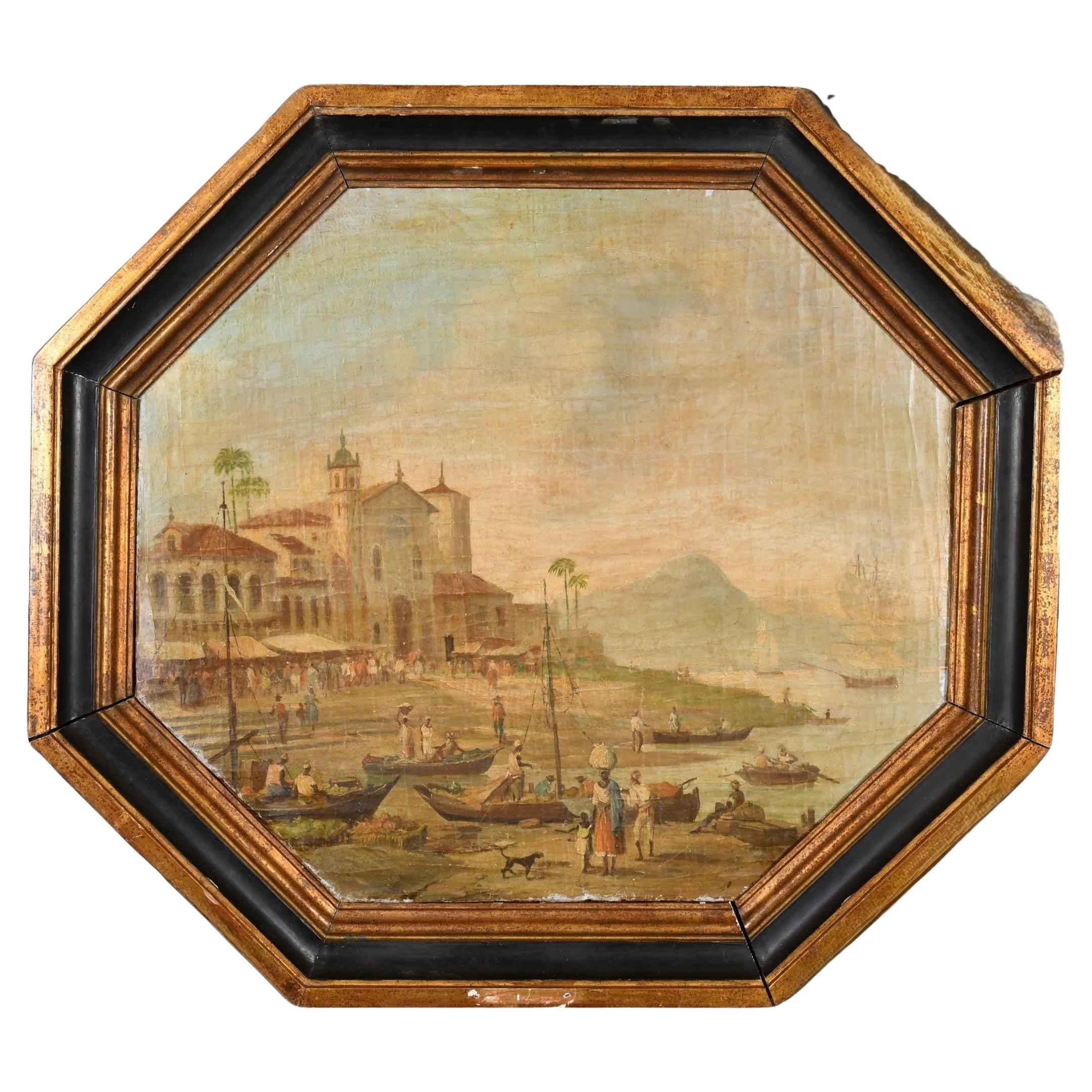
Early 19th century Capriccio Brazil School Painting
Located in Seaford, GB
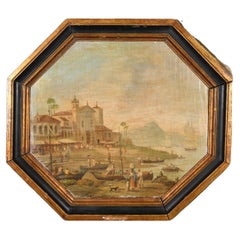
Rare Early 19th century Capriccio view of Rio de Janeiro Painting
Probably painted circa 1810 by one of Jean-Baptiste Debret, Italian Students.
Painted on Sailcloth.
Historical Context of Early 19th Century Portuguese Colonial Brazil
1.1 Transition from Colony to Empire
During the early 19th century, Brazil underwent a seismic shift in its political status. Originally a colony under the Portuguese Empire, the arrival of the Portuguese Royal Court in Rio de Janeiro in 1808 rapidly elevated the city’s cultural and political importance. By 1815, Brazil was declared a kingdom united with Portugal, setting the stage for the emergence of the Empire of Brazil in 1822. This period of transformation—often termed the transitional period from colony to empire—fueled a wave of artistic production in cities like Rio de Janeiro.
1.2 European Artistic Influence in Brazil
With the French Artistic Mission in Rio (initiated in 1816) and the presence of various Portuguese and European artists, Brazilian art of the early 1800s began to reflect diverse influences, from neoclassical painting to the early rumblings of romanticism. Painters such as Jean-Baptiste Debret, and Nicolas-Antoine Taunay, and local luminaries like Manuel de Araújo Porto-Alegre contributed to the fine arts tradition in Brazil. Their works featured scenes of local life, portraits of Brazilian society, and imaginative vistas—sometimes referred to as “capriccios,” in which real elements were combined with artistic liberties to create an idealized panorama.
1.3 Rio de Janeiro as Cultural and Political Hub
Rio de Janeiro, often called the Imperial capital after Brazil’s independence, was home to foundational institutions like the Imperial Academy of Fine Arts (Academia Imperial de Belas Artes). Later evolving into the Escola de Belas Artes (School of Fine Arts in Rio), these academies nurtured the talents of emerging painters, who found patronage under the Royal Court and, subsequently, the Imperial Court. The city’s significance was further enhanced by the construction of significant buildings, the modernization of infrastructure, and the mingling of European courtly customs with the traditions of local inhabitants.
. Description of the Octagonal Oil on Canvas: A Capriccio View of Rio de Janeiro
2.1 Composition and Layout
The most striking characteristic of this 19th-century Brazilian art piece is its octagonal shape, a relatively unusual format that draws the viewer’s gaze toward its centre. The composition showcases Rio de Janeiro’s shoreline in the early 1800s, brimming with merchant ships and smaller boats anchored near the shore. On the sand, there is a bustling crowd of local people—men and women carrying food and goods on their heads, loading and unloading boats, and engaging in everyday commerce. The backdrop of soaring mountains suggests Rio’s iconic topography, embodying the landscape that famously defines the city.
2.2 Architectural and Religious Landmarks
On the left side, one can discern the silhouette of a church believed to be Santa Lucia, a significant religious structure in the heart of early 19th-century Rio. This element provides viewers with a tangible reference point, linking the scene to an actual location. However, because this painting is labelled as a “capriccio,” the artist might have taken creative liberties by rearranging or amplifying certain features of the city. The melding of real and idealized elements is characteristic of these imaginative vistas.
2.3 Evoking Daily Life in Colonial Rio
One of the painting’s greatest appeals lies in its portrayal of daily life during the colonial era. Men and women from various backgrounds populate the scene. Some appear to be carrying goods on their heads, a common practice in Brazil that has persisted through different centuries. Others appear to be haggling or trading near small vessels, revealing the commercial pulse of an active port city. This focus on local people, combined with the grandeur of merchant ships, captures the tension and synergy between the every day and the extraordinary—a hallmark of Brazilian colonial painting that balances the grand narratives of empire with the rhythms of ordinary life.
2.4 An Amalgamation of Neoclassical and Romantic Influences
Although academic art in early 19th century Brazil was highly influenced by neoclassicism, the onset of romanticism can be spotted in the emotional portrayal of the sky, the lively palette, and the dramatic emphasis on nature’s beauty (the mountains, in particular). This duality reflects the fine arts tradition in Brazil during the transitional phase when artists were embracing multiple styles. As part of the School of Rio or the Rio de Janeiro school, painters often integrated academic techniques learned from European masters with emerging local subjects and influences.
3. Institutions and Artistic Movements
3.1 Imperial Academy of Fine Arts
Originally known as the Royal School of Sciences, Arts, and Crafts, the Imperial Academy of Fine Arts in Rio de Janeiro was instrumental in shaping 19th-century Brazilian art. Influential artists and teachers from Portugal, France, and other European nations congregated at the Academy, imparting their expertise to native students. As the monarchy consolidated power, the Academy enjoyed royal patronage, leading to the creation of Imperial Academy-style works that combined European academic rigour with Brazilian-themed subject matter.
3.2 Impact of the French Artistic Mission
The French Artistic Mission, which arrived in 1816, played a pivotal role in introducing advanced European artistic techniques, thereby elevating the overall quality of painting in Brazil. Artists like Jean-Baptiste Debret not only documented Brazilian society but also spearheaded the development of a local visual identity that aligned with both academicism and the national context of a blossoming empire. Debret, alongside others such as Nicolas-Antoine Taunay, mentored Brazilian artists, sowing the seeds of what would become the Brazilian academic art movement.
3.3 Religious, Historical, and Landscape Paintings
In addition to everyday scenes and historical compositions, religious iconography remained crucial throughout Portuguese colonial and imperial Brazil. Churches were omnipresent in cityscapes like Rio de Janeiro. Many colonial-era Brazilian portraits...
Category
Antique Early 19th Century Brazilian Spanish Colonial Paintings
Materials
Canvas
$2,973 Sale Price
20% Off
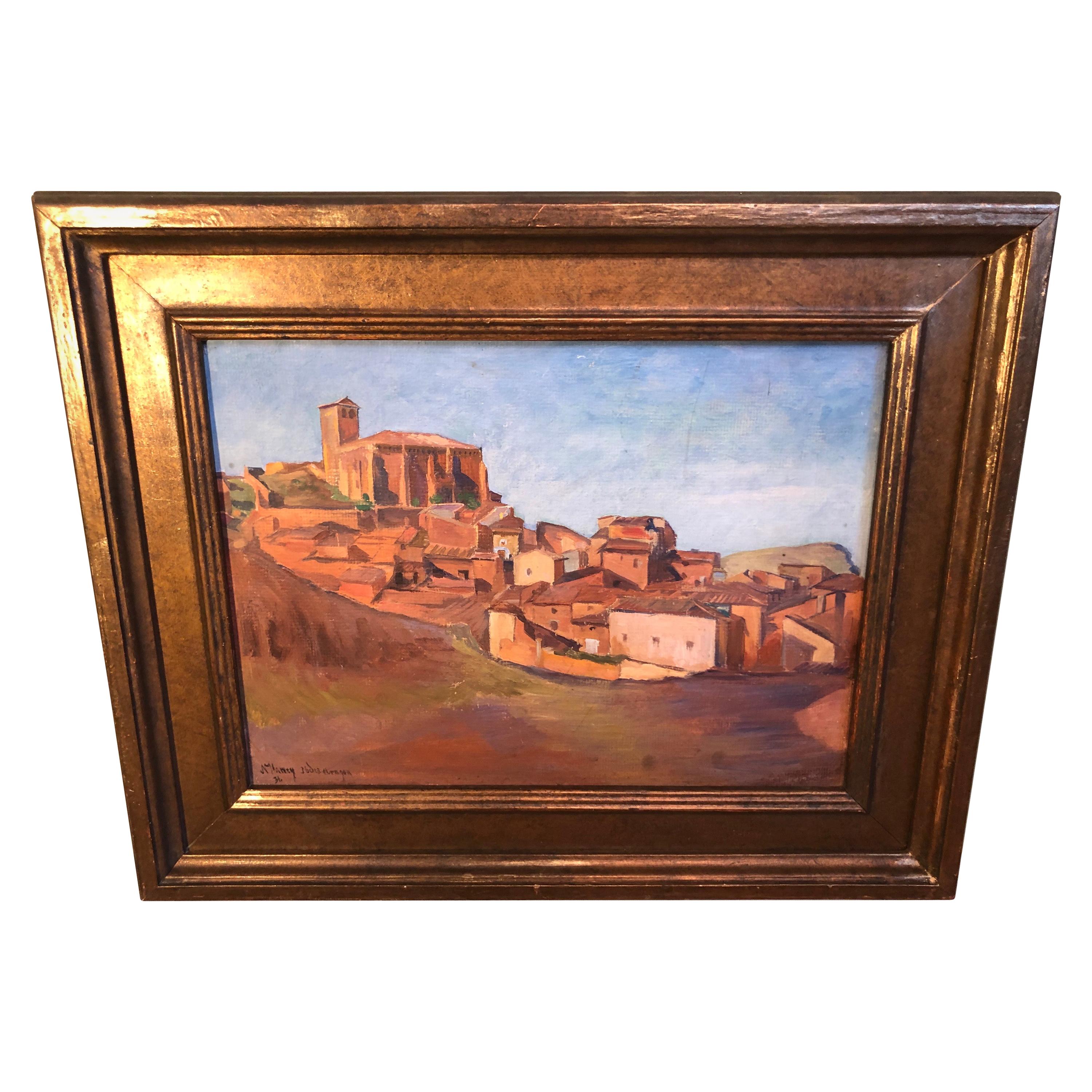
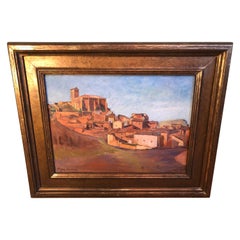
Signed painting on Board of the Aragon Region in Spain , 1931
Located in Redding, CT
Signed Southwestern painting of the Aragon Region in Spain.
Dated 1931. Oil on board, gilt solid wooden antique frame.
Category
Vintage 1930s American American Classical Paintings
Materials
Wood, Masonite, Paint
$1,045 Sale Price
62% Off
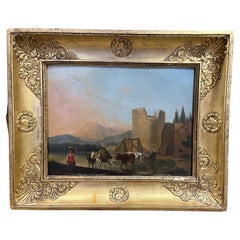
19th Century Original Oil Painting, Italian Landscape
Located in Scottsdale, AZ
19th Century Original Oil Painting, Italian Landscape. Oil on board. Unknown artist.
Category
Antique Mid-19th Century Paintings
Materials
Paint
$2,320 Sale Price
20% Off
More Ways To Browse
18 Century Horse Paintings
18th Century Tapestry Cartoon
19 Century Horse Paintings
1940s Vintage Tablecloths
1960s Oil Painting Anderson
19th Century Theorem
2 Matching Painting
50s Beach
8 Feet Paintings
A Bryan Wall
Achille Forgione
Adam And Arthur
African Male Nudes
Alan Sanborn
Albert Berg
Albert Serwazi
Alice Blair Thomas
Alys Woodman