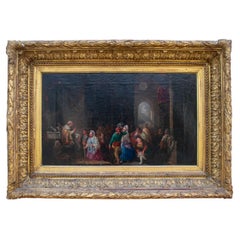
Items Similar to Early 19th century Capriccio Brazil School Painting
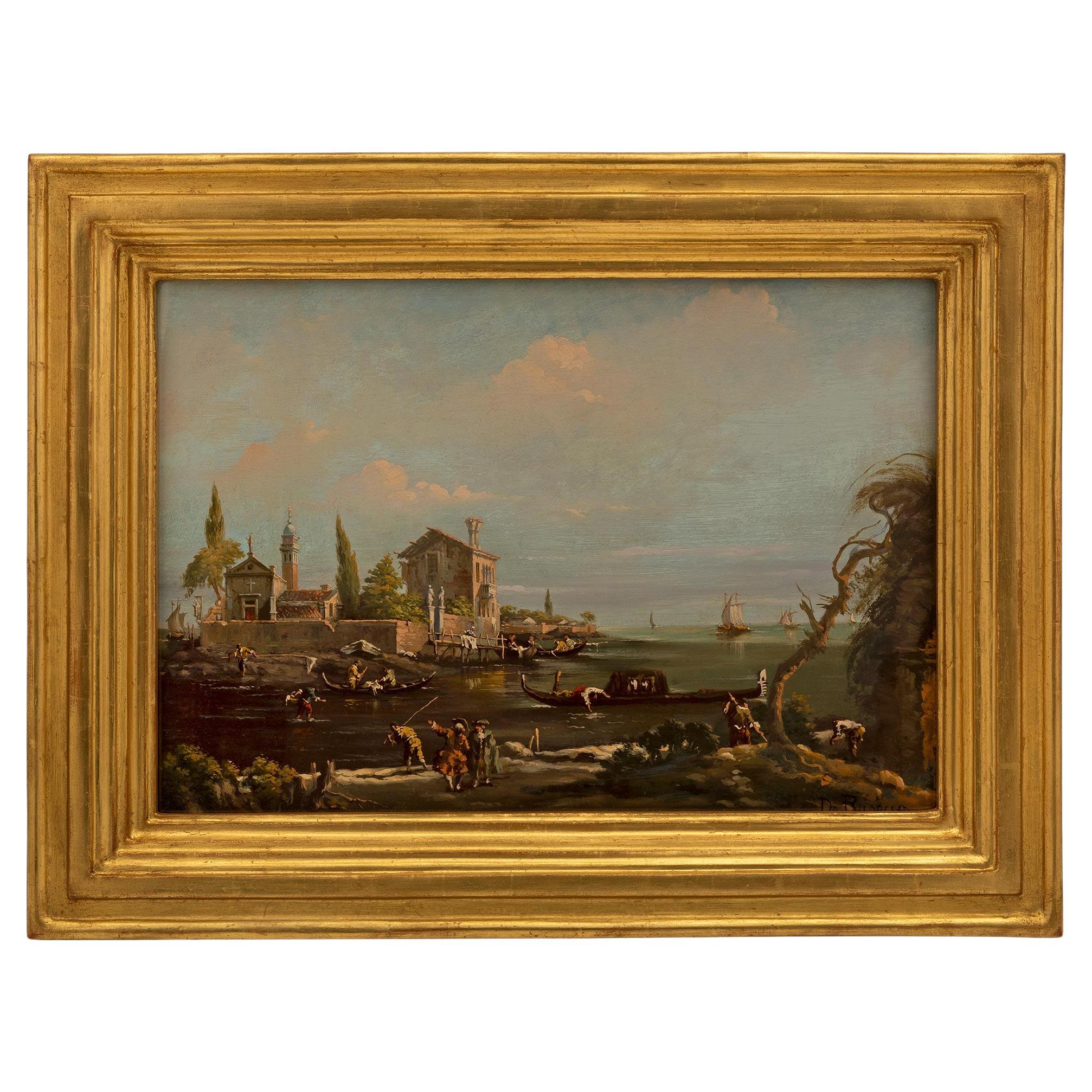
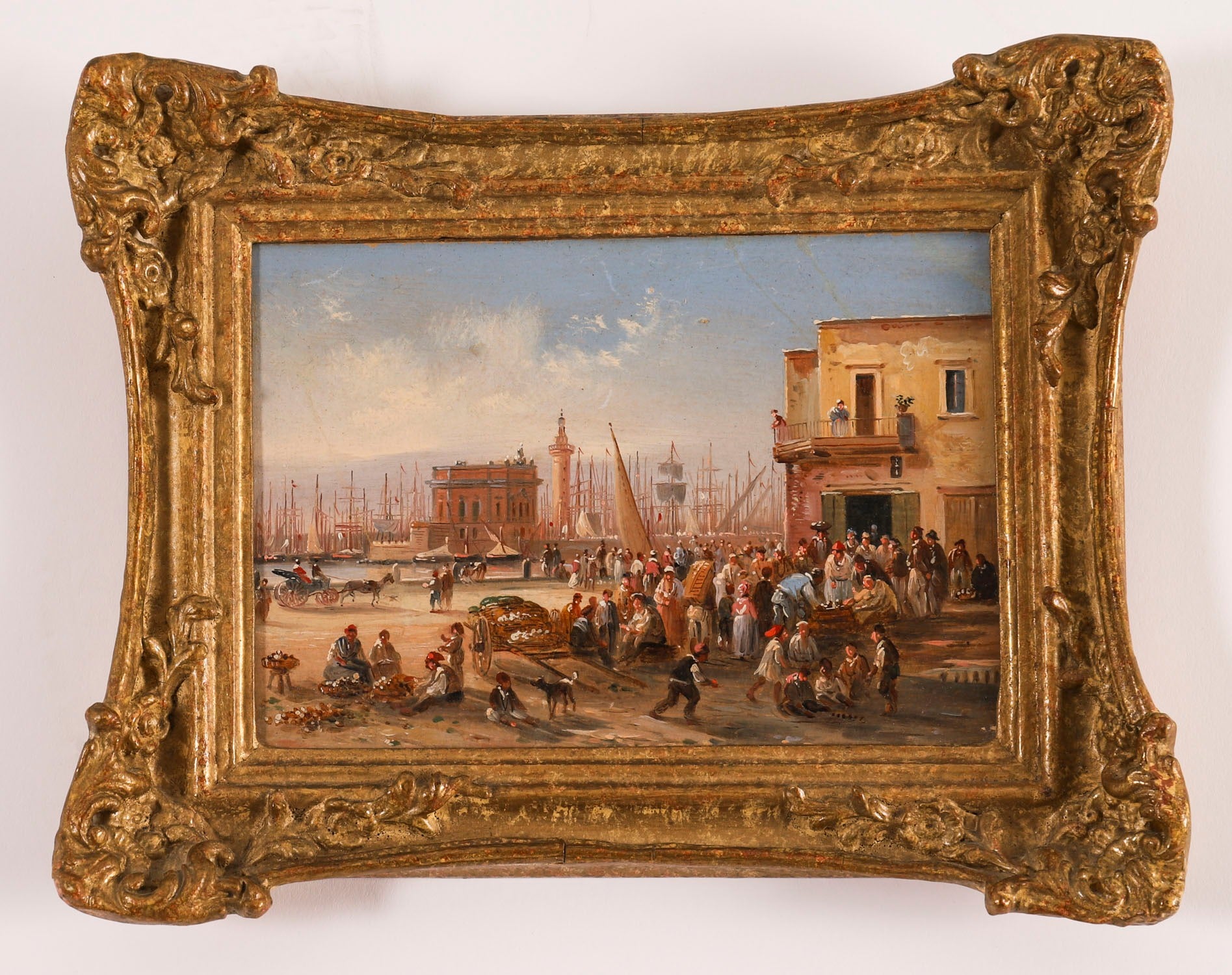
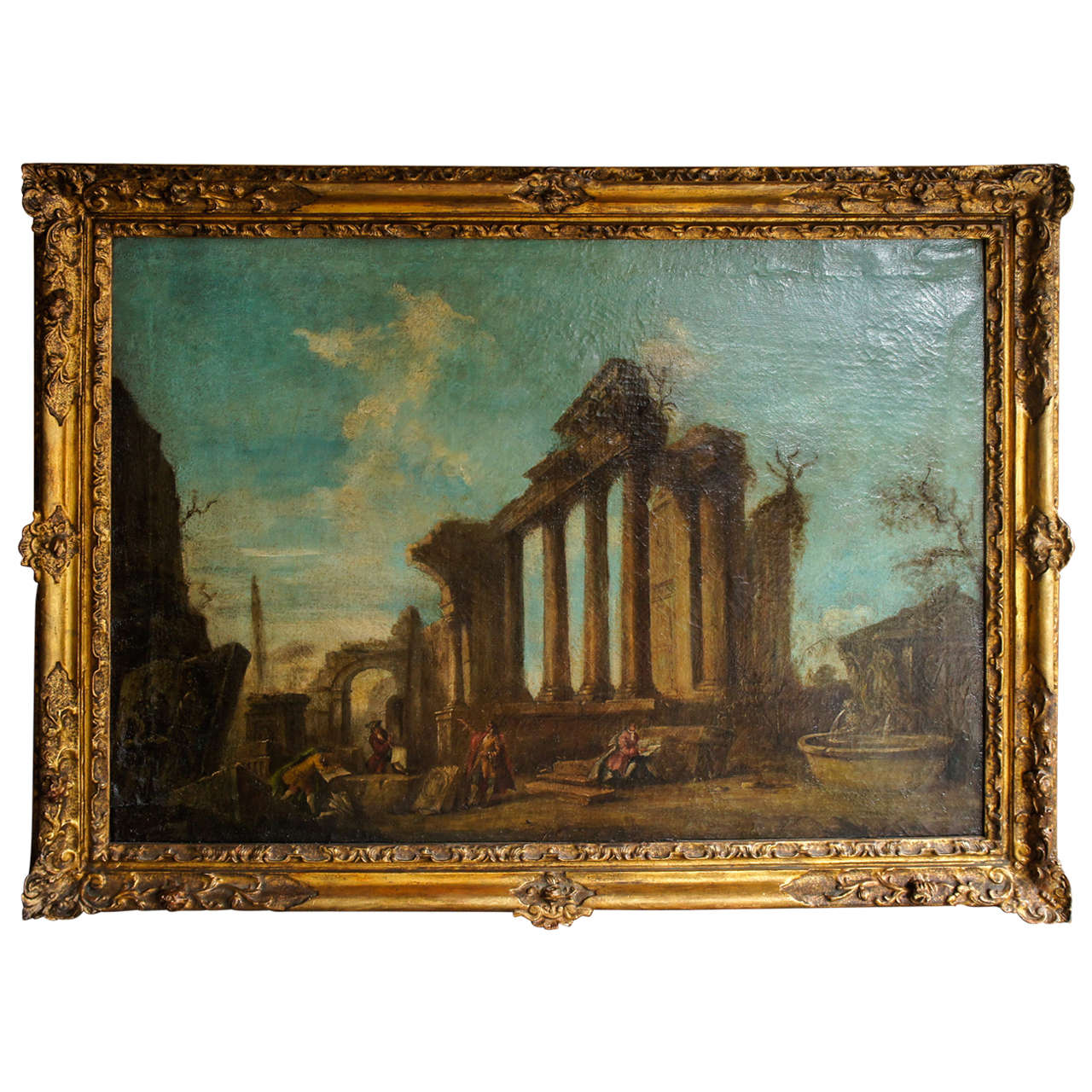
Want more images or videos?
Request additional images or videos from the seller
1 of 12
Early 19th century Capriccio Brazil School Painting
$2,976.64
$3,720.8020% Off
£2,160
£2,70020% Off
€2,527.51
€3,159.3920% Off
CA$4,073.75
CA$5,092.1920% Off
A$4,435.93
A$5,544.9120% Off
CHF 2,346.84
CHF 2,933.5520% Off
MX$53,495.61
MX$66,869.5120% Off
NOK 29,859.84
NOK 37,324.8020% Off
SEK 27,298.18
SEK 34,122.7220% Off
DKK 18,876.50
DKK 23,595.6220% Off
About the Item
Rare Early 19th century Capriccio view of Rio de Janeiro Painting
Probably painted circa 1810 by one of Jean-Baptiste Debret, Italian Students.
Painted on Sailcloth.
Historical Context of Early 19th Century Portuguese Colonial Brazil
1.1 Transition from Colony to Empire
During the early 19th century, Brazil underwent a seismic shift in its political status. Originally a colony under the Portuguese Empire, the arrival of the Portuguese Royal Court in Rio de Janeiro in 1808 rapidly elevated the city’s cultural and political importance. By 1815, Brazil was declared a kingdom united with Portugal, setting the stage for the emergence of the Empire of Brazil in 1822. This period of transformation—often termed the transitional period from colony to empire—fueled a wave of artistic production in cities like Rio de Janeiro.
1.2 European Artistic Influence in Brazil
With the French Artistic Mission in Rio (initiated in 1816) and the presence of various Portuguese and European artists, Brazilian art of the early 1800s began to reflect diverse influences, from neoclassical painting to the early rumblings of romanticism. Painters such as Jean-Baptiste Debret, and Nicolas-Antoine Taunay, and local luminaries like Manuel de Araújo Porto-Alegre contributed to the fine arts tradition in Brazil. Their works featured scenes of local life, portraits of Brazilian society, and imaginative vistas—sometimes referred to as “capriccios,” in which real elements were combined with artistic liberties to create an idealized panorama.
1.3 Rio de Janeiro as Cultural and Political Hub
Rio de Janeiro, often called the Imperial capital after Brazil’s independence, was home to foundational institutions like the Imperial Academy of Fine Arts (Academia Imperial de Belas Artes). Later evolving into the Escola de Belas Artes (School of Fine Arts in Rio), these academies nurtured the talents of emerging painters, who found patronage under the Royal Court and, subsequently, the Imperial Court. The city’s significance was further enhanced by the construction of significant buildings, the modernization of infrastructure, and the mingling of European courtly customs with the traditions of local inhabitants.
. Description of the Octagonal Oil on Canvas: A Capriccio View of Rio de Janeiro
2.1 Composition and Layout
The most striking characteristic of this 19th-century Brazilian art piece is its octagonal shape, a relatively unusual format that draws the viewer’s gaze toward its centre. The composition showcases Rio de Janeiro’s shoreline in the early 1800s, brimming with merchant ships and smaller boats anchored near the shore. On the sand, there is a bustling crowd of local people—men and women carrying food and goods on their heads, loading and unloading boats, and engaging in everyday commerce. The backdrop of soaring mountains suggests Rio’s iconic topography, embodying the landscape that famously defines the city.
2.2 Architectural and Religious Landmarks
On the left side, one can discern the silhouette of a church believed to be Santa Lucia, a significant religious structure in the heart of early 19th-century Rio. This element provides viewers with a tangible reference point, linking the scene to an actual location. However, because this painting is labelled as a “capriccio,” the artist might have taken creative liberties by rearranging or amplifying certain features of the city. The melding of real and idealized elements is characteristic of these imaginative vistas.
2.3 Evoking Daily Life in Colonial Rio
One of the painting’s greatest appeals lies in its portrayal of daily life during the colonial era. Men and women from various backgrounds populate the scene. Some appear to be carrying goods on their heads, a common practice in Brazil that has persisted through different centuries. Others appear to be haggling or trading near small vessels, revealing the commercial pulse of an active port city. This focus on local people, combined with the grandeur of merchant ships, captures the tension and synergy between the every day and the extraordinary—a hallmark of Brazilian colonial painting that balances the grand narratives of empire with the rhythms of ordinary life.
2.4 An Amalgamation of Neoclassical and Romantic Influences
Although academic art in early 19th century Brazil was highly influenced by neoclassicism, the onset of romanticism can be spotted in the emotional portrayal of the sky, the lively palette, and the dramatic emphasis on nature’s beauty (the mountains, in particular). This duality reflects the fine arts tradition in Brazil during the transitional phase when artists were embracing multiple styles. As part of the School of Rio or the Rio de Janeiro school, painters often integrated academic techniques learned from European masters with emerging local subjects and influences.
3. Institutions and Artistic Movements
3.1 Imperial Academy of Fine Arts
Originally known as the Royal School of Sciences, Arts, and Crafts, the Imperial Academy of Fine Arts in Rio de Janeiro was instrumental in shaping 19th-century Brazilian art. Influential artists and teachers from Portugal, France, and other European nations congregated at the Academy, imparting their expertise to native students. As the monarchy consolidated power, the Academy enjoyed royal patronage, leading to the creation of Imperial Academy-style works that combined European academic rigour with Brazilian-themed subject matter.
3.2 Impact of the French Artistic Mission
The French Artistic Mission, which arrived in 1816, played a pivotal role in introducing advanced European artistic techniques, thereby elevating the overall quality of painting in Brazil. Artists like Jean-Baptiste Debret not only documented Brazilian society but also spearheaded the development of a local visual identity that aligned with both academicism and the national context of a blossoming empire. Debret, alongside others such as Nicolas-Antoine Taunay, mentored Brazilian artists, sowing the seeds of what would become the Brazilian academic art movement.
3.3 Religious, Historical, and Landscape Paintings
In addition to everyday scenes and historical compositions, religious iconography remained crucial throughout Portuguese colonial and imperial Brazil. Churches were omnipresent in cityscapes like Rio de Janeiro. Many colonial-era Brazilian portraits integrated religious elements, reflecting the Catholic legacy inherited from Portugal. Meanwhile, the dramatic landscapes around Rio, with its famed mountainous backdrop, provided fertile ground for romantic and neoclassical interpretations, as seen in colonial-era art.
4. Collecting and Buying Early 19th Century Brazilian Paintings
4.1
For collectors intrigued by Portuguese-Brazilian or Luso-Brazilian artworks, there are numerous avenues to explore. Terms like “antique Portuguese colonial art for sale,” “collecting 19th-century Rio de Janeiro artwork,” or “auction for early 19th-century Brazilian paintings” can help guide online searches. Auction houses, specialized art dealers, and reputable galleries often carry these historical pieces
4.3 Pricing and Market Trends
Because of their historical and cultural significance, Portuguese colonial Brazilian oil paintings can command notable prices in the art market. The rarity of surviving canvases from the early 1800s—especially those in good condition—drives demand among collectors. Modern interest in imperial Brazil and Rio de Janeiro as an imperial capital also contributes to growing market values. Prospective buyers should be prepared to navigate auctions, dealer negotiations, and potential competition among seasoned collectors.
5. Significance and Style: Why This Painting Matters
5.1 Preservation of a Transitional Period
This octagonal oil on canvas not only offers aesthetic pleasure but also serves as an invaluable historical document. It portrays Brazil at a time when it was shedding its colonial status and moving toward an imperial identity. The lively portrayal of merchants, local townspeople, and architectural elements encapsulates the transitional period—a critical turning point in Brazilian history.
5.2 Reflection of Academicism and Emerging Romanticism
The painting’s technique, likely influenced by academicism and the early wave of romanticism, illustrates how Brazilian art absorbed and adapted European methods to local realities. Rio’s harbour, with its dramatic mountainous backdrop, is a natural stage for romantic flourishes, while the systematic rendering of figures and architectural details points to an academic art background.
5.3 Synthesis of Heritage and Innovation
By blending Portuguese colonial influences with the developing identity of an independent Brazil, this artwork is a testament to the era’s cultural synthesis. The church of Santa Lucia, for instance, stands as a symbol of colonial religious heritage, while the bustling trade and fresh energy of the city hint at new beginnings and the forging of a unique Brazilian identity.
7. Concluding Thoughts: A Testament to Luso-Brazilian Heritage
This octagonal, early 19th-century oil on canvas from the Brazilian school of Portuguese colonial art stands out as a shining example of how local and European influences converged in colonial Brazil. Depicting a capriccio view of Rio de Janeiro, complete with merchant ships, local inhabitants, and the recognizable church of Santa Lucia, the painting immerses us in a vibrant scene that is both historically instructive and artistically enchanting. Beyond its aesthetic and historical significance, it serves as an emblem of a cultural tapestry woven from Portuguese traditions, indigenous roots, and emerging Brazilian identity.
For collectors and enthusiasts seeking to buy early 19th-century Brazilian paintings, this piece—and others like it—can represent a tangible connection to a pivotal era in Brazil’s evolution. From its fine arts tradition shaped by the Imperial Academy of Fine Arts to the European artistic influence brought by the French Artistic Mission, Brazil’s art historical narrative is both diverse and richly layered. Incorporating academic art, romanticism, and traces of neoclassicism, paintings from the Rio de Janeiro school speak to the dynamic cultural forces at play in imperial Brazil.
- Dimensions:Height: 24.41 in (62 cm)Width: 26.78 in (68 cm)Depth: 1.97 in (5 cm)
- Style:Spanish Colonial (Of the Period)
- Materials and Techniques:
- Place of Origin:
- Period:
- Date of Manufacture:1810
- Condition:Wear consistent with age and use. Minor losses.
- Seller Location:Seaford, GB
- Reference Number:1stDibs: LU10376244499202
About the Seller
No Reviews Yet
Vetted Professional Seller
Every seller passes strict standards for authenticity and reliability
Established in 2021
1stDibs seller since 2025
Typical response time: 1 hour
- ShippingRetrieving quote...Shipping from: Seaford, United Kingdom
- Return Policy
More From This Seller
View AllDutch 19th Century Landscape Painting in Late Victorian Style
By Andreas Schelfhout
Located in Seaford, GB
This charming oil-on-paper painting captures a serene landscape near Haarlem, evocative of Andreas Schelfhout's masterful Dutch Romantic style. The work features a quintessentially D...
Category
Antique Late 19th Century Dutch Late Victorian Paintings
Materials
Paint, Paper
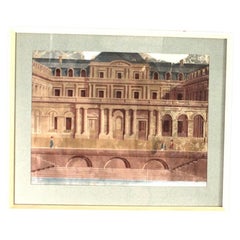
18th century Fine Italian Grand Tour gouache of Palladian Villa
Located in Seaford, GB
This fine 18th-century gouache on paper is a quintessential example of Grand Tour artistry, depicting an Italian Palladian villa rendered with architectural precision and classical r...
Category
Antique Mid-18th Century Italian Grand Tour Paintings
Materials
Paper
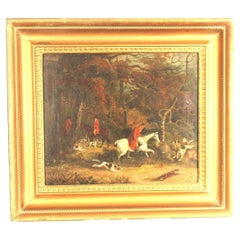
Early 19th century horse painting
By Dean Wolstenholme
Located in Seaford, GB
A Timeless Depiction of the English Fox Hunt
The early 19th-century fox hunting scene, attributed to Dean Wolstenholme Elder, is a stunning representation of the aristocratic traditi...
Category
Antique 1810s English Regency Paintings
Materials
Canvas
$1,598 Sale Price
20% Off
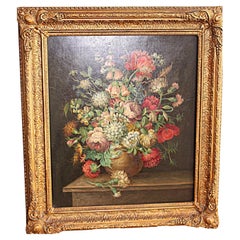
Exquisite 19th Century English Still Life of wild flowers– Oil on Wood Panel
Located in Seaford, GB
A captivating and finely executed 19th-century English still life painting, rendered in oil on wood panel, depicting an abundant bouquet of mixed flowers in a terracotta urn. This hi...
Category
Antique 19th Century English High Victorian Paintings
Materials
Paint
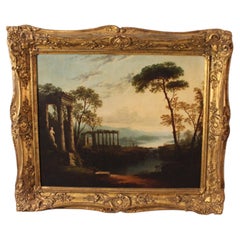
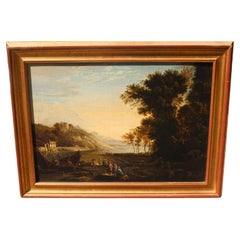
Manner of Claude Lorrain The Goat heard in Arcadian Landscape
By Claude Lorrain
Located in Seaford, GB
An Exquisite Italianate Arcadian Landscape Oil Painting
This late 18th-century Italianate classical landscape oil painting beautifull...
Category
Antique Late 18th Century European Baroque Paintings
Materials
Canvas, Paint
Manner of Claude Lorrain Merchants on the banks of the river po
By (after) Claude Lorrain (Claude Gellée)
Located in Seaford, GB
Italianate landscape, Manner of Claude Lorrain
Very good Quality oil on relined canvas in the Manner of Claude Lorrain, cargo ships on the banks of the river Po Italy.
📜 Provenance – Italianate Landscape after Claude Lorrain, England or Italy, circa late 18th–early 19th century
This finely executed oil on canvas is an accomplished historic copy after Claude Lorrain’s celebrated Italianate river landscapes, specifically related to his Landscape with Merchants (c. 1630s), held at the National Gallery of Art, Washington, D.C. The composition also bears a close resemblance to the 1769 engraving by Boydell and James Mason, after a painting once in the distinguished collection of Robert Trevor, 4th Baron Trevor, later 1st Viscount Hampden.
The scene features cargo ships along the tranquil banks of the River Po, enveloped in the soft, atmospheric light for which Claude Lorrain (1600–1682) is universally revered. Executed in the idiom of the Grand Tour period, the painting exemplifies the classical Arcadian themes sought by aristocratic collectors travelling through Italy in the 18th and early 19th centuries.
This work is a particularly elegant example of the period's taste for Claudean compositions, balancing architectural elements with expansive vistas and golden, diffused light. The canvas has been professionally relined and restored, housed in a contemporary frame that complements the work’s scale and palette. Minor craquelure and darkening to areas of the blue and green pigments remain consistent with age, enhancing its historic charm.
Ideal for integration into neoclassical, traditional, or transitional interiors, this work represents an opportunity to acquire a piece of decorative art with a strong visual lineage and academic relevance — a testament to Lorrain’s enduring influence across centuries of landscape painting.
Very similar to the Landscape with Merchants in the National Gallery of Art, Washington, D.C.
Our version could be after the engraving by Boydell and James Mason on 1st January 1769.
Interestingly, the source painting for the painting was once in the collection of Robert Trevor, 4th Baron Trevor (from 1764), and subsequently (from 1776) 1st Viscount Hampden.
18th-Century Italian Landscape in the Manner of Claude Lorrain
This exquisite 18th-century Italian Landscape in the manner of Claude Lorrain captures the essence of Italian Baroque landscape painting, showcasing the serene beauty and harmony of the classical countryside. Drawing inspiration from the Golden Age landscape painting, it reflects the elegance and detail characteristic of Claude Lorrain-style artwork, featuring sweeping vistas, balanced compositions, and an idealised landscape scene that exudes timeless charm.
A Classical Italian Countryside Painting...
Category
Antique 18th Century British Baroque Paintings
Materials
Canvas
$4,961 Sale Price
20% Off
You May Also Like
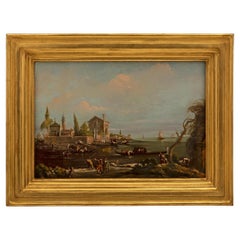
Italian 19th Century Oil on Canvas Painting
Located in West Palm Beach, FL
A beautiful Italian 19th century oil on canvas painting. The painting depicts a beautiful Italian scene of personages going about their day with charming boats and a house on the wat...
Category
Antique 19th Century Italian Paintings
Materials
Canvas, Giltwood
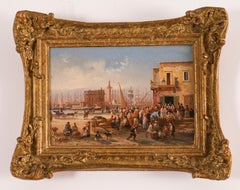
Antique Oil Painting Italian Harbour Scene 19th Century
Located in London, GB
This is a fine Italian school oil on board of the view of the harbour in Venice, dating from the mid 19th century.
This finely painted painting captures striking views of a busy har...
Category
Antique Mid-19th Century Paintings
Materials
Canvas
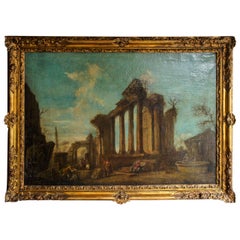
19th Century Italian Oil Painting in the Manner of Antonio Panini
Located in Hudson, NY
This fine old painting is a typical pastiche of the kind popular throughout Italy and the world in the 17th, 18th and 19th centuries. The most commonly associated artist who really m...
Category
Antique 19th Century Italian Baroque Revival Paintings
Materials
Canvas, Wood
19th-Century Framed Oil Painting on Hardboard Depicting Genre Scene
Located in Opole, PL
19th-Century Framed Oil Painting on Hardboard Depicting Genre Scene
We present you a small painting from the late 19th century depicting a genre scene.
The oil is on hardboard, the ...
Category
Antique Late 19th Century European Paintings
Materials
Hardwood, Paint
$288 Sale Price
20% Off
18th Century French Port Scene Oil Painting from Provence
Located in Dallas, TX
Sharing similarities of a mid-17th-century Italian capriccio painting, this French oil painting from Provence depicts fantastical architecture set amongst the more realistic setting ...
Category
Antique 18th Century French Paintings
Materials
Canvas, Wood, Giltwood, Paint
19th Century Oil on Canvas Painting Attributed to Eugenio Lucas Villamamil
Located in Marbella, ES
Antique 19th century oil on canvas people painting attributed to Eugenio Lucas Villamamil, with acanthus and foliate gilt wood and gesso frame
Dimensi...
Category
Antique 19th Century Spanish Paintings
Materials
Canvas